Results for "Andrews+|+9+>+228"
2013 results found.
Quel endroit au Mexique pour séjour avec excursions? English translation pending
Bonjour,
Pour commencer je dois vous dire que comme la majorité des gens sur ce forum j'adore voyager. Je voudrais apporter mon chum en vacances avec moi cet hiver..Le hic c'est que mon chum n'aime pas vraiment faire de la beach et il n'est pas du genre à rester à rien faire. Alors j'avais penser aller sur la riviera maya (ou cancun) car il y a quand même beaucoup d'excursion que l'on peut faire....Ou j'avais penser allé a San Andres, mais je ne sais pas s'il y a autant de chose à faire....
Alors je vous demande, selon votre expérience, quel endroit serait le mieux pour moi et mon copain....
Merci
Kats
Hôtel à Varadero ou Boca Chica? English translation pending
Bonjour, nous sommes 3 femmes de 26, 35 et 40ans qui songeons à partir pour 2 semaines en mars 2006.
Nous cherchons une destination soleil mais tentons de conjuguer les exigences de chacunes.
Nous voulons un tout inclus de minumum 3.5 étoiles; assez abordable; avec de l'animation et une discothèque; situé sur la plage, offrant de la bonne nourriture.
Nous sommes du type ''plage'' dans le jour et aimons aller à la discothèque le soir et aux spectacles.
L'une de nous ne veut pas aller à San Andres.
L'autre ne veut pas retourner à Punta Cana, trop calme.
L'autre veut absolument une eau limpide, sinon elle ne se baigne pas!
Et aussi, une autre, veut une destination sans serpents!!! (on sait que ça n'existe pas mais je ne lui dirai pas!! 😉)
Nous voulons faire une excursion par semaine et aller quelques fois en ville.
Nous avions finalement retenu 2 destinations qui semblaient convenir à chacune: Varadero et Boca Chica.
A Varadero, je ne sais pas du tout quel hôtel pourrait m'intéresser (J'avais pensé au 1920 mais je viens de recevoir une tonne de commentaires négatifs), et à Boca Chica, j'avais pensé au Hamaca Coral mais peut-être qu'il y a d'autres hôtels à proximité qui seraient intéressants?
Pensez-vous pouvoir m'aider quant aux destinations, hôtels, etc?
Merci de nous éclairer!!! 🙂
Annie
Hôtel Ocean Arc Decameron à Santo Domingo English translation pending
Bonjour à tous,
Je cherche une destination voyage pour janvier 2006 et je serais intéressée par l'Hotel Ocean Arc Decameron à Santo Domingo en République Dominicaine. Qu'en pensez-vous ? Est-ce un bon choix ?
Merci d'avance,
Bizoux xx
Hôtel Aquarium English translation pending
Bonjour, nous sommes deux couples de quarante ans qui pensent réserver à l'aquarium pour février 2006. Nous nous posons quelques questions et j'aimerais des commentaires, Est-ce que la nourriture est bonne?Est-ce que c'est dangereux le soir?est-ce que l'hotel Decameron Aquarium est propre?
Je voudrais savoir si les chambres donnent tous vue sur la mer ou combien en % le font? et quelle vue avons-nous pour les autres? Sommes-nous loin de l'action? ex:disco, magasin, resto... Nous sommes allés l'an passé sur l'ile de Margarita à la Playa el Agua et je voudrais savoir si ça ressemble à San Andrès. Si quelqu'un a des photos de San Andre, j'aimerais les voir? En espérant des réponses bientôt.
Grève dans les transports à Arequipa - 6 août (Pérou) English translation pending
Salut a tous,
Je suis actuellement a Cuzco mais il y a 3 jours j'etais a Arequipa et ca a ete un peu la galere pour en repartir. Il y a actuellement des greves qui touchent le transport dans le Sud. Je viens de voir les infos et apparemment la greve a l'air de se durcir sur place. Renseignez-vous donc avant de vous y rendre si vous avez un planning serre!
Maritim Costa Verde Beach Resort English translation pending
Bonjour, nous avons deux enfants de 7 et 9 ans et pensons aller au MARITIM COSTA VERDE BEACH RESORT durant le temps de Paques. Pourriez vous me dire si vous connaisez cet hotel classé 4 * et si la plage et le service est bon ? Les enfants apprecieront-ils ?
Un gros merci a tous !
Chrystine😎
Un gros merci a tous !
Chrystine😎
Excursions San Luis: Johnny Cary et Aquariu English translation pending
Bonjour,
on part bientôt pour le San Luis. Tout le monde nous dit qu'il faut visiter Johnny Cary et Aquariu (quelque chose comme ça). Avez-vous une idée de combien coût l'excursion? Ca nous donnerait une idée de combien d'argent apporter.
😉
on part bientôt pour le San Luis. Tout le monde nous dit qu'il faut visiter Johnny Cary et Aquariu (quelque chose comme ça). Avez-vous une idée de combien coût l'excursion? Ca nous donnerait une idée de combien d'argent apporter.
😉
Le meilleur de l'Andalousie English translation pending
Je viens d'envoyer à quelqu'un en message privé une sélection de mes endroits favoris en Andalousie; je me suis dit que ça pourrait intéresser d'autres personnes donc voici :--
Mes endroits préférés : (quasiment tous ces endroits se trouvent dans le Lonely Planet, malheureusement je n'arrive plus à remettre la main sur mon guide et ne peux donc pas te donner les coordonnées exactes) : Pour loger : Bolonia (près de Tarifa; grande plage encore un peu sauvage hors saison et ruines archéologiques romaines) : Hostal Lola (ils ont un site internet mais je n'ai pas l'adresse; tu le trouves facilement via Google) Jerez de la Frontera : Hostal San Andres Tarifa : Casa Amarilla, Hostal Alborada et La Estrella Cordoba : Hostal San Fernando
- Ronda : Pension la Purisima
Pour manger : Tarifa : Casa Amarilla et restaurant La Mandragora (très petit, arriver tôt!), aussi La Sacristia Bolonia : petits restaurants sur le chemin qui mènent à la plage en passant à côté des ruines El Puerto de Santa Maria : restaurant "Romero" I et II (ou un nom similaire; me souviens plus exactement; excellents poissons et fruits de mer) Ronda : brasserie Patatin Patatan; le restaurant Don Miguel était très bien et nous a enchantés à plusieurs reprises (superbe vue) mais la dernière fois que nous y sommes retournés (mai 2004) on a été fort déçus; je crois qu'il y a eu un changement au niveau des proprios ou de la direction ; à voir donc.
Mes endroits préférés : (quasiment tous ces endroits se trouvent dans le Lonely Planet, malheureusement je n'arrive plus à remettre la main sur mon guide et ne peux donc pas te donner les coordonnées exactes) : Pour loger : Bolonia (près de Tarifa; grande plage encore un peu sauvage hors saison et ruines archéologiques romaines) : Hostal Lola (ils ont un site internet mais je n'ai pas l'adresse; tu le trouves facilement via Google) Jerez de la Frontera : Hostal San Andres Tarifa : Casa Amarilla, Hostal Alborada et La Estrella Cordoba : Hostal San Fernando
- Ronda : Pension la Purisima
Pour manger : Tarifa : Casa Amarilla et restaurant La Mandragora (très petit, arriver tôt!), aussi La Sacristia Bolonia : petits restaurants sur le chemin qui mènent à la plage en passant à côté des ruines El Puerto de Santa Maria : restaurant "Romero" I et II (ou un nom similaire; me souviens plus exactement; excellents poissons et fruits de mer) Ronda : brasserie Patatin Patatan; le restaurant Don Miguel était très bien et nous a enchantés à plusieurs reprises (superbe vue) mais la dernière fois que nous y sommes retournés (mai 2004) on a été fort déçus; je crois qu'il y a eu un changement au niveau des proprios ou de la direction ; à voir donc.
Humanitaire à Bombay et sud de l'Inde English translation pending
Bonsoir a toutes et a tous.. Je repars donc pour l'Inde au moi de fevrier prochain, mon voyage s'etalera sur deux mois,
durant le premier mois j'aimerai faire de l'humanitaire a Bombay ou dans les environs, si quelqun as des adresses, assoc, foyer, contact.. je serais tres intéréssé!
Durant le second moi je compte reparcourir le sud de l'inde.
S'il y a donc des gens intéréssé pour venir avec moi dans ce magnifique pays, cela serait avec grand plaisir!
Bon voyage a tous.
Philippe
durant le premier mois j'aimerai faire de l'humanitaire a Bombay ou dans les environs, si quelqun as des adresses, assoc, foyer, contact.. je serais tres intéréssé!
Durant le second moi je compte reparcourir le sud de l'inde.
S'il y a donc des gens intéréssé pour venir avec moi dans ce magnifique pays, cela serait avec grand plaisir!
Bon voyage a tous.
Philippe
Suggestions d'hôtels English translation pending
Bonjour ! Je veux votre avis sur ou aller pour un 1er voyage.
Notre 1ere idee etais d'aller a cuba (Varadero), mais j'aimerais avoir d'autres ou suggestions.
Nous partons 2 filles ensembles nous avons 25 ans ( alors, on veut quelque chose qui bouge et ou il y a + de jeunes ).Nous voulons un tout inclus et notre budget est d'environ 1000$-1500$.Nous voulons partir entre le 23 janv. et le 7 fev.
En ce qui concerne les activite : La plage et soleil (Chaleur), disco (club), plonge, piscine .
Baignade avec les dophins et equitation serais bien aussi, mais pas necessaires.
Merci pour vos suggestions 🙂
Notre 1ere idee etais d'aller a cuba (Varadero), mais j'aimerais avoir d'autres ou suggestions.
Nous partons 2 filles ensembles nous avons 25 ans ( alors, on veut quelque chose qui bouge et ou il y a + de jeunes ).Nous voulons un tout inclus et notre budget est d'environ 1000$-1500$.Nous voulons partir entre le 23 janv. et le 7 fev.
En ce qui concerne les activite : La plage et soleil (Chaleur), disco (club), plonge, piscine .
Baignade avec les dophins et equitation serais bien aussi, mais pas necessaires.
Merci pour vos suggestions 🙂
Passage du Panama en Colombie? English translation pending
Bonjour à tous voilà, je prépare mon voyage à travers l'amérique latine, mais voilà arrivé au panama il n'y a plus de route, alors comment faire, par où passer??? Avion? bâteau? mongolfière🙂? merci à tous...
à bientot
Zazzou
à bientot
Zazzou
Dominicus viva beach...seule English translation pending
😉 Allo tout le monde, j'ai déjà demander qui serai a bayahibe du 10 au 16 dec..mais je le redemande hihihi ça arrive de plus en plus vite et j'ai tres hâte.
Ce que je n'aivais pas dit est que je par serai seule, mais je pense que je vais rencontrer plein de monde sympa... et je suis sur que je vais faire un tres bo voyage, l'an passé j'ai été a san andres seule et je me suis fait plein d'ami(e)s je n'ai pratiquement pas été seule de mon voyage donc je le répete cet année la seule diférence est que je part au mois de décembre au lieu de février... je vais au dominicus beach il parait que c tres le fun... donc si vous lisez ce message et que vs serai du voyage ou pour me donner vs commentaire sur la place récriver moi a+🙂
fany xxx½
Ce que je n'aivais pas dit est que je par serai seule, mais je pense que je vais rencontrer plein de monde sympa... et je suis sur que je vais faire un tres bo voyage, l'an passé j'ai été a san andres seule et je me suis fait plein d'ami(e)s je n'ai pratiquement pas été seule de mon voyage donc je le répete cet année la seule diférence est que je part au mois de décembre au lieu de février... je vais au dominicus beach il parait que c tres le fun... donc si vous lisez ce message et que vs serai du voyage ou pour me donner vs commentaire sur la place récriver moi a+🙂
fany xxx½
Amérique du sud: où aller avec 2 bébés? English translation pending
bjour,
nous voulons partir en amerique du sud cet hiver avec deux enfants(3ans et 6mois)et connaissons rien(ou presque) de ce continent;moi j'etais plutot branchee Colombie mais plus je cherche des temoignages de voyages moins j'en trouve(destination a "risques")et donc je me demande si c'est le meilleur endroit pour flyer...avec les gosses.Je voudrai des conseils de gens qui connaissent, Cuba, Colombie, Equateur... sachant que nous cherchons un pays ou la vie n'est pas trop chere, ou il ferait chaud en hiver, et ou il n'y a pas trop de risque aux niveau maladies(une dizaine de vaccins conseilles pour la colombie.?.?.?)
merci d'avance a celui qui pourra un peu eclairer la route de la colombie qui me parrait si obscur
nous voulons partir en amerique du sud cet hiver avec deux enfants(3ans et 6mois)et connaissons rien(ou presque) de ce continent;moi j'etais plutot branchee Colombie mais plus je cherche des temoignages de voyages moins j'en trouve(destination a "risques")et donc je me demande si c'est le meilleur endroit pour flyer...avec les gosses.Je voudrai des conseils de gens qui connaissent, Cuba, Colombie, Equateur... sachant que nous cherchons un pays ou la vie n'est pas trop chere, ou il ferait chaud en hiver, et ou il n'y a pas trop de risque aux niveau maladies(une dizaine de vaccins conseilles pour la colombie.?.?.?)
merci d'avance a celui qui pourra un peu eclairer la route de la colombie qui me parrait si obscur
Où aller en voyage? English translation pending
Bonjour tout le monde je sais que c'est vague comme sujet mais bon
J'aimerais avoir de l'aide car moi et une amie on veut aller en voyage dans le SUD mais on connait vraiment pas ça je suis déjà allé en floride mais pas plus loin!😊
On voudrais partir a la semaine de rêlâche au printemps 26 fevrier au 5 mars on voudrais un voyage tout inclus.
On aimerais allé dans un endroit ou la plage est magnifique, ou il fait chaud ou l'eau est belle. On aimerais aussi voir la culture un peu les gens comment ils vivent donc on ne veut pas être isolé on veut être dépaysée voir vraiment autre chose que le québec ou la Floride, On voudrais aller ds un endroit ou ca bouge beaucoup car on aime les party nous avons toutes les deux 20 ans😉
Si quelqu'un peut nous aider nous serions tres reconnaissante!
Merci Beaucoup!😎
Amé
J'aimerais avoir de l'aide car moi et une amie on veut aller en voyage dans le SUD mais on connait vraiment pas ça je suis déjà allé en floride mais pas plus loin!😊
On voudrais partir a la semaine de rêlâche au printemps 26 fevrier au 5 mars on voudrais un voyage tout inclus.
On aimerais allé dans un endroit ou la plage est magnifique, ou il fait chaud ou l'eau est belle. On aimerais aussi voir la culture un peu les gens comment ils vivent donc on ne veut pas être isolé on veut être dépaysée voir vraiment autre chose que le québec ou la Floride, On voudrais aller ds un endroit ou ca bouge beaucoup car on aime les party nous avons toutes les deux 20 ans😉
Si quelqu'un peut nous aider nous serions tres reconnaissante!
Merci Beaucoup!😎
Amé
Cuba ou république dominicaine? English translation pending
Bonjour à tous !
Nous sommes deux filles de 24 ans et nous voulons partir en voyage soit en février ou en mars.
Nous voulons de la chaleur
Une belle plage
Nager avec les dauphins
Faire de la plongée en apnée
Des activités et de l'animation le soir
Est ce que quelqu'un pourrait me conseiller une destination?
Je voudrais aussi savoir ce que vous pensez d'un hôtel 3 * à cuba ou en république.
Je suis aller à San Andres en colombie l'année passée dans un hôtel 3 * et j'ai trouvé ca fantastique. Est ce pareil à Cuba et en république ?
Merci
Nous sommes deux filles de 24 ans et nous voulons partir en voyage soit en février ou en mars.
Nous voulons de la chaleur
Une belle plage
Nager avec les dauphins
Faire de la plongée en apnée
Des activités et de l'animation le soir
Est ce que quelqu'un pourrait me conseiller une destination?
Je voudrais aussi savoir ce que vous pensez d'un hôtel 3 * à cuba ou en république.
Je suis aller à San Andres en colombie l'année passée dans un hôtel 3 * et j'ai trouvé ca fantastique. Est ce pareil à Cuba et en république ?
Merci
Ambiance sur l'Ile de San Adres (Colombie) English translation pending
Bonjour !
Est-ce un bel endroit pour la plongée, en apnée ?
La musique et l'ambiance est-elle latine ? genre salsa merengue.. comme dans les antilles ?
Un hôtel à suggérer ? Pour mi-février.
Merci ! 😊
Est-ce un bel endroit pour la plongée, en apnée ?
La musique et l'ambiance est-elle latine ? genre salsa merengue.. comme dans les antilles ?
Un hôtel à suggérer ? Pour mi-février.
Merci ! 😊
Hôtel Allegro Resort English translation pending
Bon, nous sommes 2 célibataires âgées de 31 ans et nous prévoyons partir dans le sud pour 1 semaine à la mi-février. Où aller? Nous voulons une belle plage, de la chaleur, de la bonne bouffe et des jeunes de notre âge. En février dernier, nous sommes allées à St-Martin, mais on a trouvé ça un peu trop vieux. On avait pensé peut-être à l'Allegro Resort aux Iles Turquoises? Quelqu'un est déjà allé? Des commentaires? D'autres suggestions? Merci à l'avance.
Petit commerce au Nicaragua English translation pending
Je parts bientôt (janvier) pour le Nicaragua, à Big Corn Island 😎 plus précisément du côté Caraibes. J'y vais avec l'intention de m'y installer et d'y ouvrir un petit commerce, aussi je me cherche un associé. S'il y a des interessés, veuillez me le communiquer pour plus d'infos.
Sailor 😉
Sailor 😉
Off on a winter adventure in the American West!
Day 1 – February 14
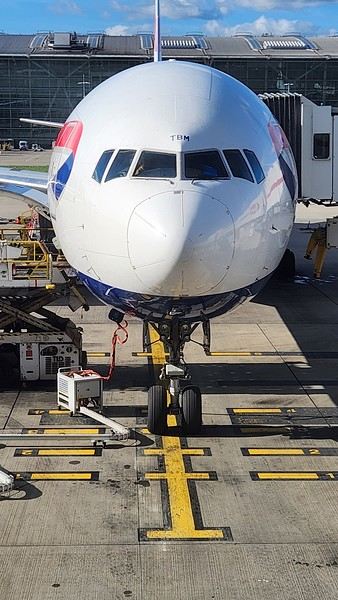
We all have two lives. And the second one kicks off the day you realize you only have one, with the determination to spend the time you have left on what truly adds sparkle to your life, Kevin! I like to elegantly introduce a trip with a philosophical quote. First, it gives you the illusion that I’m some kind of deep thinker, and second, it lets me fill up the first few lines of my blank page when I don’t know how to tell you I’m diving back into what really lights up my life: another adventure beyond the horizon! And nearly every other year, like a toxic relationship, my horizon tends to take shape in Uncle Sam’s backyard. And this, despite his cousin Donald calling the shots. Speaking of which, it was partly that impulsive guy who pushed us to be just as impulsive and snag our four flight tickets at a ridiculously low price—a direct result of foreign tourism taking a hit from BetaMax’s repeated antics... Four tickets? Who are the other lucky ones? In this case, our lucky ones are actually lucky ladies: My Flo, always up for exploring the world with me on foot, camelback, or scooter, is obviously in on the fun. The other two seats went to our daughters, Sasha and Luna, both thrilled to be part of this new American adventure...
But what’s the American West like in February?... A gamble. Let’s call it Russian roulette since we’re not landing during peak weather season. That’s why we encouraged our transportation and accommodation to get cozy and produce a little camper van, so we can stay ultra-flexible in the face of any weather tantrums. We’ll be roaming in Kara the van with the motto "Follow the sun!" Bad weather? We bolt. Snow? We speed up. Sunny? We act like it was the plan all along and soak it up.
"Okay, but why keep coming back to the same corner of the globe? After ten American adventures, you must be tired of seeing the same things, right?" But I’m not crazy, you know!... The American West is like making love to your gorgeous wife over and over, always enjoying it just as much. And contrary to what you might think, the American West isn’t just the Grand Canyon, Monument Valley, Las Vegas, and Bryce Canyon. Proof is, after ten trips to the U.S., my retinas are still untouched by three-quarters of the places I scribbled on a napkin for this adventure... Oh, and add to that my wife, who I’ve easily converted to my religion, and boom... relapse is even easier! Because yes, we’ve landed in Los Angeles after a sunny flight over Greenland, still under Danish flag for now. And we’re already heading east through the XXL traffic of L.A.’s eight-lane highways, eager to dive into our first discoveries. But first, night is taking over the sky, and second, we’ve been officially awake for 24 hours, so I suggest wrapping up this intro. I’ll tell you more tomorrow morning. Sound good?

We all have two lives. And the second one kicks off the day you realize you only have one, with the determination to spend the time you have left on what truly adds sparkle to your life, Kevin! I like to elegantly introduce a trip with a philosophical quote. First, it gives you the illusion that I’m some kind of deep thinker, and second, it lets me fill up the first few lines of my blank page when I don’t know how to tell you I’m diving back into what really lights up my life: another adventure beyond the horizon! And nearly every other year, like a toxic relationship, my horizon tends to take shape in Uncle Sam’s backyard. And this, despite his cousin Donald calling the shots. Speaking of which, it was partly that impulsive guy who pushed us to be just as impulsive and snag our four flight tickets at a ridiculously low price—a direct result of foreign tourism taking a hit from BetaMax’s repeated antics... Four tickets? Who are the other lucky ones? In this case, our lucky ones are actually lucky ladies: My Flo, always up for exploring the world with me on foot, camelback, or scooter, is obviously in on the fun. The other two seats went to our daughters, Sasha and Luna, both thrilled to be part of this new American adventure...
But what’s the American West like in February?... A gamble. Let’s call it Russian roulette since we’re not landing during peak weather season. That’s why we encouraged our transportation and accommodation to get cozy and produce a little camper van, so we can stay ultra-flexible in the face of any weather tantrums. We’ll be roaming in Kara the van with the motto "Follow the sun!" Bad weather? We bolt. Snow? We speed up. Sunny? We act like it was the plan all along and soak it up.
"Okay, but why keep coming back to the same corner of the globe? After ten American adventures, you must be tired of seeing the same things, right?" But I’m not crazy, you know!... The American West is like making love to your gorgeous wife over and over, always enjoying it just as much. And contrary to what you might think, the American West isn’t just the Grand Canyon, Monument Valley, Las Vegas, and Bryce Canyon. Proof is, after ten trips to the U.S., my retinas are still untouched by three-quarters of the places I scribbled on a napkin for this adventure... Oh, and add to that my wife, who I’ve easily converted to my religion, and boom... relapse is even easier! Because yes, we’ve landed in Los Angeles after a sunny flight over Greenland, still under Danish flag for now. And we’re already heading east through the XXL traffic of L.A.’s eight-lane highways, eager to dive into our first discoveries. But first, night is taking over the sky, and second, we’ve been officially awake for 24 hours, so I suggest wrapping up this intro. I’ll tell you more tomorrow morning. Sound good?
A Brief A to Z of Peru
Foreword
This text has been proofread many times.
Sorry if some points in this A to Z have already been covered on this forum.
Text and drawings by the author.
Peru is still a very vast country, with so much to see, and obviously this text can't list all the attractions of the country.
*Abiseo (River) A national park that's very hard to access and doesn’t seem open to visitors. Includes the Gran Pajaten site (see below). Personally, it really sparks my imagination (not visited personally)
*Aguas Calientes the town next to Machu Picchu, more precisely below the archaeological site. As far as I know, you can only get there by train. Reminds me of the market where stalls line both sides of the tracks near Bangkok. I love it
*Altiplano: somewhere the "heart" of the Andes. I was able to trek across it on foot, starting from Caracollo in Bolivia, and of course, it’s vast plains to explore. This is where people live in a very rural way. Andean populations are quite austere compared to those in the lowlands or on the coast. You really have to appreciate the harshness of life to live there. Life is anything but superficial. I set a compass heading and found myself walking west toward the expanse of water near a place called La Joya. For pitching the tent, the nights were still chilly
*Canyon del Colca One of the deepest canyons in the world. Personally, I hiked down and back up on foot. The toughest stretch I’ve ever covered in my life.
*Ceviche More or less the national dish. A marinade of fish, shellfish, and lime. But you can find it in some restaurants in Europe, France, and certainly in Belgium or Switzerland. In the small restaurants of Pisco, you can eat excellent ceviche
*Cerro Sechín: Mostly bas-reliefs. A site little known to travelers in the Casma province. The first vestiges of a pre-Inca civilization with iconography similar to that of Chavín (not visited personally)
*Chan Chan A large city of the Chimú civilization and relatively vast to visit. You can see adobe walls with bas-reliefs. Visit from Trujillo, take a colectivo. Plan for the whole day
*Charango: a small guitar widely used in Andean music
*Chauchilla A necropolis near Nazca where you can see mummies exposed on the ground. YouTubers can do paranormal experiments there. And for anyone wondering about the fate of the soul and body after death, here’s the answer: the body remains after death. You can imagine your own flesh and body exposed to the winds of the Pampa and before eternity... (not visited personally)
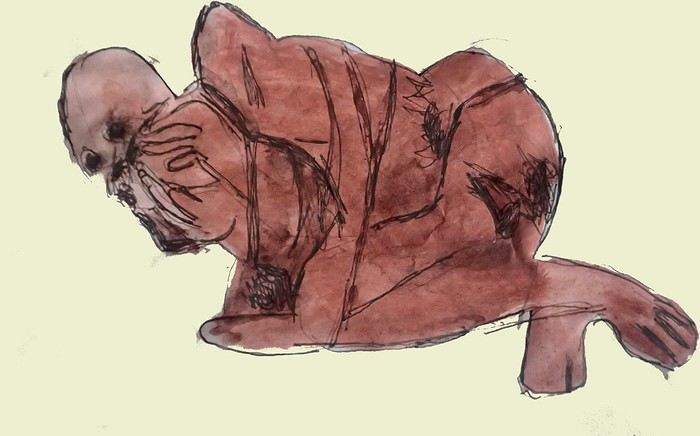
*Chavín de Huántar (Lanzón) The site’s appeal lies in its mountainous surroundings, the Lanzón stela, and the sculpted heads on the façades. What few people know is that the Chavín civilization began its expansion centuries before the Incas. Unfortunately, you can’t get too close to see the Lanzón—the day I was there, it was protected by grilles. To get there: minibus from Huaraz or trek from Olleros. Then cross a high pass (over 5,000m). If you do it solo on foot, be careful—the path isn’t obvious from Olleros
*Chullpa: funerary tower, notably at Sillustani in the Lake Titicaca region
*Chimú: pre-Inca civilization whose center was Chan Chan.
*Chola/Cholitas (Bolivia): typical clothing style of women from the Andean plateaus
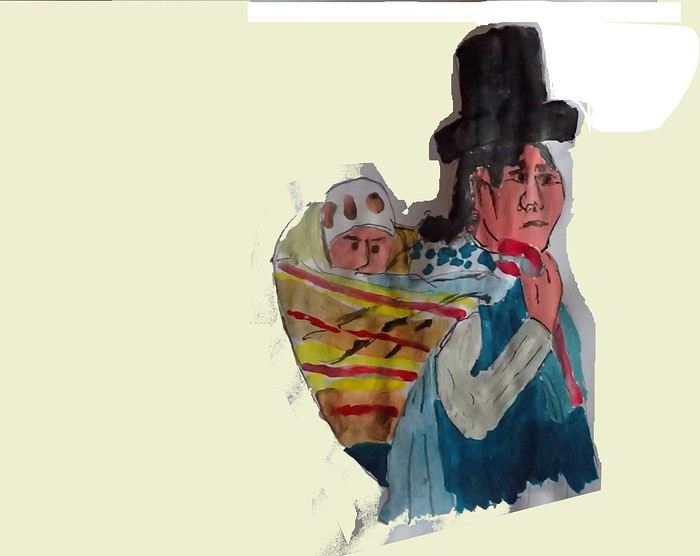
*Chompa: pronounce it *Chompaaa!* A common term for a wool sweater with vicuña patterns, often knitted from alpaca wool. If you dress like this, it’s a bit kitschy around the edges
*Cuy That one isn’t a guinea pig like in Guyana but an actual guinea pig. During a trip to Peru, I was hiking near a village north of Quillabamba (the terminus of the train line that passes through Aguas Calientes), and I was invited to stay in a house. The family raised a few of these pets. Apparently, the locals eat them. Since I’m not much of a meat-eater, it doesn’t really tempt me. How about you?
*Pacific Coast or how to talk about a place you haven’t visited? Except for the coast near Pisco and San Andrés, I haven’t visited any coastal cities. But that doesn’t mean these places lack interest or poetry. For fans of clichéd images, pelicans, seabirds, and fishing boats appear by the sea.
*Gran Pajaten: also closed to the public. Features anthropomorphic bas-reliefs. (not visited personally)
*Huaca. Visit the Huaca del Sol and Huaca de la Luna, especially near Trujillo. However, you can skip them—Chan Chan is still more interesting. Don’t forget to spend time visiting Chan Chan
*Huacachina A small oasis in the desert near Ica. Yes, we’re talking about an oasis because for those who’ve never traveled to Peru, the coastal strip along the Pacific is almost entirely desert, from north to south. Peru is territorially made up of three different regions: the desert coast, the Altiplano stretching north to south with mountain ranges (the Cordilleras), and the Amazon basin to the east. (not visited personally)
*Inca Kola It’s neither Coca-Cola nor Pepsi but a unique cola with a slightly orange color. Tastes like bubble gum
*Intiwatana: a carved rock shaped like a parallelepiped. Is it a sundial?
*Ballestas Islands: a highlight in Peru, though very touristy. You can only get there by boat from the port of San Andrés, a few kilometers from Pisco. It’s a surreal place to me—actually islets with cavities where sea lions and fur seals live. Since it’s a protected area, you’re not allowed to disembark. Guano is harvested there, which can be used as fertilizer.
*Kuelap: a fortress built by the Chachapoyas people. Rarely visited by travelers. (not visited personally)
*Larco Museum: an iconic museum in Lima with a large collection of pieces from archaeological and pre-Columbian sites. From what I remember, it has many pieces from the Moche civilization. As for the Moche statuettes, the prudish might look away. Probably a veneration of the god Priapus without knowing it.
*Nazca Lines Discovered by German archaeologist Maria Reiche, they stretch for kilometers. The designs in the desert around Nazca depict animals and cabalistic signs. The question I ask myself is why the creators of these lines represented a monkey and a hummingbird—species endemic to the tropical forest, not the desert plains around Nazca.
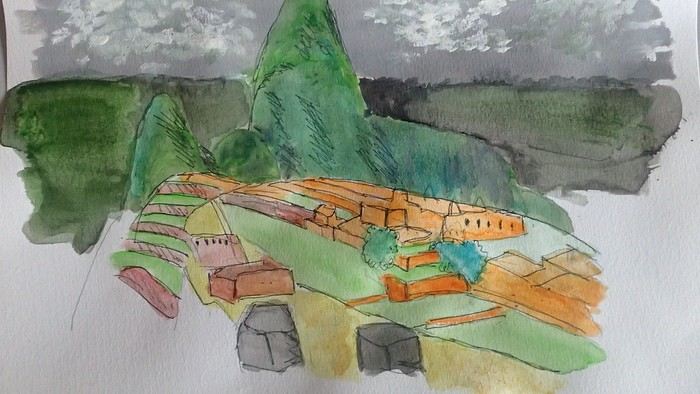
*Machu Picchu: means "old mountain" in Quechua. There’s also Wayna Picchu. The ruins of the site emerge from a sort of small plateau above Aguas Calientes. When the mist rises above the site and the bend of the Urubamba River, it’s truly magical... Also the starting point of the Inca Trail.
*Coca tea A decoction/infusion of the coca plant, meant to ease altitude sickness or *soroche*
*Chullo A rough translation would be a Peruvian wool hat.
*Moche: a civilization established in the Moche Valley, hence the term *Mochica*. What characterizes this civilization are the distinctive clay pieces representing faces and erotic statuettes
*Papa a la Huancaína A local potato dish
*Pisac: a typical market near Cusco
*Pisco Sour: perhaps the Peruvian equivalent of the *caipirinha* you drink in Brazil.
*Puya Raimondii A Bromeliaceae that still looks like a cactus, endemic to the Altiplano
*Quechua The language spoken by the indigenous people of the high plateaus (as well as Aymara in Bolivia)
*Quipu A knotted string used for counting. Widely used by the Inca administration.
*Sacsayhuamán (Q’enqo, Inca Bath) From Cusco’s Plaza de Armas, take the streets that climb above the city. Sacsayhuamán is called a fortress and is made up of large stone blocks. You wonder how the Incas could cut such huge blocks to assemble them—just like some streets in Cusco. The Q’enqo block is enigmatic; no one really knows what it represents.
*Savia Andina An Andean folk group.
*Tambo (=> Ollantaytambo) The Inca emperor (Atahualpa, Manco Capac) had the mission of controlling a vast empire. An empire that was still very extensive. Hence the importance of these *tambos* or relay stations. Napoleon created the civil code; the Incas invented the *tambos* and *quipus*.
*Tawantinsuyu: the Inca Empire
*Tinku: a warrior dance practiced mainly in Bolivia
*Golden Tumi: a sacrificial weapon. Often featured in Peru travel guides. See illustration
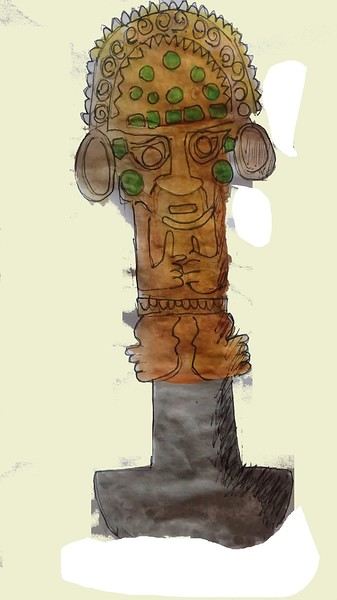
*Terra X: a documentary series from the German TV channel that aired on Arte. Some episodes focused on pre-Inca and Inca Peru. I must have some old recording tapes. In memory of Gottfried Kirchner as a source of inspiration.
*Uros: I checked—it actually refers to the people who live on these floating islands. Even if it’s touristy, it’s a must-visit because it’s incredible how people can live on islets made from nothing. Take the boat from Puno
*Vicuña, llama, guanaco: camelids characteristic of the Altiplano
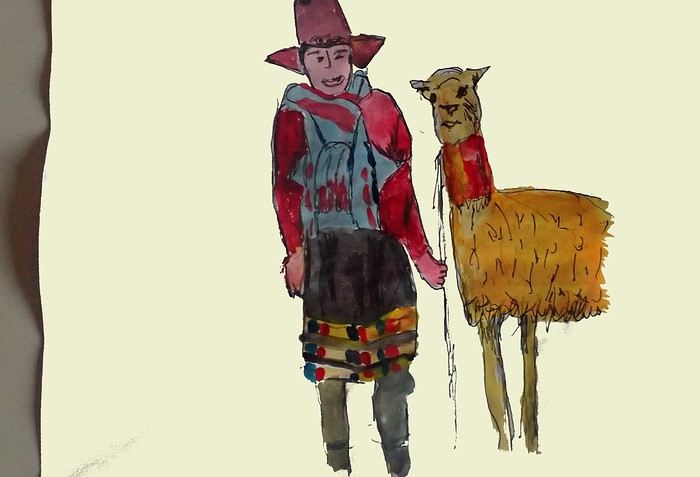
*Wayna Picchu The young Picchu mountain. In the first minutes of *Aguirre, the Wrath of God*, you see Klaus Kinski—well, Aguirre—making his way along the Inca Trail. Werner Herzog must have broken his back filming those sequences.
*Zampoña: pan flute
Peru is still a very vast country, with so much to see, and obviously this text can't list all the attractions of the country.
*Abiseo (River) A national park that's very hard to access and doesn’t seem open to visitors. Includes the Gran Pajaten site (see below). Personally, it really sparks my imagination (not visited personally)
*Aguas Calientes the town next to Machu Picchu, more precisely below the archaeological site. As far as I know, you can only get there by train. Reminds me of the market where stalls line both sides of the tracks near Bangkok. I love it
*Altiplano: somewhere the "heart" of the Andes. I was able to trek across it on foot, starting from Caracollo in Bolivia, and of course, it’s vast plains to explore. This is where people live in a very rural way. Andean populations are quite austere compared to those in the lowlands or on the coast. You really have to appreciate the harshness of life to live there. Life is anything but superficial. I set a compass heading and found myself walking west toward the expanse of water near a place called La Joya. For pitching the tent, the nights were still chilly
*Canyon del Colca One of the deepest canyons in the world. Personally, I hiked down and back up on foot. The toughest stretch I’ve ever covered in my life.
*Ceviche More or less the national dish. A marinade of fish, shellfish, and lime. But you can find it in some restaurants in Europe, France, and certainly in Belgium or Switzerland. In the small restaurants of Pisco, you can eat excellent ceviche
*Cerro Sechín: Mostly bas-reliefs. A site little known to travelers in the Casma province. The first vestiges of a pre-Inca civilization with iconography similar to that of Chavín (not visited personally)
*Chan Chan A large city of the Chimú civilization and relatively vast to visit. You can see adobe walls with bas-reliefs. Visit from Trujillo, take a colectivo. Plan for the whole day
*Charango: a small guitar widely used in Andean music
*Chauchilla A necropolis near Nazca where you can see mummies exposed on the ground. YouTubers can do paranormal experiments there. And for anyone wondering about the fate of the soul and body after death, here’s the answer: the body remains after death. You can imagine your own flesh and body exposed to the winds of the Pampa and before eternity... (not visited personally)
*Chavín de Huántar (Lanzón) The site’s appeal lies in its mountainous surroundings, the Lanzón stela, and the sculpted heads on the façades. What few people know is that the Chavín civilization began its expansion centuries before the Incas. Unfortunately, you can’t get too close to see the Lanzón—the day I was there, it was protected by grilles. To get there: minibus from Huaraz or trek from Olleros. Then cross a high pass (over 5,000m). If you do it solo on foot, be careful—the path isn’t obvious from Olleros
*Chullpa: funerary tower, notably at Sillustani in the Lake Titicaca region
*Chimú: pre-Inca civilization whose center was Chan Chan.
*Chola/Cholitas (Bolivia): typical clothing style of women from the Andean plateaus
*Chompa: pronounce it *Chompaaa!* A common term for a wool sweater with vicuña patterns, often knitted from alpaca wool. If you dress like this, it’s a bit kitschy around the edges
*Cuy That one isn’t a guinea pig like in Guyana but an actual guinea pig. During a trip to Peru, I was hiking near a village north of Quillabamba (the terminus of the train line that passes through Aguas Calientes), and I was invited to stay in a house. The family raised a few of these pets. Apparently, the locals eat them. Since I’m not much of a meat-eater, it doesn’t really tempt me. How about you?
*Pacific Coast or how to talk about a place you haven’t visited? Except for the coast near Pisco and San Andrés, I haven’t visited any coastal cities. But that doesn’t mean these places lack interest or poetry. For fans of clichéd images, pelicans, seabirds, and fishing boats appear by the sea.
*Gran Pajaten: also closed to the public. Features anthropomorphic bas-reliefs. (not visited personally)
*Huaca. Visit the Huaca del Sol and Huaca de la Luna, especially near Trujillo. However, you can skip them—Chan Chan is still more interesting. Don’t forget to spend time visiting Chan Chan
*Huacachina A small oasis in the desert near Ica. Yes, we’re talking about an oasis because for those who’ve never traveled to Peru, the coastal strip along the Pacific is almost entirely desert, from north to south. Peru is territorially made up of three different regions: the desert coast, the Altiplano stretching north to south with mountain ranges (the Cordilleras), and the Amazon basin to the east. (not visited personally)
*Inca Kola It’s neither Coca-Cola nor Pepsi but a unique cola with a slightly orange color. Tastes like bubble gum
*Intiwatana: a carved rock shaped like a parallelepiped. Is it a sundial?
*Ballestas Islands: a highlight in Peru, though very touristy. You can only get there by boat from the port of San Andrés, a few kilometers from Pisco. It’s a surreal place to me—actually islets with cavities where sea lions and fur seals live. Since it’s a protected area, you’re not allowed to disembark. Guano is harvested there, which can be used as fertilizer.
*Kuelap: a fortress built by the Chachapoyas people. Rarely visited by travelers. (not visited personally)
*Larco Museum: an iconic museum in Lima with a large collection of pieces from archaeological and pre-Columbian sites. From what I remember, it has many pieces from the Moche civilization. As for the Moche statuettes, the prudish might look away. Probably a veneration of the god Priapus without knowing it.
*Nazca Lines Discovered by German archaeologist Maria Reiche, they stretch for kilometers. The designs in the desert around Nazca depict animals and cabalistic signs. The question I ask myself is why the creators of these lines represented a monkey and a hummingbird—species endemic to the tropical forest, not the desert plains around Nazca.
*Machu Picchu: means "old mountain" in Quechua. There’s also Wayna Picchu. The ruins of the site emerge from a sort of small plateau above Aguas Calientes. When the mist rises above the site and the bend of the Urubamba River, it’s truly magical... Also the starting point of the Inca Trail.
*Coca tea A decoction/infusion of the coca plant, meant to ease altitude sickness or *soroche*
*Chullo A rough translation would be a Peruvian wool hat.
*Moche: a civilization established in the Moche Valley, hence the term *Mochica*. What characterizes this civilization are the distinctive clay pieces representing faces and erotic statuettes
*Papa a la Huancaína A local potato dish
*Pisac: a typical market near Cusco
*Pisco Sour: perhaps the Peruvian equivalent of the *caipirinha* you drink in Brazil.
*Puya Raimondii A Bromeliaceae that still looks like a cactus, endemic to the Altiplano
*Quechua The language spoken by the indigenous people of the high plateaus (as well as Aymara in Bolivia)
*Quipu A knotted string used for counting. Widely used by the Inca administration.
*Sacsayhuamán (Q’enqo, Inca Bath) From Cusco’s Plaza de Armas, take the streets that climb above the city. Sacsayhuamán is called a fortress and is made up of large stone blocks. You wonder how the Incas could cut such huge blocks to assemble them—just like some streets in Cusco. The Q’enqo block is enigmatic; no one really knows what it represents.
*Savia Andina An Andean folk group.
*Tambo (=> Ollantaytambo) The Inca emperor (Atahualpa, Manco Capac) had the mission of controlling a vast empire. An empire that was still very extensive. Hence the importance of these *tambos* or relay stations. Napoleon created the civil code; the Incas invented the *tambos* and *quipus*.
*Tawantinsuyu: the Inca Empire
*Tinku: a warrior dance practiced mainly in Bolivia
*Golden Tumi: a sacrificial weapon. Often featured in Peru travel guides. See illustration
*Terra X: a documentary series from the German TV channel that aired on Arte. Some episodes focused on pre-Inca and Inca Peru. I must have some old recording tapes. In memory of Gottfried Kirchner as a source of inspiration.
*Uros: I checked—it actually refers to the people who live on these floating islands. Even if it’s touristy, it’s a must-visit because it’s incredible how people can live on islets made from nothing. Take the boat from Puno
*Vicuña, llama, guanaco: camelids characteristic of the Altiplano
*Wayna Picchu The young Picchu mountain. In the first minutes of *Aguirre, the Wrath of God*, you see Klaus Kinski—well, Aguirre—making his way along the Inca Trail. Werner Herzog must have broken his back filming those sequences.
*Zampoña: pan flute
Nepal Feedback
NAMASTE NEPAL! PRACTICAL INFO AND EXPERIENCE FEEDBACK
Stay from March 25 to April 16, 2025
· Flight tickets Air India (via Delhi) (via Skyscanner) = 1130 € per person · Planned budget (and respected without too many restrictions and while buying a few small gifts) = 2000 € for the stay for two. Buses, taxis, and entrance fees to various sites represent a budget to consider. Meals are cheap. Drinks like beer/Coke, however, are not cheap and cost the equivalent of a meal. · Exchange rate of the rupee during our stay = 0.0064 € (the exchange rate is almost identical everywhere, including at the airport). · At the airport, purchase of two SIM cards (phone) = 1000 NPR x 2 for 28 days. · Kathmandu: we had booked the hotel upon arrival: Kathmandu Boutique Hotel (+977 015 357 446 – email: booking@kathmanduboutiquehotel.com), very well located in a quiet alley off the street, south of Thamel, a 10-minute walk from Durbar Square. A hotel like Nepal knows how to do, where tall people will have to duck. Night + breakfast = 18 € for two. Very warm welcome, great location, excellent value for money. · Bhaktapur: we had also booked a hotel for the end of our stay because the chance of the year 2025 made the Nepali New Year and Bisket Jatra particularly festive in Bhaktapur: Manju Baha Hotel School (+977 976 7234014 – email: manjubahahotel@gmail.com) located in an old monastery. "A social enterprise transforming an old monastery into a charming hotel, offering professional hospitality training to underprivileged Nepali youth." Night + breakfast = 32 € for two. Beautifully decorated room. Very warm welcome. Don’t miss the Changunarayan site (near Bhaktapur), it’s amazing. And if you’re lucky enough to be in Bhaktapur in mid-April for 3 days, there’s the Bisket Jatra festivities (Newari festival), joyful, noisy, fun, and wild… · Pokhara (hotel recommended by the Kathmandu hotel): Hotel Green Tara, Lakeside, 10th street, set back, quiet (Tel. +977 61 462698 – email: greentara_67@hotmail.com) · Trek permit (Lower Mustang, no need for an agency or guide, permits checked at Ghasa and Jomsom) = 2000 NPR per person (2 ID photos) · Bus Kathmandu/Pokhara and return = 2000 NPR per person · Bus Pokhara/Jomsom, 2 one-way tickets = 2800 NPR. · Taxi: negotiation with a driver we recommend, Vicky (+977 984 075 599). You explain what you want, negotiate the price, and he waits for you during the visit. Very charming, we used him several times. For example: departure from our hotel at 10 AM -> Boudhanath/Pashupatinath/Patan return at 5 PM to the hotel = 6500 NPR – Swayambhunath (round trip) = 1200 NPR · Site prices: https://ntb.gov.np/plan-your-trip/before-you-come/heritage-site-entry-fees o Visitor Pass for Kathmandu Durbar Square (for the duration of the stay, show your visa) = 1000 NPR per person (1 ID photo) o Bhaktapur Durbar Square (old town) = 1800 NPR per person o Patan = 1000 NPR per person o Swayambhu Stupa = 200 NPR per person o Boudha Stupa = 200 NPR per person o Pashupatinath Temple = 1000 NPR per person (interesting to take a guide) o Changunarayan Temple (6 km north of Bhaktapur) = 400 NPR per person o Mountain Museum in Pokhara = 750 NPR per person · E-cigarettes: e-cigarettes are banned in India and confiscated whether they’re in carry-on or checked luggage. On the way there, we had kept them in our carry-on, they were confiscated in Delhi. On the way back, learning from our previous experience, we put them in our checked luggage. Someone came to get us to take them out of our bags and confiscate them… You can find e-cigarettes and products in Kathmandu.
* * *
I’m 74 years old. I went to Nepal in 1982, 1983, and the last time in 1986. I wanted to introduce this beautiful and endearing country to my husband, and it was… now or never. So we decided it was now.
I knew the trek starting from Pokhara: Naudanda/Birethanti/Ghorepani/Tatopani/Kalopani. There was no way I was going to do that trek, especially the 1000-meter staircase to reach Ghorepani… You have to stay humble with age.
Back then, the road didn’t exist. I didn’t consider, with the construction of this road (NH48) along the western bank of the Kali Gandaki, doing a trek along a windy and dusty road. Was there an alternative hiking trail on the eastern bank? No one answered my question on VoyageForum, so I did my research online. And I found this site: "Andrées de Ruiter and Prem Rai - Trekking the Annapurna Circuit, including the new NATT trails that avoid the road - A guide to one of the most beautiful trekking regions in Nepal and the world (2011) - NATT = New Annapurna Trekking Trail".
Phew! A solution was emerging. This circuit from 2011 wasn’t fully marked. The idea was to go from Jomsom to Tatopani, so we needed to make sure the path was well-marked all the way, which we did, and the path exists, marked in red and white!
So, with the walking times information, we built our 8-day circuit:
· Jomsom/Thinigaon · Thinigaon/Chimang · Chimang/Saura · Saura/Kokhetanti · Rest day or, if in good shape: loop to Sekong Lake · Kokhetanti/Jhipra Deurali · Jhipra Deurali/Kopchepani · Kopchepani/Tatopani
It’s a senior trek, after all. So the walking times noted on the sites indicated 3 hours or even 4 hours for the two longest stages. That pace suited us fine.
On March 29, we left Kathmandu (1400m), after visiting the must-see sites, by bus to Pokhara: 200 km and 8.5 hours on a chaotic road under construction. I had a memory of Pokhara where it was the first city where you could see the Himalayan range, especially Machhapuchhare. But the pollution is such, the dust raised by traffic and construction, that no horizon is visible except the first hills around Pokhara.
We stayed 24 hours in Pokhara (820m), and on March 31, we left our luggage at the hotel and set off with our lightest backpacks: change of clothes, toiletries, first aid kit, anti-chafing cream, water bottle, sleeping bag liner, and light shoes for the stages.
We took the bus to Jomsom: 160 km/7.5 hours including stops for bathroom breaks, tea, and lunch. The road is nothing but a chaos of potholes, landslides, construction, dust, rebuilding, and mudslides. In Ghasa, the bus stops, and we’re told we’re at a checkpoint and that the two foreigners in the bus, my husband and I, need to have our permits checked, which takes a few minutes. The driving is rock-and-roll, surprising, and courteous. The drivers have their codes, and on these improbable roads, they’re virtuosos.
We could have chosen the plane, but several reasons dissuaded us: if there’s too much wind, the planes don’t take off; personally, I wasn’t reassured about landing in Jomsom, and this transport has a cost.
We arrived around 2 PM in Jomsom (2720m), and despite the early wake-up, the nearly 8 hours on the bus, and the altitude, we decided to head straight to Thinigaon (2840m). At the Jomsom checkpoint, they told us it was a 30-minute walk. Great! Except we took an hour and a half on an uphill road, bent over to fight a strong wind. But the Himalayan range is there! The Dhaulagiri, the Nilgiri, the Annapurnas as a reward.
In Thinigaon, we found a room at the "Nilgiri View Hotel" run by a didi (big sister in Nepali). From the lodge’s roof, she proudly showed us the different peaks surrounding the village and told us, worried, that it hadn’t snowed here for 3 years. She said there are very few tourists, that the season is rather in September/October/November. It seems there’s not a soul in this village, yet mules pass through the narrow street paved with large flat stones, their bells ringing. We dine at 6 PM and go to bed… Room = 1200 NPR and dinner, breakfast, and drinks = 2560 NPR.
On April 1, we set off at 9 AM, not for Chimang as planned but for Marpha! The didi from the Thinigaon lodge had said it was a 3-hour walk. The first part of this stage is attractive, the mountains are magnificent and imposing, the landscape is superb, there’s no one around, a feeling of being "alone in the world." We follow Dhumbra Tal, this small green lake. The path is a rocky track that climbs steeply. Then, around a hill, we start the big descent that joins the Kali Gandaki. We face the wind head-on, and the violent gusts take our breath away, throw us off balance, and envelop us in dust. We see the road on the other side of the Kali Gandaki. We arrive in the village of Chhairo at 2 PM, completely exhausted and with blistered feet, after 5 hours of walking instead of the planned 3.5 hours.
We’re welcomed by the village nurse, who tells us there’s a lodge in the village. Chhairo is a Tibetan village, a 20-minute walk from Marpha (according to the locals, multiply by 2 or even 3 for us…). We’re going to revise our trek plan and, first of all, spend the night in Chhairo.
The lodge is quite pleasant, and Karma, the hostess, is very friendly. She asks about our plans and suggests we stay in Chhairo the next day, from where we can visit Marpha and also Chimang, a 1-hour walk away, in light mode, meaning without backpacks. She invites us to participate in a village ceremony the next evening.
We immediately accept the proposal, as our feet need rest and the welcome is so warm… Dinner and bed!
We reworked our trek plan, which was too ambitious for our untrained bodies and, let’s face it… no longer in our first youth. In the initial plan, we thought there wouldn’t be too much elevation gain following the Kali Gandaki, but checking the map, we realize there might be significant elevation changes between Sauru and Sirkung. So we plan:
· Tomorrow: visit Marpha (2670m) and Chimang (2744m) · April 3: bus from Chhairo (2700m) to Kalopani (2530m) and continue on foot to Ghasa (2010m) · April 4: Ghasa/Pairataplo (1940m) · April 5: Pairatapla/Gadpar (1580m) · April 6: Gadpar/Narchyang (1510m) · April 7: Narchyang/Tatopani (1190m) · April 8: return to Pokhara.
Normally, it’s all downhill…
April 2, a rest day then… We set off in the morning to explore Marpha. We have to take a temporary bridge because the suspension bridge is closed due to road construction. We join the road and arrive in Marpha, a village famous for its apple orchards, brandy, cider, and apple juice production. This village is magnificent with its stone houses and monastery clinging to the hillside. The road construction spared it. There are people, but very few Western tourists.
We have lunch in Marpha and go back through Chhairo to take the path to Chimang. We cross a fragrant pine forest and find the rocky path; the landscape is splendid. We walk quietly, passing peaceful buffaloes and cows, and arrive at the foot of a stone staircase… 275 steps (which we counted on the way back) leading us to the village of Chimang. Chimang is an isolated Newari village that seems a bit desolate. Despite the slopes, there are crops on every little bit of land. Thankfully, we changed our initial program because there’s no lodge in this village, contrary to what we saw on a map… We wander through the village, which seems very deserted, have coffee in a house from another world, and then head back to Chhairo.
A rest day? = 5 hours of walking!!
Dinner and village ceremony. From what we understand, this ceremony is in honor of the Dalai Lama. Men, women, and children in traditional costumes gather twice a month; they dance, make, and offer small sweet cakes with Tibetan tea (made from tea, yak butter—often rancid—water, and salt). Surprising for first-timers…
Around 10 PM, we leave the ceremony; tomorrow morning, we need to be on the roadside by 7 AM to catch the bus to Kalopani…
This village of Chhairo is very pleasant and welcoming, no tourists, just two motorcyclists who arrived in the evening, one of whom participated in the ceremony and discreetly poured his Tibetan tea outside.
Lodge: "Norsang Tibetan Guesthouse and Restaurant". Total bill for 2 nights, 2 dinners, 2 breakfasts, and drinks = 8000 NPR.
April 3: bus from Chhairo to Kalopani, about 1.5 hours for the 20 km (200 NPR per person). We descend on the right bank of the Kali Gandaki. We find the red and white markings to resume the trek toward Ghasa. We’re in a fragrant pine forest, the Dhaulagiri on one side and the Annapurnas on the other, magnificent, and the path is pleasant and easy. We get a bit lost in this forest, always looking for the markings. Near Lete, two trekkers pass us, and we meet them again a little further on with two very young children, to whom we give the 2 hard-boiled eggs I didn’t eat this morning. They accepted them without hesitation.
We arrive in a village and ask for directions to Ghasa. The young girls point the way. But we come across a forest being logged, trees cut in all directions. We turn back and ask for confirmation. They confirm… But the two young girls catch up with us and clear the way. We have to step over, go around, and cross the felled trees, with no indication at all. Through this pick-up sticks of felled trees, the girls lead us to the top of a stone staircase, indicating that was the path. It’s the only place where we saw rhododendrons in bloom.
We descend the staircase. At the bottom, to the left, there’s a bridge to go toward Choyo, and to the right, a path to Ghasa. We take the right path and join the road. We should normally find the red and white markings, but we don’t… So we continue on the western bank road of the Kali Gandaki.
A little before the village of Misi, we see fumaroles on the opposite bank that seem to come from the ground. We don’t understand. We stopped to eat in the village of Misi (noodle soup = 600 NPR), but it’s hard to communicate with the elderly people running the guesthouse.
We continued on the road, not finding the marked path parallel to the road. Landslides, both on the left and right banks, seem to have taken over the marked routes. It’s a place where the Kali Gandaki gorge narrows, and on the opposite bank, the mountain smokes more and more, and we now hear the crackling of fire. Across from us, the mountain is burning… Our initial plan had us passing on that burning bank right now…
We arrive in Ghasa at 3:30 PM, a 6.5-hour stage but with a 1-hour stop at noon. We’re at the "Florida Guesthouse and Restaurant." From our room, we see the mountain smoking on the other side of the river, and at night, we see the flames. In this village, posters show Himalayan eagles and vultures that seem to be protected species. Indeed, we saw (and heard) 3 eagles circling today.
April 4 – Today, heading to Pairothapla or Kopchepani depending on our feet, accommodation options, and simply our desires.
No more smoke on the mountain this morning. It’s chilly, 7:45 AM, the sky is clear, just a smell of smoke outside.
Price of the lodge = 1000 NPR for the night + 3580 NPR for meals.
We cross Ghasa, which stretches over more than a kilometer. We have a drink at the last guesthouse in the village, and the didi, when she learns our destination, tells us to be careful because the villages we’re going to aren’t safe. Should we distribute our rupees in different pockets? Nah, we kept going.
At the exit of Ghasa, we find the red and white markings and take the suspension bridge to cross the boiling waters of the Kali Gandaki. The passage is impressive because the river is tumultuous. Lots of climbs and even more descents. We’re back on the eastern bank. It’s hot! On the narrow path, we meet a group of buffaloes. Who has the right of way? We decide to stick as close as possible to the rock wall and move forward calmly. The buffaloes look at us, chewing placidly, with no intention of jumping on us. Phew!
After a 5-hour stage (including stops), we arrive in Pairothapla, with hot feet and firm thighs, and decide we won’t go any further. It’s a good thing because there’s a lodge, the most basic so far, but with a great welcome. We have a meal and a short nap. The buffaloes we met on the way belong to this house. They come to drink at the fountain by the path.
Our host, very pleasant, doesn’t know what to do to please us and is very attentive. He wants to chat. He has two children, a 4-year-old girl and a 7-year-old boy. Where do they go to school? Do they go? He tells us that the fires in the mountain are caused by people, but for what reason? We won’t find out, but it’s illegal. From here, we can still see smoke rising in the distance. The wife is a bit less friendly. Corn kernels dry on a woven straw mat on the ground, and the mom sorts them.
From where we are, we overlook the valley and see the road under construction winding along the mountainside on the other bank.
Dinner on the terrace of the house overlooking the path, windbreaker and fleece on: dal bhat chicken for me and chicken curry for my husband: "organic" products, at least local production. There are small vegetable gardens everywhere with all sorts of vegetables.
April 5 – While we’re having breakfast on the terrace of our lodge, 5 porters, straps on their foreheads, heavily loaded, pass by on the path. A few minutes later, a group of 9 people appears. It must be said that since the beginning of our journey, we’ve met very few hikers. Two backpackers in Chhairo, the two hikers near Lete, two female hikers passed us before Pairothapla, a solo female hiker passed us…
The lodge in Pairothapla is called "Bimala Lodge & Thakali Kitchen" – Price for night + 4 meals + 2 breakfasts = 3000 NPR.
The descent toward the Kali Gandaki involves climbs whose steps we didn’t count. Clearly, the landslides on the mountain cause changes to the official ACAP trek marked in red and white, and the marking updates can’t keep up with the pace of these landslides. It’s almost always by chance that we find the markings. Fortunately, we can follow the power line that guides us somewhat.
Drink stop in Kopchepani, the legs are fine, but the feet don’t like being tightly enclosed. A group of trekkers with porters passes on the path. We met buffaloes that we kindly let pass; the path was wide enough, but it was a staircase going up, and we didn’t want to take any risks.
Across, a view of the magnificent Rupse Waterfall on the other bank of the Kali Gandaki, at the bottom, lots of vehicles and people.
Arrival in Gadpar after crossing a rather unwelcoming small village and cultivated gardens between dry stone walls, each better built than the last.
First lodge spotted, first lodge adopted to answer the call of our feet, and a very warm welcome from the owner. Since we hadn’t eaten at noon, we had Tibetan bread/jam. 6-hour stage including 1 hour of stops. Night + dinner + breakfast + drinks = 5060 NPR
April 6 – Today, heading to Narchyang.
For several days, we’ve seen banana trees with their bunches of fruit and even a prickly pear with large fruits ripening.
This stage is quite peaceful and pleasant. We take a suspension bridge to cross a tributary of the Kali Gandaki. While we’re resting for a moment before crossing the bridge, a couple of porters, a man and a woman, arrive and start across the bridge with their wood load in a basket held by a strap on their forehead, making them bend. We set off too… lighter than them.
On the other side of the bridge… a stone staircase, and it climbs steeply. The porter couple didn’t take this staircase; they went right on the path.
At the top of the staircase, we arrive in Narchyang after a 4-hour stage. A magnificent waterfall overlooks the village. We get lost in this fairly large village looking for a lodge. After wandering around for a while, we ask for directions, and an 84-year-old man takes us through the whole village and accompanies us to a very nice lodge run by a woman.
We chat with our hostess, who asks where we’re from and where we’re going. We explain that we want to reach Tatopani the next day and then return to Pokhara. She tells us there are 4x4s going directly to Pokhara and that it would probably be easier than taking a bus that might be full in Tatopani. After a quick consultation, we decide to return to Pokhara the next day by 4x4. She finds us a 4x4 with 2 seats left, departure at 8 AM – 5 hours on the road and 1500 NPR per person. A charming didi who does everything to be pleasant and helpful.
Narchyang community lodge = night + snacks + dinner + breakfast = 3000 NPR.
There you go, our trek ends tomorrow. Many necessary changes and adaptations to our initial trek, but no regrets, it was superb and a great experience that, for my part, I won’t be able to repeat. Always this encounter with the endearing, welcoming, curious, and very kind Nepali people. It was now or never, and we did it!
* * *
In conclusion, 3 full weeks in Nepal is a duration that allows visiting Kathmandu, Patan, and Bhaktapur, enjoying the various sites, and soaking in the atmosphere and urban Nepali life.
The trek, even revised and corrected, allowed us to get close to the impressive Annapurna and Dhaulagiri peaks. One or two acclimatization days might be necessary to get the body in tune with this magical and extraordinary land.
Stay from March 25 to April 16, 2025
· Flight tickets Air India (via Delhi) (via Skyscanner) = 1130 € per person · Planned budget (and respected without too many restrictions and while buying a few small gifts) = 2000 € for the stay for two. Buses, taxis, and entrance fees to various sites represent a budget to consider. Meals are cheap. Drinks like beer/Coke, however, are not cheap and cost the equivalent of a meal. · Exchange rate of the rupee during our stay = 0.0064 € (the exchange rate is almost identical everywhere, including at the airport). · At the airport, purchase of two SIM cards (phone) = 1000 NPR x 2 for 28 days. · Kathmandu: we had booked the hotel upon arrival: Kathmandu Boutique Hotel (+977 015 357 446 – email: booking@kathmanduboutiquehotel.com), very well located in a quiet alley off the street, south of Thamel, a 10-minute walk from Durbar Square. A hotel like Nepal knows how to do, where tall people will have to duck. Night + breakfast = 18 € for two. Very warm welcome, great location, excellent value for money. · Bhaktapur: we had also booked a hotel for the end of our stay because the chance of the year 2025 made the Nepali New Year and Bisket Jatra particularly festive in Bhaktapur: Manju Baha Hotel School (+977 976 7234014 – email: manjubahahotel@gmail.com) located in an old monastery. "A social enterprise transforming an old monastery into a charming hotel, offering professional hospitality training to underprivileged Nepali youth." Night + breakfast = 32 € for two. Beautifully decorated room. Very warm welcome. Don’t miss the Changunarayan site (near Bhaktapur), it’s amazing. And if you’re lucky enough to be in Bhaktapur in mid-April for 3 days, there’s the Bisket Jatra festivities (Newari festival), joyful, noisy, fun, and wild… · Pokhara (hotel recommended by the Kathmandu hotel): Hotel Green Tara, Lakeside, 10th street, set back, quiet (Tel. +977 61 462698 – email: greentara_67@hotmail.com) · Trek permit (Lower Mustang, no need for an agency or guide, permits checked at Ghasa and Jomsom) = 2000 NPR per person (2 ID photos) · Bus Kathmandu/Pokhara and return = 2000 NPR per person · Bus Pokhara/Jomsom, 2 one-way tickets = 2800 NPR. · Taxi: negotiation with a driver we recommend, Vicky (+977 984 075 599). You explain what you want, negotiate the price, and he waits for you during the visit. Very charming, we used him several times. For example: departure from our hotel at 10 AM -> Boudhanath/Pashupatinath/Patan return at 5 PM to the hotel = 6500 NPR – Swayambhunath (round trip) = 1200 NPR · Site prices: https://ntb.gov.np/plan-your-trip/before-you-come/heritage-site-entry-fees o Visitor Pass for Kathmandu Durbar Square (for the duration of the stay, show your visa) = 1000 NPR per person (1 ID photo) o Bhaktapur Durbar Square (old town) = 1800 NPR per person o Patan = 1000 NPR per person o Swayambhu Stupa = 200 NPR per person o Boudha Stupa = 200 NPR per person o Pashupatinath Temple = 1000 NPR per person (interesting to take a guide) o Changunarayan Temple (6 km north of Bhaktapur) = 400 NPR per person o Mountain Museum in Pokhara = 750 NPR per person · E-cigarettes: e-cigarettes are banned in India and confiscated whether they’re in carry-on or checked luggage. On the way there, we had kept them in our carry-on, they were confiscated in Delhi. On the way back, learning from our previous experience, we put them in our checked luggage. Someone came to get us to take them out of our bags and confiscate them… You can find e-cigarettes and products in Kathmandu.
* * *
I’m 74 years old. I went to Nepal in 1982, 1983, and the last time in 1986. I wanted to introduce this beautiful and endearing country to my husband, and it was… now or never. So we decided it was now.
I knew the trek starting from Pokhara: Naudanda/Birethanti/Ghorepani/Tatopani/Kalopani. There was no way I was going to do that trek, especially the 1000-meter staircase to reach Ghorepani… You have to stay humble with age.
Back then, the road didn’t exist. I didn’t consider, with the construction of this road (NH48) along the western bank of the Kali Gandaki, doing a trek along a windy and dusty road. Was there an alternative hiking trail on the eastern bank? No one answered my question on VoyageForum, so I did my research online. And I found this site: "Andrées de Ruiter and Prem Rai - Trekking the Annapurna Circuit, including the new NATT trails that avoid the road - A guide to one of the most beautiful trekking regions in Nepal and the world (2011) - NATT = New Annapurna Trekking Trail".
Phew! A solution was emerging. This circuit from 2011 wasn’t fully marked. The idea was to go from Jomsom to Tatopani, so we needed to make sure the path was well-marked all the way, which we did, and the path exists, marked in red and white!
So, with the walking times information, we built our 8-day circuit:
· Jomsom/Thinigaon · Thinigaon/Chimang · Chimang/Saura · Saura/Kokhetanti · Rest day or, if in good shape: loop to Sekong Lake · Kokhetanti/Jhipra Deurali · Jhipra Deurali/Kopchepani · Kopchepani/Tatopani
It’s a senior trek, after all. So the walking times noted on the sites indicated 3 hours or even 4 hours for the two longest stages. That pace suited us fine.
On March 29, we left Kathmandu (1400m), after visiting the must-see sites, by bus to Pokhara: 200 km and 8.5 hours on a chaotic road under construction. I had a memory of Pokhara where it was the first city where you could see the Himalayan range, especially Machhapuchhare. But the pollution is such, the dust raised by traffic and construction, that no horizon is visible except the first hills around Pokhara.
We stayed 24 hours in Pokhara (820m), and on March 31, we left our luggage at the hotel and set off with our lightest backpacks: change of clothes, toiletries, first aid kit, anti-chafing cream, water bottle, sleeping bag liner, and light shoes for the stages.
We took the bus to Jomsom: 160 km/7.5 hours including stops for bathroom breaks, tea, and lunch. The road is nothing but a chaos of potholes, landslides, construction, dust, rebuilding, and mudslides. In Ghasa, the bus stops, and we’re told we’re at a checkpoint and that the two foreigners in the bus, my husband and I, need to have our permits checked, which takes a few minutes. The driving is rock-and-roll, surprising, and courteous. The drivers have their codes, and on these improbable roads, they’re virtuosos.
We could have chosen the plane, but several reasons dissuaded us: if there’s too much wind, the planes don’t take off; personally, I wasn’t reassured about landing in Jomsom, and this transport has a cost.
We arrived around 2 PM in Jomsom (2720m), and despite the early wake-up, the nearly 8 hours on the bus, and the altitude, we decided to head straight to Thinigaon (2840m). At the Jomsom checkpoint, they told us it was a 30-minute walk. Great! Except we took an hour and a half on an uphill road, bent over to fight a strong wind. But the Himalayan range is there! The Dhaulagiri, the Nilgiri, the Annapurnas as a reward.
In Thinigaon, we found a room at the "Nilgiri View Hotel" run by a didi (big sister in Nepali). From the lodge’s roof, she proudly showed us the different peaks surrounding the village and told us, worried, that it hadn’t snowed here for 3 years. She said there are very few tourists, that the season is rather in September/October/November. It seems there’s not a soul in this village, yet mules pass through the narrow street paved with large flat stones, their bells ringing. We dine at 6 PM and go to bed… Room = 1200 NPR and dinner, breakfast, and drinks = 2560 NPR.
On April 1, we set off at 9 AM, not for Chimang as planned but for Marpha! The didi from the Thinigaon lodge had said it was a 3-hour walk. The first part of this stage is attractive, the mountains are magnificent and imposing, the landscape is superb, there’s no one around, a feeling of being "alone in the world." We follow Dhumbra Tal, this small green lake. The path is a rocky track that climbs steeply. Then, around a hill, we start the big descent that joins the Kali Gandaki. We face the wind head-on, and the violent gusts take our breath away, throw us off balance, and envelop us in dust. We see the road on the other side of the Kali Gandaki. We arrive in the village of Chhairo at 2 PM, completely exhausted and with blistered feet, after 5 hours of walking instead of the planned 3.5 hours.
We’re welcomed by the village nurse, who tells us there’s a lodge in the village. Chhairo is a Tibetan village, a 20-minute walk from Marpha (according to the locals, multiply by 2 or even 3 for us…). We’re going to revise our trek plan and, first of all, spend the night in Chhairo.
The lodge is quite pleasant, and Karma, the hostess, is very friendly. She asks about our plans and suggests we stay in Chhairo the next day, from where we can visit Marpha and also Chimang, a 1-hour walk away, in light mode, meaning without backpacks. She invites us to participate in a village ceremony the next evening.
We immediately accept the proposal, as our feet need rest and the welcome is so warm… Dinner and bed!
We reworked our trek plan, which was too ambitious for our untrained bodies and, let’s face it… no longer in our first youth. In the initial plan, we thought there wouldn’t be too much elevation gain following the Kali Gandaki, but checking the map, we realize there might be significant elevation changes between Sauru and Sirkung. So we plan:
· Tomorrow: visit Marpha (2670m) and Chimang (2744m) · April 3: bus from Chhairo (2700m) to Kalopani (2530m) and continue on foot to Ghasa (2010m) · April 4: Ghasa/Pairataplo (1940m) · April 5: Pairatapla/Gadpar (1580m) · April 6: Gadpar/Narchyang (1510m) · April 7: Narchyang/Tatopani (1190m) · April 8: return to Pokhara.
Normally, it’s all downhill…
April 2, a rest day then… We set off in the morning to explore Marpha. We have to take a temporary bridge because the suspension bridge is closed due to road construction. We join the road and arrive in Marpha, a village famous for its apple orchards, brandy, cider, and apple juice production. This village is magnificent with its stone houses and monastery clinging to the hillside. The road construction spared it. There are people, but very few Western tourists.
We have lunch in Marpha and go back through Chhairo to take the path to Chimang. We cross a fragrant pine forest and find the rocky path; the landscape is splendid. We walk quietly, passing peaceful buffaloes and cows, and arrive at the foot of a stone staircase… 275 steps (which we counted on the way back) leading us to the village of Chimang. Chimang is an isolated Newari village that seems a bit desolate. Despite the slopes, there are crops on every little bit of land. Thankfully, we changed our initial program because there’s no lodge in this village, contrary to what we saw on a map… We wander through the village, which seems very deserted, have coffee in a house from another world, and then head back to Chhairo.
A rest day? = 5 hours of walking!!
Dinner and village ceremony. From what we understand, this ceremony is in honor of the Dalai Lama. Men, women, and children in traditional costumes gather twice a month; they dance, make, and offer small sweet cakes with Tibetan tea (made from tea, yak butter—often rancid—water, and salt). Surprising for first-timers…
Around 10 PM, we leave the ceremony; tomorrow morning, we need to be on the roadside by 7 AM to catch the bus to Kalopani…
This village of Chhairo is very pleasant and welcoming, no tourists, just two motorcyclists who arrived in the evening, one of whom participated in the ceremony and discreetly poured his Tibetan tea outside.
Lodge: "Norsang Tibetan Guesthouse and Restaurant". Total bill for 2 nights, 2 dinners, 2 breakfasts, and drinks = 8000 NPR.
April 3: bus from Chhairo to Kalopani, about 1.5 hours for the 20 km (200 NPR per person). We descend on the right bank of the Kali Gandaki. We find the red and white markings to resume the trek toward Ghasa. We’re in a fragrant pine forest, the Dhaulagiri on one side and the Annapurnas on the other, magnificent, and the path is pleasant and easy. We get a bit lost in this forest, always looking for the markings. Near Lete, two trekkers pass us, and we meet them again a little further on with two very young children, to whom we give the 2 hard-boiled eggs I didn’t eat this morning. They accepted them without hesitation.
We arrive in a village and ask for directions to Ghasa. The young girls point the way. But we come across a forest being logged, trees cut in all directions. We turn back and ask for confirmation. They confirm… But the two young girls catch up with us and clear the way. We have to step over, go around, and cross the felled trees, with no indication at all. Through this pick-up sticks of felled trees, the girls lead us to the top of a stone staircase, indicating that was the path. It’s the only place where we saw rhododendrons in bloom.
We descend the staircase. At the bottom, to the left, there’s a bridge to go toward Choyo, and to the right, a path to Ghasa. We take the right path and join the road. We should normally find the red and white markings, but we don’t… So we continue on the western bank road of the Kali Gandaki.
A little before the village of Misi, we see fumaroles on the opposite bank that seem to come from the ground. We don’t understand. We stopped to eat in the village of Misi (noodle soup = 600 NPR), but it’s hard to communicate with the elderly people running the guesthouse.
We continued on the road, not finding the marked path parallel to the road. Landslides, both on the left and right banks, seem to have taken over the marked routes. It’s a place where the Kali Gandaki gorge narrows, and on the opposite bank, the mountain smokes more and more, and we now hear the crackling of fire. Across from us, the mountain is burning… Our initial plan had us passing on that burning bank right now…
We arrive in Ghasa at 3:30 PM, a 6.5-hour stage but with a 1-hour stop at noon. We’re at the "Florida Guesthouse and Restaurant." From our room, we see the mountain smoking on the other side of the river, and at night, we see the flames. In this village, posters show Himalayan eagles and vultures that seem to be protected species. Indeed, we saw (and heard) 3 eagles circling today.
April 4 – Today, heading to Pairothapla or Kopchepani depending on our feet, accommodation options, and simply our desires.
No more smoke on the mountain this morning. It’s chilly, 7:45 AM, the sky is clear, just a smell of smoke outside.
Price of the lodge = 1000 NPR for the night + 3580 NPR for meals.
We cross Ghasa, which stretches over more than a kilometer. We have a drink at the last guesthouse in the village, and the didi, when she learns our destination, tells us to be careful because the villages we’re going to aren’t safe. Should we distribute our rupees in different pockets? Nah, we kept going.
At the exit of Ghasa, we find the red and white markings and take the suspension bridge to cross the boiling waters of the Kali Gandaki. The passage is impressive because the river is tumultuous. Lots of climbs and even more descents. We’re back on the eastern bank. It’s hot! On the narrow path, we meet a group of buffaloes. Who has the right of way? We decide to stick as close as possible to the rock wall and move forward calmly. The buffaloes look at us, chewing placidly, with no intention of jumping on us. Phew!
After a 5-hour stage (including stops), we arrive in Pairothapla, with hot feet and firm thighs, and decide we won’t go any further. It’s a good thing because there’s a lodge, the most basic so far, but with a great welcome. We have a meal and a short nap. The buffaloes we met on the way belong to this house. They come to drink at the fountain by the path.
Our host, very pleasant, doesn’t know what to do to please us and is very attentive. He wants to chat. He has two children, a 4-year-old girl and a 7-year-old boy. Where do they go to school? Do they go? He tells us that the fires in the mountain are caused by people, but for what reason? We won’t find out, but it’s illegal. From here, we can still see smoke rising in the distance. The wife is a bit less friendly. Corn kernels dry on a woven straw mat on the ground, and the mom sorts them.
From where we are, we overlook the valley and see the road under construction winding along the mountainside on the other bank.
Dinner on the terrace of the house overlooking the path, windbreaker and fleece on: dal bhat chicken for me and chicken curry for my husband: "organic" products, at least local production. There are small vegetable gardens everywhere with all sorts of vegetables.
April 5 – While we’re having breakfast on the terrace of our lodge, 5 porters, straps on their foreheads, heavily loaded, pass by on the path. A few minutes later, a group of 9 people appears. It must be said that since the beginning of our journey, we’ve met very few hikers. Two backpackers in Chhairo, the two hikers near Lete, two female hikers passed us before Pairothapla, a solo female hiker passed us…
The lodge in Pairothapla is called "Bimala Lodge & Thakali Kitchen" – Price for night + 4 meals + 2 breakfasts = 3000 NPR.
The descent toward the Kali Gandaki involves climbs whose steps we didn’t count. Clearly, the landslides on the mountain cause changes to the official ACAP trek marked in red and white, and the marking updates can’t keep up with the pace of these landslides. It’s almost always by chance that we find the markings. Fortunately, we can follow the power line that guides us somewhat.
Drink stop in Kopchepani, the legs are fine, but the feet don’t like being tightly enclosed. A group of trekkers with porters passes on the path. We met buffaloes that we kindly let pass; the path was wide enough, but it was a staircase going up, and we didn’t want to take any risks.
Across, a view of the magnificent Rupse Waterfall on the other bank of the Kali Gandaki, at the bottom, lots of vehicles and people.
Arrival in Gadpar after crossing a rather unwelcoming small village and cultivated gardens between dry stone walls, each better built than the last.
First lodge spotted, first lodge adopted to answer the call of our feet, and a very warm welcome from the owner. Since we hadn’t eaten at noon, we had Tibetan bread/jam. 6-hour stage including 1 hour of stops. Night + dinner + breakfast + drinks = 5060 NPR
April 6 – Today, heading to Narchyang.
For several days, we’ve seen banana trees with their bunches of fruit and even a prickly pear with large fruits ripening.
This stage is quite peaceful and pleasant. We take a suspension bridge to cross a tributary of the Kali Gandaki. While we’re resting for a moment before crossing the bridge, a couple of porters, a man and a woman, arrive and start across the bridge with their wood load in a basket held by a strap on their forehead, making them bend. We set off too… lighter than them.
On the other side of the bridge… a stone staircase, and it climbs steeply. The porter couple didn’t take this staircase; they went right on the path.
At the top of the staircase, we arrive in Narchyang after a 4-hour stage. A magnificent waterfall overlooks the village. We get lost in this fairly large village looking for a lodge. After wandering around for a while, we ask for directions, and an 84-year-old man takes us through the whole village and accompanies us to a very nice lodge run by a woman.
We chat with our hostess, who asks where we’re from and where we’re going. We explain that we want to reach Tatopani the next day and then return to Pokhara. She tells us there are 4x4s going directly to Pokhara and that it would probably be easier than taking a bus that might be full in Tatopani. After a quick consultation, we decide to return to Pokhara the next day by 4x4. She finds us a 4x4 with 2 seats left, departure at 8 AM – 5 hours on the road and 1500 NPR per person. A charming didi who does everything to be pleasant and helpful.
Narchyang community lodge = night + snacks + dinner + breakfast = 3000 NPR.
There you go, our trek ends tomorrow. Many necessary changes and adaptations to our initial trek, but no regrets, it was superb and a great experience that, for my part, I won’t be able to repeat. Always this encounter with the endearing, welcoming, curious, and very kind Nepali people. It was now or never, and we did it!
* * *
In conclusion, 3 full weeks in Nepal is a duration that allows visiting Kathmandu, Patan, and Bhaktapur, enjoying the various sites, and soaking in the atmosphere and urban Nepali life.
The trek, even revised and corrected, allowed us to get close to the impressive Annapurna and Dhaulagiri peaks. One or two acclimatization days might be necessary to get the body in tune with this magical and extraordinary land.
One or More Towers: December Photo Contest
I suggest we compete with photos of towers. No magic tricks or potter’s wheels—we’re talking about "tour" as in the feminine noun. So, a kind of tall building, round, square, or polygonal, or a high structure that could be metallic, or a flat-topped bell tower (campanile), or a high-rise building (building)...
You can find them almost everywhere in the world and from all eras.
The tower(s) must be the main subject of the photo.
Examples:
The first photo, which is Saint Mark’s Square (with the Campanile), won’t be accepted.
The second one, where the Campanile tower is the main subject, will be accepted.
 Have fun and surprise us! Photos of computer towers are excluded 😏
Have fun and surprise us! Photos of computer towers are excluded 😏Tenerife or Rhodes in mid-April
Hi everyone. I’m really torn between Tenerife and Rhodes for the week of April 12–19. I’m worried Rhodes might still be a bit chilly in mid-April, and I’m afraid there won’t be much to do in Tenerife?
I’d love to see beautiful sights—whether it’s towns or landscapes—but also lounge by the pool in shorts (or even a swimsuit if possible??). What do you recommend?
Will it be possible to swim in the pool at either (or both) of these destinations?
Thanks for your help!
I’d love to see beautiful sights—whether it’s towns or landscapes—but also lounge by the pool in shorts (or even a swimsuit if possible??). What do you recommend?
Will it be possible to swim in the pool at either (or both) of these destinations?
Thanks for your help!
3 weeks in Colombia in August 2024
Hi there,
This summer, we spent 3 weeks in northern Colombia. A vibrant trip that complemented our southern Peru adventure from the previous year perfectly. Two neighboring countries, but completely different.
To start, we had to make a choice because the country is vast.
So we focused on 3 different regions for our 3 weeks: - Week 1: Bogotá and the colonial villages (Villa de Leyva, Barichara) - Week 2: Medellín and the Coffee Region - Week 3: the Caribbean coast
We entrusted the organization to a small local agency that handled accommodations, guides, and transportation. Transportation is key. The country is large, the road network isn’t very efficient, and we spent a lot of time traveling (cars, planes, and boats...), but it was the price to pay to explore it.
The overall budget isn’t exactly "backpacker" level. We spent 7,500 € (excluding Air France) for our 3-week stay (hotels, drivers, guides, flights, visits, meals). But we treated ourselves to nice accommodations—you’ll see as we share more posts.
For vacations, I try to follow Philippe Noiret’s motto: "Travel is short. Let’s try to do it first class."
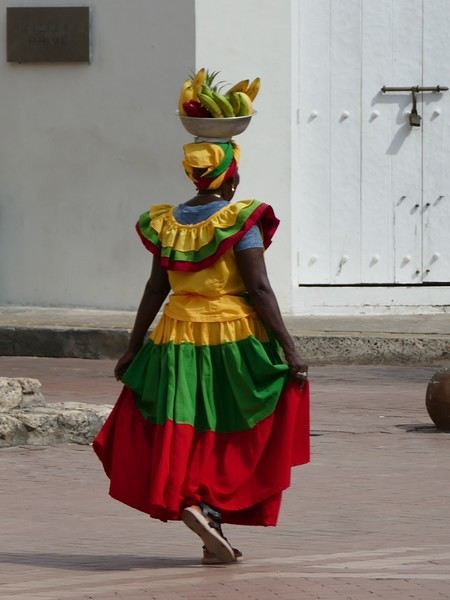
This summer, we spent 3 weeks in northern Colombia. A vibrant trip that complemented our southern Peru adventure from the previous year perfectly. Two neighboring countries, but completely different.
To start, we had to make a choice because the country is vast.
So we focused on 3 different regions for our 3 weeks: - Week 1: Bogotá and the colonial villages (Villa de Leyva, Barichara) - Week 2: Medellín and the Coffee Region - Week 3: the Caribbean coast
We entrusted the organization to a small local agency that handled accommodations, guides, and transportation. Transportation is key. The country is large, the road network isn’t very efficient, and we spent a lot of time traveling (cars, planes, and boats...), but it was the price to pay to explore it.
The overall budget isn’t exactly "backpacker" level. We spent 7,500 € (excluding Air France) for our 3-week stay (hotels, drivers, guides, flights, visits, meals). But we treated ourselves to nice accommodations—you’ll see as we share more posts.
For vacations, I try to follow Philippe Noiret’s motto: "Travel is short. Let’s try to do it first class."
Après la crise médicale, voici venir la crise économique en Espagne English translation pending
Hola .. désolé, mais pas envie de sourire !!
L'épidémie de Coronavirus a lourdement frappé toutes les économies, mais certains secteurs ont été plus affectés que d'autres, notamment la construction et la vente de véhicules.
A Barcelone se trouve la plus grande, et unique usine européenne de Nissan : 3000 emplois directs et plus de 20.000 emplois indirects.
Or, la direction (nippone) de Nissan, a officiellement communiqué, aujourd'hui, au gouvernement espagnol sa décision de fermer son usine de production implantée dans cette ville. Ce sont ainsi, 3000 emplois, directement dépendant de Nissan qui disparaissent, mais également plus de 20.000 emplois indirects dans la sous-traitance dans toute la région barcelonaise !!
A priori, cette décision, qui était déjà dans les tuyaux depuis quelques temps avait été illustrée depuis un an ou deux, par des incitations aux départs volontaires ou des licenciements, et c'est ainsi que prés de 1600 personnes au cours des derniers mois, avaient quitté le giron du constructeur japonais.
Nissan a déclaré que cette décision est irrévocable, et qu'elle n'en fait pas une sorte de "chantage à l'emploi" pour se voir octroyer des aides sous quelques formes que ce soit !! Cette décision met fin à une présence de 40 ans de la firme japonaise en Catalogne.
Quel que soit le côté vers lequel on regarde, le ciel est bien sombre et de gros nuages noirs sont de plus en plus visibles à l'horizon 😕
Les lits des populistes de tous poils et des extrêmistes de tous bords, partout en Europe, sont en train d'être bien préparés et avec de moins en moins de complexes (cf manif de Vox à Granada). Hasta luego 🤪
L'épidémie de Coronavirus a lourdement frappé toutes les économies, mais certains secteurs ont été plus affectés que d'autres, notamment la construction et la vente de véhicules.
A Barcelone se trouve la plus grande, et unique usine européenne de Nissan : 3000 emplois directs et plus de 20.000 emplois indirects.
Or, la direction (nippone) de Nissan, a officiellement communiqué, aujourd'hui, au gouvernement espagnol sa décision de fermer son usine de production implantée dans cette ville. Ce sont ainsi, 3000 emplois, directement dépendant de Nissan qui disparaissent, mais également plus de 20.000 emplois indirects dans la sous-traitance dans toute la région barcelonaise !!
A priori, cette décision, qui était déjà dans les tuyaux depuis quelques temps avait été illustrée depuis un an ou deux, par des incitations aux départs volontaires ou des licenciements, et c'est ainsi que prés de 1600 personnes au cours des derniers mois, avaient quitté le giron du constructeur japonais.
Nissan a déclaré que cette décision est irrévocable, et qu'elle n'en fait pas une sorte de "chantage à l'emploi" pour se voir octroyer des aides sous quelques formes que ce soit !! Cette décision met fin à une présence de 40 ans de la firme japonaise en Catalogne.
Quel que soit le côté vers lequel on regarde, le ciel est bien sombre et de gros nuages noirs sont de plus en plus visibles à l'horizon 😕
Les lits des populistes de tous poils et des extrêmistes de tous bords, partout en Europe, sont en train d'être bien préparés et avec de moins en moins de complexes (cf manif de Vox à Granada). Hasta luego 🤪
Adieu à un grand pianiste de jazz (États-Unis) English translation pending
« Il y a beaucoup de héros dans le jazz. Mais peu ont véritablement changé l’histoire du jazz. McCoy Tyner en est un. Il y a un avant et un après Mister McCoy Tyner. » (Craig Taborn, pianiste de jazz américain)
McCoy Tyner, pianiste illuminé et compagnon de Coltrane
Un pianiste hors norme, un géant du jazz a disparu à jamais début mars dernier à l’âge de 81 ans. Acteur clé du légendaire classic quartet de John Coltrane (que complètent Jimmy Garrison à la contrebasse et Elvin Jones à la batterie), il a joué du piano avec les plus grands de son époque. Avec Bill Evans et Cecil Taylor, McCoy Tyner compte parmi les pianistes de jazz les plus influents de ces 50 dernières années. Son jeu si particulier, puissant et inimitable, a changé l’histoire du jazz moderne. Il mérite bien une digne place dans la généalogie des grands pianistes, aux côtés de Bud Powell, de Thelonious Monk, d’Art Tatum, de Duke Ellington et de Cecil Taylor. …
Né à Philadelphie (Pennsylvanie) en 1938, McCoy Tyner commence à prendre des leçons de piano à l’âge de 13 ans. Sa carrière musicale débute vraiment en 1959 dans le Jazztet du saxophoniste Benny Golson et trompettiste Art Farmer. En plus, il joue avec Lee Morgan, Max Roach, Stanley Turrentine, Freddie Hubbard, Wayne Shorter, Joe Henderson, Sonny Rollins et Kenny Dorham. Plus tard, en 1960, à 21 ans, le pianiste quitte le Jazztet pour remplacer Steve Kuhn dans le quartet de John Coltrane et y reste membre jusqu’à la fin de 1965. McCoy Tyner est en premier lieu connu pour avoir accompagné – ce qui veut dire ici : a su soutenir et dynamiser le soliste – John Coltrane pendant la partie la plus essentielle de sa carrière, ces cinq années entre 1960 et 1965, au sein de ce classic quartet, formation la plus emblématique du jazz (encore) modal. Dans ladite période, il enregistre avec "son frère" John Coltrane une trentaine d’albums, dont les célèbres My Favorite Things (1961), Africa/Brass (1961), Live at the Village Vanguard (1961), A Love Supreme, chef-d’œuvre de l’histoire de la musique (1964), Live at Birdland (1964), Crescent (1964), Ascension (1965), Meditations (1965), Both directions at once : The lost album (1963/2018), etc. etc. etc. Non seulement le saxophoniste, mais juste la présence de ce pianiste virtuose dans le quatuor de Coltrane est l’un des éléments-clés qui a fait de cet ensemble un des incontournables du jazz des années 60.
Pourtant, Coltrane a laissé à son sideman beaucoup d’espace pour son propre jeu soliste. Et il a brillé par son expressivité exaltante. Avec sa main droite, il pouvait suivre la préférance de Coltrane pour ses soi-disant sheets of sounds. Celle de gauche, en revanche, a utilisé la tradition du stride piano pour créer une richesse et profondeur orchestrales en alternant les registres médium et grave (Tyner était gaucher). Le pianiste reste non seulement ancré dans son attachement à l’instrument, mais aussi humble dans son sens pour la beauté et l’harmonie. Au moment où Coltrane s’est de plus en plus laissé emporter par des zones atonales du free jazz, McCoy Tyner n’a plus voulu le suivre : "I didn’t see myself making any contribution to that music. All I could hear was a lot of noise." Cette position esthétique a conduit inévitablement à quitter le quatuor...
Après le split de Coltrane, McCoy Tyner commence à enregistrer sous son propre nom plusieurs albums post-bop dont Tender Moments (1968), Time for Tyner (1968), Extensions (1970) et surtout The Real McCoy (1967), peut-être son meilleur album de cette période. A partir de 1972, entre le free jazz et le jazz fusion, il cultive sa propre musique, dans laquelle il élargit – en solo, en trio ou en grandes formations – ses expériences des années 60, et collabore avec des musiciens tels que les saxophonistes Sonny Fortune, Gary Bartz, John Stubblefield, Andrew White et Azar Lawrence, le trompettiste Virgil Jones, le violoniste John Blake, le vibraphoniste Bobby Hutcherson, les contrebassistes Joony Booth et Buster Williams, et les batteurs Billy Hart et surtout Alphonse Mouzon. Des grandioses albums attestent cette période féconde : Sahara (1973), Atlantis (1974), Trident (1976) et Enlightment – Live at the Montreux Jazz Festival (1973), le dernier étant pour toujours mon album préféré de McCoy Tyner, ce quartet – à mon avis – sa meilleure formation ever (M.T. - Azar Lawrence - Joony Booth - Alphonse Mouzon).
McCoy Tyner a enregistré plus de 80 albums sous son propre nom, a reçu cinq Grammys, des géants comme Herbie Hancock et Chick Corea l’ont cité comme une influence décisive sur leur propre travail. En 2002, la NEA (National Endowment for the Arts) l’a nommé "Jazz Master". Son dernier album, Solo: Live from San Francisco, date de 2009, qui est décrit avec enthousiasme par la critique comme une preuve de l’impact ininterrompu de son style si puissant : "All of the hallmarks of his sound, from up and down dynamics to the legendary crashing of chords, especially with his left hand, and the stunning virtuosity of his improvisational runs and streaks, assure you that he is in good spirits and has energy to burn off even at his advanced age... This is yet another of the many triumphant recordings Tyner has given to the world…" (Allmusic)
Hery
https://www.youtube.com/watch?v=WXL4c67sX9E
McCoy Tyner, pianiste illuminé et compagnon de Coltrane
Un pianiste hors norme, un géant du jazz a disparu à jamais début mars dernier à l’âge de 81 ans. Acteur clé du légendaire classic quartet de John Coltrane (que complètent Jimmy Garrison à la contrebasse et Elvin Jones à la batterie), il a joué du piano avec les plus grands de son époque. Avec Bill Evans et Cecil Taylor, McCoy Tyner compte parmi les pianistes de jazz les plus influents de ces 50 dernières années. Son jeu si particulier, puissant et inimitable, a changé l’histoire du jazz moderne. Il mérite bien une digne place dans la généalogie des grands pianistes, aux côtés de Bud Powell, de Thelonious Monk, d’Art Tatum, de Duke Ellington et de Cecil Taylor. …
Né à Philadelphie (Pennsylvanie) en 1938, McCoy Tyner commence à prendre des leçons de piano à l’âge de 13 ans. Sa carrière musicale débute vraiment en 1959 dans le Jazztet du saxophoniste Benny Golson et trompettiste Art Farmer. En plus, il joue avec Lee Morgan, Max Roach, Stanley Turrentine, Freddie Hubbard, Wayne Shorter, Joe Henderson, Sonny Rollins et Kenny Dorham. Plus tard, en 1960, à 21 ans, le pianiste quitte le Jazztet pour remplacer Steve Kuhn dans le quartet de John Coltrane et y reste membre jusqu’à la fin de 1965. McCoy Tyner est en premier lieu connu pour avoir accompagné – ce qui veut dire ici : a su soutenir et dynamiser le soliste – John Coltrane pendant la partie la plus essentielle de sa carrière, ces cinq années entre 1960 et 1965, au sein de ce classic quartet, formation la plus emblématique du jazz (encore) modal. Dans ladite période, il enregistre avec "son frère" John Coltrane une trentaine d’albums, dont les célèbres My Favorite Things (1961), Africa/Brass (1961), Live at the Village Vanguard (1961), A Love Supreme, chef-d’œuvre de l’histoire de la musique (1964), Live at Birdland (1964), Crescent (1964), Ascension (1965), Meditations (1965), Both directions at once : The lost album (1963/2018), etc. etc. etc. Non seulement le saxophoniste, mais juste la présence de ce pianiste virtuose dans le quatuor de Coltrane est l’un des éléments-clés qui a fait de cet ensemble un des incontournables du jazz des années 60.
Pourtant, Coltrane a laissé à son sideman beaucoup d’espace pour son propre jeu soliste. Et il a brillé par son expressivité exaltante. Avec sa main droite, il pouvait suivre la préférance de Coltrane pour ses soi-disant sheets of sounds. Celle de gauche, en revanche, a utilisé la tradition du stride piano pour créer une richesse et profondeur orchestrales en alternant les registres médium et grave (Tyner était gaucher). Le pianiste reste non seulement ancré dans son attachement à l’instrument, mais aussi humble dans son sens pour la beauté et l’harmonie. Au moment où Coltrane s’est de plus en plus laissé emporter par des zones atonales du free jazz, McCoy Tyner n’a plus voulu le suivre : "I didn’t see myself making any contribution to that music. All I could hear was a lot of noise." Cette position esthétique a conduit inévitablement à quitter le quatuor...
Après le split de Coltrane, McCoy Tyner commence à enregistrer sous son propre nom plusieurs albums post-bop dont Tender Moments (1968), Time for Tyner (1968), Extensions (1970) et surtout The Real McCoy (1967), peut-être son meilleur album de cette période. A partir de 1972, entre le free jazz et le jazz fusion, il cultive sa propre musique, dans laquelle il élargit – en solo, en trio ou en grandes formations – ses expériences des années 60, et collabore avec des musiciens tels que les saxophonistes Sonny Fortune, Gary Bartz, John Stubblefield, Andrew White et Azar Lawrence, le trompettiste Virgil Jones, le violoniste John Blake, le vibraphoniste Bobby Hutcherson, les contrebassistes Joony Booth et Buster Williams, et les batteurs Billy Hart et surtout Alphonse Mouzon. Des grandioses albums attestent cette période féconde : Sahara (1973), Atlantis (1974), Trident (1976) et Enlightment – Live at the Montreux Jazz Festival (1973), le dernier étant pour toujours mon album préféré de McCoy Tyner, ce quartet – à mon avis – sa meilleure formation ever (M.T. - Azar Lawrence - Joony Booth - Alphonse Mouzon).
McCoy Tyner a enregistré plus de 80 albums sous son propre nom, a reçu cinq Grammys, des géants comme Herbie Hancock et Chick Corea l’ont cité comme une influence décisive sur leur propre travail. En 2002, la NEA (National Endowment for the Arts) l’a nommé "Jazz Master". Son dernier album, Solo: Live from San Francisco, date de 2009, qui est décrit avec enthousiasme par la critique comme une preuve de l’impact ininterrompu de son style si puissant : "All of the hallmarks of his sound, from up and down dynamics to the legendary crashing of chords, especially with his left hand, and the stunning virtuosity of his improvisational runs and streaks, assure you that he is in good spirits and has energy to burn off even at his advanced age... This is yet another of the many triumphant recordings Tyner has given to the world…" (Allmusic)
Hery
https://www.youtube.com/watch?v=WXL4c67sX9E
Croisière transatlantique Favolosa du 30 novembre ou 1er décembre 2019 English translation pending
Bonjour,
J'ouvre ce Topic pour que nous puissions échanger nos expériences, nous réunir sur le bateau...
C'est notre septième transatlantique … presque toutes vers les caraïbes .
Nous restons 22 jours .. retour Pointe à pitre .
Les années précédentes... Les échanges sur le forum et bateau ont été très sympa;
Nous connaissons, toutes les escales .. nous n'aimons pas les excursions , nous nous déplaçons en bus ….si vous avez besoin d' informations , ce sera volontiers que je vous les donnerai..
Jean Claude (le mari) joue au tarot …. y a t il des joueurs ?
à bientôt
Jocelyne
Nouveaux treks dans la région des Annapurnas English translation pending
Ces dernières années ont été développés plusieurs treks destinés à renouveler l'attrait de la région des Annapurnas, pénalisée d'une part par la progression des routes (tant côté Manang que côté Jomsom), d'autre part une surfréquentation (cf. ABC, Poon Hill...).
Ainsi, en sus des treks de Khopra Danda, Mohare Danda, Mardi Himal Base Camp, viennent désormais s'ajouter :
- le (court) trek de Lalupate / Poinsettia, entre Besisahar et Tal tout en évitant la route, décrit in www.trekwithpremrai.com/...upate-poinsettia.htm. Plusieurs modalités possibles, dont une boucle.
- le trek des 7 cols des Annapurnas, de la Vallée de la Dudh Khola (fin du Tour du Manaslu) à la Vallée de la Kali Gandaki via le Naar Phu et le Mesokanto La, présenté in honeyguideapps.com/...na-seven-passes-trek, et décrit in www.trekwithpremrai.com/...s-trail-is-very.html. Citipati (VoyageForum) a réalisé 2 fois les segments Naar Phu + Mesokanto La, cf. voyageforum.com/...anto-nepal-d6414982/.
- le trek du camp de base Nord de l'Annapurna (NABC Trek, aussi baptisé Maurice Herzog), reprenant en grande partie l'itinéraire suivi par l'expédition Herzog de 1950. Décrit in www.trekwithpremrai.com/...a-base-camptrek.html.
Textes en anglais seulement.
A ce jour, autonomie requise pour le trek des 7 cols et pour le trek du NABC.
N'ayant fait aucun de ces 3 treks, je ne peux indiquer plus que ces sources qui me semblent de qualité.
A noter que le rédacteur du blog référencé, Prem Rai, est le co-auteur du guide NATT (Natural Annapurna Trekking Trails, 4e édition en 2019) avec Andrées de Ruiter. Ses descriptions des treks de Khopra Danda et du Mardi Himal BC m'avaient suffi pour réaliser ces 2 treks par moi-même, d'autant que le marquage y était plutôt de qualité. Temps indiqués à peu près en ligne avec mes propres réalisations, donc représentatifs d'un trekkeur ordinaire.
Fabrice
Ainsi, en sus des treks de Khopra Danda, Mohare Danda, Mardi Himal Base Camp, viennent désormais s'ajouter :
- le (court) trek de Lalupate / Poinsettia, entre Besisahar et Tal tout en évitant la route, décrit in www.trekwithpremrai.com/...upate-poinsettia.htm. Plusieurs modalités possibles, dont une boucle.
- le trek des 7 cols des Annapurnas, de la Vallée de la Dudh Khola (fin du Tour du Manaslu) à la Vallée de la Kali Gandaki via le Naar Phu et le Mesokanto La, présenté in honeyguideapps.com/...na-seven-passes-trek, et décrit in www.trekwithpremrai.com/...s-trail-is-very.html. Citipati (VoyageForum) a réalisé 2 fois les segments Naar Phu + Mesokanto La, cf. voyageforum.com/...anto-nepal-d6414982/.
- le trek du camp de base Nord de l'Annapurna (NABC Trek, aussi baptisé Maurice Herzog), reprenant en grande partie l'itinéraire suivi par l'expédition Herzog de 1950. Décrit in www.trekwithpremrai.com/...a-base-camptrek.html.
Textes en anglais seulement.
A ce jour, autonomie requise pour le trek des 7 cols et pour le trek du NABC.
N'ayant fait aucun de ces 3 treks, je ne peux indiquer plus que ces sources qui me semblent de qualité.
A noter que le rédacteur du blog référencé, Prem Rai, est le co-auteur du guide NATT (Natural Annapurna Trekking Trails, 4e édition en 2019) avec Andrées de Ruiter. Ses descriptions des treks de Khopra Danda et du Mardi Himal BC m'avaient suffi pour réaliser ces 2 treks par moi-même, d'autant que le marquage y était plutôt de qualité. Temps indiqués à peu près en ligne avec mes propres réalisations, donc représentatifs d'un trekkeur ordinaire.
Fabrice
Projet été 2020 Californie du Sud et Nevada English translation pending
Bonjour a tous
Après plusieurs voyages aux Etats Unis ( Californie, parcs de l'ouest, New York, Floride), et dernièrement le Canada, le Brésil, l'Afrique du Sud, l'envie de retourner aux usa se fait ressentir.. nous devons retarder, encore, le projet Yellowstone , que nous voudrions faire fin juin, début juillet.. or pour 2020 les congés ne pourrons pas se prendre avant la période du 20/25 juillet voir début août. Donc beaucoup trop de monde je pense a Yellowstone.. alors pas grave, on repousse et je projette autre chose...
Nous sommes donc 2 adultes et une ado de 13 ans ( 14 ans pour l'été 2020) Nous savons qu'il fera chaud... Mais ça donnerait ceci sachant que nous partons de Nice. Nous avons déjà fait la Californie, 2 fois, mais pas le sud. Nous avons déjà fait las Vegas aussi.
Jour 1: arrivée Los Angeles. Nuit a los Angeles Jour 2: Los Angeles, peut être studio universals ( on a déjà fait mais sans notre fille). Nuit a los Angeles Jour 3: route vers san Diego ( visité en cours de route des plages, quartier la Jolla, torrent pines, cabrillo.. nuit a san Diego Jour 4: visite san Diego. Parc balboa, seaport village ou old town. Nuit a San Diego Jour 5: visite san Diego, port avion USS Midway, quartier gaslamp. Nuit a San Diego Jour 6: route vers Parc anza Borrego avec arrêt a julian. Nuit a Borrego springs Jour 7: route vers palm springs, accès téléphérique sur les hauteurs de la ville pour randonnée. Nuit a palm springs Jour 8: visite Indiana canyons. Nuit a palm springs ou nuit a entrée parc Joshua tree. Jour 9: visite Joshua tree. Nuit a twentynine Palm Jour 10: route vers overton pour visiter en fin de journée parc Valley of Fire. Nuit a overton Jour 11: visite parc Valley of fire tôt ( fire wave) puis route vers las Vegas. Shopping. Nuit a las Vegas Jour 12: las Vegas. Visite freemont street. Nuit a las Vegas Jour 13: las Vegas. Peut être un spectacle, cirque du Soleil qu'on a pas encore eu l'occasion de faire. Nuit a las Vegas Jour 14: route vers los Angeles. Nuit a los Angeles Jour 15: visite ou retour vers la France
Ça me fait 15 jours.. on peut aller jusqu'à 18 ou 19 jours... Je ne sais pas trop quoi rajouter... On a déjà fait la vallée de la mort.. et san Francisco aussi.. J'avais pensé faire 3 jours a Chicago.. mais peut être que ce serait mieux sur un autre séjour.. Qu'en pensez vous?? Merci par avance ! Marie
Après plusieurs voyages aux Etats Unis ( Californie, parcs de l'ouest, New York, Floride), et dernièrement le Canada, le Brésil, l'Afrique du Sud, l'envie de retourner aux usa se fait ressentir.. nous devons retarder, encore, le projet Yellowstone , que nous voudrions faire fin juin, début juillet.. or pour 2020 les congés ne pourrons pas se prendre avant la période du 20/25 juillet voir début août. Donc beaucoup trop de monde je pense a Yellowstone.. alors pas grave, on repousse et je projette autre chose...
Nous sommes donc 2 adultes et une ado de 13 ans ( 14 ans pour l'été 2020) Nous savons qu'il fera chaud... Mais ça donnerait ceci sachant que nous partons de Nice. Nous avons déjà fait la Californie, 2 fois, mais pas le sud. Nous avons déjà fait las Vegas aussi.
Jour 1: arrivée Los Angeles. Nuit a los Angeles Jour 2: Los Angeles, peut être studio universals ( on a déjà fait mais sans notre fille). Nuit a los Angeles Jour 3: route vers san Diego ( visité en cours de route des plages, quartier la Jolla, torrent pines, cabrillo.. nuit a san Diego Jour 4: visite san Diego. Parc balboa, seaport village ou old town. Nuit a San Diego Jour 5: visite san Diego, port avion USS Midway, quartier gaslamp. Nuit a San Diego Jour 6: route vers Parc anza Borrego avec arrêt a julian. Nuit a Borrego springs Jour 7: route vers palm springs, accès téléphérique sur les hauteurs de la ville pour randonnée. Nuit a palm springs Jour 8: visite Indiana canyons. Nuit a palm springs ou nuit a entrée parc Joshua tree. Jour 9: visite Joshua tree. Nuit a twentynine Palm Jour 10: route vers overton pour visiter en fin de journée parc Valley of Fire. Nuit a overton Jour 11: visite parc Valley of fire tôt ( fire wave) puis route vers las Vegas. Shopping. Nuit a las Vegas Jour 12: las Vegas. Visite freemont street. Nuit a las Vegas Jour 13: las Vegas. Peut être un spectacle, cirque du Soleil qu'on a pas encore eu l'occasion de faire. Nuit a las Vegas Jour 14: route vers los Angeles. Nuit a los Angeles Jour 15: visite ou retour vers la France
Ça me fait 15 jours.. on peut aller jusqu'à 18 ou 19 jours... Je ne sais pas trop quoi rajouter... On a déjà fait la vallée de la mort.. et san Francisco aussi.. J'avais pensé faire 3 jours a Chicago.. mais peut être que ce serait mieux sur un autre séjour.. Qu'en pensez vous?? Merci par avance ! Marie
Algues au Mexique English translation pending
Bonjour,
Nous partons le 14 juillet pour Cancún. J’aimerais connaître l’état des Sargasses en ce moment sur les pages de Cancún. Merci!