Results for "Colonia+|+4+>+135"
6371 results found.
Tryp Cayacoco ou Cojimar? English translation pending
Bonjour
Qui peux me conseiller sur le choix d'un de ces deux hotels sur des critéres de confort et de qualité de plages? merci par avance!!
Qui peux me conseiller sur le choix d'un de ces deux hotels sur des critéres de confort et de qualité de plages? merci par avance!!
Hôtel à Hanoi English translation pending
Hello,
Je vais partir pour quatre semaines au Vietnam en novembre et je cherche le nom et l'adresse d'un hôtel sympa sur Hanoi (et si possible pas trop cher).
Merci d'avance. 🙂
Je vais partir pour quatre semaines au Vietnam en novembre et je cherche le nom et l'adresse d'un hôtel sympa sur Hanoi (et si possible pas trop cher).
Merci d'avance. 🙂
Retour du Riu Bambu English translation pending
J'ai répondu en privé à un membre et par la suite j'ai décidé de vous communiquez mes commentaires donc les voici:
Le Riu Bambu donne accès à tout le complexe sauf aux restos du Palace.J'ai adoré l'endroit, de la bouffe excellente particulierement au Restaurant Colonial (Buffet) ou de multiples choix s'offrent et je vous assures que vous trouverez de quoi éveiller vos papilles pour en citer quelques exemples: canard à l'orange, agneau, fruits de mer tout les plats sont présentés avec élégance.Pour ce qu'y est des Restos de spécialités nous y sommes allés à quelques reprises c'était bon et bien mais notre préference demeurait Le Colonial pour sa variété.
Les drinks sont composés de jus frais, si vous aimez le Rhum demandez du Brugal il est de qualité supérieur.Pour ce qu'y est des pourboires jamais je n'ai senti d'obligation d'en offrir. Aux différents Restos et Bars il m'est arrivé de donner 1.00$ pour montrer ma satisfaction mais sans plus.
La Plage est paradisiaque, la mer est turquoise, à deux reprises il y a eu des algues mais ce n'était pas dramatique.Pour la plongé avec bouteille ou en apné vous devrez reserver une excursion car il n'y a rien a voir à proximité.
Les équipements sportifs sont en quantité suffisantes, il m'a été possible de faire transférer une voile de planche à voile du Palace au Bambu tout est fait afin que nous soyons satisfait.L'usage de certains équipements sont par contre avec réservation.
La chambre était propre et confortable de bonne dimension nous avons eu un petit probleme d'odeur et la direction nous a offert une autre chambre et le probleme à été regler à notre satisfaction.
L'animation y est excellente si vous aimez participer vous aurez beaucoups de plaisirs et prenez les cours de danses qu'y sont offert.
Les spectacles sont de bonne qualités et amusant.Il y a une Disco "Pacha" ouverte de 23h00 à 04h00 tout les soirs, la clientele est de tout âges et c'est le lieu òu les G-O se retrouvent apres leur longue journée de travail, la musique y est variée: Disco, Techno, Merengué et Bachata le DJ est bon et l'endroit est tres fréquenté et agréable.
Nous avons eu que quelques heures de pluie la veille de notre retour.
La RPD n'est pas un endroit ou le touriste est en sécurité en dehors des complexes hotelliers donc à moins de prendre des excursions guidés il n'est pas recommender de sortir du complexe et vous devriez pouvoir trouver des activités à votre goût sur ce complexe ou l'animation, la musique et la danse sont toujours présent pour combler cette lacune.
Nous avons visité d'autres destinations soleil, Punta Cana demeure la plus belle plage et le Riu hôtel offre des services supérieur en tout point.
Nous avons fait ce voyage de 14 jours en décembre 2003 mon épouse et moi et nous avons tellement apprécier ce voyage que nous y retournerons en décembre 2004.
Une destination à découvrir...
Le Riu Bambu donne accès à tout le complexe sauf aux restos du Palace.J'ai adoré l'endroit, de la bouffe excellente particulierement au Restaurant Colonial (Buffet) ou de multiples choix s'offrent et je vous assures que vous trouverez de quoi éveiller vos papilles pour en citer quelques exemples: canard à l'orange, agneau, fruits de mer tout les plats sont présentés avec élégance.Pour ce qu'y est des Restos de spécialités nous y sommes allés à quelques reprises c'était bon et bien mais notre préference demeurait Le Colonial pour sa variété.
Les drinks sont composés de jus frais, si vous aimez le Rhum demandez du Brugal il est de qualité supérieur.Pour ce qu'y est des pourboires jamais je n'ai senti d'obligation d'en offrir. Aux différents Restos et Bars il m'est arrivé de donner 1.00$ pour montrer ma satisfaction mais sans plus.
La Plage est paradisiaque, la mer est turquoise, à deux reprises il y a eu des algues mais ce n'était pas dramatique.Pour la plongé avec bouteille ou en apné vous devrez reserver une excursion car il n'y a rien a voir à proximité.
Les équipements sportifs sont en quantité suffisantes, il m'a été possible de faire transférer une voile de planche à voile du Palace au Bambu tout est fait afin que nous soyons satisfait.L'usage de certains équipements sont par contre avec réservation.
La chambre était propre et confortable de bonne dimension nous avons eu un petit probleme d'odeur et la direction nous a offert une autre chambre et le probleme à été regler à notre satisfaction.
L'animation y est excellente si vous aimez participer vous aurez beaucoups de plaisirs et prenez les cours de danses qu'y sont offert.
Les spectacles sont de bonne qualités et amusant.Il y a une Disco "Pacha" ouverte de 23h00 à 04h00 tout les soirs, la clientele est de tout âges et c'est le lieu òu les G-O se retrouvent apres leur longue journée de travail, la musique y est variée: Disco, Techno, Merengué et Bachata le DJ est bon et l'endroit est tres fréquenté et agréable.
Nous avons eu que quelques heures de pluie la veille de notre retour.
La RPD n'est pas un endroit ou le touriste est en sécurité en dehors des complexes hotelliers donc à moins de prendre des excursions guidés il n'est pas recommender de sortir du complexe et vous devriez pouvoir trouver des activités à votre goût sur ce complexe ou l'animation, la musique et la danse sont toujours présent pour combler cette lacune.
Nous avons visité d'autres destinations soleil, Punta Cana demeure la plus belle plage et le Riu hôtel offre des services supérieur en tout point.
Nous avons fait ce voyage de 14 jours en décembre 2003 mon épouse et moi et nous avons tellement apprécier ce voyage que nous y retournerons en décembre 2004.
Une destination à découvrir...
Infos Costa Rica et Panama English translation pending
Salut!
Je pense aller 3 semaines cet été au costa rica et au panama, mais ne connais en fait pas encore grand chose à ces pays. J'ai vécu plusieurs mois dans le sud du mexique et voudrais savoir si au niveau de l'architecture notamment c'est ressemblant ou non? j'entends par là, les maisons colorées, le style un peu colonial (je sais, je devrais me documenter mais je n'ai pas encore eu le temps ;) Est-ce assez facile de créer un contact avec la population locale? de se déplacer en bus dans les différentes parties du pays?
Merci d'avance pour vos commentaires/suggestions...
Je pense aller 3 semaines cet été au costa rica et au panama, mais ne connais en fait pas encore grand chose à ces pays. J'ai vécu plusieurs mois dans le sud du mexique et voudrais savoir si au niveau de l'architecture notamment c'est ressemblant ou non? j'entends par là, les maisons colorées, le style un peu colonial (je sais, je devrais me documenter mais je n'ai pas encore eu le temps ;) Est-ce assez facile de créer un contact avec la population locale? de se déplacer en bus dans les différentes parties du pays?
Merci d'avance pour vos commentaires/suggestions...
Bahia Principe à Punta Cana English translation pending
Bonsoir,
Voici ce que je viens de lire dans un article:
Bahía Príncipe Clubs and Resorts abrirá dos hoteles en República Dominicana 18 de febrero de 2004 (Caribbean News 214) La primera apertura de este año, prevista para el mes de junio, será el Bahía Príncipe Punta Cana, hotel de estilo caribeño con toques y decoración colonial, rodeado de exuberante vegetación tropical y sobre una playa de finas arenas blancas; estará situado en Playa Bávaro, Higüey.
El establecimiento, el segundo " Todo Incluido" de la cadena en la República Dominicana, contará con 600 junior suites equipadas con categoría de cinco estrellas: cama tamaño king o dos camas tamaño queen con colchones " pillow-top", baño completo con bañera oval de hidromasaje y secador de pelo, aire acondicionado, ventilador de techo, televisión vía satélite, teléfono directo, mini bar, caja fuerte, terraza.
La segunda apertura del año será el Bahía Príncipa Bavaro en noviembre. Estará situado junto al Bahía Príncipe Punta Cana y contará con servicios e instalaciones similares, formando uno de los mejores complejos con sistema Todo Incluido de la República Dominicana, con lo que se convertirá en el buque insignia de la cadena en el país.
Bahía Príncipe Clubs and Resorts proyecta la construcción de un tercer establecimiento en la Riviera Maya, México, junto al complejo formado por los hoteles Bahía Príncipe Tulum y Bahía Príncipe Akumal; además, la construcción de varios hoteles en un nuevo destino para la cadena en Jamaica.
Actualmente, la compañía cuenta con seis hoteles repartidos entre los destinos más atractivos del Caribe y España: Puerto Plata, en República Dominicana; Riviera Maya en México; Varadero, en Cuba y Tenerife, en España; lo que supone un total de 3, 600 exclusivas habitaciones.
C'est une bonne nouvelle!
Voici ce que je viens de lire dans un article:
Bahía Príncipe Clubs and Resorts abrirá dos hoteles en República Dominicana 18 de febrero de 2004 (Caribbean News 214) La primera apertura de este año, prevista para el mes de junio, será el Bahía Príncipe Punta Cana, hotel de estilo caribeño con toques y decoración colonial, rodeado de exuberante vegetación tropical y sobre una playa de finas arenas blancas; estará situado en Playa Bávaro, Higüey.
El establecimiento, el segundo " Todo Incluido" de la cadena en la República Dominicana, contará con 600 junior suites equipadas con categoría de cinco estrellas: cama tamaño king o dos camas tamaño queen con colchones " pillow-top", baño completo con bañera oval de hidromasaje y secador de pelo, aire acondicionado, ventilador de techo, televisión vía satélite, teléfono directo, mini bar, caja fuerte, terraza.
La segunda apertura del año será el Bahía Príncipa Bavaro en noviembre. Estará situado junto al Bahía Príncipe Punta Cana y contará con servicios e instalaciones similares, formando uno de los mejores complejos con sistema Todo Incluido de la República Dominicana, con lo que se convertirá en el buque insignia de la cadena en el país.
Bahía Príncipe Clubs and Resorts proyecta la construcción de un tercer establecimiento en la Riviera Maya, México, junto al complejo formado por los hoteles Bahía Príncipe Tulum y Bahía Príncipe Akumal; además, la construcción de varios hoteles en un nuevo destino para la cadena en Jamaica.
Actualmente, la compañía cuenta con seis hoteles repartidos entre los destinos más atractivos del Caribe y España: Puerto Plata, en República Dominicana; Riviera Maya en México; Varadero, en Cuba y Tenerife, en España; lo que supone un total de 3, 600 exclusivas habitaciones.
C'est une bonne nouvelle!
Quel hôtel choisir? English translation pending
Bonjour à tous,
Nous souhaiterions partir à l'ile maurice début mai, et nous hésitons entre plusieurs hotels ! Faites nous part de nos expérience et de vos commentaires, ils seront bienvenues. Merci d'avance. Hotel "le coin de mire" Hotel "le coco beach" hotel "le manisa" Hotel "le colonila coco" Hotel "villa caroline"
et enfin "le cocotiers".
Nous souhaiterions partir à l'ile maurice début mai, et nous hésitons entre plusieurs hotels ! Faites nous part de nos expérience et de vos commentaires, ils seront bienvenues. Merci d'avance. Hotel "le coin de mire" Hotel "le coco beach" hotel "le manisa" Hotel "le colonila coco" Hotel "villa caroline"
et enfin "le cocotiers".
Pierres et coraux à Riviera Maya? English translation pending
salut a tous
ce serait sympa de votre part si vous pouviez m indiquer l etat de la mer devant l hotel iberostar playa paraiso ou le palladium kantenah resort (anciennement colonial resort et spa), c est a dire si il y des roches et des coraux ds l eau et si c vraiment genant comme au bahia principe akumal par exemple.
merci de m eclairer
bisous
ce serait sympa de votre part si vous pouviez m indiquer l etat de la mer devant l hotel iberostar playa paraiso ou le palladium kantenah resort (anciennement colonial resort et spa), c est a dire si il y des roches et des coraux ds l eau et si c vraiment genant comme au bahia principe akumal par exemple.
merci de m eclairer
bisous
Casas particulares à Cuba, législation? English translation pending
Un site specialisé sur CUBA signale une serie de maisons de particuliers à travers toute l, ile....Ces gens doivent payer une taxe de 100$US/mensuel pour etre en regle vis a vis le gouvernement cubain.....Il s, agit de demeures privées souvent dans un tres beau style colonial avec toutes commodités.
QUESTION: comment savoir si les gens chez qui j, aimerais aller sont en regle vis a vis leur gouvernement.Permis ou licence...?
Quelqu'un a t il déjà fait cette experience en long séjour(+ de 4 semaines....) ?
muchas gracias,
Memphre
QUESTION: comment savoir si les gens chez qui j, aimerais aller sont en regle vis a vis leur gouvernement.Permis ou licence...?
Quelqu'un a t il déjà fait cette experience en long séjour(+ de 4 semaines....) ?
muchas gracias,
Memphre
"Glory": an Animal Farm for Zimbabwe—and the world
"400 pages of verbal pyrotechnics and animal magic" — The Times
"Bulawayo leans into exaggeration and irony to tell hard truths. *Glory* is jam-packed with comedy and farce, poking fun at an autocratic regime while illustrating the absurdity and surreal nature of a police state." — The Guardian
The cruelty and savagery of Zimbabwe’s (and Africa’s in general) "powerful animals"
Zimbabwean author NoViolet Bulawayo has written a novel that illustrates better than any documentary the complexity of colonial legacy. In doing so, she revisits George Orwell’s Animal Farm. Her novel *Glory* is a political satire about Zimbabwe—and it’s brimming with humor.
For thirty years, Zimbabwe has been stagnating under Robert Mugabe’s presidency. Human rights violations, corruption, and international sanctions have kept the population mired in poverty and oppression, while the regime exploits the meager earnings of the economy. As the 2017 elections approach, a power struggle erupts over the succession of the very elderly Father of the Nation (Mugabe). On the streets, people hope for long-awaited reforms; the people feel their moment has come.
And indeed, the army ousts Mugabe and his wife—"with her Gucci heels" (p.32)—who was positioning herself for the presidency. Hopes are dashed, however. The generals install former vice-president Emmerson Mnangagwa in power; the regime merely changes faces, but the problems remain the same.
In the novel, the country is called "Jidada, with a -da and another -da" (p.1); there’s no mistaking that this fictional state is Zimbabwe.
For *Glory*, her second novel, NoViolet Bulawayo invents a whole series of codes whose strength lies precisely in how easy they are to decipher. Like George Orwell’s Animal Farm, the characters populating Bulawayo’s universe aren’t humans but horses, goats, or crocodiles with all-too-human traits. Mugabe and Mnangagwa are horses, the spiritual leader is a pig, the soldiers are all bloodthirsty dogs, while the populace consists of goats, chickens, donkeys, and cats. The shift to the animal world serves only to better grasp the laws of despotism—and to ridicule real-life models. On one hand, the animals are humanized: they tweet, torture, travel in private jets. On the other, their greed, stupidity, and brutality stem from their animal nature.
It’s the old trick of fable: dressing men in animal disguises to make them easier to recognize. That’s how Orwell, in Animal Farm, traced how the promise of liberation from the Russian Revolution turned into Stalinist terror. In his 1945 fable, George Orwell describes how the animals of a farm drive out their farmer to organize the exploitation themselves, collectively. For a time, they truly taste freedom, but a clique of pigs ends up taking control. The central figures of the Soviet story—Stalin, Trotsky, Molotov—were easily recognizable.
Yet Bulawayo departs sharply from Orwell. She’s less concerned with precision and the force of argument than with satirical exaggeration. The deposed president is a senile old man who believes he can control even the sun’s course. The new stallion in power is a greedy debaucher. His soldiers sniff respectfully at his tail and backside.
In Bulawayo’s *Glory*, things are more complicated, but her novel also tells of a failed, incomplete liberation. In the author’s Animal Farm, Jidada, the colonial exploiters are followed by new forms of oppression. Because the former liberators become tyrants themselves. And because global power dynamics persist in neocolonial structures.
Wouldn’t that be enough to fuel a deeply depressing narrative? No—Bulawayo turns it into a blazing satire, full of wit and uncompromising criticism of power, a thread running through contemporary (not just) Zimbabwean history. The old warhorses in NoViolet Bulawayo’s Jidada, who continue to act as pack leaders, are easily recognizable as caricatures of the longtime dictator Robert Mugabe and his successor, current president Emmerson Mnangagwa.
The plot kicks off in high gear with independence day festivities. From the crack of dawn, everyone waits on Jidada Square for the Old Horse, the Father of the Nation and former liberator, whose reign "was nearing all of—not one, not two, not three, but four solid decades" (p.1). Everywhere, the colors of the Jidada Party shine; everywhere, true supporters cheer. Even the scorching sun plays its part: "At this point the sun, upon seeing arrive the leader who was decreed by God himself to rule and rule and keep ruling, a leader who'd in turn decreed the very sun to head his cheerleading squad, took a deep, deep breath and thoroughly blazed to impress" (p.2).
Finally, the Old Horse’s luxury carriage approaches "with the slowness of a hearse" (p.2), and "hoping to catch a glimpse of the legendary Father of the Nation," which causes "the animals fell over themselves like intoxicated frogs" (p.2). The sovereign’s speech is delayed a moment longer: "what I really want is a nap," groans the Old Horse as he takes his seat with such care "like his backside was made of expensive porcelain" (p.6).
Meanwhile, Bulawayo parades his entourage: the president’s wife (who earns her doctorate at Jidada University faster than "you could say diss, for dissertation. Tholukuthi it was as easy as ordering from a KFC drive-through, or perhaps even easier being that it was cheaper than KFC; it in fact cost her nothing and the degree actually came with a zero-calorie Diet Coke and a purple straw" (p.41), and she’s now known as Dr Sweet Mother. The cabinet includes "the Minister of the Revolution, the Minister of Corruption, the Minister of Order, the Minister of Things, the Minister of Nothing, the Minister of Propaganda, the Minister of Homophobic Affairs, the Minister of Disinformation and the Minister of Looting" (p.9). And of course the vice-president, who will soon become interim president when the Old Horse finally kicks the bucket—and then settle in as the new long-term president, who in the novel is called Tuvius Delight Shasha, or "Tuvy" for short (p.253), none other than Emmerson Mnangagwa. It’s him Bulawayo reserves her most merciless character description for.
"New Dispensation" (p.109) is Tuvy’s slogan for Jidada, and he loves repeating it so much he even named his parrot after it ("So inspired was Tuvy by the realisation that he rechristened his new pet parrot with the name New Dispensation—tholukuthi the bird having been acquired explicitly for the purposes of tweeting eulogies and accordingly glorifying the Saviour throughout the airs and skies of the nation. Tuvy then went on to hire a lecturer in English from the University of Jidada to teach New Dispensation to say the phrase 'New Dispensation'" p.110). But Tuvy’s Zimbabwe remains a nation without free, fair, and credible elections ("#freefairncredibleelection" p.161), and the promised equal treatment applies only insofar as Zimbabweans now queue up without discrimination in endless lines—and everyone is as poor as the next in the "queuenation" (p.283). Except for the powerful. They can "yes, tholukuthi, her immeasurable riches theirs to take. And take they did—
just take—take—take—take—take—take—take—take—take—take—take—take—take—take—take—take—take—take—take—take—take—take—take—take—take—take—take" (p.249-250).
In short: Bulawayo brilliantly depicts how former independence fighters become exploiters themselves. And how the country threatens to suffocate under the weight of corruption and repression. But she also literally stages the polyphony with which the people oppose imposed obedience to the official line.
Controversial online discussions keep interrupting the narrative—dialogues and social threads (see photo below) that Bulawayo masterfully integrates. From a literary standpoint, it’s a brilliant idea. And it shows, above all, that the author’s sympathy—so likeable—goes to all those who refuse to let their dream of true freedom be stolen, not even by the corrupt elites of their own country.
In the book’s acknowledgments, the first tribute goes to "The Jidadas of the world, clamouring for freedom on many fronts—A luta continua." (p.401) This reflects the realization that, not only in Jidada-Zimbabwe but in many other corners of the world, the end of colonial domination is still far from meaning the freedom hoped for by the vast majority of people. But it also means, more broadly, that this freedom must be won "on many fronts" (see above), both domestically and geopolitically.
That’s precisely what *Glory* so vividly highlights: how complex the project behind the term "postcolonialism" really is. With *Glory*, Bulawayo also delivers a scathing critique of the persistence of colonial mindsets in the West.
In the novel, the murder of George Floyd, racist police violence, and white-supremacist ideology in Trump’s United States perfectly illustrate the persistence of racism. It’s especially in the final chapters that Bulawayo lets Jidada’s inhabitants explicitly and unflinchingly criticize a neocolonial world order:
"It was not lost on us how the West, which loved to 'save' Africa and announce every action to the whole world, did so with one limb while manipulating, looting and fleecing us with the rest of its limbs so that more money in fact poured out of the continent than trickled in." (p.376)
"It was no mistake that multinational corporations yearly reaped and shipped colossal profits from Africa back to their countries as had been the case during colonial times. Even the sticks and stones would tell you that the African earth at any given time howled and shook and heaved from the extraction of its precious minerals that rarely benefited its own miserable children." (p.376)
"(...) we vowed to wage yet another war for Africa's second Liberation from neocolonial oppression. From exploitation. From plunder. From Western dominion. From indignity. From Abuse. We wanted real freedom. We wanted greedy, thieving paws off our wealth. We wanted Justice. We wanted a new world; we wanted a brand-new world so much we didn't sleep a wink that night." (p.377)
The Jidadas of this world must fight two enemies: Western neocolonialism and the autocratic instrumentalization of that argument; the persistence of Western racism and the populist appropriation of that humiliation by tyrants from their own ranks. Neither of these obstacles to freedom diminishes the historical and current guilt of the other. But the path to postcolonial liberation must overcome all these forms of oppression. After all, the colonizers didn’t bequeath democracies to formerly dominated nations, but instability and the principles of oppression and exploitation—which the so-called liberators have also internalized. Yet the fact that a satirical novel can capture the complexity of historical relationships while remaining, despite all the darkness of the subject, hilarious—well, that’s truly astonishing.
Finally, *Glory* ties into a major trauma in Zimbabwe’s post-independence history: the so-called Gukurahundi massacres. Between 1983 and 1987, tens of thousands of civilians were murdered by Mugabe’s bloody henchmen, most of them Ndebele. The State Security Minister and head of secret services at the time? You guessed it—Emmerson Mnangagwa.
When *Glory* turns to the massacres, the novel’s tone shifts completely. The story is now told through the narrative of the goat called Destiny, who, like NoViolet Bulawayo herself, left her home country at 18 for the United States and only returned after 13 years. In the book, the city of Bulawayo becomes a village where Destiny retraces her family’s history—and learns that part of it was also brutally murdered during the massacres.
The abuse of power and life under a dictatorship, dispossession, and a fiercely proud awareness of the psychological wounds and emotional vulnerability of a uprooted and disenfranchised people who had to forge a new language—a new set of names—to express their lived experiences are at the heart of this wonderful Zimbabwean author’s literary work, NoViolet Bulawayo. Shortly after her studies, she was already writing short stories about postcolonial power dynamics in Africa. But her playful, masterful, and often unconventional approach to language also plays a key role in her work. With virtuosity, she shifts from cynical images of power-obsessed elites to compassionate descriptions of the people’s suffering, ending with a hopeful sermon on courage—the courage to break free from fear and thus gain the strength for change ("And every one of them understood that whatever they heard within those hearts was the new national anthem, tholukuthi an anthem that spoke of the kind of glory that burns eternal and glows with living light." p.400). This novel is a genuine pleasure to read. And it’s exceptional. Good, African...
Book info (original English and German translation):
NoViolet Bulawayo. Glory. Chatto & Windus, 2022. NoViolet Bulawayo. Glory. Suhrkamp, 2023.
Hery
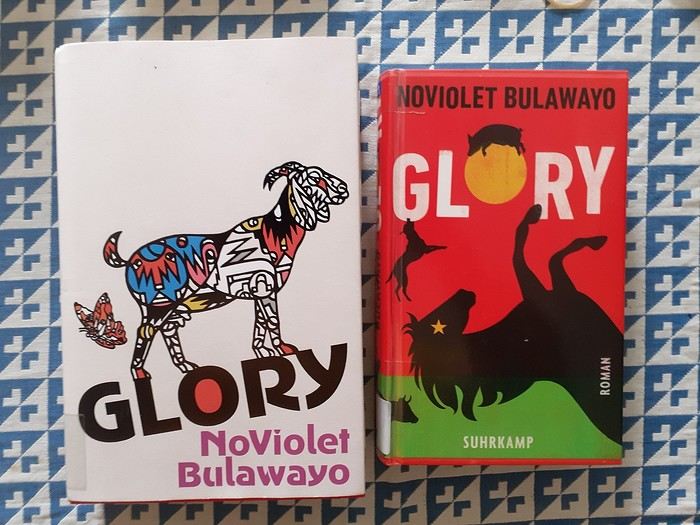 The books (in English, in German)
 Author NoViolet Bulawayo, Zimbabwe
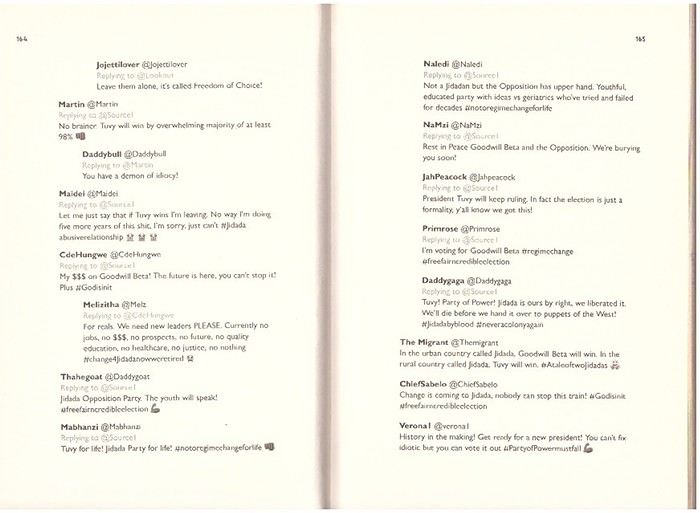 Threads (p.164-165)
"Bulawayo leans into exaggeration and irony to tell hard truths. *Glory* is jam-packed with comedy and farce, poking fun at an autocratic regime while illustrating the absurdity and surreal nature of a police state." — The Guardian
The cruelty and savagery of Zimbabwe’s (and Africa’s in general) "powerful animals"
Zimbabwean author NoViolet Bulawayo has written a novel that illustrates better than any documentary the complexity of colonial legacy. In doing so, she revisits George Orwell’s Animal Farm. Her novel *Glory* is a political satire about Zimbabwe—and it’s brimming with humor.
For thirty years, Zimbabwe has been stagnating under Robert Mugabe’s presidency. Human rights violations, corruption, and international sanctions have kept the population mired in poverty and oppression, while the regime exploits the meager earnings of the economy. As the 2017 elections approach, a power struggle erupts over the succession of the very elderly Father of the Nation (Mugabe). On the streets, people hope for long-awaited reforms; the people feel their moment has come.
And indeed, the army ousts Mugabe and his wife—"with her Gucci heels" (p.32)—who was positioning herself for the presidency. Hopes are dashed, however. The generals install former vice-president Emmerson Mnangagwa in power; the regime merely changes faces, but the problems remain the same.
In the novel, the country is called "Jidada, with a -da and another -da" (p.1); there’s no mistaking that this fictional state is Zimbabwe.
For *Glory*, her second novel, NoViolet Bulawayo invents a whole series of codes whose strength lies precisely in how easy they are to decipher. Like George Orwell’s Animal Farm, the characters populating Bulawayo’s universe aren’t humans but horses, goats, or crocodiles with all-too-human traits. Mugabe and Mnangagwa are horses, the spiritual leader is a pig, the soldiers are all bloodthirsty dogs, while the populace consists of goats, chickens, donkeys, and cats. The shift to the animal world serves only to better grasp the laws of despotism—and to ridicule real-life models. On one hand, the animals are humanized: they tweet, torture, travel in private jets. On the other, their greed, stupidity, and brutality stem from their animal nature.
It’s the old trick of fable: dressing men in animal disguises to make them easier to recognize. That’s how Orwell, in Animal Farm, traced how the promise of liberation from the Russian Revolution turned into Stalinist terror. In his 1945 fable, George Orwell describes how the animals of a farm drive out their farmer to organize the exploitation themselves, collectively. For a time, they truly taste freedom, but a clique of pigs ends up taking control. The central figures of the Soviet story—Stalin, Trotsky, Molotov—were easily recognizable.
Yet Bulawayo departs sharply from Orwell. She’s less concerned with precision and the force of argument than with satirical exaggeration. The deposed president is a senile old man who believes he can control even the sun’s course. The new stallion in power is a greedy debaucher. His soldiers sniff respectfully at his tail and backside.
In Bulawayo’s *Glory*, things are more complicated, but her novel also tells of a failed, incomplete liberation. In the author’s Animal Farm, Jidada, the colonial exploiters are followed by new forms of oppression. Because the former liberators become tyrants themselves. And because global power dynamics persist in neocolonial structures.
Wouldn’t that be enough to fuel a deeply depressing narrative? No—Bulawayo turns it into a blazing satire, full of wit and uncompromising criticism of power, a thread running through contemporary (not just) Zimbabwean history. The old warhorses in NoViolet Bulawayo’s Jidada, who continue to act as pack leaders, are easily recognizable as caricatures of the longtime dictator Robert Mugabe and his successor, current president Emmerson Mnangagwa.
The plot kicks off in high gear with independence day festivities. From the crack of dawn, everyone waits on Jidada Square for the Old Horse, the Father of the Nation and former liberator, whose reign "was nearing all of—not one, not two, not three, but four solid decades" (p.1). Everywhere, the colors of the Jidada Party shine; everywhere, true supporters cheer. Even the scorching sun plays its part: "At this point the sun, upon seeing arrive the leader who was decreed by God himself to rule and rule and keep ruling, a leader who'd in turn decreed the very sun to head his cheerleading squad, took a deep, deep breath and thoroughly blazed to impress" (p.2).
Finally, the Old Horse’s luxury carriage approaches "with the slowness of a hearse" (p.2), and "hoping to catch a glimpse of the legendary Father of the Nation," which causes "the animals fell over themselves like intoxicated frogs" (p.2). The sovereign’s speech is delayed a moment longer: "what I really want is a nap," groans the Old Horse as he takes his seat with such care "like his backside was made of expensive porcelain" (p.6).
Meanwhile, Bulawayo parades his entourage: the president’s wife (who earns her doctorate at Jidada University faster than "you could say diss, for dissertation. Tholukuthi it was as easy as ordering from a KFC drive-through, or perhaps even easier being that it was cheaper than KFC; it in fact cost her nothing and the degree actually came with a zero-calorie Diet Coke and a purple straw" (p.41), and she’s now known as Dr Sweet Mother. The cabinet includes "the Minister of the Revolution, the Minister of Corruption, the Minister of Order, the Minister of Things, the Minister of Nothing, the Minister of Propaganda, the Minister of Homophobic Affairs, the Minister of Disinformation and the Minister of Looting" (p.9). And of course the vice-president, who will soon become interim president when the Old Horse finally kicks the bucket—and then settle in as the new long-term president, who in the novel is called Tuvius Delight Shasha, or "Tuvy" for short (p.253), none other than Emmerson Mnangagwa. It’s him Bulawayo reserves her most merciless character description for.
"New Dispensation" (p.109) is Tuvy’s slogan for Jidada, and he loves repeating it so much he even named his parrot after it ("So inspired was Tuvy by the realisation that he rechristened his new pet parrot with the name New Dispensation—tholukuthi the bird having been acquired explicitly for the purposes of tweeting eulogies and accordingly glorifying the Saviour throughout the airs and skies of the nation. Tuvy then went on to hire a lecturer in English from the University of Jidada to teach New Dispensation to say the phrase 'New Dispensation'" p.110). But Tuvy’s Zimbabwe remains a nation without free, fair, and credible elections ("#freefairncredibleelection" p.161), and the promised equal treatment applies only insofar as Zimbabweans now queue up without discrimination in endless lines—and everyone is as poor as the next in the "queuenation" (p.283). Except for the powerful. They can "yes, tholukuthi, her immeasurable riches theirs to take. And take they did—
just take—take—take—take—take—take—take—take—take—take—take—take—take—take—take—take—take—take—take—take—take—take—take—take—take—take—take" (p.249-250).
In short: Bulawayo brilliantly depicts how former independence fighters become exploiters themselves. And how the country threatens to suffocate under the weight of corruption and repression. But she also literally stages the polyphony with which the people oppose imposed obedience to the official line.
Controversial online discussions keep interrupting the narrative—dialogues and social threads (see photo below) that Bulawayo masterfully integrates. From a literary standpoint, it’s a brilliant idea. And it shows, above all, that the author’s sympathy—so likeable—goes to all those who refuse to let their dream of true freedom be stolen, not even by the corrupt elites of their own country.
In the book’s acknowledgments, the first tribute goes to "The Jidadas of the world, clamouring for freedom on many fronts—A luta continua." (p.401) This reflects the realization that, not only in Jidada-Zimbabwe but in many other corners of the world, the end of colonial domination is still far from meaning the freedom hoped for by the vast majority of people. But it also means, more broadly, that this freedom must be won "on many fronts" (see above), both domestically and geopolitically.
That’s precisely what *Glory* so vividly highlights: how complex the project behind the term "postcolonialism" really is. With *Glory*, Bulawayo also delivers a scathing critique of the persistence of colonial mindsets in the West.
In the novel, the murder of George Floyd, racist police violence, and white-supremacist ideology in Trump’s United States perfectly illustrate the persistence of racism. It’s especially in the final chapters that Bulawayo lets Jidada’s inhabitants explicitly and unflinchingly criticize a neocolonial world order:
"It was not lost on us how the West, which loved to 'save' Africa and announce every action to the whole world, did so with one limb while manipulating, looting and fleecing us with the rest of its limbs so that more money in fact poured out of the continent than trickled in." (p.376)
"It was no mistake that multinational corporations yearly reaped and shipped colossal profits from Africa back to their countries as had been the case during colonial times. Even the sticks and stones would tell you that the African earth at any given time howled and shook and heaved from the extraction of its precious minerals that rarely benefited its own miserable children." (p.376)
"(...) we vowed to wage yet another war for Africa's second Liberation from neocolonial oppression. From exploitation. From plunder. From Western dominion. From indignity. From Abuse. We wanted real freedom. We wanted greedy, thieving paws off our wealth. We wanted Justice. We wanted a new world; we wanted a brand-new world so much we didn't sleep a wink that night." (p.377)
The Jidadas of this world must fight two enemies: Western neocolonialism and the autocratic instrumentalization of that argument; the persistence of Western racism and the populist appropriation of that humiliation by tyrants from their own ranks. Neither of these obstacles to freedom diminishes the historical and current guilt of the other. But the path to postcolonial liberation must overcome all these forms of oppression. After all, the colonizers didn’t bequeath democracies to formerly dominated nations, but instability and the principles of oppression and exploitation—which the so-called liberators have also internalized. Yet the fact that a satirical novel can capture the complexity of historical relationships while remaining, despite all the darkness of the subject, hilarious—well, that’s truly astonishing.
Finally, *Glory* ties into a major trauma in Zimbabwe’s post-independence history: the so-called Gukurahundi massacres. Between 1983 and 1987, tens of thousands of civilians were murdered by Mugabe’s bloody henchmen, most of them Ndebele. The State Security Minister and head of secret services at the time? You guessed it—Emmerson Mnangagwa.
When *Glory* turns to the massacres, the novel’s tone shifts completely. The story is now told through the narrative of the goat called Destiny, who, like NoViolet Bulawayo herself, left her home country at 18 for the United States and only returned after 13 years. In the book, the city of Bulawayo becomes a village where Destiny retraces her family’s history—and learns that part of it was also brutally murdered during the massacres.
The abuse of power and life under a dictatorship, dispossession, and a fiercely proud awareness of the psychological wounds and emotional vulnerability of a uprooted and disenfranchised people who had to forge a new language—a new set of names—to express their lived experiences are at the heart of this wonderful Zimbabwean author’s literary work, NoViolet Bulawayo. Shortly after her studies, she was already writing short stories about postcolonial power dynamics in Africa. But her playful, masterful, and often unconventional approach to language also plays a key role in her work. With virtuosity, she shifts from cynical images of power-obsessed elites to compassionate descriptions of the people’s suffering, ending with a hopeful sermon on courage—the courage to break free from fear and thus gain the strength for change ("And every one of them understood that whatever they heard within those hearts was the new national anthem, tholukuthi an anthem that spoke of the kind of glory that burns eternal and glows with living light." p.400). This novel is a genuine pleasure to read. And it’s exceptional. Good, African...
Book info (original English and German translation):
NoViolet Bulawayo. Glory. Chatto & Windus, 2022. NoViolet Bulawayo. Glory. Suhrkamp, 2023.
Hery
The books (in English, in German)
Author NoViolet Bulawayo, Zimbabwe
Threads (p.164-165)USA Road Trip - November 2023
After staying in Aruba in November 2023, we picked up our camper van, which we had left in a hotel parking lot in Miami, Florida.
This isn’t our first road trip across the United States. Since we’re retired, we took the opportunity to travel along the American West Coast, starting with the Everglades in Florida to visit a few parks where we could spot alligators.
We also made a few stops in Mississippi and Texas to explore the most important cities in those states.
Did you know that Austin is home to the world’s largest urban bat colony? It’s truly impressive to see thousands of them take flight at dusk.
I invite you to keep reading this travel journal and watch the videos that’ll give you a little more insight into these different destinations.
Videos are embedded throughout the summary. Just click on the image to start the video.
To jump to a specific post, here are the relevant links:
FLORIDA:
Big Cypress National Preserve - Ochopee Captain Mitch's Everglades Airboat Tours Marco Island
MISSISSIPPI:
Exploring Biloxi
TEXAS:
Downtown Houston Corpus Christi San Antonio Attractions McNutt Sculpture Garden - San Antonio Mission San José - San Antonio Austin Attractions The World’s Largest Urban Bat Colony - Austin Downtown Fort Worth Attractions Downtown Dallas
This isn’t our first road trip across the United States. Since we’re retired, we took the opportunity to travel along the American West Coast, starting with the Everglades in Florida to visit a few parks where we could spot alligators.
We also made a few stops in Mississippi and Texas to explore the most important cities in those states.
Did you know that Austin is home to the world’s largest urban bat colony? It’s truly impressive to see thousands of them take flight at dusk.
I invite you to keep reading this travel journal and watch the videos that’ll give you a little more insight into these different destinations.
Videos are embedded throughout the summary. Just click on the image to start the video.
To jump to a specific post, here are the relevant links:
FLORIDA:
Big Cypress National Preserve - Ochopee Captain Mitch's Everglades Airboat Tours Marco Island
MISSISSIPPI:
Exploring Biloxi
TEXAS:
Downtown Houston Corpus Christi San Antonio Attractions McNutt Sculpture Garden - San Antonio Mission San José - San Antonio Austin Attractions The World’s Largest Urban Bat Colony - Austin Downtown Fort Worth Attractions Downtown Dallas
What road trip to do in 18 days from Queenstown to Auckland?
Hi there,
We’re spending 18 days in New Zealand from 05/04 to 05/21, arriving in QUEENSTOWN and leaving from AUCKLAND. Any ideas for a road trip that covers the highlights of both islands but only changes hotels every 3–4 nights? Thanks.
We’re spending 18 days in New Zealand from 05/04 to 05/21, arriving in QUEENSTOWN and leaving from AUCKLAND. Any ideas for a road trip that covers the highlights of both islands but only changes hotels every 3–4 nights? Thanks.
Spitsbergen – A Night with the Walruses on Lågøya
Spitsbergen, 80° North latitude. A lost archipelago on the edge of the world, northeast of Greenland, the last lands before the pole. I’m aboard the *Grigoriy Mikheev*, a Russian ship from the Murmansk Polar Research Institute. Russian flag, Russian crew. Chartered by OceanWide Expeditions.
Last night, we were stuck in drifting pack ice in the long Hinlopen Strait. This incident led to an unforgettable barbecue and party on the ship’s foredeck, but we had to abandon our plan to head south and circle Spitsbergen. This summer, there’s too much ice in the strait, and it’s too thick. At dawn, the tide turned, allowing us to break free and head north again. The ship is now moving slowly through sea ice density that satellite maps estimate at around five-tenths. Our progress is punctuated by dull thuds: the ship’s bow constantly shoves and fractures enormous ice floes.
At breakfast, Tarik, our expedition leader, informs us that our program will be significantly altered. Since we can’t cross the strait, we’ll turn back and head north. To kick off our Plan B, Tarik plans a landing tonight on the small island of Låg (Lågøya), at 80°10' North. Last summer, he saw a large walrus colony there and hopes we’ll find them again. The weather is perfect—glorious sunshine—and walruses are truly addicted to sunbathing on the beaches.
We’ve now exited the strait and are sailing far from the coast. In case the walrus colony is there, we don’t want the ship’s approach to scare them into the water before we even see them. So, we scan the shore methodically with binoculars. We pass several bays, round a cape, and examine several shorelines littered with driftwood, but no walruses in sight. Several times, clusters of large rounded rocks trigger false alarms… but no, they’re just rocks…
Suddenly, Tarik spots them through his binoculars! On an isolated peninsula, our expedition leader’s highly trained eye has picked out, among those brown masses, the shape and white color of the enormous tusks of what he calls "the heavyweights of the Arctic!" Now, fifteen or twenty pairs of binoculars are pointed in the indicated direction… Sure enough, I see them now! They’re there, huge, sprawled in the sun on the beach. Without Tarik’s sharp eye, we might have missed them. They’re so tightly packed together that they really look like a mass of brown rocks. Only the white, saber-shaped tusks and the occasional furtive movements hint that they’re animals.
It’s 11 PM, and on the deck of the *Grigoriy Mikheev*, as you can imagine, excitement has ramped up several notches. Several of us have already rushed to our cabins to gear up, pulling on boots and life jackets in anticipation of a landing that promises to be absolutely amazing. Tarik reins in our enthusiasm a bit: Okay, so we were lucky to find them, but now we need to think about how to approach them. Not that they’re dangerous—at least not on land… Their enormous bulk and their pseudo-feet (flippers) only allow for very limited mobility. But when they feel threatened, their first instinct is to head for the water, where their perfect ease keeps them safe. So, the challenge will be not to scare them off, to avoid them bolting into the water in the first few seconds! That’s exactly what would happen if we arrived by Zodiac right in front of them.
So, Tarik decides we’ll make a wide detour to land on the other side of the peninsula where they are. From there, we’ll leave the Zodiacs on the beach and cross the peninsula on foot, about a kilometer and a half. That way, we’ll approach the herd from behind. This approach will also keep us downwind of them. There you go—with a few precautions, they shouldn’t hear us coming or catch our scent.
Everyone is geared up now and practically bursting with impatience… While the Zodiacs are being lowered into the water, Tarik and Delphine recap the approach rules: absolute silence, communication only by signs, no dragging feet on the rocks, watch your step, and strict coordination with slow movements.
Here we go… we’re off now! Spray flying from the Zodiac’s bow, icy air whipping our faces, gloves gripping the side ropes, freezing splashes, pure emotion… Ahh, I love this! We describe a wide curve offshore to round the peninsula. Ahead of us, the magnificent landscape of this intensely blue sea unfolds, with the hills of Lågøya and, in the distance, the ice-covered mountains of Nordaustlandet under the sun. It’s midnight now. In July, at 80 degrees North, the sun is just like midday.
This navigation takes us far from the walruses, on the other side of the cape. Easy landing on a shoreline of large pebbles covered in giant seaweed brought in by the currents. They look like long strips of plastic—sometimes translucent, sometimes white, beige, or orange. In places, there are huge tangled layers of it. Our boots sink into this material, which gives off a strong iodine smell. Unfortunately, there’s also some plastic waste—fishing floats and net debris. Seeing this here is crazy… A little farther on, in a cove, tides and storms have piled up numerous tree trunks from Siberia.
We begin crossing the peninsula on foot, staying close together. We’re walking on a nearly deserted polar tundra. We’re only ten degrees of latitude from the North Pole here. The violent winds and extreme temperatures that dominate this island for nine months of the year allow only a few rare plants to grow, close to the ground, between the rocks. In places, rocks are covered with large patches of black lichen.
Gérard, rifle slung over his shoulder, constantly scans the terrain. Tarik and Delphine are also very vigilant. We know no one ever lands here, and although this environment isn’t ideal for bears, you never know—better to be cautious. The terrain is mostly flat, but whenever a small rise blocks our view, Gérard moves ahead and only signals us to proceed when he’s sure there’s no "big man in fur" (tradition dictates we don’t name the polar bear).
After a few hundred meters, we find an enormous whale vertebra. Judging by the state of the bone, it’s likely a relic from the whaling era that ravaged this area in the 17th century and all over northern Spitsbergen. A little farther on, the remains of a grave catch our attention. The only human trace on this remote island, this burial is surely very old, also likely dating from the whalers’ time. But this whaler’s final resting place didn’t shelter him for long—there’s not much left, just a piece of skull and a few broken bones. Due to the permafrost, the body could only be buried a few dozen centimeters deep, between some planks held in place by large stones. This makeshift grave was probably ravaged by a bear shortly after the burial. Several stone blocks are overturned, the planks are broken open. We only linger for a minute to pay our respects to this whaler, whose poor remains now merge with the mineral landscape.
A slight rise bulges in the center of the peninsula, and here we are at the highest point. If our orientation is correct, we’re heading straight for the walrus colony. A moment of emotion… my heart’s pounding. Yes, they’re there, about three hundred meters ahead of us! They haven’t moved since we spotted them from the *Grigoriy Mikheev*’s deck. They’re sprawled in a heap, packed tightly together in the sun, on the shingle beach. The light breeze blowing in our faces confirms we’re on the right track—not to be sniffed out from afar by the big beasts.
By signs, Tarik tells us we’ll approach slowly, in stages, moving about thirty meters at a time, making as little noise as possible with our boots, then freezing completely for a minute or two, crouching down to let them forget us. This strategy proves excellent. We’re now less than a hundred meters away, and it doesn’t seem like our presence is perceived as a threat by the "heavyweights of the Arctic." At this distance, let’s not kid ourselves: we’re certainly spotted, but our way of approaching must seem reassuring—or at least manageable—since they’re only a few meters from the water and know they could dash into it in seconds if they felt the need.
We now advance in shorter stages—twenty meters at a time, then just ten, crouching, then freezing like statues, our breathing nearly held from emotion and concentration. We’re now thirty meters from the mastodons. Our presence must be starting to stress them because they’re moving more. While still sprawled against each other, some suddenly rear up on their flipper-feet, grunting and snorting like monstrous pigs. Their head shakes make their two enormous ivory sabers sway. They jab them into the fat of their neighbors, who in turn stir and emit irritated snorts.
At Tarik’s signal, we move a few more meters, "on velvet paws"… We’re right there now. I hold my breath, throat tight… Intense emotion, a fantastic spectacle—these enormous Arctic animals sprawled in the sun, with the magnificent backdrop of snow-covered mountains across the sound. I think to myself: *I’m here… this can’t be real!* It’s nearly 2 AM now, the air is crystal clear, and the Arctic sun bathes this scene in what might be the most beautiful light I’ve ever seen. We’re about fifteen meters away now. Tarik signals that we won’t go any closer. The walruses are still lying down, but occasionally, our close presence and the clicking of cameras trigger bouts of agitation that ripple through the herd, causing some jostling. They’re so tightly packed and tangled that it’s a bit hard to count them. In the end, we tally sixteen, plus one "little one," half-crushed in the general mass.
Seen from here, they’re truly impressive! The "sumo wrestlers of the Arctic!" According to Tarik, they must weigh about a ton—slightly more for the males than the females—and the "little one" must already be around 200 kg. When the weather’s nice like today, they love sprawling on the beaches to soak up the sun.
Walruses are marvels of Arctic adaptation. They can modify their blood circulation depending on thermal conditions. They withstand extreme cold by directing most of their circulation to vital organs (heart, lungs) and minimizing peripheral blood flow (skin and limbs) to prevent heat loss. Conversely, when they sunbathe, they direct most of their blood flow to the skin, turning themselves into true solar collectors.
At this latitude, there’s practically no difference in sunlight between day and night. Noon or midnight, the sun’s angle barely changes. Walruses make the most of these fair-weather phases by sprawling in the sun 23 hours out of 24… Enough to make siesta lovers dream, right? Twenty-three hours of lounging… and the twenty-fourth for eating!
And when we say "eating," what a feast! The proverb *"Who sleeps dines"* is fully justified here: when a walrus decides to feed, it gulps down between 50 and 60 kg of shellfish in an hour! Its food consists of large bivalve mollusks, which it tears from the seabed with its tusks and sucks up nonstop! A 50 kg meal certainly justifies a 23-hour nap for digestion, right? And speaking of digestion—it’s what the "big guys" in front of us are doing right now! You might wonder how we know this… Well, I’ll tell you: if you were here, downwind (or should I say *down the winds!*) of these marine giants, you’d have no doubt! Pfft… what flatulence! I can confirm that today’s scent is called *"Morsanus, from the North"* (*"Because I’m worth it!"*). Mmm, yeah… Tarik, you had a great idea putting us upwind… at least *they* can’t smell us, but we sure can!
But… heepp! Delphine discreetly signals to get our attention—she’s just spotted something: in the smooth water of the bay, a small V-shaped ripple runs along the beach, then turns toward the shore… So the colony wasn’t complete on the beach… Here’s an 800 kg bather stepping ashore now, right before our astonished eyes! She lifts her head and stays like that for a long moment, her enormous tusks half out of the water. She looks exhausted, resting a bit before coming out. Or more likely, she’s hesitating to climb onto the beach because she’s seen us… The shapeless head stays still for a moment, then violently snorts like a clogged drain! A misshapen head where you can’t make out anything that usually makes a head! No eyes, no ears, no mouth… A sort of monstrous cabbage! But the temptation to join the warmth of the "sunbathers" is too strong! Here’s our pachyderm bather climbing the few meters of the shore and sprawling right in the middle of her companions, who greet her with jostling, grunts, and tusk jabs! Then everything settles back into order—800 kg of fat and flesh added to the fifteen or so tons of local biomass. Welcome to the club!
It seems the walruses have gotten a bit used to us now. They’re moving and grunting much less. I realize it wasn’t obvious to approach them like this without scaring them into the water… It’s thanks to Tarik and Delphine’s advice that we managed it. It’s also, let’s be honest, because we’re all passionate here, and there’s been total discipline and cohesion from the start of this approach.
It’s past 2 AM now—time to head back… We’ll leave them to their wild world, to their life at the beginning of the world. We’re happy to have disturbed them as little as possible and not to have disrupted their nap too much. We leave stealthily, first backing up a few meters, then turning around and crossing the peninsula again, walking slowly, avoiding making noise with our boots as long as we’re still close.
We find the Zodiacs on the shoreline with the giant kelp. The sea is like a lake—easy boarding. We make another wide loop to round the cape, passing offshore. The sharp cold stings my cheeks and ears again—I put my hat back on. The cold—I hadn’t thought about it at all during our encounter with the walruses. In the Zodiac, with the engine noise, no one speaks. The faces and smiles are those of men and women who’ve just crossed an inner frontier—the one that separates dream from reality. But tonight, that frontier was porous, and the dream entered reality.
We return to the *Grigoriy Mikheev*, waiting at anchor. It’s past 3 AM, but I don’t feel any fatigue. A few minutes later, I’m in my bunk, rocked by a gentle swell and the hum of the engines. In the soft warmth of the blanket, a strange sleep overtakes me… A sleep filled with luminous, icy landscapes, with large beasts bearing saber-like tusks. Large beasts that sleep, snore, snort, grunt, and jostle in their sleep… in *my* sleep. An unforgettable memory. It was July 2004, in Spitsbergen.
Chris51.
Last night, we were stuck in drifting pack ice in the long Hinlopen Strait. This incident led to an unforgettable barbecue and party on the ship’s foredeck, but we had to abandon our plan to head south and circle Spitsbergen. This summer, there’s too much ice in the strait, and it’s too thick. At dawn, the tide turned, allowing us to break free and head north again. The ship is now moving slowly through sea ice density that satellite maps estimate at around five-tenths. Our progress is punctuated by dull thuds: the ship’s bow constantly shoves and fractures enormous ice floes.
At breakfast, Tarik, our expedition leader, informs us that our program will be significantly altered. Since we can’t cross the strait, we’ll turn back and head north. To kick off our Plan B, Tarik plans a landing tonight on the small island of Låg (Lågøya), at 80°10' North. Last summer, he saw a large walrus colony there and hopes we’ll find them again. The weather is perfect—glorious sunshine—and walruses are truly addicted to sunbathing on the beaches.
We’ve now exited the strait and are sailing far from the coast. In case the walrus colony is there, we don’t want the ship’s approach to scare them into the water before we even see them. So, we scan the shore methodically with binoculars. We pass several bays, round a cape, and examine several shorelines littered with driftwood, but no walruses in sight. Several times, clusters of large rounded rocks trigger false alarms… but no, they’re just rocks…
Suddenly, Tarik spots them through his binoculars! On an isolated peninsula, our expedition leader’s highly trained eye has picked out, among those brown masses, the shape and white color of the enormous tusks of what he calls "the heavyweights of the Arctic!" Now, fifteen or twenty pairs of binoculars are pointed in the indicated direction… Sure enough, I see them now! They’re there, huge, sprawled in the sun on the beach. Without Tarik’s sharp eye, we might have missed them. They’re so tightly packed together that they really look like a mass of brown rocks. Only the white, saber-shaped tusks and the occasional furtive movements hint that they’re animals.
It’s 11 PM, and on the deck of the *Grigoriy Mikheev*, as you can imagine, excitement has ramped up several notches. Several of us have already rushed to our cabins to gear up, pulling on boots and life jackets in anticipation of a landing that promises to be absolutely amazing. Tarik reins in our enthusiasm a bit: Okay, so we were lucky to find them, but now we need to think about how to approach them. Not that they’re dangerous—at least not on land… Their enormous bulk and their pseudo-feet (flippers) only allow for very limited mobility. But when they feel threatened, their first instinct is to head for the water, where their perfect ease keeps them safe. So, the challenge will be not to scare them off, to avoid them bolting into the water in the first few seconds! That’s exactly what would happen if we arrived by Zodiac right in front of them.
So, Tarik decides we’ll make a wide detour to land on the other side of the peninsula where they are. From there, we’ll leave the Zodiacs on the beach and cross the peninsula on foot, about a kilometer and a half. That way, we’ll approach the herd from behind. This approach will also keep us downwind of them. There you go—with a few precautions, they shouldn’t hear us coming or catch our scent.
Everyone is geared up now and practically bursting with impatience… While the Zodiacs are being lowered into the water, Tarik and Delphine recap the approach rules: absolute silence, communication only by signs, no dragging feet on the rocks, watch your step, and strict coordination with slow movements.
Here we go… we’re off now! Spray flying from the Zodiac’s bow, icy air whipping our faces, gloves gripping the side ropes, freezing splashes, pure emotion… Ahh, I love this! We describe a wide curve offshore to round the peninsula. Ahead of us, the magnificent landscape of this intensely blue sea unfolds, with the hills of Lågøya and, in the distance, the ice-covered mountains of Nordaustlandet under the sun. It’s midnight now. In July, at 80 degrees North, the sun is just like midday.
This navigation takes us far from the walruses, on the other side of the cape. Easy landing on a shoreline of large pebbles covered in giant seaweed brought in by the currents. They look like long strips of plastic—sometimes translucent, sometimes white, beige, or orange. In places, there are huge tangled layers of it. Our boots sink into this material, which gives off a strong iodine smell. Unfortunately, there’s also some plastic waste—fishing floats and net debris. Seeing this here is crazy… A little farther on, in a cove, tides and storms have piled up numerous tree trunks from Siberia.
We begin crossing the peninsula on foot, staying close together. We’re walking on a nearly deserted polar tundra. We’re only ten degrees of latitude from the North Pole here. The violent winds and extreme temperatures that dominate this island for nine months of the year allow only a few rare plants to grow, close to the ground, between the rocks. In places, rocks are covered with large patches of black lichen.
Gérard, rifle slung over his shoulder, constantly scans the terrain. Tarik and Delphine are also very vigilant. We know no one ever lands here, and although this environment isn’t ideal for bears, you never know—better to be cautious. The terrain is mostly flat, but whenever a small rise blocks our view, Gérard moves ahead and only signals us to proceed when he’s sure there’s no "big man in fur" (tradition dictates we don’t name the polar bear).
After a few hundred meters, we find an enormous whale vertebra. Judging by the state of the bone, it’s likely a relic from the whaling era that ravaged this area in the 17th century and all over northern Spitsbergen. A little farther on, the remains of a grave catch our attention. The only human trace on this remote island, this burial is surely very old, also likely dating from the whalers’ time. But this whaler’s final resting place didn’t shelter him for long—there’s not much left, just a piece of skull and a few broken bones. Due to the permafrost, the body could only be buried a few dozen centimeters deep, between some planks held in place by large stones. This makeshift grave was probably ravaged by a bear shortly after the burial. Several stone blocks are overturned, the planks are broken open. We only linger for a minute to pay our respects to this whaler, whose poor remains now merge with the mineral landscape.
A slight rise bulges in the center of the peninsula, and here we are at the highest point. If our orientation is correct, we’re heading straight for the walrus colony. A moment of emotion… my heart’s pounding. Yes, they’re there, about three hundred meters ahead of us! They haven’t moved since we spotted them from the *Grigoriy Mikheev*’s deck. They’re sprawled in a heap, packed tightly together in the sun, on the shingle beach. The light breeze blowing in our faces confirms we’re on the right track—not to be sniffed out from afar by the big beasts.
By signs, Tarik tells us we’ll approach slowly, in stages, moving about thirty meters at a time, making as little noise as possible with our boots, then freezing completely for a minute or two, crouching down to let them forget us. This strategy proves excellent. We’re now less than a hundred meters away, and it doesn’t seem like our presence is perceived as a threat by the "heavyweights of the Arctic." At this distance, let’s not kid ourselves: we’re certainly spotted, but our way of approaching must seem reassuring—or at least manageable—since they’re only a few meters from the water and know they could dash into it in seconds if they felt the need.
We now advance in shorter stages—twenty meters at a time, then just ten, crouching, then freezing like statues, our breathing nearly held from emotion and concentration. We’re now thirty meters from the mastodons. Our presence must be starting to stress them because they’re moving more. While still sprawled against each other, some suddenly rear up on their flipper-feet, grunting and snorting like monstrous pigs. Their head shakes make their two enormous ivory sabers sway. They jab them into the fat of their neighbors, who in turn stir and emit irritated snorts.
At Tarik’s signal, we move a few more meters, "on velvet paws"… We’re right there now. I hold my breath, throat tight… Intense emotion, a fantastic spectacle—these enormous Arctic animals sprawled in the sun, with the magnificent backdrop of snow-covered mountains across the sound. I think to myself: *I’m here… this can’t be real!* It’s nearly 2 AM now, the air is crystal clear, and the Arctic sun bathes this scene in what might be the most beautiful light I’ve ever seen. We’re about fifteen meters away now. Tarik signals that we won’t go any closer. The walruses are still lying down, but occasionally, our close presence and the clicking of cameras trigger bouts of agitation that ripple through the herd, causing some jostling. They’re so tightly packed and tangled that it’s a bit hard to count them. In the end, we tally sixteen, plus one "little one," half-crushed in the general mass.
Seen from here, they’re truly impressive! The "sumo wrestlers of the Arctic!" According to Tarik, they must weigh about a ton—slightly more for the males than the females—and the "little one" must already be around 200 kg. When the weather’s nice like today, they love sprawling on the beaches to soak up the sun.
Walruses are marvels of Arctic adaptation. They can modify their blood circulation depending on thermal conditions. They withstand extreme cold by directing most of their circulation to vital organs (heart, lungs) and minimizing peripheral blood flow (skin and limbs) to prevent heat loss. Conversely, when they sunbathe, they direct most of their blood flow to the skin, turning themselves into true solar collectors.
At this latitude, there’s practically no difference in sunlight between day and night. Noon or midnight, the sun’s angle barely changes. Walruses make the most of these fair-weather phases by sprawling in the sun 23 hours out of 24… Enough to make siesta lovers dream, right? Twenty-three hours of lounging… and the twenty-fourth for eating!
And when we say "eating," what a feast! The proverb *"Who sleeps dines"* is fully justified here: when a walrus decides to feed, it gulps down between 50 and 60 kg of shellfish in an hour! Its food consists of large bivalve mollusks, which it tears from the seabed with its tusks and sucks up nonstop! A 50 kg meal certainly justifies a 23-hour nap for digestion, right? And speaking of digestion—it’s what the "big guys" in front of us are doing right now! You might wonder how we know this… Well, I’ll tell you: if you were here, downwind (or should I say *down the winds!*) of these marine giants, you’d have no doubt! Pfft… what flatulence! I can confirm that today’s scent is called *"Morsanus, from the North"* (*"Because I’m worth it!"*). Mmm, yeah… Tarik, you had a great idea putting us upwind… at least *they* can’t smell us, but we sure can!
But… heepp! Delphine discreetly signals to get our attention—she’s just spotted something: in the smooth water of the bay, a small V-shaped ripple runs along the beach, then turns toward the shore… So the colony wasn’t complete on the beach… Here’s an 800 kg bather stepping ashore now, right before our astonished eyes! She lifts her head and stays like that for a long moment, her enormous tusks half out of the water. She looks exhausted, resting a bit before coming out. Or more likely, she’s hesitating to climb onto the beach because she’s seen us… The shapeless head stays still for a moment, then violently snorts like a clogged drain! A misshapen head where you can’t make out anything that usually makes a head! No eyes, no ears, no mouth… A sort of monstrous cabbage! But the temptation to join the warmth of the "sunbathers" is too strong! Here’s our pachyderm bather climbing the few meters of the shore and sprawling right in the middle of her companions, who greet her with jostling, grunts, and tusk jabs! Then everything settles back into order—800 kg of fat and flesh added to the fifteen or so tons of local biomass. Welcome to the club!
It seems the walruses have gotten a bit used to us now. They’re moving and grunting much less. I realize it wasn’t obvious to approach them like this without scaring them into the water… It’s thanks to Tarik and Delphine’s advice that we managed it. It’s also, let’s be honest, because we’re all passionate here, and there’s been total discipline and cohesion from the start of this approach.
It’s past 2 AM now—time to head back… We’ll leave them to their wild world, to their life at the beginning of the world. We’re happy to have disturbed them as little as possible and not to have disrupted their nap too much. We leave stealthily, first backing up a few meters, then turning around and crossing the peninsula again, walking slowly, avoiding making noise with our boots as long as we’re still close.
We find the Zodiacs on the shoreline with the giant kelp. The sea is like a lake—easy boarding. We make another wide loop to round the cape, passing offshore. The sharp cold stings my cheeks and ears again—I put my hat back on. The cold—I hadn’t thought about it at all during our encounter with the walruses. In the Zodiac, with the engine noise, no one speaks. The faces and smiles are those of men and women who’ve just crossed an inner frontier—the one that separates dream from reality. But tonight, that frontier was porous, and the dream entered reality.
We return to the *Grigoriy Mikheev*, waiting at anchor. It’s past 3 AM, but I don’t feel any fatigue. A few minutes later, I’m in my bunk, rocked by a gentle swell and the hum of the engines. In the soft warmth of the blanket, a strange sleep overtakes me… A sleep filled with luminous, icy landscapes, with large beasts bearing saber-like tusks. Large beasts that sleep, snore, snort, grunt, and jostle in their sleep… in *my* sleep. An unforgettable memory. It was July 2004, in Spitsbergen.
Chris51.
Who's interested in the Costa Serena from Sydney to Buenos Aires?
I'm considering boarding the Costa Serena in Sydney in November 2026 for the Sydney/Santiago de Chile cruise and continuing on to Buenos Aires before finishing in Rio...
Anyone else going to be there??? I'd love to connect with you all 😎
One-month itinerary for northeastern Brazil
Hi everyone,
We’re a group of 3 friends traveling from Salvador de Bahia to Belém in November for a month. To plan our route, I’d love some tips on the must-see spots. We’ll be traveling by bus and are mostly looking for nature, as well as pretty towns and villages.
Your advice will help us avoid missing too many great places. Thanks in advance to all of you!
Thierry
What to see in Panama: villages, beaches?
I posted a few questions recently about Costa Rica and Panama, since we're still hesitating between the two for a trip in July.
Our plan would be to drive up through Panama to Bocas del Toro, then fly back (a classic loop).
We have tons of questions, since travel blogs and sites are often so glowing, which is why we'd love to hear real firsthand experiences.
1-We're really drawn to small colonial-style villages. Are there any similar to Casco Viejo in Panama City elsewhere in the country? 2-Which island is worth the detour, and are there any paradise-like beaches (clear water, snorkeling right from the beach) outside of Bocas del Toro and San Blas? 3-Which coast is better between Panama City and Bocas del Toro?
We're traveling with a child, so we'll avoid anything like treks or waterfalls that are hard to access.
Thanks in advance if you can help us out! 🙁
Our plan would be to drive up through Panama to Bocas del Toro, then fly back (a classic loop).
We have tons of questions, since travel blogs and sites are often so glowing, which is why we'd love to hear real firsthand experiences.
1-We're really drawn to small colonial-style villages. Are there any similar to Casco Viejo in Panama City elsewhere in the country? 2-Which island is worth the detour, and are there any paradise-like beaches (clear water, snorkeling right from the beach) outside of Bocas del Toro and San Blas? 3-Which coast is better between Panama City and Bocas del Toro?
We're traveling with a child, so we'll avoid anything like treks or waterfalls that are hard to access.
Thanks in advance if you can help us out! 🙁
Hôtels/pousadas ouverts à Salvador da Bahia en ce moment English translation pending
Bon, quelques données positives à Salvador da Bahia 😎
Depuis une dizaine de jours maintenant le commerce à été partiellement ouvert dans ce qu'on appelle ici la "fase 1", cad. tout les commerces de vente sont autorisé à ouvrir leur établissement. Sont encore exempt : les bars et restaurants, les transports inter-urbains publics. Les plages sont encore fermé au public. Par contre à Praia do Forte et Imbassai on vient d'ouvrir les restaurants le weekend passé. Tout selon une interminable liste de mesures de sécurité.
Voici une liste (de l'association des hoteliers de Bahia) d'hôtels ouvert en ce moment :
- ALAH MAR HOTEL - https://alah-mar-br.book.direct/ - AMERICA TOWER - https://www.americatowers.ammihotels.com.br/pt-br/ - BAHIA SOL E MAR - https://bahiasolemar.com.br/ - BAHIAMAR HOTEL - https://bahiamar.com.br/ - CATUSSABA RESORT - http://www.catussaba.com.br/ - FIESTA BAHIA HOTEL - https://www.fiestahotel.com.br - GRANDE HOTEL DA BARRA - https://www.grandehoteldabarra.com.br/pt-br/ - HIT HOTEL - https://www.hithotel.com.br/pt-br/ - HOTEL BAHIA DO SOL - https://www.bahiadosol.com.br/ - HOTEL BOM GOSTO - https://bom-gosto.hotelsinsalvador.com/pt/ - HOTEL COLONIAL CHILE - https://www.colonialchilehotel.com.br/pt-br/ - HOTEL PRAIA DA SEREIA - https://praiadasereia.com.br/ - HOTEL POUSADA DA MANGUEIRA - https://www.pousadadamangueira.com.br/pt-br - HOTEL SEMPRE OGUNJA - https://www.bahia.hotelsempre.com.br/pt-br/ - IBIS SALVADOR HANGAR PARK - https://all.accor.com/hotel/8181/index.pt-br.shtml - INTERCITY SALVADOR AEROPORTO - https://www.intercityhoteis.com.br/hotel-salvador/hotel-intercity-salvador-aeroporto/44/ - MAIS HOTEL AEROPORTO SALVADOR - https://maishotelbahia.com.br/ - MALIBU PLAZA HOTEL - https://malibuplaza.com.br/ - MAR BRASIL HOTEL - https://www.marbrasilhotel.com.br/ - MARANO HOTEL - http://maranohotel.com.br/ - MERCURE SALVADOR BOULEVARD - https://all.accor.com/hotel/7361/index.pt-br.shtml - MERCURE SALVADOR PITUBA - https://all.accor.com/hotel/8930/index.pt-br.shtml - MERCURE SALVADOR RIO VERMELHO - https://all.accor.com/hotel/5182/index.pt-br.shtml?utm_campaign=seo+maps&utm_medium=seo+maps&utm_source=google+Maps - ONIX PIATÃ - http://onixhoteis.com.br/ - ONIX AEROPORTO - http://onixhoteis.com.br/ - POUSADA SOLAR DAS ARTES – SALVADOR - https://pousadasolardasartes.com.br/ - PISA PLAZA HOTEL - https://pisaplaza.com.br/ - POUSADA SALVADOR - https://www.hotelsone.com/salvador-hotels-br/pousada-salvador.pt.html - SALVADOR MAR HOTEL - http://salvadormarhotel.com.br/ - QUALITY HOTEL SÃO SALVADOR - https://www.atlanticahotels.com.br/hotel/quality-hotel-suites-sao-salvador/ - VERDEMAR HOTEL - http://verdemar.com.br/ - MOTEL DECAMERON - https://www.decameron.com.br/pt-br/nossas-suites - MOTEL DEL REY - http://www.moteldelrey.com.br/ - MOTEL KAMASUTRA - https://motelkamasutra.com.br/
Les hôtels suivant parlent d'une ouverture possible plustard dans l'année : - Wish Hotel da Bahia (Campo Grande à Salvador) vers le 12 octobre - Fera Palace (Rua de Chili à Salvador) vers début décembre - Monte Pascoal Praia Hotel (Barra, Salvador) vers octobre/novembre - Grand Palladium, le 6 aout - Deville Prime, le 1 septembre - Pousada Reino de Aruanda, 1 novembre - Pousada da Mangueira, septembre
Si vous avez des questions spécifiques n'hésitez pas à les poser ici 😉
Le bonjour tropical de Salvador da Bahia
Ivan Bahia Guide
Depuis une dizaine de jours maintenant le commerce à été partiellement ouvert dans ce qu'on appelle ici la "fase 1", cad. tout les commerces de vente sont autorisé à ouvrir leur établissement. Sont encore exempt : les bars et restaurants, les transports inter-urbains publics. Les plages sont encore fermé au public. Par contre à Praia do Forte et Imbassai on vient d'ouvrir les restaurants le weekend passé. Tout selon une interminable liste de mesures de sécurité.
Voici une liste (de l'association des hoteliers de Bahia) d'hôtels ouvert en ce moment :
- ALAH MAR HOTEL - https://alah-mar-br.book.direct/ - AMERICA TOWER - https://www.americatowers.ammihotels.com.br/pt-br/ - BAHIA SOL E MAR - https://bahiasolemar.com.br/ - BAHIAMAR HOTEL - https://bahiamar.com.br/ - CATUSSABA RESORT - http://www.catussaba.com.br/ - FIESTA BAHIA HOTEL - https://www.fiestahotel.com.br - GRANDE HOTEL DA BARRA - https://www.grandehoteldabarra.com.br/pt-br/ - HIT HOTEL - https://www.hithotel.com.br/pt-br/ - HOTEL BAHIA DO SOL - https://www.bahiadosol.com.br/ - HOTEL BOM GOSTO - https://bom-gosto.hotelsinsalvador.com/pt/ - HOTEL COLONIAL CHILE - https://www.colonialchilehotel.com.br/pt-br/ - HOTEL PRAIA DA SEREIA - https://praiadasereia.com.br/ - HOTEL POUSADA DA MANGUEIRA - https://www.pousadadamangueira.com.br/pt-br - HOTEL SEMPRE OGUNJA - https://www.bahia.hotelsempre.com.br/pt-br/ - IBIS SALVADOR HANGAR PARK - https://all.accor.com/hotel/8181/index.pt-br.shtml - INTERCITY SALVADOR AEROPORTO - https://www.intercityhoteis.com.br/hotel-salvador/hotel-intercity-salvador-aeroporto/44/ - MAIS HOTEL AEROPORTO SALVADOR - https://maishotelbahia.com.br/ - MALIBU PLAZA HOTEL - https://malibuplaza.com.br/ - MAR BRASIL HOTEL - https://www.marbrasilhotel.com.br/ - MARANO HOTEL - http://maranohotel.com.br/ - MERCURE SALVADOR BOULEVARD - https://all.accor.com/hotel/7361/index.pt-br.shtml - MERCURE SALVADOR PITUBA - https://all.accor.com/hotel/8930/index.pt-br.shtml - MERCURE SALVADOR RIO VERMELHO - https://all.accor.com/hotel/5182/index.pt-br.shtml?utm_campaign=seo+maps&utm_medium=seo+maps&utm_source=google+Maps - ONIX PIATÃ - http://onixhoteis.com.br/ - ONIX AEROPORTO - http://onixhoteis.com.br/ - POUSADA SOLAR DAS ARTES – SALVADOR - https://pousadasolardasartes.com.br/ - PISA PLAZA HOTEL - https://pisaplaza.com.br/ - POUSADA SALVADOR - https://www.hotelsone.com/salvador-hotels-br/pousada-salvador.pt.html - SALVADOR MAR HOTEL - http://salvadormarhotel.com.br/ - QUALITY HOTEL SÃO SALVADOR - https://www.atlanticahotels.com.br/hotel/quality-hotel-suites-sao-salvador/ - VERDEMAR HOTEL - http://verdemar.com.br/ - MOTEL DECAMERON - https://www.decameron.com.br/pt-br/nossas-suites - MOTEL DEL REY - http://www.moteldelrey.com.br/ - MOTEL KAMASUTRA - https://motelkamasutra.com.br/
Les hôtels suivant parlent d'une ouverture possible plustard dans l'année : - Wish Hotel da Bahia (Campo Grande à Salvador) vers le 12 octobre - Fera Palace (Rua de Chili à Salvador) vers début décembre - Monte Pascoal Praia Hotel (Barra, Salvador) vers octobre/novembre - Grand Palladium, le 6 aout - Deville Prime, le 1 septembre - Pousada Reino de Aruanda, 1 novembre - Pousada da Mangueira, septembre
Si vous avez des questions spécifiques n'hésitez pas à les poser ici 😉
Le bonjour tropical de Salvador da Bahia
Ivan Bahia Guide
Myanmar un beau voyage au pays des pagodes English translation pending
Un voyage organisé en 16 jours, effectué à une belle période au Myanmar cad janvier-février 2018.
Circuit somme toute classique: Yangoon, lac inle, Bagan, Mandalay
Circuit somme toute classique: Yangoon, lac inle, Bagan, Mandalay
Recherche nom d'une île au sud de Biak (Indonésie) English translation pending
Quelqu'un est-il connaisseurs des îles aux sud de Biak ? J'y étais en 2012 mais je suis confus pour le nom de l'île parce qu'il semble y avoir deux "Wundi island", un au nord de l'île de Biak et l'autre où je suis allé au sud, mais quand je regarde sur google map y-a rien d'indiqué pour celui du sud, alors est-ce qu'ils ont changé de nom où quoi ? A la place c'est marqué "Mios Woendi" (???) Erreur où quoi ?
Merci de l'aide.
Croisière en catamaran aux Bahamas English translation pending
Bonjour nous revenons des Exumas et nous avons raconté notre voyage sur notre blog voyage FMR_travelblog à lire ici https://fmr-travelblog.com/croisiere-catamaran-bahamas-blog-voyage-exumas-pigisland/
L’archipel des Exumas est composé de plus de 360 îles et cay (île non habitée). Pour nous l’idée était donc de partir à l’aventure en naviguant d’îles en îles sur un bateau en autonomie totale (avec un skipper bien sûr Voici un itinéraire de 7 jours pour votre croisière aux Exumas, Bahamas
Highbourne Cay
Warderick Wells
Sampson Cay
Staniel Cay
Pig Island
Norman’s Cay
La luxueuse Marina de Highbourne Cay, l'entrée des Exumas
Départ en direction de l’archipel des Exumas, à une trentaine de miles au sud-est de Nassau. On passe par Iguana Beach pour découvrir une colonie de plus de 700 iguanes qui peuple cette petite île. L’escale suivante sera donc Highbourne Cay, la porte d’entrée des Exumas : une marina chic et accueillante avec son bar/restaurant. On vous conseille de faire la balade en vélo pour découvrir l’île et ses magnifiques plages isolées.
Warderick Wells Cay, le coeur du parc national des Exumas (voir le blog https://fmr-travelblog.com/ )
Le matin on navigue le long d’un ensemble d’îlots ourlés de sable blanc pour arriver à Warderick Wells Cay, un endroit magnifique qui nous rappelle Maupiti en Polynésie. Connu pour son récif de corail, cet îlot abrite tortues, requins et nombreux poissons. Il offre aussi une petite randonnée (1h30) jusqu’à son sommet, Boo Boo Hill, pour une vue exceptionnelle sur les eaux azur. La secrète Sampson Cay et ses bancs de sable à perte de vue (voir le blog https://fmr-travelblog.com/ )
Prochaine étape : les plus beaux bancs de sable des Exumas. Sampson Cay est encore très sauvage et c’est ici qu’on a trouvé notre plage coup de coeur du voyage! On y est allé en kayak depuis le bateau, moment magique. Little conseil : Pour profiter à fond du spectacle allez-y quand la marée est basse.
L'île aux cochons, la plus connue des Bahamas(voir le blog https://fmr-travelblog.com/ )
Un rendez-vous insolite vous attend sur l’île de Big Major, surnommée Pig Island. Vous avez surement déjà vu une photo de ces cochons nageurs sur Instagram! Ces cochons vivent sur cette ile depuis plusieurs années et se sont habitués à venir demander de la nourriture aux bateaux approchant de la belle plage. On est resté quelques heures en compagnie de ces drôles de cochons qui adore faire trempette. Little secret : Allez-y tôt car à 11h la plage devient un peu saturé de monde et de bateaux.
L’archipel des Exumas est composé de plus de 360 îles et cay (île non habitée). Pour nous l’idée était donc de partir à l’aventure en naviguant d’îles en îles sur un bateau en autonomie totale (avec un skipper bien sûr Voici un itinéraire de 7 jours pour votre croisière aux Exumas, Bahamas
Highbourne Cay
Warderick Wells
Sampson Cay
Staniel Cay
Pig Island
Norman’s Cay
La luxueuse Marina de Highbourne Cay, l'entrée des Exumas
Départ en direction de l’archipel des Exumas, à une trentaine de miles au sud-est de Nassau. On passe par Iguana Beach pour découvrir une colonie de plus de 700 iguanes qui peuple cette petite île. L’escale suivante sera donc Highbourne Cay, la porte d’entrée des Exumas : une marina chic et accueillante avec son bar/restaurant. On vous conseille de faire la balade en vélo pour découvrir l’île et ses magnifiques plages isolées.
Warderick Wells Cay, le coeur du parc national des Exumas (voir le blog https://fmr-travelblog.com/ )
Le matin on navigue le long d’un ensemble d’îlots ourlés de sable blanc pour arriver à Warderick Wells Cay, un endroit magnifique qui nous rappelle Maupiti en Polynésie. Connu pour son récif de corail, cet îlot abrite tortues, requins et nombreux poissons. Il offre aussi une petite randonnée (1h30) jusqu’à son sommet, Boo Boo Hill, pour une vue exceptionnelle sur les eaux azur. La secrète Sampson Cay et ses bancs de sable à perte de vue (voir le blog https://fmr-travelblog.com/ )
Prochaine étape : les plus beaux bancs de sable des Exumas. Sampson Cay est encore très sauvage et c’est ici qu’on a trouvé notre plage coup de coeur du voyage! On y est allé en kayak depuis le bateau, moment magique. Little conseil : Pour profiter à fond du spectacle allez-y quand la marée est basse.
L'île aux cochons, la plus connue des Bahamas(voir le blog https://fmr-travelblog.com/ )
Un rendez-vous insolite vous attend sur l’île de Big Major, surnommée Pig Island. Vous avez surement déjà vu une photo de ces cochons nageurs sur Instagram! Ces cochons vivent sur cette ile depuis plusieurs années et se sont habitués à venir demander de la nourriture aux bateaux approchant de la belle plage. On est resté quelques heures en compagnie de ces drôles de cochons qui adore faire trempette. Little secret : Allez-y tôt car à 11h la plage devient un peu saturé de monde et de bateaux.
J'avons testé Tunis en 5 heures chrono (février 2020) English translation pending
S🙂lam!
Ayant une escale de 8h* à l'aréoport de Tunis-Carthage sur notre vol Tunisair Nouackchott-Marseille, nous décidâmes de tenter l'coup de découvrir cette Capitale en 5 heures chrono (po bisoin di visa ). Y a des tours organisés sur le net, préférons nous débrouiller seuls, au moyen de taxis, en ciblant 2 spots parmi les plus emblématiques de la Ville: Sa Médina et Sidi BouSaïd.On a du peau, le ciel est d'azur et les températures douces, en ce ptit matin (7am) d'un vendredi de fin février quand, aprés avoir récupéré quelques docs à l'O.T. bien que mon gars ait anticipé la mapp des Lieux sur son iphone, nous sautons dans un 1er taxi qui nous largue aimablement (en échange de 15 dinars) non loin de l'Avenue de France.Ce trajet motorisé d'une ptite 1/2 heure nous étonne, en arrivant de Mauritanie l'Europe nous semble déjà toutoute proche, avec des immeubles modernes et un patrimoine colonial.
Nous pénétrons la Médina ( au Patrimoine mondial d'UNESCO stp!) vers 8h,8h30 comme ça par la Bab El Bhar.Les shops commencent à lever rideau.Sauf la coupure de la Prière de la mi-journée, ils ouvrent le vendredi (à Tunis comme en France, le c'est samedi & dimanche).On kiffe grave notre balade 3 heures durant, particulièrement les Cafés (Ezzitouna, M'Rabet, Du Souk, D'Ribat, Chikh, Maez, le Panorama & sa merveilleuse vue sur les toits de la Médina/photo n°3...) tous plus jolis et douillets les zuns qu'les zautres (photo n°2), mais aussi marquant le pas devant la boutique Mohamed Ben Aba ( famous chechia tunisienne), le Hammam-salon de coiffure El Kachachine (à côté d'la Jama-Mosquée Zitoune, fermée sur le moment 🤪/photo n°5), la populaire Pâtisserie Gmati , la cour de la Medersa As-Slimaniya (entrée libre/photo n°6), l'élégant Restaurant-Salon de thé !!!
Un 2ème taxi nous conduit à Sidi BouSaïd en -30mn (19 dinars), notre amie en France d'origine Tunisoise ne nous a pas trompé: c'est trobeau !!! Ne manquons pas le "pélerinage touristique" du Café des délices (photo n°9). Il est déjà l'heure de regagner l'aréoport, en 15-20mn, pour 10 dinars, par le même taxi qui nous a attendu comme convenu.
La vérité ma parole, c'était excellent, faudra vraîment qu'on revient avec notre pote, incha allah, on l' dit dpuis longtemps.
Voilà, comme ça! Merki de votre lecture.
Sânouk3😎
PS: pou ceux qu'ça intéresse, j'ai pondu un ptit topo sur nos 12 jours Mauritaniens () dans la rubrique dédiée. Et pi sinon, la photo n°1 c'est: Sculpture Inkman .
Ayant une escale de 8h* à l'aréoport de Tunis-Carthage sur notre vol Tunisair Nouackchott-Marseille, nous décidâmes de tenter l'coup de découvrir cette Capitale en 5 heures chrono (po bisoin di visa ). Y a des tours organisés sur le net, préférons nous débrouiller seuls, au moyen de taxis, en ciblant 2 spots parmi les plus emblématiques de la Ville: Sa Médina et Sidi BouSaïd.On a du peau, le ciel est d'azur et les températures douces, en ce ptit matin (7am) d'un vendredi de fin février quand, aprés avoir récupéré quelques docs à l'O.T. bien que mon gars ait anticipé la mapp des Lieux sur son iphone, nous sautons dans un 1er taxi qui nous largue aimablement (en échange de 15 dinars) non loin de l'Avenue de France.Ce trajet motorisé d'une ptite 1/2 heure nous étonne, en arrivant de Mauritanie l'Europe nous semble déjà toutoute proche, avec des immeubles modernes et un patrimoine colonial.
Nous pénétrons la Médina ( au Patrimoine mondial d'UNESCO stp!) vers 8h,8h30 comme ça par la Bab El Bhar.Les shops commencent à lever rideau.Sauf la coupure de la Prière de la mi-journée, ils ouvrent le vendredi (à Tunis comme en France, le c'est samedi & dimanche).On kiffe grave notre balade 3 heures durant, particulièrement les Cafés (Ezzitouna, M'Rabet, Du Souk, D'Ribat, Chikh, Maez, le Panorama & sa merveilleuse vue sur les toits de la Médina/photo n°3...) tous plus jolis et douillets les zuns qu'les zautres (photo n°2), mais aussi marquant le pas devant la boutique Mohamed Ben Aba ( famous chechia tunisienne), le Hammam-salon de coiffure El Kachachine (à côté d'la Jama-Mosquée Zitoune, fermée sur le moment 🤪/photo n°5), la populaire Pâtisserie Gmati , la cour de la Medersa As-Slimaniya (entrée libre/photo n°6), l'élégant Restaurant-Salon de thé !!!
Un 2ème taxi nous conduit à Sidi BouSaïd en -30mn (19 dinars), notre amie en France d'origine Tunisoise ne nous a pas trompé: c'est trobeau !!! Ne manquons pas le "pélerinage touristique" du Café des délices (photo n°9). Il est déjà l'heure de regagner l'aréoport, en 15-20mn, pour 10 dinars, par le même taxi qui nous a attendu comme convenu.
La vérité ma parole, c'était excellent, faudra vraîment qu'on revient avec notre pote, incha allah, on l' dit dpuis longtemps.
Voilà, comme ça! Merki de votre lecture.
Sânouk3😎
PS: pou ceux qu'ça intéresse, j'ai pondu un ptit topo sur nos 12 jours Mauritaniens () dans la rubrique dédiée. Et pi sinon, la photo n°1 c'est: Sculpture Inkman .
Hôtels sympathiques, lieux à visiter et randonnées entre Santiago et Puerto Mont fin février English translation pending
Hello, je pars au Chili fin février pour 18 jours. On descend dans le Sud. Je suis à la recherche de bonnes adresses d'hôtel sympa, de lieux à visiter entre Santiago et Puerto Mont. On est plutot sportifs donc petites randos d'un jour ici et là ...
Quelqu'un a loué une voiture au Chili ? Si oui combien ?
Merci les amis !
Trouver un chapelier (si possible pas fou) à Hô-Chi-Minh-Ville English translation pending
Bonjour!
J’aimerais comme souvenir rapporter un couvre-chef du nom de « mou kwai « (prononciation approx.) J’en ai vu de différentes qualités de matériaux et de fabrication... J’aimerais en acheter un de très haute qualité.
Si vous avez en tête un bon chapelier-artisan localisé à Ho C. M. , je suis preneur.
Marc
J’aimerais comme souvenir rapporter un couvre-chef du nom de « mou kwai « (prononciation approx.) J’en ai vu de différentes qualités de matériaux et de fabrication... J’aimerais en acheter un de très haute qualité.
Si vous avez en tête un bon chapelier-artisan localisé à Ho C. M. , je suis preneur.
Marc
Vends palmes, masques, tubas aux Galapagos ou à Quito English translation pending
Bonsoir ,
Apres 2 semaines aux galapagos nous revendons notre matériel de PMT , qui comprend 3 paires de palmes (taille 40-42, 42-44 et 44-46) , 3 tubas et 3 masques taille adulte
Tout est en excellent état (tout propre ) car utilisé une dizaine de fois dans de bonnes conditions et toujours rincé apres usage
A recuperer a santa cruz avant midi demain , ou a quito à la colonial house (demander a l'accueil)
20 euros palmes+ masque + tuba
50 euros les 3 ensemble🙂
Où aller après Punta Cana? English translation pending
je pars pour 15 jours en RD, arrivée a punta cana , je vais y rester 7 jours...j'aimerais quelques pistes pour rejoindre un ou deux points différents, volontiers avec une plage mais quand même un endroit avec une petite ville, las terenas, samana, puerto plata. Il faut que je puisse les rejoindre en bus.
je repartirais par saint domingue ou je resterais au moins une nuit (faut il davantage étant donné le peu de jours dont je dispose ?) pour visiter le quartier colonial
en même temps que vos indications, si vous pouvez me conseiller un hotel sympa, plutot confortable, mais pas un tout inclus...si je peux trouver autre chose.
je vous remercie par avance, jeanne
je vous remercie par avance, jeanne
Excursion en bus à Santo Domingo depuis Bayahibe et temps de trajet English translation pending
Bonjour
Nous serons à Bayahibe fin novembre et aimerions aller à St Domingue
par nos propres moyens
J'ai lu qu'il y avait maintenant un bus direct, combien de temps de trajet
met il?
Est ce suffisant pour visiter la zone coloniale
On connaît déjà un peu la ville, ayant eu la chance de visiter ce pays en 1989 , alors qu'il y avait très peu de touristes...
2 hôtels à Punta Cana, si si...
Merci de vos réponses, on se réjouit de retrouver ce pays et ses habitants si sympathiques
La péninsule de Valdès (Argentine) English translation pending
Bonjour,
Pour ceux qui vont partir, voici quelques informations qui pourront vous guider.
Le programme :
- location d'une voiture (pas 4x4) à l'aéroport de Trelew et direction Valdès
- entrée dans le parc : en liquide exclusivement , de l'ordre de 820 pesos/personne + 120 pour la voiture
- nuit à Puerto Piramides après avoir réservé une excursion "baleine"
- le matin , sortie en bateau pour voir les baleines (nous sommes en octobre) , l'après midi un tour en voiture dans l'île pour atteindre 2 points ( un pour des pingouins - un pour les lions de mer) - pas d'orques en octobre
- une deuxième nuit à Puerto Piramides
- le lendemain matin : un petit tour près du village pour un point de vue sur une colonie de lions de mer et départ pour Puerto Madryn
Le vécu:
- prévoir suffisamment d'argent liquide, d'autant plus que l'unique distributeur du village était en panne
- beaucoup de kms dans un paysage désolé
- plusieurs agences pour la sortie baleine - concrètement on est 1h - 1h15 avec les baleines - les bateaux ne sont pas les uns près des autres s'il y a suffisamment de baleines - en moyenne 40 personnes par bateau.
Si c'était à refaire :
On peut se contenter de l'excursion baleine et d'aller voir la colonie de lions de mer près du village avec une seule nuit à Puerto Piramides. Les kms de piste dans un "non-paysage" ne sont pas indispensables si ce n'est pas la saison des orques
Quartiers intéressants à voir et pour dormir à Hô Chi Minh English translation pending
Bonjour’ nous serons à notre deuxième séjour Au Vietnam, et cette fois-ci nous arrivons à La capitale Hô Chi Minh,
Quelle quartiers sont intéressants à voir et pour dormir ?
Merci
Quelle quartiers sont intéressants à voir et pour dormir ?
Merci
Boucle en Gaspésie et Saguenay du 18 septembre au 5 octobre 2019 English translation pending
Bonjour,
Une amie et moi partons ce mercredi pour le Québec. Nous avons prévu de faire le tour de le Gaspésie, ainsi qu'un passage par Saguenay, avant de revenir sur Québec puis Montréal.
Pouvez m'indiquer si le parcours prévu vous semble bien ? De plus, connaissez-vous des endroits sympathiques entre Matapédia et Percé ?
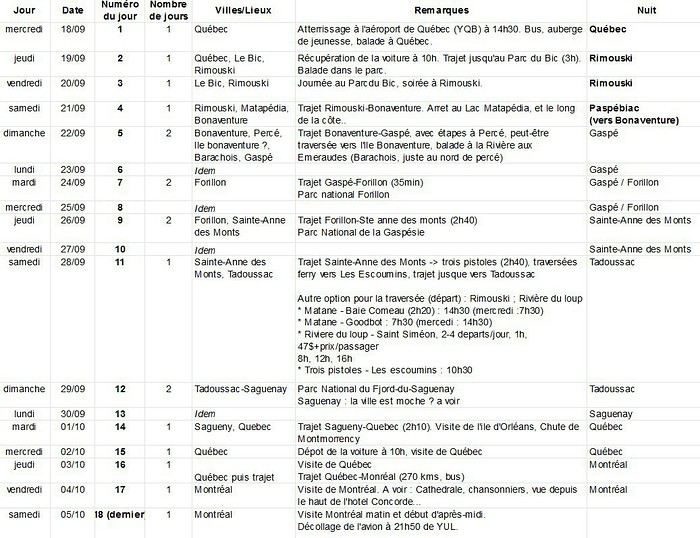
Merci, Bonne journée :)
Une amie et moi partons ce mercredi pour le Québec. Nous avons prévu de faire le tour de le Gaspésie, ainsi qu'un passage par Saguenay, avant de revenir sur Québec puis Montréal.
Pouvez m'indiquer si le parcours prévu vous semble bien ? De plus, connaissez-vous des endroits sympathiques entre Matapédia et Percé ?
Merci, Bonne journée :)
Safari animalier au Chili, avec un peu de paysages... quand même! English translation pending
On parle souvent des safari animaliers en Afrique.... c'est certain qu'il y a de quoi faire.🤪
Mais cette année, je voulais aussi découvrir des coins pas touristiques au Chili, des paysages désertiques et colorés des Andes, et surtout je voulais un voyage soft, avec des temps de repos au bord de l'océan pacifique. Et bien, figurez-vous que tout près des 2 hôtels où nous avons résidé à Antofagasta et à Iquique, nous avons pu admirer des spectacles animaliers sympathiques.
Episode 1: Observation au terrado d'Antofagasta
Vous connaissez? Au chili, ils appellent ça "un Jote". En français on dit "urubu à tête rouge".
Et bien, ce charmant vautour est perché sur la rambarde de la piscine du terrado à Antofagasta. Figurez-vous qu'une colonie de ces charmants animaux a décidé de quitter les hauteurs des andes qui sont leur lieux de vie habituel, en cette période d'hiver austral peu propice à la nourriture, pour venir chercher des cieux plus cléments au bord du pacifique.
Et ne voilà-t-il pas que le terrado d'Antofagasta a eu l'idée géniale de construire une magnifique piscine remplie d'eau douce, juste là, à côté de la crique très riche en poissons. Ils ont la nourriture à satiété et l'eau douce à côté!!! Alors pourquoi aller plus loin???? Je trouve qu'ils ont bon goût!!!😄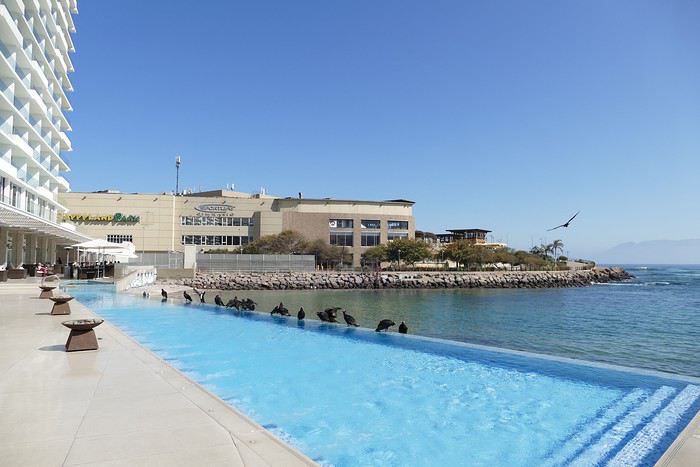
Amusée par leurs activités, je me suis promenée près des fauteuils placés pour les clients de l'hôtel, et qui vu la température ambiante étaient plutôt désertés. Finalement, ai-je pensé heureusement qu'il y a quand même les oiseaux pour profiter de cette piscine!!!😏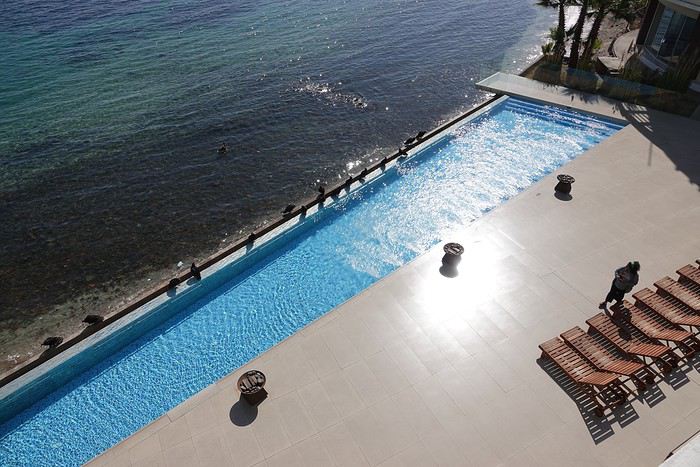
De notre chambre au 10ème étage, Jf prend en photo un des vautours en plein vol, ce qui permet de voir toute l'envergure de ses ailes magnifiques. En effet, régulièrement, les gens de l'hôtel les font fuir. Ils vont se réfugier sur le toit du restaurant à côté.
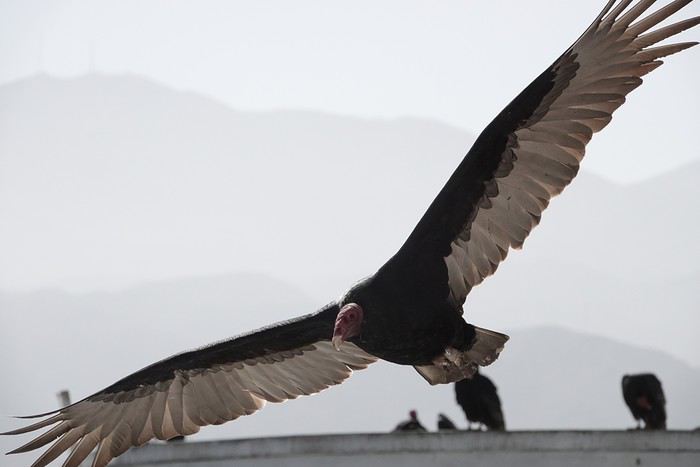
Mais ce n'est que pour mieux revenir en faisant des arabesques au dessus de l'océan pacifique.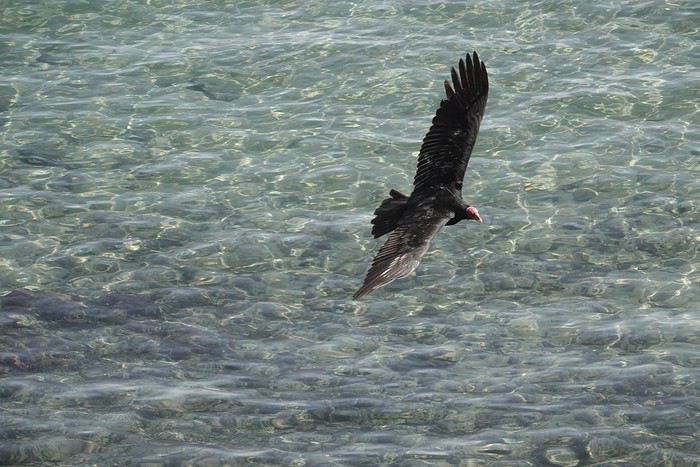
Certains tentent de faire valoir leur droit de dominant en s'esbroufant devant les autres. Parfois ça marche...
D'autres fois, certains se retrouvent en déséquilibre, pour avoir osé empiéter sur la place d'un autre.
Mais tous ne veulent qu'une chose, c'est pouvoir gouter à cette eau douce, si claire et si délicieuse. Miamm!!!!
Et ensuite ils vous regardent, perplexes, .... Pourquoi ces 2 humains ne les chassent-ils pas? Que font-ils avec leurs drôles de machines? En tout cas, tant que ces 2 là sont là, les gens de l'hôtel ne nous chassent pas.
Alors, ils continuent leur vie, rassurés!
D'autres oiseaux marins apprécient aussi la piscine pour venir y barboter.
Cette piscine est aussi un lieu de romance pour les pigeons.
Parfois c'est assez hard!
La baie dAntofagasta abrite également une colonie impressionnante de pélicans.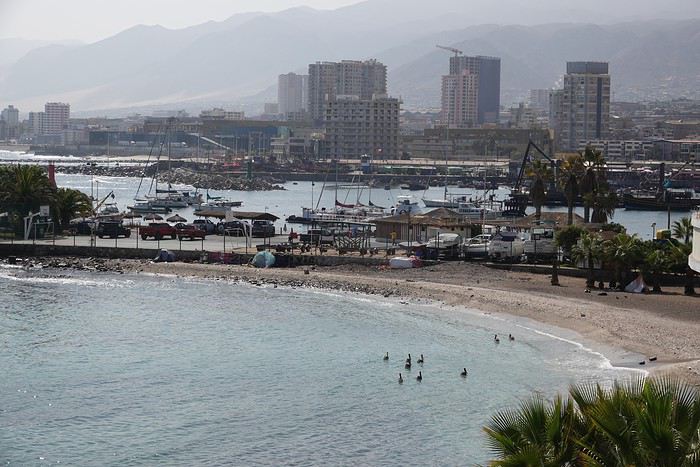
Et cette colonie se concentre sur les récifs à marée basse, profitant de l'aubaine du marnage très important qui caractérise ce lieu.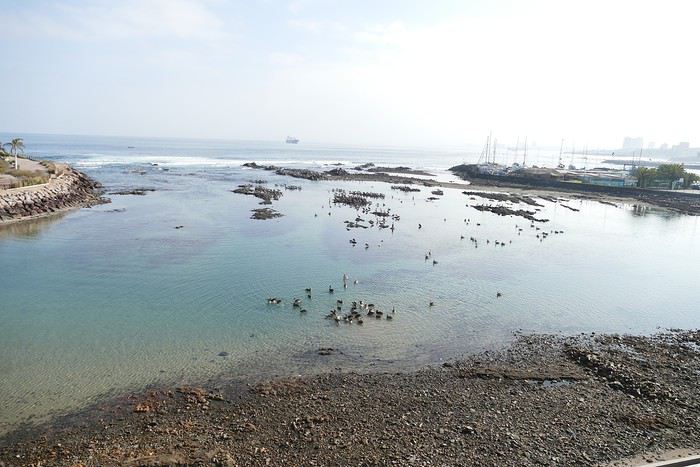
A marée haute, ils apprécient de pêcher et nous en profitons pleinement du restaurant de l'hôtel, pour les photographier.
En vol, en s'ébrouant, ...
En version solitaire,
Je suis beau et je le vaux bien!!
En couple, petite parade élégante..
Par marée haute, il y a même des surfeurs qui profitent des vagues.. Ce qui n'empêche pas nos pélicans de voler au dessus des flots!
Mais cette année, je voulais aussi découvrir des coins pas touristiques au Chili, des paysages désertiques et colorés des Andes, et surtout je voulais un voyage soft, avec des temps de repos au bord de l'océan pacifique. Et bien, figurez-vous que tout près des 2 hôtels où nous avons résidé à Antofagasta et à Iquique, nous avons pu admirer des spectacles animaliers sympathiques.
Episode 1: Observation au terrado d'Antofagasta
Vous connaissez? Au chili, ils appellent ça "un Jote". En français on dit "urubu à tête rouge".
Et bien, ce charmant vautour est perché sur la rambarde de la piscine du terrado à Antofagasta. Figurez-vous qu'une colonie de ces charmants animaux a décidé de quitter les hauteurs des andes qui sont leur lieux de vie habituel, en cette période d'hiver austral peu propice à la nourriture, pour venir chercher des cieux plus cléments au bord du pacifique.
Et ne voilà-t-il pas que le terrado d'Antofagasta a eu l'idée géniale de construire une magnifique piscine remplie d'eau douce, juste là, à côté de la crique très riche en poissons. Ils ont la nourriture à satiété et l'eau douce à côté!!! Alors pourquoi aller plus loin???? Je trouve qu'ils ont bon goût!!!😄
Amusée par leurs activités, je me suis promenée près des fauteuils placés pour les clients de l'hôtel, et qui vu la température ambiante étaient plutôt désertés. Finalement, ai-je pensé heureusement qu'il y a quand même les oiseaux pour profiter de cette piscine!!!😏
De notre chambre au 10ème étage, Jf prend en photo un des vautours en plein vol, ce qui permet de voir toute l'envergure de ses ailes magnifiques. En effet, régulièrement, les gens de l'hôtel les font fuir. Ils vont se réfugier sur le toit du restaurant à côté.
Mais ce n'est que pour mieux revenir en faisant des arabesques au dessus de l'océan pacifique.
Certains tentent de faire valoir leur droit de dominant en s'esbroufant devant les autres. Parfois ça marche...
D'autres fois, certains se retrouvent en déséquilibre, pour avoir osé empiéter sur la place d'un autre.
Mais tous ne veulent qu'une chose, c'est pouvoir gouter à cette eau douce, si claire et si délicieuse. Miamm!!!!
Et ensuite ils vous regardent, perplexes, .... Pourquoi ces 2 humains ne les chassent-ils pas? Que font-ils avec leurs drôles de machines? En tout cas, tant que ces 2 là sont là, les gens de l'hôtel ne nous chassent pas.
Alors, ils continuent leur vie, rassurés!
D'autres oiseaux marins apprécient aussi la piscine pour venir y barboter.
Cette piscine est aussi un lieu de romance pour les pigeons.
Parfois c'est assez hard!
La baie dAntofagasta abrite également une colonie impressionnante de pélicans.
Et cette colonie se concentre sur les récifs à marée basse, profitant de l'aubaine du marnage très important qui caractérise ce lieu.
A marée haute, ils apprécient de pêcher et nous en profitons pleinement du restaurant de l'hôtel, pour les photographier.
En vol, en s'ébrouant, ...
En version solitaire,
Je suis beau et je le vaux bien!!
En couple, petite parade élégante..
Par marée haute, il y a même des surfeurs qui profitent des vagues.. Ce qui n'empêche pas nos pélicans de voler au dessus des flots!
Trois semaines au Cambodge (juillet/août) English translation pending
Bonjour,
Nous nous sommes largement inspirés des divers posts relatifs au Cambodge sur Voyageforum, ils ont été d'une aide précieuse. A notre tour de faire un petit retour succinct sur nos 3 semaines.
D'abord, le programme : - 27 juillet : arrivée à PHNOM PENH à mi-journée. (Découverte de la ville) - 28 Juillet : PHNOM PENH (marché central Psaar Thmay / Wat Phnom / Quartier colonial / Marché couvert Psaar Chah / Marché de nuit) - 29 juillet : PHNOM PENH (Phnom Chisor / Tonlé Bati) - 30 Juillet : Bus (5h) de Phnom Penh à BATTAMBANG (après midi à vélo découverte ville) - 31 juillet : BATTAMBANG (Bambou train / Pagode Somrong Knomg / Fabrique poisson séché / Fabriques artisanales feuilles de riz, bananes séchées et alccol de riz / Temple hindou Ek Phnom / Maison Khmère traditionelle / culture de champignons /Bat cave) - 1er août : Bus (4h) de Battambang à SIAM REP (Temples Ta Prohm et Pre Roup) - 2 août : SIAM REP ( Temples BANTEAY SREY / PREAH NEAK PEAN / PREAH KHAN / BAYON / BAPHUON / ANGKOR WAT) - 3 août : Bus de Siam Rep à KAMPONG KHLEANG (village sur pilotis / village flottant et navigation sur le Tonlé Sap / repas et nuit chez l'habitant) - 4 août : Bus (4h) de Kampong Khleang à KAMPONG CHAM (île Koh Paen) - 5 août : Taxi privé de Kampong Cham à KRATIE puis bac jusqu'à KOH TRONG (tour de l'île à vélo) - 6 août : Bus de Koh Trong à KRATIE (à scooter : Sambok Mountain et campagne alentour) - 7 août : Bus (journée) de Kratie à KEP - 8 août : KEP (marché aux crabes / plantation poivre) - 9 août : Bus de Kep à KAMPOT (marché) - 10 août : Bus (journée) de Kampot à KOH DAH (île de la soie) - 11 août : KOH DAH (l'île en scoot) - 12 août : KOH DAH (l'île en vélo / communauté tisserands sur île Koh Oknha Tei) - 13 août : Bus de Koh Dah à PHNOM PENH (camp S21 / Marché Russe / spectacle de danse au musée national) - 14 août : PHNOM PENH (Palais Royal / Vieux marché) - 15 août : avion retour
A noter que nous avions prévu de rester plus longtemps dans le Sud, et passer 2 jours sur l'île KOH TA KIEV. Hélas, les fortes pluies et la météo à venir nous ont fait modifier notre programme. Nous serions bien restés 1 jour de plus à BATTAMBANG pour parcourir en scoot la campagne. On n'avait pas l'intention de rester sur Phnom Penh. Heureusement, Alan (de l'hôtel Saravoan Royal Palace) nous a conseillé au contraire de prendre le temps de découvrir cette capitale, ce que nous avons fait à notre rythme, et sans aucun regret.
Aucune difficulté particulière ni aucune fausse note durant ces 3 semaines.
Partout il est très facile de se déplacer. Les hôtels ou Guest Houses sont toujours là pour nous aider à réserver bus, taxi, tuk-tuk, vélo, scooter.
Pour plus de détails et photos, voici notre blog : http://totololocambodge.canalblog.com/
Nous avons mis en lien tous les hébergements, restaurants, organisations que nous avons particulièrement appréciés.
Nous nous sommes largement inspirés des divers posts relatifs au Cambodge sur Voyageforum, ils ont été d'une aide précieuse. A notre tour de faire un petit retour succinct sur nos 3 semaines.
D'abord, le programme : - 27 juillet : arrivée à PHNOM PENH à mi-journée. (Découverte de la ville) - 28 Juillet : PHNOM PENH (marché central Psaar Thmay / Wat Phnom / Quartier colonial / Marché couvert Psaar Chah / Marché de nuit) - 29 juillet : PHNOM PENH (Phnom Chisor / Tonlé Bati) - 30 Juillet : Bus (5h) de Phnom Penh à BATTAMBANG (après midi à vélo découverte ville) - 31 juillet : BATTAMBANG (Bambou train / Pagode Somrong Knomg / Fabrique poisson séché / Fabriques artisanales feuilles de riz, bananes séchées et alccol de riz / Temple hindou Ek Phnom / Maison Khmère traditionelle / culture de champignons /Bat cave) - 1er août : Bus (4h) de Battambang à SIAM REP (Temples Ta Prohm et Pre Roup) - 2 août : SIAM REP ( Temples BANTEAY SREY / PREAH NEAK PEAN / PREAH KHAN / BAYON / BAPHUON / ANGKOR WAT) - 3 août : Bus de Siam Rep à KAMPONG KHLEANG (village sur pilotis / village flottant et navigation sur le Tonlé Sap / repas et nuit chez l'habitant) - 4 août : Bus (4h) de Kampong Khleang à KAMPONG CHAM (île Koh Paen) - 5 août : Taxi privé de Kampong Cham à KRATIE puis bac jusqu'à KOH TRONG (tour de l'île à vélo) - 6 août : Bus de Koh Trong à KRATIE (à scooter : Sambok Mountain et campagne alentour) - 7 août : Bus (journée) de Kratie à KEP - 8 août : KEP (marché aux crabes / plantation poivre) - 9 août : Bus de Kep à KAMPOT (marché) - 10 août : Bus (journée) de Kampot à KOH DAH (île de la soie) - 11 août : KOH DAH (l'île en scoot) - 12 août : KOH DAH (l'île en vélo / communauté tisserands sur île Koh Oknha Tei) - 13 août : Bus de Koh Dah à PHNOM PENH (camp S21 / Marché Russe / spectacle de danse au musée national) - 14 août : PHNOM PENH (Palais Royal / Vieux marché) - 15 août : avion retour
A noter que nous avions prévu de rester plus longtemps dans le Sud, et passer 2 jours sur l'île KOH TA KIEV. Hélas, les fortes pluies et la météo à venir nous ont fait modifier notre programme. Nous serions bien restés 1 jour de plus à BATTAMBANG pour parcourir en scoot la campagne. On n'avait pas l'intention de rester sur Phnom Penh. Heureusement, Alan (de l'hôtel Saravoan Royal Palace) nous a conseillé au contraire de prendre le temps de découvrir cette capitale, ce que nous avons fait à notre rythme, et sans aucun regret.
Aucune difficulté particulière ni aucune fausse note durant ces 3 semaines.
Partout il est très facile de se déplacer. Les hôtels ou Guest Houses sont toujours là pour nous aider à réserver bus, taxi, tuk-tuk, vélo, scooter.
Pour plus de détails et photos, voici notre blog : http://totololocambodge.canalblog.com/
Nous avons mis en lien tous les hébergements, restaurants, organisations que nous avons particulièrement appréciés.