Results for "Désaignes+|+127"
5864 results found.
Conseils sur visites et campings en Hollande English translation pending
bonjour
nous envisageons de passer une semaine avec nos enfants en hollande. Nous envisageons de camper et bien sur d'emmener nos vélos pour de belles balades. Or nous ne savons pas dans quelle région aller. En raison de l'âge de nos enfants nous ne pouvons nous permettre de faire du camping itinérant. Pouvez vous pour ceux qui connaissent nous conseiller sur la région à choisir?
nous envisageons de passer une semaine avec nos enfants en hollande. Nous envisageons de camper et bien sur d'emmener nos vélos pour de belles balades. Or nous ne savons pas dans quelle région aller. En raison de l'âge de nos enfants nous ne pouvons nous permettre de faire du camping itinérant. Pouvez vous pour ceux qui connaissent nous conseiller sur la région à choisir?
Dernière aube...... English translation pending
Appuyé qu'il était contre l'arbre qui soutenait sa viellesse, le viel homme plissait les yeux face au soleil naissant et n'éprouvait que du soulagement face au dernier bout de chemin qui lui restait à parcourir ici bas......
Depuis quelques jours, il avait entrepris ce dernier périple sur la montagne qui faisait face à son village, sachant que de celui ci il ne reviendrait pas, et partageant avec son âme la satisfaction de quitter un monde qui décidemment ne lui avait rien apporté....
Les villageois l'avaient bien vu enrouler sa couverture, mettre quelques grains de riz dans son mouchoir, faire une dernière fois ses prières devant l'autel des ancêtres et tremper ses lèvres dans le ruisseau qui traversait le village depuis des millénaires et dans lequel il avait maintes fois sauté avec ses amis d'enfance.....
Amis d'enfance.....morne expression pour désigner des êtres qui avaient partagés avec vous l'espace d'une vie le contenu de tout un village afin de concilier vie familiale, travail et plaisirs des jours qui passent......
Ce qu'il avait préféré, c'était cette absence quasi surnaturelle d'attention dans laquelle son départ s'était effectué, pas de regard, pas un mot, pas une aide....le retour à un état d'indifférence dont finalement toute une vie est faite.....
Lorsqu'il avait foulé le sentier qui le ménerait à la montagne ou il avait choisi l'heure de sa mort, il ne s'était même pas retourné face à la vie qui continuait son emprise sur tous ces gens qui avaient partagés avec lui toutes ces années, pourquoi faire.....pour leur annoncer quoi.......la vie n'est faite que de solitude dans l'adversité de chaque jour et il est démoniaque de croire que tout un chacun respecte son prochain jusqu'à vouloir partager avec lui ses souffrances.......qui oserait dire que la vie est ainsi faite qu'il faille s'intérésser au sort de celui qui a décidé de l'heure de son départ.....
Maintenant, il se retrouvait là seul, face à face avec cette nature qui elle seule avait su l'accueillir, légérement engourdi par le froid matinal, mais peut etre était ce aussi le manteau de la mort qui commencait à l'envelopper tout doucement......
Il ne se posait plus de questions sur le sens de sa vie, à quoi bon, la sagesse des personnes agées est justement de comprendre qu'il ne sert à rien de bousculer le corps et l'esprit des gens afin de se concilier leur bonne fortune......juste maintenant lui semblait il reconnaître dans ce léger halo la présence de quelques âmes qui lui rappelait quelques bribes de sa vie......son chien Kiti, sa vielle mère Eta, cette jeune femme qu'il avait aimé d'un amour passionnel et qui était parti trop tôt, ce qui peut être lui avait donné cet empoisonnement de la vie qu'il avait vécu par la suite........
Il était bien là .......une légére torpeur l'envahissait, son âme commencait enfin à atteindre un état de plénitude qu'il avait tant recherché sa vie durant, cette communion qu'il avait appellé de tout son être tout au long de son destin et qu'il pensait pouvoir obtenir de son vivant......cruelle désillusion de ceux qui pensent que les âmes des vivants sont faites pour communier dans la sérénité des sens et qui arrivés au bout de leur vie se rendent bien compte que la plénitude des âmes ne s'acquiert qu'au bout d'un long chemin pavé de toutes sortes d'incompréhension .......
Il n'avait aucun remords de quitter ce monde, juste lui semblait il qu'il aurait peut être pu.......
Depuis quelques jours, il avait entrepris ce dernier périple sur la montagne qui faisait face à son village, sachant que de celui ci il ne reviendrait pas, et partageant avec son âme la satisfaction de quitter un monde qui décidemment ne lui avait rien apporté....
Les villageois l'avaient bien vu enrouler sa couverture, mettre quelques grains de riz dans son mouchoir, faire une dernière fois ses prières devant l'autel des ancêtres et tremper ses lèvres dans le ruisseau qui traversait le village depuis des millénaires et dans lequel il avait maintes fois sauté avec ses amis d'enfance.....
Amis d'enfance.....morne expression pour désigner des êtres qui avaient partagés avec vous l'espace d'une vie le contenu de tout un village afin de concilier vie familiale, travail et plaisirs des jours qui passent......
Ce qu'il avait préféré, c'était cette absence quasi surnaturelle d'attention dans laquelle son départ s'était effectué, pas de regard, pas un mot, pas une aide....le retour à un état d'indifférence dont finalement toute une vie est faite.....
Lorsqu'il avait foulé le sentier qui le ménerait à la montagne ou il avait choisi l'heure de sa mort, il ne s'était même pas retourné face à la vie qui continuait son emprise sur tous ces gens qui avaient partagés avec lui toutes ces années, pourquoi faire.....pour leur annoncer quoi.......la vie n'est faite que de solitude dans l'adversité de chaque jour et il est démoniaque de croire que tout un chacun respecte son prochain jusqu'à vouloir partager avec lui ses souffrances.......qui oserait dire que la vie est ainsi faite qu'il faille s'intérésser au sort de celui qui a décidé de l'heure de son départ.....
Maintenant, il se retrouvait là seul, face à face avec cette nature qui elle seule avait su l'accueillir, légérement engourdi par le froid matinal, mais peut etre était ce aussi le manteau de la mort qui commencait à l'envelopper tout doucement......
Il ne se posait plus de questions sur le sens de sa vie, à quoi bon, la sagesse des personnes agées est justement de comprendre qu'il ne sert à rien de bousculer le corps et l'esprit des gens afin de se concilier leur bonne fortune......juste maintenant lui semblait il reconnaître dans ce léger halo la présence de quelques âmes qui lui rappelait quelques bribes de sa vie......son chien Kiti, sa vielle mère Eta, cette jeune femme qu'il avait aimé d'un amour passionnel et qui était parti trop tôt, ce qui peut être lui avait donné cet empoisonnement de la vie qu'il avait vécu par la suite........
Il était bien là .......une légére torpeur l'envahissait, son âme commencait enfin à atteindre un état de plénitude qu'il avait tant recherché sa vie durant, cette communion qu'il avait appellé de tout son être tout au long de son destin et qu'il pensait pouvoir obtenir de son vivant......cruelle désillusion de ceux qui pensent que les âmes des vivants sont faites pour communier dans la sérénité des sens et qui arrivés au bout de leur vie se rendent bien compte que la plénitude des âmes ne s'acquiert qu'au bout d'un long chemin pavé de toutes sortes d'incompréhension .......
Il n'avait aucun remords de quitter ce monde, juste lui semblait il qu'il aurait peut être pu.......
Kenya et Tanzanie avec petit budget English translation pending
Bonjour,
Je souhaite visiter le Kenya (principalement la Rift Valley) et la Tanzanie (principalement le Ngorongonro et l'ascension du Kili + Zanzibar) entre début Juin et mi-Juillet, mais à la lecture de guides comme le Footprint ou le Lonely, je suis septique par rapport à mon budget.
Je voyage seul et apparemment les visites de parc, outre leur taxe d'entrée, nécessitent au moins la location d'un véhicule. Bien sûr, je peux trouver des gens sur place pour partager la location, mais je n'ai aucune idée des tarifs.
Je suis prêt à payer les 500 ou 600 $ nécessaires à l'ascension du Kili, mais j'aimerais à côté dépenser grand maxi 25$ par jour (transports locaux, logement et nourriture).😕
Ma question est simple : est-ce possible sans se fermer l'accès à tous les "beaux spots" et... comment ????
Merci beaucoup pour votre réponse !
Sebastien
Je souhaite visiter le Kenya (principalement la Rift Valley) et la Tanzanie (principalement le Ngorongonro et l'ascension du Kili + Zanzibar) entre début Juin et mi-Juillet, mais à la lecture de guides comme le Footprint ou le Lonely, je suis septique par rapport à mon budget.
Je voyage seul et apparemment les visites de parc, outre leur taxe d'entrée, nécessitent au moins la location d'un véhicule. Bien sûr, je peux trouver des gens sur place pour partager la location, mais je n'ai aucune idée des tarifs.
Je suis prêt à payer les 500 ou 600 $ nécessaires à l'ascension du Kili, mais j'aimerais à côté dépenser grand maxi 25$ par jour (transports locaux, logement et nourriture).😕
Ma question est simple : est-ce possible sans se fermer l'accès à tous les "beaux spots" et... comment ????
Merci beaucoup pour votre réponse !
Sebastien
Zoom Airlines sur la France English translation pending
Bjr
La cie Zoom Airlines ouvrirait des vols sur Toronto et Montreal / Paris dans une configuration "low cost"
Quelqu'un a t il des infos? car il n'y a rien sur leur site internet seul Londres Gatwick est desservi en Europe
Merci d'avance
La cie Zoom Airlines ouvrirait des vols sur Toronto et Montreal / Paris dans une configuration "low cost"
Quelqu'un a t il des infos? car il n'y a rien sur leur site internet seul Londres Gatwick est desservi en Europe
Merci d'avance
Protection contre le palu au Sénégal English translation pending
Je pars à la fin du mois au senegal en hotel, par une agence de voyage, en gros touriste quoi!! et j'ai entendu certains de mes amis dire qu'il fallait que j'amene une moustiquaire inpregnée pour dormir. Cela me parrait un peu abusé, j'aimerai avoir votre avis.
merci
merci
Visas et entrées multiples en Asie du Sud-Est English translation pending
Bonjour,
Je dispose d'un billet d'avion Paris <-> Bangkok. La durée totale de mon voyage est de 12 semaines environ. Ce voyage est de type course et course contre la montre, peu importe...😄
Les chiffres ci-dessous ne sont donnés qu'à titre indicatif. Ne vous en préoccupez pas trop. L'important pour moi n'est pas là.
Le terme "par voie terrestre" désigne par bus, à pieds, ou en train.
Mes finances ne me permettent pas d'utiliser l'avion comme moyen de transport entre les pays.
Je souhaite me procurer les visas seulement lors du passage aux frontières, selon possibilité.
Mon voyage est le suivant (ordre chronologique; de fin février à fin mai):
1- Paris -> Bangkok. 2- Séjour 2 semaines en Thaïlande. 3- Passage Thaïlande -> Laos par voie terrestre. 4- Séjour de quelques jours au Laos. 5- Passage Laos -> Viêtnam par voie terrestre. 6- Séjour 3 semaines au Viêtnam. 7- Passage Viêtnam -> Cambodge par voie terrestre. 8- Séjour de quelques jours au Cambodge. 9- Passage Cambodge -> Thaïlande par voie terrestre. 10- Séjour 2 semaines en Thaïlande. 11- Passage Thaïlande -> Malaisie par voie terrestre. 12- Séjour de quelques jours en Malaisie. 13- Passage Malaisie -> Indonésie (Sumatra) en bateau. 14- Séjour de 3-4 semaines en Indonésie.
Ensuite, selon l'état de mes finances, 2 choix:
a)
15- Avion Indonésie (Jakarta ou Denpasar, Bali) -> Bangkok. 16- Quelques jours à Bangkok et allentours. 17- Bangkok -> Paris.
ou
b)
15- Retour sans arrêt véritable Indonésie -> Singapour (bateau) -> Malaisie (voie terrestre) -> Thaïlande (voie terrestre). 16- Quelques jours à Bangkok et allentours. 17- Bangkok -> Paris.
Ma question est simple: Quels visas me sont nécessaires et où puis-je les obtenir (je veux dire où SUR PLACE, pas en France; de préférence lors du passage des frontières) ? Problèmes/difficultés en vue ou pas ?
Notez que ce voyage nécessite 3 entrées en Thaïlande et, dans le cas b), 2 entrées en malaisie.
Notez aussi que je souhaite économiser le plus possible sur le coût des visas et sur leur délais d'obtention, quand c'est possible.
Info *utile* à savoir: Je voyagerais avec un bonne quantité de matériel photo (1 app photo argentique + 2 optiques, 1 app photo numérique réflex, 1 app photo numérique compact, accessoires pour optique, 1 disque dur externe pour décharge des cartes mémoires APN (petite taille), 1 graveur CDrom externe pour sauvegarde des photos numériques (petite taille), 20-30 CDs pour les gravures, 30-50 pellicules photo argentique, matériel pour recharger les accus des divers accessoires), et peut-être aussi avec un camescope numérique (+15-20 K7). Je ne suis pas journaliste ou autre, juste quelqu'un qui aime beaucoup la photo et la vidéo. 200 photos en moyenne par jour.
Autre question: Un billet d'avion Bangkok -> Paris constitue t'il, hors Thaïlande, un justificatif de poursuite de voyage aux frontières terrestres, fluviales et maritimes (billet retour ou justificatif de poursuite de voyage parfois demandé aux frontières) ?
Merci pour votre aide. 🙂
Michaël
Je dispose d'un billet d'avion Paris <-> Bangkok. La durée totale de mon voyage est de 12 semaines environ. Ce voyage est de type course et course contre la montre, peu importe...😄
Les chiffres ci-dessous ne sont donnés qu'à titre indicatif. Ne vous en préoccupez pas trop. L'important pour moi n'est pas là.
Le terme "par voie terrestre" désigne par bus, à pieds, ou en train.
Mes finances ne me permettent pas d'utiliser l'avion comme moyen de transport entre les pays.
Je souhaite me procurer les visas seulement lors du passage aux frontières, selon possibilité.
Mon voyage est le suivant (ordre chronologique; de fin février à fin mai):
1- Paris -> Bangkok. 2- Séjour 2 semaines en Thaïlande. 3- Passage Thaïlande -> Laos par voie terrestre. 4- Séjour de quelques jours au Laos. 5- Passage Laos -> Viêtnam par voie terrestre. 6- Séjour 3 semaines au Viêtnam. 7- Passage Viêtnam -> Cambodge par voie terrestre. 8- Séjour de quelques jours au Cambodge. 9- Passage Cambodge -> Thaïlande par voie terrestre. 10- Séjour 2 semaines en Thaïlande. 11- Passage Thaïlande -> Malaisie par voie terrestre. 12- Séjour de quelques jours en Malaisie. 13- Passage Malaisie -> Indonésie (Sumatra) en bateau. 14- Séjour de 3-4 semaines en Indonésie.
Ensuite, selon l'état de mes finances, 2 choix:
a)
15- Avion Indonésie (Jakarta ou Denpasar, Bali) -> Bangkok. 16- Quelques jours à Bangkok et allentours. 17- Bangkok -> Paris.
ou
b)
15- Retour sans arrêt véritable Indonésie -> Singapour (bateau) -> Malaisie (voie terrestre) -> Thaïlande (voie terrestre). 16- Quelques jours à Bangkok et allentours. 17- Bangkok -> Paris.
Ma question est simple: Quels visas me sont nécessaires et où puis-je les obtenir (je veux dire où SUR PLACE, pas en France; de préférence lors du passage des frontières) ? Problèmes/difficultés en vue ou pas ?
Notez que ce voyage nécessite 3 entrées en Thaïlande et, dans le cas b), 2 entrées en malaisie.
Notez aussi que je souhaite économiser le plus possible sur le coût des visas et sur leur délais d'obtention, quand c'est possible.
Info *utile* à savoir: Je voyagerais avec un bonne quantité de matériel photo (1 app photo argentique + 2 optiques, 1 app photo numérique réflex, 1 app photo numérique compact, accessoires pour optique, 1 disque dur externe pour décharge des cartes mémoires APN (petite taille), 1 graveur CDrom externe pour sauvegarde des photos numériques (petite taille), 20-30 CDs pour les gravures, 30-50 pellicules photo argentique, matériel pour recharger les accus des divers accessoires), et peut-être aussi avec un camescope numérique (+15-20 K7). Je ne suis pas journaliste ou autre, juste quelqu'un qui aime beaucoup la photo et la vidéo. 200 photos en moyenne par jour.
Autre question: Un billet d'avion Bangkok -> Paris constitue t'il, hors Thaïlande, un justificatif de poursuite de voyage aux frontières terrestres, fluviales et maritimes (billet retour ou justificatif de poursuite de voyage parfois demandé aux frontières) ?
Merci pour votre aide. 🙂
Michaël
City trip à Rome (bis) English translation pending
City Trip à Rome (bis) – 09.03
… Nous avons eu raison de faire confiance à ces 2 pièces de monnaie, lancées par dessus nos épaules, assis dos à la fontana di Trevi, en 08.03 … L’une est censée réaliser un vœu et l’autre, signifie un retour à Rome (selon la tradition)😉
Nous sommes donc repartis, pour 3 jours dans cette merveilleuse capitale d’Italie (étant donné que nous avions du écourter notre premier séjour et que nous avions deux billets (trajet simple à écouler pour le 28.09 au plus tard) …
Dimanche 28.09.03
Cette fois, c’est dropés par un ami que nous rejoignons Zaventem, il est 5h30 quand nous arrivons à la plaine (terme souvent utilisé en Afrique pour désigner l’aéroport), Moins de monde cette fois, nous sommes dimanche et déjà (fort heureusement) en moins grande saison touristique.
Enregistrement de notre bagage et passage sans encombres, cette fois, sous le portique de contrôle.🙂 (je m’étais abstenue de remettre les chaussures qui m’avaient mis la 1ère fois en " infraction " contre la machine infernale qui fait " tuuut " à tout bout de champ).
Le décollage initial est prévu à 7h25 ( Vol Alitalia) …mais nous prendrons finalement notre envol à 8h10 (ignorant encore la raison de ce petit retard : le black out général sur Rome et l’ensemble du pays🤪).
Atterrissage vers 10h00 …C’est liftés via un bus, que nous rejoignons l’intérieur de l’aéroport. Une bonne heure d’attente pour la reprise de notre petit bagage. (mais aucun soucis pour nous …on est déjà en voyage😏). C’est là que nous apprenons que la ville est complètement privée d’électricité, depuis la veille au soir.
Une fois, notre packtage récupéré, on saute dans un taxi …direction le centre ville (les trains étant hors circuit). Une entrée dans le centre historique …légèrement perturbée, par le Black out général (plus aucun feux de signalisation ne fonctionnent et ça bouchonne pas mal ! C’est que c’est une ville qui draine pas mal de monde !)
Vers midi, on arrive à l’hôtel (International Palace, Via Nazionale) – mettons notre bagage à la consigne et sortons directement faire un tour …C’est dingue ! C’est comme si on ne l’avait, en fait, jamais quittée (elle = Rome) …on retrouve tous nos repères avec plaisir et aisance.😛
Premier rencard, on le consacre à cette fabuleuse fontaine (Trevi) qui nous a porté chance …éprouvant toujours la même lueur dans nos yeux et les mêmes frissons sur nos bras, à son contact. (petite particularité … elle est dépourvue de jets d’eau …forcément toute la ville fonctionne au rythme de la panne)
Après avoir profité pleinement de ce moment …On fait une petite halte dans une guinguette, déjà côtoyée, lors du 1er séjour. Une petite assiette de pâtes (al dente) fait l’affaire …Tout est occupé en terrasse, c’est donc à l’intérieur (dans une demi pénombre) que nous dégustons la bonne pasta …perdu au beau milieu d’un méga groupe de touristes japonais. Après quoi, nous rejoignons notre hôtel pour une bonne sieste.
En début de soirée …nous reprenons notre petite ballade au cœur de la ville, en passant à nouveau par la fontaine : point de départ de notre petite excursion vers le panthéon …pour rejoindre ensuite la Piazza Navona. Le ciel est assez chargé et gris …mais cela n’empêche pas la ville d’être trépidante et de se préparer à ce début de nuit.
C’est sur cette superbe place que nous décidons de terminer la soirée …avec un léger éclairage à la bougie … l’électricité, étant, quand à elle, aussi revenue.
Sous un petit parasol, en terrasse, on se protège de la pluie qui tombe à grosses gouttes et pendant que le tonnerre gronde et que le ciel se fait déchirer, avec une intense luminosité (Hé! Oui, encore elle !😉) on partage un excellent moment, avec un musicien de rue (c’est que lui aussi s’abrite) qui uniquement avec sa gratte (guitare) et sa voix, nous fait revivre de puissants moments musicaux ( Tels que Another brick in the Wall de – Pink Floyd).
C’est peu avant minuit, que l’on réintègre l’hôtel où nous prenons, un dernier verre avant de rejoindre nos pénates.
Lundi 29.09.03
Ce matin, le soleil nous fait grâce de sa sublime présence (à partir de maintenant et jusqu’à la fin du séjour …Ce sera Royal : 30°C et un ciel bleu azur)
Après, avoir avalé un copieux petit déj et un bon jus d’orange …On décide de se rendre à la Place Saint-Pierre (Vatican), que nous n’avons pas pu visiter lors de notre premier séjour. Commence alors, une recherche effrénée, dans les nombreux Tabashi (signalés avec un T) et échoppes de journaux sur rue, du coin …afin de dégoter deux billets (One day Ticket ) pour le bus. Toutes les boutiques en sont quasi dépourvues (rupture de stock) …C’est donc, du côté de la Piazza Venezia qu’on en trouvera. Même démarche, pour repérer le distributeur automatique (encore fonctionnel) …La plupart étant " Out " suite à la méga panne de courant qui a pénalisé la ville, toute entière.
Finalement, on embarque dans un Bus (n° 64, qui nous liftera jusqu’à de la Piazza San Pietro). Cette dernière est grandiose et immense. Elle est cernée de 2 arcs de colonnade, surmontés de statues de saints. Au centre :un obélisque (il y en a beaucoup sur les places romaines) et 2 somptueuses fontaines de part et d’autre de celui-ci. Au fond de la place se dresse la Basilica Di San Pietro.
Après avoir longuement flânés sur cette place, on se décide à aller explorer l’intérieur de la basilique. Après avoir intégrés la longue file ( …il y a un monde de dingue, c’était prévisible), montrés " patte blanche " au contrôle de sécurité. Petite précision (comme dans tout lieu de culte, une tenue correcte est exigée).
On porte notre choix sur la visite de la coupole et l’ascension au sommet de celle-ci qui permet la vue phénoménale, sur toute la ville.
Possibilité d’accéder au sommet (via ascenseur et ensuite 320 marches à gravir : 5 euro) : 1ère étape : la grande terrasse au pied de la coupole (après voir pris l’ascenseur) : c’est là qu’on saisit davantage l’importance du monument (Basilique) et que l’on peut déjà entrevoir la Place entre les statues gigantesques( des apôtres et du Christ) qui se dressent en front de terrasse. 2ème étape : l’intérieur de la Coupole (après une 20taines d’escaliers et un palier) : saisissant …La hauteur est vertigineuse et regarder le centre de la Basilique fout franchement le vertige …moi qui ne suis pas la " reine " du vide mais qui arrive à le regarder sans trop fléchir …là, j’avais les jambes vachement moins sûres, tout d’un coup !🤪 … C’est que de regarder à Pic …ça retourne …Un p’tit chouia, quand même.3ème étape (au terme des nombreuses marches) : la terrasse qui entoure le lanternon ( 120 m plus bas, la place Saint-Pierre et une vue imprenable sur la ville et ses monuments …)😄
C’est après cette immense scène de vie et de vue sur la capitale, que l’on a visité l’intérieur de la Basilique (211 m) . Elle renferme bien des œuvres (pavements, chefs d’œuvres de Michel-Ange, monuments funéraires, le baldaquin du Bernin …). Ceci dit, nous avons pour notre part été moins éblouis que par l’intérieur des Basiliques, cathédrales de Sienne ou Venise (mais cela reste une question de goûts, bien entendu).
Impossible de visiter la Chapelle Sixtine cet après midi (elle est " close ") … Bah ! les sculpturales œuvres de Michel-Ange, seront pour une prochaine fois.
Un peu plus loin, s’élève le Castel Sant’Angelo (d’aspect assez trapu, ce château est dominé par une statue d’ange (d’où le nom)) …Nous n’avons pas visité l’intérieur, préférant flâner sur le Pont Saint Ange (assez élégant, sur ses bords de nombreuses statues de Saints et d’anges) et observer la vie locale qui s’y déroulait (un tas de p’tits marchands locaux, exposent, leur marchandises, sur les étales qui jonchent le sol) …Sous le pont, s’écoule le Tibre.
C’est vers la fin de l’après midi que nous grimpons dans le bus (Express N°40), afin de rejoindre l’hôtel …avec comme perspective immédiate : une petite sieste.
19h30 … On remet le nez dehors …en quête d’une petite terrasse ou déguster une bonne pizza. On en dégotte une, au fond, d’une petite ruelle …Non loin de la fontaine de Trevi (ben ! oui …Quand on flashe, cela ne se commande pas !) …Il fait très agréable …La température est excellente et la ville …est un peu moins animée que la veille au soir …Cette petite pause et un peu de calme, nous font vraiment du bien.🙂
Ensuite …nous profitons encore de toute la beauté que cette ville peut offrir, flânons, encore et toujours, avant de regagner notre hôtel vers minuit. C’est que demain, la journée sera longue !
Mardi 30.09.03
Dernier jour de notre petit city trip, mais on compte bien en profiter un maximum !😛
Après un petit déj et avoir mis notre bagage à la consigne de l’hôtel…on se met en route : direction la piazza Venezia pour rejoindre, ensuite le Théâtre di Marcello (avec au devant le Temple d’Apollon Sosien, formé de 3 élégantes colonnes corinthiennes)
Un peu plus bas, se trouve la place de la Bocca de la Verita (sympathique petite placette avec les temples Olitorium et le forum Boarium ainsi qu’une jolie fontaine avec les tritons) …C’est à cet endroit précis, que l’on s’est posé longuement sur un banc …ne pensant à rien …sauf au plaisir d’être là ..😄
Ensuite, visite de la Chiesa di Santa Maria in Cosmedin, (assez élégante d’aspect extérieur - l’intérieur est fait de simplicité). Le véritable intérêt du lieu, réside à côtoyer la fameuse " Bocca della Verita ". Elle se situe, sous le portique de l’église et ressemble à un énorme médaillon en forme de visage avec une grande bouche creuse. La légende raconte que cette bouche happerait la main de quiconque aurait un mensonge sur la conscience. On dit aussi qu’on l’appelle ainsi car elle retient les secrets sans jamais les divulguer.
On repique ensuite un bus 44, pour rejoindre les alentours de la piazza Venezia (endroit très central) …un petit crunch, sur le pouce avant de se mettre en quête du bus qui nous liftera en direction des Thermes de Caracalla (situées, un peu en dehors de la ville) … finalement on dégote le bus N°628 (un peu bondé, comme la plupart des transports en commun de la ville, mais c’est cela aussi qui fait son charme)😊.
On passe devant le Circo Massimo, pour arriver aux Thermes … Elles sont grandioses ! Face à ces géantes, on se sent, infiniment petit. Possibilité d’admirer également des mosaïques au sol et des fragments de ces dernières.(Afin de protéger le patrimoine antique et culturel du lieu, l’intérieur est préservé par de hauts grillages, un peu dommage pour la vue, mais, l’on comprend que ce soit une mesure nécessaire ).
C’est dans le parc qui entoure les Thermes que l’on a pris le temps de savourer, encore et un peu de cette magie … avant de remonter dans les bus (628 ! et 64) pour regagner l’hôtel. Un dernier petit rafraîchissement en terrasse …reprise de notre bagage et direction aéroport de Rome Fiumicino. (l’on vient d’y tourner une séquence pour un prochain film (Hall de départ) …caméras, éclairages …sont en train d’être rembarqués !)
La suite logique du retour commence (qui nous paraît toujours moins plaisante, qu’à aller …cela va de soi !🤪😠) : Check in des bagages, avaliser le ticket retour (nous avions réservé via le net), passage sous le portique …
Embarquement : 20h10 et envol 20h40 (Vol Virgin Express : 39 euro le trajet/pers)
Atterrissage : 22h30 …Il fait nettement plus froid à Bruxelles …12°C ! Ravis de ce petit City Trip (façon "bis"😏) ...et déjà occupés à penser à nos prochains voyages ! 😉 ...J'espère, pouvoir, d'ici peu annexer à ce carnet, quelques photos ... Gene
… Nous avons eu raison de faire confiance à ces 2 pièces de monnaie, lancées par dessus nos épaules, assis dos à la fontana di Trevi, en 08.03 … L’une est censée réaliser un vœu et l’autre, signifie un retour à Rome (selon la tradition)😉
Nous sommes donc repartis, pour 3 jours dans cette merveilleuse capitale d’Italie (étant donné que nous avions du écourter notre premier séjour et que nous avions deux billets (trajet simple à écouler pour le 28.09 au plus tard) …
Dimanche 28.09.03
Cette fois, c’est dropés par un ami que nous rejoignons Zaventem, il est 5h30 quand nous arrivons à la plaine (terme souvent utilisé en Afrique pour désigner l’aéroport), Moins de monde cette fois, nous sommes dimanche et déjà (fort heureusement) en moins grande saison touristique.
Enregistrement de notre bagage et passage sans encombres, cette fois, sous le portique de contrôle.🙂 (je m’étais abstenue de remettre les chaussures qui m’avaient mis la 1ère fois en " infraction " contre la machine infernale qui fait " tuuut " à tout bout de champ).
Le décollage initial est prévu à 7h25 ( Vol Alitalia) …mais nous prendrons finalement notre envol à 8h10 (ignorant encore la raison de ce petit retard : le black out général sur Rome et l’ensemble du pays🤪).
Atterrissage vers 10h00 …C’est liftés via un bus, que nous rejoignons l’intérieur de l’aéroport. Une bonne heure d’attente pour la reprise de notre petit bagage. (mais aucun soucis pour nous …on est déjà en voyage😏). C’est là que nous apprenons que la ville est complètement privée d’électricité, depuis la veille au soir.
Une fois, notre packtage récupéré, on saute dans un taxi …direction le centre ville (les trains étant hors circuit). Une entrée dans le centre historique …légèrement perturbée, par le Black out général (plus aucun feux de signalisation ne fonctionnent et ça bouchonne pas mal ! C’est que c’est une ville qui draine pas mal de monde !)
Vers midi, on arrive à l’hôtel (International Palace, Via Nazionale) – mettons notre bagage à la consigne et sortons directement faire un tour …C’est dingue ! C’est comme si on ne l’avait, en fait, jamais quittée (elle = Rome) …on retrouve tous nos repères avec plaisir et aisance.😛
Premier rencard, on le consacre à cette fabuleuse fontaine (Trevi) qui nous a porté chance …éprouvant toujours la même lueur dans nos yeux et les mêmes frissons sur nos bras, à son contact. (petite particularité … elle est dépourvue de jets d’eau …forcément toute la ville fonctionne au rythme de la panne)
Après avoir profité pleinement de ce moment …On fait une petite halte dans une guinguette, déjà côtoyée, lors du 1er séjour. Une petite assiette de pâtes (al dente) fait l’affaire …Tout est occupé en terrasse, c’est donc à l’intérieur (dans une demi pénombre) que nous dégustons la bonne pasta …perdu au beau milieu d’un méga groupe de touristes japonais. Après quoi, nous rejoignons notre hôtel pour une bonne sieste.
En début de soirée …nous reprenons notre petite ballade au cœur de la ville, en passant à nouveau par la fontaine : point de départ de notre petite excursion vers le panthéon …pour rejoindre ensuite la Piazza Navona. Le ciel est assez chargé et gris …mais cela n’empêche pas la ville d’être trépidante et de se préparer à ce début de nuit.
C’est sur cette superbe place que nous décidons de terminer la soirée …avec un léger éclairage à la bougie … l’électricité, étant, quand à elle, aussi revenue.
Sous un petit parasol, en terrasse, on se protège de la pluie qui tombe à grosses gouttes et pendant que le tonnerre gronde et que le ciel se fait déchirer, avec une intense luminosité (Hé! Oui, encore elle !😉) on partage un excellent moment, avec un musicien de rue (c’est que lui aussi s’abrite) qui uniquement avec sa gratte (guitare) et sa voix, nous fait revivre de puissants moments musicaux ( Tels que Another brick in the Wall de – Pink Floyd).
C’est peu avant minuit, que l’on réintègre l’hôtel où nous prenons, un dernier verre avant de rejoindre nos pénates.
Lundi 29.09.03
Ce matin, le soleil nous fait grâce de sa sublime présence (à partir de maintenant et jusqu’à la fin du séjour …Ce sera Royal : 30°C et un ciel bleu azur)
Après, avoir avalé un copieux petit déj et un bon jus d’orange …On décide de se rendre à la Place Saint-Pierre (Vatican), que nous n’avons pas pu visiter lors de notre premier séjour. Commence alors, une recherche effrénée, dans les nombreux Tabashi (signalés avec un T) et échoppes de journaux sur rue, du coin …afin de dégoter deux billets (One day Ticket ) pour le bus. Toutes les boutiques en sont quasi dépourvues (rupture de stock) …C’est donc, du côté de la Piazza Venezia qu’on en trouvera. Même démarche, pour repérer le distributeur automatique (encore fonctionnel) …La plupart étant " Out " suite à la méga panne de courant qui a pénalisé la ville, toute entière.
Finalement, on embarque dans un Bus (n° 64, qui nous liftera jusqu’à de la Piazza San Pietro). Cette dernière est grandiose et immense. Elle est cernée de 2 arcs de colonnade, surmontés de statues de saints. Au centre :un obélisque (il y en a beaucoup sur les places romaines) et 2 somptueuses fontaines de part et d’autre de celui-ci. Au fond de la place se dresse la Basilica Di San Pietro.
Après avoir longuement flânés sur cette place, on se décide à aller explorer l’intérieur de la basilique. Après avoir intégrés la longue file ( …il y a un monde de dingue, c’était prévisible), montrés " patte blanche " au contrôle de sécurité. Petite précision (comme dans tout lieu de culte, une tenue correcte est exigée).
On porte notre choix sur la visite de la coupole et l’ascension au sommet de celle-ci qui permet la vue phénoménale, sur toute la ville.
Possibilité d’accéder au sommet (via ascenseur et ensuite 320 marches à gravir : 5 euro) : 1ère étape : la grande terrasse au pied de la coupole (après voir pris l’ascenseur) : c’est là qu’on saisit davantage l’importance du monument (Basilique) et que l’on peut déjà entrevoir la Place entre les statues gigantesques( des apôtres et du Christ) qui se dressent en front de terrasse. 2ème étape : l’intérieur de la Coupole (après une 20taines d’escaliers et un palier) : saisissant …La hauteur est vertigineuse et regarder le centre de la Basilique fout franchement le vertige …moi qui ne suis pas la " reine " du vide mais qui arrive à le regarder sans trop fléchir …là, j’avais les jambes vachement moins sûres, tout d’un coup !🤪 … C’est que de regarder à Pic …ça retourne …Un p’tit chouia, quand même.3ème étape (au terme des nombreuses marches) : la terrasse qui entoure le lanternon ( 120 m plus bas, la place Saint-Pierre et une vue imprenable sur la ville et ses monuments …)😄
C’est après cette immense scène de vie et de vue sur la capitale, que l’on a visité l’intérieur de la Basilique (211 m) . Elle renferme bien des œuvres (pavements, chefs d’œuvres de Michel-Ange, monuments funéraires, le baldaquin du Bernin …). Ceci dit, nous avons pour notre part été moins éblouis que par l’intérieur des Basiliques, cathédrales de Sienne ou Venise (mais cela reste une question de goûts, bien entendu).
Impossible de visiter la Chapelle Sixtine cet après midi (elle est " close ") … Bah ! les sculpturales œuvres de Michel-Ange, seront pour une prochaine fois.
Un peu plus loin, s’élève le Castel Sant’Angelo (d’aspect assez trapu, ce château est dominé par une statue d’ange (d’où le nom)) …Nous n’avons pas visité l’intérieur, préférant flâner sur le Pont Saint Ange (assez élégant, sur ses bords de nombreuses statues de Saints et d’anges) et observer la vie locale qui s’y déroulait (un tas de p’tits marchands locaux, exposent, leur marchandises, sur les étales qui jonchent le sol) …Sous le pont, s’écoule le Tibre.
C’est vers la fin de l’après midi que nous grimpons dans le bus (Express N°40), afin de rejoindre l’hôtel …avec comme perspective immédiate : une petite sieste.
19h30 … On remet le nez dehors …en quête d’une petite terrasse ou déguster une bonne pizza. On en dégotte une, au fond, d’une petite ruelle …Non loin de la fontaine de Trevi (ben ! oui …Quand on flashe, cela ne se commande pas !) …Il fait très agréable …La température est excellente et la ville …est un peu moins animée que la veille au soir …Cette petite pause et un peu de calme, nous font vraiment du bien.🙂
Ensuite …nous profitons encore de toute la beauté que cette ville peut offrir, flânons, encore et toujours, avant de regagner notre hôtel vers minuit. C’est que demain, la journée sera longue !
Mardi 30.09.03
Dernier jour de notre petit city trip, mais on compte bien en profiter un maximum !😛
Après un petit déj et avoir mis notre bagage à la consigne de l’hôtel…on se met en route : direction la piazza Venezia pour rejoindre, ensuite le Théâtre di Marcello (avec au devant le Temple d’Apollon Sosien, formé de 3 élégantes colonnes corinthiennes)
Un peu plus bas, se trouve la place de la Bocca de la Verita (sympathique petite placette avec les temples Olitorium et le forum Boarium ainsi qu’une jolie fontaine avec les tritons) …C’est à cet endroit précis, que l’on s’est posé longuement sur un banc …ne pensant à rien …sauf au plaisir d’être là ..😄
Ensuite, visite de la Chiesa di Santa Maria in Cosmedin, (assez élégante d’aspect extérieur - l’intérieur est fait de simplicité). Le véritable intérêt du lieu, réside à côtoyer la fameuse " Bocca della Verita ". Elle se situe, sous le portique de l’église et ressemble à un énorme médaillon en forme de visage avec une grande bouche creuse. La légende raconte que cette bouche happerait la main de quiconque aurait un mensonge sur la conscience. On dit aussi qu’on l’appelle ainsi car elle retient les secrets sans jamais les divulguer.
On repique ensuite un bus 44, pour rejoindre les alentours de la piazza Venezia (endroit très central) …un petit crunch, sur le pouce avant de se mettre en quête du bus qui nous liftera en direction des Thermes de Caracalla (situées, un peu en dehors de la ville) … finalement on dégote le bus N°628 (un peu bondé, comme la plupart des transports en commun de la ville, mais c’est cela aussi qui fait son charme)😊.
On passe devant le Circo Massimo, pour arriver aux Thermes … Elles sont grandioses ! Face à ces géantes, on se sent, infiniment petit. Possibilité d’admirer également des mosaïques au sol et des fragments de ces dernières.(Afin de protéger le patrimoine antique et culturel du lieu, l’intérieur est préservé par de hauts grillages, un peu dommage pour la vue, mais, l’on comprend que ce soit une mesure nécessaire ).
C’est dans le parc qui entoure les Thermes que l’on a pris le temps de savourer, encore et un peu de cette magie … avant de remonter dans les bus (628 ! et 64) pour regagner l’hôtel. Un dernier petit rafraîchissement en terrasse …reprise de notre bagage et direction aéroport de Rome Fiumicino. (l’on vient d’y tourner une séquence pour un prochain film (Hall de départ) …caméras, éclairages …sont en train d’être rembarqués !)
La suite logique du retour commence (qui nous paraît toujours moins plaisante, qu’à aller …cela va de soi !🤪😠) : Check in des bagages, avaliser le ticket retour (nous avions réservé via le net), passage sous le portique …
Embarquement : 20h10 et envol 20h40 (Vol Virgin Express : 39 euro le trajet/pers)
Atterrissage : 22h30 …Il fait nettement plus froid à Bruxelles …12°C ! Ravis de ce petit City Trip (façon "bis"😏) ...et déjà occupés à penser à nos prochains voyages ! 😉 ...J'espère, pouvoir, d'ici peu annexer à ce carnet, quelques photos ... Gene
Désire participer à un projet de bénévolat à l'étranger English translation pending
bonjour,
je m'appelle Anne
ai 31 ans
célibataire..et non ce n'est pas un mari que je recherche!!
je souhaite partir en réserve naturelle comme bénévole.je viens de m'inscrire sur Forum afin d'obtenir plus de renseignement sur les démarches ou adresses que vous pourriez me fournir de personnes travaillant déjà dans une réserve ou ayant de l'expérience pour m'aider dans cette démarche.
mon but n'est pas de me faire des vacances...mais bien de réaliser un projet et de m'y investir.
je suis très ouverte...mais je ne parle que très peu l'Anglais...de ce fait l'idéal pour moi serait d'allier les deux.
l'apprentissage de la langue et un job.ça c'est évidement beaucoup demandé..mais...j'essaye!
L'australie...la nouvelle.Zéland..
je reste tout de même très attirée par Afrique..le Sénégal..
je sais en Afrique on ne parle pas l'Anglais...bon comme vous pouvez le constater, je reste très ouverte à vos propositions
je suis Bijoutière, joaillière de formation ( les pierres me passionnent)
je suis designer de métier, je sais dessiner!
et je suis sérieuse( pour cette recherche et pour le job)mais très rieuse dans la vie, sportive, aime la nature,
et attends très impatiement vos idées et remarques
😉 merci
je m'appelle Anne
ai 31 ans
célibataire..et non ce n'est pas un mari que je recherche!!
je souhaite partir en réserve naturelle comme bénévole.je viens de m'inscrire sur Forum afin d'obtenir plus de renseignement sur les démarches ou adresses que vous pourriez me fournir de personnes travaillant déjà dans une réserve ou ayant de l'expérience pour m'aider dans cette démarche.
mon but n'est pas de me faire des vacances...mais bien de réaliser un projet et de m'y investir.
je suis très ouverte...mais je ne parle que très peu l'Anglais...de ce fait l'idéal pour moi serait d'allier les deux.
l'apprentissage de la langue et un job.ça c'est évidement beaucoup demandé..mais...j'essaye!
L'australie...la nouvelle.Zéland..
je reste tout de même très attirée par Afrique..le Sénégal..
je sais en Afrique on ne parle pas l'Anglais...bon comme vous pouvez le constater, je reste très ouverte à vos propositions
je suis Bijoutière, joaillière de formation ( les pierres me passionnent)
je suis designer de métier, je sais dessiner!
et je suis sérieuse( pour cette recherche et pour le job)mais très rieuse dans la vie, sportive, aime la nature,
et attends très impatiement vos idées et remarques
😉 merci
Appareil-photo numérique pour les voyages English translation pending
Salut,
J'envisage d'acheter un appareil photo numérique pour les voyages. Après avoir bien réfléchi entre les avantages et les inconvénients du numérique et de l'argentique, le numérique correspond à mes besoins. Donc, je recherche un appareil à un prix correct (~300€), avec zoom optique une capacité correcte en résolution, mais surtout quelque chose de robuste et à prise instantannée (pas le genre de trucs qui prend la photo 15 secondes après qu'on ait appuyé sur le déclencheur). J'ai acheté l'année dernière un appareil argentique compact, mais il n'a pas supporté le dur traitement que je lui fais subir. Le zoom est tombé en panne. Je ne l'ai pas fait réparé, ça m'aurait coûté plus cher que le prix d'achat. Bon, je reconnais que je ne suis pas du genre très soigneux, mais à voir la fabrication actuelle en numérique, j'ai peur que ce genre d'appareil ne soit trop fragile, et soit destinés à faire de la photo 'familiale'. Et les conditions rencontrées en vaoyages ne sont pas des plus favorables, sable du désert ou ambiance tropicale... Bref, je voudrais quelque chose de robuste et qui ne craint pas trop l'humidité. Est-ce que quelqu'un aurait une idée d'un appareil à un prix raisonnable dans ce genre de euh... critères?
Merci 🙂
J'envisage d'acheter un appareil photo numérique pour les voyages. Après avoir bien réfléchi entre les avantages et les inconvénients du numérique et de l'argentique, le numérique correspond à mes besoins. Donc, je recherche un appareil à un prix correct (~300€), avec zoom optique une capacité correcte en résolution, mais surtout quelque chose de robuste et à prise instantannée (pas le genre de trucs qui prend la photo 15 secondes après qu'on ait appuyé sur le déclencheur). J'ai acheté l'année dernière un appareil argentique compact, mais il n'a pas supporté le dur traitement que je lui fais subir. Le zoom est tombé en panne. Je ne l'ai pas fait réparé, ça m'aurait coûté plus cher que le prix d'achat. Bon, je reconnais que je ne suis pas du genre très soigneux, mais à voir la fabrication actuelle en numérique, j'ai peur que ce genre d'appareil ne soit trop fragile, et soit destinés à faire de la photo 'familiale'. Et les conditions rencontrées en vaoyages ne sont pas des plus favorables, sable du désert ou ambiance tropicale... Bref, je voudrais quelque chose de robuste et qui ne craint pas trop l'humidité. Est-ce que quelqu'un aurait une idée d'un appareil à un prix raisonnable dans ce genre de euh... critères?
Merci 🙂
Draw Me Your Japan...
Hi there!
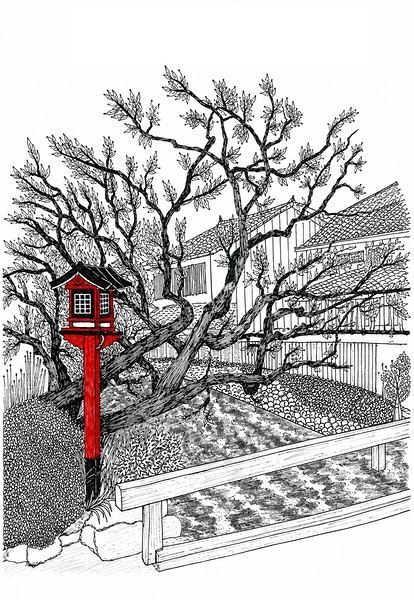 I’m inviting you on a stroll through my drawings—a completely subjective, far from exhaustive, and totally personal take, since it’s based on my own sketches. I put this travel journal together after returning in late 2024, mostly using felt-tip pens and pencils, with a few collages thrown in. I worked from our personal photos.
Let’s start with the shotengai...
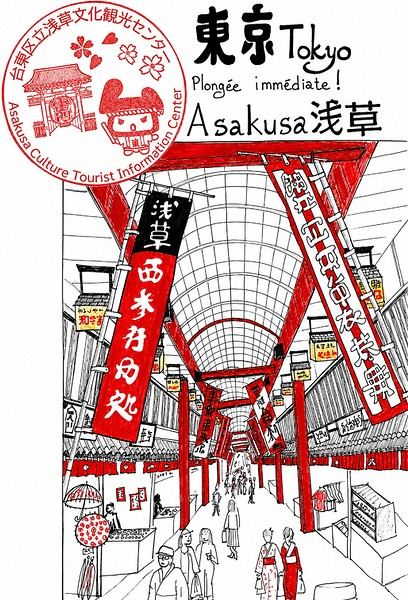
Our first "wow" moment came as we stepped out of the subway in Asakusa, the Tokyo neighborhood where we’d booked our hotel for our first five nights. Exhausted after our long flight, we finally arrived and took an exit that led straight into a shotengai—one of those covered shopping streets that pop up in city centers and flourished between the 1950s and 1980s.
It was an instant aesthetic shock, like a close encounter of the third kind between the modern city, a typical Asian market with its street stalls, the vintage vibe of the arcade, the sheer abundance of goods, and the bustling crowd—a mix of tourists, pilgrims (thanks to nearby Senso-ji Temple), and locals (it’s a very working-class area). In the end, it set the tone for a feeling we’d experience throughout the trip. Wherever we went, shotengai turned out to be fantastic spots for finding little restaurants, shops, or even fresh produce. Some are like real mazes, like in Kyoto, where we spent ages trying to relocate a restaurant we’d loved ;-)
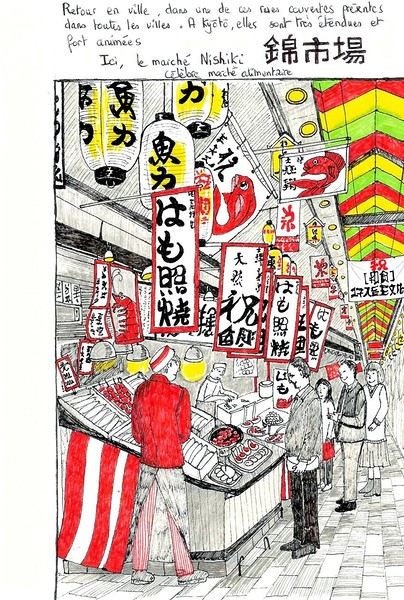
In Kanazawa, the Omicho Market: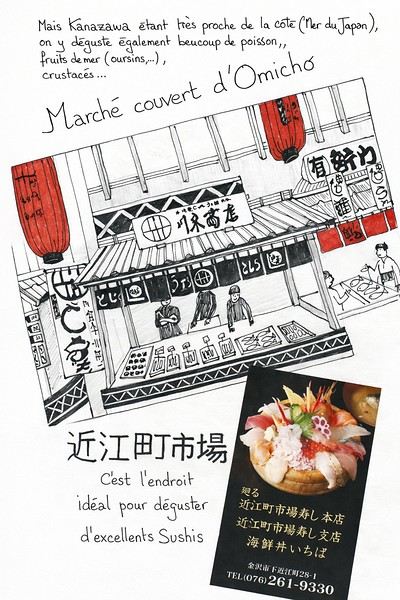 And in Kyoto, Nishiki Market:
To be continued...
I’m inviting you on a stroll through my drawings—a completely subjective, far from exhaustive, and totally personal take, since it’s based on my own sketches. I put this travel journal together after returning in late 2024, mostly using felt-tip pens and pencils, with a few collages thrown in. I worked from our personal photos.Let’s start with the shotengai...
Our first "wow" moment came as we stepped out of the subway in Asakusa, the Tokyo neighborhood where we’d booked our hotel for our first five nights. Exhausted after our long flight, we finally arrived and took an exit that led straight into a shotengai—one of those covered shopping streets that pop up in city centers and flourished between the 1950s and 1980s.
It was an instant aesthetic shock, like a close encounter of the third kind between the modern city, a typical Asian market with its street stalls, the vintage vibe of the arcade, the sheer abundance of goods, and the bustling crowd—a mix of tourists, pilgrims (thanks to nearby Senso-ji Temple), and locals (it’s a very working-class area). In the end, it set the tone for a feeling we’d experience throughout the trip. Wherever we went, shotengai turned out to be fantastic spots for finding little restaurants, shops, or even fresh produce. Some are like real mazes, like in Kyoto, where we spent ages trying to relocate a restaurant we’d loved ;-)
In Kanazawa, the Omicho Market:
And in Kyoto, Nishiki Market:
To be continued...
A Brief A to Z of Peru
Foreword
This text has been proofread many times.
Sorry if some points in this A to Z have already been covered on this forum.
Text and drawings by the author.
Peru is still a very vast country, with so much to see, and obviously this text can't list all the attractions of the country.
*Abiseo (River) A national park that's very hard to access and doesn’t seem open to visitors. Includes the Gran Pajaten site (see below). Personally, it really sparks my imagination (not visited personally)
*Aguas Calientes the town next to Machu Picchu, more precisely below the archaeological site. As far as I know, you can only get there by train. Reminds me of the market where stalls line both sides of the tracks near Bangkok. I love it
*Altiplano: somewhere the "heart" of the Andes. I was able to trek across it on foot, starting from Caracollo in Bolivia, and of course, it’s vast plains to explore. This is where people live in a very rural way. Andean populations are quite austere compared to those in the lowlands or on the coast. You really have to appreciate the harshness of life to live there. Life is anything but superficial. I set a compass heading and found myself walking west toward the expanse of water near a place called La Joya. For pitching the tent, the nights were still chilly
*Canyon del Colca One of the deepest canyons in the world. Personally, I hiked down and back up on foot. The toughest stretch I’ve ever covered in my life.
*Ceviche More or less the national dish. A marinade of fish, shellfish, and lime. But you can find it in some restaurants in Europe, France, and certainly in Belgium or Switzerland. In the small restaurants of Pisco, you can eat excellent ceviche
*Cerro Sechín: Mostly bas-reliefs. A site little known to travelers in the Casma province. The first vestiges of a pre-Inca civilization with iconography similar to that of Chavín (not visited personally)
*Chan Chan A large city of the Chimú civilization and relatively vast to visit. You can see adobe walls with bas-reliefs. Visit from Trujillo, take a colectivo. Plan for the whole day
*Charango: a small guitar widely used in Andean music
*Chauchilla A necropolis near Nazca where you can see mummies exposed on the ground. YouTubers can do paranormal experiments there. And for anyone wondering about the fate of the soul and body after death, here’s the answer: the body remains after death. You can imagine your own flesh and body exposed to the winds of the Pampa and before eternity... (not visited personally)
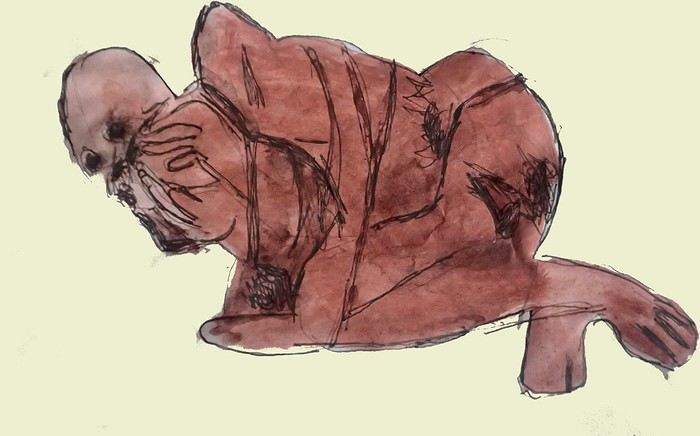
*Chavín de Huántar (Lanzón) The site’s appeal lies in its mountainous surroundings, the Lanzón stela, and the sculpted heads on the façades. What few people know is that the Chavín civilization began its expansion centuries before the Incas. Unfortunately, you can’t get too close to see the Lanzón—the day I was there, it was protected by grilles. To get there: minibus from Huaraz or trek from Olleros. Then cross a high pass (over 5,000m). If you do it solo on foot, be careful—the path isn’t obvious from Olleros
*Chullpa: funerary tower, notably at Sillustani in the Lake Titicaca region
*Chimú: pre-Inca civilization whose center was Chan Chan.
*Chola/Cholitas (Bolivia): typical clothing style of women from the Andean plateaus
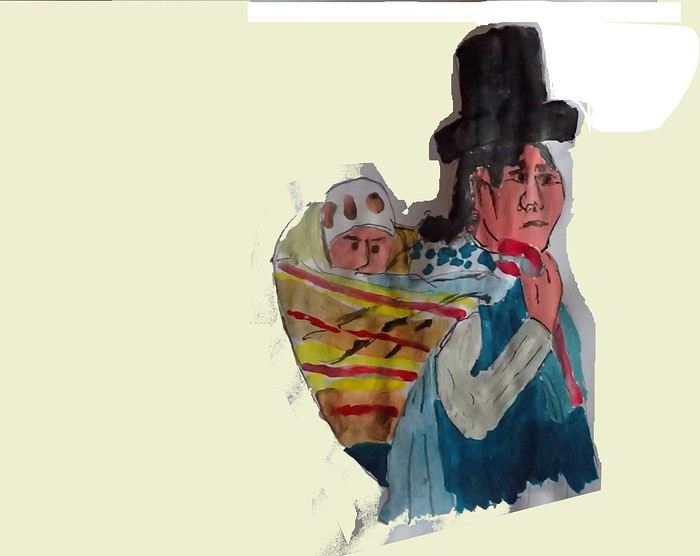
*Chompa: pronounce it *Chompaaa!* A common term for a wool sweater with vicuña patterns, often knitted from alpaca wool. If you dress like this, it’s a bit kitschy around the edges
*Cuy That one isn’t a guinea pig like in Guyana but an actual guinea pig. During a trip to Peru, I was hiking near a village north of Quillabamba (the terminus of the train line that passes through Aguas Calientes), and I was invited to stay in a house. The family raised a few of these pets. Apparently, the locals eat them. Since I’m not much of a meat-eater, it doesn’t really tempt me. How about you?
*Pacific Coast or how to talk about a place you haven’t visited? Except for the coast near Pisco and San Andrés, I haven’t visited any coastal cities. But that doesn’t mean these places lack interest or poetry. For fans of clichéd images, pelicans, seabirds, and fishing boats appear by the sea.
*Gran Pajaten: also closed to the public. Features anthropomorphic bas-reliefs. (not visited personally)
*Huaca. Visit the Huaca del Sol and Huaca de la Luna, especially near Trujillo. However, you can skip them—Chan Chan is still more interesting. Don’t forget to spend time visiting Chan Chan
*Huacachina A small oasis in the desert near Ica. Yes, we’re talking about an oasis because for those who’ve never traveled to Peru, the coastal strip along the Pacific is almost entirely desert, from north to south. Peru is territorially made up of three different regions: the desert coast, the Altiplano stretching north to south with mountain ranges (the Cordilleras), and the Amazon basin to the east. (not visited personally)
*Inca Kola It’s neither Coca-Cola nor Pepsi but a unique cola with a slightly orange color. Tastes like bubble gum
*Intiwatana: a carved rock shaped like a parallelepiped. Is it a sundial?
*Ballestas Islands: a highlight in Peru, though very touristy. You can only get there by boat from the port of San Andrés, a few kilometers from Pisco. It’s a surreal place to me—actually islets with cavities where sea lions and fur seals live. Since it’s a protected area, you’re not allowed to disembark. Guano is harvested there, which can be used as fertilizer.
*Kuelap: a fortress built by the Chachapoyas people. Rarely visited by travelers. (not visited personally)
*Larco Museum: an iconic museum in Lima with a large collection of pieces from archaeological and pre-Columbian sites. From what I remember, it has many pieces from the Moche civilization. As for the Moche statuettes, the prudish might look away. Probably a veneration of the god Priapus without knowing it.
*Nazca Lines Discovered by German archaeologist Maria Reiche, they stretch for kilometers. The designs in the desert around Nazca depict animals and cabalistic signs. The question I ask myself is why the creators of these lines represented a monkey and a hummingbird—species endemic to the tropical forest, not the desert plains around Nazca.
*Machu Picchu: means "old mountain" in Quechua. There’s also Wayna Picchu. The ruins of the site emerge from a sort of small plateau above Aguas Calientes. When the mist rises above the site and the bend of the Urubamba River, it’s truly magical... Also the starting point of the Inca Trail.
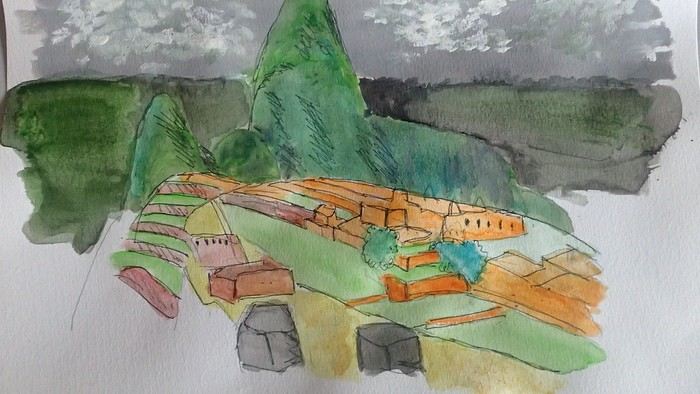
*Coca tea A decoction/infusion of the coca plant, meant to ease altitude sickness or *soroche*
*Chullo A rough translation would be a Peruvian wool hat.
*Moche: a civilization established in the Moche Valley, hence the term *Mochica*. What characterizes this civilization are the distinctive clay pieces representing faces and erotic statuettes
*Papa a la Huancaína A local potato dish
*Pisac: a typical market near Cusco
*Pisco Sour: perhaps the Peruvian equivalent of the *caipirinha* you drink in Brazil.
*Puya Raimondii A Bromeliaceae that still looks like a cactus, endemic to the Altiplano
*Quechua The language spoken by the indigenous people of the high plateaus (as well as Aymara in Bolivia)
*Quipu A knotted string used for counting. Widely used by the Inca administration.
*Sacsayhuamán (Q’enqo, Inca Bath) From Cusco’s Plaza de Armas, take the streets that climb above the city. Sacsayhuamán is called a fortress and is made up of large stone blocks. You wonder how the Incas could cut such huge blocks to assemble them—just like some streets in Cusco. The Q’enqo block is enigmatic; no one really knows what it represents.
*Savia Andina An Andean folk group.
*Tambo (=> Ollantaytambo) The Inca emperor (Atahualpa, Manco Capac) had the mission of controlling a vast empire. An empire that was still very extensive. Hence the importance of these *tambos* or relay stations. Napoleon created the civil code; the Incas invented the *tambos* and *quipus*.
*Tawantinsuyu: the Inca Empire
*Tinku: a warrior dance practiced mainly in Bolivia
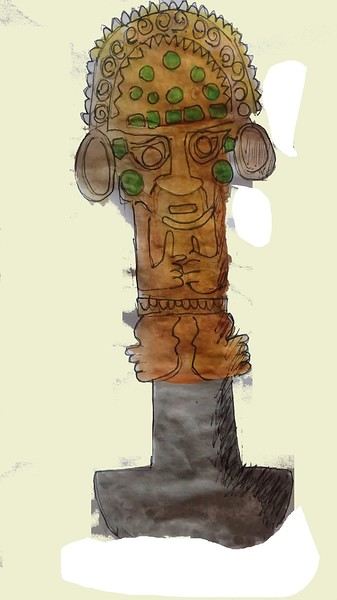
*Golden Tumi: a sacrificial weapon. Often featured in Peru travel guides. See illustration
*Terra X: a documentary series from the German TV channel that aired on Arte. Some episodes focused on pre-Inca and Inca Peru. I must have some old recording tapes. In memory of Gottfried Kirchner as a source of inspiration.
*Uros: I checked—it actually refers to the people who live on these floating islands. Even if it’s touristy, it’s a must-visit because it’s incredible how people can live on islets made from nothing. Take the boat from Puno
*Vicuña, llama, guanaco: camelids characteristic of the Altiplano
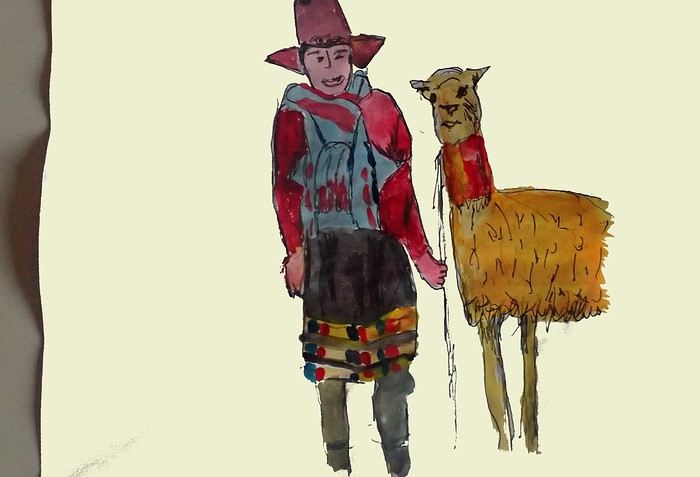
*Wayna Picchu The young Picchu mountain. In the first minutes of *Aguirre, the Wrath of God*, you see Klaus Kinski—well, Aguirre—making his way along the Inca Trail. Werner Herzog must have broken his back filming those sequences.
*Zampoña: pan flute
Peru is still a very vast country, with so much to see, and obviously this text can't list all the attractions of the country.
*Abiseo (River) A national park that's very hard to access and doesn’t seem open to visitors. Includes the Gran Pajaten site (see below). Personally, it really sparks my imagination (not visited personally)
*Aguas Calientes the town next to Machu Picchu, more precisely below the archaeological site. As far as I know, you can only get there by train. Reminds me of the market where stalls line both sides of the tracks near Bangkok. I love it
*Altiplano: somewhere the "heart" of the Andes. I was able to trek across it on foot, starting from Caracollo in Bolivia, and of course, it’s vast plains to explore. This is where people live in a very rural way. Andean populations are quite austere compared to those in the lowlands or on the coast. You really have to appreciate the harshness of life to live there. Life is anything but superficial. I set a compass heading and found myself walking west toward the expanse of water near a place called La Joya. For pitching the tent, the nights were still chilly
*Canyon del Colca One of the deepest canyons in the world. Personally, I hiked down and back up on foot. The toughest stretch I’ve ever covered in my life.
*Ceviche More or less the national dish. A marinade of fish, shellfish, and lime. But you can find it in some restaurants in Europe, France, and certainly in Belgium or Switzerland. In the small restaurants of Pisco, you can eat excellent ceviche
*Cerro Sechín: Mostly bas-reliefs. A site little known to travelers in the Casma province. The first vestiges of a pre-Inca civilization with iconography similar to that of Chavín (not visited personally)
*Chan Chan A large city of the Chimú civilization and relatively vast to visit. You can see adobe walls with bas-reliefs. Visit from Trujillo, take a colectivo. Plan for the whole day
*Charango: a small guitar widely used in Andean music
*Chauchilla A necropolis near Nazca where you can see mummies exposed on the ground. YouTubers can do paranormal experiments there. And for anyone wondering about the fate of the soul and body after death, here’s the answer: the body remains after death. You can imagine your own flesh and body exposed to the winds of the Pampa and before eternity... (not visited personally)
*Chavín de Huántar (Lanzón) The site’s appeal lies in its mountainous surroundings, the Lanzón stela, and the sculpted heads on the façades. What few people know is that the Chavín civilization began its expansion centuries before the Incas. Unfortunately, you can’t get too close to see the Lanzón—the day I was there, it was protected by grilles. To get there: minibus from Huaraz or trek from Olleros. Then cross a high pass (over 5,000m). If you do it solo on foot, be careful—the path isn’t obvious from Olleros
*Chullpa: funerary tower, notably at Sillustani in the Lake Titicaca region
*Chimú: pre-Inca civilization whose center was Chan Chan.
*Chola/Cholitas (Bolivia): typical clothing style of women from the Andean plateaus
*Chompa: pronounce it *Chompaaa!* A common term for a wool sweater with vicuña patterns, often knitted from alpaca wool. If you dress like this, it’s a bit kitschy around the edges
*Cuy That one isn’t a guinea pig like in Guyana but an actual guinea pig. During a trip to Peru, I was hiking near a village north of Quillabamba (the terminus of the train line that passes through Aguas Calientes), and I was invited to stay in a house. The family raised a few of these pets. Apparently, the locals eat them. Since I’m not much of a meat-eater, it doesn’t really tempt me. How about you?
*Pacific Coast or how to talk about a place you haven’t visited? Except for the coast near Pisco and San Andrés, I haven’t visited any coastal cities. But that doesn’t mean these places lack interest or poetry. For fans of clichéd images, pelicans, seabirds, and fishing boats appear by the sea.
*Gran Pajaten: also closed to the public. Features anthropomorphic bas-reliefs. (not visited personally)
*Huaca. Visit the Huaca del Sol and Huaca de la Luna, especially near Trujillo. However, you can skip them—Chan Chan is still more interesting. Don’t forget to spend time visiting Chan Chan
*Huacachina A small oasis in the desert near Ica. Yes, we’re talking about an oasis because for those who’ve never traveled to Peru, the coastal strip along the Pacific is almost entirely desert, from north to south. Peru is territorially made up of three different regions: the desert coast, the Altiplano stretching north to south with mountain ranges (the Cordilleras), and the Amazon basin to the east. (not visited personally)
*Inca Kola It’s neither Coca-Cola nor Pepsi but a unique cola with a slightly orange color. Tastes like bubble gum
*Intiwatana: a carved rock shaped like a parallelepiped. Is it a sundial?
*Ballestas Islands: a highlight in Peru, though very touristy. You can only get there by boat from the port of San Andrés, a few kilometers from Pisco. It’s a surreal place to me—actually islets with cavities where sea lions and fur seals live. Since it’s a protected area, you’re not allowed to disembark. Guano is harvested there, which can be used as fertilizer.
*Kuelap: a fortress built by the Chachapoyas people. Rarely visited by travelers. (not visited personally)
*Larco Museum: an iconic museum in Lima with a large collection of pieces from archaeological and pre-Columbian sites. From what I remember, it has many pieces from the Moche civilization. As for the Moche statuettes, the prudish might look away. Probably a veneration of the god Priapus without knowing it.
*Nazca Lines Discovered by German archaeologist Maria Reiche, they stretch for kilometers. The designs in the desert around Nazca depict animals and cabalistic signs. The question I ask myself is why the creators of these lines represented a monkey and a hummingbird—species endemic to the tropical forest, not the desert plains around Nazca.
*Machu Picchu: means "old mountain" in Quechua. There’s also Wayna Picchu. The ruins of the site emerge from a sort of small plateau above Aguas Calientes. When the mist rises above the site and the bend of the Urubamba River, it’s truly magical... Also the starting point of the Inca Trail.
*Coca tea A decoction/infusion of the coca plant, meant to ease altitude sickness or *soroche*
*Chullo A rough translation would be a Peruvian wool hat.
*Moche: a civilization established in the Moche Valley, hence the term *Mochica*. What characterizes this civilization are the distinctive clay pieces representing faces and erotic statuettes
*Papa a la Huancaína A local potato dish
*Pisac: a typical market near Cusco
*Pisco Sour: perhaps the Peruvian equivalent of the *caipirinha* you drink in Brazil.
*Puya Raimondii A Bromeliaceae that still looks like a cactus, endemic to the Altiplano
*Quechua The language spoken by the indigenous people of the high plateaus (as well as Aymara in Bolivia)
*Quipu A knotted string used for counting. Widely used by the Inca administration.
*Sacsayhuamán (Q’enqo, Inca Bath) From Cusco’s Plaza de Armas, take the streets that climb above the city. Sacsayhuamán is called a fortress and is made up of large stone blocks. You wonder how the Incas could cut such huge blocks to assemble them—just like some streets in Cusco. The Q’enqo block is enigmatic; no one really knows what it represents.
*Savia Andina An Andean folk group.
*Tambo (=> Ollantaytambo) The Inca emperor (Atahualpa, Manco Capac) had the mission of controlling a vast empire. An empire that was still very extensive. Hence the importance of these *tambos* or relay stations. Napoleon created the civil code; the Incas invented the *tambos* and *quipus*.
*Tawantinsuyu: the Inca Empire
*Tinku: a warrior dance practiced mainly in Bolivia
*Golden Tumi: a sacrificial weapon. Often featured in Peru travel guides. See illustration
*Terra X: a documentary series from the German TV channel that aired on Arte. Some episodes focused on pre-Inca and Inca Peru. I must have some old recording tapes. In memory of Gottfried Kirchner as a source of inspiration.
*Uros: I checked—it actually refers to the people who live on these floating islands. Even if it’s touristy, it’s a must-visit because it’s incredible how people can live on islets made from nothing. Take the boat from Puno
*Vicuña, llama, guanaco: camelids characteristic of the Altiplano
*Wayna Picchu The young Picchu mountain. In the first minutes of *Aguirre, the Wrath of God*, you see Klaus Kinski—well, Aguirre—making his way along the Inca Trail. Werner Herzog must have broken his back filming those sequences.
*Zampoña: pan flute
Road Trip in Japan: Kyushu - Chugoku - Shikoku - Kyushu
Hi everyone,
It’s been a while since I last posted... so I’m jumping back in with this amazing trip we took in October 2025:
We’re doing this trip with fellow traveler friends who, like us, have already been to Japan. That means we can aim for a different side of Japan, away from the usual tourist circuits. That’s why I opted to rent a car instead of relying on trains. I was drawn to the castles and the samurai-novel atmosphere.
When I plotted the sites I wanted to visit on Google Maps, it suggested a return route via the island of Shikoku, so it turned into a nice loop around the Seto Inland Sea between Kyushu, Chugoku, and Shikoku.
The trip will be just the four of us, doing it all independently. I rented a car from Budget in Fukuoka. Before heading over, I watched several videos to get an idea of what to expect—road signs, parking, and general driving behavior. In Japan, they drive on the left, but that’s not an issue since in Southern Africa we also drive on the “wrong side of the road,” so I’m used to it. For accommodations, after checking with two agencies, I decided to handle it myself. It saved a significant amount of money, and I was able to choose exactly what I wanted. I know I can be picky about the type of lodging I want, especially in Japan where you can really treat yourself. We stayed in some stunning ryokans, once in little cabins run by monks next to a temple, and more.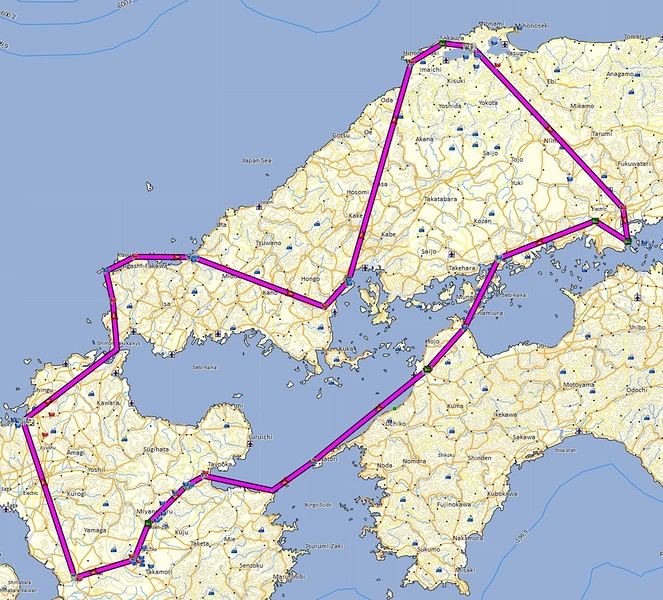
Here’s the route: Fukuoka - Hagi - Miyajima - Matsue - Okayama - Kurashiki - Matsuyama - Yufuin - Kurokawa - Kumamoto - Fukuoka
Here we gooo...
It’s been a while since I last posted... so I’m jumping back in with this amazing trip we took in October 2025:
We’re doing this trip with fellow traveler friends who, like us, have already been to Japan. That means we can aim for a different side of Japan, away from the usual tourist circuits. That’s why I opted to rent a car instead of relying on trains. I was drawn to the castles and the samurai-novel atmosphere.
When I plotted the sites I wanted to visit on Google Maps, it suggested a return route via the island of Shikoku, so it turned into a nice loop around the Seto Inland Sea between Kyushu, Chugoku, and Shikoku.
The trip will be just the four of us, doing it all independently. I rented a car from Budget in Fukuoka. Before heading over, I watched several videos to get an idea of what to expect—road signs, parking, and general driving behavior. In Japan, they drive on the left, but that’s not an issue since in Southern Africa we also drive on the “wrong side of the road,” so I’m used to it. For accommodations, after checking with two agencies, I decided to handle it myself. It saved a significant amount of money, and I was able to choose exactly what I wanted. I know I can be picky about the type of lodging I want, especially in Japan where you can really treat yourself. We stayed in some stunning ryokans, once in little cabins run by monks next to a temple, and more.
Here’s the route: Fukuoka - Hagi - Miyajima - Matsue - Okayama - Kurashiki - Matsuyama - Yufuin - Kurokawa - Kumamoto - Fukuoka
Here we gooo...
What can you see on safari in Tanzania in June?
hi,
We’re thinking of traveling to Tanzania in June (more specifically the first half) and would love to hear about your experiences, especially regarding the Serengeti safari. Is it a good time to see the animals? Would it be better to go later? For those who’ve been there during this period, do you recommend it?
thanks in advance
Back from two months in Guatemala
Hi there,
I spent two months alone in Guatemala this summer, without a guide or agency, and I’d love to share a quick recap of my impressions.
● First off, it’s really easy to travel without a guide or agency. If you want a guide for excursions, you can easily find one through the many agencies in Antigua or Panajachel. In Flores, there are also plenty of agencies offering multi-day jungle treks.
● I got around by shuttle for part of the "classic" and more touristy route. To step off that path, I took "camionetas" (chicken buses) or minibuses.
For me, "camionetas" are the best way to get around Guatemala. They let you travel everywhere, fully immersed, at the local pace. They run all the time and are even an adventure in themselves.
Shuttles are direct, but local buses aren’t. No matter how you travel, trips take a while because roads are often in bad shape, and in the mountains, you can’t overtake.
● As for safety, there’s nothing unusual compared to other Latin American countries. Just keep in mind it’s not Europe. As a solo woman, I try not to draw too much attention—though traveling alone already does that. Like in other countries, I was often asked where my kids and husband were, and I just gave whatever answer I felt like.
● Budget-wise, Guatemala isn’t too expensive for French tourists, but Antigua and Panajachel—two very touristy spots—are pricier.
● Guatemala is a small country but incredibly rich in culture and nature (volcanoes, mountains, beaches, etc.). You can easily spend several days (or even weeks) in each region.
● My top picks ❤️:
- The Mayan markets, especially the one in San Francisco El Alto - The Ixil Triangle: Nebaj, Chajul, Acul - The stunning landscapes around Todos Santos Cuchumatán - Antigua, very touristy but beautiful - Lake Atitlán, also touristy but gorgeous
I planned to climb Pacaya Volcano, but early in my trip, there was an earthquake in Antigua, and by the end, I wasn’t in the mood. Climbing Acatenango is more spectacular but also more challenging.
● Biggest highlights ❤️ ❤️:
- Tikal—it’s THE must-see site, an incredible mix of archaeology and nature!
- The Joyabaj Fair, which I hadn’t planned to visit but ended up spending a week at: Mayan ceremonies, equestrian parades, diverse dances, processions with Mayan priests, and especially the "palo volador"—the highlight of the festival!
● Small letdown 👎:
- Ranchitos del Quetzal, where I went hoping to spot the quetzal. I knew it wasn’t the right season, but I was still disappointed—I didn’t see any other birds either, and the hiking options were limited. It also took me a slight detour from Cobán.
If you have any questions, I’d be happy to answer them.
● If you’re interested, I kept a more detailed travel journal, and I’m working on another one just about the Joyabaj Fair:
https://www.myatlas.com/borboleta/guatemala-deux-mois-au-pays-de-la-couleur
I spent two months alone in Guatemala this summer, without a guide or agency, and I’d love to share a quick recap of my impressions.
● First off, it’s really easy to travel without a guide or agency. If you want a guide for excursions, you can easily find one through the many agencies in Antigua or Panajachel. In Flores, there are also plenty of agencies offering multi-day jungle treks.
● I got around by shuttle for part of the "classic" and more touristy route. To step off that path, I took "camionetas" (chicken buses) or minibuses.
For me, "camionetas" are the best way to get around Guatemala. They let you travel everywhere, fully immersed, at the local pace. They run all the time and are even an adventure in themselves.
Shuttles are direct, but local buses aren’t. No matter how you travel, trips take a while because roads are often in bad shape, and in the mountains, you can’t overtake.
● As for safety, there’s nothing unusual compared to other Latin American countries. Just keep in mind it’s not Europe. As a solo woman, I try not to draw too much attention—though traveling alone already does that. Like in other countries, I was often asked where my kids and husband were, and I just gave whatever answer I felt like.
● Budget-wise, Guatemala isn’t too expensive for French tourists, but Antigua and Panajachel—two very touristy spots—are pricier.
● Guatemala is a small country but incredibly rich in culture and nature (volcanoes, mountains, beaches, etc.). You can easily spend several days (or even weeks) in each region.
● My top picks ❤️:
- The Mayan markets, especially the one in San Francisco El Alto - The Ixil Triangle: Nebaj, Chajul, Acul - The stunning landscapes around Todos Santos Cuchumatán - Antigua, very touristy but beautiful - Lake Atitlán, also touristy but gorgeous
I planned to climb Pacaya Volcano, but early in my trip, there was an earthquake in Antigua, and by the end, I wasn’t in the mood. Climbing Acatenango is more spectacular but also more challenging.
● Biggest highlights ❤️ ❤️:
- Tikal—it’s THE must-see site, an incredible mix of archaeology and nature!
- The Joyabaj Fair, which I hadn’t planned to visit but ended up spending a week at: Mayan ceremonies, equestrian parades, diverse dances, processions with Mayan priests, and especially the "palo volador"—the highlight of the festival!
● Small letdown 👎:
- Ranchitos del Quetzal, where I went hoping to spot the quetzal. I knew it wasn’t the right season, but I was still disappointed—I didn’t see any other birds either, and the hiking options were limited. It also took me a slight detour from Cobán.
If you have any questions, I’d be happy to answer them.
● If you’re interested, I kept a more detailed travel journal, and I’m working on another one just about the Joyabaj Fair:
https://www.myatlas.com/borboleta/guatemala-deux-mois-au-pays-de-la-couleur
Finding a decent flight to Thailand
struggling to find a decent flight to Thailand?????
Hi everyone, I’ve been traveling in Asia for over 30 years, often to Thailand, but only during the school holidays in February, April, and especially in the summer, departing from Marseille or Lyon.
For some time now, I’ve noticed it’s really hard to find a flight at a reasonable price (under 900 €) and, more importantly, with a decent itinerary (we’re often offered 2 or 3 layovers with total travel times of 40 or even 50 hours), and this is the case almost a year in advance. This is something we never saw even 4 years ago—I’m wondering: are there fewer flights available now...?
Marsyork
Hi everyone, I’ve been traveling in Asia for over 30 years, often to Thailand, but only during the school holidays in February, April, and especially in the summer, departing from Marseille or Lyon.
For some time now, I’ve noticed it’s really hard to find a flight at a reasonable price (under 900 €) and, more importantly, with a decent itinerary (we’re often offered 2 or 3 layovers with total travel times of 40 or even 50 hours), and this is the case almost a year in advance. This is something we never saw even 4 years ago—I’m wondering: are there fewer flights available now...?
Marsyork
Bike paths in Taiwan
Hi there,
I’m planning to cycle around Taiwan in 2026 and I’d love to know if it’s possible to do the whole island on bike paths, how many kilometers that would be, whether wild camping is easy, and so on…
My life in Camargue, my homeland, and in Colombia, my heart's country
My two bullfighting traditions when I'm back home in Camargue (France) and in Colombia (Caribbean) every time I return. 🤠
Details:
Bullfights (corridas) aren’t part of my two bullfighting traditions, but I respect those who attend them!!!
In these two ancestral bullfighting traditions—which aren’t bullfights—the Bulls and Toros aren’t killed or tortured, as some might think.
These are bull games where the animals return to their pastures afterward and only come back to the Arenas 2–3 times a year at most.
They spend 15 minutes in the ring for the Camarguais and 5 minutes for the Toros in the Colombian Corralejas.
They’re cared for and pampered. They’ll die of old age in miles of open fields.
The young people who face them are professionals, risking their lives to support their families and live their Passion for the Toro!!! 😄
https://youtu.be/yYKQer42HoQ
Colombian Corraleja in the link below (hope it works) 🤪
https://fb.watch/BMfmuCgQpG/
Looking for feedback on 16-day Bali itinerary
Hi there,
what do you think of this itinerary, please? Do you think it’s doable?
We’re two adults—it’s our honeymoon trip! 🙂
Our main interests lean more toward nature and landscapes than cultural visits (though we won’t rule out one or two temple visits).
01/10/2025 W 10:30 AM – Departure from CDG (overnight flight) 02/10/2025 Th 11:25 AM – Arrival in Denpasar -> Ubud (south of the city) – overnight in Ubud 03/10/2025 F – Excursions around Ubud – overnight in Ubud 04/10/2025 Sa – Excursions around Ubud (Jatiluwih) – overnight in Ubud 05/10/2025 Su – Excursions around Ubud – overnight in Ubud 06/10/2025 M – Ubud -> Amed – overnight in Amed 07/10/2025 Tu – Amed – overnight in Amed 08/10/2025 W – Amed -> Padangbai – overnight in Padangbai 09/10/2025 Th – Padangbai -> Gili Air (first morning boat) – overnight on Gili Air 10/10/2025 F – Gili Air – overnight on Gili Air 11/10/2025 Sa – Gili Air – overnight on Gili Air 12/10/2025 Su – Gili Air -> Nusa Lembongan – overnight on Nusa Lembongan 13/10/2025 M – Nusa Lembongan – overnight on Nusa Lembongan 14/10/2025 Tu – Nusa Lembongan – overnight on Nusa Lembongan 15/10/2025 W – Nusa Lembongan – overnight on Nusa Lembongan (or return to Bali depending on sea conditions) 16/10/2025 Th – Jimbaran or Seminyak – overnight in Jimbaran or Seminyak 17/10/2025 F – Jimbaran -> Denpasar – departure at 6:45 PM (overnight flight) 18/10/2025 Sa 8:00 AM – Arrival at CDG – overnight at home
Thanks in advance for your feedback! [;]
01/10/2025 W 10:30 AM – Departure from CDG (overnight flight) 02/10/2025 Th 11:25 AM – Arrival in Denpasar -> Ubud (south of the city) – overnight in Ubud 03/10/2025 F – Excursions around Ubud – overnight in Ubud 04/10/2025 Sa – Excursions around Ubud (Jatiluwih) – overnight in Ubud 05/10/2025 Su – Excursions around Ubud – overnight in Ubud 06/10/2025 M – Ubud -> Amed – overnight in Amed 07/10/2025 Tu – Amed – overnight in Amed 08/10/2025 W – Amed -> Padangbai – overnight in Padangbai 09/10/2025 Th – Padangbai -> Gili Air (first morning boat) – overnight on Gili Air 10/10/2025 F – Gili Air – overnight on Gili Air 11/10/2025 Sa – Gili Air – overnight on Gili Air 12/10/2025 Su – Gili Air -> Nusa Lembongan – overnight on Nusa Lembongan 13/10/2025 M – Nusa Lembongan – overnight on Nusa Lembongan 14/10/2025 Tu – Nusa Lembongan – overnight on Nusa Lembongan 15/10/2025 W – Nusa Lembongan – overnight on Nusa Lembongan (or return to Bali depending on sea conditions) 16/10/2025 Th – Jimbaran or Seminyak – overnight in Jimbaran or Seminyak 17/10/2025 F – Jimbaran -> Denpasar – departure at 6:45 PM (overnight flight) 18/10/2025 Sa 8:00 AM – Arrival at CDG – overnight at home
Thanks in advance for your feedback! [;]
4 weeks in a camper van in Portugal: any tips?
We're thinking of visiting Portugal, either in November or next April. We'd rent a camper van for 4 weeks and try to see as much of this beautiful country as possible! Any tips or ideas??
Thanks :)
Occitanie and the Passion for Games: From Ancient Pastimes to Modern Game Cafés
Games have been an integral part of Occitanie’s culture for centuries. From traditional French games to the modern rise of game cafés, the region has embraced games not just as entertainment, but as a way to connect, strategize, and share experiences. Whether it’s playing pétanque in the village square, gathering for an intense chess match in a local café, or diving into the latest board games at Toulouse’s vibrant gaming spots, Occitanie offers a rich and evolving gaming culture.
Traditional games that shaped Occitanie
Long before video games and themed game cafés, the people of Occitanie entertained themselves with games passed down through generations.
Pétanque – This classic game, deeply rooted in southern France, is a staple of social life in Occitanie. Played in public squares and parks, it’s a game of precision and patience, with friendly rivalries often lasting for years.
La Mourre – A lesser-known but historically significant game, la mourre was once a favorite among locals. It involves quick hand gestures and guessing, blending skill with a bit of luck.
Jeu de Nain Jaune – This 18th-century card game, still played today, remains a favorite at family gatherings. Known as Le Nain Jaune, it mixes strategy and chance, much like modern board games.
These traditional games laid the foundation for Occitanie’s love of strategy and competition, paving the way for today’s board game culture. Whether in a lively café, at a family gathering, or in an entertainment venue where skill and chance meet, the region’s deep appreciation for games continues to evolve. Even today, that same blend of strategy and chance can be found in modern settings—whether around a board game café or during a poker tournament at an online casino.
Gaming expert François Leclerc highlights the best online casinos in France, offering players access to thousands of games, exciting daily tournaments, fast payouts, and attractive bonuses like matched deposit bets and free bets, so those who love the thrill of gaming can fully enjoy the experience.
The rise of game cafés and chess clubs
While traditional games remain beloved, board game cafés and chess clubs are experiencing a spectacular boom in the region. Blending nostalgia with innovation, these spaces provide a place for players of all backgrounds to meet and play.
Toulouse: A board game hotspot
Toulouse, Occitanie’s cultural and technological hub, has fully embraced the board game café trend. Popular spots like Blastodice, La Taverne du Troll, and Yggdrasil have become gathering places for locals and visitors looking for an alternative to traditional nightlife.
These cafés offer vast libraries of games, from classic strategy games like Catan and Carcassonne (named after the famous medieval city in Occitanie) to the latest indie releases. In these cafés, game nights often turn into social events where newcomers and experienced players bond over strategy and competition. Some venues even host themed nights, where players can immerse themselves in historical or fantasy game sessions.
The chess culture in Occitanie
Chess is experiencing a major revival, with tournaments and clubs multiplying across the region. The Toulouse Chess Club is one of the most well-known, attracting both casual and competitive players. This established club offers a structured environment where players can hone their skills, participate in local competitions, and deepen their passion for the game. With the rise of chess streaming and its representation in pop culture, the game’s appeal continues to grow, drawing in more participants eager to master its strategy.
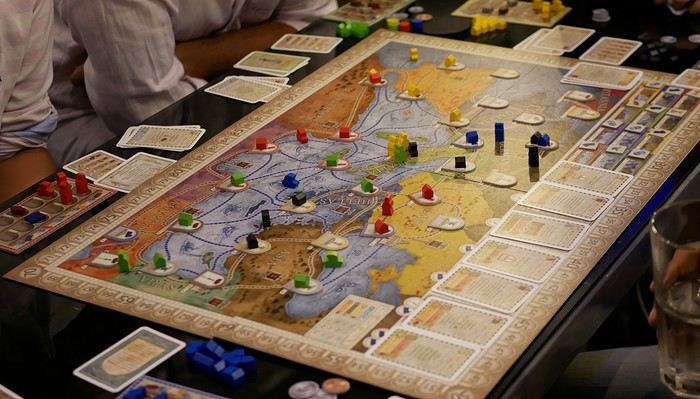
A new era of gaming and entertainment
Occitanie’s gaming culture extends beyond cafés and clubs. Larger entertainment venues now incorporate gaming zones with immersive experiences, virtual reality sections, and lounges for classic strategy games. While these venues focus on digital entertainment, many still host board game nights and chess tournaments. Cities like Toulouse offer a mix of experiences, from live music to themed game nights, for a complete evening out.
Why gaming thrives in Occitanie
What makes Occitanie a true hub for gaming culture? Several factors contribute to its success:
A strong social culture – The region’s love for shared experiences naturally extends to gaming. Whether it’s a game of pétanque or a chess match in a café, competition and camaraderie go hand in hand.
A growing gaming scene – Cities like Toulouse and Montpellier are home to expanding gaming communities that fuel demand for new and engaging social activities, making board game cafés and gaming lounges popular choices for all types of players.
A blend of tradition and innovation – Occitanie’s respect for tradition pairs perfectly with its openness to modern trends. Classic games remain popular, but new gaming formats keep the culture fresh and exciting.
Conclusion
From ancient pastimes played in village squares to lively modern board game cafés, gaming culture in Occitanie continues to thrive. Chess clubs, board game hotspots, and evolving entertainment spaces offer something for every type of player. Whether enjoying a game of pétanque under the southern sun or gathering with friends over a strategy game in a cozy café, the region’s love for games remains stronger than ever.
Traditional games that shaped Occitanie
Long before video games and themed game cafés, the people of Occitanie entertained themselves with games passed down through generations.
Pétanque – This classic game, deeply rooted in southern France, is a staple of social life in Occitanie. Played in public squares and parks, it’s a game of precision and patience, with friendly rivalries often lasting for years.
La Mourre – A lesser-known but historically significant game, la mourre was once a favorite among locals. It involves quick hand gestures and guessing, blending skill with a bit of luck.
Jeu de Nain Jaune – This 18th-century card game, still played today, remains a favorite at family gatherings. Known as Le Nain Jaune, it mixes strategy and chance, much like modern board games.
These traditional games laid the foundation for Occitanie’s love of strategy and competition, paving the way for today’s board game culture. Whether in a lively café, at a family gathering, or in an entertainment venue where skill and chance meet, the region’s deep appreciation for games continues to evolve. Even today, that same blend of strategy and chance can be found in modern settings—whether around a board game café or during a poker tournament at an online casino.
Gaming expert François Leclerc highlights the best online casinos in France, offering players access to thousands of games, exciting daily tournaments, fast payouts, and attractive bonuses like matched deposit bets and free bets, so those who love the thrill of gaming can fully enjoy the experience.
The rise of game cafés and chess clubs
While traditional games remain beloved, board game cafés and chess clubs are experiencing a spectacular boom in the region. Blending nostalgia with innovation, these spaces provide a place for players of all backgrounds to meet and play.
Toulouse: A board game hotspot
Toulouse, Occitanie’s cultural and technological hub, has fully embraced the board game café trend. Popular spots like Blastodice, La Taverne du Troll, and Yggdrasil have become gathering places for locals and visitors looking for an alternative to traditional nightlife.
These cafés offer vast libraries of games, from classic strategy games like Catan and Carcassonne (named after the famous medieval city in Occitanie) to the latest indie releases. In these cafés, game nights often turn into social events where newcomers and experienced players bond over strategy and competition. Some venues even host themed nights, where players can immerse themselves in historical or fantasy game sessions.
The chess culture in Occitanie
Chess is experiencing a major revival, with tournaments and clubs multiplying across the region. The Toulouse Chess Club is one of the most well-known, attracting both casual and competitive players. This established club offers a structured environment where players can hone their skills, participate in local competitions, and deepen their passion for the game. With the rise of chess streaming and its representation in pop culture, the game’s appeal continues to grow, drawing in more participants eager to master its strategy.
A new era of gaming and entertainment
Occitanie’s gaming culture extends beyond cafés and clubs. Larger entertainment venues now incorporate gaming zones with immersive experiences, virtual reality sections, and lounges for classic strategy games. While these venues focus on digital entertainment, many still host board game nights and chess tournaments. Cities like Toulouse offer a mix of experiences, from live music to themed game nights, for a complete evening out.
Why gaming thrives in Occitanie
What makes Occitanie a true hub for gaming culture? Several factors contribute to its success:
A strong social culture – The region’s love for shared experiences naturally extends to gaming. Whether it’s a game of pétanque or a chess match in a café, competition and camaraderie go hand in hand.
A growing gaming scene – Cities like Toulouse and Montpellier are home to expanding gaming communities that fuel demand for new and engaging social activities, making board game cafés and gaming lounges popular choices for all types of players.
A blend of tradition and innovation – Occitanie’s respect for tradition pairs perfectly with its openness to modern trends. Classic games remain popular, but new gaming formats keep the culture fresh and exciting.
Conclusion
From ancient pastimes played in village squares to lively modern board game cafés, gaming culture in Occitanie continues to thrive. Chess clubs, board game hotspots, and evolving entertainment spaces offer something for every type of player. Whether enjoying a game of pétanque under the southern sun or gathering with friends over a strategy game in a cozy café, the region’s love for games remains stronger than ever.
New Year's Day in Italy
As planned every year for quite some time now, here we are in Italy on the Ligurian Coast to spend a few days and celebrate New Year's 2024/2025.
Our base is in the charming town of Rapallo, between Genoa and La Spezia. We're right on the coast, with our hotel offering a sea view and access to the beach.
Not far from Rapallo, you can find, besides the Cinque Terre, Portofino, Santa Margherita Ligure, Chiavari, and others like Carrara and even Pisa. In short, there's plenty to do.
Five days there with so-so weather, and crowds but nothing overwhelming.
For the trip between home and our base, we're using an electric vehicle. It's manageable without any issues. The hotel has outlets, and otherwise, there are charging points all over Italy. And just to note, Tesla chargers are the best in terms of cost and charging speed.
There you have it.
Once we arrived on Sunday, December 29th, it was time to go for a walk, book a restaurant for Monday evening, and finalize the itinerary.
On Monday the 30th, we were lucky enough to see a beautiful sunrise from our window.

And the town of Rapallo in the early morning!
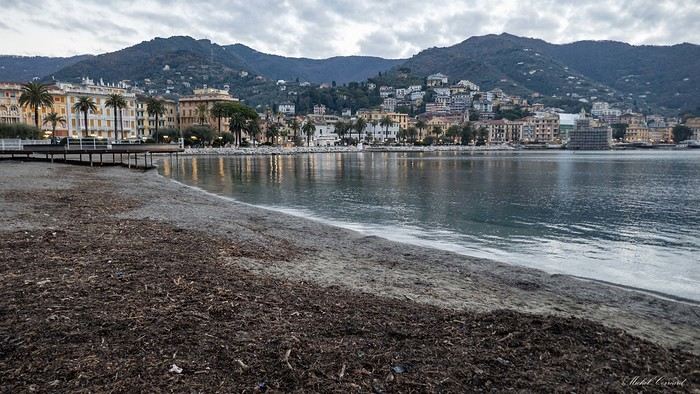
Our base is in the charming town of Rapallo, between Genoa and La Spezia. We're right on the coast, with our hotel offering a sea view and access to the beach.
Not far from Rapallo, you can find, besides the Cinque Terre, Portofino, Santa Margherita Ligure, Chiavari, and others like Carrara and even Pisa. In short, there's plenty to do.
Five days there with so-so weather, and crowds but nothing overwhelming.
For the trip between home and our base, we're using an electric vehicle. It's manageable without any issues. The hotel has outlets, and otherwise, there are charging points all over Italy. And just to note, Tesla chargers are the best in terms of cost and charging speed.
There you have it.
Once we arrived on Sunday, December 29th, it was time to go for a walk, book a restaurant for Monday evening, and finalize the itinerary.
On Monday the 30th, we were lucky enough to see a beautiful sunrise from our window.
And the town of Rapallo in the early morning!
Information about the San Blas Islands before booking your excursion (Panama)
I’ve put together this information sheet based on my own experience, feedback from my clients, and reviews from travelers on various travel forums and social media.
I think it’s important to share the reality of these postcard-perfect little islands with their white sandy beaches and palm trees before you set off. That way, you can make the most of your trip to the San Blas Islands, know exactly what to expect, and decide if this destination is right for you.
The San Blas Islands are run by the indigenous Guna people. They have their own rules, and Panamanian law doesn’t really apply. Today, their main income comes from tourism, so please note that foreigners aren’t allowed to operate cabanas there. This means that as soon as you board their small boats, you’re in the hands of the Gunas, and it’ll be tough to complain about delays, logistical issues, or refunds. Wait times can be long, and the Gunas are pretty informal—at first glance, they might even seem unwelcoming. But you have to understand that their culture and way of life are simply different from yours.
You’ll find plenty of tour operators offering day trips or one- or two-night stays on the same islands at different prices. I think all these listings create confusion and uncertainty for travelers. You can book with operators who care about their clients and deal directly with them, while others act only as intermediaries or booking systems between travelers, the Gunas, and transport companies without providing any follow-up during your stay. Don’t forget that all the San Blas Islands are beautiful, and your choice shouldn’t be based on which of the 365 islands is the prettiest, but on the hospitality of the Guna family, the accommodation, and the service they provide. I also recommend avoiding San Blas on weekends and public holidays.
To explain the sometimes "low" level of service mentioned in traveler reviews, you need to understand that the San Blas Islands are very basic and rustic—that’s also the charm of the experience, which, for some of you, will push you out of your comfort zone. Not all huts have electricity, or even light. If you want to charge your phone, ask the island owner, who might charge you a small fee. Needless to say, WiFi isn’t available on all islands.
Not all Gunas working there have studied hospitality management, logistics, gastronomy, or tourism. There’s been a big "boom" in the last 10 years, and they haven’t been trained for it.
Regarding the 4x4 road transport, expect to be a bit cramped since the car can fit 6 passengers. Also, you might face delays, or the car might already be waiting for you because the pickup route can change, and sometimes other passengers are late, causing delays. To avoid this, I recommend paying extra for private transport—it’ll make your trip smoother and save you frustration before arriving in San Blas, as well as on your return to Panama City, which can sometimes be chaotic.
Stay flexible! Expect delays, lack of communication, waiting for someone or something without knowing why, rustic cabanas, no fish but pasta instead (yes! sometimes the fish season is low!), fried eggs and bread for breakfast—but in the end, everything works out if you can accept these little inconveniences. Just enjoy the adventure!
Finally, the San Blas Islands have a waste collection problem, so you might see trash on the islands, especially during the summer season due to strong currents. Most of the waste comes from the sea and the mainland. For the sake of the island, please take your trash with you.
I think it’s important to share the reality of these postcard-perfect little islands with their white sandy beaches and palm trees before you set off. That way, you can make the most of your trip to the San Blas Islands, know exactly what to expect, and decide if this destination is right for you.
The San Blas Islands are run by the indigenous Guna people. They have their own rules, and Panamanian law doesn’t really apply. Today, their main income comes from tourism, so please note that foreigners aren’t allowed to operate cabanas there. This means that as soon as you board their small boats, you’re in the hands of the Gunas, and it’ll be tough to complain about delays, logistical issues, or refunds. Wait times can be long, and the Gunas are pretty informal—at first glance, they might even seem unwelcoming. But you have to understand that their culture and way of life are simply different from yours.
You’ll find plenty of tour operators offering day trips or one- or two-night stays on the same islands at different prices. I think all these listings create confusion and uncertainty for travelers. You can book with operators who care about their clients and deal directly with them, while others act only as intermediaries or booking systems between travelers, the Gunas, and transport companies without providing any follow-up during your stay. Don’t forget that all the San Blas Islands are beautiful, and your choice shouldn’t be based on which of the 365 islands is the prettiest, but on the hospitality of the Guna family, the accommodation, and the service they provide. I also recommend avoiding San Blas on weekends and public holidays.
To explain the sometimes "low" level of service mentioned in traveler reviews, you need to understand that the San Blas Islands are very basic and rustic—that’s also the charm of the experience, which, for some of you, will push you out of your comfort zone. Not all huts have electricity, or even light. If you want to charge your phone, ask the island owner, who might charge you a small fee. Needless to say, WiFi isn’t available on all islands.
Not all Gunas working there have studied hospitality management, logistics, gastronomy, or tourism. There’s been a big "boom" in the last 10 years, and they haven’t been trained for it.
Regarding the 4x4 road transport, expect to be a bit cramped since the car can fit 6 passengers. Also, you might face delays, or the car might already be waiting for you because the pickup route can change, and sometimes other passengers are late, causing delays. To avoid this, I recommend paying extra for private transport—it’ll make your trip smoother and save you frustration before arriving in San Blas, as well as on your return to Panama City, which can sometimes be chaotic.
Stay flexible! Expect delays, lack of communication, waiting for someone or something without knowing why, rustic cabanas, no fish but pasta instead (yes! sometimes the fish season is low!), fried eggs and bread for breakfast—but in the end, everything works out if you can accept these little inconveniences. Just enjoy the adventure!
Finally, the San Blas Islands have a waste collection problem, so you might see trash on the islands, especially during the summer season due to strong currents. Most of the waste comes from the sea and the mainland. For the sake of the island, please take your trash with you.
Stopovers during the Costa Deliziosa cruise in May 2025
Hi everyone,
I’m so glad VOYAGE FORUM is back up—it’s such a lifesaver for us travelers!!
Next May, I’ll be going on a cruise on the COSTA DELIZIOSA with stopovers in SPLIT, DUBROVNIK, KOTOR, CORFU, KATAKOLON, and BARI.
Since the forum closed during COVID, all the discussions stopped at the same time. So, I’d love to hear from anyone who’s done this cruise to share some tips about the stopovers.
Thanks in advance for your help!
15-Day Family Road Trip: Rovaniemi - Swedish Lapland - Lofoten
Hello,
I’m starting to plan our summer 2025 trip. We’ll be traveling as a family (2 adults and 2 teens), most likely in mid-July. Here’s a first draft of our itinerary. I’d love to hear your thoughts on whether this 15-day route is doable. We’ll be renting a car in Rovaniemi.
- Rovaniemi (2 nights) - Jokkmokk (1 night) - Kiruna (1 or 2 nights???) - Narvik (1 night) - Lofoten Islands (3 or 4 nights???) - Bodø (2 nights) - Return through Sweden, but where to stay between Bodø and Luleå to break up the drive????? (1 night) - Luleå (1 or 2 nights???) - Return to Rovaniemi (1 night)
What do you think of this route? I’m open to all suggestions—whether there are places to add, remove, or adjust. Thanks in advance for your help!
I’m starting to plan our summer 2025 trip. We’ll be traveling as a family (2 adults and 2 teens), most likely in mid-July. Here’s a first draft of our itinerary. I’d love to hear your thoughts on whether this 15-day route is doable. We’ll be renting a car in Rovaniemi.
- Rovaniemi (2 nights) - Jokkmokk (1 night) - Kiruna (1 or 2 nights???) - Narvik (1 night) - Lofoten Islands (3 or 4 nights???) - Bodø (2 nights) - Return through Sweden, but where to stay between Bodø and Luleå to break up the drive????? (1 night) - Luleå (1 or 2 nights???) - Return to Rovaniemi (1 night)
What do you think of this route? I’m open to all suggestions—whether there are places to add, remove, or adjust. Thanks in advance for your help!
Road trip in Iceland with my daughter from May 6 to 13, 2023
Hello everyone,
I’m happy to be back at my keyboard to share a few adventures. 😉
Right now, two more trips are in the works for 2025, but for the moment, I’d rather share than ask questions.
Like many of you, Iceland has been a longtime love of mine. My first trip there was in February 2016, when we went as a family of five—including our three daughters, who were 1, 6, and 5 at the time. It was a very short stay with just one place to stay, north of the capital. We explored the south, from Vik to Grindavik, and of course, I was left wanting more. We returned in April 2018 during a stopover on our way back from New York. We spent three days near Borgarnes, but fatigue and the weather kept me from doing everything I’d planned. After my mom passed away in January 2023, I decided to go back to Iceland for a full week. Just to clear my head... I thought I’d go alone, but in the end, my 8-year-old daughter (at the time) is a huge horseback riding fan, so I decided to take her along. This road trip came together quickly thanks to another well-known French-speaking forum for Iceland lovers. As usual, I quickly checked availability on Booking and flights with Icelandair. Booked the flight, then the accommodations—with quite a few changes right up until departure. Goals for this trip:
Go where I haven’t been yet. Do a road trip because I love them. Go horseback riding with my daughter.
Icelandair was booked for May 6–13, 2023. Accommodations were reserved on Booking, and once again, I rented a 4x4 from Blue Car Rental, which I really like. Not wanting to deal with boredom while there, I got all the insurance and the option to skip the counter. My English isn’t great…
I’m happy to be back at my keyboard to share a few adventures. 😉
Right now, two more trips are in the works for 2025, but for the moment, I’d rather share than ask questions.
Like many of you, Iceland has been a longtime love of mine. My first trip there was in February 2016, when we went as a family of five—including our three daughters, who were 1, 6, and 5 at the time. It was a very short stay with just one place to stay, north of the capital. We explored the south, from Vik to Grindavik, and of course, I was left wanting more. We returned in April 2018 during a stopover on our way back from New York. We spent three days near Borgarnes, but fatigue and the weather kept me from doing everything I’d planned. After my mom passed away in January 2023, I decided to go back to Iceland for a full week. Just to clear my head... I thought I’d go alone, but in the end, my 8-year-old daughter (at the time) is a huge horseback riding fan, so I decided to take her along. This road trip came together quickly thanks to another well-known French-speaking forum for Iceland lovers. As usual, I quickly checked availability on Booking and flights with Icelandair. Booked the flight, then the accommodations—with quite a few changes right up until departure. Goals for this trip:
Go where I haven’t been yet. Do a road trip because I love them. Go horseback riding with my daughter.
Icelandair was booked for May 6–13, 2023. Accommodations were reserved on Booking, and once again, I rented a 4x4 from Blue Car Rental, which I really like. Not wanting to deal with boredom while there, I got all the insurance and the option to skip the counter. My English isn’t great…
Thank You, VoyageForum
I don’t want to write an obituary for VF here; I hope it’s just a rough patch and that we can keep exchanging. But I do want to list all the great things this Forum has given me:
-Some amazing travel stories from Yangguizi, one of which led me to North Korea. Just look at the power of storytelling! And Looping, Mariecurry, Michant... Pondi will see me in the Altai one day. -Meeting a really friendly travel companion, which gave me the confidence to explore the Russian Far North. Where else could I have found a travel buddy for such a unique trip? -Meeting people on the Forum who encouraged me to write and gave me confidence. I even found my Quebecois translator and Breton translator for a few lines here on VF. A big thank you to them. -A wealth of information from reading travel journals, plus the chance to ask specific questions to prepare for a trip. Reading these journals also inspired me to visit new destinations.
And then, Voyage Forum is like a big family made up of so many different personalities. Anonymity breaks down all barriers and inhibitions. Sure, some people can be a pain and might’ve needed some help, there are the lost souls; others are all kindness and warmth; some stand out for their beautiful French; that’s not something to dismiss in these times of language impoverishment; some intellectuals share ideas that often go over my head; there are the ruthless commentators on others’ writing and thoughts. Ego battles flare up—it’s all part of the game. I can’t imagine the work it takes to manage all this. Rarely, a historical discussion takes hold with knowledgeable contributors. How cool is that! It’s fascinating and educational. Unfortunately, political correctness often shuts it down quickly. The trolls are watching!
Thank you, VF. And thank you all who owe it to yourselves. What are the most original contributions?
-Some amazing travel stories from Yangguizi, one of which led me to North Korea. Just look at the power of storytelling! And Looping, Mariecurry, Michant... Pondi will see me in the Altai one day. -Meeting a really friendly travel companion, which gave me the confidence to explore the Russian Far North. Where else could I have found a travel buddy for such a unique trip? -Meeting people on the Forum who encouraged me to write and gave me confidence. I even found my Quebecois translator and Breton translator for a few lines here on VF. A big thank you to them. -A wealth of information from reading travel journals, plus the chance to ask specific questions to prepare for a trip. Reading these journals also inspired me to visit new destinations.
And then, Voyage Forum is like a big family made up of so many different personalities. Anonymity breaks down all barriers and inhibitions. Sure, some people can be a pain and might’ve needed some help, there are the lost souls; others are all kindness and warmth; some stand out for their beautiful French; that’s not something to dismiss in these times of language impoverishment; some intellectuals share ideas that often go over my head; there are the ruthless commentators on others’ writing and thoughts. Ego battles flare up—it’s all part of the game. I can’t imagine the work it takes to manage all this. Rarely, a historical discussion takes hold with knowledgeable contributors. How cool is that! It’s fascinating and educational. Unfortunately, political correctness often shuts it down quickly. The trolls are watching!
Thank you, VF. And thank you all who owe it to yourselves. What are the most original contributions?
Flânerie le long de la rivière Luangwa English translation pending
Bonjour à toutes et tous,
En avril dernier, à la suite de Régis puis de Claire, nous avions partagé sur ce forum notre pérégrination atypique au Kenya dans la réserve du Masaï-Mara. A l'issue de ce récit, nous avions imaginé repartir soit en randonnée sur les plus hautes terres d'Ethiopie (une dizaine de jours dans les montagnes du Simien lors d'un long séjour en 2009), soit de suivre le cours tranquille de la rivière Luangwa, dans sa partie sud (deux semaines à cheval sur octobre et novembre 2019). Dans le but d'animer les colonnes désertées de Voyage Forum en raison d'une sournoise pandémie, nous avons choisi l'Afrique Australe, précisant que ce texte, destiné à notre entourage ne correspond pas tout à fait à l'esprit "Carnets de Voyages" du site, vous nous en excuserez. Comme la précédente, cette escapade est l'une des rares que nous ayons réalisée avec une agence : y prendrait-on goût ou vieillirait-on ? Pour agrémenter ses longues pages d'écriture (une trentaine pour la partie South Luangwa N P et une dizaine pour la visite de Mosi-oa-Tunya et alentours), Yolande a sélectionné les photos les plus représentatives de cette vadrouille zambienne, dont cette magnifique panthère, rencontrée dès notre entrée dans le sanctuaire.
En route pour le rêve, seule frontière encore ouverte. Bien amicalement. Jety 34.
Impossible de joindre la photo (au secours !), ci-joint le message de VF (??????)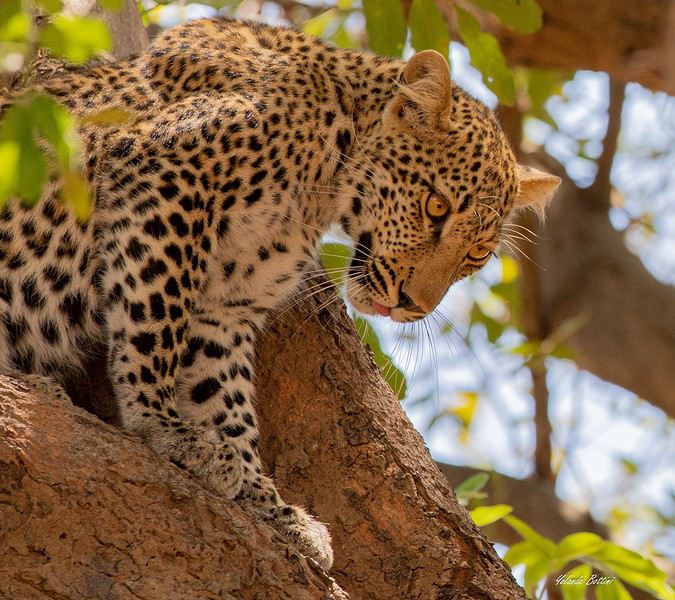
En avril dernier, à la suite de Régis puis de Claire, nous avions partagé sur ce forum notre pérégrination atypique au Kenya dans la réserve du Masaï-Mara. A l'issue de ce récit, nous avions imaginé repartir soit en randonnée sur les plus hautes terres d'Ethiopie (une dizaine de jours dans les montagnes du Simien lors d'un long séjour en 2009), soit de suivre le cours tranquille de la rivière Luangwa, dans sa partie sud (deux semaines à cheval sur octobre et novembre 2019). Dans le but d'animer les colonnes désertées de Voyage Forum en raison d'une sournoise pandémie, nous avons choisi l'Afrique Australe, précisant que ce texte, destiné à notre entourage ne correspond pas tout à fait à l'esprit "Carnets de Voyages" du site, vous nous en excuserez. Comme la précédente, cette escapade est l'une des rares que nous ayons réalisée avec une agence : y prendrait-on goût ou vieillirait-on ? Pour agrémenter ses longues pages d'écriture (une trentaine pour la partie South Luangwa N P et une dizaine pour la visite de Mosi-oa-Tunya et alentours), Yolande a sélectionné les photos les plus représentatives de cette vadrouille zambienne, dont cette magnifique panthère, rencontrée dès notre entrée dans le sanctuaire.
En route pour le rêve, seule frontière encore ouverte. Bien amicalement. Jety 34.
Impossible de joindre la photo (au secours !), ci-joint le message de VF (??????)
Transcanadienne à vélo entre Winnipeg et Sault-Sainte-Marie English translation pending
Bonjour à tous, et notamment aux locaux ...
Si tout va bien, en 2021 je traverserai le Canada à vélo, de Vancouver à Montréal (où j'ai de la famille). Je cherche l'itinéraire le meilleur en termes de sécurité et d'intérêt. Et cette longue portion (1400 kms) entre Winnipeg et Sault n'a pas la réputation d'être d'un intérêt majeur, sans même parler de la sécurité qui laisserait à désirer pour le cycliste. Pourtant, certains n'hésitent pas à s'y lancer, sans s'en plaindre outre mesure. D'autres au contraire font une incursion aux USA, en flirtant avec les frontières, cherchant les petites routes tranquilles quitte à faire des détours conséquents. J'hésite entre les 2 stratégies, et je suis en quête de témoignages ou d'avis. Y aurait-il des canadiens/québécois, ou des voyageurs qui pourraient m'apporter des éléments décisifs ? D'avance, je les en remercie !
PS : j'oubliais : Suivre le Grand Sentier entre ces 2 villes, est-ce jouable à vélo ?
Si tout va bien, en 2021 je traverserai le Canada à vélo, de Vancouver à Montréal (où j'ai de la famille). Je cherche l'itinéraire le meilleur en termes de sécurité et d'intérêt. Et cette longue portion (1400 kms) entre Winnipeg et Sault n'a pas la réputation d'être d'un intérêt majeur, sans même parler de la sécurité qui laisserait à désirer pour le cycliste. Pourtant, certains n'hésitent pas à s'y lancer, sans s'en plaindre outre mesure. D'autres au contraire font une incursion aux USA, en flirtant avec les frontières, cherchant les petites routes tranquilles quitte à faire des détours conséquents. J'hésite entre les 2 stratégies, et je suis en quête de témoignages ou d'avis. Y aurait-il des canadiens/québécois, ou des voyageurs qui pourraient m'apporter des éléments décisifs ? D'avance, je les en remercie !
PS : j'oubliais : Suivre le Grand Sentier entre ces 2 villes, est-ce jouable à vélo ?
Conseil pour taille cadre Surly LHT grande taille English translation pending
Bonjour à tous,
J’aimerai m’équiper d’un vélo me permettant un usage quotidien et des randonnées bivouac sur quelques jours comme j’aime le faire. J’ai également l’envie de faire le tour de la Méditerranée avec ce vélo. Je pense donc acheter un vélo robuste et fiable.
Mon choix s’oriente vers le Surly LHT, surtout que j’ai trouvé une belle occasion sur LBC. Je vais l’essayer mais vu la distance, j’aimerai bien avoir un avis avant. Le vélo est un cadre 62 roue 26’. J’ai peur que le cadre soit trop grand pour moi. Avez-vous des conseils à ce sujet ?
Je mesure 1m91 avec un entrejambe de …( je le mesure ce soir 😊) Le dernier vélo sur lequel je me suis senti à l’aise était un Trek FX3 XL
Dans l’attente de votre retour, belle journée à tous.
J’aimerai m’équiper d’un vélo me permettant un usage quotidien et des randonnées bivouac sur quelques jours comme j’aime le faire. J’ai également l’envie de faire le tour de la Méditerranée avec ce vélo. Je pense donc acheter un vélo robuste et fiable.
Mon choix s’oriente vers le Surly LHT, surtout que j’ai trouvé une belle occasion sur LBC. Je vais l’essayer mais vu la distance, j’aimerai bien avoir un avis avant. Le vélo est un cadre 62 roue 26’. J’ai peur que le cadre soit trop grand pour moi. Avez-vous des conseils à ce sujet ?
Je mesure 1m91 avec un entrejambe de …( je le mesure ce soir 😊) Le dernier vélo sur lequel je me suis senti à l’aise était un Trek FX3 XL
Dans l’attente de votre retour, belle journée à tous.
Tour du monde avec traversée de la Chine en 2022 (en camping-car) English translation pending
Bonjour à tous,
Les préparatifs de notre TDM (à deux continents près 😉) se poursuivent. nous sommes une famille de 5. 39 ans, 33 ans, 6 ans, 4 ans, 1 an au moment du départ. départ en juillet 2021, un retour à l'été 2023.
Après plusieurs tergiversations nous envisageons la traversée de la Chine depuis la Mongolie, vers le Vietnam. En consultant des blogs et sites de voyageurs, j'ai trouvé Navo tour. Des retours ? Des avis ? Si on le fait il sera temps dans quelques mois de lancer une bouteille à la mer pour faire un convoi... dans cette projection, on ferait la traversée en septembre/octobre 2022. Il en est de même pour le Myanmar...
Pour la thaïlande, avez vous des retours sur les entrées des campings car ?... C'est toujours la roulette russe (ou thaïlandaise en l’occurrence !) ? des postes frontières plus souples que d'autres ? des aides locales ?... C'est un point un peu névralgique qui pourrait pauser soucis en cas de blocage une fois sur place !
Le Pakistan.... Aucune infos fiables de trouvées... J'ai pu voir que certains parlaient d'une ouverture des frontières (automne 2019). Rien depuis début 2020, of course... L'idée est une entrée côté Lahore, sortie à taftan. Mais... niveau sécurité, cela m'inquiète un peu... Aventurier, oui, fou, un peu, suicidaire, que nenni !
A bientôt !
Les préparatifs de notre TDM (à deux continents près 😉) se poursuivent. nous sommes une famille de 5. 39 ans, 33 ans, 6 ans, 4 ans, 1 an au moment du départ. départ en juillet 2021, un retour à l'été 2023.
Après plusieurs tergiversations nous envisageons la traversée de la Chine depuis la Mongolie, vers le Vietnam. En consultant des blogs et sites de voyageurs, j'ai trouvé Navo tour. Des retours ? Des avis ? Si on le fait il sera temps dans quelques mois de lancer une bouteille à la mer pour faire un convoi... dans cette projection, on ferait la traversée en septembre/octobre 2022. Il en est de même pour le Myanmar...
Pour la thaïlande, avez vous des retours sur les entrées des campings car ?... C'est toujours la roulette russe (ou thaïlandaise en l’occurrence !) ? des postes frontières plus souples que d'autres ? des aides locales ?... C'est un point un peu névralgique qui pourrait pauser soucis en cas de blocage une fois sur place !
Le Pakistan.... Aucune infos fiables de trouvées... J'ai pu voir que certains parlaient d'une ouverture des frontières (automne 2019). Rien depuis début 2020, of course... L'idée est une entrée côté Lahore, sortie à taftan. Mais... niveau sécurité, cela m'inquiète un peu... Aventurier, oui, fou, un peu, suicidaire, que nenni !
A bientôt !