Results for "Jérusalem+|+38+>+19"
2014 results found.
France-Turquie à vélo: quoi mettre dans les sacoches? English translation pending
voila je viens d'acheter des sacoches pour un voyage qui devrais m'emmener a partir d'avril de france en turquie( et peut etre plus loin si jai le temps...)
mais qu'est ce que je dois mettre dedans au niveau mecanique/réparation (chaine de secours.....)?
et quels sont les objets que je ne dois pas oublié..?
au fait je compte voyager relativement leger...
merci tibo
ps : si vous avez d'autres conseils n'hesitez pas.....
au fait je compte voyager relativement leger...
merci tibo
ps : si vous avez d'autres conseils n'hesitez pas.....
Raid solo en Scandinavie English translation pending
 Faut-il avoir peur du Glouton?
  Un immense domaine
  Les sames peuple lappon
  Et le ciel alors? Notre but :
WILDNotre souhait est de vous présenter cette aventure humaine au plus près. Lors des ravitaillements et surtout lorsque les moyens de communication le permettront, Christophe mettra en lignes ses écrits, photographies, et ses films. Au retour le carnet de route, ainsi qu'un guide du projet seront édités sur divers supports (DVD, livre, affiches) et vous permettrons peut-être de préparer votre prochain raid !
Ainsi, nous espérons vous offrir une part de rêve et de plaisir.
WILDwildtrekker.com ouvrira par la suite d'autres routes dans le monde. Nous souhaitons prochainement établir des camps de base pour recevoir les passionnés de marche. Le Chili pourrait, entre autres, correspondre à nos futurs projets.
WILDSoyez donc les bienvenus sur notre site, aujourd'hui, fenêtre ouverte sur "Le Long Chemin Blanc" et découvrez la spectaculaire Scandinavie.
Bon vent à tous l'Equipe wildtrekker.com : : : : BIENVENUE : : : : Bienvenue à tous sur WildTrekker.com, site de rencontres et d'échanges entre Aventuriers du Monde.
NousDébut 2007 nous pourrons suivre pas à pas l'expédition en Scandinavie de Christophe Castillon.
Le point de départ : Tanndalen, en Suède jusqu'à Nordkapp en Norvège. Une marche en solitaire de 2000 km, où Chris vous fera découvrir, entre autre, la traversée du Jämtland (Suède), une partie peu empruntée de la Kungsleden (Piste Royale suédoise) et la Laponie.
Vous pourrez suivre, au fur et à mesure, l'avancée de cette fantastique aventure sportive, vue depuis le terrain, avec le Carnet de Route et le Wildblog.
Dès son retour de Scandinavie, vous pourrez continuer à vivre cette aventure en images (films, photos) et par écrit puisqu' un livre est en préparation.
WildTrekker.com, c'est aussi d'autres récits, ceux d' expéditions de Grands Aventuriers tels que Philippe Sauve, Michel Goudal, Madhi, Richard, Yoann et tant d'autres. Tous ont un point commun: l' aventure Humaine! : : : : LE PROJET : : : : Janvier 2007 -- Expédition à pied en solitaire: Tandalen-Nordkapp
NousOutre le fait de réunir et de mettre en relations Marcheurs, Aventuriers du Monde entier, le projet est aussi une aventure humaine. WildTrekker.com est associé à AIDES dans sa lutte contre la maladie du sida. : : : : LES NEWS : : : : Le nouveau WildTrekker.com est arrivé!
Notre site est quasiment fini. En attendant la prochaine mise en ligne de notre WildBlog, nous vous souhaitons Bon Surf sur WildTrekker.com! L'équipe de WildTrekker.com Philippe Sauve, Parrain officiel de WildTrekker.com!
C'est officiel, depuis septembre 2006, Philippe Sauve est le Parrain officiel de WildTrekker.com et de l'expédition "Le Long Chemin". : : : : LES WILDINTERVIEWS : : : : Retrouvez les interviews d'aventuriers du monde: les WILDPEOPLE. Présentation:
Et le ciel alors? Notre but :
WILDNotre souhait est de vous présenter cette aventure humaine au plus près. Lors des ravitaillements et surtout lorsque les moyens de communication le permettront, Christophe mettra en lignes ses écrits, photographies, et ses films. Au retour le carnet de route, ainsi qu'un guide du projet seront édités sur divers supports (DVD, livre, affiches) et vous permettrons peut-être de préparer votre prochain raid !
Ainsi, nous espérons vous offrir une part de rêve et de plaisir.
WILDwildtrekker.com ouvrira par la suite d'autres routes dans le monde. Nous souhaitons prochainement établir des camps de base pour recevoir les passionnés de marche. Le Chili pourrait, entre autres, correspondre à nos futurs projets.
WILDSoyez donc les bienvenus sur notre site, aujourd'hui, fenêtre ouverte sur "Le Long Chemin Blanc" et découvrez la spectaculaire Scandinavie.
Bon vent à tous l'Equipe wildtrekker.com : : : : BIENVENUE : : : : Bienvenue à tous sur WildTrekker.com, site de rencontres et d'échanges entre Aventuriers du Monde.
NousDébut 2007 nous pourrons suivre pas à pas l'expédition en Scandinavie de Christophe Castillon.
Le point de départ : Tanndalen, en Suède jusqu'à Nordkapp en Norvège. Une marche en solitaire de 2000 km, où Chris vous fera découvrir, entre autre, la traversée du Jämtland (Suède), une partie peu empruntée de la Kungsleden (Piste Royale suédoise) et la Laponie.
Vous pourrez suivre, au fur et à mesure, l'avancée de cette fantastique aventure sportive, vue depuis le terrain, avec le Carnet de Route et le Wildblog.
Dès son retour de Scandinavie, vous pourrez continuer à vivre cette aventure en images (films, photos) et par écrit puisqu' un livre est en préparation.
WildTrekker.com, c'est aussi d'autres récits, ceux d' expéditions de Grands Aventuriers tels que Philippe Sauve, Michel Goudal, Madhi, Richard, Yoann et tant d'autres. Tous ont un point commun: l' aventure Humaine! : : : : LE PROJET : : : : Janvier 2007 -- Expédition à pied en solitaire: Tandalen-Nordkapp
NousOutre le fait de réunir et de mettre en relations Marcheurs, Aventuriers du Monde entier, le projet est aussi une aventure humaine. WildTrekker.com est associé à AIDES dans sa lutte contre la maladie du sida. : : : : LES NEWS : : : : Le nouveau WildTrekker.com est arrivé!
Notre site est quasiment fini. En attendant la prochaine mise en ligne de notre WildBlog, nous vous souhaitons Bon Surf sur WildTrekker.com! L'équipe de WildTrekker.com Philippe Sauve, Parrain officiel de WildTrekker.com!
C'est officiel, depuis septembre 2006, Philippe Sauve est le Parrain officiel de WildTrekker.com et de l'expédition "Le Long Chemin". : : : : LES WILDINTERVIEWS : : : : Retrouvez les interviews d'aventuriers du monde: les WILDPEOPLE. Présentation:  En Avant-Première Philippe Sauve: 3800km sur la Lena en canoë: NousPhilippe Sauve, c'est d'abord la générosité et la main tendue vers les autres ! Notre premier contact fût pour lui demander des infos concernant une piste que j'envisage de parcourir un jour. Ni une ni deux, le lendemain, Philippe répondait par mail.
Il est vrai qu'il n'en est plus à son premier coup d'essais. Sa dernière aventure, qu'il retrace dans son livre "Sibéria*", n'est autre que la traversée Sud/Nord de la Sibérie par le fleuve Lena. En raison du climat continental froid de cette région, une grande partie du fleuve est gelée plusieurs mois de l'année. Phillippe s'est donc embarqué pour un tracé à hauts risques, à bord d'un canoë en toile. Son objectif, ralier l'Artique depuis le lac Baïkal. Un exploit sportif innégalé, un défi que WildTrekker.com tient à saluer ! --> lire la suite >>
*Nominé pour le prix littéraire du FIDLAS Vallauris +Festival International de l'Aventure Sportive de Vallauris Golfe Juan+ (du 31 mai au 2 juin 2006)
En Avant-Première Philippe Sauve: 3800km sur la Lena en canoë: NousPhilippe Sauve, c'est d'abord la générosité et la main tendue vers les autres ! Notre premier contact fût pour lui demander des infos concernant une piste que j'envisage de parcourir un jour. Ni une ni deux, le lendemain, Philippe répondait par mail.
Il est vrai qu'il n'en est plus à son premier coup d'essais. Sa dernière aventure, qu'il retrace dans son livre "Sibéria*", n'est autre que la traversée Sud/Nord de la Sibérie par le fleuve Lena. En raison du climat continental froid de cette région, une grande partie du fleuve est gelée plusieurs mois de l'année. Phillippe s'est donc embarqué pour un tracé à hauts risques, à bord d'un canoë en toile. Son objectif, ralier l'Artique depuis le lac Baïkal. Un exploit sportif innégalé, un défi que WildTrekker.com tient à saluer ! --> lire la suite >>
*Nominé pour le prix littéraire du FIDLAS Vallauris +Festival International de l'Aventure Sportive de Vallauris Golfe Juan+ (du 31 mai au 2 juin 2006)  L'extraordinaire vie de Michel Goudal: NousPlus un personnage est riche en aventures et plus son portrait est difficile à réaliser. Comment parler d'un tel homme?
Michel Goudal avec ses 43 expéditions polaires, est un expert des choses impossibles. Il a travaillé avec les plus grands explorateurs que compte notre Planète: le Commandant Jacques Cousteau, Jean-loup Etienne, Paul Emile Victor, Jean Malaurie et tant d'autres. --> lire la suite >>
L'extraordinaire vie de Michel Goudal: NousPlus un personnage est riche en aventures et plus son portrait est difficile à réaliser. Comment parler d'un tel homme?
Michel Goudal avec ses 43 expéditions polaires, est un expert des choses impossibles. Il a travaillé avec les plus grands explorateurs que compte notre Planète: le Commandant Jacques Cousteau, Jean-loup Etienne, Paul Emile Victor, Jean Malaurie et tant d'autres. --> lire la suite >>  L'aventure humaine de Mahdi, Richard et Yoann: NousLeur projet: "ENSEMBLE" réunit trois personnes, de nationalité française, appartenant à trois confessions religieuses différentes: juive, chrétienne, musulmane. Une fraternité, une communion au-delà de leurs identités communautaires, une marche longue de 8000 kilomètres, de Jérusalem à Saint Jacques de Compostelle... --> lire la suite >>
Sécurité en Syrie et location de voiture English translation pending
🙂Bonjour à tous,
Nous envisageons de partir 10 jours en Syrie pendant les vacances de noël. L'idée est de louer une voiture à Damas et de se faire un circuit perso. Nous devons prendre nos billets d'avion aujourd'hui.
J'aimerais savoir ce qu'il en est de la sécurité pour les touristes en ce moment, quels sont les coins à éviter. Et aussi si c'est possible et pas trop dangereux de louer une voiture sur place et de se balader comme ça ? Faut il un permis international ou le permis français suffit il ?
merci beaucoup pour vos réponses rapides !
Nous envisageons de partir 10 jours en Syrie pendant les vacances de noël. L'idée est de louer une voiture à Damas et de se faire un circuit perso. Nous devons prendre nos billets d'avion aujourd'hui.
J'aimerais savoir ce qu'il en est de la sécurité pour les touristes en ce moment, quels sont les coins à éviter. Et aussi si c'est possible et pas trop dangereux de louer une voiture sur place et de se balader comme ça ? Faut il un permis international ou le permis français suffit il ?
merci beaucoup pour vos réponses rapides !
Tour du monde à pied et sans argent English translation pending
Bonjour à tous, si je vous parle d'un tour du monde ( ou bien une tres tres longue randonnée de plusieur mois ) à pied sans argent, qu'allez vous me repondre ? que cela releve de l'utopie, ou alors c'est faisable ?
quels conseils me proposer vous ?, merci pour de future reponse !😛
Suis-je la seule Française à vivre à Girona (Espagne)? English translation pending
Bonjour à tous !
Je suis arrivée à Girona depuis 1 semaine et j'aurrais bien aimé savoir s'il y a des francais par ici pour m'aider dans mes démarches de recherches d'emploi et autres...
Alors n'hésitez pas à me contacter si comme moi vous vivez ici !!!
Je suis arrivée à Girona depuis 1 semaine et j'aurrais bien aimé savoir s'il y a des francais par ici pour m'aider dans mes démarches de recherches d'emploi et autres...
Alors n'hésitez pas à me contacter si comme moi vous vivez ici !!!
Risques actuels d'un voyage en Israël? English translation pending
Bonjour,
je souhaiterais partir en Israel par le biais d'une association qui organise des chantiers de restauration du patrimoine à l'etranger. J'aimerais avoir l'avis de personnes qui ont deja voyagé en Israel ma destination serait la ville de Saint Jean d'Acre. Il faudrait pour cela que je passe par l'aeroport de Tel Aviv alors je ne sais pas trop si c'est un peu insouciant de partir en Israel ou pas. Merci a tous ceux qui pourront m'apporter des temoignages de leurs voyages...
De Dijon à Saint-Jacques-de-Compostelle English translation pending
Bonjour à toutes et à tous,
Je compte partir le 22 avril de Dijon pour me rendre à St Jacques par Le Puy en Velais, si j"ai réussi à trouver la doc sur le GR65 et lae chemin en espagne, je bloque sur la partie Dijon- Le Puy. Mon itinèraire étant le Gr 7 puis GR137, Gr131 GR 13 et enfin le GR3, je recherche surtout des renseignemenys sur les hebergements possibles sue ces diff"rents GR sachant que je privilègie les gîtes etapes avec restaurations le soir si possible.
D"avance merci à ceux qui voudront bien m'aider.
Premier voyage en France English translation pending
Bonjour,
Je suis québécoise et je vais en France à la fin septembre. Je participe à un projet de volontariat à l'étranger avec l'organisme Chantiers Jeunesse. Je pars deux semaines et demi. Mon Chantier aura lieu au Lac de Vassivière dans le Limousin. Je ferai environ 6 à 8 jours de bénévolat et le reste du temps j'aimerais voyager.
Alors, j'aimerais connaître les endroits que je dois voir absolument dans la région du Limousin ou ailleurs en France. Bref, les endroits à ne pas manquer, étant donné que mon séjour est court.
Aussi, pourriez-vous me dire où je pourrais me procurer l'horaire des trains, les trajets et les tarifs?
Merci d'avance😉
Gen23
Je suis québécoise et je vais en France à la fin septembre. Je participe à un projet de volontariat à l'étranger avec l'organisme Chantiers Jeunesse. Je pars deux semaines et demi. Mon Chantier aura lieu au Lac de Vassivière dans le Limousin. Je ferai environ 6 à 8 jours de bénévolat et le reste du temps j'aimerais voyager.
Alors, j'aimerais connaître les endroits que je dois voir absolument dans la région du Limousin ou ailleurs en France. Bref, les endroits à ne pas manquer, étant donné que mon séjour est court.
Aussi, pourriez-vous me dire où je pourrais me procurer l'horaire des trains, les trajets et les tarifs?
Merci d'avance😉
Gen23
Cherche carte des GR en France et Europe English translation pending
salut,
savez vous s'il existe une carte de france (ou encore mieux d'europe) des chemins de grandes randonees?
c'est juste pour avoir un appercu de ce qu'il est possible de faire comme rando longue distance.
ou si vous avez des idees de longues randos (2 ou 3 mois) en europe je suis preneur.
merci
savez vous s'il existe une carte de france (ou encore mieux d'europe) des chemins de grandes randonees?
c'est juste pour avoir un appercu de ce qu'il est possible de faire comme rando longue distance.
ou si vous avez des idees de longues randos (2 ou 3 mois) en europe je suis preneur.
merci
Sécurité au sahara algérien English translation pending
Bonjour
J'envisage de faire un trek au mois de novembre dans le Sahara (Tassili Najjer) avec un voyagiste (formule tout compris encadrée par des touaregs chameliers) . J'hésite quand même un peu à m'inscrire en raison des troubles dans cette région (attaques de touristes en 4x4 en 2003, agressions de groupes en mars 2004) . Pourtant la saison redémarre avec des vols directs sur Djanet à partir de la fin octobre. Quelqu'un est il renseigné sur la situation actuelle ? les touaregs ont-ils pris des mesures pour assurer la protection des groupes de touristes ?
Merci de votre réponse .
J'envisage de faire un trek au mois de novembre dans le Sahara (Tassili Najjer) avec un voyagiste (formule tout compris encadrée par des touaregs chameliers) . J'hésite quand même un peu à m'inscrire en raison des troubles dans cette région (attaques de touristes en 4x4 en 2003, agressions de groupes en mars 2004) . Pourtant la saison redémarre avec des vols directs sur Djanet à partir de la fin octobre. Quelqu'un est il renseigné sur la situation actuelle ? les touaregs ont-ils pris des mesures pour assurer la protection des groupes de touristes ?
Merci de votre réponse .
Vos impressions d'Israël English translation pending
Bonjour! Quelqu'un a deja ete en Israel? Quelles sont vos impressions. Que pensez-vous de Tel Aviv? Est-ce que c'est cher? Des suggestions?
:)
Merci beaucoup!
:)
:)
Merci beaucoup!
:)
From Avignon to Casamance Without Flying
Hi there,
Last February, I made a trip using "public transport" from France to southern Senegal via Spain, Morocco, Western Sahara, and Mauritania.
It’s a journey of about 5,000 km, where I took trains (as far as Marrakech), ferries (to cross Gibraltar and then to reach Casamance from Dakar), and mostly buses on the long desert straightaways. I hadn’t planned any stops in advance or booked any hotels, except for the very first train to Spain, which left plenty of room for the unexpected. Why travel by land and sea? In recent years, flight-free travel has been gaining popularity. On social media, posts explaining how to cross Europe by train as quickly as possible go viral. Traveling without flying—and making sure people know about it—has become a great way to earn a badge of eco-responsibility: an essential totem for anyone wanting to prove both their dedication to the ecological cause and the wisdom of slow travel. I haven’t flown in years, and this journey to West Africa could easily be filed under "responsible travel." But it wouldn’t be honest to say that: in reality, it wasn’t really my aversion to flying that motivated this long trek. I see overland travel primarily as a way to experience the world’s geography at a grounded, earthly pace—the pace of the locals. Besides, I’ll be flying back, which disqualifies any claim to being a model of sustainability. So no eco-badge, and no adventurer’s badge either: you won’t find any heroic tales of camel rides in lost lands or mineral train wagons in this account (popular with influencers, the Mauritania iron ore train now attracts tourists from all over the world, turning "the experience" into something you "have to do at least once in your life"). This five-part story, written on the road, has no other ambition than to recount a journey through places and people, and to share the thoughts they inspire in me. As simply and, I hope, as humbly as possible.
I’m posting the episodes here, which you can also find on my blog (with more photos) at the following links:
Episode 1: Spain, from Avignon to Algeciras
Episode 2: Morocco, from Tangier to Tarfaya
Episode 3: Western Sahara, from Tarfaya to Guerguerat
Episode 4: Mauritania, from Guerguerat to Nouakchott
Episode 5: Senegal, from Rosso to Saloulou
To help those who might want to make the same trip, I’ve also put together a summary of the route with recommendations—you can read it at the end of the story and on the blog: From France to Senegal Without Flying: Route and Itinerary Recommendations
Happy reading, and safe travels!
Last February, I made a trip using "public transport" from France to southern Senegal via Spain, Morocco, Western Sahara, and Mauritania.
It’s a journey of about 5,000 km, where I took trains (as far as Marrakech), ferries (to cross Gibraltar and then to reach Casamance from Dakar), and mostly buses on the long desert straightaways. I hadn’t planned any stops in advance or booked any hotels, except for the very first train to Spain, which left plenty of room for the unexpected. Why travel by land and sea? In recent years, flight-free travel has been gaining popularity. On social media, posts explaining how to cross Europe by train as quickly as possible go viral. Traveling without flying—and making sure people know about it—has become a great way to earn a badge of eco-responsibility: an essential totem for anyone wanting to prove both their dedication to the ecological cause and the wisdom of slow travel. I haven’t flown in years, and this journey to West Africa could easily be filed under "responsible travel." But it wouldn’t be honest to say that: in reality, it wasn’t really my aversion to flying that motivated this long trek. I see overland travel primarily as a way to experience the world’s geography at a grounded, earthly pace—the pace of the locals. Besides, I’ll be flying back, which disqualifies any claim to being a model of sustainability. So no eco-badge, and no adventurer’s badge either: you won’t find any heroic tales of camel rides in lost lands or mineral train wagons in this account (popular with influencers, the Mauritania iron ore train now attracts tourists from all over the world, turning "the experience" into something you "have to do at least once in your life"). This five-part story, written on the road, has no other ambition than to recount a journey through places and people, and to share the thoughts they inspire in me. As simply and, I hope, as humbly as possible.
I’m posting the episodes here, which you can also find on my blog (with more photos) at the following links:
Episode 1: Spain, from Avignon to Algeciras
Episode 2: Morocco, from Tangier to Tarfaya
Episode 3: Western Sahara, from Tarfaya to Guerguerat
Episode 4: Mauritania, from Guerguerat to Nouakchott
Episode 5: Senegal, from Rosso to Saloulou
To help those who might want to make the same trip, I’ve also put together a summary of the route with recommendations—you can read it at the end of the story and on the blog: From France to Senegal Without Flying: Route and Itinerary Recommendations
Happy reading, and safe travels!
Societal Evolution
Hello everyone,
It’s something we often notice in this forum—and many others—this behavioral shift.
A long-time member, or even a new one, asks a question. They get one or more answers, some brief, some detailed, and then... nothing???
Not even a simple thank you!!!
From what I’ve gathered, if the answers don’t align with what they wanted to hear, it seems natural for the asker to just disappear!! 😕 Unless—(and I fear this is the case)—basic politeness is no longer part of our society????
Please forgive my little rant.
Wishing everyone all the best. Cheers,
Puma2A

...
It’s something we often notice in this forum—and many others—this behavioral shift.
A long-time member, or even a new one, asks a question. They get one or more answers, some brief, some detailed, and then... nothing???
Not even a simple thank you!!!
From what I’ve gathered, if the answers don’t align with what they wanted to hear, it seems natural for the asker to just disappear!! 😕 Unless—(and I fear this is the case)—basic politeness is no longer part of our society????
Please forgive my little rant.
Wishing everyone all the best. Cheers,
Puma2A
...
Havana, Cuba / January 2026
I got into music with the will
To light up many hearths like Che could do,
To circulate ideas, to advance utopia
Alternating barricades, sharp thought, and poetry.
Mc Solaar, Guérilla
Subscribing without a fight to the slightest line of my itinerary sometimes feels like an illusion. Because there are countries where, despite the fever and enthusiasm, despite the triumphant revolution, certain elements block my path. And if I had planned, for F. and me, a beautiful ascent up Tabouret Hill (Loma del Taburete, 453m), it was without accounting for vegetation as dense as it was thorny, which barred our way after just a few quarters of an hour of walking. Exhausted, I had to face the facts: we wouldn’t go any further. I needed to come up with some kind of Plan B.
But what is this country, an unwitting laboratory of the worst that white civilization has done during its reign? What is this magnificent place—yet another—entrusted to the care of oblivion, just 150 km from the land of freedom? According to Donald Trump, a country supporting terrorism; according to the locals, the vast battlefield of 20th-century ideologies; according to the average tourist, a hot country, a beautiful country, a country where the last illusions of a lost paradise are dying.
On the other side of Havana Bay, we love that statue of Christ blessing the city. There’s something gentle, soothing, in that patriarchal gesture. You’d almost be tempted to forget that at the dawn of the 16th century, those who claimed to represent the Church had no scruples about eradicating the Ciboney and Taíno populations. Worse, you’ll find magnificent this cathedral dedicated to the Virgin Mary, right in the heart of the old city. Under the guise of a civilizing necessity, Havana became, like so many other places, the gilded seat of European pretensions, at the expense of local populations doomed to extermination, then enslaved populations—more or less indigenous—who, you can imagine, didn’t often set foot in this holy place.
Lost in my thoughts, I try to push through this tangled vegetation. Nature reclaims its rights; nature abhors a vacuum. Yes, the well-trodden path of revolution couldn’t stay free of weeds! The road is buried. We give up and turn back, until that fork I’d noted before leaving, which would let us reach the top of the hill by skirting its northern slope.
So the white man arrives, settles, and gets rid of everything that bothers him. He has two unstoppable forces at his disposal: gunpowder and the spiritual certainty of being on the side of an all-powerful god. While the first gives him an unmatched material advantage over his new enemy, the second lets him use the first without feeling too guilty. That’s the magic of this supreme Church: it condemns all forms of pleasure—calling them impurity—while promoting plunder and crime under the cover of evangelization.
Walking through the city, you find a bit of Algiers, except that here, the decay is almost irreversible. You feel the splendor of the past, a disconcerting image of all vanity, from an era when men knew how to build beauty—especially if they didn’t have to share it. We’ll debate the benefits of colonialism for a long time, while glossing over the fact that those benefits often stopped at the city limits, limits all too obvious to the indigenous people. Havana isn’t just one or a few buildings; it’s an impressive collection of works of art built one after another, in what I think was a spirit of healthy competition. Yes, you find Algiers in this exuberance. As if these distant cities were the receptacle of everything that was best in the lands of origin. Atlantes and lintels, golds, blues, ogives, and monumental windows—exceptional architecture in an exceptional place.
Some streets are clean, swept with care; others are not, scattered here and there with potholes filled with water. A rather persistent smell of urine invades us regularly. We move on. And we look up: Havana is visited with your nose in the air. Because the beauty is truly up there, on those magnificent balconies and terracotta arches. Also because it’s not impossible that a piece of that balcony might suddenly detach, hurling our ends into an overseas tragedy we’d rather avoid. On the ground, here and there, rubble. Inexorably, this city is returning to dust.
My Plan B turns out to be no more successful than the first attempt. After a cheerful progression of a few hundred meters, same outcome, same struggle—the vegetation opposes any revolution: impossible to go around the hill! Once again, we have to turn back. We’ll try Plan C. I reassure myself by convincing myself to stay in the logic of this country: Cuba has been searching for itself for five centuries.
Coffee, tobacco, and sugarcane—the green gold of the colonies—so that money could flow and Europe could enjoy itself. Cuba’s history isn’t original. In reality, all the hot lands at these latitudes suffer the same fate: to serve the white man. While waiting for the awakening of consciences, UN Resolution 1514 and more or less affirmed revolutionary desires. Except that—and this reflection is just my own—if the awakening of consciences and the revolutionary will don’t play into what Resolution 1514 hides, there’s a good chance the said state will become a pariah. Those who don’t follow the American doctrine risk a lot; those who decide to follow Moscow risk everything. Independence was only the barely discreet instrument of American views. Patrice Lumumba will gladly enlighten us on the subject.
Turning back is good. Setting up Plan C is better. I won’t deviate from my goal: we will reach the top of Tabouret, whatever the cost! Near a small country road, I hesitate to change the program. Time is ticking—is it really reasonable to attempt the ascent? Then a tricycle taxi appears, a kind of tuk-tuk powered by an electric moped. I take it as a sign from fate, and we board for the starting point of Plan C.
In Cuba, even before Resolution 1514, independence was assured by a pawn of the United States, Fulgencio Batista. There’s no need to go over the whole history here; we’ll just remember that if you know how to give without counting to your former masters, you can enjoy a facade of freedom. Fidel Castro, on the other hand, didn’t know how to give. It never even occurred to him. That’s why the United States harbors such terrible hatred for this rebellious state, opposed to capitalist values and political prostitution. From there to slowly killing its people for nearly seventy years, one can legitimately cry injustice. But there are other priorities. Oh yes! Greenland...
Do Cubans eat their fill? Does seeing overweight people mean opulence? Food grows, no doubt about it. The soil is fertile, the climate favorable. No, what shocks here is the absolute precarity, the feeling of a people living in survival mode, and the decay of both goods and hope. Where to go? What’s the point? The stubbornness of the United States in wanting to impose its views on the Cuban government is felt much more by an overwhelmed people than by those few elites—caricatures of communism—who instill their vision of happiness with a crowbar. The embargo imposed in 1960; the false-flag attacks—American planes flying the colors of the Cuban revolution during the Bay of Pigs invasion in 1961—the exasperation of placing Cuba on the list of countries supporting terrorism. More recently, Donald Trump decided to heavily tax countries supplying Cuba with fuel. The last time I saw such long lines near gas stations was during my first trip to Romania... in 1991. It’s not for me to judge whether Raúl and his clique are playing fair by thumbing their noses at the West. I don’t hold the ins and outs of this war of egos that keeps the world’s great powers awake. I only caught a glimpse of the poverty of an island in 2026, while we in Europe are buried under an avalanche of the useless and superficial.
At the start of the San Juan baths, we find the trailhead. It climbs steeply. But the weather is relatively mild, thanks to a cold wave hitting higher up in the United States. Dallas is under snow; we’re walking in 16°C, a stroke of luck. We climb over rocks, under fairly decent vegetation, sometimes low but passable. And we succeed in the ascent in an hour. Up there, the top of the hill is somewhat maintained, at a minimum, but maintained, as if to honor Che through an awful monument erected in his glory—a stubborn specimen from those years when good taste was inversely proportional to the delusional ideas of those being honored. Birds of prey (raptors?) circle overhead; the monument is dying, crumbling, falling into ruin. *Hasta siempre*—forever—will be for the words. Nature, erosion, life itself will have the last word over all revolutions.
Back at the foot of the hill, just before a memorable swim, we talk with a family living there in miserable shacks whose stability wasn’t unlike that of the Leaning Tower of Pisa. The grandmother holds an animal, a rodent, by its feet. The grandfather has just killed it; she’s plucking its fur. A few steps away, water boils in a pot. She plunges the beast into the container. Tonight, the family will eat ragondin stew. Further on, another shack where, in a disorder rivaling the filth, a mother breastfeeds while sitting on the edge of a bed. Then, on the way down, we’ll meet a middle-aged man carrying a large jerrycan of water on his shoulder. Are these people happy here, far from the cities and their stakes? Is it too much to ask that they at least have access to electricity, running water, and decent, safe housing?
Outside the old city, Havana reveals wide avenues serving imposing institutions here and there. But whether in the colorful alleys of the old town or on the majestic and austere Plaza de la Revolución, the same feeling moves me: sadness. Seeing that only chaos has come from ideas crushes me. We praise, we sing the revolution—above all, we impose it in people’s minds as a necessity, when it’s nothing of the sort. Revolution is just the fruit of a few tortured minds who, once in power, do nothing better than all those before them. Enjoy power. Impose their views. It’s just a matter of color. Fidel saw red and knew how to persuade—or silence forever—his many detractors. The West sees everything in white, through the prism of human rights, and also knows how to persuade and silence its slightest detractors forever.
Paradoxically, Cuba survives largely thanks to tourism, a key element—let’s not be afraid to say it—of capitalism. And when a few players pick up the crumbs from transactions, the lion’s share and the foreign currency go to the government. So we won’t go to Varadero, the high place of relaxation overrun by Canadians. Instead, we’ll limit ourselves to crossing the ocean 30 minutes from the capital, at Santa María del Mar, to get an idea of cheaper tourism and to splash around for a few minutes in turquoise water invaded by sargassum. At the heart of the tourist season, we’ll meet few people. Like Havana, and according to its inhabitants, the high season is rather dead. But we won’t have come for nothing: we particularly love this return where, feverish, the taxi driver pushes his Moskvitch 2140 to the max on the highway, singing karaoke versions of hits at the top of his lungs from an onboard DVD player. East/West, the culture clash with a hint of Latino.
It’s time to leave this country of resourcefulness where extremes are very present. We’re leaving a 5-star hotel in front of yet another crumbling building. We’ve known restaurants at 40,000 pesos while in the street people eat for 400. We’ve seen those countless cars from another era and another culture—Pontiac, Lada, Chevrolet, Moskvitch—being overtaken by gleaming Mercedes and other Porsche Cayennes, the prerogative—if it still needed to be demonstrated—of the newly rich in search of recognition. Boarding the plane, we also understand that we’re not just traveling with tourists: there’s undoubtedly a rich and prosperous diaspora, just as there are relatively wealthy Cubans—well, wealthy enough to travel comfortably in the front of the aircraft. Meanwhile, on all the country’s roads, other Cubans try hitchhiking, their wives and children perched on a suitcase by the roadside. The father holds out his arm and holds a few bills in his hand like a card game. Where are they going? Who will pick them up?
Behind me, the gold of the Capitol. I’m told this gold comes from Russia. Like Marx and Lenin’s smoky theories? Like Stalin’s subtle and delicate paternalism? Let’s bet that, like the other buildings crumbling around it, the Capitol will also collapse one day, to avenge the Indians who perished from the diseases and guns of the whites, to avenge the Africans who obliterated their lives so Europeans could enjoy themselves, finally, to avenge all this abandoned people, left to the arbitrariness of democratic or non-democratic elections.
A sign in the street: We understand history. This is the revolution! We understand history. That’s the revolution.
No comment.
Subscribing without a fight to the slightest line of my itinerary sometimes feels like an illusion. Because there are countries where, despite the fever and enthusiasm, despite the triumphant revolution, certain elements block my path. And if I had planned, for F. and me, a beautiful ascent up Tabouret Hill (Loma del Taburete, 453m), it was without accounting for vegetation as dense as it was thorny, which barred our way after just a few quarters of an hour of walking. Exhausted, I had to face the facts: we wouldn’t go any further. I needed to come up with some kind of Plan B.
But what is this country, an unwitting laboratory of the worst that white civilization has done during its reign? What is this magnificent place—yet another—entrusted to the care of oblivion, just 150 km from the land of freedom? According to Donald Trump, a country supporting terrorism; according to the locals, the vast battlefield of 20th-century ideologies; according to the average tourist, a hot country, a beautiful country, a country where the last illusions of a lost paradise are dying.
On the other side of Havana Bay, we love that statue of Christ blessing the city. There’s something gentle, soothing, in that patriarchal gesture. You’d almost be tempted to forget that at the dawn of the 16th century, those who claimed to represent the Church had no scruples about eradicating the Ciboney and Taíno populations. Worse, you’ll find magnificent this cathedral dedicated to the Virgin Mary, right in the heart of the old city. Under the guise of a civilizing necessity, Havana became, like so many other places, the gilded seat of European pretensions, at the expense of local populations doomed to extermination, then enslaved populations—more or less indigenous—who, you can imagine, didn’t often set foot in this holy place.
Lost in my thoughts, I try to push through this tangled vegetation. Nature reclaims its rights; nature abhors a vacuum. Yes, the well-trodden path of revolution couldn’t stay free of weeds! The road is buried. We give up and turn back, until that fork I’d noted before leaving, which would let us reach the top of the hill by skirting its northern slope.
So the white man arrives, settles, and gets rid of everything that bothers him. He has two unstoppable forces at his disposal: gunpowder and the spiritual certainty of being on the side of an all-powerful god. While the first gives him an unmatched material advantage over his new enemy, the second lets him use the first without feeling too guilty. That’s the magic of this supreme Church: it condemns all forms of pleasure—calling them impurity—while promoting plunder and crime under the cover of evangelization.
Walking through the city, you find a bit of Algiers, except that here, the decay is almost irreversible. You feel the splendor of the past, a disconcerting image of all vanity, from an era when men knew how to build beauty—especially if they didn’t have to share it. We’ll debate the benefits of colonialism for a long time, while glossing over the fact that those benefits often stopped at the city limits, limits all too obvious to the indigenous people. Havana isn’t just one or a few buildings; it’s an impressive collection of works of art built one after another, in what I think was a spirit of healthy competition. Yes, you find Algiers in this exuberance. As if these distant cities were the receptacle of everything that was best in the lands of origin. Atlantes and lintels, golds, blues, ogives, and monumental windows—exceptional architecture in an exceptional place.
Some streets are clean, swept with care; others are not, scattered here and there with potholes filled with water. A rather persistent smell of urine invades us regularly. We move on. And we look up: Havana is visited with your nose in the air. Because the beauty is truly up there, on those magnificent balconies and terracotta arches. Also because it’s not impossible that a piece of that balcony might suddenly detach, hurling our ends into an overseas tragedy we’d rather avoid. On the ground, here and there, rubble. Inexorably, this city is returning to dust.
My Plan B turns out to be no more successful than the first attempt. After a cheerful progression of a few hundred meters, same outcome, same struggle—the vegetation opposes any revolution: impossible to go around the hill! Once again, we have to turn back. We’ll try Plan C. I reassure myself by convincing myself to stay in the logic of this country: Cuba has been searching for itself for five centuries.
Coffee, tobacco, and sugarcane—the green gold of the colonies—so that money could flow and Europe could enjoy itself. Cuba’s history isn’t original. In reality, all the hot lands at these latitudes suffer the same fate: to serve the white man. While waiting for the awakening of consciences, UN Resolution 1514 and more or less affirmed revolutionary desires. Except that—and this reflection is just my own—if the awakening of consciences and the revolutionary will don’t play into what Resolution 1514 hides, there’s a good chance the said state will become a pariah. Those who don’t follow the American doctrine risk a lot; those who decide to follow Moscow risk everything. Independence was only the barely discreet instrument of American views. Patrice Lumumba will gladly enlighten us on the subject.
Turning back is good. Setting up Plan C is better. I won’t deviate from my goal: we will reach the top of Tabouret, whatever the cost! Near a small country road, I hesitate to change the program. Time is ticking—is it really reasonable to attempt the ascent? Then a tricycle taxi appears, a kind of tuk-tuk powered by an electric moped. I take it as a sign from fate, and we board for the starting point of Plan C.
In Cuba, even before Resolution 1514, independence was assured by a pawn of the United States, Fulgencio Batista. There’s no need to go over the whole history here; we’ll just remember that if you know how to give without counting to your former masters, you can enjoy a facade of freedom. Fidel Castro, on the other hand, didn’t know how to give. It never even occurred to him. That’s why the United States harbors such terrible hatred for this rebellious state, opposed to capitalist values and political prostitution. From there to slowly killing its people for nearly seventy years, one can legitimately cry injustice. But there are other priorities. Oh yes! Greenland...
Do Cubans eat their fill? Does seeing overweight people mean opulence? Food grows, no doubt about it. The soil is fertile, the climate favorable. No, what shocks here is the absolute precarity, the feeling of a people living in survival mode, and the decay of both goods and hope. Where to go? What’s the point? The stubbornness of the United States in wanting to impose its views on the Cuban government is felt much more by an overwhelmed people than by those few elites—caricatures of communism—who instill their vision of happiness with a crowbar. The embargo imposed in 1960; the false-flag attacks—American planes flying the colors of the Cuban revolution during the Bay of Pigs invasion in 1961—the exasperation of placing Cuba on the list of countries supporting terrorism. More recently, Donald Trump decided to heavily tax countries supplying Cuba with fuel. The last time I saw such long lines near gas stations was during my first trip to Romania... in 1991. It’s not for me to judge whether Raúl and his clique are playing fair by thumbing their noses at the West. I don’t hold the ins and outs of this war of egos that keeps the world’s great powers awake. I only caught a glimpse of the poverty of an island in 2026, while we in Europe are buried under an avalanche of the useless and superficial.
At the start of the San Juan baths, we find the trailhead. It climbs steeply. But the weather is relatively mild, thanks to a cold wave hitting higher up in the United States. Dallas is under snow; we’re walking in 16°C, a stroke of luck. We climb over rocks, under fairly decent vegetation, sometimes low but passable. And we succeed in the ascent in an hour. Up there, the top of the hill is somewhat maintained, at a minimum, but maintained, as if to honor Che through an awful monument erected in his glory—a stubborn specimen from those years when good taste was inversely proportional to the delusional ideas of those being honored. Birds of prey (raptors?) circle overhead; the monument is dying, crumbling, falling into ruin. *Hasta siempre*—forever—will be for the words. Nature, erosion, life itself will have the last word over all revolutions.
Back at the foot of the hill, just before a memorable swim, we talk with a family living there in miserable shacks whose stability wasn’t unlike that of the Leaning Tower of Pisa. The grandmother holds an animal, a rodent, by its feet. The grandfather has just killed it; she’s plucking its fur. A few steps away, water boils in a pot. She plunges the beast into the container. Tonight, the family will eat ragondin stew. Further on, another shack where, in a disorder rivaling the filth, a mother breastfeeds while sitting on the edge of a bed. Then, on the way down, we’ll meet a middle-aged man carrying a large jerrycan of water on his shoulder. Are these people happy here, far from the cities and their stakes? Is it too much to ask that they at least have access to electricity, running water, and decent, safe housing?
Outside the old city, Havana reveals wide avenues serving imposing institutions here and there. But whether in the colorful alleys of the old town or on the majestic and austere Plaza de la Revolución, the same feeling moves me: sadness. Seeing that only chaos has come from ideas crushes me. We praise, we sing the revolution—above all, we impose it in people’s minds as a necessity, when it’s nothing of the sort. Revolution is just the fruit of a few tortured minds who, once in power, do nothing better than all those before them. Enjoy power. Impose their views. It’s just a matter of color. Fidel saw red and knew how to persuade—or silence forever—his many detractors. The West sees everything in white, through the prism of human rights, and also knows how to persuade and silence its slightest detractors forever.
Paradoxically, Cuba survives largely thanks to tourism, a key element—let’s not be afraid to say it—of capitalism. And when a few players pick up the crumbs from transactions, the lion’s share and the foreign currency go to the government. So we won’t go to Varadero, the high place of relaxation overrun by Canadians. Instead, we’ll limit ourselves to crossing the ocean 30 minutes from the capital, at Santa María del Mar, to get an idea of cheaper tourism and to splash around for a few minutes in turquoise water invaded by sargassum. At the heart of the tourist season, we’ll meet few people. Like Havana, and according to its inhabitants, the high season is rather dead. But we won’t have come for nothing: we particularly love this return where, feverish, the taxi driver pushes his Moskvitch 2140 to the max on the highway, singing karaoke versions of hits at the top of his lungs from an onboard DVD player. East/West, the culture clash with a hint of Latino.
It’s time to leave this country of resourcefulness where extremes are very present. We’re leaving a 5-star hotel in front of yet another crumbling building. We’ve known restaurants at 40,000 pesos while in the street people eat for 400. We’ve seen those countless cars from another era and another culture—Pontiac, Lada, Chevrolet, Moskvitch—being overtaken by gleaming Mercedes and other Porsche Cayennes, the prerogative—if it still needed to be demonstrated—of the newly rich in search of recognition. Boarding the plane, we also understand that we’re not just traveling with tourists: there’s undoubtedly a rich and prosperous diaspora, just as there are relatively wealthy Cubans—well, wealthy enough to travel comfortably in the front of the aircraft. Meanwhile, on all the country’s roads, other Cubans try hitchhiking, their wives and children perched on a suitcase by the roadside. The father holds out his arm and holds a few bills in his hand like a card game. Where are they going? Who will pick them up?
Behind me, the gold of the Capitol. I’m told this gold comes from Russia. Like Marx and Lenin’s smoky theories? Like Stalin’s subtle and delicate paternalism? Let’s bet that, like the other buildings crumbling around it, the Capitol will also collapse one day, to avenge the Indians who perished from the diseases and guns of the whites, to avenge the Africans who obliterated their lives so Europeans could enjoy themselves, finally, to avenge all this abandoned people, left to the arbitrariness of democratic or non-democratic elections.
A sign in the street: We understand history. This is the revolution! We understand history. That’s the revolution.
No comment.
7 weeks and 150 years between us on a southern Morocco road trip
We arrive in the evening in Marrakesh, and a taxi arranged by our friendly Riad is waiting for us. The driver takes us to the door, where we’re briefly greeted by our hosts. The room is heated—phew—because it’s really cold on this January 17th for our arrival. Riad Alisma, where we’re staying for 2 nights. The next morning, it’s pouring rain when we wake up, but after a good breakfast, the rain has calmed down. Off we go to the medersa, which allows for a relatively sheltered visit. We’d visited this palace 15 years ago—it’s been renovated since then.
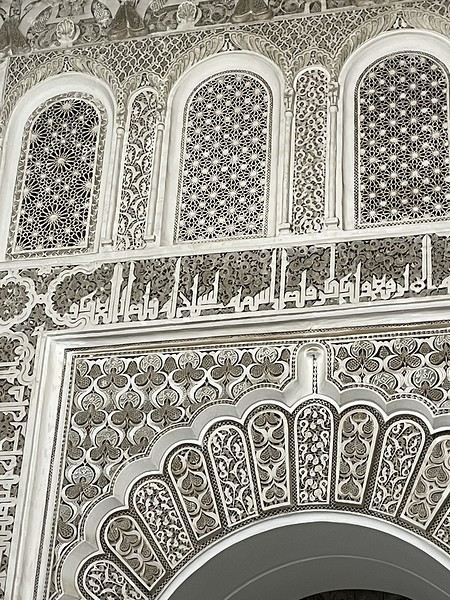
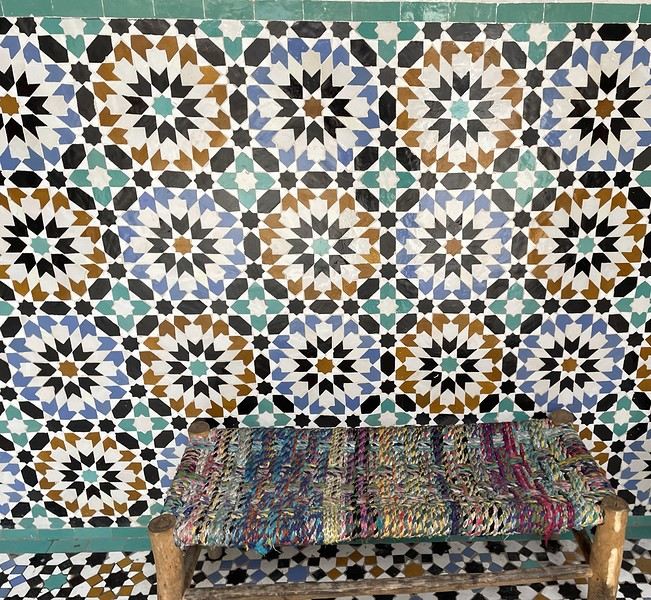
From there, without the rain, we wander aimlessly and eventually end up near the tanneries, but it’s Sunday, and there’s very little activity. Of course, we get hassled by a tout.
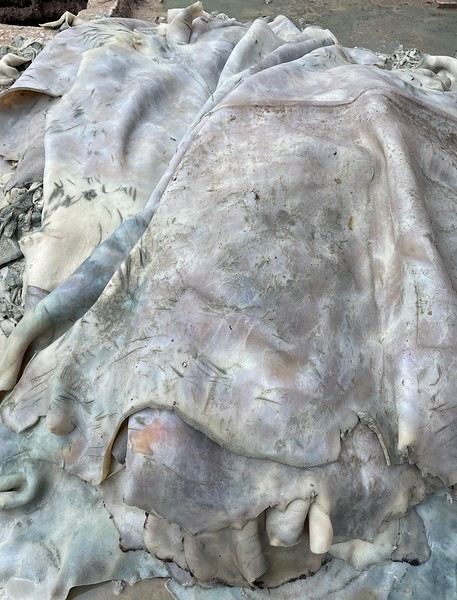
Here, the hides after being treated with lime—I love the colors.
We part ways a bit annoyed. He gets a little revenge by giving us bad directions, and we end up outside the city walls. We decide to take a taxi to the new modern art museum—60 dirhams for the 5 km, which is nothing when you think about it. That tout, who we didn’t ask for anything and made it clear we weren’t buying anything, dragged us into a shop supposedly only open that day and demanded 50 dirhams for his "services"! Let’s forget that bad moment and enjoy the exhibition at the MACAL.
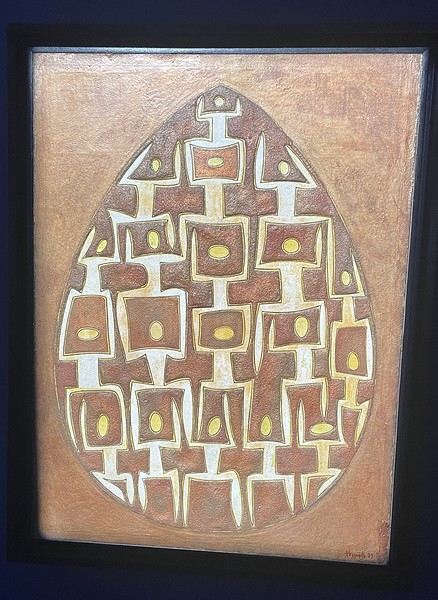
The taxi on the way back drops us off at Place des Ferblantiers, not far from our Riad. We’re a little peckish—it’s worth mentioning that at lunchtime, we only ate a plate of beans from a street vendor. So, we buy a bunch of little sweets, each more delicious than the last, at Ajar. We snack while sipping mint tea and watching life go by around us. A final visit to the Museum of Moroccan Cuisine on our way back helps us dodge a few more showers. Then it’s back to the Riad. The atmosphere in the city is heating up—it’s the AFCON final tonight. The temperatures, though? Not so much. We ordered a meal at the Riad, and it was a good call—not only was it really tasty, but the rain also picked up again. Our day in Marrakesh ends under the covers with a good book and some photo sorting. Still, we managed 10,750 steps. View of our Riad
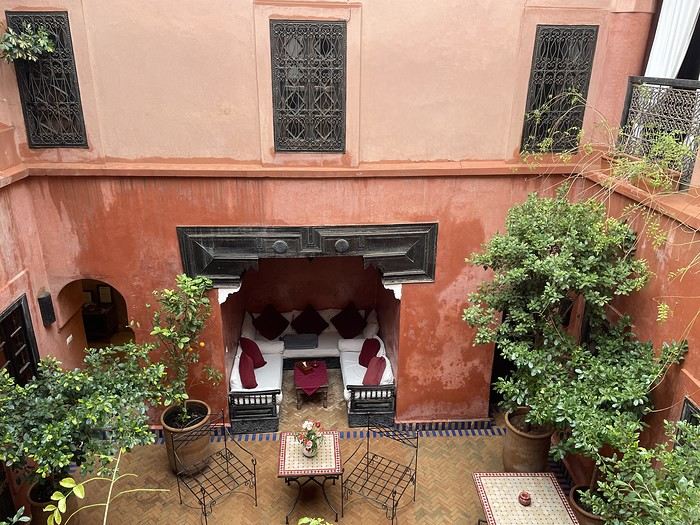
Tomorrow, we’ll pick up our rental car from Medloc and head to Essaouira.
From there, without the rain, we wander aimlessly and eventually end up near the tanneries, but it’s Sunday, and there’s very little activity. Of course, we get hassled by a tout.
Here, the hides after being treated with lime—I love the colors.
We part ways a bit annoyed. He gets a little revenge by giving us bad directions, and we end up outside the city walls. We decide to take a taxi to the new modern art museum—60 dirhams for the 5 km, which is nothing when you think about it. That tout, who we didn’t ask for anything and made it clear we weren’t buying anything, dragged us into a shop supposedly only open that day and demanded 50 dirhams for his "services"! Let’s forget that bad moment and enjoy the exhibition at the MACAL.
The taxi on the way back drops us off at Place des Ferblantiers, not far from our Riad. We’re a little peckish—it’s worth mentioning that at lunchtime, we only ate a plate of beans from a street vendor. So, we buy a bunch of little sweets, each more delicious than the last, at Ajar. We snack while sipping mint tea and watching life go by around us. A final visit to the Museum of Moroccan Cuisine on our way back helps us dodge a few more showers. Then it’s back to the Riad. The atmosphere in the city is heating up—it’s the AFCON final tonight. The temperatures, though? Not so much. We ordered a meal at the Riad, and it was a good call—not only was it really tasty, but the rain also picked up again. Our day in Marrakesh ends under the covers with a good book and some photo sorting. Still, we managed 10,750 steps. View of our Riad
Tomorrow, we’ll pick up our rental car from Medloc and head to Essaouira.
Bright red and a headache
Hello 🙂
I should be serving a warming drink to the participants in the discussion about gardens and parks that provide us with beautiful photos, I could mention the delicious buttery scent wafting from bakeries in the thread about returning to France, but my heart, its powerful pulse that nourishes my entire being, is elsewhere.
Dasht-e Lut, Yazd, Esfahan, Bam, Kerman, Qeshm, Hormuz—a melody, a prayer at the heart of desire.
A dream, an unattainable fantasy? No. Not anymore. A very serious Italian travel agency is organizing this trip for 6 people this winter. I’m signed up, I’m going, I’m living. Maybe.
"But you’re completely crazy!!!!"
I know... I know that every civilization, every society has a vital need to create scapegoats to define and justify itself, pathetically. And Iran is one of them, top of the list. I laugh or sigh, and it doesn’t bother me.
But that unchanging red, deep red and garnet, so beautiful in itself, in all the Western chancelleries repeats, whispers, shouts: don’t go, don’t go, don’t go, you’re putting yourself in danger and we can’t do anything for you. You’ll be turned into mere bargaining chips, into arguments for endless negotiations. Fear must be instilled, its power absolutely preserved, no concessions made to the enemy. The information (how many French hostages, real or fake, compared to the number of travelers?) is always lacking.
Traveling becomes a merciless confrontation between desire, the vital pulse, and anxiety, its ghosts.
Catherine
I should be serving a warming drink to the participants in the discussion about gardens and parks that provide us with beautiful photos, I could mention the delicious buttery scent wafting from bakeries in the thread about returning to France, but my heart, its powerful pulse that nourishes my entire being, is elsewhere.
Dasht-e Lut, Yazd, Esfahan, Bam, Kerman, Qeshm, Hormuz—a melody, a prayer at the heart of desire.
A dream, an unattainable fantasy? No. Not anymore. A very serious Italian travel agency is organizing this trip for 6 people this winter. I’m signed up, I’m going, I’m living. Maybe.
"But you’re completely crazy!!!!"
I know... I know that every civilization, every society has a vital need to create scapegoats to define and justify itself, pathetically. And Iran is one of them, top of the list. I laugh or sigh, and it doesn’t bother me.
But that unchanging red, deep red and garnet, so beautiful in itself, in all the Western chancelleries repeats, whispers, shouts: don’t go, don’t go, don’t go, you’re putting yourself in danger and we can’t do anything for you. You’ll be turned into mere bargaining chips, into arguments for endless negotiations. Fear must be instilled, its power absolutely preserved, no concessions made to the enemy. The information (how many French hostages, real or fake, compared to the number of travelers?) is always lacking.
Traveling becomes a merciless confrontation between desire, the vital pulse, and anxiety, its ghosts.
Catherine
Is crossing Iran to Pakistan safe?
Hi there,
We’d like to travel overland from Turkey to India in our converted van, but there are very few options these days. Crossing Iran seems risky and not particularly safe. Has anyone here done it? If so, which route did you take to minimize safety concerns?
Thanks for your replies, Julie 😎
We’d like to travel overland from Turkey to India in our converted van, but there are very few options these days. Crossing Iran seems risky and not particularly safe. Has anyone here done it? If so, which route did you take to minimize safety concerns?
Thanks for your replies, Julie 😎
AI, the Holy Grail of Travel and Travel Journals?
Three of our grandchildren came to spend the last weekend of the holidays at our house.
With her driver’s license just in hand, the oldest took her sister and a cousin along.
I was talking about VoyageForum, and the conversation turned to AI, which finds writing travel journals a breeze—churning out amazing ads for this or that country and even nudging tourists to visit one place over another.
Jules: "It’s crazy, you can plan and organize everything, then just add your photos and the AI’s text, and boom—you’ve got something great." Héloïse: "What a cheat for yourself and for others." (She’s so wise!) Gaïané: "Ugh, no more surprises. It even picks the restaurants—so lame."
I had this idea to stay on the theme of travel journals:
I found an excerpt from a book (I’ll let you guess the title and author—of course, the kids figured it out in two seconds with their phones), then I wrote my own version, and finally, the AI generated its own using a few keywords.
Here they are:
"We walked at dusk through the thick, dark forest. Sometimes, a clearing would reveal a dreamlike landscape. A magical world, far from humans. A world of frozen waterfalls, stiff fir trees, and sharp peaks slicing through the blinding whiteness of the air.
We gazed, dazzled, at the spectacle, imagining we’d left the human world behind and joined that of the spirits."
"For days, we walked through the half-darkness of dense, untouched forests, then suddenly, a clearing would unveil landscapes you only see in dreams. Sharp peaks piercing the sky, icy torrents, giant waterfalls—an entire fantastical world, blindingly white, rising above the dark line traced by the giant fir trees. We stared at this extraordinary sight, speechless, awestruck, ready to believe we’d reached the limits of the human world and stood at the threshold of the spirits’ realm."
"We walked through the mountain, wild and unyielding, its sharp peaks tearing the sky like honed blades. Giant waterfalls roared and foamed, as if the earth’s hidden forces were pouring out. Higher still, the blinding whiteness belonged to the world of spirits—capricious beings whispering to lost travelers. Faced with this silent vastness, we felt tiny, uninvited guests meditating on the invisible that dwells in these forbidden peaks."
And, amazingly, they unanimously agreed that the author’s excerpt was a thousand times more poetic. Héloïse, my history buff, said: "Nothing replaces the real travel experience." Jules said: "Yeah, but it does the job. Even if the excerpt is cool." And our oldest added: "It makes you want to go there—not at all like the other two versions. Sorry, Mamido."
And then, miracle—Jules asks: "Do you have the book? Can I borrow it?"
I’m so relieved—young people aren’t completely devoured by technology yet. And the forum will keep its charm and usefulness for a long time. Phew!
You agree, right?
Jules: "It’s crazy, you can plan and organize everything, then just add your photos and the AI’s text, and boom—you’ve got something great." Héloïse: "What a cheat for yourself and for others." (She’s so wise!) Gaïané: "Ugh, no more surprises. It even picks the restaurants—so lame."
I had this idea to stay on the theme of travel journals:
I found an excerpt from a book (I’ll let you guess the title and author—of course, the kids figured it out in two seconds with their phones), then I wrote my own version, and finally, the AI generated its own using a few keywords.
Here they are:
"We walked at dusk through the thick, dark forest. Sometimes, a clearing would reveal a dreamlike landscape. A magical world, far from humans. A world of frozen waterfalls, stiff fir trees, and sharp peaks slicing through the blinding whiteness of the air.
We gazed, dazzled, at the spectacle, imagining we’d left the human world behind and joined that of the spirits."
"For days, we walked through the half-darkness of dense, untouched forests, then suddenly, a clearing would unveil landscapes you only see in dreams. Sharp peaks piercing the sky, icy torrents, giant waterfalls—an entire fantastical world, blindingly white, rising above the dark line traced by the giant fir trees. We stared at this extraordinary sight, speechless, awestruck, ready to believe we’d reached the limits of the human world and stood at the threshold of the spirits’ realm."
"We walked through the mountain, wild and unyielding, its sharp peaks tearing the sky like honed blades. Giant waterfalls roared and foamed, as if the earth’s hidden forces were pouring out. Higher still, the blinding whiteness belonged to the world of spirits—capricious beings whispering to lost travelers. Faced with this silent vastness, we felt tiny, uninvited guests meditating on the invisible that dwells in these forbidden peaks."
And, amazingly, they unanimously agreed that the author’s excerpt was a thousand times more poetic. Héloïse, my history buff, said: "Nothing replaces the real travel experience." Jules said: "Yeah, but it does the job. Even if the excerpt is cool." And our oldest added: "It makes you want to go there—not at all like the other two versions. Sorry, Mamido."
And then, miracle—Jules asks: "Do you have the book? Can I borrow it?"
I’m so relieved—young people aren’t completely devoured by technology yet. And the forum will keep its charm and usefulness for a long time. Phew!
You agree, right?
Tuscany: Arezzo province and the Siena area
So happy the forum reopened last October!!!
I’ve started reading again (posts, travel journals) and chiming in on a few discussions. Now I’m stepping it up by writing a new travel journal—I’ve already posted a few between 2018 and 2020.
My latest trip was to Italy from August 27 to September 26, 2024. As the title says, it was a wander through Tuscany in parts of the region that aren’t the most visited. No Firenze-Siena-Pisa trilogy, no San Gimignano; there’ll be a quick detour into Siena, but I’ll skip the best-known sights. That choice, plus traveling in September, should help dodge overtourism. It worked out—crowds were light, sometimes very light, the whole way. Here’s the practical rundown: - a long trip outside peak season (ah, retirees!) - solo camping (caravan) - a mix of activities (hiking, mountain biking, sightseeing) in places that aren’t always packed with tourists. Still, I don’t feel like I ended up in some hidden-away spots. Not sure if this will draw any readers.
DAY 1: Tuesday, August 27, 2024 The heat was intense on the drive in across the plain; two big storms—more rain and hail than lightning and thunder—threw the weather off, the first near Imola, the second on the four-lane road up the Savio valley. I left the Cesena-Roma four-lane at the Verghereto exit and climbed up to Balze (1,100 meters). The campsite is even higher (1,200 meters), in the forest near the source of the Tevere (Tiber). Staying up here will cut down on driving for the first part of the trip: a route through the Appennino (Apennines) on the border between Toscana and Emilia-Romagna. The temperature was surprisingly mild for the altitude, the air thick with moisture by late afternoon. I drove back down from the campsite to Balze (2 km on the road) to grab groceries (it’s doable) and scout tomorrow’s hike. .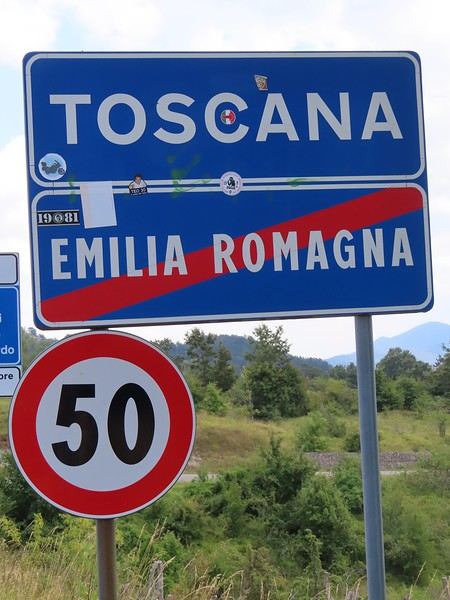
The endpoint of the planned hike is just a few meters from this sign (the trail crosses this road about 3 km from Balze). I realized Balze and the source of the Tevere (Tiber) are actually in Emilia-Romagna, not Toscana. I always thought the Tevere (Tiber), which flows toward Roma (Tyrrhenian side), started in Toscana! I’ll come back to this quirk in Day 3’s write-up.
My latest trip was to Italy from August 27 to September 26, 2024. As the title says, it was a wander through Tuscany in parts of the region that aren’t the most visited. No Firenze-Siena-Pisa trilogy, no San Gimignano; there’ll be a quick detour into Siena, but I’ll skip the best-known sights. That choice, plus traveling in September, should help dodge overtourism. It worked out—crowds were light, sometimes very light, the whole way. Here’s the practical rundown: - a long trip outside peak season (ah, retirees!) - solo camping (caravan) - a mix of activities (hiking, mountain biking, sightseeing) in places that aren’t always packed with tourists. Still, I don’t feel like I ended up in some hidden-away spots. Not sure if this will draw any readers.
DAY 1: Tuesday, August 27, 2024 The heat was intense on the drive in across the plain; two big storms—more rain and hail than lightning and thunder—threw the weather off, the first near Imola, the second on the four-lane road up the Savio valley. I left the Cesena-Roma four-lane at the Verghereto exit and climbed up to Balze (1,100 meters). The campsite is even higher (1,200 meters), in the forest near the source of the Tevere (Tiber). Staying up here will cut down on driving for the first part of the trip: a route through the Appennino (Apennines) on the border between Toscana and Emilia-Romagna. The temperature was surprisingly mild for the altitude, the air thick with moisture by late afternoon. I drove back down from the campsite to Balze (2 km on the road) to grab groceries (it’s doable) and scout tomorrow’s hike. .
The endpoint of the planned hike is just a few meters from this sign (the trail crosses this road about 3 km from Balze). I realized Balze and the source of the Tevere (Tiber) are actually in Emilia-Romagna, not Toscana. I always thought the Tevere (Tiber), which flows toward Roma (Tyrrhenian side), started in Toscana! I’ll come back to this quirk in Day 3’s write-up.
14-day road trip in the United States: Memphis, Nashville, Atlanta...
Hi there,
I know these aren’t the most popular destinations on the forum, but I thought I’d give it a shot.
I’d love to do a road trip loop next April, and I really want to visit Nashville and Memphis first.
Browsing the forum, I saw that Atlanta / Memphis / Nashville / Charlotte / Charleston / Savannah / Atlanta might be a good route. But I’m only planning to go for 14 days, and it seems like that might be too much. What do you think?
I mostly want to enjoy the music scene in the area and pass through the Smoky Mountains. I know I won’t have much time to stop for hiking, but oh well...
I’m saving Louisiana and New Orleans for another trip.
Thanks to anyone who can help me map out my route and make the most of this part of the U.S. that I don’t know at all yet.
Discussion sur le thème (concours septembre 2020): lieux, scènes de départ ou d'arrivée English translation pending
Rebonjour, 🙂
C'est ici que l'on discute , échange, sur le thème: lieux, scènes de départ ou d'arrivée.
Pour revenir au concours, c'est ici
Avis et conseils pour un premier séjour au Japon English translation pending
Bonjour à tous !
Logiquement, nous avons prévu de partir avec ma femme au Japon mi Mai 2021 (On verra si cela est possible étant donné le contexte actuel). J'essaye tant bien que mal de préparer un itinéraire sympathique mais cela s'avère beaucoup plus complexe que prévu étant donné le nombre de choses incroyables que ce pays propose. Sachant que nous sommes intéressés par pratiquement tout (ville, nature, gastronomie...) et surtout on aime mixer et varier les journées.
Honnêtement, les choix a réaliser sont compliqués. Etant donné que ça sera notre premier voyage au Japon, nous souhaitons faire les incontournables bien entendu (mais je sens bien qu'il va falloir choisir les incontournables des incontournables 😉 )
Du coup, je suis intéressé par vos avis et conseils concernant une première ébauche que j'ai prévu.
J0 : Départ de France pour Tokyo et arrivée en J1 tôt le matin J1 : Tokyo J2 : Tokyo J3 : Tokyo J4 : Tokyo J5 : Tokyo départ fin de journée pour lac kawaguchi J6 : Lac Kawaguchi puis direction Kyoto en fin de journée J7 : Kyoto J8 : Kyoto J9 : Kyoto J10 : Kyoto départ pour Osaka en fin de journée J11 : Osaka J12 : Osaka J13 : départ le matin pour Kobe J14 : Kobe et départ en fin de journée pour Hiroshima J15 : Hiroshima puis départ pour Miyajima dans l'après midi J16 : Miyajima puis retour pour Osaka en fin de journée J17 : Retour en France
Du coup, j'ai quelques questions : _Que pensez vous de l'itinéraire ? Des choses à modifier ou optimiser ? Je me pose la question pour Osaka notamment (3 soirs) et Kyoto sur 4 jours complets ou j'ai un peu peur d'une "lassitude" concernant les temples même si ils ont l'air magnifique (sachant que ces 4j sont à Kyoto même).
_Il nous semble possible d'ajouter une journée dans le circuit mais je ne sais pas ou cela serait le plus judicieux (Tokyo, Nikko, Nara, Uji, Himeji, Kyoto, Miyajima ou autres)
Merci énormément d'avance pour vos avis et précieux conseils !
frs
Logiquement, nous avons prévu de partir avec ma femme au Japon mi Mai 2021 (On verra si cela est possible étant donné le contexte actuel). J'essaye tant bien que mal de préparer un itinéraire sympathique mais cela s'avère beaucoup plus complexe que prévu étant donné le nombre de choses incroyables que ce pays propose. Sachant que nous sommes intéressés par pratiquement tout (ville, nature, gastronomie...) et surtout on aime mixer et varier les journées.
Honnêtement, les choix a réaliser sont compliqués. Etant donné que ça sera notre premier voyage au Japon, nous souhaitons faire les incontournables bien entendu (mais je sens bien qu'il va falloir choisir les incontournables des incontournables 😉 )
Du coup, je suis intéressé par vos avis et conseils concernant une première ébauche que j'ai prévu.
J0 : Départ de France pour Tokyo et arrivée en J1 tôt le matin J1 : Tokyo J2 : Tokyo J3 : Tokyo J4 : Tokyo J5 : Tokyo départ fin de journée pour lac kawaguchi J6 : Lac Kawaguchi puis direction Kyoto en fin de journée J7 : Kyoto J8 : Kyoto J9 : Kyoto J10 : Kyoto départ pour Osaka en fin de journée J11 : Osaka J12 : Osaka J13 : départ le matin pour Kobe J14 : Kobe et départ en fin de journée pour Hiroshima J15 : Hiroshima puis départ pour Miyajima dans l'après midi J16 : Miyajima puis retour pour Osaka en fin de journée J17 : Retour en France
Du coup, j'ai quelques questions : _Que pensez vous de l'itinéraire ? Des choses à modifier ou optimiser ? Je me pose la question pour Osaka notamment (3 soirs) et Kyoto sur 4 jours complets ou j'ai un peu peur d'une "lassitude" concernant les temples même si ils ont l'air magnifique (sachant que ces 4j sont à Kyoto même).
_Il nous semble possible d'ajouter une journée dans le circuit mais je ne sais pas ou cela serait le plus judicieux (Tokyo, Nikko, Nara, Uji, Himeji, Kyoto, Miyajima ou autres)
Merci énormément d'avance pour vos avis et précieux conseils !
frs
Concours photo, août 2020: Le voyage en noir et blanc English translation pending
Bonjour à tous
En préambule je rappelle que ma présence ici est tout à fait fortuite, j'ai l'honneur de remplacer Av31, gagnant du concours sur le thème "Verticales" avec sa photo de Devil's Tower.
« Je préfère photographier en noir et blanc qu’en couleurs. Le noir et blanc va à l'essentiel, la couleur aurait distrait l'histoire que je voulais raconter ».Kadir Van Lohuize
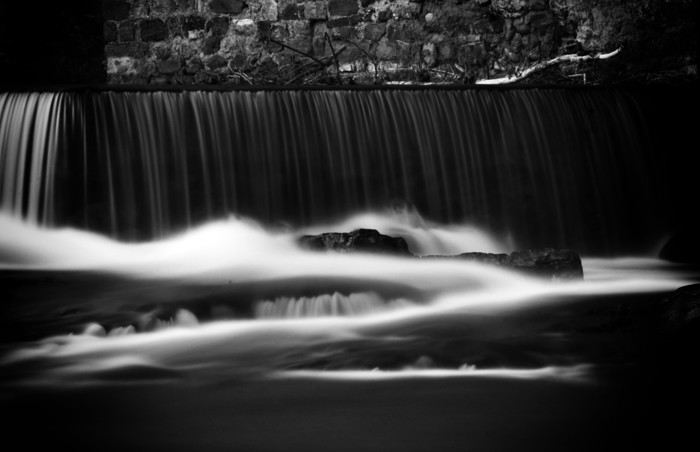
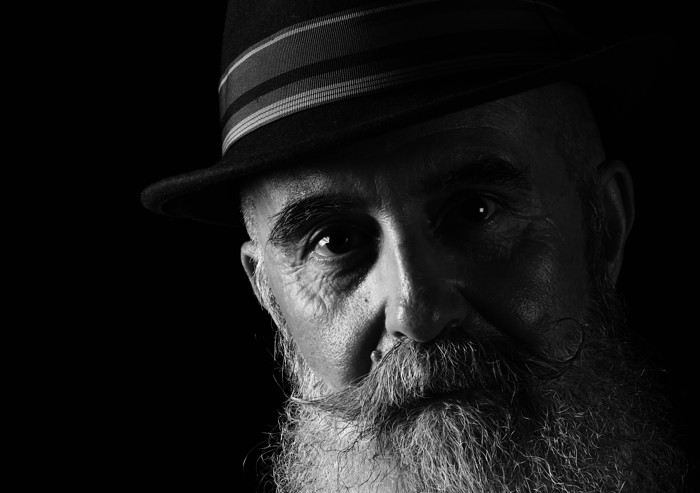
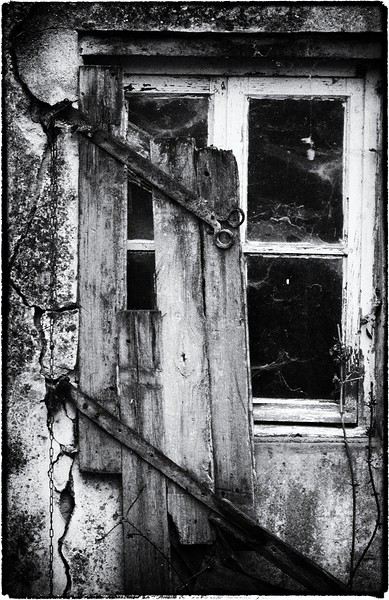
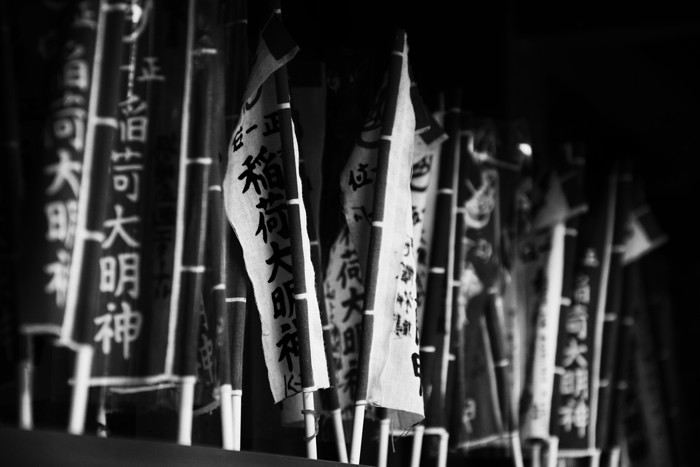
Je vous propose un concours dont le sujet sera complètement libre (youpi) mais avec une petite contrainte technique (pffff...). Nous regarderons la vie en noir & blanc.
Vos photos devront évoquer le voyage mais je laisse à chacun une petite marge de manœuvre, par exemple celle de nous présenter un portrait (d'ici ou d'ailleurs), une image macro (fleur, insecte...), une image graphique (lignes et courbes). Mais sur vos 3 photos je n'accepterai qu'une seule exception, nous sommes ensemble pour parler voyage !
Il existe sur le net un tas de petits logiciels très faciles d'utilisation mais si vous rencontrez des difficultés pour convertir une image en noir et blanc je le ferai pour vous.
Quelques astuces pour choisir vos photos: Le noir et blanc convient à des sujets très variés mais vous pouvez donner un impact bien plus fort à votre image en tenant compte de certains points. La texture. La couleur aura tendance à l'éclipser alors que le noir et blanc lui donnera toute son importance en faisant ressortir l'intensité des détails: les stries et les nœuds du bois, le tissus, la pierre, les rides de la peau... Les lignes. Celles d’un bâtiment, d’une rue pavée, un marquage au sol ou bien les lumières de la rue. Diriger l'attention dessus, c’est faire ressortir un détail que l’on ne voit pas avec les couleurs. Les formes géométriques. Symétriques ou non, triangulaires, carrées ou rondes, dessinées par l’homme ou naturelles les formes attireront l’œil et se démarqueront bien plus qu'en couleur. Les contrastes. Ils sont vos amis ! Une lumière forte avec des zones d’ombre va créer une image avec des tonalités, c’est ce contraste qui est l'élément essentiel pour réussir une photographie en noir et blanc par exemple un ciel chargé de gros nuages percés par des rayons de soleil.
Vous pourrez participer jusqu’au samedi 22 août à 23h59, heure de Paris. Chaque participant est autorisé à poster jusqu’à trois photos, numérotées de 1 à 3, en précisant le lieu de prise de vue.
Le vote aura lieu du dimanche 23 à 0h01 au dimanche 30 août à 23h59. Il est accessible à tous, participants ou non, dans la limite d’un vote, et se fera par l’attribution d’un total de six points répartis sur 3 ou 4 photos : Photo n°1 : 3 points Photo n°2 : 2 points Photo n°3 : 1 point
La photo gagnante sera celle qui aura remporté le plus de points. En cas d’égalité pour la première position, les photos seront départagées par le nombre de votes à 3 points, puis, si l'égalité persiste, par le nombre de votes à 2 points, etc.
Le ou la gagnant(e) aura le privilège d’organiser le concours de septembre.
Ce fil est réservé aux photos participantes et aux votes. La discussion liée aux à-cotés se passe par là: https://voyageforum.com/v.f?post=10330486;a=10330486
Le lien pour le diaporama: https://flic.kr/s/aHsmPLqy2E
Les précédents concours: herikles.free.fr/.VF/VFconcours.html
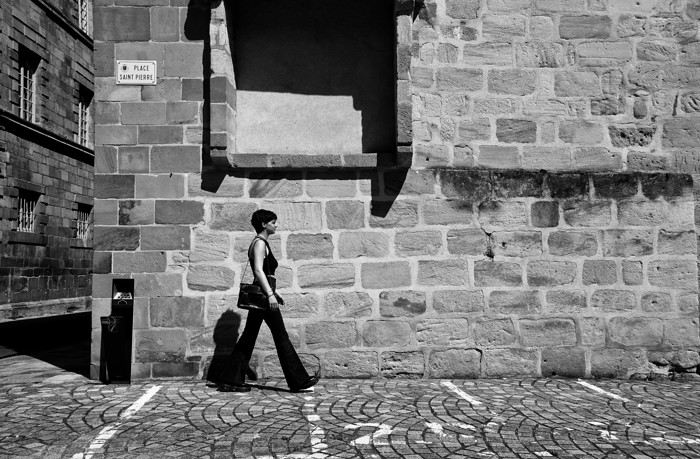
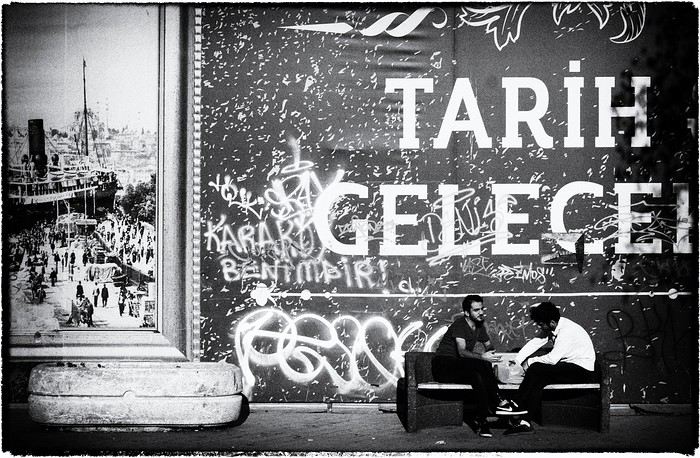
En préambule je rappelle que ma présence ici est tout à fait fortuite, j'ai l'honneur de remplacer Av31, gagnant du concours sur le thème "Verticales" avec sa photo de Devil's Tower.
« Je préfère photographier en noir et blanc qu’en couleurs. Le noir et blanc va à l'essentiel, la couleur aurait distrait l'histoire que je voulais raconter ».Kadir Van Lohuize
Je vous propose un concours dont le sujet sera complètement libre (youpi) mais avec une petite contrainte technique (pffff...). Nous regarderons la vie en noir & blanc.
Vos photos devront évoquer le voyage mais je laisse à chacun une petite marge de manœuvre, par exemple celle de nous présenter un portrait (d'ici ou d'ailleurs), une image macro (fleur, insecte...), une image graphique (lignes et courbes). Mais sur vos 3 photos je n'accepterai qu'une seule exception, nous sommes ensemble pour parler voyage !
Il existe sur le net un tas de petits logiciels très faciles d'utilisation mais si vous rencontrez des difficultés pour convertir une image en noir et blanc je le ferai pour vous.
Quelques astuces pour choisir vos photos: Le noir et blanc convient à des sujets très variés mais vous pouvez donner un impact bien plus fort à votre image en tenant compte de certains points. La texture. La couleur aura tendance à l'éclipser alors que le noir et blanc lui donnera toute son importance en faisant ressortir l'intensité des détails: les stries et les nœuds du bois, le tissus, la pierre, les rides de la peau... Les lignes. Celles d’un bâtiment, d’une rue pavée, un marquage au sol ou bien les lumières de la rue. Diriger l'attention dessus, c’est faire ressortir un détail que l’on ne voit pas avec les couleurs. Les formes géométriques. Symétriques ou non, triangulaires, carrées ou rondes, dessinées par l’homme ou naturelles les formes attireront l’œil et se démarqueront bien plus qu'en couleur. Les contrastes. Ils sont vos amis ! Une lumière forte avec des zones d’ombre va créer une image avec des tonalités, c’est ce contraste qui est l'élément essentiel pour réussir une photographie en noir et blanc par exemple un ciel chargé de gros nuages percés par des rayons de soleil.
Vous pourrez participer jusqu’au samedi 22 août à 23h59, heure de Paris. Chaque participant est autorisé à poster jusqu’à trois photos, numérotées de 1 à 3, en précisant le lieu de prise de vue.
Le vote aura lieu du dimanche 23 à 0h01 au dimanche 30 août à 23h59. Il est accessible à tous, participants ou non, dans la limite d’un vote, et se fera par l’attribution d’un total de six points répartis sur 3 ou 4 photos : Photo n°1 : 3 points Photo n°2 : 2 points Photo n°3 : 1 point
La photo gagnante sera celle qui aura remporté le plus de points. En cas d’égalité pour la première position, les photos seront départagées par le nombre de votes à 3 points, puis, si l'égalité persiste, par le nombre de votes à 2 points, etc.
Le ou la gagnant(e) aura le privilège d’organiser le concours de septembre.
Ce fil est réservé aux photos participantes et aux votes. La discussion liée aux à-cotés se passe par là: https://voyageforum.com/v.f?post=10330486;a=10330486
Le lien pour le diaporama: https://flic.kr/s/aHsmPLqy2E
Les précédents concours: herikles.free.fr/.VF/VFconcours.html
Discussion au sujet du concours photo de juin 2020: "Multicolore" English translation pending
Hello,
C'est ici qu'on en parle.
Philippe
C'est ici qu'on en parle.
Philippe
La prière dans le monde! English translation pending
La nuit tombe d’un coup et je suis sans cesse étonnée de passer ainsi du clair au noir.
Après cette journée fatigante, je rentre à la maison et jette mes sandales dans un coin.
Dans son petit bassin de bronze, la fleur de lotus est déjà refermée.
Tout est silencieux mais j’entends le léger murmure incantatoire de Tiago.
Il prie.
Assis devant son petit autel, les volutes odorantes des bâtonnets d’encens s’enroulent autour de ses cheveux noirs. Son dos dur et sombre luit et la lueur de la flamme dans la coupelle de ghee danse sur ses épaules.
La grande image de Shiva fixée au mur se décolle dans un angle, pliant les pointes du trident.
Le dieu garde ses yeux mi-clos sur la création du monde et les cycles de l’univers.
Dans sa longue chevelure, au sommet de sa tête s’enroule un serpent.
Un dieu coloré bienveillant dans cette représentation, l’une de ses quatre mains ouverte sur le genou.
Tiago a posé son offrande, une noix de coco est une guirlande de fleurs jaune dont je ne retiens jamais le nom.
Immobile.
Il prie.
__
J’ai vu des gens agenouillés, des gens couchés face contre terre, assis en tailleur, assis mains jointes. J’ai vu des gens danser, j’ai vu des processions colorées, j’ai entendu des mélopées hypnotiques, j’ai écouté des cymbales, des trompettes, de grandes orgues, des chants liturgiques, des psaumes, le fanbai, des chants grégoriens et des gospels, des chants diphoniques qui remuent le ventre.
J’ai vu des flèches perçant les nuages, des coupoles dorées, des dômes de pierre, des cathédrales, des temples, des autels flamboyant de dorures, des allées de chevaux de pierre, des temples de feu et des chapelles de pierre blotties sous les ombrages, de bois ensevelies sous la neige, des cryptes froides et silencieuses, des maisons d’adoration sans effigie, des monastères accrochés à la montagne , des cloîtres dans la ville.
j’ai vu des costumes de cérémonies multicolores, des tenues de fourrure, des saris de fêtes soyeux, des chapeaux rouge étranges, des plumets et des têtes rasées. J’ai vu des hommes tirer des chars la peau du dos distendue par des crochets, j’ai été subjuguée par des mandala de sable, tout est éphémère.
Partout où mes pas ont foulé d’autres terres, j’ai vu des croyants réunis, rassemblés, unis, bruyants, silencieux, exaltés, recueillis.
J’ai touché des chapelets de buis, d’ivoire, en corail, en noyaux, les perles égrenant le nom divin, les mantras, les prières, tenu des croix de roseaux, de feuilles de maïs, porté des couronnes de fleurs, tenu des moulins de prière. J’ai regardé des dieux vêtus d’oripeaux décolorés, vêtus d’habits précieux, nus ceints d’un pagne, l’arbre à souhaits aux rubans multicolores agités par les tourbillons de neige.
J’ai respiré l’odeur de l’encens, j’ai respiré l’odeur de la cire fondue, j’ai respiré le parfum des fleurs fraîches et l’odeur surette des offrandes pourrissantes.
J’ai fermé les yeux, souvent, pour mieux entendre, pour mieux comprendre.
Et je sais, qu’aujourd’hui, je ne sais rien de cette ferveur puissante qui soulève et porte et emporte les peuples du monde. Je sais aussi que le tremblement de mes jambes et les yeux qui picotent devant la ferveur de Tiago, ce soir là, il y a des lustres, huit peut-être, c’est tellement loin, fut ce qui s’approchait le plus d’une prière. Ou, peut-être étais-je secrètement amoureuse...
Ainsi, je crois que beaucoup ont vécu ces instants étranges de communion, d’observation respectueuse, que beaucoup connaissent les rites et rituels, les byzantins, coptes, maronites, et tant d’autres, des rites de passage et des rites d’intercessions appelant la pluie, la fécondité . Ces rites qui rythment la vie dans tous ces pays que je n’aurais plus le temps de connaître.
Comment se vit la prière en Afrique, chez les aborigènes d’Australie, à Madagascar, à Cuba, en Chine, au Japon, en Indonésie ou ailleurs ?. Comment se vit-elle, la prière, aujourd’hui où partout des moments religieux forts s’annoncent ? Monothéiste, animiste, shintoïsme, bouddhisme, syncrétisme religieux, l’aspect religieux est toujours présents dans mes voyages, l’est-il pour vous aussi ?
Z’avez lu jusqu’au bout ? Bravo, vous avez gagné une image pieuse ou non. Pour ce faire, aller dans la rubrique -jeux voyages – sur le fil -défilés et processions -, il y en a des magnifiques.
J’ai vu des gens agenouillés, des gens couchés face contre terre, assis en tailleur, assis mains jointes. J’ai vu des gens danser, j’ai vu des processions colorées, j’ai entendu des mélopées hypnotiques, j’ai écouté des cymbales, des trompettes, de grandes orgues, des chants liturgiques, des psaumes, le fanbai, des chants grégoriens et des gospels, des chants diphoniques qui remuent le ventre.
J’ai vu des flèches perçant les nuages, des coupoles dorées, des dômes de pierre, des cathédrales, des temples, des autels flamboyant de dorures, des allées de chevaux de pierre, des temples de feu et des chapelles de pierre blotties sous les ombrages, de bois ensevelies sous la neige, des cryptes froides et silencieuses, des maisons d’adoration sans effigie, des monastères accrochés à la montagne , des cloîtres dans la ville.
j’ai vu des costumes de cérémonies multicolores, des tenues de fourrure, des saris de fêtes soyeux, des chapeaux rouge étranges, des plumets et des têtes rasées. J’ai vu des hommes tirer des chars la peau du dos distendue par des crochets, j’ai été subjuguée par des mandala de sable, tout est éphémère.
Partout où mes pas ont foulé d’autres terres, j’ai vu des croyants réunis, rassemblés, unis, bruyants, silencieux, exaltés, recueillis.
J’ai touché des chapelets de buis, d’ivoire, en corail, en noyaux, les perles égrenant le nom divin, les mantras, les prières, tenu des croix de roseaux, de feuilles de maïs, porté des couronnes de fleurs, tenu des moulins de prière. J’ai regardé des dieux vêtus d’oripeaux décolorés, vêtus d’habits précieux, nus ceints d’un pagne, l’arbre à souhaits aux rubans multicolores agités par les tourbillons de neige.
J’ai respiré l’odeur de l’encens, j’ai respiré l’odeur de la cire fondue, j’ai respiré le parfum des fleurs fraîches et l’odeur surette des offrandes pourrissantes.
J’ai fermé les yeux, souvent, pour mieux entendre, pour mieux comprendre.
Et je sais, qu’aujourd’hui, je ne sais rien de cette ferveur puissante qui soulève et porte et emporte les peuples du monde. Je sais aussi que le tremblement de mes jambes et les yeux qui picotent devant la ferveur de Tiago, ce soir là, il y a des lustres, huit peut-être, c’est tellement loin, fut ce qui s’approchait le plus d’une prière. Ou, peut-être étais-je secrètement amoureuse...
Ainsi, je crois que beaucoup ont vécu ces instants étranges de communion, d’observation respectueuse, que beaucoup connaissent les rites et rituels, les byzantins, coptes, maronites, et tant d’autres, des rites de passage et des rites d’intercessions appelant la pluie, la fécondité . Ces rites qui rythment la vie dans tous ces pays que je n’aurais plus le temps de connaître.
Comment se vit la prière en Afrique, chez les aborigènes d’Australie, à Madagascar, à Cuba, en Chine, au Japon, en Indonésie ou ailleurs ?. Comment se vit-elle, la prière, aujourd’hui où partout des moments religieux forts s’annoncent ? Monothéiste, animiste, shintoïsme, bouddhisme, syncrétisme religieux, l’aspect religieux est toujours présents dans mes voyages, l’est-il pour vous aussi ?
Z’avez lu jusqu’au bout ? Bravo, vous avez gagné une image pieuse ou non. Pour ce faire, aller dans la rubrique -jeux voyages – sur le fil -défilés et processions -, il y en a des magnifiques.
Touristikis à la crème de solaris English translation pending
Comme j'ai un peu de temps, je vous livre le récit d'un voyage de 2018 qui traînait sur mon ordinateur :
Il était une fois, par delà les pandémies et les crises économiques, un temps où nous pouvions voyager : 2018. En cette année béni(t)e, il n’y eut pour nous point de virée nord-atlantique dans la chaleur estivale au programme, point de douches gratuites rafraîchissantes, point de températures vivifiantes, point de gastronomie douteuse et point de prix déments. En passant, félicitations à l’Islande et ses pizzas caoutchouteuse à 30 euros. En 2018, non, on va dans un vrai pays où l’on sait ce que signifie avoir chaud, manger et glander à une terrasse : la Grèce. Et comme nous ne sommes quand même pas des stakhanovistes du 40° à l’ombre, nous avons choisi le printemps, avril plus précisément. Pour le terrain de jeu, il s'agira d'Athènes et du Péloponnèse sur un peu plus de deux semaines. A nous, les petites églises, les ruines romantiques et les oliviers scintillants !
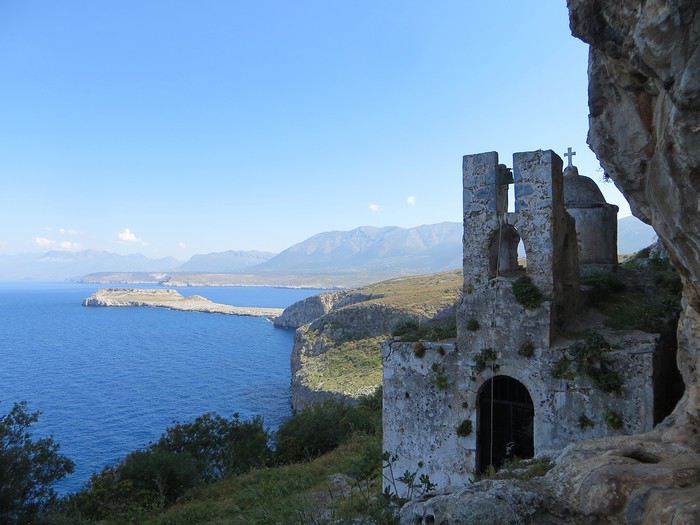 Bien choisir sa photo d'appel pour attirer le chaland. Un bon point et toute mon estime pour celui qui devine où c'est.
Avec la Grèce - pour ceux qui ont lu mes autres carnets qui sont tellement merveilleux qu’il faut les lire immédiatement et que votre vie s’en trouvera changée et éblouie - tout est chamboulé : fini les campings, les dortoirs et les piques-niques miteux de nos voyages dans le nord, place aux hôtels, aux b&b et aux restos. Et en plus, les Grecs ont le bon goût d’être accueillants.
Laissons la parole à du Ballay, parrainé par Alain Deloin et Jean-Michel Apeupré :
Heureux qui comme Ulysse a fait un beau voyage (en Grèce), Ou comme celui-là qui vit le Parthénon, Et puis est retourné, plein d'image et pâmoison, Vivre exubérant le reste de son âge
Et avant d'attaquer le vif du sujet, quelques annonces pour le public innocent : Avertissement : vous lisez ce compte-rendu à vos risques et périls. Toute indignation n’est pas de ma responsabilité. Avertissement bis : non je ne suis pas raciste non je n’ai rien contre les Néerlandais, j’ai d’ailleurs un ami néerlandais non les Grecs ne sont pas des feignants oui les Allemands ont pour passe-temps l’invasion… Ah mince une rechute.
Jour 1
Ayé, c’est parti pour une journée de transport translation Lyon-Athènes via Munich en empruntant la Lufthansa. Le vol est sans encombre, une conversation s’engage avec un voisin grec sympathique autour de la qualité douteuse de la bouffe allemande. J'en profite pour avoir une illumination : la nourriture, voilà ce qui unit les Européens (enfin ceux du sud) ! Eclair de génie, j’ai trouvé comment sauver l’Union européenne « tous unis contre la vie beurk ». Malheureusement, ça risque d’exclure les riches du nord. D’ailleurs c’est peut-être un signe : faut-il mal manger pour être riche ? Faudrait exclure les Japonais de l’équation mais sinon ça marche (pays germaniques, scandinaves et anglo-saxons même combat). Revenons au voisin grec, je tente de donner un tour sportif à la conversation mais malheureusement il n’aime pas le foot « football is shit »… Arrgghh, de quoi vais-je bien pouvoir parler alors ?! Du coup, je parle plus. Alors qu’un petit débat sur le scandale du moment, le président du PAOK Salonique et son flingue, ça, ça aurait été fun .
L’atterrissage se passe sans encombre dans cet aéroport d’Athènes qui a changé de place depuis mon unique passage dans le coin et s’est éloigné du centre-ville. Première prise de contact avec l’alphabet grec, on avait essayé pour le fun de potasser les équivalences mais c’est loin d’être évident ! Combien d'équivalents du O ont-ils dans cet alphabet ?!
Le trajet jusqu’au centre d’Athènes est long, très long et le métro/train se remplit progressivement jusqu’à être bondé à ras bord. Nous sommes tassés, compressés et pour sortir de cette fournaise, c’est la lutte finale, poussons-nous et demain, l’air sera le sauveur du genre humain (note à moi-même : éviter la prochaine fois d’arriver au moment de la sortie du travail)
La chambre chez l’habitant est bien placée, en plein centre sans être très bruyante. On profite de notre premier soir pour une approche de la cuisine grecque et un mauvais choix de commande (que de la friture…). On enchaîne sur une petite balade nocturne pour revenir sur l’impression née du voyage précédent (ie dans les années 90 la voiture reine, une ville bruyante et désagréable). Eh bien en fait, une partie du centre-ville s’est piétonnisé, il y a de la vie, des restos et des cafés avec des terrasses partout, c’est très agréable finalement.
Il était une fois, par delà les pandémies et les crises économiques, un temps où nous pouvions voyager : 2018. En cette année béni(t)e, il n’y eut pour nous point de virée nord-atlantique dans la chaleur estivale au programme, point de douches gratuites rafraîchissantes, point de températures vivifiantes, point de gastronomie douteuse et point de prix déments. En passant, félicitations à l’Islande et ses pizzas caoutchouteuse à 30 euros. En 2018, non, on va dans un vrai pays où l’on sait ce que signifie avoir chaud, manger et glander à une terrasse : la Grèce. Et comme nous ne sommes quand même pas des stakhanovistes du 40° à l’ombre, nous avons choisi le printemps, avril plus précisément. Pour le terrain de jeu, il s'agira d'Athènes et du Péloponnèse sur un peu plus de deux semaines. A nous, les petites églises, les ruines romantiques et les oliviers scintillants !
Bien choisir sa photo d'appel pour attirer le chaland. Un bon point et toute mon estime pour celui qui devine où c'est.Avec la Grèce - pour ceux qui ont lu mes autres carnets qui sont tellement merveilleux qu’il faut les lire immédiatement et que votre vie s’en trouvera changée et éblouie - tout est chamboulé : fini les campings, les dortoirs et les piques-niques miteux de nos voyages dans le nord, place aux hôtels, aux b&b et aux restos. Et en plus, les Grecs ont le bon goût d’être accueillants.
Laissons la parole à du Ballay, parrainé par Alain Deloin et Jean-Michel Apeupré :
Heureux qui comme Ulysse a fait un beau voyage (en Grèce), Ou comme celui-là qui vit le Parthénon, Et puis est retourné, plein d'image et pâmoison, Vivre exubérant le reste de son âge
Et avant d'attaquer le vif du sujet, quelques annonces pour le public innocent : Avertissement : vous lisez ce compte-rendu à vos risques et périls. Toute indignation n’est pas de ma responsabilité. Avertissement bis : non je ne suis pas raciste non je n’ai rien contre les Néerlandais, j’ai d’ailleurs un ami néerlandais non les Grecs ne sont pas des feignants oui les Allemands ont pour passe-temps l’invasion… Ah mince une rechute.
Jour 1
Ayé, c’est parti pour une journée de transport translation Lyon-Athènes via Munich en empruntant la Lufthansa. Le vol est sans encombre, une conversation s’engage avec un voisin grec sympathique autour de la qualité douteuse de la bouffe allemande. J'en profite pour avoir une illumination : la nourriture, voilà ce qui unit les Européens (enfin ceux du sud) ! Eclair de génie, j’ai trouvé comment sauver l’Union européenne « tous unis contre la vie beurk ». Malheureusement, ça risque d’exclure les riches du nord. D’ailleurs c’est peut-être un signe : faut-il mal manger pour être riche ? Faudrait exclure les Japonais de l’équation mais sinon ça marche (pays germaniques, scandinaves et anglo-saxons même combat). Revenons au voisin grec, je tente de donner un tour sportif à la conversation mais malheureusement il n’aime pas le foot « football is shit »… Arrgghh, de quoi vais-je bien pouvoir parler alors ?! Du coup, je parle plus. Alors qu’un petit débat sur le scandale du moment, le président du PAOK Salonique et son flingue, ça, ça aurait été fun .
L’atterrissage se passe sans encombre dans cet aéroport d’Athènes qui a changé de place depuis mon unique passage dans le coin et s’est éloigné du centre-ville. Première prise de contact avec l’alphabet grec, on avait essayé pour le fun de potasser les équivalences mais c’est loin d’être évident ! Combien d'équivalents du O ont-ils dans cet alphabet ?!
Le trajet jusqu’au centre d’Athènes est long, très long et le métro/train se remplit progressivement jusqu’à être bondé à ras bord. Nous sommes tassés, compressés et pour sortir de cette fournaise, c’est la lutte finale, poussons-nous et demain, l’air sera le sauveur du genre humain (note à moi-même : éviter la prochaine fois d’arriver au moment de la sortie du travail)
La chambre chez l’habitant est bien placée, en plein centre sans être très bruyante. On profite de notre premier soir pour une approche de la cuisine grecque et un mauvais choix de commande (que de la friture…). On enchaîne sur une petite balade nocturne pour revenir sur l’impression née du voyage précédent (ie dans les années 90 la voiture reine, une ville bruyante et désagréable). Eh bien en fait, une partie du centre-ville s’est piétonnisé, il y a de la vie, des restos et des cafés avec des terrasses partout, c’est très agréable finalement.
Restaurant-club Diadema English translation pending
Bonjour à toutes et tous,
souhaitant réserver une cabine avec balcon car il n'y a pas de suite dispo sur la transat abu dhabi marseille en mars 2021, , je voudrais savoir s' il est toujours possible, en payant bien sûr, aller dîner au restaurant club( plus tranquille) et quel est le prix de ce restaurant.
Merci
Mais où qu'il est ce truc là (4) English translation pending
Off to explore Jordan!
Well, since the lockdown is dragging on, I’m starting a new travel journal following the one I finished publishing yesterday:
https://voyageforum.com/discussion/voyage-pays-perles-voyage-dans-ouest-americain-d9943984/
This time, after the U.S., we’re heading to the Middle East—Jordan!
And we’re keeping up the good habits: one day’s entry published every day at 5:30 PM! Happy reading, and feel free to leave a comment, question, or remark...
Franck
Franck
La situation des femmes à Oman English translation pending
😠 Bonjour,
J'ai regardé cet après-midi un documentaire sur le Sultanat d'Oman et j'ai été fortement choquée !C'est un peu difficile à expliquer mais ce pays est profondément "masculinisé", les femmes existent à peine, ce sont de véritables esclaves de ces messieurs et celà n'a pas l'air de les déranger plus, ni les hommes mais surtout encore moins les femmes. Elles restent confinées dans des cases, habillées entièrement de noir, on voit juste les yeux et une partie du nez pour respirer et encore. Ces messieurs dansent, chantent, font la fête, discutent trafic de chèvres, de dromadaires, se baignent presque nus........ Sur les images , à part trois femmes en noir en train de cuisiner, je n'ai vu que des hommes sur un documentaire de 35'. Je n'arrive pas à y croire ! A notre époque, ce genre de vie me révulse et ne venez pas me dire que c'est leur religion qui font celà. Messieurs tous puissants !!!!!! C'est abject.
J'ai regardé cet après-midi un documentaire sur le Sultanat d'Oman et j'ai été fortement choquée !C'est un peu difficile à expliquer mais ce pays est profondément "masculinisé", les femmes existent à peine, ce sont de véritables esclaves de ces messieurs et celà n'a pas l'air de les déranger plus, ni les hommes mais surtout encore moins les femmes. Elles restent confinées dans des cases, habillées entièrement de noir, on voit juste les yeux et une partie du nez pour respirer et encore. Ces messieurs dansent, chantent, font la fête, discutent trafic de chèvres, de dromadaires, se baignent presque nus........ Sur les images , à part trois femmes en noir en train de cuisiner, je n'ai vu que des hommes sur un documentaire de 35'. Je n'arrive pas à y croire ! A notre époque, ce genre de vie me révulse et ne venez pas me dire que c'est leur religion qui font celà. Messieurs tous puissants !!!!!! C'est abject.