Results for "Conques+|+127"
7001 results found.
De retour de Brisas Trinidad Del Mar English translation pending
Je viens de faire un très beau voyage au Brisas Trinidad Del Mar à Trinidad Cuba.
Pour tous ceux qui ne se voient pas sur une plage durant leur séjour, c’est un très beau compromis. Les excursions ne sont vraiment pas chère (au total, environ 280$US pour 3 jours, 3 personnes) et la ville coloniale de Trinidad est très agréable à visiter, de jour comme de soir.
C’est la troisième année que nous allons à Cuba. La première année, au El Sénador; la beauté du site nous a conquis. La deuxième année, au Cayo Santa Maria; l’animation d’enfer nous a plut! Mais à Trinidad, j’ai enfin connu Cuba et les cubains. J’en ait plus appris sur eux en une semaine qu’au cours des deux derniers voyages. C’est une destination excellente pour tous ceux qui désire faire un voyage mi-rose/mi-vert.
Le Brisas Trinidad Del Mar est bien mais sans plus. La plage est belle mais la mer ne vaut pas nos deux précédentes destinations. Il faut toutefois dire que l’hôtel qui est inspiré de l’architecture de la ville vaut la peine d’être vu..
Les trois points négatifs de l’hôtel : La mer qui est moins belle que les Cayos visités, l’animation et le manque de resto à la carte. De plus, beaucoup de voyagistes européen qui sont de passage pour quelques jours.
Les trois points positifs de l’hôtel : superbe plage avec végétation, la proximité de la ville de Trinidad (à 15 minutes en taxis ou … 1 heure en coco taxi) et une infrastructure vraiment bien pensée où tout est à proximité. Je dois également ajouter que le snack bar ouvert 24 heures servait de très bons sandwich, poulet et hamburger!
Pour une des rare fois depuis que je voyage, j’aurais bien aimée séjourner à cet endroit deux semaines. Notre séjour d’une semaine ne nous a pas permis de profiter pleinement des avantages de la ville où on retrouve le soir café, discothèques, restaurants et les escaliers pour se divertir. Quant au jour, il fait bon errer dans les rues de cette ville, visiter les musées et flâner dans les différentes « troyas »! Je ne connaît pas la Havane mais je crois que je serais déçue après avoir vu Trinidad.
Je crois que TMR veut délaisser cette destination car Trinidad, Cuba, personne n’y vas, personne ne connaît! C’est pourtant une destination fascinante pour le contact avec les cubains. Nous avons rencontrés une vingtaine de québécois là-bas et tous on adoré leur vacances.
Cette destination n’est pas pour ceux qui cherchent la plage de sable blanc, la mer éblouissante et plusieurs restos à la carte. Elle est tout à fait destinée à ceux qui veulent un voyage un peu différent dans ce pays, pour ceux qui veulent connaître le pays et pour ceux qui ne s’attendent pas à ce que cela soit parfait.
C’est un des voyages que j’ai le plus apprécié pour le contact que nous avons eu avec les cubains. Je le recommande à tous ceux qui veulent « vivre » Cuba!
Vous pouvez voir mes photos sur Webshots :
http://community.webshots.com/user/maya02ma
Notre prochaine destination soleil prévue est le Costa Rica ou le Décameron, Panama. La randonnée dans les forêts de Cuba nous a convaincu que nous aimons les voyages "verts".
Pour tous ceux qui ne se voient pas sur une plage durant leur séjour, c’est un très beau compromis. Les excursions ne sont vraiment pas chère (au total, environ 280$US pour 3 jours, 3 personnes) et la ville coloniale de Trinidad est très agréable à visiter, de jour comme de soir.
C’est la troisième année que nous allons à Cuba. La première année, au El Sénador; la beauté du site nous a conquis. La deuxième année, au Cayo Santa Maria; l’animation d’enfer nous a plut! Mais à Trinidad, j’ai enfin connu Cuba et les cubains. J’en ait plus appris sur eux en une semaine qu’au cours des deux derniers voyages. C’est une destination excellente pour tous ceux qui désire faire un voyage mi-rose/mi-vert.
Le Brisas Trinidad Del Mar est bien mais sans plus. La plage est belle mais la mer ne vaut pas nos deux précédentes destinations. Il faut toutefois dire que l’hôtel qui est inspiré de l’architecture de la ville vaut la peine d’être vu..
Les trois points négatifs de l’hôtel : La mer qui est moins belle que les Cayos visités, l’animation et le manque de resto à la carte. De plus, beaucoup de voyagistes européen qui sont de passage pour quelques jours.
Les trois points positifs de l’hôtel : superbe plage avec végétation, la proximité de la ville de Trinidad (à 15 minutes en taxis ou … 1 heure en coco taxi) et une infrastructure vraiment bien pensée où tout est à proximité. Je dois également ajouter que le snack bar ouvert 24 heures servait de très bons sandwich, poulet et hamburger!
Pour une des rare fois depuis que je voyage, j’aurais bien aimée séjourner à cet endroit deux semaines. Notre séjour d’une semaine ne nous a pas permis de profiter pleinement des avantages de la ville où on retrouve le soir café, discothèques, restaurants et les escaliers pour se divertir. Quant au jour, il fait bon errer dans les rues de cette ville, visiter les musées et flâner dans les différentes « troyas »! Je ne connaît pas la Havane mais je crois que je serais déçue après avoir vu Trinidad.
Je crois que TMR veut délaisser cette destination car Trinidad, Cuba, personne n’y vas, personne ne connaît! C’est pourtant une destination fascinante pour le contact avec les cubains. Nous avons rencontrés une vingtaine de québécois là-bas et tous on adoré leur vacances.
Cette destination n’est pas pour ceux qui cherchent la plage de sable blanc, la mer éblouissante et plusieurs restos à la carte. Elle est tout à fait destinée à ceux qui veulent un voyage un peu différent dans ce pays, pour ceux qui veulent connaître le pays et pour ceux qui ne s’attendent pas à ce que cela soit parfait.
C’est un des voyages que j’ai le plus apprécié pour le contact que nous avons eu avec les cubains. Je le recommande à tous ceux qui veulent « vivre » Cuba!
Vous pouvez voir mes photos sur Webshots :
http://community.webshots.com/user/maya02ma
Notre prochaine destination soleil prévue est le Costa Rica ou le Décameron, Panama. La randonnée dans les forêts de Cuba nous a convaincu que nous aimons les voyages "verts".
Invitation par une famille chinoise: traditions English translation pending
nous serons à pékin en aout et invités chez une amie chinoise de mon fils, par la mère de celle-ci. Qui peut me dire ce qu'il faut faire et ne pas faire, que rapporter à la maitresse de maison, d'avance merci pour vos réponses.
Le Tuxpan..populaire auprès des francophones? English translation pending
Salut tlm,
Je me suis fait dire que la clientèle du Tuxpan était essentiellement Italienne et que les G.O ne portait pas trop d'attention aux autres nationalités...et qu'ils ne parlent pas un mot francais ?
Je dois m'attendre à quoi de cet hôtel côté clientèle et animation ?
Merci les ami(es)
Ciao
Je me suis fait dire que la clientèle du Tuxpan était essentiellement Italienne et que les G.O ne portait pas trop d'attention aux autres nationalités...et qu'ils ne parlent pas un mot francais ?
Je dois m'attendre à quoi de cet hôtel côté clientèle et animation ?
Merci les ami(es)
Ciao
France: devenir bénévole près de chez soi? English translation pending
Alors c'est simple, étrandement il n'y a pas plus simple comme question :
Comment devenir bénévole prés de chez soi, qui voir, a qui s'adresser, qui peu nous aider pour que l'on aide° (paris)?
BREF?cette ques est un peu..... mais bon
MERCI A VOUS
Comment devenir bénévole prés de chez soi, qui voir, a qui s'adresser, qui peu nous aider pour que l'on aide° (paris)?
BREF?cette ques est un peu..... mais bon
MERCI A VOUS
Inde du Sud- Kathakali English translation pending
Koukou tout le monde!
Quelqu'un connaitrait-il un centre, une ecole, des spectacles, livres, musiques etc...sur le kathakali, art scénique du Kerala, sur Paris?
Réponse précieuse car ça n 'a pas l 'air d'etre quelque chose de commun en France!!!
Merci😉
Quelqu'un connaitrait-il un centre, une ecole, des spectacles, livres, musiques etc...sur le kathakali, art scénique du Kerala, sur Paris?
Réponse précieuse car ça n 'a pas l 'air d'etre quelque chose de commun en France!!!
Merci😉
Lariam et Malarone English translation pending
A priori, d'aprés les contacts que j'ai eu et les gens que j'ai vu qui ont pris du Lariam (en test avant le voyage par précaution en général -merci pour eux aux médecins qui sont informés-), ils ont eu des effets secondaires pas top (depression, humeurs "volages"...). Certains sont partis sans traitement du coup (mais avec des répulsifs DEEP). Je compte, moi, prendre de la Malarone (malgré son prix) pour un voyage de 8 mois en asie du sud-est avec en reserve quelque sachets de Lariams en cas de crise (je compte également prendre des répulsif vêtement et moustiquaire).
Je suis certainement trop prudent (un membre de ma famille est revenu avec le palu pour un voyage de 15 jours donc ça ne me fait pas envie).
Je ne compte pas gacher ce voyage pour un manque d'information ou de précaution de ma part !
Mais, cela vous paraît-il une solution cohérente en cas d'oubli de prise de Malarone et de piqûre hasardeuse ?
Vous semble-t-il également normal de prendre de la Malarone pendant une durée aussi longue (8 mois) ? Y a-t-il des expériences néfastes connues (je n'en ai pas trouvé sur le net) ?
Personnelement, je pense que je devrais me limiter aux précautions des vêtements longs, de la moustiquaire et du répulsif et éventuellement prendre un traitement sporadique à la Malarone dans les zones de jungles/forêts ou de riziéres.
Qu'en pensez-vous ?
Je suis certainement trop prudent (un membre de ma famille est revenu avec le palu pour un voyage de 15 jours donc ça ne me fait pas envie).
Je ne compte pas gacher ce voyage pour un manque d'information ou de précaution de ma part !
Mais, cela vous paraît-il une solution cohérente en cas d'oubli de prise de Malarone et de piqûre hasardeuse ?
Vous semble-t-il également normal de prendre de la Malarone pendant une durée aussi longue (8 mois) ? Y a-t-il des expériences néfastes connues (je n'en ai pas trouvé sur le net) ?
Personnelement, je pense que je devrais me limiter aux précautions des vêtements longs, de la moustiquaire et du répulsif et éventuellement prendre un traitement sporadique à la Malarone dans les zones de jungles/forêts ou de riziéres.
Qu'en pensez-vous ?
Demande renseignements pour vendanges English translation pending
salut a tous et toutes;
voila donc je suis un pitit ouvrier qui recherche quelques adresse et numero pour
partir faire les vendanges en septembre😉
je m y prend de bonne heure car vaut mieux tot que tard!!!
merci a tous ceux et celles qui pourront m aider merci!!!!
voila donc je suis un pitit ouvrier qui recherche quelques adresse et numero pour
partir faire les vendanges en septembre😉
je m y prend de bonne heure car vaut mieux tot que tard!!!
merci a tous ceux et celles qui pourront m aider merci!!!!
Comment partir faire de l'aide humanitaire? English translation pending
bonjour
mon copain et moi sommes intéressés par le bénévolat dans les pays qui ont des besoins à ce niveau mais j'ai de la difficulté à trouver des infos à ce sujet alors j'aimerait avoir des trucs, adresses internet, liens quelconques...🙂
merci d'avance pour m'aider dans mes démarches et dans mes rêves !
mon copain et moi sommes intéressés par le bénévolat dans les pays qui ont des besoins à ce niveau mais j'ai de la difficulté à trouver des infos à ce sujet alors j'aimerait avoir des trucs, adresses internet, liens quelconques...🙂
merci d'avance pour m'aider dans mes démarches et dans mes rêves !
Nouvelle Zélande et randonnée English translation pending
Bonjour à tous,
je projette de partir en Nouvelle Zélande en mars pour 3 semaines. Nous voudrions faire pas mal de randos, et déjà une question se pose : est-il facile de laisser les bagages en trop quelque part au début des randonnées, histoire de ne pas être obligé de marcher avec ses grosses chaussures de rando en ville par exemple, donc de pouvoir emmener des habits pas spécifiques à la rando?
Par ailleurs, faut il un bon sac de couchage pour le sud ou est-ce qu'un +5°C suffit?
Enfin, quelle compagnie avez vous utilisé pour voyager, et comment se passent les correspondances de 12h?
Merci d'avance
Sophie
je projette de partir en Nouvelle Zélande en mars pour 3 semaines. Nous voudrions faire pas mal de randos, et déjà une question se pose : est-il facile de laisser les bagages en trop quelque part au début des randonnées, histoire de ne pas être obligé de marcher avec ses grosses chaussures de rando en ville par exemple, donc de pouvoir emmener des habits pas spécifiques à la rando?
Par ailleurs, faut il un bon sac de couchage pour le sud ou est-ce qu'un +5°C suffit?
Enfin, quelle compagnie avez vous utilisé pour voyager, et comment se passent les correspondances de 12h?
Merci d'avance
Sophie
Accommodations near Namibia's parks
Hi there,
I’m planning a potential trip to Namibia for a classic circuit in April 2027.
I’m surprised by how expensive the accommodations inside the parks are—really steep! Is it possible to stay outside the parks but still close enough to enjoy the game drives?
Do you have any recommendations for more reasonably priced lodging? I’m okay with spending 200 to 250 € per night.
No camping—the friend I’m traveling with absolutely refuses 😉, but maybe upgraded tents would work.
Thanks in advance, and have a great evening! !
I’m planning a potential trip to Namibia for a classic circuit in April 2027.
I’m surprised by how expensive the accommodations inside the parks are—really steep! Is it possible to stay outside the parks but still close enough to enjoy the game drives?
Do you have any recommendations for more reasonably priced lodging? I’m okay with spending 200 to 250 € per night.
No camping—the friend I’m traveling with absolutely refuses 😉, but maybe upgraded tents would work.
Thanks in advance, and have a great evening! !
Two weeks under the Puglia sun
After a pretty disastrous weather-wise trip to Gran Canaria, we’re hoping this time the sun will shine in Puglia.
It’s not a sure thing, though—the weather’s been awful all over Europe in early May.
For those who’d like to (re)read the story without the digressions, it’s here.
Saturday, May 16: This time we’re flying out of Charleroi (Brussels South): the ticket prices, flight times, and proximity all worked for us. The airport (Ryanair) was recently renovated... but it’s still not very well organized. There are hardly any seats in the boarding areas, and... the restrooms cost money!!! The flight goes smoothly, though, and we land in Bari a little late.
We quickly pick up our rental car, a very local-looking Pandina (even more so than the Fiat 500 in this region), and hit the Italian roads... and their unique driving quirks (like the fact that the countless road signs along the streets and in towns are purely decorative 😏, and that Italian cars don’t have turn signals 😮... except for rental cars).
About an hour later, we arrive at our first accommodation, right in the middle of the countryside near Monopoli. The owner isn’t there, but they’ve left us a ton of info via messages and even turned on the space heater, which is a nice touch. We explore the property:
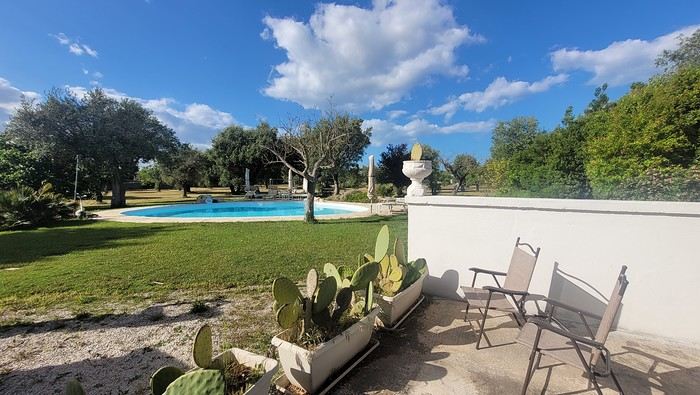
And the next morning before breakfast, its immediate surroundings:
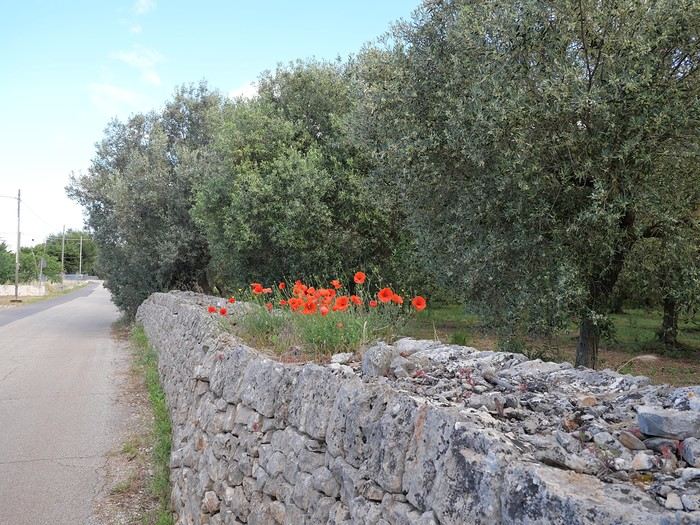
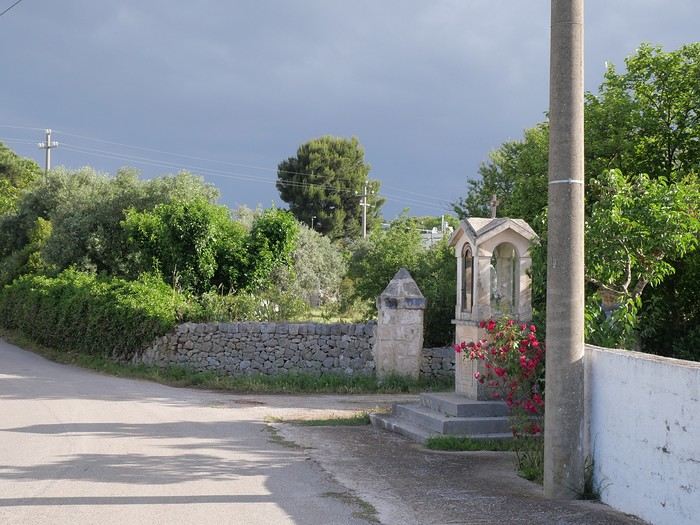
Sunday, May 17: After our "seaside" experience in Gran Canaria last weekend (packed with people and locals), we decide to start inland. After a hearty breakfast,
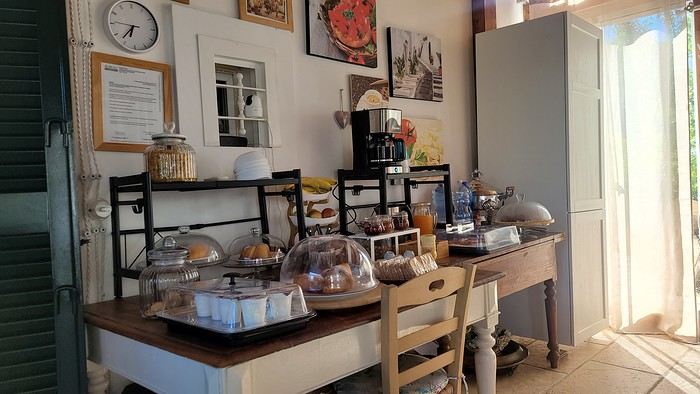
we head toward Alberobello, a super touristy village famous for its trulli—those stone houses with conical roofs. We easily find a free parking spot on a street near the Aia Piccola district, where some trulli are still lived in year-round.
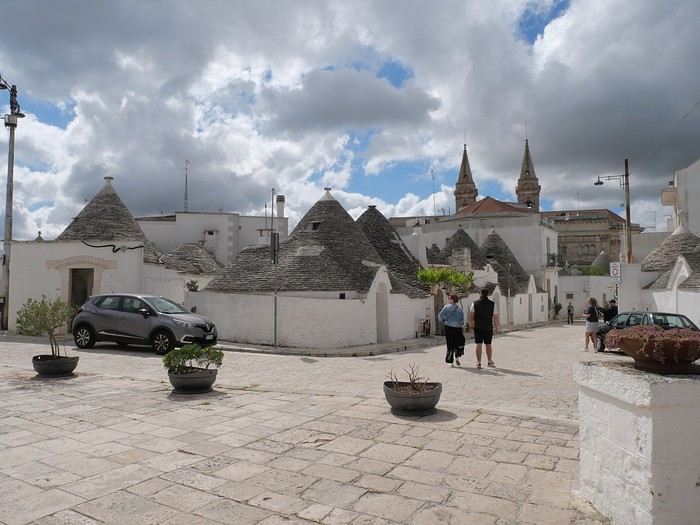
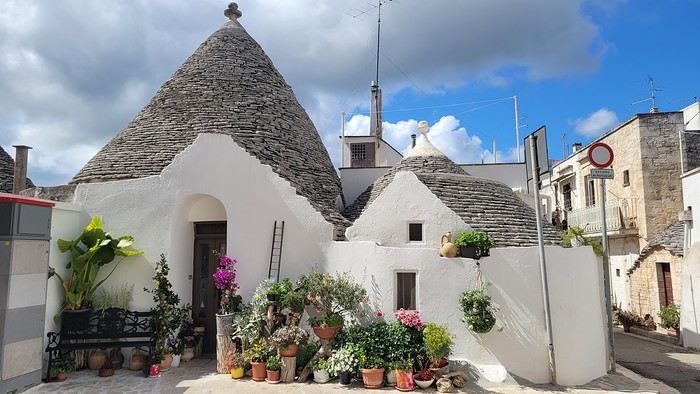
We almost immediately come across the Trullo Sovrano (the only two-story one), which you can visit (but we skip it—it’s opening time, and there’s already a line).
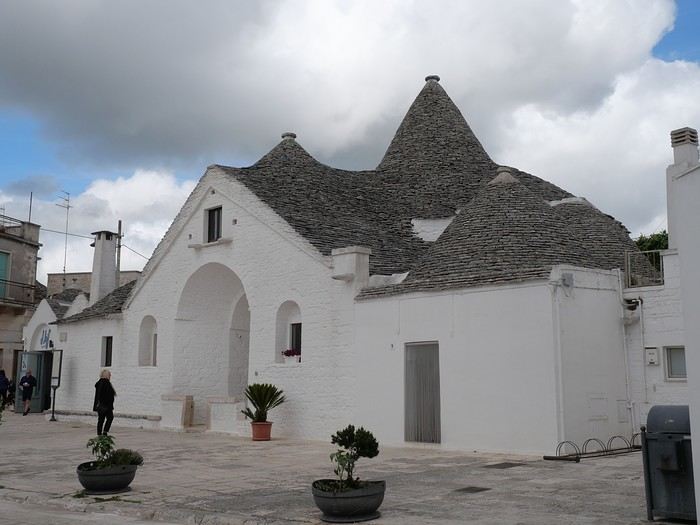
From there, we head down toward the Basilica of Cosma e Damiano... but we don’t go in because there’s a mass.
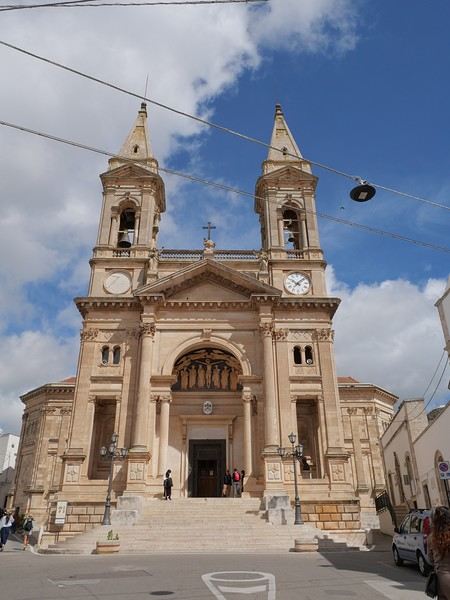
Now we’re on the main Piazza del Popolo, which connects the two districts of Alberobello: Rione Aia Piccola and Rione Monti, the more touristy one.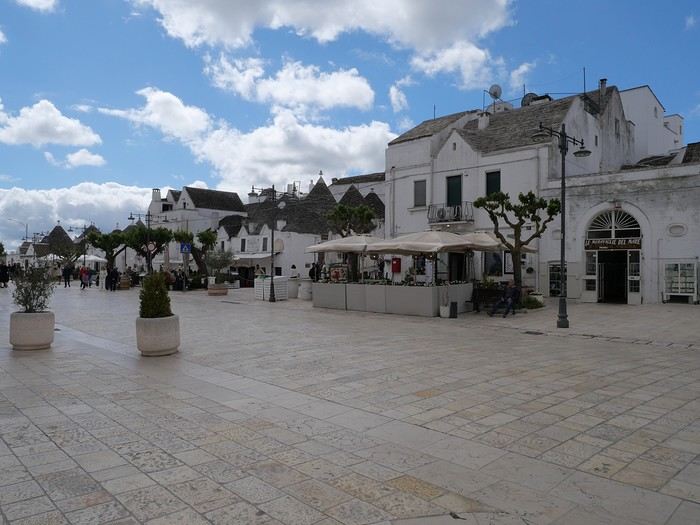
For those who’d like to (re)read the story without the digressions, it’s here.
Saturday, May 16: This time we’re flying out of Charleroi (Brussels South): the ticket prices, flight times, and proximity all worked for us. The airport (Ryanair) was recently renovated... but it’s still not very well organized. There are hardly any seats in the boarding areas, and... the restrooms cost money!!! The flight goes smoothly, though, and we land in Bari a little late.
We quickly pick up our rental car, a very local-looking Pandina (even more so than the Fiat 500 in this region), and hit the Italian roads... and their unique driving quirks (like the fact that the countless road signs along the streets and in towns are purely decorative 😏, and that Italian cars don’t have turn signals 😮... except for rental cars).
About an hour later, we arrive at our first accommodation, right in the middle of the countryside near Monopoli. The owner isn’t there, but they’ve left us a ton of info via messages and even turned on the space heater, which is a nice touch. We explore the property:
And the next morning before breakfast, its immediate surroundings:
Sunday, May 17: After our "seaside" experience in Gran Canaria last weekend (packed with people and locals), we decide to start inland. After a hearty breakfast,
we head toward Alberobello, a super touristy village famous for its trulli—those stone houses with conical roofs. We easily find a free parking spot on a street near the Aia Piccola district, where some trulli are still lived in year-round.
We almost immediately come across the Trullo Sovrano (the only two-story one), which you can visit (but we skip it—it’s opening time, and there’s already a line).
From there, we head down toward the Basilica of Cosma e Damiano... but we don’t go in because there’s a mass.
Now we’re on the main Piazza del Popolo, which connects the two districts of Alberobello: Rione Aia Piccola and Rione Monti, the more touristy one.
TUI/New Frontiers Airlines
Hello,
I’m really surprised because in TUI’s new tour packages, the airlines they’re using are of low quality. Before, they used to prioritize major airlines, but now it’s small airlines from small countries—companies with terrible ratings and borderline safety concerns. I even just noticed this note for a Tanzania trip: "We inform you that the domestic flight segment in Tanzania included in your trip is operated by an airline listed on the European Union’s list of air carriers subject to an operating ban within the European Union. This ban only applies to European Union airspace, meaning this airline is not permitted to take off, land, or fly over European airspace. However, this airline is authorized to operate in Tanzania."
This means they’re using airlines on the blacklist!! It’s pretty worrying for safety. What do you all think?
I’m really surprised because in TUI’s new tour packages, the airlines they’re using are of low quality. Before, they used to prioritize major airlines, but now it’s small airlines from small countries—companies with terrible ratings and borderline safety concerns. I even just noticed this note for a Tanzania trip: "We inform you that the domestic flight segment in Tanzania included in your trip is operated by an airline listed on the European Union’s list of air carriers subject to an operating ban within the European Union. This ban only applies to European Union airspace, meaning this airline is not permitted to take off, land, or fly over European airspace. However, this airline is authorized to operate in Tanzania."
This means they’re using airlines on the blacklist!! It’s pretty worrying for safety. What do you all think?
Flights between Jakarta and Flores
Hi there,
I arrive in Jakarta on July 24th and want to head to Flores Island the next day. Do you know which airlines offer direct flights to Labuan Bajo (or elsewhere)? Is it possible to book tickets directly on Indonesian airline websites (I get the feeling that when connecting from France, access is blocked...)
Also, are there direct flights from Maumere or Ende back to Jakarta for the return trip, or do I have to go back through Labuan Bajo?
Thanks and have a great evening
I arrive in Jakarta on July 24th and want to head to Flores Island the next day. Do you know which airlines offer direct flights to Labuan Bajo (or elsewhere)? Is it possible to book tickets directly on Indonesian airline websites (I get the feeling that when connecting from France, access is blocked...)
Also, are there direct flights from Maumere or Ende back to Jakarta for the return trip, or do I have to go back through Labuan Bajo?
Thanks and have a great evening
"Bambara in 30 Days"
A real gem for those who want to connect with their roots or discover an African language. The explanations are simple, and I really appreciated the cultural examples included in the book. Highly recommended. (Fatoumata T)
Manual: "Bambara in 30 Days"
Bambara in 30 Days is a manual and conversation guide specifically designed to help learners communicate in many everyday situations. This educational tool is aimed at anyone wanting to learn Bambara (bamanankan), regardless of their level: from beginners to advanced speakers looking to improve.
Several themes are covered: greetings, how to introduce yourself and apologize, family, numbers from 1 to 100, meals, emotions, transportation, currency, shopping, parts of the human body, days of the week, how to ask a question, how to ask for the price or age, how to count money, other types of questions, colors, traveling, blessing formulas for Muslim holidays: e.g., Tabaski (seliba) or Korité (selifiitinin or selidennin), and family events: e.g., birth (bangeli), marriage (furu), death (saya or fatuli)... ultimately, tools needed to communicate in many everyday situations.
The lessons (kalansen) are organized by theme, ranging from the alphabet to common expressions. All lessons include corrections (jaabi) to reinforce learning and correct mistakes. They cover various topics like greetings, numbers, family, etc. (see above) and are designed to be progressive, allowing for skill development. Each lesson is accompanied by practical exercises to apply the knowledge. After every set of 5 lessons, there’s a review (seginkanni) to consolidate what’s been learned.
In summary, the manual consists of...
30 lessons with 6 reviews
Over 50 audio files available online
Over 100 exercises (baarakɛ) with answer keys
A small vocabulary section in each lesson
Blank "notes" page at the end of every lesson
The audio files help facilitate learning. They are accessible via a specific link that should only be used by the manual’s purchaser.
African languages, like Bambara, play a crucial role in the culture and identity of African peoples. Learning them helps preserve traditions and local knowledge. Bambara is the most widely spoken language in Mali and a key lingua franca for communication in West Africa. It’s rich in idiomatic expressions and proverbs, reflecting the wisdom and culture of the Manding peoples. Moreover, it’s taught in schools and used in local media (to learn more, see here). In general, linguistic diversity in Africa is immense, with thousands of languages spoken across the continent.
Malle, Tahirou / Oumou Coulibaly / Issoufou Keïta (authors) Bambara in 30 Days. Conversation Guide 184 pages ISBN 978-2-49304713-7 21.90 €
L'Univers des Langues Africaines 38 rue de Bonneuil 77100 MEAUX/France https://universdeslanguesafricaines.com
hgb
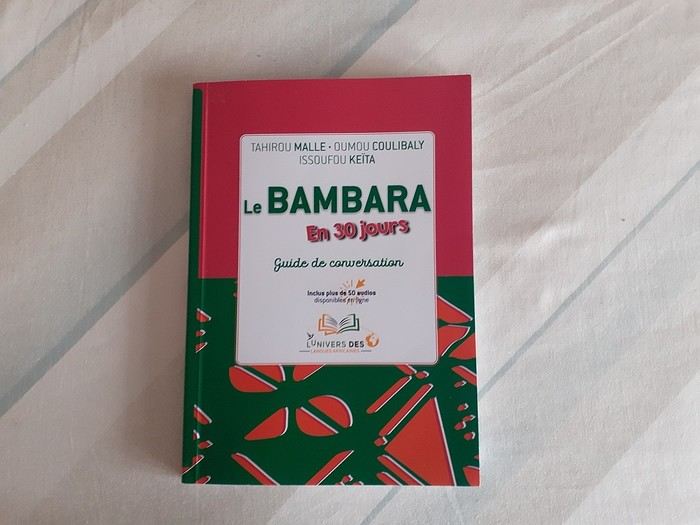
Manual: "Bambara in 30 Days"
Bambara in 30 Days is a manual and conversation guide specifically designed to help learners communicate in many everyday situations. This educational tool is aimed at anyone wanting to learn Bambara (bamanankan), regardless of their level: from beginners to advanced speakers looking to improve.
Several themes are covered: greetings, how to introduce yourself and apologize, family, numbers from 1 to 100, meals, emotions, transportation, currency, shopping, parts of the human body, days of the week, how to ask a question, how to ask for the price or age, how to count money, other types of questions, colors, traveling, blessing formulas for Muslim holidays: e.g., Tabaski (seliba) or Korité (selifiitinin or selidennin), and family events: e.g., birth (bangeli), marriage (furu), death (saya or fatuli)... ultimately, tools needed to communicate in many everyday situations.
The lessons (kalansen) are organized by theme, ranging from the alphabet to common expressions. All lessons include corrections (jaabi) to reinforce learning and correct mistakes. They cover various topics like greetings, numbers, family, etc. (see above) and are designed to be progressive, allowing for skill development. Each lesson is accompanied by practical exercises to apply the knowledge. After every set of 5 lessons, there’s a review (seginkanni) to consolidate what’s been learned.
In summary, the manual consists of...
30 lessons with 6 reviews
Over 50 audio files available online
Over 100 exercises (baarakɛ) with answer keys
A small vocabulary section in each lesson
Blank "notes" page at the end of every lesson
The audio files help facilitate learning. They are accessible via a specific link that should only be used by the manual’s purchaser.
African languages, like Bambara, play a crucial role in the culture and identity of African peoples. Learning them helps preserve traditions and local knowledge. Bambara is the most widely spoken language in Mali and a key lingua franca for communication in West Africa. It’s rich in idiomatic expressions and proverbs, reflecting the wisdom and culture of the Manding peoples. Moreover, it’s taught in schools and used in local media (to learn more, see here). In general, linguistic diversity in Africa is immense, with thousands of languages spoken across the continent.
Malle, Tahirou / Oumou Coulibaly / Issoufou Keïta (authors) Bambara in 30 Days. Conversation Guide 184 pages ISBN 978-2-49304713-7 21.90 €
L'Univers des Langues Africaines 38 rue de Bonneuil 77100 MEAUX/France https://universdeslanguesafricaines.com
hgb
Tips for a safari in Tanzania from Zanzibar
Hi everyone,
We’re a family of four (two daughters aged 18 and 21) and we’re planning a three-week trip to Tanzania. Zanzibar would be our main base, but we’d also like to do a safari on the mainland. Could you share any tips on: - the ideal length for such a safari, the best place to go during this period (and easily accessible by flight from Zanzibar) - your recommendations for the most suitable type of stay for a family like ours - reliable local agencies with reasonable prices that could help us with this plan
Thanks in advance!
Albin
We’re a family of four (two daughters aged 18 and 21) and we’re planning a three-week trip to Tanzania. Zanzibar would be our main base, but we’d also like to do a safari on the mainland. Could you share any tips on: - the ideal length for such a safari, the best place to go during this period (and easily accessible by flight from Zanzibar) - your recommendations for the most suitable type of stay for a family like ours - reliable local agencies with reasonable prices that could help us with this plan
Thanks in advance!
Albin
Questions about organizing an itinerary in Lombok
Hi there, I’m really sorry if this question has already been asked several times—I’ve been scouring blogs, forums, and various sites for a while now, but I still have some more specific questions for our trip...
First off, we’re a family of four with two kids aged 10 and 14. We’ve already been to Thailand and Laos five times with them (each trip lasting a month or six weeks), and we’re huge Thailand lovers, but this year we’d like to discover Indonesia, which we don’t know at all (for a duration of 4 or 5 weeks between late June and late July). We travel pretty "roots" style with a budget of 100 € per day and avoid touristy areas as much as possible. We get around using local transport, rent scooters, and take our time (for a one-month trip, we usually visit 4 destinations to really soak it in). So here are my upcoming questions:
For a first visit, I wanted to focus on a single island—Lombok—by taking a flight from Paris to Denpasar and then a boat to Lombok. Do you think the following route would work? - Kuta Lombok - Gili Gede - Gili Meno - Tetebatu
I saw there’s a local boat to Lombok—has anyone here taken it before? For those who’ve been there during this period, do you know if Gili Meno and Gili Gede get crowded, or should we focus more on the coasts? To get between these spots, are there buses, or do we need to take private taxis? As for accommodations, we’re used to booking triple rooms for all four of us in Thailand. For those who travel with kids, do you know if that’s doable in Indonesia, or should we book two double rooms instead?
Last (slightly silly) question: We want to go to Indonesia because our son dreams of seeing beautiful marine life while snorkeling—I think Lombok is a good choice for that. But my daughter is a huge fan of those "knick-knack" markets full of Chinese trinkets that you find all over Thailand. Do you know if Lombok has any day or night markets where we could go?
Thank you so much for your help! !
First off, we’re a family of four with two kids aged 10 and 14. We’ve already been to Thailand and Laos five times with them (each trip lasting a month or six weeks), and we’re huge Thailand lovers, but this year we’d like to discover Indonesia, which we don’t know at all (for a duration of 4 or 5 weeks between late June and late July). We travel pretty "roots" style with a budget of 100 € per day and avoid touristy areas as much as possible. We get around using local transport, rent scooters, and take our time (for a one-month trip, we usually visit 4 destinations to really soak it in). So here are my upcoming questions:
For a first visit, I wanted to focus on a single island—Lombok—by taking a flight from Paris to Denpasar and then a boat to Lombok. Do you think the following route would work? - Kuta Lombok - Gili Gede - Gili Meno - Tetebatu
I saw there’s a local boat to Lombok—has anyone here taken it before? For those who’ve been there during this period, do you know if Gili Meno and Gili Gede get crowded, or should we focus more on the coasts? To get between these spots, are there buses, or do we need to take private taxis? As for accommodations, we’re used to booking triple rooms for all four of us in Thailand. For those who travel with kids, do you know if that’s doable in Indonesia, or should we book two double rooms instead?
Last (slightly silly) question: We want to go to Indonesia because our son dreams of seeing beautiful marine life while snorkeling—I think Lombok is a good choice for that. But my daughter is a huge fan of those "knick-knack" markets full of Chinese trinkets that you find all over Thailand. Do you know if Lombok has any day or night markets where we could go?
Thank you so much for your help! !
Traveling Against the Grain in 2026: 8 Alternatives to Overcrowded Destinations
In 2026, traveling becomes a choice. While the same destinations are buckling under mass tourism, there are still preserved alternatives, often just a few hours away from the beaten path. This guide doesn’t ban any countries but suggests different practices and destinations that still breathe.
Here are 8 experiences to reinvent for better travel this year.
1. Tanzania: Swap the jeep safari for a walking safari The classic: Setting off to see the "Big Five" and the vast savanna from a 4x4. Why rethink this: You don’t go to see wild animals just to end up in a traffic jam of Toyota Land Cruisers. The noise of engines and exhaust fumes stress the wildlife. Some observation points look like parking lots. The alternative: A walking safari in the Ngorongoro Highlands or the Serengeti, accompanied by Maasai guides. On foot, your senses sharpen: it’s an immersion that a car window blocks.
Practical tip: Opt for mobile bush camps rather than fixed lodges. Look into walking safaris that include bivouacs.
2. India: Skip Kerala’s houseboats for kayaking on secret lagoons The classic: Cruising the famous Backwaters in a houseboat. Why rethink this: Houseboats pollute and destroy the fragile ecosystem of the lagoons. Overcrowding in Alleppey drains the experience of its magic. Not to mention the noise of the engines. The alternative: Munroe Island or Valiyaparamba by canoe or kayak. These northern lagoons remain preserved. You can organize trips with local fishermen, spend a day with families from the area, and sleep in the heart of biodiversity instead of floating resorts.
Good to know: The famous Kettuvallams (houseboats) aren’t that old. Originally, they were rice transport barges. It was only in the 1990s that someone had the idea to add rooms. Authenticity is sometimes a marketing invention!
3. Portugal: Forget Lisbon and the Algarve for the Alentejo The classic: The charm of Lisbon’s azulejos and the golden beaches of the Algarve. Why rethink this: Lisbon is suffocating under Airbnbs, and the Algarve has become a forest of umbrellas and tourist complexes. The Portuguese soul is fading under mass tourism. The alternative: The Alentejo region, between Lisbon and the Algarve. Stay in a *Herdade* (traditional farm), taste amphora wine, and explore wild beaches where cliffs replace concrete. This is Portugal at a slower pace—the one with white villages and endless plains.
Good to know: The Alentejo is the world’s largest cork producer. Cork oaks are harvested only once every 9 years. It’s a region that sets its own rhythm, slow and respectful of nature.
4. Indonesia: Less Bali, more Sulawesi, Java, or Lombok The classic: Spirituality, rice terraces, and Bali’s beaches. Why rethink this: Between water shortages, "spiritual" traffic jams in Ubud, and beaches turned into clubs, Bali needs a break. The island is suffocating. The alternative: Sulawesi for the ancestral rites of the Toraja people, Java for the lunar volcanoes of the East and lost temples, or Lombok for a quieter version of Bali. You’ll rediscover Indonesia’s wild origins.
Good to know: Bali is the only predominantly Hindu island in the world’s largest Muslim country. Exploring Java or Sulawesi reveals a cultural diversity that Bali’s tourist bubble often overshadows.
5. South Korea: Shorten Seoul for Gyeongju and Suncheon Bay The classic: Futuristic modernity and K-Culture in Seoul. Why rethink this: Seoul is experiencing the "Kyoto effect." Historic neighborhoods like Bukchon are closing streets to protect residents’ privacy from the influx of tourists in rented hanboks. The alternative: Gyeongju and Suncheon Bay in the authentic south. Between Gyeongju’s millennia-old temples (the ancient capital) and Suncheon’s biosphere reserve, you’ll discover the real Korea—without the lines.
Good to know: Gyeongju is often called "the museum without walls." You’ll find tumuli (royal tombs shaped like grassy hills) right in the middle of the modern city. Ancient history coexists with the present.
6. Thailand: Escape Bangkok and the southern islands for Isan The classic: Bangkok, then off to Phuket, Phi Phi, or Koh Samui. Why rethink this: The southern islands are suffocating: marine pollution, crowded beaches, authenticity diluted in standardized resorts. The experience feels more like Ibiza than traditional Thailand. The alternative: The Northeast (Isan), the unknown region. Forgotten Khmer temples, authentic villages, colorful local markets, and preserved nature in parks like Phu Kradueng. Few Westerners, lots of authenticity.
Good to know: Isan makes up a third of Thailand but receives less than 5% of tourists. Yet it’s the birthplace of authentic Thai cuisine and preserved traditions. Prices are also two to three times lower.
7. Peru: Skip Machu Picchu for Kuelap and northern Peru The classic: Machu Picchu and the Sacred Valley. Why rethink this: Strict quotas, mandatory bookings months in advance, sky-high prices, and timed tourist flows. The experience has become administrative before it’s spiritual. The alternative: Northern Peru with Kuelap, the "Machu Picchu of the north" without the crowds. The Gocta Canyon, the Chachapoyas region, and lesser-known but equally fascinating pre-Inca cultures. The modern cable car makes access easy without the hordes.
Good to know: Kuelap is larger and older than Machu Picchu but receives 100 times fewer visitors. Its cyclopean walls reach 20 meters high, and the fortress remains shrouded in mystery.
8. Iceland: Ditch the Golden Circle for the northern fjords The classic: The Iceland tour via the Ring Road and the famous Golden Circle. Why rethink this: The Ring Road has become a single-file line of rental vans. Iconic sites (Golden Circle, Solheimasandur plane wreck, Reynisfjara Beach) are saturated, turning the quest for Icelandic solitude into a crowded parking lot experience. The alternative: The Tröllaskagi Peninsula and the northern fjords. Forget the clock to rediscover the Iceland of the sagas. This is the kingdom of mountains plunging into the sea, secret hot springs accessible only on foot, and fjords where silence reigns.
Good to know: In Iceland, you don’t "own" nature—you borrow it. Over 50% of Icelanders still believe in the existence of *Huldufólk* (the hidden people), elves who live in the rocks. To catch a glimpse of them, they say, you must leave the noise of Route 1’s engines and learn to listen to the silence of the fjords.
1. Tanzania: Swap the jeep safari for a walking safari The classic: Setting off to see the "Big Five" and the vast savanna from a 4x4. Why rethink this: You don’t go to see wild animals just to end up in a traffic jam of Toyota Land Cruisers. The noise of engines and exhaust fumes stress the wildlife. Some observation points look like parking lots. The alternative: A walking safari in the Ngorongoro Highlands or the Serengeti, accompanied by Maasai guides. On foot, your senses sharpen: it’s an immersion that a car window blocks.
Practical tip: Opt for mobile bush camps rather than fixed lodges. Look into walking safaris that include bivouacs.
2. India: Skip Kerala’s houseboats for kayaking on secret lagoons The classic: Cruising the famous Backwaters in a houseboat. Why rethink this: Houseboats pollute and destroy the fragile ecosystem of the lagoons. Overcrowding in Alleppey drains the experience of its magic. Not to mention the noise of the engines. The alternative: Munroe Island or Valiyaparamba by canoe or kayak. These northern lagoons remain preserved. You can organize trips with local fishermen, spend a day with families from the area, and sleep in the heart of biodiversity instead of floating resorts.
Good to know: The famous Kettuvallams (houseboats) aren’t that old. Originally, they were rice transport barges. It was only in the 1990s that someone had the idea to add rooms. Authenticity is sometimes a marketing invention!
3. Portugal: Forget Lisbon and the Algarve for the Alentejo The classic: The charm of Lisbon’s azulejos and the golden beaches of the Algarve. Why rethink this: Lisbon is suffocating under Airbnbs, and the Algarve has become a forest of umbrellas and tourist complexes. The Portuguese soul is fading under mass tourism. The alternative: The Alentejo region, between Lisbon and the Algarve. Stay in a *Herdade* (traditional farm), taste amphora wine, and explore wild beaches where cliffs replace concrete. This is Portugal at a slower pace—the one with white villages and endless plains.
Good to know: The Alentejo is the world’s largest cork producer. Cork oaks are harvested only once every 9 years. It’s a region that sets its own rhythm, slow and respectful of nature.
4. Indonesia: Less Bali, more Sulawesi, Java, or Lombok The classic: Spirituality, rice terraces, and Bali’s beaches. Why rethink this: Between water shortages, "spiritual" traffic jams in Ubud, and beaches turned into clubs, Bali needs a break. The island is suffocating. The alternative: Sulawesi for the ancestral rites of the Toraja people, Java for the lunar volcanoes of the East and lost temples, or Lombok for a quieter version of Bali. You’ll rediscover Indonesia’s wild origins.
Good to know: Bali is the only predominantly Hindu island in the world’s largest Muslim country. Exploring Java or Sulawesi reveals a cultural diversity that Bali’s tourist bubble often overshadows.
5. South Korea: Shorten Seoul for Gyeongju and Suncheon Bay The classic: Futuristic modernity and K-Culture in Seoul. Why rethink this: Seoul is experiencing the "Kyoto effect." Historic neighborhoods like Bukchon are closing streets to protect residents’ privacy from the influx of tourists in rented hanboks. The alternative: Gyeongju and Suncheon Bay in the authentic south. Between Gyeongju’s millennia-old temples (the ancient capital) and Suncheon’s biosphere reserve, you’ll discover the real Korea—without the lines.
Good to know: Gyeongju is often called "the museum without walls." You’ll find tumuli (royal tombs shaped like grassy hills) right in the middle of the modern city. Ancient history coexists with the present.
6. Thailand: Escape Bangkok and the southern islands for Isan The classic: Bangkok, then off to Phuket, Phi Phi, or Koh Samui. Why rethink this: The southern islands are suffocating: marine pollution, crowded beaches, authenticity diluted in standardized resorts. The experience feels more like Ibiza than traditional Thailand. The alternative: The Northeast (Isan), the unknown region. Forgotten Khmer temples, authentic villages, colorful local markets, and preserved nature in parks like Phu Kradueng. Few Westerners, lots of authenticity.
Good to know: Isan makes up a third of Thailand but receives less than 5% of tourists. Yet it’s the birthplace of authentic Thai cuisine and preserved traditions. Prices are also two to three times lower.
7. Peru: Skip Machu Picchu for Kuelap and northern Peru The classic: Machu Picchu and the Sacred Valley. Why rethink this: Strict quotas, mandatory bookings months in advance, sky-high prices, and timed tourist flows. The experience has become administrative before it’s spiritual. The alternative: Northern Peru with Kuelap, the "Machu Picchu of the north" without the crowds. The Gocta Canyon, the Chachapoyas region, and lesser-known but equally fascinating pre-Inca cultures. The modern cable car makes access easy without the hordes.
Good to know: Kuelap is larger and older than Machu Picchu but receives 100 times fewer visitors. Its cyclopean walls reach 20 meters high, and the fortress remains shrouded in mystery.
8. Iceland: Ditch the Golden Circle for the northern fjords The classic: The Iceland tour via the Ring Road and the famous Golden Circle. Why rethink this: The Ring Road has become a single-file line of rental vans. Iconic sites (Golden Circle, Solheimasandur plane wreck, Reynisfjara Beach) are saturated, turning the quest for Icelandic solitude into a crowded parking lot experience. The alternative: The Tröllaskagi Peninsula and the northern fjords. Forget the clock to rediscover the Iceland of the sagas. This is the kingdom of mountains plunging into the sea, secret hot springs accessible only on foot, and fjords where silence reigns.
Good to know: In Iceland, you don’t "own" nature—you borrow it. Over 50% of Icelanders still believe in the existence of *Huldufólk* (the hidden people), elves who live in the rocks. To catch a glimpse of them, they say, you must leave the noise of Route 1’s engines and learn to listen to the silence of the fjords.
Looking for info on a campervan road trip in Eastern Europe
Hi everyone,
I’m planning a campervan road trip and would love some tips from those who know these countries: Slovenia, Bosnia and Herzegovina, Croatia, Montenegro, and Slovenia again. At the moment, nothing’s set in stone, but for example, is it better to visit Slovenia or Bosnia? My preferences lean toward landscapes (rivers, sea, lakes)—basically anywhere there’s water! :) Wild camping, cheap or even free spots, and a *very* tight budget—it’s the discovery, curiosity, and meeting locals that drive me. I’ll visit cities and sites only if access is easy (by bike, for example, or by train from an affordable campsite) and if visitors aren’t treated like cash cows. Just reasonable stuff, really. So, any advice is welcome—like swimming spots or easy hikes along coasts or rivers. I love caves and offbeat visits (salt mines in Poland, La Roque Saint-Christophe in France, etc.). Castles and old ruins? Not really my thing... Thanks for your help! Sylvia
I’m planning a campervan road trip and would love some tips from those who know these countries: Slovenia, Bosnia and Herzegovina, Croatia, Montenegro, and Slovenia again. At the moment, nothing’s set in stone, but for example, is it better to visit Slovenia or Bosnia? My preferences lean toward landscapes (rivers, sea, lakes)—basically anywhere there’s water! :) Wild camping, cheap or even free spots, and a *very* tight budget—it’s the discovery, curiosity, and meeting locals that drive me. I’ll visit cities and sites only if access is easy (by bike, for example, or by train from an affordable campsite) and if visitors aren’t treated like cash cows. Just reasonable stuff, really. So, any advice is welcome—like swimming spots or easy hikes along coasts or rivers. I love caves and offbeat visits (salt mines in Poland, La Roque Saint-Christophe in France, etc.). Castles and old ruins? Not really my thing... Thanks for your help! Sylvia
Your suggestions for a 3-week Scandinavia itinerary
Hi there, my partner and I are planning a 3-week trip to Scandinavia next June (2026). We’d love to validate our itinerary and get any relevant tips on what to see—or avoid, etc.
Day 1 and 2: Departure from Montreal and arrival in Copenhagen Days 2, 3, 4: Stay in Copenhagen Day 5: Train from Copenhagen to Stockholm Days 5, 6, 7: Stay in Stockholm Day 8: Flight from Stockholm to Oslo Days 8, 9, 10: Stay in Oslo Day 11: Train from Oslo to Bergen (Bergen Line) Days 11, 12: Stay in Bergen Days 13 to 18: 6-night cruise with Hurtigruten or Havila Day 19: Stay in Kirkenes Day 20: Flight from Kirkenes to Oslo Days 20, 21: Stay in Oslo Day 22: Return to Montreal from Oslo.
Thanks so much.
Day 1 and 2: Departure from Montreal and arrival in Copenhagen Days 2, 3, 4: Stay in Copenhagen Day 5: Train from Copenhagen to Stockholm Days 5, 6, 7: Stay in Stockholm Day 8: Flight from Stockholm to Oslo Days 8, 9, 10: Stay in Oslo Day 11: Train from Oslo to Bergen (Bergen Line) Days 11, 12: Stay in Bergen Days 13 to 18: 6-night cruise with Hurtigruten or Havila Day 19: Stay in Kirkenes Day 20: Flight from Kirkenes to Oslo Days 20, 21: Stay in Oslo Day 22: Return to Montreal from Oslo.
Thanks so much.
Old Burmese Adventures (oh, so many!)
Hey everyone,
Yesterday, I checked the Thailand forum to see if there were any questions to answer, but not much was happening—it was pretty quiet. Then I scrolled through the Southeast Asia section and realized that, even though Burma (Myanmar) was included, there weren’t many posts about it... I’ve only been there once, back in 1987, so it’s hard to create a photo thread about multiple trips like I sometimes do for Thailand. Still, that one trip was packed with unusual adventures, so I thought I’d share a few stories from it.
Since I didn’t take any notes at the time, this is all from memory—it’s not an exhaustive travel journal and isn’t meant to help plan a future trip to Myanmar.
Don’t expect photos; there won’t be any. I have some, but they’re slides that would need scanning and editing one by one to fix the wear and tear of time—way too much work.
The Context.
Back then (reminder: 1987), I was volunteering in Paris at the counter of a travel agency on Rue des Écoles. The agency was part of a well-known organization based in Mulhouse that mostly offered scheduled flights to Asia, charter flights to the Mediterranean, and flights to Mali with their own plane. They also had a few rare "roots"-style trips to certain destinations—trips where you didn’t bring your tennis racket but were ready to soak in everything, even if it meant tough conditions.
I’d already been to Thailand, Indonesia, and the Philippines in Asia. The director knew this, so he asked me to accompany a group to Burma. At the time, tours to Burma were already being sold by competitors, but they all had to go through the state-run agency, Touristburma (buses and hotels for tourists, and they only showed you what they wanted you to see—kind of like traveling in North Korea today). The service was only payable in dollars at the official exchange rate (which was six times worse than the black market rate, mind you...), and since it went through the state agency, all the money ended up with the junta.
My job was to do everything *without* going through Touristburma, which was completely illegal there. Nothing would be booked in advance. Back then, the Burmese visa was only valid for 8 days/7 nights, and since clients were paying for the experience, the itinerary was planned ahead. I’d have to find transport and a guide on the black market as soon as I arrived.
The clients weren’t misled—they knew from the start that the trip would be off the books, that officially we’d be a small group of friends (not an agency), unlike the truth (Touristburma wasn’t mandatory for individual travelers), and that it would be challenging. They also knew their trip would cost 3-4 times less while giving them a much better experience of Burma. As for pretending to be a group of friends, there were only six of us, so it worked out.
To cover all expenses (accommodation, transport, excursions), the agency gave me a sufficient budget. They also gave me the *same* budget a second time, which was strictly for bribing officials who might cause trouble, for backshish (tips), and, if needed, to "help" me get out of prison.
Before I left, I was thoroughly briefed by another guy who’d led the previous trip (he’d dealt with all the initial challenges). He explained everything I needed to know, what to watch out for, and advised me on what to bring as "gifts" (samples of well-known perfumes, specific cigarette and whisky brands, etc.). For the perfume samples, I rallied my family, friends, and even stores. For the rest, I’d pick things up at the duty-free shops in Don Muang (Bangkok’s only airport at the time)—I had the budget for it.
I couldn’t wait to leave...
Yesterday, I checked the Thailand forum to see if there were any questions to answer, but not much was happening—it was pretty quiet. Then I scrolled through the Southeast Asia section and realized that, even though Burma (Myanmar) was included, there weren’t many posts about it... I’ve only been there once, back in 1987, so it’s hard to create a photo thread about multiple trips like I sometimes do for Thailand. Still, that one trip was packed with unusual adventures, so I thought I’d share a few stories from it.
Since I didn’t take any notes at the time, this is all from memory—it’s not an exhaustive travel journal and isn’t meant to help plan a future trip to Myanmar.
Don’t expect photos; there won’t be any. I have some, but they’re slides that would need scanning and editing one by one to fix the wear and tear of time—way too much work.
The Context.
Back then (reminder: 1987), I was volunteering in Paris at the counter of a travel agency on Rue des Écoles. The agency was part of a well-known organization based in Mulhouse that mostly offered scheduled flights to Asia, charter flights to the Mediterranean, and flights to Mali with their own plane. They also had a few rare "roots"-style trips to certain destinations—trips where you didn’t bring your tennis racket but were ready to soak in everything, even if it meant tough conditions.
I’d already been to Thailand, Indonesia, and the Philippines in Asia. The director knew this, so he asked me to accompany a group to Burma. At the time, tours to Burma were already being sold by competitors, but they all had to go through the state-run agency, Touristburma (buses and hotels for tourists, and they only showed you what they wanted you to see—kind of like traveling in North Korea today). The service was only payable in dollars at the official exchange rate (which was six times worse than the black market rate, mind you...), and since it went through the state agency, all the money ended up with the junta.
My job was to do everything *without* going through Touristburma, which was completely illegal there. Nothing would be booked in advance. Back then, the Burmese visa was only valid for 8 days/7 nights, and since clients were paying for the experience, the itinerary was planned ahead. I’d have to find transport and a guide on the black market as soon as I arrived.
The clients weren’t misled—they knew from the start that the trip would be off the books, that officially we’d be a small group of friends (not an agency), unlike the truth (Touristburma wasn’t mandatory for individual travelers), and that it would be challenging. They also knew their trip would cost 3-4 times less while giving them a much better experience of Burma. As for pretending to be a group of friends, there were only six of us, so it worked out.
To cover all expenses (accommodation, transport, excursions), the agency gave me a sufficient budget. They also gave me the *same* budget a second time, which was strictly for bribing officials who might cause trouble, for backshish (tips), and, if needed, to "help" me get out of prison.
Before I left, I was thoroughly briefed by another guy who’d led the previous trip (he’d dealt with all the initial challenges). He explained everything I needed to know, what to watch out for, and advised me on what to bring as "gifts" (samples of well-known perfumes, specific cigarette and whisky brands, etc.). For the perfume samples, I rallied my family, friends, and even stores. For the rest, I’d pick things up at the duty-free shops in Don Muang (Bangkok’s only airport at the time)—I had the budget for it.
I couldn’t wait to leave...
Have you heard of Avianca for a Cusco-La Paz flight?
CUSCO-LA PAZ FLIGHT
Hi, I’d like to fly from Cusco to LA PAZ (to save time… so I don’t want to deal with a canceled flight).
Any feedback on Avianca? (It’s the only direct flight I’ve found.)
Thanks
Peru Trip
We’re a group of 6 friends with an average age of 70, all mobile, and we’re planning a trip to Peru in September/October 2026. Below is an idea of what we’re looking for: a French-speaking guide, accommodation in 3-star hotels or homestays with comfort.
Duration: 16 to 20 days on-site.
Visit the main sites with immersion in the culture and way of life.
Which francophone agency in Peru would you recommend? Thanks
Does Uber work from Marsa Alam?
Hi,
I’d like to know if Uber works for a trip between Marsa Alam and Hurghada Airport? Thanks
Trip report and practical tips for the American West Coast
Hi there,
Just back from 25 days in May 2025 in the American West—here are some practical tips that might help you plan your trip.
Flight: 2 tickets for 1270 € with British Airways (Lyon-LA, SF-Lyon) SIM card: 12GB from Sim USA for 39 €. Useful for looking up accommodation every late afternoon. 12GB was enough for us. Car rental: Booked with BSP Autos. 21 days = 538 € for a Jeep Compass SUV picked up at LA airport and dropped off at SF airport. An SUV isn’t essential at all, but since we had one, we did take some easy dirt roads. Driving is straightforward, highways are toll-free. Gas: Averaged $3.80/gallon = 1 €/liter. We drove 6700 km and spent $500 on gas. Big price differences between states, and even between stations in the same state. We checked Google Maps/fuel for the best deals. Water: Not recommended to drink tap water. We refilled two 3L bottles regularly at visitor centers in the parks and froze two 1L bottles overnight to keep water cool during the day. Money: Bring cash for tips and gas—sometimes cheaper when paying in cash. Accommodation: Averaged $100/night. Only the first night in LA was booked in advance. For the rest of the trip, we found places to stay (mostly motels outside the parks) near where we were each late afternoon by checking availability on Booking, among others. No issues finding places in May—the advantage was the freedom to improvise. For example, we’d planned to do the loop counterclockwise: LA, Joshua Tree, Grand Canyon. But seeing the forecast (3 days of snow and freezing temps at GC), we headed straight from JT to Las Vegas, did the loop clockwise, and by the time we got back to GC, the weather was perfect. Weather: Aside from the first 3 mixed days, we had perfect weather—20-30°C, except Death Valley (37°C) and SF (15°C). Food: Depends on your appetite. For us, snacks during the day, a bigger meal in the evening, plus miscellaneous extras—our budget was $40/day. Miscellaneous: The "America the Beautiful" pass is a must—80 $. Website: For us, the best site was roadtrippin’. Our itinerary: LA, Joshua Tree, Las Vegas, Zion, Bryce Canyon, Capitol Reef, Canyonlands, Arches, Colorado National Monument, Black Canyon of the Gunnison, Mesa Verde, Natural Bridges, Gooseneck Point, Canyon de Chelly, Painted Desert Park, Petrified Forest Park, Sedona, Grand Canyon, Route 66, LV, Red Rock Canyon Park, Death Valley, Sequoia Park, Yosemite Park, Big Sur-Monterey, San Francisco. 25 days—we didn’t lounge around, but we didn’t rush either. We took time in each park to drive the scenic routes, visit viewpoints, and do at least one hike (max 2 hours) per park.
Happy travels!
Flight: 2 tickets for 1270 € with British Airways (Lyon-LA, SF-Lyon) SIM card: 12GB from Sim USA for 39 €. Useful for looking up accommodation every late afternoon. 12GB was enough for us. Car rental: Booked with BSP Autos. 21 days = 538 € for a Jeep Compass SUV picked up at LA airport and dropped off at SF airport. An SUV isn’t essential at all, but since we had one, we did take some easy dirt roads. Driving is straightforward, highways are toll-free. Gas: Averaged $3.80/gallon = 1 €/liter. We drove 6700 km and spent $500 on gas. Big price differences between states, and even between stations in the same state. We checked Google Maps/fuel for the best deals. Water: Not recommended to drink tap water. We refilled two 3L bottles regularly at visitor centers in the parks and froze two 1L bottles overnight to keep water cool during the day. Money: Bring cash for tips and gas—sometimes cheaper when paying in cash. Accommodation: Averaged $100/night. Only the first night in LA was booked in advance. For the rest of the trip, we found places to stay (mostly motels outside the parks) near where we were each late afternoon by checking availability on Booking, among others. No issues finding places in May—the advantage was the freedom to improvise. For example, we’d planned to do the loop counterclockwise: LA, Joshua Tree, Grand Canyon. But seeing the forecast (3 days of snow and freezing temps at GC), we headed straight from JT to Las Vegas, did the loop clockwise, and by the time we got back to GC, the weather was perfect. Weather: Aside from the first 3 mixed days, we had perfect weather—20-30°C, except Death Valley (37°C) and SF (15°C). Food: Depends on your appetite. For us, snacks during the day, a bigger meal in the evening, plus miscellaneous extras—our budget was $40/day. Miscellaneous: The "America the Beautiful" pass is a must—80 $. Website: For us, the best site was roadtrippin’. Our itinerary: LA, Joshua Tree, Las Vegas, Zion, Bryce Canyon, Capitol Reef, Canyonlands, Arches, Colorado National Monument, Black Canyon of the Gunnison, Mesa Verde, Natural Bridges, Gooseneck Point, Canyon de Chelly, Painted Desert Park, Petrified Forest Park, Sedona, Grand Canyon, Route 66, LV, Red Rock Canyon Park, Death Valley, Sequoia Park, Yosemite Park, Big Sur-Monterey, San Francisco. 25 days—we didn’t lounge around, but we didn’t rush either. We took time in each park to drive the scenic routes, visit viewpoints, and do at least one hike (max 2 hours) per park.
Happy travels!
The Tren Maya
TREN MAYA in Yucatán
We’re just back from our 7th or 8th trip to the Yucatán since 1971, and it’ll probably be our last (a little tear). We’ve crisscrossed the peninsula many times, but this post isn’t about listing the countless wonders to visit—there are already plenty of articles on that part of Mexico. For this trip, we chose to travel by train to try out this new way of getting around.
The TREN MAYA routes roughly follow the coast in a loop: Cancún – Valladolid – Mérida – Campeche – Escárcega – Chetumal – Tulum – Playa del Carmen – Cancún, with the main stations listed here and usually 2 or 3 stops in between. A branch line runs from Escárcega to Palenque. We only traveled the Cancún – Mérida – Escárcega – Palenque section, as the loop via Chetumal wasn’t open when we planned our trip. Besides, Chetumal itself isn’t very interesting. However, the Escárcega–Chetumal route has lots of Maya sites worth visiting.
The tracks, stations, and rolling stock are all brand new. The Tulum–Mérida section opened in early 2024, and the full loop was inaugurated at the end of 2024. The trains currently consist of 4 tourist-class cars and 2 first-class cars. I imagine this setup might change, since first class was nearly empty while tourist class was between 25% and 70% full, depending on the time and route.
The cars are designed by Alstom and built in Mexico, with the same seating layout as in France: 2+2 in tourist class and 2+1 in first class. The seats are a bit more comfortable than in France for tourist class and slightly firmer in first class.
The track is very well laid on the Cancún–Mérida–Escárcega section we traveled: no jolts at all. However, the Escárcega–Palenque branch is likely built with short rails, so I don’t think it’ll support very high speeds. The line is single-track except for the Cancún–Valladolid–Mérida stretch, which is double-track, and electrification is underway. Signaling is also being installed—the targets are in place but not yet operational. Given the current low traffic, we weren’t too worried.
The trains are diesel-electric hybrids and very quiet in diesel mode. I clocked a speed of 140 km/h, and they say it’ll reach 200 km/h once electrified.
Now, the stations: *grand* is the word that comes to mind. The architects did an amazing job aesthetically—it reminds us of Canfranc, with the same spirit 150 years apart, using marble (?) for the flooring. Technically, though, at least in Valladolid station, it’s a miss—they’ve already added unattractive metal reinforcements to the concrete framework barely a year after the inauguration.
Practical info: Tickets can be bought online on the Tren Maya website.
But contrary to what the *Routard* guide says, you can only book about a week in advance. So, we bought our tickets for the first leg, Cancún–Valladolid, from France, and then got the rest at the station a few days ahead. It seems there’s no ticket sales in travel agencies.
Arrive at the station about 20–30 minutes early, as there are airport-style security checks. Right now, the staff are still getting the hang of the baggage scanners and metal detectors, which can be a bit amusing.
Important note: This is a completely new rail network, so the tracks—and especially the stations—are far from city centers. To get downtown, you’ll need to take a shuttle or a taxi.
Here’s the breakdown for station-to-downtown travel: - **Cancún**: There are shuttles between the airports and the station (35 MXN/person). Taxis are pricier than in NYC: 50 € (1000 MXN) for a 10-minute ride—it’s an organized scam, but at least it’s clean, which is more than you can say for Cancún. If you’re staying at a hotel in Cancún or Playa del Carmen, make sure to arrange the hotel shuttle in advance. - **Valladolid**: 15 minutes from downtown, 150 MXN by taxi, or 36 MXN/person by shuttle, which drops you 3 *cuadras* (a *cuadra* = a block ≈ 100 m) from the center. - **Mérida**: 30 minutes from downtown, 300 MXN by taxi, or 50 MXN/person by shuttle, which drops you 7 or 8 *cuadras* from the center. The ticket agent told us it was just 1 *cuadra* (and we’re perfectly bilingual, so no confusion), but dragging suitcases over broken sidewalks in 33°C heat with no taxis in sight? Not great. So, for Mérida, just take a taxi. - **Campeche**: 10 minutes from downtown, 50 MXN by shuttle, which drops you right in the center (at the *Malecón*, across from the Gamma Hotel). We didn’t see any taxis at the station. - **Palenque**: Most hotels are outside the city center, so a taxi is a must—around 150 to 250 MXN.
Don’t forget to agree on the taxi fare with the driver before getting in.
For Tren Maya fares, there’s a rate for non-Mexican residents and several others for residents based on income. Here are the non-resident fares per person: - Cancún – Valladolid: 472 MXN (539 MXN on the return) - Valladolid – Mérida: 505.50 MXN (553 MXN on the return) - Mérida – Campeche: 574 MXN - Campeche – Palenque: 1300 MXN - Escárcega – Palenque: 789 MXN
The main reason we chose the train over renting a car (our usual go-to) was that on our last trip, just before COVID in 2020, the rental company refused to insure us in Chiapas due to safety concerns. So, we had to skip Palenque—but with the Tren Maya, it became possible again. The big downside of the train is that you need shuttles or taxis to visit all the Maya sites, which adds up in cost and time.
**Conclusion**: If you add up the train fares, taxis, etc., it might be better to rent a car for the whole trip and leave it in a hotel parking lot in Campeche or Escárcega for a couple of days if you want to visit Palenque. Then, take the train for a round trip between Campeche–Palenque or Escárcega–Palenque.
Safe travels! *
The TREN MAYA routes roughly follow the coast in a loop: Cancún – Valladolid – Mérida – Campeche – Escárcega – Chetumal – Tulum – Playa del Carmen – Cancún, with the main stations listed here and usually 2 or 3 stops in between. A branch line runs from Escárcega to Palenque. We only traveled the Cancún – Mérida – Escárcega – Palenque section, as the loop via Chetumal wasn’t open when we planned our trip. Besides, Chetumal itself isn’t very interesting. However, the Escárcega–Chetumal route has lots of Maya sites worth visiting.
The tracks, stations, and rolling stock are all brand new. The Tulum–Mérida section opened in early 2024, and the full loop was inaugurated at the end of 2024. The trains currently consist of 4 tourist-class cars and 2 first-class cars. I imagine this setup might change, since first class was nearly empty while tourist class was between 25% and 70% full, depending on the time and route.
The cars are designed by Alstom and built in Mexico, with the same seating layout as in France: 2+2 in tourist class and 2+1 in first class. The seats are a bit more comfortable than in France for tourist class and slightly firmer in first class.
The track is very well laid on the Cancún–Mérida–Escárcega section we traveled: no jolts at all. However, the Escárcega–Palenque branch is likely built with short rails, so I don’t think it’ll support very high speeds. The line is single-track except for the Cancún–Valladolid–Mérida stretch, which is double-track, and electrification is underway. Signaling is also being installed—the targets are in place but not yet operational. Given the current low traffic, we weren’t too worried.
The trains are diesel-electric hybrids and very quiet in diesel mode. I clocked a speed of 140 km/h, and they say it’ll reach 200 km/h once electrified.
Now, the stations: *grand* is the word that comes to mind. The architects did an amazing job aesthetically—it reminds us of Canfranc, with the same spirit 150 years apart, using marble (?) for the flooring. Technically, though, at least in Valladolid station, it’s a miss—they’ve already added unattractive metal reinforcements to the concrete framework barely a year after the inauguration.
Practical info: Tickets can be bought online on the Tren Maya website.
But contrary to what the *Routard* guide says, you can only book about a week in advance. So, we bought our tickets for the first leg, Cancún–Valladolid, from France, and then got the rest at the station a few days ahead. It seems there’s no ticket sales in travel agencies.
Arrive at the station about 20–30 minutes early, as there are airport-style security checks. Right now, the staff are still getting the hang of the baggage scanners and metal detectors, which can be a bit amusing.
Important note: This is a completely new rail network, so the tracks—and especially the stations—are far from city centers. To get downtown, you’ll need to take a shuttle or a taxi.
Here’s the breakdown for station-to-downtown travel: - **Cancún**: There are shuttles between the airports and the station (35 MXN/person). Taxis are pricier than in NYC: 50 € (1000 MXN) for a 10-minute ride—it’s an organized scam, but at least it’s clean, which is more than you can say for Cancún. If you’re staying at a hotel in Cancún or Playa del Carmen, make sure to arrange the hotel shuttle in advance. - **Valladolid**: 15 minutes from downtown, 150 MXN by taxi, or 36 MXN/person by shuttle, which drops you 3 *cuadras* (a *cuadra* = a block ≈ 100 m) from the center. - **Mérida**: 30 minutes from downtown, 300 MXN by taxi, or 50 MXN/person by shuttle, which drops you 7 or 8 *cuadras* from the center. The ticket agent told us it was just 1 *cuadra* (and we’re perfectly bilingual, so no confusion), but dragging suitcases over broken sidewalks in 33°C heat with no taxis in sight? Not great. So, for Mérida, just take a taxi. - **Campeche**: 10 minutes from downtown, 50 MXN by shuttle, which drops you right in the center (at the *Malecón*, across from the Gamma Hotel). We didn’t see any taxis at the station. - **Palenque**: Most hotels are outside the city center, so a taxi is a must—around 150 to 250 MXN.
Don’t forget to agree on the taxi fare with the driver before getting in.
For Tren Maya fares, there’s a rate for non-Mexican residents and several others for residents based on income. Here are the non-resident fares per person: - Cancún – Valladolid: 472 MXN (539 MXN on the return) - Valladolid – Mérida: 505.50 MXN (553 MXN on the return) - Mérida – Campeche: 574 MXN - Campeche – Palenque: 1300 MXN - Escárcega – Palenque: 789 MXN
The main reason we chose the train over renting a car (our usual go-to) was that on our last trip, just before COVID in 2020, the rental company refused to insure us in Chiapas due to safety concerns. So, we had to skip Palenque—but with the Tren Maya, it became possible again. The big downside of the train is that you need shuttles or taxis to visit all the Maya sites, which adds up in cost and time.
**Conclusion**: If you add up the train fares, taxis, etc., it might be better to rent a car for the whole trip and leave it in a hotel parking lot in Campeche or Escárcega for a couple of days if you want to visit Palenque. Then, take the train for a round trip between Campeche–Palenque or Escárcega–Palenque.
Safe travels! *
Preparing for my first trip to Botswana
Hello everyone,
I’m in the planning stages for a trip to Botswana in October 2025.
This will be an extension of my trip to Namibia in January 2025.
Of course, I have a lot of questions!
First one: For day trips visiting Botswana’s parks in a self-drive setup, do I need accommodation *inside* the parks? Is it possible to visit them on a day-trip basis, like in Kruger Park or Etosha?
Thanks in advance for your answers! Have a great day!
First one: For day trips visiting Botswana’s parks in a self-drive setup, do I need accommodation *inside* the parks? Is it possible to visit them on a day-trip basis, like in Kruger Park or Etosha?
Thanks in advance for your answers! Have a great day!
Visiting Martinique and Guadeloupe in 15 days
Hi everyone,
I bought tickets for Martinique in April 2025 for 15 days, without really looking into what there was to do, and with the idea in my head that we could: hike, do water activities, swim, visit rum distilleries...
But... I’m worried I’ll get bored over 15 days and I’m considering maybe spending 1 week in Guadeloupe and 1 week in Martinique. For example, I don’t know how to spend a whole afternoon at the beach. 2 hours, max.
I know it’s a personal question and depends on how you travel, but I’d love to hear your thoughts if you’ve done it: - Did you feel too rushed? - Is it reasonable to do? - How much time would you spend on each island?
I’m open to all your comments.
Thanks so much.
Have a lovely afternoon! :)
I bought tickets for Martinique in April 2025 for 15 days, without really looking into what there was to do, and with the idea in my head that we could: hike, do water activities, swim, visit rum distilleries...
But... I’m worried I’ll get bored over 15 days and I’m considering maybe spending 1 week in Guadeloupe and 1 week in Martinique. For example, I don’t know how to spend a whole afternoon at the beach. 2 hours, max.
I know it’s a personal question and depends on how you travel, but I’d love to hear your thoughts if you’ve done it: - Did you feel too rushed? - Is it reasonable to do? - How much time would you spend on each island?
I’m open to all your comments.
Thanks so much.
Have a lovely afternoon! :)
Is it better to book accommodations in advance in Southeast Asia?
Hi everyone,
I’m leaving for a little over 3 months starting at the end of January—Thailand (January-February), then Laos (February-March), Cambodia (March), and Vietnam (March-April).
I see that a lot of travelers don’t seem to book accommodations in advance and just go with the flow.
Given that I’ll be traveling during peak season (January to early May) and these are still very popular destinations, do you think I’ll be able to easily find places to stay on the spot without booking the day before?
Thanks!
Juliette
I’m leaving for a little over 3 months starting at the end of January—Thailand (January-February), then Laos (February-March), Cambodia (March), and Vietnam (March-April).
I see that a lot of travelers don’t seem to book accommodations in advance and just go with the flow.
Given that I’ll be traveling during peak season (January to early May) and these are still very popular destinations, do you think I’ll be able to easily find places to stay on the spot without booking the day before?
Thanks!
Juliette
Getting Around Ko Lanta with Kids
Hi,
Is it better to get around Ko Lanta with kids by taxi, tuk-tuk, or by renting a car? I don’t want to use a scooter since I don’t have a motorcycle license.
Thanks
Ouverture au tourisme en Thailande pour 90 jours minimum dans le pays English translation pending
Extensible à 270 jours.
Quatorzième à faire avant le départ puis test covid 72 heures avant le départ puis quatorzième à l'arrivée en Thaïlande aux frais du touriste soit environ 1000€/1500€ suivant l’hôtel choisi repas compris par personne.
Vols charters spécial uniquement ou jet privé
Assurance maladie obligatoire.
Visa spécial obligatoire avec une horde de documents à fournir à la demande du visa.
Si après ça vous avez envie de partir alors "bon voyage".
https://toutelathailande.fr/news/reouverture-de-la-thailande-les-voyageurs-doivent-se-mettre-en-quarantaine-dans-leur-pays-dorigine/
https://toutelathailande.fr/news/reouverture-de-la-thailande-les-voyageurs-doivent-se-mettre-en-quarantaine-dans-leur-pays-dorigine/