Results for "Grottes+Pak+|+8+>+189"
10968 results found.
Bayahibe et excursions? English translation pending
😎 Bonjour,
Je pars avec ma petite famille (mari et 2 filles 15 et 17 ans) le 5 février pour le casa del mar de Bayahibe avec Marsans. Je n'ai que 9 jours pour découvrir ce magnifique pays et j'aimerais ne pas passer à côté des choses sympas. Quelqu'un a-t-il déjà fait les excursions avec Marsans et me donner son avis? Je préfèrerais faire travailler des entreprises indépendantes et si vous avez des adresses intétessantes et sérieuses pour faire des excursions, je suis preneuse. Je voudrais faire un tour à St Domingo mais pas forcément pour visiter tous les bâtiments coloniaux . Je voudrais voir 2 ou 3 bâtiments coloniaux, me ballader dans les rues commerçantes et animées du centre, visiter le parc botanique et peut-être passer une partie de soirée en particulier dans cette boîte de nuit dans les grottes. Dois-je prendre un excursion ou plutôt un guide officiel et sa voiture? Est ce que le guide acceptera d'attendre notre retour de boîte ou un bus pourra-t-il nous ramener à notre hôtel en toute sécurité?
Merci pour ceux qui répondront.
Momoe
Je pars avec ma petite famille (mari et 2 filles 15 et 17 ans) le 5 février pour le casa del mar de Bayahibe avec Marsans. Je n'ai que 9 jours pour découvrir ce magnifique pays et j'aimerais ne pas passer à côté des choses sympas. Quelqu'un a-t-il déjà fait les excursions avec Marsans et me donner son avis? Je préfèrerais faire travailler des entreprises indépendantes et si vous avez des adresses intétessantes et sérieuses pour faire des excursions, je suis preneuse. Je voudrais faire un tour à St Domingo mais pas forcément pour visiter tous les bâtiments coloniaux . Je voudrais voir 2 ou 3 bâtiments coloniaux, me ballader dans les rues commerçantes et animées du centre, visiter le parc botanique et peut-être passer une partie de soirée en particulier dans cette boîte de nuit dans les grottes. Dois-je prendre un excursion ou plutôt un guide officiel et sa voiture? Est ce que le guide acceptera d'attendre notre retour de boîte ou un bus pourra-t-il nous ramener à notre hôtel en toute sécurité?
Merci pour ceux qui répondront.
Momoe
Hôtels, transports et visites à Saint Domingue English translation pending
Que faut il voir absolument à Santo Domingo ?
Comment s'y rendre depuis les hotels, bus, taxis, collectivos ???
Quelqu'un aurait il quelques bonnes adresses, bar, resto??
D'avance merci
EUSKADI
Comment s'y rendre depuis les hotels, bus, taxis, collectivos ???
Quelqu'un aurait il quelques bonnes adresses, bar, resto??
D'avance merci
EUSKADI
Climat et excursions sur la Costa del Sol (Torremolinos) mi- janvier English translation pending
Bonjour!
Mon conjoint et moi partons pour un mois sur la Costa del Sol (Torremolinos)à la mi-janvier.
1)Nous aimerions savoir quels vêtements apporter pour cette période qui, dit-on est de 17 Celsius en moyenne, un imper, un manteau plus chaud, des lainages, des bermudas....ce dont je doute...mais enfin!
2)Si nous avons des excursions à faire, lesquelles privilégier avant toutes, les bons endroits pour s'inscrire à ces excursions ( rapport qualité-prix).
3) Est-ce une bonne idée d'apporter une caméra-vidéo, ref:pickpockets...
Merci pour les gens qui veulent bien nous renseigner!
Mon conjoint et moi partons pour un mois sur la Costa del Sol (Torremolinos)à la mi-janvier.
1)Nous aimerions savoir quels vêtements apporter pour cette période qui, dit-on est de 17 Celsius en moyenne, un imper, un manteau plus chaud, des lainages, des bermudas....ce dont je doute...mais enfin!
2)Si nous avons des excursions à faire, lesquelles privilégier avant toutes, les bons endroits pour s'inscrire à ces excursions ( rapport qualité-prix).
3) Est-ce une bonne idée d'apporter une caméra-vidéo, ref:pickpockets...
Merci pour les gens qui veulent bien nous renseigner!
Business trip to Tel Aviv with a stop at the Dead Sea, July 19-26
Hi everyone!
I’m heading to Israel this weekend for work, and I’m going to take the opportunity to explore a bit since it’s my first time there.
I’ll be working until Wednesday evening, then I’ve planned to spend Friday and Saturday in Ein Gedi near the Dead Sea—hiking up Masada for sunrise on Saturday, probably checking out the Dodim Caves on Friday, and of course, a float in the salty water.
I’m also thinking of visiting Haifa on Thursday, but I’m not completely decided yet.
If anyone’s around during my trip and is into hiking, maybe climbing, or rappelling, let me know!
Bruno
Looking for opinions and advice on Sri Lanka itinerary with Mumbai extension
Hi there! 🙂
We’re heading to Sri Lanka for 23 days in January 2027—there are four of us—and we’ll wrap up the trip with 5 days in Mumbai. Our itinerary is coming together, but what do you think? (We can’t change the dates since our flights are already booked.)
We still have one night to slot in, and I’ve tentatively planned it in Tangalle, though it was a bit random. Would it make more sense to place it at a different stop? Or is there an intermediate stop I might be missing?
I’ve got accommodations sorted everywhere except Mumbai—it’s a nightmare (either way too expensive or really dodgy). By default, we’ve spotted the Residency Hotel Fort, but 70 € a night (with a discount) for a hotel that doesn’t offer anything special in India?!
Thanks so much for your help!
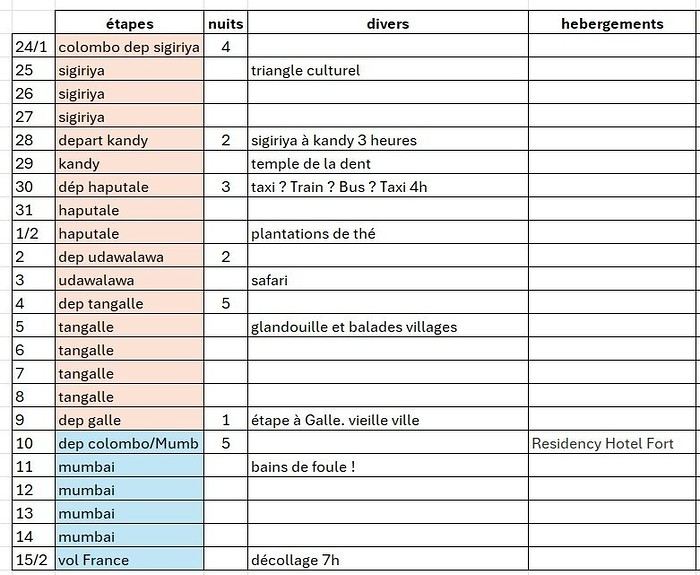
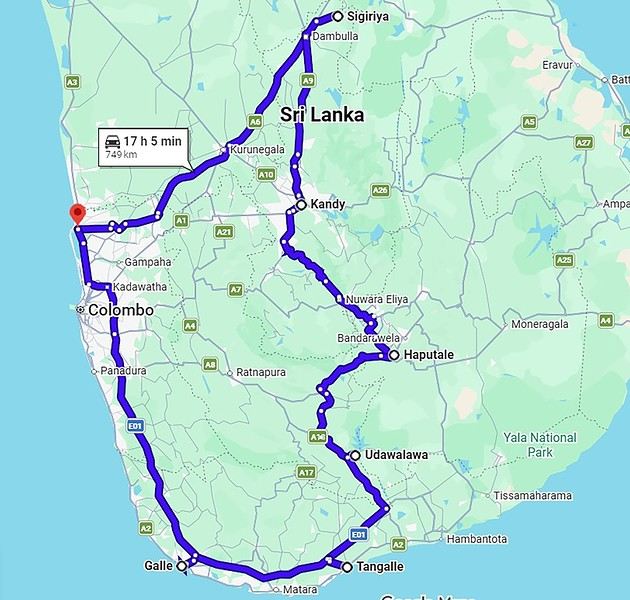
We’re heading to Sri Lanka for 23 days in January 2027—there are four of us—and we’ll wrap up the trip with 5 days in Mumbai. Our itinerary is coming together, but what do you think? (We can’t change the dates since our flights are already booked.)
We still have one night to slot in, and I’ve tentatively planned it in Tangalle, though it was a bit random. Would it make more sense to place it at a different stop? Or is there an intermediate stop I might be missing?
I’ve got accommodations sorted everywhere except Mumbai—it’s a nightmare (either way too expensive or really dodgy). By default, we’ve spotted the Residency Hotel Fort, but 70 € a night (with a discount) for a hotel that doesn’t offer anything special in India?!
Thanks so much for your help!
June 2026 Theme Thread: Such a Beautiful Landscape
This is where we chat.
Which entrance to choose for Pinnacles National Park (California): East or West?
Hi everyone! 🙂
I’m almost done planning our September road trip. After our 3-night visit to Sequoia, we’ll have a stopover night in Coalinga (to break up the drive). We’ll be staying two nights in Monterey and would like to stop along the way to visit one side of Pinnacles National Park. We’re torn between the West entrance and the East entrance, and we’d like to do a short hike of no more than 2 hours since we don’t want to arrive too late in Monterey.
This park is split into two distinct zones with no connection between them, and the mileage from Coalinga to Monterey is pretty much the same for both. Which area do you recommend visiting—east or west? And which route is the most scenic?
I’ve spotted two short hikes: - East: Moses Spring to Rim Trail Loop - West: Balconies Cliffs Cave Loop
Has anyone been there, or do you have another hike to suggest?
Thanks in advance, and have a great afternoon! Marcalamar 🙂
I’m almost done planning our September road trip. After our 3-night visit to Sequoia, we’ll have a stopover night in Coalinga (to break up the drive). We’ll be staying two nights in Monterey and would like to stop along the way to visit one side of Pinnacles National Park. We’re torn between the West entrance and the East entrance, and we’d like to do a short hike of no more than 2 hours since we don’t want to arrive too late in Monterey.
This park is split into two distinct zones with no connection between them, and the mileage from Coalinga to Monterey is pretty much the same for both. Which area do you recommend visiting—east or west? And which route is the most scenic?
I’ve spotted two short hikes: - East: Moses Spring to Rim Trail Loop - West: Balconies Cliffs Cave Loop
Has anyone been there, or do you have another hike to suggest?
Thanks in advance, and have a great afternoon! Marcalamar 🙂
Discussion thread on the May 2026 theme: Staircases
If you’ve already posted your three photos in the contest thread Staircases: May 2026 Photo Contest Theme and a fourth one comes to mind, you can ease your staircase obsession here.
A few examples of staircases:
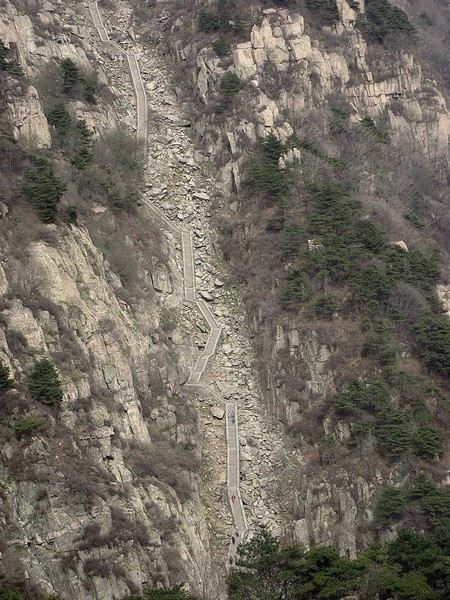
Some of the 6,600 steps on the staircase leading to the summit of Jade Emperor Peak at 1,545 meters.
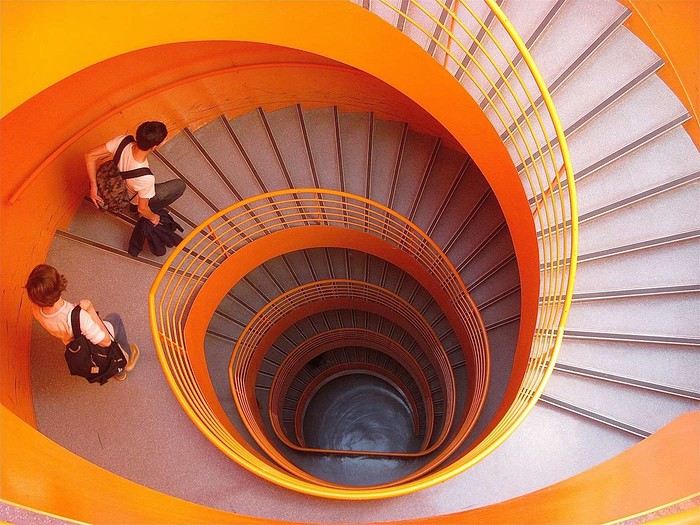
Emergency staircase at the Orléans library (France).
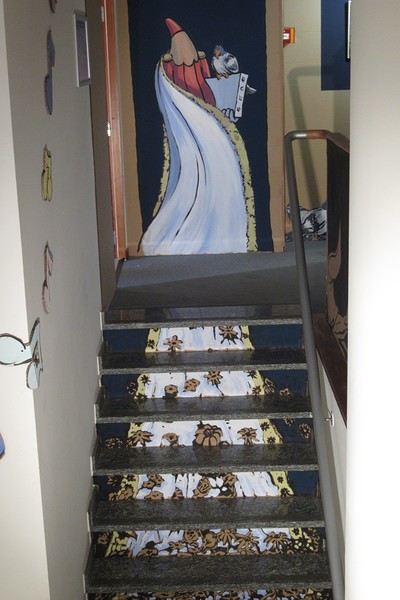
Brussels street artist Créons incorporates the staircase into the dress design of his character.
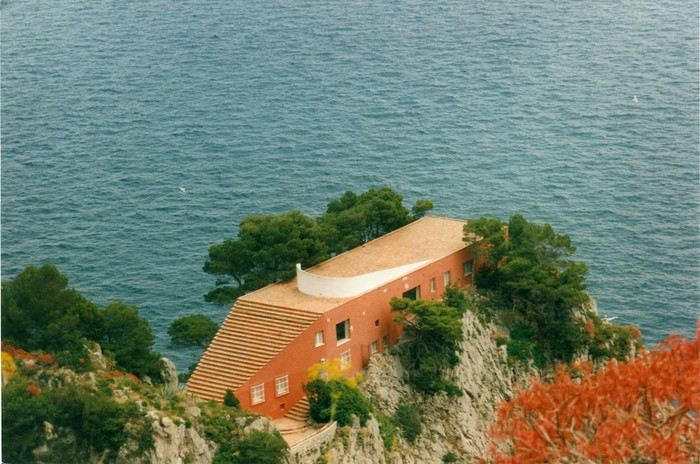
The staircase is part of the roof of Villa Malaparte (Adalberto Libera) on the island of Capri (Italy).
A few examples of staircases:
Some of the 6,600 steps on the staircase leading to the summit of Jade Emperor Peak at 1,545 meters.
Emergency staircase at the Orléans library (France).
Brussels street artist Créons incorporates the staircase into the dress design of his character.
The staircase is part of the roof of Villa Malaparte (Adalberto Libera) on the island of Capri (Italy).
Traveling in France off-season: what to prioritize?
Hi everyone,
I’m thinking about planning several short trips in France outside peak tourist seasons, especially in spring and autumn.
The idea would be to prioritize:
- fewer crowds at tourist sites - more affordable accommodation prices - a more local atmosphere
However, I also have some concerns about:
- attractions or restaurants sometimes being closed - more unpredictable weather depending on the region - less frequent transportation in certain areas
For those of you who’ve traveled in France off-season before, what do you think were the main pros and cons? Are there any regions or specific times that are particularly worth prioritizing?
Thanks in advance for your experiences! 😊
I’m thinking about planning several short trips in France outside peak tourist seasons, especially in spring and autumn.
The idea would be to prioritize:
- fewer crowds at tourist sites - more affordable accommodation prices - a more local atmosphere
However, I also have some concerns about:
- attractions or restaurants sometimes being closed - more unpredictable weather depending on the region - less frequent transportation in certain areas
For those of you who’ve traveled in France off-season before, what do you think were the main pros and cons? Are there any regions or specific times that are particularly worth prioritizing?
Thanks in advance for your experiences! 😊
Planning 3 weeks in Sulawesi
My kids are dreaming of discovering Indonesia this summer—they’ll be celebrating their 15th and 20th birthdays! For the occasion, I was thinking of Sulawesi, a bit farther from Bali’s crowds.
I usually plan my trips myself, but I’ll admit I’m a little lost when it comes to transportation and logistics. We’d be there for about 18 days.
I’ve looked into guided tours, but the prices are pretty high. North or south for 3 weeks? Anyone have any firsthand experience to share?
I usually plan my trips myself, but I’ll admit I’m a little lost when it comes to transportation and logistics. We’d be there for about 18 days.
I’ve looked into guided tours, but the prices are pretty high. North or south for 3 weeks? Anyone have any firsthand experience to share?
10 days in the Canary Islands in January - which islands to choose?
Hi there,
We’re planning to visit the Canary Islands for 10 days. We love hiking and nature in general, and beaches too, though they’re less of a priority.
I’m thinking of spending 5 days in Tenerife, then heading to another island—I’m torn between Lanzarote and Palma.
I just can’t decide.
Thanks for your advice!
Juliette
Self-organized stopovers in the Canary Islands and Madeira
Hi there! We’d love some tips on organizing stopovers on our own in Santa Cruz de Tenerife, Arrecife, Puerto del Rosario, Santa Cruz de La Palma, Las Palmas, and Funchal. Thanks so much for your help
Visiting the pyramids
Hi, how’s the visit to the pyramids going? Do we buy tickets on the spot? Is the distance to cover significant? How do you get around—on foot? Are there shuttles? Thanks
Preparing for Quebec: 1 month with the family
Hello everyone,
We’ve decided to head to Quebec next year—it’s been a dream for the whole family (after watching so many travel shows and the like...). There’ll be five of us: 2 adults, 2 teens (16 and 13), and a child (8 years old). We’re all pretty good walkers, though maybe the teens a little less so—it’s just that age, you know? 😊 That said, they’ve got no problem doing 15 km hikes, just not every single day.
We’re planning to go from July 23 to August 14, arriving and departing from Montreal, so almost 3 weeks. I’ve started looking into logistics and accommodation prices, but before I dive into bookings, I’d love some advice on the itinerary. I’ve read a few threads here and there. Our idea is to visit between 3 and 5 different places over the 3 weeks, so that means the same number of accommodations. The goal is to optimize travel as much as possible—I’ve realized that getting around can take a long time. I think the first two days will be in Montreal to adjust to the time difference, and the last two in Quebec City, though that’s not set in stone.
Anyway, I’m not really sure about the route. I’ve got time to plan everything, but I know the longer we wait, the more expensive and scarce accommodations will get. Same goes for budget—we’ve set aside a mid-range budget, flights included: 3k per person (1k for the flight). So if you’ve got any great tips or advice, we’re all ears!
I was thinking of going up the St. Lawrence River, but I’m not sure how long that takes or where to stop. Maybe there are other places worth visiting farther away...
Anyway, thanks for reading this far! If you’ve got any questions, don’t hesitate.
Thanks, everyone.
We’re planning to go from July 23 to August 14, arriving and departing from Montreal, so almost 3 weeks. I’ve started looking into logistics and accommodation prices, but before I dive into bookings, I’d love some advice on the itinerary. I’ve read a few threads here and there. Our idea is to visit between 3 and 5 different places over the 3 weeks, so that means the same number of accommodations. The goal is to optimize travel as much as possible—I’ve realized that getting around can take a long time. I think the first two days will be in Montreal to adjust to the time difference, and the last two in Quebec City, though that’s not set in stone.
Anyway, I’m not really sure about the route. I’ve got time to plan everything, but I know the longer we wait, the more expensive and scarce accommodations will get. Same goes for budget—we’ve set aside a mid-range budget, flights included: 3k per person (1k for the flight). So if you’ve got any great tips or advice, we’re all ears!
I was thinking of going up the St. Lawrence River, but I’m not sure how long that takes or where to stop. Maybe there are other places worth visiting farther away...
Anyway, thanks for reading this far! If you’ve got any questions, don’t hesitate.
Thanks, everyone.
Slovak travel journal
Hello and welcome aboard this travel journal.
We’re heading to Slovakia together!
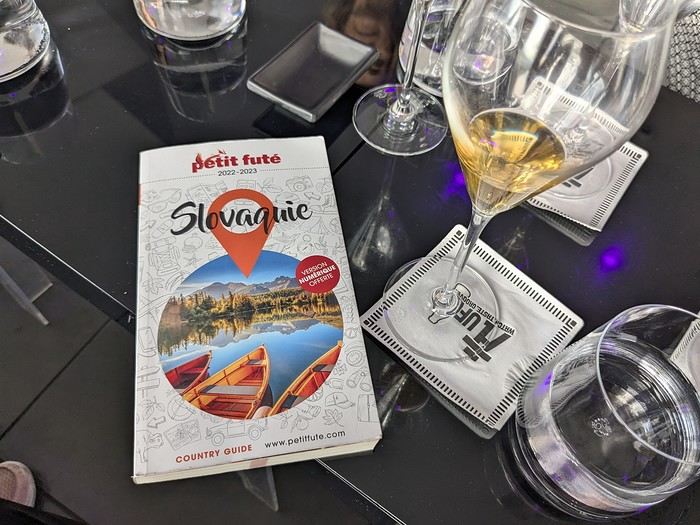 Why this country?
After visiting Hungary, Slovenia, Romania, and Poland in recent years, I’ve fallen in love with Eastern European countries. I adore the Slavic soul, its Austro-Hungarian villages, the gentle landscapes, the Carpathian Mountains, and that slightly mysterious atmosphere.
Slovakia evokes a certain imagination with its deep forests, medieval castles, and cobbled villages.
After seeing photos of the High Tatras—especially Lake Štrbské Pleso and Spiš Castle—I thought, "Let’s do it! We’re going!"
So, will Slovakia live up to what I imagine?
We’ll find out together.
We decided to travel as a group of six (five adults and a six-year-old child), by car (we needed two).
Here’s the day-by-day itinerary for this family trip, which started with a 3-day stay in Vienna (see the dedicated travel journal):
Why this country?
After visiting Hungary, Slovenia, Romania, and Poland in recent years, I’ve fallen in love with Eastern European countries. I adore the Slavic soul, its Austro-Hungarian villages, the gentle landscapes, the Carpathian Mountains, and that slightly mysterious atmosphere.
Slovakia evokes a certain imagination with its deep forests, medieval castles, and cobbled villages.
After seeing photos of the High Tatras—especially Lake Štrbské Pleso and Spiš Castle—I thought, "Let’s do it! We’re going!"
So, will Slovakia live up to what I imagine?
We’ll find out together.
We decided to travel as a group of six (five adults and a six-year-old child), by car (we needed two).
Here’s the day-by-day itinerary for this family trip, which started with a 3-day stay in Vienna (see the dedicated travel journal):
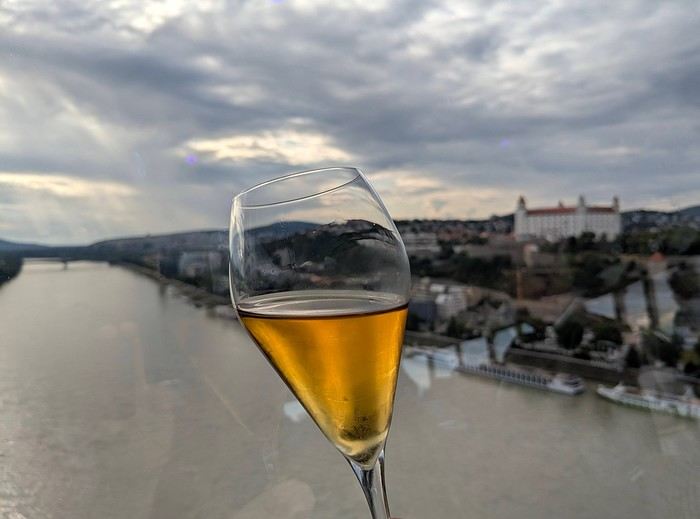
The itinerary: Day 1: Drive from Vienna to Banská Štiavnica and visit the town, then drive to Handlová Day 2: Bojnice Castle, the village of Čičmany, and a walk in the treetops at Bojnice, return to Handlová Day 3: Depart for Orava, visit Orava Castle and the Orava Skansen, drive to Veľký Slavkov Day 4: Visit Slovak Paradise—its gorges, lakes, and ice cave—overnight in Veľký Slavkov Day 5: Visit Bardejov, the "Death Road," wooden churches, and Ľubovňa Castle, overnight in Veľký Slavkov Day 6: Walks and hikes in the High Tatras, Lake Štrbské Pleso, Solisko summit, treetop walk in Ždiar, overnight in Veľký Slavkov Day 7: Drive to Košice, visit Spiš Castle, Tokaj wine route in Veľká Trňa, overnight in Košice Day 8: Visit Košice, overnight in Košice Day 9: Drive to Bratislava, stop at the Aragonite Cave in the Slovak Karst, overnight in Bratislava Day 10: Visit Bratislava, overnight stay Day 11 and 12: Return to France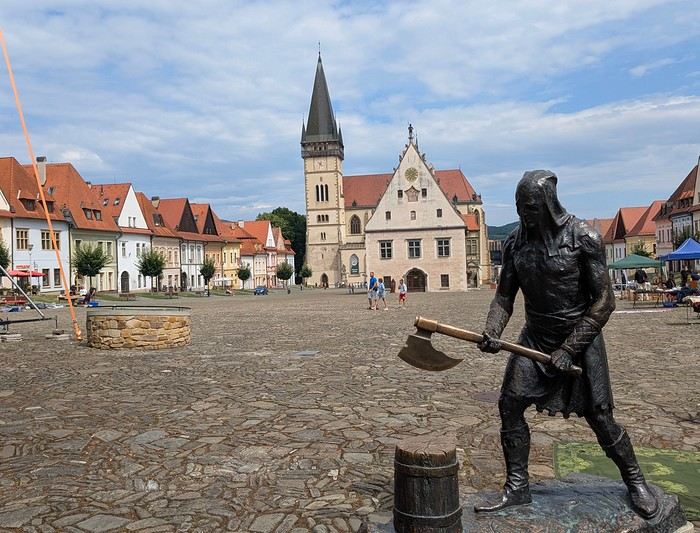
Budget: I’m giving prices for 2 adults / 1 child. Slovakia is more expensive than it seems, and some expenses shouldn’t be underestimated. Transportation: Tolls and gas from France: 500 € round trip Slovak vignette for one month: 17.10 € Gas is fixed at 1.49 € per liter (E10) Parking at sites (all paid by the day, even in the most remote villages, even if you stay for just an hour). Payment is often required in cash upon arrival: total 63 € We didn’t pay at Spiš (we arrived before the cashier) or Ľubovňa (we arrived after the cashier left). Parking at Orava Village was free. In Košice and Bratislava, we parked for free at our accommodations. Public transport in Bratislava and Košice: 1-1.2 € for a bus ticket. Vending machines are available at some stops; otherwise, buy via SMS (Slovak phones only) or official sales points.
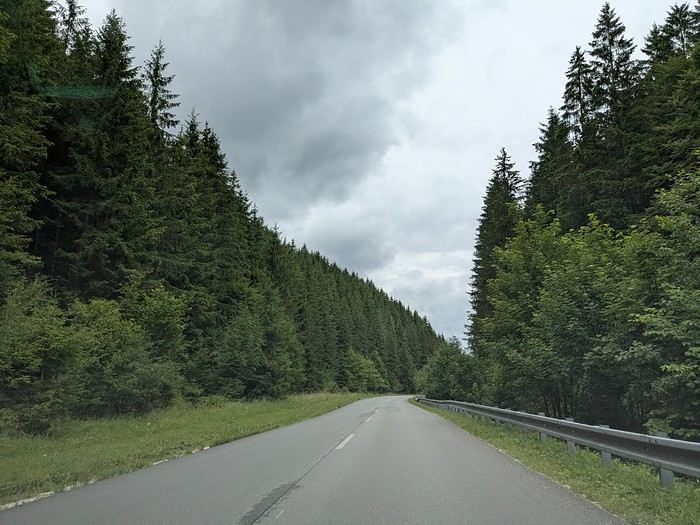
Accommodation: We mostly chose houses so we could cook ourselves and save on food. I’ve rated our satisfaction with these accommodations from 1 to 5 stars. Padua: DC Hotel: 1 night, 77 € ***** Handlová: Chata Remata: 2 nights, 120 € ***** Veľký Slavkov: Aplend: 4 nights, 220 € ** Košice: Luxury Old Town Loft 320m²: 2 nights, 120 € ***** Bratislava: Hotel Viktor: 2 nights, 138 € *** Brescia: Hotel Antica Fonte: 1 night, 82 € ***** Total: 757 €
Food: Groceries at Lidl for 5 meals for 3: 100 € (really cheap) Restaurants: 10-15 € per dish, ice cream 1-2.4 € per scoop, crêpes 8-12 €, a glass of wine 6-10 €... total: 500 €
Visits: There are discounts for seniors and children, which is great. We spent nearly 600 € in total, which is a lot. However, it’s a cultural destination with many castles, museums, caves, wine cellars, and nature activities: cable cars, canopy walks, paid hikes (Slovak Paradise gorges)... In the end, this trip to Slovakia cost nearly 2500 € for 3. We also need to add the Vienna portion to that. Now, here’s the day-by-day account of this beautiful journey.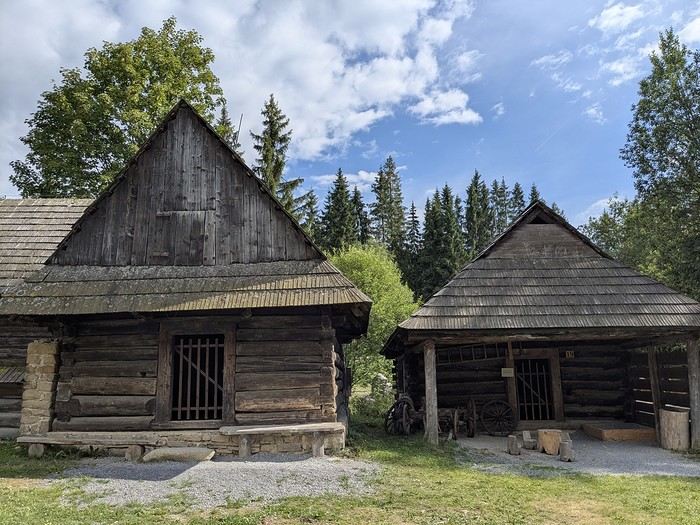
Why this country?
After visiting Hungary, Slovenia, Romania, and Poland in recent years, I’ve fallen in love with Eastern European countries. I adore the Slavic soul, its Austro-Hungarian villages, the gentle landscapes, the Carpathian Mountains, and that slightly mysterious atmosphere.
Slovakia evokes a certain imagination with its deep forests, medieval castles, and cobbled villages.
After seeing photos of the High Tatras—especially Lake Štrbské Pleso and Spiš Castle—I thought, "Let’s do it! We’re going!"
So, will Slovakia live up to what I imagine?
We’ll find out together.
We decided to travel as a group of six (five adults and a six-year-old child), by car (we needed two).
Here’s the day-by-day itinerary for this family trip, which started with a 3-day stay in Vienna (see the dedicated travel journal):
The itinerary: Day 1: Drive from Vienna to Banská Štiavnica and visit the town, then drive to Handlová Day 2: Bojnice Castle, the village of Čičmany, and a walk in the treetops at Bojnice, return to Handlová Day 3: Depart for Orava, visit Orava Castle and the Orava Skansen, drive to Veľký Slavkov Day 4: Visit Slovak Paradise—its gorges, lakes, and ice cave—overnight in Veľký Slavkov Day 5: Visit Bardejov, the "Death Road," wooden churches, and Ľubovňa Castle, overnight in Veľký Slavkov Day 6: Walks and hikes in the High Tatras, Lake Štrbské Pleso, Solisko summit, treetop walk in Ždiar, overnight in Veľký Slavkov Day 7: Drive to Košice, visit Spiš Castle, Tokaj wine route in Veľká Trňa, overnight in Košice Day 8: Visit Košice, overnight in Košice Day 9: Drive to Bratislava, stop at the Aragonite Cave in the Slovak Karst, overnight in Bratislava Day 10: Visit Bratislava, overnight stay Day 11 and 12: Return to France
Budget: I’m giving prices for 2 adults / 1 child. Slovakia is more expensive than it seems, and some expenses shouldn’t be underestimated. Transportation: Tolls and gas from France: 500 € round trip Slovak vignette for one month: 17.10 € Gas is fixed at 1.49 € per liter (E10) Parking at sites (all paid by the day, even in the most remote villages, even if you stay for just an hour). Payment is often required in cash upon arrival: total 63 € We didn’t pay at Spiš (we arrived before the cashier) or Ľubovňa (we arrived after the cashier left). Parking at Orava Village was free. In Košice and Bratislava, we parked for free at our accommodations. Public transport in Bratislava and Košice: 1-1.2 € for a bus ticket. Vending machines are available at some stops; otherwise, buy via SMS (Slovak phones only) or official sales points.
Accommodation: We mostly chose houses so we could cook ourselves and save on food. I’ve rated our satisfaction with these accommodations from 1 to 5 stars. Padua: DC Hotel: 1 night, 77 € ***** Handlová: Chata Remata: 2 nights, 120 € ***** Veľký Slavkov: Aplend: 4 nights, 220 € ** Košice: Luxury Old Town Loft 320m²: 2 nights, 120 € ***** Bratislava: Hotel Viktor: 2 nights, 138 € *** Brescia: Hotel Antica Fonte: 1 night, 82 € ***** Total: 757 €
Food: Groceries at Lidl for 5 meals for 3: 100 € (really cheap) Restaurants: 10-15 € per dish, ice cream 1-2.4 € per scoop, crêpes 8-12 €, a glass of wine 6-10 €... total: 500 €
Visits: There are discounts for seniors and children, which is great. We spent nearly 600 € in total, which is a lot. However, it’s a cultural destination with many castles, museums, caves, wine cellars, and nature activities: cable cars, canopy walks, paid hikes (Slovak Paradise gorges)... In the end, this trip to Slovakia cost nearly 2500 € for 3. We also need to add the Vienna portion to that. Now, here’s the day-by-day account of this beautiful journey.
Join me in discovering Gran Canaria
Introduction
We stayed on the island of Gran Canaria during the first three months of 2024. It’s the third Canary Island we’ve visited, after Tenerife and Lanzarote.
We rented an apartment in Temisas. By staying in the same place for such a long period, the total price dropped by 50%.
We also rented a vehicle to make getting around the island easier.
Why the Canary Islands, and Gran Canaria in particular? For its pleasant climate, the nature and diversity of its landscapes, the charming villages, and especially the beauty of its many beaches.
In this travel journal, you’ll find a list of the many activities we did during our stay to explore the different attractions of this island.
These attractions are categorized to make it easier to find what interests you.
Videos are included throughout the summary. Click on the image to start the video.
To jump to a specific post, here are the relevant links:
HIKES:
Roque Nublo Maspalomas Dunes - Part 1 Maspalomas Dunes - Part 2 Los Azulejos de Veneguera Barranco de Las Vacas Ventana del Bentayga (Arco del Aserrador) Caves of the King Ventana de Morro (Ventana de la Ganifa) The Dog of Bentayga Cave of the Four Doors Ventana del Nublo Artenera - Caves of Acusa Seca Temisas - El Gigante Cave Fortress of Ansite Puerto de Las Nieves - Roque de Las Nieves Temisas - Cuevas de la Audiencia Roque Bentayga Guayadeque Ravine (Guayadeque Hermitage) Guayadeque Ravine (Cueva de Bartalo) El Zumacal - Barranco Tauco Casablanca Dam (Los Dolores Dam) Ayagaures - La Angostura Dam & Gambuesa Dam Santa Brígida - Alonso Ravine & Centennial Dragon Tree Pino Santo Hike in the Azuaje Ravine Gáldar - Red Lands of Samarrita Tejeda - Charco de La Paloma Bandama Boiler (Camino Borde de Caldera Bandama) Teror - Alamo Ravine Trail – SL-4 Telde - Calasio Caves Special Natural Reserve of Los Tilos de Moya Los Azulejos - Charco de Las Aneas Fataga Ravine Arinaga Military Battery Trail Maspalomas - Las Fuentes and del Canizo Ravines Mogán - Tauro Mountain Trail Tamabada - Llanos de La Mimbre & Sobre la Cueva Viewpoints Trail Hike to the Coronadero Arch via Barranco Hondo Barranco de Silva - Hike to the Jerez Caves Gáldar - Samson Cave - La Atalaya Peak Agaete - Roque Guayedra and Guayedra Ravine Artenara - Caballero Caves Arucas - Bufadero Salt Flats Barranco de Pino Gordo - Natural Pools Telde - Los Cernícalos Ravine Las Cruces - Toba Caves & Picón Puerto de Las Nieves - Moro Cave Agüimes - Morros de Ávila Caves Juncalillo del Sur - Laguna & Salinas de Abajo Caves of Camino de San Felipe Cruz de Tejeda, Cruz Chico and Degollada Viewpoint Hike on the Patalavaca Circuit Motor Grande - Puerto Rico Arch El Montañón - Los Hornos Dam Seafront Walk - Amadores Beach – Puerto Rico Beach Las Niñas Dam El Hornillo - Omega & Omicron Caves Arteara Necropolis Mogán - El Mulato Dam Las Garzas - El Regante Dam La Plata Route - Cho Flores Dam & El Charco Hondo Vega de Acusa - La Candelaria Dam Candelaria Hermitage – Acusa Seca Viewpoint Valsequillo de Gran Canaria – Roque La Vela Ayagaures Dam – GC-602 Lomo del Palo - Monte Pavón Trail Lugar La Laguna - Levada Fataga Dam & Ravine
BEACHES:
Mogán Beach Taurito Beach Tauro Beach Amadores Beach Puerto Rico Beach Anfi del Mar Beach Patalavaca Beach Meloneras Beach Maspalomas Beach English Beach (Playa del Inglés) Las Burras Beach San Agustin Beach Las Alcaravaneras Beach Las Canteras Beach (La Cicer) Las Canteras Beach (La Puntilla) Las Canteras Beach (Santa Catalina) Aquamarina Beach El Agujero - Bocabarranco Beach Hoya Del Pozo Beach Hoya Del Pozo Beach - Lizard with amputated tail El Cabron Beach Ojos de Garza Beach El Burrero Beach
NATURAL POOLS:
Charco Azul - El Risco Agaete Salt Flats Charco de Los Espejos - Sardina del Norte Natural Pools of Punta de Gáldar Snorkeling in the natural pool of Punta de Gáldar Natural Pool La Furnia o El Clavo - Gáldar Natural Pool of Los Dos Roques Emiliano Natural Pool - El Agujero Natural Pool of El Agujero Natural Pools of Roque Prieto Natural Pool El Altillo Los Charcones de Bañaderos – Arucas Natural Pools of El Charco de Las Palomas – Arucas Natural Pools of La Laja - Las Palmas de Gran Canaria Cueva de la Reina Mora - La Garita Natural Pools of Castillo del Romeral
TOWNS:
Center
Santa Brigida Vega de San Mateo Tejeda Artenara Vallesco Teror
Southwest
Santa Lucia de Tirajana Fataga San Bartolomé de Tirajana Puerto de Mogán La Aldea de San Nicolas
North
Arucas Firgas Moya Santa Maria de Guia Gáldar Agaete Puerto de Las Nieves
East
Vegueta - Las Palmas de Gran Canaria Triana - Las Palmas de Gran Canaria Ciudad Jardin - Las Palmas de Gran Canaria Canteras - Las Palmas de Gran Canaria Telde Valsequillo de Gran Canaria Ingenio Agüimes Temisas
VIEWPOINTS:
GC-60 Route (or nearby) GC-210 Route (or nearby) GC-210 Route between the tunnel and La Aldea de San Nicolás GC-215 & GC-65 Routes (or nearby) GC-200 Route (or nearby) GC-130 Route (or nearby) & GC-605 GC-70 Route (or nearby) & GC-21 Sheep herd on GC-70 Route GC-150, GC-240, GC-305, GC-350 & GC-301 Routes GC-606, GC-295, GC-231 and GC-41 Routes (or nearby) Viewpoints – GC-1 Route (or nearby) Viewpoints - Las Palmas de Gran Canaria Viewpoints - GC-2, GC-21, GC-15, GC-216 and GC-132 Routes (or nearby) Viewpoints - GC-503 & GC-217 Routes Viewpoints - GC-604, GC-505, GC-132, GC-42 and GC-802 Routes
MISCELLANEOUS:
San Rafael Aqueduct - Telde Abandoned San Rafael Estate - La Higuera Cenobio de Valerón La Cesta - Tejeda Puerto de la Aldea Scenic Route GC-671 to El Espinillo Scenic Route GC-607 to El Chorrillo The Galdar Cube (Santiago Quarry) Scenic Route GC-504 to Ayagaures Abandoned seaside resort in the Azuaje Ravine El Bufadero de La Garita – Telde GC-505 Route Abandoned Finca Las Haciendas (Los Mocanes) – Las Vegas de Valsequillo Ruins of San Juan Battery - Las Palmas de Gran Canaria Viera y Clavijo Canarian Botanical Garden - Las Palmas de Gran Canaria Tenefé Salt Flats Los Pérez, Lugarejos & Las Hoyas Dams Monte Pavón, Gran Canaria’s little Ireland Valleseco Lagoon Recreational Area Climbing - Fataga Ravine Surfing – El Agujero El Cairete Restaurant - Carrizal de Tejeda Paragliding flight observation - Los Giles La Cuevita Ayagaures Restaurant Statues and Murals - Cruce de Arinaga Aviation Monument (Las Majoreras) & Murals – Carrizal Artistic recycling by Antonio Peñita - Ojos de Garza Rainbows
We stayed on the island of Gran Canaria during the first three months of 2024. It’s the third Canary Island we’ve visited, after Tenerife and Lanzarote.
We rented an apartment in Temisas. By staying in the same place for such a long period, the total price dropped by 50%.
We also rented a vehicle to make getting around the island easier.
Why the Canary Islands, and Gran Canaria in particular? For its pleasant climate, the nature and diversity of its landscapes, the charming villages, and especially the beauty of its many beaches.
In this travel journal, you’ll find a list of the many activities we did during our stay to explore the different attractions of this island.
These attractions are categorized to make it easier to find what interests you.
Videos are included throughout the summary. Click on the image to start the video.
To jump to a specific post, here are the relevant links:
HIKES:
Roque Nublo Maspalomas Dunes - Part 1 Maspalomas Dunes - Part 2 Los Azulejos de Veneguera Barranco de Las Vacas Ventana del Bentayga (Arco del Aserrador) Caves of the King Ventana de Morro (Ventana de la Ganifa) The Dog of Bentayga Cave of the Four Doors Ventana del Nublo Artenera - Caves of Acusa Seca Temisas - El Gigante Cave Fortress of Ansite Puerto de Las Nieves - Roque de Las Nieves Temisas - Cuevas de la Audiencia Roque Bentayga Guayadeque Ravine (Guayadeque Hermitage) Guayadeque Ravine (Cueva de Bartalo) El Zumacal - Barranco Tauco Casablanca Dam (Los Dolores Dam) Ayagaures - La Angostura Dam & Gambuesa Dam Santa Brígida - Alonso Ravine & Centennial Dragon Tree Pino Santo Hike in the Azuaje Ravine Gáldar - Red Lands of Samarrita Tejeda - Charco de La Paloma Bandama Boiler (Camino Borde de Caldera Bandama) Teror - Alamo Ravine Trail – SL-4 Telde - Calasio Caves Special Natural Reserve of Los Tilos de Moya Los Azulejos - Charco de Las Aneas Fataga Ravine Arinaga Military Battery Trail Maspalomas - Las Fuentes and del Canizo Ravines Mogán - Tauro Mountain Trail Tamabada - Llanos de La Mimbre & Sobre la Cueva Viewpoints Trail Hike to the Coronadero Arch via Barranco Hondo Barranco de Silva - Hike to the Jerez Caves Gáldar - Samson Cave - La Atalaya Peak Agaete - Roque Guayedra and Guayedra Ravine Artenara - Caballero Caves Arucas - Bufadero Salt Flats Barranco de Pino Gordo - Natural Pools Telde - Los Cernícalos Ravine Las Cruces - Toba Caves & Picón Puerto de Las Nieves - Moro Cave Agüimes - Morros de Ávila Caves Juncalillo del Sur - Laguna & Salinas de Abajo Caves of Camino de San Felipe Cruz de Tejeda, Cruz Chico and Degollada Viewpoint Hike on the Patalavaca Circuit Motor Grande - Puerto Rico Arch El Montañón - Los Hornos Dam Seafront Walk - Amadores Beach – Puerto Rico Beach Las Niñas Dam El Hornillo - Omega & Omicron Caves Arteara Necropolis Mogán - El Mulato Dam Las Garzas - El Regante Dam La Plata Route - Cho Flores Dam & El Charco Hondo Vega de Acusa - La Candelaria Dam Candelaria Hermitage – Acusa Seca Viewpoint Valsequillo de Gran Canaria – Roque La Vela Ayagaures Dam – GC-602 Lomo del Palo - Monte Pavón Trail Lugar La Laguna - Levada Fataga Dam & Ravine
BEACHES:
Mogán Beach Taurito Beach Tauro Beach Amadores Beach Puerto Rico Beach Anfi del Mar Beach Patalavaca Beach Meloneras Beach Maspalomas Beach English Beach (Playa del Inglés) Las Burras Beach San Agustin Beach Las Alcaravaneras Beach Las Canteras Beach (La Cicer) Las Canteras Beach (La Puntilla) Las Canteras Beach (Santa Catalina) Aquamarina Beach El Agujero - Bocabarranco Beach Hoya Del Pozo Beach Hoya Del Pozo Beach - Lizard with amputated tail El Cabron Beach Ojos de Garza Beach El Burrero Beach
NATURAL POOLS:
Charco Azul - El Risco Agaete Salt Flats Charco de Los Espejos - Sardina del Norte Natural Pools of Punta de Gáldar Snorkeling in the natural pool of Punta de Gáldar Natural Pool La Furnia o El Clavo - Gáldar Natural Pool of Los Dos Roques Emiliano Natural Pool - El Agujero Natural Pool of El Agujero Natural Pools of Roque Prieto Natural Pool El Altillo Los Charcones de Bañaderos – Arucas Natural Pools of El Charco de Las Palomas – Arucas Natural Pools of La Laja - Las Palmas de Gran Canaria Cueva de la Reina Mora - La Garita Natural Pools of Castillo del Romeral
TOWNS:
Center
Santa Brigida Vega de San Mateo Tejeda Artenara Vallesco Teror
Southwest
Santa Lucia de Tirajana Fataga San Bartolomé de Tirajana Puerto de Mogán La Aldea de San Nicolas
North
Arucas Firgas Moya Santa Maria de Guia Gáldar Agaete Puerto de Las Nieves
East
Vegueta - Las Palmas de Gran Canaria Triana - Las Palmas de Gran Canaria Ciudad Jardin - Las Palmas de Gran Canaria Canteras - Las Palmas de Gran Canaria Telde Valsequillo de Gran Canaria Ingenio Agüimes Temisas
VIEWPOINTS:
GC-60 Route (or nearby) GC-210 Route (or nearby) GC-210 Route between the tunnel and La Aldea de San Nicolás GC-215 & GC-65 Routes (or nearby) GC-200 Route (or nearby) GC-130 Route (or nearby) & GC-605 GC-70 Route (or nearby) & GC-21 Sheep herd on GC-70 Route GC-150, GC-240, GC-305, GC-350 & GC-301 Routes GC-606, GC-295, GC-231 and GC-41 Routes (or nearby) Viewpoints – GC-1 Route (or nearby) Viewpoints - Las Palmas de Gran Canaria Viewpoints - GC-2, GC-21, GC-15, GC-216 and GC-132 Routes (or nearby) Viewpoints - GC-503 & GC-217 Routes Viewpoints - GC-604, GC-505, GC-132, GC-42 and GC-802 Routes
MISCELLANEOUS:
San Rafael Aqueduct - Telde Abandoned San Rafael Estate - La Higuera Cenobio de Valerón La Cesta - Tejeda Puerto de la Aldea Scenic Route GC-671 to El Espinillo Scenic Route GC-607 to El Chorrillo The Galdar Cube (Santiago Quarry) Scenic Route GC-504 to Ayagaures Abandoned seaside resort in the Azuaje Ravine El Bufadero de La Garita – Telde GC-505 Route Abandoned Finca Las Haciendas (Los Mocanes) – Las Vegas de Valsequillo Ruins of San Juan Battery - Las Palmas de Gran Canaria Viera y Clavijo Canarian Botanical Garden - Las Palmas de Gran Canaria Tenefé Salt Flats Los Pérez, Lugarejos & Las Hoyas Dams Monte Pavón, Gran Canaria’s little Ireland Valleseco Lagoon Recreational Area Climbing - Fataga Ravine Surfing – El Agujero El Cairete Restaurant - Carrizal de Tejeda Paragliding flight observation - Los Giles La Cuevita Ayagaures Restaurant Statues and Murals - Cruce de Arinaga Aviation Monument (Las Majoreras) & Murals – Carrizal Artistic recycling by Antonio Peñita - Ojos de Garza Rainbows
Travel advice for Ipoh
Hi,
I’m planning a trip at the end of October/beginning of November to meet up with friends in Penang. My itinerary includes 2 days in Singapore, 2 days in Kuala Lumpur, 2 nights in Malacca, 2 days in Penang, and 4 days in Bali. Originally, I had planned a side trip from Ipoh (1 night) to pass through Cameron Highlands and especially to see Mossy Forest. But I just realized it’s not Taman Negara. So now I’m not sure if I should just cancel this excursion or still go to Mossy Forest. Is Ipoh worth it, Cameron Highlands (knowing I’ve already visited tea plantations in Sri Lanka), and the primary forest? Thanks for your help
I’m planning a trip at the end of October/beginning of November to meet up with friends in Penang. My itinerary includes 2 days in Singapore, 2 days in Kuala Lumpur, 2 nights in Malacca, 2 days in Penang, and 4 days in Bali. Originally, I had planned a side trip from Ipoh (1 night) to pass through Cameron Highlands and especially to see Mossy Forest. But I just realized it’s not Taman Negara. So now I’m not sure if I should just cancel this excursion or still go to Mossy Forest. Is Ipoh worth it, Cameron Highlands (knowing I’ve already visited tea plantations in Sri Lanka), and the primary forest? Thanks for your help
Tips for a stay in Nashik: accommodations and great deals
Hi everyone,
I’m planning my next trip to India, and my first stop will be the city of Nashik. I’d like to stay there for 3 nights, maybe even 4, to really soak up the atmosphere. Could anyone recommend where to stay and also suggest some good hotels at reasonable prices?
Thanks in advance!
Charlie
I’m planning my next trip to India, and my first stop will be the city of Nashik. I’d like to stay there for 3 nights, maybe even 4, to really soak up the atmosphere. Could anyone recommend where to stay and also suggest some good hotels at reasonable prices?
Thanks in advance!
Charlie
Tips for Athens / Meteora / Cyclades
Hi there,
I’m spending 2 days in Athens in July with my two daughters, aged 10 and 13, during our Greek trip. I’ve seen there’s a multi-day pass for all the major sites in Athens. Is it worth it? I’d love to know if there are any must-see spots (we’ll obviously do the Acropolis, even if it seems like a hassle) and any places to avoid?
I’m also visiting Meteora for 1 to 2 days... which monasteries and caves should we prioritize?
Finally, a few days on Sifnos and Serifos. Should I book a car in advance, or is it easy and quick to rent one when we arrive by ferry?
Thanks for your tips! 😎
I’m spending 2 days in Athens in July with my two daughters, aged 10 and 13, during our Greek trip. I’ve seen there’s a multi-day pass for all the major sites in Athens. Is it worth it? I’d love to know if there are any must-see spots (we’ll obviously do the Acropolis, even if it seems like a hassle) and any places to avoid?
I’m also visiting Meteora for 1 to 2 days... which monasteries and caves should we prioritize?
Finally, a few days on Sifnos and Serifos. Should I book a car in advance, or is it easy and quick to rent one when we arrive by ferry?
Thanks for your tips! 😎
Family itinerary in Quebec in July: tips for finalizing the last leg after Parc du Bic
Hi there,
We’re heading to Quebec from July 7 to 21 with our two kids (ages 5 and 7) and my wife, and we’re putting together an itinerary while keeping some flexibility (though much less than we’d hoped, since we’re realizing accommodations are already filling up fast!).
Below is our draft plan—pretty far along since we’ve booked 9 out of 14 nights—but it’s definitely not perfect.
We’d love some advice on what to do after Parc du Bic (3 nights to improvise) before heading back to Parc Omega, where we’ve booked a tipi :-)
It seems clear that a 3-day Gaspésie loop isn’t doable (too bad about Percé and Parc Forillon, but I think we’re already covering a lot of ground with this route!). But what about the option of driving up to Sainte-Anne-des-Monts to spend a day in Parc de la Gaspésie before the (long) drive back, and still enjoying part of the coastal road, which looks stunning? Thanks in advance for your thoughts!
3 nights in Montreal (booked) Day 1 to 3 – July 7 to 9: Montreal
2 nights near Lac Saint-Charles, 20 min from Quebec City (booked) Day 4 – July 10: Montreal → Montmorency Falls → Quebec City (~3h drive) Day 5 – July 11: Quebec City
2 nights in the Saguenay region (booked) Day 6 – July 12: Quebec City → Baie-Saint-Paul → Canopée Lit (Saguenay), 20 min from Tadoussac Day 7 – July 13: Day in Tadoussac/Les Bergeronnes for a whale-watching excursion, then back toward the Saguenay Fjord for the evening and overnight stay
1 night in Parc du Bic (booked)
Day 8 – July 14: Ferry from Les Escoumins (2 PM) → Trois-Pistoles → Parc du Bic
3 nights to improvise—is it even feasible to go without reservations in July for a family of 4? Day 9 – July 15: Hikes/activities in Parc du Bic – overnight near Cap-Chat/Sainte-Anne-des-Monts??? Other ideas? Day 10 – July 16: Parc de la Gaspésie? Day 11 – July 17: More hikes? Then drive back toward the Mont-Joli area?
1 night at Parc Omega (booked)
Day 12 – July 18: Long drive back from Mont-Joli? Maybe via Kamouraska for a meal break, then overnight at Parc Omega
2 nights near Montreal or surrounding area
Day 13 – July 19: Visit Parc Omega, then a relaxed drive back via scenic routes to Montreal or nearby
Day 14 – July 20: Last day and night in Montreal or the suburbs, fun activities with the kids
Day 15 – July 21: Flight home in the evening
3 nights in Montreal (booked) Day 1 to 3 – July 7 to 9: Montreal
2 nights near Lac Saint-Charles, 20 min from Quebec City (booked) Day 4 – July 10: Montreal → Montmorency Falls → Quebec City (~3h drive) Day 5 – July 11: Quebec City
2 nights in the Saguenay region (booked) Day 6 – July 12: Quebec City → Baie-Saint-Paul → Canopée Lit (Saguenay), 20 min from Tadoussac Day 7 – July 13: Day in Tadoussac/Les Bergeronnes for a whale-watching excursion, then back toward the Saguenay Fjord for the evening and overnight stay
1 night in Parc du Bic (booked)
Day 8 – July 14: Ferry from Les Escoumins (2 PM) → Trois-Pistoles → Parc du Bic
3 nights to improvise—is it even feasible to go without reservations in July for a family of 4? Day 9 – July 15: Hikes/activities in Parc du Bic – overnight near Cap-Chat/Sainte-Anne-des-Monts??? Other ideas? Day 10 – July 16: Parc de la Gaspésie? Day 11 – July 17: More hikes? Then drive back toward the Mont-Joli area?
1 night at Parc Omega (booked)
Day 12 – July 18: Long drive back from Mont-Joli? Maybe via Kamouraska for a meal break, then overnight at Parc Omega
2 nights near Montreal or surrounding area
Day 13 – July 19: Visit Parc Omega, then a relaxed drive back via scenic routes to Montreal or nearby
Day 14 – July 20: Last day and night in Montreal or the suburbs, fun activities with the kids
Day 15 – July 21: Flight home in the evening
Your thoughts on a trip to Croatia
Hi there,
We were planning to spend a month in June exploring Croatia (Istria for 1 week, Plitvice Park, Zadar, Split, the islands, Dubrovnik…) and Montenegro, and we’ve already made good progress on our plans. But after reading the forum, we got a bit worried—there are so many negative reviews. Apparently, tourism has exploded, and Croatians are getting more and more fed up (which we totally get), becoming aggressive and disrespectful. The euro has sent prices skyrocketing, and scams of all kinds are popping up—even car vandalism is being mentioned!!
Here’s what we had in mind: Day 1: Our trip was supposed to start from Nice by car, with a stop in Verona to arrive in Croatia the next day. Days 2–6: First possible detour to visit Postojna Cave in Slovenia (or later from Rijeka... but I’ve heard border crossings can be super long!!!) and a 5-night stay in Rovinj (visiting Rovinj, Bale, Poreč, Grožnjan, and other small villages, Pula, maybe Cape Kamenjak, relaxing on beaches, possibly Cres Island). - Days 7–8: Head toward Rijeka and Plitvice Lakes National Park via the coastal road; 2 nights outside the park (given the prices!!!) and visit the park the next day. Do we need to book park entry way in advance for June? - Days 9–11 or 12: Leave for Zadar for 4 nights—one island (Dugi Otok, Pašman Island, Kornati Islands National Park, Silba, Molat, Olib, Premuda, Sakarun Bay, Veli Žal Beach, Iž Island, Ugljan Island), explore the city, and check out the surroundings. - Days 13–15: Head to Split, visit Šibenik, Split, and Trogir. - Days 16–17: Hvar Island. - Days 18–21 or 22: Head to Dubrovnik, explore the city, cross over to Korčula, Prapatno port at the start of the Pelješac Peninsula, via Ston, Mljet Island (Konavle and Cavtat port?).
- Then return to Split to catch the ferry to Ancona or head to Montenegro for 5–7 days.
If you’ve visited Croatia since 2023 (when it joined the Schengen Zone), we’d love to hear your thoughts on traveling there in June. Françoise
Here’s what we had in mind: Day 1: Our trip was supposed to start from Nice by car, with a stop in Verona to arrive in Croatia the next day. Days 2–6: First possible detour to visit Postojna Cave in Slovenia (or later from Rijeka... but I’ve heard border crossings can be super long!!!) and a 5-night stay in Rovinj (visiting Rovinj, Bale, Poreč, Grožnjan, and other small villages, Pula, maybe Cape Kamenjak, relaxing on beaches, possibly Cres Island). - Days 7–8: Head toward Rijeka and Plitvice Lakes National Park via the coastal road; 2 nights outside the park (given the prices!!!) and visit the park the next day. Do we need to book park entry way in advance for June? - Days 9–11 or 12: Leave for Zadar for 4 nights—one island (Dugi Otok, Pašman Island, Kornati Islands National Park, Silba, Molat, Olib, Premuda, Sakarun Bay, Veli Žal Beach, Iž Island, Ugljan Island), explore the city, and check out the surroundings. - Days 13–15: Head to Split, visit Šibenik, Split, and Trogir. - Days 16–17: Hvar Island. - Days 18–21 or 22: Head to Dubrovnik, explore the city, cross over to Korčula, Prapatno port at the start of the Pelješac Peninsula, via Ston, Mljet Island (Konavle and Cavtat port?).
- Then return to Split to catch the ferry to Ancona or head to Montenegro for 5–7 days.
If you’ve visited Croatia since 2023 (when it joined the Schengen Zone), we’d love to hear your thoughts on traveling there in June. Françoise
Where to stay to explore Ardèche?
Hello,
I’m planning to spend a few days in Ardèche and I’d like to know if we should choose just one base or more to visit the region. Looking at the department map and the main sites to see, I’d personally go for 2 bases to avoid too much driving. So, if anyone who knows this beautiful region well could give me some advice on this, I’d really appreciate it in advance!
I’m planning to spend a few days in Ardèche and I’d like to know if we should choose just one base or more to visit the region. Looking at the department map and the main sites to see, I’d personally go for 2 bases to avoid too much driving. So, if anyone who knows this beautiful region well could give me some advice on this, I’d really appreciate it in advance!
On the Derisive Thread (Episode 1)
Dear members of this forum,
*With the pandemic, travel guides were replaced by cookbooks. With lockdown, there’s no need for the *Guía del Trotamundos*—the cookbook is gospel, and your daily life turns into a *Spaghetti Western*. It’s no longer about good and bad actors but good and bad fats. And for a few extra pinches of salt. To the tune of Ennio Morricone, it’s hard to diagnose pastalogy—sorry, the pathology—you’re suffering from. Italy, now confined, and pasta—no more aimless gondola rides on Venice’s canals or *Dolce Vita* weekends in Rome. The beauty of the soul blends with minestrone preparation.
*With the pandemic, Professor Didier Raoult became the new Christ-like figure; like the Indira Gandhi of medicine, like Moses showing the way to the people across the Dead Sea, for tormented souls, the value of a medical prescription doesn’t wait for the years to pass. And plexiglass reigned over the world.
*With the pandemic and gender theory, in particular, pushing us to become androgynous, hermaphroditic beings—*patatras*—the Colossi of Rhodes we are waver because of a tiny nuisance.
*Phew, the pandemic has receded... but watch out for a new swine flu pandemic, because on this forum, it’ll be followed by long-winded rants. Political/historical revisionism with such a pandemic—Fidel Castro wouldn’t have been able to invade the *Bahía de los Cochinos*. And that’s where his comrade Ernesto *Che* Guevara becomes a perfect scam. A fierce opponent of capitalist ideology, yet many clothing sellers got rich selling T-shirts with his face on them.
*Neutrality and the Helvetic underground. Last summer, I found myself passing the *Chalet Gaillard* deep in the *Forêt du Risoux* in the Jura, then crossing the border into the Canton of Vaud on foot. My disappointment was great: no sign indicating we were in neutral territory. And what kind of neutrality are we talking about? Since neutrality is an abstract concept. It’s like those visitors eager to see Calais who, spotting the sign for the *Pas-de-Calais* department, turn around on the road.
*There’s always a traveler quick to recommend a local guide. I know an excellent guide named Michel who lives in Cairo—Michel of Cairo. He has a truck and takes you to see the pharaoh’s ruins by truck. Still, be careful—good guides aren’t that common, because there are only eight Cairenes.
*The mix between large mammals and humans. Or how infantilism rules the world. The ultimate quest for happiness is petting rhinos in Nepal—we’ll confirm if this kind of animal is visible on the streets of Sauraha, a town near Chitwan National Park. The downside of this animal? It takes up too much space as a pet—better to raise a Yorkshire terrier in your modest apartment.
*I’m tired of recurring topics like, *‘Do I have time for my connection at New York airport?’* Aren’t you? There’s the discussion about *Gare de Lyon Part-Dieu*—*Gare de Lyon Part-Dieu*, God bless you. In the name of the Father, the taxman, and the Holy Spirit, don’t miss your connection. *Gare de Lyon-Part-Dieu*—apparently, a great French actor, Gérard de Part-Dieu, was born there. If you think you’ll miss your connection, just get rich and fly private. The working masses of the *lumpenproletariat*—they dare everything, that’s how you recognize them.
*Experts in non-events: learning that some members don’t like Spanish-speaking countries because, supposedly, the people are too loud. That’s it, I’m not going to China anymore—too many stairs on the Great Wall. So, too bad, I’m not going. It’s like two people crossing paths—one asks, *‘Going fishing?’* and the other says no. These experts are probably natives of Arles, because with people like that, it’s *l’Arlésienne*...
*The art of taking selfies at every turn. You’d think it’s an ancient practice, almost an anthropological ritual—everything suggests it dates back to prehistoric times. Back in the days of the Lascaux caves, instead of photographing the meal they were about to eat (it’s crazy how many food photos we see on this forum, especially in travel journals), prehistoric men and women could only make cave paintings. From there, it’s only a small step to conclude that cave art was nothing more than the menu served in caves that doubled as *Buffalo Grills* long before the chain existed. By the way, if you want to visit the caves, ask for a guide named Josiane. When it comes to parietal art skills, Josiane beats Lascaux... (Only the French on this forum will get that one.)
*Mythology of an object: the suitcase (a nod to Mr. Éric Libiot, whose columns I enjoy) An object that gets lost during a flight, especially during a transfer at an airport. And it’s stuffed to the brim with clothes and other useless items, like Mickey Mouse slippers. You’re in despair: when going through customs, the officers find those slightly risqué photos hidden in your laundry, taken at Cap d’Agde on a naturist beach. The suitcase is an object that makes noise when rolling because of its wheels—you’re quickly spotted.
*Hurry up and visit New York while you still can. Because of *Woke* ideology, more and more statues are being torn down, and the Statue of Liberty will likely meet the same fate. *Queer* culture isn’t everyone’s cup of tea.
*The Dead Poets Society I admired the beautiful photos of Venice, and *click*—I check the new discussions when I come across one where Mr. J.M.B. offers money loans. This person probably works at the Ministry of Finance and risks loosening the purse strings of your wallets.
*Toward the independence of New Caledonia: will we call it *Nouvelle Nouvelle-Calédonie*? From what I know, Chinese authorities want to settle there and invest; apparently, they want to send (fake) tourists—facsimiles of real travelers. So, it’ll be hard to separate the wheat from the chaff (the *ivraie* tourists).
*There’s a topic about hitchhiking in Scotland: apparently, Scots are very welcoming people. I imagine arriving at Aberdeen Airport to a typical welcoming committee—men in kilts and a bagpiper playing. Just like arriving in Papeete, where you’re greeted with flower leis—*Aloha! (Jacta Est)*. To attract tourists, Scottish cities will end up installing whisky vending machines.
*Eskimo pies banned for sale because of *cancel culture*—you can’t go to Iqaluit anymore. Panicked, ice cream manufacturers had to revise their *packaging*—sorry for the anglicism. Because of *cancel culture*, we can no longer say *Eskimo* without it being pejorative. The identity of the Arctic people of the same name takes a hit—it’s crazy how *bien-pensance* wreaks havoc in our minds... We can’t even bite into a chocolate *Eskimo* pie anymore.
*Diplomatic tensions between France and Australia: and there goes the submarine sale project, canceled. Given that the cost of these machines is a fifth of Australia’s public finances budget, it’s tough to pay in didgeridoos and kangaroo skins.
Thanks for reading, and see you soon for more chronicles.
*With the pandemic, travel guides were replaced by cookbooks. With lockdown, there’s no need for the *Guía del Trotamundos*—the cookbook is gospel, and your daily life turns into a *Spaghetti Western*. It’s no longer about good and bad actors but good and bad fats. And for a few extra pinches of salt. To the tune of Ennio Morricone, it’s hard to diagnose pastalogy—sorry, the pathology—you’re suffering from. Italy, now confined, and pasta—no more aimless gondola rides on Venice’s canals or *Dolce Vita* weekends in Rome. The beauty of the soul blends with minestrone preparation.
*With the pandemic, Professor Didier Raoult became the new Christ-like figure; like the Indira Gandhi of medicine, like Moses showing the way to the people across the Dead Sea, for tormented souls, the value of a medical prescription doesn’t wait for the years to pass. And plexiglass reigned over the world.
*With the pandemic and gender theory, in particular, pushing us to become androgynous, hermaphroditic beings—*patatras*—the Colossi of Rhodes we are waver because of a tiny nuisance.
*Phew, the pandemic has receded... but watch out for a new swine flu pandemic, because on this forum, it’ll be followed by long-winded rants. Political/historical revisionism with such a pandemic—Fidel Castro wouldn’t have been able to invade the *Bahía de los Cochinos*. And that’s where his comrade Ernesto *Che* Guevara becomes a perfect scam. A fierce opponent of capitalist ideology, yet many clothing sellers got rich selling T-shirts with his face on them.
*Neutrality and the Helvetic underground. Last summer, I found myself passing the *Chalet Gaillard* deep in the *Forêt du Risoux* in the Jura, then crossing the border into the Canton of Vaud on foot. My disappointment was great: no sign indicating we were in neutral territory. And what kind of neutrality are we talking about? Since neutrality is an abstract concept. It’s like those visitors eager to see Calais who, spotting the sign for the *Pas-de-Calais* department, turn around on the road.
*There’s always a traveler quick to recommend a local guide. I know an excellent guide named Michel who lives in Cairo—Michel of Cairo. He has a truck and takes you to see the pharaoh’s ruins by truck. Still, be careful—good guides aren’t that common, because there are only eight Cairenes.
*The mix between large mammals and humans. Or how infantilism rules the world. The ultimate quest for happiness is petting rhinos in Nepal—we’ll confirm if this kind of animal is visible on the streets of Sauraha, a town near Chitwan National Park. The downside of this animal? It takes up too much space as a pet—better to raise a Yorkshire terrier in your modest apartment.
*I’m tired of recurring topics like, *‘Do I have time for my connection at New York airport?’* Aren’t you? There’s the discussion about *Gare de Lyon Part-Dieu*—*Gare de Lyon Part-Dieu*, God bless you. In the name of the Father, the taxman, and the Holy Spirit, don’t miss your connection. *Gare de Lyon-Part-Dieu*—apparently, a great French actor, Gérard de Part-Dieu, was born there. If you think you’ll miss your connection, just get rich and fly private. The working masses of the *lumpenproletariat*—they dare everything, that’s how you recognize them.
*Experts in non-events: learning that some members don’t like Spanish-speaking countries because, supposedly, the people are too loud. That’s it, I’m not going to China anymore—too many stairs on the Great Wall. So, too bad, I’m not going. It’s like two people crossing paths—one asks, *‘Going fishing?’* and the other says no. These experts are probably natives of Arles, because with people like that, it’s *l’Arlésienne*...
*The art of taking selfies at every turn. You’d think it’s an ancient practice, almost an anthropological ritual—everything suggests it dates back to prehistoric times. Back in the days of the Lascaux caves, instead of photographing the meal they were about to eat (it’s crazy how many food photos we see on this forum, especially in travel journals), prehistoric men and women could only make cave paintings. From there, it’s only a small step to conclude that cave art was nothing more than the menu served in caves that doubled as *Buffalo Grills* long before the chain existed. By the way, if you want to visit the caves, ask for a guide named Josiane. When it comes to parietal art skills, Josiane beats Lascaux... (Only the French on this forum will get that one.)
*Mythology of an object: the suitcase (a nod to Mr. Éric Libiot, whose columns I enjoy) An object that gets lost during a flight, especially during a transfer at an airport. And it’s stuffed to the brim with clothes and other useless items, like Mickey Mouse slippers. You’re in despair: when going through customs, the officers find those slightly risqué photos hidden in your laundry, taken at Cap d’Agde on a naturist beach. The suitcase is an object that makes noise when rolling because of its wheels—you’re quickly spotted.
*Hurry up and visit New York while you still can. Because of *Woke* ideology, more and more statues are being torn down, and the Statue of Liberty will likely meet the same fate. *Queer* culture isn’t everyone’s cup of tea.
*The Dead Poets Society I admired the beautiful photos of Venice, and *click*—I check the new discussions when I come across one where Mr. J.M.B. offers money loans. This person probably works at the Ministry of Finance and risks loosening the purse strings of your wallets.
*Toward the independence of New Caledonia: will we call it *Nouvelle Nouvelle-Calédonie*? From what I know, Chinese authorities want to settle there and invest; apparently, they want to send (fake) tourists—facsimiles of real travelers. So, it’ll be hard to separate the wheat from the chaff (the *ivraie* tourists).
*There’s a topic about hitchhiking in Scotland: apparently, Scots are very welcoming people. I imagine arriving at Aberdeen Airport to a typical welcoming committee—men in kilts and a bagpiper playing. Just like arriving in Papeete, where you’re greeted with flower leis—*Aloha! (Jacta Est)*. To attract tourists, Scottish cities will end up installing whisky vending machines.
*Eskimo pies banned for sale because of *cancel culture*—you can’t go to Iqaluit anymore. Panicked, ice cream manufacturers had to revise their *packaging*—sorry for the anglicism. Because of *cancel culture*, we can no longer say *Eskimo* without it being pejorative. The identity of the Arctic people of the same name takes a hit—it’s crazy how *bien-pensance* wreaks havoc in our minds... We can’t even bite into a chocolate *Eskimo* pie anymore.
*Diplomatic tensions between France and Australia: and there goes the submarine sale project, canceled. Given that the cost of these machines is a fifth of Australia’s public finances budget, it’s tough to pay in didgeridoos and kangaroo skins.
Thanks for reading, and see you soon for more chronicles.
22-day itinerary in Bosnia and Herzegovina and Croatia: your thoughts and advice?
Hello,
After spending some time reading through the forum posts, I’m finally taking the plunge to ask for your help. We’re planning a family trip—a couple with two kids aged 10 and 12—and we’ll be driving from the Paris region. Flying isn’t an option for us. We’ll pass through Munich on the way out and Mantua on the way back. I’ve tried to design an itinerary that suits our preferences: moving at a relaxed pace, avoiding constant packing and unpacking, and keeping the kids engaged. To give you an idea, our oldest wasn’t too impressed with Corsica because "it was meh, just pretty landscapes to look at." Our youngest is only happy when she can dip her feet in the water, and the parents aren’t fans of lounging on a towel for too long.
After all my research, I’ll admit I’m feeling a bit overwhelmed. Is this itinerary doable without turning into a mad dash? Am I missing any must-see spots? Is the Croatia leg realistic? Is it worth staying 4 nights on Brač, given we’re not big beach fans? Have I accounted for enough time at the border crossings? I’d love to hear your thoughts and advice.
Here’s the planned itinerary from July 21 to August 17: Day 1 to 4: Munich Day 5: Depart Munich for Plitvice Lakes (overnight there) Day 6: Visit Plitvice Lakes (overnight there) Day 7: Drive to Una (overnight in Cardaklije) Day 8: Visit Una (overnight in Cardaklije) Day 9: Rafting? (overnight in Cardaklije) Day 10: Drive to Sarajevo. Visit Jajce and Travnik? (overnight in Sarajevo) Day 11: Visit Sarajevo (overnight in Sarajevo) Day 12: Skakavac Waterfalls or other points of interest in the area (overnight in Sarajevo) Day 13: Drive to Mostar. Visit Konjic and Jablanica (overnight in Mostar or Blagaj?) Day 14: Kravica Waterfalls (overnight in Mostar or Blagaj?) Day 15: Visit Blagaj (overnight in Mostar or Blagaj?) Day 16: Visit Počitelj—drive to Hutovo Blato (overnight where???) Day 17: Visit (overnight where??) Day 18: Visit Split (and Trogir?) (overnight in Split or nearby) Day 19: Ferry to Brač (4 nights on Brač) Day 23: Ferry back to Split—drive to Šibenik (overnight in Šibenik or nearby) Day 24: Day trip to the Kornati Islands? (overnight in Šibenik) Day 25: Krka National Park (overnight in Šibenik) Day 26: Depart for Mantua
What do you think? I’m eagerly awaiting your responses. Thanks so much for your help!
After spending some time reading through the forum posts, I’m finally taking the plunge to ask for your help. We’re planning a family trip—a couple with two kids aged 10 and 12—and we’ll be driving from the Paris region. Flying isn’t an option for us. We’ll pass through Munich on the way out and Mantua on the way back. I’ve tried to design an itinerary that suits our preferences: moving at a relaxed pace, avoiding constant packing and unpacking, and keeping the kids engaged. To give you an idea, our oldest wasn’t too impressed with Corsica because "it was meh, just pretty landscapes to look at." Our youngest is only happy when she can dip her feet in the water, and the parents aren’t fans of lounging on a towel for too long.
After all my research, I’ll admit I’m feeling a bit overwhelmed. Is this itinerary doable without turning into a mad dash? Am I missing any must-see spots? Is the Croatia leg realistic? Is it worth staying 4 nights on Brač, given we’re not big beach fans? Have I accounted for enough time at the border crossings? I’d love to hear your thoughts and advice.
Here’s the planned itinerary from July 21 to August 17: Day 1 to 4: Munich Day 5: Depart Munich for Plitvice Lakes (overnight there) Day 6: Visit Plitvice Lakes (overnight there) Day 7: Drive to Una (overnight in Cardaklije) Day 8: Visit Una (overnight in Cardaklije) Day 9: Rafting? (overnight in Cardaklije) Day 10: Drive to Sarajevo. Visit Jajce and Travnik? (overnight in Sarajevo) Day 11: Visit Sarajevo (overnight in Sarajevo) Day 12: Skakavac Waterfalls or other points of interest in the area (overnight in Sarajevo) Day 13: Drive to Mostar. Visit Konjic and Jablanica (overnight in Mostar or Blagaj?) Day 14: Kravica Waterfalls (overnight in Mostar or Blagaj?) Day 15: Visit Blagaj (overnight in Mostar or Blagaj?) Day 16: Visit Počitelj—drive to Hutovo Blato (overnight where???) Day 17: Visit (overnight where??) Day 18: Visit Split (and Trogir?) (overnight in Split or nearby) Day 19: Ferry to Brač (4 nights on Brač) Day 23: Ferry back to Split—drive to Šibenik (overnight in Šibenik or nearby) Day 24: Day trip to the Kornati Islands? (overnight in Šibenik) Day 25: Krka National Park (overnight in Šibenik) Day 26: Depart for Mantua
What do you think? I’m eagerly awaiting your responses. Thanks so much for your help!
Two weeks in the Cyclades
The Cyclades attract a lot (a LOT) of people in the summer, and it's not always clear how to visit them.
For our first family trip to the Cyclades (in 2016), we took a route that seems great for discovering the islands: - Flight Paris / Santorini (Transavia) - 3 nights in Santorini - Ferry Santorini / Milos - 4 nights in Milos - Ferry Milos / Sifnos - 4 nights in Sifnos - Ferry Sifnos / Athens - 3 nights in Athens - Flight Athens / Paris
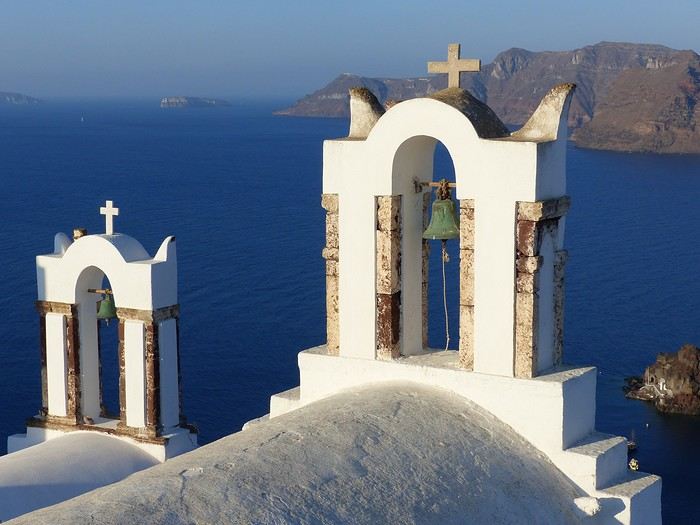
Santorini is the postcard image of the Cyclades... but not really any beaches for kids. My tip: you should stay in Oia because it's really "the spot" on the island. We chose the Pension "The Flower": simple but very well located and with a pool for the kids. Another tip: rent a car as soon as you arrive at the airport because the island is vast.
Our favorite moment: Oia around 6:00 AM, a paradise for photographers. It’s nothing like the daytime, or especially the evening when all the crowds rush in for the famous "sunset." Another favorite, the hike between Fira and Oia, 10 km, 4 hours of walking with extraordinary views (especially around Imerovigli). For the rest, we toured the island—it’s nice but nothing to marvel at.
After a 2.5-hour ferry ride, we arrived in Milos, home of the famous Venus de Milo. This is our favorite island in the Cyclades (though we haven’t seen them all!). In the port of Adamantas, we stayed at the Liogerma Hotel (very well located near the port).
Our favorite experience: the boat tour around the island (and swimming at Kleftiko). Absolutely a must-do, but book it as soon as you arrive because it’s often fully booked for the next two days.
I also recommend renting a car to explore this island. Other favorites: the incredible fishing village of Klima with its colorful boat houses, the rocks of Sarakiniko (best in the morning sun), the beach at Tsigrado (with its ladder access through the rocks), Plaka, the caves of Papafragas, the waters of Firopotamos, and Fyriplaka...
Just a 1-hour ferry ride, and you’re already in Sifnos. A small island with a bus network that means you don’t need to rent a vehicle. We stayed in Kamares (Hotel Afroditi).
Sifnos has charming villages typical of the Cyclades (Kastro, Apollonia), beautiful chapels (Chrisopigi, the Church of the Seven Martyrs...), and lovely beaches (Cherronissos, Platis Galios...). Our favorite: hiking around Faros and the Chrisopigi Monastery.
A 3-hour ferry ride takes you back to the port of Piraeus to visit Athens: the Acropolis, its museums, and the Plaka district. A little favorite of ours: the Archaeological Museum, slightly off the tourist trail... With this route, you’ll see the diversity of the Cyclades and Athens without wasting too much time on ferries.
PS: We also did the loop Mykonos / Paros / Amorgos / Mykonos, but that’s a good idea... for a second trip ;)
For our first family trip to the Cyclades (in 2016), we took a route that seems great for discovering the islands: - Flight Paris / Santorini (Transavia) - 3 nights in Santorini - Ferry Santorini / Milos - 4 nights in Milos - Ferry Milos / Sifnos - 4 nights in Sifnos - Ferry Sifnos / Athens - 3 nights in Athens - Flight Athens / Paris
Santorini is the postcard image of the Cyclades... but not really any beaches for kids. My tip: you should stay in Oia because it's really "the spot" on the island. We chose the Pension "The Flower": simple but very well located and with a pool for the kids. Another tip: rent a car as soon as you arrive at the airport because the island is vast.
Our favorite moment: Oia around 6:00 AM, a paradise for photographers. It’s nothing like the daytime, or especially the evening when all the crowds rush in for the famous "sunset." Another favorite, the hike between Fira and Oia, 10 km, 4 hours of walking with extraordinary views (especially around Imerovigli). For the rest, we toured the island—it’s nice but nothing to marvel at.
After a 2.5-hour ferry ride, we arrived in Milos, home of the famous Venus de Milo. This is our favorite island in the Cyclades (though we haven’t seen them all!). In the port of Adamantas, we stayed at the Liogerma Hotel (very well located near the port).
Our favorite experience: the boat tour around the island (and swimming at Kleftiko). Absolutely a must-do, but book it as soon as you arrive because it’s often fully booked for the next two days.
I also recommend renting a car to explore this island. Other favorites: the incredible fishing village of Klima with its colorful boat houses, the rocks of Sarakiniko (best in the morning sun), the beach at Tsigrado (with its ladder access through the rocks), Plaka, the caves of Papafragas, the waters of Firopotamos, and Fyriplaka...
Just a 1-hour ferry ride, and you’re already in Sifnos. A small island with a bus network that means you don’t need to rent a vehicle. We stayed in Kamares (Hotel Afroditi).
Sifnos has charming villages typical of the Cyclades (Kastro, Apollonia), beautiful chapels (Chrisopigi, the Church of the Seven Martyrs...), and lovely beaches (Cherronissos, Platis Galios...). Our favorite: hiking around Faros and the Chrisopigi Monastery.
A 3-hour ferry ride takes you back to the port of Piraeus to visit Athens: the Acropolis, its museums, and the Plaka district. A little favorite of ours: the Archaeological Museum, slightly off the tourist trail... With this route, you’ll see the diversity of the Cyclades and Athens without wasting too much time on ferries.
PS: We also did the loop Mykonos / Paros / Amorgos / Mykonos, but that’s a good idea... for a second trip ;)
Visiting northern Laos with a driver from Luang Prabang
Hi, I’d like to visit northern Laos by car with a driver from Luang Prabang.
Anyone able to share their experience and give me the contact details for a private driver? Thanks for your replies!
Da Nang and Hoi An (Vietnam)
DANANG
A big city in the midst of an economic boom. The setting is stunning, with its large bay, the Son Tra Peninsula, and the Annamite Mountains on the horizon.
Where to stay and eat? Da Nang is a bustling business hub, so hotels are pricier and often fully booked. I was lucky to find a motorbike taxi driver who, after six full hotels, took me to Mai Son Hotel, 113 Nguyen Van Linh, a spotless 2-star place. Plus, right next door, there’s a great restaurant that seems popular with locals, and a good Chinese restaurant just a 5-minute walk away, Phi Lu (178 Nguyen Van Linh), recommended by the *Guide du Routard*. So, I’d definitely recommend this hotel. For a pricier option, the very Christian Dai A Hotel, near the tiny pink cathedral, is nice, but why pay more?
Actually, why stay in Da Nang when the gorgeous Hoi An is just 34 km to the south?
What to see? - The lovely Cham Museum (small, takes at most an hour) - The climb up Son Tra Peninsula (great views of the whole area) - The “tour” of the peninsula—quotation marks because the road stops two-thirds of the way. There’s an interesting little museum on the left before reaching the base of the huge statue, the Đong Đinh (large entrance on the left side of the hill), with traditional houses in the jungle holding artifacts over 2,000 years old (Sa Huynh culture; if you’re interested, check out the small Sa Huynh Museum in Hoi An, just before the Japanese Bridge). However, the big Linh Ung Pagoda is just colorful concrete! A beautiful resort, the Son Tra Beach Resort and Spa, sits on a pristine beach and isn’t too expensive: $120 for a garden room and $200–$270 for duplexes with a pool, where you can sleep six. Before reaching the resort, you’ll find two excellent seafood restaurants with large beachfront terraces on your right. - On the way to Hoi An, Marble Mountain, where I loved the village of marble sculpture workshops, the pretty pagodas and caves, and the stunning view from the top of the last promontory (the stairs are steep!). However, you can skip the famous China Beach and its resorts—all pretentious and expensive, not to mention the ones under construction on both sides of the road (they’re multiplying like crazy!). So, when traveling from Da Nang to Hoi An, I recommend two stops: the Cham Museum and Marble Mountain. - The beautiful drive to the Hai Van Pass (there weren’t any clouds!), offering spectacular views of the Da Nang region to the south and the coast to the north. The descent leads to the fishing village and beach of Lang Co, which is lovely but destined for rampant resort development, judging by the huge projects advertised on billboards along the road after the village. - Some affordable guesthouses ($15) and big resorts, including the lovely Lang Co Beach Resort, with a large pool and great value given the beautiful gardens and elegant bungalows. Recommended in Lang Co: lunch at one of the two stilt restaurants over the lagoon—great views and fresh seafood.
The public bus to Hoi An, 34 km south of Da Nang, takes 45 minutes for 50,000 dong. There’s one every half hour.
HOI AN This is a “must-see” for so many reasons: stunning old houses, temples, and pagodas; a colorful daily open-air and covered market near the bridge; charming little streets in the old quarter—especially at night, with all the multicolored lanterns and riverside restaurant terraces, it’s very romantic. The local food is delicious, the people are friendly and kind, there are two beautiful beaches, and attractions like the Cham ruins of My Son. Some say Hoi An is overrun with tourists and should be avoided. That’s true for the historic center and An Bang Beach, but not at all once you step outside.
WHERE TO STAY For a 2-star option, I recommend Ngo House Villa (99 Nguyen Phuc Tan St), very quiet on the island just across from the Old Quarter: 3-star rooms + suites, a large “Family” room, and a nice pool, all for $20 ($40 for the “Family” room). The same charming owner has a second hotel 20 meters away (No. 74), Phan Ngô, which is older but has a large terrace and a small pool—I prefer this one. For 3 stars, Thuy Duong 3 (92 Ba Trieu) is perfect, with a pool and garden ($40–$60). A bit pricier but great is A Han on Phan Bai Chau, with a large garden and terrace restaurant.
For those with a bigger budget, I recommend two riverside spots with rooms, suites, and pools, priced at $200–$350: the secluded Coco River Resort (formerly Ancient House River, with a large wooden terrace for romantic dinners by the river) and Anantara, (formerly Heritage), with bungalows close to the old town—but pricey.
Outside the city, my favorite hotel is Villa Loan, the new place from the famous Loan of Tam Coc, very quiet in the countryside, 15 minutes by bike from Old Hoi An and An Bang Beach. Beautiful rooms ($35), a Family room with two double beds ($55), two 65 m² twins that can sleep six (two large beds + two single beds—$80), a terrace restaurant, and a lovely pool. Prices include a buffet breakfast and a bike.
Also great is Daisy Anbang on An Bang Beach, elegant with a pool and beach just 50 meters away (skip the Aira next door—too expensive).
WHERE TO EAT Hoi An is Vietnam’s culinary capital. For Vietnamese food, I recommend Dao Tien, 21 Phan Bai Chau. No surprise—the chef is a former chef at the luxury 4-star Victoria Hoi An, a solid reference. The restaurant now has a beautiful terrace by the river (take the alley on the right side of the main street Dao Tien). Plus, you’re doing a good deed: a large part of the profits goes toward educating underprivileged children—one year of free hospitality, cooking, and English training, followed by job placement in local establishments. Madame Hien Hoi An (formerly Co Mai), 2 Nguyen Thai Hoc (left of the market), is another great spot—the chef is Didier Corlou, formerly of the famous *Porte d’Annam* and *Madame Hien* in Hanoi (closed in March 2022 due to COVID, so foreign tourists are still scarce). Also worth checking out is Secret Garden, in the Phuong Minh An alley (entrance at 60 Le Loi), set in a beautiful space. One of my favorites is Madam Kieu, 43 Nguyen Phuc Chu, right on the river across from the little bridge—very elegant with excellent Vietnamese cuisine. Unfortunately, all the restaurants on this esplanade blast “music” (boom boom boom yeah yeah yeah) in the evenings, so it’s impossible to talk—go for lunch instead.
For a break from Vietnamese food, try Good Morning Vietnam, a ridiculous name for an excellent Italian restaurant (11 Le Loi). The cheerful chef is from Bologna, the “Lyon of Italy”: lasagna like an Italian *mama*’s, delicious tagliatelle ai porcini (porcini mushrooms imported from Italy), and a divine homemade tiramisu (pro tip: order a grappa and drizzle a few drops on the tiramisu). It’s also one of the few places where you can get an excellent bottle of red wine for 350,000 dong instead of the usual 600,000–800,000 dong (South African Robertson Chapel). Another gem: the Japanese restaurant Samurai Kitchen (no sushi, but divine gyoza), 21 Phan Chau Trinh—the street on the right side of the market when you turn your back to the river. Finally, Ganesh, which I consider the best Indian restaurant in Vietnam (99 Tran Hung Dao St).
At An Bang, there are plenty of beachfront restaurants. The two best are the large one at the far right of the parking lot (huge seafood selection) and the fantastic La Luna d’Autumno, owned by the same person as the Italian restaurant of the same name, once considered the best in Vietnam but closed in 2020 due to COVID. Divine pizzas, including the vegetariana.
WHAT TO VISIT The Japanese Bridge and all the old Chinese houses, temples, and pagodas in the three historic streets. Don’t miss the extraordinary gallery-museum of the great French photographer Réhahn, the Precious Heritage Museum at 26 Phan Boi Chau. His remarkable photo collection—including the famous shot of the little Cham girl with clear blue eyes—has graced the covers of many magazines. His Montagnard Museum is a wonder, with a larger collection of tribal women’s costumes than the Museum of Ethnology in Hanoi. Free entry.
THE BEACHES Cua Dai Beach has mostly disappeared, a victim of the waves, except in a few spots. The beautiful An Bang Beach remains, with great beachfront restaurants, or you can head to Cham Island.
MY SON A beautiful complex of Cham ruins surrounded by mountains, 50 km southwest of Hoi An via a scenic road. You can rent a motorbike, take a motorbike taxi, or join a half-day organized tour. It’s best to go in the afternoon—less crowded than in the morning.
CHAM ISLANDS (Cu Lao Cham) Wow, I loved it! It reminded me of St. Barts 35 years ago. The archipelago, 19 km from Hoi An, consists of eight small islands within the Cu Lao Cham Marine Reserve, declared a “Biosphere Reserve” by UNESCO. The largest and only inhabited island, Hon Lao (Pearl Island), covers 1,317 hectares, and its highest peak reaches 517 meters. Hon Lao has two villages: Bai Lang, where the boats from Hoi An dock, and the charming little fishing port of Bai Huong. Part of the island is a military zone, so only the east coast is accessible to tourists.
To get there, you have three options: - The public boat (100,000 dong) that leaves from in front of Café des Amis at 7:30 AM. The catch is it returns to Hoi An at noon, so to enjoy the charm of the place, you’ll need to spend a night on the island (which I highly recommend). - Organized tours by Cham Diving Club, with two options: diving or snorkeling only. - A private speedboat, but it’s not cheap: $200 for the day!
Note: Even if the weather seems fine, the large public boat won’t leave if the sea is too rough. The only solution is to go to the port around 7:30 AM and check (easy, since it brings all the supplies for the island’s locals—if it’s leaving, it’ll be loading up). Avoid weekends—it gets swarmed with locals.
Small coves with dreamy beaches, as they say. Two are very close to Bai Lang: one to the left (facing the village), Bai Ong, lined with restaurants, and a tiny one to the right of the village. The other two beaches, including Bai Chong and the little fishing port of Bai Huong, are accessible by motorbike or boat. I recommend renting a motorbike (biking is tough due to steep hills) and taking the road that overlooks the coast—it’s stunning.
Great diving. The Cham Diving Club is superbly organized by a very friendly Italian, Lodovico, and two French guys (www.chamislanddiving.com).
When you arrive at Bai Lang’s pier, they’ll offer you TWO family-run guesthouses in the village. There are also homestays, but they’re really basic (usually bamboo mats on wooden planks as beds), no English or French is spoken, and locals speak a dialect that’s hard to understand even if you’re decent at Vietnamese. Anyway, I don’t recommend staying in Bai Lang because of the public loudspeakers. Two options if you want a quiet night: - A small guesthouse facing the tiny rice field on the way to Bai Ong Beach. Very clean rooms and a large terrace overlooking the “rice field.” 300,000 dong, with meals available on the terrace. Nha Nghi Vu Truong Tel: 235 386 4783 Mobile: 01 67 76 63 110. - Homestays in the little fishing port of Bai Huong.
Where to stay and eat? Da Nang is a bustling business hub, so hotels are pricier and often fully booked. I was lucky to find a motorbike taxi driver who, after six full hotels, took me to Mai Son Hotel, 113 Nguyen Van Linh, a spotless 2-star place. Plus, right next door, there’s a great restaurant that seems popular with locals, and a good Chinese restaurant just a 5-minute walk away, Phi Lu (178 Nguyen Van Linh), recommended by the *Guide du Routard*. So, I’d definitely recommend this hotel. For a pricier option, the very Christian Dai A Hotel, near the tiny pink cathedral, is nice, but why pay more?
Actually, why stay in Da Nang when the gorgeous Hoi An is just 34 km to the south?
What to see? - The lovely Cham Museum (small, takes at most an hour) - The climb up Son Tra Peninsula (great views of the whole area) - The “tour” of the peninsula—quotation marks because the road stops two-thirds of the way. There’s an interesting little museum on the left before reaching the base of the huge statue, the Đong Đinh (large entrance on the left side of the hill), with traditional houses in the jungle holding artifacts over 2,000 years old (Sa Huynh culture; if you’re interested, check out the small Sa Huynh Museum in Hoi An, just before the Japanese Bridge). However, the big Linh Ung Pagoda is just colorful concrete! A beautiful resort, the Son Tra Beach Resort and Spa, sits on a pristine beach and isn’t too expensive: $120 for a garden room and $200–$270 for duplexes with a pool, where you can sleep six. Before reaching the resort, you’ll find two excellent seafood restaurants with large beachfront terraces on your right. - On the way to Hoi An, Marble Mountain, where I loved the village of marble sculpture workshops, the pretty pagodas and caves, and the stunning view from the top of the last promontory (the stairs are steep!). However, you can skip the famous China Beach and its resorts—all pretentious and expensive, not to mention the ones under construction on both sides of the road (they’re multiplying like crazy!). So, when traveling from Da Nang to Hoi An, I recommend two stops: the Cham Museum and Marble Mountain. - The beautiful drive to the Hai Van Pass (there weren’t any clouds!), offering spectacular views of the Da Nang region to the south and the coast to the north. The descent leads to the fishing village and beach of Lang Co, which is lovely but destined for rampant resort development, judging by the huge projects advertised on billboards along the road after the village. - Some affordable guesthouses ($15) and big resorts, including the lovely Lang Co Beach Resort, with a large pool and great value given the beautiful gardens and elegant bungalows. Recommended in Lang Co: lunch at one of the two stilt restaurants over the lagoon—great views and fresh seafood.
The public bus to Hoi An, 34 km south of Da Nang, takes 45 minutes for 50,000 dong. There’s one every half hour.
HOI AN This is a “must-see” for so many reasons: stunning old houses, temples, and pagodas; a colorful daily open-air and covered market near the bridge; charming little streets in the old quarter—especially at night, with all the multicolored lanterns and riverside restaurant terraces, it’s very romantic. The local food is delicious, the people are friendly and kind, there are two beautiful beaches, and attractions like the Cham ruins of My Son. Some say Hoi An is overrun with tourists and should be avoided. That’s true for the historic center and An Bang Beach, but not at all once you step outside.
WHERE TO STAY For a 2-star option, I recommend Ngo House Villa (99 Nguyen Phuc Tan St), very quiet on the island just across from the Old Quarter: 3-star rooms + suites, a large “Family” room, and a nice pool, all for $20 ($40 for the “Family” room). The same charming owner has a second hotel 20 meters away (No. 74), Phan Ngô, which is older but has a large terrace and a small pool—I prefer this one. For 3 stars, Thuy Duong 3 (92 Ba Trieu) is perfect, with a pool and garden ($40–$60). A bit pricier but great is A Han on Phan Bai Chau, with a large garden and terrace restaurant.
For those with a bigger budget, I recommend two riverside spots with rooms, suites, and pools, priced at $200–$350: the secluded Coco River Resort (formerly Ancient House River, with a large wooden terrace for romantic dinners by the river) and Anantara, (formerly Heritage), with bungalows close to the old town—but pricey.
Outside the city, my favorite hotel is Villa Loan, the new place from the famous Loan of Tam Coc, very quiet in the countryside, 15 minutes by bike from Old Hoi An and An Bang Beach. Beautiful rooms ($35), a Family room with two double beds ($55), two 65 m² twins that can sleep six (two large beds + two single beds—$80), a terrace restaurant, and a lovely pool. Prices include a buffet breakfast and a bike.
Also great is Daisy Anbang on An Bang Beach, elegant with a pool and beach just 50 meters away (skip the Aira next door—too expensive).
WHERE TO EAT Hoi An is Vietnam’s culinary capital. For Vietnamese food, I recommend Dao Tien, 21 Phan Bai Chau. No surprise—the chef is a former chef at the luxury 4-star Victoria Hoi An, a solid reference. The restaurant now has a beautiful terrace by the river (take the alley on the right side of the main street Dao Tien). Plus, you’re doing a good deed: a large part of the profits goes toward educating underprivileged children—one year of free hospitality, cooking, and English training, followed by job placement in local establishments. Madame Hien Hoi An (formerly Co Mai), 2 Nguyen Thai Hoc (left of the market), is another great spot—the chef is Didier Corlou, formerly of the famous *Porte d’Annam* and *Madame Hien* in Hanoi (closed in March 2022 due to COVID, so foreign tourists are still scarce). Also worth checking out is Secret Garden, in the Phuong Minh An alley (entrance at 60 Le Loi), set in a beautiful space. One of my favorites is Madam Kieu, 43 Nguyen Phuc Chu, right on the river across from the little bridge—very elegant with excellent Vietnamese cuisine. Unfortunately, all the restaurants on this esplanade blast “music” (boom boom boom yeah yeah yeah) in the evenings, so it’s impossible to talk—go for lunch instead.
For a break from Vietnamese food, try Good Morning Vietnam, a ridiculous name for an excellent Italian restaurant (11 Le Loi). The cheerful chef is from Bologna, the “Lyon of Italy”: lasagna like an Italian *mama*’s, delicious tagliatelle ai porcini (porcini mushrooms imported from Italy), and a divine homemade tiramisu (pro tip: order a grappa and drizzle a few drops on the tiramisu). It’s also one of the few places where you can get an excellent bottle of red wine for 350,000 dong instead of the usual 600,000–800,000 dong (South African Robertson Chapel). Another gem: the Japanese restaurant Samurai Kitchen (no sushi, but divine gyoza), 21 Phan Chau Trinh—the street on the right side of the market when you turn your back to the river. Finally, Ganesh, which I consider the best Indian restaurant in Vietnam (99 Tran Hung Dao St).
At An Bang, there are plenty of beachfront restaurants. The two best are the large one at the far right of the parking lot (huge seafood selection) and the fantastic La Luna d’Autumno, owned by the same person as the Italian restaurant of the same name, once considered the best in Vietnam but closed in 2020 due to COVID. Divine pizzas, including the vegetariana.
WHAT TO VISIT The Japanese Bridge and all the old Chinese houses, temples, and pagodas in the three historic streets. Don’t miss the extraordinary gallery-museum of the great French photographer Réhahn, the Precious Heritage Museum at 26 Phan Boi Chau. His remarkable photo collection—including the famous shot of the little Cham girl with clear blue eyes—has graced the covers of many magazines. His Montagnard Museum is a wonder, with a larger collection of tribal women’s costumes than the Museum of Ethnology in Hanoi. Free entry.
THE BEACHES Cua Dai Beach has mostly disappeared, a victim of the waves, except in a few spots. The beautiful An Bang Beach remains, with great beachfront restaurants, or you can head to Cham Island.
MY SON A beautiful complex of Cham ruins surrounded by mountains, 50 km southwest of Hoi An via a scenic road. You can rent a motorbike, take a motorbike taxi, or join a half-day organized tour. It’s best to go in the afternoon—less crowded than in the morning.
CHAM ISLANDS (Cu Lao Cham) Wow, I loved it! It reminded me of St. Barts 35 years ago. The archipelago, 19 km from Hoi An, consists of eight small islands within the Cu Lao Cham Marine Reserve, declared a “Biosphere Reserve” by UNESCO. The largest and only inhabited island, Hon Lao (Pearl Island), covers 1,317 hectares, and its highest peak reaches 517 meters. Hon Lao has two villages: Bai Lang, where the boats from Hoi An dock, and the charming little fishing port of Bai Huong. Part of the island is a military zone, so only the east coast is accessible to tourists.
To get there, you have three options: - The public boat (100,000 dong) that leaves from in front of Café des Amis at 7:30 AM. The catch is it returns to Hoi An at noon, so to enjoy the charm of the place, you’ll need to spend a night on the island (which I highly recommend). - Organized tours by Cham Diving Club, with two options: diving or snorkeling only. - A private speedboat, but it’s not cheap: $200 for the day!
Note: Even if the weather seems fine, the large public boat won’t leave if the sea is too rough. The only solution is to go to the port around 7:30 AM and check (easy, since it brings all the supplies for the island’s locals—if it’s leaving, it’ll be loading up). Avoid weekends—it gets swarmed with locals.
Small coves with dreamy beaches, as they say. Two are very close to Bai Lang: one to the left (facing the village), Bai Ong, lined with restaurants, and a tiny one to the right of the village. The other two beaches, including Bai Chong and the little fishing port of Bai Huong, are accessible by motorbike or boat. I recommend renting a motorbike (biking is tough due to steep hills) and taking the road that overlooks the coast—it’s stunning.
Great diving. The Cham Diving Club is superbly organized by a very friendly Italian, Lodovico, and two French guys (www.chamislanddiving.com).
When you arrive at Bai Lang’s pier, they’ll offer you TWO family-run guesthouses in the village. There are also homestays, but they’re really basic (usually bamboo mats on wooden planks as beds), no English or French is spoken, and locals speak a dialect that’s hard to understand even if you’re decent at Vietnamese. Anyway, I don’t recommend staying in Bai Lang because of the public loudspeakers. Two options if you want a quiet night: - A small guesthouse facing the tiny rice field on the way to Bai Ong Beach. Very clean rooms and a large terrace overlooking the “rice field.” 300,000 dong, with meals available on the terrace. Nha Nghi Vu Truong Tel: 235 386 4783 Mobile: 01 67 76 63 110. - Homestays in the little fishing port of Bai Huong.
Road trip in Iceland with my daughter from May 6 to 13, 2023
Hello everyone,
I’m happy to be back at my keyboard to share a few adventures. 😉
Right now, two more trips are in the works for 2025, but for the moment, I’d rather share than ask questions.
Like many of you, Iceland has been a longtime love of mine. My first trip there was in February 2016, when we went as a family of five—including our three daughters, who were 1, 6, and 5 at the time. It was a very short stay with just one place to stay, north of the capital. We explored the south, from Vik to Grindavik, and of course, I was left wanting more. We returned in April 2018 during a stopover on our way back from New York. We spent three days near Borgarnes, but fatigue and the weather kept me from doing everything I’d planned. After my mom passed away in January 2023, I decided to go back to Iceland for a full week. Just to clear my head... I thought I’d go alone, but in the end, my 8-year-old daughter (at the time) is a huge horseback riding fan, so I decided to take her along. This road trip came together quickly thanks to another well-known French-speaking forum for Iceland lovers. As usual, I quickly checked availability on Booking and flights with Icelandair. Booked the flight, then the accommodations—with quite a few changes right up until departure. Goals for this trip:
Go where I haven’t been yet. Do a road trip because I love them. Go horseback riding with my daughter.
Icelandair was booked for May 6–13, 2023. Accommodations were reserved on Booking, and once again, I rented a 4x4 from Blue Car Rental, which I really like. Not wanting to deal with boredom while there, I got all the insurance and the option to skip the counter. My English isn’t great…
I’m happy to be back at my keyboard to share a few adventures. 😉
Right now, two more trips are in the works for 2025, but for the moment, I’d rather share than ask questions.
Like many of you, Iceland has been a longtime love of mine. My first trip there was in February 2016, when we went as a family of five—including our three daughters, who were 1, 6, and 5 at the time. It was a very short stay with just one place to stay, north of the capital. We explored the south, from Vik to Grindavik, and of course, I was left wanting more. We returned in April 2018 during a stopover on our way back from New York. We spent three days near Borgarnes, but fatigue and the weather kept me from doing everything I’d planned. After my mom passed away in January 2023, I decided to go back to Iceland for a full week. Just to clear my head... I thought I’d go alone, but in the end, my 8-year-old daughter (at the time) is a huge horseback riding fan, so I decided to take her along. This road trip came together quickly thanks to another well-known French-speaking forum for Iceland lovers. As usual, I quickly checked availability on Booking and flights with Icelandair. Booked the flight, then the accommodations—with quite a few changes right up until departure. Goals for this trip:
Go where I haven’t been yet. Do a road trip because I love them. Go horseback riding with my daughter.
Icelandair was booked for May 6–13, 2023. Accommodations were reserved on Booking, and once again, I rented a 4x4 from Blue Car Rental, which I really like. Not wanting to deal with boredom while there, I got all the insurance and the option to skip the counter. My English isn’t great…
Trip report: 3 weeks in India in January 2024
Hello everyone,
Here’s a little recap of our 3-week trip to India (retired couple) in January 2024. This is our personal experience and how we felt at the time. This is the 7th time we’ve been to India, and after experiencing public transport day and night—and with age catching up—we opted for a more "chill" pace this time, prioritizing flights and taxis while slightly increasing our accommodation budget. Regarding that accommodation budget (double room), we chose a range between 30 and 40 €, and we didn’t really notice much difference compared to the lower range we used to book on previous trips (between 20 and 30 €). But prices have likely gone up since my last visit in 2018.
So here are some personal tips and opinions, good addresses, and others to avoid. Exchange rate: In January 2024, 100 rupees were worth about 1.12 euros (1 euro = 89 INR at exchange bureaus). To convert rupees to euros: X rupees divided by 89 = X euros. For simplicity, we divided the price in rupees by 100 and added about 10% to get the equivalent in euros.
Our itinerary: Mumbai/Aurangabad (Ellora and Ajanta) / Badami / Hampi / Goa (Agonda) / Mumbai Flight: With British Airways—very (too) short layover in London (2 hours in theory...) for the connection to Mumbai, but a 1-hour delay on the flight from CDG, so we had to rush in London with two shuttles to take and security to clear before reaching the departure gate. We had a 15-minute margin by speeding... same stress on the way back...
Mumbai: On the day we arrived in Mumbai, we took a flight to Aurangabad with Indigo. **Note:** Terminal change for this flight. Free buses connect T2 to T1. The flight was fine, even with a 2-hour delay...
Aurangabad: Accommodation: Hotel JP International (35 €/night): Large, "decorated" room with comfortable bedding. But the hotel is showing its age. The air conditioning is a bit noisy, and the faucets and shower have seen better days... Breakfast is included in the price with a buffet—it’s decent. You just have to ask for toast, jam, and eggs, as it’s mostly an Indian buffet... The rooftop restaurant is okay. The hotel is a bit pricey for what it is... The owner, a bit gruff at first, was helpful and assisted us with taxis for visiting the Ellora and Ajanta sites, as it’s hard to find taxis for those trips on the street—no travel agencies in this area. Restaurant: Le Great Sagar (on the main street): Close to the hotel, good food, and plenty of choices. Exchange: We struggled to exchange euros in Aurangabad. No banks exchange money (we tried five...). Only Thomas Cook does: Jalna Road near the Ramgiri Hotel.
Ellora: A magnificent site 25 km from Aurangabad. **Tip:** Arrive early (by 9 AM max) and visit the Kailasha Temple first—it’s the world’s largest monolithic structure—and it gets much busier later.
Ajanta: About a 2-hour drive. **Great tip for this visit:** Ask your taxi to drop you off at the Ajanta View Point. Not only do you get a beautiful overview of the cliff and caves, but you can also walk down gently to the site. The descent is easy with stairs and paths, and you approach the site with stunning views. Cross the bridge, and you’re there (start from the end, as it’s less crowded: after crossing the bridge and paying at the ticket counter, turn left and go to the far end to begin your visit). The taxi waited for us at the "official" entrance after we finished exploring the caves.
Badami: To get to Badami, we took an early-morning flight from Aurangabad to Hubli with Indigo (scheduled takeoff at 6:20 AM...) to arrive in Hubli in the early afternoon and find a taxi to Badami. We found a taxi quickly at Hubli Airport. About 2.5 hours (3,400 INR). Hotel: KSTDC Hotel Mayura Chalukya (38 €/night): A state-run hotel that’s a bit dated, located 15 minutes from the center but quiet compared to the chaotic main street in Badami. Large room, a bit dark, slightly worn walls, rustic bathroom... The air conditioning is very noisy. The owner was very friendly and helped with transport. The staff was also very nice. The hotel restaurant is decent, which saves you from going back "into town." A bit pricey for the quality, but it’s peaceful... The visit to the sculpted caves is worth it, as is a walk around the lake. The short climb to the top of the hill from the museum is also worth it—you pass through small gorges. A relaxing atmosphere in these places.
Hampi: Trip from Badami to Hampi by taxi (3,500 INR) – 3 hours. Booked through the Badami hotel, as we couldn’t find taxis on the street or at reasonable prices... Accommodation: Thilak Home Stay (33 €/night): Located in Hampi Bazaar, a small guesthouse with 4 rooms. Simple room with two single beds and a nightstand. The owner was very helpful, making our stay easier with services like tuk-tuks for sightseeing, laundry, bus booking to Goa, and a tuk-tuk to Hospet. A bit pricey for the room quality, but recommended for the owner’s kindness. It was hard to find accommodation in Hampi Bazaar through booking platforms, as they all offer places outside the city, several kilometers away—which is a shame. But we realized you can find places directly on-site. **You must stay in Hampi Bazaar**—the atmosphere changes from morning to night (in the evening, around 9 PM, go into the courtyard of the main temple in Hampi Bazaar, which turns into a huge dormitory—it’s impressive...). Restaurant: Archana Roof Restaurant: Small restaurant on the 1st floor overlooking a banana field with the Hampi rocks in the background. Very friendly welcome, quiet, and excellent thalis. The Hampi site is in a magical natural setting among temples, pilgrims, ochre rocks, and rice fields. We did a one-day circuit with a tuk-tuk to visit the main sites (1,500 INR). We also rented a scooter on the other side of the river (to avoid a long detour from Hampi Bazaar) for a day trip around the area. Some places we visited: Anegondi village, Durga Temple, Hanuman Temple (go early—it’s a climb...), Sanapur Lake. The accommodations on the other side of the river, called "Hippie Island," have been completely destroyed.
Goa (Agonda Beach): Trip from Hampi to Agonda: Booked a sleeper bus with two beds! (1,300 INR/person). Departure at 9 PM from Hospet, theoretical arrival at 4 AM (for us, it was 6 AM) in Canacona, then a 20-minute tuk-tuk ride to Agonda. Comfortable bus with real berths, but the many speed bumps made sleep difficult... The train would have been much longer and more complicated to reach Agonda.
Agonda: Accommodation: New Common Home (35 €/night): Business-like welcome. Decent and fairly large room, rustic bathroom. Breakfast included in the price—it was okay. We only booked one night to choose accommodation afterward, right on the beach. But we didn’t account for the Indian national holiday at the end of the week—everything was fully booked... We found Saxony (44 €/night) at the far end of the beach (left when facing the sea), but only for 2 nights—after that, it was reserved... Decent room, average bathroom, but a beautiful terrace facing the sea. Then 2 nights at Agonda Holiday Home Stay (36 €/night), not on the beach: Very average, bathroom in poor condition, almost no view—but it was all that was left... Restaurant: The Rhino for dinner (not on the beach): Excellent tandoori, chicken tikka, and masala. Great value for money. Cool and friendly atmosphere. Agonda is a beautiful, long, quiet, and family-friendly beach for relaxing, with lovely walks to take. Beautiful sunset!
Mumbai: Trip from Agonda to Mumbai: Flight: We chose Vistara because the departure was in the late afternoon, while Indigo offered flights very early or very late. Bad choice... because this Vistara flight leaves from Mopa Airport, at the very north of Goa state. And from Agonda, it’s a 3-hour taxi ride... (3,700 INR...) **Always check which airport your flight leaves from to reach Mumbai!**
Mumbai: Accommodation: Broadway Hotel Bombay (39 €/night): Very well-located hotel in Colaba, on a street perpendicular to the busy main road. Ask for quiet rooms... Friendly, helpful, and accommodating staff. Very small room with a tiny window and little space to put bags or move around... Small but clean bathroom. Mumbai is expensive for accommodation, and cleanliness often leaves something to be desired... Restaurant: Delhi Darbar, very close to the hotel on the main street. Good, clean, not too noisy... and good value for money. Sightseeing: Mumbai is a bustling city, but the traffic is completely chaotic, and the horn often replaces the brake... The architecture is quite unique and worth a look, with some must-see visits: Crawford Market and its surroundings... Null Bazar and Chor Bazar, where poverty and dirt are quite present... Mani Bhavan: Gandhi’s house in Mumbai, with a very special atmosphere... Balbunath Temple, with its religious fervor. The beautiful Jain temple (Walkeshwar Mandir), where the atmosphere is very different from other temples and full of serenity. The Dhobi Ghats, the laundry district—very impressive. For a few hundred rupees, a "guide" will take you through these washhouses and thousands of clothes. Banganga Tank: A basin surrounded by ghats with a village-like (but quite poor) atmosphere, where Indians come to pray. The dabbawallahs: Their departure around 11 AM and the transport by bicycle of hundreds of lunchboxes from Churchgate Station. **Note:** It’s not easy to find them—we almost missed them, as it seems to be disappearing. They’re on the other side of the road where taxis usually drop you off for Churchgate Station, under some trees. They’re recognizable by their white attire and a crowd. Few passersby seemed to know about them... All these visits can be done easily by taking taxis, which are really cheap—**as long as they agree to use the meter.**
So here are some great tips to share, knowing that every trip is unique, and India remains a magnificent, often disconcerting, elusive country that challenges you. It’s unlike any other country we’ve visited but so fascinating... Good luck with your preparations, and if you need more info, don’t hesitate! I really regret that the new 2024/2025 South India GDR only includes Mumbai for Maharashtra and nothing else... and nothing on Karnataka or Goa. These states don’t seem to be selling points for the GDR anymore... Guy
Here’s a little recap of our 3-week trip to India (retired couple) in January 2024. This is our personal experience and how we felt at the time. This is the 7th time we’ve been to India, and after experiencing public transport day and night—and with age catching up—we opted for a more "chill" pace this time, prioritizing flights and taxis while slightly increasing our accommodation budget. Regarding that accommodation budget (double room), we chose a range between 30 and 40 €, and we didn’t really notice much difference compared to the lower range we used to book on previous trips (between 20 and 30 €). But prices have likely gone up since my last visit in 2018.
So here are some personal tips and opinions, good addresses, and others to avoid. Exchange rate: In January 2024, 100 rupees were worth about 1.12 euros (1 euro = 89 INR at exchange bureaus). To convert rupees to euros: X rupees divided by 89 = X euros. For simplicity, we divided the price in rupees by 100 and added about 10% to get the equivalent in euros.
Our itinerary: Mumbai/Aurangabad (Ellora and Ajanta) / Badami / Hampi / Goa (Agonda) / Mumbai Flight: With British Airways—very (too) short layover in London (2 hours in theory...) for the connection to Mumbai, but a 1-hour delay on the flight from CDG, so we had to rush in London with two shuttles to take and security to clear before reaching the departure gate. We had a 15-minute margin by speeding... same stress on the way back...
Mumbai: On the day we arrived in Mumbai, we took a flight to Aurangabad with Indigo. **Note:** Terminal change for this flight. Free buses connect T2 to T1. The flight was fine, even with a 2-hour delay...
Aurangabad: Accommodation: Hotel JP International (35 €/night): Large, "decorated" room with comfortable bedding. But the hotel is showing its age. The air conditioning is a bit noisy, and the faucets and shower have seen better days... Breakfast is included in the price with a buffet—it’s decent. You just have to ask for toast, jam, and eggs, as it’s mostly an Indian buffet... The rooftop restaurant is okay. The hotel is a bit pricey for what it is... The owner, a bit gruff at first, was helpful and assisted us with taxis for visiting the Ellora and Ajanta sites, as it’s hard to find taxis for those trips on the street—no travel agencies in this area. Restaurant: Le Great Sagar (on the main street): Close to the hotel, good food, and plenty of choices. Exchange: We struggled to exchange euros in Aurangabad. No banks exchange money (we tried five...). Only Thomas Cook does: Jalna Road near the Ramgiri Hotel.
Ellora: A magnificent site 25 km from Aurangabad. **Tip:** Arrive early (by 9 AM max) and visit the Kailasha Temple first—it’s the world’s largest monolithic structure—and it gets much busier later.
Ajanta: About a 2-hour drive. **Great tip for this visit:** Ask your taxi to drop you off at the Ajanta View Point. Not only do you get a beautiful overview of the cliff and caves, but you can also walk down gently to the site. The descent is easy with stairs and paths, and you approach the site with stunning views. Cross the bridge, and you’re there (start from the end, as it’s less crowded: after crossing the bridge and paying at the ticket counter, turn left and go to the far end to begin your visit). The taxi waited for us at the "official" entrance after we finished exploring the caves.
Badami: To get to Badami, we took an early-morning flight from Aurangabad to Hubli with Indigo (scheduled takeoff at 6:20 AM...) to arrive in Hubli in the early afternoon and find a taxi to Badami. We found a taxi quickly at Hubli Airport. About 2.5 hours (3,400 INR). Hotel: KSTDC Hotel Mayura Chalukya (38 €/night): A state-run hotel that’s a bit dated, located 15 minutes from the center but quiet compared to the chaotic main street in Badami. Large room, a bit dark, slightly worn walls, rustic bathroom... The air conditioning is very noisy. The owner was very friendly and helped with transport. The staff was also very nice. The hotel restaurant is decent, which saves you from going back "into town." A bit pricey for the quality, but it’s peaceful... The visit to the sculpted caves is worth it, as is a walk around the lake. The short climb to the top of the hill from the museum is also worth it—you pass through small gorges. A relaxing atmosphere in these places.
Hampi: Trip from Badami to Hampi by taxi (3,500 INR) – 3 hours. Booked through the Badami hotel, as we couldn’t find taxis on the street or at reasonable prices... Accommodation: Thilak Home Stay (33 €/night): Located in Hampi Bazaar, a small guesthouse with 4 rooms. Simple room with two single beds and a nightstand. The owner was very helpful, making our stay easier with services like tuk-tuks for sightseeing, laundry, bus booking to Goa, and a tuk-tuk to Hospet. A bit pricey for the room quality, but recommended for the owner’s kindness. It was hard to find accommodation in Hampi Bazaar through booking platforms, as they all offer places outside the city, several kilometers away—which is a shame. But we realized you can find places directly on-site. **You must stay in Hampi Bazaar**—the atmosphere changes from morning to night (in the evening, around 9 PM, go into the courtyard of the main temple in Hampi Bazaar, which turns into a huge dormitory—it’s impressive...). Restaurant: Archana Roof Restaurant: Small restaurant on the 1st floor overlooking a banana field with the Hampi rocks in the background. Very friendly welcome, quiet, and excellent thalis. The Hampi site is in a magical natural setting among temples, pilgrims, ochre rocks, and rice fields. We did a one-day circuit with a tuk-tuk to visit the main sites (1,500 INR). We also rented a scooter on the other side of the river (to avoid a long detour from Hampi Bazaar) for a day trip around the area. Some places we visited: Anegondi village, Durga Temple, Hanuman Temple (go early—it’s a climb...), Sanapur Lake. The accommodations on the other side of the river, called "Hippie Island," have been completely destroyed.
Goa (Agonda Beach): Trip from Hampi to Agonda: Booked a sleeper bus with two beds! (1,300 INR/person). Departure at 9 PM from Hospet, theoretical arrival at 4 AM (for us, it was 6 AM) in Canacona, then a 20-minute tuk-tuk ride to Agonda. Comfortable bus with real berths, but the many speed bumps made sleep difficult... The train would have been much longer and more complicated to reach Agonda.
Agonda: Accommodation: New Common Home (35 €/night): Business-like welcome. Decent and fairly large room, rustic bathroom. Breakfast included in the price—it was okay. We only booked one night to choose accommodation afterward, right on the beach. But we didn’t account for the Indian national holiday at the end of the week—everything was fully booked... We found Saxony (44 €/night) at the far end of the beach (left when facing the sea), but only for 2 nights—after that, it was reserved... Decent room, average bathroom, but a beautiful terrace facing the sea. Then 2 nights at Agonda Holiday Home Stay (36 €/night), not on the beach: Very average, bathroom in poor condition, almost no view—but it was all that was left... Restaurant: The Rhino for dinner (not on the beach): Excellent tandoori, chicken tikka, and masala. Great value for money. Cool and friendly atmosphere. Agonda is a beautiful, long, quiet, and family-friendly beach for relaxing, with lovely walks to take. Beautiful sunset!
Mumbai: Trip from Agonda to Mumbai: Flight: We chose Vistara because the departure was in the late afternoon, while Indigo offered flights very early or very late. Bad choice... because this Vistara flight leaves from Mopa Airport, at the very north of Goa state. And from Agonda, it’s a 3-hour taxi ride... (3,700 INR...) **Always check which airport your flight leaves from to reach Mumbai!**
Mumbai: Accommodation: Broadway Hotel Bombay (39 €/night): Very well-located hotel in Colaba, on a street perpendicular to the busy main road. Ask for quiet rooms... Friendly, helpful, and accommodating staff. Very small room with a tiny window and little space to put bags or move around... Small but clean bathroom. Mumbai is expensive for accommodation, and cleanliness often leaves something to be desired... Restaurant: Delhi Darbar, very close to the hotel on the main street. Good, clean, not too noisy... and good value for money. Sightseeing: Mumbai is a bustling city, but the traffic is completely chaotic, and the horn often replaces the brake... The architecture is quite unique and worth a look, with some must-see visits: Crawford Market and its surroundings... Null Bazar and Chor Bazar, where poverty and dirt are quite present... Mani Bhavan: Gandhi’s house in Mumbai, with a very special atmosphere... Balbunath Temple, with its religious fervor. The beautiful Jain temple (Walkeshwar Mandir), where the atmosphere is very different from other temples and full of serenity. The Dhobi Ghats, the laundry district—very impressive. For a few hundred rupees, a "guide" will take you through these washhouses and thousands of clothes. Banganga Tank: A basin surrounded by ghats with a village-like (but quite poor) atmosphere, where Indians come to pray. The dabbawallahs: Their departure around 11 AM and the transport by bicycle of hundreds of lunchboxes from Churchgate Station. **Note:** It’s not easy to find them—we almost missed them, as it seems to be disappearing. They’re on the other side of the road where taxis usually drop you off for Churchgate Station, under some trees. They’re recognizable by their white attire and a crowd. Few passersby seemed to know about them... All these visits can be done easily by taking taxis, which are really cheap—**as long as they agree to use the meter.**
So here are some great tips to share, knowing that every trip is unique, and India remains a magnificent, often disconcerting, elusive country that challenges you. It’s unlike any other country we’ve visited but so fascinating... Good luck with your preparations, and if you need more info, don’t hesitate! I really regret that the new 2024/2025 South India GDR only includes Mumbai for Maharashtra and nothing else... and nothing on Karnataka or Goa. These states don’t seem to be selling points for the GDR anymore... Guy
Majorque, rien que pour vos yeux English translation pending
Salut à tous,
Dimanche pluvieux, rentrée dans 2 jours, des masques partout, bref ambiance sinistrose à fond😕... alors je me suis dit qu'il est tant de me replonger dans les photos de Majorque et de vous en faire profiter afin d'égayer (je l'espère) les jours à venir 🙂
Majorque... Franchement cette destination ne m'a jamais fait rêver. Les Baléares, dans mon imaginaire personnel, c'était un peu les vacances Fram pas chères, de la bidasse au bord de la plage et train de siroter des mauvais cocktails, et de la jeunesse encannaillée en boite de nuit au son des boum boum boum...
Cet été, on projetait d'aller en Sicile. Nous c'est Papa, Maman, notre p'tit gars de 10 ans, et notre princesse de 6 ans. Et j'étais plus particulièrement motivé par les îles éoliennes, qui est un des must de la plongée méditerranéenne (ah oui, je suis plongeur, alors c'est toujours un critère obligé de nos destinations de vacances 😎) avec des décors volcaniques qui semblaient magiques. Mais pour différentes raisons, celà ne s'est pas fait. Alors quand ma femme, ayant vu le blog d'une instagrameuse, m'a parlé de Majorque à la place des Eoliennes, j'ai plutôt bondi... Elle a insisté, j'ai cédé, on a acheté le Lonely Planet, et j'ai commencé, toujours peu motivé, à le feuilleter... Et là, ce que je lisais n'était pas du tout en phase avec l'image d'Epinal que j'en avais... Majorque était décrit comme un écrin naturel, à base de criques turquoises, montagnes plongeant dans la mer, petits villages, plantations d'agrumes... Et de très beau coin à plongée, notamment pas mal de grottes autour du Cap de Formentor. Destination parfaite pour allier plaisir des enfants et des parents 🙂 Alors j'ai dit banco !
Un chaine montagneuse (Sierra de Tramontana) couvre la cote Ouest de l'île et se termine par le Cap de Formentor, avec nombreuses criques, parfois sauvages, un peu partout. Le Nord est formé de 2 grandes baies (celles de Pollenca et Alcudia). L'Est est très bétonné ; de belles criques mais pas vraiment sauvages. Le Sud c'est essentiellement la baie de Palma où s'entassent les jeunes anglais et allemands venus ce retourner la tête... Pas grand chose à voir au centre.
Alors on a préparé celà gentiment. Etant donné que nous ciblions la découverte du Nord et de l'Ouest de l'île , on a ciblé un logement dans la région de Sa Pobla, proche de la baie de Pollenca. Billets Transavia en poche en février pour un départ en Juillet, réservation d'une villa par Air b'n'b, il n'y avait plus qu'à... Et la Covid est arrivé🏴☠️. On n'a rien annulé, on a a serré les fesses, et finalement on est passé entre les gouttes. Nos vols ont été maintenus aux dates et horaires prévus.
La dernière chose à faire était la réservation de la voiture de location, faite au dernier moment. Oubliez les prestataires institutionnels, il y a une multitude d'agences locales à l'aéroport de Majorque. On est passé par Wiber, RAS
Et ces deux semaines furent incroyables. Un vrai choc, je ne m'attendais pas à une telle beauté à 1h30 de vol de Paris 😛
Je vais vous raconter, et surtout vous montrer tout celà, tranquillement 😉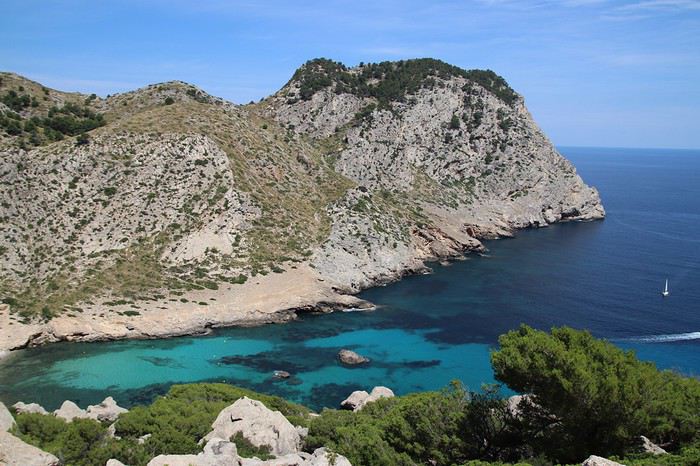
Dimanche pluvieux, rentrée dans 2 jours, des masques partout, bref ambiance sinistrose à fond😕... alors je me suis dit qu'il est tant de me replonger dans les photos de Majorque et de vous en faire profiter afin d'égayer (je l'espère) les jours à venir 🙂
Majorque... Franchement cette destination ne m'a jamais fait rêver. Les Baléares, dans mon imaginaire personnel, c'était un peu les vacances Fram pas chères, de la bidasse au bord de la plage et train de siroter des mauvais cocktails, et de la jeunesse encannaillée en boite de nuit au son des boum boum boum...
Cet été, on projetait d'aller en Sicile. Nous c'est Papa, Maman, notre p'tit gars de 10 ans, et notre princesse de 6 ans. Et j'étais plus particulièrement motivé par les îles éoliennes, qui est un des must de la plongée méditerranéenne (ah oui, je suis plongeur, alors c'est toujours un critère obligé de nos destinations de vacances 😎) avec des décors volcaniques qui semblaient magiques. Mais pour différentes raisons, celà ne s'est pas fait. Alors quand ma femme, ayant vu le blog d'une instagrameuse, m'a parlé de Majorque à la place des Eoliennes, j'ai plutôt bondi... Elle a insisté, j'ai cédé, on a acheté le Lonely Planet, et j'ai commencé, toujours peu motivé, à le feuilleter... Et là, ce que je lisais n'était pas du tout en phase avec l'image d'Epinal que j'en avais... Majorque était décrit comme un écrin naturel, à base de criques turquoises, montagnes plongeant dans la mer, petits villages, plantations d'agrumes... Et de très beau coin à plongée, notamment pas mal de grottes autour du Cap de Formentor. Destination parfaite pour allier plaisir des enfants et des parents 🙂 Alors j'ai dit banco !
Un chaine montagneuse (Sierra de Tramontana) couvre la cote Ouest de l'île et se termine par le Cap de Formentor, avec nombreuses criques, parfois sauvages, un peu partout. Le Nord est formé de 2 grandes baies (celles de Pollenca et Alcudia). L'Est est très bétonné ; de belles criques mais pas vraiment sauvages. Le Sud c'est essentiellement la baie de Palma où s'entassent les jeunes anglais et allemands venus ce retourner la tête... Pas grand chose à voir au centre.
Alors on a préparé celà gentiment. Etant donné que nous ciblions la découverte du Nord et de l'Ouest de l'île , on a ciblé un logement dans la région de Sa Pobla, proche de la baie de Pollenca. Billets Transavia en poche en février pour un départ en Juillet, réservation d'une villa par Air b'n'b, il n'y avait plus qu'à... Et la Covid est arrivé🏴☠️. On n'a rien annulé, on a a serré les fesses, et finalement on est passé entre les gouttes. Nos vols ont été maintenus aux dates et horaires prévus.
La dernière chose à faire était la réservation de la voiture de location, faite au dernier moment. Oubliez les prestataires institutionnels, il y a une multitude d'agences locales à l'aéroport de Majorque. On est passé par Wiber, RAS
Et ces deux semaines furent incroyables. Un vrai choc, je ne m'attendais pas à une telle beauté à 1h30 de vol de Paris 😛
Je vais vous raconter, et surtout vous montrer tout celà, tranquillement 😉