Results for "Rio+Bec+|+46+>+100"
11280 results found.
Hébergement au Brésil English translation pending
Bonjour a tous !
Je suis a la recherche d'adresses d'hebergements sympas, et (bien entendu) bon marche a Rio de Janeiro ... et a Salvador da Bahia. 🙂
Je serai de passage a Rio pour quelques jours a partir du debut decembre 2004.
J'envisage ensuite un sejour de plusieurs mois a Salvador da Bahia : je compte en effet assister au Carnaval ! Donc, je suis interesse par des adresses dans la ville meme ... mais egalement la region environnante : en particulier les iles Boipeba et Tinhare, situees plus au sud ... et la ville de Valencia. 😎
Les adresses de pousadas mais aussi les hebergements chez l'habitant seront les bienvenues.
Merci d'avance,
Vagabond 😉
Je suis a la recherche d'adresses d'hebergements sympas, et (bien entendu) bon marche a Rio de Janeiro ... et a Salvador da Bahia. 🙂
Je serai de passage a Rio pour quelques jours a partir du debut decembre 2004.
J'envisage ensuite un sejour de plusieurs mois a Salvador da Bahia : je compte en effet assister au Carnaval ! Donc, je suis interesse par des adresses dans la ville meme ... mais egalement la region environnante : en particulier les iles Boipeba et Tinhare, situees plus au sud ... et la ville de Valencia. 😎
Les adresses de pousadas mais aussi les hebergements chez l'habitant seront les bienvenues.
Merci d'avance,
Vagabond 😉
Billet d'avion pour tour du monde English translation pending
Hello,
qui saurait me dire le meilleur plan billet avion pour faire le TDM suivant : Paris- Rio - Lima - Bangkok - New Delhi - Paris.
Pour l'instant, on nous propose toujours de repasser par la France entre l'AmSud et l'Asie, ce qui enlève énormément au charme de pouvoir faire le tour du globe en une seule fois.
Merci pour vos tuyaux.
Matj
qui saurait me dire le meilleur plan billet avion pour faire le TDM suivant : Paris- Rio - Lima - Bangkok - New Delhi - Paris.
Pour l'instant, on nous propose toujours de repasser par la France entre l'AmSud et l'Asie, ce qui enlève énormément au charme de pouvoir faire le tour du globe en une seule fois.
Merci pour vos tuyaux.
Matj
Billet de sortie de territoire à Cuba et devises pour Amérique du Sud? English translation pending
Nous partons pour une dizaine de mois en Amérique du Sud + Caraïbes, et ce avec un billet Paris-Rio et retour depuis La Havane .
Au niveau des formalités, est-ce que le billet de retour depuis Cuba est suffisant comme preuve de sortie du territoire pour le passage des frontières ? ( nous traverserons le Brésil, l'Argentine, le Chili, la Bolivie et l'Equateur par voie terrestre)....merci pour vos infos !!
Ma deuxième question concerne l'argent..nous partons avec carte visa, mais après, en ce qui concerne les travellers et le liquide, on est un peu perdues ! que conseillez-vous nous en termes de quantité et de monnaie ( euros ou dollars ) ?
MERCI POUR VOS REPONSES !!!!!!!
Farasha
Compte-rendu du Brésil English translation pending
Je viens de passer 15 jours au Brésil : Salvador, Brasilia, amazonie, ouro preto, iguacu et rio.
Genial...
J'ai l'impression d'avoir visité plusieurs pays en trés peu de temps. Le rythme était trés soutenu (11 avions différents en 15 jours), mais je suis passé d'une ville africaine à la forêt tropicale, de villes modernes ou coloniales baroques aux plus belles chutes d'eau du monde (j'ai vu niagara et victoria...)pour finir par la "ville merveilleuse"...
j'ai chassé les piranhas et les caimans en amazonie, survolé les chutes d'iguacu en hélicoptère, navigué dans la baie de tous les saints à salvador, assisté à un spectacle de samba à rio, admiré les pierres précieuses et semi-précieuses dans le minas gerais😎, mangé dans des churascarias 😛, vu brasilia de la tour de la télévision (j'ai vu l'avion), dit bonjour au christ du corcovado, pris le petit train du pain de sucre et flané sur les plages de copacabana et ipanema
En un mot : sublime
Je craignais un peu avant de partir au sujet des problémes de sécurité. En étant normalement prudente (pas d'étalage de bijoux ou de dollars, sortie le soir uniquement en taxis, éviter les quartiers chauds...) j'ai passer ces 15 jours sans problémes.
Les brésiliens sont accueillants (surtout si vous essayer de parler en "portugnol")et heureux de vivre...
La temperature était idéale : entre 20 et 27° sauf amazonie : 32°
Les paysages sont trés beaux et trés variés.
Nous n'avons pas été trés génés par les moustiques en amazonie (un conseil pour choisir l'hotel de jungle : préférez un lieu situé sur le rio negro, les eaux noires attirent moins les moustiques que les eaux jaunatres), mais emmenez tout de même vos produits anti moustiques...
conclusion : allez au Brésil, vous ne serez pas déçus !😎
conclusion : allez au Brésil, vous ne serez pas déçus !😎
Seeking advice on car rental in Guatemala and Panajachel-Coban route
Hi there,
I’m heading to Guatemala for 18 days in August with my 11-year-old and I’m wondering if renting a car makes sense—not so much because of the road conditions, but because I’d like to spend about 3 days in Livingston. Since it’s only accessible by boat, I’d have to leave the car in Río Dulce. Maybe possible at a hotel, but that means paying for a rental for 3 days without using it... Same issue for Semuc Champey—it’s only reachable by 4x4, and I won’t be renting that type of vehicle.
Also, has anyone traveled from Panajachel (Lake Atitlán) to Cobán (to explore the caves and waterfalls in the area)? According to Google Maps, it’s a 6-hour, 44-minute drive... so whether by car or minibus, it’s *really* long (same for Cobán-Flores later). Are there any interesting stops along the way where I could spend a night? And if I’m not renting a car, is it possible to take two private shuttles for this route?
Thanks for your tips!
I’m heading to Guatemala for 18 days in August with my 11-year-old and I’m wondering if renting a car makes sense—not so much because of the road conditions, but because I’d like to spend about 3 days in Livingston. Since it’s only accessible by boat, I’d have to leave the car in Río Dulce. Maybe possible at a hotel, but that means paying for a rental for 3 days without using it... Same issue for Semuc Champey—it’s only reachable by 4x4, and I won’t be renting that type of vehicle.
Also, has anyone traveled from Panajachel (Lake Atitlán) to Cobán (to explore the caves and waterfalls in the area)? According to Google Maps, it’s a 6-hour, 44-minute drive... so whether by car or minibus, it’s *really* long (same for Cobán-Flores later). Are there any interesting stops along the way where I could spend a night? And if I’m not renting a car, is it possible to take two private shuttles for this route?
Thanks for your tips!
Bahia: Which beautiful beaches to visit in November?
Good evening,
We’d love to go in November to enjoy some beautiful beaches for about two weeks, preferably around Bahia, as November/December seems like a great time.
We’ve already traveled to Brazil several times and know the south of Rio as well as the region between São Luís and Fortaleza, and Chapada Diamantina...
What advice would you give us: the south with Itaparica, Morro de São Paulo, Boipeba, Barra Grande—or all four? Or maybe the north?
Thanks in advance for your help
A Brief A to Z of Peru
Foreword
This text has been proofread many times.
Sorry if some points in this A to Z have already been covered on this forum.
Text and drawings by the author.
Peru is still a very vast country, with so much to see, and obviously this text can't list all the attractions of the country.
*Abiseo (River) A national park that's very hard to access and doesn’t seem open to visitors. Includes the Gran Pajaten site (see below). Personally, it really sparks my imagination (not visited personally)
*Aguas Calientes the town next to Machu Picchu, more precisely below the archaeological site. As far as I know, you can only get there by train. Reminds me of the market where stalls line both sides of the tracks near Bangkok. I love it
*Altiplano: somewhere the "heart" of the Andes. I was able to trek across it on foot, starting from Caracollo in Bolivia, and of course, it’s vast plains to explore. This is where people live in a very rural way. Andean populations are quite austere compared to those in the lowlands or on the coast. You really have to appreciate the harshness of life to live there. Life is anything but superficial. I set a compass heading and found myself walking west toward the expanse of water near a place called La Joya. For pitching the tent, the nights were still chilly
*Canyon del Colca One of the deepest canyons in the world. Personally, I hiked down and back up on foot. The toughest stretch I’ve ever covered in my life.
*Ceviche More or less the national dish. A marinade of fish, shellfish, and lime. But you can find it in some restaurants in Europe, France, and certainly in Belgium or Switzerland. In the small restaurants of Pisco, you can eat excellent ceviche
*Cerro Sechín: Mostly bas-reliefs. A site little known to travelers in the Casma province. The first vestiges of a pre-Inca civilization with iconography similar to that of Chavín (not visited personally)
*Chan Chan A large city of the Chimú civilization and relatively vast to visit. You can see adobe walls with bas-reliefs. Visit from Trujillo, take a colectivo. Plan for the whole day
*Charango: a small guitar widely used in Andean music
*Chauchilla A necropolis near Nazca where you can see mummies exposed on the ground. YouTubers can do paranormal experiments there. And for anyone wondering about the fate of the soul and body after death, here’s the answer: the body remains after death. You can imagine your own flesh and body exposed to the winds of the Pampa and before eternity... (not visited personally)
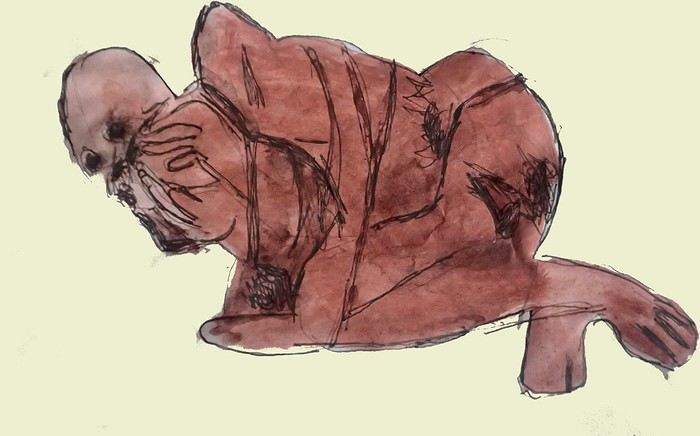
*Chavín de Huántar (Lanzón) The site’s appeal lies in its mountainous surroundings, the Lanzón stela, and the sculpted heads on the façades. What few people know is that the Chavín civilization began its expansion centuries before the Incas. Unfortunately, you can’t get too close to see the Lanzón—the day I was there, it was protected by grilles. To get there: minibus from Huaraz or trek from Olleros. Then cross a high pass (over 5,000m). If you do it solo on foot, be careful—the path isn’t obvious from Olleros
*Chullpa: funerary tower, notably at Sillustani in the Lake Titicaca region
*Chimú: pre-Inca civilization whose center was Chan Chan.
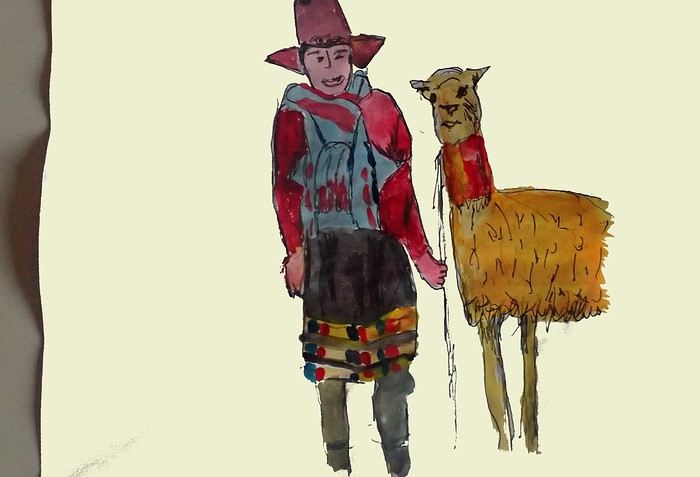
*Chola/Cholitas (Bolivia): typical clothing style of women from the Andean plateaus
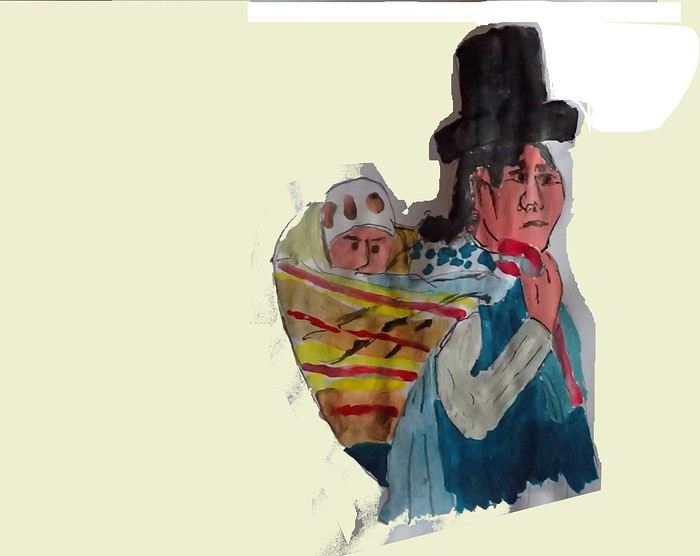
*Chompa: pronounce it *Chompaaa!* A common term for a wool sweater with vicuña patterns, often knitted from alpaca wool. If you dress like this, it’s a bit kitschy around the edges
*Cuy That one isn’t a guinea pig like in Guyana but an actual guinea pig. During a trip to Peru, I was hiking near a village north of Quillabamba (the terminus of the train line that passes through Aguas Calientes), and I was invited to stay in a house. The family raised a few of these pets. Apparently, the locals eat them. Since I’m not much of a meat-eater, it doesn’t really tempt me. How about you?
*Pacific Coast or how to talk about a place you haven’t visited? Except for the coast near Pisco and San Andrés, I haven’t visited any coastal cities. But that doesn’t mean these places lack interest or poetry. For fans of clichéd images, pelicans, seabirds, and fishing boats appear by the sea.
*Gran Pajaten: also closed to the public. Features anthropomorphic bas-reliefs. (not visited personally)
*Huaca. Visit the Huaca del Sol and Huaca de la Luna, especially near Trujillo. However, you can skip them—Chan Chan is still more interesting. Don’t forget to spend time visiting Chan Chan
*Huacachina A small oasis in the desert near Ica. Yes, we’re talking about an oasis because for those who’ve never traveled to Peru, the coastal strip along the Pacific is almost entirely desert, from north to south. Peru is territorially made up of three different regions: the desert coast, the Altiplano stretching north to south with mountain ranges (the Cordilleras), and the Amazon basin to the east. (not visited personally)
*Inca Kola It’s neither Coca-Cola nor Pepsi but a unique cola with a slightly orange color. Tastes like bubble gum
*Intiwatana: a carved rock shaped like a parallelepiped. Is it a sundial?
*Ballestas Islands: a highlight in Peru, though very touristy. You can only get there by boat from the port of San Andrés, a few kilometers from Pisco. It’s a surreal place to me—actually islets with cavities where sea lions and fur seals live. Since it’s a protected area, you’re not allowed to disembark. Guano is harvested there, which can be used as fertilizer.
*Kuelap: a fortress built by the Chachapoyas people. Rarely visited by travelers. (not visited personally)
*Larco Museum: an iconic museum in Lima with a large collection of pieces from archaeological and pre-Columbian sites. From what I remember, it has many pieces from the Moche civilization. As for the Moche statuettes, the prudish might look away. Probably a veneration of the god Priapus without knowing it.
*Nazca Lines Discovered by German archaeologist Maria Reiche, they stretch for kilometers. The designs in the desert around Nazca depict animals and cabalistic signs. The question I ask myself is why the creators of these lines represented a monkey and a hummingbird—species endemic to the tropical forest, not the desert plains around Nazca.
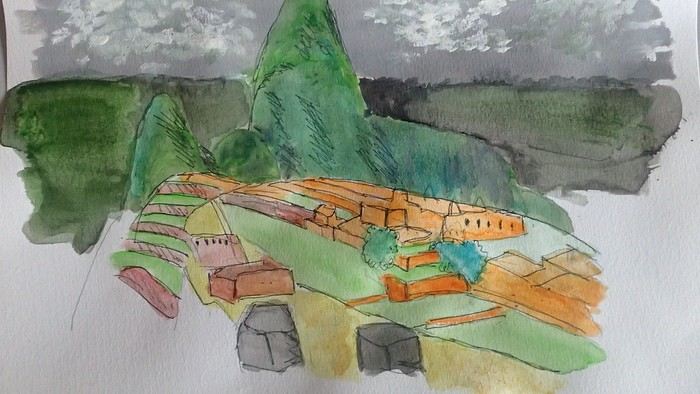
*Machu Picchu: means "old mountain" in Quechua. There’s also Wayna Picchu. The ruins of the site emerge from a sort of small plateau above Aguas Calientes. When the mist rises above the site and the bend of the Urubamba River, it’s truly magical... Also the starting point of the Inca Trail.
*Coca tea A decoction/infusion of the coca plant, meant to ease altitude sickness or *soroche*
*Chullo A rough translation would be a Peruvian wool hat.
*Moche: a civilization established in the Moche Valley, hence the term *Mochica*. What characterizes this civilization are the distinctive clay pieces representing faces and erotic statuettes
*Papa a la Huancaína A local potato dish
*Pisac: a typical market near Cusco
*Pisco Sour: perhaps the Peruvian equivalent of the *caipirinha* you drink in Brazil.
*Puya Raimondii A Bromeliaceae that still looks like a cactus, endemic to the Altiplano
*Quechua The language spoken by the indigenous people of the high plateaus (as well as Aymara in Bolivia)
*Quipu A knotted string used for counting. Widely used by the Inca administration.
*Sacsayhuamán (Q’enqo, Inca Bath) From Cusco’s Plaza de Armas, take the streets that climb above the city. Sacsayhuamán is called a fortress and is made up of large stone blocks. You wonder how the Incas could cut such huge blocks to assemble them—just like some streets in Cusco. The Q’enqo block is enigmatic; no one really knows what it represents.
*Savia Andina An Andean folk group.
*Tambo (=> Ollantaytambo) The Inca emperor (Atahualpa, Manco Capac) had the mission of controlling a vast empire. An empire that was still very extensive. Hence the importance of these *tambos* or relay stations. Napoleon created the civil code; the Incas invented the *tambos* and *quipus*.
*Tawantinsuyu: the Inca Empire
*Tinku: a warrior dance practiced mainly in Bolivia
*Golden Tumi: a sacrificial weapon. Often featured in Peru travel guides. See illustration

*Terra X: a documentary series from the German TV channel that aired on Arte. Some episodes focused on pre-Inca and Inca Peru. I must have some old recording tapes. In memory of Gottfried Kirchner as a source of inspiration.
*Uros: I checked—it actually refers to the people who live on these floating islands. Even if it’s touristy, it’s a must-visit because it’s incredible how people can live on islets made from nothing. Take the boat from Puno
*Vicuña, llama, guanaco: camelids characteristic of the Altiplano
*Wayna Picchu The young Picchu mountain. In the first minutes of *Aguirre, the Wrath of God*, you see Klaus Kinski—well, Aguirre—making his way along the Inca Trail. Werner Herzog must have broken his back filming those sequences.
*Zampoña: pan flute
Peru is still a very vast country, with so much to see, and obviously this text can't list all the attractions of the country.
*Abiseo (River) A national park that's very hard to access and doesn’t seem open to visitors. Includes the Gran Pajaten site (see below). Personally, it really sparks my imagination (not visited personally)
*Aguas Calientes the town next to Machu Picchu, more precisely below the archaeological site. As far as I know, you can only get there by train. Reminds me of the market where stalls line both sides of the tracks near Bangkok. I love it
*Altiplano: somewhere the "heart" of the Andes. I was able to trek across it on foot, starting from Caracollo in Bolivia, and of course, it’s vast plains to explore. This is where people live in a very rural way. Andean populations are quite austere compared to those in the lowlands or on the coast. You really have to appreciate the harshness of life to live there. Life is anything but superficial. I set a compass heading and found myself walking west toward the expanse of water near a place called La Joya. For pitching the tent, the nights were still chilly
*Canyon del Colca One of the deepest canyons in the world. Personally, I hiked down and back up on foot. The toughest stretch I’ve ever covered in my life.
*Ceviche More or less the national dish. A marinade of fish, shellfish, and lime. But you can find it in some restaurants in Europe, France, and certainly in Belgium or Switzerland. In the small restaurants of Pisco, you can eat excellent ceviche
*Cerro Sechín: Mostly bas-reliefs. A site little known to travelers in the Casma province. The first vestiges of a pre-Inca civilization with iconography similar to that of Chavín (not visited personally)
*Chan Chan A large city of the Chimú civilization and relatively vast to visit. You can see adobe walls with bas-reliefs. Visit from Trujillo, take a colectivo. Plan for the whole day
*Charango: a small guitar widely used in Andean music
*Chauchilla A necropolis near Nazca where you can see mummies exposed on the ground. YouTubers can do paranormal experiments there. And for anyone wondering about the fate of the soul and body after death, here’s the answer: the body remains after death. You can imagine your own flesh and body exposed to the winds of the Pampa and before eternity... (not visited personally)
*Chavín de Huántar (Lanzón) The site’s appeal lies in its mountainous surroundings, the Lanzón stela, and the sculpted heads on the façades. What few people know is that the Chavín civilization began its expansion centuries before the Incas. Unfortunately, you can’t get too close to see the Lanzón—the day I was there, it was protected by grilles. To get there: minibus from Huaraz or trek from Olleros. Then cross a high pass (over 5,000m). If you do it solo on foot, be careful—the path isn’t obvious from Olleros
*Chullpa: funerary tower, notably at Sillustani in the Lake Titicaca region
*Chimú: pre-Inca civilization whose center was Chan Chan.
*Chola/Cholitas (Bolivia): typical clothing style of women from the Andean plateaus
*Chompa: pronounce it *Chompaaa!* A common term for a wool sweater with vicuña patterns, often knitted from alpaca wool. If you dress like this, it’s a bit kitschy around the edges
*Cuy That one isn’t a guinea pig like in Guyana but an actual guinea pig. During a trip to Peru, I was hiking near a village north of Quillabamba (the terminus of the train line that passes through Aguas Calientes), and I was invited to stay in a house. The family raised a few of these pets. Apparently, the locals eat them. Since I’m not much of a meat-eater, it doesn’t really tempt me. How about you?
*Pacific Coast or how to talk about a place you haven’t visited? Except for the coast near Pisco and San Andrés, I haven’t visited any coastal cities. But that doesn’t mean these places lack interest or poetry. For fans of clichéd images, pelicans, seabirds, and fishing boats appear by the sea.
*Gran Pajaten: also closed to the public. Features anthropomorphic bas-reliefs. (not visited personally)
*Huaca. Visit the Huaca del Sol and Huaca de la Luna, especially near Trujillo. However, you can skip them—Chan Chan is still more interesting. Don’t forget to spend time visiting Chan Chan
*Huacachina A small oasis in the desert near Ica. Yes, we’re talking about an oasis because for those who’ve never traveled to Peru, the coastal strip along the Pacific is almost entirely desert, from north to south. Peru is territorially made up of three different regions: the desert coast, the Altiplano stretching north to south with mountain ranges (the Cordilleras), and the Amazon basin to the east. (not visited personally)
*Inca Kola It’s neither Coca-Cola nor Pepsi but a unique cola with a slightly orange color. Tastes like bubble gum
*Intiwatana: a carved rock shaped like a parallelepiped. Is it a sundial?
*Ballestas Islands: a highlight in Peru, though very touristy. You can only get there by boat from the port of San Andrés, a few kilometers from Pisco. It’s a surreal place to me—actually islets with cavities where sea lions and fur seals live. Since it’s a protected area, you’re not allowed to disembark. Guano is harvested there, which can be used as fertilizer.
*Kuelap: a fortress built by the Chachapoyas people. Rarely visited by travelers. (not visited personally)
*Larco Museum: an iconic museum in Lima with a large collection of pieces from archaeological and pre-Columbian sites. From what I remember, it has many pieces from the Moche civilization. As for the Moche statuettes, the prudish might look away. Probably a veneration of the god Priapus without knowing it.
*Nazca Lines Discovered by German archaeologist Maria Reiche, they stretch for kilometers. The designs in the desert around Nazca depict animals and cabalistic signs. The question I ask myself is why the creators of these lines represented a monkey and a hummingbird—species endemic to the tropical forest, not the desert plains around Nazca.
*Machu Picchu: means "old mountain" in Quechua. There’s also Wayna Picchu. The ruins of the site emerge from a sort of small plateau above Aguas Calientes. When the mist rises above the site and the bend of the Urubamba River, it’s truly magical... Also the starting point of the Inca Trail.
*Coca tea A decoction/infusion of the coca plant, meant to ease altitude sickness or *soroche*
*Chullo A rough translation would be a Peruvian wool hat.
*Moche: a civilization established in the Moche Valley, hence the term *Mochica*. What characterizes this civilization are the distinctive clay pieces representing faces and erotic statuettes
*Papa a la Huancaína A local potato dish
*Pisac: a typical market near Cusco
*Pisco Sour: perhaps the Peruvian equivalent of the *caipirinha* you drink in Brazil.
*Puya Raimondii A Bromeliaceae that still looks like a cactus, endemic to the Altiplano
*Quechua The language spoken by the indigenous people of the high plateaus (as well as Aymara in Bolivia)
*Quipu A knotted string used for counting. Widely used by the Inca administration.
*Sacsayhuamán (Q’enqo, Inca Bath) From Cusco’s Plaza de Armas, take the streets that climb above the city. Sacsayhuamán is called a fortress and is made up of large stone blocks. You wonder how the Incas could cut such huge blocks to assemble them—just like some streets in Cusco. The Q’enqo block is enigmatic; no one really knows what it represents.
*Savia Andina An Andean folk group.
*Tambo (=> Ollantaytambo) The Inca emperor (Atahualpa, Manco Capac) had the mission of controlling a vast empire. An empire that was still very extensive. Hence the importance of these *tambos* or relay stations. Napoleon created the civil code; the Incas invented the *tambos* and *quipus*.
*Tawantinsuyu: the Inca Empire
*Tinku: a warrior dance practiced mainly in Bolivia
*Golden Tumi: a sacrificial weapon. Often featured in Peru travel guides. See illustration
*Terra X: a documentary series from the German TV channel that aired on Arte. Some episodes focused on pre-Inca and Inca Peru. I must have some old recording tapes. In memory of Gottfried Kirchner as a source of inspiration.
*Uros: I checked—it actually refers to the people who live on these floating islands. Even if it’s touristy, it’s a must-visit because it’s incredible how people can live on islets made from nothing. Take the boat from Puno
*Vicuña, llama, guanaco: camelids characteristic of the Altiplano
*Wayna Picchu The young Picchu mountain. In the first minutes of *Aguirre, the Wrath of God*, you see Klaus Kinski—well, Aguirre—making his way along the Inca Trail. Werner Herzog must have broken his back filming those sequences.
*Zampoña: pan flute
Brazilian airline GOL announces European routes
Hello, some (potentially) good news for Brazil lovers—GOL airline is launching a route to Europe from Rio, starting in September for Lisbon, then Paris at a later date that hasn’t been announced yet.
They’ll be using their new A330-900 neo.
No prices have been announced so far, but hopefully we’ll find direct flights from GIG at a more interesting fare than AF or Latam…
What to see in the southwest of São Paulo for 2 weeks?
Hi there,
We’re spending 3 weeks in Brazil, arriving in São Paulo—a couple plus a teen—and we’ll have a rental car.
We especially love nature: hiking, wildlife watching, birds, etc.
We’re planning to wrap up with a week around Paraty and Ilha Grande.
We’re not really into visiting big cities like São Paulo or Rio unless you think we’d be missing out big time.
So we’ve got 2 weeks to explore the south/southwest region of São Paulo. What do you recommend? National parks? Off-the-beaten-path nature spots? Iguazu Falls?
Thanks in advance for all your tips!
So we’ve got 2 weeks to explore the south/southwest region of São Paulo. What do you recommend? National parks? Off-the-beaten-path nature spots? Iguazu Falls?
Thanks in advance for all your tips!
Looking for travel companions for Brazil end of May 2026
Hi there,
We’re a pair in our 40s (young at heart!) from the Île-de-France region, and we don’t know each other yet.
We’re potentially looking for 1 or 2 people around our age to join us in Brazil from May 26 to June 8-9 for me, and until June 14 for Sébastien.
Estimated budget: around 2200-2500 €, including flights.
Our planned itinerary: Rio - Iguazu Falls - Costa Verde (requires a domestic round-trip flight from Rio to Iguazu, about 1h30 each way)
The idea is to share, have fun, explore, eat, and alternate between beaches, relaxation, hikes, and boat excursions... And why not try paragliding in Rio? Let’s go wild! ;)
We’re traveling in comfortable hotel/Airbnb mode.
Don’t hesitate to send us a quick email intro if you’re interested!
Looking forward to it, Kim
We’re potentially looking for 1 or 2 people around our age to join us in Brazil from May 26 to June 8-9 for me, and until June 14 for Sébastien.
Estimated budget: around 2200-2500 €, including flights.
Our planned itinerary: Rio - Iguazu Falls - Costa Verde (requires a domestic round-trip flight from Rio to Iguazu, about 1h30 each way)
The idea is to share, have fun, explore, eat, and alternate between beaches, relaxation, hikes, and boat excursions... And why not try paragliding in Rio? Let’s go wild! ;)
We’re traveling in comfortable hotel/Airbnb mode.
Don’t hesitate to send us a quick email intro if you’re interested!
Looking forward to it, Kim
Family trip to Brazil: Paraty, Ilha Grande, or both?
Hi everyone,
We’re making a family dream come true: spending a month in Brazil from July 19 to August 20. We’ll land in Rio and spend 6 days there (we’ve finalized a home exchange for a lovely apartment in the Copacabana neighborhood). After that, we’re heading to Minas Gerais by rental car for 11 days (Tiradentes, Ouro Preto, and the Inhotim Institute), then the Costa Verde, and finally 2 days in São Paulo.
We’ll be traveling with our three kids, ages 17, 14, and 9, who are real travelers and good hikers. Goes hand in hand, right? 😄
For now, we’ve planned to visit Ilha Grande (4 days) and then Paraty and its surroundings (3 days). What do you think? Ilha Grande appealed to us for its hikes and beaches, but couldn’t we do that along Paraty’s coast? I’ve read mixed reviews about Ilha Grande...
Thanks for your tips, opinions, and anything else! !
We’re making a family dream come true: spending a month in Brazil from July 19 to August 20. We’ll land in Rio and spend 6 days there (we’ve finalized a home exchange for a lovely apartment in the Copacabana neighborhood). After that, we’re heading to Minas Gerais by rental car for 11 days (Tiradentes, Ouro Preto, and the Inhotim Institute), then the Costa Verde, and finally 2 days in São Paulo.
We’ll be traveling with our three kids, ages 17, 14, and 9, who are real travelers and good hikers. Goes hand in hand, right? 😄
For now, we’ve planned to visit Ilha Grande (4 days) and then Paraty and its surroundings (3 days). What do you think? Ilha Grande appealed to us for its hikes and beaches, but couldn’t we do that along Paraty’s coast? I’ve read mixed reviews about Ilha Grande...
Thanks for your tips, opinions, and anything else! !
Feedback on 20-day Brazil itinerary in August
Hi everyone,
I’d love to get your thoughts on the itinerary we’re planning for this summer (August) with our three older teens. We’ve booked our round-trip flight from Lyon to Rio. Originally, we were thinking of heading down to Paraty / Ilha Grande... but after checking, the water temperature seems a bit too cool, so we’d prefer to go to Bahia state for a bit more warmth. Our interests: discovering the people and cities, enjoying the beach and relaxation, a few short hikes, etc.
What do you think of this itinerary? Too much time lost in transit?
Day Stop J1 Flight J2 Early morning arrival in Rio J3 Rio J4 Rio J5 Rio J6 Flight to Foz do Iguaçu J7 Foz do Iguaçu J8 Foz do Iguaçu J9 Flight to Salvador J10 Salvador J11 Salvador J12 Ilha de Tinharé: Morro de São Paulo J13 Ilha de Tinharé: Morro de São Paulo J14 Ilha de Tinharé: Morro de São Paulo J15 Ilha de Boipeba J16 Ilha de Boipeba J17 Ilha de Boipeba J18 Ilha de Boipeba to Salvador J19 Salvador to Rio J20 Flight J21 Arrival in France Thanks so much for your help!!!! Flo
I’d love to get your thoughts on the itinerary we’re planning for this summer (August) with our three older teens. We’ve booked our round-trip flight from Lyon to Rio. Originally, we were thinking of heading down to Paraty / Ilha Grande... but after checking, the water temperature seems a bit too cool, so we’d prefer to go to Bahia state for a bit more warmth. Our interests: discovering the people and cities, enjoying the beach and relaxation, a few short hikes, etc.
What do you think of this itinerary? Too much time lost in transit?
Day Stop J1 Flight J2 Early morning arrival in Rio J3 Rio J4 Rio J5 Rio J6 Flight to Foz do Iguaçu J7 Foz do Iguaçu J8 Foz do Iguaçu J9 Flight to Salvador J10 Salvador J11 Salvador J12 Ilha de Tinharé: Morro de São Paulo J13 Ilha de Tinharé: Morro de São Paulo J14 Ilha de Tinharé: Morro de São Paulo J15 Ilha de Boipeba J16 Ilha de Boipeba J17 Ilha de Boipeba J18 Ilha de Boipeba to Salvador J19 Salvador to Rio J20 Flight J21 Arrival in France Thanks so much for your help!!!! Flo
Question: 15-Day Guatemala Itinerary
Hello,
Here’s our itinerary for 15 days in Guatemala. Does it seem logical in terms of distances to avoid overly long trips? If not, which stop should we cut?
- Antigua - Atitlán - Lanquín - Río Dulce - El Remate – Flores - Guatemala City
Could you help me estimate the approximate travel time for these routes by tourist bus or shuttle?
- Atitlán – Lanquín - Lanquín – Río Dulce - Río Dulce – El Remate - Flores – Guatemala City
Thanks for your help
Here’s our itinerary for 15 days in Guatemala. Does it seem logical in terms of distances to avoid overly long trips? If not, which stop should we cut?
- Antigua - Atitlán - Lanquín - Río Dulce - El Remate – Flores - Guatemala City
Could you help me estimate the approximate travel time for these routes by tourist bus or shuttle?
- Atitlán – Lanquín - Lanquín – Río Dulce - Río Dulce – El Remate - Flores – Guatemala City
Thanks for your help
Who's interested in the Costa Serena from Sydney to Buenos Aires?
I'm considering boarding the Costa Serena in Sydney in November 2026 for the Sydney/Santiago de Chile cruise and continuing on to Buenos Aires before finishing in Rio...
Anyone else going to be there??? I'd love to connect with you all 😎
Exploring Southeast Asia in autumn 2026
Looking for a travel buddy for a trip through Southeast Asia and Australia’s Northern Territories in autumn 2026, before hopping on a cruise to the Polynesian Islands and then Patagonia, ending in Rio. Anyone interested? 😊 Maybe see you soon! 😎
Feedback on first-time Brazil itinerary using public transport
Hello,
We’re planning our first trip to Brazil from October 10 to November 7, 2025.
We’re a couple traveling with light backpacks using local transport.
Here’s our planned route:
Arrival in Rio de Janeiro, 5 days,
Tiradentes, Ouro Preto, Belo Horizonte, 7 days,
Flight from Belo Horizonte to Recife,
Recife, Olinda, 4 days,
Maceió, Penedo, 3 days,
Aracaju, 3 days,
Salvador de Bahia and surrounding areas, 5 days
Departure from Salvador de Bahia to Paris
Thanks in advance for any feedback you can share!
Of course, everything is flexible except for our arrival in Rio and departure from Salvador de Bahia.
Could you also recommend a neighborhood to stay in Rio? Alod
Thanks in advance for any feedback you can share!
Of course, everything is flexible except for our arrival in Rio and departure from Salvador de Bahia.
Could you also recommend a neighborhood to stay in Rio? Alod
Tips for beginners on a 3-month trip to South America
Hi everyone,
With a friend, we’re planning a big trip to South America from January to mid-April 2026.
Our planned itinerary:
Argentina Chile Brazil (for Rio’s Carnival) Peru Then heading to Costa Rica to wrap up the trip.
We don’t have a precise route yet, but here are the key stops we’d absolutely love to include:
Iguazu Falls (Foz de Iguaçu) Patagonia (especially the Perito Moreno Glacier) Atacama Desert Rio Carnival Machu Picchu
This is our first time taking a trip of this scale, and we’d love some advice from more experienced travelers. To narrow it down, here are the main things we’re worried about:
1. Travel agency
For a trip this big, do you think a travel agency is helpful, or is it better to organize everything ourselves? If so, which ones would you recommend for a tight budget? We were considering G Adventures for parts of the trip. Any feedback on them?
2. Practical tips and money
For luggage, would you recommend a small rolling suitcase or a big backpack?
About payments: Is it easy to pay by card, or is cash the way to go? If cash is king, how do you manage your budget—do you use services like Western Union for transfers? Currency exchange: Is it easy to exchange money on the spot? Which places are best for that? For costs, what’s a reasonable monthly budget for average travelers?
3. Accommodation
Is it easy to find hotels/hostels on the fly, or is it better to book a few days/weeks in advance (especially in high season)?
4. Transportation
Same question for buses: Can you buy tickets the same day, or should you book a few days/weeks (or even months) ahead for certain routes? Any recommendations for reliable companies between these countries and within them?
5. Phone service
How do you handle mobile networks, especially when crossing borders? Do you need a SIM card per country? Are there plans that cover multiple countries? Are eSIMs available? What’s the best way to set it up? Thanks in advance for your tips and experiences! We’re all ears for any great tips, hacks, or pitfalls to avoid.
Argentina Chile Brazil (for Rio’s Carnival) Peru Then heading to Costa Rica to wrap up the trip.
We don’t have a precise route yet, but here are the key stops we’d absolutely love to include:
Iguazu Falls (Foz de Iguaçu) Patagonia (especially the Perito Moreno Glacier) Atacama Desert Rio Carnival Machu Picchu
This is our first time taking a trip of this scale, and we’d love some advice from more experienced travelers. To narrow it down, here are the main things we’re worried about:
1. Travel agency
For a trip this big, do you think a travel agency is helpful, or is it better to organize everything ourselves? If so, which ones would you recommend for a tight budget? We were considering G Adventures for parts of the trip. Any feedback on them?
2. Practical tips and money
For luggage, would you recommend a small rolling suitcase or a big backpack?
About payments: Is it easy to pay by card, or is cash the way to go? If cash is king, how do you manage your budget—do you use services like Western Union for transfers? Currency exchange: Is it easy to exchange money on the spot? Which places are best for that? For costs, what’s a reasonable monthly budget for average travelers?
3. Accommodation
Is it easy to find hotels/hostels on the fly, or is it better to book a few days/weeks in advance (especially in high season)?
4. Transportation
Same question for buses: Can you buy tickets the same day, or should you book a few days/weeks (or even months) ahead for certain routes? Any recommendations for reliable companies between these countries and within them?
5. Phone service
How do you handle mobile networks, especially when crossing borders? Do you need a SIM card per country? Are there plans that cover multiple countries? Are eSIMs available? What’s the best way to set it up? Thanks in advance for your tips and experiences! We’re all ears for any great tips, hacks, or pitfalls to avoid.
Planning a circuit + flights in Brazil
Hi everyone,
Our travel plans to Brazil in October are moving forward. Now we're looking for the best way to put it all together. Starting from Montpellier, probably connecting through CDG, arriving in Salvador de Bahia, stopping in Belo Horizonte, then a flight to Rio, and the return trip. How can we manage to finalize such a circular flight? Thanks in advance for your tips.
Best,
Serge
Tips for a 15- to 20-day itinerary in Brazil in October
Hi everyone,
My partner and I are planning a trip to Brazil in October for 15 to 20 days. I spent some time in Brazil years ago while collaborating with the University of Lavras (MG). Now, I’d love to introduce my partner to the country. My initial plan is Rio (4 days), Bahia—which I’ve never visited—(4 days), Belo Horizonte to catch up with old friends and explore the surrounding areas (Tiradentes and Ouro Preto), then... and back. I’m really counting on your advice to help shape this trip. We’re not backpackers anymore!
Thanks in advance.
Best regards,
Serge Rambal - Montpellier
Visiting Brazil as a family with mom in a manual wheelchair (standing impossible)
Hello,
we’re planning a three-week trip to Brazil.
What sights and accommodations would you recommend, given we’re a couple with mom in a wheelchair and two older teens, and we’d like to visit:
-Iguazu Falls
-Rio de Janeiro (Sugarloaf Mountain, Christ the Redeemer, old town... and a beach)
-Salvador de Bahia
-if possible, another city further north like Recife or Natal
We’ll arrive in São Paulo, where we’ll visit the young Brazilian woman we had the chance to host during her high school year in France.
It’s hard to gauge hotel accessibility from France (bathroom photos aren’t very telling and worry us...) Another concern: domestic flights in Brazil.
Thank you so much for your tips and advice! :-)
Best regards,
It’s hard to gauge hotel accessibility from France (bathroom photos aren’t very telling and worry us...) Another concern: domestic flights in Brazil.
Thank you so much for your tips and advice! :-)
Best regards,
Brazil Trip – 19 Nights Through Agencies
Hi there,
I’m planning a trip to Brazil in October and decided to go through an agency to organize our itinerary. I asked two agencies to put together a circuit with transfers, hotels, organized visits, and one domestic flight. I don’t speak Spanish or Portuguese. 6 nights in Rio 3 nights on Ilha Grande 3 nights in Paraty Domestic flight to Salvador for 3 nights 3 nights in Morro de São Paulo 1 night in Salvador before flying back to France. For this itinerary, I’m going with Tourlane, but I’m still waiting on the second quote from Comptoir des Voyages. I’d love to hear your thoughts on the itinerary and especially on these agencies—thanks for any feedback! 😊
I’m planning a trip to Brazil in October and decided to go through an agency to organize our itinerary. I asked two agencies to put together a circuit with transfers, hotels, organized visits, and one domestic flight. I don’t speak Spanish or Portuguese. 6 nights in Rio 3 nights on Ilha Grande 3 nights in Paraty Domestic flight to Salvador for 3 nights 3 nights in Morro de São Paulo 1 night in Salvador before flying back to France. For this itinerary, I’m going with Tourlane, but I’m still waiting on the second quote from Comptoir des Voyages. I’d love to hear your thoughts on the itinerary and especially on these agencies—thanks for any feedback! 😊
Visiting and Transport Tips for Ilha Grande and Paraty
Hi everyone,
I’m planning my trip to Brazil in March 2025 (finally!) and I’d love to hear your thoughts on Ilha Grande and Paraty. We’ll be arriving from Rio and departing from Paraty (heading to São Paulo). How can we best organize these transfers—can we book the different transports on the spot? How much time is ideal to stay in these two places to enjoy them without doing long hikes? Do you have an estimated budget? Thanks for your feedback! Dominique
I’m planning my trip to Brazil in March 2025 (finally!) and I’d love to hear your thoughts on Ilha Grande and Paraty. We’ll be arriving from Rio and departing from Paraty (heading to São Paulo). How can we best organize these transfers—can we book the different transports on the spot? How much time is ideal to stay in these two places to enjoy them without doing long hikes? Do you have an estimated budget? Thanks for your feedback! Dominique
Sharing our 3-week experience in Brazil
Hello,
We’re a couple in our sixties and we’ve just spent 22 days in Brazil, from October 29th to November 21st.
We flew from Marseille via Lisbon—outbound to Rio, and back from Recife.
Our itinerary:
4 days in Rio
4 days on Ilha Grande
2 days in Paraty
4 days in Salvador
4 days on Boïpeba
4 days in Olinda
The transfer between Boïpeba and Recife took us 2 days—boats, taxis, and a flight.
We stayed in Airbnbs except in Paraty, where we were in a pousada, and during the Boïpeba–Recife transfer, when we booked a hotel near the airport.
Our flights were with Gol and Azul.
Transfers from Rio were arranged through Paraty Tour.
In Rio, we used a local agency to visit Corcovado and Sugarloaf Mountain.
Happy to answer any questions! Marc
Happy to answer any questions! Marc
5 weeks in Guatemala in November 2024
A fantastic trip, dominated by the Altiplano, volcanoes, and especially the Mayan people!
Our route: Antigua – San Lucas de Toliman (Lake Atitlán) – Chichicastenango – Sayaxché – El Remate – Flores – Río Dulce – Livingston – Antigua I won’t describe our trip in detail but will highlight a few points that go beyond the usual routes and really won us over. In Antigua, it’s easy to take a chicken bus from the bus station next to the central market in the eastern part of the city to visit nearby villages. We went to Santa María de Jesús on a Sunday without seeing any other Westerners. We got lost in its colorful market, ate at a *comedor* with local dishes we didn’t find anywhere else, and were surrounded by incredibly welcoming Mayans. Several villages around Lake Atitlán are well-covered by travelers and guides like *Routard* and *Lonely Planet*, but if you want to stay somewhere more authentic, I recommend San Lucas de Toliman (we stayed at *Casa Qatzil*—great place!). It’s in the southeast of the lake, with a market on Tuesdays and Fridays, a central square full of locals (more of those super-friendly Mayans!), and the option to visit other villages by *lancha* (boat) for the day. A walk toward the lake lets you pass by the washhouses, and there are hikes accessible by *pick-up* (shared transport), like the twin volcanoes Tolimán and Atitlán or Cerro del Oro (less challenging!). We loved visiting Santa Catarina Palopó—get lost in its maze of steep alleys, admiring the blue facades with their characteristic paintings. There are direct *chicken bus* connections to Chichicastenango in 1.5 hours. Cheap and convenient, though a bit bumpy! Chichicastenango is famous for its market, described as the largest in Central America, on Thursdays and Sundays. A flood of tourists arrives between 10 AM and 1 PM, shuttled in by organized buses from Lake Atitlán and Antigua. But if you have time, stay overnight the day before and enjoy the market before 10 AM or in the afternoon. This little town (more of those welcoming Mayans!) is worth lingering in for a day or two to visit the cemetery, extraordinarily colorful and a site of Mayan rituals. Also take time to go to *Plaza Baktun*, a site considered sacred in Mayan culture where religious ceremonies take place around seven sculptures several meters tall. The ruins of Aguateca are barely excavated (most structures are still covered in vegetation) and are only accessible by boat, traveling up a tributary of the Río de la Pasión to the sound of howler monkeys and birdsong (1.5 hours from Sayaxché). We felt like we got a sense of daily life in the ancient city—not just its religious dimension—with its ravine for sheltering women and children during attacks, its cliff, and defensive walls. Alone with our *lancha* driver, who acted as our guide in the barely cleared jungle, this site doesn’t overlap with Tikal at all—the vibe is completely different. We stayed in El Remate instead of Flores to visit Yaxhá and Tikal, at *Posada Ixchel* (great place!). This quiet little town lets you stroll along the lake and hike in *Cerro Cahui*, a protected biotope leading to a viewpoint. Plus, it’s on the way to the sites, saving 45 minutes per trip.
Feel free to ask me questions about the places, accommodations, etc.—I’d be happy to answer!
Our route: Antigua – San Lucas de Toliman (Lake Atitlán) – Chichicastenango – Sayaxché – El Remate – Flores – Río Dulce – Livingston – Antigua I won’t describe our trip in detail but will highlight a few points that go beyond the usual routes and really won us over. In Antigua, it’s easy to take a chicken bus from the bus station next to the central market in the eastern part of the city to visit nearby villages. We went to Santa María de Jesús on a Sunday without seeing any other Westerners. We got lost in its colorful market, ate at a *comedor* with local dishes we didn’t find anywhere else, and were surrounded by incredibly welcoming Mayans. Several villages around Lake Atitlán are well-covered by travelers and guides like *Routard* and *Lonely Planet*, but if you want to stay somewhere more authentic, I recommend San Lucas de Toliman (we stayed at *Casa Qatzil*—great place!). It’s in the southeast of the lake, with a market on Tuesdays and Fridays, a central square full of locals (more of those super-friendly Mayans!), and the option to visit other villages by *lancha* (boat) for the day. A walk toward the lake lets you pass by the washhouses, and there are hikes accessible by *pick-up* (shared transport), like the twin volcanoes Tolimán and Atitlán or Cerro del Oro (less challenging!). We loved visiting Santa Catarina Palopó—get lost in its maze of steep alleys, admiring the blue facades with their characteristic paintings. There are direct *chicken bus* connections to Chichicastenango in 1.5 hours. Cheap and convenient, though a bit bumpy! Chichicastenango is famous for its market, described as the largest in Central America, on Thursdays and Sundays. A flood of tourists arrives between 10 AM and 1 PM, shuttled in by organized buses from Lake Atitlán and Antigua. But if you have time, stay overnight the day before and enjoy the market before 10 AM or in the afternoon. This little town (more of those welcoming Mayans!) is worth lingering in for a day or two to visit the cemetery, extraordinarily colorful and a site of Mayan rituals. Also take time to go to *Plaza Baktun*, a site considered sacred in Mayan culture where religious ceremonies take place around seven sculptures several meters tall. The ruins of Aguateca are barely excavated (most structures are still covered in vegetation) and are only accessible by boat, traveling up a tributary of the Río de la Pasión to the sound of howler monkeys and birdsong (1.5 hours from Sayaxché). We felt like we got a sense of daily life in the ancient city—not just its religious dimension—with its ravine for sheltering women and children during attacks, its cliff, and defensive walls. Alone with our *lancha* driver, who acted as our guide in the barely cleared jungle, this site doesn’t overlap with Tikal at all—the vibe is completely different. We stayed in El Remate instead of Flores to visit Yaxhá and Tikal, at *Posada Ixchel* (great place!). This quiet little town lets you stroll along the lake and hike in *Cerro Cahui*, a protected biotope leading to a viewpoint. Plus, it’s on the way to the sites, saving 45 minutes per trip.
Feel free to ask me questions about the places, accommodations, etc.—I’d be happy to answer!
Deux nouveaux parcs nationaux au Chili English translation pending
Bonjour,
Une bonne nouvelle pour les amants de la nature. Le président chilien vient d'annoncer deux nouveaux parcs nationaux au Chili.
Le premier, dans la région métropolitaine: Río Clarillo. (Pour être exact, il s'agissait déjà d'une réserve nationale. Elle change tout simplement de catégorie.)
Le deuxième, sur les hauts plateaux de la région administrative de Tarapacá, dans l'extrême nord du pays: Salar de Huasco. Il s'agit d'un endroit intéressant car il est inscrit à la Liste des zones humides d'importance internationale de la convention de Ramsar.
(La liste complète des sites Ramsar est disponible sur le lien suivant: https://www.ramsar.org/sites/default/files/documents/library/sitelist.pdf)
Je laisse également un article de journal de ce jour sur l'annonce: http://www.lanacion.cl/pinera-anuncia-dos-nuevos-parques-nacionales-rio-clarillo-y-salar-del-huasco/
En espérant que la pandémie termine prochainement pour aller les visiter.
Thierry
Une bonne nouvelle pour les amants de la nature. Le président chilien vient d'annoncer deux nouveaux parcs nationaux au Chili.
Le premier, dans la région métropolitaine: Río Clarillo. (Pour être exact, il s'agissait déjà d'une réserve nationale. Elle change tout simplement de catégorie.)
Le deuxième, sur les hauts plateaux de la région administrative de Tarapacá, dans l'extrême nord du pays: Salar de Huasco. Il s'agit d'un endroit intéressant car il est inscrit à la Liste des zones humides d'importance internationale de la convention de Ramsar.
(La liste complète des sites Ramsar est disponible sur le lien suivant: https://www.ramsar.org/sites/default/files/documents/library/sitelist.pdf)
Je laisse également un article de journal de ce jour sur l'annonce: http://www.lanacion.cl/pinera-anuncia-dos-nuevos-parques-nacionales-rio-clarillo-y-salar-del-huasco/
En espérant que la pandémie termine prochainement pour aller les visiter.
Thierry
Vol annulé et remplacé par TAP, puis-je demander le remboursement? English translation pending
Bonjour,
J'ai un voyage de prévu pour le brésil le 18 juin, le tout entièrement acheté sur TAP Air en une seul réservation. Le détail est le suivant :
Vol allé Nantes -> Lisbonne puis Lisbonne -> Fortaleza le 18 juin Vol retour Rio -> Lisbonne puis Lisbonne -> Paris le 24 juillet
En allant sur le site, je viens de m’apercevoir que mon vol Lisbonne -> Paris (le dernier tronçon) a été annulée et remplacée par un autre. Au lieu de partir à 6h25 et arriver à 9h50, je partirai à 7h55 et arriverai à 11h20.

Ma question, c'est que vu le contexte actuel (covid-19), je me demande si je ne peux pas m'appuyer sur ce changement pour demander un remboursement de tous mes billets ?
Vos avis ? Merci pour vos réponses.
J'ai un voyage de prévu pour le brésil le 18 juin, le tout entièrement acheté sur TAP Air en une seul réservation. Le détail est le suivant :
Vol allé Nantes -> Lisbonne puis Lisbonne -> Fortaleza le 18 juin Vol retour Rio -> Lisbonne puis Lisbonne -> Paris le 24 juillet
En allant sur le site, je viens de m’apercevoir que mon vol Lisbonne -> Paris (le dernier tronçon) a été annulée et remplacée par un autre. Au lieu de partir à 6h25 et arriver à 9h50, je partirai à 7h55 et arriverai à 11h20.
Ma question, c'est que vu le contexte actuel (covid-19), je me demande si je ne peux pas m'appuyer sur ce changement pour demander un remboursement de tous mes billets ?
Vos avis ? Merci pour vos réponses.
Informations pour les vols annulés entre le Brésil et Europe English translation pending
Bonjour à tous
Depuis quelques jours, de nombreux vols ont été annulés entre le Brésil et Europe et les Compagnies sont submergées.
MAIS LES COMPAGNIES NE PRÉVIENNENT PAS TOUJOURS PAR MAIL. Ex Mon retour RIO FRANCFORT Paris du 18 mars soir à été annulé, mais Lufthansa ne m'a pas envoyé de mail pour me prévenir 0. Je l'ai su en me connectant de ma propre initiative sur leur site il y a deux jours. Par contre, j'ai été reportée sur le vol de demain, soit le 19 mars 2020 Je rentrerai donc sans encombre
AIR FRANCE KLM ont annulé un vol DEMAIN RIO AMSTERDAM , mais sans nouvelle réservation de mentionnée sur le dossier PASSAGER. La jeune fille à qui s'est arrivé et qui résidait dans ma Guesthouse, à Ipanema, était paniquée, la pauvre, et a foncé à l'aéroport.} car elle n'arrivait à joindre personne de la Cie...
SOYEZ DONC VIGILANTS POUR VOS VOLS RETOUR DANS LES JOURS QUI VIENNENT ET VÉRIFIEZ TOUS LES JOURS VOS VOLS
2/MESSAGE REÇU PAR LE FIL D'ARIANE(Ministère des Affaires étrangères) ce matin par mail. "... LES FRANÇAIS DOIVENT RENTRER. PRENDRE CONTACT AVEC SA CIE AÉRIENNE... SITE DIPLOMATIE.GOUV.FR
Bon retour rapide à tous
MAIS LES COMPAGNIES NE PRÉVIENNENT PAS TOUJOURS PAR MAIL. Ex Mon retour RIO FRANCFORT Paris du 18 mars soir à été annulé, mais Lufthansa ne m'a pas envoyé de mail pour me prévenir 0. Je l'ai su en me connectant de ma propre initiative sur leur site il y a deux jours. Par contre, j'ai été reportée sur le vol de demain, soit le 19 mars 2020 Je rentrerai donc sans encombre
AIR FRANCE KLM ont annulé un vol DEMAIN RIO AMSTERDAM , mais sans nouvelle réservation de mentionnée sur le dossier PASSAGER. La jeune fille à qui s'est arrivé et qui résidait dans ma Guesthouse, à Ipanema, était paniquée, la pauvre, et a foncé à l'aéroport.} car elle n'arrivait à joindre personne de la Cie...
SOYEZ DONC VIGILANTS POUR VOS VOLS RETOUR DANS LES JOURS QUI VIENNENT ET VÉRIFIEZ TOUS LES JOURS VOS VOLS
2/MESSAGE REÇU PAR LE FIL D'ARIANE(Ministère des Affaires étrangères) ce matin par mail. "... LES FRANÇAIS DOIVENT RENTRER. PRENDRE CONTACT AVEC SA CIE AÉRIENNE... SITE DIPLOMATIE.GOUV.FR
Bon retour rapide à tous
Costa annule toutes ses croisières English translation pending
Bonsoir,
Costa a fini par prendre une décision qui semblait inévitable : https://www.lechotouristique.com/article/coronavirus-costa-croisieres-suspend-lensemble-de-ses-operations
A voir quelles autres compagnies suivront...
Costa a fini par prendre une décision qui semblait inévitable : https://www.lechotouristique.com/article/coronavirus-costa-croisieres-suspend-lensemble-de-ses-operations
A voir quelles autres compagnies suivront...
Itinéraire de 3 semaines au Guatemala et Belize English translation pending
Bonjour, je pars au mois de mars au guatemala et j aurai besoin de conseils de la communauté sur le sens de mon itineraire et également sur la région des hautes les plus intéressantes :
Mon itinéraire de 3 semaines :
Antigua, lac atltitan (San Marcos la laguna, San pedro la laguna) chichicastenango, nebaj, semuc champey, livingston, Rio dolce, flores, Tikal, retour guatemala city,
J hésite de rajouter Quetzaltenango et huehuetenango ou alors todos Santos cuchumatan quand pensez vous ?
Le sens de mon circuit vous paraît il logique ?
Ou alors je recourcies le guatemala pour rajouter le belize
Classique demande d'itinéraire pour 18 jours au Brésil en mai - juin English translation pending
Bonjour tout le monde,
Nous voila repartis pour une nouvelle aventure. Nous nous attaquons cette fois au continent sud américain. Une première pour madame, comme pour moi.
Les billets sont déjà achetés (prix canons sur Lufthansa). Du 24/05 au 11/06/20 soit 18 jours sur place. Arrivée RIO => départ Sao Paulo.
Les conseils sont les bienvenus, nous sommes un jeune couple dans la trentaine. Nous sommes intéressés par la nature, les découvertes mais sans pour autant mettre de côté les villes. Bref nous ne sommes pas trop difficiles.
Voici notre ébauche d'itinéraire :
Dimanche 24/05 : départ Bruxelles Lundi 25/05 : arrivée Rio 05.30 hrs / nuit Rio Mardi 26/05 : Rio / nuit Rio Mercredi 27/05 : Rio / nuit Rio Jeudi 28/05 : Rio / nuit Rio Vendredi 29/05 : route en bus + ferry => ilha grande / nuit Ihla grande Samedi 30/05 : Ihla grande / nuit Ihla grande Dimanche 31/05 : Ihla grande / nuit Ihla grande Lundi 01/06 : => ferry + bus paraty / nuit paraty Mardi 02/06 : Paraty / nuit paraty Mercredi 03/06 : => SP vol => Pantanal / nuit Pantanal Jeudi 04/06 : Pantanal / nuit Pantanal Vendredi 05/06 : Pantanal / nuit Pantanal Samedi 06/06 : vol => Salvador / nuit Salvador Dimanche 07/06 : Salvador / nuit Salvador Lundi 08/06 : Salvador / nuit Salvador Mardi 09/06 : Salvador / nuit Salvador Mercredi 10/06 : Sao Paulo / nuit SP Jeudi 11/06 : Sao Paulo => 18.10 hrs vol Bruxelles Vendredi 12/06 : retour Bruxelles
Seuls les billets internationaux sont achetés, ni les vols internes ni les logements ne sont réservés.
Merci à ceux qui me liront... et encore plus à ceux qui me conseilleront
Quentin
Les billets sont déjà achetés (prix canons sur Lufthansa). Du 24/05 au 11/06/20 soit 18 jours sur place. Arrivée RIO => départ Sao Paulo.
Les conseils sont les bienvenus, nous sommes un jeune couple dans la trentaine. Nous sommes intéressés par la nature, les découvertes mais sans pour autant mettre de côté les villes. Bref nous ne sommes pas trop difficiles.
Voici notre ébauche d'itinéraire :
Dimanche 24/05 : départ Bruxelles Lundi 25/05 : arrivée Rio 05.30 hrs / nuit Rio Mardi 26/05 : Rio / nuit Rio Mercredi 27/05 : Rio / nuit Rio Jeudi 28/05 : Rio / nuit Rio Vendredi 29/05 : route en bus + ferry => ilha grande / nuit Ihla grande Samedi 30/05 : Ihla grande / nuit Ihla grande Dimanche 31/05 : Ihla grande / nuit Ihla grande Lundi 01/06 : => ferry + bus paraty / nuit paraty Mardi 02/06 : Paraty / nuit paraty Mercredi 03/06 : => SP vol => Pantanal / nuit Pantanal Jeudi 04/06 : Pantanal / nuit Pantanal Vendredi 05/06 : Pantanal / nuit Pantanal Samedi 06/06 : vol => Salvador / nuit Salvador Dimanche 07/06 : Salvador / nuit Salvador Lundi 08/06 : Salvador / nuit Salvador Mardi 09/06 : Salvador / nuit Salvador Mercredi 10/06 : Sao Paulo / nuit SP Jeudi 11/06 : Sao Paulo => 18.10 hrs vol Bruxelles Vendredi 12/06 : retour Bruxelles
Seuls les billets internationaux sont achetés, ni les vols internes ni les logements ne sont réservés.
Merci à ceux qui me liront... et encore plus à ceux qui me conseilleront
Quentin