Results for "Thann+|+127"
8075 results found.
Voir les baleines à Kaikoura en Nouvelle-Zélande? English translation pending
je voudrais partir en nouvelle-zélande vers la mi-avril. Est-ce une bonne période ? Je voudrais aussi savoir s'il est facile de voir des baleines à Kaikoura, s'il y a des périodes où c'est plus évident. Merci à tous ceux qui peuvent me renseigner!
Ko Samui à Noël (Thaïlande) English translation pending
Bonjour 😉
Je serai à partir du 25 décembre en Thailande. Je pense commencer mon voyage par une petite halte à Ko Samui histoire de se reposer un peu 😎 et de faire un petit cours de cuisine à la sitca. Je suis preneuse de tous tuyaux pour le logement, les sorties, les choses à voir dans l'île. Quel est le meilleur moyen pour y arriver depuis BKK (train, bus ou avion?) Merci pour vos conseils.
Je serai à partir du 25 décembre en Thailande. Je pense commencer mon voyage par une petite halte à Ko Samui histoire de se reposer un peu 😎 et de faire un petit cours de cuisine à la sitca. Je suis preneuse de tous tuyaux pour le logement, les sorties, les choses à voir dans l'île. Quel est le meilleur moyen pour y arriver depuis BKK (train, bus ou avion?) Merci pour vos conseils.
Aller au Laos au départ de Bangkok? English translation pending
je me rends au laos en janvier 2004 et j'espere effecture ce vioyage a partir de bangkok.
j'aimerai savoir s'il y a des bus qui font la navette vers la frontiere du laos et quelle sont les horaires.
j'aimerai savoir s'il y a des bus qui font la navette vers la frontiere du laos et quelle sont les horaires.
Trouver un vol Paris-Stockholm? English translation pending
Ok, salut à vous amis back pakers,
vous êtes ici demandés à la rescousse! Je file vers la mi-janvier à Stockhom, en suède (départ de Paris) pour poursuivre mes études par le biais du programme ERASMUS... enfin, si j'arrive à poser le pied sur ce gros glaçon!!!
C'est dingue, je trouve que les prix pour les pays scandinaves sont délirants... et puis, vu que je pars m'y installer au moins jusqu'à cet été, pas moyen d'envisager autre transport que l'avion... trop chargée!!
A l'ai..ai..aide!!!
Barca!! ("merci" en Moré!! hi! hi!)
Nath
vous êtes ici demandés à la rescousse! Je file vers la mi-janvier à Stockhom, en suède (départ de Paris) pour poursuivre mes études par le biais du programme ERASMUS... enfin, si j'arrive à poser le pied sur ce gros glaçon!!!
C'est dingue, je trouve que les prix pour les pays scandinaves sont délirants... et puis, vu que je pars m'y installer au moins jusqu'à cet été, pas moyen d'envisager autre transport que l'avion... trop chargée!!
A l'ai..ai..aide!!!
Barca!! ("merci" en Moré!! hi! hi!)
Nath
Billet d'avion open jaw pour Guatemala et Honduras English translation pending
Je pense partir au Guatemala-Honduras pour la période allant du 20 juin au 20 juillet 2004 environ. Comment faire pour obtenir le meilleur tarif pour les billets d'avion? Comment trouver des billets open-jaw pour arriver à un endroit (ici Flores au Guatemala) et repartir d'un autre (La Ceiba au Honduras). Cela vaut-il le coup ou vaut-il mieux que je prenne un billet paris-flores ou guatemala ciudad et que je fasse le trajet en bus du Honduras pour reprendre l'avion?
A combien sont les billets environ à cette période?
Merci beaucoup.
Mel 😉
A combien sont les billets environ à cette période?
Merci beaucoup.
Mel 😉
In Memory of Jamie Muir (1942–2025)
Musician, monk, painter: The metamorphoses of Jamie Muir
James David "Jamie" Muir, a talented drummer and percussionist and brief member of King Crimson, who left the world of pop music and show business to retreat to a Buddhist monastery in Scotland before dedicating himself almost entirely to painting, passed away last year at the age of 81. His artwork was recently featured in two exhibitions in Cornwall and London...
Born in Edinburgh, Scotland, in 1942, Jamie Muir attended the College of Art there in the 1960s. Early on, he was drawn to jazz.
Later settling in London, Jamie Muir played jazz trombone before turning to percussion. Influenced by American drummers like Tony Williams, Kenny Clarke, and Milford Graves, as well as musicians such as Pharoah Sanders and Albert Ayler, he gravitated toward free music, meaning improvisation. It was during this time that he began assembling an arsenal of household objects he later used alongside his standard drum kit: rattles, whistles, horns, chimes, bells, gongs, sheets of metal, shakers, drums, and plastic bottles.
After a brief stint in a multimedia group, Jamie Muir worked with choreographer Lindsay Kemp (as did David Bowie), played music in the short-lived jazz-rock group Sunship (with guitarist Allan Holdsworth, formerly of Soft Machine), and became involved in the ensemble known as The Music Improvisation Society, with Derek Bailey, Hugh Davies, and Evan Parker between 1968 and 1971. The Music Improvisation Society recorded an album for the ECM label in 1971 (never reissued on CD except in Japan) and a posthumous album (1968–71). Both records gained a cult following among fans of experimental and improvised music. After this experience, Muir played in Pete Brown’s Battered Ornaments and then in the band Boris with Jamie Peters, Don Weller, and former Colosseum member Jim Roache. He also briefly joined Assagai, an Afro-rock group featuring South African and Nigerian musicians from the legendary South African band Blue Notes (including drummer Louis Moholo, saxophonist Dudu Pukwana, and trumpeter/flutist Mongezi Feza).
In the summer of 1972, Robert Fripp, leader and guitarist of King Crimson, whom a journalist from *Melody Maker* had suggested meet this percussionist from the English experimental scene, invited Jamie Muir to join the new King Crimson lineup he was assembling: Robert Fripp (guitar, mellotron), David Cross (violin), John Wetton (bass), Bill Bruford (drums), and Jamie Muir (percussion). "King Crimson was the ideal for me because it was a rock band that had more than three brain cells. I was very much more an instrumental style of musician rather than being song-based, and there weren’t many other bands that I would have been any good in. I was extremely pleased and felt completely at home with Crimson." Once formed, the new group honed their sound on stage from early October to mid-December 1972 (see the 1972 live albums in the discography below), before recording the album Larks’ Tongues in Aspic in early 1973. A grand album, one of the band’s best, and one of the best of the 1970s.
However, after a concert at the Marquee Club in London, Jamie Muir left not only the band but also the music world entirely, with immediate effect. During the six months Muir spent with King Crimson, his presence completely upended the group’s philosophy, loosening the notoriously strict rules imposed by Fripp and pushing the boundaries of improvisation. Jamie Muir’s contribution—clearly heard on Larks’ Tongues in Aspic—was to introduce a touch of anarchy into Robert Fripp’s music, which was usually so tight, rational, and meticulously structured.
Muir returned to Scotland, to the Samye Ling Monastery near Eskdalemuir in Dumfries and Galloway (in the south), where he spent several years as a Buddhist monk, the pleasures of his former life giving way to retreat and meditation.
Muir came back to London and music in the 1980s, playing and recording with Derek Bailey and Evan Parker from the Music Improvisation Company, as well as with former King Crimson member Michael Giles on the soundtrack for the independent British film Ghost Dance (1983).
In 1990, Muir left music behind once more and increasingly devoted himself to painting, a discipline he maintained until his death. In his later years, he began exploring digital art as another form of expression.
In recent years, he lived in Penzance, Cornwall, where he passed away in February 2025.
Hery
Discography:
A. Jamie Muir with King Crimson: • Larks’ Tongues In Aspic (1973) • Larks’ Tongues In Aspic (The Complete Recordings) (2023, 4 CDs) • Cosmic Muir (1998, Japan, unofficial release) • The Beat Club Bremen 1972 (1999) • Live at the Zoom Club Frankfurt, Germany (October 13, 1972) (2002, 2 CDs) • Live in Guildford (November 13, 1972) (2003) • Live in Newcastle (December 8, 1972) (2019, mono) B. Jamie Muir and other projects: • The Music Improvisation Company: The Music Improvisation Company (1970) • The Music Improvisation Company: 1968–1971 (1976) • Derek Bailey / Jamie Muir: Dart Drug (1981) • Michael Giles / Jamie Muir / David Cunningham: Ghost Dance (1996) • Evan Parker / Jamie Muir / Paul Rodgers: The Ayes Have It (2001)
Links:
https://www.jamiemuirart.com/
https://www.youtube.com/watch?v=eDyf0ofV5n4 (King Crimson: "Larks' Tongues in Aspic") https://www.youtube.com/watch?v=ZgoKT8hEBFQ&list=RDJ2FjbpvX8dA&index=2 (Michael Giles, Jamie Muir, David Cunningham)
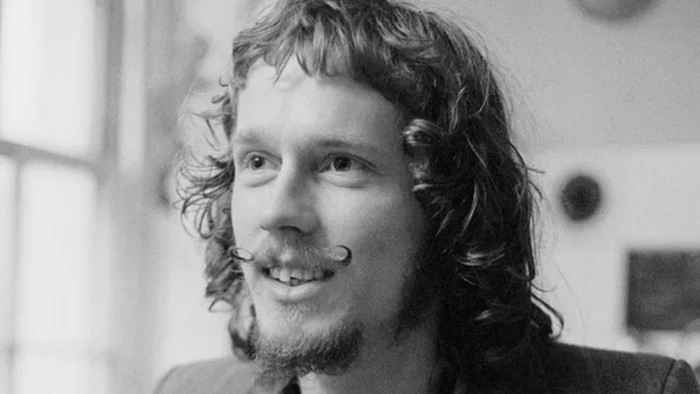 The musician
 The painter
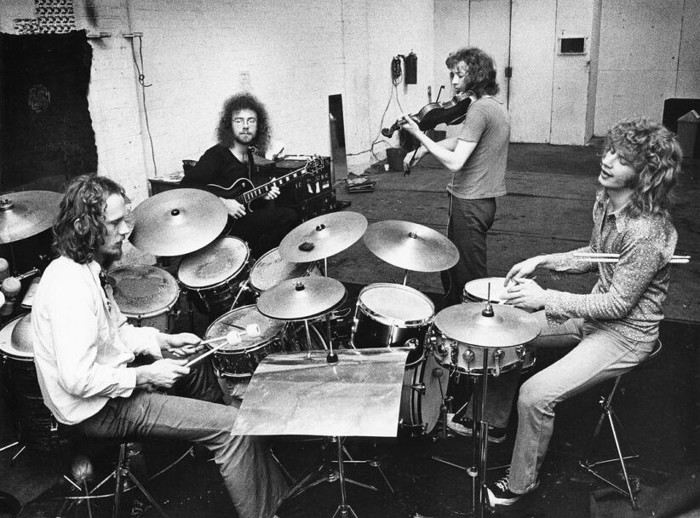 The band (l. to r.: Muir, Fripp, Cross, Bruford)
James David "Jamie" Muir, a talented drummer and percussionist and brief member of King Crimson, who left the world of pop music and show business to retreat to a Buddhist monastery in Scotland before dedicating himself almost entirely to painting, passed away last year at the age of 81. His artwork was recently featured in two exhibitions in Cornwall and London...
Born in Edinburgh, Scotland, in 1942, Jamie Muir attended the College of Art there in the 1960s. Early on, he was drawn to jazz.
Later settling in London, Jamie Muir played jazz trombone before turning to percussion. Influenced by American drummers like Tony Williams, Kenny Clarke, and Milford Graves, as well as musicians such as Pharoah Sanders and Albert Ayler, he gravitated toward free music, meaning improvisation. It was during this time that he began assembling an arsenal of household objects he later used alongside his standard drum kit: rattles, whistles, horns, chimes, bells, gongs, sheets of metal, shakers, drums, and plastic bottles.
After a brief stint in a multimedia group, Jamie Muir worked with choreographer Lindsay Kemp (as did David Bowie), played music in the short-lived jazz-rock group Sunship (with guitarist Allan Holdsworth, formerly of Soft Machine), and became involved in the ensemble known as The Music Improvisation Society, with Derek Bailey, Hugh Davies, and Evan Parker between 1968 and 1971. The Music Improvisation Society recorded an album for the ECM label in 1971 (never reissued on CD except in Japan) and a posthumous album (1968–71). Both records gained a cult following among fans of experimental and improvised music. After this experience, Muir played in Pete Brown’s Battered Ornaments and then in the band Boris with Jamie Peters, Don Weller, and former Colosseum member Jim Roache. He also briefly joined Assagai, an Afro-rock group featuring South African and Nigerian musicians from the legendary South African band Blue Notes (including drummer Louis Moholo, saxophonist Dudu Pukwana, and trumpeter/flutist Mongezi Feza).
In the summer of 1972, Robert Fripp, leader and guitarist of King Crimson, whom a journalist from *Melody Maker* had suggested meet this percussionist from the English experimental scene, invited Jamie Muir to join the new King Crimson lineup he was assembling: Robert Fripp (guitar, mellotron), David Cross (violin), John Wetton (bass), Bill Bruford (drums), and Jamie Muir (percussion). "King Crimson was the ideal for me because it was a rock band that had more than three brain cells. I was very much more an instrumental style of musician rather than being song-based, and there weren’t many other bands that I would have been any good in. I was extremely pleased and felt completely at home with Crimson." Once formed, the new group honed their sound on stage from early October to mid-December 1972 (see the 1972 live albums in the discography below), before recording the album Larks’ Tongues in Aspic in early 1973. A grand album, one of the band’s best, and one of the best of the 1970s.
However, after a concert at the Marquee Club in London, Jamie Muir left not only the band but also the music world entirely, with immediate effect. During the six months Muir spent with King Crimson, his presence completely upended the group’s philosophy, loosening the notoriously strict rules imposed by Fripp and pushing the boundaries of improvisation. Jamie Muir’s contribution—clearly heard on Larks’ Tongues in Aspic—was to introduce a touch of anarchy into Robert Fripp’s music, which was usually so tight, rational, and meticulously structured.
Muir returned to Scotland, to the Samye Ling Monastery near Eskdalemuir in Dumfries and Galloway (in the south), where he spent several years as a Buddhist monk, the pleasures of his former life giving way to retreat and meditation.
Muir came back to London and music in the 1980s, playing and recording with Derek Bailey and Evan Parker from the Music Improvisation Company, as well as with former King Crimson member Michael Giles on the soundtrack for the independent British film Ghost Dance (1983).
In 1990, Muir left music behind once more and increasingly devoted himself to painting, a discipline he maintained until his death. In his later years, he began exploring digital art as another form of expression.
In recent years, he lived in Penzance, Cornwall, where he passed away in February 2025.
Hery
Discography:
A. Jamie Muir with King Crimson: • Larks’ Tongues In Aspic (1973) • Larks’ Tongues In Aspic (The Complete Recordings) (2023, 4 CDs) • Cosmic Muir (1998, Japan, unofficial release) • The Beat Club Bremen 1972 (1999) • Live at the Zoom Club Frankfurt, Germany (October 13, 1972) (2002, 2 CDs) • Live in Guildford (November 13, 1972) (2003) • Live in Newcastle (December 8, 1972) (2019, mono) B. Jamie Muir and other projects: • The Music Improvisation Company: The Music Improvisation Company (1970) • The Music Improvisation Company: 1968–1971 (1976) • Derek Bailey / Jamie Muir: Dart Drug (1981) • Michael Giles / Jamie Muir / David Cunningham: Ghost Dance (1996) • Evan Parker / Jamie Muir / Paul Rodgers: The Ayes Have It (2001)
Links:
https://www.jamiemuirart.com/
https://www.youtube.com/watch?v=eDyf0ofV5n4 (King Crimson: "Larks' Tongues in Aspic") https://www.youtube.com/watch?v=ZgoKT8hEBFQ&list=RDJ2FjbpvX8dA&index=2 (Michael Giles, Jamie Muir, David Cunningham)
The musician
The painter
The band (l. to r.: Muir, Fripp, Cross, Bruford)Flying with Saudi Arabia and war in the Middle East
Hi everyone,
My girlfriend and I booked our tickets with Saudia Airlines for a trip to Thailand this summer, from July 5th to August 3rd. Given the geopolitical situation in the Middle East, we’re keeping a close eye on the news.
I was wondering if anyone here is in the same situation as us?
• Have you heard anything about possible mass cancellations or if the airline is still maintaining its routes to Asia?
• Are there any travelers who’ve recently returned who could tell us if air corridors have been changed (longer flight times)?
The idea is to know what to expect so we can prepare as best as possible. Thanks for your replies! !
Qatar Airways: cancellation and incomplete rescheduling
So, even before starting my explanation, I’d like to introduce myself since this is my first post on the forum :) I’m Jérôme, a huge Asia enthusiast, and I’m currently in the process of moving to Japan with my family in 2028.
Now, onto the topic :)
We’re a family of four traveling together to Seoul, with two separate bookings.
Our original itinerary was: Madrid → Doha → Seoul (March 23–24)
The issue is that our entire outbound flight was canceled, and the airline simply rescheduled the Madrid → Doha leg. Now we’re left with an incomplete journey, with no solution to reach our final destination (Seoul).
Since then:
- Can’t modify flights online (technical error every time) - Can’t get help via chat or WhatsApp - Phone support is unreachable, and the usual French number isn’t working right now
We don’t want a refund. We just want to be rerouted to Seoul, as our original ticket promised.
We’re flexible:
- On dates (we can leave on March 21 or 22 instead of the 23rd) - On the itinerary (different layovers if needed)
Have any of you dealt with this before? Do you know how to unlock a booking in this case or get a rerouting? We’re considering going straight to the airport to resolve it at the Qatar Airways counter....
Thanks so much for your help! 😊
Now, onto the topic :)
We’re a family of four traveling together to Seoul, with two separate bookings.
Our original itinerary was: Madrid → Doha → Seoul (March 23–24)
The issue is that our entire outbound flight was canceled, and the airline simply rescheduled the Madrid → Doha leg. Now we’re left with an incomplete journey, with no solution to reach our final destination (Seoul).
Since then:
- Can’t modify flights online (technical error every time) - Can’t get help via chat or WhatsApp - Phone support is unreachable, and the usual French number isn’t working right now
We don’t want a refund. We just want to be rerouted to Seoul, as our original ticket promised.
We’re flexible:
- On dates (we can leave on March 21 or 22 instead of the 23rd) - On the itinerary (different layovers if needed)
Have any of you dealt with this before? Do you know how to unlock a booking in this case or get a rerouting? We’re considering going straight to the airport to resolve it at the Qatar Airways counter....
Thanks so much for your help! 😊
Wi-Fi in Taiwan and budget-friendly hotels
Hi everyone who’s reading this!
I’m heading to Taiwan soon and would love some up-to-date info on Wi-Fi. From what I’ve gathered, Taiwan offers it for free, but I’ve heard it’s not secure since it’s not protected by a "password." Since I’ve been traveling outside the EU for years without a local SIM card, I only use Wi-Fi in hotels, restaurants, and cafés. For me, that’s more than enough. So, my question is: Do these places secure their Wi-Fi with a "password"? If not, does buying a SIM card or eSIM seem like the only alternative?
Also, if any of you have recommendations for budget-friendly hotels in the main "cities," I’d love to hear them!
Thanks in advance for your replies! !
I’m heading to Taiwan soon and would love some up-to-date info on Wi-Fi. From what I’ve gathered, Taiwan offers it for free, but I’ve heard it’s not secure since it’s not protected by a "password." Since I’ve been traveling outside the EU for years without a local SIM card, I only use Wi-Fi in hotels, restaurants, and cafés. For me, that’s more than enough. So, my question is: Do these places secure their Wi-Fi with a "password"? If not, does buying a SIM card or eSIM seem like the only alternative?
Also, if any of you have recommendations for budget-friendly hotels in the main "cities," I’d love to hear them!
Thanks in advance for your replies! !
Feedback on two-week trip to Bangkok - Chiang Mai - Phuket
Hello,
I’m heading to Thailand for two weeks at the end of February with my family. I went there 20 years ago.
I’d love your thoughts on a relaxed two-week trip that lets me show my kids the joys of travel while also taking time to unwind (after all, it *is* vacation! :))
I’m planning to spend 2 days in Bangkok, then take the overnight train to Chiang Mai (so my kids can experience that) and stay for 2-3 nights. After that, I’ll fly to Phuket for a few nights, then head to Koh Lanta for a few days before returning to Phuket to make my way back to Bangkok for the last two days before departure.
Tons of people travel for two weeks during this time—any recommendations? So far, I only have my round-trip flight ticket to Bangkok.
Thanks in advance!
Transport questions for a 9-day Northern/Central Vietnam itinerary
Hi everyone,
We’re heading to Vietnam in February as a family (2 adults and 2 kids) for 9 full days, and I was thinking of this itinerary:
Day 1: Hanoi Day 2: Halong Bay (Lan Ha) Day 3: Halong Bay (Lan Ha) Day 4: Hue Day 5: Danang Day 6: Danang Day 7: Hoi An Day 8: Hoi An/My Son Day 9: Hanoi
After reading almost all the discussions about Vietnam, I don’t see anything about transportation options for getting from Hue to Danang, then from Danang to Hoi An. Any ideas (train, bus)? From the map, it looks like Danang is close to Hoi An—easily accessible by taxi, right?
Also, after reading lots of comments and websites, I’ve noticed that Danang, aside from being a big developing city, seems to be more about hotels for relaxing on the beach—very laid-back, isn’t it? Not really a place to visit like Hanoi or Hoi An.
Generally speaking, if you have any recommendations for the itinerary or tips, I’d love to hear them.
I’ll post a trip report when we get back.
Merry Christmas to all!
Alex
We’re heading to Vietnam in February as a family (2 adults and 2 kids) for 9 full days, and I was thinking of this itinerary:
Day 1: Hanoi Day 2: Halong Bay (Lan Ha) Day 3: Halong Bay (Lan Ha) Day 4: Hue Day 5: Danang Day 6: Danang Day 7: Hoi An Day 8: Hoi An/My Son Day 9: Hanoi
After reading almost all the discussions about Vietnam, I don’t see anything about transportation options for getting from Hue to Danang, then from Danang to Hoi An. Any ideas (train, bus)? From the map, it looks like Danang is close to Hoi An—easily accessible by taxi, right?
Also, after reading lots of comments and websites, I’ve noticed that Danang, aside from being a big developing city, seems to be more about hotels for relaxing on the beach—very laid-back, isn’t it? Not really a place to visit like Hanoi or Hoi An.
Generally speaking, if you have any recommendations for the itinerary or tips, I’d love to hear them.
I’ll post a trip report when we get back.
Merry Christmas to all!
Alex
Prices for domestic flight Krabi-Chiang Mai
Hi everyone, I’m planning a trip to Thailand.
Since we’ll only be there for two and a half weeks, we want to visit the Krabi area and then Chiang Mai. So we won’t take the train—it’s too long in terms of travel time. We’re wondering if it’s more worthwhile to buy the flight tickets on the spot? If so, is the price difference really significant? From what I see on online booking sites, you’re looking at between 35 and 60 € per person for a Krabi/Chiang Mai route.
Need advice for a trip to Thailand with kids
Hi everyone,
We’re heading to Thailand with our four kids (ages 18, 17, 12, and 10) from August 3rd to 15th, 2026. I’ve been there twice before, but that was over 20 years ago, so I’m completely out of the loop !
We arrive in Bangkok on the morning of the 3rd and leave on the evening of the 15th.
Here’s our rough itinerary—I’d love your thoughts: 1 night in Bangkok on the 3rd (with a little sightseeing during the day), then the Grand Palace, reclining Buddha, and a floating market on the 4th. On the evening of the 4th, we take an overnight train to Chiang Mai. We’ll stay in Chiang Mai from the 5th to the 8th. On the evening of the 8th, we take an overnight train back to Bangkok. On the morning of the 9th, we head to Koh Samui. We’ll stay there from the 9th to the 12th, then return to Bangkok on the 13th. We’ll spend the afternoon of the 13th, the 14th, and the 15th in Bangkok before flying back to France 🙁.
So here are my questions: - Do you think this "itinerary is doable"? - Do you think it’s necessary to travel first class, or is second class with Air Co sufficient for the Bangkok to Chiang Mai trip? - Any recommendations for a great hotel with a pool, super central, so we can do most things on foot and visit the night market in Chiang Mai? - Any recommendations for a great hotel with a pool, super central, so we can do most things on foot and visit the night market in Bangkok? - Any recommendations for a great hotel with a pool, super central, so we can do most things on foot and visit the night market in Koh Samui?
For hotels, we’d like to spend a maximum of 200 € per night for the six of us.
Thanks in advance for your help! Mathilde
We’re heading to Thailand with our four kids (ages 18, 17, 12, and 10) from August 3rd to 15th, 2026. I’ve been there twice before, but that was over 20 years ago, so I’m completely out of the loop !
We arrive in Bangkok on the morning of the 3rd and leave on the evening of the 15th.
Here’s our rough itinerary—I’d love your thoughts: 1 night in Bangkok on the 3rd (with a little sightseeing during the day), then the Grand Palace, reclining Buddha, and a floating market on the 4th. On the evening of the 4th, we take an overnight train to Chiang Mai. We’ll stay in Chiang Mai from the 5th to the 8th. On the evening of the 8th, we take an overnight train back to Bangkok. On the morning of the 9th, we head to Koh Samui. We’ll stay there from the 9th to the 12th, then return to Bangkok on the 13th. We’ll spend the afternoon of the 13th, the 14th, and the 15th in Bangkok before flying back to France 🙁.
So here are my questions: - Do you think this "itinerary is doable"? - Do you think it’s necessary to travel first class, or is second class with Air Co sufficient for the Bangkok to Chiang Mai trip? - Any recommendations for a great hotel with a pool, super central, so we can do most things on foot and visit the night market in Chiang Mai? - Any recommendations for a great hotel with a pool, super central, so we can do most things on foot and visit the night market in Bangkok? - Any recommendations for a great hotel with a pool, super central, so we can do most things on foot and visit the night market in Koh Samui?
For hotels, we’d like to spend a maximum of 200 € per night for the six of us.
Thanks in advance for your help! Mathilde
Questions about a trip to Paris around mid-February 2026
Hi everyone,
I’m looking into a trip to Paris around mid-February. I’d love to know more about the temperature (weather) in Paris, museum access (closures or anything else), how easy it is to get around on foot (slippery due to ice?), public transport, etc.
Also, are there any events or activities I absolutely shouldn’t miss? I could adjust my dates based on what you know.
On another note, I’d love to catch a hockey game. Are there any around Paris? I’m happy to watch a few games no matter the level 🏒🥅
FYI, I’m not afraid of the cold since I’m from Quebec 😁😆😆🧑🌾
Thanks in advance for your help! 👍😊❤️❤️
I’m looking into a trip to Paris around mid-February. I’d love to know more about the temperature (weather) in Paris, museum access (closures or anything else), how easy it is to get around on foot (slippery due to ice?), public transport, etc.
Also, are there any events or activities I absolutely shouldn’t miss? I could adjust my dates based on what you know.
On another note, I’d love to catch a hockey game. Are there any around Paris? I’m happy to watch a few games no matter the level 🏒🥅
FYI, I’m not afraid of the cold since I’m from Quebec 😁😆😆🧑🌾
Thanks in advance for your help! 👍😊❤️❤️
Question about the Bangkok-Vientiane train
Hi there,
I need to take a sleeper train from Bangkok to Vientiane in January. I found some ticket options on 12Go Asia, but booking doesn’t seem possible at the moment. I’ve tried simulations for several dates, but no luck. I’m wondering if it’s already fully booked, if they’ve stopped selling tickets… yet 12Go still features it every day 😕
Has anyone else run into this issue? Can I find tickets on another site? (I tried Baolau, but no sleepers left for January 8th.)
Thanks!
I need to take a sleeper train from Bangkok to Vientiane in January. I found some ticket options on 12Go Asia, but booking doesn’t seem possible at the moment. I’ve tried simulations for several dates, but no luck. I’m wondering if it’s already fully booked, if they’ve stopped selling tickets… yet 12Go still features it every day 😕
Has anyone else run into this issue? Can I find tickets on another site? (I tried Baolau, but no sleepers left for January 8th.)
Thanks!
Aviophobia, how to overcome it?
Hello fellow travelers,
After an engine failure in mid-2016 on a long-haul flight from BRISBANE to LYON, I developed a persistent aviophobia that I’m struggling to shake off. It’s becoming more and more of a hindrance.
Up until now, I’ve been using an avoidance strategy (for example, avoiding destinations that would require any other mode of transport than a car or train), but lately, it’s become really limiting.
I’m looking for a therapist—either in-person or via video call—who could help me get past this hurdle.
Thanks in advance for your help!
After an engine failure in mid-2016 on a long-haul flight from BRISBANE to LYON, I developed a persistent aviophobia that I’m struggling to shake off. It’s becoming more and more of a hindrance.
Up until now, I’ve been using an avoidance strategy (for example, avoiding destinations that would require any other mode of transport than a car or train), but lately, it’s become really limiting.
I’m looking for a therapist—either in-person or via video call—who could help me get past this hurdle.
Thanks in advance for your help!
New Navi Mumbai International Airport
India inaugurates the new Navi Mumbai International Airport and the final phase of Mumbai’s Metro Line 3—a major turning point for the country’s infrastructure.
Mumbai, India’s economic capital, is entering a new era of modernization. The Indian government has officially inaugurated the Navi Mumbai International Airport, one of the country’s most ambitious infrastructure projects, along with the final phase of Metro Line 3, a key axis to ease congestion in the megacity.
The Navi Mumbai International Airport (NMIA), located about 35 km from the city center, aims to eventually handle up to 60 million passengers per year. Built to reduce pressure on the already saturated Chhatrapati Shivaji Maharaj Airport, it features ultra-modern facilities, sustainable design, and cutting-edge technologies for air traffic management and energy efficiency.
At the same time, the completion of Mumbai’s Metro Line 3, connecting Colaba to Bandra-SEEPZ, marks a major advancement in urban mobility. This 33.5 km underground section will significantly reduce travel time and congestion in a city known for its chronic traffic jams.
These two projects reflect the Indian government’s commitment to transforming Mumbai into a global hub, combining connectivity, sustainability, and economic development.
The Navi Mumbai International Airport (NMIA), a project two decades in the making, has finally come to fruition. Phase one of the airport was inaugurated Wednesday by Prime Minister Narendra Modi, in the presence of Chief Minister Devendra Fadnavis and Deputy Chief Ministers Eknath Shinde and Ajit Pawar. Although the first phase, which includes Terminal 1 and Runway 1 with 10 bus gates and 29 aero bridges, has been inaugurated, flight operations will not begin immediately.
"Post-inauguration, the airport will be handed over to the Central Industrial Security Force (CISF) for a security sweep, which could take 30 to 45 days. We also need to mobilize customs and immigration teams and complete end-to-end testing, which is a 45-60-day process," said Arun Bansal, CEO of Adani Airports Holdings Ltd, developer and operator of the NMIA, during a press briefing at the NMIA premises Monday. Even though an exact date hasn’t been announced, NMIA CEO Captain B V J K Sharma and Bansal said commercial flights are expected to begin in December 2025. Plans of major carriers Three major airlines—Air India, Akasa Air, and IndiGo—have already signed on to shift part of their operations to NMIA. Last month, Air India announced plans to start with 20 daily departures (40 air traffic movements) through Air India Express, connecting 15 Indian cities in the first phase. By mid-2026, it aims to scale up to 55 daily departures, including up to five international flights. IndiGo, which made its announcement in May, plans to operate 18 daily flights to more than 15 cities from the first day of commercial operations and intends to expand to 140 daily flights—30 of which will be international—within 18 months. In June, Akasa Air said it will start with 15 daily domestic flights, scaling up to over 300 domestic and 50 international flights a week within a few months. When asked which airline will operate the first flight, Bansal said, "We want all three airlines to be there on Day 1. It depends on who has the earliest slot that day, and the destination choice lies entirely with the airlines." Operations to begin with 12-hour window In the first month, flights will operate between 8 am and 8 pm, with the 12-hour window likely to be extended as operations stabilize. Although NMIA’s full capacity is 40 air traffic movements (ATMs) per hour, the initial phase will handle 10 ATMs—allowing 10 aircraft to land or take off every hour. Airlines are expected to announce routes and ticket sales soon. Touted as an international aviation hub, NMIA positions Mumbai alongside global twin-airport cities such as London, Dubai, and New York, and plans to launch both domestic and international operations from Day 1. Concession for international carriers When asked if international carriers will be given any concessions, Bansal said, "For international airlines, we will not charge them parking fees for the first year." The duo added that NMIA aims to reclaim Mumbai’s rightful place on the global aviation map. "For a decade… travelers didn’t have a choice—airlines couldn’t get additional slots (at the Mumbai airport), so traffic shifted to Delhi. We are course-correcting that with NMIA. It won’t happen overnight, but over the next five–seven years, you’ll see the change," said Bansal. He noted that Mumbai currently lacks direct flights to major destinations in Europe and the U.S., something NMIA hopes to change. "If you see east-to-west flights, Mumbai is a natural stop," added Sharma. As reported earlier, NMIA will eventually feature four terminals and two parallel runways, with a total capacity to handle up to 90 million passengers per annum (MPPA), compared to 20 MPPA in the first phase. In the long term, the airport aims to serve as a key transfer hub between the East and the West, enabling passengers from Southeast Asia to connect seamlessly to Europe and North America.
The Navi Mumbai International Airport (NMIA), a project two decades in the making, has finally come to fruition. Phase one of the airport was inaugurated Wednesday by Prime Minister Narendra Modi, in the presence of Chief Minister Devendra Fadnavis and Deputy Chief Ministers Eknath Shinde and Ajit Pawar. Although the first phase, which includes Terminal 1 and Runway 1 with 10 bus gates and 29 aero bridges, has been inaugurated, flight operations will not begin immediately.
"Post-inauguration, the airport will be handed over to the Central Industrial Security Force (CISF) for a security sweep, which could take 30 to 45 days. We also need to mobilize customs and immigration teams and complete end-to-end testing, which is a 45-60-day process," said Arun Bansal, CEO of Adani Airports Holdings Ltd, developer and operator of the NMIA, during a press briefing at the NMIA premises Monday. Even though an exact date hasn’t been announced, NMIA CEO Captain B V J K Sharma and Bansal said commercial flights are expected to begin in December 2025. Plans of major carriers Three major airlines—Air India, Akasa Air, and IndiGo—have already signed on to shift part of their operations to NMIA. Last month, Air India announced plans to start with 20 daily departures (40 air traffic movements) through Air India Express, connecting 15 Indian cities in the first phase. By mid-2026, it aims to scale up to 55 daily departures, including up to five international flights. IndiGo, which made its announcement in May, plans to operate 18 daily flights to more than 15 cities from the first day of commercial operations and intends to expand to 140 daily flights—30 of which will be international—within 18 months. In June, Akasa Air said it will start with 15 daily domestic flights, scaling up to over 300 domestic and 50 international flights a week within a few months. When asked which airline will operate the first flight, Bansal said, "We want all three airlines to be there on Day 1. It depends on who has the earliest slot that day, and the destination choice lies entirely with the airlines." Operations to begin with 12-hour window In the first month, flights will operate between 8 am and 8 pm, with the 12-hour window likely to be extended as operations stabilize. Although NMIA’s full capacity is 40 air traffic movements (ATMs) per hour, the initial phase will handle 10 ATMs—allowing 10 aircraft to land or take off every hour. Airlines are expected to announce routes and ticket sales soon. Touted as an international aviation hub, NMIA positions Mumbai alongside global twin-airport cities such as London, Dubai, and New York, and plans to launch both domestic and international operations from Day 1. Concession for international carriers When asked if international carriers will be given any concessions, Bansal said, "For international airlines, we will not charge them parking fees for the first year." The duo added that NMIA aims to reclaim Mumbai’s rightful place on the global aviation map. "For a decade… travelers didn’t have a choice—airlines couldn’t get additional slots (at the Mumbai airport), so traffic shifted to Delhi. We are course-correcting that with NMIA. It won’t happen overnight, but over the next five–seven years, you’ll see the change," said Bansal. He noted that Mumbai currently lacks direct flights to major destinations in Europe and the U.S., something NMIA hopes to change. "If you see east-to-west flights, Mumbai is a natural stop," added Sharma. As reported earlier, NMIA will eventually feature four terminals and two parallel runways, with a total capacity to handle up to 90 million passengers per annum (MPPA), compared to 20 MPPA in the first phase. In the long term, the airport aims to serve as a key transfer hub between the East and the West, enabling passengers from Southeast Asia to connect seamlessly to Europe and North America.
First trip to Thailand – itinerary advice
Hi everyone,
I’m heading to Thailand for the first time at the end of January 2026 for two weeks. I’m traveling with someone who’s already been there, so we’re planning to hit some of the must-see spots but also visit places my partner wants to see—like Krabi, for example. We want a bit of everything: cities, food, culture, walks, but also beach time and relaxation. I’d love your thoughts on this itinerary idea—is it doable without feeling too rushed? We’ve got 16 nights there. There’s a part of the trip that’s still up in the air where I’m not sure what to do. Either we add a national park or a city like Erawan? The goal is to see beautiful landscapes, waterfalls (if there’s water at that time of year!), and wildlife... Or maybe we don’t add anything and just extend our time in the other stops! Depending on the final choice, the order might need adjusting 🙂
Day 1: Land in Bangkok from Paris at 2 PM—either we take a direct flight to Krabi to start our trip there (and end in Bangkok on the way back), or we stay in Bangkok for 3 days. Day 1/Day 2/Day 3/Day 4 (3.5 days, 4 nights): Bangkok (temples, floating market, possibly a day trip to Ayutthaya) Day 5/Day 6/Day 7/Day 8: Travel to Krabi, Railay, and day trips to the surrounding islands Day 9/Day 10/Day 11/Day 12: Travel to an island (probably Koh Tao), snorkeling, diving, trekking, Ang Thong excursion? Day 13/Day 14/Day 15: Leave the island for an undecided destination—a national park (Khao Sok? Khao Sam Roi Yot?)? Or Phang Nga Bay? Or Erawan? Day 16: Return to Bangkok Day 17: Departure (flight at 2 PM)
What do you think? Any advice or tips on the itinerary or the ideas for Days 13-15? (Which could be moved to another part of the trip depending on the route.) Just to note, we’re not big hikers or adventurers, but we do enjoy discovery, nature, and cultural visits like temples. Thanks in advance for your valuable tips 🙂
Florence
I’m heading to Thailand for the first time at the end of January 2026 for two weeks. I’m traveling with someone who’s already been there, so we’re planning to hit some of the must-see spots but also visit places my partner wants to see—like Krabi, for example. We want a bit of everything: cities, food, culture, walks, but also beach time and relaxation. I’d love your thoughts on this itinerary idea—is it doable without feeling too rushed? We’ve got 16 nights there. There’s a part of the trip that’s still up in the air where I’m not sure what to do. Either we add a national park or a city like Erawan? The goal is to see beautiful landscapes, waterfalls (if there’s water at that time of year!), and wildlife... Or maybe we don’t add anything and just extend our time in the other stops! Depending on the final choice, the order might need adjusting 🙂
Day 1: Land in Bangkok from Paris at 2 PM—either we take a direct flight to Krabi to start our trip there (and end in Bangkok on the way back), or we stay in Bangkok for 3 days. Day 1/Day 2/Day 3/Day 4 (3.5 days, 4 nights): Bangkok (temples, floating market, possibly a day trip to Ayutthaya) Day 5/Day 6/Day 7/Day 8: Travel to Krabi, Railay, and day trips to the surrounding islands Day 9/Day 10/Day 11/Day 12: Travel to an island (probably Koh Tao), snorkeling, diving, trekking, Ang Thong excursion? Day 13/Day 14/Day 15: Leave the island for an undecided destination—a national park (Khao Sok? Khao Sam Roi Yot?)? Or Phang Nga Bay? Or Erawan? Day 16: Return to Bangkok Day 17: Departure (flight at 2 PM)
What do you think? Any advice or tips on the itinerary or the ideas for Days 13-15? (Which could be moved to another part of the trip depending on the route.) Just to note, we’re not big hikers or adventurers, but we do enjoy discovery, nature, and cultural visits like temples. Thanks in advance for your valuable tips 🙂
Florence
The Two of Us in Istanbul: A Turkish Blue Round
Hello everyone,
I’m not really a regular contributor to VoyageForum, but every time Kate and I travel, she encourages me to write a travel journal and publish it. And I must admit, it’s a very enjoyable intellectual exercise, though not always easy. As a VF contributor whose journals I’ve read once said, this retrospective work not only helps preserve memories but also provides a fruitful moment of introspection by bringing back emotions and feelings.
Kate and I spent a week in Istanbul. For her, who had already visited, it was a return; for me, it was a discovery.
As we’ve now made a habit of, I write the texts, and she posts her photos. We hope this illustrated story, crafted together, will revive beautiful sensations for those who know the city and inspire others to discover it. Here we go!
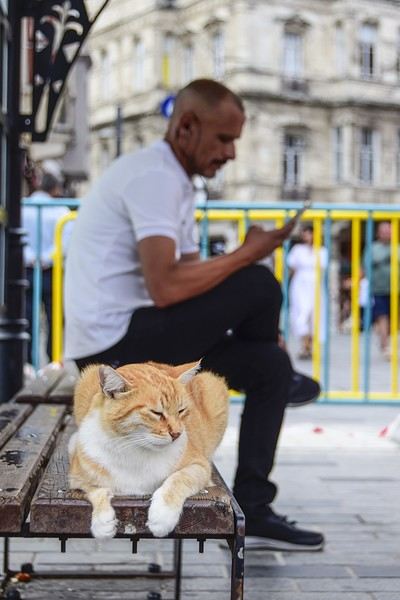
I’m not really a regular contributor to VoyageForum, but every time Kate and I travel, she encourages me to write a travel journal and publish it. And I must admit, it’s a very enjoyable intellectual exercise, though not always easy. As a VF contributor whose journals I’ve read once said, this retrospective work not only helps preserve memories but also provides a fruitful moment of introspection by bringing back emotions and feelings.
Kate and I spent a week in Istanbul. For her, who had already visited, it was a return; for me, it was a discovery.
As we’ve now made a habit of, I write the texts, and she posts her photos. We hope this illustrated story, crafted together, will revive beautiful sensations for those who know the city and inspire others to discover it. Here we go!
Thailand in March: What itinerary for the south?
Hi everyone,
So excited to be back on this forum of fellow travel enthusiasts to ask for advice about my upcoming two-week trip to Thailand in March 2026.
Given that it’ll be the start of the intense heat and burning season, I’m wondering about my itinerary, which would focus on the central/southern part of the country.
Ideally, I’d like a mix of relaxation in a nice setting, culture (temples or old palaces), and I’m keeping six days in Bangkok, which I love :)
I’m planning to get around by train, car (through an agency), or plane if it’s easier.
Option 1: HUA HIN – 3/4 days (day trips to PHETCHABURI + SAM ROI YOT + ARTISAN MARKETS) KANCHANABURI – 3/4 days NAKHON PATHOM – 1 day BANGKOK – 6 days
My doubts: -Will the sky be too hazy (from smoke) for good photos? -Will Kanchanaburi and its surroundings be less enchanting during this period (dry landscapes)?
Option 2: PHUKET (4 days): exploring the island + PHANG NGA Bay HUA HIN (3/4 days) BANGKOK (7 days)
My doubts: -How do I get from Phuket to Hua Hin? It seems like flying isn’t an option, and I’d have to take a long trip up the southern coast or return to Bangkok to catch the train. -Is Phuket even remotely pleasant during this ultra-touristy period? -Is Karon a good base for exploring Phuket?
Option 3: PHUKET KAO SOK SURAT THANI? BANGKOK
My doubts: -I’d like to add a destination with beautiful temples in this area, but maybe Surat Thani isn’t the best idea.
Option 4: SURAT THANI >> HUA HIN (6/7 days) BANGKOK
Doubts: -I’m worried this route might be too tiring if I have to move every two days.
I’m open to any tips—or even a completely different itinerary if you have other ideas.
Thanks so much / Khob Khun Krap :)
So excited to be back on this forum of fellow travel enthusiasts to ask for advice about my upcoming two-week trip to Thailand in March 2026.
Given that it’ll be the start of the intense heat and burning season, I’m wondering about my itinerary, which would focus on the central/southern part of the country.
Ideally, I’d like a mix of relaxation in a nice setting, culture (temples or old palaces), and I’m keeping six days in Bangkok, which I love :)
I’m planning to get around by train, car (through an agency), or plane if it’s easier.
Option 1: HUA HIN – 3/4 days (day trips to PHETCHABURI + SAM ROI YOT + ARTISAN MARKETS) KANCHANABURI – 3/4 days NAKHON PATHOM – 1 day BANGKOK – 6 days
My doubts: -Will the sky be too hazy (from smoke) for good photos? -Will Kanchanaburi and its surroundings be less enchanting during this period (dry landscapes)?
Option 2: PHUKET (4 days): exploring the island + PHANG NGA Bay HUA HIN (3/4 days) BANGKOK (7 days)
My doubts: -How do I get from Phuket to Hua Hin? It seems like flying isn’t an option, and I’d have to take a long trip up the southern coast or return to Bangkok to catch the train. -Is Phuket even remotely pleasant during this ultra-touristy period? -Is Karon a good base for exploring Phuket?
Option 3: PHUKET KAO SOK SURAT THANI? BANGKOK
My doubts: -I’d like to add a destination with beautiful temples in this area, but maybe Surat Thani isn’t the best idea.
Option 4: SURAT THANI >> HUA HIN (6/7 days) BANGKOK
Doubts: -I’m worried this route might be too tiring if I have to move every two days.
I’m open to any tips—or even a completely different itinerary if you have other ideas.
Thanks so much / Khob Khun Krap :)
Call for postcards for a school project (Creuse, ULIS program)
Hello everyone,
I’m reaching out to all travelers and globe-trotters on this forum. I’m a teacher in Creuse working in a ULIS program (which welcomes children aged 6 to 12 with disabilities into a mainstream school). This year, I’m launching a school journal project that will involve the kids in many different topics. A big part of this journal will focus on opening up to the world, embracing differences, travel, global cultures, and more.
I’m putting out a call to invite as many of you as possible to send us a postcard (from France or anywhere in the world)! The goal is to help us "travel" and discover new places, countries, and horizons in a way that’s much more fun and exciting than a geography textbook. One section of our journal could be called "We received a letter from ," where we’d research the location and share what we learn with our readers—a really enriching activity for the classroom.
The project starts in September 2025 but doesn’t have a strict end date, since this journal and world-discovery initiative will span several school years (the kids stay in the ULIS program for multiple years). Postcards can be sent anytime—throughout the year, across seasons, even during holidays! The kids will find them when they return.
I hope this idea appeals to as many of you as possible, and that you’ll spread the word to your fellow travelers. Help us dream and explore!
For those who’d like to write to us in a language other than French, no problem—quite the opposite!
Thank you in advance for your participation! Below is our address. If you’d like us to write back, feel free to leave your address on a corner of the postcard! 😊
ULIS program students Bonnat Elementary School 12 rue Georges Sand 23220 BONNAT Thank you, and I hope to hear from you soon! 😊 Julien 🙂
I’m putting out a call to invite as many of you as possible to send us a postcard (from France or anywhere in the world)! The goal is to help us "travel" and discover new places, countries, and horizons in a way that’s much more fun and exciting than a geography textbook. One section of our journal could be called "We received a letter from ," where we’d research the location and share what we learn with our readers—a really enriching activity for the classroom.
The project starts in September 2025 but doesn’t have a strict end date, since this journal and world-discovery initiative will span several school years (the kids stay in the ULIS program for multiple years). Postcards can be sent anytime—throughout the year, across seasons, even during holidays! The kids will find them when they return.
I hope this idea appeals to as many of you as possible, and that you’ll spread the word to your fellow travelers. Help us dream and explore!
For those who’d like to write to us in a language other than French, no problem—quite the opposite!
Thank you in advance for your participation! Below is our address. If you’d like us to write back, feel free to leave your address on a corner of the postcard! 😊
ULIS program students Bonnat Elementary School 12 rue Georges Sand 23220 BONNAT Thank you, and I hope to hear from you soon! 😊 Julien 🙂
Far from the daily grind*
Hello,
Since I enjoy not only the countryside but also everything related to rail travel, I’m starting this photo thread dedicated to trains in Thailand (I’d guess most of us have taken one at some point...).
Feel free to post your pictures here as long as they fit the theme: rolling stock**, stations**, platforms, tracks (even without a train on them), technical equipment, engineering structures (bridges, viaducts), etc.—all in Thailand.
For each photo, I’ll (or you can) note the station or line where it was taken.
Comments and questions are welcome.
* train ** interiors or exteriors
All aboard!
* train ** interiors or exteriors
All aboard!
Accommodation on the River Kwai
Hi everyone,
I’m looking for addresses for guesthouses or, even better, houseboats or rafting houses on the River Kwai, between Kanchanaburi and Sangkhlaburi, to spend a few weeks contemplating this beautiful river.
Thanks for your suggestions!
Premaria
Route from Chiang Mai to Koh Samui or Krabi
Hi there,
During our Thailand trip, we're planning to arrive in Bangkok and then head up to Chiang Mai. So far, so good.
But after that, we'd like to go to the islands—either Krabi or Koh Samui.
However, the flights listed on 12go.asia seem complicated, with a layover of about 1 hour in Bangkok where we'd have to collect our luggage and check in for the second flight. That feels way too tight.
So, I'd love to hear about your experiences with this route and any tips you might have. Thanks everyone!
So, I'd love to hear about your experiences with this route and any tips you might have. Thanks everyone!
Accommodation in Ha Giang loop
Hi everyone,
In November, we’re planning to do the Ha Giang loop and the RC4 by motorbike without a guide. 😎 We’re looking for a decent place to stay/rent in Ha Giang.
If anyone has any info, we’d be really interested.
Thanks in advance! 😉 Ladava
In November, we’re planning to do the Ha Giang loop and the RC4 by motorbike without a guide. 😎 We’re looking for a decent place to stay/rent in Ha Giang.
If anyone has any info, we’d be really interested.
Thanks in advance! 😉 Ladava
Once Upon a Time in Bavani...
Imagination or reality, fiction or true story.
Everything blends together, and if the characters really existed, if their story is partly true, I freely transcribed what Surya told me in her English as precarious as mine.
Have I already posted this on vf? I can't find it. Maybe on the small forum Wapiti created to continue our wild stories that went on for pages and pages and no longer pleased anyone on vf.
No matter.
I heard from Bavani—life is crazy, isn’t it?
That’s why I’m bringing her story back.
I’m settling into the -miscellaneous- section; I like being away from the noise.
When the house is overrun with running feet, laughter, arguments, and music, I go to the barn turned into a honey house. It’s cool, it smells of wax and honey, and among the disorder of hive frames, supers, and stacked jars, I refocus.
Here, in -miscellaneous-, no one rants. I can let my fingers glide over the keyboard in peace.
Alright, enough digressions. At the end of the notebook, I’ll tell you what became of this little girl.
Bavani
“Bavani, stop daydreaming, work.”
I’m not daydreaming, I’m thinking.
My teacher is Surya, and she asked us to write a story. She doesn’t like us—I heard her talking to the teacher in the little kids’ class. She said: I stay here because the white people pay better than in government schools, but it’s a shame to teach gypsies. Filthy street urchins.
I’m not a gypsy, I’m a Narikuravar. Grandmother told me: you’re going to this school, you’ll learn English well, and when you come back, you’ll be richer than the others because you’ll beg better from the tourists. Grandmother makes necklaces and sells them, but often she sells nothing at all.
There are lots of tourists in my town, Tiruvannamalai. Before, I lived behind the temple with dad and mom. We had our spot and were happy, especially when mom cooked rice on the brazier. Then we’d lie down, and I’d press my back against mom’s huge belly, and it would move inside. One day, mom told me: stay here, I’ll be back very soon. I waited a long time, and neither dad nor mom came back. After a long time, dad came, and we went to Salem to my grandmother, who’s dad’s mom.
I asked: where’s mom? “Shut up, two was too many.” “Two what? He didn’t say.”
So I went to Salem to grandmother’s hut, and there was no rice, and Muriga came to get me with his minibus. Now I live here. We eat several times a day—yellow rice, then white rice to digest, and eggs and bananas.
And we have to study.
Papom *
.../...
Papom: in common language, it’s the equivalent of -see ya-
No matter.
I heard from Bavani—life is crazy, isn’t it?
That’s why I’m bringing her story back.
I’m settling into the -miscellaneous- section; I like being away from the noise.
When the house is overrun with running feet, laughter, arguments, and music, I go to the barn turned into a honey house. It’s cool, it smells of wax and honey, and among the disorder of hive frames, supers, and stacked jars, I refocus.
Here, in -miscellaneous-, no one rants. I can let my fingers glide over the keyboard in peace.
Alright, enough digressions. At the end of the notebook, I’ll tell you what became of this little girl.
Bavani
“Bavani, stop daydreaming, work.”
I’m not daydreaming, I’m thinking.
My teacher is Surya, and she asked us to write a story. She doesn’t like us—I heard her talking to the teacher in the little kids’ class. She said: I stay here because the white people pay better than in government schools, but it’s a shame to teach gypsies. Filthy street urchins.
I’m not a gypsy, I’m a Narikuravar. Grandmother told me: you’re going to this school, you’ll learn English well, and when you come back, you’ll be richer than the others because you’ll beg better from the tourists. Grandmother makes necklaces and sells them, but often she sells nothing at all.
There are lots of tourists in my town, Tiruvannamalai. Before, I lived behind the temple with dad and mom. We had our spot and were happy, especially when mom cooked rice on the brazier. Then we’d lie down, and I’d press my back against mom’s huge belly, and it would move inside. One day, mom told me: stay here, I’ll be back very soon. I waited a long time, and neither dad nor mom came back. After a long time, dad came, and we went to Salem to my grandmother, who’s dad’s mom.
I asked: where’s mom? “Shut up, two was too many.” “Two what? He didn’t say.”
So I went to Salem to grandmother’s hut, and there was no rice, and Muriga came to get me with his minibus. Now I live here. We eat several times a day—yellow rice, then white rice to digest, and eggs and bananas.
And we have to study.
Papom *
.../...
Papom: in common language, it’s the equivalent of -see ya-
Ferry from Madagascar to Réunion and Réunion to Mauritius
Hi everyone, I’m heading to Madagascar in December 2025 and I’d like to know the one-way fare without checked baggage—just cabin luggage—from Tamatave/Toamasina to Saint-Denis on Réunion Island, please. Also, how many days a week are there connections, and how long does the trip take? Thanks!
I’d also like to know about the route between Réunion Island and Mauritius: where does it depart from, how much does it cost, and on which days are there connections? Thanks in advance!
Best regards,
I’d also like to know about the route between Réunion Island and Mauritius: where does it depart from, how much does it cost, and on which days are there connections? Thanks in advance!
Best regards,
Road maps and GPS in Namibia
Hello, what’s the best road map? How reliable are GPS devices, and what downloads do you recommend before departure in case Wi-Fi isn’t available?
Kandy Esala Perahera Festival in Sri Lanka
Hi there,
We’re a family with kids aged 10 and 12, and we’ll be in Sri Lanka during the Kandy Esala Perahera. I’d love to know if it’s really worth prioritizing the procession on the final night—is it that different? What do the other nights miss out on? From what I’ve gathered, you can watch for free if you’re okay with sitting on the ground, which isn’t an issue for us. In that case, is it still easy to get a good view? We’ll be coming from Jaffna—are train tickets to Kandy harder to get during the Perahera? Also, August 8th is a public holiday. Do trains still run on public holidays?
Thanks in advance for your tips! !
We’re a family with kids aged 10 and 12, and we’ll be in Sri Lanka during the Kandy Esala Perahera. I’d love to know if it’s really worth prioritizing the procession on the final night—is it that different? What do the other nights miss out on? From what I’ve gathered, you can watch for free if you’re okay with sitting on the ground, which isn’t an issue for us. In that case, is it still easy to get a good view? We’ll be coming from Jaffna—are train tickets to Kandy harder to get during the Perahera? Also, August 8th is a public holiday. Do trains still run on public holidays?
Thanks in advance for your tips! !
What's the path from Sekong Lake to Naurikot?
Hi there, we're heading to Nepal in a few weeks and planning a relaxed trek from Jomsom to Tatopani along the left bank of the Kali Gandaki. Starting from Kokhetanti, we'd like to do a day loop to Sekong Lake, then head to Naurikot and return (possibly by road). We’ve found—well, *found* might be a strong word—a path to the lake, but we can’t see any route continuing to Naurikot. Can anyone help us out? Thanks so much! !