last edited Dec 11, 2019
Overview of Algeria
Location Map of Algeria
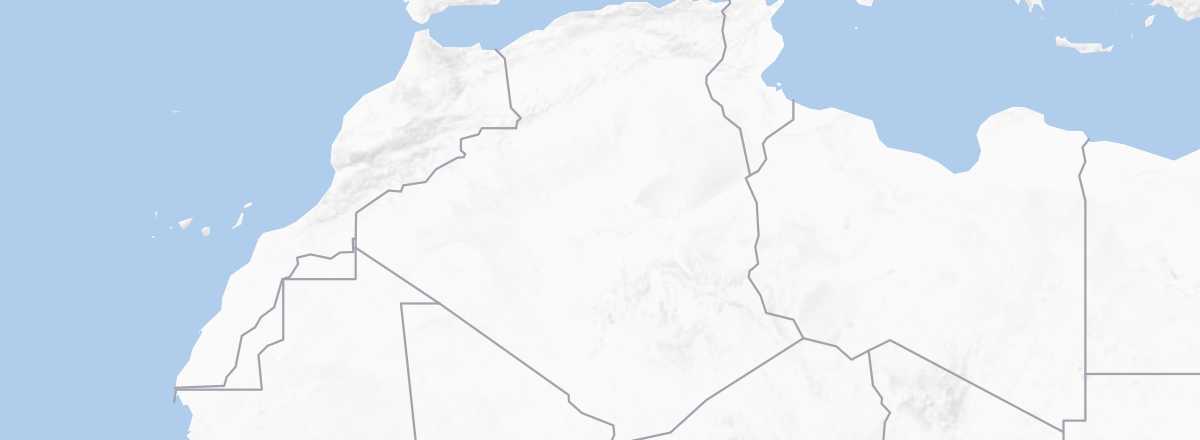 Algeria
Open the interactive map
Algeria
Open the interactive map
Quick Overview
Algeria is the largest country in North Africa, with its southern part covering a large portion of the Sahara.
Key Facts
- Type of place: country.
- Location: between the Sahara and the Mediterranean, facing France.
- Latitude/longitude: 36°46' N, 3°03' E.
- Local time:
- Capital: Algiers.
- Nature of the state: republic.
- Official languages: Arabic and Tamazight (Berber).
- Currency: Algerian dinar.
- Population: 41,657,488 inhabitants (2018).
- Area: 2,381,741 km².
- Density: 18 inhabitants/km².
- Highest point: Mount Tahat (3,003 m).
- Lowest point: Chott Melrhir (-40 m).
- Coastline: 1,644 km.
- Driving: on the right.
Tourism
Algeria is rich in both natural and cultural attractions. Unfortunately, its tourism appeal has long been hampered by a challenging local and regional situation. This is compounded by limited infrastructure compared to competing destinations (Morocco, Tunisia, etc.), a lack of priority given to tourism in national policy, and unnecessarily complicated entry requirements for many nationalities—particularly the French—which do little to encourage visitors to explore the country.
Each year, Algeria welcomes between 2 and 2.5 million foreign visitors (2.451 million in 2017, including around 150,000 French), many of whom are visiting family or friends.
Travel Essentials
- Destination: for slightly experienced travelers.
- By air: France-Algiers.
- Entry requirements: passport + visa + insurance + accommodation certificate or hotel reservation or agency attestation.
- Currency to bring: euros.
- Exchange rate:
- Daily "backpacker" budget:
- Best for accommodation:
- Best for getting around:
- Risks:
- Best time for climate/crowds/prices:
- Highlights (out of ): Nature ; Adventure ; Culture ; Relaxation/holidays /
Useful Addresses
Socio-Economic Statistics
- "Quality of life": 85/189 (rank in 2018)
- GDP per capita: $15,200 (2017)
- Average monthly income: ()
- Inflation: +5.6% (2017)
- "Official" unemployment: 11.7% (2017)
- Population below poverty line: ()
- Life expectancy: 77.2 years (2018)
- Migration rate per 1,000 inhabitants: -0.9 (2017)
- Population growth: +1.63% (2018)
- Literacy rate: 80.2% (2015)
- Urban population: 72.6% (2018)
- Press freedom: 136/180 (rank in 2018).
- Political regime: authoritarian regime (126/167 in 2018)
Sources: World Bank, Human Development Indicators, RSF, The Economist, The World Factbook