last edited Aug 27, 2020
Trains in Asia and the Middle East
Location Map of Destinations
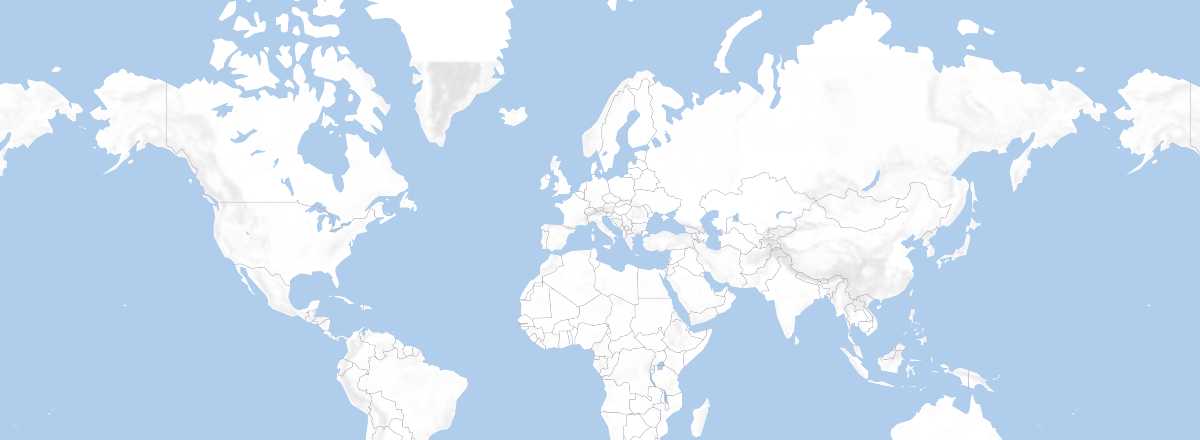 Destinations
Open the interactive map
Destinations
Open the interactive map
Rail Networks in Asia
Rail networks were originally established in most countries, primarily for commercial purposes (especially toward ports) by former colonial powers. However, in some regions, railways have nearly disappeared in favor of faster modes of transport like airplanes or roads.
In many countries, the condition of the lines and equipment remains quite outdated. Very often, except in the Far East, trains are very (very) slow, crowded, and somewhat folkloric. One advantage, however, is that the price per kilometer generally remains very affordable.
Japan, Korea, Taiwan
These three countries have modern and comfortable rail networks comparable to those in Europe. Passes are available for Japan and South Korea. Note that most of these passes must be purchased outside the region.
- "Japan Rail Pass": valid for 1, 2, or 3 weeks and offers unlimited train travel (plus some buses and ferries) in Japan. Other regional passes are also available in principle.
- "Korean Railroad Pass": a pass formula, valid from 3 to 10 days, for the entire Korean network.
Japan
Japan’s rail network is highly developed, even more so than in France, with typical Japanese efficiency (frequent and very punctual trains). Even villages are accessible by train. However, the system can sometimes be complex, and fares are very high, increasing with speed and comfort level. For foreigners visiting the country, the "Japan Rail Pass" is a must.
South Korea and Taiwan
Rail travel here is convenient, fairly economical, and comfortable. However, it’s best to book ahead for weekends.
Southeast Asia
Southeast Asia is fairly well-served by trains. A line runs along Vietnam from China to Saigon (so you can travel from Paris to Saigon by train). There’s also a star-shaped network around Bangkok, connecting to neighboring cities and countries, including a luxury train, the Eastern Oriental Express, which goes all the way to Singapore. This train is inspired by the "colonial version" of the Orient Express and takes 52 hours from Bangkok to Singapore via Malaysia, with prices to match. There are also lines in Myanmar, Malaysia, the Philippines, and in Indonesia on Java and sporadically on Sumatra.
In principle, there’s a "Rail Pass" for those who want to take multiple train trips during their stay in Peninsular Malaysia. The same goes for Thailand, with a pass that’s especially worthwhile if you plan several long journeys in the country.
Myanmar
There are about 5,000 km of railways across the country. The trains are "picturesque," quite slow, and not very punctual, but also more expensive than buses. There’s a state-run company and one or two private ones (better in all aspects) offering two classes. In any case, second class is really not comfortable and may be best avoided for long trips. There are also sleeper cars on some lines, which should be booked in advance.
Cambodia
Trains are extremely slow, averaging 20 to 30 km/h, on the two existing lines (Phnom Penh - Sihanoukville and Phnom Penh - Poipet), which no longer really carry passengers. In short, while the train remains the cheapest mode of transport, it’s not ideal for getting around the country.
Indonesia
Trains are mainly found on Java, which has a fairly good network, and locally in southern Sumatra. Indonesian trains are generally slow and economical, with different classes ranging from air-conditioned first class to lively third class.
Malaysia
Peninsular Malaysia: The KTM company operates the service with economical, fairly comfortable, but sometimes slow trains. Its network, which also connects Singapore to Thailand, consists of two main lines along the coasts of the mainland, including the "Jungle Line" (Kuala Lumpur - Kota Bharu), which is very scenic and popular with travelers. Overall, second class offers the best value for money (expect less than 15 € for a Kuala Lumpur - Singapore trip in this class).
East Malaysia: There’s just a small network of about a hundred kilometers in Sabah, connecting Tanjung Aru (coast) to Tenom (inland).
Thailand
With around 4,500 km of tracks on four main lines, the network is fairly good, though somewhat limited given the size of the country. Compared to buses, trains can be a better option (especially for comfort on overnight trips and speed) with roughly similar fares in second class. Booking is recommended during peak season.
Vietnam
The network is fairly developed but slow, with different classes: hard or soft seats, hard or soft sleepers, with or without air conditioning. Sometimes, it can take 2 to 3 days to book, especially during the Tet festival. While foreigners always pay more than locals, prices remain affordable: for a Saigon-Hanoi trip in air-conditioned seating, for example, expect less than 50 € for about thirty hours of travel.
India
India has one of the most extensive and dense rail networks in the world—as well as one of the most folkloric—inherited from British colonization.
It’s a great, very economical way to explore the country, though it’s best not to be in a hurry. There’s also a pass, the "Indrail Passes", which isn’t very useful.
In practice, there are different types of trains, from express (the fastest) to local. There are also several classes: "2nd sleeper" is the most interesting for travel and meeting people, while 3rd class is best avoided (it’s the "cattle car"), and 1st class is mainly for those who want relative calm and comfort.
As for booking a ticket, you can either do it yourself at train stations (sometimes there are tourist counters) or, if you want to make things easier, through a local travel agency or even online.
Networks in China, Russia, and Central Asia
China
Chinese Trains
China has one of the largest rail networks in the world. Trains are an excellent, economical, and very practical means of transport, especially for long distances. While they are punctual, trains in China are generally slow, averaging 50 to 100 km/h (though there are now some "high-speed trains").
There are several classes. The cheapest is "hard seat," followed by "soft seat," "hard sleeper" (about three times the price of "hard seat"), and "soft sleeper."
Tickets for "soft" seats are relatively expensive and may require some waiting to obtain; they are mainly purchased by foreigners or overseas Chinese. "Hard" seat tickets are available immediately for much less. However, while traveling this way allows you to mingle closely with locals and save money, it can also be quite tiring after 5 to 10 hours. Note that in remote areas, you can buy a hard seat ticket at the station, but if you want a sleeper, you’ll have to buy it on the train if there’s still space.
Finally, if you have a reserved seat, you still need to board the train fairly quickly, or there will be little space left for your luggage.
Reservations
It’s not mandatory to go through an agency to buy a ticket. As in India, there are sometimes dedicated areas for foreigners in large stations. However, for busy routes and depending on the seats or sleepers you want, agencies or even hotels can be very helpful for reservations. Note that Chinese people will also gladly help you book your ticket and often, annoyingly, let you skip the entire queue to be served first...
Russia (Eastern Part)
Trains are a widely used mode of transport by many travelers, both for the western part of the country and for crossing it with the Trans-Siberian. This makes sense given the extent of the rail network in Russia.
Trains go almost everywhere, are fairly comfortable, punctual, and are an excellent way to meet the local population (especially if you speak a little Russian). They’re also inexpensive. Downsides: they’re generally slow, and schedules are displayed everywhere according to Moscow time.
In terms of lines, there are "long-distance" trains and "short-distance" trains (a maximum of one day’s travel). The former theoretically have fewer stops and are more comfortable (sleepers, dining car). You can travel without any problem in second class.
It’s possible to buy tickets directly at stations, either at "public" counters (though it’s better to have some Russian skills) or, for a commission, at counters more accustomed to foreigners in large stations or through an agency.
Central Asia
There are quite a few trains from the former USSR that are now found in the territories of Central Asian republics.
Uzbekistan
The Uzbek rail network is not very developed but still connects the capital to key cities for visitors, such as Samarkand (in 4 hours) or Bukhara (8 hours). While the trains are quite slow, they remain very economical (cheaper than buses) without being the best mode of transport in the country in terms of "quality-speed-price" ratio. It’s also worth noting that it can sometimes be difficult to get a ticket (queues, exchange certificates, permits, etc.), which is why it’s often better to go through a local agency in such cases.
The Trans-Siberian
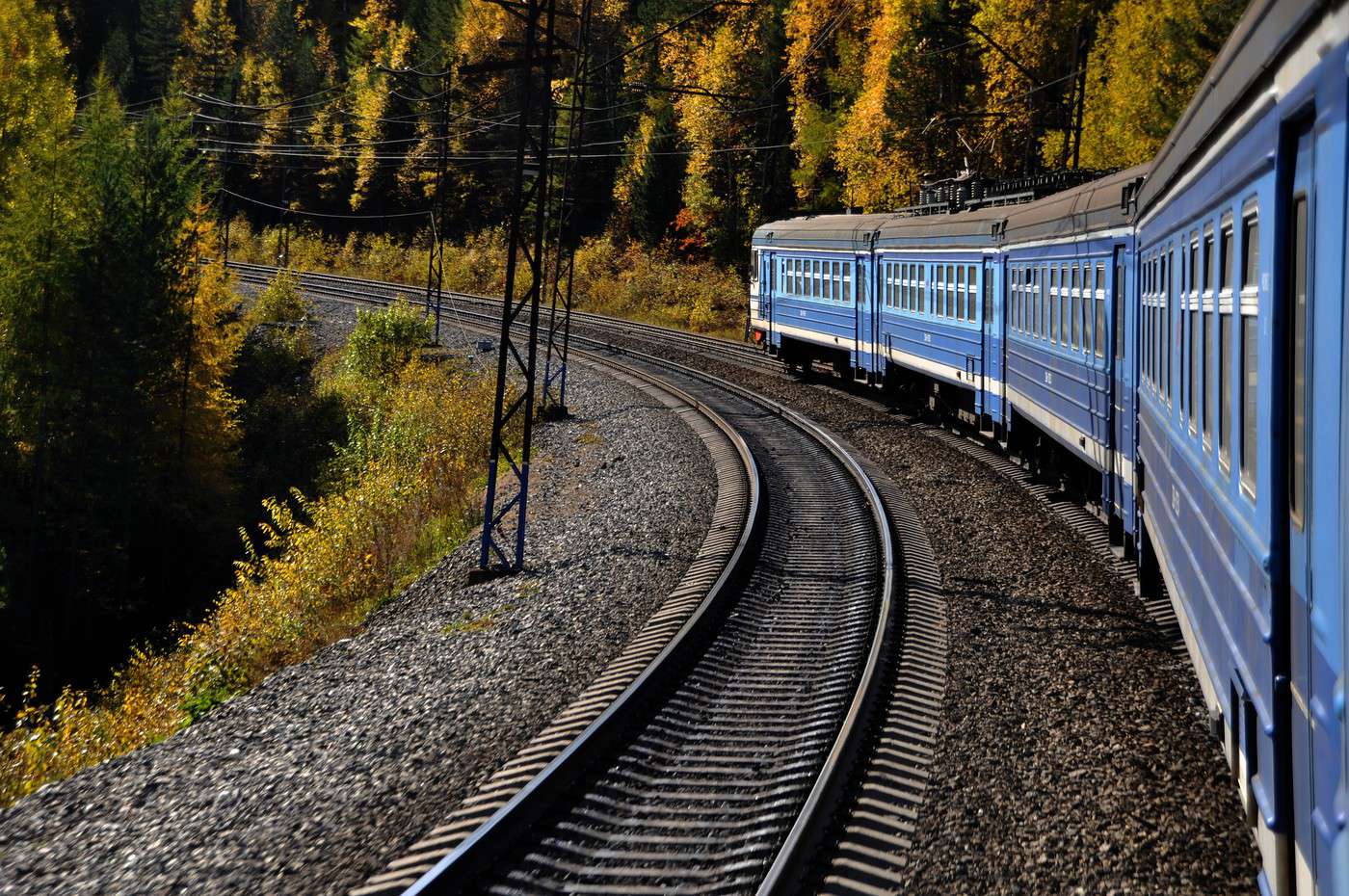
This is THE legendary line par excellence and one of the longest in the world, spanning 9,288 km. It connects (on the main route) Moscow to Vladivostok, with "branch" sections (to/from the Irkutsk region) such as the BAM passing north of Lake Baikal or the Trans-Mongolian and Trans-Manchurian lines, which connect to China.
Duration
A journey on the Trans-Siberian takes time (which is also part of its charm). Expect more than 3 days for Moscow - Irkutsk or 6 days for Moscow - Vladivostok. It also takes 4 days to reach Ulaanbaatar in Mongolia and an extra day and a half to Beijing. In any case, it’s important to plan the stops you want to make in advance.
Classes
In terms of classes, travelers mostly choose between "platzkart" (dormitory car) and "kupe" (compartment with 4 berths). There are also compartments with 2 berths and, at the opposite end, "seats."
Of course, prices differ (nearly 1 to 3 between platzkart and kupe), as do the atmosphere and the opportunities for meeting people, especially if you speak a little Russian (kupe are mainly used by foreigners). Showers are available in compartment cars.
Fares and Reservations
When it comes to reservations, several criteria should be considered: budget, travel period, available time, preferences, and desired contacts, as well as your ability to manage on your own. Based on this, there are two options:
Booking through a French or local agency
By far the easiest but also the most expensive. It’s really only useful in July-August when tourist demand for kupe is high.
Booking on your own on-site
By far the most economical and ideal for those who can manage on their own. However, be mindful of availability in summer (there are generally no issues with seats the rest of the year). For Moscow - Irkutsk, expect roughly 90 € in platzkart (just under 250 € in kupe) and about 75 € more to go to Vladivostok. Also, Irkutsk - Ulaanbaatar costs around 60 €, and the same amount extra to reach Beijing—always in platzkart.
Paris - Moscow Route
For Paris - Berlin - Moscow, expect a minimum of just over 250 € in second class and about thirty hours of travel.
Middle East Rail Networks
There are several (small) networks that, from Egypt to Turkey, run mainly along the coast via Israel and also Jordan. There are also several lines in Iran.
Iran
There are roughly four main lines passing through Tehran. Two in the north, from the Turkish border to Mashhad near Afghanistan, and two others heading south toward the sea.
Caucasus
A remnant of Russian presence in the region, rail networks can be found in Armenia, Azerbaijan, and Georgia.