last edited Sep 15, 2020
Route: "Tangier and the Imperial Cities"
Features
Around 1,100 km over 15 days, best done with your own vehicle to save time, though public transport remains a possible and even easy option for the first half of the journey.
Route: Tangier > Cape Spartel and Hercules Caves > Asilah > Lixus > Rabat-Salé > Meknès, Volubilis, Fès > Ifrane and Ifrane National Park > Tazzeka National Park > Chefchaouen and Talassemtane National Park > Tétouan > Tangier.
Highlights
A route with a good mix of experiences, combining cultural discoveries (Fès, Meknès, Rabat, Volubilis...), beach time (Asilah), and a large nature component with the parks around Ifrane and the Rif.
Route and Stages
- Day 1: Tangier.
-- Tangier: A city with a rich history spanning from the Phoenician era to its special status as an international zone in the 1920s–50s.
- Day 2: Tangier > Cape Spartel and Hercules Caves > Asilah (approx. 50 km).
-- Cape Spartel and the Caves of Hercules: Cape Spartel is a rocky promontory at the entrance to the Strait of Gibraltar, towering over 300 metres above the sea. Beneath it, waves have carved out caves known as the Hercules Caves.
- Day 3: Asilah
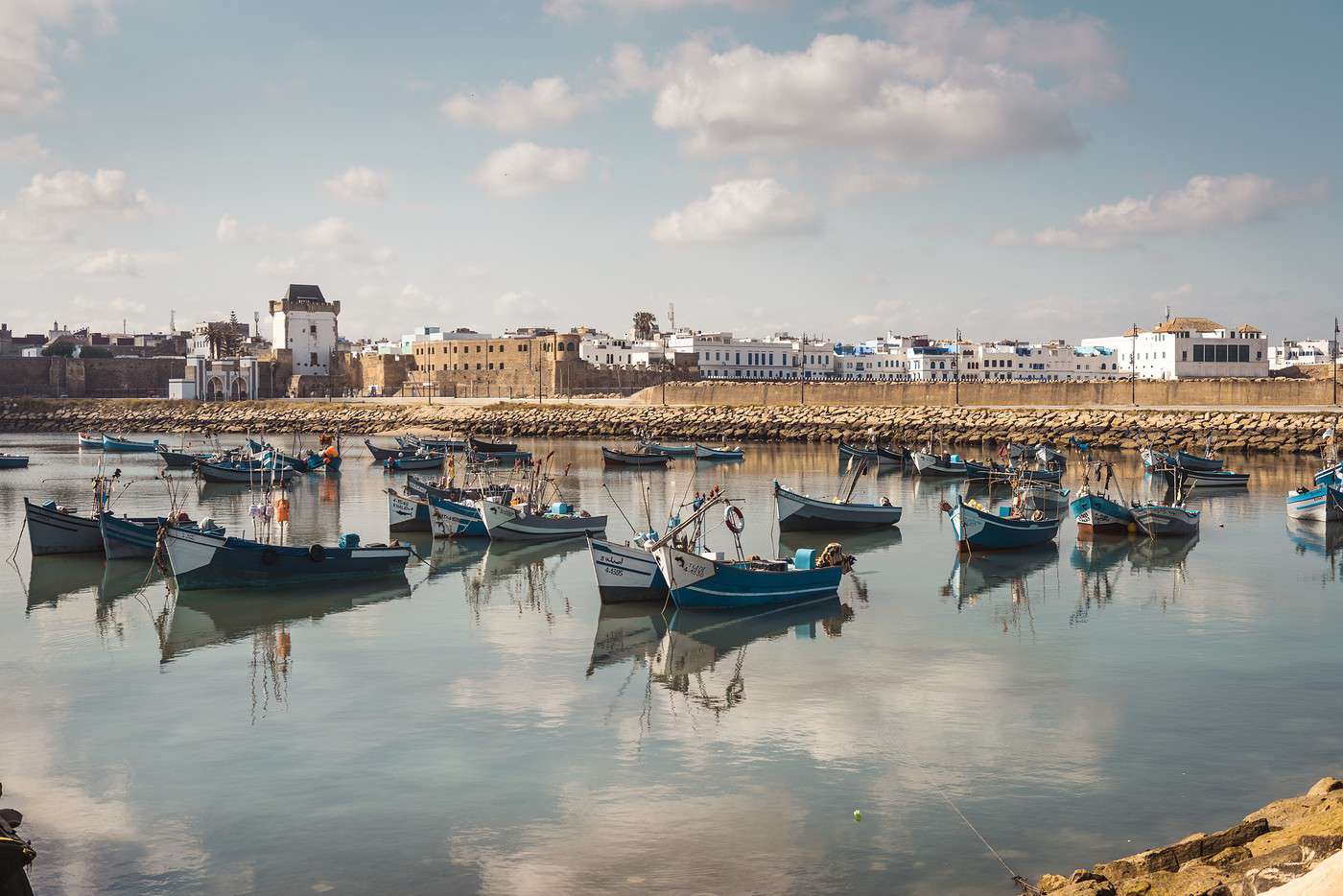
-- Asilah: The tourist appeal of this seaside resort south of Tangier lies, beyond its beaches, in its beautiful all-white medina. The town is increasingly popular in summer.
- Day 4: Asilah > Lixus > Rabat-Salé (approx. 200 km).
-- Lixus: These Roman ruins are on the outskirts of Larache and represent the second-largest ancient site in Morocco.
- Day 5: Rabat-Salé
-- Rabat: The Kingdom’s capital is a major city whose most remarkable monuments showcase architectural perfection from the Middle Ages to the present day. Rabat is a UNESCO World Heritage site.
-- Salé: The city faces Rabat, with which it is "indissociable." Its heritage is one of the attractions of the Rabat-Salé conurbation.
- Day 6: Rabat-Salé > Meknès (approx. 150 km).
-- Meknes: Neighboring Fès and, like it, an imperial city with a rich historical and cultural heritage that has earned it UNESCO status.
- Days 7 and 8: Meknès > Volubilis (7)/Fès (8) > Meknès
-- Volubilis: This Roman city is a UNESCO World Heritage site and one of the best-preserved ancient sites in all of North Africa.
-- Fez: A beautiful imperial city, like Meknès, with significant cultural heritage and a medina listed as a UNESCO World Heritage site.
- Day 9: Meknès > Ifrane (approx. 100 km).
-- Ifrane: Nestled in the heart of the mountains, the town and its surrounding landscapes resemble Europe.
- Day 10: Ifrane National Park
-- Ifrane National Park: The park is home to the largest cedar forest in the Maghreb. It offers stunning landscapes, several lakes, and is a popular spot for hiking and mountain fishing.
- Day 11: Ifrane > Tazzeka National Park (approx. 150 km).
- Day 12: Tazzeka National Park
-- Tazekka National Park: A tourist circuit allows visitors to discover its natural wonders (forests, waterfalls, caves...). Hiking and caving at the Friouato chasm are also possible.
- Day 13: Tazzeka National Park > Chefchaouen (approx. 250 km).
- Day 14: Chefchaouen and Talassemtane National Park
-- Chefchaouen: This holy city of the Rif is a tourist favorite. Its craftsmanship, the blue color of its houses, and especially the proximity of the mountains and the nature activities they offer make it a great base camp for exploring the region.
-- Talassemtane National Park: Just a few kilometers from Chefchaouen, this forested site offers beautiful landscapes for hiking. It’s also one of the places in Morocco to observe Barbary macaques.
- Day 15: Chefchaouen > Tétouan > Tangier (approx. 150 km).
-- Tetouan: The city is known for its medina, a UNESCO World Heritage site. The Mediterranean beaches and the Rif mountains are also nearby.