last edited Dec 11, 2019
History of Jamaica
Location Map of Jamaica
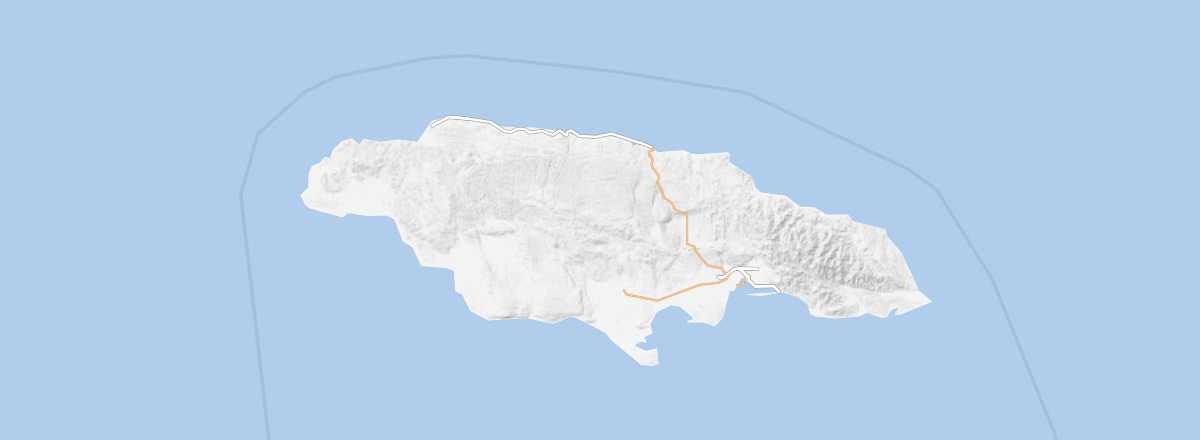 Jamaica
Open the interactive map
Jamaica
Open the interactive map
History of Jamaica
Key Dates
- 1000-500 BC: Arrival of the first inhabitants, the Arawak Indians, from the Amazon basin.
- 1494: Christopher Columbus discovers the island during his second voyage.
- 1509: Beginning of Spanish colonisation and gradual disappearance of the Arawaks due to disease and massacres. From 1517, the Spanish bring the first African slaves.
- Mid-16th to mid-17th century: For about a hundred years, "Spanish Jamaica" is subjected to pirate attacks.
- 1655-1658: Conquest of Jamaica by the English, who later make it an important slave transit centre. Briefly allied with the English, buccaneers and pirates also begin to settle on the island in large numbers, making it their main base in the Caribbean for about fifteen years.
- 1670: Spain officially cedes Jamaica to England. New British settlers arrive.
- 1671: London authorities decide to no longer support and to expel the privateers led by Henry Morgan from the island.
- 18th century: Jamaica's economy develops with varying success through sugar cane production.
- 1834: The island, which had previously seen multiple slave revolts, sees slavery abolished in 1833, as in the rest of the British Empire.
- Late 19th century: Sugar production is gradually replaced by the more profitable banana production. This is also when Jamaica becomes a Crown Colony, and Kingston replaces Spanish Town as the capital.
- Early 20th century: Rise of independence movements, multi-party politics, and trade unions, particularly following the 1938 labour uprisings.
- 1940: The first Rastas in Jamaica.
- 1944: A new constitution is introduced, guaranteeing, among other things, universal suffrage and the election of representatives.
- 1958: Along with nine other British territories, Jamaica joins the Federation of the West Indies, from which it withdraws in 1961.
- 1962: Independence of the island within the Commonwealth Realm. The Cayman Islands and the Turks and Caicos, which had previously been directly under Jamaican administration, gain new statuses.
- 1972-1980: Michael Manley as Prime Minister. After an initial period of economic development, the country attempts an unsuccessful Castro-style experiment and falls into recession.
- 1980: Violent clashes during elections, which bring pro-Western conservatives to power until 1989, when Manley, now more liberal, returns as Prime Minister until 1992.
- 1981: Death in Miami of Bob Marley, the reggae icon.
- 1990s: Like other islands in the region, Jamaica develops its tourism sector. It is also a period of occasional tensions, sometimes violent, between political parties.