last edited Aug 20, 2020
Geography and Environment of Costa Rica
Location Map of Costa Rica
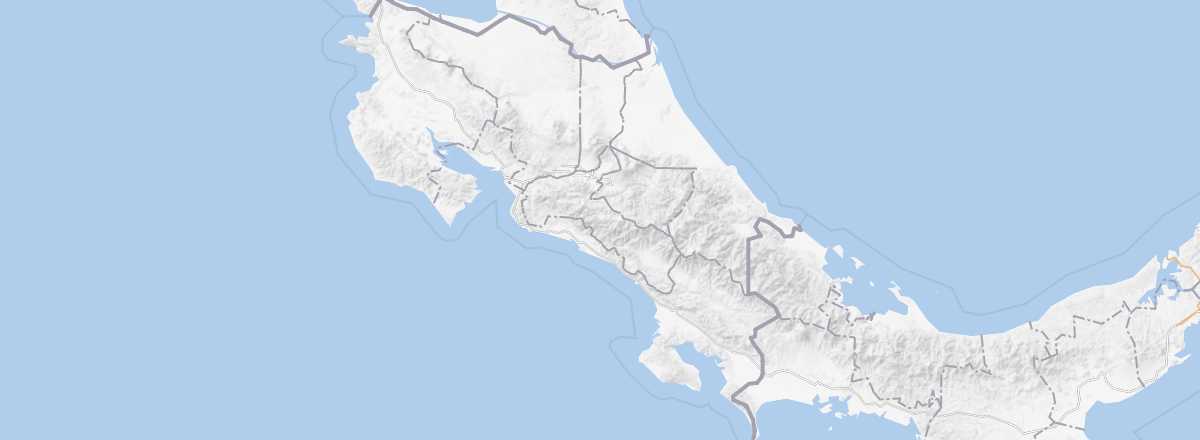 Costa Rica
Open the interactive map
Costa Rica
Open the interactive map
Country Overview
Parks and Natural Areas
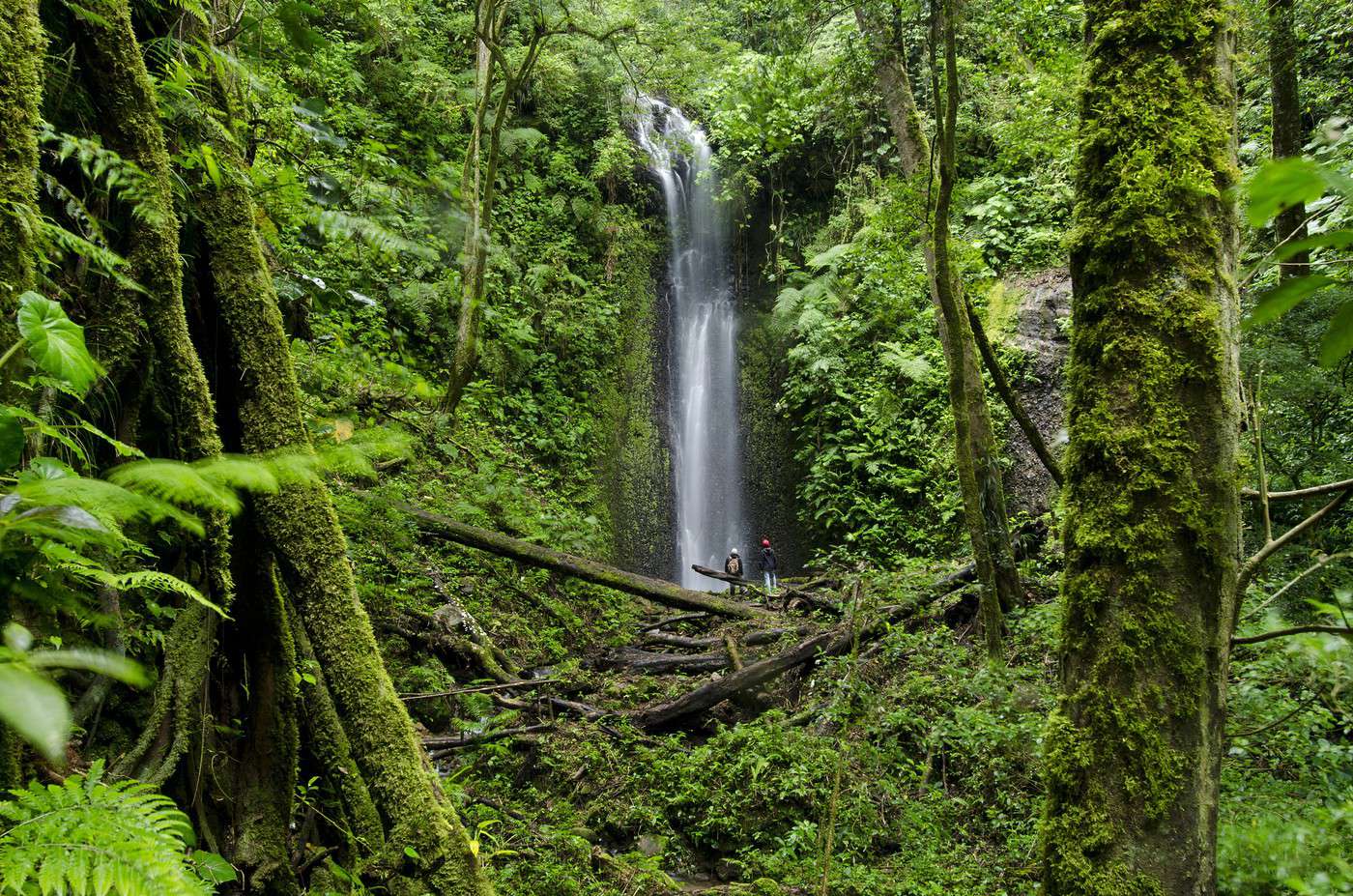
It's no coincidence that Costa Rica is nicknamed the "eco-tourism paradise"! Over 6% of the world's biodiversity is found here, and a quarter of its territory is occupied by one of its countless national parks or nature reserves. In short, visitors will be spoiled for choice when discovering Costa Rican nature in all its splendor and diversity.
Practically speaking, it's best to start or do your visits early in the morning to see the most animals. All parks and reserves, with a few exceptions like Manuel Antonio, are open daily from 8:00 AM to 4:00 PM. Many sites can be visited independently, but some—or certain walks within them—require the mandatory presence of a ranger guide, if only for the safety of both visitors and animals, such as turtles during nesting season. Entry to the main parks generally costs around $10 per person per day (the same again if you want a guide).
Pacific Coast
- Isla del Cano: This island off the Osa Peninsula is a popular eco-tourism destination, especially for diving and whale watching.
- Cocos Island National Park: A UNESCO-listed island with significant fauna and flora, as well as a tropical rainforest. It’s also renowned for diving. Access is highly regulated.
- Corcovado National Park: While Corcovado is one of the least accessible parks to visit, it’s among the most rewarding in terms of landscapes, wildlife, and hiking opportunities. It’s located on the Osa Peninsula.
- Manuel Antonio National Park: This is the country’s most visited park, alongside Poás Volcano. Visitors come to explore its landscapes, beaches, hiking trails, and diving spots.
- Rincon de la Vieja National Park: The site is popular for its wildlife (birds, monkeys, jaguars) and its landscapes, which include geysers, fumaroles, volcanic mud, and waterfalls. It’s the most interesting park in the Guanacaste Conservation Area.
- Guanacaste Conservation Area: This nearly 1,500 km² natural area is UNESCO-listed. It includes the national parks of Santa Rosa, Guanacaste, Rincón de la Vieja, and the small coastal reserve of Junquillal Bay.
Mountain Ranges and Central Valley
- Monteverde: Considered a major eco-tourism hub in the country, it attracts large crowds. Its tourism revolves around the Bosque Nuboso Biological Reserve.
- Braulio Carrillo National Park: One of the largest and most spectacular parks in the country, with its jungle, waterfalls, volcanoes, and especially its rich fauna and flora. Among the animals are monkeys, snakes, crocodiles, various mammals, and numerous birds. The site also offers some trekking opportunities.
- Chirripó National Park: At 3,810 meters, Chirripó is Costa Rica’s highest peak. Its main attraction for tourists is its landscapes and a relatively easy ascent, usually completed in two or three days.
- La Amistad National Park: Straddling Panama and Costa Rica, this UNESCO-listed park boasts great plant diversity and offers many hiking opportunities.
- Tapantí National Park: A vast rainforest with varied fauna and flora, extending from the Orosi Valley.
- Tenorio Volcano National Park: This volcanic area offers beautiful landscapes with waterfalls, geysers, hot springs, and small lakes.
- Arenal Volcano: It erupted lava for over forty years until 2010. Though less dramatic now, the site is still visited from the village of La Fortuna for its landscapes, forest, hot springs, and outdoor activities.
- Irazú Volcano: Though less active or spectacular than volcanoes like Poás or Arenal, it’s just as popular with visitors. The fact that its summit is accessible by road helps.
- Poás Volcano: With two small lakes in its craters, this is one of Costa Rica’s active volcanoes, regularly experiencing minor eruptions and fumaroles. Close to the capital and easily accessible, Poás is quite popular.
- Turrialba Volcano: Another active volcano in the San José region. Harder to reach and farther from the capital than Poás or Irazú, it’s much less visited. Geologically, it’s associated with the nearby Irazú Volcano.
Caribbean Coast
- Cahuita National Park: Bordering the village of the same name, this is both a terrestrial and marine park. Beyond its beaches, the site attracts visitors for its turtles, marine life, and, incidentally, its monkeys and birds.
- Tortuguero National Park: Though only accessible by plane or boat, it’s one of the country’s most visited parks, with the small village of the same name as its base. The site offers an exceptional environment of rainforest, marshes, and beaches, and is known for its turtles.
Wildlife and Flora