last edited Feb 11, 2026
Health and Safety in Costa Rica
Location Map of Costa Rica
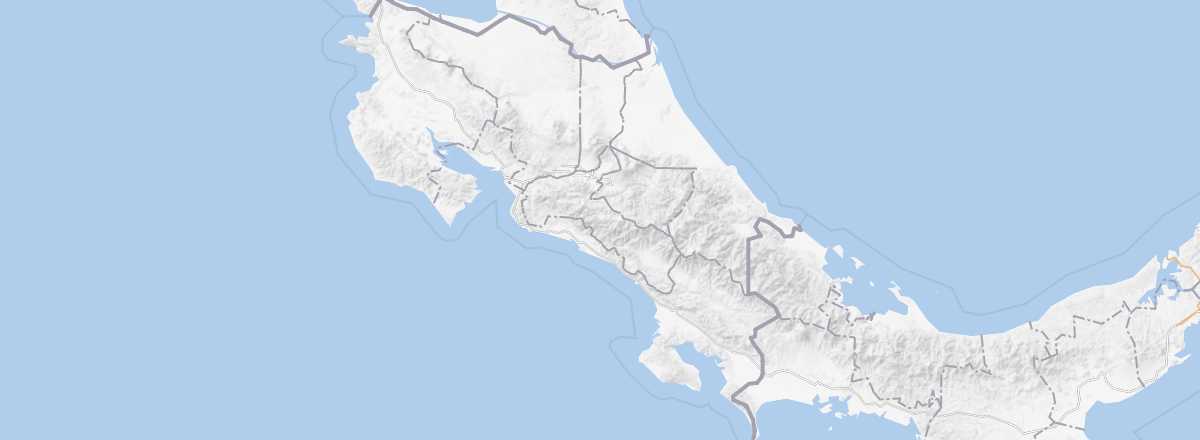 Costa Rica
Open the interactive map
Costa Rica
Open the interactive map
Official Recommendations
In France, both for individuals and professionals, the "travel advice" from the Ministry of Foreign Affairs regarding precautions for each country has legal value. A similar online travel advice system exists in several countries:
Health
Diseases
The risk of contracting a disease in Costa Rica is relatively low. However, the country still requires some basic precautions and common sense regarding health when staying there. While no vaccines are mandatory—except theoretically for yellow fever if arriving directly from certain areas (including French Guiana)—keeping up to date with vaccinations is always preferable.
In practice, as in many countries, mosquitoes are the main concern. Bring repellent and appropriate clothing, especially in the evening. Although rare, cases of malaria are sometimes reported on the Caribbean coast of Costa Rica, while dengue (especially), chikungunya, and Zika are more common. All these diseases are transmitted by mosquito bites.
Beyond that, there are no major risks. The most common issue for travelers is *turista*, the well-known traveler’s diarrhea.
Hygiene
As always, good personal and especially food hygiene is essential if you’re not used to "eating local." Avoid tap water, which may not always be safe in rural areas or for sensitive stomachs, and steer clear of dishes or foods that don’t appear fresh—if only to prevent *turista*.
Healthcare Facilities on Site
Both public and private healthcare services can handle most medical issues. While many treatments may seem relatively inexpensive to North American visitors—even spurring a small medical tourism industry—costs can be quite high compared to European, particularly French, healthcare systems. Comprehensive travel insurance is therefore recommended.
Safety
Crime and Delinquency
For a long time, Costa Rica was considered a very safe destination. However, crime and delinquency have recently seen a "spectacular" rise across the country. This means travelers should be more vigilant than before and take standard precautions, such as not flaunting wealth, avoiding walking alone at night in isolated areas, etc.
Extra caution is also advised in public transport, bus stations, certain outlying neighborhoods, during nightlife outings, on beaches, and even in parks and nature reserves. In case of assault, it’s best not to resist and to always carry "something" to give to attackers. If you have a vehicle, it’s highly recommended to use guarded parking lots and never leave anything inside.
It’s also worth noting that Costa Rican legislation is quite strict regarding drugs, both for trafficking and simple possession.
Socio-Political Risks
Nothing in particular. On the contrary, compared to the vast majority of Latin American or even Caribbean countries, Costa Rica has always been a model of stability, with very few exceptions.
Climate and Nature
Nature in Costa Rica isn’t always calm. Volcanoes can erupt regularly—and sometimes for extended periods—and earthquakes can occur. During the rainy season (May to October), roads may occasionally be cut off due to flooding or landslides.
Additionally, be cautious of dangerous ocean currents on both the Pacific and Caribbean coasts. When exploring nature, avoid going alone or unprepared off the beaten path, as you risk getting lost.
Animals
Beyond stray dogs, which can sometimes be aggressive or carry diseases, be cautious—though the risk is low—of creatures like scorpions, spiders, or even snakes, which may be found in tall grass, under rocks, or other favored hiding spots. Also, Costa Rica is home to many crocodiles, so it’s best to avoid getting too close, particularly near Pacific estuaries.
Foreign Consulates on Site
If you encounter problems while traveling abroad, your country’s consular services can assist you. Additionally, if you’re an EU citizen and your country isn’t represented, you can contact any other EU member state’s consulate.
France
Consulate General: De la Mitsubishi - 200 m sur y 25m oeste - Curridabat 10177, 1000 San José. Tel.: (506) 22 34 41 67. Open Monday to Friday, 8:30 AM to 12:30 PM.
Other Countries
- Belgium: Calle 41, entre Avenida Central y Avenida 8, Barrio Los Yoses, San José. Tel.: (506) 222 566 33.
- Canada: La Sabana Shopping Center, Building No. 5 (3rd floor), San José. Tel.: (506) 22 42 44 00.
- Switzerland: Edificio Centro Colon, 10th floor, Paseo Colon, San José. Tel.: (506) 22 21 48 29.