last edited Aug 20, 2020
Getting Around Panama
Road Network, Traffic
Despite its considerable size, the country has few roads, especially on its northern coast and in the east toward Darién. At the limit, one could even say there’s only one main axis: the Pan-American Highway, which crosses the entire country before stopping a few kilometers short of Colombia. There are just a few roads branching off from it toward the Costa Rican border, the Azuero Peninsula, or along the canal toward the city of Colón. Beyond that, there’s little to nothing.
Generally, the main network is fairly good, though less so elsewhere. Additionally, during the rainy season, some secondary routes may be cut off due to flooding or landslides. As in many countries, road rules can be somewhat unpredictable for some drivers, especially in the capital. Outside urban areas, it’s best to avoid driving at night.
Car, Camper Van
Rental
While not essential for exploring the country, renting a vehicle is an option some choose when traveling in a group or seeking total freedom. You can rent as long as you’re at least 23 years old, with your national driver’s license if the rental is for less than three months. With many companies available, there’s some price competition, though you should also pay attention to additional insurance, its coverage, and deductibles. Expect roughly $30–40 per day for a basic car and at least double that for an off-roader.
Practically speaking, a 4x4 isn’t really necessary unless you plan to drive on unpaved roads, even in the rainy season (though opinions vary on this...). In any case, for safety, it’s highly recommended to avoid driving at night and necessary to use guarded parking lots without leaving anything inside. As for crossing the border into Costa Rica with a rental vehicle, very few rental companies allow it, and in such cases, it’s best to request written confirmation from the agency permitting it.
Personal Vehicle
Bus
Buses are highly developed and inexpensive in Panama (around $2–3 per 100 km). Moreover, they go almost everywhere thanks to numerous companies and frequent service (see schedules and networks). They remain an excellent way to get around and explore the country.
As in many places, there are two categories of buses. The "basic" ones are old American "school buses"—by far the cheapest but also the slowest. They cover short routes between villages or on the outskirts of major cities and are often considered unsafe, to the point that since 2010, authorities have been gradually phasing them out in favor of more modern vehicles/networks, such as the Metrobus system in the Panama City area. Otherwise, you’ll find "express" or similar buses for long-distance travel, especially along the Pan-American Highway, offering a much better service for just a little more money.
Two Wheels
Motorcycle
Bicycle
Hitchhiking
It’s often paid. It can be done in areas/times with no public transport, though it’s not really recommended for safety reasons.
Trains
The country has the world’s oldest transcontinental railway, connecting the cities of Panama and Colón since 1855. Still in service, the Panama Canal Railway Company line primarily serves freight between the two oceans but also offers a passenger service on weekdays, popular with tourists who can explore the Canal and its landscapes. Each one-hour trip costs $25.
Boats
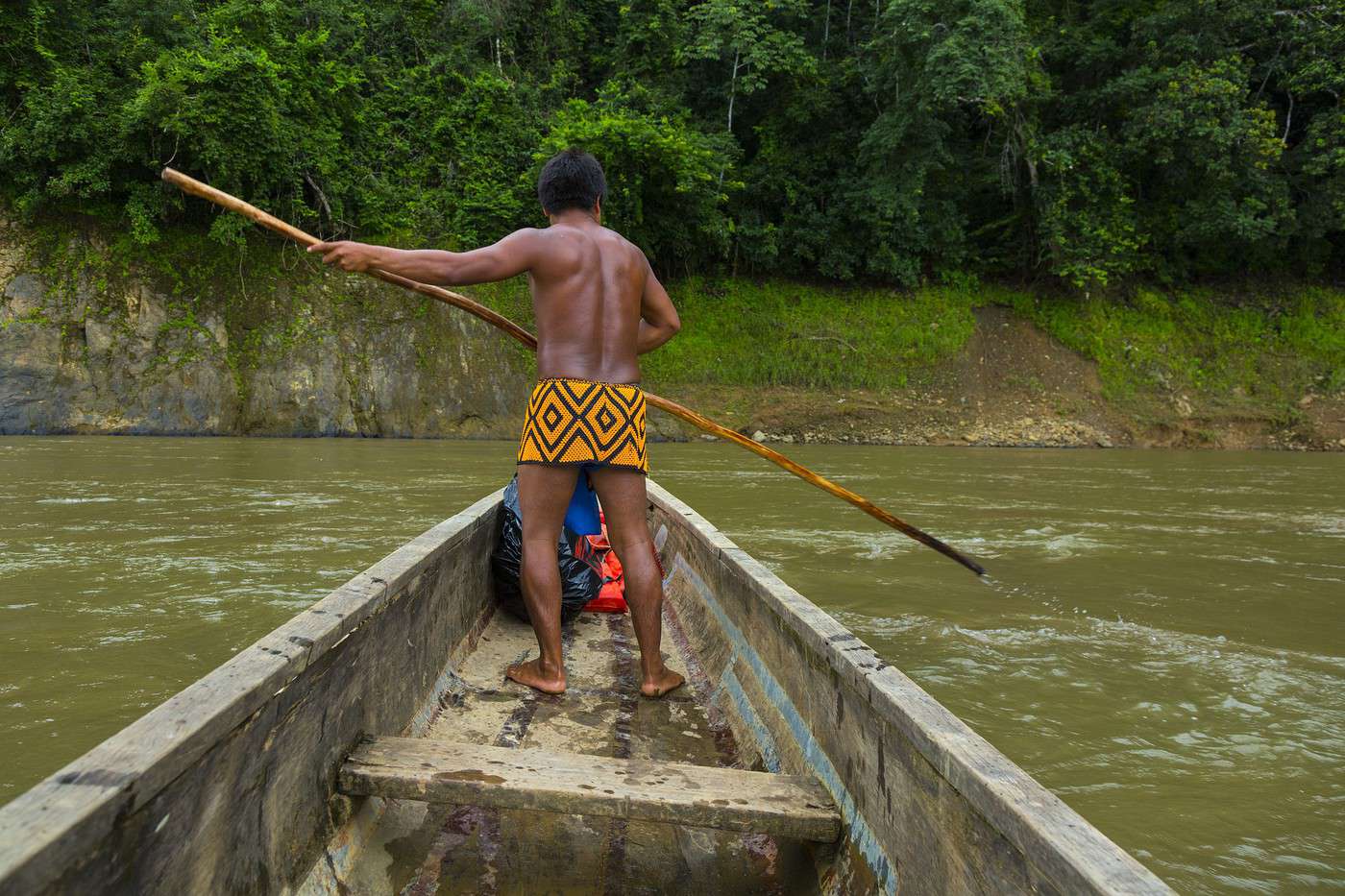
Almost all islands near the mainland are accessible by (small) chartered or semi-regular boats:
Bocas del Toro
On the western Caribbean. Departures by water taxis from Changuinola and especially Almirante (half an hour; < $10) or further south from Chiriquí Grande to Isla Colón, the main island. You can then get around the archipelago by water taxi. Ferry Express also provides regular service every weekend from the port of Colón, with departures Friday evening and returns Monday morning (11-hour trip). Note that Bocas is often offered as a transport and/or accommodation package from neighboring Costa Rica or Panama City.
San Blas
On the eastern Caribbean. Access from the Panamanian side is via a few villages in the Gulf of San Blas, reachable by road or plane, from which a water taxi takes you to the archipelago for $15–25 per trip. For those with the means, you can also choose the sailboat option from Panama or Colombia (Cartagena). Otherwise, many agencies offer complete packages for this tourist destination, which has become a lucrative business for the Kuna people.
Pacific Coast
- Islands of the Gulf of Chiriquí: On the western Pacific. Depending on the island, access is either by coastal navigation through rivers and meanders south of the city of David or departures from the fishing village of Boca Chica, which easily reaches the main islands of the archipelago (Palenque, Secas, Boca Brava...).
- Coiba Island: On the western Pacific. Since the island is a natural park with few facilities, day trips are usually made from the village of Boca Chica (2 hours) or the beach resort of Santa Catalina (1 hour). It’s also an excursion organized by various agencies.
- Taboga: On the central Pacific. Since the island is across from Panama City, regular lines depart from there at least once a day: Calypso Ferry (1 hour; $14 round trip) and National Tours Ferry (half an hour; $16 round trip).
- Las Perlas: On the eastern Pacific. The companies Sea Las Perlas and Ferry Las Perlas serve the archipelago, primarily Contadora Island, from Panama City. Expect around $100 for a round trip.
Domestic Flights
In addition to numerous local airfields, Panama has about twenty airports with at least one regular connection, mostly to the capital, where almost all traffic passes through. You can thus easily connect different parts of the country, which spans nearly 1,000 km from end to end. The only downside is that these connections are made from, or via, Panama City.
The capital has two airports: one (Albrook) almost exclusively for domestic flights, and the other (Tocumen International) for everything else. It’s from Albrook that you’ll take off with Air Panama, which manages domestic traffic to 24 cities (Copa only operates a David-Panama route). Generally, fares aren’t too excessive, and you can expect around $100 for a flight connecting the capital (in the center) to the eastern or western ends of the country.
In Town
Taxis
They’re plentiful in the capital and recognizable by their yellow color. It’s best to take them from stations or via your hotel to avoid potential issues, especially in the evening, and of course, favor official taxis. Since many don’t have meters, it’s necessary to agree on the fare beforehand. You can also ask your hotelier for an estimate in advance.
Other Means
Since 2010, authorities have been gradually phasing out the old American school buses that served urban and suburban routes in favor of more modern vehicles/networks, such as the Metrobus system in the Panama City area.
Panama City also has a metro inaugurated in 2014 (see network and fares).
What to Choose for Getting Around?
For most travelers, the bus is the best way to get around, though for groups, renting a car isn’t too expensive either and can be considered for a bit more freedom.
Distances Between Cities
Distances (km) between the main cities of the country:
| Bocas Toro | Boquete | Chitré | Colon | David | La Palma | Panama C. | |
|---|---|---|---|---|---|---|---|
| Bocas del Toro* | 155 | 410 | 640 | 160 | 870 | 585 | |
| Boquete | 155 | 300 | 530 | 40 | 760 | 480 | |
| Chitré | 410 | 300 | 305 | 265 | 535 | 255 | |
| Colon | 640 | 530 | 305 | 495 | 345 | 70 | |
| David | 160 | 40 | 265 | 495 | 720 | 440 | |
| La Palma | 870 | 760 | 535 | 345 | 720 | 285 | |
| Panama City | 585 | 480 | 255 | 70 | 440 | 285 |
(*) Almirante, the departure point for boats to Bocas.