last edited Mar 19, 2026
Money, Budget, and Shopping in Peru
Location Map of Peru
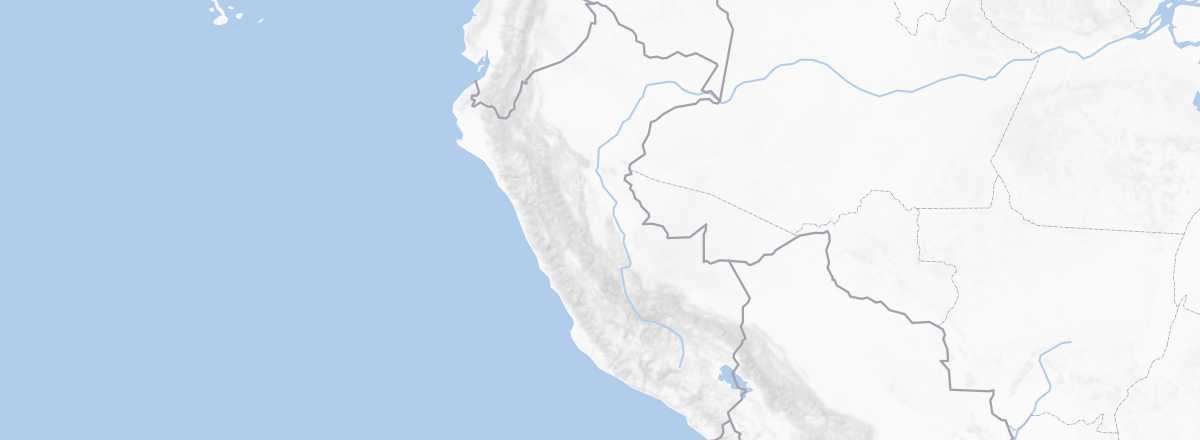 Peru
Open the interactive map
Peru
Open the interactive map
Money
Currency
- Devise: Sol (100 centimos).
- Billets: 10, 20, 50, 100 and 200 soles.
- Pièces: 10, 20 and 50 centimos + 1, 2 and 5 soles.
- Change:
Exchange
Major foreign currencies can be exchanged in the country. In practice, you’ll find exchange counters in most major banks in cities and tourist spots, as well as independent exchange bureaus called casas de cambio. Of course, ATMs are increasingly widespread, and some even dispense US dollars as well as soles. Banks are generally open on weekdays until around 6:00 PM and on Saturday mornings.
It’s also possible to exchange money (including euros) with street exchangers known locally as "Cambistas". The practice is legal and regulated, but it still requires some vigilance and knowledge of the day’s exchange rate to avoid being shortchanged. At best, it’s a service to use as a last resort or at land borders with other countries when there are no banks or if they’re closed.
Which currency to bring
While the official currency is the sol, it’s often possible to pay directly in US dollars (in good condition) at many shops, restaurants, hotels, tourism professionals, and even some gas stations. Just make sure the exchange rate offered is fair. Some prices, especially for tourist services, are even quoted directly in US dollars. However, since the euro generally exchanges well, it’s preferable to bring that. Otherwise, as always, using a bank card for exchange is simpler.
Payment methods
Card payments, including contactless, are increasingly accepted in hotels, restaurants, rental services, and shops that cater to tourists or have a certain standard. However, as always, watch out for bank fees if you make too many small purchases or withdrawals. It’s best to carry a stock of cash in the local currency (small bills are welcome), and optionally some US dollars as a backup. But it’s not mandatory.
Upon return
While you can exchange leftover soles before departure, the conversion rates are usually unfavorable. The simplest approach is to exchange money as needed during your stay or end your trip with US dollars, which you can easily use or exchange on another trip if any remain.
Budget
Peru remains an affordable country for travelers. You can get by on the equivalent of 35 to 50 € per day for local transportation, food, and lodging, or even less if you stick to the basics for two people. However, while daily life is inexpensive, visiting major tourist sites quickly increases the budget, not to mention outdoor activities or the Amazon, which also come at a cost. In short, plan for around 60–70 € per day per person (for two) if you want to fully enjoy your trip.
What can be expensive
- Flights to get there during high season.
- Some of the most famous sites (Machu Picchu, Nazca, the Inca Trail, etc.), which require a significant budget.
- The Amazon.
- Climbing Andean peaks.
- Repeated outdoor activities.
What can be inexpensive
- Eating, sleeping, and getting around locally.
Price range
- Budget double room: dorm beds for under 15 €, and double rooms for 25–35 € in many cases.
- Mid-range double room: 35 to 40 € for a decent first choice.
- Local meal: under 2 € at markets or 5 to 6 € in local eateries.
- Tourist restaurant meal: around 15 € for a full meal.
- Budget car rental: 35 to 50 € per day for a standard vehicle.
- Bus journey: the equivalent of 4 to 5 € per 100 km for major "tourist" companies, and much less for local buses.
- Urban taxi: roughly between 2 € (short trip) and 5 € (long trip).
- Urban bus: under 0.50 € per trip.
Bargaining and tips
Bargaining is common in the country, especially in markets or with street vendors.
Tips aren’t mandatory, but it’s always nice to leave a little something if you’re happy with a service or experience, especially given local wages.
Shopping and souvenirs
There’s plenty to bring back from a trip to Peru. Of course, there are alpaca sweaters, scarves, ponchos, and other traditional textiles, as well as local handicrafts, wooden items, all kinds of jewelry, and even (fake) pre-Columbian antiquities sold everywhere. As for coca leaves or infusions, widely used locally, it’s strictly forbidden to bring them back, or you could face trouble upon returning to your country. Otherwise, everything is available and negotiable, naturally, in the markets.