last edited Dec 11, 2019
Other practical information for Peru
Location Map of Peru
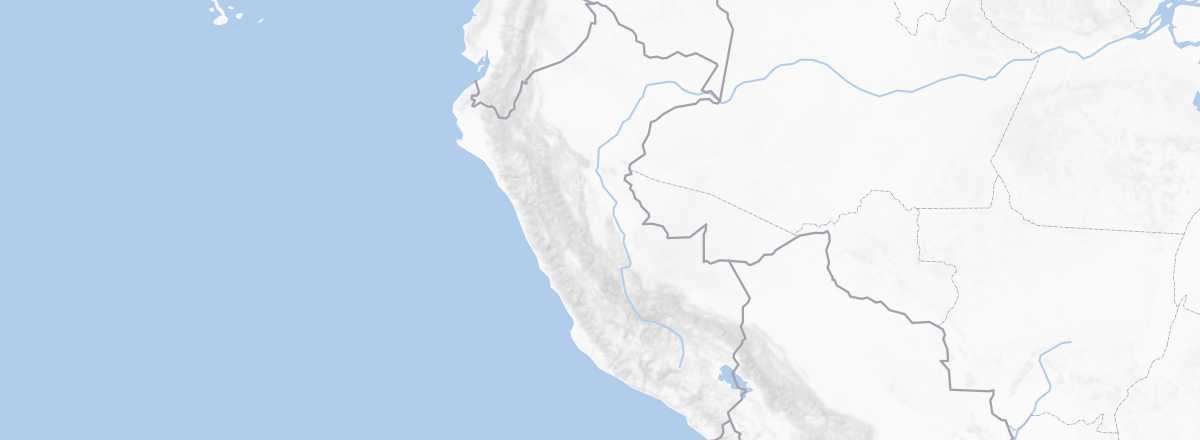 Peru
Open the interactive map
Peru
Open the interactive map
Baggage and equipment to bring
Except for the Amazon where lightweight items are sufficient, along with a light sweater for evenings and air conditioning, plan for all seasons with both lightweight and warm clothing for the coast, and very warm clothing for the highlands. In all cases, everywhere, also think about sun protection and especially rain protection, mosquito repellent (outside high-altitude areas), and good walking shoes that are preferably water-resistant. For the Amazon rainforest, rubber boots for walking in water are most recommended.
Communications
Phone
International dialing code: (00 +) 51.
The mobile network covers a large part of the country, and public payphones (coin or card-operated, with cards sold in shops) can be found in most towns.
Internet
Peru has a public internet service with many affordable cybercafés. Additionally, Wi-Fi is now widely available in hotels, bars, restaurants, and other public places, especially in tourist areas.
Post offices are mainly found in large cities. They are open weekdays from 9:00 AM until the end of the day, plus Saturday mornings. As in many countries, mail delivery can take time—allow around 10 days for North America or Europe.
Time difference
Local time: .
Peru is on GMT-5, meaning 6 hours behind France in winter and 7 hours behind in summer. Note that while neighboring Ecuador shares the same time zone, Bolivia is on GMT-4, making it one hour ahead of Peru.
Electricity
220 V (60 Hz) with "American" plugs (officially types A and B) and also "French" plugs (officially type C). While both systems are often available, it’s wise to bring an adapter just in case—these can be bought cheaply locally.
Hours
Laundries
Local tourist offices
There is an organization, iPeru, responsible for informing and assisting tourists in the country. It has around forty offices in major tourist cities.
Weights and measures
French language use
French is not at all common in Peru. If traveling independently, it’s best to know some Spanish (the official language) or English (widely spoken in tourist areas).