last edited Dec 11, 2019
Overview of Iceland
Location Map of Iceland
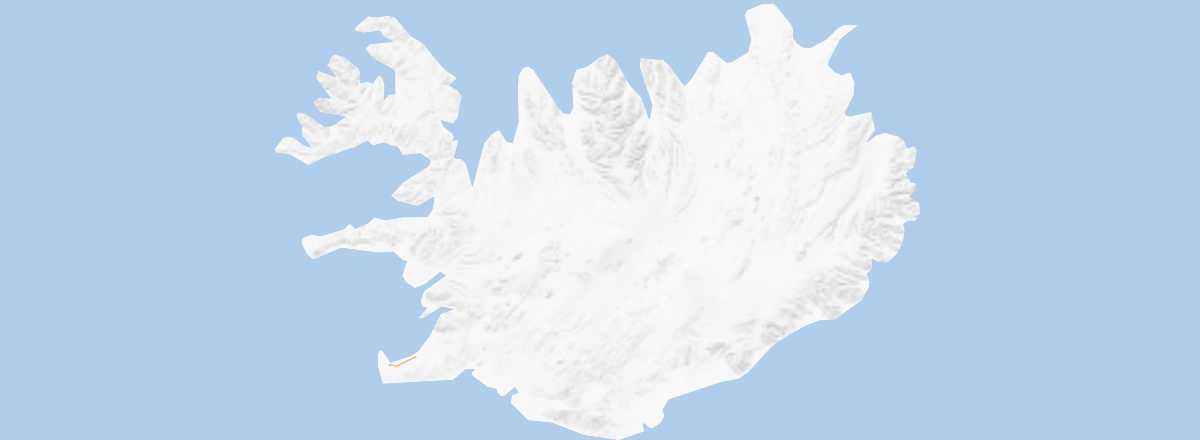 Iceland
Open the interactive map
Iceland
Open the interactive map
Quick Overview
Far removed from the rest of the European continent and geographically closer to America, Iceland has the lowest population density in Europe, with 80% of its territory uninhabited or even uninhabitable. The majority of the population is concentrated in the southwest, around the capital and its surroundings.
With its harsh climate, mountains, volcanoes, geysers, glaciers covering 10% of the country, desert areas, and a rugged coastline with numerous fjords, Iceland is the "nature destination" par excellence. This may explain why its primary resources are fishing, tourism, and indirectly, geothermal energy. After suffering an economic crisis in 2008 that nearly led to bankruptcy, Iceland is gradually reclaiming its place as one of the world's wealthiest and most developed countries.
Key Facts
- Type of place: country.
- Location: at the edge of Europe, in the North Atlantic, below the Arctic Circle and east of Greenland.
- Latitude/longitude: 65.00' N, 18.00' W.
- Local time:
- Capital: Reykjavik.
- Nature of the state: Parliamentary constitutional republic.
- Official language: Icelandic.
- Currency: Icelandic króna.
- Population: 343,518 inhabitants (2018).
- Area: 103,000 km².
- Density: 3 inhabitants/km².
- Highest point: Hvannadalshnúkur (2,110 m).
- Lowest point: sea level.
- Coastline: 4,970 km.
- Driving: on the right.
Tourism
Iceland has always attracted nature and space enthusiasts, to the point that tourism is now the country's second-largest source of foreign currency—and paradoxically, it also poses a threat to the island. Indeed, the recent surge in popularity has multiplied visitor numbers fivefold between 2010 and 2018, reaching 2.344 million tourists. The result: a degree of saturation and questions from authorities about this (too?) rapid growth.
In terms of nationalities, Americans are the most numerous (25% of arrivals), followed by the British, Germans, and French, who embraced the destination in 2016 with 85,200 visitors (+30% in one year!). Unsurprisingly, summer sees the highest footfall, with July and August accounting for over half of all visits, while winter months remain less frequented, even though authorities are trying to develop tourism during this period as well.
Travel Essentials
- Destination: for beginner travelers.
- By air: France-Reykjavik for 200 to 400 € round trip.
- Entry requirements: ID card or passport.
- Currency to bring: euros.
- Exchange rate:
- Daily "backpacker" budget: 75 to 100 € per person.
- Accommodation: camping or dormitory.
- Getting around: bus (with a pass) or car.
- Risks: none in terms of health and very low in terms of security.
- Best period for climate/crowds/price: mid-May to late June or late August to mid-September, though July-August remains ideal for climate alone.
- Interests (out of ): Nature ; Adventure ; Culture ; Relaxation-holidays
Addresses in France
Tourist Office: online only.
Addresses in Belgium, Switzerland, and Quebec
Socio-Economic Statistics
- "Quality of life": 6/188 (rank in 2018)
- GDP per capita: $52,200 (2018)
- Average monthly income: $3,225 (2012)
- Inflation: +1.8% (2017)
- "Official" unemployment: 2.8% (2017)
- Population below the poverty line:
- Life expectancy: 83 years (2018)
- Migration rate per 1,000 inhabitants: +4 (2017)
- Population growth: +1.08% (2018)
- Literacy rate: 100% (2019)
- Urban population: 93.8% (2018)
- Press freedom: 13/180 (rank in 2018)
- Political regime: democratic regime (2/167 in 2018)
Sources: World Bank, Human Development Indicators, RSF, The Economist, The World Factbook