last edited Dec 11, 2019
Getting to Norway by Land or Sea
Location Map of Norway
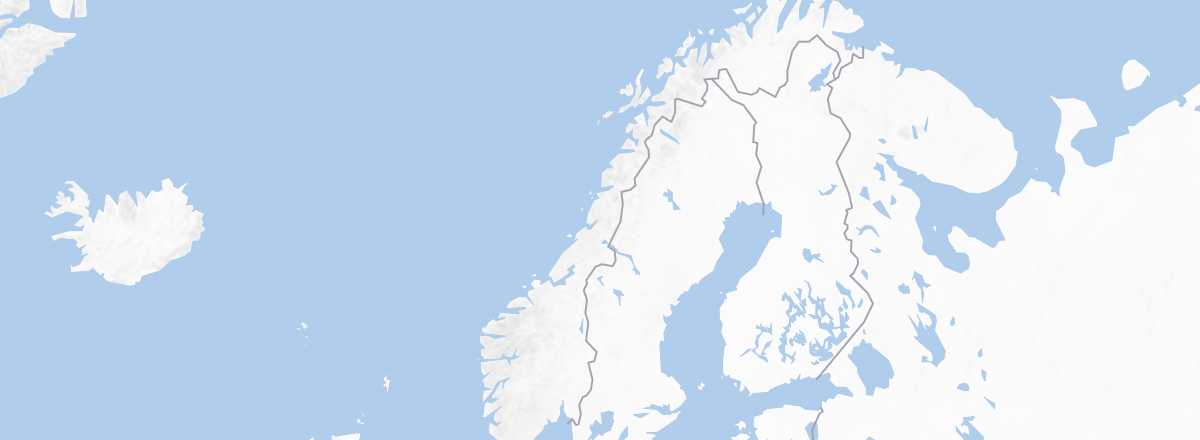 Open the interactive map
By Land
Norway shares 727 km of borders with Finland, 196 km with Russia, and 1,619 km with Sweden.
Border crossings between the countries are relatively numerous given the environment and pose no problems for travel to and from Sweden and Finland, as these countries, like Norway, are members of the Schengen Area, and thus theoretically have no border controls. As for Russia, in the far north, there are also normally no issues crossing by land as long as you have the correct Russian visa.
By Road
Oslo is roughly 1,500 to 2,000 km from Paris (depending on the route) and takes just under two days of travel if you choose to go by land. The journey can be made by bus or with your own vehicle.
By Bus
As always, Eurolines offers routes (via Sweden) with prices ranging, much like airfare, between 100 and 300 € for a round trip from Paris, taking about thirty hours.
By Car
If you're traveling with a group or even just one other person, and you have some time for your trip (at least 15 days), driving to Norway in your own vehicle is a viable option. The journey can easily be done in two or three days. Even though you need to consider the cost of transport, you’ll likely end up saving money in the long run.
Indeed, Norway is a country where it’s best to be self-sufficient when it comes to getting around if you want to make the most of the places and sites to see. Public transport doesn’t go everywhere, and car rental is expensive. Plus, traveling with your own vehicle allows you to bring plenty of food (very expensive on-site) and camping equipment, which is by far the most interesting accommodation option in summer. In short, there are many advantages.
If you’re coming from France or Western Europe, you’ll generally arrive by ferry, particularly via the routes between the tip of Denmark (Hirtshals) and southern Norway, which are likely the most convenient. Another possible option is to take the Øresund Bridge between Copenhagen (Denmark) and Malmö (Sweden) before driving up the Swedish coast to Norway. This avoids taking a boat and costs 47 € per car crossing.
By Train
Internationally, Norway is directly connected to its Swedish neighbor, with several shared lines covering both the south of the country and the Oslo region, as well as the north with the city of Narvik, which is only accessible by train from Sweden. While there are some projects in the works, there are currently no rail links between Norway and Finland or Russia.
Norway, like almost all European countries, is part of the InterRail pass, which allows for a relatively affordable arrival from other parts of the continent (though you should still expect around thirty hours for a Paris-Oslo trip). Otherwise...
By Sea
Ferries
There are several international ferry routes operated by various companies (see list) that allow you to arrive in Norway from other countries. Beyond Denmark, which logically has the most connections, it’s also possible to come directly from Germany and Sweden.
Germany Routes:
- Oslo: Kiel (Color Line).
Denmark Routes:
- Bergen: Hirtshals (Fjord Line).
- Kristiansand: Hirtshals (Color Line + Fjord Line).
- Larvik: Hirtshals (Color Line).
- Oslo: Esbjerg (DFDS Seaways). Frederikshavn (HH Ferries/Stena Lines).
- Stavanger: Hirtshals (Fjord Line).
Sweden Routes:
- Sandefjord: Strömstad (Color Line).
Cargo
Norway has many commercial and oil ports (Stavanger, Bergen, etc.), which increases the possibilities of arriving by cargo ship.