last edited Dec 11, 2019
Introduction to Bulgaria
Location Map of Bulgaria
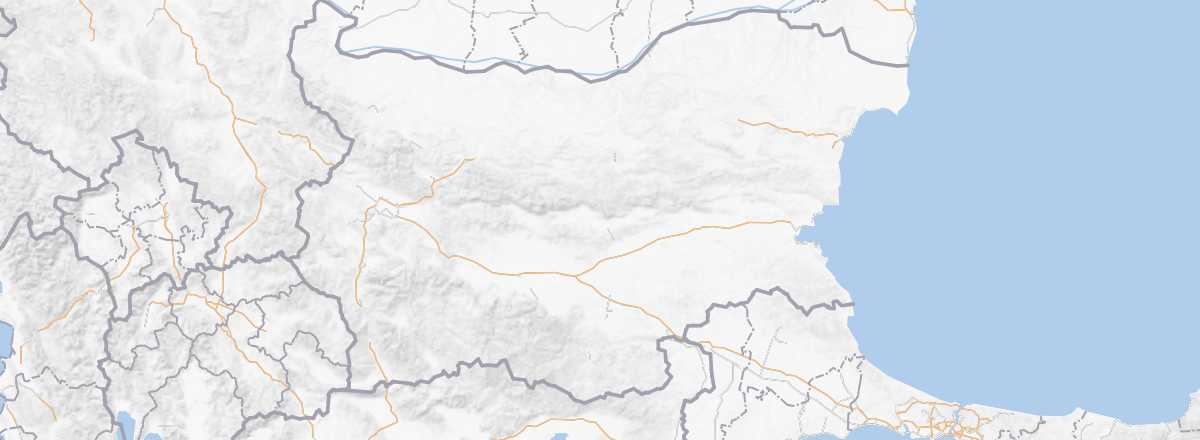 Bulgaria
Open the interactive map
Bulgaria
Open the interactive map
Quick Overview
Relatively small in size, Bulgaria is nonetheless a geographically diverse country. The Black Sea coast to the east, as well as the northern part of the country, consist of vast plains that are home to the majority of the population, while the southern and western regions, far less populated, feature mountain ranges reaching nearly 3,000 meters at Mount Musala.
Economically, Bulgaria relies primarily on agriculture (corn, wheat), its textile, chemical, and metallurgical industries, and, to some extent, on coastal tourism that began during the socialist era. This is supplemented by significant European Union aid, which, while sometimes "lost along the way," has still helped the country achieve some economic growth, even though Bulgaria remains the poorest country in the EU.
Key Facts
- Type of place: country.
- Latitude/longitude: 42.41' N, 23.19' E.
- Local time:
- Capital: Sofia
- State nature: parliamentary republic.
- Official language: Bulgarian.
- Currency: Lev.
- Population: 7,057,504 inhabitants (2018).
- Area: 110,944 km².
- Density: 63 inhabitants/km².
- Highest point: Mount Musala (2,925 m).
- Lowest point: sea level.
- Coastline: 354 km.
- Driving: on the right.
Tourism
For a long time, the country was the preferred holiday destination for Eastern Europeans during the Soviet era. Nowadays, it attracts visitors from all over Europe—and increasingly so—thanks to its beaches, mountains (which are also gaining a reputation for skiing), monuments, monasteries, and, above all, a cost of living and travel among the lowest in Europe. The tourism sector currently accounts for 15% of the national GDP.
In 2018, 9.273 million people visited Bulgaria (a 50% increase in less than ten years). The majority of tourists come from Romania, Turkey, Greece, Germany, Russia, North Macedonia, and Serbia, with the top three accounting for three out of every five visitors. In 2016, 195,500 French travelers visited Bulgaria, making France the 13th largest source of tourists, along with 120,000 Belgians.
Travel Essentials
- Destination: for beginner travelers.
- By air: Paris-Sofia round trip for 220 to 350 €.
- Entry requirements: ID card or passport.
- Currency to bring: euros.
- Exchange rate:
- Backpacker daily budget: 30 to 45 € per person.
- Accommodation: hotels and occasionally homestays.
- Getting around: car or occasionally buses.
- Risks: low in terms of health and safety.
- Best time for climate/crowds/prices: from May to late September, or even early October along the coast, though July and August still attract crowds.
- Interests (out of ): Nature ; Adventure ; Culture ; Relaxation/Holidays
Addresses in France
- Tourist Office: available online.
- Bulgarian Cultural Institute: 28 rue la Boëtie, 75008 Paris. Tel.: +33 1 43 59 20 52. Exhibitions, conferences, language courses, etc.
Addresses in Belgium, Switzerland, and Quebec
Socio-Economic Statistics
- "Quality of life": 51/188 (2018 ranking)
- GDP per capita: $21,800 (2017)
- Average monthly income: $575 (2012)
- Inflation: +1.2% (2017)
- "Official" unemployment: 6.2% (2017)
- Population below poverty line: 23.4% (2016)
- Life expectancy: 74.8 years (2018)
- Migration rate per 1,000 inhabitants: -0.3 (2017)
- Population growth: -0.63% (2018)
- Literacy rate: 98.4% (2015)
- Urban population: 75% (2018)
- Press freedom: 111/180 (2018 ranking)
- Political regime: flawed democracy (46/167 in 2018)
Sources: World Bank, Human Development Indicators, RSF, The Economist, The World Factbook