last edited Aug 17, 2020
History of Bulgaria
Location Map of Bulgaria
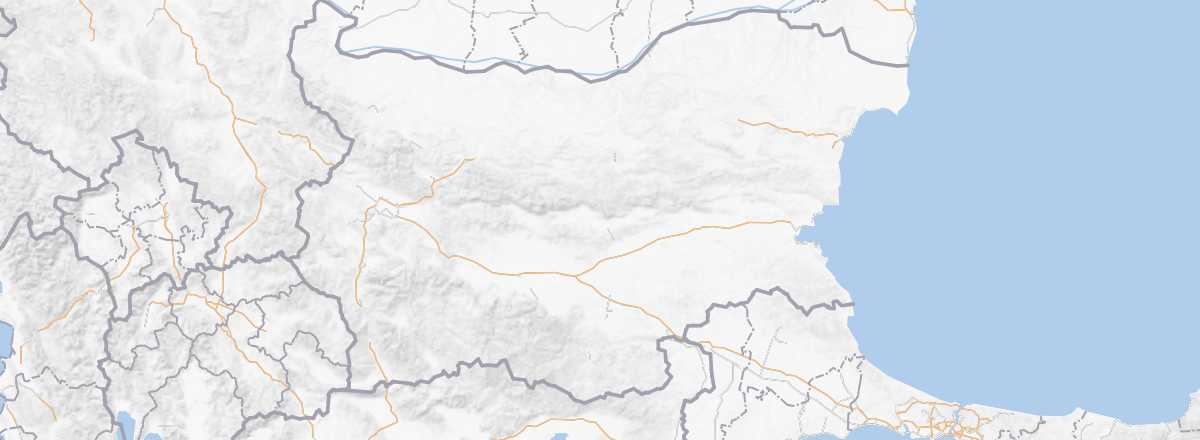 Bulgaria
Open the interactive map
Bulgaria
Open the interactive map
History of Bulgaria
Key Dates
- 8th century BCE: First Greek colonies established along the coasts of the country, then inhabited by Thraces.
- 1st century: The region falls under Roman conquest and is integrated into the Roman Empire, though the southern territory remains under Greek influence.
- 6th century: Slavic tribes arrive and mix with the Thracian populations that had been Romanized or Hellenized.
- Late 7th century: Of Turkic origin, the first Bulgarian populations settle in the east of the country before founding the First Bulgarian Empire, which quickly becomes a threat to the Byzantine Empire of Constantinople.
- 969: The Byzantines successfully attack Bulgaria and reincorporate its former territories into the Eastern Roman Empire.
- 1180: A popular revolt ends Byzantine rule and leads to the creation of the Second Bulgarian Empire, which lasts for just over two centuries.
- 1396: In decline, the Bulgarian Empire is conquered by the Ottomans, who remain for nearly five centuries.
- 1878: Following a popular uprising in 1876, Bulgaria gains relative independence two years later as an autonomous principality within the Ottoman Empire.
- 1908: After decades of internal unrest and conflicts with its neighbors, the country achieves full independence. It is then ruled by Tsar Ferdinand I.
- 1912–18: "Balkan Wars" against the Turks (1912), then, a year later, due to a dispute over the division of Macedonia, against Serbia, Greece, and Montenegro—its former allies. In 1915, Bulgaria allies with Germany for the remainder of World War I.
- 1920s–30s: Rise of nationalist and reactionary movements across the country.
- 1941: After two years of neutrality, Bulgaria enters the war on the German side.
- 1944: The country is "liberated" by the Red Army.
- 1946: Proclamation of the People's Republic of Bulgaria, led by the Communist Party. This is followed by the complete Stalinization of society.
- 1980s: Political, economic, and social problems gradually destabilize the aging regime led by Todor Zhivkov, who had been in power since 1962. His rule ends in November 1989 with the fall of the Berlin Wall and its consequences.
- 1990s: A period of transition during which several governments succeed one another. The country gradually opens up to the economy and foreign investors despite widespread corruption.
- 2004: Bulgaria joins NATO.
- 2007: On January 1, Bulgaria joins the European Union.
- 2012: The country declines to adopt the Eurozone.