last edited Mar 30, 2026
Flying to Tanzania
Location Map of Tanzania
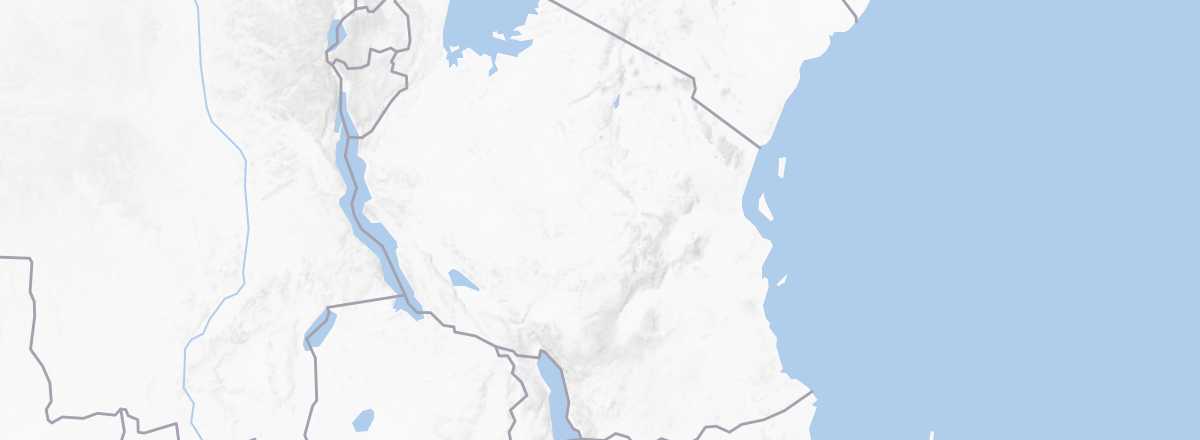 Tanzania
Open the interactive map
Tanzania
Open the interactive map
General Information
Given the size and tourist activity of the country—or at least certain regions—Tanzania logically has quite a few airfields and airports, including three with recognized international status. That said, air traffic in Tanzania remains relatively limited.
Of these, Julius Nyerere Airport in Dar es Salaam is the main hub, with 2.5 million passengers per year and regular flights to around fifteen countries. It is followed by Zanzibar Airport (around 1 million passengers) and Kilimanjaro International Airport in Arusha (800,000).
Unlike Dar es Salaam, these two airports primarily serve tourist purposes, with direct flights from several European countries. The first connects to beach resorts and all-inclusive hotels in Zanzibar, while the second, near Moshi and Arusha, is the gateway for safaris in the northern parks and access to Kilimanjaro. Beyond these, around ten other airports offer domestic flights or occasional connections to just one neighboring country.
Local Airlines
Tanzania has a fair number of airlines, all of which are small, with limited fleets of low-capacity aircraft primarily serving domestic routes and neighboring countries. Most are also on the European Union’s blacklist of airlines banned from EU airspace due to safety concerns. This means they cannot be sold by EU-based travel agencies, which is worth knowing if you plan to use them for travel within the country.
- Air Excel: Based in Arusha, the airline offers charter flights and domestic routes to around a dozen cities in the north/northeast.
- Air Tanzania: The national carrier, based in Dar es Salaam, operates around fifteen international and roughly the same number of domestic flights.
- As Salaam Air: Offers a few domestic flights and on-demand services with small aircraft.
- Auric Air: Serves around twenty domestic airports (plus Uganda) from its hubs in Mwanza (Lake Victoria), Arusha, and Dar es Salaam.
- Coastal Aviation: Operates domestic flights in Tanzania and international routes to neighboring countries (Kenya, Uganda, etc.). The airline also specializes in "safari flights."
- Flightlink: Connects around ten cities domestically, with Arusha and Dar es Salaam as bases.
- Precision Air: One of the country’s main airlines in terms of traffic, though its routes are limited to Nairobi, the Comoros, and fewer than ten domestic airports.
- Regional Air: Another carrier offering local and on-demand flights.
- Safari AirlInk: Provides on-demand flights and some scheduled services to major tourist destinations, such as Dar es Salaam–Zanzibar.
- Safari Plus: Like many others, offers a few domestic and on-demand flights with small aircraft.
- Tropical Air: Based in Zanzibar, serves the archipelago and the mainland (Dar es Salaam and Arusha).
- ZanAir: Connects around half a dozen domestic cities, with Zanzibar as its base.
From France and Europe
Direct flights to Tanzania from Europe are relatively limited, though Zanzibar receives seasonal flights from Italy, Germany, and Switzerland, while Arusha is connected to Paris and Brussels. Dar es Salaam, however, no longer has direct flights to Europe.
Specifically for France, Air France offers direct flights to Arusha and Zanzibar, which is not bad compared to other European countries’ direct coverage. While these flights are the fastest option, they are generally not the cheapest. Many travelers prefer Gulf carriers, Turkish Airlines, or Ethiopian Airlines for longer but often more affordable routes. Expect around 14 to 20 hours of travel time and 500 €–800 for a round-trip ticket to various Tanzanian cities.
Alternatively, many travelers opt to fly into Kenya, Nairobi, where there are more options and better prices, before continuing to Tanzania.
From the Rest of Africa and Beyond
While Tanzania offers a decent range of African destinations, it is not as extensive as neighboring Kenya’s network. Still, you’ll find the essentials for travel within the continent.
Beyond Africa and Europe, Tanzania’s direct connections are limited to the Gulf region, with the UAE, Oman, and Doha served by regional carriers to the country’s three main airports.