
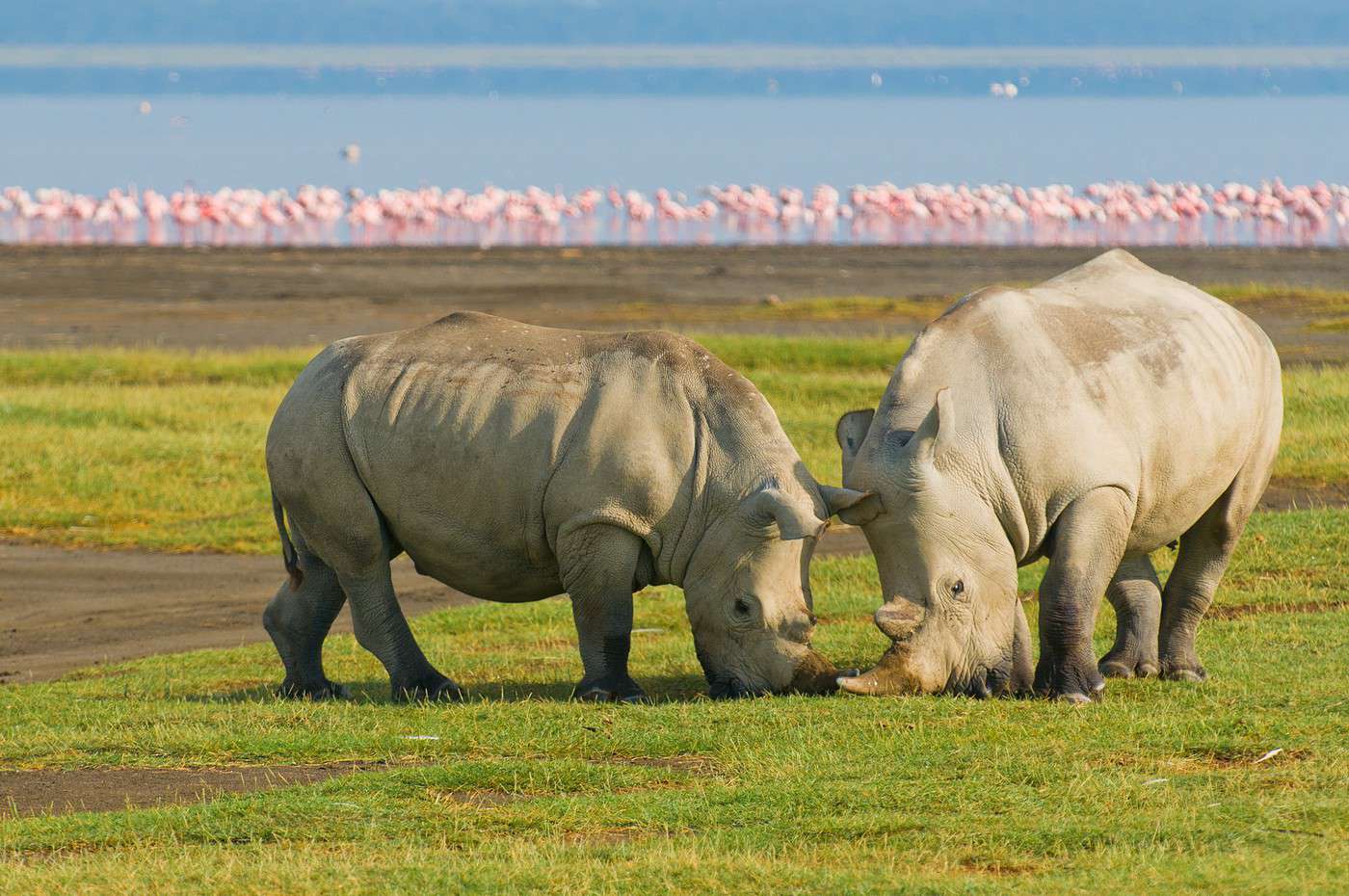
Travel guide · Kenya
Kenya
Kenya is best known for its stunning landscapes of forests, mountains, and deserts. Your trip can combine adventure—like a safari to observe the country’s incredible wildlife diversity—with relaxation at a beach resort along the Indian Ocean.
Overview of Kenya
Like neighboring Tanzania , Kenya is renowned for its magnificent parks teeming with wildlife. Similar to it, the country consists of a central high plateau that is home to the capital Nairobi . This plateau is largely bordered to the west by high mountains…
Geography and Environment of Kenya
Vallée du Grand Rift, Kenya · © VoyageForum Kenya is home to over 60 national parks and reserves, several of which are UNESCO World Heritage Sites (Mount Kenya, Lake Turkana National Parks). Together, they cover 8% of the country, or over 45,000…
Kenya's Climate and Weather
Kenya has a fairly varied climate depending on whether you're on the Indian Ocean coast, in the north, or in the central highlands region. Apart from the northern part, where rainfall is low, the country experiences two distinct rainy seasons. The first, and…
History of Kenya
Vieille ville de Lamu, Kenya · © VoyageForum 2.5 million years BC: earliest human traces in the Great Rift Valley, which is why this region is often called the "cradle of humanity". 2000 BC: arrival of nomadic tribes from Ethiopia. They were…
Kenyan Society
Population
Kenya's population comes from over 70 tribes across three different ethnic groups. The Bantu, particularly the Kikuyus, who alone make up nearly a quarter of society, are the most numerous. Next are the "Nilotic" populations, including the famous Maasaï (who in fact represent only 2% of the population), followed by those from the Horn of Africa. Only 1% of Kenyans, or fewer than 500,000 people, fall outside this distribution and belong to European, Asian, or Arab minorities.
Political Institutions
Economy
Religion
Kenya is over 80% Christian (with a Protestant majority) and has a Muslim minority representing just over 10% of the population, primarily living on the coast. Other practiced religions include Hinduism and traditional religions, which sometimes blend with Christianity.
Culture and Customs of Kenya
Arts, crafts and architecture
Arts
Crafts
Architecture
Museums
Customs and traditions
Local traditions
Etiquette
Attire
For women travellers, it is recommended to wear clothing that covers the body. Avoid miniskirts, shorts, lightweight outfits, and low-cut tops, especially in the coastal area.
Behavior
In the coastal area, where the population is predominantly Muslim, alcohol is not sold, so it is best to avoid consuming it while there. During Ramadan, between sunrise and sunset, discretion is advised when drinking, eating, or smoking. Smoking in public places is also prohibited in Kenya.
Regarding homosexuality, discretion is strongly recommended, as it is considered illegal in the country and may result in severe penalties.
Always ask for permission before photographing people.
In any situation, it is best to remain calm and avoid raising your voice.
Sensitive or taboo topics
It is important to respect the culture and beliefs of the local people, as certain situations could cause offense and lead to unpredictable reactions.
Languages
The official languages of Kenya are English and Swahili. Although Swahili is the national language, it is not the most widely used by the majority of the population. There are over sixty dialects in Kenya. English remains the most commonly used language in business and tourist areas. While French is the most studied foreign language in Kenyan schools, it is not widely spoken.
Glossary
A few useful local words and phrases to know while traveling:
- Hello: jambo.
- Welcome: karibu.
- Please: tafadhali.
- Hotel: hoteli.
- Thank you: asante.
- Goodbye: kwaheri.
- How much does it cost?: chin gapi, behe gani?
- Where is the toilet?: choo kiko wapi
- Hakuna Matata: no problem.
Festivals and celebrations
Public holidays
- January 1: New Year's Day.
- Good Friday.
- Easter Sunday.
- Easter Monday.
- May 1: Labour Day.
- June 1: Madaraka Day.
- October 20: Mashujaa Day.
- December 12: Jamhuri Day.
- December 25: Christmas Day.
- December 26: Boxing Day.
- Variable: Eid al-Fitr (End of Ramadan)
Books, films and music
Kenyan Cuisine
Local Cuisine
Cuisine in Kenya varies from one region to another, but it mainly consists of chicken, beef, lamb, and goat meat...
Other Cuisines
Specialties
Starters
Dishes
One of the African specialties is wali, a dish made of rice boiled in coconut milk. Ugali is also a staple food in Kenya. It is a thick porridge made from cornmeal and can be served alone or as a side dish. Another specialty of the country is nyama choma, which is grilled meat—beef is most commonly used.
Kachumbari is a typical salsa made from tomatoes, onions, chilies, and parsley. It often accompanies nyama choma. Sukuma wiki is a dish made from collard greens and is a staple food because it is available year-round at a very affordable price. Another very popular dish is irio kikuyu, a kind of mash made from peas, potatoes, and corn.
Desserts
Drinks
The Kenyan favorite drink is undoubtedly tea; Kenya is one of the world’s largest producers. It also produces high-quality Arabica coffee.
When it comes to alcohol, the country brews beer, with the two most popular brands being Tusker and Senator, as well as an excellent coffee liqueur called Kenya Gold.
Where to Eat
In large cities and tourist areas, the choice is relatively extensive, ranging from simple fast food to high-end dining.
At local establishments, you can eat for less than 2 € to 3 €. However, it is advisable to check the cleanliness of the place before consuming. For more "touristy" establishments or those with international cuisine, expect to pay around 5 € to 10 € or more.
Additional Information
What to See in Kenya
Kenya has 6 sites inscribed on the UNESCO World Heritage list: Kenya Lakes System in the Great Rift Valley ★★★ (2011) This very long volcanic geological fault runs through all of Kenya, forming the basis of several lakes (around ten UNESCO-listed, including…
Things to Do in Kenya
Diani Beach, Kenya · © VoyageForum It's around Lamu , Malindi , and Mombasa , along the Indian Ocean, that the country's beach resorts and large hotels have developed. More as a complement to a safari than as the primary motivation for a trip to…
Types of Travel in Kenya
Travel Themes
- Interests (out of ): Nature ; Adventure ; Culture ; Relaxation-holidays .
Nature-Adventure
With its countless parks and reserves, including the Masai Mara as its crown jewel, its lakes in the Great Rift Valley, and above all its unique wildlife to discover on safaris, Kenya is a premier nature-adventure destination and an unforgettable experience.
Culture
Beyond a few historical landmarks like the old towns of Lamu or Mombasa, which are also UNESCO-listed, Kenya has very few built traces of its past. The best way to explore its cultural particularities is through encounters with its diverse populations, some of which still maintain strong traditions.
Relaxation-Holidays
Kenya boasts magnificent beaches with a well-developed coastal tourism scene, including all-inclusive resorts in various parts of the coast. Unfortunately, security issues have made parts of it inaccessible.
Independent Travel
Due to security concerns, the country has become a destination for somewhat experienced travellers.
Organised Travel
Beyond tailor-made services, many agencies have long offered Kenya primarily as a safari destination, but also as a beach or all-inclusive option, or a combination of both, often for a total of 10 to 15 days on site.
All-Inclusive
Kenya has long developed all-inclusive resorts in various coastal areas, such as around Mombasa, Malindi, or Lamu. Unfortunately, security issues have made—or at least strongly discouraged—access to the northern part of this coastline, significantly reducing the popularity of beach resorts and all-inclusive options, which are now mostly limited to Mombasa. In short, it’s mainly through safaris that these types of services are now found.
Family
To Do
To Avoid
Senior
Female Traveller
LGBT
Regarding homosexuality, discretion is strongly advised, as it is considered illegal in the country and can result in severe penalties, including up to 14 years in prison.
Disability
When and Where to Go in Kenya
Best Times to Visit Kenya
Finding the best time to visit means balancing climate conditions with crowd levels and the most attractive prices for travel and on-the-ground costs.
Climatically, on the coast—whether for beach or diving—the ideal period runs from late August to March. While early in the year can be a bit hot despite the trade winds, you avoid the heavy rains of the following months and the sea, which isn’t always inviting. For the interior highlands and reserves, simply avoid the rainy seasons and prioritize safaris from late December to early March or late June to October.
That said, the turn of the year is also peak season in terms of crowds, with prices to match, as is—though to a lesser extent—July and August. However, since the destination has lost over a third of its visitors in recent years, tourist pressure and its fluctuations are now less of an issue.
In short, if you want to consider all these factors, March and September–October are the months to prioritize, though ultimately only the rainy seasons (April–May and November) can truly be problematic.
| Jan. | Feb. | Mar. | Apr. | May | Jun. | Jul. | Aug. | Sep. | Oct. | Nov. | Dec. | |
|---|---|---|---|---|---|---|---|---|---|---|---|---|
| Climate (central/west) | / | |||||||||||
| Climate (coast) | / | |||||||||||
| Avoid crowds | ||||||||||||
| Low prices |
: very favorable | : favorable | : moderately favorable | : unfavorable.
Where to Go by Travel Type and Interest
Flying to Kenya
Kenya has a multitude of airfields and several airports, including two with truly international roles; the others handle only domestic flights or nearly so. Jomo Kenyatta Airport in Nairobi is logically the country's main hub, with 9 million passengers per…
Getting to Kenya by Land or Sea
Kenya shares borders with five countries: South Sudan (317 km), Ethiopia (867 km), Somalia (684 km), Uganda (814 km), and Tanzania (775 km). Of the five countries bordering Kenya, three (South Sudan, Ethiopia, and Somalia) have closed and/or strongly…
Getting Around Kenya
Kenya's road network, apart from a few major routes, is generally in poor condition. Only about 10% of the roads are paved, with the rest consisting of tracks that can be particularly challenging, especially during the rainy season. In short, a 4x4 is quickly…
Accommodation in Kenya
Kenya offers a range of accommodation options, from camping or modest guesthouses to luxurious safari lodges, including bandas , which are traditional huts. The choice is logically more abundant in tourist areas. In principle, there is a "local or resident"…
Entry Requirements and Visa for Kenya
For tourist travel, a passport valid for at least 6 months beyond the end of your stay is mandatory, as is a visa allowing up to 90 days in the country. In theory, a return or onward ticket is also required, along with mandatory travel insurance covering at…
Money, Budget, and Shopping in Kenya
Currency: Kenyan shilling (100 cents) Banknotes: 50, 100, 200, 500 and 1,000 Ksh Coins: 1, 5, 10 and 20 Ksh Exchange: Generally, in major cities and tourist areas, it’s quite easy to exchange money at banks and exchange bureaus. Lodges and large hotels can…
Health and Safety in Kenya
In France, both for individuals and professionals, the "travel advice" from the Ministry of Foreign Affairs regarding precautions for each country has legal value. A similar online travel advice system exists in several countries: Foreign Affairs Belgium…
Other practical information for Kenya
Except at high altitudes where you’ll need to plan accordingly, lightweight clothing will be sufficient for the rest of the country, along with a light sweater for evenings, mornings, and the effects of air conditioning. Also bring sun protection, dust…
Safaris in Kenya
Parc national d'Amboseli, Kenya · © VoyageForum Kenya and Tanzania are THE safari countries. The word itself comes from Swahili , the language spoken in the region. With dozens of parks and reserves of all types and sizes, the choice is vast,…
Something wrong or out of date? Report this page