last edited Aug 30, 2026
Getting Around Tanzania
Location Map of Tanzania
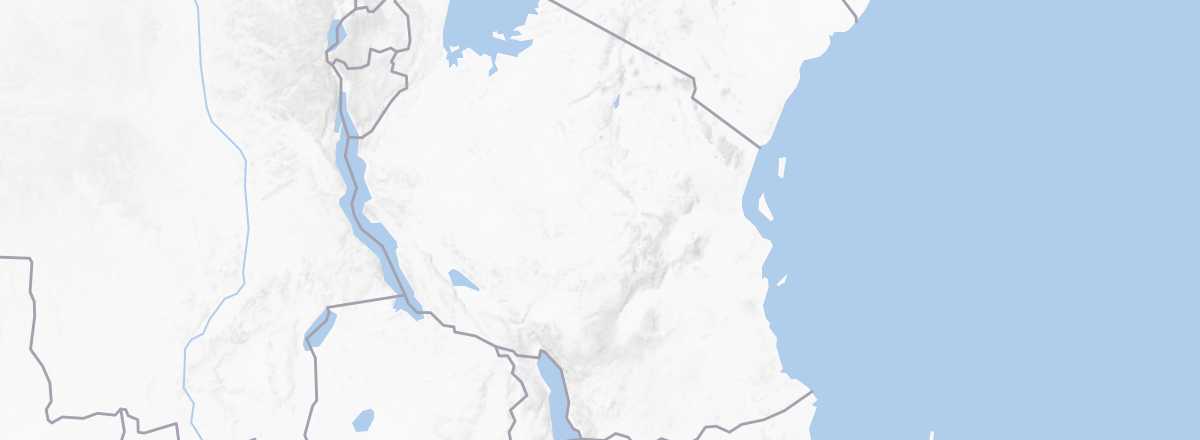 Tanzania
Open the interactive map
Tanzania
Open the interactive map
Road Network and Traffic
Tanzania's road network, aside from a few major routes like the famous Cairo-Cape Town highway that crosses the country from north to south, is generally in poor condition. Only about 15% of the roads are paved; the rest are unpaved tracks that can be particularly challenging, especially during the rainy season. In short, a 4x4 is quickly essential for getting around.
In terms of safety, the roads, the number of vehicles, and—it’s true—many drivers contribute to the danger. Traffic is often chaotic, and you need to pay special attention to pedestrians and animals that can appear anywhere on the road. Driving at night is best avoided. This means that if you do drive, vigilance is key. One last thing not to forget: in Tanzania, you drive on the left.
Car
While having a vehicle always offers freedom, it’s still preferable to consider the option with a driver, who can also share their local knowledge. Given the state of the roads, the nature of traffic, and the various risks or problems you might encounter, inexperienced drivers or those unaccustomed to such conditions would do well to avoid driving.
Rental
Rental agencies, with or without a driver, are available in Dar es Salaam, at international airports, and in major towns like Arusha, Mwanza, or Zanzibar.
The cost of renting a standard car in Tanzania starts at $50 USD per day, with rates often quoted in US dollars. You’ll also need to add $20 to $30 USD for insurance and taxes. For a 4x4, the cost ranges from $100 to $200 USD, plus insurance ($30 to $40 USD). Don’t forget the 20% VAT added to these fees. Outside cities and main routes—or even more so during the rainy season—a 4x4 is highly recommended.
Buses and Shared Vehicles
Buses
Tanzania has a fairly well-developed bus network, with fast intercity services (around $4–5 USD per 100 km) and slower, less comfortable secondary routes with multiple stops, which are cheaper.
Comfort and services depend on the bus category: luxury, semi-luxury, or standard. Some buses offer air conditioning and toilets. For premium services, it’s best to buy your ticket in advance and reserve your seat through companies at bus stations or nearby. The best connections are on the main routes, such as Dar es Salaam–Arusha and Dar es Salaam–Mbeya in the south.
Alongside public buses, some agencies offer shuttle services between cities and tourist spots. This is especially common in the Nairobi–northern Tanzania area, where private buses cater almost exclusively to tourists, with matching prices (e.g., $30 USD for the 280 km between Nairobi and Arusha).
Minibuses and Shared Taxis
Traveling by matatu or dala dala (old minibuses or vans with two benches, as in Zanzibar) is common, as they provide an affordable transport option for locals. They complement the bus network, stop on demand, are often crowded, and are driven by sometimes reckless drivers. They only leave when full.
By Bike
Cycling in Tanzania is possible, but the state of the roads, the distances, and the climate are factors to consider before embarking on such an adventure. Note that cycling is prohibited in national parks and reserves. For those who prefer not to go alone, several local and international agencies specialize in multi-day cycling tours across the country.
Hitchhiking
Hitchhiking is not recommended in Tanzania, nor is it particularly useful given the low cost of local public transport. What’s more, it’s often paid—at the same price as the bus. It’s also prohibited in national parks.
Trains
Tanzania has just over 3,000 km of railways, with a few theoretical projects in the pipeline to develop this mode of transport. For now, the network is limited to two or three lines operated by two companies. Trains are slow, journeys are long, but fares are very cheap ($1.50 to $2 USD per 100 km). However, watch out for theft, especially on the Dar es Salaam–Kigoma route.
- Tazara (Tanzania-Zambia Railway Authority): operates the line from Dar es Salaam to Zambia (New Kapiri Mposhi). A stunning 1,870 km journey through rugged terrain, taking roughly 46 hours and costing between $35 and $50 USD depending on the class (from 3rd to 1st). It’s best to book your ticket 2–3 days in advance.
- Central Line: runs west from Dar es Salaam to Kigoma, with a possible branch at Tabora to Mwanza (14 hours). The journey takes about 40 hours.
Boats
Aside from a few small connections on the lakes in the west of the country, linking villages without road access, the main opportunity to travel by boat is in the Zanzibar archipelago, with routes between the mainland and Zanzibar (specifically Stone Town) or between the islands.
The company Azam Marine primarily manages these services with modern, safety-certified boats. They offer four daily crossings between Dar es Salaam and Zanzibar (1.5 to 2 hours at sea, around $40 USD) and two weekly trips between Zanzibar and Pemba ($30 USD). Fares are quoted in USD, but you can also pay in euros.
Beyond these ferries, you can also take cruises or trips on traditional sailboats in the archipelago. Duration, prices, and itineraries vary—check directly with local agencies.
Domestic Flights
Tanzania has many airports and airlines, all of which are small, with limited fleets of low-capacity aircraft primarily serving domestic routes. However, they are all on the EU’s blacklist of airlines banned for safety reasons. This means they are prohibited from flying in European airspace and cannot be sold by EU-registered travel agencies. It’s worth knowing if you plan to use them to get around the country.
If you overlook this "minor detail," you’ll have several carriers to choose from for domestic flights at often affordable prices. For visitors, flying can be a good option for routes like Dar es Salaam–Kilimanjaro, saving significant time compared to ground transport.
In Towns
Taxis
Taxis are easy to find in Tanzanian cities. For a short trip, expect to pay around $1–2 USD for a daytime ride in the city and double that at night. Since taxis often don’t have meters, it’s essential to negotiate the fare beforehand and pay only upon arrival. Alternatively, ride-hailing services with apps for booking and payment are available in Dar es Salaam.
Other Options
Urban bus: The best system is in Dar es Salaam, called DART—a network of rapid buses on dedicated lanes. It’s the most efficient way to cross the city while avoiding major traffic jams. Tickets are bought at stations before boarding.
Shared taxis: You can also use shared taxis (called "dala-dala"), which can take 7 to 9 passengers.
Motorcycle taxis: Another very economical way to get around is by tuk-tuk (bajaj) or motorcycle taxi (boda-boda).
On foot: Walking is not recommended for tourists, especially at night—opt for taxis instead. The only exception is Stone Town’s historic center (Zanzibar), which is best explored on foot (or by rickshaw) due to its narrow, car-free alleys.
What to Choose for Getting Around?
The bus is certainly the most economical way to travel between cities. However, you’ll need another mode of transport or a tour operator to reach national parks.
Renting a vehicle is worth considering for time and freedom, despite the higher cost. While a 4x4 isn’t always necessary depending on the season and destinations, hiring a driver is a good idea to simplify things, especially if you’re not used to Tanzania’s unique road conditions.
Distances Between Cities
Distances (km) between the main cities in the country:
| Arusha | Bagam. | Dar es S. | Dodoma | Kigoma | Mbeya | Mtwara | Mwanza | Tanga | |
|---|---|---|---|---|---|---|---|---|---|
| Arusha | 564 | 625 | 423 | 1021 | 907 | 1186 | 620 | 438 | |
| Bagamoyo | 564 | 61 | 515 | 1307 | 819 | 622 | 1079 | 273 | |
| Dar es Salaam | 625 | 61 | 575 | 1370 | 820 | 560 | 1140 | 330 | |
| Dodoma | 423 | 515 | 575 | 793 | 654 | 1056 | 678 | 503 | |
| Kigoma | 1021 | 1307 | 1370 | 793 | 929 | 1848 | 592 | 1294 | |
| Mbeya | 907 | 819 | 820 | 654 | 929 | 1384 | 907 | 966 | |
| Mtwara | 1186 | 622 | 560 | 1056 | 1848 | 1384 | 1700 | 893 | |
| Mwanza | 620 | 1079 | 1140 | 678 | 592 | 907 | 1700 | 1043 | |
| Tanga | 438 | 273 | 330 | 503 | 1294 | 966 | 893 | 1043 |