last edited Mar 29, 2026
Money, Budget, and Shopping in Tanzania
Location Map of Tanzania
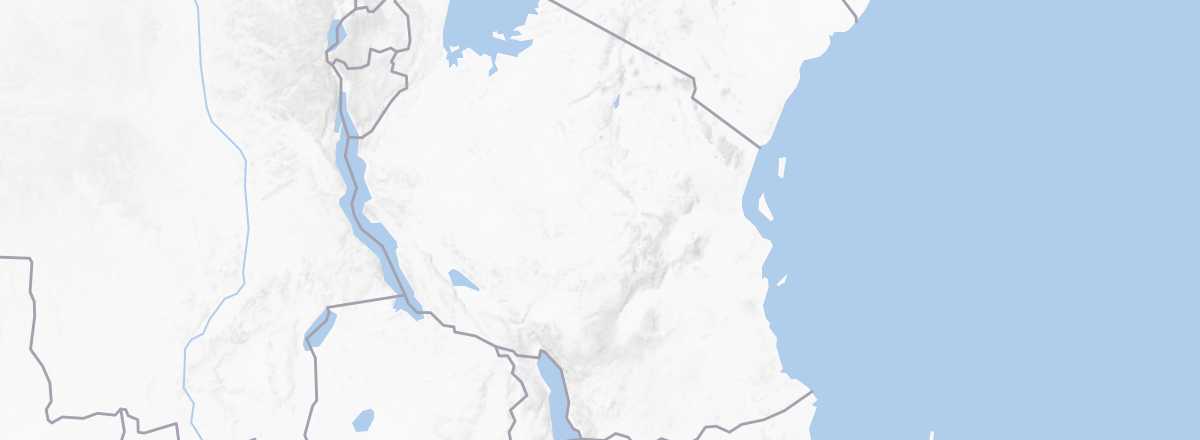 Tanzania
Open the interactive map
Tanzania
Open the interactive map
Money
Currency
- Currency: Tanzanian shilling (100 senti).
- Banknotes: 1,000, 2,000, 5,000, and 10,000 Tsh.
- Coins: 50, 100, 200, and 500 Tsh.
- Exchange rate:
Exchange
In major cities and tourist areas, it’s relatively easy to exchange money at banks and exchange bureaus. These are typically open weekdays from 8:30 AM to 3:00 PM and on Saturdays until noon. In smaller towns, some businesses may offer exchange services as a backup, though rates are often less favorable.
Alternatively, using a bank card for transactions is simpler, but this is mostly limited to main tourist spots or cities, as ATMs are not widely available.
Which currency to bring
For a long time, the US dollar was practically the "second currency" of the country, to the point that many tourism-related prices (park entry fees, upscale hotels, etc.) are still quoted and payable in dollars. However, the euro is increasingly accepted and gaining ground.
That said, when carrying cash, it’s wise to bring a mix of both to avoid issues (or undervalued euros in transactions), especially if traveling off the beaten path. Always ensure US dollar bills are recent and in good condition.
Payment methods
Card payments are possible but still limited in Tanzania. They’re mainly accepted at hotels, lodges, vehicle rental agencies, and safari operators. As always, watch out for bank fees.
It’s best to carry local currency (small denominations are handy), as well as US dollars and, secondarily, euros—especially when venturing away from major centers. Most national parks require entry fees to be paid in cash (US dollars), with only a few accepting cards. This is why it’s important in Tanzania to confirm the accepted payment method before any transaction.
Upon return
While you can exchange leftover shillings before departure, the rates are usually unfavorable. It’s simpler to exchange money as needed and keep some US dollars (or euros) for the end of your trip.
Budget
Depending on your plans, a trip to Tanzania can fit a modest budget or require significant funds.
If you skip safaris and climbing Kilimanjaro, costs won’t be excessive. Eating local food, staying in small hotels or guesthouses, and using public transport can keep expenses around 40 € per day for two people—affordable but limiting, as you’ll miss the country’s main attraction: safaris.
And safaris are expensive! This is largely because most people book organized or guided tours, park entry fees are high, and Tanzania has long avoided mass tourism in its reserves (unlike neighboring Kenya, though prices there have also risen). At minimum, budget 120 €–150 per day for the most economical safari options, which include tented camps or off-site lodging. Opting for a lodge can double the cost. Prices also vary by season, trip length, group size, and chosen parks.
For climbing Kilimanjaro, expect several hundred euros, depending on the route. Typically, a solid 5- to 6-day package starts at around 1,500 € per person (once you’re there).
What can be expensive
- Safaris, even outside lodges.
- Park and reserve entry fees.
- Accommodation near parks.
- Zanzibar compared to the rest of the country.
- Climbing Kilimanjaro.
What doesn’t have to be expensive
- Eating, sleeping, and traveling "local."
- Multi-day, multi-park safari packages from providers—always cheaper than booking piecemeal.
Price range
- Budget double room: 20 €–30 per night offers a solid starting point.
- Mid-range double room: 50 €–60 at the low end, much higher for lodges.
- Local restaurant meal: Avoid the cheapest options (under 1 € for very basic meals), but you can eat well for around 5 €–6.
- Tourist restaurant meal: 10 €–15 on average, more for upscale spots.
- Budget car rental: 40 €–50 per day for a small car, around 100 €/day for a 4x4.
- 100 km by local bus: Less than 1 € for a few dozen kilometers.
- 100 km by express/comfort bus: Roughly 3 €–4 per 100 km.
- 100 km by train: 1.50 €–2 on average per 100 km.
- Urban taxi: Around 1 € for a short daytime ride, double at night.
Bargaining and tips
Tanzania is a country where many things can be negotiated: souvenirs, local hotel rooms, or even the price of a safari booked on-site.
For tips, it’s customary to leave 10% of the bill in restaurants. Porters get a few coins, while taxi driver tips are included in the negotiated fare. On safaris, guides or drivers typically receive 5 €–10 per day per person, depending on their role. Also, taking someone’s photo—especially a Maasai—often requires a small payment.
Shopping and souvenirs
Check out local markets and don’t hesitate to bargain. It helps to have an idea of fair prices beforehand.
- Spices: cloves, cardamom, vanilla, saffron, nutmeg, etc.
- Coffee: grown on northern plantations.
- Precious or semi-precious stones: tanzanite, amazonite, etc.
- Ebony wood carvings: Makonde sculptures are the most famous.
- Jewelry: vibrant and colorful. Earrings, bracelets, necklaces.