last edited Aug 19, 2020
Safaris in Tanzania
Location Map of Tanzania
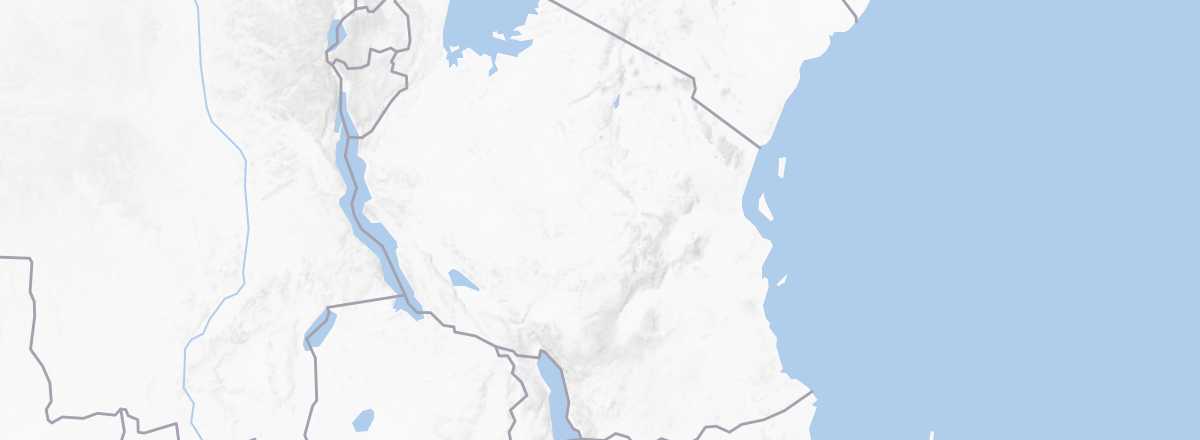 Tanzania
Open the interactive map
Tanzania
Open the interactive map
Safaris in Tanzania
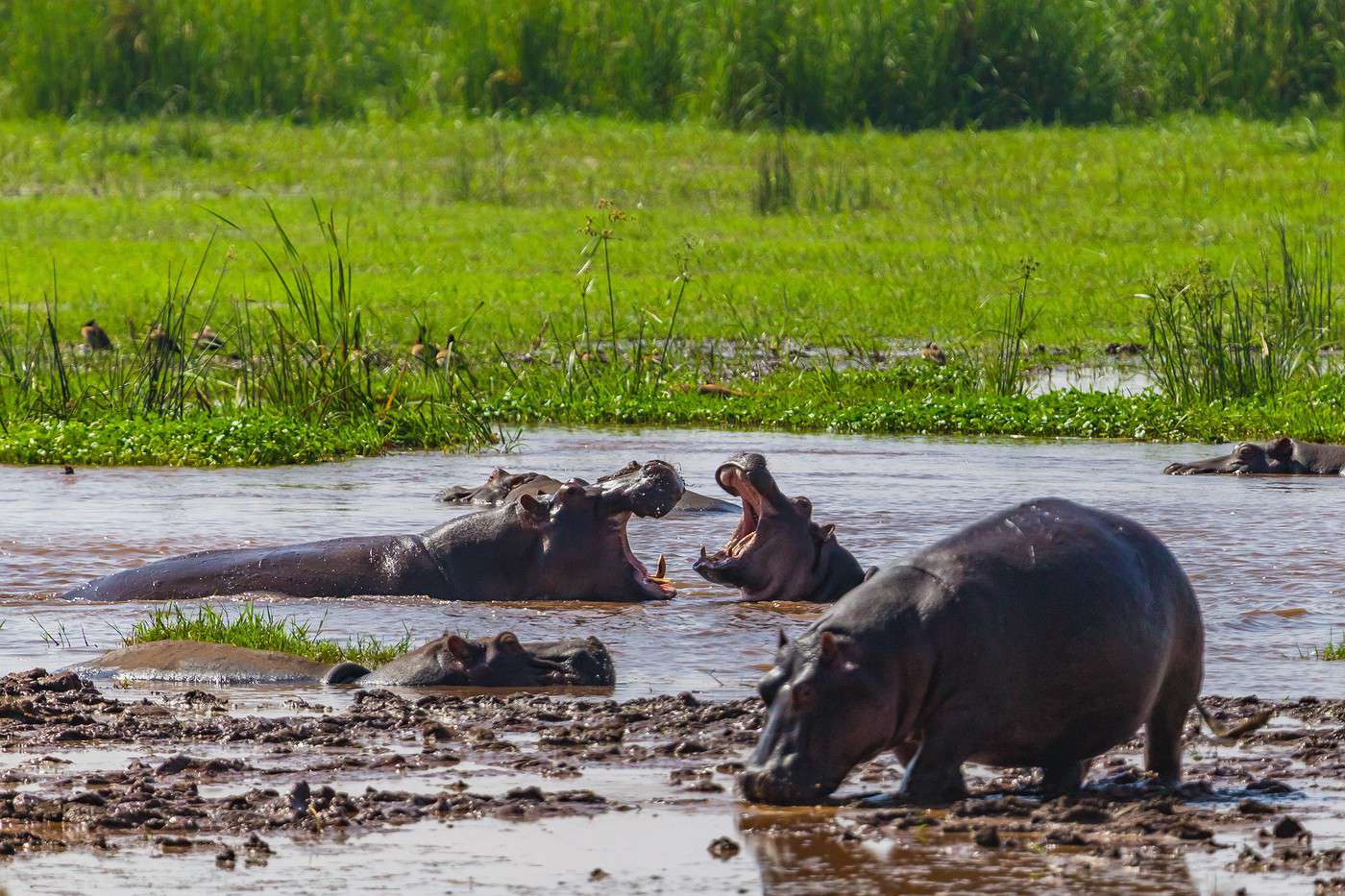
Kenya and Tanzania are THE countries for safaris. In fact, the word comes from Swahili, the language spoken in the region.
With dozens of parks and reserves of all types and sizes, the choice is vast, offering the chance to see all of Africa’s wildlife in its full splendor. It’s no surprise that safaris are the main reason visitors come to Tanzania and a major source of income for the country, especially since the government openly stated (in 2016) that it wanted "fewer tourists but tourists who pay more...".
Best time to go
Duration
When it comes to duration and the number of parks to visit, everything is possible and offered by providers. While a single day in a reserve can feel too short, stringing together too many days can also become tedious, especially if wildlife is scarce and the landscapes similar. In short, it’s up to each traveler to decide based on their preferences (and budget).
Generally, four to seven days is a good compromise, allowing you to visit three or four sites (accounting for travel time). This is what many packages focused on the northern part of the country offer, where parks are varied, rich in wildlife, and with "reasonable" distances and travel times.
Choosing parks
Parks and reserves
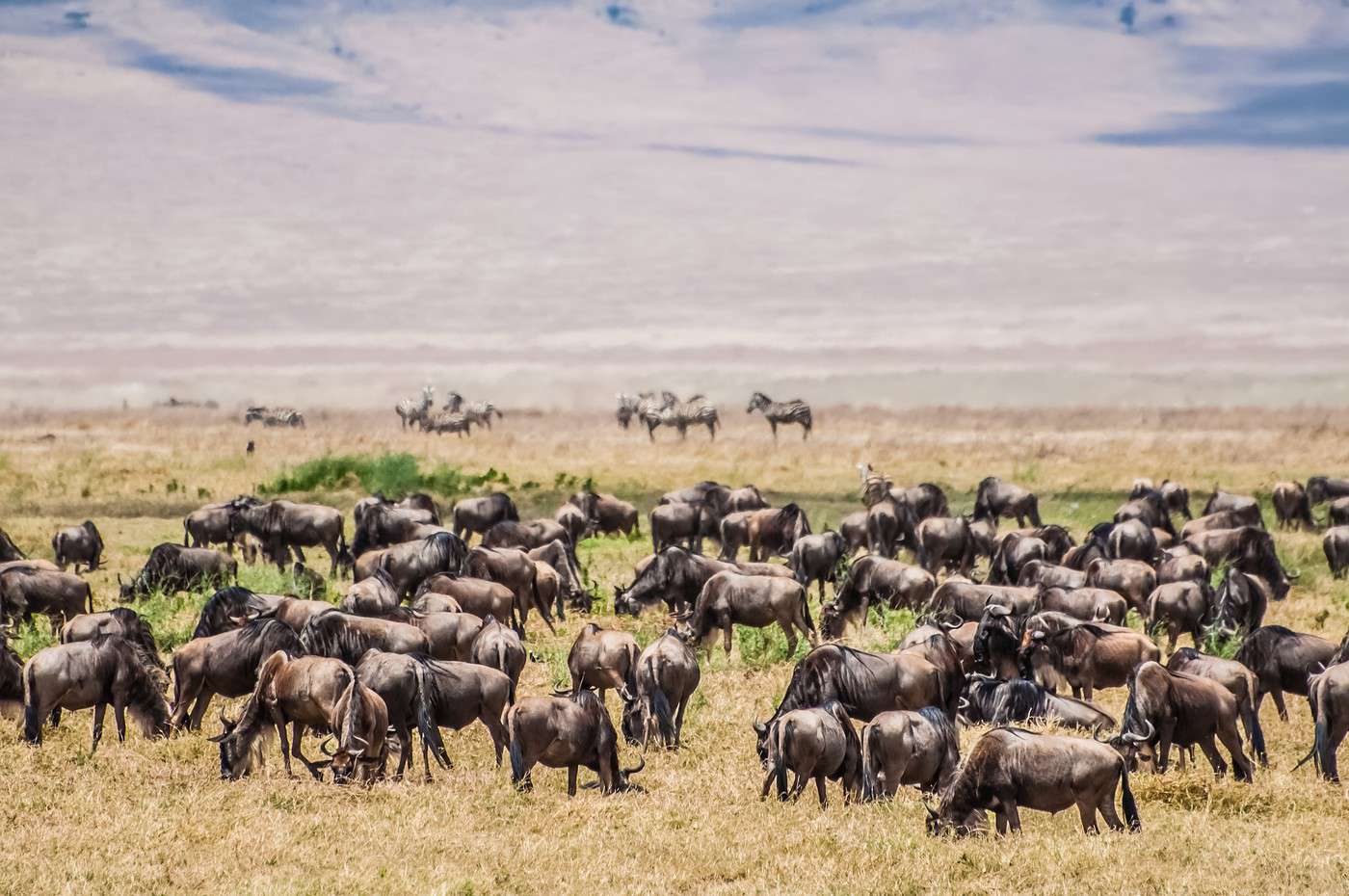
Tanzania has 16 national parks covering 42,000 km². The Tanzania National Parks Authority manages these sites. In addition, there are many reserves and other unclassified areas that may also be of interest for wildlife.
Northern region (Arusha area)
These are the most visited and, according to many, the most interesting, including the most famous of them all: the Serengeti. They are relatively close together, though travel between them is still required. The city of Arusha is usually the base.
- Ngorongoro Conservation Area: A savanna and plateau area bordering the Serengeti, with the Ngorongoro Crater at its center. The whole area is a UNESCO World Heritage site and highly visited for its landscapes, wildlife (the "Big Five"), a few archaeological sites, and the Maasai people who live there.
- Kilimanjaro: Africa’s highest peak is located in the national park of the same name, which is home to elephants, monkeys, buffalo, antelopes, birds, and more.
- Lake Natron: A salt lake on the Kenyan border. It is home to a large population of flamingos.
- Arusha National Park: Near the city of the same name. The area is best known for Mount Meru. In terms of wildlife, it is home to elephants, leopards, giraffes, buffalo, monkeys, and birds.
- Lake Manyara National Park: This small site bordering Tarangire is home to the famous "Big Five" of African wildlife, as well as many monkeys and birds.
- Serengeti National Park: The second-largest wildlife park in Africa, extending from the Masai Mara in Kenya. It is a UNESCO World Heritage site. You can find all of Africa’s wildlife here, especially during migration season, in a savanna landscape where Maasai communities also live.
- Tarangire National Park: Bordering Lake Manyara, this savanna park with countless baobabs is home to significant wildlife, especially in the dry season.
Coastal region
Near Dar es Salaam. A few interesting sites are located along the coast (or nearby), though they are quite spread out and require travel.
- Mikumi National Park: Bordering Selous, this savanna is home to a substantial amount of wildlife, including lions, hippos, elephants, and buffalo.
- Udzungwa Mountains National Park: Right next to the Selous Reserve, this stunning forested site is home to many monkeys, hippos, crocodiles, and birds. You can hike (or even canoe) through its mountain, valley, and waterfall landscapes.
- Saadani National Park: North of Dar es Salaam, facing Zanzibar, but not very accessible. It is the only wildlife park by the sea. You can encounter giraffes, wildebeest, buffalo, crocodiles, elephants, and occasionally lions and leopards.
- Selous Reserve: Located in the south of the country, between the coast and Lake Malawi, this is Africa’s largest reserve. It is a UNESCO World Heritage site with very rich wildlife (elephants, rhinos, cheetahs, crocodiles), which you can explore by 4x4, boat (on the Rufiji River), or on foot.
Western region
These are the parks located along the lakes, between Victoria and Malawi. Not always easy to access, quite spread out, and some are in (border) areas that are not always safe. Most are off the beaten path and require precautions and prior information before venturing there.
- Gombe National Park: Located on the shores of Lake Tanganyika, near Kigoma, this is one of the country’s smallest parks. It is known for its large chimpanzee population and birds. You can hike here.
- Rubondo Island National Park: A small park on a forested island in Lake Victoria. It is known for its birds but also home to monkeys, hippos, elephants, and crocodiles.
- Katavi National Park: Near Lake Tanganyika, this is an isolated park (encompassing several reserves) partly made up of swamps where many crocodiles and hippos live. You can also see elephants, buffalo, and birds.
- Mahale Mountains National Park: A beautiful, isolated, and hard-to-reach mountainous area on the shores of Lake Tanganyika. Besides the scenery, the area is famous for hosting the country’s largest chimpanzee population.
- Ruaha National Park: Near the Great Lakes, this vast park, which actually includes several reserves, remains little visited. However, it offers very rich wildlife, especially many elephants and birds.
Organized or independent?
If only for safety reasons or to find the "best spots," it is not always advisable—or even possible—to visit African parks and reserves alone. While it is permitted to explore some sites with your own vehicle, even with a driver, a guide is often mandatory and, above all, useful. Additionally, since a vehicle access fee (for a rented vehicle) adds to the budget, it reduces any small savings. In short, in Tanzania, a safari is best done organized or at least guided.
Through a provider
Case by case
Or, more precisely, contacting a different provider each time you want to visit a park. Unless you only want to visit one site or the safari locations are hundreds of kilometers apart, there’s no financial benefit. As always, it’s better to bundle everything with a single provider to get a better overall rate.
Several days for several parks
This is the obvious solution if you want to visit multiple parks. The program and provider can be booked either before departure from home or on-site with a local provider. Pros and cons...
- Before departure from home:
- Local provider:
Self-drive
Types of safaris
While most safaris are done by jeep or minibus, there are also options where wildlife is approached on foot, horseback, mountain bike, or even by water.
Jeep and minibus
Walking safari
This is the on-foot exploration of wildlife and the environment. It can be an added experience to get closer to animals in the savanna or, more often, because the terrain doesn’t allow vehicle access. This is the case in mountain parks (like the Udzungwa Mountains), small islands (like Rubondo), or when approaching birds or monkeys in the forest (such as Gombe National Park).
Other types
Prices and services
Services and equipment
Generally, the services offered by providers (priced in US dollars) include park entry fees, transportation to and within the parks, accommodation, and staff (such as a driver, cook, or guide). Additional costs may apply for meals, drinks, camping gear, optional activities, a French-speaking guide, or anything else tailored to the traveler’s expectations. In short, budgets can vary widely depending on what’s included and the level of service. It’s important to define in advance what you want (or don’t want) for your safari.
From budget to luxury
The cheapest safaris cost roughly 100–150 € per day per person (anything below should be approached with caution). At this price, you’ll typically find offers from local providers for safaris in minibuses (sometimes in poor condition), often with many participants, limited staff (no cook, for example), and English-speaking guides. Transportation may also be limited to essentials within the reserves. Accommodation (a major expense) is either far from the parks (cheaper but frustrating) or basic camping inside the park with subpar equipment and extra fees. Meals may be basic or left to participants. In short, this is a minimalist option, suitable if you’re not demanding or have a tight budget.
For 150–250 € per day, you’ll get more convenience and comfort, including occasional lodge stays. This is the range most visitors choose, whether with local or international providers booked from home. It’s often the best value for money.
As for luxury safaris, anything is possible at any price. Private stays, private flights, high-end meals and accommodation, a French-speaking guide, etc. Definitely an experience to consider... if you have the means or as part of a honeymoon, as is often offered.
The choice of season is also an important factor, with lower costs in the low season (but beware of parks closed at certain times) compared to peak periods.
Lodge or camping?
This is the usual question when it comes to accommodation on a safari... and many travelers already have an idea based on the price difference between the two. As standalone accommodation in parks, the ratio between the two options is at best 1 to 5, with camping starting at around $30 minimum and lodge stays at $150 or more per night. Beyond the facilities and services, what you’re paying for in both cases is proximity to wildlife and location within the parks. That’s why tent nights can be astronomically priced compared to the basic services offered, which usually include just toilets and a water point. In short, the closer you are to wildlife, the more expensive it is.
What to choose?
Beyond price, it depends on what you’re looking for. Logically, for comfort, a lodge is the better option, preferably booked through a provider who can negotiate rates. However, if you don’t want to be around too many people, are allergic to clichés, or dislike the sometimes excessive commercialism of certain establishments, camping is the way to go. And it’s true that a night in a tent in the bush is often a memorable experience for travelers. Outside the parks, accommodation is cheaper, but the experience is also different.