last edited Dec 11, 2019
History of Botswana
Location Map of Botswana
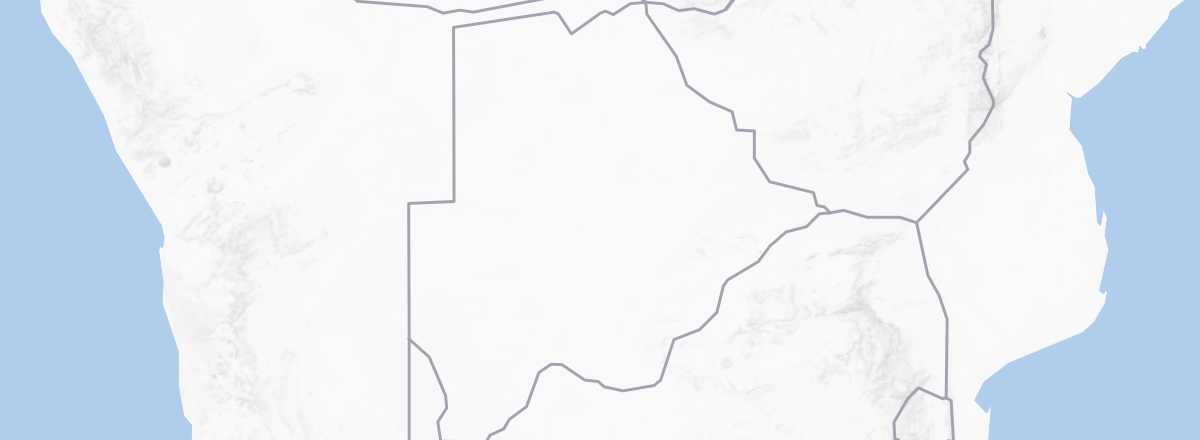 Botswana
Open the interactive map
Botswana
Open the interactive map
History of Botswana
Key Dates
- Up to the 19th century: Bantu Tswana populations occupy a large part of this region of Southern Africa after forcing the San and Khoikhoi peoples who lived there to move to other lands.
- Early 19th century: arrival of the first Europeans (hunters, traders, missionaries) in the region of present-day Botswana, which gradually became Christianised.
- 1835-1840: fleeing the Cape Colony of South Africa, which had become British, several thousand Boer farmers migrated inland during the "Great Trek", clashing with the Tswana populations, who then sought protection from the British.
- 1885: British protection of the territory officially became a protectorate at the request of the Tswana, under the name Bechuanaland. English became the official language.
- Early 20th century: following the Second Boer War (1899-1902) and the creation of the Union of South Africa (1910), the British asked the Tswana of Bechuanaland, who refused to join it.
- 1920-1966: until independence, local Tswana authority and British authorities coexisted in a certain harmony, with specific responsibilities for each.
- 1966: end of the protectorate and birth of independent Botswana. Seretse Khama, then leader of the Botswana Democratic Party, an independence movement, was elected president. He was subsequently re-elected twice.
- 1967: discovery of significant diamond fields, which later brought several billion dollars to the country.
- 1975-1990: thanks precisely to diamonds, the country experienced the world's highest economic growth for 15 years. Growth that remains high even today.
- Late 1980s: the country decided to develop its national parks and reserves and turned toward high-end, organised tourism.
- 1990s: the country was severely affected by the AIDS virus, which continues to this day to devastate the population, with one of the highest infection rates in the world.
- 2000s: diversification of the economy so that it no longer relies solely on mineral products.
- 2008: Seretse Ian Khama became the fourth president of the country since its independence. Son of the first president of Botswana, he was re-elected in 2014.