last edited Jan 6, 2020
History of Morocco
Location Map of Morocco
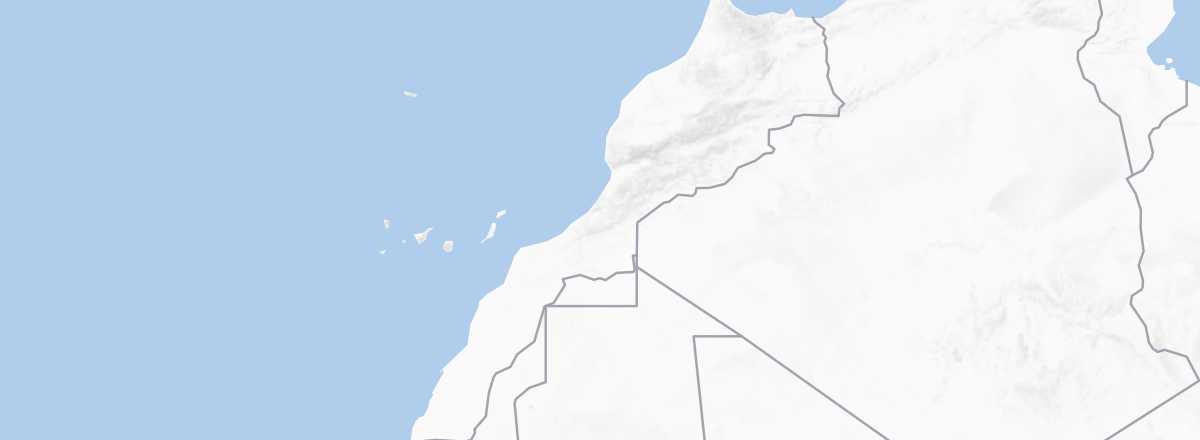 Morocco
Open the interactive map
Morocco
Open the interactive map
History of Morocco
Key Dates
- 11th century BCE: Phoenician settlement on the Moroccan coasts.
- 6th century BCE: establishment of Carthaginian trading posts, the main city of which, Carthage, was destroyed in 146 BCE.
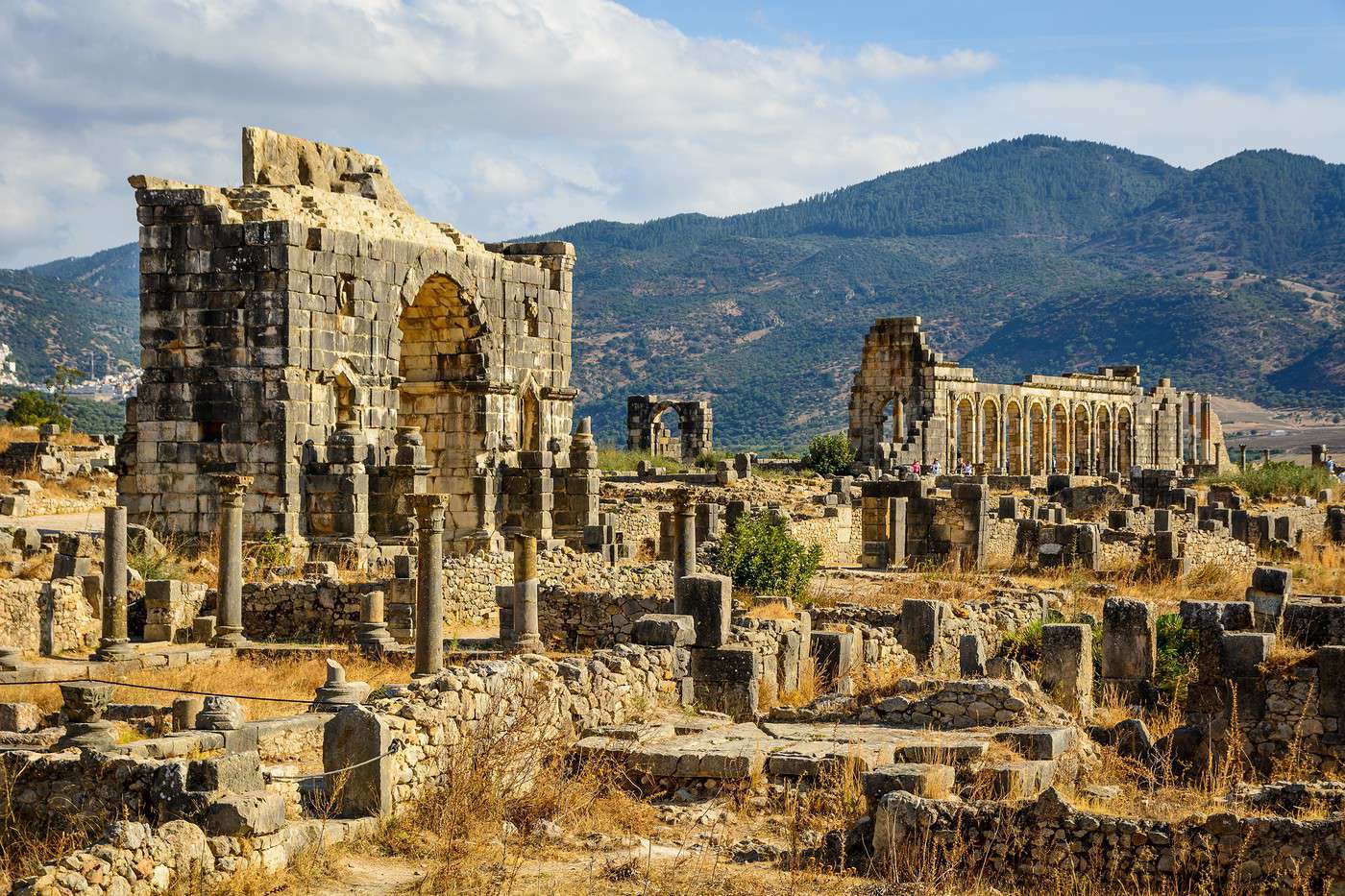
- 40 CE: annexation by Rome, which organized the country into two provinces.
- 534: partial reconquest of the country by Byzantium.
- 700-710: Arab conquest, which imposed Islam on the Berber tribes.
- 1067-1147: unification of the Maghreb and Andalusia by the Almoravids, followed by a prosperous era linked to international trade.
- Late 12th to early 18th century: succession of periods of anarchy and prosperity. Loss of Spain in 1340.
- 18th century: beginning of European pressure on the country.
- 1844: Franco-Moroccan War.
- 1860: Spain gains territorial advantages in Morocco, particularly in the south with Rio de Oro (present-day Western Sahara).
- 1863: Franco-Moroccan treaty favorable to the French; the country nonetheless remains independent.
- 1901: French intervention and pacification of the south of the country.
- 1906: Algeciras Conference, widely opening the country to Spain and France.
- 1912: French protectorate over the non-Spanish part and military intervention by France, which pacified the country until 1934.
- 1921-1926: Rif War and surrender of the leader Abd el-Krim.
- 1923: Tangier becomes an international city.
- 1942: Allied landing in Casablanca. It was during the war that nationalist parties developed.
- 1956: independence; the status of Tangier is abolished.
- 1958: Rio de Oro as a Spanish colony.
- 1960: violent earthquake in Agadir.
- 1961: Hassan II becomes King of Morocco.
- 1971-1972: succession of plots against the king.
- 1974: Spain considers abandoning Western Sahara.
- November 6, 1975: Green March, 350,000 volunteers march to the border of Rio de Oro to end Spanish presence in the territory.
- 1976: part of Spanish Sahara is assigned to Morocco (the other part to Mauritania) before reverting entirely to Morocco in 1979. Military occupation of the zone and struggle against the guerrilla of the Polisario Front, supported by Algeria, which claims the independence of the former Spanish Sahara.
- 1984: Rif riots.
- 1991: ceasefire between Morocco and the Polisario (a UN-sponsored self-determination referendum for Western Sahara is still planned).
- 1994: Islamist riots in Fez; release of many political prisoners.
- 1996: new constitution marking the country's desire for "modernity" in the face of Islamist fundamentalists.
- 1997: first legislative elections entirely held by universal suffrage. The country is governed by a center-right coalition.
- 1999: death of King Hassan II, succeeded by his son Mohammed VI, who gradually undertakes socio-economic reforms in the country.
- 2002-2003: new negotiations for the settlement of the Western Sahara situation.
- 2011: like other countries, Morocco faces the Arab Spring. Following multiple demonstrations, a new constitution is approved by referendum, and several reforms are initiated. The same year, the Islamists of the PJD win the elections, as they do in most subsequent ones.
- 2016: several geopolitical changes are initiated, notably a rapprochement with China and Russia, a deterioration of ties with Saudi Arabia, and a "repositioning" at the African level with membership in several continental bodies, such as (once again) the African Union in 2017.