last edited Dec 11, 2019
Money, Budget, and Shopping in Curaçao
Location Map of Curaçao
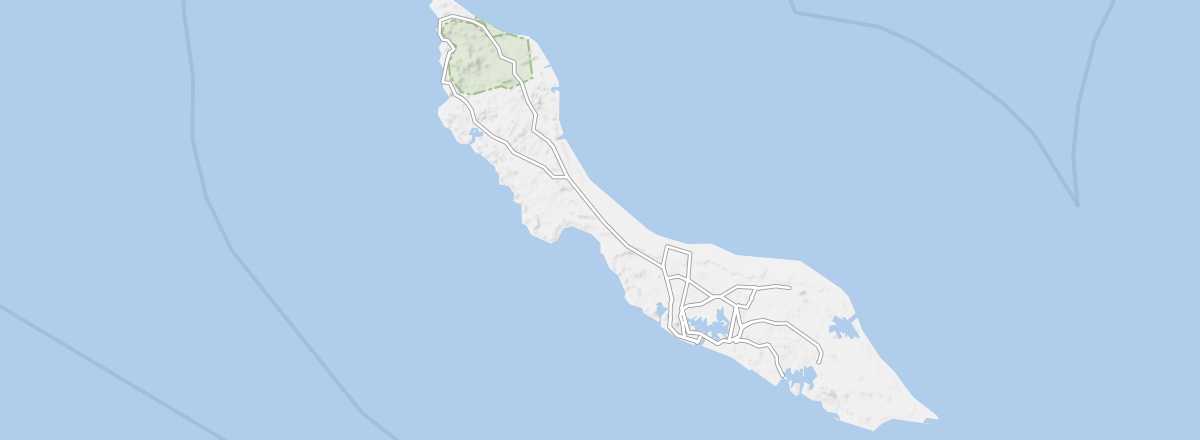 Curaçao
Open the interactive map
Curaçao
Open the interactive map
Money
Currency
- Currency: Netherlands Antillean guilder (100 cents).
- Banknotes: 5, 10, 25, 50, 100, and 250 ANG.
- Coins: 1, 5, 10, 25, and 50 cents + 1, 2.5, and 5 ANG.
- Exchange:
After being the currency of the former Netherlands Antilles until their dissolution, the Netherlands Antillean guilder remains the currency of Curaçao and Sint Maarten (the Dutch part of Saint Martin) until it is eventually replaced by the Caribbean guilder, which would then be used for both islands. Since 1971, the guilder has had a fixed exchange rate with the US dollar: 1 US$ = 1.79 ANG.
Exchange
You can exchange money upon arrival or use the few ATMs available on the island, many of which dispense both guilders and US dollars.
Which currency to bring
While the official currency is the guilder, it is entirely possible to pay for almost everything in US dollars. In fact, many prices are listed in US currency rather than the local one.
As for which currency to bring, simplicity is key. Even though euros are accepted (not always at a good rate) or can be exchanged for guilders, it’s better to bring US dollars. The advantage is that any leftover dollars can always be used or easily exchanged elsewhere later.
Payment methods
Card payments, like US dollars, are widely accepted across the island. As always, be mindful of bank fees if you make too many small purchases or withdrawals.
Upon return
The simplest approach is to end your trip with mostly US dollars, which you can easily exchange or use on another trip if any remain.
Budget
What can be expensive
What can be affordable
Price range
- Double room in a budget hotel:
- Double room in a mid-range hotel:
- Snacks, local restaurant meal:
- Mid-range restaurant meal:
- Budget car rental: around $45 per day for a small model.
- Bus/minibus fare: roughly $0.50 to $2 depending on the route.
- Urban taxi: