last edited Jan 29, 2026
Health and Safety in Morocco
Location Map of Morocco
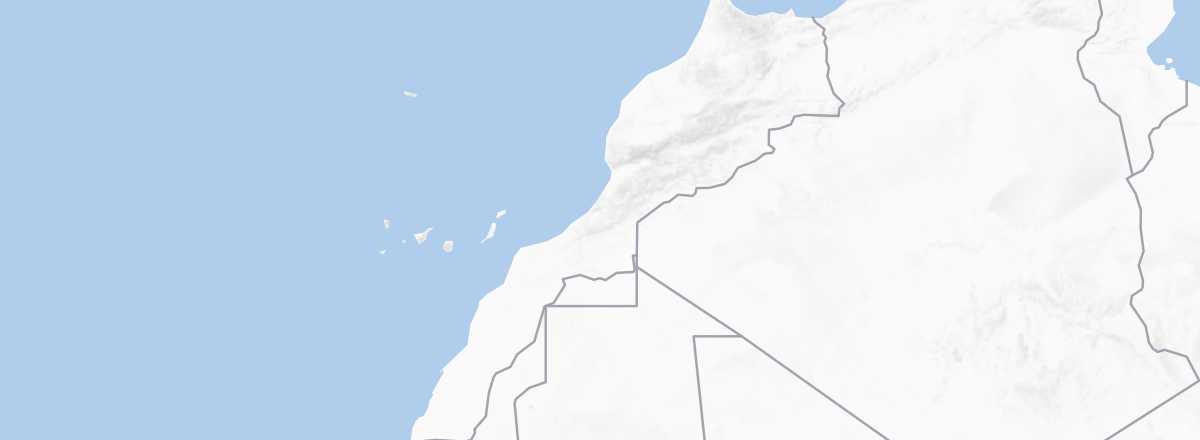 Morocco
Open the interactive map
Morocco
Open the interactive map
Official Recommendations
In France, both for individuals and professionals, the "travel advice" from the Ministry of Foreign Affairs regarding precautions for each country has legal value. A similar online travel advice system exists in several countries:
Health
Diseases
The risk of contracting a disease remains low in Morocco, where there is also no malaria. No mandatory vaccinations are required, although keeping up to date is always preferable. Among all possible issues, it’s primarily *turista*—the well-known traveller’s diarrhoea—that poses the greatest risk.
Hygiene
Good personal and especially food hygiene is still necessary. Avoid tap water and dishes or foods that don’t appear completely fresh, at least to prevent *turista*. Also, remember to stay hydrated and protect yourself from the sun in the hottest regions or seasons.
In another area, avoid swimming just anywhere, starting with *oueds* and even some poorly maintained public beaches. In all cases, a shower after swimming is essential.
Healthcare Facilities on Site
As in many countries, there is a noticeable difference between the public and private sectors. However, the public healthcare system has been undergoing modernisation for some time to improve its somewhat outdated image and increase efficiency.
Private facilities, on the other hand, meet European standards with recognised quality of care and short waiting times. Of course, "private" means costs to consider, though fees for "basic" care (to be paid upfront) generally remain affordable for Europeans. That said, always travel with insurance to avoid much higher out-of-pocket expenses in case of hospitalisation or serious issues.
Safety
Crime and Delinquency
Traditional delinquency and crime are relatively low in Morocco, and no major issues are expected. Just a few risks of theft in tourist areas, crowded markets, and train stations. That said, don’t flaunt your wealth and never leave valuables—visible or not—in your car, whether locked or not. Also, avoid nighttime walks alone on beaches or other poorly frequented areas.
For those travelling in a camper van, especially in the south, it’s best to stop for the night in campsites, hotel zones, or areas occupied by other camper van users. This helps avoid finding yourself alone with potential risks of nighttime aggression.
As for kif (local hashish), beware of problems and scams, particularly in the Rif region in the north. Penalties can be severe—even possession of a few grams can result in imprisonment.
Scams of All Kinds
However, what could be described as tourist scams is very much present in Morocco, especially in the most frequented areas. Among the main ones are: the "romantic encounter" scam, "new friends", "credit card problems", touts of all kinds, fake guides, or the petrol pump meter not reset to zero.
"Tourist" Harassment
While the creation of a tourist police a few years ago has reduced the problem, fake guides, touts, and hustlers still exist in Morocco, particularly in tourist cities like Marrakech, Fez, Meknes, or Agadir.
If solicited too persistently, try saying "no" with a smile—mention that you already have a guide or can manage on your own—and as a last resort, the word "police" can also have an effect. That said, more than tourist harassment, it’s the harassment sometimes faced by women travelling alone that remains the most troublesome.
Political Risks and Terrorism
Although Morocco is far from being the most exposed country in this regard, the risk of attacks does exist, including in tourist areas, as seen occasionally in recent years.
Also worth noting is the presence of mines dating from the Sahrawi conflict in various areas along the border between Algeria and Western Sahara. For Western Sahara, it is strongly advised against using secondary roads (usually subject to authorisation), as well as travelling along the Mauritanian border or much of the Algerian border.
Finally, Morocco occasionally experiences social movements and protests that can sometimes escalate. It’s best to be aware of this and stay away from any gatherings during such times.
Climate and Nature
Since Morocco—and North Africa more broadly—is largely desert, the main precaution is proper hydration and sun protection. More obviously, avoid getting lost if travelling independently in desert areas.
In another area, several regions of Morocco are located in seismic zones, such as the High Atlas or the region of Agadir, where one of the country’s deadliest earthquakes occurred decades ago. Similarly, some coastal areas are subject to strong currents that can pose drowning risks.
Animals
While venomous snakes and scorpions can be found in the desert, there is little risk in this regard. The main issue is stray dogs, which may sometimes carry rabies.
Foreign Consulates in Morocco
If you encounter problems while travelling abroad, your country’s consular services can assist you. It’s also worth knowing that if you’re an EU citizen and your country isn’t represented, you can contact any other EU member state’s representation.
France
- Consulate General: 49 Av. Allal Ben Abdellah, 10000 Rabat. Tel.: 537 68 97 00.
Other Consulates
- Agadir: Bd Mohamed Cheikh Saadi, 80000 Agadir. Tel.: 528 29 91 50.
- Casablanca: 1 Rue du Prince Moullay Abdallah, 15810 Casablanca. Tel.: 522 48 93 00.
- Fès: Av. Abou Obeïda Ibn Al Jarrah, 30000 Fès. Tel.: 535 94 94 00.
- Marrakech: Rue Camille Cabana, Quartier de l'Hivernage, 40000 Marrakech. Tel.: 524 38 82 00.
- Tangier: 2 Place de France, 90000 Tangier. Tel.: 539 33 96 00.
Other Countries
Belgium
- Agadir: Immeuble Borj Dlalate, angle Av. Hassan II - Av. Abderrahim Bouabid, 80020 Agadir. Tel.: 528 84 74 30.
- Casablanca: 9 Rue Al Farabi, 20070 Casablanca. Tel.: 522 43 17 80.
- Marrakech: c/o Palmeraie Golf Palace, 40060 Marrakech. Tel.: 524 36 87 61.
- Rabat: 6 Av. Mohammed El Fassi, Tour Hassan, 10000 Rabat. Tel.: 537 26 80 60.
- Tangier: 41 Bd Mohamed V, Résidence Al Waha, 90000 Tangier. Tel.: 539 32 48 47.
Canada
- Rabat: 13 bis Jaâfar As-Sadik, Agdal-Rabat. Tel.: 537 68 74 00.
Switzerland
- Rabat: Square de Berkane, 10001 Rabat. Tel.: 537 26 80 30.