last edited Jan 30, 2026
Things to Do in Morocco
Location Map of Morocco
 Morocco
Open the interactive map
Morocco
Open the interactive map
Beaches and Seaside Resorts
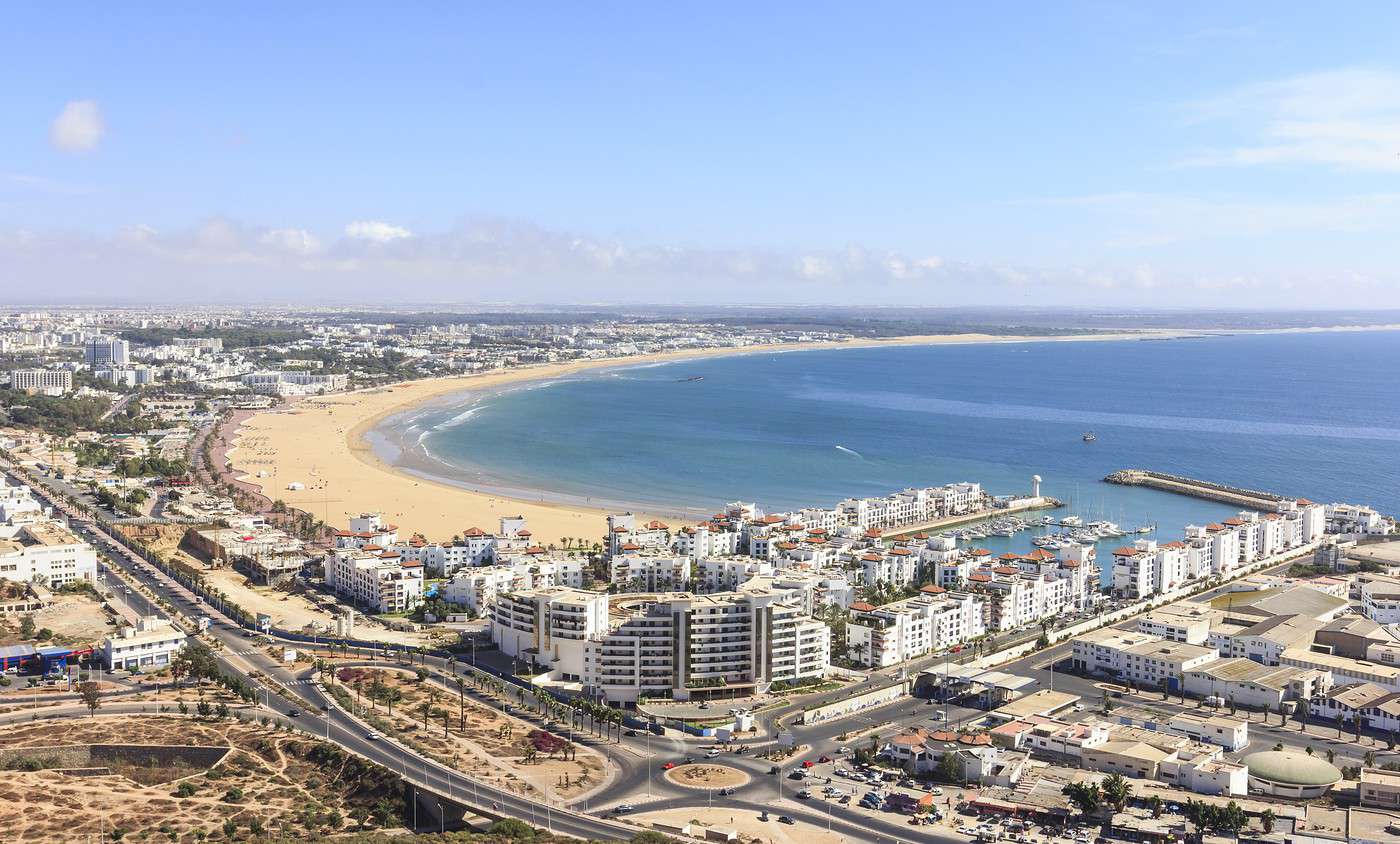
Unlike other similar countries, Morocco has developed its seaside tourism only minimally—or at least much later.
On the Atlantic coast, Agadir remains by far the leading seaside destination (and proudly claims this image), while Asilah, Essaouira, and to a lesser extent Dakhla with its bay are also trying to establish themselves in this sector. As for the Mediterranean, you’ll need to head to Al Hoceima or Saïdia.
That said, with hundreds of kilometres of coastline, Morocco still offers plenty of opportunities to find beautiful beaches or secluded coves.
Water Activities
Diving: Morocco isn’t really a destination for divers. For the few opportunities available, you’ll find more on the Mediterranean coast than the Atlantic. Smir (north of Tetouan) and the area around Tangier have the best spots.
Watersports: With its extensive Atlantic coastline, the country offers great opportunities for windsurfing and surfing. The most popular spots are the beaches around Essaouira, as well as Agadir, Safi, Sidi Ifni, Dakhla, Rabat, and Kenitra.
Sailing: Yacht clubs dot the coast from Tangier to Agadir, with the most important ones located in Rabat and Casablanca. On the Mediterranean coast, note the marina in Saïdia.
Thalassotherapy and Wellness
Beyond the image of the "traditional hammam," the country increasingly offers activities and services centred around thalassotherapy, thermal baths, spas, and general "well-being." In fact, Morocco now aims to become a major global destination in these fields. For now, the most substantial offerings are found in Agadir, Marrakech, and other key tourist cities.
Hiking
As you might expect, Morocco is a great place for hiking, especially in the higher-altitude regions where the heat is more bearable at certain times of the year than elsewhere in the country.
Hiking on Foot
Several areas are well-suited for walking. The High Atlas is generally the most popular, particularly the Toubkal (4,167 m) and M’Goun (4,071 m) regions, as well as the Dadès Gorges and the Todgha. You can also explore the Anti-Atlas (Tafraout), the Rif, the Sirwa (Taliouine), and the Jebel Saghro. Not to mention the desert and its oases (Tafilalet, M'Hamid, Merzouga, etc.).
Overall, these hikes aren’t difficult and can be enjoyed at any level, including with family for some. Depending on your preferences, you can opt for day trips or longer treks. However, be aware that many trails lack signposting, so a guide can be useful. Expect to pay around fifteen euros per day for a mule and its handler, and thirty euros for a guide.
For equipment, pack the essentials and plan for supplies, as they aren’t always available in certain areas. For longer hikes, a tent may come in handy, either because accommodation options are limited or because finding a place in peak season can be tough.
Cycling
There are also plenty of cycling opportunities, mainly in the Atlas Mountains, with many easy routes, much like trekking. However, the desert isn’t ideal for cycling; the heat and long distances make it less appealing.
Unless you’re planning a trip focused solely on cycling, there’s no need to bring your own bike. Rentals are increasingly available, including e-bikes, in the right tourist areas.
Horseback Riding
Morocco has a strong equestrian tradition. Fez and Meknes are renowned for their stud farms, and horseback riding is possible throughout the Middle Atlas.
Camel Trekking
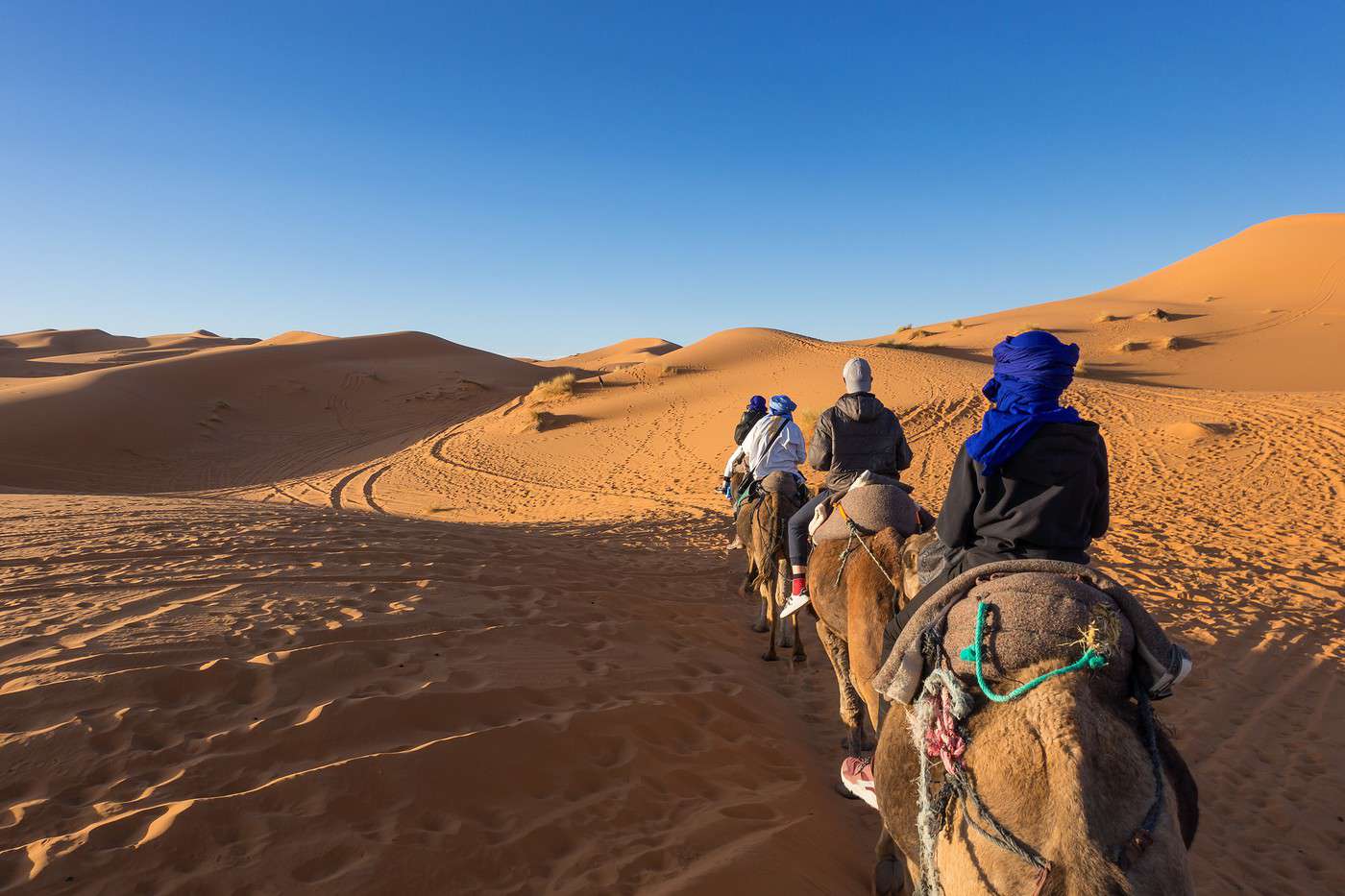
This is the classic Sahara image: a caravan of camels (actually dromedaries) against a backdrop of dunes. From short one-hour rides to multi-day treks, everything is possible—though in Morocco, most offerings are "tourist-friendly," usually lasting just a few hours or a day or two at most. Many departures start from southern oases, though you can also hop on a camel in Marrakech, Essaouira, Ouarzazate, or Agadir. Compared to countries like Mauritania or pre-conflict Mali, Morocco is best for a first taste of camel trekking.
Note that there’s a camel festival in Guelmim, in the south of the country, held every summer.
Outdoor and Adventure Sports
Hunting and Fishing
Hunting: Located in Larache (northwest Morocco), the Arboua tourist reserve is one of the country’s finest hunting grounds. It’s open only to non-residents, and its marshy plateau is teeming with game. A temporary hunting permit can be obtained by presenting your national licence in advance.
Sea fishing: From the main ports, boats can take enthusiasts out to sea for deep-sea fishing. Professionals know when and where to find the biggest catches (tuna, swordfish, barracuda, etc.).
Lake and river fishing: Trout and pike fishing in lakes and rivers is popular in the Middle Atlas. You’ll need a permit from the Water and Forests Directorate, based in Rabat but with offices in every city.
Whitewater Sports
Options include canyoning, rafting, or canoeing.
Canyoning: There are few canyoning opportunities in Morocco outside the Ahanesal region.
Rafting, canoeing: Some options are available on the Oum Er-Rbia, the Ahansal River, and the Ourika.
Climbing and Mountaineering
Several spots are ideal for climbing, particularly in the Dadès and Todra gorges, as well as the Toubkal, Sirwa, and Oukaïmeden massifs.
Golf
Golf courses are becoming more numerous. The most impressive is the Royal Golf Dar Es-Salam near Rabat. Another prestigious spot is the 18-hole course in Mohammedia, by the sea.
Paragliding
There are several take-off sites, the most famous being in Beni Mellal and the Aït Bougmez Valley.
Skiing
Morocco has a few ski resorts, easily accessible from Fez, Meknes, or Marrakech. Oukaïmeden (2,600 m), near Marrakech, is the best-equipped, while Michlifen, at 2,100 m near Ifrane, is the most popular in the Middle Atlas. The season typically runs from December to March.
Caving
Opportunities exist in the Goran Cave (near Safi) and especially the Friouato chasm near Taza.
Shopping and Markets

For many tourists, this is one of the highlights of visiting Morocco. It’s all about exploring the souks and their treasures, complete with the bargaining that’s an integral part of the shopping experience. For more details, see the Shopping & Souvenirs section of this guide.
Cultural Life and Activities
Morocco has several important museums, and many cities host festivals or cultural events worth discovering. Logically, the most opportunities are found in cities like Marrakech, Casablanca, Tangier, and Rabat.
Nightlife and Going Out
There’s a clear divide: on one side, major tourist hubs like Marrakech and Agadir or seaside resorts, which offer a full range of nightlife options (bars, clubs, etc.) catering to foreign visitors; and on the other, the rest of Morocco, where evening outings are almost non-existent.