Bangkok. La protection contre les inondations avance lentement.
Rung, 63 ans, a mené une bataille contre les déchets et les eaux usées qui assiègent sa vieille maison dans un bidonville perché sur pilotis sur les rives du canal de Lat Phrao dans le quartier de Sai Mai à Bangkok.
"Vous pouviez voir et sentir le flux quotidien des déchets", se rappelle la couturière. «Ça allait jusqu'à l'arrière de ma maison, et moi je voulais une vie meilleure pour mon fils et ma fille."
Le jour de Noël l'année dernière, Mme Rung a emménagé dans une toute nouvelle maison peinte en bleu à quelques mètres de son ancien domicile, dans la communauté Chao Phor Somboon à Sai Mai, dans le cadre d'une campagne visant à nettoyer les voies d'eau de leurs squatters, phénomène qui contribua aux inondations catastrophiques de 2011.
La réinstallation de Mme Rung, qui ne paie actuellement que 65 baht par mois pour les 200 000 baht de sa nouvelle maison de deux pièces, est l'une des réussites d'un projet lancé le long du canal Lat Phrao il y a près de deux ans, et achevé au tiers seulement.
Car les autorités ont eu du mal à persuader la plupart des résidents de déménager, et il est peu probable que la date limite du projet, juin 2019, soit respectée, selon un haut fonctionnaire.
Or, préviennent les experts, les retards dans la réhabilitation du canal, la lenteur ou l'abandon d'une série d'autres programmes de prévention des inondations annoncés après 2011 pourraient entraîner une catastrophe plus importante dans les décennies à venir, à moins que des mesures urgentes ne soient prises.
En plus de causer des dommages évalués à 46 milliards de dollars, les inondations d'il y a six ans ont touché plus de 3 millions de résidents de Bangkok, principalement des pauvres, dans 36 des 50 districts qui composent la capitale.
Les principales causes des inondations ont été les affaissements, les mauvaises infrastructures, la faiblesse de la coordination gouvernementale et le blocage des cours d'eau vitaux par les détritus et les constructions non réglementées.
La plupart de ceux qui ont emménagé dans de nouvelles maisons dans la communauté Chao Phor Somboon sont heureux de l'avoir fait.
Le vaste réseau de canaux et de drainage qui permettait autrefois de gérer l'écoulement de l'eau dans la rivière Chao Phraya a été largement comblé pour accueillir le trafic qui encombre les rues de la capitale.
Et tandis que les efforts visant à mieux équiper la ville pour gérer les inondations ont eu du mal à suivre le rythme d'une population en plein essor, la menace du changement climatique a empiré, selon les experts.
"Les endroits humides deviendront plus humides, et les endroits secs deviendront plus secs", a déclaré Abhas Jha, un responsable du développement urbain et des risques de catastrophe à la Banque mondiale. "Ce que nous appelions l'événement du siècle survient maintenant plus souvent."
EN CREUSANT
Bangkok est une ville qui coule lentement. Construite sur une plaine marécageuse, la ville a un problème d'affaissement de terrain aggravé par un pompage excessif des eaux souterraines.
Le taraudage des puits souterrains était traditionnellement un moyen pour les gens d'accéder à l'eau libre, et à un moment donné, la ville s'abaissait à un rythme de 10 centimètres par an.
À la fin des années 1970, le gouvernement central a introduit et appliqué une nouvelle loi pour aider à interdire l'extraction des eaux souterraines.
La ville s'affaisse maintenant à un taux plus faible de 2-3 cm par an – grâce à cette mesure positive qui pourrait être reproduite dans d'autres villes, selon les chercheurs. Mais elle fait toujours face à la menace d'inondations.
Aujourd'hui, Bangkok ne reçoit que 3 à 5 milliards de bahts par an du gouvernement central pour investir dans de nouveaux projets de gestion de l'eau, ont indiqué des responsables.
Alors que la saison de la mousson devient de plus en plus imprévisible, le centre de contrôle des inondations de l'administration métropolitaine de Bangkok a mis en place un système de surveillance des inondations à travers la ville et un système d'alerte intégrant les médias sociaux.
Mais la ville a besoin d'étendre les alertes précoces pour s'assurer qu'elles n'ignorent pas les zones pauvres et rurales, ont indiqué des experts urbains.
"Les problèmes sont plus compliqués aujourd'hui", a déclaré Nambi Appadurai, responsable de la stratégie pour la résilience climatique au World Resources Institute, faisant référence à la nouvelle construction et à la croissance démographique de Bangkok.
"Je ne serais pas surpris de voir des inondations (comme en 2011) se produire à nouveau, car très peu d'enseignements en ont été tirés."PLAN DIRECTEUR
Dans le but d'éviter une répétition des inondations de 2011 et d'améliorer la vie des habitants, Bangkok a rejoint en 2013 100 Resilient Cities, un réseau soutenu par la Fondation Rockefeller pour aider les villes à faire face aux chocs et stress actuels.
Supachai Tantikom, responsable de la résilience à Bangkok, a publié une stratégie pour la ville au début de l'année, les inondations étant au centre des préoccupations.
M. Supachai estime que les autorités thaïlandaises devraient créer un nouveau plan directeur de 20 ans pour la protection contre les inondations dans les 50 districts et les provinces environnantes de Bangkok, en cartographiant chaque zone et en utilisant les données les plus récentes.
"Nous avons des inondations chaque année, cette année nous avons eu quelques inondations durant la saison des pluies, qui ont duré trois à quatre heures ... cela a causé beaucoup de désagréments", explique-t-il. "Notre infrastructure n'est pas suffisante pour drainer l'eau."
M. Supachai, ancien conseiller du gouverneur de Bangkok, a déclaré que des experts néerlandais avaient déjà commencé à définir un plan qui coûterait environ 2 millions d'euros.
"Comme dans d'autres villes asiatiques, un manque de coordination entre les autorités locales et centrales rend souvent la gestion des rivières difficile", déclare M. Jha, de la Banque mondiale.
Mais l'accent mis sur les projets d'infrastructure signifie que les gens pensent que les villes peuvent accéder à la sécurité, ajoute-t-il. "Globalement, nous constatons que les décideurs aiment le concret", notant que d'autres mesures peuvent être plus simples et plus rentables.
Les projets d'infrastructures vertes qui pourraient aider Bangkok comprennent la protection des zones humides et le développement de toitures vertes, de chaussées perméables et de collecte d'eau de pluie.
Les installations à double usage - telles que les parkings qui servent d'espaces de stockage pour les eaux de crue - sont également une méthode relativement peu coûteuse de réduction des risques.
DEFICIT DE L'INFRASTRUCTURE
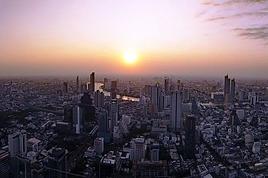
Bangkok abrite aujourd'hui plus de 10 millions de personnes. La croissance industrielle rapide au cours de la dernière décennie a attiré d'importants flux de personnes provenant d'autres régions de la Thaïlande. Cette migration devrait se poursuivre, avec une population estimée à 15 millions d'ici 2020.
Auparavant, la stratégie de défense de l'eau de la ville était axée sur le renforcement du mur d'inondation géant qui entoure son centre et le pompage de tout excès d'eau.
Mais comme la capitale ne cesse de croître, de nouvelles approches seront nécessaires pour protéger tous les résidents, ont déclaré les responsables.
La gestion de l'eau entourant la ville et les investissements à plus long terme sont cruciaux pour l'avenir de la ville, selon des experts urbains.
Rajiv Shah, président de The Rockefeller Foundation, une organisation philanthropique basée à New York qui finance 100 Resilient Cities, a déclaré que 70% des projets du réseau en Asie concernent l'eau - de l'approvisionnement en eau potable à la gestion des eaux de ruissellement.
"L'énorme déficit de financement des infrastructures et des infrastructures va freiner la croissance et le bien-être", a-t-il déclaré à la Fondation Thomson Reuters. "Nous voyons un tout nouvel ensemble de technologies et de partenaires qui peuvent se réunir et faire des choses."
De retour au canal Lat Phrao, le travail se poursuit pour construire de nouvelles maisons, renforcer les rives et draguer le chenal.
Mme Rung a exhorté ceux qui sont encore dans les bidonvilles au bord de l'eau à ne pas laisser l'entêtement ou la fierté les empêcher d'emménager dans de nouvelles maisons.
«Je n'ai aucun regret d'être partie, c'est mieux et plus propre ici», conclut-elle.
Je m'intéresse à la Thaïlande où je vais assez souvent et j'apprécie que vous donniez des infos sur le pays, qui vont au delà de l'aspect touristique. Merci.
Bloomberg News- 21/12/2017 "Les Chinois submergent les infrastructures touristiques" Le royaume des temples dorés, des plages de sable blanc et des hôtes…
Activités aquatiques en voyage › Thaïlande · 16 replies
J'ai bien lu dans un topic précédent qu'il y avait 2 magasins d'articles de pêche à Chatchuhak et un autre dans Chinatown. Est - ce que cette info est toujours…
Je dois venir à Bangkok à partir du 1er Novembre. Sur le site Bangkokpost, j'ai trouvé cet article, publié mardi 17/10: "A fresh round of torrential downpours…
Dans quelques jours nous retournons sur Bangkok; et, J'aimerai acheter des chaussures de marche et aussi pour la plage, des tee-shirts pour le treck et la…
Quelqu'un peut-il me dire si la poste principale de Bangkok fonctionne normalement pour envoyer du courrier en Europe? Je l'ai vue aux informations les pieds…
Hi everyone,
I’m looking for addresses for guesthouses or, even better, houseboats or rafting houses on the River Kwai, between Kanchanaburi and Sangkhlaburi, to spend a few weeks contemplating this beautiful river.
Thanks for your suggestions!
Premaria
Hi there,
we’re currently in Mai Chau and tomorrow we’re hitting the road back to Hanoi to head up toward Bac Ha and Sapa.
We haven’t really had a set plan since we arrived—we’ve already done the Halong Bay on land and by sea.
I’ve got 2 free days before heading to Bac Ha and Sapa.
Any tips?
Thanks, and looking forward to hearing from you.
Hi fellow travelers,
First trip to Vietnam.
We’ll be arriving in Ho Chi Minh City during Tet.
Is it complicated to find accommodation and get around during this period?
Any tips would be welcome.
Thanks for your replies.
Silly question—backpack or hard-shell suitcase for the Sepilok, Kinabatangan, Tioman, KL trip?
I’m struggling to fit all my son’s and my stuff into the 70L backpack... and I’m thinking a suitcase would be easier, but I’m not sure if it’ll work for getting around.
Hi there,
I didn’t plan to return to Thailand this year, but my health conditions mean it’ll be the best place for me to stay between two trips to India. The tourism setup there is so well-organized that it’s the most "comfortable" country for a short visit. Thailand feels too sanitized for my taste, and there’s too much religion, Buddha, and the King, but it’s still the best option given how my health has been evolving. I’d considered two weeks in ThaTon for hiking, but I got too sick from the burn-offs during my trips to the mountains around Chiang Rai. So I’m not sure where to go this year. Definitely not the sea, touristy spots, or the mountains with burn-offs...
Hello.
In 1996, we crossed Vietnam from Saigon to Hanoi by motorbike—Minsk bikes we bought in Saigon. I haven’t been back since, and it seems like a lot has changed.
- We’re heading to the south (well, the north and center) with the family in July-August (3 people).
- Is the road network more developed now? Back then, there was only National Route 1 from south to north. I’m thinking of renting a car this time (no motorbike with the family—though in ’96, they had a Jawa sidecar for sale, and we hesitated… maybe it’s for the best).
- Is Halong Bay really something to avoid because of overtourism? Even back then, it was pretty crowded. Is there a less touristy alternative?
- We’ll be traveling from Hanoi down to Danang (the only city we didn’t stop in back in ’96). Even though it’s a bit overhyped in a Chinese-tourist kind of way (from what I’ve read), we’re only going for the beach—pure relaxation for 7 days. The beaches are stunning, and I know the South China Sea is warm like coffee.
- Then, we’ll visit Hoi An, where I stopped in ’96. It was already popular with backpackers back then, but no glowing boats or all the touristy fuss!
- After that, Hue, where I have great memories—it’s a beautiful city.
- And also the nature around Ninh Binh, followed by 2-3 days in Hanoi.
That’s the plan. I’d love to hear any tips to avoid mass tourism, and if anyone’s done this before:
- Is it possible to rent a car in Danang and drop it off in Hanoi?
Hey everyone,
I’m over in East Borneo in mid-July.
I’m struggling to wrap up the end of my itinerary, even though it’s pretty straightforward (long but simple).
Last year, we did Malaysia (KL and the mainland + around Kuching).
Day 1 – Arrive in Kota Kinabalu early, stroll around town and hit the must-sees.
Day 2 – Excursion to Tunku Abdul Rahman Park, snorkeling at 3 islands.
Day 3 – Hike around Mount Kinabalu without summiting (450 per person, no way).
Day 4 – Poring Hot Springs + evening flight to Sandakan.
Day 5-6-7 – Kinabatangan River (still looking for the right guide).
Day 8 – Sepilok for the orangutans, the Sun Bear Centre, and Rainforest Discovery Centre.
Day 9 – Selingan, turtle island.
Day 10 – Head to Semporna.
Day 11-12-13-14 – Sipadan, Mabul, Kapalai.
Day 15 – Bohey Dulang.
Day 16 to Day 25: I’M STUCK.
I looked into Danum Valley, but for 3 days/2 nights, they’re quoting 650 € per person—come on, that’s ridiculous.
I checked out a detour into Indonesia (still East Borneo), but I’m having trouble deciding what would be amazing.
I read about Sangalaki + Kakaban (2 islands, 1 base) / Mahakam Delta - Kutai (orangutans and river) / Sungai Boh (Dayak Kayan) – jungle & culture.
But honestly, I’m struggling to finalize this itinerary.
If we venture that way, we’d head back to KK from Balikpapan.
For a 4-month stay in Egypt, I had ENORMOUS problems. The regulations are very bureaucratic and extremely nitpicky there. For a 4-month stay in the Philippines, I was wondering if the procedures are just as complicated? I’m bringing my cell phone with an eSIM. Should I choose a plan from Canada for use in the Philippines, or should I get a plan only once I arrive? After 30 days, do I renew with the Canadian provider I chose before leaving, or do I switch to a local company? Do I need to register my phone with the authorities in the Philippines? (That was the case in Egypt.) For the 3rd and 4th months, will it be just as simple—renewing with a Canadian or local provider—or should I expect problems?
Hello,
I’ll be in Malaysia with my wife, mainly in Langkawi and Penang for Christmas and New Year’s at the end of 2026.
If you’ve had the experience—and since I’ve read (though it’s not very clear) that these two islands get quite crowded during this period—would you recommend booking accommodation well in advance, or is it easy to find something on the spot?
Hotels or Airbnb?
Do you have any great tips for accommodation or any practical info to share?
We’ll be staying 5 to 7 days on each island.
Thanks in advance for your replies
Hi there. To make the most of Lake Toba, is it better to find accommodation on the lake’s shores (which one?) or on Samosir Island? Thanks for your tips!
Hi there,
We’re heading to Vietnam as a family on July 8th for a little over 3 weeks (north and center). We’ve only booked the first 3 nights in Hanoi, and nothing else after that. We like to decide things on the spot and go with the flow, without rushing everywhere. But I’m still a bit unsure: when heading down to the center (Hue), is it better to book the overnight trains in advance? We don’t want to take any flights while we’re there—just use the overnight train for the long trips. But I’m worried we won’t get seats if we buy the tickets on the spot, say, 2 days before. What do the experts here think? And which website can we use to book the tickets? Thanks in advance for your tips!
Hi everyone!
I’m heading back to Thailand in July 2026 with a stopover in Cambodia to visit the Angkor site.
After Angkor, I’ve booked a stay on Ko Chang island. Does anyone know if there are direct transport options from Cambodia to Ko Chang without having to go back through Bangkok? That would be amazing!!
I think there are, but I’d need more details!!
I went to Thailand in February 2025 and don’t remember having to apply for a visa—is that still the case now? And for Cambodia too?
Thanks so much!!!
Laurence from Bayonne
I’d love to get some feedback on our itinerary—it’s probably pretty basic! This is our second trip to Asia and our first to Indonesia. We have three kids aged 20, 18, and 12. We land in Jakarta at 4 PM, spend 3 nights/2 days there, then take the train to Yogyakarta for 3 nights/2 days, followed by the train to Surabaya for 2 nights/1 day, then the train to Bromo for 1 day/1 night, a private driver to Ijen for 2 nights/2 days, then on to Bali (Ubud) for 4 nights/3 days, followed by Gili Air for 3 nights/2 days, Senggigi (Lombok) for 2 nights, and finally 5 nights in Kuta. I’m considering cutting the 2 nights in Senggigi to just keep Kuta and extend it to 7 nights. In Lombok, I’m not sure how to get around since I’m not comfortable with scooters... Your thoughts on all of this, and any advice, are more than welcome—don’t hesitate!
For those wondering why cities like Jakarta and Surabaya: we don’t often get the chance to visit big Asian cities, so we wanted to include that discovery in our trip. The trains between Jakarta and Yogyakarta, Surabaya and Probolinggo are booked. The return flight from Lombok to Jakarta is also set. Accommodations are booked but flexible (same for the trains).
Hi,
After our trip to China, we want to spend a week in the Philippines for some beach time and snorkeling.
We're looking for the best spot to settle in—nice beaches, great marine life, and short transfer times.
Thanks for your suggestions!
Does anyone know of a private transfer or taxi company that organizes transfers from the Sukhothai area to Chiang Mai?
Our routes are Sukhothai-Lampang, Lampang-Chom Thong, and Chom Thong-Chiang Mai.
My searches on Google Maps, 12Go, and others haven’t turned up much...
For our Bangkok-Sukhothai trips, I use a company I’ve already tried, but they don’t have a fleet available from Sukhothai and have to go through third-party companies—which, understandably, take their commission. This nearly doubles the prices...
There are four of us, and we’re not traveling light, so a minibus isn’t an option. ;-)
Hello,
While traveling in Thailand, I’m looking for a Buddhist kumlai reed bracelet.
Does anyone know where I can find one?
In Bangkok, I visited a few temples but didn’t see any in the nearby shops.
If you have any ideas, I’d love to hear them! Have a great day! :-)
My trip’s coming up, and I’m having a bit of trouble with three bus/minivan routes. Usually, I find everything at this time of year, but this time—yikes!
Sandakan → Sepilok:
No app for this one—you just hop on bus #14 at the local terminal (pay cash on board). But where do I catch it, and where’s the stop??
Sandakan → Semporna:
From what I’ve heard, it’s the Sida Express company (great name, right? 😄).
Can’t book online, but apparently, you *have* to because there’s only one bus at 8 AM.
Where do I board, and where does it drop me off?
Semporna → Tawau:
Found this via AI—is it legit?
No online booking, as far as I can tell.
Minivans leave from a stop in the Jalan Hospital area, near the Milimewa supermarket, supposedly????
And when you arrive, does it drop you at **Sabindo Square** in Tawau?????
Hi there,
we’ll be in Mai Chau in June and we’re thinking of heading to Sapa, but first spending a few days in Bac Ha to do some hiking and explore the area.
Is this a good idea for those who’ve been there?
How do you get there?
Thanks for your feedback.
Looking forward to hearing from you.
Cédric.
Hi everyone. As I’m planning my trip for next winter, I’m looking for hotel suggestions in Camotes, Bantayan, Malapascua, Bohol, and Siquijor. The ones I had in mind seem to be fully booked (unless it’s too early?). For those familiar with the area, is it easy to find accommodations on the spot in January/February? I’m specifically looking for hotels with a pool, beachfront, air conditioning, and easy scooter rental nearby. Thanks for your tips!
Hi there,
I’m planning an itinerary and would love some feedback on whether it’s doable and if the number of days per destination is enough—or too much. I was also debating whether to add an extra night on an island or spend an extra night in Kampot to visit Kep or Battambang.
March 23: Arrival in Phnom Penh in the morning
March 24: Phnom Penh
March 25: Phnom Penh
March 26: Depart for Kampot
March 27: Kampot
March 28: Depart for Battambang
March 29: Battambang
March 30: Tonlé SAP to Siem Reap
March 31: Siem Reap
April 1: Siem Reap
April 2: Siem Reap
April 3: Siem Reap
April 4: Siem Reap
April 5: Departure
Hi there,
Yesterday in the Thailand section, 100% of the new threads were just about beach destinations 😕...
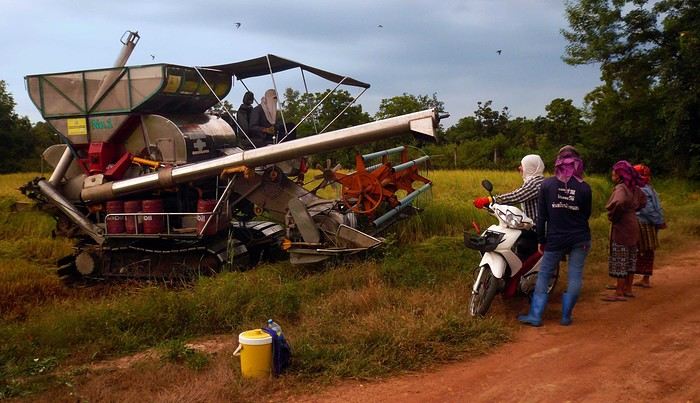
So here’s the counterattack in the form of this photo thread, dedicated solely to the countryside: the locals, their livestock, fields, farms, rice paddies, small rivers, and agricultural machinery. If you’ve got any pictures that fit these categories, feel free to add them!
Comments welcome.
For each photo, I’ll (or you can) indicate the area where it was taken.
Hope you're all doing well! It's been a while since I last traveled, but I'm finally heading out again soon!
For those familiar with SOUTHEAST ASIA, I'm planning to leave in mid-June (with the trip ending at the latest in November), and I don’t have a precise idea of exact places or itineraries yet. The thing is, this period is usually the rainy season...
Any advice? I was thinking of Malaysia or Indonesia, like Sulawesi, for example (all countries and islands in Southeast Asia interest me except Bali).
Any recommendations? I’m doing my research online, but if anyone here has the time and knowledge, I’d love to hear from you.
My partner and I are planning a trip to Indonesia in September-October 2026. It’ll be our first time in Asia, and we’re thinking of hitting the classic spots in East Java and Bali, then wrapping up with a cruise around Komodo for some snorkeling/diving. Here’s a rough draft of our itinerary—I’m wondering if it’s doable.
20/09: Flight from Jakarta to Yogyakarta, arrive around noon, afternoon/evening and overnight in Yogyakarta.
21/09: Borobudur
22/09: Prambanan
23/09: Travel to Bromo (Cemoro Lawang)
24/09: Bromo
25/09: Kawa Ijen
26/09: Travel to Bali, overnight in Pemuteran
27/09: Excursion to Pulau Melujan, overnight in Pemuteran
28/09: Travel to Munduk, overnight in Munduk
29/09: Explore Munduk and surroundings, overnight in Munduk
30/09: Explore Munduk and surroundings, overnight in Munduk
01/10: Route to Ubud (via Pura Ulu Danau Bratan, Jatiluwih?), overnight in Ubud
02/10: Explore Ubud and surroundings, overnight in Ubud
03/10: Explore Ubud and surroundings, overnight in Ubud
04/10: Travel to Denpasar, flight to Labuan Bajo, overnight in Labuan Bajo
05/10: Komodo cruise
06/10: Komodo cruise
07/10: Komodo cruise, flight to Denpasar in the late afternoon/evening or overnight in Labuan Bajo.
08/10: Flight to Denpasar (if not taken the day before), afternoon in Jimbaran, overnight near Denpasar
09/10: 10:00 AM flight Denpasar - SIN, overnight in Singapore
10/10: Flight SIN-YQB
Hi everyone,
My girlfriend and I booked our tickets with Saudia Airlines for a trip to Thailand this summer, from July 5th to August 3rd. Given the geopolitical situation in the Middle East, we’re keeping a close eye on the news.
I was wondering if anyone here is in the same situation as us?
• Have you heard anything about possible mass cancellations or if the airline is still maintaining its routes to Asia?
• Are there any travelers who’ve recently returned who could tell us if air corridors have been changed (longer flight times)?
The idea is to know what to expect so we can prepare as best as possible. Thanks for your replies! !
Thanks for all your contributions on the forum—they’ve really helped me plan my trip. There are four of us friends heading to Sulawesi for 20 days. Based on all your advice, I’ve put together the following itinerary:
July 30: Makassar – sightseeing
July 31: Makassar – sightseeing + overnight bus to Rantepao
August 1–7: Tana Toraja with a guide
August 7: Tana Toraja to Tentena + visit Tentena
August 8: Early departure with a private driver to Ampana, then ferry to the Togian Islands
August 9–15: Togian Islands (2 different resorts)
August 15: Depart Togian Islands for Luwuk
August 16: Flight Luwuk to Makassar
August 17: Rammang Rammang
August 18: Stroll in Makassar, then return home
Overall, what do you think?
I also have a question about the connection between Tentena and the Togian Islands: Is it doable to leave early in the morning as planned and still be sure not to miss the ferry?
Hi everyone,
I’m currently working on a 30-day itinerary for May/June 2027.
10 days in eastern Java (Malang, Bromo, waterfalls, Meru Beriti Park, Banyuwangi, and Ijen), a short transit in Ubud for a few days, then Flores before heading back to Jakarta.
We’ll spend 15 days in Flores (the classic route: Moni, Bajawa, Riung, Ruteng, ending in Labuan Bajo).
I’d love some firsthand feedback on flights to Maumere or Ende from Bali Denpasar. I know there are no direct routes and that you have to connect through Labuan Bajo or Timor (I think), which isn’t an issue in itself.
But I’ve read here and there that flights to these destinations can be delayed—or worse, canceled—and that it’s better to fly in and out of Labuan Bajo, which isn’t exactly ideal...
Thanks for any tips or experiences you can share!