Travel journals
FR


Carnets de voyage, descriptions de souvenirs mémorables, reportages, comptes rendus de voyages, etc.

Showing 1–30 of 5,480 discussions.

Previous Page 1 of 183 Next
discussions

Many threads here are in French, the community’s main language. English translations are added over time.

Two weeks under the Puglia sun
MU by Muriel18 16 hours ago · Muriel18
After a pretty disastrous weather-wise trip to Gran Canaria, we're hoping this time the sun will be out in Puglia. It’s not looking great since the weather isn’t great across Europe at the start of May.

Saturday, May 16: This time we’re flying from Charleroi (Brussels South): the ticket prices, flight schedules, and proximity all worked for us. The airport (Ryanair) was recently redone... but it’s not very well organized—there are very few seats in the boarding areas, and... the restrooms are pay-to-use!!! The flight goes smoothly, though, and we land in Bari with a slight delay.

We quickly pick up our rental car, a very locally styled Pandina (even more so than the Fiat 500 in this region), and hit the Italian (high)ways... and their unique driving quirks (notably, the countless road signs in towns and along roads seem to be purely decorative 😏, and Italian cars don’t have turn signals 😮... except for rental cars).

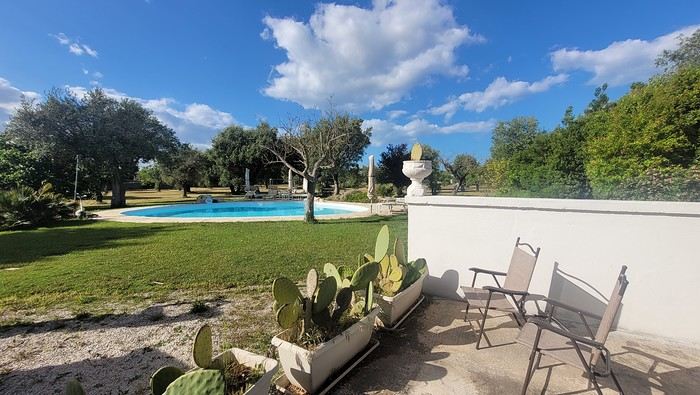
About an hour later, we arrive at our first accommodation, right in the middle of the countryside near Monopoli. The owner isn’t there, but they left us a ton of info via messages and even turned on the space heater, which is a nice touch. We check out the property:


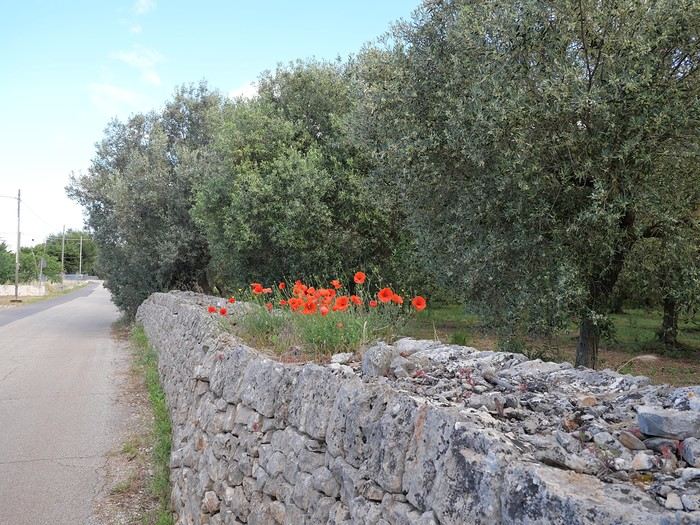
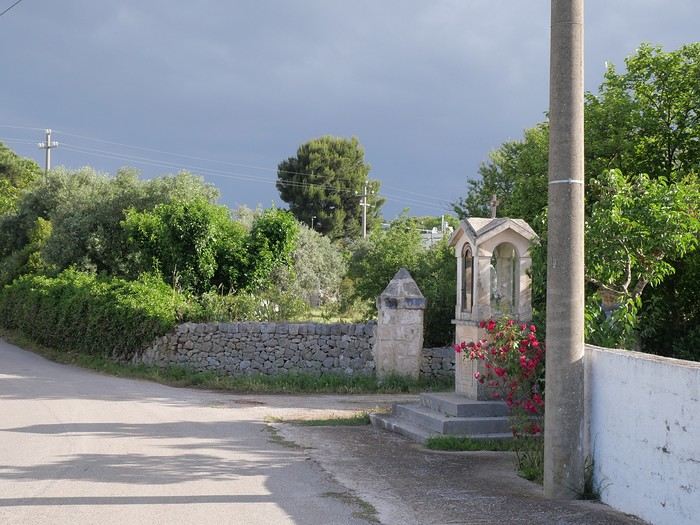
And the next morning before breakfast, its immediate surroundings:


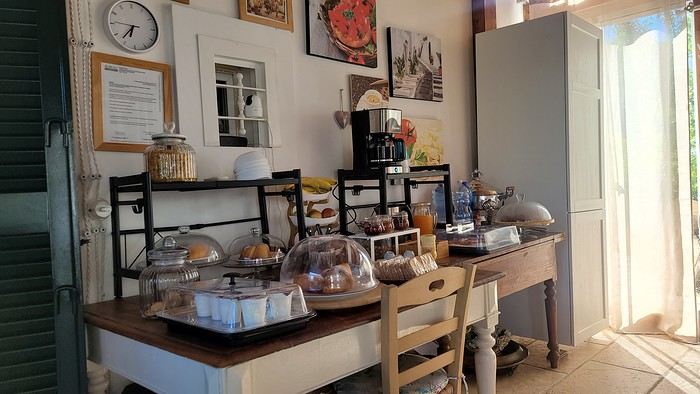
Sunday, May 17: After our "seaside" experience in Gran Canaria last weekend (packed with people and locals), we decide to start with the inland areas. After a hearty breakfast,


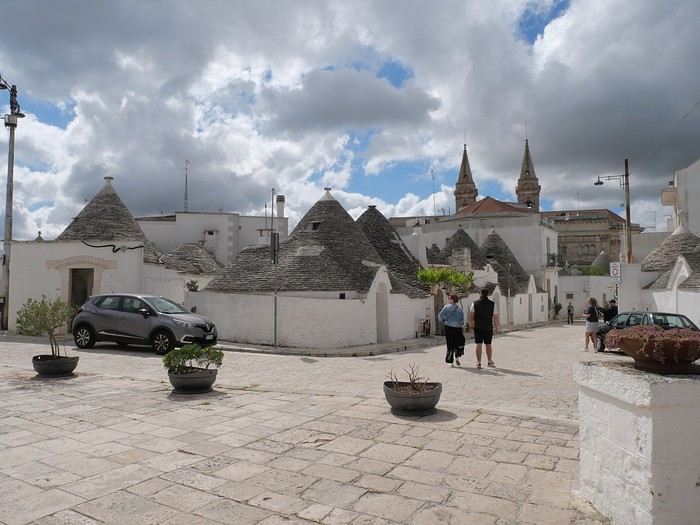
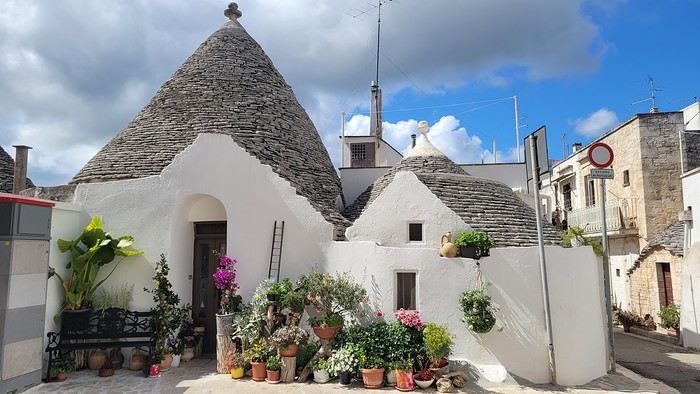
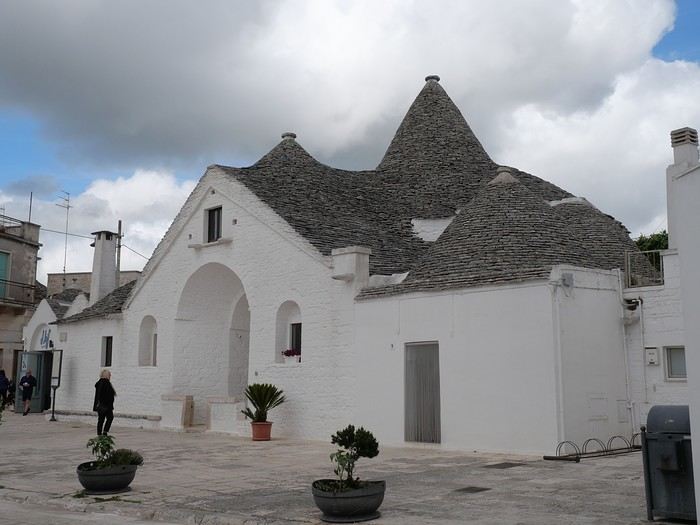
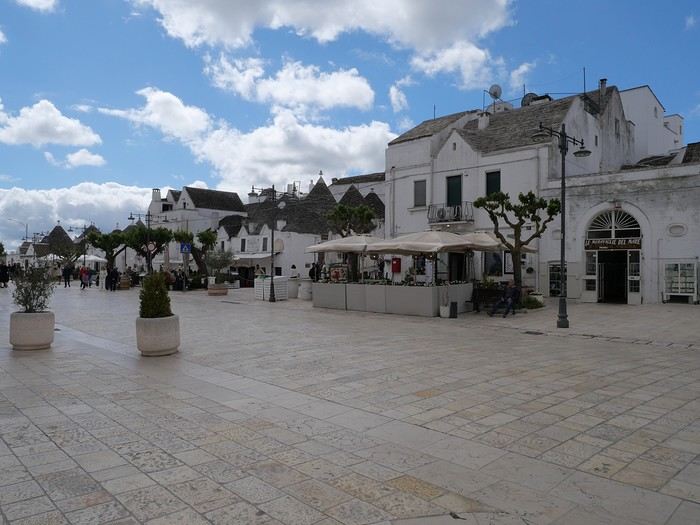
we head toward Alberobello, a super touristy village famous for its trulli—those stone houses with conical roofs. We easily find free parking on a street near the Aia Piccola district, where some trulli are still lived in year-round.


We almost immediately come across the Trullo Sovrano (the only two-story one), which you can visit (but we skip it—it’s opening time, and there’s already a line).


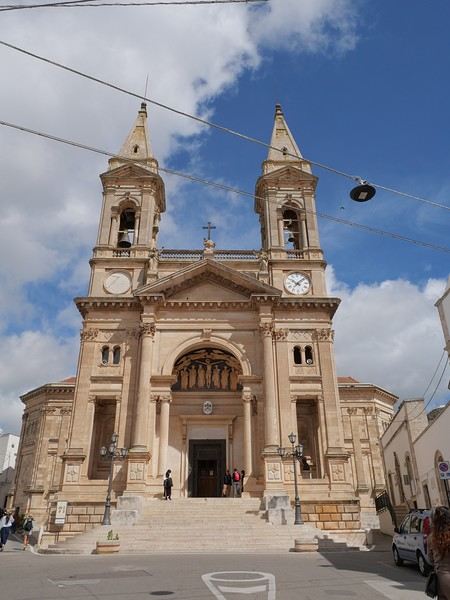
From there, we head down toward the Basilica of Cosma e Damiano... but we don’t go in because there’s a mass.


Now we’re on the main Piazza del Popolo, which connects the two districts of Alberobello: Rione Aia Piccola and Rione Monti, the more touristy one.
Open
In MIKUMI and SELOUS, Southern Tanzania (June 2024)
PU by Puma2A 16 hours ago · Othon
A trip to Mikumi and Selous in southern Tanzania in June 2024—our 7th visit to the country and 5th to the south. Hoping for great wildlife encounters just after the lodges reopen!
Open
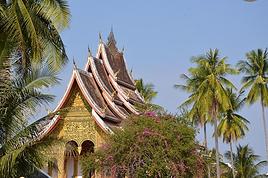
3 weeks in Laos, stress-free
FA by Fabhyène 16 hours ago · Calaf
This trip was in 2023, but when I wanted to write my travel journal, VF was still closed to contributions. I ended up using another well-known site, but I don’t like its layout as much. Now that I’ve just finished my Japan travel journal and need to prepare the one for Oman (where we went at the beginning of 2026), I thought I’d squeeze in my Laos travel journal—a destination we absolutely loved.

Disclaimer 1: This is a written travel journal. There’ll be text! Too much, for some! Disclaimer 2: This is an illustrated travel journal. There’ll be photos! Too many, for some!

I have to say, every time I try to discipline myself, to keep it shorter, to use fewer photos... I end up adding more. It feels like my dear Aunt Nicole, who exhausted us with her slide-show evenings in the 70s/80s, decided to get her revenge. The upside for you, readers, is that you can sneak away anytime without offending Aunt Nicole. I won’t even notice!

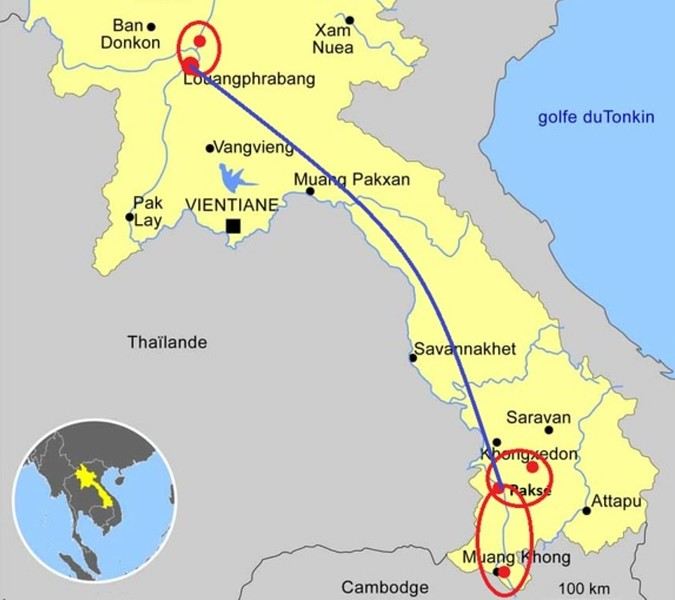
Anyway, since I like maps, here’s one to give you an idea of where I’m taking you. As you can see, we only saw a tiny part of Laos (the areas circled in red). We only had 3 weeks for ourselves (my husband is newly retired, while I still work), and we prefer taking our time over rushing around like crazy.


In broad strokes, it was very classic:

We first settled in Luang Prabang (8 days) because we wanted and needed to. From there, we took three days to venture a little further north—not far in kilometers, but as we all know, distances aren’t just about km! Then we flew south to Paksé, letting ourselves drift down to the 4000 Islands while stopping at the pre-Angkorian archaeological sites. We finished with the Bolaven Plateau.

A few practical details: We arrived via Bangkok, then took a Bangkok-Luang Prabang flight, having collected our luggage in Bangkok to check it in again for Luang Prabang. No issues—the Bangkok airport, which many of you know, is very well organized. We got our visas on arrival in Luang Prabang. It was quick, but we were on a small plane, and the big flights had arrived earlier, so we weren’t too many in line! At the end of our trip, we didn’t leave from Paksé but from the nearby Thai airport, Ubon Ratchathani (a 2.5-hour drive from Paksé), to Bangkok and then Paris. You’ll notice we skipped Vientiane to stay longer in Luang Prabang. That said, there’s now a high-speed train (TGV) between Vientiane and Luang Prabang—good to know—and soon the Chinese-built train will go all the way to Bangkok and even Kuala Lumpur!

With that introduction out of the way, let’s dive into the heart of the matter. To be continued: Slowing down the pace... in Luang Prabang
Open
From Avignon to Casamance Without Flying
OL by Olive842 2 days ago · Olive842
Hi there,

Last February, I made a trip using "public transport" from France to southern Senegal via Spain, Morocco, Western Sahara, and Mauritania.

It’s a journey of about 5,000 km, where I took trains (as far as Marrakech), ferries (to cross Gibraltar and then to reach Casamance from Dakar), and mostly buses on the long desert straightaways. I hadn’t planned any stops in advance or booked any hotels, except for the very first train to Spain, which left plenty of room for the unexpected. Why travel by land and sea? In recent years, flight-free travel has been gaining popularity. On social media, posts explaining how to cross Europe by train as quickly as possible go viral. Traveling without flying—and making sure people know about it—has become a great way to earn a badge of eco-responsibility: an essential totem for anyone wanting to prove both their dedication to the ecological cause and the wisdom of slow travel. I haven’t flown in years, and this journey to West Africa could easily be filed under "responsible travel." But it wouldn’t be honest to say that: in reality, it wasn’t really my aversion to flying that motivated this long trek. I see overland travel primarily as a way to experience the world’s geography at a grounded, earthly pace—the pace of the locals. Besides, I’ll be flying back, which disqualifies any claim to being a model of sustainability. So no eco-badge, and no adventurer’s badge either: you won’t find any heroic tales of camel rides in lost lands or mineral train wagons in this account (popular with influencers, the Mauritania iron ore train now attracts tourists from all over the world, turning "the experience" into something you "have to do at least once in your life"). This five-part story, written on the road, has no other ambition than to recount a journey through places and people, and to share the thoughts they inspire in me. As simply and, I hope, as humbly as possible.

I’m posting the episodes here, which you can also find on my blog (with more photos) at the following links:

Episode 1: Spain, from Avignon to Algeciras

Episode 2: Morocco, from Tangier to Tarfaya

Episode 3: Western Sahara, from Tarfaya to Guerguerat

Episode 4: Mauritania, from Guerguerat to Nouakchott

Episode 5: Senegal, from Rosso to Saloulou

To help those who might want to make the same trip, I’ve also put together a summary of the route with recommendations—you can read it at the end of the story and on the blog: From France to Senegal Without Flying: Route and Itinerary Recommendations

Happy reading, and safe travels!
Open
Trek de 9 jours dans les Balkans
EL by Elis 2 days ago · Djalma
Bonjour, Voici un retour sur un trek dans les Balkans traversant trois pays : Albanie, Monténégro et Kosovo. J'étais avec une amie et nous n'avons pas fait le trajet en entier (1 seul jour au Kosovo). Ce fut un merveilleux trek à travers montagnes encore enneigées et vastes prairies fleuries, au contact de gens hyper accueillants. À la fin du carnet, je mettrai ce que j'ai apprécié, moins apprécié .

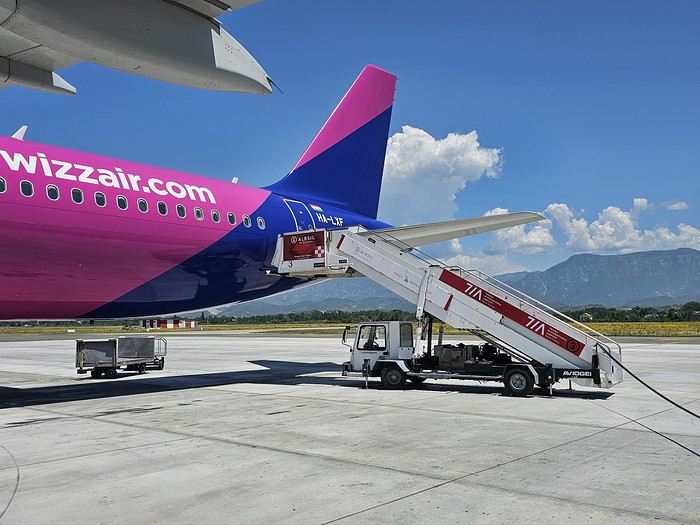
Jour 1 : envol depuis Paris-Beauvais vers Tirana avec Wizzair. L'Albanie ne faisant pas partie de l'Europe concernant la téléphonie en tout cas :-) , nous avons été obligées d'acheter une carte SIM physique (sinon facture faramineuse si vous utilisez votre forfait français!) chez l'opérateur Vodafone AL à l'aéroport. Il est possible d'acheter sur internet avant de partir des forfaits avec une SIM virtuelle (e-sim) pour les téléphones compatibles sans avoir à changer de carte sur le téléphone. Mais devant l'incertitude sur le choix d'un forfait en ligne, nous avons préféré acheter une carte directement à l'aéroport de Tirana. Coût 31 euros pour 100 Go. C'est beaucoup trop 100 Go. Pour 40 Go, c'est 27 euros. Et la durée du forfait est de 21 jours. Bon il n'y a pas beaucoup d'euros de différence. Et c'était moins cher que sur internet. Ce forfait couvre bien tous les pays traversés par la chaîne des Balkans. Conseil pour l'argent : toutes les guesthouses et logements acceptent les euros. La monnaie locale en Albanie est le LEK. Au Monténégro, c'est l'EURO. Les frais de banque suite au retrait d'argent dans un distributeur en Albanie est assez élevé : 8 euros pour un retrait de 600-700 LEK (200 euros) ! Donc il vaut mieux retirer de l'argent liquide (euros) en France. Ah oui, nous avions réservé tous les logements avant de partir. Mais le paiement se fait toujours en espèces. Prévoir environ 400-500 euros pour 9 jours de trek.

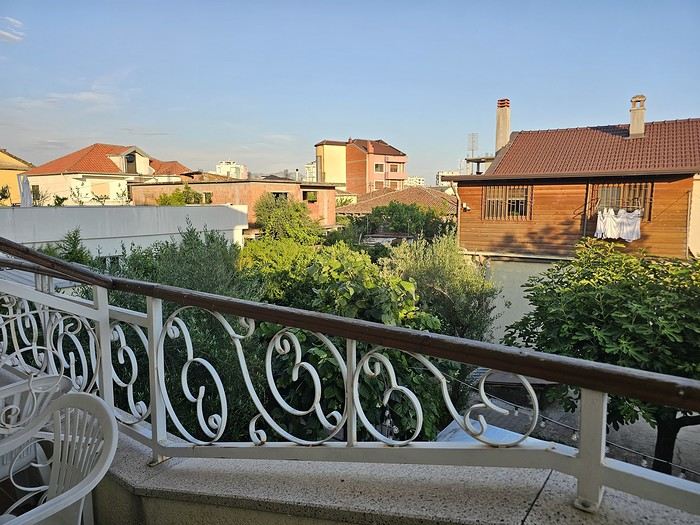
Puis transfert le même jour vers Shköder, 2 heures environ de bus. Coût 10 euros par personne. Billet acheté directement dans le bus. Nuit à Shköder dans une guesthouse très propre. Petit balcon donnant sur la ville. Shköder est une ville que j'ai appréciée, notamment sa rue piétonne bordée de nombreux restaurants et illuminée la nuit. Il est très agréable de s'y promener et d'y manger. La nourriture n'est pas chère. 2 belles salades + 2 bières : 14 euros :-) . Le prix des fruits également est très abordable : 3 euros le kilo de cerises contre 9-10 euros en France. Les religions dans ces pays cohabitent très bien. Catholiques, musulmans. De notre balcon, mon amie a entendu pour la première fois "l'appel à la prière" lancé depuis une des mosquées de la ville.

À suivre...
Open
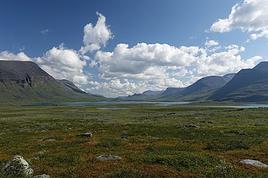
Back to Swedish Lapland: Trek on the Kungsleden and Crossing Sarek
CA by Calisson94 3 days ago · Calisson94
After summer 2022 left me with a sense of unfinished business, here I am back in Swedish Lapland in summer 2024, ready to attempt the Sarek crossing again—and this time, trek part of the Kungsleden too.

After much hesitation, my companion Jean Marie and I decided to start with the Kungsleden, which, from what we’ve read, is stunning but very crowded (and it really is!!), and finish with the wilder option: SAREK! This park is called Europe’s last wild space—I think it’s incredibly inspiring!! The downside of this choice is that since there’s no way to resupply in Sarek and the Kungsleden isn’t really set up for long treks, we’ll have to carry a lot of food for the first part with Sarek in mind. Oh well, we’re motivated!

Our plan is to start in Abisko (classic), head to Vakkotavare (also classic, but with some variations to avoid the official route and the crowds), then continue the Kungsleden from Saltoluokta. Before Aktse, we’ll set off on an east-to-west crossing of Sarek (weather-dependent, since aside from the Skarja hut in the center of the park, there’s no shelter if conditions turn bad). At least we’ll be on the right side of the park to climb Skierfe and enjoy the jaw-dropping view of Rappaladen if we have to abandon the Sarek crossing.

That adds up to 17 days of trekking, including 1 rest day + 1 buffer day for weather delays.

So if you’re interested, I invite you to follow our overstuffed backpacks!

03/08 - Abisko – 5km before Abiskojaure Some info (guides we used for prep, SFT map, sending food to Saltoluokta) 04/08 – 5km before Abiskojaure - on the east shore of Lake Alisjavri 05/08 – East shore of Lake Alisjavri – just before Tjaktja 06/08 – Just before Tjaktja – above the Salka hut via Nallo
Open
All Over Thailand
JO by Jojoone1 3 days ago · Jojoone1
You can post your personal photos in the following thread: https://voyageforum.com/forum/quelque-part-en-thailande-d10655574/

This travel journal is therefore intended solely for my photos, to present a consistent style. All the shots were taken with a simple Samsung Galaxy smartphone and with whatever was at hand.

All stays combined, I’ve spent the equivalent of a year at most in Thailand, and I’m no great expert. However, after many trips, lots of reading on VoyageForum and other sites, and conversations with many locals as well as expats, my view of the country is becoming clearer, though it’s constantly evolving. You never stop discovering and learning.

I guess I wanted to deliver a puzzle, mainly for those who want to get an idea of the country here and for those who feel nostalgic about it. I don’t know if this minimalist sharing will interest anyone, but it’ll do me good to put it together. After so many months without traveling and then these other long months with VF closed, there’s plenty of material available.

There’ll be a mix of places, periods, and subjects, but it might well be intentional.


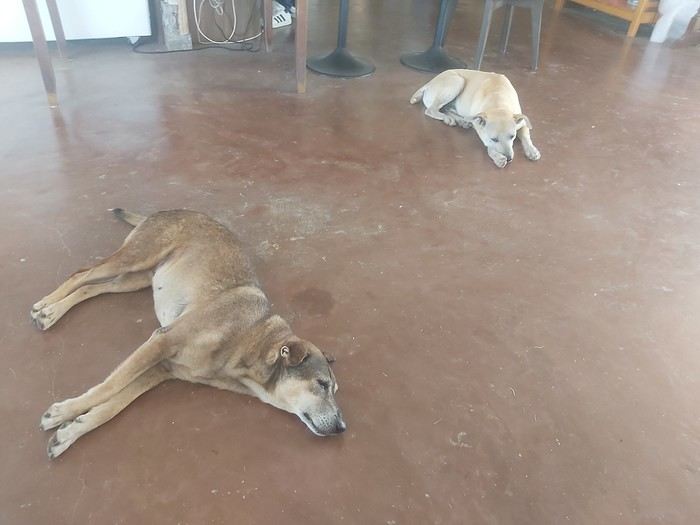
I suspect many Thais have dogs because they make excellent guardians for the home. Nothing better to deter burglars or to signal the presence of a snake. You’ll often see Thais tapping the top of their dog’s head, but don’t be fooled: it’s a sign of affection from them. Judging by the dogs’ reactions, they’re used to it.

Thailand is one of the countries on the planet where rabies is still present, so keep that in mind. It’s not just bites that can be dangerous, so don’t let just any dog lick you. Especially on a wound, of course. Even though dogs often fear humans—this dangerous and unpredictable predator—we still need to stay cautious. Be careful when walking into alleys because the dog will defend its master’s big yard. Be careful at night, and be careful when they’re in packs. It sometimes crosses our minds that Thailand isn’t all that made for walking around, and dogs are one of the reasons. That said, it’s not uncommon to see them chasing bikes or scooters. Cars, though? Much rarer—they’re too big.

It seems Thais prefer to give their dogs freedom by not locking them behind gates. Though sometimes the gate is closed, the little side door is wide open. Oh, and sometimes there’s no gate in front of the property, or it’s been full of holes for years.

You’ll often see dogs sleeping on the roadside, sometimes right on the road. When you approach, they move aside nonchalantly—or not at all. It’s less funny when they suddenly appear from thick vegetation, reminding visitors not to drive too fast. As a result, you’ll notice that dogs with injuries or missing legs aren’t that rare.

Since they believe in reincarnation and respect for all forms of life, they don’t chase dog packs away too much, and they don’t sterilize them enough. When you see a small pack roaming freely in the countryside, you think twice about running into them at the edge of a field. A darker side of this is that euthanasia isn’t often practiced. Twice, we saw dogs at death’s door in temples, enduring terrible suffering with no one to help. The image (and the smell) of one of them, agonizing and exuding the stench of death, still comes back to me sometimes.

Some of you may have seen the YouTube vlog of a French woman living in Phuket who was given a little pig by her Thai friends. The animal, well-fed, quickly became a happy and enormous beast with its own garden. Yet it didn’t take long for it to fall seriously ill and become incurable. In her video, the French woman described how difficult it was to find a vet willing to perform euthanasia.

You’ll often see bowls by the side of the road. Thais leave food and water there for stray cats and dogs. Overall, they have a big heart for animals.

If you ever pop into a shopping mall, you might see people pushing their small dogs in strollers. It’s not just for fun—these strollers are provided for customers to put their pets in, otherwise you can’t bring them inside. It looks a bit odd when you expect to see a baby.
Open
Retour sur notre voyage en famille de Denver à Yellowstone
6C by 6cha38 3 days ago · Xialin
Bonjour,

Je me lance dans un CR de notre boucle, somme toute assez classique, Denver-Yellowstone-Denver cet été du 24 juillet au 17 août. Vu la multitude de CR déjà existant ou en cours d’écriture, et n’ayant ni la qualité d'écriture ni celle des photos de beaucoup d’entre vous, je me contenterai, enfin surtout j'essaierai, d'être pragmatique pour vous faire partager notre ressenti notamment sur certains parcs ou lieu un peu moins visités.

Je tiens tout d'abord à remercier tous ceux qui, par leurs CR, blogs, sites, commentaires ou autres, nous ont permis de bâtir au mieux ce programme, qui, avec le recul, aurait encore pu être optimisé : une déception pour plusieurs belles découvertes, mais parfois survolées faute de temps. De quoi revenir dans le secteur !

Nous voyageons avec nos 4 ados (ou presque) de 18, 16, 14 et quasiment 12 ans. Ce qui nécessite, afin que le voyage soit agréable pour tous, non seulement certains compromis de part et d’autre (raccourcir une visite pour profiter plus longuement d’une baignade, se lever aux aurores...) mais aussi de bien prendre en compte certains aspects logistiques qui pourraient vite devenir chronophages sans un minimum d’organisation (lessives, courses, rangement des bagages…). Parce que mine de rien, je crois qu’on a du « visiter » tous les Walmart implantés sur notre parcours !!! La faute à une absence de frigo dans certains logements et surtout à une place très très limitée dans la voiture ne permettant pas d’avoir une glacière digne de ce nom. Je reviendrai par ailleurs sur l’épisode voiture.

Pour les logements, nous avons cette année alterné cabines basiques dans des KOA et Yellowstone (quand plus d’1 nuit au même endroit) et hôtels. Toujours avec piscine (sauf Yellowstone bien sûr), ce qui permet aux enfants de se défouler (parce qu’ils ont toujours de la réserve même après des journées bien chargées!) et nous, il faut bien l’avouer, de nous détendre. Pas de souci de Wifi, nous avons tous un forfait avec 25 GO d'internet (un grand merci à Gilles pour le super plan à 0,99 €). Cela a très bien fonctionné, même les SMS et appels de portable à portable (aucun coût supplémentaire).

J’en viens à notre circuit : comme je le disais, boucle classique Denver-Yellowstone-Denver. Pour ne pas trop survoler les parcs et ne pas passer notre temps à courir, nous avons privilégié de loger au plus près de ceux-ci en restant au moins 2 nuits au même endroit. Et je dois dire que c’est très appréciable de se poser, même si ce n’est que pour 2 nuits. Cela permet aussi de composer avec la météo, pas toujours au top lors de ce voyage. La contre-partie, la durée des vacances n’étant malheureusement pas extensible, est que certaines étapes ont parfois été longues : on le savait, mais le fait d’être dans un rythme cool, sans contrainte horaire (ne pas me demander de timing, je ne me soucie pas de l’heure en vacances sauf le matin pour lever toute la troupe si je ne veux pas que le départ soit à midi…), nous a parfois fait faire des journées à rallonge.

Ceci étant posé, j’attaque le voyage en lui-même dans le prochain post.
Open
Off on a winter adventure in the American West!
BI by Bibouns51 3 days ago · Bibouns51
We’re off on a winter adventure in the American West! A gamble, but with our van Kara and the motto "Follow the sun!"—bad weather? We bolt. Sunny? We soak it up.
Open
Draw Me Your Japan...
FA by Fabhyène 4 days ago · Fabhyène
Hi there!

This trip to Japan, lasting 3 weeks, is starting to feel like a while ago now... 18 months (October/November 2024). I’ve wanted to share the story for a while, but I just couldn’t find the words. Too many emotions, I guess—it needed time to settle.

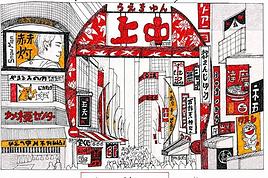
And then I felt like everything had already been said, everything had already been shown. Until I decided to simply base this on my travel journal, created after my return (drawings, collages, based on personal photos), and share excerpts with you in no particular order.

So this will be completely subjective, absolutely non-exhaustive, and totally personal!

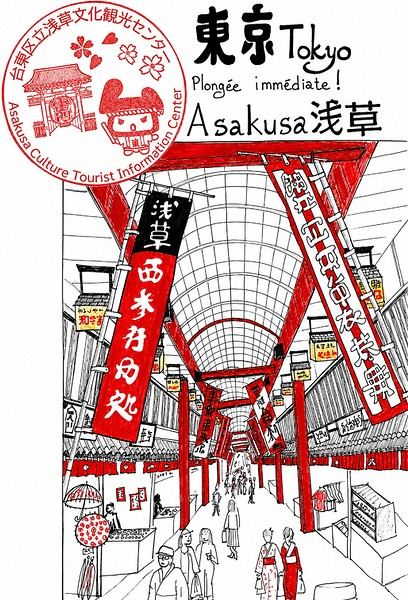
Let’s start with the *shotengaï*...


Our first "wow" moment came as we stepped out of the subway in Asakusa, the Tokyo neighborhood where our hotel was for our first 5 nights. Exhausted after our long flight, we finally arrived at our destination and took an exit that led us straight into a *shotengai*—one of those covered shopping streets that dot city centers and flourished between the 1950s and 1980s.

It was an aesthetic shock, a kind of third-kind encounter between the modern city, a typical Asian market with its street stalls, the "vintage" vibe of the arcade, the abundance of goods, the bustling crowd—a colorful mix of tourists, pilgrims (near Asakusa Temple), and locals (a very working-class area).

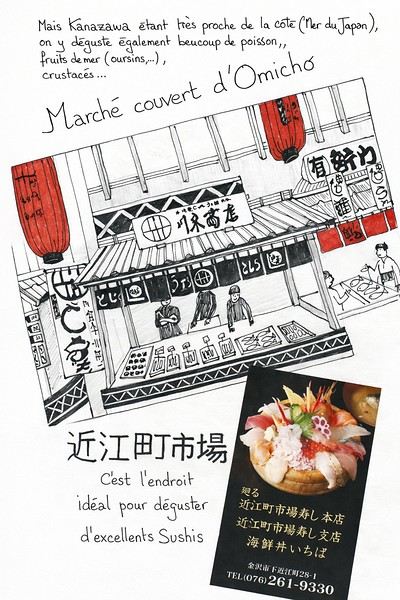
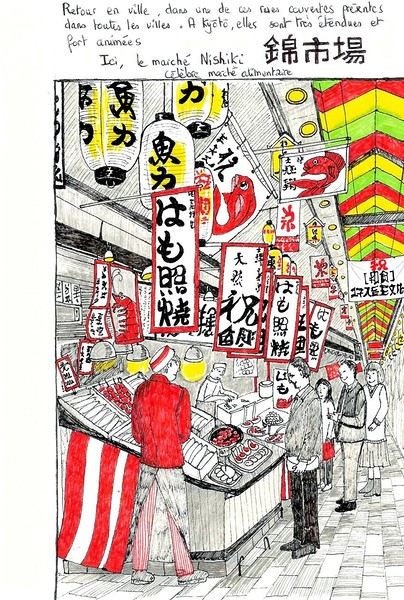
In the end, it set the tone for a feeling that stayed with us throughout the trip. Wherever we went, *shotengaï* were fascinating places to find small restaurants, shops, or even fresh produce. Some were real mazes, like in Kyoto, where we took a while to find a restaurant we’d really loved ;-)

In Kanazawa, the Omicho Market: And in Kyoto, the Nishiki Market:

To be continued...
Open
South Africa in safari mode: February/March 2026
HO by Holigirl 4 days ago · Michel85200
Hi everyone,

With my girlfriend Christelle, we’ve chosen South Africa for our first trip to Southern Africa, focusing on safaris—after a long debate with a Cape Town/Kruger combo. But that would’ve meant cutting out St Lucia, which would’ve been harder to fit into another trip. And St Lucia—thanks to Michel and all those travel journals—we really wanted to go there.

So our 11-night itinerary ended up like this, mostly shaped by school holidays: - 3 nights in St Lucia - 1 night in Hluhluwe - 1 night at Mkhaya Game Reserve (Eswatini) - 1 night at Hlane Royal National Park (Eswatini) - 3 nights in Kruger (Berg en Dal / Satara / Tamboti) - 1 night at Shindzela Tented Camp in the Timbavati private reserve - 1 final night in Kruger at Lower Sabie

All of this in the off-season and rainy season, just a month after catastrophic floods that killed over 150 people and seriously damaged Kruger’s infrastructure.

I’ll jump straight to St Lucia and skip the loooong journey to get there (with a layover in Frankfurt, landing in Johannesburg, a domestic flight to Durban, and the rest by rental SUV—First Car Rental, perfect, no complaints).

To motivate readers—especially some familiar faces here—I’ll drop in a first photo.

Open
From the Awakening to Travel to Morocco in the 90s
JO by Jojoone1 5 days ago · Jojoone1
As I’ve mentioned elsewhere, I inherited my love of travel from my parents and grandparents—a strong passion, but one limited by our modest resources. A simple trip to southern Alsace felt like an extraordinary journey to a land of plenty for the little boy I was in the late 60s and early 70s.
Open
Back in Tunisia (live account)
SI by Sinforosa 7 days ago · Sinforosa
Hi there,

On this forum, I shared my first trip to Tunisia from mid-February to early March (https://voyageforum.com/forum/impressions-tunisiennes-en-direct-d11460662/), a stay I enjoyed so much that six weeks later, I’m back in Tunisia for a full 15 days (I return on April 27).

This time, I landed in Monastir on a direct flight from Nice, again with Tunisair. We left about ten minutes late, and the flight lasted around 1 hour 30 minutes. A meal was served on board (cucumber salad with Edam-like cheese, carrots, and two small portions of dishes I couldn’t identify—semolina with peppers, olives, and parsley, two small rolls, a square of processed cheese, and a chocolate cake). It’s worth noting because it’s not common on flights this short.

In February, France and Tunisia were in the same time zone, but now Tunisia is one hour behind. This time difference and the flight duration work perfectly for a short 15-day trip since it takes me a few days to adjust to jet lag.

Luckily, I’d asked my hotel about the taxi fare from the airport because the drivers (there were several around me) didn’t hesitate to quote outrageous prices. The actual fare is 20 dinars, but one asked for 120 dinars. I refused, and another offered 60 dinars. I replied, "That’s too expensive—I’ll take the metro!" (Having tried the Tunis metro, I had no desire to repeat the experience in Monastir with a suitcase!). I started walking toward the metro, and one of the drivers caught up with me, saying, "20 dinars is fine!" I’ll skip the details, but the negotiation took a little while. When I arrived at the hotel, I told the receptionist someone had asked for 120 dinars. He put his hands to his head and said, "They’re awful!" He remembered our phone call two days earlier when I’d booked (he’s the one who told me I could take the metro).

The Mezri Hotel isn’t expensive. I got a sea-view room for 75 dinars (22 €). (I’d booked a balcony room for 90 dinars but wouldn’t have had time to enjoy it.) It’s well-located but noisy because there’s no double glazing. The receptionist is a very kind older gentleman. He called a friend whose wife is from Tozeur to find out if I should take a bus or a *louage* tomorrow and what time.

I arrived at the hotel around 7:00 PM and had time to stroll along the corniche to the ribat. Despite some run-down buildings, the seaside seemed livelier and cheerier than Sousse’s.

Monastir is the hometown of former president Bourguiba. I passed his mausoleum by taxi. There are Tunisian flags along the avenue by the sea because every year on April 6—the anniversary of Habib Bourguiba’s death—the president of the Republic visits the Bourguiba Mausoleum in Monastir to pay respects.

The taxi driver mentioned other Tunisian presidents. He complained about rising prices and insecurity, blaming President Kaïs Saïed (I’d already heard that security was better under Ben Ali).

At the end of my stay, I’ll take time to explore Monastir, but tomorrow morning, I’m off to Tozeur—a long bus ride awaits me.


TO BE CONTINUED....
Open
Andalousie en famille et à 2 familles avec voiture, fin avril 2019
AM by Amnesix77 last week · Sandrita24
Bonjour à tous,

De retour d'une quinzaine de jours en Andalousie j'ai envie de partager cette expérience avec vous, peut être que ca pourra être utile dans la préparation d'un voyage. Je commence par un petit récap sur ce post et j'essaierai de continuer ensuite avec des photos et des détails sur les journées (j'ai encore du travail de tri pour les photos) ; j'espère que je ne serai pas trop ennuyeux 😎

Les conditions du voyage :

du 20 avril au 4 mai 2019 :

7 jours sur la côte de la Luz (el puerto de santa maria) en air bnb,

4 jours à la jonction entre la costa del sol et la costa tropical (Salobrena) en air bnb

3 jours au cabo de gata pour le repos en camping à Los Escullos

Deux familles de 4, chacune avec sa voiture perso : 3 garçons de 9 ans et une fille de 6 ans. Une famille plutôt ville et découverte (c'est pas nous mais on se soigne) et une famille plutôt farniente / nature (ca c'est nous). On parle un peu espagnol.

Plus de 5 000 km, dont 2 500 pour le trajet aller retour depuis Carcassonne.

Le temps : variable mais on s'attendait à mieux dans cette région toute fin avril : on a eu un parfois froid la première semaine sur la côte de la Luz (< 20 °C) et ensuite il a fait plus chaud sans excès la deuxième semaine (<25°C). Au moins on n'a pas eu trop de pluie

Notre budget : environ 2600 € par famille :

700 € pour les nuitées, soit 50 € par nuit,

1000 € pour les repas / restau. Au restau on s'en sortait généralement pour 50 € / famille, on mangeait au resto le midi (sauf 2/3 pique nique) et à la maison le soir en essayant d'être de retour pour 18H00)

600 € pour les sorties : rio tinto, un spectacle de flamenco, les visites de l'alhambra, giralda et alcazar, les parc oasis avec repas, la sortie kayak

300 € pour l'essence et péage

préparation : quelques mois à l'avance avec les résa des nuitées et de l'alhmabra / giralda / Alcazar. Quelques guides de voyage (j'aime bien le guide « évasion » pour initier la prépa. Géoguide est bien sans plus mais c'est le routard de nos amis qui a le plus servi. Egalement 3 mois de préparation / révision à l'espagnol avec Mosalingua (méthode de répétition très bien faite, 10 minutes / jours max). Téléchargement de Maps me et de la carte d'Andalousie à l'avance, indispensable. Et enfin tricount pour faire le décompte des dépenses avec les amis, c'est très pratique.

Qu'avons nous fait / vu:

3 visites de villes (Séville, Grenade et Cadix) + Malaga pour les amis, (on, a mis le véto sur Cordoue, ca aurait fait trop de ville pour nous)

4 villages blancs (Vejer de la frontera, Arcos de la frontera, Grazamela, Ronda) + Tarifa pour les amis,

des plages (Tarifa et Bolonia, matalascanas, Nerja, el Cabo de gata)

des petits moments nature et divertissement : le parc de la donana, une sortie kayak le long de la côte rocheuse près de Nerja et le parc Far west / animalier dans le désert de Tabernas.

un peu de culture : les mines de rio tintos, le site archéologique d'Italica, les caravelles de Christophe Colomb, la grotte de Nerja pour nous et le musée Picasso à Malaga pour les amis, le séchage du jambon dans les Alpujarras pour les amis.

Nos coups de cœur

Nerja et les quelques villages autour : la côte rocheuse est vraiment sympa on a adoré la sortie en Kayak même si pour le snorkeling l'eau était bien froide. Les plages sont abritées du vent, le village est agréable et bien sûr la grotte est exceptionnelle.

El Rocio et le parc de la Donana. Ambiance hors du temps un peu western à El Rocio, on y serait bien resté un jour ou deux ; le calme et les odeurs de pin nous ramènent dans les landes

Ce qui nous a moyennement plu :

les mines de rio tinto : pas passionnant ni extraordinaire d'autant que le flots de paroles ininterrompus des guides espagnols gachent un peu ce moment de « nature ».

Nos petits regrets (qu'on note pour une prochaine fois) :

avoir oublié nos passeports et n'avoir pas pu aller passer une journée à Tanger depuis Tarifa,

avoir manqué d'une journée autour de Nerja pour aller passer une journée de Snowboard dans la sierra Nevada à à peine 1H30 de route (que nous a proposé l'excursionniste de kayak)

ne pas avoir passé au moins une nuit à El rocio pour aller explorer le parc de la Donana au petit matin

Antequerra avec l'embalse du guadalhorce et le caminito del rey (mais il fallait refaire 2h00 de route et on n'avait pas le courage)

Mes impressions générales et personnelles à chaud sur l'Andalousie et l'Espagne

sur les paysages : un sentiment de concentration un peu extrême parfois d'une mono activité sur un territoire : champs d'olivier à perte de vue sur le trajet, les fermes éoliennes de la côte de la Luz (que j'ai trouvé bien intégrées), les lignes d'immeubles le long de la costa del sol (burk, heureusement qu'on ne s'y est pas arrêté), les champs de serres autour d'Alméria (dommage d'avoir gelé la côte sur autant de km), le port industriel de Huelvas tellement étendu, ...

D'ailleurs en traversant le pays ce qui nous a étonné par rapport à la France c'est la relative absence de hameaux, les villages sont bien délimités et la population s'y concentre laissant de vastes paysages sans présence humaine, alors qu'en France on trouve des habitations un peu partout.

Enfin sur les routes : relativement peu de péages, alors certes les aires de repos sont moins bien aménagées que chez nous mais les routes sont en bon état et notre porte feuille était plutôt content. D'ailleurs les routes sont plutôt rectilignes avec un nombre incalculable de ponts et tunnels : l'avantage (outre le fait qu'on se déplace rapidement) c'est qu'il y a relativement peu de routes secondaires qui viennent impacter le paysage.

pour le tourisme et les activités : une très grande variété et richesse. Le sentiment que chacun trouvera des choses à faire selon ses goûts et qu'en 15 jours on est loin d'avoir épuisé nos envies. Et c'est incroyable comment dans une région on passe vite de la côte aux sommets enneigés (la sierra Nevada), des cultures au désert (le Tabernas). Et bien sûr le mélange des cultures européennes et arabe dans l'architecture dans une même ville est très agréable.

Petit regret c'est d'avoir relativement peu échangé avec les locaux, on est mal tombé pour ca sur nos air bnb dommage. On était bien reçu par les différents commerçants par contre, très compréhensifs sur mon espagnol approximatif:-) .

Au final je pense que notre choix de nous poser sur la côte de luz et ensuite près de Nerja étaient bons : on a pu rayonner pas trop mal (même si on a fait de km bien sûr) et on était dans des environnement vraiment sympa. Et les 3 jours de repos total ensuite au cabo de gata ont été les bienvenus.

Si vous préférez ou pouvez faire des pauses moins longues vous pouvez essayez de dormir sur El Roccio (facile pour aller à Séville et permet la visite matinale du parc de la donana) et pourquoi pas aussi à Grazamela pour faire une rando dans la sierra (mais à improviser car dépend de la météo)... Et bien sûr Tarifa pour un aller retour Tanger et journée à Gibraltar.

a bientôt pour des détails sur les différentes journées et quelques photos

Laurent
Open
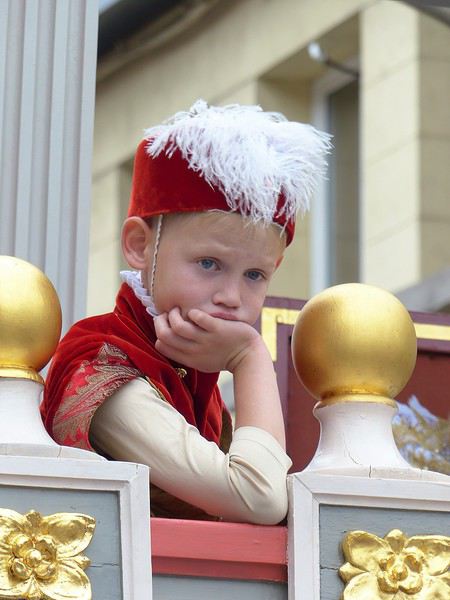
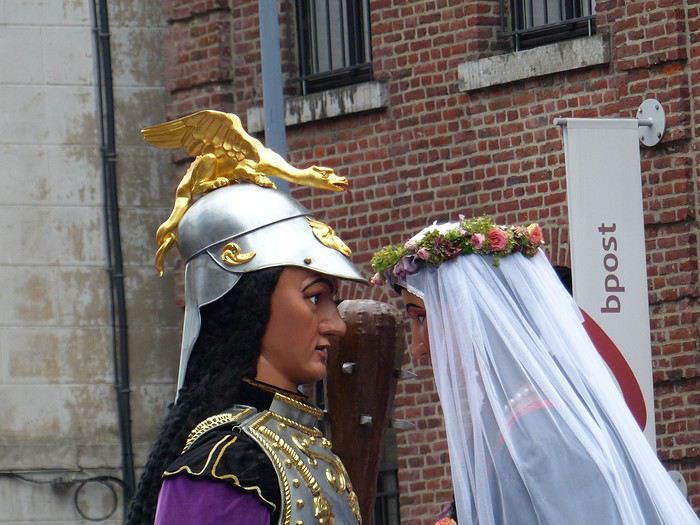
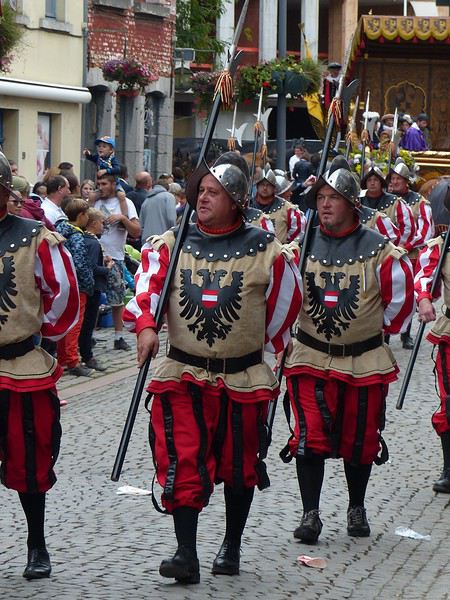
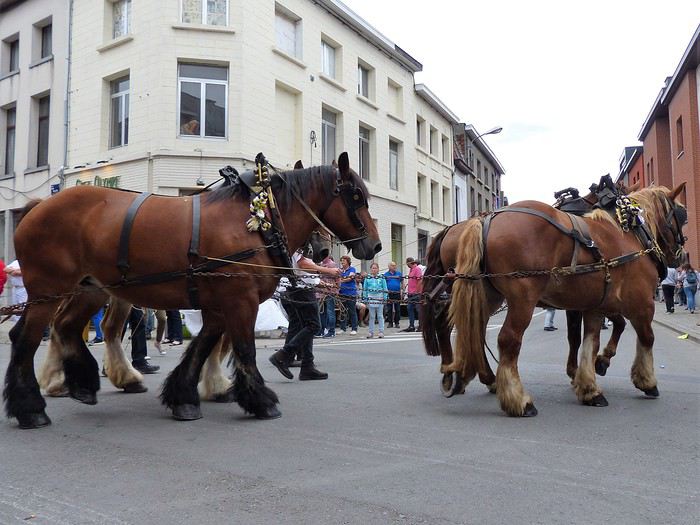
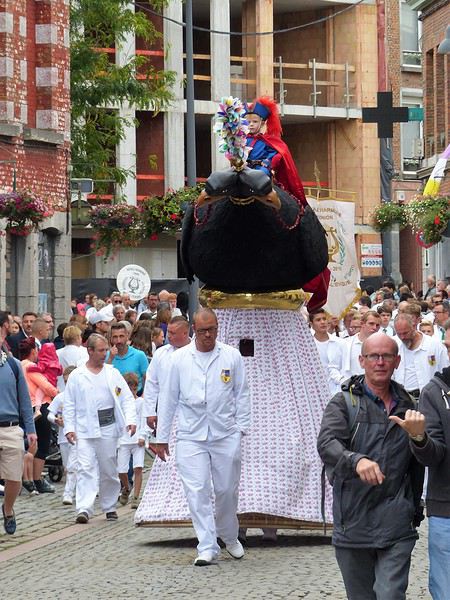
Elle voit des géants partout! (Ducasse d’Ath, Belgique, août 2018)
FA by Fabhyène 2 weeks ago · Sinforosa
La fantaisie et le dépaysement sont quelquefois tout près de chez vous ! J’aime aller aux quatre coins de la planète, mais il peut y avoir aussi tout un monde à peine plus loin que le coin de votre rue… et même le bout de votre nez ! Je vais donc vous raconter en image la belle kermesse d’Ath, que nous avons découverte seulement en août dernier, alors que nous sommes voisins (nous habitons Lille)

J'aurais pu sous-titrer ce carnet: "Ferme eut’bouc tin nez va quer eud’dans"; c'est une expression en langue picarde, littéralement « Ferme ta bouche ton nez va tomber dedans », qui se dit à une personne ébahie, et ébahie je l'ai été!!! Ooooooooh, des géants ! Ah comme je les aime ! Dans le Nord nous avons beaucoup de ces géants, comme Reuze Papa et Reuze Maman à Cassel, ou encore Gayant, Marie et leurs enfants Binbin, Jacquot et Fillon à Douai, et bien d’autres encore.

Hein ? Quoi ? Chavez po quo qu’ch’est qu’in Géant deuch’Nord?

Et bien c’est un héros bienveillant, une figure légendaire, un protecteur, un symbole, qui est lié à une ville et qui la parcourt en marchant et en dansant au moment du carnaval ou de la fête locale… La tradition serait née au Portugal au 13ème siècle (en tout cas c’est là qu’on en a les premiers témoignages), puis on les rencontre dans les Pays bas à partir du 15ème siècle. Dans le Nord, les plus anciens sont Gayant et Marie de Douai (16ème siècle) mais on en a vu beaucoup de nouveaux apparaître depuis les années 80, avec le revival des carnavals… Bon en pratique c’est un grand personnage (ou figure animale) qui mesure plusieurs mètres; la structure est en osier, le corps est souvent en papier mâché mais la tête peut être en bois comme à Ath (bois de tilleul), et les vêtements et les accessoires sont de tissu, cuir et bois. La robe évasée (pour les géants mâles comme femelles) permet à un ou des porteurs de se glisser sous le géant pour le déplacer à la seule force des bras, épaules et jambes, et même lui faire faire des pas de danse ! Il y a plus de 1500 géants en Belgique et 450 dans les Hauts de France, très majoritairement dans les départements du Nord et du Pas de Calais.

A Ath des géants il y en a … PLEIN ! Je n’en ai jamais vu autant en même temps. Et chacun d'entre eux n'est porté que par un seul homme à la fois (à l’exception de Bayard, vous verrez plus loin pourquoi), alors que la structure pèse plus de 100 kilos… les porteurs se succèdent donc rapidement ! La Ducasse d’Ath et ses géants sont inscrits au patrimoine culturel immatériel de l’humanité depuis 2008, comme éléments des « Géants et dragons processionnels de Belgique et de France ». La ducasse d’Ath est de surcroît remarquable par son ancienneté, et son ancrage local ; il est fait mention d’une procession dès 1399, et aujourd’hui les nombreuses compagnies musicales sont encore locales (Ath et communes avoisinantes). Le rendez-vous est extrêmement populaire : une bonne partie de la population est là, toutes générations confondues… Tous connaissent les groupes, chars et géants, et chacun a son préféré ! A l’origine, ce sont des groupes religieux qui défilaient et illustraient des épisodes de la Bible ou de la Légende dorée. Puis progressivement le défilé s’est sécularisé et n’a cessé d’évoluer en intégrant de nouveaux géants, des personnages historiques ou des allégories, en lien avec l’histoire locale (Ath, Hainaut belge, Belgique).


Enfin, les très beaux chars sont tous tirés par de magnifiques chevaux de trait, et ça c’est extraordinaire ! Le conseil communal est lui-même embarqué dans de belles calèches qui closent le défilé.

Pour finir avec cette longue introduction, sachez que la Ducasse d’Ath dure plusieurs jours mais que le point culminant en est la procession extrêmement codifiée qui a lieu le 4ème dimanche d’Août (en fait la procession passe 2 fois, une le matin et une l’après-midi).

Alors, ch’est parti !

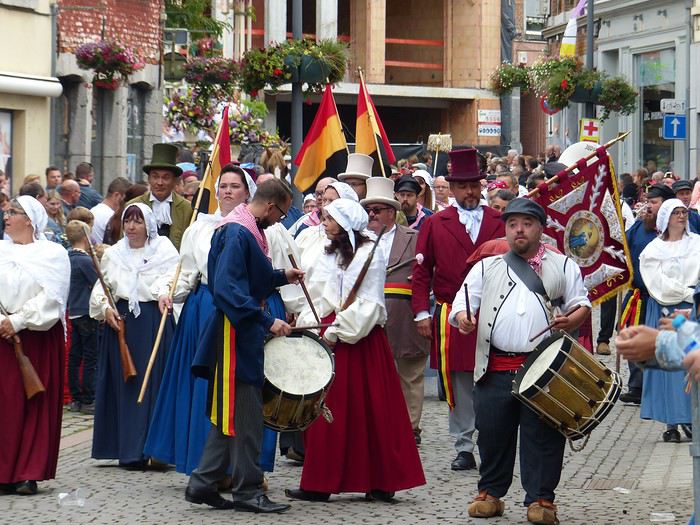
En ce dimanche 26 août, nous voici donc à Ath en début d’après-midi pour voir la procession. Quel engouement populaire ! Chacun arbore les couleurs de la ville (violet, jaune et blanc), souvent avec un collier de tissu torsadé. Tout le monde est content, souriant, depuis le bambin hilare jusqu’à la guillerette centenaire, qui boit sa bière avec le cousin aux joues rubicondes et la jolie nièce blondinette aux brins d’juda (aux tâches de rousseur). ça s’apostrophe, ça rigole, ça chantonne, ça se congratule dans tous les coins.

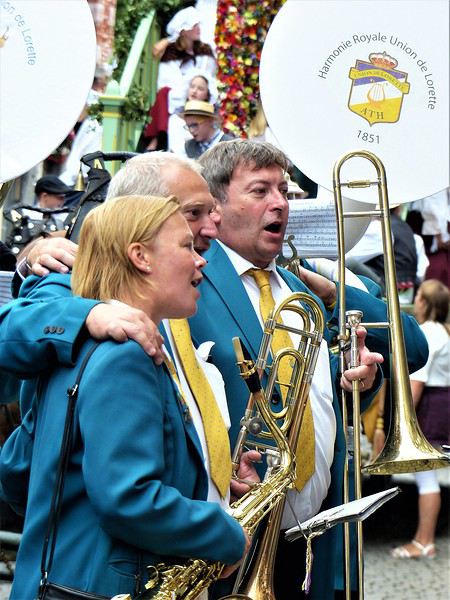
Les gens commencent à se positionner aux endroits stratégiques du parcours, à savoir des endroits élargis où les géants vont s’arrêter pour exécuter une danse, sous les flonflons des fanfares qui les accompagnent. Et des fanfares, y’en a, au moins une par géant et par char !

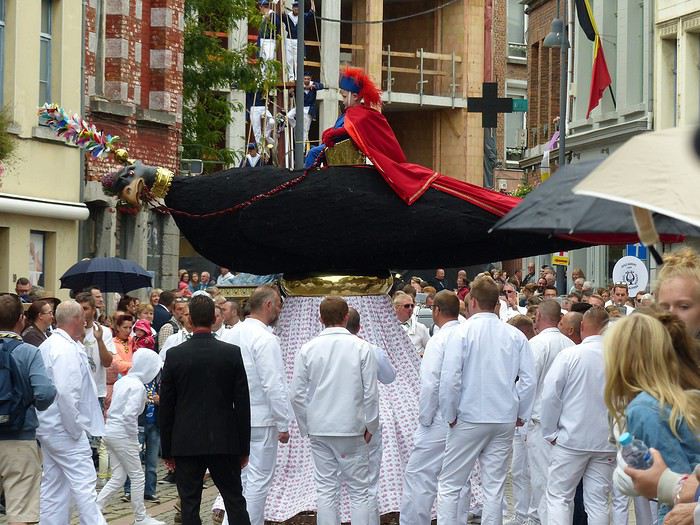
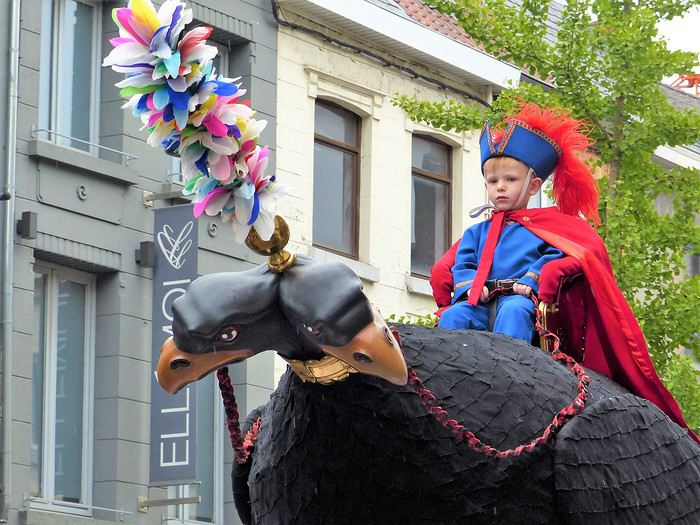
L’attente passe vite dans cette ambiance joyeuse. A un moment, la musique se fait plus forte, et voici qu’apparaît enfin le premier géant ! Il s’agit de « l’aigle à deux têtes », sur lequel un bambin (un vrai) est assis, bien sécurisé sur sa petite chaise.

Présent dans le cortège depuis la fin du 17ème siècle, il n’avait au départ qu’une tête (normal, quoi) et accompagnait la confrérie des tailleurs. Il gagna une deuxième tête lors de la visite royale de 1854 (allez savoir pourquoi !). Il est haut de 3 mètres 30, et il pèse 115 kilos (sans l’enfant). Tous les hommes que vous voyez en blanc sont des porteurs qui se relaient. Sa danse consiste à faire tourner sur lui-même l’oiseau… on se dit que ch’tiot là haut doit avoir la tête qui tourne !


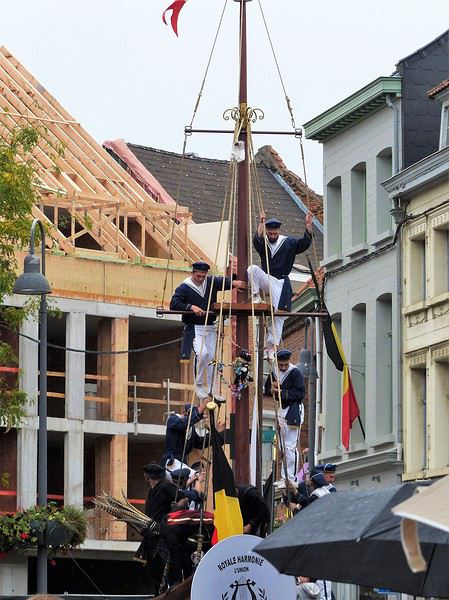
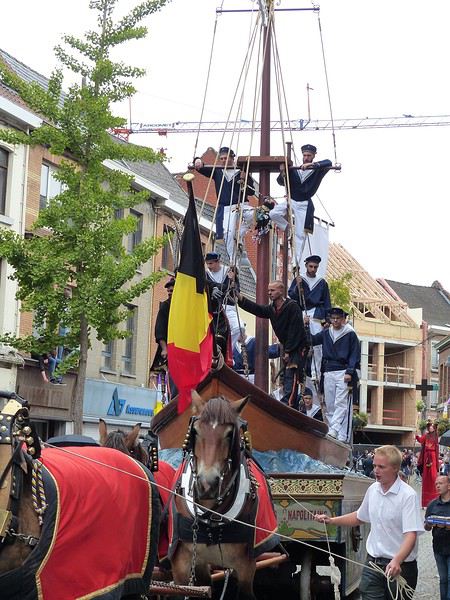
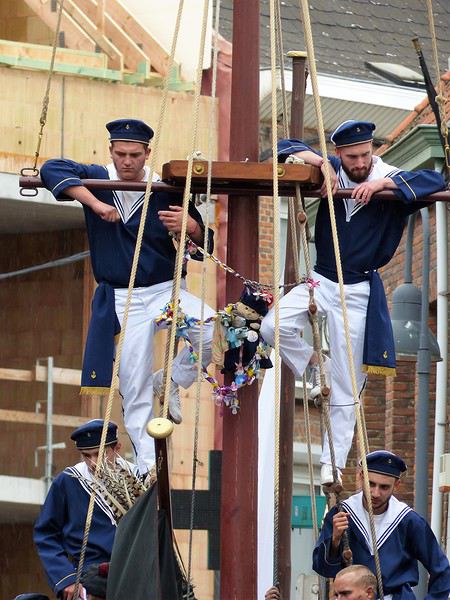
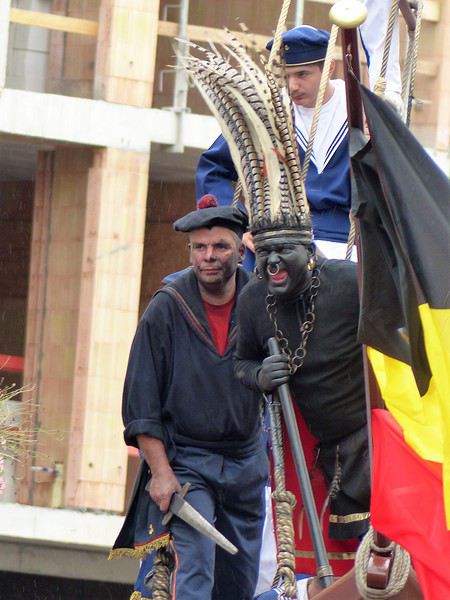
Puis, c’est la « barque des pêcheurs napolitains ». C’est un char magnifique, qui représente un navire et aux gréements duquel des jolis marins sont accrochés. Ce char apparut dans le défilé pour la première fois en 1856.

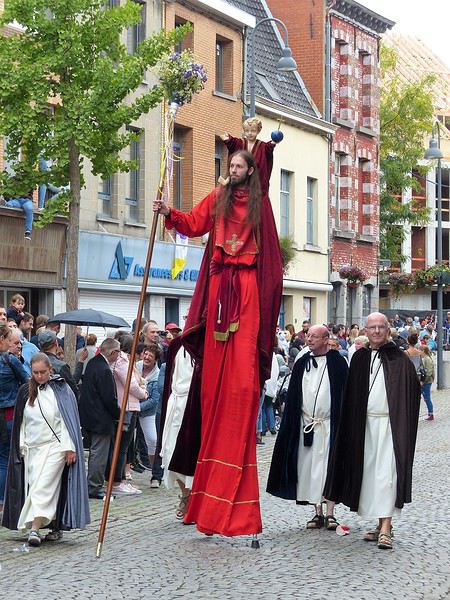
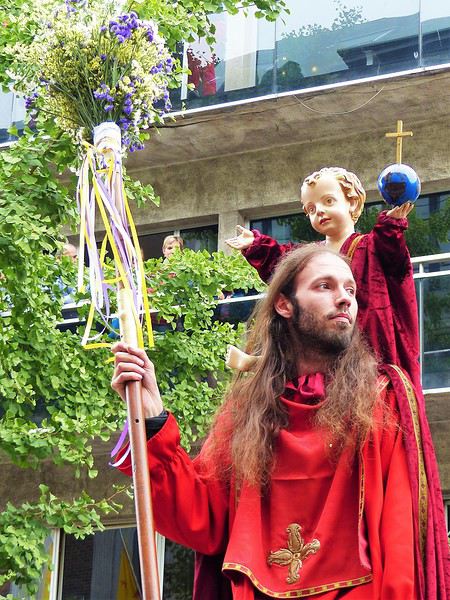
Il est suivi d’un géant humain, juché sur des échasses. C’est « Saint christophe de Flobech », qui tient un bâton fleuri et porte le Christ sur ses épaules (là ce n’est pas un vrai enfant !). Apparu au 19ème siècle, il disparut ensuite du cortège avant d’y être réintroduit en 1976.


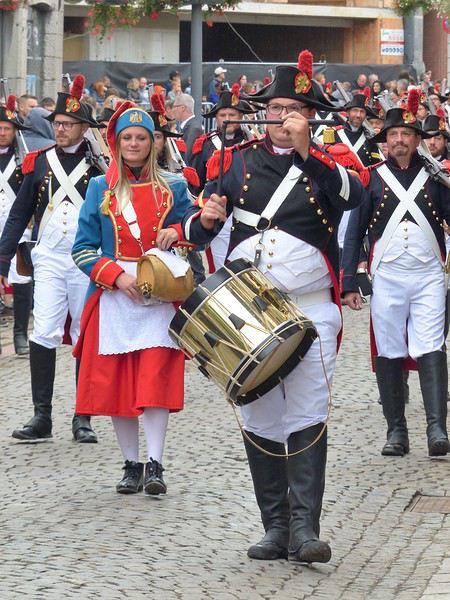
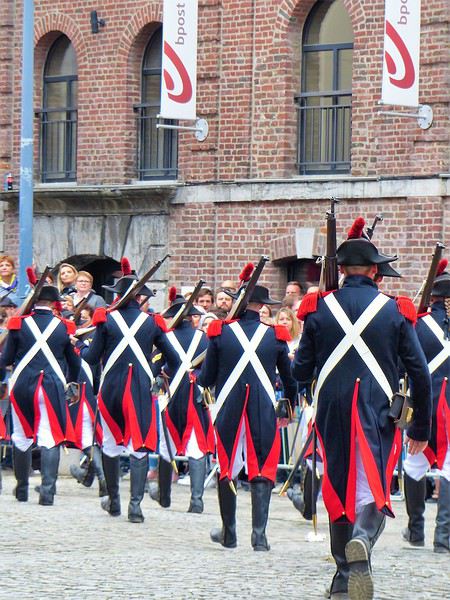
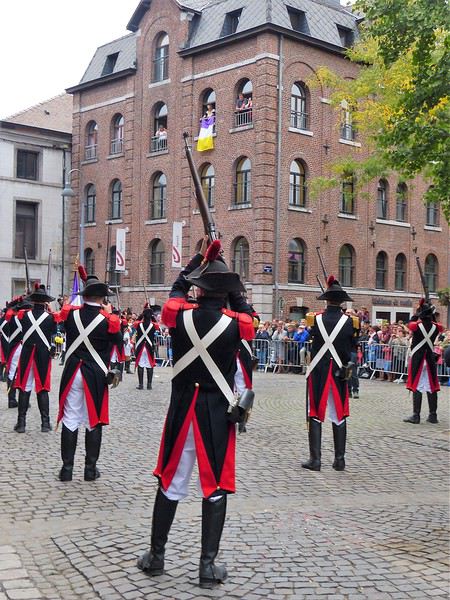
Voici maintenant la compagnie des « Bleus », revêtus de l’uniforme français. Cette compagnie est l’héritière de l’ancienne compagnie des canonniers-arquebusiers, et elle ponctue son défilé de salves !


A suivre: le géant Samson!
Open
A Brief A to Z of Peru
MA by Mathews 2 weeks ago · Voyajou
Foreword This text has been proofread many times. Sorry if some points in this A to Z have already been covered on this forum. Text and drawings by the author.

Peru is still a very vast country, with so much to see, and obviously this text can't list all the attractions of the country.

*Abiseo (River) A national park that's very hard to access and doesn’t seem open to visitors. Includes the Gran Pajaten site (see below). Personally, it really sparks my imagination (not visited personally)

*Aguas Calientes the town next to Machu Picchu, more precisely below the archaeological site. As far as I know, you can only get there by train. Reminds me of the market where stalls line both sides of the tracks near Bangkok. I love it

*Altiplano: somewhere the "heart" of the Andes. I was able to trek across it on foot, starting from Caracollo in Bolivia, and of course, it’s vast plains to explore. This is where people live in a very rural way. Andean populations are quite austere compared to those in the lowlands or on the coast. You really have to appreciate the harshness of life to live there. Life is anything but superficial. I set a compass heading and found myself walking west toward the expanse of water near a place called La Joya. For pitching the tent, the nights were still chilly

*Canyon del Colca One of the deepest canyons in the world. Personally, I hiked down and back up on foot. The toughest stretch I’ve ever covered in my life.

*Ceviche More or less the national dish. A marinade of fish, shellfish, and lime. But you can find it in some restaurants in Europe, France, and certainly in Belgium or Switzerland. In the small restaurants of Pisco, you can eat excellent ceviche

*Cerro Sechín: Mostly bas-reliefs. A site little known to travelers in the Casma province. The first vestiges of a pre-Inca civilization with iconography similar to that of Chavín (not visited personally)

*Chan Chan A large city of the Chimú civilization and relatively vast to visit. You can see adobe walls with bas-reliefs. Visit from Trujillo, take a colectivo. Plan for the whole day

*Charango: a small guitar widely used in Andean music

*Chauchilla A necropolis near Nazca where you can see mummies exposed on the ground. YouTubers can do paranormal experiments there. And for anyone wondering about the fate of the soul and body after death, here’s the answer: the body remains after death. You can imagine your own flesh and body exposed to the winds of the Pampa and before eternity... (not visited personally)
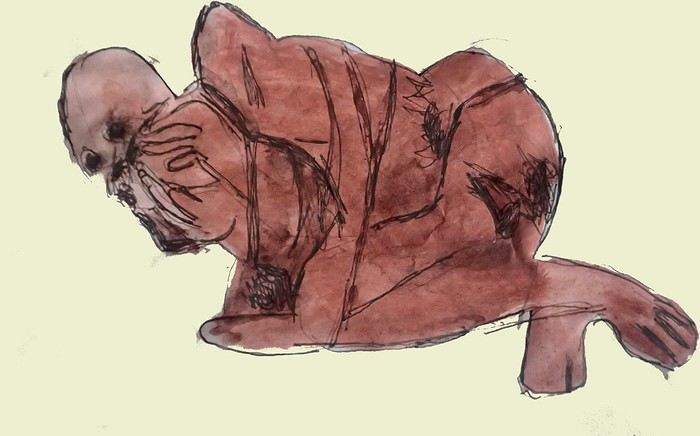


*Chavín de Huántar (Lanzón) The site’s appeal lies in its mountainous surroundings, the Lanzón stela, and the sculpted heads on the façades. What few people know is that the Chavín civilization began its expansion centuries before the Incas. Unfortunately, you can’t get too close to see the Lanzón—the day I was there, it was protected by grilles. To get there: minibus from Huaraz or trek from Olleros. Then cross a high pass (over 5,000m). If you do it solo on foot, be careful—the path isn’t obvious from Olleros

*Chullpa: funerary tower, notably at Sillustani in the Lake Titicaca region

*Chimú: pre-Inca civilization whose center was Chan Chan.

*Chola/Cholitas (Bolivia): typical clothing style of women from the Andean plateaus
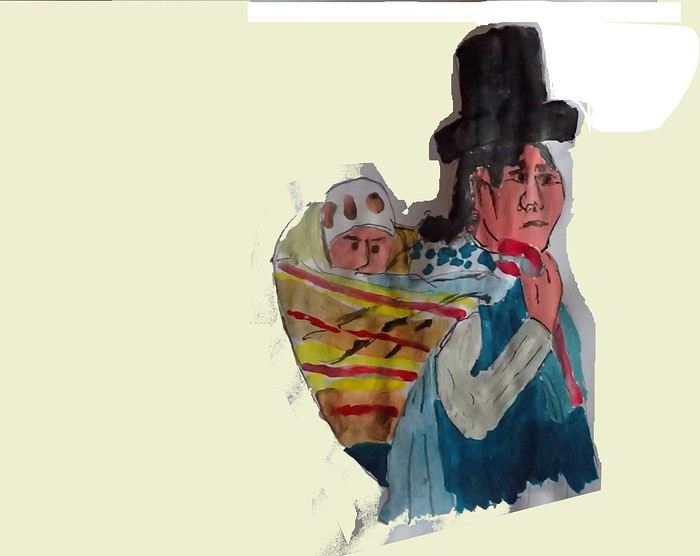


*Chompa: pronounce it *Chompaaa!* A common term for a wool sweater with vicuña patterns, often knitted from alpaca wool. If you dress like this, it’s a bit kitschy around the edges

*Cuy That one isn’t a guinea pig like in Guyana but an actual guinea pig. During a trip to Peru, I was hiking near a village north of Quillabamba (the terminus of the train line that passes through Aguas Calientes), and I was invited to stay in a house. The family raised a few of these pets. Apparently, the locals eat them. Since I’m not much of a meat-eater, it doesn’t really tempt me. How about you?

*Pacific Coast or how to talk about a place you haven’t visited? Except for the coast near Pisco and San Andrés, I haven’t visited any coastal cities. But that doesn’t mean these places lack interest or poetry. For fans of clichéd images, pelicans, seabirds, and fishing boats appear by the sea.

*Gran Pajaten: also closed to the public. Features anthropomorphic bas-reliefs. (not visited personally)

*Huaca. Visit the Huaca del Sol and Huaca de la Luna, especially near Trujillo. However, you can skip them—Chan Chan is still more interesting. Don’t forget to spend time visiting Chan Chan

*Huacachina A small oasis in the desert near Ica. Yes, we’re talking about an oasis because for those who’ve never traveled to Peru, the coastal strip along the Pacific is almost entirely desert, from north to south. Peru is territorially made up of three different regions: the desert coast, the Altiplano stretching north to south with mountain ranges (the Cordilleras), and the Amazon basin to the east. (not visited personally)

*Inca Kola It’s neither Coca-Cola nor Pepsi but a unique cola with a slightly orange color. Tastes like bubble gum

*Intiwatana: a carved rock shaped like a parallelepiped. Is it a sundial?

*Ballestas Islands: a highlight in Peru, though very touristy. You can only get there by boat from the port of San Andrés, a few kilometers from Pisco. It’s a surreal place to me—actually islets with cavities where sea lions and fur seals live. Since it’s a protected area, you’re not allowed to disembark. Guano is harvested there, which can be used as fertilizer.

*Kuelap: a fortress built by the Chachapoyas people. Rarely visited by travelers. (not visited personally)

*Larco Museum: an iconic museum in Lima with a large collection of pieces from archaeological and pre-Columbian sites. From what I remember, it has many pieces from the Moche civilization. As for the Moche statuettes, the prudish might look away. Probably a veneration of the god Priapus without knowing it.

*Nazca Lines Discovered by German archaeologist Maria Reiche, they stretch for kilometers. The designs in the desert around Nazca depict animals and cabalistic signs. The question I ask myself is why the creators of these lines represented a monkey and a hummingbird—species endemic to the tropical forest, not the desert plains around Nazca.

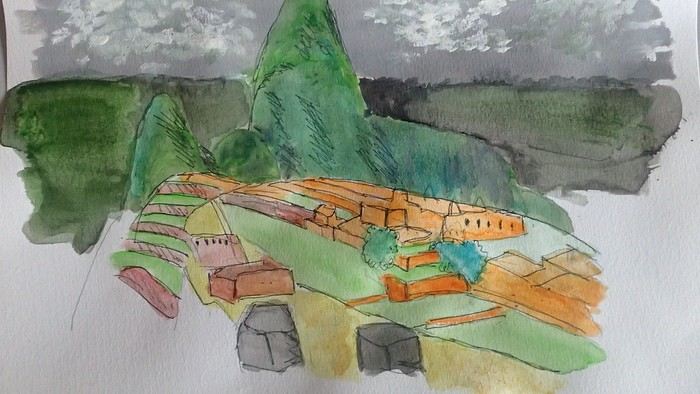
*Machu Picchu: means "old mountain" in Quechua. There’s also Wayna Picchu. The ruins of the site emerge from a sort of small plateau above Aguas Calientes. When the mist rises above the site and the bend of the Urubamba River, it’s truly magical... Also the starting point of the Inca Trail.


*Coca tea A decoction/infusion of the coca plant, meant to ease altitude sickness or *soroche*

*Chullo A rough translation would be a Peruvian wool hat.

*Moche: a civilization established in the Moche Valley, hence the term *Mochica*. What characterizes this civilization are the distinctive clay pieces representing faces and erotic statuettes

*Papa a la Huancaína A local potato dish

*Pisac: a typical market near Cusco

*Pisco Sour: perhaps the Peruvian equivalent of the *caipirinha* you drink in Brazil.

*Puya Raimondii A Bromeliaceae that still looks like a cactus, endemic to the Altiplano

*Quechua The language spoken by the indigenous people of the high plateaus (as well as Aymara in Bolivia)

*Quipu A knotted string used for counting. Widely used by the Inca administration.

*Sacsayhuamán (Q’enqo, Inca Bath) From Cusco’s Plaza de Armas, take the streets that climb above the city. Sacsayhuamán is called a fortress and is made up of large stone blocks. You wonder how the Incas could cut such huge blocks to assemble them—just like some streets in Cusco. The Q’enqo block is enigmatic; no one really knows what it represents.

*Savia Andina An Andean folk group.

*Tambo (=> Ollantaytambo) The Inca emperor (Atahualpa, Manco Capac) had the mission of controlling a vast empire. An empire that was still very extensive. Hence the importance of these *tambos* or relay stations. Napoleon created the civil code; the Incas invented the *tambos* and *quipus*.

*Tawantinsuyu: the Inca Empire

*Tinku: a warrior dance practiced mainly in Bolivia

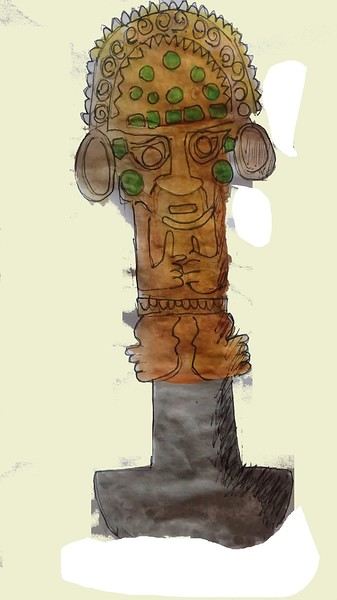
*Golden Tumi: a sacrificial weapon. Often featured in Peru travel guides. See illustration


*Terra X: a documentary series from the German TV channel that aired on Arte. Some episodes focused on pre-Inca and Inca Peru. I must have some old recording tapes. In memory of Gottfried Kirchner as a source of inspiration.

*Uros: I checked—it actually refers to the people who live on these floating islands. Even if it’s touristy, it’s a must-visit because it’s incredible how people can live on islets made from nothing. Take the boat from Puno

*Vicuña, llama, guanaco: camelids characteristic of the Altiplano
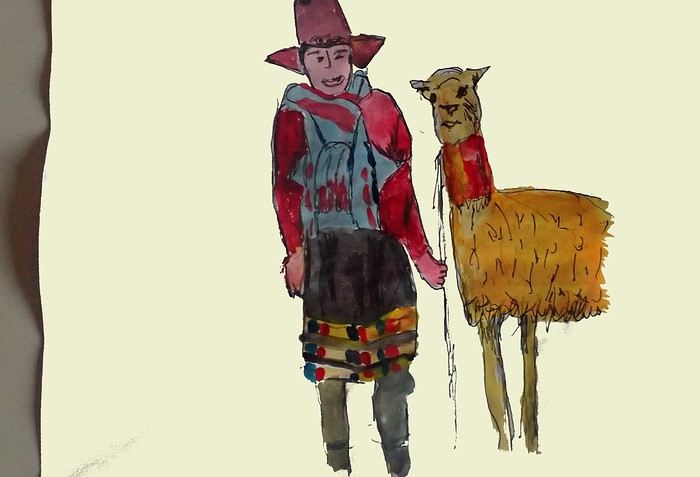


*Wayna Picchu The young Picchu mountain. In the first minutes of *Aguirre, the Wrath of God*, you see Klaus Kinski—well, Aguirre—making his way along the Inca Trail. Werner Herzog must have broken his back filming those sequences.

*Zampoña: pan flute
Open
15-day itinerary in southern Morocco
VI by Viovio2 2 weeks ago · Jeeaan
Last October, we landed in Marrakech to spend a few days with family exploring Morocco’s roads. Transport: a rented Dacia. Accommodations: small guesthouses.
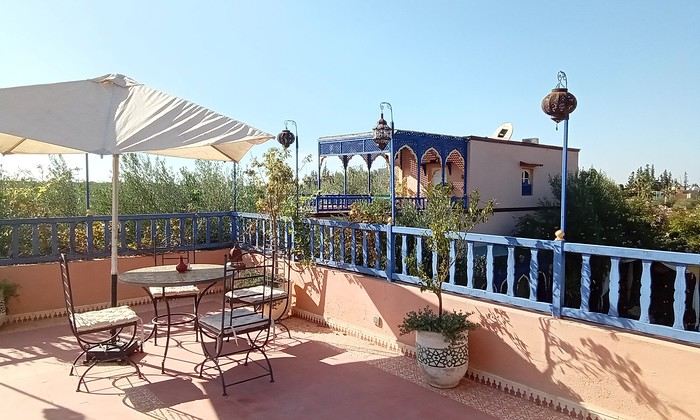
Our first stop was just a few kilometers from Marrakech, at a lovely house perfect for relaxing and recharging before continuing. It’s called Bleu House, a little paradise on the outskirts of Marrakech. The welcome was very warm, with a beautiful pool and a lovely garden.

Next, we headed toward the Tichka Pass. The road has really improved in recent years—it’s much easier to drive now. No more getting stuck behind trucks, and today, the construction is practically finished.

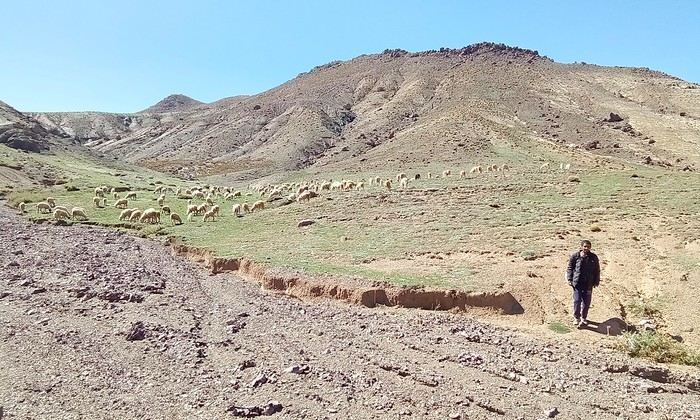
Morocco has turned green after the recent rains. It’s a joy for the herds and shepherds.
Open
9 days in Sardinia by bike
OL by Olap 2 weeks ago · Ylangylang
Leaving on Sunday, September 28, 2025, from Montpellier: I’m taking the train with my bike and panniers to Nice for the evening ferry departure to Porto Torres in Sardinia. Nice is gorgeous.
Open
Off on an adventure in Sri Lanka
BI by Bibouns51 3 weeks ago · Libertad31
Our plane will head to Sri Lanka next winter! We’re trading in our usual ride for a tuk-tuk—yes, a real one—to explore the island’s winding roads and connect with locals. But fate had other plans...
Open
Gran Canaria... a trip that wasn't exactly thrilling
MU by Muriel18 3 weeks ago · Muriel18
Okay, it wasn’t a total disaster either. Actually, I hesitated before starting this travel journal: is it even worth writing about a holiday that won’t leave an unforgettable memory? In the end, I went for it (there aren’t many recent travel journals about this destination). So, read on... or don’t .

Every time we’ve been to the Canary Islands, it’s been by default (basically: where can we go in winter or early spring when we only have a week—so not too far, not too much jet lag, but with decent weather?).

This time, we had two weeks, but the winter plan kept changing: first Thailand (dropped for personal reasons), then Martinique (dropped because of work leave dates that weren’t up to me), and finally, the Canary Islands.

We’ve already been to Tenerife (which we really liked) and Lanzarote (which we liked a little less). This year, two options: Gran Canaria or one of the smaller islands west of Tenerife (La Palma, or even La Gomera or El Hierro). We chose Gran Canaria... not sure it was the right call! Whose fault is it? Storm Thérèse’s! Yes, Storm Thérèse followed us on arrival, and its effects lasted quite a while. We had to adapt, cancel visits, change activities...

But even without Thérèse...

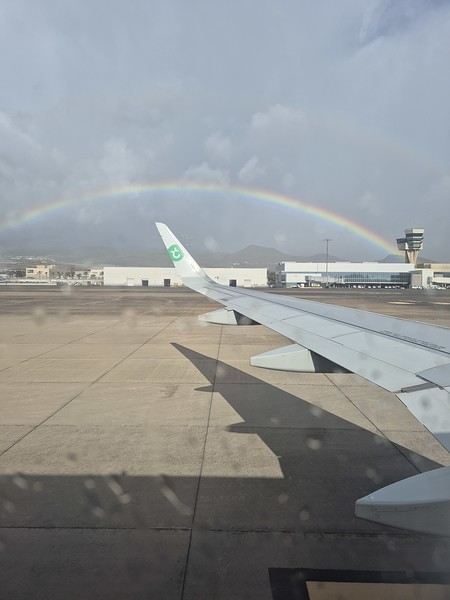
Saturday 21/03 Departure from Orly at 6:10 AM with Transavia. The plane took off on time and landed a little early, tossed around by strong winds before touching down. It had just rained, but it was (almost) no longer raining.


We quickly picked up our luggage and then the car at the Cicar counter. We got a Seat Arona instead of the Corsa we’d booked. Well, while the driving position didn’t feel great at first (I got used to it), the engine’s smoothness and power were much appreciated on the island’s winding and sometimes steep roads.

It was only 10 AM, and we couldn’t theoretically check into our accommodation until 3 PM (the owner promised to message me if it was ready earlier). So, we headed to the (big) *Jardín Botánico Viera y Clavijo*, where we planned to spend a few hours. We found a huge parking lot... empty. The passenger in the car in front of us (yes, we weren’t the only ones at the closed gate—there was a car in front and one behind) went to ask for info: it was closed due to the storm 😕. So, we calmly headed toward Puerto de las Nieves, on the northwest coast of the island.

The plan: go to a restaurant, visit the village, and do some shopping while waiting for early afternoon. As soon as we got out of the car, it started raining... we took shelter under the awning of a shop, waiting for it to pass. But the rain turned into a downpour, and within minutes, awning or not, Gore-Tex or not, we were soaked!

Since we were already wet, we might as well go to the restaurant—they weren’t far! But here’s the thing: contrary to what Google Maps said, they all opened at 1 PM, not noon! Back to the car, wading through 5 cm of water because all the village streets were flooded . The rain let up, we did some shopping, went to eat, and I got a message from the owner saying the accommodation was ready 🙂.

So, off we went to La Suerte, a few kilometers north of Agaete. The downside of the place, especially with luggage, is that you have to climb several flights of stairs via an outdoor staircase (after parking more or less far away on a steep street) to get there 😛). Of course, on the way from the car to the apartment, it started pouring again—the bags got soaked! Enough rain for today! We settled in quietly, and by late afternoon, we could (finally!) go admire the view from the terrace.

Open
Second trip to Curaçao Island
PI by Pinacoladada 3 weeks ago · Pinacoladada
Returning to Curaçao is a bit like reopening a book whose pages still smell of sun and salt.

As soon as the plane descends toward the island, the familiar colors reappear: the dazzling turquoise of the sea, the pastel facades of Willemstad, and that unique light that seems to soften everything.

For this second trip, we no longer arrive as hesitant explorers, but as confirmed lovers of this warm island.

We already know that the warm wind will welcome us as soon as we step out of the airport, that the beaches will once again offer their infinite shades of blue, and that each day will have that unhurried pace that makes you forget the rest of the world.

Yet, despite this sense of déjà vu, Curaçao always manages to surprise. A new cove to discover, a different sunset, a smile shared with a local...

The island has that rare talent for reinventing itself without ever betraying what makes it so endearing.

This second trip isn’t a repetition, then, but a reunion: a chance to rediscover Curaçao with more attentive, more connected, and perhaps even more amazed eyes.

I invite you to keep reading this travel journal and watch the videos that will help you learn a little more about the island’s different attractions.

Just click on the video image to start watching.

To go to a specific post, here are the appropriate links:

Exploring Willemstad’s colorful neighborhoods The Most Beautiful Beaches in Curaçao Hike at Boka Sint Michiel | Flamingos & panoramic views Climbing Christoffel Mountain Den Dunki & Flamingos of Jan Thiel Must-see spots in Curaçao Snorkeling at Playa Kenepa Chiki: Turquoise Water & Tropical Fish Snorkeling at Porto Mari: One of Curaçao’s Best Spots Snorkeling at Mambo Beach, the Perfect Spot Snorkeling at Daaibooi Beach, a diverse marine world
Open
Densha Otaku - Lesser-Known Regions
SE by Serow 3 weeks ago · Serow
Autumn 2025 marks my 11th trip to Japan. I’ve neglected the south for too long, so like last year, it’s my main destination again.

We’ll revisit some familiar spots, but of course, we’ll also try plenty of new things. This trip feels a bit strange—no more of that initial magic, but on the other hand, we’ve really explored some off-the-beaten-path and private locations. The variety of regions, landscapes, and vehicles I’ve photographed is pretty remarkable. In search of vintage trains and threatened lines, I think my future trips will follow the same vibe.

After the 2017 and 2024 travel journals, it’s time to dive into Japan’s lesser-known side—all by public transport, of course. Day 1, arrival in Tokyo

The timing won’t be like other years since we arrive at Narita in the mid-afternoon after a layover in Hong Kong.

The only real mission for this afternoon is picking up tickets for the next day. And already, the first travel stress: I’ll have to rewrite the entire day because the Revaty Kinu 109 to Kinugawaonsen is fully booked, just like all the morning trains. So instead of a relaxed start exploring Ueno, I’m back to scrutinizing schedules. I manage to snag something last-minute after struggling for hours. Then, I wait for a message from Seiichi to meet up for dinner. Meeting friends on the first day and staying up late with jet lag—like I said, this trip isn’t like the others.

A great evening at a place I love.


Open
Visiting Cork City
VO by Voyageur1990 3 weeks ago · Yemen
Hello everyone,

We’ve just returned from a few days in Cork with my partner, and we really wanted to share our experience with you. We loved the vibe of the city and its surroundings!

What we loved:

The highlight of our visit was definitely our guided walking tour of Cork City. We booked it through GetYourGuide with Dorren, and honestly, it was amazing. If you're looking for a guide in French, go for it—he’s the only one we found offering this service, and he does a remarkable job. He knows the city like the back of his hand and shared anecdotes we’d never have found in regular guidebooks.

We also spent ages at the English Market, a must-visit for food lovers. The atmosphere is authentic, the local products are excellent—it’s really the heart of the city.

A little stop in Cobh:

We also took the time to head down to Cobh. It’s a gorgeous town with its colorful houses climbing up the hill and its majestic cathedral overlooking the harbor. The maritime history is very present—it’s an emotional and very photogenic visit.

A few extra tips:

Must-see: St. Peter and Paul Church. It’s truly stunning, much more impressive and rich in detail than we expected.

Avoid: To be honest, we were a bit disappointed by St. Finbarr’s Cathedral. We’d heard so much about it, but inside, we felt the decor wasn’t really worth the entry fee. In my opinion, you can skip it or just admire it from the outside.

Food:

If you’re looking for somewhere to eat, we tried Market Lane. It was a real favorite! The ingredients are super fresh (they often use produce from the English Market), the menu is great, and the service is top-notch. Just remember to book ahead—it’s a popular spot, and now we understand why!

In short, Cork is a perfect destination for a city break. If you have any questions about the itinerary or the tour with Dorren, don’t hesitate!

Happy travels to those planning their trip! !
Open
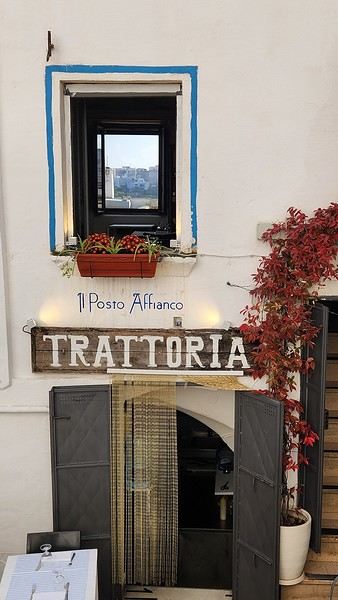
Off we go on an adventure in Puglia!
BI by Bibouns51 3 weeks ago · Bibouns51
Hey there, VF crew!

After wrapping up our travel journal on Java (link below), we’re now diving into our recent adventure in Puglia! Happy reading... Off we go on an adventure in Java (and a bit of Bali) | Travel journal > Indonesia | Voyage Forum

Day 1 - October 19

When you tell your friends and family you’re itching to escape to the other side of the planet to mingle with the Mongols, you can usually expect a barrage of questionable jokes and terrible puns. For this new adventure, it’s a different destination but the same old story—this time, we’re visiting the "pouilleux" (the "scruffy" ones). We’re taking off straight for Puglia! If you need a cheat sheet to remember where this oddly named place is on a world map, just think of it this way: Puglia is the maiden name on the ID card of the heel of the Italian boot! Personally, I prefer to remember it as the land of creamy burrata, the smell of focaccia fresh from the oven, orecchiette shaped by mamas, golden olive oil that shines like the sun (which beams down here 300 days a year), amaretto that makes you happy, and those famous trulli—those little hobbit-like dry-stone houses straight out of a movie set...

But I’ll stop spoiling the rest of our trip and focus on a factual rundown of this first Puglian day. So, are you joining us on this new adventure beyond our Gallic borders? Either way, Sasha (my youngest) and Luna (Flo’s daughter) didn’t need much convincing to stick with us and keep up the pace!

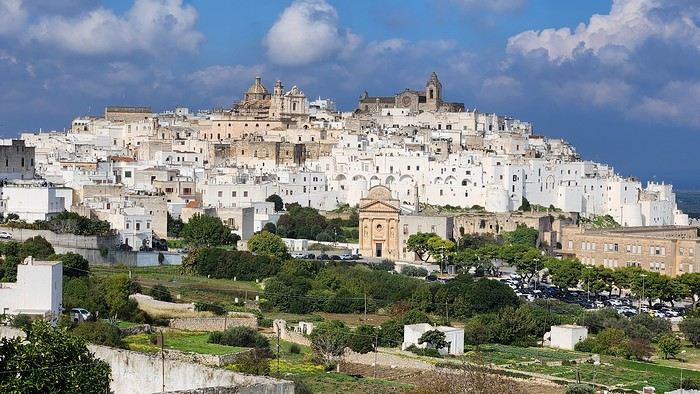
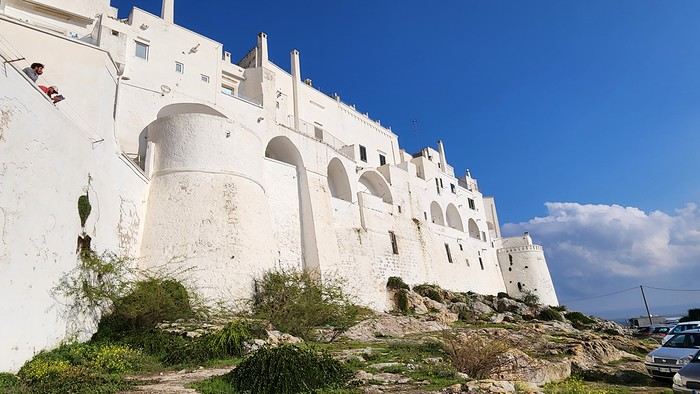
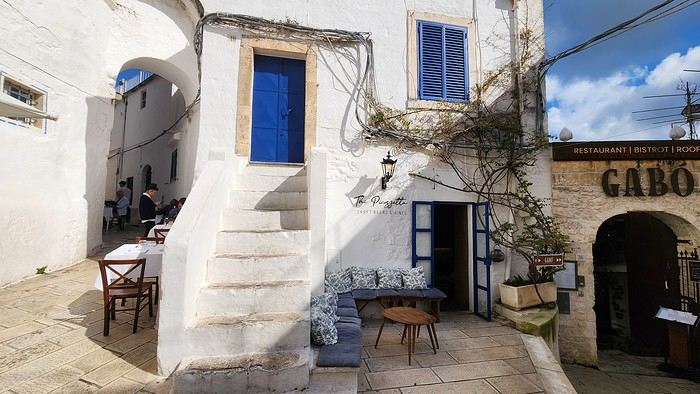
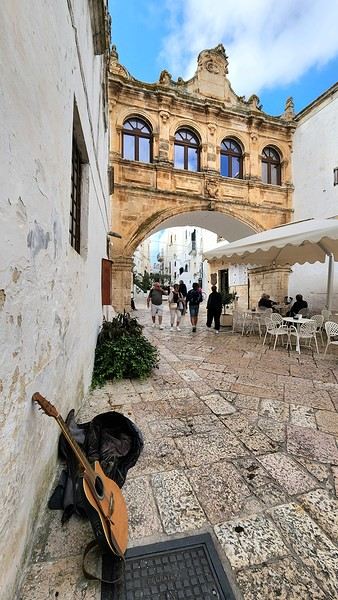
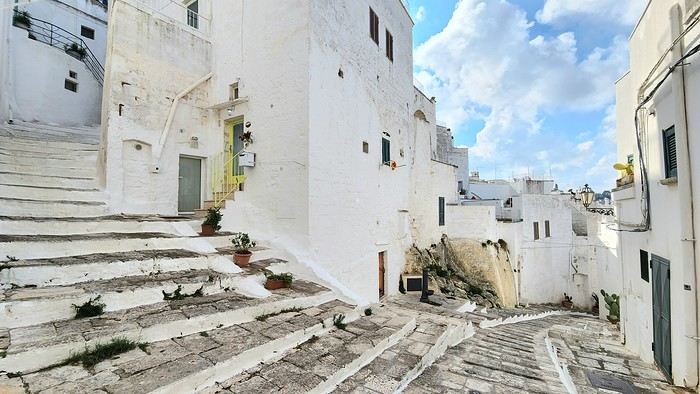
Our plane drops our little crew in Bari, the site of a famously tragic battle lost in 1991. But revenge is sweet! After renting a motorized carriage, we escape the landing zone and head to our military base of operations: Ostuni, a strategic little town where we’ll set up camp for the next four days. Why Ostuni? First, for its central location, which lets us explore a region packed with must-see gems. Second, for its vibe and beauty, which have earned it quite the reputation. Perched high on a hill, the *città bianca* (the "White City") lives up to its nickname. It literally dazzles visitors. The reason? The whitewashed facades of its houses, a testament to the region’s rich architectural heritage.


We arrived late last night, so only the two bravest soldiers volunteered to scout ahead at dawn, while the younger recruits stayed behind—for now. But not for long! After the first wave of streets and the next round of exploration, headquarters made the inevitable call to retreat. Reinforcements were needed! A few strategic errands, a breakfast ration, and our battalion marched in tight formation, flag held high, to conquer Ostuni the White! *Charge!* In my squadron leader’s memoirs, I’ll write that I didn’t expect Ostuni to put up such a fight. What I thought would take two hours to conquer turned into a humbling experience—we could only bow in respect to its beauty, its relentless charm. The alleys are whiter, more labyrinthine, narrower, and more photogenic than the last. *Veni, vidi, vici*—but what an entrance, my troops!


Open
Some trips are born twice - Peru April - May 2025
TI by Ticapi 3 weeks ago · VallM17
Some trips are born twice.

Ours was supposed to happen in 2020. Everything was ready: the itinerary, the flight tickets, hotel reservations and Machu Picchu, the rental car, dreams of high altitudes and wide-open spaces. And then the world stopped.

Like so many other plans, our trip to Peru was put on hold. Disappointment was followed by a more concrete reality: paperwork, endless back-and-forth, and battles to recover some of the costs we’d already paid.

The years went by. Life moved on, with its shifting priorities and unexpected twists. Rescheduling this trip wasn’t possible until 2025.

The itinerary stayed mostly true to what we’d imagined five years earlier. One major difference, though—in 2020, we’d planned to rent a car and explore the roads completely independently. Most importantly, we hadn’t included the three-day Ausangate trek, due to lack of time.

For 2025, our plans evolved. 4x4 rental prices had skyrocketed, and when we looked at our schedule more closely, we realized quite a few days didn’t actually need a vehicle. So we made a different choice and opted for private drivers instead. A decision we never regretted. Always punctual, thoughtful, and available... they were so much more than just drivers.

All our reservations were made in January, except for the trek, which we booked in February.

Finding reliable drivers on our own was tough, so we asked Laurent from Tout Pérou to handle it for us. Going through Tout Pérou also gave us a discount on the train ride to Aguas Calientes, so Laurent booked those tickets too. He also bought our Machu Picchu entrance tickets at the same price we would’ve paid on the official website. When comparing domestic flight prices, we found it was cheaper to book from Peru, so Laurent took care of those as well.

This time, nothing was going to stop us. Peru was waiting. And we were ready. 🙂
Open
A super classic trio: Praslin, La Digue, Mahé (Seychelles)
MU by Muriel18 4 weeks ago · Mewmew
Since no travel journal has been posted about this destination since 2020, I’m giving it a go—maybe it’ll jog some memories for a few of you or give others a few ideas... even if, in the end, there isn’t much to tell 😎! Even though the itinerary was as classic as can be, it still led to a few brain knots: in what order? How many nights on each island? Rent a car or not? In short, plenty of existential questions to land on 4 nights per island, finishing with Mahé to avoid any nasty surprises before the return flight.

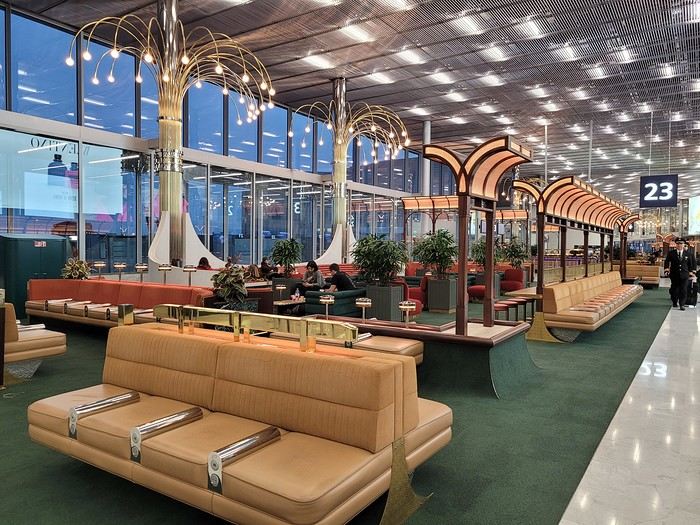
Saturday 03/22: Flight to Mahé with Qatar Airways (no—or rather, no more—direct flights from Paris 😕) A nice surprise at CDG with the discovery of a new lounge in Terminal 1

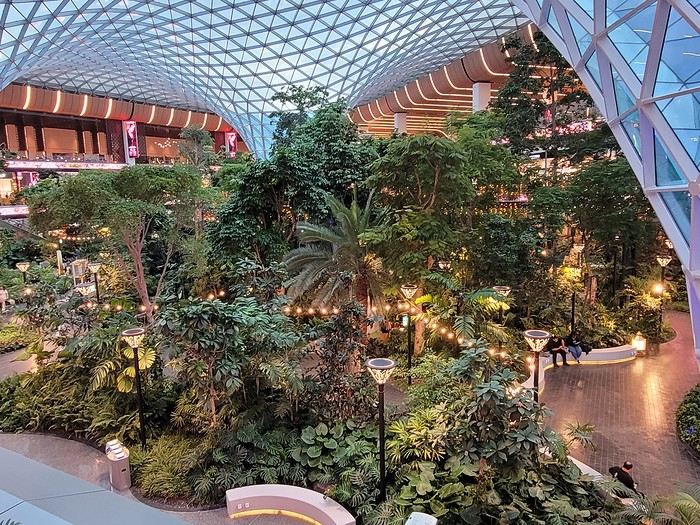
Then, an in-depth exploration of Doha Airport thanks to (or because of) a loooong layover:


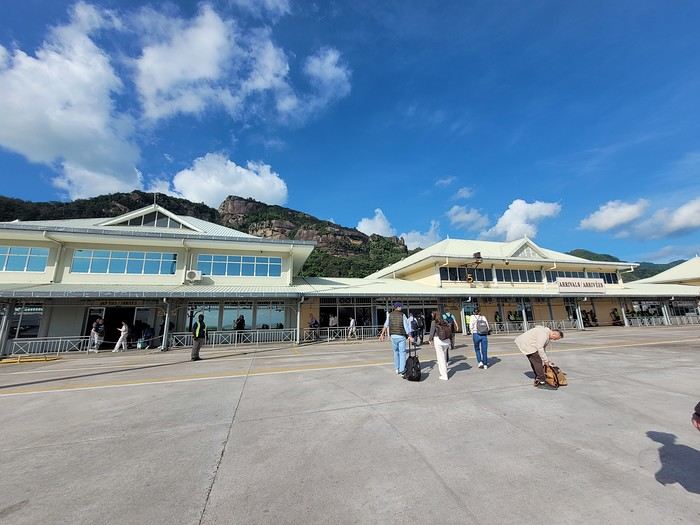
And finally, arrival at the tiny Mahé airport where we step onto the tarmac feeling like we’ve walked into a steam room

Baggage claim is quick, the shuttle to the port is on time, the ferry is punctual (we, on the other hand, are *very* early for it ), and there’s Praslin in sight:
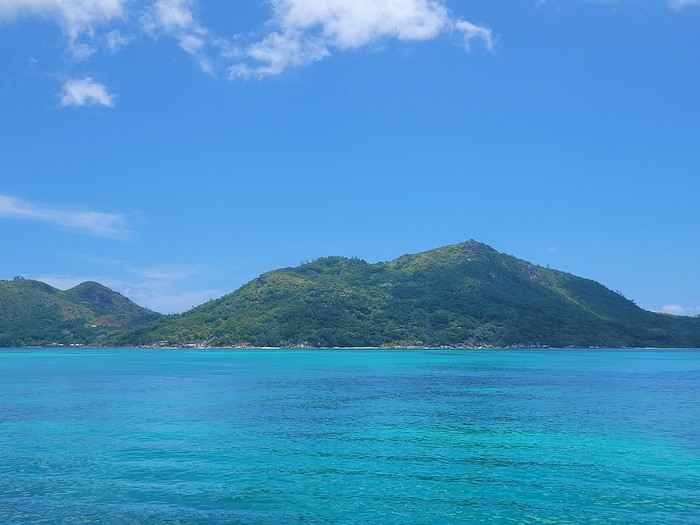
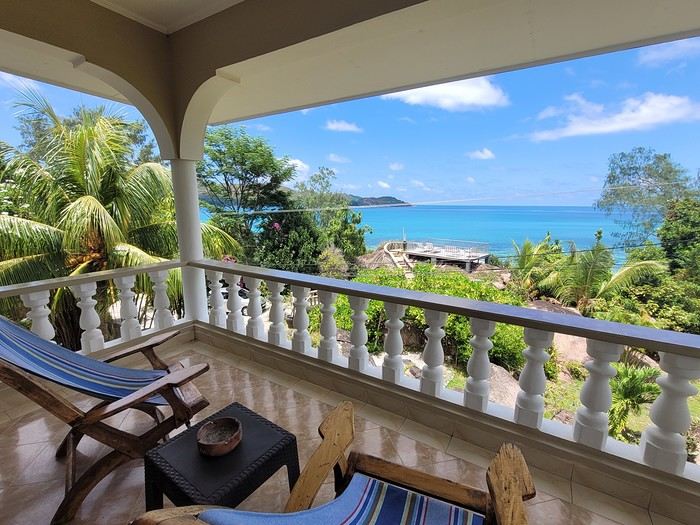
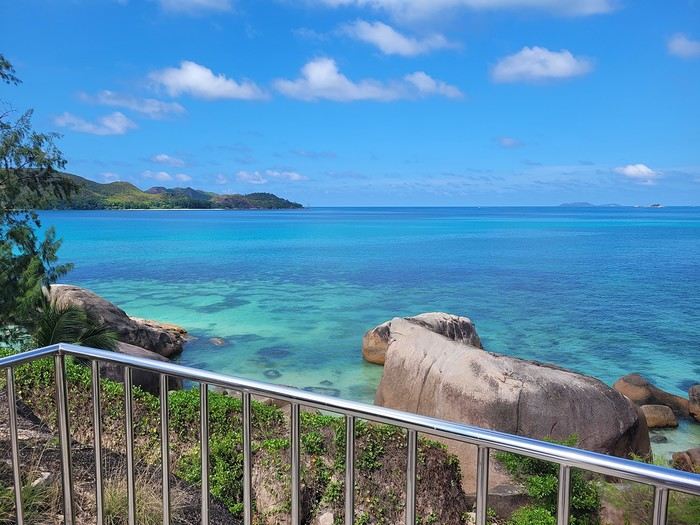

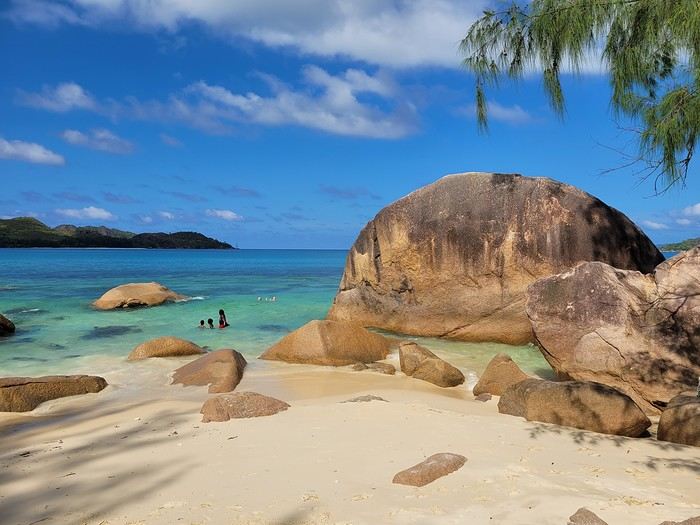
... with a sneak peek of the sea’s colors 🙂 Quick note on the photos: most were taken with a smartphone, and the colors are a bit more saturated than in real life (I did bring my hybrid camera, but in the end, I barely used it since it wasn’t very practical to lug around on the water or for snorkeling).

We pick up the car (a Grand i10 instead of a Picanto) from a muddy parking lot (it just rained) and off we go—of course, with a windshield wiper instead of the turn signal 😎, left-hand driving obliges. In just a few minutes, we arrive at our accommodation for these 4 nights on Praslin (Oh, and now the "lien" tab isn’t working! ) We’re blown away by the view from the terrace:


Then by the view from the little shared terrace on a promontory:

Before heading to test the water temperature on the other side of the road, at Anse Boudin, and spotting our first fish.
Open
De la France à la Bulgarie en train
EX by Exbaleine 4 weeks ago · Exbaleine
Septembre 2017. Je pars pour un voyage de l'Atlantique à la Mer Noire exclusivement en TRAIN, en traversant la Suisse, l'Autriche, la Slovénie, la Serbie et la Bulgarie jusqu'à Varna. Départ de la maison, une demi-heure de marche au trot jusqu'à la gare. Pas porté de sac à dos depuis des années. J'arrive en sueur à la gare. C'est la canicule cette fin d'été. Mon tee shirt est trempé. Première difficulté dérisoire et première pensée : le voyage est un inconfort. Se mettre dans un contexte d'inconfort et l'accepter, le dépasser. Mon tee-shirt va sécher sur moi-même, petit chauffage portatif autonome à la température stable de 37°.


Départ du Ouigo en gare de Rennes, arrivée à Massy 1h30 plus tard. Et c'est la cohue vers la sortie. Dans un rythme effréné, des centaines de passagers piétinent dans la même direction comme un seul homme, comme poussé par une urgence. Le serpent des humains qui ont des choses à faire. Tandis que le serpent de métal qui nous a téléporté jusqu'ici reprend son chemin vers l'infini, juché sur ses deux rails. A la sortie de la gare, les distributeurs de billets de RER sont pris d'assaut, les files d'attentes s'étirent hors du bâtiment. Je les regarde quelques instants et... bifurque vers un café à 200m de là. Un type à l'entrée m'accueille en haut de l'escalier avec humour. Je tourne ma cuillère dans mon expresso et me dit qu'il fait bien chaud pour partir en voyage ; d'autant que je m'oriente vers les pays du sud de l'Europe. Puis me vient cette pensée peut-être banale mais appropriée : si l'on attend les conditions idéales pour agir, pour partir, pour faire, on peut toujours attendre.


PARIS, auberge de jeunesse 8bd Jules Ferry, 21€ le lit dans un dortoir. Prix imbattable pour dormir dans la capitale. Accueil agréable et quartier sympa proche de République. On ne me demande pas de carte de la fédération des auberges de jeunesse. Paris toujours aussi belle et toujours aussi polluée. Les yeux et la gorge me piquent un peu. J'achète un Ukulélé (but de cette escale à Paris) dont mon sac à dos me servira de housse. Premières notes grattées dans la chambre vide de l'auberge. Nous serons quatre à dormir ici au final, âge plutôt dans la trentaine ou plus. Le soir je bois une Grimp à la terrasse du café à proximité. Après cette journée de chaleur à porter mon sac, les premières gorgées de bière fraîche sont un délice. La fenêtre de la chambre restera grande ouverte toute la nuit à cause de la chaleur, pour faire circuler un peu d'air. Sentiment de dormir allongé sur le boulevard, parmi les motos et les voitures qui ne cesseront de passer toute la nuit.


TGV Paris Strabourg. Le son du train est homogène et doux, presque absent. Je me dis que le TGV c'est déjà le passé, un passé où l'on croyait que l'abolition du temps signifierait abolition de la finitude alors qu'elle n'est qu'effacement de la vie, où l'on croyait à l'avènement d'une classe moyenne supérieure aisée unique ayant accès à l'immédiateté dans un monde d'efficacité, de gain, de propreté fictive, de lignes droites, d'absence de sueur et de poussières. Je crois que la vitesse fait partie du passé. Quand on va vite, on se précipite, on est jamais là où l'on est, toujours à l'endroit juste après, jamais ici et maintenant. La vitesse c'est le refus de la vie, c'est le mouvement malade, c'est une illusion de puissance et de joie. Interdiction de bailler, de respirer, de somnoler et de penser. La vitesse abolit le temps et l'espace. Les personnes sont aspirées. Vite dans l'aspirateur, jamais plus inspirées, pas le temps. Aspiration contre inspiration. Combat entre les temps irréels (passé et futur) et le seul temps réel : le présent.


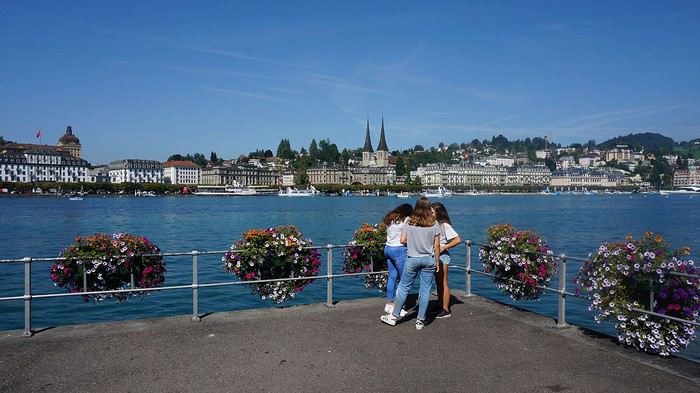
2ème nuit. Auberge de jeunesse de Lucerne en Suisse. Fin de journée difficile, fatigué, début d'ampoules. Lucerne, ses charmes et ses légions de touristes me fatiguent. Avec mes ampoules je me traine jusqu'à la gare et achète un take away asiatique puis attends le bus pour me carapater à l'auberge. Là, 3 colosses russophones devisent et enfilent des bières autour d'une table sur la terrasse devant l'entrée. Je m'assois un peu à l'écart. L'auberge suisse est deux fois plus chère que celle de Paris, les espaces d'accueil sont vastes mais les chambres sont étroites et sans lavabo. C'est l'inverse de l'auberge parisienne dont les espaces communs étaient minimalistes mais la chambre spacieuse et dotée d'un lavabo. Je partage la petite chambre avec deux étudiants de Singapour, les feux sont éteints vers 22h mais dans le couloir des jeunettes de la chambre d'à côté sont surexcitées, hurlent, rient, claquent des portes, ne cessent d'entrer et sortir ; cela durera plus d'une heure. Le lendemain je retrouverais le sol des sanitaires des filles pavés de chips.


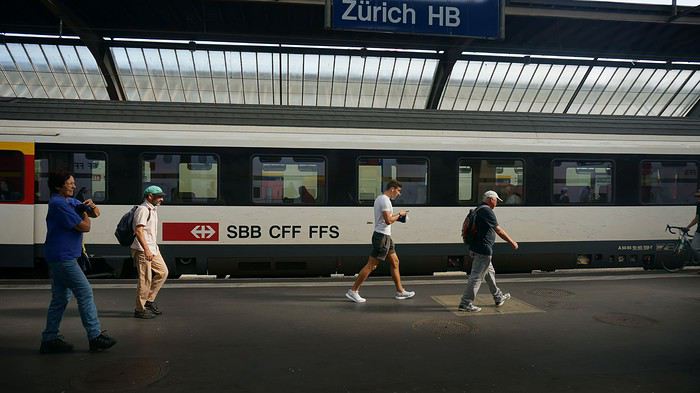
3ème jour. Départ le matin de la gare de Lucerne, changement à Zurich, direction Villach en Autriche à la frontière avec la Slovénie. Le train est lent, longe un grand lac surmonté de montagnes dont les rochers affleurent au bord de l'eau. Par la vitre le spectacle est apaisant. Les sons du train sont agréables. Devant moi, deux femmes parlent doucement en mangeant des cracottes suisses. Puis le train accélère car nous quittons le bord du lac. Je décide de descendre à Wörlg une petite gare entourée de montagnes plutôt que de continuer jusqu'à Salzbourg. Le train que je prends à Wörlg ressemble à nos TER. Peu de monde, trois petits wagons seulement, climatisation bien dosée. Bonne intuition : ce petit train serpente entre les montagnes autrichienne. On s'arrête souvent mais le paysage est beau et je ne suis pas pressé. Petits villages typiques, chalets à flanc de montagne, forêts de conifère. Pour être franc, au bout d'un moment, je suis un peu las de ces fonds de vallées qui s'enchainent sans fin. Manque de perspective et de vision lointaine.
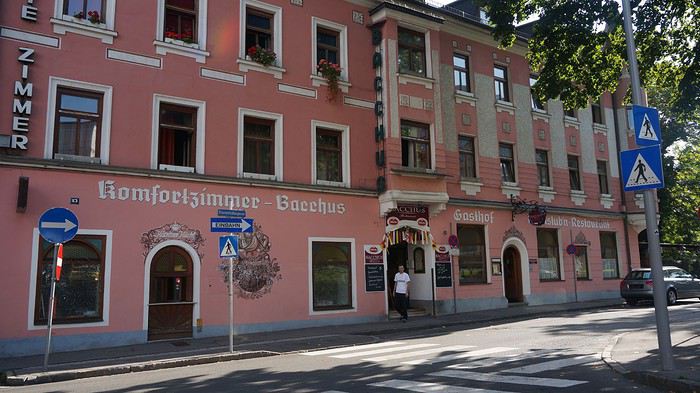
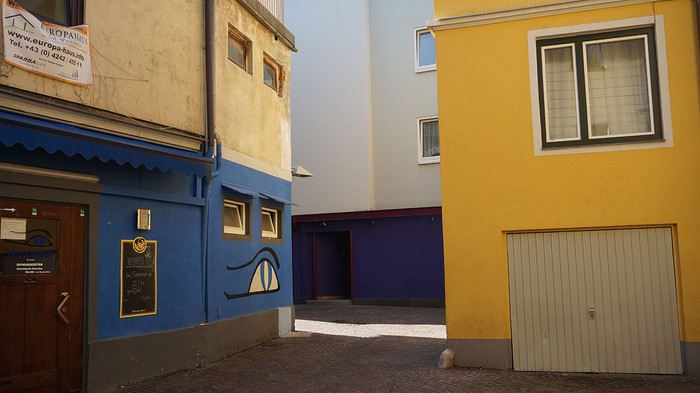


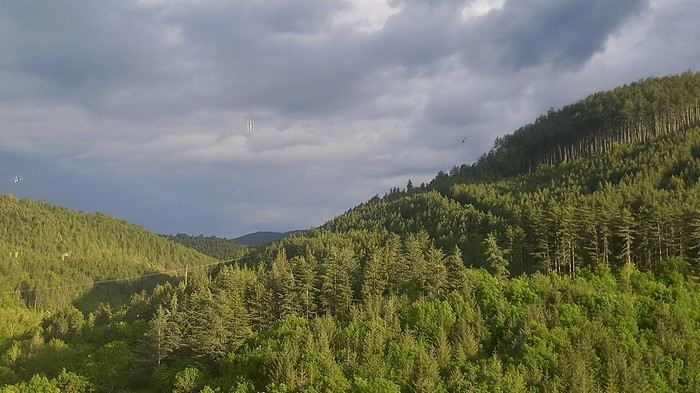
Villach. Bourg agréable avec un centre ancien piéton bien entretenu, son vieux pont qui enjambe le Drave. J'arrive en début de soirée. Après une bonne marche, je passe une zone mixte (industrielle et sportive) et trouve l'auberge de jeunesse à 2-3 km de la gare. 25€ la nuit mais l'auberge est "full" et je n'ai bien sûr pas réservé. Je ne réserve jamais à l'avance ni n'utilise de portable pour m'orienter. Je préfère improviser et demander mon chemin. Reviens vers l'hypercentre et trouve une chambre à 76€ dans un trois étoiles. Le type à l'accueil, très gentil, semble sorti d'une bande dessiné, c'est un petit gros avec une bouille et une voix sereine. Il n'est pas du tout speed, il prend le temps ce qui est très agréable. La chambre est pas terrible sur l'essentiel mais beaucoup d'efforts (finition, mobilier) ont été fait pour coller au standing de l'hôtel. Pas d'espace gratuit, fenêtre qui donne sur une cour étroite (odeur de cuisine le matin) et petit lit peu ferme. Sanitaires ok et grand écran (une chaîne en français). Le matin, petit déjeuner gratuit incroyablement varié, toutes une panoplie de salé et sucré, viandes, plats cuisinés, pâtisseries, fruits secs, céréales... Assis avec moi dans la salle, essentiellement des couples dans la soixantaine.


Départ de la gare de Villach. Train à 12h53 pour Ljubjana. 17€. Train assez vieux, compartiments à 6 sièges dont certains sont rapiécés. Je partage un compartiment avec une femme croate d'environ 35 ans très sympa. On entame la discussion, je lui explique la nature de mon voyage. Je lui parle aussi de mon premier grand voyage en Asie en train ce qui suscite son intérêt et elle me pose pas mal de question. Elle a vu des reportage sur le train en Russie ou en Inde et je lui apporte un témoignage complémentaire venant de la "réalité". Son anglais est un peu meilleur que le mien mais nous sommes grosso modo dans les mêmes eaux ce qui fait que l'on se comprend bien. Le faible différentiel entre nos deux niveaux de langue favorise je crois la rencontre et sa durée. On pourrait presque dire que l'on se rencontre en voyage non pas affinité mais par niveau linguistique correspondant !


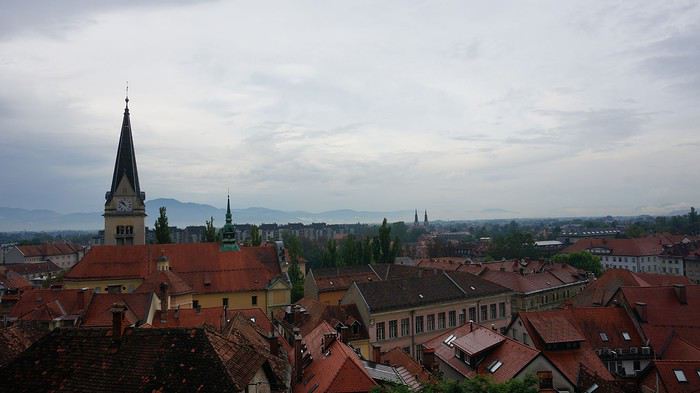
Lujbjana. Aucune idée à quoi ressemble cette ville. J'ai rapidement consulté quelques forums et m'attends à une grande ville un peu triste, de la pollution... En fait pas du tout. Après quelques minutes de marche depuis la gare, j'entre dans un secteur piétonnier et touristique avec déjà de beaux bâtiments aux façades colorées et entretenues. La ville me semble d'emblée très agréable, tout est à portée de main. A l'office du tourisme je prends un plan et constate que ce n'est pas les hostels qui manquent. J'en trouve un dans l'hyper centre dans un grand immeuble ancien, composé de grandes pièces pas rénovées depuis des décennies. 15€ la nuit. Lujbajana est en fait une petite ville charmante, touristique, dont le centre est entièrement piétonnier. Les prix y sont déjà un peu inférieurs aux grandes villes françaises. Exemple de prix : 6€ une grande assiette très complète de falafels excellents, houmous, frites et crudités, 2,5€ le demi en terrasse de l'hypercentre, 1€50 le café allongé, 60cts une sorte de pain à la confiture. Dans les ruelles étroites, on croise beaucoup de vélos qui semblent les rois ici. C'est aux piétons de se pousser. J'arrive à un passage piéton, peut-être la seule rue ouverte aux voitures de l'hypercentre. Je vais pour passer (au rouge pour les piétons) mais une demoiselle slovène me déconseille en anglais ; elle me dit que je risque une amende si je fais cela.


Le lendemain, il pleut. Pendant une éclaircie je parviens à prendre un petit déjeuner à une terrasse. Je trouve un hostel un peu plus cher (21€) mais avec des espaces communs agréables. Une chambre plus petite mais mieux conçu, avec un box pour sécuriser le sac. Il va pleuvoir toute la matinée. Je vais monter au château, balade dont l'intérêt, en plus de faire fonctionner les jambes, est plus le point de vue sur Ljubjana que le château lui-même. Midi. Il pleut, je mange une assiette de poisson avec des pommes de terre cuisiné sur une table d'une vendeuse ambulante installé sur un marché, protégé par un pauvre parasol. Peu de monde sur le marché n'affronte la pluie. Mais je me régale. La vendeuse, très typée slave, corrige ma tentative de dire "merci" en slovène (khouala). En quelques minutes à pieds, je me rends au grand parc de Ljubjana. On arrive vite après une petite montée dans de la forêt sauvage, absolument pas entretenue semble-t-il. Et nous sommes à 1 ou 2 km de l'office du tourisme ! J'ai les pieds mouillés, putain de chaussures sensées être étanches !

Autres voyages et des sons de train sur mon site crilef.free.fr et aussi crilef.fr
Open
Cantal&#8212;have you heard of it?
PU by Puma2A 4 weeks ago · FamilleUS
...

After Southern Tanzania, I’m sharing a travel story about the Cantal region with you...

...

For us, at the start of 2025, Le CANTAL was a true “Terra Incognita”!!

After seeing some tempting TV reports, we decided to fill this gap—especially in terms of landscapes. On the same trip, we’ll also head to the Arcachon Basin, the International Seaplane Gathering in Biscarrosse, and my native Landes region...

So, on May 20th, we left Marseille in the rain and thunder, heading toward Nîmes, Saint-Hippolyte, Mont Aigoual, Florac, and stopping in Marvejols to give my arthritic back a break for the night.


The next morning, we decided to revisit the Parc aux Loups du Gévaudan (Europe’s largest wolf park). As someone used to photo safaris in the wilds of East Africa, I’m not a fan of zoos at all—but I *do* have a deep admiration for wolves!!


Since it’s pretty unlikely I’ll ever see one in the wild, I’ll settle for this Parc aux Loups in Marvejols. This will be our third visit to this incredible gathering of these fascinating canines.

Some are still finishing their chilly night...


...
Open
Densha Otaku - A Southern Loop
SE by Serow 4 weeks ago · BeneFukuoka
Here’s my second travel journal since my 2017 one. You can check it out here if you’d like: https://voyageforum.com/forum/densha-otaku-passion-japonaise-d9177495/

This was my first trip back to Japan since the COVID lockdown. Between 2017 (with a short visit in 2018) and 2024, a lot has unfortunately changed. Economic and demographic shifts have led—and will continue to lead—to the closure of many rural railway lines. Fewer residents, fewer travelers, rising operating costs, staffing shortages, and increasingly precarious funding. Then there’s the ever-growing number of tourists who damage everything in their path and frustrate locals. Fortunately, there are still plenty of ways to escape the crowds, even if you do run into groups of Chinese tourists arriving by bus at the Mino Railway Museum or aboard a Kiha 120 crossing the Izumo-Sakane switchback. (Oops, spoiler alert—that’s for my 2025 travel journal.) We’ll see if PM Takaichi has as much success on the ground as he does in his speeches.

I’m lucky to love remote regions and places most tourists don’t know about. Taking public transport—mostly trains—and living like the locals do. That’s what my trips are all about. Those who’ve followed me on these pages know I love trains, especially older ones. These are becoming rarer in regular service, and Japan still isn’t ready to allow even certified museums to run historic trains on public lines, unlike many other countries. I even have my own license to drive historic trams, despite being an IT specialist in my day job. You’ll find some comments that clearly reflect my opinions and experience with the operation and rolling stock of certain lines—sometimes positive, sometimes not.

My trips are always intense. This isn’t about relaxing. It’s about discovering, blending in with locals, being welcomed by associations and museums, and uncovering things most people wouldn’t even imagine exist halfway across the world.

Sorry for the long intro.
Open
Previous Page 1 of 183 Next

You might also like