Gosuslugi / Госуслуги is the Russian administrative portal. EBS / ЕБС is the unified biometric system.
Since 2025, foreigners (residents or not) must have a biometric profile in addition to a Gosuslugi profile to obtain SIM cards and open a bank account.
Administrative services are mostly centralized in MFCs, МФЦ (Multi-Functional Center), nicknamed "My Documents" Мои документы.
A non-resident foreigner can register with the pension fund, which provides a social security number, SNILS / СНИЛС. To do this, you must present your passport and a notarized translation at an MFC.
The SNILS can be issued on the spot or within a maximum of five days. If not issued immediately, you receive a receipt, and the deadline is communicated by the administrative agent. You return to the MFC after the deadline to collect the certificate with the SNILS.
Once the SNILS is obtained, you revisit an MFC counter to register on the Gosuslugi portal. You must present your passport and notarized translation again, along with a phone number and email. The Gosuslugi portal authenticates users with three pieces of data: SNILS, email or phone number, and password.
The agent creates the profile and completes the initial email and SMS confirmations on your phone.
After the Gosuslugi profile is active, you register on the biometric portal. If last year’s law centralization measures are fully implemented, you can do this at any MFC; otherwise, you go to a SBERBANK (or VTB) branch.
Again, as always for foreigners, you must present your passport with its translation and show your open Gosuslugi profile on your phone.
The employee records your voice (reading a series of numbers) and takes a photo of your face.
After that, you can go to a telecom agency to buy a SIM card. The staff will take your passport details with the translation and your Gosuslugi profile info. Then, they’ll take a photo with their webcam, which is verified by the online EBS biometric portal.
However, procedures may vary depending on the provider (Megafon, MTS, Beeline), and some employees may not be familiar with the process.
Potential delays can be caused by network maintenance or slowdowns due to peaks in administrative activity.
I’ll illustrate this process as I experienced it in February and April 2025 in the next post. Just need to gather the photos I took on the spot.
I’ve had SIM cards for a long time (since 2005 or 2006) and a bank account with Tinkoff, which was the first bank to allow non-residents to open one.
I was therefore in the category with a longer deadline to register in the new system by 2025.
Since I already had Russian SIM cards, I provided a Russian number. I’m not sure if foreign numbers are currently accepted. I assume they are, otherwise, there’s a catch-22 at the start.
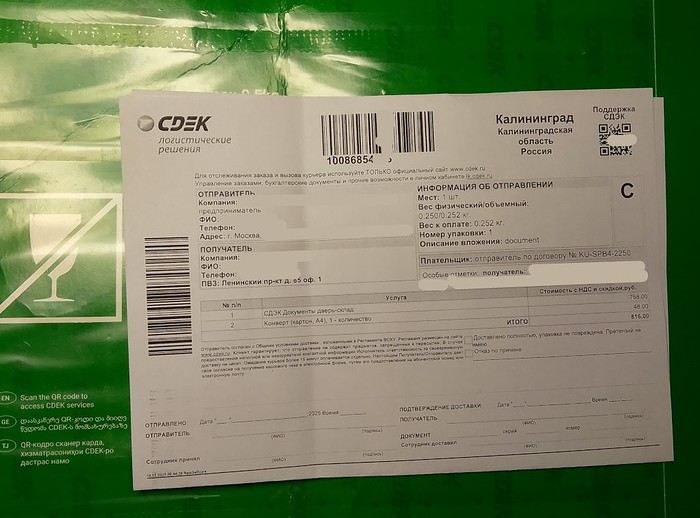
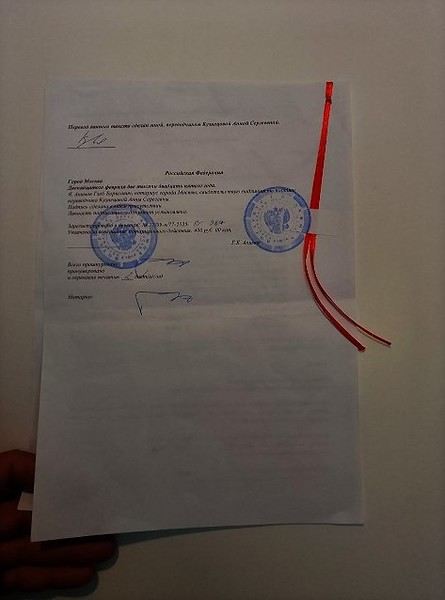
In February 2025, I went to relax for a few days in Kaliningrad. Before my trip, I ordered a notarized translation of my passport online, with express delivery a little before my departure date to a SDEK agency in Kaliningrad, not far from my hotel. SDEK is a large courier company, like DHL. For the translation, you send a photo or scan of the passport page with personal details. A notarized translation is a sealed document with a red ribbon (and with original signatures and stamps, "analog").
I took the early afternoon bus from Gdańsk, and upon arriving in Kaliningrad, I went to the SDEK depot where I had the translation delivered.
The next day, I went to the main MFC (Multifunctional Center) located at the end of Leninsky Boulevard, at the corner of Victory Square, across from the cathedral.
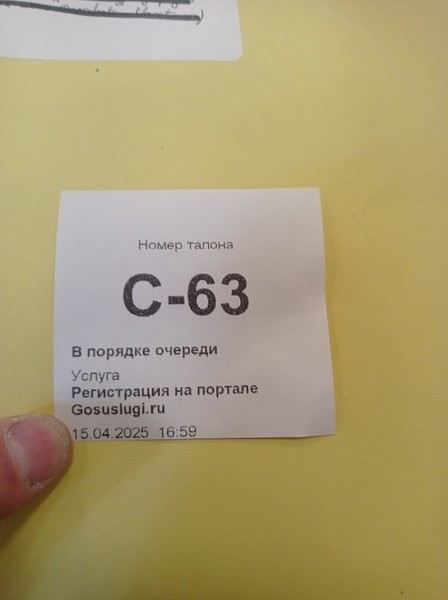
At the reception, I mentioned I wanted to register for a SNILS, and the clerk printed a queue ticket for me.
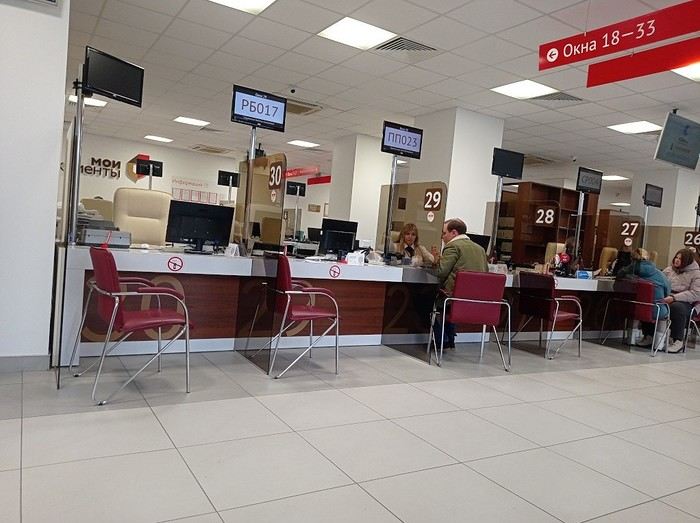
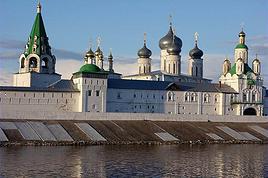
I waited a little less than half an hour. Here’s one of the wings of this MFC:
The agent informed me that the SNILS would be ready after a day. I received a receipt.
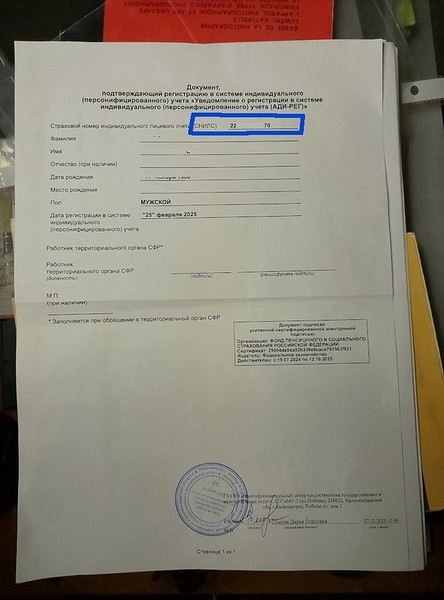
I waited until the next day, and the day after, I returned to the MFC and requested another queue ticket for the SNILS. At the counter, I presented my passport with the translation and the receipt again. The agent issued me the certificate with my SNILS number.
Here it is:
Over the next two days, I wandered around the oblast, visited the Curonian Spit, etc., then returned to the MFC to register on Gosuslugi.
No luck—there was technical maintenance, and the service was only available again on Monday. But I had to return home over the weekend and go back to work on Monday.
In early April 2025, I went to Pskov.
I visited the main MFC in the northern bank district, about a 10-15 minute walk from the Church of Cosmas and Damian. At the reception, I asked for a ticket to register on Gosuslugi.
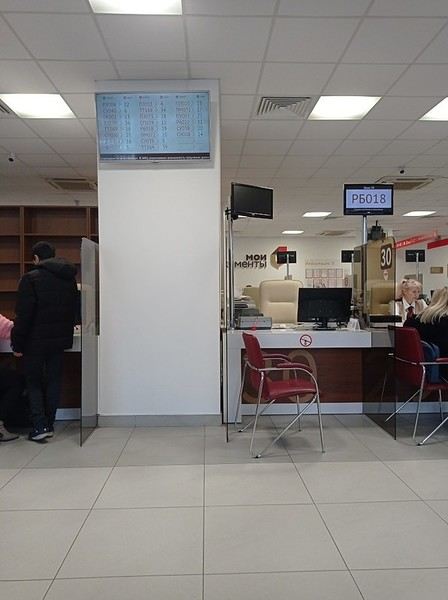
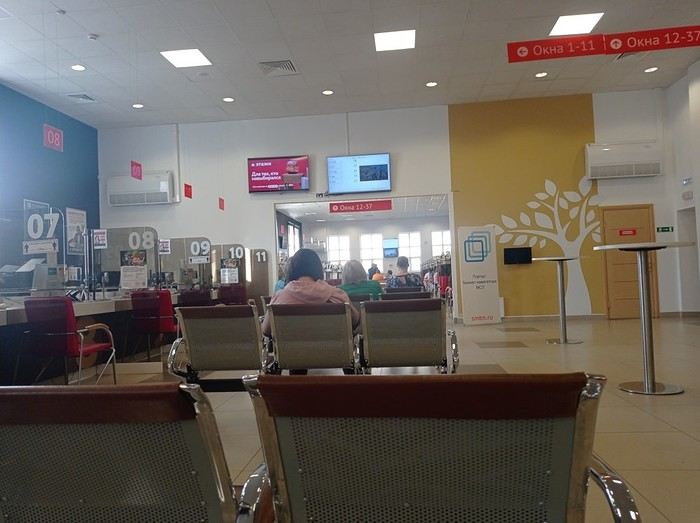
The hall of this MFC:
At the counter, I presented my passport with the translation, provided my mobile number (which is required for the procedure), and gave an email address.
The process took a long time, almost an hour, because there were network slowdowns. We had to retry sending the confirmation SMS to my phone several times.
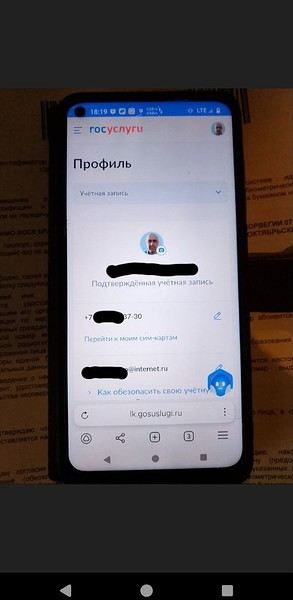
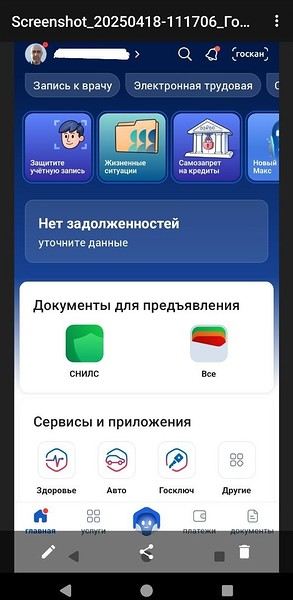
Once everything was completed, the Gosuslugi app was activated:
Right after, I went to the SBER branch on Oktyabrskaya Street for EBS (biometric registration).
Same process: I provided my passport with the translation, and I showed my phone with the Gosuslugi profile open so the agent could collect and verify my information.
Then, I read a series of numbers (from 0 to 9, then from 9 to 0, and then in random order) to record my voice, and a photo of my face was taken with a webcam.
But the upload of the audio and photo files didn’t go through due to network overload. The agent explained that they had peak overloads at certain times. I came back the next day in the middle of the day, the procedure was restarted, and my biometric profile was activated.
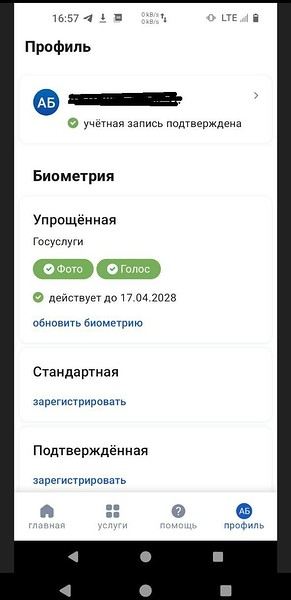
On the phone app, this corresponds to the following (note "foto" and "golos" = voice):
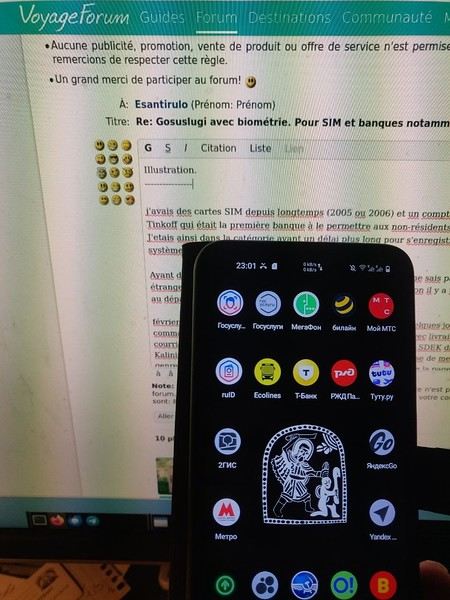
I have a dedicated phone when I'm in Russia, with two SIM cards and the usual apps. In this photo taken from that phone held in front of the screen where I'm typing this, the Biometrika and Gosuslugi app icons are at the top left:
The connection to Gosuslugi works without a VPN from abroad, at least so far.
Thanks for all this info. Just a quick (maybe silly) question: do you need to go through all these steps for a simple prepaid SIM card, or is it just for contract SIMs?
Thanks for all this info. Just a silly question: do you have to go through all these steps for a simple prepaid SIM card, or is it just for contract SIMs?
All "normal" SIM cards, i.e., those offering voice, SMS, and internet. Some providers might offer internet-only SIMs, similar to those for USB modems, so not for phone calls.
The concept of a subscription doesn’t really exist because there are no forced subscription plans. If you don’t pay the next monthly fee, the SIM card simply becomes inactive, but there’s no legal action from the bank.
The process is supposed to be simplified, reduced to a single counter handling the three steps in one go: SNILS, Gosuslugi, and biometrics. But between theory and practice, there can be delays.
Hi there,
If your wife is Russian, you just need to put everything in your wife’s name.
It’ll be a bit more complicated if you want to activate your OZON bank card, but it’s doable.
At the bank, they simply scanned me with a camera.
Best,
Patrick
Un concerné n'est pas obligatoirement un imbécile encerclé
Hello,
It’s recommended not to use your Russian SIM card outside Russia, except with Wi-Fi.
The same goes for a European SIM card—you should only use it with Wi-Fi in Russia.
You risk having your Russian or European SIM blocked for at least 48 hours...
I’d advise bringing a dedicated phone for Russia and another for the EU.
Best regards,
Patrick
Un concerné n'est pas obligatoirement un imbécile encerclé
It is advised not to use your Russian SIM card outside of Russia
In some cases, it’s necessary to have an active Russian SIM abroad to receive SMS confirmation codes for certain websites. So far, I haven’t had any issues with my Russian SIMs being blocked when returning to Russia.
Otherwise, to access certain Russian sites, what matters is having a Russian IP address—whether via SIM or Wi-Fi doesn’t make a difference. For example, the railway site RZD requires a Russian IP address, but Tutu does not.
You risk having your cards—Russian or European—blocked for a minimum of 48 hours...
Since last summer, a decree has been in place that blocks roaming for foreign SIM cards for 24 or 48 hours upon crossing the border or, in some cases, as soon as they connect to a network. It’s a security delay after which everything works normally again, but the timer restarts if the phone is turned off and back on.
The issue with mobile internet is different. During periods of high activity from NATO drone swarms, 4G is severely limited in some cities. Basically, only essential services (Yandex Go, Kart, Navigator, RZD, Ostrovok, 2GIS, banking apps, etc.) work—everything else is blocked. I experienced this two months ago in Pskov and Vladimir. However, everything was normal in Saint Petersburg, though VPNs were blocked there.
Hi there,
For the VPN, it's normal—you need to use an obfuscated server, which makes things easier.
Russian law doesn’t allow advertising VPNs that aren’t banned for private individuals.
Best,
Patrick
Un concerné n'est pas obligatoirement un imbécile encerclé
Using a SIM card with Wi-Fi?
I don’t get the concept.
You just deactivate it—obviously, you can use a phone without a SIM card over Wi-Fi.
Besides, if this only applies to physical SIMs with voice service, why not just use a data-only eSIM, which should still let you do everything?
What’s the point of having a voice phone number?
Hello,
Actually, I didn’t explain myself well.
You need to prevent the SIM card from working by deactivating it and then use Wi-Fi.
Best regards,
Patrick
Un concerné n'est pas obligatoirement un imbécile encerclé
.
Why not just use a data-only eSIM, which should still let you do everything?
What’s the point of having a voice phone number?
If the phone isn’t eSIM-compatible :-)
A Berlin-based company sells eUICC modules in SIM form, with a dedicated app to download eSIM profiles. That’s probably an alternative, but I haven’t tried it: https://esim.me/
In some cases, SMS functionality could be useful, as well as simply having a local number.
Given the hassle you describe, it seems well worth investing in an eSIM-compatible phone.
in some cases, SMS functionality could be useful, as well as simply having a local number.
You really have to be motivated.
The current process is slow, especially. For a short occasional trip, it’s not worth it. If it’s a long trip, it makes life much easier, and for frequent travel, it’s almost essential—it lets you buy train, bus, and flight tickets online well in advance.
Russia is highly digitized, with phone apps, NFC, or QR code payments being common for a long time.
The government plans to simplify the three procedures (SNILS registration, Gosuslugi account creation, biometrics) into one. But that’ll take ages.
It’s clear that it’s confusing for a tourist to queue up at an administrative center, and if you don’t speak a bit of Russian or aren’t already familiar with the country, it can feel like climbing a mountain and cause a huge time loss, even though Russians are very helpful.
For those who are familiar with the country, though, it’s a piece of cake.
--
a practical aspect to keep in mind:
if you need to access your online banking or use your VISA for a purchase while in Russia.
In my case, my bank blocks Russian IPs, and on top of that, in recent months, there have been major VPN blocks in some urban areas. In those cases, you’ll need a non-trivial solution like a VPN or VNC and similar tools.
Hello,
If you don’t have a VPN, **do not** contact your bank (checking your balance or anything else), because they’ll know where you are and may close your account without any justification.
VNC isn’t useful and doesn’t do anything, just like GoodbyeDPI...
There are VPNs that work in Russia, but they’re becoming rare.
(paid or free)
But if you’re coming for three months, grab a pen and track your expenses.
EU (or US) Visa or debit cards are no longer accepted in Russia. You *might* still use them at places that take them, but those are rare—and you might end up sending your money to a bank in Australia (true story).
Best,
Patrick
Un concerné n'est pas obligatoirement un imbécile encerclé
If you don’t have a VPN, **do not** contact your bank (checking your balance or anything else), because they’ll know where you are and may close your account without any justification.
VNC isn’t useful and doesn’t do anything, just like GoodbyeDPI...
There are VPNs that work in Russia, but they’re becoming rare.
(paid or free)
But if you’re staying for three months, grab a pen and track your expenses.
EU (or US) Visa or debit cards are no longer accepted in Russia—you can still use them at places that take them, but those are rare, and you’ll likely end up sending your money to a bank in Australia (true story).
I was referring to cases where you might need to log into your online banking. For example, you’re in Russia for three or four weeks, and you get an email reminding you about an unpaid bill back home. You want to pay it while you’re in Russia by logging into your bank to make a transfer.
Same goes for using your Visa on a non-Russian site.
I ran into this in October. I was in St. Petersburg and needed to buy a return ticket from Tallinn to Oslo. Not a purchase on a Russian site, but on Norwegian Airlines’ website, using my Visa. My bank blocks Russian IPs—I always use a VPN. But this time, VPNs were blocked.
VNC: If you have a dedicated server in the EU with a desktop, and you connect via VNC or something similar (NoMachine, RDP) through an SSH tunnel, that’s not a VPN. You’re controlling a remote Linux or Windows desktop, where you can open a browser to make purchases or payments. This works in cases where transaction confirmation uses a code generator (like Digipass).
Hello,
In Kaliningrad, you can also go to this address for the Snil procedure—it’s the same process, but faster. It’s near the train station:
Межрайонная инспекция ФНС России № 1 по Калининградской области
PlPloshchad' Kalinina, 1-7, Kaliningrad, Kaliningrad Oblast, Russia, 236022
Best regards,
But where you went, there are way more restaurants around.
Patrick
Un concerné n'est pas obligatoirement un imbécile encerclé
Hi there,
we’re planning our trip to the North Cape this summer. We bought a new vehicle for it. Unfortunately, the registration document is still being processed, and the delay seems long—I don’t think I’ll have it in time for our departure...
I have the transfer documents, insurance in my name, and all the supporting paperwork, but not the registration document. So my question is: does the ferry company require the registration document *mandatorily* when boarding in Denmark or not?
Thanks for any insights...
Hi everyone,
I bought a new apartment in Pattaya that will be finished at the end of 2013, and I’d like to buy more later...
I think it’s a good investment idea, but I’d love to hear from those of you with experience—what do you think? I’d also like to know how to handle rentals... Should I go through agencies, or are they usually rented out directly by the building management companies?
Thanks in advance for your replies! 🙂
Hi everyone,
I have to leave for Perth, Australia in a week, for 7 days, and I couldn’t get my international driver’s permit due to processing and delivery delays.
The information I’ve found about whether an international permit is required is contradictory. Some sources say you need one, others say you don’t.
Could anyone let me know if an international driver’s permit is necessary to rent a car in Australia (Perth), or if a French license is enough for a 7-day rental?
hi everyone,
I need to apply for a new eTA for Canada.
do I need the number from my old eTA or not?
because I can’t find my old eTA number anymore.
thanks for your replies, have a great weekend
Hi there,
I know there are similar topics here and elsewhere, but they’re a few years old, and I need an up-to-date answer to make sure I don’t throw over 1000 € out the window. Thanks for your patience.
I’m planning a trip from France to Alberta/British Columbia, and I’m unsure about which bank card to use for the security deposit with the rental company (I’m thinking of going with AVIS).
I contacted Avis Canada, and they told me a credit card is absolutely required. I asked my bank for a credit card (a *real* credit card), but they only offered me a deferred debit card.
My question: For a rental with Avis Canada, is a Gold International Mastercard deferred debit card usable for the security deposit needed to finalize the rental? Is the "CREDIT" label enough? (Some cards say "CREDIT" and others say "CARTE DE CREDIT"—seems minor, but it’s actually a big deal in how the card works.)
I’ve seen conflicting info everywhere I look... My bank says it’s *usually* okay (the deferred debit card), while Avis Canada insists it *must* be a credit card, not debit—even when I mention the deferred debit card.
I know the whole credit card concept is already confusing, and on top of that, some sites say a deferred debit card counts as a credit card, while others say it doesn’t.
Thanks to anyone who can share a recent experience!
Have a great day
Hello everyone,
Could a resident of Benin (Cotonou) kindly let me know which is the best mobile phone and internet service provider?
Thank you very much,
Best regards,
Juan
Hi,
I’m bringing Seresta, an anxiolytic (tranquilizer) from the benzodiazepine family,
to help me sleep.
I’ll have the prescription with me.
Will this be a problem at customs, and do I need to declare it?
Same question for antibiotics?
Thanks a bunch!
Hi everyone,
I’ll explain my situation.
Unfortunately, I lost my passport, and I only realized it two weeks before my departure for a humanitarian mission in Libya. I’m a nurse, and this mission really means a lot to me.
First, I applied for an emergency passport, but it was denied by the Val-d'Oise prefecture on the grounds that a planned humanitarian mission wasn’t considered an urgent reason.
So, I submitted a biometric passport application on July 20th. Since then, the tracking has been stuck, and the town hall can’t (or won’t) give me any clear information. Every time I call, I get a different story. The last update I received was that the passport had been produced since July 23rd with a status of "about to be shipped," but nothing since then.
I’ve managed to push my departure back to next Tuesday at the latest, but I’m starting to really panic.
Have any of you submitted an application around July 20th, especially in Val-d'Oise (95)? How long did you wait between the passport being produced and it being available at the town hall? Is it normal for this step to take this long?
This mission means so much to me. I had everything organized, and I’m also supposed to attend a friend’s wedding right after near the border.
Thanks so much to those who take the time to respond or share their experience. 😔
Can anyone tell me exactly if a passport "valid for the duration of the stay" is enough, or does it need to be valid for 6 months after the trip?
I checked the embassy’s website, but that info is missing.
Hi there,
I’ll be arriving in Seoul on November 18th after spending about a month in India.
Do you know if I’ll need to fill out any additional documents besides the e-arrival card?
Thanks in advance for your tips!
I’m a bit embarrassed because I need to travel to Quebec from February 27th to March 13th. I’m a regular visitor to Canada—this will be my 10th trip since 1997, plus a year as a permanent resident (2000–2001) and a cross-country run from Vancouver to Halifax in 2011. So, I’m definitely not a terrorist!
But since our last trip in July 2015, they’ve introduced this eTA thing. Seems more like a way to make money than to actually secure Canada, if you ask me, but anyway, that’s not the point.
I applied for an eTA for myself, my wife, and our two kids. They all got approved within hours, but not me! I was asked to create a GC key and then an IRCC account, which I did. Normally, you get news within 72 hours, but since Monday, January 15th, nothing!
In the "message" section of the account, it says "explanation letter (required)" with a deadline of January 25th, but I can’t find any explanation anywhere—despite searching the Canadian government website and Google. No links, nothing!
I’ve emailed them but haven’t heard back yet. I’m thinking of calling the Canadian embassy in Paris tomorrow. Even though I’m not stressing yet, it’d be a bummer if everyone else got to go without me!
If anyone’s had this issue before or knows what this explanation letter is about, I’d love to hear more.
hi there
I’m heading to Seoul in September, and to do that I need to get a travel authorization that we apply for through K-ETA....... turns out I can (barely, I admit) fill out the form up to the address of our "stay location," but every address I’ve entered has been rejected by the system. I’ve tried my hotel, the Lotte Hotel (which is well-known in Seoul), the airport—basically, I’ve entered at least 20 addresses, all rejected....
So, to anyone who’s successfully gotten the authorization, could you tell me which address you used to get that "elusive" approval?...
Hi there,
I’m heading to Senegal in January for a month and was wondering if I just need my French driver’s license or if I should get an international permit?
Thanks!
JL
I’m heading to Laos next spring, but I have a question about the Thai arrival/departure form. I’ll be flying PAR-BKK, then taking the train to Laos (so exiting Thailand), and later re-entering Thailand by train to catch my return flight. Do I need to fill out two forms in this case?
Hi there,
I have a 9-seater passenger vehicle that I use for my business in Paris, transporting people.
I’m planning to go to Algeria with my family.
The vehicle registration lists my company as the owner.
Can I get a TPD (Temporary Admission Document)?
Will I need a KBis extract or a power of attorney?!?
Thanks for your help.
Worst case, I can add my personal name as a co-owner on the registration, but that would be a real shame!
Hi,
I’m writing to ask for some info—I’ve heard that you **must** have travel insurance to land in Zanzibar.
What’s the process, and which insurance should I get?
Thanks in advance for your feedback!
Best,
Seb
Hi, are there any travelers who’ve recently crossed the border between Karakalpakstan (Uzbekistan) and Beineu in Kazakhstan?
It was closed for a while.
Thanks for any info!
I bought a one-way flight (Ryanair) and a return flight (EasyJet) to spend a week in Morocco in April.
My passport expires 3 weeks after the return date.
Some websites say the passport must be valid for 3 months at the time of entry.
However, it will still be valid both on entry and return, but its validity will only be 1 month at the time of entry (and 3 weeks on the return date, everything prepaid).
It's an individual family trip.
The consulate can't give me an answer—they're still looking into it (really!)
Last year, we stayed for 3 months in Thailand, north of Khao Lak, and were able to benefit from the 2-month visa exemption, renewable for one month by going to Takua Pa to validate a 1-month extension (1,900 baht).
This year, it’s a disaster for us—not only were we planning a 4-month stay, adding a visa run in between (which some say is quite risky), but the law is apparently changing in the coming months with the return of the 1-month exemption (plus the usual 1-month option). So, we looked into applying for a 6-month multiple-entry visa, allowing a maximum of 60 consecutive days in Thailand. However, I can’t find anywhere the minimum time required outside Thailand between two stays—do any of you have an idea?
Thanks for the info! If you’d like tips on Khao Lak and the surrounding areas, we’ve got some experience, though things change fast!
Cheers,
Bruno.
My partner, our 8-year-old daughter, and I are going on vacation to Gex.
We’ve decided to spend one day in Switzerland and another in Italy. Will we need ID (national ID card or passport)? Do we also need ID for our daughter?
Hello,
We’ll soon be moving to Madagascar long-term.
As a French national, I need to obtain a short-stay visa that can be converted to a long-stay one. To do this, I have to send the required documents to the Madagascar embassy in Paris.
No issues with that procedure so far.
If I get this visa, once I arrive in Madagascar, I’ll need to provide the same documents to the Ministry of the Interior in Anosy. I’m trying to find an email address or website for the Ministry to check which documents I need to submit (I think they ask for additional ones).
If you have any info on this, I’d appreciate your replies.
Best regards,
M. Buisson Eric
I’d like to know if anyone has already applied for a private visa to Russia with an invitation from a Russian resident.
I traveled earlier this year with an e-visa, but since I want to stay longer, I’ll be visiting my friend who lives in eastern Russia.
For the visa application, does the invitation need to be on an official paper form issued by the Russian ministry? And most importantly, do I need to present the original for the application, or is there an electronic version that can be sent directly to the consulate in France?
Thanks for any info if you’ve gone through this process before!
I filled out the B2 form to apply for a visa, created an account on Atvis to pay the visa fees and schedule a meet-up, but every time I try to pay with my Boursobank Visa 1st card, they refuse the payment with a message telling me to check my details (address), even though everything is correct. Does anyone know why this is happening, or maybe they don’t accept Visa cards? Are you aware of this?
Thanks for your feedback!
Elisabeth
There are rumors going around about the ETA: it must absolutely be on your smartphone in the "ETA" app.
Paper documents might not be accepted.
Is this real or just a hoax?
Thanks, I’m leaving in 3 weeks. My passport is good to go and my ETA is still valid for a year, but I only printed the email I received.
Thanks everyone.
Hi there,
We need to apply for a B2 visa because we visited Iran in 2018. It currently costs $185, but they’re planning an additional $250 fee per person for the same visa—it’s been approved but not yet implemented. Does anyone know when this fee will take effect?
Thanks in advance!
Elisabeth
Hi there,
In November, we're heading off on a 4-month trip. We'll be landing in China and plan to leave the country via a land border into Vietnam.
I’ve read that China may ask for proof of exit within 30 days (flight ticket or other reservation). Since we’d be leaving by land, I’m wondering how this works in practice.
Has anyone here been in this situation recently?
Did the airline ask for an exit ticket before boarding?
Did Chinese authorities require proof upon arrival?
Is a train/bus ticket to Vietnam sufficient?
Is a cancelable or flexible reservation accepted?
Hi there,
Just a question that’s probably been asked before (though usually the other way around for my situation :))
My wife and I are heading to the US.
On her ticket, it only has her maiden name (e.g., Martine DUPOND).
On her passport, it’s written as Martine DUPOND épouse AVRY.
No issues for travel, I hope I did the right thing with the ticket?
Then for the ESTA, is just Martine DUPOND enough, or do I need to include the "épouse AVRY" part like on the passport?
Thanks in advance!
Hi there,
I’m spending a few days in San Pedro de Atacama (Chile) and would like to cross the Argentine border to make a loop toward Salta and then return to Chile to drop off the rental car.
I’ve heard that crossing the border can be tricky!
Is it possible with a rental company’s authorization? Which company, and at what cost?
Thanks for sharing your experiences!
Best regards,
Arnale
I saw on the French Embassy in Peru’s website and the Peruvian Consulate in Paris’s site that the rule is to have a passport valid for 6 months *after the arrival date* (not the return date).
I arrive in Peru on August 13, 2019 (for about twelve days), and my passport is valid until February 16, 2020.
That’s 6 months and 3 days after my arrival date in Peru. In my opinion, I’m good to go.
But could I still be denied entry if they say I don’t cover the return date or that I’m too close to the 6-month mark?