Hi everyone,
My partner and I are planning a 3-week trip to Kazakhstan in August and would love your input to refine our itinerary.
We’re thinking of spending the first part of the trip in the Almaty region, including the following spots:
Singing Barkhan (singing dune)
Altyn-Emel National Park
Charyn Canyon National Park
Ozora Ushchel'ya Reki Kensu (Kensu River Valley lakes)
possibly Ile-Alatau National Park
After that, we’d like to explore the Mangystau region around Aktau, with highlights like:
Airakty
Tuzbair Salt Lake
Kyzylkup ("Tiramisu")
Gora Bokty
Bozzhyra
Three Brothers Peaks
We’re planning to rent a 4x4 in each region and have a few questions:
Could you recommend any reliable 4x4 rental companies in both the Almaty and Aktau/Mangystau regions?
I’ve read that the Mangystau region can get extremely hot in August. Do you think it’s better to start with Almaty and finish with Aktau to hopefully have milder temperatures (less extreme😛)? For us, doing the reverse would be simpler in terms of international flights, the domestic flight, and it’d also be significantly cheaper.
Regarding the places listed above, do you think there are any must-see spots we should add, or conversely, any sites that aren’t worth the detour?
More generally, do you have any practical tips for a 3-week trip to Kazakhstan in August (road conditions, fuel availability, reservations, weather, safety, etc.)?
Thanks so much for your feedback and advice!
P.S.: We’re used to traveling independently and driving 4x4s in sometimes challenging conditions (Namibia, Tanzania, Bolivia—South Lipez, Chile, etc.), and we’re also experienced hikers, used to self-sufficient treks (Patagonia, Huayhuash, Three Peaks in Nepal, among others). We’re just mentioning this to give you an idea of our level of self-sufficiency for this kind of trip.
Central Asia · Kazakhstan
Kazakhstan, Kirghizistan, Mongolie, Ouzbékistan, Russie, Tadjikistan et Turkménistan.
Showing 1–30 of 460 discussions.
Many threads here are in French, the community’s main language. English translations are added over time.
Hi there,
After a long absence, I’m back on this forum where I used to post under the username NealMorse (mostly about off-the-beaten-path spots in the American West...).
I’m planning a trip to Uzbekistan—details still up in the air (8–10 days)—but I’d love to combine it with a stop in Kazakhstan at Mangystau (5–7 days).
One of my main reasons for traveling is to seek out and photograph deserts, especially dramatic landscapes. Mangystau fits the bill perfectly!
Has anyone here got any tips for this trip, especially how to connect the two countries? Thanks in advance
I’m planning a trip to Uzbekistan—details still up in the air (8–10 days)—but I’d love to combine it with a stop in Kazakhstan at Mangystau (5–7 days).
One of my main reasons for traveling is to seek out and photograph deserts, especially dramatic landscapes. Mangystau fits the bill perfectly!
Has anyone here got any tips for this trip, especially how to connect the two countries? Thanks in advance
Hi there, 🙂
I’m thinking of taking a trip to these two countries in 2026 (late spring to early summer).
I’d arrive in Almaty and leave from Bishkek, and I’d be driving myself.
I plan to spend 1 week in Kazakhstan and 2 in Kyrgyzstan. The itinerary isn’t set yet.
My preliminary questions are about formalities, hassle levels, and the car.
From what I understand, no visa is needed, the passport must be valid for 6 months after entry, and there’s no longer a requirement to register with the authorities at each stop. In short, once you’re in, no administrative headaches.
Except for permits needed to drive in certain regions?
---/---
About crossing between the two countries:
- On foot - In a rental car
Quick? Easy?
---/---
Are both countries safe? (Meaning you don’t have to stay on guard all the time.) Are the cops corrupt? (A little, a lot, passionately, not at all?)
---/---
Is it better to rent a car for both countries or rent a vehicle in each country?
A 4x4 or something else?
Is accommodation plentiful enough that I can skip a rooftop tent, or is it better to rent a 4x4 with one?
I’ll definitely have more questions later...😉
Thanks for your answers !
I’m thinking of taking a trip to these two countries in 2026 (late spring to early summer).
I’d arrive in Almaty and leave from Bishkek, and I’d be driving myself.
I plan to spend 1 week in Kazakhstan and 2 in Kyrgyzstan. The itinerary isn’t set yet.
My preliminary questions are about formalities, hassle levels, and the car.
From what I understand, no visa is needed, the passport must be valid for 6 months after entry, and there’s no longer a requirement to register with the authorities at each stop. In short, once you’re in, no administrative headaches.
Except for permits needed to drive in certain regions?
---/---
About crossing between the two countries:
- On foot - In a rental car
Quick? Easy?
---/---
Are both countries safe? (Meaning you don’t have to stay on guard all the time.) Are the cops corrupt? (A little, a lot, passionately, not at all?)
---/---
Is it better to rent a car for both countries or rent a vehicle in each country?
A 4x4 or something else?
Is accommodation plentiful enough that I can skip a rooftop tent, or is it better to rent a 4x4 with one?
I’ll definitely have more questions later...😉
Thanks for your answers !
Hi, are there any travelers who’ve recently crossed the border between Karakalpakstan (Uzbekistan) and Beineu in Kazakhstan?
It was closed for a while.
Thanks for any info!
Hi there,
I’m planning to visit Kazakhstan and Kyrgyzstan in early June, assuming the war doesn’t spread ??? Could anyone give me some info about the eastern border after visiting Charyn Canyon? First, is it possible to head east using public transport, or should I book a tour from Almaty and stay in the east to continue on to Kyrgyzstan toward Karakol? (I mean, not return to Almaty with the tour.) It’s a bit of a vague question, but those who’ve been there will know what I’m talking about;
Thanks!
Patrice
I’m planning to visit Kazakhstan and Kyrgyzstan in early June, assuming the war doesn’t spread ??? Could anyone give me some info about the eastern border after visiting Charyn Canyon? First, is it possible to head east using public transport, or should I book a tour from Almaty and stay in the east to continue on to Kyrgyzstan toward Karakol? (I mean, not return to Almaty with the tour.) It’s a bit of a vague question, but those who’ve been there will know what I’m talking about;
Thanks!
Patrice

Hi there,
I’d like to spend 2–3 days in the Korgaljyn area in May to photograph flamingos and other birds.
I’ll be in Astana and I’m looking for a tour that includes accommodation so I can stay for 2 days.
I’ve found the buses from Astana and info about the park’s facilities, but no accommodation or guided outings.
Has anyone done this?
Thanks for your help
hello! I’d like to go to Kazakhstan and rent a fitted 4x4 locally so I can drive off-road trails and sleep inside the vehicle... could anyone share some local rental company addresses, please? Thanks! !
I wanted to know if it’s possible to go from Tashkent to Almaty by train without passing through Kyrgyzstan. I’ve heard the border is often closed 😕 between Uzbekistan and Kazakhstan.
Thanks in advance!
Olivier
hi everyone
I’m just starting to plan a trip to Kazakhstan—I’m thinking 4 weeks in summer ’26—and I’m totally in the dark! What route should I take? First off, for my flight ticket, where should I fly into and out of if I want to book soon?
Is it possible to rent a vehicle with a roof rack? Is that generally tolerated? (Maybe around Almaty?)
I love trains, so I’d prefer that mode of transport.
Anyway, I’m counting on your experiences since it’s tough to find practical info about this country. Thanks in advance for your tips
Is it possible to rent a vehicle with a roof rack? Is that generally tolerated? (Maybe around Almaty?)
I love trains, so I’d prefer that mode of transport.
Anyway, I’m counting on your experiences since it’s tough to find practical info about this country. Thanks in advance for your tips
Hi there,
We're planning a trip from Astana to Dushanbe. By train across Kazakhstan, then using public transport in Kyrgyzstan (circling Lake Issyk-Kul) and Tajikistan, taking the northern route in the latter (from Khujand to Dushanbe).
Have any of you been to these regions recently, and what do you think about the safety aspect?
Thanks in advance! :)
Hi everyone!
I’m just back from two weeks in southern Kazakhstan. I went with a friend, and we organized everything ourselves. We came back absolutely enchanted by the trip: stunning landscapes, lots of animals spotted in the parks, and above all, amazing hospitality and a warm welcome.
I’m just back from two weeks in southern Kazakhstan. I went with a friend, and we organized everything ourselves. We came back absolutely enchanted by the trip: stunning landscapes, lots of animals spotted in the parks, and above all, amazing hospitality and a warm welcome.
Hello everyone!
I’m back from two weeks in southern Kazakhstan. I went with a friend, and we organized everything ourselves. We came back enchanted by this trip: stunning landscapes, lots of animals seen in the parks, and above all, top-notch hospitality and welcome... All of this makes me really want to go back and explore the other countries in the region. In the meantime, I’m sharing the story of these two weeks of travel... Don’t hesitate if you have any questions. And if you want more practical info and/or see more photos, you can check out my blog: https://smilingaroundtheworld.com/category/kazakhstan/
Day 1: First Kazakh steps in Shymkent
So here we are in Kazakhstan for two weeks. We had an excellent flight with Air Astana, which instantly made it into my top 3 best airlines! From the airport, the service was top-notch, with very friendly staff who went out of their way to ensure we both got vegetarian meals (my order hadn’t been taken into account when booking the tickets online). The flight to Nur-Sultan (the new name for the capital, formerly Astana, renamed last month in honor of the resigning president) was three-quarters empty, and we each got to stretch out over three seats. We were given an incredible travel kit, including a reversible sleep mask with phosphorescent writing: “Do not disturb” or “Wake me for meals.” Awesome! As for the lighting in the plane, I think the interior cycled through every color to simulate evening, early night, pitch-black night, and then dawn. It was even a bit surreal—those lights and everyone’s glowing masks ^^ The flight was a bit early and too short for us to sleep well, but it was still pleasant :-)
Upon arriving in Nur-Sultan, the atmosphere was a bit colder. There was staff everywhere, and we were under heavy surveillance. A camera even filmed us as we entered the terminal. We got our passports stamped and settled in to wait for our second flight. We eventually realized we were waiting in the wrong place... We were still in the international terminal, while our next flight was domestic. We finally found the right spot—saved! We started our trip in Shymkent, in the south of the country. We dropped our bags at the City Hostel, a super modern youth hostel offering double rooms. The decor is industrial-style, with very high ceilings—we loved it. When we arrived, it was too early for check-in, so we just left our luggage and went for a walk around the neighborhood. There was quite a bit of traffic, and the avenues were very wide. Despite that, there was also a lot of greenery and green spaces, which lightened things up a bit.
We had lunch (pizza + smoothie) on the top floor of a shopping mall, then headed to the pre-Russian quarter, a much quieter area with its little streets and individual houses.
Back at the hostel, after checking in, we treated ourselves to a two-hour nap—it felt great! In the late afternoon, we set out to find the Salman Bazaar. It wasn’t easy to organize—we realized Shymkent isn’t a very touristy destination—but we eventually managed with the help of the hostel receptionist, who called us a taxi. This bazaar is huge and has everything you could need for daily life: clothes, food, household products, toys... We did some shopping for dinner, then took another taxi to Independence Park, inaugurated in 2011 for the 20th anniversary of Kazakhstan’s independence. We really liked this park—it’s very wooded, and the late afternoon light was, as always, beautiful and pleasant... In the center, a large monument resembles the center of a yurt.
We then walked back to the hostel via Independence Square and several parks. We wanted to grab a drink along the way but didn’t find anything inspiring—oh well. We had dinner at the hostel and went straight to bed. Tomorrow, we’re getting up early... We’re heading out for two days to explore Aksou-Jabagly National Park. This park is famous for its landscapes at this time of year—it should be in full bloom, especially with tulips. We’ll see!
Days 2 & 3: Canyon, tulips, and wildlife in Aksou-Jabagly Park
Located two hours from Shymkent, Aksou-Jabagly Park is reputed to be one of the most beautiful in the region. We took a taxi from Shymkent, and upon arrival, we were warmly welcomed by Ruslan and his mother. They live at the entrance to the reserve, at the foot of the mountains, in a house surrounded by poplars. The setting is exceptional, and we immediately fell in love with the place. For our first day, we set off to explore the Aksou Canyon. Ruslan arranged a 4x4 with a driver and a ranger. The ranger speaks a few words of English, and with Coralie’s few words of Russian, we should manage! After a “viewpoint” stop, the road turns into a dirt track. It’s rained a lot lately, and the track is sometimes very muddy—at one point, we even had to cross a river. Four-wheel drive was definitely needed! The ranger pointed out some marmots by the side of the path—they were adorable.
We finally arrived at “Inspector’s House No. 1,” which overlooks the canyon. The view is magnificent, with high cliffs, wildflowers, conifers, and the Aksou River winding far below. While the driver chatted with the inspector, we descended to the bottom of the canyon with the ranger. The tulips I’d been hoping for were there—I was so happy! There were red, yellow, and even bicolor ones...
At the bottom of the canyon, we took a little break by the river. “Aksou” means “white waters” in Kazakh—the water does indeed have a very special color, a blue that’s both very light and very intense, like some South American lagoons. It bubbles around the rocks. The climb back up was easier than we feared. Once at the top, we continued along the canyon. The perspective changed as we progressed, and we never got tired of the view... Eagles circled above us.
After about 2 km, the driver picked us up, and we continued to a small kiosk at the foot of the mountains, where we had a picnic. Ruslan’s mother had prepared vegetarian “lunch boxes”—it was delicious and felt good to eat. However, it had gotten noticeably colder, so we put our jackets and scarves back on! After the meal, the driver walked off with a bucket—we figured he was going mushroom picking with Inspector No. 2, who had a house nearby.
We enjoyed the spot a bit longer while the driver gathered mushrooms, and then we headed back toward Ruslan’s place. Or so we thought... The return trip turned out to be quite long—the park wasn’t as deserted as it seemed, and the driver stopped every five minutes to chat with people we passed. At one point, we ran into Inspector No. 2 on horseback—it looked like there was a problem with a car further ahead... The driver and ranger bolted out of the car, headed toward the other vehicle, and we heard raised voices... When they came back, we tried to figure out what had happened, but no luck. We stopped again at Inspector No. 1’s house (are you following?), and they made us get out, telling us Inspector No. 2 needed the car for a few minutes... They left us stranded with Inspector No. 1, who went home, leaving us in the garden :-D We kept busy with the puppies, and I even took a little nap in the sun... Three-quarters of an hour later, we finally left—we didn’t fully understand what happened and never found out!
We got back (almost) without stopping to Ruslan’s house. Our room was ready, and we settled in quickly before dinner. It was already 6:30 PM, even though we were supposed to be back by 4 PM. Mushroom picking really slows things down ^^ Ruslan’s mother had prepared a delicious meal: vegetable soup, raw vegetable salad, and a mushroom, carrot, and potato stew. We loved it!
We spent the rest of the evening planning the rest of our trip while sipping tea. At one point, Ruslan and his mother signaled that there were wild boars right across from us—we could see them clearly! There were three adults and three piglets. We also took a little walk in the garden, watched the sunset, I did some blogging, and Coralie read... A lovely evening, and an equally lovely ten-hour night! The next morning, after a good breakfast, we set off on foot into the park. The trail starts right next to Ruslan’s house—so convenient! Today, we were with another ranger, two Germans (brother and sister), and their English-speaking guide (who didn’t guide much). We walked on a dirt road—there were even more tulips than yesterday, and the snow-capped mountains in the distance were stunning. After 5 km, we reached a small cabin, then continued another kilometer to Kishy Kaindy, a viewpoint overlooking the Jabagly River waterfalls (Jabagly means “year-old foal”). It was spectacular! We stayed a good while admiring this natural wonder. Like yesterday, the ranger didn’t rush us at all—it was really nice. We also saw eagles and an ibex perched on a ridge.
We had a picnic at the cabin before heading back the same way we came. This time, the snow-capped peaks were facing us—so beautiful! We picked up our bags and said goodbye to Ruslan’s mother. She was really happy today because her granddaughter was there. She told us she was a “babushka”—I understood that! Ruslan then drove us to Turar Ryskulov, where we took a shared taxi back to Shymkent.
In Shymkent, we struggled a bit with our Airbnb. We waited half an hour for the person who was supposed to let us in, then discovered the Wi-Fi wasn’t working—but we had a lot of bookings to make that evening. The lady finally lent us a Kazakh SIM card with data, which Coralie put in her phone in “hotspot” mode so I could get some internet too. All of that took nearly two hours. Phew! We then rushed to do some shopping at the supermarket. On the way back, some lights caught my eye—it was a pedestrian street all decorated with a funfair next to it. It was very lively, and we spent a good while strolling and people-watching! The rest of our evening was studious, between preparing dinner and booking our next stops.
Day 4: Turkestan, Yasawi Mausoleum, and Sauran ruins
This morning, after one last stroll in Shymkent, we headed to Turkestan. When we arrived at the bus station, we were told the next bus was in nearly three hours, but there were minibuses leaving when full. The system was well-oiled, and in just fifteen minutes, our minibus was ready to go. We each had a seat (and one for our luggage since there’s no trunk!), and the minibus was quite new—nothing like Madagascar ;-)
The trip went well despite a few driving scares—the driver was going a bit fast for my liking! Along the road, the fields were full of poppies—so pretty. When we arrived, we headed straight to the Edem hotel, where we wouldn’t be staying (we had a train to Almaty at midnight) but where we wanted to leave our luggage for the day. They agreed easily—great! Once we’d dropped off our bags and suitcases, we started our visits.
We began with the architectural gem and largest pilgrimage site in Kazakhstan: the mausoleum of Khodja Ahmad Yasawi, a great Sufi sage. Yasawi’s original tomb was already a pilgrimage site when Tamerlane ordered the construction of a larger mausoleum in 1390. It’s decorated with white and blue tiles and has a turquoise dome (currently under renovation). The main facade, unfinished at Tamerlane’s death, was left in earth with visible scaffolding. Impressive! The site is UNESCO-listed. Inside, the main hall displays a large cauldron, and other small rooms showcase plates, ancient coins, belts... Yasawi’s tomb is visible via two adjacent corridors.
We then strolled through the park, which includes many other mausoleums and tombs. We visited the old baths, the Friday Mosque, and then the history museum. The underground mosque, where Yasawi’s cell is located (where he retreated at the end of his life), was unfortunately closed for renovations.
We then went back to the Edem hotel to have them call us a taxi, and we set off to visit the ancient fortress of Sauran. This Silk Road city, once prosperous, is now reduced to ruins, with thousands of poppies blooming between them. High walls once surrounded a bustling and pleasant city. Many foundations remain visible. The place is vast, quiet, almost deserted, and imbued with a certain melancholy... The deep red poppies swayed in the wind, between the remnants of this city, reminding us how fleeting things are.
Back in Turkestan, we had dinner at the Edem hotel’s restaurant (we had to thank them somehow ;-)) and then rushed to the station to catch our train... 18 hours of travel awaited us to Almaty!
Day 5: From Turkestan to Almaty, 18 hours by train across the Kazakh steppe
We traveled from Turkestan to Almaty by train. We booked our tickets the day before departure, and only six seats were left: three in second class, not together at all, and three in first class, also not together but in the same carriage. We opted for first class! It was more expensive, but for such a long trip, a little comfort wouldn’t hurt... We wondered if we’d manage to switch cabins to be together, but it resolved itself: when we boarded, the conductor/carriage chief immediately noticed we weren’t together. He literally kicked a young man out of his berth so we could travel in the same cabin. We felt bad for the young man, even though he seemed to take it well... we thanked him with dried fruit (and I can confirm he took it well—the next day, he came to chat with us). In any case, we were really happy to have our own little cabin for this long journey, especially since we were the only foreigners and the only women in the carriage.
Eighteen hours by train might seem long, but these long trips while traveling aren’t wasted time—they’re the breathing space of the journey. They’re the essential moments for digesting what we’ve already experienced and preparing for future discoveries. They’re also privileged moments for reflection. Traveling slowly, to the rhythm of the train, means falling asleep in Turkestan’s outskirts, lulled by the train’s rocking and creaking, and waking up in the steppe. It’s feeling the train slow down and stop, stepping onto the platform for a moment, and watching the women sell food to passengers. It’s taking the time to write, read, think. It’s chatting with our neighbors and, despite the language barrier, managing to communicate a little. It’s picnicking at the little table in our cabin, with the landscape rolling by outside, and listening to music. It’s feeling privileged, imagining ourselves on the Orient Express or the Trans-Siberian. Reminding ourselves that one day, one day for real, we’ll take that Trans-Siberian. And smiling, thinking that in the meantime, in a few months, there’ll be the Trans-Canadian...
Days 6 & 7: Almaty, the “little apple”
The former capital of Kazakhstan, Almaty is known as the most Western and lively city in the country. At first, we had a bit of trouble identifying the city center—it’s more spread out and less dense than what we’re used to in Europe—but once we got our bearings, we really enjoyed strolling along the wide avenues lined with cafés and in the few pedestrian streets. The city’s emblem is the apple, which you’ll find in various forms around the city, from benches to statues to fountains. The original apple, from which all the apples we know today descend, is said to come from the mountains of Kazakhstan.
For nature, Almaty is a pretty green city. It has large parks, like Panfilov Park, which houses the Zenkov Cathedral. Some streets are also very tree-lined, so much so that they almost look like gardens. Often, high mountains peek out from behind the streets...
For shopping, traditional boutiques sit alongside big international brands. We really liked the Green Bazaar, a large market that sells everything. The food section was great, with stalls of pickled vegetables, dried fruits, and beautifully stacked fresh fruits... A feast for the eyes and lots of temptations for me!
For culture, Almaty has several museums. We visited two: the Fine Arts Museum and the National Museum. Both are housed in very Soviet-looking buildings on the outside, but the Fine Arts Museum turned out to be quite modern inside, with a pleasant museography. The National Museum, on the other hand, has stayed true to its roots ^^ Just walking through it was an experience in itself. And we did quite a bit of shopping there... The hall is a giant shop with lots of handicrafts—we treated ourselves.
The Arasan Baths are a must in Almaty. They’re said to be among the most beautiful baths in Central Asia... Architecturally, I didn’t find them amazing (nothing like Budapest’s, for example), but wow, did it feel good to relax there after a day of sightseeing! I happily moved between the sauna, hammam, and Russian sauna, with a preference for the latter—less dry than a traditional sauna and less humid than the hammam. You can buy bundles of leaves to slap yourself (or get slapped) with to boost circulation. The prices are very affordable too... On a weekday evening, we paid 1,800 tenge, or 4.5 euros, for an hour. Note that they add 20 minutes for changing, so you really get a full hour in the baths.
For restaurants, we didn’t try many because we preferred to limit our food budget by cooking ourselves. However, we did try and highly recommend Daredzhani, a great Georgian restaurant where we feasted. We didn’t know Georgian cuisine before, but we really liked it—vegetables cooked in various ways, cheese-filled breads, potato and/or egg-filled breads, and very thin fruit pastes made from grapes. We actually ate there twice because it was so good! We also loved Coffee Delia, where you can enjoy delicious pastries in a very cozy setting.
Besides being a pleasant place to live, Almaty is also a great base for exploring the surrounding area, and we were happy to stay eight days to discover more of the region!
Days 7, 8 & 9: Getting green around Almaty: Kok Tobe, Shymbulak, Medeo, and Big Almaty Lake
During our stay in Almaty, we used a rather unusual means of transport several times: the cable car! Here, it’s called a "gondola," and it allowed us to gain some altitude and breathe in the fresh mountain air surrounding Almaty ;-)
First cable car ride: Kok Tobe. The cable car starts in the city center and takes you to the top of a hill overlooking Almaty. At the top, it’s fairground vibes with an upside-down house, a Ferris wheel, rides, and the inevitable eagle trainer... There’s even a little corner dedicated to the Beatles, complete with music and a statue!
Second ride: Shymbulak. This time, you take a bus to Medeo, then three cable cars to the top of the mountain, at 3,200 meters altitude. Shymbulak is the largest ski resort in Central Asia. We went there to hike, but there was still snow and skiers, so we settled for admiring the view... With the blue sky and sun we had, it was gorgeous! We then treated ourselves to tea on the terrace—chalet vibes... At Paul’s, we weren’t completely out of place ;-)
Before taking the bus back, we stopped by Medeo, where there’s a large ice rink. With 10,000 m², it can host a thousand skaters in winter! This season, it’s closed; part of it is used as a go-kart track, and the other as a landing strip for paragliders.
Located an hour’s drive from the city center, Big Almaty Lake reveals itself at the last moment, around a bend, nestled in a setting of mountains and greenery. With the recent cold snap, it’s frozen, and the edges are snowy—a beautiful winter atmosphere! The ice was starting to melt, though—we could hear the water moving underneath, and when Coralie tried to walk on the ice, it collapsed under her feet. Unfortunately, it’s impossible to walk around it—a ranger keeps an eye out and blocks the adventurous (including us ;-)).
Days 10 & 11: Excursions around Almaty: Charyn Canyon, Issyk, and Turgen
Almaty’s tourism office is very active and organizes outings on weekends and holidays. We went to Charyn Canyon and then to Issyk and Turgen. A great way to discover the Almaty area at a modest cost (the outing costs about 6,000 tenge, or 15 euros per person).
Formed over millennia by erosion and wind, Charyn Canyon is reminiscent of the Colorado and the Grand Canyon. The most touristy part we visited is called the Valley of Castles, referring to the rock formations that resemble towers. We first walked along the ridge, where there are many viewpoints, then descended into the canyon. A three-kilometer walk leads to the banks of the Charyn River. The place seems to be a favorite relaxation spot for Kazakh families, who picnic, play ball, sunbathe... There’s also a hotel, bungalows, yurts, and a restaurant. Issyk is famous for its burial mounds and its Golden Man—maybe even a Golden Woman—found there. A small museum displays some artifacts. A little further on is Issyk Lake, once dried up but now reappearing... Whether naturally or not isn’t very clear!
As for Turgen, it’s a natural park known for its gorges and waterfalls. We didn’t have time to explore it in detail, but the bus drove through some beautiful landscapes, and we still walked to Bear Waterfall. It’s not incredible, but it’s still a nice little hike.
Besides the practical side of these organized excursions from Almaty, we appreciated being able to do an activity that Kazakhs do on weekends. During the Issyk/Turgen excursion, we really hit it off with Karina, a young student dragged there on vacation by her mother. She’s currently studying computer science at the best university in Astana and hopes to go to Europe eventually... A brilliant young woman, and a chance for us to chat in English ;-)
Days 12 & 13: The spectacular landscapes of Altyn-Emel Park
The last stop on our Kazakhstan trip was Altyn-Emel Park. This park is quite hard to access, so we opted for a car with a driver for two days—pure luxury!
Our driver’s name is Andrei. We met him at 7 AM outside our apartment on Wednesday morning. He doesn’t speak English, but a young man from the agency we booked through was also there, and we went over the itinerary together before leaving with Andrei.
Our first stop was Tamgaly Tas, two hours from Almaty. It’s a site where you can see 16th-century petroglyphs depicting Buddha. The place is also known for climbing—there were lots of young people harnessed up and/or climbing. It’s right in the middle of the Kazakh countryside, and we had a bit of trouble finding it!
Even with the language barrier, Andrei turned out to be very friendly. He suggested photo stops from time to time, didn’t rush us, and pointed out animals he saw... We even backed up on the road to see and help a tortoise cross!
It took another two and a half hours to reach Bashi, the “gateway” village to Altyn-Emel Park. After a quick stop at the rangers’, we arrived at the hotel. Our guidebook mentioned modest guesthouses, but things are changing... The hotel is large, brand new, and still being expanded. It reminded me of some Chinese hotels in Laos.
We had a quick lunch with Andrei—he explained that he’s a truck driver normally, delivering clothes and fabrics between Kazakhstan, Afghanistan, and Russia. He also showed us photos of his wife and son and told us he’s recently become a grandfather! We then headed to the park, grabbing a ranger on the way. Like in Aksou-Jabagly, he was dressed in full military gear. We first headed toward the Katutau Mountains. The rocks are reddish, sculpted by wind and erosion—the place reminded us a bit of Charyn Canyon. We had some “free time” to explore—we didn’t need to be told twice... Meanwhile, Andrei and the ranger chatted nonstop—it looked like they’d hit it off!
We got back in the car and continued along the track to the Aktau Mountains. Change of scenery! The mountains weren’t red anymore but white... Or so they appeared from afar. When we got closer, we realized they were actually multicolored, striped with yellow, pink, and ochre veins... It was magnificent, even more so with the late afternoon light. We had time to explore on our own again, and we walked with delight in this almost dreamlike landscape. We thought we’d made the right choice coming here ;-) We made one last stop before heading back to see a 700-year-old willow. It’s in an oasis where other tourists were camping—very tempting... I got the coordinates of their guide for next time ;-) The way back was in beautiful light, between sunset and a distant storm. Nature even treated us to a gorgeous sunset!
It was past 8 PM when we got back to the hotel, but our dinner was still waiting for us. We ate with Andrei, chatted a bit with a Polish woman who spoke both Russian and French (we put her to work chatting with Andrei ;-)), and then had a quiet evening with Wi-Fi, a shower, and reading in our room.
The next day, after breakfast, we met up with the same ranger and headed toward the singing dunes. These dunes are supposed to make a sound when you slide down their slopes. I was more than skeptical, but okay! When we arrived, we discovered a beautiful landscape—the main dune is gigantic, and when we reached the top, the view was extraordinary: it was the first time I’d seen a dune in the desert, snow-capped mountains, and a river all in one glance! A group of Chinese tourists was ahead of us on the dune, but they turned back quickly, and we were alone. After studying the terrain, I chose a slope that seemed good, and I started sliding down on my bottom... Quickly, I heard and felt a strong vibration, which turned into a hum. The dune really sings! It’s completely crazy... We did several tests—the most effective was sliding down side by side. But it works as long as there aren’t too many tourists doing it and the dune has time to rebuild between slides... There are about thirty singing dunes in the world. This phenomenon, already described by Marco Polo, comes from the synchronous movement of sand grains, which must be very round and covered with a varnish called “desert glaze”...
Covered in sand but delighted, we headed back to Bashi. The ranger stopped at a small spring so we could wash up, but it was almost dry. Along the way, we also saw the “Oshaktas,” a place where Genghis Khan’s expedition is said to have camped in 1219 during his conquest of Central Asia. The stones were apparently used to support the cauldron where food was prepared. A little further on, the ranger made us stop: there were antelopes!!! We saw one up close and a herd further away.
When we got back to the hotel, I took a quick shower to get rid of the sand—I felt like I had it everywhere! We had a quick lunch and then hit the road back to Almaty. Andrei drove very well, had a nice playlist, and I let myself be lulled while watching the landscape roll by outside...
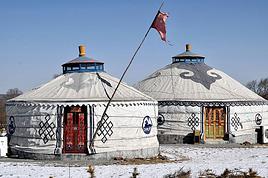
For our last night in Kazakhstan, we booked a yurt in the hills above Almaty, not far from Medeo. For one night, we pretended to be nomads... The bed was a bit hard, and the air was a bit chilly, but we loved it! And the welcome was kind, the meal very good—only downside: the horse milk and camel milk, still warm... I almost threw up. Well, it was an experience, and all of this beautifully concluded our Kazakh stay!
I’m back from two weeks in southern Kazakhstan. I went with a friend, and we organized everything ourselves. We came back enchanted by this trip: stunning landscapes, lots of animals seen in the parks, and above all, top-notch hospitality and welcome... All of this makes me really want to go back and explore the other countries in the region. In the meantime, I’m sharing the story of these two weeks of travel... Don’t hesitate if you have any questions. And if you want more practical info and/or see more photos, you can check out my blog: https://smilingaroundtheworld.com/category/kazakhstan/
Day 1: First Kazakh steps in Shymkent
So here we are in Kazakhstan for two weeks. We had an excellent flight with Air Astana, which instantly made it into my top 3 best airlines! From the airport, the service was top-notch, with very friendly staff who went out of their way to ensure we both got vegetarian meals (my order hadn’t been taken into account when booking the tickets online). The flight to Nur-Sultan (the new name for the capital, formerly Astana, renamed last month in honor of the resigning president) was three-quarters empty, and we each got to stretch out over three seats. We were given an incredible travel kit, including a reversible sleep mask with phosphorescent writing: “Do not disturb” or “Wake me for meals.” Awesome! As for the lighting in the plane, I think the interior cycled through every color to simulate evening, early night, pitch-black night, and then dawn. It was even a bit surreal—those lights and everyone’s glowing masks ^^ The flight was a bit early and too short for us to sleep well, but it was still pleasant :-)
Upon arriving in Nur-Sultan, the atmosphere was a bit colder. There was staff everywhere, and we were under heavy surveillance. A camera even filmed us as we entered the terminal. We got our passports stamped and settled in to wait for our second flight. We eventually realized we were waiting in the wrong place... We were still in the international terminal, while our next flight was domestic. We finally found the right spot—saved! We started our trip in Shymkent, in the south of the country. We dropped our bags at the City Hostel, a super modern youth hostel offering double rooms. The decor is industrial-style, with very high ceilings—we loved it. When we arrived, it was too early for check-in, so we just left our luggage and went for a walk around the neighborhood. There was quite a bit of traffic, and the avenues were very wide. Despite that, there was also a lot of greenery and green spaces, which lightened things up a bit.
We had lunch (pizza + smoothie) on the top floor of a shopping mall, then headed to the pre-Russian quarter, a much quieter area with its little streets and individual houses.
Back at the hostel, after checking in, we treated ourselves to a two-hour nap—it felt great! In the late afternoon, we set out to find the Salman Bazaar. It wasn’t easy to organize—we realized Shymkent isn’t a very touristy destination—but we eventually managed with the help of the hostel receptionist, who called us a taxi. This bazaar is huge and has everything you could need for daily life: clothes, food, household products, toys... We did some shopping for dinner, then took another taxi to Independence Park, inaugurated in 2011 for the 20th anniversary of Kazakhstan’s independence. We really liked this park—it’s very wooded, and the late afternoon light was, as always, beautiful and pleasant... In the center, a large monument resembles the center of a yurt.
We then walked back to the hostel via Independence Square and several parks. We wanted to grab a drink along the way but didn’t find anything inspiring—oh well. We had dinner at the hostel and went straight to bed. Tomorrow, we’re getting up early... We’re heading out for two days to explore Aksou-Jabagly National Park. This park is famous for its landscapes at this time of year—it should be in full bloom, especially with tulips. We’ll see!
Days 2 & 3: Canyon, tulips, and wildlife in Aksou-Jabagly Park
Located two hours from Shymkent, Aksou-Jabagly Park is reputed to be one of the most beautiful in the region. We took a taxi from Shymkent, and upon arrival, we were warmly welcomed by Ruslan and his mother. They live at the entrance to the reserve, at the foot of the mountains, in a house surrounded by poplars. The setting is exceptional, and we immediately fell in love with the place. For our first day, we set off to explore the Aksou Canyon. Ruslan arranged a 4x4 with a driver and a ranger. The ranger speaks a few words of English, and with Coralie’s few words of Russian, we should manage! After a “viewpoint” stop, the road turns into a dirt track. It’s rained a lot lately, and the track is sometimes very muddy—at one point, we even had to cross a river. Four-wheel drive was definitely needed! The ranger pointed out some marmots by the side of the path—they were adorable.
We finally arrived at “Inspector’s House No. 1,” which overlooks the canyon. The view is magnificent, with high cliffs, wildflowers, conifers, and the Aksou River winding far below. While the driver chatted with the inspector, we descended to the bottom of the canyon with the ranger. The tulips I’d been hoping for were there—I was so happy! There were red, yellow, and even bicolor ones...
At the bottom of the canyon, we took a little break by the river. “Aksou” means “white waters” in Kazakh—the water does indeed have a very special color, a blue that’s both very light and very intense, like some South American lagoons. It bubbles around the rocks. The climb back up was easier than we feared. Once at the top, we continued along the canyon. The perspective changed as we progressed, and we never got tired of the view... Eagles circled above us.
After about 2 km, the driver picked us up, and we continued to a small kiosk at the foot of the mountains, where we had a picnic. Ruslan’s mother had prepared vegetarian “lunch boxes”—it was delicious and felt good to eat. However, it had gotten noticeably colder, so we put our jackets and scarves back on! After the meal, the driver walked off with a bucket—we figured he was going mushroom picking with Inspector No. 2, who had a house nearby.
We enjoyed the spot a bit longer while the driver gathered mushrooms, and then we headed back toward Ruslan’s place. Or so we thought... The return trip turned out to be quite long—the park wasn’t as deserted as it seemed, and the driver stopped every five minutes to chat with people we passed. At one point, we ran into Inspector No. 2 on horseback—it looked like there was a problem with a car further ahead... The driver and ranger bolted out of the car, headed toward the other vehicle, and we heard raised voices... When they came back, we tried to figure out what had happened, but no luck. We stopped again at Inspector No. 1’s house (are you following?), and they made us get out, telling us Inspector No. 2 needed the car for a few minutes... They left us stranded with Inspector No. 1, who went home, leaving us in the garden :-D We kept busy with the puppies, and I even took a little nap in the sun... Three-quarters of an hour later, we finally left—we didn’t fully understand what happened and never found out!
We got back (almost) without stopping to Ruslan’s house. Our room was ready, and we settled in quickly before dinner. It was already 6:30 PM, even though we were supposed to be back by 4 PM. Mushroom picking really slows things down ^^ Ruslan’s mother had prepared a delicious meal: vegetable soup, raw vegetable salad, and a mushroom, carrot, and potato stew. We loved it!
We spent the rest of the evening planning the rest of our trip while sipping tea. At one point, Ruslan and his mother signaled that there were wild boars right across from us—we could see them clearly! There were three adults and three piglets. We also took a little walk in the garden, watched the sunset, I did some blogging, and Coralie read... A lovely evening, and an equally lovely ten-hour night! The next morning, after a good breakfast, we set off on foot into the park. The trail starts right next to Ruslan’s house—so convenient! Today, we were with another ranger, two Germans (brother and sister), and their English-speaking guide (who didn’t guide much). We walked on a dirt road—there were even more tulips than yesterday, and the snow-capped mountains in the distance were stunning. After 5 km, we reached a small cabin, then continued another kilometer to Kishy Kaindy, a viewpoint overlooking the Jabagly River waterfalls (Jabagly means “year-old foal”). It was spectacular! We stayed a good while admiring this natural wonder. Like yesterday, the ranger didn’t rush us at all—it was really nice. We also saw eagles and an ibex perched on a ridge.
We had a picnic at the cabin before heading back the same way we came. This time, the snow-capped peaks were facing us—so beautiful! We picked up our bags and said goodbye to Ruslan’s mother. She was really happy today because her granddaughter was there. She told us she was a “babushka”—I understood that! Ruslan then drove us to Turar Ryskulov, where we took a shared taxi back to Shymkent.
In Shymkent, we struggled a bit with our Airbnb. We waited half an hour for the person who was supposed to let us in, then discovered the Wi-Fi wasn’t working—but we had a lot of bookings to make that evening. The lady finally lent us a Kazakh SIM card with data, which Coralie put in her phone in “hotspot” mode so I could get some internet too. All of that took nearly two hours. Phew! We then rushed to do some shopping at the supermarket. On the way back, some lights caught my eye—it was a pedestrian street all decorated with a funfair next to it. It was very lively, and we spent a good while strolling and people-watching! The rest of our evening was studious, between preparing dinner and booking our next stops.
Day 4: Turkestan, Yasawi Mausoleum, and Sauran ruins
This morning, after one last stroll in Shymkent, we headed to Turkestan. When we arrived at the bus station, we were told the next bus was in nearly three hours, but there were minibuses leaving when full. The system was well-oiled, and in just fifteen minutes, our minibus was ready to go. We each had a seat (and one for our luggage since there’s no trunk!), and the minibus was quite new—nothing like Madagascar ;-)
The trip went well despite a few driving scares—the driver was going a bit fast for my liking! Along the road, the fields were full of poppies—so pretty. When we arrived, we headed straight to the Edem hotel, where we wouldn’t be staying (we had a train to Almaty at midnight) but where we wanted to leave our luggage for the day. They agreed easily—great! Once we’d dropped off our bags and suitcases, we started our visits.
We began with the architectural gem and largest pilgrimage site in Kazakhstan: the mausoleum of Khodja Ahmad Yasawi, a great Sufi sage. Yasawi’s original tomb was already a pilgrimage site when Tamerlane ordered the construction of a larger mausoleum in 1390. It’s decorated with white and blue tiles and has a turquoise dome (currently under renovation). The main facade, unfinished at Tamerlane’s death, was left in earth with visible scaffolding. Impressive! The site is UNESCO-listed. Inside, the main hall displays a large cauldron, and other small rooms showcase plates, ancient coins, belts... Yasawi’s tomb is visible via two adjacent corridors.
We then strolled through the park, which includes many other mausoleums and tombs. We visited the old baths, the Friday Mosque, and then the history museum. The underground mosque, where Yasawi’s cell is located (where he retreated at the end of his life), was unfortunately closed for renovations.
We then went back to the Edem hotel to have them call us a taxi, and we set off to visit the ancient fortress of Sauran. This Silk Road city, once prosperous, is now reduced to ruins, with thousands of poppies blooming between them. High walls once surrounded a bustling and pleasant city. Many foundations remain visible. The place is vast, quiet, almost deserted, and imbued with a certain melancholy... The deep red poppies swayed in the wind, between the remnants of this city, reminding us how fleeting things are.
Back in Turkestan, we had dinner at the Edem hotel’s restaurant (we had to thank them somehow ;-)) and then rushed to the station to catch our train... 18 hours of travel awaited us to Almaty!
Day 5: From Turkestan to Almaty, 18 hours by train across the Kazakh steppe
We traveled from Turkestan to Almaty by train. We booked our tickets the day before departure, and only six seats were left: three in second class, not together at all, and three in first class, also not together but in the same carriage. We opted for first class! It was more expensive, but for such a long trip, a little comfort wouldn’t hurt... We wondered if we’d manage to switch cabins to be together, but it resolved itself: when we boarded, the conductor/carriage chief immediately noticed we weren’t together. He literally kicked a young man out of his berth so we could travel in the same cabin. We felt bad for the young man, even though he seemed to take it well... we thanked him with dried fruit (and I can confirm he took it well—the next day, he came to chat with us). In any case, we were really happy to have our own little cabin for this long journey, especially since we were the only foreigners and the only women in the carriage.
Eighteen hours by train might seem long, but these long trips while traveling aren’t wasted time—they’re the breathing space of the journey. They’re the essential moments for digesting what we’ve already experienced and preparing for future discoveries. They’re also privileged moments for reflection. Traveling slowly, to the rhythm of the train, means falling asleep in Turkestan’s outskirts, lulled by the train’s rocking and creaking, and waking up in the steppe. It’s feeling the train slow down and stop, stepping onto the platform for a moment, and watching the women sell food to passengers. It’s taking the time to write, read, think. It’s chatting with our neighbors and, despite the language barrier, managing to communicate a little. It’s picnicking at the little table in our cabin, with the landscape rolling by outside, and listening to music. It’s feeling privileged, imagining ourselves on the Orient Express or the Trans-Siberian. Reminding ourselves that one day, one day for real, we’ll take that Trans-Siberian. And smiling, thinking that in the meantime, in a few months, there’ll be the Trans-Canadian...
Days 6 & 7: Almaty, the “little apple”
The former capital of Kazakhstan, Almaty is known as the most Western and lively city in the country. At first, we had a bit of trouble identifying the city center—it’s more spread out and less dense than what we’re used to in Europe—but once we got our bearings, we really enjoyed strolling along the wide avenues lined with cafés and in the few pedestrian streets. The city’s emblem is the apple, which you’ll find in various forms around the city, from benches to statues to fountains. The original apple, from which all the apples we know today descend, is said to come from the mountains of Kazakhstan.
For nature, Almaty is a pretty green city. It has large parks, like Panfilov Park, which houses the Zenkov Cathedral. Some streets are also very tree-lined, so much so that they almost look like gardens. Often, high mountains peek out from behind the streets...
For shopping, traditional boutiques sit alongside big international brands. We really liked the Green Bazaar, a large market that sells everything. The food section was great, with stalls of pickled vegetables, dried fruits, and beautifully stacked fresh fruits... A feast for the eyes and lots of temptations for me!
For culture, Almaty has several museums. We visited two: the Fine Arts Museum and the National Museum. Both are housed in very Soviet-looking buildings on the outside, but the Fine Arts Museum turned out to be quite modern inside, with a pleasant museography. The National Museum, on the other hand, has stayed true to its roots ^^ Just walking through it was an experience in itself. And we did quite a bit of shopping there... The hall is a giant shop with lots of handicrafts—we treated ourselves.
The Arasan Baths are a must in Almaty. They’re said to be among the most beautiful baths in Central Asia... Architecturally, I didn’t find them amazing (nothing like Budapest’s, for example), but wow, did it feel good to relax there after a day of sightseeing! I happily moved between the sauna, hammam, and Russian sauna, with a preference for the latter—less dry than a traditional sauna and less humid than the hammam. You can buy bundles of leaves to slap yourself (or get slapped) with to boost circulation. The prices are very affordable too... On a weekday evening, we paid 1,800 tenge, or 4.5 euros, for an hour. Note that they add 20 minutes for changing, so you really get a full hour in the baths.
For restaurants, we didn’t try many because we preferred to limit our food budget by cooking ourselves. However, we did try and highly recommend Daredzhani, a great Georgian restaurant where we feasted. We didn’t know Georgian cuisine before, but we really liked it—vegetables cooked in various ways, cheese-filled breads, potato and/or egg-filled breads, and very thin fruit pastes made from grapes. We actually ate there twice because it was so good! We also loved Coffee Delia, where you can enjoy delicious pastries in a very cozy setting.
Besides being a pleasant place to live, Almaty is also a great base for exploring the surrounding area, and we were happy to stay eight days to discover more of the region!
Days 7, 8 & 9: Getting green around Almaty: Kok Tobe, Shymbulak, Medeo, and Big Almaty Lake
During our stay in Almaty, we used a rather unusual means of transport several times: the cable car! Here, it’s called a "gondola," and it allowed us to gain some altitude and breathe in the fresh mountain air surrounding Almaty ;-)
First cable car ride: Kok Tobe. The cable car starts in the city center and takes you to the top of a hill overlooking Almaty. At the top, it’s fairground vibes with an upside-down house, a Ferris wheel, rides, and the inevitable eagle trainer... There’s even a little corner dedicated to the Beatles, complete with music and a statue!
Second ride: Shymbulak. This time, you take a bus to Medeo, then three cable cars to the top of the mountain, at 3,200 meters altitude. Shymbulak is the largest ski resort in Central Asia. We went there to hike, but there was still snow and skiers, so we settled for admiring the view... With the blue sky and sun we had, it was gorgeous! We then treated ourselves to tea on the terrace—chalet vibes... At Paul’s, we weren’t completely out of place ;-)
Before taking the bus back, we stopped by Medeo, where there’s a large ice rink. With 10,000 m², it can host a thousand skaters in winter! This season, it’s closed; part of it is used as a go-kart track, and the other as a landing strip for paragliders.
Located an hour’s drive from the city center, Big Almaty Lake reveals itself at the last moment, around a bend, nestled in a setting of mountains and greenery. With the recent cold snap, it’s frozen, and the edges are snowy—a beautiful winter atmosphere! The ice was starting to melt, though—we could hear the water moving underneath, and when Coralie tried to walk on the ice, it collapsed under her feet. Unfortunately, it’s impossible to walk around it—a ranger keeps an eye out and blocks the adventurous (including us ;-)).
Days 10 & 11: Excursions around Almaty: Charyn Canyon, Issyk, and Turgen
Almaty’s tourism office is very active and organizes outings on weekends and holidays. We went to Charyn Canyon and then to Issyk and Turgen. A great way to discover the Almaty area at a modest cost (the outing costs about 6,000 tenge, or 15 euros per person).
Formed over millennia by erosion and wind, Charyn Canyon is reminiscent of the Colorado and the Grand Canyon. The most touristy part we visited is called the Valley of Castles, referring to the rock formations that resemble towers. We first walked along the ridge, where there are many viewpoints, then descended into the canyon. A three-kilometer walk leads to the banks of the Charyn River. The place seems to be a favorite relaxation spot for Kazakh families, who picnic, play ball, sunbathe... There’s also a hotel, bungalows, yurts, and a restaurant. Issyk is famous for its burial mounds and its Golden Man—maybe even a Golden Woman—found there. A small museum displays some artifacts. A little further on is Issyk Lake, once dried up but now reappearing... Whether naturally or not isn’t very clear!
As for Turgen, it’s a natural park known for its gorges and waterfalls. We didn’t have time to explore it in detail, but the bus drove through some beautiful landscapes, and we still walked to Bear Waterfall. It’s not incredible, but it’s still a nice little hike.
Besides the practical side of these organized excursions from Almaty, we appreciated being able to do an activity that Kazakhs do on weekends. During the Issyk/Turgen excursion, we really hit it off with Karina, a young student dragged there on vacation by her mother. She’s currently studying computer science at the best university in Astana and hopes to go to Europe eventually... A brilliant young woman, and a chance for us to chat in English ;-)
Days 12 & 13: The spectacular landscapes of Altyn-Emel Park
The last stop on our Kazakhstan trip was Altyn-Emel Park. This park is quite hard to access, so we opted for a car with a driver for two days—pure luxury!
Our driver’s name is Andrei. We met him at 7 AM outside our apartment on Wednesday morning. He doesn’t speak English, but a young man from the agency we booked through was also there, and we went over the itinerary together before leaving with Andrei.
Our first stop was Tamgaly Tas, two hours from Almaty. It’s a site where you can see 16th-century petroglyphs depicting Buddha. The place is also known for climbing—there were lots of young people harnessed up and/or climbing. It’s right in the middle of the Kazakh countryside, and we had a bit of trouble finding it!
Even with the language barrier, Andrei turned out to be very friendly. He suggested photo stops from time to time, didn’t rush us, and pointed out animals he saw... We even backed up on the road to see and help a tortoise cross!
It took another two and a half hours to reach Bashi, the “gateway” village to Altyn-Emel Park. After a quick stop at the rangers’, we arrived at the hotel. Our guidebook mentioned modest guesthouses, but things are changing... The hotel is large, brand new, and still being expanded. It reminded me of some Chinese hotels in Laos.
We had a quick lunch with Andrei—he explained that he’s a truck driver normally, delivering clothes and fabrics between Kazakhstan, Afghanistan, and Russia. He also showed us photos of his wife and son and told us he’s recently become a grandfather! We then headed to the park, grabbing a ranger on the way. Like in Aksou-Jabagly, he was dressed in full military gear. We first headed toward the Katutau Mountains. The rocks are reddish, sculpted by wind and erosion—the place reminded us a bit of Charyn Canyon. We had some “free time” to explore—we didn’t need to be told twice... Meanwhile, Andrei and the ranger chatted nonstop—it looked like they’d hit it off!
We got back in the car and continued along the track to the Aktau Mountains. Change of scenery! The mountains weren’t red anymore but white... Or so they appeared from afar. When we got closer, we realized they were actually multicolored, striped with yellow, pink, and ochre veins... It was magnificent, even more so with the late afternoon light. We had time to explore on our own again, and we walked with delight in this almost dreamlike landscape. We thought we’d made the right choice coming here ;-) We made one last stop before heading back to see a 700-year-old willow. It’s in an oasis where other tourists were camping—very tempting... I got the coordinates of their guide for next time ;-) The way back was in beautiful light, between sunset and a distant storm. Nature even treated us to a gorgeous sunset!
It was past 8 PM when we got back to the hotel, but our dinner was still waiting for us. We ate with Andrei, chatted a bit with a Polish woman who spoke both Russian and French (we put her to work chatting with Andrei ;-)), and then had a quiet evening with Wi-Fi, a shower, and reading in our room.
The next day, after breakfast, we met up with the same ranger and headed toward the singing dunes. These dunes are supposed to make a sound when you slide down their slopes. I was more than skeptical, but okay! When we arrived, we discovered a beautiful landscape—the main dune is gigantic, and when we reached the top, the view was extraordinary: it was the first time I’d seen a dune in the desert, snow-capped mountains, and a river all in one glance! A group of Chinese tourists was ahead of us on the dune, but they turned back quickly, and we were alone. After studying the terrain, I chose a slope that seemed good, and I started sliding down on my bottom... Quickly, I heard and felt a strong vibration, which turned into a hum. The dune really sings! It’s completely crazy... We did several tests—the most effective was sliding down side by side. But it works as long as there aren’t too many tourists doing it and the dune has time to rebuild between slides... There are about thirty singing dunes in the world. This phenomenon, already described by Marco Polo, comes from the synchronous movement of sand grains, which must be very round and covered with a varnish called “desert glaze”...
Covered in sand but delighted, we headed back to Bashi. The ranger stopped at a small spring so we could wash up, but it was almost dry. Along the way, we also saw the “Oshaktas,” a place where Genghis Khan’s expedition is said to have camped in 1219 during his conquest of Central Asia. The stones were apparently used to support the cauldron where food was prepared. A little further on, the ranger made us stop: there were antelopes!!! We saw one up close and a herd further away.
When we got back to the hotel, I took a quick shower to get rid of the sand—I felt like I had it everywhere! We had a quick lunch and then hit the road back to Almaty. Andrei drove very well, had a nice playlist, and I let myself be lulled while watching the landscape roll by outside...
For our last night in Kazakhstan, we booked a yurt in the hills above Almaty, not far from Medeo. For one night, we pretended to be nomads... The bed was a bit hard, and the air was a bit chilly, but we loved it! And the welcome was kind, the meal very good—only downside: the horse milk and camel milk, still warm... I almost threw up. Well, it was an experience, and all of this beautifully concluded our Kazakh stay!
Hello,
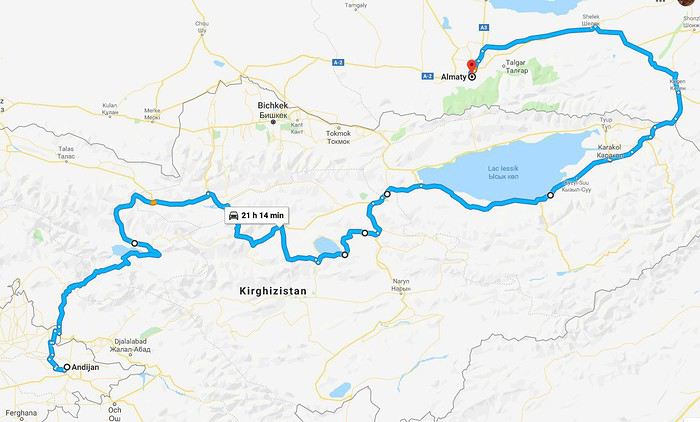
This summer, we’re heading to Central Asia. Family of 5—3 adults and 2 teens. Our plan is: - Arrive in Tashkent (1 day) - Train to Samarkand (2 days) - Return to Tashkent (1–2 days) - Train to Andijan. Then, things get a bit trickier...
Crossing Kyrgyzstan: Toktogul Reservoir - Suusamyr - Song Kol Lake - southern Issyk-Kul Lake - Karakol (over 10 days).
Then Kazakhstan: Charyn Canyon - Almaty (6–7 days, including renting a vehicle for the surrounding areas).
We’d like to cross Kyrgyzstan by bus or shared taxis (I think there are no trains there?). Our goal: travel simply, meet locals, share moments of conviviality, visit nice spots, and see beautiful landscapes. With three young ones (19, 16, 13), we need to mix up the visits—ancient sites, grand landscapes, countryside, cities. It’s okay if we don’t see every wonder... we’ll come back!
Has anyone here done this kind of road trip?
We’re still in the early planning stages, so thanks in advance for any feedback on the itinerary, accommodation tips, transport advice, etc.!
 Maripi
This summer, we’re heading to Central Asia. Family of 5—3 adults and 2 teens. Our plan is: - Arrive in Tashkent (1 day) - Train to Samarkand (2 days) - Return to Tashkent (1–2 days) - Train to Andijan. Then, things get a bit trickier...
Crossing Kyrgyzstan: Toktogul Reservoir - Suusamyr - Song Kol Lake - southern Issyk-Kul Lake - Karakol (over 10 days).
Then Kazakhstan: Charyn Canyon - Almaty (6–7 days, including renting a vehicle for the surrounding areas).
We’d like to cross Kyrgyzstan by bus or shared taxis (I think there are no trains there?). Our goal: travel simply, meet locals, share moments of conviviality, visit nice spots, and see beautiful landscapes. With three young ones (19, 16, 13), we need to mix up the visits—ancient sites, grand landscapes, countryside, cities. It’s okay if we don’t see every wonder... we’ll come back!
Has anyone here done this kind of road trip?
We’re still in the early planning stages, so thanks in advance for any feedback on the itinerary, accommodation tips, transport advice, etc.!
MaripiHi there!
I’m heading to Kazakhstan—a country I don’t know at all—at the start of October 2025, and I’d love to see all the different biomes it has to offer!
There’ll be three of us flying from Paris to Almaty, and we’re planning to do a road trip by either renting a car or hiring a guide to get to Astana and then return to Almaty, seeing as much as possible along the way!
If anyone knows a good route or has any tips, I’d love to hear them!
I’m heading to Kazakhstan—a country I don’t know at all—at the start of October 2025, and I’d love to see all the different biomes it has to offer!
There’ll be three of us flying from Paris to Almaty, and we’re planning to do a road trip by either renting a car or hiring a guide to get to Astana and then return to Almaty, seeing as much as possible along the way!
If anyone knows a good route or has any tips, I’d love to hear them!
Hey there, fellow travelers!
I’m planning a multi-month trek across Central Asia starting April/May 2025, blending horseback travel, hiking, and stops of a few weeks if the opportunity arises. Craving adventure, nature, horse contact, human connections, and culture. I’ve got decent endurance from camping and medium/long-haul trips, but this would be my first project of this scale—especially with horses and in such sparsely populated regions.
With an eye toward a well-prepared expedition that still leaves plenty of room for intuition, I’m casting my message in a bottle: + Tips for self-sufficient horseback prep (I plan to do some intensive training in Europe before departure, then start my journey on-site with an agency like Cheval d'Aventure for the first few weeks) + Suggestions for community development/solidarity projects I could join for a few weeks or months along the way + Travel buddy(ies) interested in joining me for part of the adventure (especially for self-sufficient horseback travel), or recommendations on how to find these companions + Any other kind of info is obviously welcome!
Thanks in advance for your invaluable help—and maybe see you for a stretch of the road together!
Antoine.
I’m planning a multi-month trek across Central Asia starting April/May 2025, blending horseback travel, hiking, and stops of a few weeks if the opportunity arises. Craving adventure, nature, horse contact, human connections, and culture. I’ve got decent endurance from camping and medium/long-haul trips, but this would be my first project of this scale—especially with horses and in such sparsely populated regions.
With an eye toward a well-prepared expedition that still leaves plenty of room for intuition, I’m casting my message in a bottle: + Tips for self-sufficient horseback prep (I plan to do some intensive training in Europe before departure, then start my journey on-site with an agency like Cheval d'Aventure for the first few weeks) + Suggestions for community development/solidarity projects I could join for a few weeks or months along the way + Travel buddy(ies) interested in joining me for part of the adventure (especially for self-sufficient horseback travel), or recommendations on how to find these companions + Any other kind of info is obviously welcome!
Thanks in advance for your invaluable help—and maybe see you for a stretch of the road together!
Antoine.
Bonjour, j ai le projet de partir en Ouzbékistan en voiture depuis la France.
Traversée par l Allemagne, la Pologne, l Ukraine, la Russie, le Kazakhstan puis arrivée en Ouzbékistan.
Est ce qu un peut me dire si des papiers spécifiques concernant l assurance sont demandés par les pays traversés et si oui, quels type de documents sont demandés.
Merci par avance de vos réponses.
Belle journée
Bonjour je planifie un voyage à vélo dans deux ans jusqu'à Almaty depuis la France.
Je pense faire Almaty-Paris ou si nécessaire (mais je ne pense pas), partir d'une autre ville.
Cependant je ne suis absolument pas confiant à propos du tarif indiqué par les compagnies aériennes et Google Flights en ce moment. A cause du coronavirus, les prix ont très probablement changé et je vous demande donc le PRIX HABITUEL D UN VOL ALMATY PARIS. Vous ne pouvez pas connaître à l'avance le prix des avions mais quel était-il avant le Covid ??
Deuxième question (mais pas très importante pour l'instant du moins), avez-vous eu des bonnes/mauvaises expériences avec les compagnies locales ? Avec laquelle ?
(DÉ)Conseillez-vous, tenant compte du prix et du service, AirAstana, Ukraine International, Turkish Airlines, Pegasus Airlines(perso bonne xperience), Belavia, Atma Airlines, Air Company Kokshetau, Prime Aviation, Starline KZ etc ?
Bien à vous, ami.es voyageureuses
{P.S.} J'ai vu que 2 3 forums avaient été ouverts pour parler de Paris Almaty mais mes questions ne s'en sont pas trouvées éludées en les lisant.
Je pense faire Almaty-Paris ou si nécessaire (mais je ne pense pas), partir d'une autre ville.
Cependant je ne suis absolument pas confiant à propos du tarif indiqué par les compagnies aériennes et Google Flights en ce moment. A cause du coronavirus, les prix ont très probablement changé et je vous demande donc le PRIX HABITUEL D UN VOL ALMATY PARIS. Vous ne pouvez pas connaître à l'avance le prix des avions mais quel était-il avant le Covid ??
Deuxième question (mais pas très importante pour l'instant du moins), avez-vous eu des bonnes/mauvaises expériences avec les compagnies locales ? Avec laquelle ?
(DÉ)Conseillez-vous, tenant compte du prix et du service, AirAstana, Ukraine International, Turkish Airlines, Pegasus Airlines(perso bonne xperience), Belavia, Atma Airlines, Air Company Kokshetau, Prime Aviation, Starline KZ etc ?
Bien à vous, ami.es voyageureuses
{P.S.} J'ai vu que 2 3 forums avaient été ouverts pour parler de Paris Almaty mais mes questions ne s'en sont pas trouvées éludées en les lisant.
Bonjour, j'aimerai savoir si des personnes sont parties en camping-car en passant par le KAZAKHSTAN pour rejoindre la Chine (je ne veux pas passer par l'IRAN etc) , la Thailande Cambodge Vietnam, Singapour après avoir traversé l'Europe avec des haltes tout au long du voyage . Pouvez-vous me faire part de votre expérience, si c'est réalisable etc. surtout pour la partie sortie de l'Europe ver le KAZAKSTAN etc.. je prévois ce voyage sur au minimum 1 an en Asie pour pouvoir bien en profiter et au total 2 voir 3 ans voir plus.. suivant où le vent nous mènera mon mari et moi..😉 . (ce projet est pour dans quelques années.)
Merci de me faire part de votre expérience si vous le voulez bien, aussi bien pour les trajets (état des routes, facilité pour trouver son itinéraire) la nourriture , l'accueil, les règles concernant le stationnement des camping-cars etc... Au plaisir de vous lire. Cordialement
Bonjour à tous! je prépare un voyage pour la Mongolie en 2021 au départ de Bordeaux, comme je n'ai pu rentrer en Iran en 2019, je souhaite contourner la difficulté, soit en contournant la caspienne par le nord, soit en traversant de Bakou vers Aktau. Dans le premier cas, il semble que le Daguestan ne soit pas trop recommandé, dans le deuxième cas, il semble que la traversée par ferry soit des plus rocambolesque....avez vous une expérience qui pourrait m'aider?
Merci!

Voici un petite compte rendu de mon séjour (avec mon amie), les plus et les moins...
Dans l'ensemble j'ai bien aimé même si évidemment la ville n'a pas de centre historique comme dans les villes européennes. Il y a quand même pas mal de bâtiments de style Russie tsariste ou soviétique, mais ceux-ci sont disséminés dans le centre-ville, qui est très étalé. L’atmosphère de la ville (grandes rues arborées et agréables, nombreux parcs, plan en damier, bâtiments neufs souvent kitschs au milieu des façades décrépites) m'a rappelé Bichkek ou certaines villes de Sibérie. Pour info je suis un russophile invétéré, donc le simple fait de me retrouver en milieu russophone suffit à mon bonheur... Autant prévenir : cette ville ne plaira probablement pas à des personnes recherchant un tourisme urbain. Les faciès dans les rues sont très asiatiques, à 90%. Tout le monde parle russe, peu l'anglais, même les jeunes. En gros, au moment du voyage, 1 euro = 300 tenge
Visites * Centre-ville Il s'étend en gros entre les rues Makataeva au Nord, et Abaya au Sud. La partie au Nord de Panfilov (c'est à dire autour de l'arbat de Jobek Joly) n'est pas très intéressante ama. Les rues à l'Ouest et au Sud de Panfilov sont les plus intéressantes pour flâner et sentir la ville. Beaucoup de cafés et restaurants et magasins. * Parc Panfilov LE point de repère du centre quand on débarque. Parc agréable et bien entretenu, avec pas mal de choses à voir : la très belle cathédrale orthodoxe Zenkov , le musée des instruments de musique, tout en bois, le massif monument aux héros de la guerre * Jibek Joly (arbat) Rue piétonne assez petite finalement et peu animée (quelques peintres et des magasins dont TSUM). On s'y ai baladé le dimanche après midi et il y avait un petit festival culturel avec des musiques et danses de différents pays. C'était sympa mais très peu de public. Les Kazakhs ne se promènent apparemment pas ici... * Green Bazar Principalement des marchands de jeans et babioles fabriquées en Chine. J'ai trouvé peu intéressant. Pour acheter des fruits ou boissons, il y a des petits magasins un peu partout dans la ville. * Kok Tobe A faire quand il fait beau, pour la vue sur la ville et les montagnes. Ambiance forestière au sommet mais peu de choses à voir. Apparemment en dehors de l'été beaucoup de choses sont fermées. En plus en ce moment il y a des gros travaux de réfection de la gare d'arrivée du téléphérique et une bonne partie du plateau du sommet est fermée. Le téléphérique est d'ailleurs fermé jusqu'en 2016... Il faut prendre un bus de ville (2 lignes y vont dont une depuis Abaya) pour aller au pied de la colline (rue Jamal Omarova), puis payer pour finir la montée en navette ou à pied (moins cher). * Parc Central Bof. Un parc d'attraction en fait, un peu vieillot et sans grand intérêt. On a hésité avec le parc du premier président, qui finalement doit être plus intéressant mais est beaucoup plus loin du centre. * Musée de géologie A réserver aux fans de géologie comme moi. Le musée est petit et la présentation est vraiment vieillotte. Exposition de minéraux de gisements kazakhs dans des vitrines. Cela a occupé une après-midi pluvieuse. * Place de la République A voir même si les voitures qui passent au milieu cassent le côté majestueux voulu pour ce lieu. Quand on voit les montagnes au fond c'est plus sympa évidemment. * Musée national Le prix d'entrée est ridicule (150 tenge). A voir pour la réplique de l'Homme d'or (visible sans payer dans le hall principal), pour la partie consacrée à la vie nomade (rez de chaussée) et au sous-sol la partie archéologique est intéressante aussi (pétroglyphes et maquettes de tombes scythes et de mausolées timourides). Malheureusement beaucoup d'objets exposés n'ont pas d'explications en anglais. * Eglise Saint Nicolas (Nicolskii) Petite église sympathique, en bordure du centre. À coté d'un petit bazar, entre un parc tout calme et une rue très animée. Entrée par la rue Baitursinouly.
Quartiers * Les rues les plus animées : Baitursinouly (Nord-Sud) surtout la partie entre Tole Bi et Abaya, à l'ouest du centre, commerces, hôtels, cafés, restaurants, un petit bazar. Jeltoksan, traverse le centre du Nord au Sud. Abaya, (Est-Ouest) grand axe au Sud du centre. Théâtres, stades, université...Marque la limite entre la ville "russe" du centre-ville, et la ville plus moderne au Sud. Dostyk, (Nord-Sud)
* Au sud du centre, entre Abaya et Al Farabi un quartier moderne de centre commerciaux, hôtels et immeubles flambants neufs, et parkings pleins de gros 4x4. Ambiance nouveaux riches. Pas mal de bars et de clubs pour ceux qui aiment les activités nocturnes.
Aux alentours de la ville * Medeo et Chymbulak Ma journée préférée. Autour de la patinoire de Medeo nous avons eu droit a une explosion des couleurs d'automne dans la forêt, et sous un ciel parfaitement bleu. Un vrai été indien. Pour y aller prendre le bus numéro 12 en face du Kazakhstan Hotel, tous les jours de la semaine. (Attention dans le LP il est indiquer de prendre le bus #6 mais celui-ci ne fonctionne que les week-ends) De Medeo un téléphérique monte à Shymbulak, au pied de la station de ski (2200 m). Puis de là 2 téléphériques successifs (Kombi1 et 2) montent jusqu'à 3200 m d'altitude. Il y avait 10 cm de neige fraîche au sol et on voyait les glaciers qui descendent de sommets à 4500 m. On peut payer que l'aller simple, et redescendre à pied, un seul ou les 3 téléphériques. La totale coûte 3500 tenge mais ça vaut vraiment le coup ! Les restos et cafés à Shymbulak sont très chers. Il vaut mieux amener son pique-nique. La patinoire de Medeo ouvre à partir de novembre, avec de la glace artificielle à ce que j'ai compris. Idem pour la station de ski équipée de canons à neige, les dates d'ouverture des pistes sont les mêmes qu'en France (novembre à avril). (Note : les locaux prononcent "Tchimboulak" mais le logo en alphabet latin est Shymbulak... Si vous êtes cool vous pouvez dire "Tchimbo")
* Canyon Tcharin Joli canyon, sans plus, avec des couleurs rouges et ocres, surtout dans la lumière rasante en fin d'après-midi. On reste toutefois loin des dimensions du Grand Canyon américain pourtant pris en référence dans toutes les publicités... Je vais être honnête : le voyage en bus dans la journée a été une vraie galère. Quasiment 10h de bus pour seulement 3h sur place. L'aller-retour dans la journée en vaut-il le coup ? De nombreux opérateurs proposent des bus pour un voyage à la journée. Plusieurs partent de la station de métro Baïkonour. Il est également possible de dormir dans la Canyon. Un Eco Park propose des bungalows et des yourtes, il y a aussi un café-resto.
Nous avions réservé avec Asian Discovery, que je ne recommande pas. On nous donne rendez-vous à 7h30 pour prendre le bus. On est à l'heure, pas le "manager" de AD. On est une dizaine de personne devant le bus, avec le chauffeur qui n'est au courant de rien... Le manager se pointe 15 minutes en retard, fais l'appel, et repart. Notre guide sera une babouchka qui ne parle pas un mot d'anglais et va monopoliser le micro mal réglé du bus pendant les 4 heures de trajet... Le bus part avec presque une heure de retard. En plus on fait un détour pour prendre 25 lycéens qui remplissent la moitié du bus. Nous voilà au milieu d'un voyage scolaire... On nous avait annoncé un trajet de 3h, avec retour à 18h. En fait on a mis 4h30 à l'aller, 5h au retour, arrivée 21h15 à Almaty. Sur des routes chaotiques qui empêchent toute tentative de sieste. De plus le canyon est dans une plaine désertique, et la chaleur dans le bus peut vite devenir atroce dans un bus sans clim et avec pour toute aération la fenêtre du toit. Une fois arrivés sur le parking du canyon, je sors du bus à l'agonie comme si je sortais d'un sauna tout habillé. La guide qui vient de faire un speech de 10 minutes dans le bus moteur arrêté alors que tout le monde voulait sortir de cette fournaise, part à pied dans le canyon et descend au pas de course jusqu'en bas pour s’asseoir sur un cailloux et nous dire qu'on a 1h pour pique-niquer ! Ça en est trop, je bondis et je l'étrangle de mes propres mains avant de noyer le corps dans la rivière ! Non, je plaisante... C'est mon humeur sur le moment, je me suis pas taper 4h dans cette horreur de bus pour passer en courant dans le canyon et venir m'asseoir sur un rocher. Je prends mon appareil photo et je repars arpenter le canyon. Enfin je profite un peu... Le retour sera du même tonneau, avec en plus les embouteillages du soir à Almaty. Bref c'était pas cher (2000 tenge par personne) et je pense que j'ai eu des services au niveau du prix. ça vaut sûrement le coup de passer par un opérateur certes plus cher mais plus sérieux et correct dans ses prestations.
Nourriture J'ai fais une cure de chachlik (brochettes), le "plat" national, et de borch, soupe aux betteraves que j'adore ! J'ai aussi mangé du plov, un kebab, du laghman, du boulgour, des salades de crudités délicieuses, goûté des samsa (bof), et des pommes à profusion pendant les balades. (la pomme est originaire de là-bas) ! Il y a aussi des melons et pastèques partout à la fin de l'été. Dans le centre-ville il y a des cafés, restos, et cafétérias un peu partout, ainsi que des stands de kebabs-pizzas-samsas en face des grosses stations de bus/trams. La chaîne Kaganat est pas mal. Cafétéria avec des plats chauds, soupes, desserts, variés. C'est bon même si les plats sont parfois réchauffés au micro-onde. Dans les restos-cafet un peu partout, il y a toujours des chachliks et kebabs, du riz, et des salades de crudités. C'est les trucs de base. Quand on commande du thé, il faut toujours préciser si on veut juste une tasse ou une théière entière.
Hébergement Étant en couple nous avons préféré dormir dans des petits hôtels. J'ai croisé quelques occidentaux qui dormaient chez l'habitant par Airbnb, ou dans des auberges listées dans les guides de voyage. Le premier hôtel était rue Makataev, rue peu animée. Le deuxième était sur Baitursinouly, rue que j'ai beaucoup aimé, avec beaucoup de commerces et restaurants, un bazar, etc. Au départ nous voulions faire 1 ou 2 nuits à Shymbulak, mais vu les prix nous avons renoncé. (60 à 80 euros la nuit)
Transport * Transport en commun Le centre-ville est très bien quadrillés par les lignes de bus, trams, trolley-bus et métro. Attention les lignes de différents modes de transport peuvent avoir le même numéro. (par exemple il y a une ligne 25 de bus, et une ligne 25 de trolley !) Un ticket coûte 80 tenge. (Il faut racheter un ticket quand on change de bus ou tram) Si vous ne parlez pas russe (ou kazakh), ça peut être compliqué. Il n'y a aucune information d'affichée aux arrêts, souvent même pas les numéros des lignes de bus sur lequel se trouve l'arrêt... Le seul moyen est de demander aux gens. * Taxi Comme en Russie, on peut tendre la main au bord de la route et attendre que n'importe qui s'arrête. On annonce la destination et le prix. Soit le chauffeur accepte, soit il se barre sans attendre... * Route nationale de Almaty à Karkara (Kirghizstan) et Khorgos (Chine). De gros travaux sont en cours sur une longue portion de la route aux environs de Chelek. La déviation est galère et fait perdre un peu de temps. * Tous les après-midi et début de soirée, nombreux embouteillages le long des grands axes de circulation. Je ne m'attendais vraiment pas à ça, surtout vu la largeur des boulevards.
Météo L'automne n'est peut-être pas la meilleure saison. Il faisait gris presque tous les matins puis ça se dégageait dans l'après-midi. Le 2e jour il a plu tout l'après-midi. A part les 2 derniers jours ou nous avons eu grand soleil.
Bon plan Pour ceux qui parlent russe, le site Chocolife.me propose des prix cassés pour les hôtels, restaurants et activités. On a trouvé un hôtel avec 70% de réduction. Il faut payer en ligne avec une carte de crédit locale, ou alors payer en cash dans des terminaux à écran tactile qu'on trouve dans presque tous les commerces.
En bref : J'ai adoré l'excursion dans les Monts de l'Alataou, à Medeo et Shymbulak. J'ai aimé arpenter les rues arborées du centre, même si les trottoirs sont parfois défoncés, ainsi que les nombreux parcs. Je me suis régalé avec une cuisine simple mais bonne (la viande et les crudités sont excellentes). J'ai beaucoup moins aimé : Le manque de ponctualité et la nonchalance des Kazakhs, qui dans certaines situations peuvent être franchement désagréables. J'ai apprécié par contre la simplicité de contact avec les gens dans les petits restos et petits commerces. En plus la plupart adorent les français ! Dans l'ensemble j'ai eu l'impression d'un manque d'Infrastructures et d'information pour les touristes. Donc ça occasionne quelques galères, mais c'est aussi ce qui fait le charme de ce genre de destinations très peu touristiques.
Dans l'ensemble j'ai bien aimé même si évidemment la ville n'a pas de centre historique comme dans les villes européennes. Il y a quand même pas mal de bâtiments de style Russie tsariste ou soviétique, mais ceux-ci sont disséminés dans le centre-ville, qui est très étalé. L’atmosphère de la ville (grandes rues arborées et agréables, nombreux parcs, plan en damier, bâtiments neufs souvent kitschs au milieu des façades décrépites) m'a rappelé Bichkek ou certaines villes de Sibérie. Pour info je suis un russophile invétéré, donc le simple fait de me retrouver en milieu russophone suffit à mon bonheur... Autant prévenir : cette ville ne plaira probablement pas à des personnes recherchant un tourisme urbain. Les faciès dans les rues sont très asiatiques, à 90%. Tout le monde parle russe, peu l'anglais, même les jeunes. En gros, au moment du voyage, 1 euro = 300 tenge
Visites * Centre-ville Il s'étend en gros entre les rues Makataeva au Nord, et Abaya au Sud. La partie au Nord de Panfilov (c'est à dire autour de l'arbat de Jobek Joly) n'est pas très intéressante ama. Les rues à l'Ouest et au Sud de Panfilov sont les plus intéressantes pour flâner et sentir la ville. Beaucoup de cafés et restaurants et magasins. * Parc Panfilov LE point de repère du centre quand on débarque. Parc agréable et bien entretenu, avec pas mal de choses à voir : la très belle cathédrale orthodoxe Zenkov , le musée des instruments de musique, tout en bois, le massif monument aux héros de la guerre * Jibek Joly (arbat) Rue piétonne assez petite finalement et peu animée (quelques peintres et des magasins dont TSUM). On s'y ai baladé le dimanche après midi et il y avait un petit festival culturel avec des musiques et danses de différents pays. C'était sympa mais très peu de public. Les Kazakhs ne se promènent apparemment pas ici... * Green Bazar Principalement des marchands de jeans et babioles fabriquées en Chine. J'ai trouvé peu intéressant. Pour acheter des fruits ou boissons, il y a des petits magasins un peu partout dans la ville. * Kok Tobe A faire quand il fait beau, pour la vue sur la ville et les montagnes. Ambiance forestière au sommet mais peu de choses à voir. Apparemment en dehors de l'été beaucoup de choses sont fermées. En plus en ce moment il y a des gros travaux de réfection de la gare d'arrivée du téléphérique et une bonne partie du plateau du sommet est fermée. Le téléphérique est d'ailleurs fermé jusqu'en 2016... Il faut prendre un bus de ville (2 lignes y vont dont une depuis Abaya) pour aller au pied de la colline (rue Jamal Omarova), puis payer pour finir la montée en navette ou à pied (moins cher). * Parc Central Bof. Un parc d'attraction en fait, un peu vieillot et sans grand intérêt. On a hésité avec le parc du premier président, qui finalement doit être plus intéressant mais est beaucoup plus loin du centre. * Musée de géologie A réserver aux fans de géologie comme moi. Le musée est petit et la présentation est vraiment vieillotte. Exposition de minéraux de gisements kazakhs dans des vitrines. Cela a occupé une après-midi pluvieuse. * Place de la République A voir même si les voitures qui passent au milieu cassent le côté majestueux voulu pour ce lieu. Quand on voit les montagnes au fond c'est plus sympa évidemment. * Musée national Le prix d'entrée est ridicule (150 tenge). A voir pour la réplique de l'Homme d'or (visible sans payer dans le hall principal), pour la partie consacrée à la vie nomade (rez de chaussée) et au sous-sol la partie archéologique est intéressante aussi (pétroglyphes et maquettes de tombes scythes et de mausolées timourides). Malheureusement beaucoup d'objets exposés n'ont pas d'explications en anglais. * Eglise Saint Nicolas (Nicolskii) Petite église sympathique, en bordure du centre. À coté d'un petit bazar, entre un parc tout calme et une rue très animée. Entrée par la rue Baitursinouly.
Quartiers * Les rues les plus animées : Baitursinouly (Nord-Sud) surtout la partie entre Tole Bi et Abaya, à l'ouest du centre, commerces, hôtels, cafés, restaurants, un petit bazar. Jeltoksan, traverse le centre du Nord au Sud. Abaya, (Est-Ouest) grand axe au Sud du centre. Théâtres, stades, université...Marque la limite entre la ville "russe" du centre-ville, et la ville plus moderne au Sud. Dostyk, (Nord-Sud)
* Au sud du centre, entre Abaya et Al Farabi un quartier moderne de centre commerciaux, hôtels et immeubles flambants neufs, et parkings pleins de gros 4x4. Ambiance nouveaux riches. Pas mal de bars et de clubs pour ceux qui aiment les activités nocturnes.
Aux alentours de la ville * Medeo et Chymbulak Ma journée préférée. Autour de la patinoire de Medeo nous avons eu droit a une explosion des couleurs d'automne dans la forêt, et sous un ciel parfaitement bleu. Un vrai été indien. Pour y aller prendre le bus numéro 12 en face du Kazakhstan Hotel, tous les jours de la semaine. (Attention dans le LP il est indiquer de prendre le bus #6 mais celui-ci ne fonctionne que les week-ends) De Medeo un téléphérique monte à Shymbulak, au pied de la station de ski (2200 m). Puis de là 2 téléphériques successifs (Kombi1 et 2) montent jusqu'à 3200 m d'altitude. Il y avait 10 cm de neige fraîche au sol et on voyait les glaciers qui descendent de sommets à 4500 m. On peut payer que l'aller simple, et redescendre à pied, un seul ou les 3 téléphériques. La totale coûte 3500 tenge mais ça vaut vraiment le coup ! Les restos et cafés à Shymbulak sont très chers. Il vaut mieux amener son pique-nique. La patinoire de Medeo ouvre à partir de novembre, avec de la glace artificielle à ce que j'ai compris. Idem pour la station de ski équipée de canons à neige, les dates d'ouverture des pistes sont les mêmes qu'en France (novembre à avril). (Note : les locaux prononcent "Tchimboulak" mais le logo en alphabet latin est Shymbulak... Si vous êtes cool vous pouvez dire "Tchimbo")
* Canyon Tcharin Joli canyon, sans plus, avec des couleurs rouges et ocres, surtout dans la lumière rasante en fin d'après-midi. On reste toutefois loin des dimensions du Grand Canyon américain pourtant pris en référence dans toutes les publicités... Je vais être honnête : le voyage en bus dans la journée a été une vraie galère. Quasiment 10h de bus pour seulement 3h sur place. L'aller-retour dans la journée en vaut-il le coup ? De nombreux opérateurs proposent des bus pour un voyage à la journée. Plusieurs partent de la station de métro Baïkonour. Il est également possible de dormir dans la Canyon. Un Eco Park propose des bungalows et des yourtes, il y a aussi un café-resto.
Nous avions réservé avec Asian Discovery, que je ne recommande pas. On nous donne rendez-vous à 7h30 pour prendre le bus. On est à l'heure, pas le "manager" de AD. On est une dizaine de personne devant le bus, avec le chauffeur qui n'est au courant de rien... Le manager se pointe 15 minutes en retard, fais l'appel, et repart. Notre guide sera une babouchka qui ne parle pas un mot d'anglais et va monopoliser le micro mal réglé du bus pendant les 4 heures de trajet... Le bus part avec presque une heure de retard. En plus on fait un détour pour prendre 25 lycéens qui remplissent la moitié du bus. Nous voilà au milieu d'un voyage scolaire... On nous avait annoncé un trajet de 3h, avec retour à 18h. En fait on a mis 4h30 à l'aller, 5h au retour, arrivée 21h15 à Almaty. Sur des routes chaotiques qui empêchent toute tentative de sieste. De plus le canyon est dans une plaine désertique, et la chaleur dans le bus peut vite devenir atroce dans un bus sans clim et avec pour toute aération la fenêtre du toit. Une fois arrivés sur le parking du canyon, je sors du bus à l'agonie comme si je sortais d'un sauna tout habillé. La guide qui vient de faire un speech de 10 minutes dans le bus moteur arrêté alors que tout le monde voulait sortir de cette fournaise, part à pied dans le canyon et descend au pas de course jusqu'en bas pour s’asseoir sur un cailloux et nous dire qu'on a 1h pour pique-niquer ! Ça en est trop, je bondis et je l'étrangle de mes propres mains avant de noyer le corps dans la rivière ! Non, je plaisante... C'est mon humeur sur le moment, je me suis pas taper 4h dans cette horreur de bus pour passer en courant dans le canyon et venir m'asseoir sur un rocher. Je prends mon appareil photo et je repars arpenter le canyon. Enfin je profite un peu... Le retour sera du même tonneau, avec en plus les embouteillages du soir à Almaty. Bref c'était pas cher (2000 tenge par personne) et je pense que j'ai eu des services au niveau du prix. ça vaut sûrement le coup de passer par un opérateur certes plus cher mais plus sérieux et correct dans ses prestations.
Nourriture J'ai fais une cure de chachlik (brochettes), le "plat" national, et de borch, soupe aux betteraves que j'adore ! J'ai aussi mangé du plov, un kebab, du laghman, du boulgour, des salades de crudités délicieuses, goûté des samsa (bof), et des pommes à profusion pendant les balades. (la pomme est originaire de là-bas) ! Il y a aussi des melons et pastèques partout à la fin de l'été. Dans le centre-ville il y a des cafés, restos, et cafétérias un peu partout, ainsi que des stands de kebabs-pizzas-samsas en face des grosses stations de bus/trams. La chaîne Kaganat est pas mal. Cafétéria avec des plats chauds, soupes, desserts, variés. C'est bon même si les plats sont parfois réchauffés au micro-onde. Dans les restos-cafet un peu partout, il y a toujours des chachliks et kebabs, du riz, et des salades de crudités. C'est les trucs de base. Quand on commande du thé, il faut toujours préciser si on veut juste une tasse ou une théière entière.
Hébergement Étant en couple nous avons préféré dormir dans des petits hôtels. J'ai croisé quelques occidentaux qui dormaient chez l'habitant par Airbnb, ou dans des auberges listées dans les guides de voyage. Le premier hôtel était rue Makataev, rue peu animée. Le deuxième était sur Baitursinouly, rue que j'ai beaucoup aimé, avec beaucoup de commerces et restaurants, un bazar, etc. Au départ nous voulions faire 1 ou 2 nuits à Shymbulak, mais vu les prix nous avons renoncé. (60 à 80 euros la nuit)
Transport * Transport en commun Le centre-ville est très bien quadrillés par les lignes de bus, trams, trolley-bus et métro. Attention les lignes de différents modes de transport peuvent avoir le même numéro. (par exemple il y a une ligne 25 de bus, et une ligne 25 de trolley !) Un ticket coûte 80 tenge. (Il faut racheter un ticket quand on change de bus ou tram) Si vous ne parlez pas russe (ou kazakh), ça peut être compliqué. Il n'y a aucune information d'affichée aux arrêts, souvent même pas les numéros des lignes de bus sur lequel se trouve l'arrêt... Le seul moyen est de demander aux gens. * Taxi Comme en Russie, on peut tendre la main au bord de la route et attendre que n'importe qui s'arrête. On annonce la destination et le prix. Soit le chauffeur accepte, soit il se barre sans attendre... * Route nationale de Almaty à Karkara (Kirghizstan) et Khorgos (Chine). De gros travaux sont en cours sur une longue portion de la route aux environs de Chelek. La déviation est galère et fait perdre un peu de temps. * Tous les après-midi et début de soirée, nombreux embouteillages le long des grands axes de circulation. Je ne m'attendais vraiment pas à ça, surtout vu la largeur des boulevards.
Météo L'automne n'est peut-être pas la meilleure saison. Il faisait gris presque tous les matins puis ça se dégageait dans l'après-midi. Le 2e jour il a plu tout l'après-midi. A part les 2 derniers jours ou nous avons eu grand soleil.
Bon plan Pour ceux qui parlent russe, le site Chocolife.me propose des prix cassés pour les hôtels, restaurants et activités. On a trouvé un hôtel avec 70% de réduction. Il faut payer en ligne avec une carte de crédit locale, ou alors payer en cash dans des terminaux à écran tactile qu'on trouve dans presque tous les commerces.
En bref : J'ai adoré l'excursion dans les Monts de l'Alataou, à Medeo et Shymbulak. J'ai aimé arpenter les rues arborées du centre, même si les trottoirs sont parfois défoncés, ainsi que les nombreux parcs. Je me suis régalé avec une cuisine simple mais bonne (la viande et les crudités sont excellentes). J'ai beaucoup moins aimé : Le manque de ponctualité et la nonchalance des Kazakhs, qui dans certaines situations peuvent être franchement désagréables. J'ai apprécié par contre la simplicité de contact avec les gens dans les petits restos et petits commerces. En plus la plupart adorent les français ! Dans l'ensemble j'ai eu l'impression d'un manque d'Infrastructures et d'information pour les touristes. Donc ça occasionne quelques galères, mais c'est aussi ce qui fait le charme de ce genre de destinations très peu touristiques.
Bonjour,
Je commence doucement à préparer mon prochain voyage à vélo en direction de l'Asie Centrale. Départ de France, cap au nord-est vers les Etats Baltes, un crochet par la Biélorussie puis traversée de la Russie Occidentale et du Kazakhstan. Je souhaiterais obtenir les visas pour ces 3 pays avant de partir pour minimiser mon temps d'attente si je les demande en route. Le visa de touriste classique d'un mois pour la Russie et les 30 jours offerts pour le Kazakhstan ne me seront pas suffisants. Idéalement j'aimerais disposer de 3 mois de séjour pour chacun de ces 2 pays afin d'avoir de la flexibilité ( visa de type business ? ). Je compte faire les démarches à Paris. Des conseils pour mes dossiers ? Puis-je faire ça en solo ou le recours à une agence spécialisée s'impose-t-il ?
L.
Je commence doucement à préparer mon prochain voyage à vélo en direction de l'Asie Centrale. Départ de France, cap au nord-est vers les Etats Baltes, un crochet par la Biélorussie puis traversée de la Russie Occidentale et du Kazakhstan. Je souhaiterais obtenir les visas pour ces 3 pays avant de partir pour minimiser mon temps d'attente si je les demande en route. Le visa de touriste classique d'un mois pour la Russie et les 30 jours offerts pour le Kazakhstan ne me seront pas suffisants. Idéalement j'aimerais disposer de 3 mois de séjour pour chacun de ces 2 pays afin d'avoir de la flexibilité ( visa de type business ? ). Je compte faire les démarches à Paris. Des conseils pour mes dossiers ? Puis-je faire ça en solo ou le recours à une agence spécialisée s'impose-t-il ?
L.
Bonjour,
Le Kazakhstan n'exige pas de visa pour un séjour n'excédant pas 30 jours.
Peut-on, à l'intérieur de ce laps de temps, arriver dans ce pays puis passer en Ouzbékistan, et, enfin, revenir au Kazakhstan ?
Merci pour votre aide.
Bonjour,
Je suis à la recherche d'information pour passer de Mongolie au Kazakhstan. J'ai commencé à me renseigner je pensai depuis la frontière mongole Tashanta remonter jusqu'a Barnaul puis ensuite redescendre au Kazakhstan. Est ce que c'est la meilleur solution, il doit surement avoir plus court. Nous sommes deux, au niveau des transports peut-on envisager de prendre un bus ou taxi? Combien de temps faut-il compter? Je pense effectuer un visa russe de transit avant le départ.
Depuis Ulaanbator jusqu'a Tashanta, comment doit-on envisager ce trajet(bus-taxi-argent-temps).
Notre départ de Moscou est prévu vers le 20juin.
Merci d'avance pour les infos qui nous permettront de nous préparer le mieux possible.
Aurélien
Je suis à la recherche d'information pour passer de Mongolie au Kazakhstan. J'ai commencé à me renseigner je pensai depuis la frontière mongole Tashanta remonter jusqu'a Barnaul puis ensuite redescendre au Kazakhstan. Est ce que c'est la meilleur solution, il doit surement avoir plus court. Nous sommes deux, au niveau des transports peut-on envisager de prendre un bus ou taxi? Combien de temps faut-il compter? Je pense effectuer un visa russe de transit avant le départ.
Depuis Ulaanbator jusqu'a Tashanta, comment doit-on envisager ce trajet(bus-taxi-argent-temps).
Notre départ de Moscou est prévu vers le 20juin.
Merci d'avance pour les infos qui nous permettront de nous préparer le mieux possible.
Aurélien
Bonjour à tous,
Je pensais être fou d'avoir eu ce projet, mais le fait de tomber sur ce forum me fait voir que je ne suis absolument pas le seul.
L'idée de base est de faire expédier la moto a Oulan-Bator et faire le trajet retour à moto.
J'aimerais rentrer par le Kazakhstan et faire le tour de la mer noire.
Grâce au forum, j'ai déjà trouvé pas mal d'informations, mais je souhaiterais tout de même vos conseils.
Je pensais faire expédier la moto par transporteur en caisse à Oulan-Bator, mais je ne sais pas si c'est une bonne idée.
La moto est une africa twin. Est-il nécessaire de prendre un jeu de pneu de rechange avec ?
Quels conseils auriez-vous en point d’intérêts et administratif pour ce tour ?
D'avance merci
Je pensais être fou d'avoir eu ce projet, mais le fait de tomber sur ce forum me fait voir que je ne suis absolument pas le seul.
L'idée de base est de faire expédier la moto a Oulan-Bator et faire le trajet retour à moto.
J'aimerais rentrer par le Kazakhstan et faire le tour de la mer noire.
Grâce au forum, j'ai déjà trouvé pas mal d'informations, mais je souhaiterais tout de même vos conseils.
Je pensais faire expédier la moto par transporteur en caisse à Oulan-Bator, mais je ne sais pas si c'est une bonne idée.
La moto est une africa twin. Est-il nécessaire de prendre un jeu de pneu de rechange avec ?
Quels conseils auriez-vous en point d’intérêts et administratif pour ce tour ?
D'avance merci
Bonjour, je prévois un départ en Mongolie en juin 2020 à moto, selon l’itinéraire suivant : Belgique, Pays-Bas, Allemagne, Danemark, Suède, Finlande, Russie, Kazakhstan et Mongolie. Quelqu’un a t-il fait tout ou partie de ce parcours ? Je suis preneur de vos retours d’expérience, notamment l’état des routes et les conditions de circulation. Merci
salut tout le monde,
j'ai projet de faire un tour en vélo qui commençerait à Pekin, puis je continuerais par la mongolie, puis Kazakhstan, peut etre russie puis europe.
J'ai regarder pas mal les questions de visas, mais j'ai du mal a trouver des informations qui sont récentes...
Pour le visa en chine/mongolie/kazakhstan, ils demandent un itinéraire, avec tout de reserver, pour hotels, avions aller retour, etc). Comment faire ?
Seconde question, savez vous qu'elles frontieres sont ouvertes ( frontieres terrestres ), pour passer a vélo entre la chine-mongolie?
Troisieme question, j'ai lu un peu que pour passer de la mongolie au kazakhstan, il y a un visa ( en passant par la russie ) transit, mais de 1journée car c'est 500km/jour, correct ? Serait-il possible de repasser par la chine pour aller au kazakhstan ? ( Si il y a une frontieres ouverte pour sortir de la mongolie qui est situé vers l'ouest ? et une ouverte pour chine-kazakhstan, et forcement international ? )
Est ce que la chine est d'accord pour avoir des touristes qui se promènent au xinjiang en vélo en ce moment avec les problemes qu'il y a ?
Merci tout le monde, et bonne journée !
Merci tout le monde, et bonne journée !
Hello, je prépare un voyage au KZ et je pense éventuellement rejoindre la chine depuis Almaty mais pour ça j'ai besoin de plus d'infos via des retours d'expériences : comment se passe le passage à la frontière terrestre, niveau visa etc?
Niveau transport quel est le meilleur itinéraire à prendre pour rejoindre urumqi (le plus proche pour retrouver des vols vers d'autres grande ville en Chine je suppose)? Bus uniquement, info trouvé jusqu'à la chine, après..?!
Niveau transport quel est le meilleur itinéraire à prendre pour rejoindre urumqi (le plus proche pour retrouver des vols vers d'autres grande ville en Chine je suppose)? Bus uniquement, info trouvé jusqu'à la chine, après..?!
Bonjour à tou (te)s !
Aller au Kirghizistan est une idée qui me trotte dans la tête depuis quelques années. Cette idée devrait se réaliser à l'été 2021...
Préférant les circuits en indépendant motorisé mais n'étant pas ni une forcenée de conditions de confort rustique et ni aventurière dans l'âme, j'ai écarté les options qui me semblaient trop ambitieuses selon ces critères .
En combinant facilité de visas, facilité du passage des frontière, facilité ferroviaire et aérienne, j'en suis arrivée à l'ébauche suivante (sur 24-26 nuits):
Vol France - Samarcande 1ère étape Train Samarcande Boukhara 2ème étape Train Boukhara Tachkent 3 ème étape Train de nuit Tachkent Almaty 4 ème étape
Ces trains doivent-ils se réserver à l'avance. Si oui, existe-t-il un site pour acheter en ligne ces billets ?
Almaty visite de la ville et de ses environs accessibles en transport en commun.
Location d'un véhicule pour un petit circuit Charyn Canyon et Altyn Emel NP.
Un 4x4 est-il obligatoire pour ce circuit ? La police est elle correcte au Kazakhstan ? Peut on camper dans ces lieux ? Hôtels ? Peut on acheter du matériel de camping facilement et à un petit prix (le matériel serait abandonné en fin de séjour) à Almaty ? (Genre une petite tente, un matelas, deux chaises , une bonbonne de gaz)
Retour sur Almaty - Transfert pour Bichkek
Quelle est la meilleure option pour relier ces 2 villes ? Taxi ?Taxi partagé ? Bus ?
Location d'un 4x4 à Bichkek.
Le circuit serait du genre Bichkek-Issyk kul-Kol su- Tchatyr Koul-son kul-Toktogul -Bichkek
Quelques nuits en camping, la plupart en dur chez l'habitant ou à l'hôtel voire une nuit en yourte.
Peut on acheter du matériel de camping facilement et à un petit prix (le matériel serait abandonné en fin de séjour) à Bichkek ? Un duster 4x4 peut il effectuer ce circuit ? Que vaut un UAZ version moderne ? La police est elle correcte ? Les pistes envisagées sont elles "faciles" ( comprendre de mon niveau...) donc pas de gués supérieur au genou, pas de pentes rocailleuses genre Van Zyl 's pass en Namibie !
Vol retour pour la France depuis Bichkek
Merci 🙂
Aller au Kirghizistan est une idée qui me trotte dans la tête depuis quelques années. Cette idée devrait se réaliser à l'été 2021...
Préférant les circuits en indépendant motorisé mais n'étant pas ni une forcenée de conditions de confort rustique et ni aventurière dans l'âme, j'ai écarté les options qui me semblaient trop ambitieuses selon ces critères .
En combinant facilité de visas, facilité du passage des frontière, facilité ferroviaire et aérienne, j'en suis arrivée à l'ébauche suivante (sur 24-26 nuits):
Vol France - Samarcande 1ère étape Train Samarcande Boukhara 2ème étape Train Boukhara Tachkent 3 ème étape Train de nuit Tachkent Almaty 4 ème étape
Ces trains doivent-ils se réserver à l'avance. Si oui, existe-t-il un site pour acheter en ligne ces billets ?
Almaty visite de la ville et de ses environs accessibles en transport en commun.
Location d'un véhicule pour un petit circuit Charyn Canyon et Altyn Emel NP.
Un 4x4 est-il obligatoire pour ce circuit ? La police est elle correcte au Kazakhstan ? Peut on camper dans ces lieux ? Hôtels ? Peut on acheter du matériel de camping facilement et à un petit prix (le matériel serait abandonné en fin de séjour) à Almaty ? (Genre une petite tente, un matelas, deux chaises , une bonbonne de gaz)
Retour sur Almaty - Transfert pour Bichkek
Quelle est la meilleure option pour relier ces 2 villes ? Taxi ?Taxi partagé ? Bus ?
Location d'un 4x4 à Bichkek.
Le circuit serait du genre Bichkek-Issyk kul-Kol su- Tchatyr Koul-son kul-Toktogul -Bichkek
Quelques nuits en camping, la plupart en dur chez l'habitant ou à l'hôtel voire une nuit en yourte.
Peut on acheter du matériel de camping facilement et à un petit prix (le matériel serait abandonné en fin de séjour) à Bichkek ? Un duster 4x4 peut il effectuer ce circuit ? Que vaut un UAZ version moderne ? La police est elle correcte ? Les pistes envisagées sont elles "faciles" ( comprendre de mon niveau...) donc pas de gués supérieur au genou, pas de pentes rocailleuses genre Van Zyl 's pass en Namibie !
Vol retour pour la France depuis Bichkek
Merci 🙂
Bonjour,
j'ai tracé mon parcours. Je recherche où je peux faire des haltes et faire le plein d'eau avec mon camping car au Kazakhstan : Aktioubé et Astana. Je vais voyager dans la partie Nord d'Ouest en Est et repasser en Russie. (sud sibérie) En Mongolie : Je vais voyager dans la partie Sud d'Ouest en Est et remonter sur Oulan Bator et de Oulan Bator en Remontant vers Irkoust.
Merci.
j'ai tracé mon parcours. Je recherche où je peux faire des haltes et faire le plein d'eau avec mon camping car au Kazakhstan : Aktioubé et Astana. Je vais voyager dans la partie Nord d'Ouest en Est et repasser en Russie. (sud sibérie) En Mongolie : Je vais voyager dans la partie Sud d'Ouest en Est et remonter sur Oulan Bator et de Oulan Bator en Remontant vers Irkoust.
Merci.
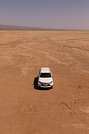
Bonjour,
J'équipe mon camion en gaz Propane (pour sa tenue à basse température) avec 2 bouteilles de 13 kg. Est il possible de faire remplir si besoin en KA, UZ, TA, KI ?
Je prevois de prendre le bateau entre Baku (Azerbaidjan) et Aktau (Kazakhstan). Est ce que les bouteilles de gaz sont "autorisées" dans le bateau ou sont systèmatiquement refusées ?
Kastor
J'équipe mon camion en gaz Propane (pour sa tenue à basse température) avec 2 bouteilles de 13 kg. Est il possible de faire remplir si besoin en KA, UZ, TA, KI ?
Je prevois de prendre le bateau entre Baku (Azerbaidjan) et Aktau (Kazakhstan). Est ce que les bouteilles de gaz sont "autorisées" dans le bateau ou sont systèmatiquement refusées ?
Kastor