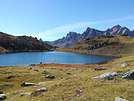
Pour sauver de l'argent, j'ai choisi de prendre un billet pour Lima et faire le reste du trajet pour La Paz par autobus... Comme le trajet total fait dans les 25-30h selon les sources, j'ai décidé de le faire en deux parties, histoire de prendre ça relax, de laisser à mon corps le temps de s'acclimater à l'altitude et de profiter un peu de mon passage par le Pérou.
Auriez-vous des idées de villes intéressantes ou je pourrais m'arrêter? J'avais pensé à Arequipa ou Puno, cependant l'altitude plus raisonnable d'Arequipa (2300m vs 3800m) me semblait être un facteur à ne pas négliger pour un gringo habitant habituellement au niveau de la mer. Laquelle serait la plus intéressante?
3800m sans acclimatation préalable, est-ce abusif? J'ai une prescription de Diamox, est-ce que ça pourrait suffir?
à ta place je m'arreterai au moins à Nazca, Arequipa et Puno, si tu as le temps, le billet est moins cher quand il est fractionné, 55US$ avec arret à Puno et 80US$ lima la paz dans le meme bus
Tout dépend de combien de temps tu disposes. Si t'as de l'argent á dépenser tu peux t'arréter á Nazca et survoler les lignes... sinon ville sans intéret.
Le mieux, á mon avis, et d'aller a Arequipa et de se poser quelques jours. ensuite tu peux faire escale á Puno seulement si tu veux faire les iles du lac titicaca sinon pas la peine de s'y arréter.
Il y a 14 heures de bus pour faire lima-arequipa
et ensuite une dizaine d'heures pour faire arequipa-la paz.
l'altitude n'est pas quelques chose d'insurmontable, si tu prend fait un peu attention en arrivant á la paz, c'est á dire de ne pas te lancer dans un trek de tois jours le lendemain de ton arrivée tu devrais t'en sortir. Il suffit juste de prendre son temps au début pas de trop longue marche, pas mal de pauses et en trois quatre jours déjé tu t'aclimate.
"Le véritable voyage de découverte ne consiste pas à chercher de nouveaux paysages, mais à avoir de nouveaux yeux."
Nous projetons un voyage semblable à la mi-septembre. Montréal-Lima, puis Ica, Nazca, Cusco, Puno, les îles du lac Titicaca (Amantani, Taquile et du Soleil), Tiahuanaco, puis La Paz et retour à Montréal.
Pour régler au mieux le problème dû à la raréfaction de l'oxygène en altitude, il nous a été recommandé un truc assez simple mais efficace. Il s'agit de respirer dans un sac de papier (d'environ 30cm de haut, par 20cm de large, et de 15 cm d'épaisseur) pour 2 minutes par jour jusqu'au jour du départ. Attention : Respiration normale. Ceci aura pour effet d'augmenter le nombre de globules rouges dans le sang et aussi d'expandre la cage thoracique. Et naturellement aussi de marcher et de faire de l'exercice physique pour améliorer notre résistance.
Arequipa est un bon deal pour s'acclimater. Et puis c'est loin d'être ruineux et la ville, sans partir pour des excursions, offre une ribambelle de musées, couvents, monuments, moulins etc ... magnifiques, en 1 journée, c'est fou tout ce que tu peux voir car centralisé et qui ne demande pas d'effort physique particulier.
Le meilleur remède que je connaisse pour le mal des montagnes, c'est le maté de Coca, délicieux en plus (enfin, si on aime les infusions), le repos, mangé léger et ne pas faire d'effort physique soutenu. Maintenant, on l'a ou on l'a pas, si malheureusement c'est le cas, mieux vaut redescendre.
Mais je ne connaissais pas l'astuce du sac en papier, bon à savoir 😉 merci pour l'info !!
Dis moi si je me peux trompe, mais ton but semble être de rejoindre au plus vite la Bolivie et au meilleur tarif. Pour ça effectivement, le bus il n'y a pas mieux. En cumulant les tarifs d'un point à un autre, Lima/Puno m'a coûté environ 80 soles, soit 20 US$ (Lima/Pisco/Ica/Huacachina/Nasca/Arequipa/Puno) en lignes régulières et pour beaucoup de nuit donc également économie sur les hôtels. Le plus cher étant Nasca/Arequipa.
Les prix, depuis/vers Lima sont plus chers (rien que les taxes) donc tu as peut-être intérêt à prendre un trajet court au début, sans compter que tu auras quelques heures de vol dans les jambes et qu'une flébite dès le départ, c'est pas top ! D'ailleurs, combien d'heures depuis Montréal ? ça m'intéresse grandement, un ordre de prix aussi si tu as, merci d'avance 😉
Sinon, avec Ormeno, tu as des trajets Lima/ Puno à partir de 35 us$ (+/- 24h de trajet, aouch 😕 !!! mais les bus sont confortables et la route aussi 🙂). Lima/Arequipa (toujours avec Ormeno) à partir de 9 us$, (+/- 16h 😐 c'est déjà pas mal !), Arequipa/Puno 13 soles, soit un peu plus de 3 us$.
Ormeno est un exemple, tu as plein de Cies de bus tout aussi confortables et aux même tarifs, tu verras sur place en fonction des horaires.
Peut-être bon à savoir, le consulat de Bolivie se trouve à Puno, normalement pour 30 jours, tu n'as pas besoin de visa, mais je ne sais pas combien de temps tu penses rester en Bolivie ?
Depuis Puno, compte environ 8h pour La Paz.
En tout cas, c'est un bien beau pays que tu vas traversé. Je ne sais pas si tu le connais déjà, mais si ce n'est pas le cas, j'espère que tu en auras un jour l'occasion.
sch: Le trajet Montréal-Lima par transit à Toronto fait environ 8h15 min (Montréal-Toronto 1h15, Toronto-Lima 7h). En magasinant un peu dans les agences de voyages de Montréal (j'ai choisi L'agence Andes, ils ont généralement les meilleurs prix pour l'Amérique du Sud), j'ai pu avoir mon aller-retour pour 930$ CAN.
Ce sera mon 2e voyage en Amérique Latine (j'ai fait 2 mois au Guatémala il y a deux ans), mais mon premier voyage en Amérique du Sud... Bien que ce soit la Bolivie qui m'intéresse particulièrement, il va sans dire que je compte bien profiter un peu de mon passage au Pérou! Je vais traverser le Pérou le plus rapidement possible (du moins à l'aller) car je vais aller travailler dans un centre de médecine comunautaire à La Paz pendant quelques semaines (4-5 semaines). Par la suite, je compte utiliser le temps qu'il me restera (4-5 semaines) pour faire un petit tour de la Bolivie (l'altiplano principalement) et profiter de mon trajet de retour à Lima pour faire quelques escales dans des endroits péruviens intéressants... Pour cette partie-là, je verrai bien où la route me mènera... J'aurais bien aimé rester plus longtemps, mais mes cours ne se terminent que le 1er juin et mon externat débute le 14 août, alors... :(
Pour la phlébite, je ferai bouger mes jambes et je m'arrengerai pour marcher un peu pendant les transports, ça devrait aller! :) Je crois que je vais faire Lima-Arequipa, break à Arequipa d'un jour ou deux, Arequipa-frontière, frontière-La Paz ou un truc du genre.
Pour ce qui est du Visa, comme je vais rester une cinquantaine de jours en Bolivie, je crois que j'en aurais besoin d'un... Cependant, est-il possible de l'acheter directement à la frontière, sans passer par Puno? Dans le pire des cas, j'imagine que je pourrais l'acheter à La Paz?
Je ne sais malheureusement pas te répondre concernant le visa, je sais qu'en tant que française, au bout de 3 mois, on repasse la frontière et on revient dès le lendemain avec un nouveau visa pour 3 mois (gratuit) mais je ne sais pas concernant les ressortissants Canadiens, je pense que c'est pareil, moins la durée. Cependant, tu y vas dans un but bien défini, donc peut-être as-tu une autorisation spéciale ??
Voici un site qui te donnera les coordonnées des ambassades de Bolivie au Canada, vois si tu y trouves des infos http://www.elcorreo.eu.org/article.php3?id_article=2852
J'adorerai que tu me parles du Guatémala (je n'y ai fait qu'une visite éclaire à Yaxchilan).
Il fait partie de mon prochain voyage et cette fois-ci, de fond en comble. Mais je vais mettre un message dans la bonne rubrique, ici, c'est ton parcours de Lima à La Paz qui nous intéresse.
Et bravo pour le but de ton voyage !!! Etudiant à La Paz en médecine, voilà qui est loin d'être banal, je te souhaite plein succès et encore bravo pour l'entreprise !!!
d'accord avec l'arrêt à Arequipa ou Puno.
environ 16 heures de bus pour lima Arequipa départ vers 16h00 pas mal car arrivée le lendemain matin (100 soles) et ensuite 5 heures Arequipa-Puno départ le matin 6h00, 7h00 et 8h00 (15 soles). En faisant ce trajet nous n'avons pas eu de soucis pour l'altitude car le temps de trajet permet à l'organisme de s'acclimater. Nous avions diamox qui n' a pas servi. De Puno tu peux aller à La Paz en bus mais en 5 heures de bateaux depuis PUNO tu peux faire un peu de chemin vers la Bolivie sur le lac Titicaca mais je n'ai pas d'info sur les traversées avec arrivée directe en Bolivie.
Avant tout, une petite (), BRAVO pour votre voyage en famille 😎😉😎
Je reviens sur ce que tu as dit concernant Puno et le bateau, tu ne peux passer du Pérou en Bolivie par le lac. Cela se fait uniquement par la terre, pourquoi ??? ça j'en sais rien ??? mais pour la douane c'est obligatoire.
Pour ce qui est du "mal d'altitude", en venant de Lima, je suis allée directement à Puno en bus, j'y ai passé qq jours, puis à La Paz qq jours, puis retour à Lima, retraversée des Andes pour descendre en Amazonie... Tout cela en bus sans le moindre problème de santé, j'avais 56 ans et je vis dans une des région les plus "basses" du Sud-Ouest de la France...ça dépend peut-être des personnes mais je pense qu'en bus, la transition ce fait lentement, donc, moins de réactions. Salut.
salut
pour le visa de bolivie, tu en a pas besoin entant que quebecois, nous on a rencontre une quebecoise qui nén avait pas l´utilitee.
a ta place et ayant fait le trajet, je choisirait en effet arequipa, c´est vraiment super sympas comme ville.puno en elle meme n´est pas une super ville, par contre copacabana en bolivie, pres du lac titi caca set plus cool
bon voyage
greg et mel
Nous passons 3 grosses semaines entre le Pérou et la Bolivie en septembre 2019. Nous comptons prendre le bus de Lima vers Cuzco avec la compagnie Cruz del Sur…
Je pars au Pérou cet été et nous allons nous déplacer en bus. Déjà, quelles sont les compagnies autres que Cruz del sur et Ormeno que vous trouvez sûres.…
Voilà, je n'avais pas prévu l'heureuse surprise, il est possible de passer par Lima et non Santiago pour aller à rapa nui avant Papeete. J'aime ce secteur au…
Hi everyone! So happy to be back on this forum—it’s packed with such useful info! 🙂 My husband and I are planning a 2.5-week self-drive trip to Colombia at the end of the year, including some domestic flights. My first question is: is it possible, easy, and safe to do a road trip in Colombia?
Below is our draft itinerary (with questions at each stop):
29/11: France → Colombia. Overnight in Bogotá.
30/11: Exploring Bogotá: La Candelaria and Montserrate.
01/12: Gold Museum (closed on Mondays). Drive to Zipaquirá (1.5 hrs) to visit the Salt Cathedral. Then drive to Villa de Leyva (3 hrs). Explore the town. Overnight in Villa de Leyva.
02/12: Return to Bogotá via Laguna de Guatavita (5 hrs). Is it worth the detour? Overnight in Bogotá.
03/12: Flight to Pereira. Drive to Salento. Overnight in Salento.
04/12: Cocora Valley (hike among the wax palms) followed by a drive around the area. Are there any waterfalls or other sights nearby?
05/12: Visit a coffee finca—any recommendations? Then explore the surroundings: Filandia, Manizales, waterfalls? Hot springs? Which ones?
06/12: Flight to Medellín.
07/12: Exploring Medellín: Centro, Plaza Botero, Comuna 13. How do you visit Comuna 13? Is it easy to get around Medellín? Metro? Buses?
08/12: Drive to Guatapé (2 hrs). Visit the town, stroll around the lake, then El Peñol. Overnight in Guatapé.
09/12: Return to Medellín.
10/12: Flight to Santa Marta. Drive to a hotel near Tayrona Park.
11/12: Tayrona—El Zaino entrance.
12/12: Tayrona—Palangana entrance, then Bahia Concha and Santa Marta. What do you think?
13/12: Drive to Minca (45 mins). Can we reach the village by car? Pozo Azul and Marinka waterfalls. Overnight in Minca (or back in Tayrona?).
14/12: Drive to Puerto Nao (5 hrs). Stop in Ciénaga on the way + boat tour in Nueva Venecia and/or Buena Vista? Not enough time? Overnight in Puerto Nao.
15/12: Exploring Cartagena: Centro, Getsemaní, the walls + La Boquilla if we have time.
16/12: La Boquilla (is it really worth it?) if we didn’t have time yesterday, then back to the beach.
17/12: Return to France.
So, what do you think? Is this doable, or should we tweak it? Thanks in advance for your invaluable feedback and tips! 🙂
Hi there, I’ll be in Brazil from December 10th to the end of February.
I’ve sketched out a rough itinerary but I’m not sure how to arrange it—considering the climate, year-end holidays, and Carnival.
Basically, I’m thinking of the Amazon, the Northeast coast with Lençóis Maranhenses National Park (but skipping Chapada Diamantina),
Ouro Preto, Paraty, and Ilha Grande—but no Rio visit.
Is this doable in 3 months?
Which direction should I take for this itinerary?
Thanks in advance!
Bonjour, qui connaitrait l' agence Ventura Travel Agency (et non ventura travel)? apres de nombreuses recherches, devis, c est la seule qui propose Uyuni à un prix raisonnable en réunissant tous les critères ; tranfert jusqu à la frontiere, hébergement en chambre privée, tarif très correct. Les autres, (guides et agences) proposent soit en chambre non privée, soit sans le tranfert jusqu'à la frontiere, soit tarif bien trop excessif ; mais je souhaiterais avoir des avis sur cette agence. Merci à tous
Voir moins
Hi everyone,
We're planning a trip to Chile to visit the Atacama Desert and then head toward Putre, Lauca, Salar de Surire, etc.
Which would be the better time to go, April or November?
Is an SUV enough?
Looking forward to your tips!
I’m planning a 16-night solo trip to Colombia (July 27 → August 13, 2026) and would love feedback from those who’ve been before I book everything. I’ve mapped out the day-by-day schedule so you can point out anything that doesn’t add up.
My profile: 36 years old, lucky enough to have traveled quite a bit already. I’m looking for a balance of discovery and chill time, fun evenings to meet people, nature, and a little scuba diving (tank). Departing from Bordeaux.
— THE ITINERARY —
* D1 (07/27) – Arrival in Bogotá at 1:40 PM, domestic flight to the coffee region right after, arriving in Salento in the evening
* D12 (08/07) – Cartagena: Castillo San Felipe, Getsemaní, food scene
* D13 (08/08) – Boat to Isla Múcura (San Bernardo archipelago). Settle in, snorkeling
* D14 (08/09) – Isla Múcura: Diving in the morning, archipelago tour (Tintipán + Santa Cruz del Islote), bioluminescent plankton in the evening
* D15 (08/10) – Isla Múcura: Second dive, relaxation
* D16 (08/11) – Return boat, buffer night in Cartagena before the flight
* D17 (08/12) – Chill morning in Cartagena, then flight Cartagena→Bogotá and Bogotá→Europe in the evening
— MY QUESTIONS —
1. Does the logistics seem realistic, or are there any routes I’m underestimating? (Especially Salento→Pereira→Medellín and Santa Marta→Cartagena)
2. Isla Múcura for a solo traveler looking for calm + diving: good choice, or would another island in the archipelago be better (Tintipán, Rincón del Mar)?
3. I preferred Finca La Selvita over Tayrona (less tiring, more original): am I missing out on Tayrona for no good reason?
4. Four nights in Medellín—too much or justified with the Guatapé day trip?
5. Any must-see I’ve overlooked?
Thanks in advance—your feedback will help a ton! 😊
François
Hi everyone, French travelers in Chile—what credit cards do you use for your various car rentals in the country? I’m traveling in September and was planning to switch my regular debit card (a VISA PREMIER in deferred debit mode) for the deposit guarantee.
My rentals are with Figal in Punta Arenas, Econautos in Arica, and Chilean Rent a Car in Temuco, and all of them want the deposit on a credit card. For me, deferred debit *should* work, but I’ve read comments saying the opposite.
How’s it actually working on the ground with these rental companies right now? Will a deferred debit card work, or not at all?
In France, banks don’t issue credit cards, right—or am I mistaken?
Hi everyone, is it still possible to travel in Ecuador outside the Amazon region? If so, do you have a reliable agency to recommend? All your recent experiences from the past few months would be greatly appreciated. Thanks so much
Hi,
We’re heading to Buenos Aires for 3 days in November and would like to do a guided tour of a few neighborhoods. There are "free" tours, but none in French. Does anyone have a guide to recommend so we can really get to know the city beyond just the architecture?
Thanks
Hi there,
I’m desperately looking for info on the schedules and routes of (shared) boats to visit the islands of Lake Titicaca.
From what I’ve found, there’s a *combi* (bus) that leaves from Puno to go to Llachon. Where do you catch it? What are the schedules and frequency? Does it take about 1 hour?
Then in Llachon, you can take a boat to Amantani (45 min). Same question—where do you check for frequency and schedule?
After that, from Amantani, boats go to Taquile and then Uros. Do you have enough time to visit the islands between two boats? Frequency and schedule?
The goal is to do this tour independently (no agency) over 2 days. Thanks for any tips you might have!
I just got back from a trip to Bolivia and wow—what a wake-up call. It’s not the easiest country, but it’s absolutely stunning.
I started with Isla del Sol, perfect for easing into the altitude at a relaxed pace. Try to stay in the northern part of the island—it’s quieter and the views are insane. And the trout there? Unreal. Quick tip: bring cash in small bills; they almost never have change, and cards are rarely accepted.
Next up, La Paz. The city’s pretty wild, built in every direction. I did a few hikes in the area, including the famous Charquini Lagoon (the blue lake) at over 5,000 m—let’s just say I struggled 😅 but it was so beautiful it was totally worth it.
After that, I headed to Sajama. It’s cool, especially for the hot springs, and I stayed in Tomarapi. But honestly, if you’re short on time, you can skip it without too many regrets.
The highlight of the trip: the Salar. I did it starting from Tupiza, and I *highly* recommend going Tupiza → Uyuni. Way less crowded at the start and the landscapes are super varied. For the tour, I used SplitYourGuide to find a group, and it worked out great. Super handy for splitting costs and meeting people.
I wrapped up in Sucre—this city is gorgeous, all white, with such a chill vibe. And the salteñas + ice cream? Next level 😋
Bottom line: Bolivia’s a bit rough around the edges, sometimes exhausting (shoutout to the altitude), but it’s 1000% worth it.
If you’ve got questions or need tips, I’m happy to help!
Martin
I was planning to go to Réunion and stay in half-board accommodation with non-professionals, but it seems that’s not really the custom there—or maybe my budget isn’t big enough.
So, since I’ve already traveled around Ecuador and Peru, I’m now looking at Argentina, especially for its mountains (like the ones in Réunion that tempted me, even though—frustratingly—I could only admire them from below).
I plan to get around by bus and don’t know in advance where I’ll sleep, so I won’t book ahead. If I like a place, I might stay for several days.
I know that in Chile, it’s easy to find half-board accommodation, but what about in Argentina?
I’d like to stay with locals in half-board without it being a professional setup. I’m not sure if this is common practice there. It’s up to me to find someone willing to host me.
What do you think?
What would be a fair price (keeping in mind that 40 to 50 € is the max I can spend on accommodation, breakfast, and dinner)?
Bonjour à tous,
Nous partons 3 semaines en Patagonie en novembre en partant a priori depuis Coyhaique au Chili.
Nous ne serons pas motorisés et j'ai beaucoup de mal à obtenir des informations sur les possibilités de transport en quelques endroits de l'itinéraire que nous souhaiterions réaliser :
1) De Perito-Moreno (la ville, près de Los Antiguos), nous aimerions descendre la ruta 40 pour visiter le parc national Perito Moreno et ensuite passer au Chili via le Paso Roballos (à la lattitude de Bajo Caracoles)pour rejoindre la route de Cochrane. Sans voiture, il semble que nous devions passer par des agences privées pour rejoindre le parc national Perito Moreno : avez vous des recommandations ou des suggestions à ce sujet ? Et quelqu'un sait-il s'il est possible de passer (sans loc de voiture) au Chili par le Paso Roballos (depuis Bajo Caracoles), c'est à dire sans devoir descendre jusqu'à El Chalten ni remonter vers Perito Moreno / Los Antiguos etc. ?
2) Le 2ème tronçon qui semble un peu compliqué (mais quand même plus facile a priori) c'est de Caleta Tortel à Villa O'Higgins côté chilien. Doit-on repasser obligatoirement par Cochrane ou bien y a-t-il des possibilités de rejoindre Villa O'Higgins directement depuis Tortel?
3) Enfin, nous souhaiterions rejoindre l'Argentine (El Chalten), à pied, depuis O'Higgins. Auriez vous des recommandations à ce sujet également ? Doit-on passer par une agence ? Durée estimée de l'excursion ?
Vous l'aurez compris, nous souhaitons tout à la fois accéder à des endroits assez peu fréquentés mais nous n'avons pas de voiture pour cela, nous cherchons donc les meilleurs compromis possibles.
Mille mercis d'avance pour toutes vos suggestions !
Thomas
Hi,
we’re planning a round trip from San Pedro de Atacama, Chile, to Salta, Argentina, in two months. On the way there, we’ll take the northern route via Susques, Route 27, then 52. But for the return, we were thinking of taking the southern route via San Antonio de los Cobres, Route 51, then 23. Is it similar to the northern route in terms of road surface? How busy is it, and are there gas stations? Basically, should we be worried about doing it in an SUV that’s supposedly 4x4 but has regular road tires and no second spare wheel, obviously...
I’ve seen that we can stop over in San Antonio de los Cobres.
Thanks for your feedback.
Raf.
Hi,
we’ll be in Calama at the end of March 2026, and I’m looking for a reliable car rental there for a 7-day road trip to Salta, Argentina. But I’m struggling with the car rental agencies in Calama because the reviews can be scary. I saw Gyg, which has great ratings, but I’m a bit wary (5/5 from 59 reviews—either the guy’s amazing or it’s fake...), but I can’t find any recent reviews on VF in general.
For Punta Arenas, I booked with Dachelet and didn’t have any issues with email exchanges.
Thanks in advance.
Raf.
I’m planning the trip of my dreams for next November—Chile!
I’d love to get your thoughts on my potential itinerary. I know it’s a big investment in terms of both time and money, so every bit of feedback, suggestion, or info helps immensely. Thank you in advance!!
1-Flight to Santiago
2-Explore Santiago
3-Explore Santiago
4-Bus from STG to Valpo (2h) + visit Valparaíso + night in Viña
5-Visit Valparaíso + bus back to STG (2h)
6-Flight to Calama + bus to San Pedro + explore and acclimate in San Pedro + car rental in the afternoon (+Chaxa?)
7-(Very early) Valle del Arcoíris + Laguna Cejar + Valle de la Luna
Good evening,
We’d love to go in November to enjoy some beautiful beaches for about two weeks, preferably around Bahia, as November/December seems like a great time.
We’ve already traveled to Brazil several times and know the south of Rio as well as the region between São Luís and Fortaleza, and Chapada Diamantina...
What advice would you give us: the south with Itaparica, Morro de São Paulo, Boipeba, Barra Grande—or all four? Or maybe the north?
Thanks in advance for your help
Hi everyone, it’s been a while since I last posted!
First time in South America for me, my wife, and our 7-year-old son. I’ve put together this itinerary and would love to hear your thoughts:
Bogotá 28/07 – 30/07: Arrival. Which neighborhood and outings would you recommend?
Flight to
2 Filandia 30/07 – 03/08: (255 €). Waterfalls and horseback riding,
Cocora Valley,
Hiking,
Nearby villages.
Flight to
3 Tayrona 03/08 – 07/08: Hotel La Casablanca
Hike with Tierra Nevada and the Kogui village (any feedback?). Return by inner tube for the little one.
Short night hike.
Second hike to La Piscina, etc., return by 🐎.
4 Cartagena 07/08 – 10/08: Air-conditioned bus.
Staying in Getsemaní? Mangroves & the Castle, exploring the city.
5 Bogotá 10/08 – 12/08
Feel free to share your feedback!
Have a great day!
Hi,
During an upcoming trip to Peru, we’ll have one day to explore around Arequipa (excluding Colca Canyon) with a car and driver.
We’ve got a few options:
- Toro Muerto petroglyphs and dinosaur footprints at Querulpa
- Ruta del Sillar and Quebrada de Culebrillas
We’re a group of 6 friends with an average age of 70, all mobile, and we’re planning a trip to Peru in September/October 2026. Below is an idea of what we’re looking for: a French-speaking guide, accommodation in 3-star hotels or homestays with comfort.
Duration: 16 to 20 days on-site.
Visit the main sites with immersion in the culture and way of life.
Which francophone agency in Peru would you recommend? Thanks
Hi there!
I’m putting together my itinerary for Brazil, looking for beautiful natural spots with wildlife, flora, and great hikes...
I’ve come across the Cananeia / Super Agui / Ilha do Mel region and the PETAR / Intervales / Alto Ribeira area.
Has anyone here been to these places? If so, do you have any recommendations for accommodations and activities?
Thanks in advance!
Best,
Olivier 🌍
I’ll be in ARICA in northern Chile at the end of May 2026 and want to get to TACNA.
Are there taxis, buses, or collectivos that run the border crossing route?
After that, bus to AREQUIPA (Peru): any bus company you’d recommend?
Hi there,
We’re spending 3 weeks in Brazil, arriving in São Paulo—a couple plus a teen—and we’ll have a rental car.
We especially love nature: hiking, wildlife watching, birds, etc.
We’re planning to wrap up with a week around Paraty and Ilha Grande.
We’re not really into visiting big cities like São Paulo or Rio unless you think we’d be missing out big time.
So we’ve got 2 weeks to explore the south/southwest region of São Paulo.
What do you recommend?
National parks? Off-the-beaten-path nature spots? Iguazu Falls?
Hi there,
Do you have any recommendations for comfortable accommodation in Leyva and Barichara? We're also looking for a guide to explore the areas around these two towns (parks, waterfalls, etc.).
Thanks for your tips!
I visited Colombia in January 2016 and I’m heading back from August 6th to 17th with the same airline to see how things have changed. Starting August 18th, I’ll continue with independent exploration. I prefer slow travel and enjoying places at my own pace.
Any tips—especially for getting around or must-see spots—are welcome!
Thu Aug 06. Fly Montreal to Bogotá 20:55-04:05+1 Air Canada
Fri Aug 07. Bogotá
Sat Aug 08. Bogotá
Sun Aug 09. Bogotá
Mon Aug 10. Fly Bogotá to Medellín
Tue Aug 11. Medellín - Explore Guatapé
Wed Aug 12. Comuna 8 & Hill of Values - PM Fly to Pereira
Thu Aug 13. Montenegro
Fri Aug 14. Salento - Cocora Valley
Sat Aug 15. Fly to Cartagena
Sun Aug 16. Explore Cartagena
Mon Aug 17. Explore Cartagena
Tue Aug 18. Fly Cartagena to Cali 12:20-14:55 Latam
Wed Aug 19. Cali
Thu Aug 20. Cali
Fri Aug 21. Cali
Sat Aug 22. Bus Cali to Popayán 09:00-13:00
Sun Aug 23. Popayán
Mon Aug 24. Popayán
Tue Aug 25. Popayán - Day trip to Silvia (Market Day)
Wed Aug 26. Overland Popayán to Tierradentro by public transportation 4h, 100km
Thu Aug 27. Tierradentro
Fri Aug 28. Tierradentro
Sat Aug 29. Overland Tierradentro to Garzón via La Plata
Sun Aug 30. Bus Garzón to San Agustín 10:30-13:00
Mon Aug 31. San Agustín
Tue Sep 01. San Agustín
Wed Sep 02. San Agustín
Thu Sep 03. San Agustín
Fri Sep 04. Overland San Agustín to Tatacoa Desert via Neiva
Sat Sep 05. Tatacoa Desert
Sun Sep 06. Fly to Bogotá via Neiva 16:00-17:00 Latam
Mon Sep 07. Bogotá
Tue Sep 08. Fly Bogotá to Montreal 09:00-16:30 Air Canada
Hi there,
Three years ago during a trip to Java (no, I didn’t post in the wrong forum!), I came across the address of former miners who had switched to “tourism” and organized nighttime ascents of the Kawah Ijen volcano and descents into the crater.
So I was thinking—maybe there are miners on the salt flats too, either former or still active, who do the same thing. If you’ve had an experience like this, I’d love any tips you can share.
Thanks in advance.
Hi there, since there isn’t much recent info on how to get to MP, I’d love to know if there have been any improvements to the "route" to Hydroelectrica. Is it feasible to drive there in February? And is it still possible to walk all the way to Aguas Calientes? I think I read somewhere that it’s no longer allowed??
Do you think I can buy Machu Picchu entrance tickets last-minute at that time of year, given the weather?
Nous partons entre amis au Brésil en Mars 2019 et nous souhaitons assister au défilé du carnaval.
J'aurais bien besoin de votre aide car j'ai du mal à trouver des avis sur les sites de vente en ligne pour les tickets du carnaval.
J'ai repéré rio-carnival, est-ce une agence fiable.
Avez-vous d'autres agences à conseiller ou expériences à partager?
Votre aide est la bienvenue.
Everything You Need to Know About Argentina’s Currency Exchange Maze (2026 Edition)
Hi fellow travelers,
Packing your bags for Buenos Aires? Watch out—here, money is a science almost as complex as the dance steps in a tango!
As of March 2026, the situation has shifted dramatically: the "Blue" (parallel) rate is now neck-and-neck with the official rate. To save you from losing your hard-earned euros in bureaucratic mazes or "disastrous" exchange rates, I’ve laced up my reporter boots and hit the famous Calle Florida for you.
In my latest video (and the accompanying article), I take you behind the scenes of currency exchange:
Arbolitos and Cuevas: Who are they, and can you still trust them?
The Rate Showdown: Why Banco Nación is currently the worst place for your savings.
Western Union: Why it’s often your best ally right now.
Cash or Card? The little secret to getting an instant 10–15% discount at restaurants or hotels.
The Bill Trap: Why your 500 € notes or stained dollars might stay in your wallet.
Argentina changes fast—*very* fast (by the end of March, today’s advice might already be old news!). So don’t leave without checking the market’s pulse.