Bonjour à toutes celles et tous ceux passionés du Pérou,
Une alerte alarmante est arrivée dans ma boîte e-mail et m'a fait tpmber à la renverse .
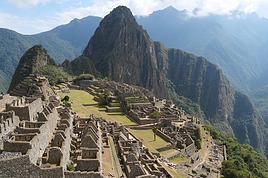
DES FAST FOOD VONT ETRE CONSTRUITS AU MOMMET DU MACHU PICCHU !!!
voir lien
http://www.blackbookmag.com/article/air-weddings-machu-picchu-fast-food-and-rowdy-funerals/6994
C'est une honte, une insulte à l'hisoitre et à la culture Périenne .. c''est un blasphêm.
Comme si l'inauguration fin 2010 d'un monstrueux hôtel de grand luxe de la chaîne NW MARRIOT en plein quartier San Blas à Cuzco, la construction en 2008 d'un hôtel de grand Luxe dans le canyon del Colca avec piscine alors que la population locale manque d'eau, ne suffisaient pas ! Et d'autres projets tout aussi insensés sont en cours pour toujours pousser plus loin le tourisme de luxe (qui ne crée pas d'emplois pour les locaux car ces multinalionales hôteletière embauchent des Européens, des nords américains...) et pour quelle clientèle en cette période crise ?
j'ai du mal de te croire connaissant la figuration du canyon del colca, et pour le machu picchu je pense que la population locale se serait révolté contre ce projet
Non ce n'est pas un gag de 1er Avril. C'est ce que nous avons pensé de prime abord
Nous avons en informé des amis qui vivent à Cuzco en leur demandant outefois si ce n'était un fausse info de 1er Avril ... et bien non ... ils nous ont confirmé que ce projet est en cours de discussions. Mais le temps que cela se concrétise ... on a le temps de voir venir.
voir liens suivants
http://www.lascasitasdelcolca.com/web/ocol/francais-hotel-las-casitas-del-colca.jsp
extrait du site :
« Las Casitas del Colca, Canyon de Colca, Pérou
Située au cœur du Canyon de Colca, un des canyons les plus profonds existants, la proprieté Las Casitas del Colca est idéale pour un séjour alliant relaxation et totale évasion. Cette propriété Orient-Express propose de charmantes ‘Casitas’ (maisonnettes), garantissant intimité, confort et luxe, dans un environnement naturel alliant simplicité et évasion. »
c'est désolant, quand je suis allé en décembre 99 à cuzco et au machu picchu, il n'y avait rien de tout cela c'est lamentable pour les touristes de ne pas manger les plats locaux, ils ne savent pas ce qu'ils perdent..........
Si le Machu Pichu (que j'ai visité d'ailleurs) fait partie du patrimoine mondial de l'UNESCO, il n'y a pas de crainte à avoir, ce projet monstrueux ne se fera pas!!
A moins que..............!
"Il n'y a pas d'homme plus complet que celui qui a beaucoup voyagé , transformé vingt fois la forme de sa pensée et de sa vie "
Effectivement la corruption des politiques entraine entre autre des constructions sauvages et de la pollution.
Toutefois les multinationales embauchent une majorité de locaux et une petite minorité d'européens américains ou asiatiques comme directeurs ou professionnels spécifiques.
La loi du travail péruvien interdit l'embauche d'étrangers si un poste peut être pourvu par un local. Le premier etranger ne peut être embauché qu'à partir d'un quota de 20% de locaux.
Les mêmes multinationales qui polluent ont des budgets de mécénat pour compenser les destructions par des aides en matière de formations .....
Bref, tout n'est pas noir ou blanc mais je suis tout à fait d'accord avec toi que mettre un mac do en haut du machu picchu serait lamentable.
Garcia passe outre les lois internationales concernant la protection des sites ou des populations humaines. Pourpreuve, depuis le mois de janvier, il est en transaction avec la cie pétrolière franco-britannique PERENCO (connu pour ses procédés mafieux) afin d'exploiter les nouvelles nappes pétrolifères récemment découvertes dans une région de l'Amazonie péruvienne (protégée) ou vit une population amérindienne dite "isolée" car elle n'a jusqu'alors eu aucun contact avec d'autre monde, cette population est protégée dans le cadre de la loi internationale concernant les droits de l'homme, mais Garcia passe outre
Voir lien: http://www.survivalfrance.org/actu/4246
Salut,
Ce que peu de gens savent (encore moins les natifs habitant ces terres), c'est que les terres sont "concessionnées" depuis plus de 15 ans (donc, pas seulement dû à A. Garcia). Seulement, les compagnies mettent du temps à rentrer sur leurs concessions et à les exploiter. Elles obtiennent les concessions puis les exploitent dans le futur généralement. C'est à ce moment là que tout le monde s'en rend compte mais c'est trop tard.
Le lot 67 est situé près de la frontière équatorienne et colombienne en territoire Quichua et Tucano. Quichua et Tucano sont des groupes ethno-linguistiques qui ont eu des contacts avec le monde extérieur. Les Tucano, tout comme leurs proches voisins, les parsemés Zaparo, sont effectivement en voie d'extinction. Les derniers recensements donnent une population aux alentrours de 950 personnes pour les Tucano et 530 pour les Zaparo.
Dans l'article que tu transmets, Survival oublie de préciser que, si effectivement les terres appartiennent aux natifs, le sous sol appartient à l'Etat (tout du moins au Pérou). C'est tout le côté ambiguë (euphémisme) de ce type de loi: d'un côté, elle reconnaît les droits territoriaux mais de l'autre décrète que le sous sol appartient à l'Etat. D'où les problèmes sans fin entre les compagnies minières/pétrolières et les populations natives. Les deux se retranchant derrière la même loi puisque l'un peut prétendre à sa terre et l'autre au sous-sol.
De toute façon, aussi malheureux que se soit, les indiens de l'Amazonie péruvienne ont déjà perdu le combat. Ils sont pris entre l'Etat, les narcotrafiquants et les compagnies pétrolières et minières. Ajouter à cela les hordes d'évangélistes qui déferlent depuis les années 70 et qui préparent le terrain aux futurs consortiums. Pour ceux qui veulent se couper de ce monde, ils leur restent la fuite, le nomadisme. Plusieurs groupes le pratiquent mais, automatiquement, la survie devient plus compliquée loin des principaux axes amazoniens que représentent les grandes rivières.
PS: Il faut faire attention aux termes. "Isolé" ne veut pas dire n'ayant eu aucun contact. De toute façon, on ne peut connaître les peuples n'ayant eu aucun contact avec le monde puisque, par définition, s'ils n'ont eu aucun contact, ils nous sont inconnus. Il est donc difficile d'en parler ou tout simplement de les mentionner...
Mais le "bloc 67" est bien situé sur le territoire Péruvien, plus exactement dans le Nord Ouest du Pérou où la société d'exploitation pétrolière franco-britannique PERENCO a reçu le feu vert par Garcia en Janvier 2009 pour installer "sept plateformes pétrolières et 14 puits" . Cette exploitation (qui prévoit une production de 300 millions de barils soit de 100 000 barils par jour) est non seulement une menace grave pour l'environnement mais aussi pour les indiens isolés qui vivent dans cette région de l'Amazonie péruvienne.
voir lien
http://www.novethic.fr/novethic/planete/economie/matieres_premieres/perenco_deloge_indiens_isoles_amazonie.jsp
On appelle par "Indiens isolés" les groupes de nomades ou de semi-nomades qui n'ont aucun contact avec les hommes dits "blancs". Ces populations dites "indiens isolés" ne sont pas immunisés contre nos virus pour nous ordinaires (grippes, rougeole etc.) mais qui leur serraient fatals.
Autre lien intéressant concernant la politique de Garcia qui est totalement indifférent quant au sort des populations dites indigènes qu'il s'agisse d'indiens isolés ou non http://www.survivalfrance.org/actu/4451
A part cette actualité, ilm semble que vous soyez un spécialites du Pérou Nord. Nous auons besoin de vos conseils car nous envisageons de vister le site de Chachapoyas, et Kualap. Mais les agences proposent des prix ...plutôt onéreux. Depuis des années nous ne cessons de parcourir le Pérou, la Bolivie et le Chili Nord mais nous restons toujours sur notre faim. Aussi nous ciblons pour 2010 Chachapoyas et Kualpa du moins pour le Pérou ( Cette année nous faisons une petite infidélité au Tihuantisuyu, nous allons découvrir les rgions himalayennes de l'inde, de l'inde dite tibétaine.)
Nous attendons vos conseils qui ne peuvent que nous être utiles.
Bonjour,
Oui, le lot 67 est bien en territoire péruvien, à la frontière equatorienne et colombienne (tu as toutes les localisations des puits sur le site internet de Perenco). Les indiens vivant dans le coin sont connus, ont déjà eu des contacts avec les blancs (juste pour t'amuser, tape Zaparo, Quichua, ... sur google, image et texte) et, je suis d'accord avec toi, ils sont en danger d'extinction.
Sinon, pour nos chers Chachapoyas : tu as une très bonne agence qui travaille sur le nord du Pérou et qui est spécialiste de la région de Chachapoyas; elle est dirigée par un français et un péruvien:
www.peru-nativo.com
Si tu veux tout faire par toi même alors, dis moi plus exactement où tu comptes aller et combien de temps rester.
Sinon, pour se rendre à Chachapoyas depuis Lima: bus Movil tour. Depuis Chiclayo et Trujillo: idem, Movil tour. Depuis Cajamarca, idem: Movil tour.
Pour Kuelap, tu as des combi et des taxi.
Pour plus d'infos, n'hésite pas.
A+
Merci de vos conseils. Nous a vons noté le nom de l'agence que vous nous avez conseillé.
Nous repartirons au pérou /Bolivie en 2010, car nous partons tout l'été dans l'Inde Himalayennes. Mais nous avons l'habitude de préparer nos voyages plusieurs mois à l'avance, concernant les itinéraires, les hôtels, transports, et tout le tutti quanti, tout cela englobé dans un budget plutôt serré, car n'étant pas de la famille de Crésus, nous avons besoin de plusieurs mois (ne serait-ce que prendre des options de vol etc) . Nous ne partons jamais sur un coup de tête. Aussi nous ne manquerons pas de vous redemander des conseils. Nous vous lisons souvent sur ce forum et vos remarques sont pertinentes, c'est pour cela que nous tiendrons compte de vos conseils en priorité.
Mais QUELLE HORREUR !!!!
En plus il me semble que le mont ést classé "patrimoine culturel de l'humanité" par l'UNESCO depuis plus de 20 ans, donc je suppose que c'est "internationalement illégal" non ?
Afin de mieux lutter contre les incivilités de certains touristes (qui risquent déjà amendes et prison), les autorités péruviennes ont décidé de renforcer la…
Après notre retour du Machu Picchu et de la Vallée Sacrée, nous avons 3 ou 4 jours de libre avant de reprendre un vol pour Lima. Nous aimerions savoir si vous…
Voyager en camping-car › Pérou / Équateur · 4 replies
Nous sommes une famille avec 2 enfants, en camping car. On se trouve actuellement à Huarmey au Pérou. On remonte direction l'équateur, je penses passer la…
Travailler, étudier et vivre à l'étranger › Pérou · 1 reply
Y a des québécois vivant au Pérou? si s'est difficile de trouver du travail décent? si s'est réellement dangereux d'y vivre en tant que gringo? je suis ici…
Je ne savais pas trop ou posé le message et il est urgent donc je l'ecris ici. Je serai à CUZCO dans 3 ou 4 jours juste apres avoir passé quelques jours du…
Bonjour.
J'ai déjà posté un message sur des renseignements au sujet de notre futur voyage au Chili.
Les précisions: Se déplacer en bus ou en train.
Partir de Valparaiso aller jusqu'au nord en passant par des villes et des lieux à visiter puis revenir à santiago en empruntant un autre chemin.
Éviter les plages ..
Merci
Hello,
my wife and I will be in Cusco for a week in March 2027.
I’d like to organize the visit to the site on our own, combining the Sacred Valley and Machu Picchu.
We’d leave Cusco on Day 1 to arrive at the site in the morning, then stay in Aguas Calientes or Ollantaytambo, and on Day 2 return to Cusco while visiting the Sacred Valley.
Is this doable?
Looking forward to hearing from you.
Cédric.
Hi everyone,
We’re planning 40 days in Uruguay and Argentina in February and March, trying to avoid as much rain as possible.
We’re thinking of starting in Buenos Aires, then heading to Bariloche, and from there flying to Córdoba, Mendoza, or Salta. Maybe by bus or renting a car to explore each region.
Do you have any suggestions or tips for us? We love picturesque, historic cities and landscapes. As seasoned travelers, we’re used to planning our trips ourselves.
Thanks in advance!
Hello,
We’re spending 3 weeks in Rio between February 20 and March 15, 2027, to visit our son and daughter-in-law. We’re thinking of one or two "escapes" from Rio—3-day trips to get away from the city (so not too far, max 3–4 hours by car or bus). We’re all ears for suggestions! We love beautiful nature and authentic experiences, not so much the touristy spots... even though those spots are often in beautiful places, we’d rather avoid them.
Thanks for your insights!
Catherine
Hello,
we’re arriving in Fortaleza on February 14, 2027, and planning to rent a car to drive to João Pessoa in two stages. We’ll leave from there on the 20th or 21st to head to Rio. Our questions:
- Which stop between Fortaleza and João Pessoa would be the most enjoyable?
- How long does it take to drive from Fortaleza to João Pessoa?
- Are there any easy hikes (no guide needed) around João Pessoa?
Thanks for all your replies—I’m hoping for lots!
Catherine
Hi there,
I’m planning a trip with my partner (no kids this time—thanks, Grandma!) for two weeks to celebrate her 40th birthday. I’ve been thinking about Chile. We’re looking at leaving around September 18, 2027, starting in the south and returning in early April.
Here’s what I had in mind:
8 nights in a van in the Lake District and the start of the Carretera Austral (up to the Chaitén area). We’re set to arrive in Puerto Montt around 2:00 PM. We don’t want to go too far south since we’re planning to explore the heart of Patagonia (Chile and Argentina) with the kids when they’re older. The idea is to spend 3 nights discovering the lakes (up to Cochamó) and 3 nights in Pumalín Park. I’ve also added two transition nights.
7 nights in the Atacama to experience another side of Chile (San Pedro), taking a domestic flight from Puerto Montt to Calama in the early afternoon. We’ll depart for France in the early evening from Santiago.
IMPORTANT NOTICE for those planning to take a bus to another city, state, or destination from Salvador!
Starting January 20, 2026, the intercity bus station Rodoviária is changing its address!
The Rodoviária is leaving the Iguatemi area and will now be located in ÁGUAS CLARAS (about twenty kilometers from downtown Salvador).
A brand-new station (the most modern in Brazil) has just been set up there, accessible by car/taxi/Uber/metro.
Allow for much more transfer time (especially during rush hours), so leave early if you're heading to Chapada Diamantina or other Brazilian cities by bus.
Remember, there are also private transfers (even French-speaking ones) that can take you directly from your hotel in Salvador to your hotel in Chapada. Sure, it’ll be more expensive, but you’ll save on transfer time and comfort.
Tropical greetings from Salvador,
@ivanbahiaguide
Loyal member of the French-Speaking Brazil Forums for over 15 years already 😊 🇧🇷
Hello,
We’re thinking of spending 1 month in Chile, maybe doing a loop?
From 12/23 to 01/22.
What are the must-see sights, given we’re more interested in the country’s cultural side than the beaches?
Thanks
Hi everyone,
We're planning a trip to southern Chile in November. Here's our tentative itinerary:
Day 1: Arrival in Santiago, then a flight the next day to Balmaceda where we'll pick up a rental car to reach Coyhaique.
Day 3: Walk in the Coyhaique National Reserve, then continue to Puerto Chacabuco. Return to Coyhaique for the second night.
Day 4: Drive to Villa Cerro Castillo for a hike in the national park. Continue to Puerto Tranquilo and stay there for 3 nights.
Day 5: Boat tour on Laguna San Rafael.
Day 6: Day trip to Monte San Valentin Glacier.
Day 7: Excursion to the Marble Chapels, then drive to Puerto Guadal. We'll stay there for 3 nights.
Day 8: Walk along Lago Carrera and return to Puerto Guadal.
Day 9: Rio Baker Valley and, if possible, a glacier excursion.
Day 10: Drive to Cochrane and hike in Tamango National Reserve. We'll stay 2 nights in Cochrane.
Day 11: Walk in the Chacabuco Valley.
Day 12: Drive to Caleta Tortel. We'll stay there for 2 nights.
Day 13: Cruise in the Rio Baker delta.
Day 14: Return to Cochrane.
Day 15: Return to Balmaceda in two stages.
Day 16: Continue the return journey.
Day 17: Return the rental car and head back to Santiago.
After this, we're also planning to explore northern Santiago. I'll post about that part once I have a clearer idea of the route.
What do you think of this itinerary? Is it doable in 17 days?
Thanks in advance for your tips and recommendations.
martine
Hi everyone! So happy to be back on this forum—it’s packed with such useful info! 🙂 My husband and I are planning a 2.5-week self-drive trip to Colombia at the end of the year, including some domestic flights. My first question is: is it possible, easy, and safe to do a road trip in Colombia?
Below is our draft itinerary (with questions at each stop):
29/11: France → Colombia. Overnight in Bogotá.
30/11: Exploring Bogotá: La Candelaria and Montserrate.
01/12: Gold Museum (closed on Mondays). Drive to Zipaquirá (1.5 hrs) to visit the Salt Cathedral. Then drive to Villa de Leyva (3 hrs). Explore the town. Overnight in Villa de Leyva.
02/12: Return to Bogotá via Laguna de Guatavita (5 hrs). Is it worth the detour? Overnight in Bogotá.
03/12: Flight to Pereira. Drive to Salento. Overnight in Salento.
04/12: Cocora Valley (hike among the wax palms) followed by a drive around the area. Are there any waterfalls or other sights nearby?
05/12: Visit a coffee finca—any recommendations? Then explore the surroundings: Filandia, Manizales, waterfalls? Hot springs? Which ones?
06/12: Flight to Medellín.
07/12: Exploring Medellín: Centro, Plaza Botero, Comuna 13. How do you visit Comuna 13? Is it easy to get around Medellín? Metro? Buses?
08/12: Drive to Guatapé (2 hrs). Visit the town, stroll around the lake, then El Peñol. Overnight in Guatapé.
09/12: Return to Medellín.
10/12: Flight to Santa Marta. Drive to a hotel near Tayrona Park.
11/12: Tayrona—El Zaino entrance.
12/12: Tayrona—Palangana entrance, then Bahia Concha and Santa Marta. What do you think?
13/12: Drive to Minca (45 mins). Can we reach the village by car? Pozo Azul and Marinka waterfalls. Overnight in Minca (or back in Tayrona?).
14/12: Drive to Puerto Nao (5 hrs). Stop in Ciénaga on the way + boat tour in Nueva Venecia and/or Buena Vista? Not enough time? Overnight in Puerto Nao.
15/12: Exploring Cartagena: Centro, Getsemaní, the walls + La Boquilla if we have time.
16/12: La Boquilla (is it really worth it?) if we didn’t have time yesterday, then back to the beach.
17/12: Return to France.
So, what do you think? Is this doable, or should we tweak it? Thanks in advance for your invaluable feedback and tips! 🙂
Hi there, I’ll be in Brazil from December 10th to the end of February.
I’ve sketched out a rough itinerary but I’m not sure how to arrange it—considering the climate, year-end holidays, and Carnival.
Basically, I’m thinking of the Amazon, the Northeast coast with Lençóis Maranhenses National Park (but skipping Chapada Diamantina),
Ouro Preto, Paraty, and Ilha Grande—but no Rio visit.
Is this doable in 3 months?
Which direction should I take for this itinerary?
Thanks in advance!
Hi everyone, does anyone know the agency Ventura Travel Agency (not ventura travel)? After lots of research and quotes, it’s the only one offering Uyuni at a reasonable price while meeting all the criteria: transfer to the border, private-room accommodation, and a very fair rate. Other agencies or guides either offer shared rooms, no border transfer, or prices that are way too high. But I’d love to hear some reviews about this agency. Thanks in advance!
Hi everyone,
We're planning a trip to Chile to visit the Atacama Desert and then head toward Putre, Lauca, Salar de Surire, etc.
Which would be the better time to go, April or November?
Is an SUV enough?
Looking forward to your tips!
Hi everyone, French travelers in Chile—what credit cards do you use for your various car rentals in the country? I’m traveling in September and was planning to switch my regular debit card (a VISA PREMIER in deferred debit mode) for the deposit guarantee.
My rentals are with Figal in Punta Arenas, Econautos in Arica, and Chilean Rent a Car in Temuco, and all of them want the deposit on a credit card. For me, deferred debit *should* work, but I’ve read comments saying the opposite.
How’s it actually working on the ground with these rental companies right now? Will a deferred debit card work, or not at all?
In France, banks don’t issue credit cards, right—or am I mistaken?
Hi everyone, is it still possible to travel in Ecuador outside the Amazon region? If so, do you have a reliable agency to recommend? All your recent experiences from the past few months would be greatly appreciated. Thanks so much
Hi,
We’re heading to Buenos Aires for 3 days in November and would like to do a guided tour of a few neighborhoods. There are "free" tours, but none in French. Does anyone have a guide to recommend so we can really get to know the city beyond just the architecture?
Thanks
Hi there,
I’m desperately looking for info on the schedules and routes of (shared) boats to visit the islands of Lake Titicaca.
From what I’ve found, there’s a *combi* (bus) that leaves from Puno to go to Llachon. Where do you catch it? What are the schedules and frequency? Does it take about 1 hour?
Then in Llachon, you can take a boat to Amantani (45 min). Same question—where do you check for frequency and schedule?
After that, from Amantani, boats go to Taquile and then Uros. Do you have enough time to visit the islands between two boats? Frequency and schedule?
The goal is to do this tour independently (no agency) over 2 days. Thanks for any tips you might have!
I just got back from a trip to Bolivia and wow—what a wake-up call. It’s not the easiest country, but it’s absolutely stunning.
I started with Isla del Sol, perfect for easing into the altitude at a relaxed pace. Try to stay in the northern part of the island—it’s quieter and the views are insane. And the trout there? Unreal. Quick tip: bring cash in small bills; they almost never have change, and cards are rarely accepted.
Next up, La Paz. The city’s pretty wild, built in every direction. I did a few hikes in the area, including the famous Charquini Lagoon (the blue lake) at over 5,000 m—let’s just say I struggled 😅 but it was so beautiful it was totally worth it.
After that, I headed to Sajama. It’s cool, especially for the hot springs, and I stayed in Tomarapi. But honestly, if you’re short on time, you can skip it without too many regrets.
The highlight of the trip: the Salar. I did it starting from Tupiza, and I *highly* recommend going Tupiza → Uyuni. Way less crowded at the start and the landscapes are super varied. For the tour, I used SplitYourGuide to find a group, and it worked out great. Super handy for splitting costs and meeting people.
I wrapped up in Sucre—this city is gorgeous, all white, with such a chill vibe. And the salteñas + ice cream? Next level 😋
Bottom line: Bolivia’s a bit rough around the edges, sometimes exhausting (shoutout to the altitude), but it’s 1000% worth it.
If you’ve got questions or need tips, I’m happy to help!
Martin
I was planning to go to Réunion and stay in half-board accommodation with non-professionals, but it seems that’s not really the custom there—or maybe my budget isn’t big enough.
So, since I’ve already traveled around Ecuador and Peru, I’m now looking at Argentina, especially for its mountains (like the ones in Réunion that tempted me, even though—frustratingly—I could only admire them from below).
I plan to get around by bus and don’t know in advance where I’ll sleep, so I won’t book ahead. If I like a place, I might stay for several days.
I know that in Chile, it’s easy to find half-board accommodation, but what about in Argentina?
I’d like to stay with locals in half-board without it being a professional setup. I’m not sure if this is common practice there. It’s up to me to find someone willing to host me.
What do you think?
What would be a fair price (keeping in mind that 40 to 50 € is the max I can spend on accommodation, breakfast, and dinner)?
Hi everyone,
We’re heading to Patagonia for three weeks in November, starting from Coyhaique in Chile.
We won’t have a car, and I’m struggling to find information about transportation options for a few parts of the itinerary we’d like to do:
1) From Perito Moreno (the town, near Los Antiguos), we’d like to travel down Ruta 40 to visit Perito Moreno National Park and then cross into Chile via the Paso Roballos (at the latitude of Bajo Caracoles) to reach the road to Cochrane. Without a car, it seems we’ll need to use private agencies to get to the national park—do you have any recommendations or suggestions? Also, does anyone know if it’s possible to cross into Chile via Paso Roballos (from Bajo Caracoles) without a rental car? That is, without having to go all the way down to El Chaltén or back up toward Perito Moreno/Los Antiguos, etc.?
2) The second stretch that seems a bit tricky (though still easier, in theory) is from Caleta Tortel to Villa O’Higgins on the Chilean side. Do we have to go back through Cochrane, or are there ways to get directly from Tortel to Villa O’Higgins?
3) Finally, we’d like to hike into Argentina (El Chaltén) from O’Higgins. Any recommendations for this? Do we need to go through an agency? What’s the estimated duration of the trek?
As you’ve probably gathered, we want to visit some off-the-beaten-path spots but don’t have a car, so we’re looking for the best possible compromises.
Thanks so much in advance for all your suggestions!
Thomas
Hi,
we’re planning a round trip from San Pedro de Atacama, Chile, to Salta, Argentina, in two months. On the way there, we’ll take the northern route via Susques, Route 27, then 52. But for the return, we were thinking of taking the southern route via San Antonio de los Cobres, Route 51, then 23. Is it similar to the northern route in terms of road surface? How busy is it, and are there gas stations? Basically, should we be worried about doing it in an SUV that’s supposedly 4x4 but has regular road tires and no second spare wheel, obviously...
I’ve seen that we can stop over in San Antonio de los Cobres.
Thanks for your feedback.
Raf.
Hi,
we’ll be in Calama at the end of March 2026, and I’m looking for a reliable car rental there for a 7-day road trip to Salta, Argentina. But I’m struggling with the car rental agencies in Calama because the reviews can be scary. I saw Gyg, which has great ratings, but I’m a bit wary (5/5 from 59 reviews—either the guy’s amazing or it’s fake...), but I can’t find any recent reviews on VF in general.
For Punta Arenas, I booked with Dachelet and didn’t have any issues with email exchanges.
Thanks in advance.
Raf.
I’m planning the trip of my dreams for next November—Chile!
I’d love to get your thoughts on my potential itinerary. I know it’s a big investment in terms of both time and money, so every bit of feedback, suggestion, or info helps immensely. Thank you in advance!!
1-Flight to Santiago
2-Explore Santiago
3-Explore Santiago
4-Bus from STG to Valpo (2h) + visit Valparaíso + night in Viña
5-Visit Valparaíso + bus back to STG (2h)
6-Flight to Calama + bus to San Pedro + explore and acclimate in San Pedro + car rental in the afternoon (+Chaxa?)
7-(Very early) Valle del Arcoíris + Laguna Cejar + Valle de la Luna
Good evening,
We’d love to go in November to enjoy some beautiful beaches for about two weeks, preferably around Bahia, as November/December seems like a great time.
We’ve already traveled to Brazil several times and know the south of Rio as well as the region between São Luís and Fortaleza, and Chapada Diamantina...
What advice would you give us: the south with Itaparica, Morro de São Paulo, Boipeba, Barra Grande—or all four? Or maybe the north?
Thanks in advance for your help
Hi everyone, it’s been a while since I last posted!
First time in South America for me, my wife, and our 7-year-old son. I’ve put together this itinerary and would love to hear your thoughts:
Bogotá 28/07 – 30/07: Arrival. Which neighborhood and outings would you recommend?
Flight to
2 Filandia 30/07 – 03/08: (255 €). Waterfalls and horseback riding,
Cocora Valley,
Hiking,
Nearby villages.
Flight to
3 Tayrona 03/08 – 07/08: Hotel La Casablanca
Hike with Tierra Nevada and the Kogui village (any feedback?). Return by inner tube for the little one.
Short night hike.
Second hike to La Piscina, etc., return by 🐎.
4 Cartagena 07/08 – 10/08: Air-conditioned bus.
Staying in Getsemaní? Mangroves & the Castle, exploring the city.
5 Bogotá 10/08 – 12/08
Feel free to share your feedback!
Have a great day!
Hi,
During an upcoming trip to Peru, we’ll have one day to explore around Arequipa (excluding Colca Canyon) with a car and driver.
We’ve got a few options:
- Toro Muerto petroglyphs and dinosaur footprints at Querulpa
- Ruta del Sillar and Quebrada de Culebrillas
We’re a group of 6 friends with an average age of 70, all mobile, and we’re planning a trip to Peru in September/October 2026. Below is an idea of what we’re looking for: a French-speaking guide, accommodation in 3-star hotels or homestays with comfort.
Duration: 16 to 20 days on-site.
Visit the main sites with immersion in the culture and way of life.
Which francophone agency in Peru would you recommend? Thanks