Tenues vestimentaires pour l'Inde du Nord
by Domeugal
This discussion is in French, the community’s main language.
Original post
bonsoir,
nous partons mon mari et moi (60 ans)mi avril jusque début mai pour un périple en inde du nord( Delhi, Jaipur...Benares)bref le classic. Comme nous prenons un vol intérieur nous sommes limités en poids des bagages(15kgs /personne). 2 questions me taraudent, pouvons nous porter des bermudas jusqu'aux genoux , les épaules doivent elles être forcément couvertes , en dehors des visites de temples, j'entends bien!, est-il possible de donner son linge à laver dans les hôtels de moyenne gamme? Merci de votre retour sachant que jusqu'à présent nous avons toujours baroudé sans problème mais que pour ce voyage nous serons moins libres!!
Au plaisir de vous lire
Bon vent et portez vous bien
Marie
L'Inde n'est pas l'Arabie Saoudite ou l'Iran, aucune police des moeurs ne vous emmènera en prison si vous êtes habillés comme vous en avez l'habitude.
Par ailleurs, à moins d'avoir 20 ans et l'attrait de la jeunesse, ou de s habiller à la kardashian ou autre bimbo en éternelle tenue de représentation, les habitants ne seront pas plus étonnés que cela de vous voir habillés en bermuda, robe, t shirt etc.
Il est possible de laver son linge. Le faire laver ne coûte pas grand chose mais ne pas donner d affaires fragiles. Le problème serait plutôt le séchage si le temps est à la chaleur et à l humidité et si la chambre n a pas la clim.
Par ailleurs, à moins d'avoir 20 ans et l'attrait de la jeunesse, ou de s habiller à la kardashian ou autre bimbo en éternelle tenue de représentation, les habitants ne seront pas plus étonnés que cela de vous voir habillés en bermuda, robe, t shirt etc.
Il est possible de laver son linge. Le faire laver ne coûte pas grand chose mais ne pas donner d affaires fragiles. Le problème serait plutôt le séchage si le temps est à la chaleur et à l humidité et si la chambre n a pas la clim.
Alors certes, il n'y a pas de police des moeurs, mais découvrir ses épaules n'est néanmoins pas forcément une très bonne idée. Ca n'est clairement pas dans les "moeurs" locales, donc autant essayer de respecter un peu ça. Idem pour les shorts. Pantacourt OK, mais je ne porte jamais de short en Inde. Quasiment aucun indien n'en porte. On commence à voir parfois des hommes en bermudas dans les quartiers un peu plus huppés, mais ça reste l'exception.
Evidemment, on croise des touristes en short et t-shirt sans manches, mais comme dans tout pays, ne pas trop s'éloigner des habitudes locales reste plutôt une bonne idée.
One Chaï, blog de voyages à contre-courant : https://onechai.fr
bonjour nous sommes partis en aout l annee derniere je vous conseille de porter des pantalons longs en matiere legere pour tous les 2.des chemises legeres pour le soir.pour votre femme je conseille des tee shirt a manches courtes qui recouvrent les epaules.j avais emporte avec moi une chelche qui m a bien ete pratique je l a mettais sur mes epaules et parfois sur ma tete.bon voyage quand au lavage du linge prendre des matieres qui ne se froissent pas de couleurs fonces.les hotels emmenent votre linge le matin et le rapporte le soir.il me semble que c est un lavage a sec
mais comme dans tout pays, ne pas trop s'éloigner des habitudes locales reste plutôt une bonne idée.
Ça me rappelle une histoire que j'avais lu à propos d'un iranien qui s'offusquait qu'un touriste ne s'habille pas comme lui quand il venait visiter son pays .
Son interlocuteur lui demande alors :
- Donc si vous allez un jour en Inde, vous porterez un dhoti ?
Et l'iranien interloqué de répondre :
- Ben non, pourquoi ? 😏
Pour en revenir à l'Inde, je ne trouve pas qu'il y ait grand chose à modifier à sa garde robe habituelle. Et pour les épaules et autres décolletés, il suffit de prendre une grande écharpe légère dans son sac et de la mettre les rares fois où on se sent mal à l'aise.
Ça me rappelle une histoire que j'avais lu à propos d'un iranien qui s'offusquait qu'un touriste ne s'habille pas comme lui quand il venait visiter son pays .
Son interlocuteur lui demande alors :
- Donc si vous allez un jour en Inde, vous porterez un dhoti ?
Et l'iranien interloqué de répondre :
- Ben non, pourquoi ? 😏
Pour en revenir à l'Inde, je ne trouve pas qu'il y ait grand chose à modifier à sa garde robe habituelle. Et pour les épaules et autres décolletés, il suffit de prendre une grande écharpe légère dans son sac et de la mettre les rares fois où on se sent mal à l'aise.
Pour en revenir à l'Inde, je ne trouve pas qu'il y ait grand chose à modifier à sa garde-robe habituelle.
Et pour les épaules et autres décolletés, il suffit de prendre une grande écharpe légère dans son sac et de la mettre les rares fois où on se sent mal à l'aise.
Tout dépend du contenu de sa garde-robe habituelle ;-)
Ne pas négliger qu'on peut tout de même sous-estimer la "gêne" ressentie par les locaux avec nos shorts et nos t-shirts sans manche. Je quitte l'Inde pour mon exemple, car c'est le dernier que j'ai en tête, mais ne nombreux touristes portent aussi ce combo gagnant en Birmanie ou au Laos. Le témoignage de Francis Engelmann, un Français qui habite à Luang Prabang au Laos depuis de nombreuses années et connaît donc très bien la culture du pays est très instructif. Au Laos non plus, si on se promène en short et épaules découvertes, on ne se sentira pas mal à l'aise, car personne ne vous fera de remarques, car ça serait culturellement parlant inacceptbale de leur part de faire une remarque, et pourtant... http://www.surlesroutesdelasie.com/46-luang-prabang-tourisme-bouddhisme-laos À partir de 7mn40s
Après, évidemment, chacun fait comme il veut, ça va sans dire :-) Désolé de déborder quelque peu du cadre de la question de départ :-/
Tout dépend du contenu de sa garde-robe habituelle ;-)
Ne pas négliger qu'on peut tout de même sous-estimer la "gêne" ressentie par les locaux avec nos shorts et nos t-shirts sans manche. Je quitte l'Inde pour mon exemple, car c'est le dernier que j'ai en tête, mais ne nombreux touristes portent aussi ce combo gagnant en Birmanie ou au Laos. Le témoignage de Francis Engelmann, un Français qui habite à Luang Prabang au Laos depuis de nombreuses années et connaît donc très bien la culture du pays est très instructif. Au Laos non plus, si on se promène en short et épaules découvertes, on ne se sentira pas mal à l'aise, car personne ne vous fera de remarques, car ça serait culturellement parlant inacceptbale de leur part de faire une remarque, et pourtant... http://www.surlesroutesdelasie.com/46-luang-prabang-tourisme-bouddhisme-laos À partir de 7mn40s
Après, évidemment, chacun fait comme il veut, ça va sans dire :-) Désolé de déborder quelque peu du cadre de la question de départ :-/
One Chaï, blog de voyages à contre-courant : https://onechai.fr
15 kilos c’est déjà pas mal comme poids de bagages, surtout si vous mettez les affaires dans un sac à dos.
Pour le linge, je n’ai guère séjourné en Inde dans des hôtels, mais je crois me souvenir que dans les quelques hôtels où je suis passée un service de laverie était proposé. Sinon il y a aussi la solution de laver à la main, c’est très rapide pour des vêtements légers et évite les mauvaises surprises avec du linge délicat, mais le bémol peut être le séchage.
Pour les bermudas, si les genoux sont couverts je dirais que oui vous pouvez en porter, j’ai souvenirs de quelques hommes (plutôt aisés) en pantacourts, pas de femmes par contre (sauf dans les soirées où les Indiennes sont souvent plus dénudées que les occidentales…). Pour les épaules par contre, oui elles doivent être couvertes, tout comme le décolleté. J’ai fait un stage à Jaipur cet été, la directrice (une Indienne) me demandait de porter systématiquement un foulard, même lorsque j’avais des blouses à manches trois-quarts avec un col rond assez ras du coup. Dans un contexte touristique personne ne vous reprochera votre tenue, mais pour votre confort et celui des Indiens, il me paraît préférable de privilégier des vêtements longs et légers. Si vous n’en avez pas, il n’est pas forcément nécessaire de refaire votre garde-robe avant de partir, sur place on trouve facilement des pantalons légers en coton à 150-300 roupies, ainsi que des blouses ou des kurtas.
Pour le linge, je n’ai guère séjourné en Inde dans des hôtels, mais je crois me souvenir que dans les quelques hôtels où je suis passée un service de laverie était proposé. Sinon il y a aussi la solution de laver à la main, c’est très rapide pour des vêtements légers et évite les mauvaises surprises avec du linge délicat, mais le bémol peut être le séchage.
Pour les bermudas, si les genoux sont couverts je dirais que oui vous pouvez en porter, j’ai souvenirs de quelques hommes (plutôt aisés) en pantacourts, pas de femmes par contre (sauf dans les soirées où les Indiennes sont souvent plus dénudées que les occidentales…). Pour les épaules par contre, oui elles doivent être couvertes, tout comme le décolleté. J’ai fait un stage à Jaipur cet été, la directrice (une Indienne) me demandait de porter systématiquement un foulard, même lorsque j’avais des blouses à manches trois-quarts avec un col rond assez ras du coup. Dans un contexte touristique personne ne vous reprochera votre tenue, mais pour votre confort et celui des Indiens, il me paraît préférable de privilégier des vêtements longs et légers. Si vous n’en avez pas, il n’est pas forcément nécessaire de refaire votre garde-robe avant de partir, sur place on trouve facilement des pantalons légers en coton à 150-300 roupies, ainsi que des blouses ou des kurtas.
découvrir ses épaules n'est néanmoins pas forcément une très bonne idée. Ca n'est clairement pas dans les "moeurs" locales, donc autant essayer de respecter un peu ça.
J'abonde.
Lors de mes différents voyages en Inde, je n'ai pas souvenir d'avoir jamais vu une indienne l'épaule dénudée. Alors qu'il n'est pas rare de voir des femmes nombril à l'air.
Les zones corporelles sensibles sont le fruit de la culture locale, et donc variables selon les pays.
J'ai souvenir d'avoir vu une jeune occidentale déambulée dans Paharganj revêtue d'un simili bikini. Pas d'émeute, mais les regards n'étaient vraiment pas naturels, tout particulièrement ceux des hommes.
Déjà sur les Champs-Elysées, cette demoiselle ne serait pas passé inaperçue. Provocation déplacée ou petit pois à la place de la cervelle ?
La société indienne est plus puritaine que ne laissent imaginer les sculptures de certains temples (cf. Khajuraho). Dans les rickshaws, j'ai fini par réaliser qu'y était appliquée une ségrégation non écrite. Si je m'installais à côté d'une femme, un réaménagement intérieur me mettait vite aux côtés d'un mari, d'un frère; ou d'un fils.
Dans les autobus que j'ai utilisés, les places à l'avant étaient généralement réservées aux femmes,
Enfin, il y a des wagons réservés aux femmes dans le métro de Delhi. Comme dans le métro de Téhéran sauf que cela ne suscite aucune opprobre en Occident.
comme dans tout pays, ne pas trop s'éloigner des habitudes locales reste plutôt une bonne idée.
Un bon sens qui mérite d'être appliqué. Comme disent les anglais, when in Rome, do as the romans do...
Fabrice
J'abonde.
Lors de mes différents voyages en Inde, je n'ai pas souvenir d'avoir jamais vu une indienne l'épaule dénudée. Alors qu'il n'est pas rare de voir des femmes nombril à l'air.
Les zones corporelles sensibles sont le fruit de la culture locale, et donc variables selon les pays.
J'ai souvenir d'avoir vu une jeune occidentale déambulée dans Paharganj revêtue d'un simili bikini. Pas d'émeute, mais les regards n'étaient vraiment pas naturels, tout particulièrement ceux des hommes.
Déjà sur les Champs-Elysées, cette demoiselle ne serait pas passé inaperçue. Provocation déplacée ou petit pois à la place de la cervelle ?
La société indienne est plus puritaine que ne laissent imaginer les sculptures de certains temples (cf. Khajuraho). Dans les rickshaws, j'ai fini par réaliser qu'y était appliquée une ségrégation non écrite. Si je m'installais à côté d'une femme, un réaménagement intérieur me mettait vite aux côtés d'un mari, d'un frère; ou d'un fils.
Dans les autobus que j'ai utilisés, les places à l'avant étaient généralement réservées aux femmes,
Enfin, il y a des wagons réservés aux femmes dans le métro de Delhi. Comme dans le métro de Téhéran sauf que cela ne suscite aucune opprobre en Occident.
comme dans tout pays, ne pas trop s'éloigner des habitudes locales reste plutôt une bonne idée.
Un bon sens qui mérite d'être appliqué. Comme disent les anglais, when in Rome, do as the romans do...
Fabrice
S'exposer à l'Etranger lointain amène à mieux connaître et comprendre sa propre Culture.
je crois me souvenir que dans les quelques hôtels où je suis passée un service de laverie était proposé.
L'hôtel le réalise rarement lui-même, préférant confier ce travail à un dhobi walla (blanchisseur) du quartier.
Si l'hôtel ne le prend pas en charge, demander où trouver un dhobi walla. Quelques notions de hindi pourront alors être nécessaires pour le prix et l'heure de restitution. Quoiqu'on peut se faire comprendre en s'aidant de billets et d'une montre.
Hors Mousson (dont je n'ai pas l'expérience), le travail peut être réalisé sous une courte journée, voire la demie-journée.
Fabrice
L'hôtel le réalise rarement lui-même, préférant confier ce travail à un dhobi walla (blanchisseur) du quartier.
Si l'hôtel ne le prend pas en charge, demander où trouver un dhobi walla. Quelques notions de hindi pourront alors être nécessaires pour le prix et l'heure de restitution. Quoiqu'on peut se faire comprendre en s'aidant de billets et d'une montre.
Hors Mousson (dont je n'ai pas l'expérience), le travail peut être réalisé sous une courte journée, voire la demie-journée.
Fabrice
S'exposer à l'Etranger lointain amène à mieux connaître et comprendre sa propre Culture.
Je rappelle que la personne à l origine de la discussion à 58 ans.
Ce n'est pas la peine de lui donner des conseils comme à une minette de 18...
C'est un forum, pas des échanges individuels.
Mon intervention est destinée à l'ensemble des lecteurs, y compris quelques midinettes, et n'était d'ailleurs pas une réponse à la question initiale.
Par ailleurs, certains comportements inappropriés n'ont pas d'âge... Constaté de visu.
Surtout, pour nous occidentaux, la sensibilité aux épaules est déconcertante, et ne peut s'imaginer sans avoir été prévenu.
Fabrice
Mon intervention est destinée à l'ensemble des lecteurs, y compris quelques midinettes, et n'était d'ailleurs pas une réponse à la question initiale.
Par ailleurs, certains comportements inappropriés n'ont pas d'âge... Constaté de visu.
Surtout, pour nous occidentaux, la sensibilité aux épaules est déconcertante, et ne peut s'imaginer sans avoir été prévenu.
Fabrice
S'exposer à l'Etranger lointain amène à mieux connaître et comprendre sa propre Culture.
Il n'existe pas de comportements "inappropriés" quant aux tenues vestimentaires.
Juste une intolérance de certain(e)s à la parure d'autrui.
Traverser un champ de tir sans être à l'abri d'un épais blindage, me semble être un comportement inapproprié. Même si l'on est pacifiste.
Nudisme sur l'avenue des Champs-Elysées ou costard sur une plage nudiste, c'est inapproprié.
Dans ce bas monde, il est nécessaire de tenir compte des réactions de ceux que l'on côtoie au plus près, même si l'on est un voyageur et que l'on a une position différente sur le sujet. Un simple principe de réalité.
Personne n'oblige le voyageur à visiter dans un pays. S'il choisit d'y venir, il doit tenir compte des pratiques locales, qu'elles soient légitimes ou non. Cela s'applique pareillement à ceux qui rendent visite à nos propres pays.
A relire la question initiale de cette discussion, il me semble que c'est justement la préoccupation de son auteur.
Fabrice
Nudisme sur l'avenue des Champs-Elysées ou costard sur une plage nudiste, c'est inapproprié.
Dans ce bas monde, il est nécessaire de tenir compte des réactions de ceux que l'on côtoie au plus près, même si l'on est un voyageur et que l'on a une position différente sur le sujet. Un simple principe de réalité.
Personne n'oblige le voyageur à visiter dans un pays. S'il choisit d'y venir, il doit tenir compte des pratiques locales, qu'elles soient légitimes ou non. Cela s'applique pareillement à ceux qui rendent visite à nos propres pays.
A relire la question initiale de cette discussion, il me semble que c'est justement la préoccupation de son auteur.
Fabrice
S'exposer à l'Etranger lointain amène à mieux connaître et comprendre sa propre Culture.
Nous revenons d'Inde que nous neconnaissons pas en période de mousson. Pour 6 semaines itinérantes+ de 60 ans petites valises à roulettes 10 à 12kg de bagages chacun. Pas de problèmes pour faire laver son linge. Pantalons et jupes longues, t-shirt et chemises à manches courtes pour Monsieur, pour moi chemisiers légers à manches 3/4 ou manches courtes, les femmes indiennes montrent leur bras et leur ventre mais couvrent les épaules. Perso j'emmène peu de vêtements, usagés et surtout pas fragiles ou alors laver soi même : prévoir un savon de Marseille, bouchon souple pour évier, de la ficelle pour suspendre avec qq pinces à linge. On achète facilement sur place l'un ou l'autre vêtement. On peut aussi abandonner les vêtements qui auraient mal vécu le lavage à l'indienne, cela fait de la place dans la valise pour autre chose et notamment les nombreux foulards locaux que je consomme sans modération...
Les indiens ne forment pas un tout.
Comme les français, les papous ou les saoudiens, ils ont des espoirs, des envies de ne pas être caricaturés en un béret, une parure de plumes ou un voile noir.
Comme les...., ils changent.
Comme les...., ils comprennent les différences.
C'est une vision absolument méprisante de penser qu'il faille se déguiser pour visiter un pays. Ça a un relent de : " ces pauvres gens, ils ne vont pas comprendre ma façon d être alors je vais me mettre à leur niveau ".
Comme les...., ils changent.
Comme les...., ils comprennent les différences.
C'est une vision absolument méprisante de penser qu'il faille se déguiser pour visiter un pays. Ça a un relent de : " ces pauvres gens, ils ne vont pas comprendre ma façon d être alors je vais me mettre à leur niveau ".
Il me semble qu'on a déjà eu cette conversation "vestimentaire" sur ce même forum il y a quelques années, non?
Je suis tout à fait d'accord avec les propos de Fabgreg et toujours aussi impatiente de savoir, toi qui réclames tant ta liberté de t'habiller (ou te déshabiller) comme tu l'entends, comment ont réagi les "autochtones" quand tu as joué les naturistes à Varkala? Toujours pas osé? Dommage, ça aurait eu une sacrée gueule et aurait fermé le bec aux pauvres de nous qui pensons "qu'il faille se déguiser pour visiter un pays".
Je ne suis pas allée à Varkala.
Mais j'ai porté le bikini à Goa et partout où le temps se prêtait à l usage d'une piscine.
Sauf une fois, au Gujarat. Je ne le sentais pas.
Comme indiqué plus haut, je ne suis pas sectaire. Je le fais au feeling et c'est cela que je conseille plutôt que les jugements à l emporte pièce qu on lit sur ce forum comme inde =jupes longues voire pantalons et manches demi ou trois quart qu'on soit dans un lieu hypertouristique ou au fin fond de la jungle.
Bref, un foulard au cas où et basta.
Surtout comme, comme toi, moi et la personne qui a engagé cette discussion, on n'a plus 20-25 ans...
L'âge a au moins le privilège de nous éviter certains harcèlements même en deux pièces. 😄
Sauf une fois, au Gujarat. Je ne le sentais pas.
Comme indiqué plus haut, je ne suis pas sectaire. Je le fais au feeling et c'est cela que je conseille plutôt que les jugements à l emporte pièce qu on lit sur ce forum comme inde =jupes longues voire pantalons et manches demi ou trois quart qu'on soit dans un lieu hypertouristique ou au fin fond de la jungle.
Bref, un foulard au cas où et basta.
Surtout comme, comme toi, moi et la personne qui a engagé cette discussion, on n'a plus 20-25 ans...
L'âge a au moins le privilège de nous éviter certains harcèlements même en deux pièces. 😄
Comme les...., ils changent.
vos points de suspensions, vous vouliez dire les cons ? Vous savez, les plus grands auteurs français utilisent ce mot moins grossier et irrespectueux qu'un bikini ou un string sur une plage indienne... Au fait c'est le contraire... Ils ne changent pas... L'expression populaires c'est : il n'y a que les cons qui ne changent pas d'idées... En tous cas vous, toujours aussi aimable, toujours aussi acide, toujours aussi désagréable et cassante ! Et j'ai envie de dire toujours aussi méprisante des indiens : ces pauvres retardataires, il faut leur donner des leçons !!!
Je rencontrai sur mon chemin tant de difficultés
Qu’elles furent toutes surmontées
MIRZA GHALIB poète urdu (1796 -1869)
https://www.telling-india-pictures.com
https://youpic.com/marien
Mais j'ai porté le bikini à Goa et partout où le temps se prêtait à l usage d'une piscine.
Goa ! L'exemple est mal choisi. Pour la plupart des indiens et particulièrement du sud, Goa c'est pas l'Inde mais une colonie touristique où règnent l'alcool, la drogue et le sexe. Et quand ils y vont c'est précisément pour ces trois raisons, pas pour se baigner et profiter des plages. Savez-vous ce qu'ils font derrière les buissons en reluquant toutes ces dames en bikini ?
L'âge a au moins le privilège de nous éviter certains harcèlements même en deux pièces
Alors là, vous vous fourrez bien le doigt dans l’œil !!! Une fois de plus vous voyez les choses avec vos propres canons de l'attirance sexuelle en Europe. Les indiens adorent les femmes mûres. Savez-vous pourquoi ? Mais je ne vous le dirai pas ici. Malheureusement une majorité d'indiens sont frustrés sexuellement et pour eux une femme à poil est une femme à poil et les excite, que ça vous plaise ou pas. Et puis, merde, quoi vous, femme, oubliez le regard des femmes ! Vous croyez que ça les amuse de voir leur mari, père, frère, fils, loucher sur les épaules, poitrines, cuisses, et fesses mises en vitrine par certaines touristes, quel que soit leur âge ? Un jeune et bel infirmier faisait des propositions à une française de 60 ans, alors qu'elle était en train de mourir d'une péritonite dans un hôpital pourri. Et lisez donc un peu la presse locale et vous constaterez le nombre de femmes dites "âgées" chez nous qui se font violer. Comme d'hab vous voulez avoir raison et le dernier mot. Non, non, non et non vous dites n'importe quoi et Fabgreg a raison. Merci cdarnault de rappeler cette lointaine discussion dont je me souviens très bien !!!
Goa ! L'exemple est mal choisi. Pour la plupart des indiens et particulièrement du sud, Goa c'est pas l'Inde mais une colonie touristique où règnent l'alcool, la drogue et le sexe. Et quand ils y vont c'est précisément pour ces trois raisons, pas pour se baigner et profiter des plages. Savez-vous ce qu'ils font derrière les buissons en reluquant toutes ces dames en bikini ?
L'âge a au moins le privilège de nous éviter certains harcèlements même en deux pièces
Alors là, vous vous fourrez bien le doigt dans l’œil !!! Une fois de plus vous voyez les choses avec vos propres canons de l'attirance sexuelle en Europe. Les indiens adorent les femmes mûres. Savez-vous pourquoi ? Mais je ne vous le dirai pas ici. Malheureusement une majorité d'indiens sont frustrés sexuellement et pour eux une femme à poil est une femme à poil et les excite, que ça vous plaise ou pas. Et puis, merde, quoi vous, femme, oubliez le regard des femmes ! Vous croyez que ça les amuse de voir leur mari, père, frère, fils, loucher sur les épaules, poitrines, cuisses, et fesses mises en vitrine par certaines touristes, quel que soit leur âge ? Un jeune et bel infirmier faisait des propositions à une française de 60 ans, alors qu'elle était en train de mourir d'une péritonite dans un hôpital pourri. Et lisez donc un peu la presse locale et vous constaterez le nombre de femmes dites "âgées" chez nous qui se font violer. Comme d'hab vous voulez avoir raison et le dernier mot. Non, non, non et non vous dites n'importe quoi et Fabgreg a raison. Merci cdarnault de rappeler cette lointaine discussion dont je me souviens très bien !!!
Je rencontrai sur mon chemin tant de difficultés
Qu’elles furent toutes surmontées
MIRZA GHALIB poète urdu (1796 -1869)
https://www.telling-india-pictures.com
https://youpic.com/marien
Il n'existe pas de comportements "inappropriés" quant aux tenues vestimentaires.
Juste une intolérance de certain(e)s à la parure d'autrui.
J'imagine donc que durant les épisodes de canicule, vous vous rendez à votre travail en monokini et seules les personnes intolérantes sont surprises. Et les autres vous remercient de par ce geste de ne pas les avoir pris pour des demeurés ;-)
Juste une intolérance de certain(e)s à la parure d'autrui.
J'imagine donc que durant les épisodes de canicule, vous vous rendez à votre travail en monokini et seules les personnes intolérantes sont surprises. Et les autres vous remercient de par ce geste de ne pas les avoir pris pour des demeurés ;-)
One Chaï, blog de voyages à contre-courant : https://onechai.fr
Relisez mon message attentivement et vous comprendrez peut être ce que signifiait les ....
Par ailleurs, le pseudo " Mère Térésa" m'a fait de l oeil un instant mais je suis bien contente de ne pas avoir cédé à la tentation depuis que, grâce à cette discussion, j'ai appris les tendances gérontophiles des indiens. 😄
Goa est tout autant l'Inde que Calcutta ou Golconde. 🙂
Quant aux messieurs et aux bikinis, il faudrait peut être ouvrir les yeux. Les indiens sont des hommes comme les autres avec des pensées qui les amènent à faire les mêmes gestes que leurs homologues français. Peut être sont ils moins discrets (quoique...) mais le résultat est le même.
Les femmes d'ailleurs ne sont pas toujours en reste quant aux pensées érotiques, n'en déplaise à votre pudeur de pucelle.
(La gérontophilie des indiens n apparaît pas évidente quand on regarde les films bollywoodiens. Vous devriez écrire à leurs scénaristes pour leur ouvrir les yeux. Vous devriez également prendre contact avec Jacky et Michelle pour leur signaler la magnifique opportunité de développement de leur entreprise sur le sol indien.) ( Pourquoi avoir supprimé le premier jet de vos carnets ? La causticité de certaines critiques vous y déplaisait ?)
Quant aux messieurs et aux bikinis, il faudrait peut être ouvrir les yeux. Les indiens sont des hommes comme les autres avec des pensées qui les amènent à faire les mêmes gestes que leurs homologues français. Peut être sont ils moins discrets (quoique...) mais le résultat est le même.
Les femmes d'ailleurs ne sont pas toujours en reste quant aux pensées érotiques, n'en déplaise à votre pudeur de pucelle.
(La gérontophilie des indiens n apparaît pas évidente quand on regarde les films bollywoodiens. Vous devriez écrire à leurs scénaristes pour leur ouvrir les yeux. Vous devriez également prendre contact avec Jacky et Michelle pour leur signaler la magnifique opportunité de développement de leur entreprise sur le sol indien.) ( Pourquoi avoir supprimé le premier jet de vos carnets ? La causticité de certaines critiques vous y déplaisait ?)
Pourquoi avoir supprimé le premier jet de vos carnets ? La causticité de certaines critiques vous y déplaisait ?
Oh que c'est mignon, ça ! Ainsi vous me lisez vous aussi ? Un grand merci... Mais alors vous auriez dû voir que je n'ai rien retiré ni censuré de mes écrits. J'ai signalé l'inadmissible, grossière et insultante réponse d'une femme à une autre femme. Et la modération a supprimé ce message insultant ainsi que les autres réponses s'y rapportant, car ça devenait un règlement de compte entre les lecteurs qui n'avait rien à voir avec le sujet initial mais rien n'a sauté de mon
premier jet
, comme vous dites...
La causticité de certaines critiques
ne m'était pas adressée à moi. Pour ma part je crois avoir répondu non à
La causticité de certaines critiques
mais à une calomnie diffamatoire. Si vous ne vous en êtes pas aperçu, j'en suis désolé... Cela dit je n'ai plus rien à ajouter sur cette discussion.
Oh que c'est mignon, ça ! Ainsi vous me lisez vous aussi ? Un grand merci... Mais alors vous auriez dû voir que je n'ai rien retiré ni censuré de mes écrits. J'ai signalé l'inadmissible, grossière et insultante réponse d'une femme à une autre femme. Et la modération a supprimé ce message insultant ainsi que les autres réponses s'y rapportant, car ça devenait un règlement de compte entre les lecteurs qui n'avait rien à voir avec le sujet initial mais rien n'a sauté de mon
premier jet
, comme vous dites...
La causticité de certaines critiques
ne m'était pas adressée à moi. Pour ma part je crois avoir répondu non à
La causticité de certaines critiques
mais à une calomnie diffamatoire. Si vous ne vous en êtes pas aperçu, j'en suis désolé... Cela dit je n'ai plus rien à ajouter sur cette discussion.
Je rencontrai sur mon chemin tant de difficultés
Qu’elles furent toutes surmontées
MIRZA GHALIB poète urdu (1796 -1869)
https://www.telling-india-pictures.com
https://youpic.com/marien
Un grand merci pour vos conseils; je ne manquerai pas de poster mes impressions à mon retour de voyage.
Marie
Bon vent et portez vous bien
Marie
Trop d'hypocrisie sur ce forum...
Évidement, certains se posent des questions légitimes avant d'aller en Inde pour la première fois, c'est un autre pays avec sa culture, traditions - differents de "notre". Mais le monde bouge, je "connais" l'Inde depuis 20 ans et je peux dire que à chaque nouveau voyage je vois ce pays changé... La plupart de touristes tourne dans des endroits ..."touristiques", donc, tous les jours les étrangers défilent.
Chacun fait comme il veut, et ça se voit - personnellement je trouve que ce n'est pas un probleme "les epaules nus" ou autres decollétes (vous remarquez qu'ici cette remontrance ne concerne que les femmes ?!!)
Ce qui choque les Indiens c'est la façon dont les occidentaux se présentent - l'apparence est peut être primordiale pour eux. Et nous, nous sommes riches (déjà se payer un voyage et dépenser 2-3000 euros!) et nous représentons le monde occidental auquel ils aspirent tant. Et vous n'avez pas encore vu les touristes indiens ! Tous sur leur 31! Donc, il faut être élégant, c'est un respect envers les Indiens, et pas comme la majorité de touristes : je paye, donc je fais comme je veux et j'emm... tout le monde. Les indiens regardent avec pitié nos touristes habillés en bermuda (encore, si on 20 ans belles jambes...), les tee shirts de-façonnes, pas de bijoux, pas de maquillage, sans parler de ceux couverts de tatouages avec de dreads et compagnie...
Je n'ai jamais croisé autant de femmes indiennes en talon aiguille et mini jupes ou robes à la Kardashian comme cette année à Udaipur ou Jaipur !! ( et je ne vais pas me plaindre ! 😇)
Évidement, certains se posent des questions légitimes avant d'aller en Inde pour la première fois, c'est un autre pays avec sa culture, traditions - differents de "notre". Mais le monde bouge, je "connais" l'Inde depuis 20 ans et je peux dire que à chaque nouveau voyage je vois ce pays changé... La plupart de touristes tourne dans des endroits ..."touristiques", donc, tous les jours les étrangers défilent.
Chacun fait comme il veut, et ça se voit - personnellement je trouve que ce n'est pas un probleme "les epaules nus" ou autres decollétes (vous remarquez qu'ici cette remontrance ne concerne que les femmes ?!!)
Ce qui choque les Indiens c'est la façon dont les occidentaux se présentent - l'apparence est peut être primordiale pour eux. Et nous, nous sommes riches (déjà se payer un voyage et dépenser 2-3000 euros!) et nous représentons le monde occidental auquel ils aspirent tant. Et vous n'avez pas encore vu les touristes indiens ! Tous sur leur 31! Donc, il faut être élégant, c'est un respect envers les Indiens, et pas comme la majorité de touristes : je paye, donc je fais comme je veux et j'emm... tout le monde. Les indiens regardent avec pitié nos touristes habillés en bermuda (encore, si on 20 ans belles jambes...), les tee shirts de-façonnes, pas de bijoux, pas de maquillage, sans parler de ceux couverts de tatouages avec de dreads et compagnie...
Je n'ai jamais croisé autant de femmes indiennes en talon aiguille et mini jupes ou robes à la Kardashian comme cette année à Udaipur ou Jaipur !! ( et je ne vais pas me plaindre ! 😇)
Alors Pour ou contre la burka ? ..lorsqu'elle est portée en toute autonomie de la volonté ? Vous vous inscrivez en post moderniste comme dans les pays Anglo Saxons qui estiment que cela ne pose pas de problème?...il y en a même une célèbre qui fait du heavy metal au brazil...sauf que, comme dans les villes du sud de la France ( d'où Je suis originaire) , il est interdit de se balader en dehors des plages sans une certaine tenue...pas besoin d'aller si loin en Arabie pour vous amuser à faire votre raisonnement analogique...pour autant, Je rejoins Bon nombre de vos collègues qui estiment que tout le monde n a pas vu le lancement de Brigitte Bardot; surtout en Inde ils ne la connaissent même pas ....Bon allez, même surfer sur internet et Je prie fort pour que tous les enfants sur terre puisse avoir droit Acces a internet et a l education ( même si elles désirent au fond d'elles porter un voile) , mais il ne faut pas croire que parce que vous ne reconnaissez plus personne en Harley Davidson que le bruit de votre pétrolette n'agace pas les passants...habitués encore à circuler au rythme de la roue qui en est le symbole...ouais , les générations évoluent grâce à un Internet mais malheureusement ce n est pas encore d'actualité pour tout le monde ( et j ai toujours au fond de moi le visage de ce jeune garçon qui me hante...lavant des assiettes en pleine rue à 23h en rentrant me coucher a ma guest house, Je m etais dit comme il ressemble a mon neveu qui lui roule maintenant avec ses 3 4x4 dans le desert tunisien a satisfaire les companies de gaz grace a ses etudes ) Je ne suis pas choqué mais il n'y a pas que les indiens qu'ils le sont...Je peux vous le dire la liberté a des limites même dans les playas du sud de la France....la démonstration de masse l'été passé...alors arretons de penser que nous sommes les seigneurs de la civilization..Je vis avec les Britons, et qu' est ce qu on est pris pour des snobs !!! la Bonne blague ?? j'allais vous dire mon QI !
Affirmatif , Pachyderme...et non, ce n est pas relationnel Moushika : en l occurence , Je m interpose dans le récit de Marien alors j'y vais avec tact mais quand une personne s'incruste bêtement ou cruellemet dans une discussion et qu l'opinion me concerne de peu ou prou voir pas du tout, Je n'y vais pas de mots morts...Pourquoi ?, quand on émet une opinion il est important que l'on considère un Bon nombre de paramètres surtout ceux aveclesquels on est le plus concernés. En l'occurrence, il est question de tenues, on est d accord ! Il est question de ballades sur la plage ( Brigitte Bardot) , il est question de choc de culture ( son film fameux) , il est question de liberté ( la gravité soulevée par Attila = la Harley Davidson de Brigitte qui ne reconnait plus personne) et j' en passe...maintenant rapportons tout cela à l'Inde et à notre propre cas : on retrouve la liberté vestmentaire discutée jusqu'à la jupe, le Burkini arraché sur les plages du SUD de la France et j en passe....en somme, avant de parler de choquer les indiens , on pourrait raisonner en comparant ce qui est comparable du moins en matière de tenues vestimentaires...allez Je vous dis Bonne journée car là, Je descends du bus pour m'engouffrer dans un métro...
Que d'échanges inutiles!
Pourquoi tant de hargne? Utilisez les messages privés pour ce type d'échange et ne faites pas perdre de temps aux gens qui lisent les forums.
Pour en revenir à la question initiale je pense qu'en voyage (pour abonder dans le sens de Fabgreg) il faut s'inscrire dans le paysage local sur bien des plans et probablement en particulier sur le plan vestimentaire.
Globalement les gens apprécient…
moi moi j'ai pas répondu à votre question😎, alors si vous voulez engager la conversation avec des femmes indiennes ou bien que elles elles viennent vers vous, je vous dirais que si vous avez les épaules découvertes elles se contenterons de vous regarder et de regarder vos épaules (comme nous à la plage on compare bien ..), sinon et si vous restez assise un petit moment à coté d'elles alors elles viendront vous parlez ça sera peut être par signes si elles ne parlent pas anglais mais ça fait des jolis moments quand même, la connivence entre femmes se passe de mots (enfin des fois hein) et on voyage aussi pour essayer de rencontrer l'autre (enfin des fois) j’espère que vous serez un peu libre dans votre voyage quand même!
pour le reste de vos messages je ne comprend pas votre réaction mais peut être qu'il faut que j'aille me rhabiller pour savoir? (euh je crois que c'est une expression enfin j’espère que cela en est une🤪)
Désolé, votre question de savoir comment vous pourriez vous vêtir en Inde est hyper respectueuse....
c'est vrai que des gens sont souvent nés dans des carcans culturels / religieux qui les empêchent de se vêtir comme ils le veulent...
aussi, j'ai bien apprécié les différents conseils / avis qui vont de la tête aux chevilles...
passez du bon temps...
c'est vrai que des gens sont souvent nés dans des carcans culturels / religieux qui les empêchent de se vêtir comme ils le veulent...
aussi, j'ai bien apprécié les différents conseils / avis qui vont de la tête aux chevilles...
passez du bon temps...
je me dois de réagir quand il y a cette espèce de condescendance vis à vis de l'autre qui me dérange...le plus horrible dans ces échanges sur ce fil, c'est qu'ils avaient viré aux règlements de compte, à la gérontophilie mais quand j'ai commencé à intervenir pour dire que , nous autres, nous ne sommes pas meilleurs que beaucoup de pays, voir pas les mieux placés, en matière de liberté vestimentaire puisqu'il a été question de cela...et bien ça a viré au stop, pas de ça ici... j'aimerais que vous preneiez conscience de cet état de fait...j'apprends beaucoup sur la tolérance de l'autre, sur les questions de diversité , sur la liberté religieuse au travail , içi, (Je pourrais vous envoyer une photo de la prayer room dans l'entreprise où Je bosse qui est une fusion de pleins d'endroits) comme j'ai beaucoup appris sur le respect de l'autre et sur ce melting pot ne serait ce que linguistique que représente l'Inde...Je crois que vous n'allez pas etre déçue..Sachez Madame que si vous y allez accompagnée de votre homme et parce que vous êtes une dame qui devrait être considérée accomplie, au vu de votre âge ( enfants adultes ou mariés) selon les standards de l'Inde et de la France ( il y a pas moins d'un siècle de cela), vous pourriez prendre une certaine aise avec toutefois de la retenue , vestimentaire bien sûr, plus particulièrement, si vous étiez amenée à être invitée à quelconque célébration ou si vous portiez votre choix de vivre dans une maison d'hôtes où vous remarqueriez que l'organisation familiale est très présente ( à moins de 20 ans, j'avais quelquefois eu l'occasion d'être invité à des marriages , à des processions pour le moins extraordinaires, à des séances de réflexions ( voir d'auto réflexion vu la barrierre de la langue) avec des mystiques)...Je peux vous l'affirmer l'Inde a été une métamorphose voir une continuité et j'espère qu'elle ( oui tous les pays se terminant par e en langue française sont féminins excepté le mexique, le Cambodge et le Mozambique) contribuera aussi à cet autre regard que l'on peut avoir sur les autres mêmes si dans notre pays, notre pragmatisme fait que l'on se soucie plus de l'ordre social....ne nous apprend on pas à la maternelle : " savez vous planter des choux à la mode de chez nous "
Je vous remercie pour votre commentaire et ne perdez pas de temps à me donner des leçons, j ai suffisamment de jugement, d éducation et d l'empathie pour m adapter.
Portez vous bien,
Marie
Bon vent et portez vous bien
Marie
Ah ????
J'ai donc rêvé tous ces instants où indiens et indiennes, jeunes ou vieux, gamins ou gamines se sont adressés à moi autrement que pour me vendre quelque chose et ceci malgré mon "impudeur" ???? 😮
Le monde n'est pas tel qu on voudrait qu'il soit.
J'ai donc rêvé tous ces instants où indiens et indiennes, jeunes ou vieux, gamins ou gamines se sont adressés à moi autrement que pour me vendre quelque chose et ceci malgré mon "impudeur" ???? 😮
Le monde n'est pas tel qu on voudrait qu'il soit.
La question qui vous taraude est récurrente sur ce forum particulièrement à la rubrique Pensées et réflexions.
Pour ma part le voile n'est pas un problème. Je ne le comprends pas au même titre que je ne comprends pas le binge drinking mais tant que ces deux activités restent du domaine d'un choix personnel, réfléchi et qu'elles ne cherchent pas à s' imposer à autrui, libre à qui veut de les pratiquer. Je regrette cependant de ne pouvoir me baigner en monokini (le milieu aquatique est idéal pour contrer les lois de la gravité) en Arabie Saoudite, en Iran ou aux États Unis. Je ne doute pas que les femmes voilées dont on étouffe les libertés en France et les pères la pudeur régnant aux États Unis se joindront à mon combat pour que les choses changent là bas aussi.
voile (.) binge drinking (.) choix personnel, réfléchi et qu'elles ne cherchent pas à s' imposer à autrui, libre à qui veut de les pratiquer
Ben dis donc tu ne nous avais pas habitué à de tels propos 🤪
Les suites d'une binge drinking party ?
Conversion tardive ?
les femmes voilées dont on étouffe les libertés en France
Ah bon je savais pas 😮
Mais la liberté de porter un voile est secondaire par rapport à la liberté de ne pas être obligée (avec expressément un "e" bien sûr 😕) d'en porter un.
Pour ce qui concerne la question initial je dirais que c'est vraiment une question tarte à la crême et je préfère ne donner aucun conseil. L'Inde est un pays de grande liberté (pas comme la France d'après certain(e)s 🤪) et donc vous êtes libre de porter ou non ce que vous voulez 😛 (bien plus les hommes que les femmes - et oui là aussi les libertés sont à géométrie variable 😇)
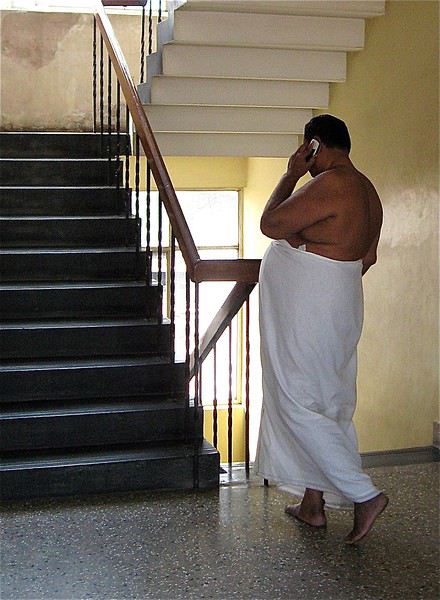
Madurai (Tamil Nadu, Inde) 02/2008.
Ben dis donc tu ne nous avais pas habitué à de tels propos 🤪
Les suites d'une binge drinking party ?
Conversion tardive ?
les femmes voilées dont on étouffe les libertés en France
Ah bon je savais pas 😮
Mais la liberté de porter un voile est secondaire par rapport à la liberté de ne pas être obligée (avec expressément un "e" bien sûr 😕) d'en porter un.
Pour ce qui concerne la question initial je dirais que c'est vraiment une question tarte à la crême et je préfère ne donner aucun conseil. L'Inde est un pays de grande liberté (pas comme la France d'après certain(e)s 🤪) et donc vous êtes libre de porter ou non ce que vous voulez 😛 (bien plus les hommes que les femmes - et oui là aussi les libertés sont à géométrie variable 😇)
Madurai (Tamil Nadu, Inde) 02/2008."Nous ne sommes plus une communauté d'être humains qui se parlent mais un conglomérat de grappes de consommateurs en niches, séparés les uns des autres par des obsessions diverses et innombrables. Nous sommes de l'ère de la désintégration." Marc Moulin (1942-2008) in Humoeurs
J'ai cherché une activité qui me semblait aussi pleine de non sens que la religion...
(Relis Sindhind. Je sais c'est dur mais c'est dans ses propos que tu trouveras l'oppression que la France fait subir à ses administrés...)
(Apparemment je ne suis pas beaucoup plus compréhensible que lui et ça, ça me fait un peu peur...🤪)
(Relis Sindhind. Je sais c'est dur mais c'est dans ses propos que tu trouveras l'oppression que la France fait subir à ses administrés...)
(Apparemment je ne suis pas beaucoup plus compréhensible que lui et ça, ça me fait un peu peur...🤪)
Houps 🤪
Dans ma réponse à Al-Attila (que la bénédiction soit sur elle) j'ai dit que je n'avais rien à donner comme conseil par rapport à la question initiale.
J'ai dû être aveuglé par un soleil pointant des ténèbres ou hypnotisé par un discours fielleux mais, le léger refroidissement que nous connaissons en Belgique actuellement m'a fait revenir sur notre bonne vieille terre et je suis retourné au message initial pour lire :
nous partons mon mari et moi (60 ans)mi avril jusque début mai pour un périple en inde du nord (Delhi, Jaipur...Benares)bref le classic.
et là je me suis dit : oh ! les pauvres vont-ils tenir le coup avec les chaleurs infernales qui les attendent 😮
Car ça va douiller sec avec le thermomètre qui s'il est configuré pour nos régions explosera aux-dessus des 50°
Et vous aurez beau enlever tous les vêtements que vous porterez sur vous - quitte à vous promener dans les couloirs de votre hôtel comme cet homme à Madurai (cf message plus haut) - rien n'y fera, la température sera toujours là.
Moralité : quelle drôle de mauvaise idée que d'aller en Inde à cette période.
Dans ma réponse à Al-Attila (que la bénédiction soit sur elle) j'ai dit que je n'avais rien à donner comme conseil par rapport à la question initiale.
J'ai dû être aveuglé par un soleil pointant des ténèbres ou hypnotisé par un discours fielleux mais, le léger refroidissement que nous connaissons en Belgique actuellement m'a fait revenir sur notre bonne vieille terre et je suis retourné au message initial pour lire :
nous partons mon mari et moi (60 ans)mi avril jusque début mai pour un périple en inde du nord (Delhi, Jaipur...Benares)bref le classic.
et là je me suis dit : oh ! les pauvres vont-ils tenir le coup avec les chaleurs infernales qui les attendent 😮
Car ça va douiller sec avec le thermomètre qui s'il est configuré pour nos régions explosera aux-dessus des 50°
Et vous aurez beau enlever tous les vêtements que vous porterez sur vous - quitte à vous promener dans les couloirs de votre hôtel comme cet homme à Madurai (cf message plus haut) - rien n'y fera, la température sera toujours là.
Moralité : quelle drôle de mauvaise idée que d'aller en Inde à cette période.
"Nous ne sommes plus une communauté d'être humains qui se parlent mais un conglomérat de grappes de consommateurs en niches, séparés les uns des autres par des obsessions diverses et innombrables. Nous sommes de l'ère de la désintégration." Marc Moulin (1942-2008) in Humoeurs
Ce qui choque les Indiens c'est la façon dont les occidentaux se présentent - l'apparence est peut être primordiale pour eux. Et nous, nous sommes riches (déjà se payer un voyage et dépenser 2-3000 euros!) et nous représentons le monde occidental auquel ils aspirent tant. Et vous n'avez pas encore vu les touristes indiens ! Tous sur leur 31!
Hier, c'était Victoria day en l'occurrence, la Reine Victoria..., ayant été bercé à Menton , villégiature de cette reine, je connais quelque peu son histoire....tiens en parlant de la promenade des Anglais, on peut bien sûr se référer aux quelques photos qui nous montre l'élégance et la pudeur de ces dames de l'époque...
Mais, vous rêvez mon cher quand vous dites que : nous représentons le monde occidental auquel ils aspirent..Quelle arrogance bien de chez nous les Frenchs, j'allais dire....Je fréquente la haute Indienne ici et je peux vous dire que ce n'est absolument pas ça du moins ici...nos amis Indiens suivent la modernité comme les Français après avoir été lessivé par la machine de guerre allemande et auxquels on a imposé le modèle californien et en l'occurrence , c'est ce modèle qui fait l'ère de notre temps, avec, encore, un tout petit peu New York et l'Asie qui arrive en force, venez voir ici la haute jeunesse Chinoise et elle va vous faire ballade sur le dos d'une Ferrari... ...mais c'est surement plus Paris, du moins ces jours-ci.. regardez comment est habillé la jeunesse française vous aurez vite compris...d'ailleurs, avez-vous vu pléthore d'étudiants indiens étudier en France ???? Avez vu des publications avec des noms indiens dans nos universités ?..;c'est sur que la rue dans le dixième ça fait exotique et j'ai habité la rue de -Provence pendant 4 ans donc j'en connais le rythme...arrêtez de rêvasser mon cher...puisque les hommes ont semble t il écarté du sujet, je dirais , pour les tenues, c'est chemises d'ingénieur façon Silicon Valley....
en fait, ils n'ont plus besoin d'attendre que vous débarquiez pour qu'ils dupliquent ce modèle, ils ont accès à Internet et les réseaux sociaux maintenant et c'est largement sûr que les Indiens y contribuent plus que les français sur ce point societal de notre civilisation 😉
Hier, c'était Victoria day en l'occurrence, la Reine Victoria..., ayant été bercé à Menton , villégiature de cette reine, je connais quelque peu son histoire....tiens en parlant de la promenade des Anglais, on peut bien sûr se référer aux quelques photos qui nous montre l'élégance et la pudeur de ces dames de l'époque...
Mais, vous rêvez mon cher quand vous dites que : nous représentons le monde occidental auquel ils aspirent..Quelle arrogance bien de chez nous les Frenchs, j'allais dire....Je fréquente la haute Indienne ici et je peux vous dire que ce n'est absolument pas ça du moins ici...nos amis Indiens suivent la modernité comme les Français après avoir été lessivé par la machine de guerre allemande et auxquels on a imposé le modèle californien et en l'occurrence , c'est ce modèle qui fait l'ère de notre temps, avec, encore, un tout petit peu New York et l'Asie qui arrive en force, venez voir ici la haute jeunesse Chinoise et elle va vous faire ballade sur le dos d'une Ferrari... ...mais c'est surement plus Paris, du moins ces jours-ci.. regardez comment est habillé la jeunesse française vous aurez vite compris...d'ailleurs, avez-vous vu pléthore d'étudiants indiens étudier en France ???? Avez vu des publications avec des noms indiens dans nos universités ?..;c'est sur que la rue dans le dixième ça fait exotique et j'ai habité la rue de -Provence pendant 4 ans donc j'en connais le rythme...arrêtez de rêvasser mon cher...puisque les hommes ont semble t il écarté du sujet, je dirais , pour les tenues, c'est chemises d'ingénieur façon Silicon Valley....
en fait, ils n'ont plus besoin d'attendre que vous débarquiez pour qu'ils dupliquent ce modèle, ils ont accès à Internet et les réseaux sociaux maintenant et c'est largement sûr que les Indiens y contribuent plus que les français sur ce point societal de notre civilisation 😉
J'ai dû être aveuglé par un soleil pointant des ténèbres ou hypnotisé par un discours fielleux
les ténèbres (allusion flagrante à ma photo) ....sachez qu'à mon sens, elles proviennent de gens comme vous qui s'estiment être modernes mais qui n'ont pas encore humecté le postmodernisme avec tout son esprit d'ouverture....
si vous recherchiez la définition d'humecter dans un dictionnaire de langue française , vous en comprendriez tout son sens en référence au sujet dont il est question ....
les ténèbres (allusion flagrante à ma photo) ....sachez qu'à mon sens, elles proviennent de gens comme vous qui s'estiment être modernes mais qui n'ont pas encore humecté le postmodernisme avec tout son esprit d'ouverture....
si vous recherchiez la définition d'humecter dans un dictionnaire de langue française , vous en comprendriez tout son sens en référence au sujet dont il est question ....
Venez voir les aurores boréales...ça va vous changer....Eurêka ! Ding...
Nous avons 4 voyages d'un à deux mois dans toute l'Inde. J'ai 66 ans et ma compagne de voyage 76 ans. Nous voyageons au long cours exclusivement en transports locaux : bus, trains, rickshaws... Le dernier voyage était la transversale indienne Gujarat-Assam en deux mois. Pas plus de deux à trois jours par ville ou lieu-dit d'intérêt historique.
Je vous engage à partir en ultra léger. Partez avec 4 kg de bagages au maximum (pas plus d'un pantalon et deux hauts) dans une valise cabine ou bien mieux : il existe des sacs à dos de haute volée de trek de 27 litres en Dyneema qui pèsent...300 gr ! Nous les avons fait customiser avec une fermeture à glissière longitudinale et des poignées supplémentaires pour une plus grande praticité et ainsi les transformer en sacs de voyage. ils seront glissables partout sous votre siège. A disposition et en sécurité. Tous les soirs vous lavez à la main votre haut et votre sous-vêtement dans la bassine mise à la disposition dans la salle de bain. Utiliser de la lessive en dosettes vendues en rubans chez l'épicier du coin. En guise de battoir, vous foulez au pied pendant une minute. Rincer sous le robinet. Faites sécher pendant la nuit sous le ventilateur du plafond. Vous gagnerez en fraîcheur et ce sera, à coup sûr, sec au matin. Au retour vous vous apercevrez que vous n'avez manqué de rien et gagné en mobilité. Votre corps vous remerciera.
Je regrette de ne pouvoir citer les vêtements et accessoires que nous utilisons : sandales tropicales en cuir et kevlar"spéciales temples et mosquées" : transformables en mules pour les retirer facilement sans se baisser disponibles dans le grand magasin n°1 du sport, chemises coton de pêcheur light américaines, sac customisé par un artisan français installé à Komachi, province de Aichi, Japon, etc... qui nous rendent, en voyage, la vie légère et plus facile.
Je vous engage à partir en ultra léger. Partez avec 4 kg de bagages au maximum (pas plus d'un pantalon et deux hauts) dans une valise cabine ou bien mieux : il existe des sacs à dos de haute volée de trek de 27 litres en Dyneema qui pèsent...300 gr ! Nous les avons fait customiser avec une fermeture à glissière longitudinale et des poignées supplémentaires pour une plus grande praticité et ainsi les transformer en sacs de voyage. ils seront glissables partout sous votre siège. A disposition et en sécurité. Tous les soirs vous lavez à la main votre haut et votre sous-vêtement dans la bassine mise à la disposition dans la salle de bain. Utiliser de la lessive en dosettes vendues en rubans chez l'épicier du coin. En guise de battoir, vous foulez au pied pendant une minute. Rincer sous le robinet. Faites sécher pendant la nuit sous le ventilateur du plafond. Vous gagnerez en fraîcheur et ce sera, à coup sûr, sec au matin. Au retour vous vous apercevrez que vous n'avez manqué de rien et gagné en mobilité. Votre corps vous remerciera.
Je regrette de ne pouvoir citer les vêtements et accessoires que nous utilisons : sandales tropicales en cuir et kevlar"spéciales temples et mosquées" : transformables en mules pour les retirer facilement sans se baisser disponibles dans le grand magasin n°1 du sport, chemises coton de pêcheur light américaines, sac customisé par un artisan français installé à Komachi, province de Aichi, Japon, etc... qui nous rendent, en voyage, la vie légère et plus facile.
non ce n'est hélas pas du lavage à sec, mais bien des laveries du moyen âge... il faut visiter celle de Cochin pour comprendre. des fers à repasser qui pèsent 2 kilos avec du charbon de bois... maéis ces repasseurs font un travail admirable avec ce matériel. Ceux qui ont un fer à repasser électrique, risque l'électrocution à chaque mouvement.
M-C V N-R
Log in first, then come back to this page.
You might also like
More discussions
Hi everyone!
I’m planning a short visit to Pokhara around mid-February 2027 (it’ll be my 4th time in Nepal 😊, over 40 years!). I’d like to book a room in advance rather than looking when I arrive. I’ve checked a bit on Bxxking.com and see lots of options. I’m used to scoping out the surroundings of places listed, just to avoid ending up in areas that are either unappealing or far from everything.
So, I see quite a few offers around the lake (Lakeside?), but every time I check what it looks like, the streets seem really uninviting. It’s kind of like a construction site with buildings everywhere… Nothing like Bhaktapur (for example) or even Thamel, where the streets seem way more pleasant.
Could anyone give me some advice?
Also, I don’t really get the impression that Pokhara is worth a visit of several days. The lake, sure, but once you’ve seen it—what else is there?
I’m planning a short visit to Pokhara around mid-February 2027 (it’ll be my 4th time in Nepal 😊, over 40 years!). I’d like to book a room in advance rather than looking when I arrive. I’ve checked a bit on Bxxking.com and see lots of options. I’m used to scoping out the surroundings of places listed, just to avoid ending up in areas that are either unappealing or far from everything.
So, I see quite a few offers around the lake (Lakeside?), but every time I check what it looks like, the streets seem really uninviting. It’s kind of like a construction site with buildings everywhere… Nothing like Bhaktapur (for example) or even Thamel, where the streets seem way more pleasant.
Could anyone give me some advice?
Also, I don’t really get the impression that Pokhara is worth a visit of several days. The lake, sure, but once you’ve seen it—what else is there?
Bonjour.
Habituée à voyager en Asie et particulièrement en Inde, j’ai envie de découvrir le Népal pour une quinzaine de jours en passant par Calcutta.
Voyage sac à dos, transports locaux.
Départ de Lyon.
Si vous vous sentez l’âme aventurière et sans se presser, contactez moi.
Je ne fais pas de treks mais je marche très bien.
À bientôt
Hi there,
After a false start in March 2026 due to my Qatar flights being canceled, I’m rescheduling a trip to Kerala for November. Back in March, I’d booked and paid for the 2-day/1-night trek: Tiger Trail in Periyar National Park. Then I read some terrible reviews about the park. On VF, the reviews are old and don’t mention the Tiger Trail. So, before I book again (I’ve got time), has anyone done it recently and can share their experience and impressions? I’m specifically talking about the Tiger Trail, not the park’s jeep/boat activities, which seem more like an amusement park. Thanks
Hi everyone,
I’m heading to Assam and I’d like to know what type of electrical adapter I need—is it M or D, or both?
Thanks
Hello,
I’m heading to Sri Lanka for 3 weeks in July with my two 11-year-old kids, and I’m wondering about how to organize the trip. We’re used to traveling on the go, staying 1 to 2 or 3 nights per place depending on how we feel.
Do you recommend planning the itinerary and booking accommodations in advance to save time once we’re there? Or is it pretty easy to organize everything as we go without any issues?
Same question for activities: Should we book safaris and tours ahead of time, or can we arrange them easily on the spot? Is there a risk of not getting a spot, for example, to visit a park since we’ll be there in July?
We’ll be using local transport (train, VTC via PickMe, tuk-tuk) to get from one place to another.
In short: Are there any must-book things we should reserve now? So far, I only have the flight tickets!
Thanks in advance for your help! 😊
I’m heading to Sri Lanka for 3 weeks in July with my two 11-year-old kids, and I’m wondering about how to organize the trip. We’re used to traveling on the go, staying 1 to 2 or 3 nights per place depending on how we feel.
Do you recommend planning the itinerary and booking accommodations in advance to save time once we’re there? Or is it pretty easy to organize everything as we go without any issues?
Same question for activities: Should we book safaris and tours ahead of time, or can we arrange them easily on the spot? Is there a risk of not getting a spot, for example, to visit a park since we’ll be there in July?
We’ll be using local transport (train, VTC via PickMe, tuk-tuk) to get from one place to another.
In short: Are there any must-book things we should reserve now? So far, I only have the flight tickets!
Thanks in advance for your help! 😊
Hi there, I think you're on the right track—you plan the itinerary and book the rooms in advance, and that’s it.
Not only do you save time, but you also know where you’ll be staying each night. Choosing well on Booking (or elsewhere) is actually a pleasure!
For safaris, given the number of jeeps with drivers available, it’s unlikely you’ll be turned away... the real issue is more about the concentration of jeeps around the animals.
I travel like you do—train, bus, tuk-tuk, and sometimes taxi. Ride-hailing apps like PickMe and other VTCs are mostly in big cities.
For the mountain train, due to severe flooding, service was interrupted on the line between Kandy and Ella. Check ahead, because reservations for this train are very complicated, if not impossible.
For the Colombo/Kandy train, you reserve your seats by buying the ticket before boarding. In the south, no need to book in advance for trains.
In Sri Lanka, there’s always a solution for getting around—just ask your hosts. They have trusted contacts at their fingertips. But still, compare prices—😏 smart move!
I stick to booking my nights and keep pre-planned activities to a minimum.
For reservations you can’t skip, it’s the beach stays you’ll want to secure.
Hi there,
I’m trying to find out if it’s still possible to travel from Mumbai to Goa by ferry or any other sea route. My search results aren’t very clear, and if it *is* possible, I can’t figure out where to book... If anyone has any info, I’d really appreciate it—thanks in advance!
Have a great day,
Virginie
I’m trying to find out if it’s still possible to travel from Mumbai to Goa by ferry or any other sea route. My search results aren’t very clear, and if it *is* possible, I can’t figure out where to book... If anyone has any info, I’d really appreciate it—thanks in advance!
Have a great day,
Virginie
It seems there’s a ferry from Nagapattinam to Jaffna in India. Has anyone here taken this ferry before? My main question is how to get to Nagapattinam—by train, bus? And from which town further south, of course.
Thanks, friends!
Gaston
Gaston
Hi there.
We’re spending a month in Sri Lanka in March, and we’ll have one week left after leaving Polonnaruwa.
We’re torn between spending it in the Jaffna region or on the east coast between Batticaloa and Trincomalee.
We’re divers, so the east coast appeals to us for snorkeling, beaches, and lagoons—but it seems like late March might not be the best time for that coast. What do you think?
As for Jaffna, the culture of the region, its more authentic feel since it’s less touristy, and the offshore islands all appeal to us too—but it seems far from the rest of the country and harder to access.
We have to choose because we won’t be able to visit both sides, and I’d love to hear your thoughts.
Thanks, Marie
Hi there,
We just got back from a 2-week trip to Sri Lanka as a couple, and while planning the trip, we found plenty of info on the itinerary, places to see, and transportation, but much fewer clear reports on the actual budget to expect once there. Yet, that was an important point for us because we like to plan ahead a little before traveling.
So, we took the time to break down our complete budget after the trip. In our case, we spent around **930 € per person** for 2 weeks, being careful without depriving ourselves, mixing guesthouses, more comfortable hotels, quite a few activities, and even a private driver for part of the stay.
What we found interesting when crunching the numbers is that in Sri Lanka, it’s not necessarily meals or short trips that blow the budget, but rather flights, certain accommodations, cultural activities, and all those little expenses we sometimes forget, like tips.
If this can help other travelers get a better idea, we’ve put everything together on our blog with our experience, a detailed breakdown of expenses, and practical info on money while there, withdrawals, and tipping:
https://aventures-sans-mesaventure.com/budget-sri-lanka-pour-un-voyage-de-2-semaines/
Happy travels and enjoy your adventure! !
Hi everyone,
We’re a group of 5 heading to the Everest Base Camp trek in early April. We won’t have a porter or guide—we’re used to hiking independently and have already done the Langtang trek and the Annapurna Circuit (back in 2003!).
I’d love to know if it’s necessary to book lodges in advance or if we’ll easily find availability during this busy season. Also, will we find lodges all along the route between the main stopover villages, or only in those villages? I remember there were plenty everywhere on the Annapurna Circuit. We want to stay as flexible as possible.
Thanks for your feedback!
We’re a group of 5 heading to the Everest Base Camp trek in early April. We won’t have a porter or guide—we’re used to hiking independently and have already done the Langtang trek and the Annapurna Circuit (back in 2003!).
I’d love to know if it’s necessary to book lodges in advance or if we’ll easily find availability during this busy season. Also, will we find lodges all along the route between the main stopover villages, or only in those villages? I remember there were plenty everywhere on the Annapurna Circuit. We want to stay as flexible as possible.
Thanks for your feedback!
Hi there,
We’re heading to India in March 2026 and had planned to visit the parts of the Meenakshi Temple that are open to non-Hindus. However, the temple is currently undergoing major renovations—with all the towers covered in scaffolding—which might really take away from the experience and our stop in Madurai.
After some frustrating and vague online searches, and before we reshuffle our itinerary, I’d love to know—if possible—the most accurate expected completion date for the renovation work.
Thanks in advance.
We’re heading to India in March 2026 and had planned to visit the parts of the Meenakshi Temple that are open to non-Hindus. However, the temple is currently undergoing major renovations—with all the towers covered in scaffolding—which might really take away from the experience and our stop in Madurai.
After some frustrating and vague online searches, and before we reshuffle our itinerary, I’d love to know—if possible—the most accurate expected completion date for the renovation work.
Thanks in advance.
Hi there,
We’re planning a trip to Nepal and would love to do a helicopter tour to Everest with Namche Heli Service. Has anyone here used this agency? I can’t seem to find any reviews online. Thanks in advance!
Kloki
We’re planning a trip to Nepal and would love to do a helicopter tour to Everest with Namche Heli Service. Has anyone here used this agency? I can’t seem to find any reviews online. Thanks in advance!
Kloki
Hey fellow travelers,
I’m spending two weeks studying Hindi in the mornings in Delhi, in the Hauz Khas neighborhood. What spots should I check out in this area? Any cafés to chill at? How do I get to other parts of Delhi? By rickshaw? Is it easy to negotiate the price upfront?
Thanks in advance. 😊 Marlène
I’m spending two weeks studying Hindi in the mornings in Delhi, in the Hauz Khas neighborhood. What spots should I check out in this area? Any cafés to chill at? How do I get to other parts of Delhi? By rickshaw? Is it easy to negotiate the price upfront?
Thanks in advance. 😊 Marlène
Hi,
I’m leaving this Saturday for Northern India from 15/02 to 27/02. I’m planning to visit New Delhi, Agra, Chand Baori, Jaipur, Ranthambore, Bundi, Udaipur, and Jodhpur.
What’s the best way to get around? I was thinking of doing everything by train. Maybe taking the bus for some stretches?
As for renting a car with a driver, it seems expensive, so I’ve pretty much ruled that out. Unless someone’s got space for the same dates?
Thanks for your insights!
What’s the best way to get around? I was thinking of doing everything by train. Maybe taking the bus for some stretches?
As for renting a car with a driver, it seems expensive, so I’ve pretty much ruled that out. Unless someone’s got space for the same dates?
Thanks for your insights!
Hi everyone,
We’re heading out in March for this trek. We’re used to hiking and long-distance treks, but this’ll be our first time in Nepal.
QUESTION: People from Nepal are telling us it’s MANDATORY to have guides! Is this true, or is it just agencies trying to get work for their staff?
The Lonely Planet says: "In April 2023, the government announced that every trekker would need to hire the services of a porter or a licensed guide to obtain the TIMS permit. The law isn’t enforced, and by 2025, there were no longer any obligations for teahouse treks."
What do you think? What’s your experience? Thanks for your feedback.
We’re heading out in March for this trek. We’re used to hiking and long-distance treks, but this’ll be our first time in Nepal.
QUESTION: People from Nepal are telling us it’s MANDATORY to have guides! Is this true, or is it just agencies trying to get work for their staff?
The Lonely Planet says: "In April 2023, the government announced that every trekker would need to hire the services of a porter or a licensed guide to obtain the TIMS permit. The law isn’t enforced, and by 2025, there were no longer any obligations for teahouse treks."
What do you think? What’s your experience? Thanks for your feedback.
Hi,
I’d like to arrive in India at New Delhi Airport with some cash. I was wondering if the exchange rates at the airport are any good or if it’s best to avoid them (and exchange in the city instead?).
Thanks for your help.
NAMASTE NEPAL! PRACTICAL INFO AND EXPERIENCE FEEDBACK
Stay from March 25 to April 16, 2025
· Flight tickets Air India (via Delhi) (via Skyscanner) = 1130 € per person · Planned budget (and respected without too many restrictions and while buying a few small gifts) = 2000 € for the stay for two. Buses, taxis, and entrance fees to various sites represent a budget to consider. Meals are cheap. Drinks like beer/Coke, however, are not cheap and cost the equivalent of a meal. · Exchange rate of the rupee during our stay = 0.0064 € (the exchange rate is almost identical everywhere, including at the airport). · At the airport, purchase of two SIM cards (phone) = 1000 NPR x 2 for 28 days. · Kathmandu: we had booked the hotel upon arrival: Kathmandu Boutique Hotel (+977 015 357 446 – email: booking@kathmanduboutiquehotel.com), very well located in a quiet alley off the street, south of Thamel, a 10-minute walk from Durbar Square. A hotel like Nepal knows how to do, where tall people will have to duck. Night + breakfast = 18 € for two. Very warm welcome, great location, excellent value for money. · Bhaktapur: we had also booked a hotel for the end of our stay because the chance of the year 2025 made the Nepali New Year and Bisket Jatra particularly festive in Bhaktapur: Manju Baha Hotel School (+977 976 7234014 – email: manjubahahotel@gmail.com) located in an old monastery. "A social enterprise transforming an old monastery into a charming hotel, offering professional hospitality training to underprivileged Nepali youth." Night + breakfast = 32 € for two. Beautifully decorated room. Very warm welcome. Don’t miss the Changunarayan site (near Bhaktapur), it’s amazing. And if you’re lucky enough to be in Bhaktapur in mid-April for 3 days, there’s the Bisket Jatra festivities (Newari festival), joyful, noisy, fun, and wild… · Pokhara (hotel recommended by the Kathmandu hotel): Hotel Green Tara, Lakeside, 10th street, set back, quiet (Tel. +977 61 462698 – email: greentara_67@hotmail.com) · Trek permit (Lower Mustang, no need for an agency or guide, permits checked at Ghasa and Jomsom) = 2000 NPR per person (2 ID photos) · Bus Kathmandu/Pokhara and return = 2000 NPR per person · Bus Pokhara/Jomsom, 2 one-way tickets = 2800 NPR. · Taxi: negotiation with a driver we recommend, Vicky (+977 984 075 599). You explain what you want, negotiate the price, and he waits for you during the visit. Very charming, we used him several times. For example: departure from our hotel at 10 AM -> Boudhanath/Pashupatinath/Patan return at 5 PM to the hotel = 6500 NPR – Swayambhunath (round trip) = 1200 NPR · Site prices: https://ntb.gov.np/plan-your-trip/before-you-come/heritage-site-entry-fees o Visitor Pass for Kathmandu Durbar Square (for the duration of the stay, show your visa) = 1000 NPR per person (1 ID photo) o Bhaktapur Durbar Square (old town) = 1800 NPR per person o Patan = 1000 NPR per person o Swayambhu Stupa = 200 NPR per person o Boudha Stupa = 200 NPR per person o Pashupatinath Temple = 1000 NPR per person (interesting to take a guide) o Changunarayan Temple (6 km north of Bhaktapur) = 400 NPR per person o Mountain Museum in Pokhara = 750 NPR per person · E-cigarettes: e-cigarettes are banned in India and confiscated whether they’re in carry-on or checked luggage. On the way there, we had kept them in our carry-on, they were confiscated in Delhi. On the way back, learning from our previous experience, we put them in our checked luggage. Someone came to get us to take them out of our bags and confiscate them… You can find e-cigarettes and products in Kathmandu.
* * *
I’m 74 years old. I went to Nepal in 1982, 1983, and the last time in 1986. I wanted to introduce this beautiful and endearing country to my husband, and it was… now or never. So we decided it was now.
I knew the trek starting from Pokhara: Naudanda/Birethanti/Ghorepani/Tatopani/Kalopani. There was no way I was going to do that trek, especially the 1000-meter staircase to reach Ghorepani… You have to stay humble with age.
Back then, the road didn’t exist. I didn’t consider, with the construction of this road (NH48) along the western bank of the Kali Gandaki, doing a trek along a windy and dusty road. Was there an alternative hiking trail on the eastern bank? No one answered my question on VoyageForum, so I did my research online. And I found this site: "Andrées de Ruiter and Prem Rai - Trekking the Annapurna Circuit, including the new NATT trails that avoid the road - A guide to one of the most beautiful trekking regions in Nepal and the world (2011) - NATT = New Annapurna Trekking Trail".
Phew! A solution was emerging. This circuit from 2011 wasn’t fully marked. The idea was to go from Jomsom to Tatopani, so we needed to make sure the path was well-marked all the way, which we did, and the path exists, marked in red and white!
So, with the walking times information, we built our 8-day circuit:
· Jomsom/Thinigaon · Thinigaon/Chimang · Chimang/Saura · Saura/Kokhetanti · Rest day or, if in good shape: loop to Sekong Lake · Kokhetanti/Jhipra Deurali · Jhipra Deurali/Kopchepani · Kopchepani/Tatopani
It’s a senior trek, after all. So the walking times noted on the sites indicated 3 hours or even 4 hours for the two longest stages. That pace suited us fine.
On March 29, we left Kathmandu (1400m), after visiting the must-see sites, by bus to Pokhara: 200 km and 8.5 hours on a chaotic road under construction. I had a memory of Pokhara where it was the first city where you could see the Himalayan range, especially Machhapuchhare. But the pollution is such, the dust raised by traffic and construction, that no horizon is visible except the first hills around Pokhara.
We stayed 24 hours in Pokhara (820m), and on March 31, we left our luggage at the hotel and set off with our lightest backpacks: change of clothes, toiletries, first aid kit, anti-chafing cream, water bottle, sleeping bag liner, and light shoes for the stages.
We took the bus to Jomsom: 160 km/7.5 hours including stops for bathroom breaks, tea, and lunch. The road is nothing but a chaos of potholes, landslides, construction, dust, rebuilding, and mudslides. In Ghasa, the bus stops, and we’re told we’re at a checkpoint and that the two foreigners in the bus, my husband and I, need to have our permits checked, which takes a few minutes. The driving is rock-and-roll, surprising, and courteous. The drivers have their codes, and on these improbable roads, they’re virtuosos.
We could have chosen the plane, but several reasons dissuaded us: if there’s too much wind, the planes don’t take off; personally, I wasn’t reassured about landing in Jomsom, and this transport has a cost.
We arrived around 2 PM in Jomsom (2720m), and despite the early wake-up, the nearly 8 hours on the bus, and the altitude, we decided to head straight to Thinigaon (2840m). At the Jomsom checkpoint, they told us it was a 30-minute walk. Great! Except we took an hour and a half on an uphill road, bent over to fight a strong wind. But the Himalayan range is there! The Dhaulagiri, the Nilgiri, the Annapurnas as a reward.
In Thinigaon, we found a room at the "Nilgiri View Hotel" run by a didi (big sister in Nepali). From the lodge’s roof, she proudly showed us the different peaks surrounding the village and told us, worried, that it hadn’t snowed here for 3 years. She said there are very few tourists, that the season is rather in September/October/November. It seems there’s not a soul in this village, yet mules pass through the narrow street paved with large flat stones, their bells ringing. We dine at 6 PM and go to bed… Room = 1200 NPR and dinner, breakfast, and drinks = 2560 NPR.
On April 1, we set off at 9 AM, not for Chimang as planned but for Marpha! The didi from the Thinigaon lodge had said it was a 3-hour walk. The first part of this stage is attractive, the mountains are magnificent and imposing, the landscape is superb, there’s no one around, a feeling of being "alone in the world." We follow Dhumbra Tal, this small green lake. The path is a rocky track that climbs steeply. Then, around a hill, we start the big descent that joins the Kali Gandaki. We face the wind head-on, and the violent gusts take our breath away, throw us off balance, and envelop us in dust. We see the road on the other side of the Kali Gandaki. We arrive in the village of Chhairo at 2 PM, completely exhausted and with blistered feet, after 5 hours of walking instead of the planned 3.5 hours.
We’re welcomed by the village nurse, who tells us there’s a lodge in the village. Chhairo is a Tibetan village, a 20-minute walk from Marpha (according to the locals, multiply by 2 or even 3 for us…). We’re going to revise our trek plan and, first of all, spend the night in Chhairo.
The lodge is quite pleasant, and Karma, the hostess, is very friendly. She asks about our plans and suggests we stay in Chhairo the next day, from where we can visit Marpha and also Chimang, a 1-hour walk away, in light mode, meaning without backpacks. She invites us to participate in a village ceremony the next evening.
We immediately accept the proposal, as our feet need rest and the welcome is so warm… Dinner and bed!
We reworked our trek plan, which was too ambitious for our untrained bodies and, let’s face it… no longer in our first youth. In the initial plan, we thought there wouldn’t be too much elevation gain following the Kali Gandaki, but checking the map, we realize there might be significant elevation changes between Sauru and Sirkung. So we plan:
· Tomorrow: visit Marpha (2670m) and Chimang (2744m) · April 3: bus from Chhairo (2700m) to Kalopani (2530m) and continue on foot to Ghasa (2010m) · April 4: Ghasa/Pairataplo (1940m) · April 5: Pairatapla/Gadpar (1580m) · April 6: Gadpar/Narchyang (1510m) · April 7: Narchyang/Tatopani (1190m) · April 8: return to Pokhara.
Normally, it’s all downhill…
April 2, a rest day then… We set off in the morning to explore Marpha. We have to take a temporary bridge because the suspension bridge is closed due to road construction. We join the road and arrive in Marpha, a village famous for its apple orchards, brandy, cider, and apple juice production. This village is magnificent with its stone houses and monastery clinging to the hillside. The road construction spared it. There are people, but very few Western tourists.
We have lunch in Marpha and go back through Chhairo to take the path to Chimang. We cross a fragrant pine forest and find the rocky path; the landscape is splendid. We walk quietly, passing peaceful buffaloes and cows, and arrive at the foot of a stone staircase… 275 steps (which we counted on the way back) leading us to the village of Chimang. Chimang is an isolated Newari village that seems a bit desolate. Despite the slopes, there are crops on every little bit of land. Thankfully, we changed our initial program because there’s no lodge in this village, contrary to what we saw on a map… We wander through the village, which seems very deserted, have coffee in a house from another world, and then head back to Chhairo.
A rest day? = 5 hours of walking!!
Dinner and village ceremony. From what we understand, this ceremony is in honor of the Dalai Lama. Men, women, and children in traditional costumes gather twice a month; they dance, make, and offer small sweet cakes with Tibetan tea (made from tea, yak butter—often rancid—water, and salt). Surprising for first-timers…
Around 10 PM, we leave the ceremony; tomorrow morning, we need to be on the roadside by 7 AM to catch the bus to Kalopani…
This village of Chhairo is very pleasant and welcoming, no tourists, just two motorcyclists who arrived in the evening, one of whom participated in the ceremony and discreetly poured his Tibetan tea outside.
Lodge: "Norsang Tibetan Guesthouse and Restaurant". Total bill for 2 nights, 2 dinners, 2 breakfasts, and drinks = 8000 NPR.
April 3: bus from Chhairo to Kalopani, about 1.5 hours for the 20 km (200 NPR per person). We descend on the right bank of the Kali Gandaki. We find the red and white markings to resume the trek toward Ghasa. We’re in a fragrant pine forest, the Dhaulagiri on one side and the Annapurnas on the other, magnificent, and the path is pleasant and easy. We get a bit lost in this forest, always looking for the markings. Near Lete, two trekkers pass us, and we meet them again a little further on with two very young children, to whom we give the 2 hard-boiled eggs I didn’t eat this morning. They accepted them without hesitation.
We arrive in a village and ask for directions to Ghasa. The young girls point the way. But we come across a forest being logged, trees cut in all directions. We turn back and ask for confirmation. They confirm… But the two young girls catch up with us and clear the way. We have to step over, go around, and cross the felled trees, with no indication at all. Through this pick-up sticks of felled trees, the girls lead us to the top of a stone staircase, indicating that was the path. It’s the only place where we saw rhododendrons in bloom.
We descend the staircase. At the bottom, to the left, there’s a bridge to go toward Choyo, and to the right, a path to Ghasa. We take the right path and join the road. We should normally find the red and white markings, but we don’t… So we continue on the western bank road of the Kali Gandaki.
A little before the village of Misi, we see fumaroles on the opposite bank that seem to come from the ground. We don’t understand. We stopped to eat in the village of Misi (noodle soup = 600 NPR), but it’s hard to communicate with the elderly people running the guesthouse.
We continued on the road, not finding the marked path parallel to the road. Landslides, both on the left and right banks, seem to have taken over the marked routes. It’s a place where the Kali Gandaki gorge narrows, and on the opposite bank, the mountain smokes more and more, and we now hear the crackling of fire. Across from us, the mountain is burning… Our initial plan had us passing on that burning bank right now…
We arrive in Ghasa at 3:30 PM, a 6.5-hour stage but with a 1-hour stop at noon. We’re at the "Florida Guesthouse and Restaurant." From our room, we see the mountain smoking on the other side of the river, and at night, we see the flames. In this village, posters show Himalayan eagles and vultures that seem to be protected species. Indeed, we saw (and heard) 3 eagles circling today.
April 4 – Today, heading to Pairothapla or Kopchepani depending on our feet, accommodation options, and simply our desires.
No more smoke on the mountain this morning. It’s chilly, 7:45 AM, the sky is clear, just a smell of smoke outside.
Price of the lodge = 1000 NPR for the night + 3580 NPR for meals.
We cross Ghasa, which stretches over more than a kilometer. We have a drink at the last guesthouse in the village, and the didi, when she learns our destination, tells us to be careful because the villages we’re going to aren’t safe. Should we distribute our rupees in different pockets? Nah, we kept going.
At the exit of Ghasa, we find the red and white markings and take the suspension bridge to cross the boiling waters of the Kali Gandaki. The passage is impressive because the river is tumultuous. Lots of climbs and even more descents. We’re back on the eastern bank. It’s hot! On the narrow path, we meet a group of buffaloes. Who has the right of way? We decide to stick as close as possible to the rock wall and move forward calmly. The buffaloes look at us, chewing placidly, with no intention of jumping on us. Phew!
After a 5-hour stage (including stops), we arrive in Pairothapla, with hot feet and firm thighs, and decide we won’t go any further. It’s a good thing because there’s a lodge, the most basic so far, but with a great welcome. We have a meal and a short nap. The buffaloes we met on the way belong to this house. They come to drink at the fountain by the path.
Our host, very pleasant, doesn’t know what to do to please us and is very attentive. He wants to chat. He has two children, a 4-year-old girl and a 7-year-old boy. Where do they go to school? Do they go? He tells us that the fires in the mountain are caused by people, but for what reason? We won’t find out, but it’s illegal. From here, we can still see smoke rising in the distance. The wife is a bit less friendly. Corn kernels dry on a woven straw mat on the ground, and the mom sorts them.
From where we are, we overlook the valley and see the road under construction winding along the mountainside on the other bank.
Dinner on the terrace of the house overlooking the path, windbreaker and fleece on: dal bhat chicken for me and chicken curry for my husband: "organic" products, at least local production. There are small vegetable gardens everywhere with all sorts of vegetables.
April 5 – While we’re having breakfast on the terrace of our lodge, 5 porters, straps on their foreheads, heavily loaded, pass by on the path. A few minutes later, a group of 9 people appears. It must be said that since the beginning of our journey, we’ve met very few hikers. Two backpackers in Chhairo, the two hikers near Lete, two female hikers passed us before Pairothapla, a solo female hiker passed us…
The lodge in Pairothapla is called "Bimala Lodge & Thakali Kitchen" – Price for night + 4 meals + 2 breakfasts = 3000 NPR.
The descent toward the Kali Gandaki involves climbs whose steps we didn’t count. Clearly, the landslides on the mountain cause changes to the official ACAP trek marked in red and white, and the marking updates can’t keep up with the pace of these landslides. It’s almost always by chance that we find the markings. Fortunately, we can follow the power line that guides us somewhat.
Drink stop in Kopchepani, the legs are fine, but the feet don’t like being tightly enclosed. A group of trekkers with porters passes on the path. We met buffaloes that we kindly let pass; the path was wide enough, but it was a staircase going up, and we didn’t want to take any risks.
Across, a view of the magnificent Rupse Waterfall on the other bank of the Kali Gandaki, at the bottom, lots of vehicles and people.
Arrival in Gadpar after crossing a rather unwelcoming small village and cultivated gardens between dry stone walls, each better built than the last.
First lodge spotted, first lodge adopted to answer the call of our feet, and a very warm welcome from the owner. Since we hadn’t eaten at noon, we had Tibetan bread/jam. 6-hour stage including 1 hour of stops. Night + dinner + breakfast + drinks = 5060 NPR
April 6 – Today, heading to Narchyang.
For several days, we’ve seen banana trees with their bunches of fruit and even a prickly pear with large fruits ripening.
This stage is quite peaceful and pleasant. We take a suspension bridge to cross a tributary of the Kali Gandaki. While we’re resting for a moment before crossing the bridge, a couple of porters, a man and a woman, arrive and start across the bridge with their wood load in a basket held by a strap on their forehead, making them bend. We set off too… lighter than them.
On the other side of the bridge… a stone staircase, and it climbs steeply. The porter couple didn’t take this staircase; they went right on the path.
At the top of the staircase, we arrive in Narchyang after a 4-hour stage. A magnificent waterfall overlooks the village. We get lost in this fairly large village looking for a lodge. After wandering around for a while, we ask for directions, and an 84-year-old man takes us through the whole village and accompanies us to a very nice lodge run by a woman.
We chat with our hostess, who asks where we’re from and where we’re going. We explain that we want to reach Tatopani the next day and then return to Pokhara. She tells us there are 4x4s going directly to Pokhara and that it would probably be easier than taking a bus that might be full in Tatopani. After a quick consultation, we decide to return to Pokhara the next day by 4x4. She finds us a 4x4 with 2 seats left, departure at 8 AM – 5 hours on the road and 1500 NPR per person. A charming didi who does everything to be pleasant and helpful.
Narchyang community lodge = night + snacks + dinner + breakfast = 3000 NPR.
There you go, our trek ends tomorrow. Many necessary changes and adaptations to our initial trek, but no regrets, it was superb and a great experience that, for my part, I won’t be able to repeat. Always this encounter with the endearing, welcoming, curious, and very kind Nepali people. It was now or never, and we did it!
* * *
In conclusion, 3 full weeks in Nepal is a duration that allows visiting Kathmandu, Patan, and Bhaktapur, enjoying the various sites, and soaking in the atmosphere and urban Nepali life.
The trek, even revised and corrected, allowed us to get close to the impressive Annapurna and Dhaulagiri peaks. One or two acclimatization days might be necessary to get the body in tune with this magical and extraordinary land.
Stay from March 25 to April 16, 2025
· Flight tickets Air India (via Delhi) (via Skyscanner) = 1130 € per person · Planned budget (and respected without too many restrictions and while buying a few small gifts) = 2000 € for the stay for two. Buses, taxis, and entrance fees to various sites represent a budget to consider. Meals are cheap. Drinks like beer/Coke, however, are not cheap and cost the equivalent of a meal. · Exchange rate of the rupee during our stay = 0.0064 € (the exchange rate is almost identical everywhere, including at the airport). · At the airport, purchase of two SIM cards (phone) = 1000 NPR x 2 for 28 days. · Kathmandu: we had booked the hotel upon arrival: Kathmandu Boutique Hotel (+977 015 357 446 – email: booking@kathmanduboutiquehotel.com), very well located in a quiet alley off the street, south of Thamel, a 10-minute walk from Durbar Square. A hotel like Nepal knows how to do, where tall people will have to duck. Night + breakfast = 18 € for two. Very warm welcome, great location, excellent value for money. · Bhaktapur: we had also booked a hotel for the end of our stay because the chance of the year 2025 made the Nepali New Year and Bisket Jatra particularly festive in Bhaktapur: Manju Baha Hotel School (+977 976 7234014 – email: manjubahahotel@gmail.com) located in an old monastery. "A social enterprise transforming an old monastery into a charming hotel, offering professional hospitality training to underprivileged Nepali youth." Night + breakfast = 32 € for two. Beautifully decorated room. Very warm welcome. Don’t miss the Changunarayan site (near Bhaktapur), it’s amazing. And if you’re lucky enough to be in Bhaktapur in mid-April for 3 days, there’s the Bisket Jatra festivities (Newari festival), joyful, noisy, fun, and wild… · Pokhara (hotel recommended by the Kathmandu hotel): Hotel Green Tara, Lakeside, 10th street, set back, quiet (Tel. +977 61 462698 – email: greentara_67@hotmail.com) · Trek permit (Lower Mustang, no need for an agency or guide, permits checked at Ghasa and Jomsom) = 2000 NPR per person (2 ID photos) · Bus Kathmandu/Pokhara and return = 2000 NPR per person · Bus Pokhara/Jomsom, 2 one-way tickets = 2800 NPR. · Taxi: negotiation with a driver we recommend, Vicky (+977 984 075 599). You explain what you want, negotiate the price, and he waits for you during the visit. Very charming, we used him several times. For example: departure from our hotel at 10 AM -> Boudhanath/Pashupatinath/Patan return at 5 PM to the hotel = 6500 NPR – Swayambhunath (round trip) = 1200 NPR · Site prices: https://ntb.gov.np/plan-your-trip/before-you-come/heritage-site-entry-fees o Visitor Pass for Kathmandu Durbar Square (for the duration of the stay, show your visa) = 1000 NPR per person (1 ID photo) o Bhaktapur Durbar Square (old town) = 1800 NPR per person o Patan = 1000 NPR per person o Swayambhu Stupa = 200 NPR per person o Boudha Stupa = 200 NPR per person o Pashupatinath Temple = 1000 NPR per person (interesting to take a guide) o Changunarayan Temple (6 km north of Bhaktapur) = 400 NPR per person o Mountain Museum in Pokhara = 750 NPR per person · E-cigarettes: e-cigarettes are banned in India and confiscated whether they’re in carry-on or checked luggage. On the way there, we had kept them in our carry-on, they were confiscated in Delhi. On the way back, learning from our previous experience, we put them in our checked luggage. Someone came to get us to take them out of our bags and confiscate them… You can find e-cigarettes and products in Kathmandu.
* * *
I’m 74 years old. I went to Nepal in 1982, 1983, and the last time in 1986. I wanted to introduce this beautiful and endearing country to my husband, and it was… now or never. So we decided it was now.
I knew the trek starting from Pokhara: Naudanda/Birethanti/Ghorepani/Tatopani/Kalopani. There was no way I was going to do that trek, especially the 1000-meter staircase to reach Ghorepani… You have to stay humble with age.
Back then, the road didn’t exist. I didn’t consider, with the construction of this road (NH48) along the western bank of the Kali Gandaki, doing a trek along a windy and dusty road. Was there an alternative hiking trail on the eastern bank? No one answered my question on VoyageForum, so I did my research online. And I found this site: "Andrées de Ruiter and Prem Rai - Trekking the Annapurna Circuit, including the new NATT trails that avoid the road - A guide to one of the most beautiful trekking regions in Nepal and the world (2011) - NATT = New Annapurna Trekking Trail".
Phew! A solution was emerging. This circuit from 2011 wasn’t fully marked. The idea was to go from Jomsom to Tatopani, so we needed to make sure the path was well-marked all the way, which we did, and the path exists, marked in red and white!
So, with the walking times information, we built our 8-day circuit:
· Jomsom/Thinigaon · Thinigaon/Chimang · Chimang/Saura · Saura/Kokhetanti · Rest day or, if in good shape: loop to Sekong Lake · Kokhetanti/Jhipra Deurali · Jhipra Deurali/Kopchepani · Kopchepani/Tatopani
It’s a senior trek, after all. So the walking times noted on the sites indicated 3 hours or even 4 hours for the two longest stages. That pace suited us fine.
On March 29, we left Kathmandu (1400m), after visiting the must-see sites, by bus to Pokhara: 200 km and 8.5 hours on a chaotic road under construction. I had a memory of Pokhara where it was the first city where you could see the Himalayan range, especially Machhapuchhare. But the pollution is such, the dust raised by traffic and construction, that no horizon is visible except the first hills around Pokhara.
We stayed 24 hours in Pokhara (820m), and on March 31, we left our luggage at the hotel and set off with our lightest backpacks: change of clothes, toiletries, first aid kit, anti-chafing cream, water bottle, sleeping bag liner, and light shoes for the stages.
We took the bus to Jomsom: 160 km/7.5 hours including stops for bathroom breaks, tea, and lunch. The road is nothing but a chaos of potholes, landslides, construction, dust, rebuilding, and mudslides. In Ghasa, the bus stops, and we’re told we’re at a checkpoint and that the two foreigners in the bus, my husband and I, need to have our permits checked, which takes a few minutes. The driving is rock-and-roll, surprising, and courteous. The drivers have their codes, and on these improbable roads, they’re virtuosos.
We could have chosen the plane, but several reasons dissuaded us: if there’s too much wind, the planes don’t take off; personally, I wasn’t reassured about landing in Jomsom, and this transport has a cost.
We arrived around 2 PM in Jomsom (2720m), and despite the early wake-up, the nearly 8 hours on the bus, and the altitude, we decided to head straight to Thinigaon (2840m). At the Jomsom checkpoint, they told us it was a 30-minute walk. Great! Except we took an hour and a half on an uphill road, bent over to fight a strong wind. But the Himalayan range is there! The Dhaulagiri, the Nilgiri, the Annapurnas as a reward.
In Thinigaon, we found a room at the "Nilgiri View Hotel" run by a didi (big sister in Nepali). From the lodge’s roof, she proudly showed us the different peaks surrounding the village and told us, worried, that it hadn’t snowed here for 3 years. She said there are very few tourists, that the season is rather in September/October/November. It seems there’s not a soul in this village, yet mules pass through the narrow street paved with large flat stones, their bells ringing. We dine at 6 PM and go to bed… Room = 1200 NPR and dinner, breakfast, and drinks = 2560 NPR.
On April 1, we set off at 9 AM, not for Chimang as planned but for Marpha! The didi from the Thinigaon lodge had said it was a 3-hour walk. The first part of this stage is attractive, the mountains are magnificent and imposing, the landscape is superb, there’s no one around, a feeling of being "alone in the world." We follow Dhumbra Tal, this small green lake. The path is a rocky track that climbs steeply. Then, around a hill, we start the big descent that joins the Kali Gandaki. We face the wind head-on, and the violent gusts take our breath away, throw us off balance, and envelop us in dust. We see the road on the other side of the Kali Gandaki. We arrive in the village of Chhairo at 2 PM, completely exhausted and with blistered feet, after 5 hours of walking instead of the planned 3.5 hours.
We’re welcomed by the village nurse, who tells us there’s a lodge in the village. Chhairo is a Tibetan village, a 20-minute walk from Marpha (according to the locals, multiply by 2 or even 3 for us…). We’re going to revise our trek plan and, first of all, spend the night in Chhairo.
The lodge is quite pleasant, and Karma, the hostess, is very friendly. She asks about our plans and suggests we stay in Chhairo the next day, from where we can visit Marpha and also Chimang, a 1-hour walk away, in light mode, meaning without backpacks. She invites us to participate in a village ceremony the next evening.
We immediately accept the proposal, as our feet need rest and the welcome is so warm… Dinner and bed!
We reworked our trek plan, which was too ambitious for our untrained bodies and, let’s face it… no longer in our first youth. In the initial plan, we thought there wouldn’t be too much elevation gain following the Kali Gandaki, but checking the map, we realize there might be significant elevation changes between Sauru and Sirkung. So we plan:
· Tomorrow: visit Marpha (2670m) and Chimang (2744m) · April 3: bus from Chhairo (2700m) to Kalopani (2530m) and continue on foot to Ghasa (2010m) · April 4: Ghasa/Pairataplo (1940m) · April 5: Pairatapla/Gadpar (1580m) · April 6: Gadpar/Narchyang (1510m) · April 7: Narchyang/Tatopani (1190m) · April 8: return to Pokhara.
Normally, it’s all downhill…
April 2, a rest day then… We set off in the morning to explore Marpha. We have to take a temporary bridge because the suspension bridge is closed due to road construction. We join the road and arrive in Marpha, a village famous for its apple orchards, brandy, cider, and apple juice production. This village is magnificent with its stone houses and monastery clinging to the hillside. The road construction spared it. There are people, but very few Western tourists.
We have lunch in Marpha and go back through Chhairo to take the path to Chimang. We cross a fragrant pine forest and find the rocky path; the landscape is splendid. We walk quietly, passing peaceful buffaloes and cows, and arrive at the foot of a stone staircase… 275 steps (which we counted on the way back) leading us to the village of Chimang. Chimang is an isolated Newari village that seems a bit desolate. Despite the slopes, there are crops on every little bit of land. Thankfully, we changed our initial program because there’s no lodge in this village, contrary to what we saw on a map… We wander through the village, which seems very deserted, have coffee in a house from another world, and then head back to Chhairo.
A rest day? = 5 hours of walking!!
Dinner and village ceremony. From what we understand, this ceremony is in honor of the Dalai Lama. Men, women, and children in traditional costumes gather twice a month; they dance, make, and offer small sweet cakes with Tibetan tea (made from tea, yak butter—often rancid—water, and salt). Surprising for first-timers…
Around 10 PM, we leave the ceremony; tomorrow morning, we need to be on the roadside by 7 AM to catch the bus to Kalopani…
This village of Chhairo is very pleasant and welcoming, no tourists, just two motorcyclists who arrived in the evening, one of whom participated in the ceremony and discreetly poured his Tibetan tea outside.
Lodge: "Norsang Tibetan Guesthouse and Restaurant". Total bill for 2 nights, 2 dinners, 2 breakfasts, and drinks = 8000 NPR.
April 3: bus from Chhairo to Kalopani, about 1.5 hours for the 20 km (200 NPR per person). We descend on the right bank of the Kali Gandaki. We find the red and white markings to resume the trek toward Ghasa. We’re in a fragrant pine forest, the Dhaulagiri on one side and the Annapurnas on the other, magnificent, and the path is pleasant and easy. We get a bit lost in this forest, always looking for the markings. Near Lete, two trekkers pass us, and we meet them again a little further on with two very young children, to whom we give the 2 hard-boiled eggs I didn’t eat this morning. They accepted them without hesitation.
We arrive in a village and ask for directions to Ghasa. The young girls point the way. But we come across a forest being logged, trees cut in all directions. We turn back and ask for confirmation. They confirm… But the two young girls catch up with us and clear the way. We have to step over, go around, and cross the felled trees, with no indication at all. Through this pick-up sticks of felled trees, the girls lead us to the top of a stone staircase, indicating that was the path. It’s the only place where we saw rhododendrons in bloom.
We descend the staircase. At the bottom, to the left, there’s a bridge to go toward Choyo, and to the right, a path to Ghasa. We take the right path and join the road. We should normally find the red and white markings, but we don’t… So we continue on the western bank road of the Kali Gandaki.
A little before the village of Misi, we see fumaroles on the opposite bank that seem to come from the ground. We don’t understand. We stopped to eat in the village of Misi (noodle soup = 600 NPR), but it’s hard to communicate with the elderly people running the guesthouse.
We continued on the road, not finding the marked path parallel to the road. Landslides, both on the left and right banks, seem to have taken over the marked routes. It’s a place where the Kali Gandaki gorge narrows, and on the opposite bank, the mountain smokes more and more, and we now hear the crackling of fire. Across from us, the mountain is burning… Our initial plan had us passing on that burning bank right now…
We arrive in Ghasa at 3:30 PM, a 6.5-hour stage but with a 1-hour stop at noon. We’re at the "Florida Guesthouse and Restaurant." From our room, we see the mountain smoking on the other side of the river, and at night, we see the flames. In this village, posters show Himalayan eagles and vultures that seem to be protected species. Indeed, we saw (and heard) 3 eagles circling today.
April 4 – Today, heading to Pairothapla or Kopchepani depending on our feet, accommodation options, and simply our desires.
No more smoke on the mountain this morning. It’s chilly, 7:45 AM, the sky is clear, just a smell of smoke outside.
Price of the lodge = 1000 NPR for the night + 3580 NPR for meals.
We cross Ghasa, which stretches over more than a kilometer. We have a drink at the last guesthouse in the village, and the didi, when she learns our destination, tells us to be careful because the villages we’re going to aren’t safe. Should we distribute our rupees in different pockets? Nah, we kept going.
At the exit of Ghasa, we find the red and white markings and take the suspension bridge to cross the boiling waters of the Kali Gandaki. The passage is impressive because the river is tumultuous. Lots of climbs and even more descents. We’re back on the eastern bank. It’s hot! On the narrow path, we meet a group of buffaloes. Who has the right of way? We decide to stick as close as possible to the rock wall and move forward calmly. The buffaloes look at us, chewing placidly, with no intention of jumping on us. Phew!
After a 5-hour stage (including stops), we arrive in Pairothapla, with hot feet and firm thighs, and decide we won’t go any further. It’s a good thing because there’s a lodge, the most basic so far, but with a great welcome. We have a meal and a short nap. The buffaloes we met on the way belong to this house. They come to drink at the fountain by the path.
Our host, very pleasant, doesn’t know what to do to please us and is very attentive. He wants to chat. He has two children, a 4-year-old girl and a 7-year-old boy. Where do they go to school? Do they go? He tells us that the fires in the mountain are caused by people, but for what reason? We won’t find out, but it’s illegal. From here, we can still see smoke rising in the distance. The wife is a bit less friendly. Corn kernels dry on a woven straw mat on the ground, and the mom sorts them.
From where we are, we overlook the valley and see the road under construction winding along the mountainside on the other bank.
Dinner on the terrace of the house overlooking the path, windbreaker and fleece on: dal bhat chicken for me and chicken curry for my husband: "organic" products, at least local production. There are small vegetable gardens everywhere with all sorts of vegetables.
April 5 – While we’re having breakfast on the terrace of our lodge, 5 porters, straps on their foreheads, heavily loaded, pass by on the path. A few minutes later, a group of 9 people appears. It must be said that since the beginning of our journey, we’ve met very few hikers. Two backpackers in Chhairo, the two hikers near Lete, two female hikers passed us before Pairothapla, a solo female hiker passed us…
The lodge in Pairothapla is called "Bimala Lodge & Thakali Kitchen" – Price for night + 4 meals + 2 breakfasts = 3000 NPR.
The descent toward the Kali Gandaki involves climbs whose steps we didn’t count. Clearly, the landslides on the mountain cause changes to the official ACAP trek marked in red and white, and the marking updates can’t keep up with the pace of these landslides. It’s almost always by chance that we find the markings. Fortunately, we can follow the power line that guides us somewhat.
Drink stop in Kopchepani, the legs are fine, but the feet don’t like being tightly enclosed. A group of trekkers with porters passes on the path. We met buffaloes that we kindly let pass; the path was wide enough, but it was a staircase going up, and we didn’t want to take any risks.
Across, a view of the magnificent Rupse Waterfall on the other bank of the Kali Gandaki, at the bottom, lots of vehicles and people.
Arrival in Gadpar after crossing a rather unwelcoming small village and cultivated gardens between dry stone walls, each better built than the last.
First lodge spotted, first lodge adopted to answer the call of our feet, and a very warm welcome from the owner. Since we hadn’t eaten at noon, we had Tibetan bread/jam. 6-hour stage including 1 hour of stops. Night + dinner + breakfast + drinks = 5060 NPR
April 6 – Today, heading to Narchyang.
For several days, we’ve seen banana trees with their bunches of fruit and even a prickly pear with large fruits ripening.
This stage is quite peaceful and pleasant. We take a suspension bridge to cross a tributary of the Kali Gandaki. While we’re resting for a moment before crossing the bridge, a couple of porters, a man and a woman, arrive and start across the bridge with their wood load in a basket held by a strap on their forehead, making them bend. We set off too… lighter than them.
On the other side of the bridge… a stone staircase, and it climbs steeply. The porter couple didn’t take this staircase; they went right on the path.
At the top of the staircase, we arrive in Narchyang after a 4-hour stage. A magnificent waterfall overlooks the village. We get lost in this fairly large village looking for a lodge. After wandering around for a while, we ask for directions, and an 84-year-old man takes us through the whole village and accompanies us to a very nice lodge run by a woman.
We chat with our hostess, who asks where we’re from and where we’re going. We explain that we want to reach Tatopani the next day and then return to Pokhara. She tells us there are 4x4s going directly to Pokhara and that it would probably be easier than taking a bus that might be full in Tatopani. After a quick consultation, we decide to return to Pokhara the next day by 4x4. She finds us a 4x4 with 2 seats left, departure at 8 AM – 5 hours on the road and 1500 NPR per person. A charming didi who does everything to be pleasant and helpful.
Narchyang community lodge = night + snacks + dinner + breakfast = 3000 NPR.
There you go, our trek ends tomorrow. Many necessary changes and adaptations to our initial trek, but no regrets, it was superb and a great experience that, for my part, I won’t be able to repeat. Always this encounter with the endearing, welcoming, curious, and very kind Nepali people. It was now or never, and we did it!
* * *
In conclusion, 3 full weeks in Nepal is a duration that allows visiting Kathmandu, Patan, and Bhaktapur, enjoying the various sites, and soaking in the atmosphere and urban Nepali life.
The trek, even revised and corrected, allowed us to get close to the impressive Annapurna and Dhaulagiri peaks. One or two acclimatization days might be necessary to get the body in tune with this magical and extraordinary land.

Hi there,
My partner and I are heading to Nepal for 15 days in March—she’s a schoolteacher. We’ll be trekking to Everest Base Camp and then doing the loop via the Gokyo Lakes.
We’d love to set up a fundraiser to donate to a school in Namche, along with visiting the school. It’s something that really matters to us. But it’s been tough to get in touch with a school—any ideas on how to go about this? Thanks!
My partner and I are heading to Nepal for 15 days in March—she’s a schoolteacher. We’ll be trekking to Everest Base Camp and then doing the loop via the Gokyo Lakes.
We’d love to set up a fundraiser to donate to a school in Namche, along with visiting the school. It’s something that really matters to us. But it’s been tough to get in touch with a school—any ideas on how to go about this? Thanks!
Hello my fellow globetrotters, could anyone tell me how to find the French colonial cemetery in Pondicherry? It seems tricky to locate.
Thanks so much for your help! Take care, pace yourselves, and travel far.
Cheers, Régine
Thanks so much for your help! Take care, pace yourselves, and travel far.
Cheers, Régine
I'm looking for a small, not-too-touristy restaurant in Fort Kochi. Do you know one not too far from Jacob Road?
Thanks
Hi there,
My wife and I are getting ready for this tour from March 27 to April 8.
I’d love to know if anyone’s traveled with Salaun Holidays before? How many people are usually in a group? How much cash should we bring?
We’re also unsure about what clothes to pack..... plus sheets and pillowcases?
And if you’ve got any tips to avoid being too bothered by beggars and touts.
Any advice you’ve got would be really helpful.
Thanks in advance!
Hi there,
I’d like to travel to Rajasthan and the Ganges Valley—it’s my first time going on a long-haul trip, and I’m thinking of booking with BTtours from Belgium (or Salaün in France). Has anyone here traveled with this agency before and can share their experience? I was planning to go around November, but some people tell me it might still be pretty cold (around 8°C)—is that true?
Also, what’s the best way to get money there? Can you enter India with cash on you?
Thanks for your help!
Also, what’s the best way to get money there? Can you enter India with cash on you?
Thanks for your help!
hi everyone,
I’m planning a trip to Northern India (Rajasthan, Ganges Valley with Varanasi (Benares)).
My travel agency is offering me two tour operators: Asia with the "Saris and Saddhus" circuit, and Salaun with the "Northern India and the Ganges Valley" circuit. I’ve already traveled to Sri Lanka and Southern India with Asia. The trips went really well.
I don’t know Salaun Holidays. Their circuit seems more comprehensive, with a day of relaxation (16 days on site). Travel with Air France.
Has any member of this forum done the "Northern India and the Ganges Valley" circuit with Salaun? Can I get your feedback on the tour operator Salaun Holidays?
Thanks so much
I’m planning a trip to Northern India (Rajasthan, Ganges Valley with Varanasi (Benares)).
My travel agency is offering me two tour operators: Asia with the "Saris and Saddhus" circuit, and Salaun with the "Northern India and the Ganges Valley" circuit. I’ve already traveled to Sri Lanka and Southern India with Asia. The trips went really well.
I don’t know Salaun Holidays. Their circuit seems more comprehensive, with a day of relaxation (16 days on site). Travel with Air France.
Has any member of this forum done the "Northern India and the Ganges Valley" circuit with Salaun? Can I get your feedback on the tour operator Salaun Holidays?
Thanks so much
Hi there.
We’re heading to India at the end of December for a month.
I planned an itinerary: Delhi, Nawalgarh, Sikar, Jodhpur, Udaipur, Chittaurgarh, Bundi, Jaipur, Bharatpur, and back to Delhi.
Our driver told us it’s not possible because there are no roads.
He’s suggesting the usual tourist circuit, which we don’t want to do.
What do you think of my route?
Any tips?
Thanks, community!
Hello,
We’re a group of 4 looking for a driver and car for our stay in Kerala from November 22 to December 12, 2025. We’ve already planned an itinerary starting from Cochin.
We’ve traveled with a driver before during our trip to Rajasthan.
Thanks for your replies!
Yves
Hi everyone,
we’re heading to Tamil Nadu and Kerala at the start of the year for 30 days. We did Rajasthan 12 years ago, but things change fast.
I’ve read that to get a SIM card, you have to buy it at a shop and then go to the operator to get a number; you’d also need an Indian mobile number. Has anyone here had recent experience with this?
For buses and trains, do you need to book them well in advance?
Any tips are welcome—thanks in advance!
Happy holidays to all,
Philippe
Hi everyone! 🙂
My partner (who’s a teacher—hence the summer holidays) and I are heading to Eastern India for 23 days in July. This is my 5th trip to India, but her first.
We fly into Delhi on July 7th and leave from Delhi on the 23rd (since our flight to Kolkata arrived late at night, and I wanted to show Agra and Varanasi to my partner).
We love getting off the beaten track and meeting people, so we’ll mostly be taking the train.
Here’s what we’re planning:
- **DELHI**: 1 night on the way (short because the plane is supposed to land at 01:55), then we take the train at 13:00 - **GWALIOR**: 3 nights, including a day trip to **AGRA** by train to see the Taj Mahal and the Red Fort (I find Agra too touristy to stay overnight). Otherwise, in Gwalior, the Fort, the temples, the Man Mandir Palace, and the Jai Vilas Palace if we have time. - **ORCHHA**: 2 nights... *maybe skip this to spend more time in VARANASI?* - **VARANASI**: overnight train + 3 nights, the Ghats, temples... maybe a day trip to **SARNATH**. - **KOLKATA**: overnight train + 3 nights. Maybe a countryside excursion to the ashram in Channa. *- Here we’re hesitating over 2 nights: either 2 nights in **SHANTINIKETAN** with a visit to **CHANNA** on the way, or a 2-day excursion to the **SUNDARBAN** nature park. But is it worth it in July during the monsoon?* - **PURI**: overnight train + 4 nights. *We’re planning to do everything from Puri, as it seems nicer than staying in BHUBANESWAR. What do you think?* Visit **KONARK** and **CHILIKA LAKE**. *Is it worth visiting Chilika Lake this season? Another question: can you swim in Puri, or is it too dangerous (waves)?* - Train to **BHUBANESWAR**, then a flight from BHUBANESWAR to **DELHI**, - 2 nights in **DELHI**, visiting Jama Masjid, and *either Humayun’s Tomb, Safdarjung’s Tomb, or Qutb Minar.*
Back to Paris. Total: 23 nights.
What do you think of these choices? What about the options we’re still unsure about *(in bold/italics)*? Thanks so much! 🙂
We fly into Delhi on July 7th and leave from Delhi on the 23rd (since our flight to Kolkata arrived late at night, and I wanted to show Agra and Varanasi to my partner).
We love getting off the beaten track and meeting people, so we’ll mostly be taking the train.
Here’s what we’re planning:
- **DELHI**: 1 night on the way (short because the plane is supposed to land at 01:55), then we take the train at 13:00 - **GWALIOR**: 3 nights, including a day trip to **AGRA** by train to see the Taj Mahal and the Red Fort (I find Agra too touristy to stay overnight). Otherwise, in Gwalior, the Fort, the temples, the Man Mandir Palace, and the Jai Vilas Palace if we have time. - **ORCHHA**: 2 nights... *maybe skip this to spend more time in VARANASI?* - **VARANASI**: overnight train + 3 nights, the Ghats, temples... maybe a day trip to **SARNATH**. - **KOLKATA**: overnight train + 3 nights. Maybe a countryside excursion to the ashram in Channa. *- Here we’re hesitating over 2 nights: either 2 nights in **SHANTINIKETAN** with a visit to **CHANNA** on the way, or a 2-day excursion to the **SUNDARBAN** nature park. But is it worth it in July during the monsoon?* - **PURI**: overnight train + 4 nights. *We’re planning to do everything from Puri, as it seems nicer than staying in BHUBANESWAR. What do you think?* Visit **KONARK** and **CHILIKA LAKE**. *Is it worth visiting Chilika Lake this season? Another question: can you swim in Puri, or is it too dangerous (waves)?* - Train to **BHUBANESWAR**, then a flight from BHUBANESWAR to **DELHI**, - 2 nights in **DELHI**, visiting Jama Masjid, and *either Humayun’s Tomb, Safdarjung’s Tomb, or Qutb Minar.*
Back to Paris. Total: 23 nights.
What do you think of these choices? What about the options we’re still unsure about *(in bold/italics)*? Thanks so much! 🙂
hi everyone, I’m putting together an itinerary for Sri Lanka in September 2026, so I’m focusing on the east side of the island because of the monsoon on the west coast:
Day 1 Kandy: botanical garden, fruit and vegetable market, traditional dance show
Day 2 Kandy-Ella train
Day 3-4 Kumana NP or Lunugamvehera Block 6+5
Day 5-6 Komari / Pottuvi lagoon safari
Day 7 head up the east coast along the beaches to reach Wasgamuwa NP
Day 8 Wasgamuwa NP early morning safari, then Polonnaruwa (temple and palace)
Day 9-10 Sigiriya Lion’s Rock and Dambulla, cave temple
Day 11-12 Wilpattu NP early morning safari, then late afternoon
Day 13-14 Kalpitiya, snorkeling and chilling
Day 15 return to Colombo
Thanks for sharing your thoughts on whether this route is doable—we’ll be traveling with a driver-guide.
Feel free to mention any great tips or good homestay experiences you’ve had, since we prefer those.
Hi everyone, Kerala experts (especially Marien!)
In January, I’m planning another trip to Kerala. We’ll arrive in Kochi and travel up the coast by train to Gokarna.
So I’m reaching out to ask if it’s worth stopping for a few days in any of the following spots (not all, of course—just one or two that are really worth it...). From what I’ve seen, few Western tourists stop along this coast, given how little info there is about it:
Mahe, Thalassery, Taliparamba, Nileshwar, Bekal, Kasaragod
I’m not mentioning Kannur because we’ve already been there, specifically Thottada Beach, and we’re familiar with the southern destinations (Trivandrum, Kovalam, etc.).
Thanks for your replies!
Anne