Je fais appel aux plus passionnés mais également aux personnes ayant déjà voyagé en sac à dos en Chine. J'ai beau lire le Routard chinois et tout autre livre à vocation d'aider les voyageurs, je préfère m'en remettre aux expériences.
Décision a été prise pour moi de voyager durant 40 jours au mois d'octobre et septembre. Mon atterrissage se fait à Pékin, et par la suite je n'ai pas réellement de circuit en tête. Je pars avec un budget de 1200€ environ, pensez-vous que cela suffit pour la durée de mon voyage, ou bien devrais-je apprendre à modérer mes dépenses? J'ai également de nombreux doutes quant aux vêtements à emmener avec moi. Vous me direz que cela dépendra de mes destinations, mais j'aimerais trouver un bon compromis entre des températures plutôt élevées ou basses.
J'en arrive aux questions plus importantes. Je n'ai pas d'expérience asiatique en matière de voyage, j'ai déjà traversé quelques pays d'Afrique de l'Ouest (Togo, Bénin, Burkina, Ghana), je ne connais de ce fait pas la norme pour se déplacer et dormir. Je cherche en priorité à sortir des sentiers battus, en province au maximum, je n'ai aucun goût pour tout chemin bonnement touristique. Est-il alors facile de trouver des hôtels bon marché dans n'importe quelle ville ou même dans un village? Les Chinois sont-ils accueillants au point de nous proposer de nous loger le temps d'une nuit? En ce qui concerne les transports, lequel du train ou du bus est le plus avantageux financièrement? Est-il difficile de se faire comprendre pour acheter un billet? Est-il nécessaire de réserver à l'avance? Est-il possible de monter à bord d'un train sans billet, ou les contrôles sont systématiques?
Une autre interrogation me taraude l'esprit. Dois-je penser à emmener avec moi un dictionnaire de traduction sino-français ou anglo-chinois? Par là, j'aimerais savoir si les Chinois sont comme nous, Français, fâchés avec les langues, ou bien l'anglais se développe même dans les campagnes? Dois-je me préparer à sourire bêtement après 10 minutes de non-compréhension mutuelle?
Enfin, une dernière question. Je suis un grand amateur de photographies, et ainsi, les Chinois sont-ils ouverts aux clichés à l'improviste ou devrais-je demander une autorisation au préalable? Est-ce que je risque de devoir donner une pièce à chaque personne photographiée?
Un grand merci d'avance à toutes les personnes qui oseront répondre à l'ensemble de mes questions, vous me donnerez un premier aspect de ce pays.
1200 euros pour les quarante jours sur place?
Cela me semble malheureusement trop juste
Tu comptes vivre comme un moine bouddhiste?🙂
Dormir chez l habitant à la campagne dans les coins très touristiques à 3, 4 euros la nuit, il parait que c possible mais il faut que tu saches que en Chine si tu es dans un endroit très touristique il te faudra payer très cher son entrée et ceci s'il s' agit d'un parc, d'un village ou même d' une région entière...Par exemple entrée de la région de Wuyuan 23 euros avec des petits suppléments par ci par là... accès au huangshan 70 euros.. entrée du parc du pic de la beauté solitaire à Guilin 8 euros! etc etc....ça n ' arrête jamais.... en dehors des zones à touristes je ne sais pas mais en ce qui concerne les hotels en général il faut compter au moins 120 yuans la nuit pour un truc très très sommaire(genre ventilo et douche au dessus des wc à la turque) soit 14 euros * 40 = 560 euros!! Il te faut augmenter ton budget ou réduire le nb de nuits....
La Chine est grande comme 17 fois la France donc il faudra te limiter à un périmètre très retreint car les temps de transports vont être longs et ...chers.Le bus est la solution idéale pour les petits trajets et le train pour rallier une ville étape...
Il te faut évidemment un guide de conversation français chinois car l' anglais est encore rare .
Si tu es en difficulté et que tu réussi à le faire bien comprendre tu trouveras quelqu' un pour t' aider.Les Chinois ont un sport national bien sympa c "le coup de téléphone à un ami qui sait..."
En ce qui concerne les photos pas de pbs c plutôt eux qui se jetteront sur toi avec leurs appareils ( bon pas chez les Dongs ...)
dormir chez l habitant...non pas vraiment, ce n est pas dans l habitude des chinois d acceuiller des etrzangers (ou des inconnus) chez eux.
pour les hotels, il y les auberges de jeunesses (30 a 50 y en dortoir) c le moins cher (YHA CHINA)
les hotels les plus bon marches sont en general interdit aux etrangers!
pas possible de voyager sans billets!
les gares sont controles comme un aeroport...et les billets sont nominatifs! il te faudrat montrer ton passeport.
maintenant, tu nest pas oblige non plus d aller dans les sites les plus touristiques (ettractions je veux dire)...
j havite en chine mais comme je parle le chinois, beaucoup de bons plans que j ai ne vont pas pouvoir t aider!
en 40 jours, tu devras choisir quel region faire!
40 jours ce n est pas enorme en chine!
veux tu faire pekin shanghai honk kong?
veux tub aller voir le sud ouest, sichuan?
l ouest, xinjiang, tibet , mongolie?
ou la mandchourie?
aie une petite idée de ton itineraire...et on pourra t aider!
bonjour,
les sites touristiques sont aussi un moyen de rencontrer les chinois et oui il ne faut pas oublier que ce sont les premiers touristes en chine (normal !) En campagne très peu de chance de se faire comprendre en anglais à moins de rencontrer des étudiants en vadrouille. Les chinois sont souvent contents de nous faire découvrir leur quotidien mais en effet question hébergement il ne semble pas que ce soit dans leur culture de nous accueillir chez eux mais avec un peu de chance et un bon contact pourquoi pas. Mais il faudra penser à les rémunérer, les campagnes sont assez pauvres, ils ne roulent pas sur l'or. Bon voyage et belles découvertes ...
bonjour,
en 2011, j'ai effectuer un voyage de 67 jours sur place. j'ai utilisée 2 amies chinoise vivant totalement à l’opposée comme point de visite, elle pouvait m'hébergée, mais elle ont fait appel a des agences de voyages pour visiter leur coins, ce qui peut parfois être plus cher que prévu. Si tu t'organise bien, tu peux t'en tirer pour vraiment pas cher. Les voyages, préfèrent en train de nuit couchette dur. Les trains en chine fait bien attention a prendre des couchettes, et a réserver le plus a l'avance possible. j'ai du faire une fois un train siégé dur sans air conditionné pendant 24h (siège en bois avec tout les chinois pauvres qui sont sales et qui crachent et souvent saoul, au bout de 2h un chinois voulait aller sur le toit). C'est très éprouvant, on ne dort pas, on reste vigilant à nos affaires et on essaye d'éviter de se faire cracher dessus.
Tu peux faire pas mal de truc pour 1200€ heu si tu parle le chinois parce que sinon tu va etre beaucoup bloqué par la barrière de la langue surtout dans les campagnes.
Petit astuces qui m'a fait économiser pas mal d'argent, renseigne toi sur le couchsurfing (ca marche plus dans les campagnes mais le principe est cool) et le woofing surtout si tu parle bien anglais.
A toi de jouer
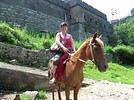
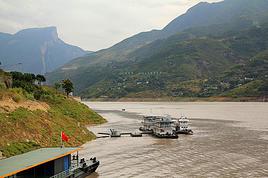
67 jours : beijing, wuhan, le barages des trois gorges, parc naturel de zhangjiajie, woofing 2 semaine assistant d'anglais à yangshuo, longji rice terraces, guilin, chengdu, le mont emei à pied, 1 semaine de cheval à songpan (ce qui ma éviter d'aller à jiuzhaigou rempli de touriste et j'ai vu la meme chose en plus petit et pas de touriste), urumqi, turpan, kanasi, lanzhou, xi'an, beijing, tianjin.
PS : je parle le chinois intermédiaire.
Bon voyage
Nouvel arrivé sur ce forum, j'en découvre les joies et les possibilités. J'arrive bientôt à la fin de mes études, ayant découvert l'Afrique et l'Europe, je…
Travailler, étudier et vivre à l'étranger › Chine · 1 reply
Je suis actuellement en deuxième année de master d'anglais (LLCE plus précisément), je fais de la littérature, civilisation, linguistique, de la recherche etc,…
Travailler, étudier et vivre à l'étranger › Chine · 5 replies
Je m'appelle Khéméra et je vais passer 3 mois à Wuhan dans le cadre de mes études. Je serai loger au campus de l'université et ira à la fac pendant ces trois…
Ma question est un peu similaire a un autre sujet, nous sommes 4 étudiants avec 2/3 semaines de possibilité de voyage en chine en Juillet! Que faire si on veut…
Travailler, étudier et vivre à l'étranger › Chine · 2 replies
Je vous pose cette question car je m'inquiète un peu. En septembre je vais allé étudier un an à Suzhou et donc je vais devoir passer un test médical toutefois…
Hi there,
My girlfriend (23) and I (24) are heading to Japan for the first time from October 20th to November 6th. Here’s our itinerary:
6 nights in Tokyo
1 night in Hakone (ryokan already booked)
4 nights in Kyoto (hotel already booked)
2 nights in Osaka
4 nights back in Tokyo
I’d like to book hotels for Tokyo (both stays) and Osaka, but I’ve gotten so many different recommendations.
I’ve read that Shinjuku is the place to be for its huge hub, accessibility, and things to do, but I’ve also heard about Shibuya, Asakusa, and Ueno.
I’ve looked at hotels, and first off, I’m surprised by the prices compared to what I’ve seen on forums (I guess inflation’s hit here too… and maybe I’m late to the booking game?). I’m feeling a bit overwhelmed with all the options.
For our first stay in Tokyo, I’d prefer a hotel (not a residence or Airbnb) since we’ll be arriving at night, and it’s our first time in Japan. It’d be great to have a place with a reception, staff who speak at least a little English, and can give us some guidance. For the second stay, we could consider other options if it’s better.
Budget-wise, we can go up to 150–180 € per night, but if we can save some money to spend elsewhere, that’d be amazing!
I’m open to all recommendations, hotel suggestions, or any other tips for Tokyo (first stay), Osaka, and Tokyo (second stay).
Hi there,
I’d like to do this cycling route over 2 or 3 days. I’m struggling to figure out and find a (good) bike rental that lets me start in Onomichi and drop off in Imabari. Can anyone help with great tips for rentals and accommodations along the route? How do I get back to Onomichi afterward?
We’re flying to China in a few days for a four-week trip—our first time in this fascinating country! 🇨🇳
We’ll be sharing our adventure live on our travel journal, with photos and daily updates. Our itinerary, though classic, will let us discover the wonders of this vast country:
I’m starting to look at neighborhoods in Seoul, and I’m leaning toward staying in a hotel in Insa-Dong—I’ve spotted one really close to Unhyeongung.
Is this a good area—nice and convenient for exploring the city?
Otherwise, I’ve also found another hotel in Yongsan-Gu, right near the station of the same name. Is that station useful for getting around Seoul?
Since I’ll be in South Korea for nearly two months, I plan to spend at least a week in Seoul to recover from jet lag (it takes me a while to adjust...). So, I’d love a neighborhood that’s pleasant and a hotel not too far from a subway station.
Hi there,
I’m getting ready for a classic tourist trip to China in May 2026.
The "Terres Lointaines" itinerary looks good to me, and the price is interesting.
Has anyone traveled with them before? Any feedback?
Is there a better option?
Thanks so much for sharing your experiences on this!
Michel
I just booked my hotel in Seoul—it’ll be near Unhyeongung, on Samil-Daero 30-Gil—and I’m wondering if there’s public transport from the airport to this address (bus or subway)? If not, what’s the taxi fare? I read it’s around 50 or 60 €.
I’m traveling to Japan with a young adult with autism (ASD) from July 28 to August 8, following a pretty classic route: Osaka, Hiroshima, Kyoto, and Tokyo. I’m looking for a schedule of the most spectacular fireworks displays during that time. So far, the dates for the major *hanabi* events aren’t available online yet. If anyone has them, I’d really appreciate it if you could share!
We’ll be doing a self-drive trip using public transport in May 2026.
On Day 6, we’ll arrive in Hakone by train from Tokyo in late morning. We’ll spend the night in Hakone before heading to Kyoto.
The main goal of this stop is clearly the view (no hiking) of Mount Fuji, not so much exploring Hakone, where the sights seem limited.
I’ve read on the forum that the view is great from Gotemba, but it also takes a good hour by bus to get there. And, apart from that view, there’s nothing else to see in Gotemba!
So, I’m not sure what to choose. Any thoughts? Or alternatives to suggest?
Maybe some spots in Hakone or Gotemba for a great view?
Hi everyone, I’m Julien!
This summer, from late June to late July, I’m planning a one-month solo trip to Japan—my first time!
I’d love to hear your thoughts and advice on the itinerary I’ve put together to explore this amazing country.
Here are the routes I’m considering:
**Option 1: More mountain and nature-focused**
Tokyo: 8 nights, with day trips to Nikko and maybe the Izu Peninsula
Kawaguchiko (Lake Kawaguchi/Mt. Fuji): 1 night. The place looks stunning, but I’m worried Mt. Fuji might not be visible due to the weather
Kyoto: 6–7 nights (including a trip to Nara)
Osaka: 1–2 nights, where I’d like to drop off my things to make the Kumano Kodo easier
Kumano Kodo: 3 nights—an experience I haven’t seen much elsewhere, but I thought it sounded really interesting
Hiroshima: 2 nights
Miyajima: 1 night
Takayama: 3 days
Kanazawa: 3 days (From what I understand, the Osaka–Takayama–Kanazawa–Tokyo route is convenient for transport)
Tokyo: 1 night (return)
**Option 2: More varied but a bit vague in parts**
Tokyo: 8 nights
Kyoto: 7 nights (+ Nara)
Osaka: 2 nights
Kobe + Himeji: just passing through—I’m not sure if it’s worth a night
Naoshima: 1 night—still pretty unclear for me
Takamatsu: 2 nights. An interesting city, but I’m not sure how long to stay
Shimanami Kaido: biking from Imabari to Onomichi, then heading to Hiroshima
Hiroshima: 2 nights
Miyajima: 1 night
Kyushu road trip (Aso + onsens + Fukuoka): 5 nights (also pretty vague—I could fly from Fukuoka back to Tokyo)
Tokyo: 1 night
**Option 3: More balanced/simplified**
Tokyo: 8 nights
Kawaguchiko: 1 night
Kyoto: 7 nights (+ Nara)
Osaka: 2 nights
Koya-san: 1 night
Kumano Kodo: 3 nights
Takayama: 3 nights
Kanazawa: 3 nights
Tokyo: 1 night
A few key points:
I haven’t made any reservations yet, except for the flight tickets.
I know my plans are too packed and will need to be adjusted.
I’m specifically looking for advice on which stops to cut or shorten.
Hello everyone,
Like Cedric13600, I’ve booked a flight ticket for 30 days / 29 nights in September 2026, from Beijing to Shanghai. We’re a couple in our sixties who love independent road trips.
I’d like to draw inspiration from the following private itinerary suggested by a travel agency:
Day 1: Arrival in Beijing
Day 2 to 4: Beijing
Day 5: Datong
Day 6 & 7: Pingyao
Day 8 to 10: Xi'an
Day 11: Luoyang
Day 12: Dengfeng
flight
Day 13 & 14: Chongqing
flight
Day 15 & 16: Lijiang
Day 17: Dali
Day 18: Kunming
Day 19: Jianshui
Day 20 & 21: Yuanyang
Day 22: Travel via Guilin
Day 23 & 24: Yangshuo
Day 25: Guilin
Day 26 & 27: Zhangjiajie
flight
Day 28 & 29: Shanghai
Day 30: Departure from Shanghai
But to do this itinerary independently:
1. This schedule seems very ambitious to me—what do you think?
2. If it’s too packed, what would you remove as a priority?
Thanks so much in advance for your help.
I’m planning a 5-week trip between Yunnan and Sichuan from mid-October to the end of November 2026:
Arriving in Kunming, I’ll do a loop in the far south of Yunnan via Thonghai, Jhiansu, Zhemi, Yuanyang, Nafa, Jinping, Mengzi, and Shilin (visiting markets, villages, and hiking), then head to northern Yunnan/southern Sichuan on the same theme (passing through Kunming again) via Dongchuan, Huize, Qiaojia, Puge, Xichang, Lanba, Butuo, Huolie, Dimo, Riha, Niuniuba, Meigu, Mabian, and Leshan, before arriving in Chengdu (where I’ll take my return flight to Paris).
This would be a trip with a strong ethnic/rural focus. Since I’ve never traveled in China, I’d love to hear your thoughts on doing this solo. Are there public transport options in the region? What tips do you have for traveling through this area as smoothly and enjoyably as possible? I’ve done quite a bit of backpacking in the mountains of northern Vietnam and really enjoyed using local motorbike drivers. Is something like that available in this region (through local tourist agencies or hotels)?
What should I be cautious about? Are local tourist agencies (or hotels) offering tours and guides reliable? If you know of any specialized sites sharing tips or experiences, or names of local agencies, hotels, etc., please don’t hesitate to share them! :)
In short, all your advice (on any topic that comes to mind!) is very welcome.
Thanks so much!
While researching South Korea, I came across the term "templestay," which refers to a Korean program that lets you stay in a traditional temple to discover Buddhism and Korean culture by living like the temple residents and doing activities like making lanterns.
A templestay isn’t just for foreign tourists—on the booking site, I saw that some temples are more geared toward foreigners, with English-speaking monks.
I was wondering if it’s still worth it, especially in temples where the monks don’t speak English?
I'm 69 years old and heading to China, where most tourist sites are free or discounted for me. However, trip.com either refuses to let me book because the sites are free or doesn’t apply the discount. Does WeChat apply this discount if I book through them? How can I just reserve without paying and pay on-site? Is that possible?
I’d love to get some feedback on our 30-day / 29-night itinerary in China. We’ll be there in September as a family with two kids (6 and 10 years old).
Do you think I should cut a few nights between Wulingyuan (Avatar Mountain) and Yangshuo? I’ve planned 15 nights total there.
We’ll be on a round-the-world trip starting May 2026 and will need to do schoolwork with the kids. Hoping to fit it in during train rides!!
Ever since I started planning this China itinerary, I’ve been discovering completely mind-blowing places I’d never heard of before—30 days feels way too short for China!!!
Here’s our itinerary:
Beijing - 4 nights
Forbidden City
Great Wall of China
Temple of Heaven
Xi’an - 3 nights
Terracotta Army
Muslim Quarter & Great Mosque
Chengdu - 3 nights
Zoo - Research Base of Giant Panda Breeding
Wenshu Yuan Temple
Hi there,
We just got back from a 2-week trip to China as a couple, and before we left, the budget was the hardest thing to picture concretely. We found plenty of info on visas, apps, transport, and itineraries, but way fewer detailed breakdowns of what you *actually* spend on the ground.
So, we took the time to share our real budget for 14 days. In our case, we spent around 1,800 € per person, with a big chunk of that going toward round-trip flights at about 600 € per person. We were also pretty surprised by how affordable China can be once you’re there—transport is often cheap, and a lot of everyday expenses stay reasonable.
The trickiest part, in the end, was figuring out how to pay while you’re there, since it’s not always obvious if you’re not prepared. But once everything’s set up and you get the hang of it, it’s really smooth.
If this can help other travelers get a better idea before they go, we’ve broken it all down here:
https://aventures-sans-mesaventure.com/budget-2-semaines-de-voyage-en-chine/
Hi everyone,
I’ve been planning several itineraries for a trip to Japan with my wife but would love your insights before we start booking!
In short, we want to go during Golden Week, see late-blooming cherry trees, and have the freedom to get around with a rental car.
Here’s the plan:
18-day itinerary in Japan (April 25 → May 12)
Goal: freedom, late cherry blossoms, culture & nature
---
Days 1–3: Tokyo (April 25–27)
Arrival and adjustment (no car needed yet).
Neighborhoods to visit: Shinjuku, Asakusa, Meiji Jingu, Shibuya, Odaiba.
Suggested activities: Ghibli Museum, Sumida River cruise, izakaya meals.
Late cherry blossoms (yaezakura) possible at Shinjuku Gyoen.
Pick up the rental car on the morning of April 27.
---
Days 4–5: Mount Fuji & Hakone (April 27–28)
Route: Tokyo → Kawaguchiko/Hakone (~2 h).
Activities:
Lake Kawaguchi, Chureito Pagoda (Fuji views + late cherry blossoms)
Onsen baths, Hakone Open-Air Museum.
Stay: ryokan with onsen and views of Mount Fuji.
Activities:
Preserved old town, sake breweries, UNESCO village of Shirakawa-go.
Stay: traditional minshuku (thatched-roof house).
Cherry blossoms are finishing at this altitude — beautiful mountain/nature contrasts.
---
Days 8–10: Kyoto & Nara (May 1–3)
Route: Takayama → Kyoto (~4 h 30).
Activities in Kyoto:
Fushimi Inari (red torii gates), Golden Pavilion, Arashiyama, Gion (geisha district).
Day trip to Nara:
Free-roaming deer in Nara Park, Todai-ji Temple, Kasuga Taisha Shrine.
Stay: Kyoto (3 nights).
---
Day 11: Osaka or Himeji (May 4)
Route: Kyoto → Osaka (~1 h) or Himeji (~1 h 30).
Option 1: Osaka → modern vibe, street food, castle.
Option 2: Himeji → stunning UNESCO-listed castle.
Stay: Osaka.
---
Days 12–13: Kanazawa (May 5–6)
Route: Osaka → Kanazawa (~4 h 30).
hi! Is it easy to use for paying for all the small purchases at the markets? INSTALLATION AND USE WITHOUT ISSUES—do you also need a VPN for China?
Secondly, for using phone and internet, I have Orange—is it reliable, or should I go with Airalo instead?
The info I found on the forum is a bit outdated, so I’m asking again!
1) What budget should I plan for 15 days, given that hotels with breakfast, transfers, and transport are already paid for? I know it depends on the person, but I’d love a rough idea. For meals, we’re thinking simple street food or small local restaurants.
2) I’ve heard that credit cards (we each have a Revolut + 1 Visa Premier) aren’t widely used and that it’s better to have cash. Can you confirm?
3) Are foreign credit cards still not accepted at bank ATMs? Still 7-Eleven or the Post Office? And what about American Express?
I'm planning a 19-day itinerary in Japan this summer.
For a first trip, Kyoto seems like a must. For the rest, I'm torn between:
- Matsumoto, Takayama, Kanazawa for 5 to 6 days
- Kyoto 4 days
- Nara 2 days
- Koyasan 1 day
- Hakone/Mount Fuji 2 to 3 days
- Tokyo 3 days
Or dedicating the first 6 days to Kyushu.
Maybe there’s less traditional Japan in Kyushu compared to the Japanese Alps?
Maybe Kyushu is less crowded?
Thanks for your thoughts!
We’re planning a 17-day trip to South Korea in October 2026 with my husband and our daughters, who’ll be 9 years old.
I’d love to get your thoughts on our draft itinerary.
First, some key details:
1/ Jeju Island is a must for us. I’ve personally dreamed of going there for years after reading a novel about it.
2/ Our girls are used to road-trip style travel since they were born, so this kind of trip won’t be an issue for them.
3/ We plan to travel by train, except on Jeju where we’ll rent a car (we already have an international driver’s permit).
Itinerary:
Seoul: 1 arrival day at 10 AM + 4 full days
Gyeongju: 2 days
Busan: 3 days
Jeju: 4 days
Seoul: 2 days
I’ll be in Hong Kong from December 31 to January 3, 2027.
Any recommendations for things to see or do?
I’ll be staying in the Kowloon district.
I’d love to visit Lantau Island—what’s the best way to get there? And would you recommend buying a skip-the-line ticket for the cable car? Also, is there an entry fee for the Big Buddha?
I’m heading to Taiwan soon and would love some up-to-date info on Wi-Fi.
From what I’ve gathered, Taiwan offers it for free, but I’ve heard it’s not secure since it’s not protected by a "password." Since I’ve been traveling outside the EU for years without a local SIM card, I only use Wi-Fi in hotels, restaurants, and cafés. For me, that’s more than enough. So, my question is: Do these places secure their Wi-Fi with a "password"? If not, does buying a SIM card or eSIM seem like the only alternative?
Also, if any of you have recommendations for budget-friendly hotels in the main "cities," I’d love to hear them!
We’re planning a trip to China for two at the beginning of April and want to spend 2 nights in the Longji Rice Terraces—either in Dazhai, Tiantouzhaï, or Ping'an. I’ve seen that most of the hotels are made of bamboo, and you can hear every little noise. Since my husband is a very light sleeper, he’d really like to be sure he’ll get a good night’s rest. Can you recommend any quiet, well-soundproofed hotels in the area?
I’m reaching out to you because I’m planning our next big trip (Japan is really tempting us for the autumn!) and I have to admit, I’m feeling a bit overwhelmed.
My husband and I have always loved traveling, and at 75, we have no intention of stopping... But I find that everything’s getting so complicated. I try to be "modern" by booking online, but as soon as there’s a problem, we hit a wall.
A friend nearly missed her departure last year because of a visa issue that wasn’t explained properly on a website... and no one to call for help, just automated messages.
It makes me a little nervous to be alone in front of a screen so far away, especially since at our age, we like knowing there’s real support if our health takes a turn while we’re there.
Anyway, I’m tired of seeing my file passed from one person to another without ever having the same contact... Do you know of any small, trustworthy agencies or people who still work the "old-fashioned" way and really look after their clients? I love my independence, but I need a real face behind my project.
Thanks in advance for your advice, and I look forward to reading your replies,
Catherine
I’m planning our trip to Japan from March 21 to April 11, 2026. We’re planning to travel by plane for long distances (Okinawa) and by train for the rest. I’d like to know if renting a car is easy and, most importantly, if driving with road signs written in Japanese isn’t too complicated. For trains, are there any tips to save money?
hi everyone, and first of all, I wish you all a happy new year and good health!
This coming October or November, we’re planning our first trip to Japan. The only downside is we’ll only have two weeks off.
For this first visit, I’m thinking of sticking to the Kyoto and Osaka area… saving Tokyo for another trip. Do you think that’s a good choice for a first-time visit?
I’ve put together a little itinerary below to get some feedback from those in the know. I’m only counting the days we’re actually there, not travel days.
Day 1: Kyoto
Ginkaku-ji – Philosopher’s Path with stops at a few shrines
temples Eikan-dō and Nanzen-ji
visit to the Samurai Ninja Museum in the late afternoon
Day 2: Kyoto
Fushimi Inari (allow 4 hours for the hike through the park)
visit to Sanjūsangen-dō temple
Shōseien garden
participate in a tea ceremony
Day 3: Kyoto
Kiyomizu-dera temple
stroll through the historic district up to Kennin-ji temple
visit Kennin-ji temple
Yasaka-jinja shrine and Gion district in the late afternoon
return to the hotel via Pontochō Street
Day 4: Kyoto
visit Kinkaku-ji and Nijō Castle
visit the Imperial Palace gardens
end the day in the shopping streets (Shibkyogoku and Teramachi, among others)
Day 5: Kyoto
Arashiyama area
Togetsukyo Bridge, walk along the river, visit the Bamboo Forest
explore the area up to Otagi Nenbutsu-ji temple
Day 6: Kyoto
hike from Kibune to Kurama
Day 7: Kyoto
day trip to Nara (full day)
Day 8:
stroll around Kyoto before heading to Osaka
Day 9: Osaka
Katsuo-ji temple, then head to Minoh Falls and hike back via the Minoh Trail
end the day in the Osaka Castle area
Day 10: Osaka
Himeji Castle and an afternoon in Osaka
Day 11: Osaka
Osaka and return to the airport in the late afternoon for the flight home
Do you think this itinerary is doable? Are some days too relaxed or too packed?
I was thinking of adding a trip to Lake Biwa and Uji, but in that case, I’d have to cut some things. Are those places worth dropping some of the planned spots? And if so, which ones would you recommend cutting or shortening?
Thanks in advance—I’m all ears for both positive and negative feedback!
stephane
Hi there,
I’m planning a trip to Japan in April/May.
I’ll start my journey in Tokyo for 3 to 4 days.
I’d love your advice on accommodation, transportation, an itinerary, and whether a guide would be useful.
I’m traveling solo and could use a little reassurance.
Before I forget... how do payments work?
Hi there,
I’m looking for someone who could help me organize a trip to Japan for my niece and her son. I’ve seen that French-speaking guides are expensive, and the same goes for going through a tour operator.
Airline, local transportation, hotels, etc.
Thanks for your replies!
Betsyl