Hi there,
I’m planning my first trip to Asia next summer with my partner and our daughter, who’ll be 3 and a half at the time, for 4 weeks (maybe 5).
I’ve heard that the timing is better for visiting Indonesia, but I’m hesitant because Thailand seems more accessible, and I’m worried that traveling to Indonesia during high season might be less enjoyable and a lot more expensive due to the number of tourists. We love cultural sites as much as natural ones, and we’re big foodies. We’re not necessarily looking for luxury and tend to take our time, travel by public transport, and look for accommodations with a good value for money—though we do occasionally splurge on a high-end restaurant.
I’m also wondering when and where to buy flight tickets and how comfortable the journey will be (especially for our daughter) if we fly with Thai Airways or Garuda.
Thanks in advance for sharing your thoughts and tips!
Damien
Hi,
My family and I (2 kids and 2 adults) are planning to travel to Kerala, India, in February. What vaccines should we get for this region?
Thanks,
Have a great day,
Ophélie
My family and I (2 kids and 2 adults) are planning to travel to Kerala, India, in February. What vaccines should we get for this region?
Thanks,
Have a great day,
Ophélie
Hi there,
I’ve already visited quite a few countries across several continents, but I’m pretty new to Asia.
I’m planning a trip to Thailand in October or November, and I wanted to check about health precautions: malaria treatment, vaccinations (hepatitis A or others...). I’ll mostly be in the northern region, around Chiang Mai, where I’ll spend a lot of time in nature and the mountains. Then I’ll head south to Phuket or Krabi and visit Khao Sok National Park. I’ll finish up in Bangkok, with a likely detour to Kanchanaburi.
From what I understand, for a stay of less than 60 days, I don’t need a visa (I’m a French national)? I just need to fill out the TDAC form 3 to 5 days before arrival?
Thanks for your advice! Fred
I’ve already visited quite a few countries across several continents, but I’m pretty new to Asia.
I’m planning a trip to Thailand in October or November, and I wanted to check about health precautions: malaria treatment, vaccinations (hepatitis A or others...). I’ll mostly be in the northern region, around Chiang Mai, where I’ll spend a lot of time in nature and the mountains. Then I’ll head south to Phuket or Krabi and visit Khao Sok National Park. I’ll finish up in Bangkok, with a likely detour to Kanchanaburi.
From what I understand, for a stay of less than 60 days, I don’t need a visa (I’m a French national)? I just need to fill out the TDAC form 3 to 5 days before arrival?
Thanks for your advice! Fred
Hi there,
I’m trying to plan a trip to Dubai with my mom. I’ve seen that some of our medications require prior authorization (sleeping pills, codeine, anti-anxiety meds, etc.).
I’d love to hear from anyone who’s been in our situation. A friend of mine applied to bring her tramadol, but it was denied—though she needed high doses!
Has anyone here gone through this process? Do we *really* need a prescription in English?
Thanks
I’m trying to plan a trip to Dubai with my mom. I’ve seen that some of our medications require prior authorization (sleeping pills, codeine, anti-anxiety meds, etc.).
I’d love to hear from anyone who’s been in our situation. A friend of mine applied to bring her tramadol, but it was denied—though she needed high doses!
Has anyone here gone through this process? Do we *really* need a prescription in English?
Thanks
Hi there.
I’d like to know if all medications need to be declared at Uzbek customs.
E.g., antidepressants?
Thanks for your reply
Hi,
We’ve planned a 3-week trip to Bali this summer with our 7-year-old daughter. The itinerary includes Sanur, Nusa Lembongan, Sidemen, Amed, and Ubud. The more time passes, the more we read about people getting sick—some with mild to severe traveler’s diarrhea, and many ending up in the hospital. We, as parents, have been through it in Egypt with pretty bad cases, but we’d really like to avoid that for our daughter. Even though there’s no zero risk, and we’ll be careful, can any of you reassure me? Not everyone got sick, right? I’d love to hear positive feedback from parents, but not just them 😊. Thanks in advance!
We’re planning a trip to the Philippines from April 22 to May 8, 2026. Flight from Geneva with a layover in Turkey and Manila. Our itinerary: Angeles – Busuanga – Palawan…
The Philippines are a dream destination, but is it possible to travel there safely? I’ve heard that checked luggage often gets lost, tap water isn’t safe to drink, and mosquitoes are everywhere.
For water, what’s the best solution to carry in a backpack? Is a filtering water bottle 100% reliable?
For mosquitoes, should we treat our clothes with repellent? Are you vaccinated against hepatitis A, malaria, or dengue? Or is there an oral treatment to take?
Thanks for your feedback!
The Philippines are a dream destination, but is it possible to travel there safely? I’ve heard that checked luggage often gets lost, tap water isn’t safe to drink, and mosquitoes are everywhere.
For water, what’s the best solution to carry in a backpack? Is a filtering water bottle 100% reliable?
For mosquitoes, should we treat our clothes with repellent? Are you vaccinated against hepatitis A, malaria, or dengue? Or is there an oral treatment to take?
Thanks for your feedback!
Hi there,
We’re a family of five (our kids are 6, 15, and 19) and we’d love to go somewhere warm with our feet in the water during the first two weeks of August 2026. We’d also like to do some cultural visits and a bit of hiking. We were thinking of Guadeloupe—I know it’s not the ideal time of year, but we don’t have much flexibility. Is it really a bad idea, or can we still enjoy it despite the weather?
Another option for us would be Madeira, which seems more reliable weather-wise, but it sounds like the beaches are less accessible and not as nice.
We haven’t really looked elsewhere because everything else (except the Canary Islands, Balearics, or Corsica) seems way too expensive. But if you’ve got any recommendations, don’t hesitate—we’re just starting to look into it.
Thanks so much,
Pierre
We’re a family of five (our kids are 6, 15, and 19) and we’d love to go somewhere warm with our feet in the water during the first two weeks of August 2026. We’d also like to do some cultural visits and a bit of hiking. We were thinking of Guadeloupe—I know it’s not the ideal time of year, but we don’t have much flexibility. Is it really a bad idea, or can we still enjoy it despite the weather?
Another option for us would be Madeira, which seems more reliable weather-wise, but it sounds like the beaches are less accessible and not as nice.
We haven’t really looked elsewhere because everything else (except the Canary Islands, Balearics, or Corsica) seems way too expensive. But if you’ve got any recommendations, don’t hesitate—we’re just starting to look into it.
Thanks so much,
Pierre
Hi there,
We’re heading out at the end of February for a road trip with our two kids, ages 3 and 7. Our itinerary includes Ait Ben Haddou, Tizi-n-Tichka, Sourate, Tinghir, Zagora, Ouarzazate, Ouzoud, and Essaouira. I’d love recommendations for accommodations, restaurants, and typical/spectacular spots to visit. We’d like to spend a night in the Zagora desert. We’re looking for authenticity and a friendly vibe—not tourist traps—for our trip. We’ll be there during Ramadan—any tips? Thanks in advance!
Your fellow globetrotter’s perspective is invaluable.
We’re heading out at the end of February for a road trip with our two kids, ages 3 and 7. Our itinerary includes Ait Ben Haddou, Tizi-n-Tichka, Sourate, Tinghir, Zagora, Ouarzazate, Ouzoud, and Essaouira. I’d love recommendations for accommodations, restaurants, and typical/spectacular spots to visit. We’d like to spend a night in the Zagora desert. We’re looking for authenticity and a friendly vibe—not tourist traps—for our trip. We’ll be there during Ramadan—any tips? Thanks in advance!
Your fellow globetrotter’s perspective is invaluable.
Hi everyone,
We’ve visited Zeeland (Netherlands) several times with our two young children—Middelburg, for example—and really loved it. We’re looking for something similar in the Benelux or northern France:
- A pretty, historic small town with charm, not just a village, since we enjoy a slightly "urban" vacation vibe: parks, biking on dedicated paths, museums, cafés, restaurants, and shopping - Very pedestrian-friendly and/or bike-accessible (like the Netherlands always is) - Relatively safe and welcoming for kids, with activities for them (which is also very common in the Netherlands)
Unfortunately, I haven’t found anything as well-preserved and lovely as the extensive center of that small town, which seems to fly under the radar. I’m sure there must be others like it that I’m missing. In the same vein but on a larger scale, we love Bruges, for example—but it’s bigger (which is fine) and especially very expensive.
Thanks in advance for your tips! !
We’ve visited Zeeland (Netherlands) several times with our two young children—Middelburg, for example—and really loved it. We’re looking for something similar in the Benelux or northern France:
- A pretty, historic small town with charm, not just a village, since we enjoy a slightly "urban" vacation vibe: parks, biking on dedicated paths, museums, cafés, restaurants, and shopping - Very pedestrian-friendly and/or bike-accessible (like the Netherlands always is) - Relatively safe and welcoming for kids, with activities for them (which is also very common in the Netherlands)
Unfortunately, I haven’t found anything as well-preserved and lovely as the extensive center of that small town, which seems to fly under the radar. I’m sure there must be others like it that I’m missing. In the same vein but on a larger scale, we love Bruges, for example—but it’s bigger (which is fine) and especially very expensive.
Thanks in advance for your tips! !
we’re taking our grandkids in early 2026 (14 and 10 years old) without their parents. Do we really need to have birth certificates and other forms translated by a sworn translator?
Hi everyone,
I’d love to get your thoughts on these two routes I’ve planned to see the highlights of Paris in two days.
I don’t want to take any transportation.
I’ll arrive at the hotel by car on Saturday around noon and won’t pick it up again until the next evening to leave.
**First day:** I’m thinking of starting from the hotel, then heading to the Eiffel Tower - Trocadéro - Galeries Lafayette - Élysée Palace - Tuileries Garden - the Louvre (outside only) and finishing at Les Invalides.
12 km
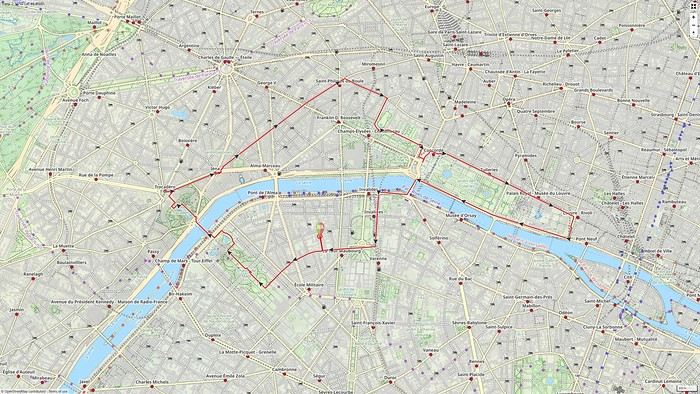
(The route on the map is just for reference to show the places we’ll visit—it might vary by a hundred meters or so.)
**Second day:** Starting from the hotel, we’ll go to Montmartre - Sacré-Cœur Basilica - Pigalle - Notre-Dame Cathedral - Panthéon - Luxembourg Garden.
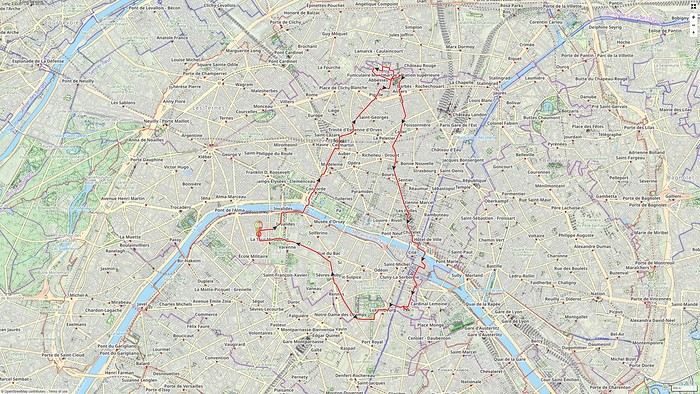
What do you think? Am I missing out on anything great with this route?
Since I’m traveling with two kids, do you see any spots on these routes that might be a bit risky safety-wise? 🏴☠️
We’re not big museum fans, so we’re not planning to visit any—unless it rains, of course! 😄
One last little question: are there any protests planned in Paris on the weekend of August 16-17? 🙂 Thanks for reading! 😎
I’d love to get your thoughts on these two routes I’ve planned to see the highlights of Paris in two days.
I don’t want to take any transportation.
I’ll arrive at the hotel by car on Saturday around noon and won’t pick it up again until the next evening to leave.
**First day:** I’m thinking of starting from the hotel, then heading to the Eiffel Tower - Trocadéro - Galeries Lafayette - Élysée Palace - Tuileries Garden - the Louvre (outside only) and finishing at Les Invalides.
12 km
(The route on the map is just for reference to show the places we’ll visit—it might vary by a hundred meters or so.)
**Second day:** Starting from the hotel, we’ll go to Montmartre - Sacré-Cœur Basilica - Pigalle - Notre-Dame Cathedral - Panthéon - Luxembourg Garden.
What do you think? Am I missing out on anything great with this route?
Since I’m traveling with two kids, do you see any spots on these routes that might be a bit risky safety-wise? 🏴☠️
We’re not big museum fans, so we’re not planning to visit any—unless it rains, of course! 😄
One last little question: are there any protests planned in Paris on the weekend of August 16-17? 🙂 Thanks for reading! 😎
Hi everyone,
I’m starting a new discussion on this topic since there doesn’t seem to be a recent one.
I have several chronic conditions (including asthma and related ones), and I’m planning to travel for a year across different countries.
Generally, I understand it’s possible to travel with approved medications (which should be my case), but often with a limit of 3 months’ worth of treatment.
Since I’m going for 12 months, that means for three-quarters of my trip, I’d have more than 3 months’ worth of medication.
I plan to bring my prescriptions with the INN (International Nonproprietary Name), as well as the original packaging (even though it’s a nightmare, but from what I understand, it’s necessary). But I’m not sure if that’s enough...
Have any of you been in this situation before? How does it work at customs—do I need to declare everything that exceeds the 3-month limit? Do I need a letter from my doctors?
Thanks in advance for your replies,
See you soon, Bruno
I’m starting a new discussion on this topic since there doesn’t seem to be a recent one.
I have several chronic conditions (including asthma and related ones), and I’m planning to travel for a year across different countries.
Generally, I understand it’s possible to travel with approved medications (which should be my case), but often with a limit of 3 months’ worth of treatment.
Since I’m going for 12 months, that means for three-quarters of my trip, I’d have more than 3 months’ worth of medication.
I plan to bring my prescriptions with the INN (International Nonproprietary Name), as well as the original packaging (even though it’s a nightmare, but from what I understand, it’s necessary). But I’m not sure if that’s enough...
Have any of you been in this situation before? How does it work at customs—do I need to declare everything that exceeds the 3-month limit? Do I need a letter from my doctors?
Thanks in advance for your replies,
See you soon, Bruno
hi,
I had planned to take a gap year with my 4-year-old daughter starting this fall. A happy but unplanned event is changing the plans: a new baby arriving in just a few days.
So now I’ll be waiting until she’s 5 MONTHS old. Which countries would you recommend for traveling in Southeast Asia where I’d have adequate healthcare infrastructure in case of any issues?
What travel insurance do you suggest?
What itineraries have you done?
thanks
I’m traveling to Portugal with my family and I have a treatment that requires injections. How can I take a flight with these? They look like injectable pens.
Thanks
Hi everyone,
I’m planning a trip to Northern Italy for 2 weeks in August 2025. Here’s my itinerary: MILAN – 2 days LAKE MAGGIORE – 2 days LAKE COMO – 3 days BERGAMO – 1 day LAKE GARDA – 2 days VERONA – 1 day DOLOMITES – 2 days BOLOGNA – 1 day CINQUE TERRE – 2 days TURIN – 1 day Return to France
Let me know your thoughts, and any kid-friendly attractions would be great!
I’m planning a trip to Northern Italy for 2 weeks in August 2025. Here’s my itinerary: MILAN – 2 days LAKE MAGGIORE – 2 days LAKE COMO – 3 days BERGAMO – 1 day LAKE GARDA – 2 days VERONA – 1 day DOLOMITES – 2 days BOLOGNA – 1 day CINQUE TERRE – 2 days TURIN – 1 day Return to France
Let me know your thoughts, and any kid-friendly attractions would be great!
Hi everyone,
I’m planning to go away at the end of May for a short 5-day trip, not too far away! I currently live near Montpellier and have two kids (ages 2 and 7).
The idea is to have a relaxing, low-stress vacation that’s easy to manage with young children (I’m especially thinking of my 2-year-old—cities like Florence, which I’d love to visit, are probably too tiring for his age).
I was thinking of Majorca (which I don’t know at all) or Crete, for example, which I visited a long time ago (ideal: good food, ruins to explore, beautiful villages, etc.). But it could also be Malta or somewhere else...
It’s true that before having kids, I had more time (and budget) and traveled farther, so I’m not very familiar with the Mediterranean—my mistake!
My question is pretty vague, but what would you recommend for a 5-day trip at the end of May? Since the sea will still be a bit cold (swimming might be tough!), preferably by the coast, with a family-friendly hotel and kid-friendly areas?
Thanks in advance to everyone! :)
My question is pretty vague, but what would you recommend for a 5-day trip at the end of May? Since the sea will still be a bit cold (swimming might be tough!), preferably by the coast, with a family-friendly hotel and kid-friendly areas?
Thanks in advance to everyone! :)
Hi everyone,
I’d love to get your thoughts on a 13-night trip to Crete this summer. We’ll be 2 adults and 2 kids (5 and 10 years old), and we’re renting a car to get around.
➔ If you have any tips on renting a car, I’m all ears! (I was thinking of picking it up at the airport.)
For now, I’m planning a round-trip flight to Heraklion (I’m still debating whether to return from Chania, in which case we’d spend our last night in Paleóchora or Elos). Here’s how I’m splitting up the nights:
08/07 - 11/07 (3 nights) → Heraklion
Visit the Minoan Palace of Knossos Explore the city: archaeological museum, Venetian harbor, Koules Fortress Possible day trip to Matala or the east coast, depending on how we feel
11/07 - 14/07 (3 nights) → Rethymnon
Explore Rethymnon’s old town Walk around Argiroupoli (natural springs, waterfalls) Relax on the beaches in the area
14/07 - 18/07 (4 nights) → Chania
Visit the historic center Day trip to Seitan Limania (wild beach) Day at Balos Beach & Gramvousa (by boat or hike)
18/07 - 20/07 (2 nights) → Paleóchora or Elos ➔ Do you have a preference between these two spots? They both seem like great, low-key places, but Elos is more mountainous.
Hike through Samaria Gorge (full-day trip) ➔ Do you think this is doable with a 5-year-old? I’ve read there’s a bus at the end of the gorge, but I’m worried about missing the ferry and having to rush the kids. Relax at Elafonissi Beach
20/07 - 21/07 (1 night) → Heraklion
Return the day before our flight to avoid stress.
Thanks in advance for your feedback and tips! 😊
08/07 - 11/07 (3 nights) → Heraklion
Visit the Minoan Palace of Knossos Explore the city: archaeological museum, Venetian harbor, Koules Fortress Possible day trip to Matala or the east coast, depending on how we feel
11/07 - 14/07 (3 nights) → Rethymnon
Explore Rethymnon’s old town Walk around Argiroupoli (natural springs, waterfalls) Relax on the beaches in the area
14/07 - 18/07 (4 nights) → Chania
Visit the historic center Day trip to Seitan Limania (wild beach) Day at Balos Beach & Gramvousa (by boat or hike)
18/07 - 20/07 (2 nights) → Paleóchora or Elos ➔ Do you have a preference between these two spots? They both seem like great, low-key places, but Elos is more mountainous.
Hike through Samaria Gorge (full-day trip) ➔ Do you think this is doable with a 5-year-old? I’ve read there’s a bus at the end of the gorge, but I’m worried about missing the ferry and having to rush the kids. Relax at Elafonissi Beach
20/07 - 21/07 (1 night) → Heraklion
Return the day before our flight to avoid stress.
Thanks in advance for your feedback and tips! 😊
Hi there,
I’m planning a trip to Greece this summer with my 3-year-old son. I recently separated, and we were originally supposed to go on a road trip to Brazil, so I’m now forced to find a Plan B.
I’m usually a backpacker who travels with just my backpack, but with my son, I’ll have to opt for all-inclusive hotel packages. I don’t feel ready yet to go backpacking alone with him at the other end of the world. When he’s 5, it’ll be easier :)
Anyway, with so many options for Greece, I’m a bit overwhelmed. There are so many islands and resorts. Do you have an island to recommend? And more specifically, a hotel?
We’re looking at the first two weeks of August.
Thanks for your help!
Thomas
Anyway, with so many options for Greece, I’m a bit overwhelmed. There are so many islands and resorts. Do you have an island to recommend? And more specifically, a hotel?
We’re looking at the first two weeks of August.
Thanks for your help!
Thomas
Hi everyone,
We’re leaving Zurich on Sunday, February 23rd, heading to Bangkok, and we’ll land on February 24th at 12 PM local time.
We’ll be there for 3 full days and then leave on the 28th for the islands of Koh Samui and Koh Phangan.
I had a question about our domestic flight with Bangkok Airways at Suvarnabhumi Airport—our flight is at 6:00 AM. Our tickets say check-in closes 40 minutes before for domestic flights.
I’m looking for the best way to get to the airport from our hotel. Should we be there 2 hours early, and if so, what’s the safest and most convenient transport option? Some lines, like the ARL, only start at 6 AM if I’m not mistaken, so that might be cutting it too close. Our hotel is near Makkasan Station. Should we book a taxi with Bolt, or go through the hotel to arrange one for more reliability (even if it’s pricier)? Thanks for your advice.
Also, I’d love to hear your 3-day itinerary suggestions. I’m traveling with my wife and our two daughters, aged 9. We’re used to walking, but we’d rather focus on specific areas to avoid wasting time on transport or trying to do too much. We want to enjoy the moments instead of rushing around.
Here are a few ideas I found:
Day 1: Grand Palace / Wat Pho Temple / Small boat cruise on the Thonburi canals / Wat Arun Temple at sunset
Day 2: Damnoen Saduak Floating Market (or Amphawa) / Maeklong Railway Market / Chinatown / Evening at Khao San Road For Day 3: Option 1: Visit Wat Sam Phran (Dragon Temple) Option 2: Explore the ancient city of Samut Prakan and the open-air museum Muang Boran Option 3: Day trip to Ayutthaya’s temples Just a heads-up: we’ll be returning from the islands the day before our departure at 4:50 PM and will stay in Bangkok until our flight at 7:15 PM the next day (Monday, February 10th), so we’ll have one more full day. Sorry for the long post! Thanks in advance for your tips. Raphaël, Marina, Charlize & Giliana Happy travels to those who are heading out!
We’re leaving Zurich on Sunday, February 23rd, heading to Bangkok, and we’ll land on February 24th at 12 PM local time.
We’ll be there for 3 full days and then leave on the 28th for the islands of Koh Samui and Koh Phangan.
I had a question about our domestic flight with Bangkok Airways at Suvarnabhumi Airport—our flight is at 6:00 AM. Our tickets say check-in closes 40 minutes before for domestic flights.
I’m looking for the best way to get to the airport from our hotel. Should we be there 2 hours early, and if so, what’s the safest and most convenient transport option? Some lines, like the ARL, only start at 6 AM if I’m not mistaken, so that might be cutting it too close. Our hotel is near Makkasan Station. Should we book a taxi with Bolt, or go through the hotel to arrange one for more reliability (even if it’s pricier)? Thanks for your advice.
Also, I’d love to hear your 3-day itinerary suggestions. I’m traveling with my wife and our two daughters, aged 9. We’re used to walking, but we’d rather focus on specific areas to avoid wasting time on transport or trying to do too much. We want to enjoy the moments instead of rushing around.
Here are a few ideas I found:
Day 1: Grand Palace / Wat Pho Temple / Small boat cruise on the Thonburi canals / Wat Arun Temple at sunset
Day 2: Damnoen Saduak Floating Market (or Amphawa) / Maeklong Railway Market / Chinatown / Evening at Khao San Road For Day 3: Option 1: Visit Wat Sam Phran (Dragon Temple) Option 2: Explore the ancient city of Samut Prakan and the open-air museum Muang Boran Option 3: Day trip to Ayutthaya’s temples Just a heads-up: we’ll be returning from the islands the day before our departure at 4:50 PM and will stay in Bangkok until our flight at 7:15 PM the next day (Monday, February 10th), so we’ll have one more full day. Sorry for the long post! Thanks in advance for your tips. Raphaël, Marina, Charlize & Giliana Happy travels to those who are heading out!
Hi everyone,
I’d love to hear about your experiences traveling by plane with a 7.5-month-old baby to Martinique from Paris.
Also, if anyone has direct contacts for reasonable and baby-friendly accommodation—whether in the north or south of the island—I’d really appreciate it.
Thanks in advance to those who reply!😊
For 4 years now, my husband has been on ALD; no one will insure him. We’re supposed to leave for Bali in May, and I’ll have to cancel the trip because of this insurance issue. His ALD is cancer.
Just like with trip cancellation insurance, it’s not valid if it’s for his health reasons—health issues are considered foreseeable, so they won’t reimburse you.
Big problems with Carrefour travel agency.
Thanks for your help—I’m at a loss. Best,
Thanks for your help—I’m at a loss. Best,
Hey everyone, so happy the site is back!
After traveling solo across Iran and the Stan countries from one end to the other,
this time I’m heading to Southeast Asia with my wife and our 3-year-old.
I went to the Philippines almost 10 years ago and actually met some forum members there. It was love at first sight.
I’ve booked tickets from January 10 to March 31 for Bangkok (amazing price from Milan). I was thinking of spending: 3 weeks in Thailand 3 weeks in Vietnam 1 month in the Philippines.
Don’t worry, I won’t spam the forum with a thousand messages asking how to get from point A to point B :)))
I’m reaching out to the experts or regulars here for suggestions and ideas!
For Thailand, Obviously, some beautiful beaches wouldn’t hurt for a bit of relaxation. I was thinking of Koh Phayam or Koh Kood (or Koh Chang). If anyone knows a nice spot, even if it’s not on an island, I’m all ears. It’s tricky to ask this for Thailand, but I’m looking for a bit of tranquility (so I’ll probably avoid Phuket, Koh Samui, etc.). (Though I know sometimes you just need to get off the beaten path to find some peace, but I’m not sure if that’s the case in Thailand.)
Vietnam—I have no idea!! A friend mentioned Danang, which could be a good base to explore the countryside/inland areas.
And the Philippines—I had a huge crush on the country (Bantayan, Dumaguete, Sipalay, Siquijor) and really want to go back, maybe to new places/islands.
I have one constraint: We’ll stay in the same place each time. With a kid, it’s tough to move every 2 days (unlike when I’m solo), and I hope this will let us connect with locals by staying put for 3 weeks at a time. (Plus, my budget is pretty tight, so the idea is to negotiate a good price for 3 weeks in the same accommodation.) (My rough budget is 1000 € per month for the three of us: 450 € for lodging, 450 € for food, and 100 € for a scooter. This doesn’t include boat, bus, etc. transfers.)
If you have any ideas, tips, or experiences to share, I’m all ears! I’m totally open to shortening or extending our stays in each country, even if it means skipping one of the three.
After traveling solo across Iran and the Stan countries from one end to the other,
this time I’m heading to Southeast Asia with my wife and our 3-year-old.
I went to the Philippines almost 10 years ago and actually met some forum members there. It was love at first sight.
I’ve booked tickets from January 10 to March 31 for Bangkok (amazing price from Milan). I was thinking of spending: 3 weeks in Thailand 3 weeks in Vietnam 1 month in the Philippines.
Don’t worry, I won’t spam the forum with a thousand messages asking how to get from point A to point B :)))
I’m reaching out to the experts or regulars here for suggestions and ideas!
For Thailand, Obviously, some beautiful beaches wouldn’t hurt for a bit of relaxation. I was thinking of Koh Phayam or Koh Kood (or Koh Chang). If anyone knows a nice spot, even if it’s not on an island, I’m all ears. It’s tricky to ask this for Thailand, but I’m looking for a bit of tranquility (so I’ll probably avoid Phuket, Koh Samui, etc.). (Though I know sometimes you just need to get off the beaten path to find some peace, but I’m not sure if that’s the case in Thailand.)
Vietnam—I have no idea!! A friend mentioned Danang, which could be a good base to explore the countryside/inland areas.
And the Philippines—I had a huge crush on the country (Bantayan, Dumaguete, Sipalay, Siquijor) and really want to go back, maybe to new places/islands.
I have one constraint: We’ll stay in the same place each time. With a kid, it’s tough to move every 2 days (unlike when I’m solo), and I hope this will let us connect with locals by staying put for 3 weeks at a time. (Plus, my budget is pretty tight, so the idea is to negotiate a good price for 3 weeks in the same accommodation.) (My rough budget is 1000 € per month for the three of us: 450 € for lodging, 450 € for food, and 100 € for a scooter. This doesn’t include boat, bus, etc. transfers.)
If you have any ideas, tips, or experiences to share, I’m all ears! I’m totally open to shortening or extending our stays in each country, even if it means skipping one of the three.
For several years now, increased aggression has been observed in Cape fur seals.
At least 70 unprovoked attacks on humans.
It was recently confirmed that this is due to rabies.
The suspected origin is contamination in Namibia by jackals.
The contagion seems to be spreading.
Preventive vaccination (of the animals) is being considered.
Just a reminder:
Rabies affects all mammals.
Once symptoms appear—sometimes weeks or even months later—death is inevitable.
It’s the bite that transmits the disease.
There are so-called "furious" forms with aggression, but also forms without aggression.
In case of a bite, in addition to standard wound care, tetanus prevention… rabies prevention is essential.
Stay careful out there…
Seeing seals from a boat along the coast isn’t rare in these parts…
.hi there
I'm looking for travel insurance for the USA for a 1-month trip as a tourist.
Could anyone give me some advice?
Thanks so much
Hi there, I’m looking for THE right clinic to get dental implants during my stay in Morocco. I’ve seen some posts on this forum, but they’re over 6 years old.
If anyone can share their experiences (good or bad, and location), that would be great.
Thanks in advance
Hi there,
I feel like a total newbie—I’ve never really thought about this before, beyond repatriation—what happens if I get seriously ill or injured abroad? Thankfully, it’s never happened to me.
But now I’d like to cover my bases.
Do you know of any insurance providers, or where to look and how to choose one, that covers potential hospitalization costs, specifically in Uzbekistan?
I don’t even know if this kind of coverage is tied to a specific destination, in Europe (France?), or if it’s arranged directly in the country... 🤪
Catherine
I feel like a total newbie—I’ve never really thought about this before, beyond repatriation—what happens if I get seriously ill or injured abroad? Thankfully, it’s never happened to me.
But now I’d like to cover my bases.
Do you know of any insurance providers, or where to look and how to choose one, that covers potential hospitalization costs, specifically in Uzbekistan?
I don’t even know if this kind of coverage is tied to a specific destination, in Europe (France?), or if it’s arranged directly in the country... 🤪
Catherine
Hi,
I’m planning to take the ferry from Ancona to Patras with my kids (4 and 8 years old) and I’m torn between a cabin and seats for budget reasons. Has anyone here had experience with reclining seats with kids—is it doable? I remember ferries to Ireland where you could kind of set up however you wanted, with mattresses and sleeping bags—is that the case on this route? Thanks in advance!
Hi everyone, due to my partner’s work training abroad, he can’t join us for our week-long trip to Morocco in early November. So I’ll be alone with my 3-year-old daughter. My in-laws live in Marrakech, where we’ll be staying with my little one, but I’ve never actually met them. I’m feeling a bit stressed—should I cancel (and lose my flight tickets) or go ahead and travel alone? We’ll be in Marrakech, but I still don’t have a car either. Are there others in the same situation—traveling with kids? Any advice would be greatly appreciated!
Un voyage réussi est un voyage sans mauvaise surprise. Or, un petit problème de santé loin de chez soi — mal des transports, coup de soleil, troubles digestifs — peut vite gâcher le séjour si l'on n'est pas préparé. Constituer une pharmacie de voyage adaptée est un réflexe simple qui apporte une vraie tranquillité d'esprit.
Pourquoi une pharmacie de voyage ? En déplacement, on n'a pas toujours une pharmacie à proximité, on ne connaît pas les noms locaux des médicaments et l'on peut être confronté à des désagréments liés au climat, à l'alimentation ou à l'activité. Emporter l'essentiel permet de faire face aux petits maux sans stress, et de ne pas dépendre d'une recherche de dernière minute.
Les indispensables de base Quelle que soit la destination, quelques éléments constituent le socle de toute pharmacie de voyage. Ils recoupent largement ceux de la trousse à pharmacie familiale :
un antidouleur et antipyrétique ; de quoi soigner les petites plaies : antiseptique, pansements, compresses ; un traitement contre les troubles digestifs (diarrhée, brûlures d'estomac) et des solutions de réhydratation ; un antihistaminique en cas d'allergie ou de piqûre ; une protection solaire et de quoi soulager un coup de soleil ; un répulsif anti-moustiques selon la destination ; un thermomètre et une pince à épiler. Ne pas oublier ses traitements habituels Si vous suivez un traitement chronique, c'est le point le plus important. Prévoyez :
une quantité suffisante pour toute la durée du voyage, plus une marge en cas d'imprévu ; votre ordonnance, idéalement avec les noms en dénomination commune internationale (DCI), car les noms commerciaux changent d'un pays à l'autre ; vos médicaments dans leur emballage d'origine avec la notice. Pour bien organiser des prises multiples pendant le voyage, notre article sur la bonne prise des médicaments donne des repères utiles, tout comme celui destiné aux personnes âgées suivant plusieurs traitements.
Adapter la trousse à la destination Le contenu se module selon le lieu et la saison :
En été ou dans le sud du Maroc, la chaleur impose de soigner la protection solaire et l'hydratation, et de veiller à la bonne conservation des médicaments, qui supportent mal les fortes températures. En zone rurale ou de montagne, on renforce le matériel de premiers soins. Pour un long séjour, on anticipe davantage et l'on repère à l'avance les points de secours. Voyager au Maroc : un réseau de garde partout Bonne nouvelle si vous voyagez à l'intérieur du Maroc : le service de pharmacie de garde existe dans toutes les grandes villes. Où que vous soyez, vous pouvez trouver une officine ouverte, par exemple à Casablanca, Rabat, Marrakech, Fès, Tanger ou Agadir. En cas de besoin sur la route, ce filet de sécurité est précieux — pensez simplement à appeler avant de vous déplacer.
Transport et bonnes pratiques Quelques conseils pratiques pour le transport :
Gardez les médicaments avec vous (bagage à main) plutôt qu'en soute, pour y avoir accès et éviter les écarts de température. Emportez une liste de vos traitements et de vos éventuelles allergies. Protégez la trousse de la chaleur dans la voiture, où la température peut vite grimper. Vérifiez les dates de péremption avant de partir. En cas de souci sérieux Une pharmacie de voyage couvre les petits maux, pas les urgences. Face à un problème sérieux loin de chez vous, n'hésitez pas à consulter sur place ou à appeler les secours. Au Maroc, le 15 (Protection Civile) est le numéro à composer ; notre guide sur les urgences médicales la nuit rappelle les bons réflexes.
Pour des recommandations de santé liées aux voyages, les publications de l'Organisation mondiale de la Santé constituent une source fiable et régulièrement mise à jour.
Prévenir les maux les plus courants en voyage Certains désagréments reviennent souvent en déplacement, et un peu de prévention suffit à les éviter. Le mal des transports se prévient en fixant un point à l'horizon et en évitant de lire ; des produits adaptés existent en pharmacie. Les troubles digestifs liés au changement d'eau ou d'alimentation se limitent en privilégiant l'eau en bouteille dans certaines zones et en se lavant régulièrement les mains. Les coups de soleil s'évitent avec une protection adaptée et en se couvrant aux heures les plus chaudes. Anticiper ces petits maux, c'est s'assurer de profiter pleinement de son séjour.
Préparer ses documents de santé Au-delà des médicaments, quelques documents rendent service en voyage. Emportez une copie de vos ordonnances, idéalement avec les noms en dénomination commune internationale, la liste de vos traitements et allergies, et les coordonnées de votre médecin. Pour un voyage à l'étranger, renseignez-vous sur les éventuelles formalités liées au transport de certains médicaments. Ces précautions, simples à prendre avant le départ, facilitent la prise en charge en cas de besoin et évitent bien des complications loin de chez soi. Elles compl��tent utilement la Trousse à pharmacie familiale que vous emportez.
L'essentiel à retenir Emportez un socle d'essentiels : antidouleur, soins des plaies, produits digestifs, antihistaminique, protection solaire. N'oubliez jamais vos traitements habituels en quantité suffisante, avec l'ordonnance. Adaptez la trousse à la destination et à la saison. Gardez les médicaments avec vous (bagage à main) et à l'abri de la chaleur. Au Maroc, une pharmacie de garde est accessible dans toutes les grandes villes en cas de besoin. En résumé, une pharmacie de voyage bien pensée — des essentiels de base, ses traitements habituels et une Trousse adaptée à la destination — transforme un imprévu potentiel en simple formalité. Un peu d'anticipation avant le départ, et vous partez l'esprit léger.
Avertissement médical Cet article a une vocation purement informative et ne remplace en aucun cas l'avis d'un professionnel de santé. Les informations qu'il contient sont générales et ne constituent ni un diagnostic, ni une prescription, ni une recommandation personnalisée. Chaque situation est particulière : en cas de doute, de symptôme préoccupant ou persistant, consultez un médecin ou demandez conseil à votre pharmacien, y compris en pharmacie de garde. En cas d'urgence vitale, appelez immédiatement les secours en composant le 15 (Protection Civile). Enfin, les tours de garde et les horaires pouvant changer sans préavis, appelez toujours la pharmacie avant de vous déplacer.
Pourquoi une pharmacie de voyage ? En déplacement, on n'a pas toujours une pharmacie à proximité, on ne connaît pas les noms locaux des médicaments et l'on peut être confronté à des désagréments liés au climat, à l'alimentation ou à l'activité. Emporter l'essentiel permet de faire face aux petits maux sans stress, et de ne pas dépendre d'une recherche de dernière minute.
Les indispensables de base Quelle que soit la destination, quelques éléments constituent le socle de toute pharmacie de voyage. Ils recoupent largement ceux de la trousse à pharmacie familiale :
un antidouleur et antipyrétique ; de quoi soigner les petites plaies : antiseptique, pansements, compresses ; un traitement contre les troubles digestifs (diarrhée, brûlures d'estomac) et des solutions de réhydratation ; un antihistaminique en cas d'allergie ou de piqûre ; une protection solaire et de quoi soulager un coup de soleil ; un répulsif anti-moustiques selon la destination ; un thermomètre et une pince à épiler. Ne pas oublier ses traitements habituels Si vous suivez un traitement chronique, c'est le point le plus important. Prévoyez :
une quantité suffisante pour toute la durée du voyage, plus une marge en cas d'imprévu ; votre ordonnance, idéalement avec les noms en dénomination commune internationale (DCI), car les noms commerciaux changent d'un pays à l'autre ; vos médicaments dans leur emballage d'origine avec la notice. Pour bien organiser des prises multiples pendant le voyage, notre article sur la bonne prise des médicaments donne des repères utiles, tout comme celui destiné aux personnes âgées suivant plusieurs traitements.
Adapter la trousse à la destination Le contenu se module selon le lieu et la saison :
En été ou dans le sud du Maroc, la chaleur impose de soigner la protection solaire et l'hydratation, et de veiller à la bonne conservation des médicaments, qui supportent mal les fortes températures. En zone rurale ou de montagne, on renforce le matériel de premiers soins. Pour un long séjour, on anticipe davantage et l'on repère à l'avance les points de secours. Voyager au Maroc : un réseau de garde partout Bonne nouvelle si vous voyagez à l'intérieur du Maroc : le service de pharmacie de garde existe dans toutes les grandes villes. Où que vous soyez, vous pouvez trouver une officine ouverte, par exemple à Casablanca, Rabat, Marrakech, Fès, Tanger ou Agadir. En cas de besoin sur la route, ce filet de sécurité est précieux — pensez simplement à appeler avant de vous déplacer.
Transport et bonnes pratiques Quelques conseils pratiques pour le transport :
Gardez les médicaments avec vous (bagage à main) plutôt qu'en soute, pour y avoir accès et éviter les écarts de température. Emportez une liste de vos traitements et de vos éventuelles allergies. Protégez la trousse de la chaleur dans la voiture, où la température peut vite grimper. Vérifiez les dates de péremption avant de partir. En cas de souci sérieux Une pharmacie de voyage couvre les petits maux, pas les urgences. Face à un problème sérieux loin de chez vous, n'hésitez pas à consulter sur place ou à appeler les secours. Au Maroc, le 15 (Protection Civile) est le numéro à composer ; notre guide sur les urgences médicales la nuit rappelle les bons réflexes.
Pour des recommandations de santé liées aux voyages, les publications de l'Organisation mondiale de la Santé constituent une source fiable et régulièrement mise à jour.
Prévenir les maux les plus courants en voyage Certains désagréments reviennent souvent en déplacement, et un peu de prévention suffit à les éviter. Le mal des transports se prévient en fixant un point à l'horizon et en évitant de lire ; des produits adaptés existent en pharmacie. Les troubles digestifs liés au changement d'eau ou d'alimentation se limitent en privilégiant l'eau en bouteille dans certaines zones et en se lavant régulièrement les mains. Les coups de soleil s'évitent avec une protection adaptée et en se couvrant aux heures les plus chaudes. Anticiper ces petits maux, c'est s'assurer de profiter pleinement de son séjour.
Préparer ses documents de santé Au-delà des médicaments, quelques documents rendent service en voyage. Emportez une copie de vos ordonnances, idéalement avec les noms en dénomination commune internationale, la liste de vos traitements et allergies, et les coordonnées de votre médecin. Pour un voyage à l'étranger, renseignez-vous sur les éventuelles formalités liées au transport de certains médicaments. Ces précautions, simples à prendre avant le départ, facilitent la prise en charge en cas de besoin et évitent bien des complications loin de chez soi. Elles compl��tent utilement la Trousse à pharmacie familiale que vous emportez.
L'essentiel à retenir Emportez un socle d'essentiels : antidouleur, soins des plaies, produits digestifs, antihistaminique, protection solaire. N'oubliez jamais vos traitements habituels en quantité suffisante, avec l'ordonnance. Adaptez la trousse à la destination et à la saison. Gardez les médicaments avec vous (bagage à main) et à l'abri de la chaleur. Au Maroc, une pharmacie de garde est accessible dans toutes les grandes villes en cas de besoin. En résumé, une pharmacie de voyage bien pensée — des essentiels de base, ses traitements habituels et une Trousse adaptée à la destination — transforme un imprévu potentiel en simple formalité. Un peu d'anticipation avant le départ, et vous partez l'esprit léger.
Avertissement médical Cet article a une vocation purement informative et ne remplace en aucun cas l'avis d'un professionnel de santé. Les informations qu'il contient sont générales et ne constituent ni un diagnostic, ni une prescription, ni une recommandation personnalisée. Chaque situation est particulière : en cas de doute, de symptôme préoccupant ou persistant, consultez un médecin ou demandez conseil à votre pharmacien, y compris en pharmacie de garde. En cas d'urgence vitale, appelez immédiatement les secours en composant le 15 (Protection Civile). Enfin, les tours de garde et les horaires pouvant changer sans préavis, appelez toujours la pharmacie avant de vous déplacer.