Good evening,
Exceptional floods occurred last week in central Vietnam, in the Hoi An and Hue regions. These areas get a lot of rain every year, but this time it's historically devastating.
The images are striking, horrifying, and surreal for those of us—like me—who walked these beautiful streets not long ago: the old town of Hoi An completely submerged, water up to the rooftops, the Japanese Bridge barely peeking out of the water...
In Hue, the flag monument in front of the Imperial City entrance was nothing more than an island...
I’m not posting any links, but anyone can find them online if they wish.
Stay strong to our Vietnamese friends. And a strong warning to all tourists: avoid these regions. The water levels are receding, but more rain is on the way...
Hi there,
I’m currently in Hoi An—I hadn’t set foot here for 8 years. The city has already changed a lot, with lots of construction, and even in the old town, along one side of the riverbank, there are huge residential buildings going up that take away some of the charm of this place. But the worst part is the overtourism—it’s impossible to walk across the famous bridge in the middle of the canal in the evening because it’s so packed with people. There’s also a new trend: massage parlors have opened in the old town and around the city. I was shocked—people call out to you or even grab your arm on the sidewalk, and it’s everywhere. Bangkok and Phuket might start shaking—Hanoi’s the same way.
Anyway, let’s talk about the dual pricing specifically for non-Vietnamese tourists. We went to a restaurant near our hotel last night, and they gave us an English menu—okay, fine! But I noticed the table next to us, where Vietnamese tourists had a different menu. Weird! I asked to see the same menu as my neighbors, but the waitress refused, saying it was in Vietnamese and we wouldn’t understand. I insisted, and she finally agreed. Surprise!!! The prices on the two menus were different, with the English one up to 50% more expensive. I asked why, and she got flustered, telling me to just order from the Vietnamese menu, which I translated with my phone to see the local prices. I mentioned this to the hotel this morning, and the receptionist told me to go to restaurants where prices are displayed at the entrance to avoid getting ripped off. I just bought fresh bread this morning, and it was the same thing—the little loaf costs 4000 dong for Vietnamese people and 5000 dong for non-Vietnamese. It’s not a huge difference, but this way of doing things isn’t right. At supermarkets like VinMart+, prices are displayed, so there’s no surprise or dual pricing there.
I’m currently in Hoi An—I hadn’t set foot here for 8 years. The city has already changed a lot, with lots of construction, and even in the old town, along one side of the riverbank, there are huge residential buildings going up that take away some of the charm of this place. But the worst part is the overtourism—it’s impossible to walk across the famous bridge in the middle of the canal in the evening because it’s so packed with people. There’s also a new trend: massage parlors have opened in the old town and around the city. I was shocked—people call out to you or even grab your arm on the sidewalk, and it’s everywhere. Bangkok and Phuket might start shaking—Hanoi’s the same way.
Anyway, let’s talk about the dual pricing specifically for non-Vietnamese tourists. We went to a restaurant near our hotel last night, and they gave us an English menu—okay, fine! But I noticed the table next to us, where Vietnamese tourists had a different menu. Weird! I asked to see the same menu as my neighbors, but the waitress refused, saying it was in Vietnamese and we wouldn’t understand. I insisted, and she finally agreed. Surprise!!! The prices on the two menus were different, with the English one up to 50% more expensive. I asked why, and she got flustered, telling me to just order from the Vietnamese menu, which I translated with my phone to see the local prices. I mentioned this to the hotel this morning, and the receptionist told me to go to restaurants where prices are displayed at the entrance to avoid getting ripped off. I just bought fresh bread this morning, and it was the same thing—the little loaf costs 4000 dong for Vietnamese people and 5000 dong for non-Vietnamese. It’s not a huge difference, but this way of doing things isn’t right. At supermarkets like VinMart+, prices are displayed, so there’s no surprise or dual pricing there.
Hi everyone,
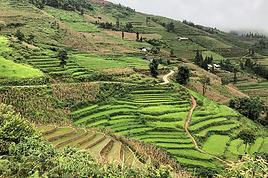
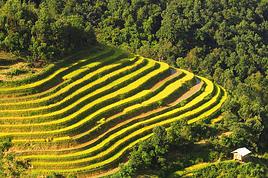
I’ve got a big project in northern Vietnam—discovering the most beautiful rice terraces before the harvest...
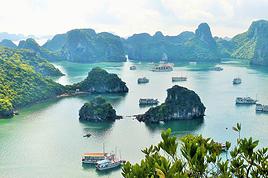
I’m planning to leave around September 15th until October 15th, then spend 15 days exploring the two bays, Lan Ha and Ha Long. In total, 45 days without a visa...
I’m traveling solo and very independent.
But is it possible to do this kind of trip using local trains and buses?
My plan is to leave Hanoi for Nghia Lo (2 days), then Mu Cang Chai (4 days), Sapa (4 days), Bac Ha (2 days), Ha Giang... Hoang Su Phi, then do the Meo Vac loop, Dong Van, etc., to see those stunning karst peaks before heading back to Hanoi.
In my research, I haven’t found any buses or vans going from Hanoi to Nghia Lo, even though it’s super popular for its rice terrace landscapes....
I don’t want a daily driver, but I’m thinking I could use moto-taxis to get around locally once I’m there....
What do you think?
These rice terraces are a dream for me, along with the markets and all the different ethnic groups, not to mention those spectacular rocky peaks...
Is the itinerary too ambitious? I’ve got time on my side.
Do you have any solutions? I’ve browsed the forum a lot, but the discussions are 5 or 6 years old, and I think things have changed since then.
Thanks for your help planning this adventure!
Hello.
In 1996, we crossed Vietnam from Saigon to Hanoi by motorbike—Minsk bikes we bought in Saigon. I haven’t been back since, and it seems like a lot has changed.
- We’re heading to the south (well, the north and center) with the family in July-August (3 people).
- Is the road network more developed now? Back then, there was only National Route 1 from south to north. I’m thinking of renting a car this time (no motorbike with the family—though in ’96, they had a Jawa sidecar for sale, and we hesitated… maybe it’s for the best).
- Is Halong Bay really something to avoid because of overtourism? Even back then, it was pretty crowded. Is there a less touristy alternative?
- We’ll be traveling from Hanoi down to Danang (the only city we didn’t stop in back in ’96). Even though it’s a bit overhyped in a Chinese-tourist kind of way (from what I’ve read), we’re only going for the beach—pure relaxation for 7 days. The beaches are stunning, and I know the South China Sea is warm like coffee.
- Then, we’ll visit Hoi An, where I stopped in ’96. It was already popular with backpackers back then, but no glowing boats or all the touristy fuss!
- After that, Hue, where I have great memories—it’s a beautiful city.
- And also the nature around Ninh Binh, followed by 2-3 days in Hanoi.
That’s the plan. I’d love to hear any tips to avoid mass tourism, and if anyone’s done this before: - Is it possible to rent a car in Danang and drop it off in Hanoi?
Thanks, and long live the Nam! !
- We’re heading to the south (well, the north and center) with the family in July-August (3 people).
- Is the road network more developed now? Back then, there was only National Route 1 from south to north. I’m thinking of renting a car this time (no motorbike with the family—though in ’96, they had a Jawa sidecar for sale, and we hesitated… maybe it’s for the best).
- Is Halong Bay really something to avoid because of overtourism? Even back then, it was pretty crowded. Is there a less touristy alternative?
- We’ll be traveling from Hanoi down to Danang (the only city we didn’t stop in back in ’96). Even though it’s a bit overhyped in a Chinese-tourist kind of way (from what I’ve read), we’re only going for the beach—pure relaxation for 7 days. The beaches are stunning, and I know the South China Sea is warm like coffee.
- Then, we’ll visit Hoi An, where I stopped in ’96. It was already popular with backpackers back then, but no glowing boats or all the touristy fuss!
- After that, Hue, where I have great memories—it’s a beautiful city.
- And also the nature around Ninh Binh, followed by 2-3 days in Hanoi.
That’s the plan. I’d love to hear any tips to avoid mass tourism, and if anyone’s done this before: - Is it possible to rent a car in Danang and drop it off in Hanoi?
Thanks, and long live the Nam! !
Hi everyone,
We’re heading to Vietnam in February as a family (2 adults and 2 kids) for 9 full days, and I was thinking of this itinerary:
Day 1: Hanoi Day 2: Halong Bay (Lan Ha) Day 3: Halong Bay (Lan Ha) Day 4: Hue Day 5: Danang Day 6: Danang Day 7: Hoi An Day 8: Hoi An/My Son Day 9: Hanoi
After reading almost all the discussions about Vietnam, I don’t see anything about transportation options for getting from Hue to Danang, then from Danang to Hoi An. Any ideas (train, bus)? From the map, it looks like Danang is close to Hoi An—easily accessible by taxi, right?
Also, after reading lots of comments and websites, I’ve noticed that Danang, aside from being a big developing city, seems to be more about hotels for relaxing on the beach—very laid-back, isn’t it? Not really a place to visit like Hanoi or Hoi An.
Generally speaking, if you have any recommendations for the itinerary or tips, I’d love to hear them.
I’ll post a trip report when we get back.
Merry Christmas to all!
Alex
We’re heading to Vietnam in February as a family (2 adults and 2 kids) for 9 full days, and I was thinking of this itinerary:
Day 1: Hanoi Day 2: Halong Bay (Lan Ha) Day 3: Halong Bay (Lan Ha) Day 4: Hue Day 5: Danang Day 6: Danang Day 7: Hoi An Day 8: Hoi An/My Son Day 9: Hanoi
After reading almost all the discussions about Vietnam, I don’t see anything about transportation options for getting from Hue to Danang, then from Danang to Hoi An. Any ideas (train, bus)? From the map, it looks like Danang is close to Hoi An—easily accessible by taxi, right?
Also, after reading lots of comments and websites, I’ve noticed that Danang, aside from being a big developing city, seems to be more about hotels for relaxing on the beach—very laid-back, isn’t it? Not really a place to visit like Hanoi or Hoi An.
Generally speaking, if you have any recommendations for the itinerary or tips, I’d love to hear them.
I’ll post a trip report when we get back.
Merry Christmas to all!
Alex
Hi there,
I’m heading to Hanoi and Da Nang for the first time for about ten days in mid-January 2026.
Should I book hotels in advance, or can I find decent places available from one day to the next?
Same question for prices—do rates vary depending on when you book?
I’m starting a discussion about guides in the Mekong Delta because we’ve just finished our trip in this region and had a hard time finding a French-speaking guide. We had Thanh—she speaks French really well and travels all over the delta region, including Ho Chi Minh City. She’s super friendly and flexible. I recommend her wholeheartedly. If it can help someone...
Feel free to contact us for her number.
Hi there,
I’d like to get some information about the upcoming changes to the law on Vietnamese naturalization. My grandmother and my mother were born in Saigon, and I’ve managed to get a 5-year visa exemption as a Việt Kiều, but I’d like to know if I can obtain a Vietnamese passport. I travel to Vietnam very often and plan to move there permanently as a Việt Kiều.
I’d like to get some information about the upcoming changes to the law on Vietnamese naturalization. My grandmother and my mother were born in Saigon, and I’ve managed to get a 5-year visa exemption as a Việt Kiều, but I’d like to know if I can obtain a Vietnamese passport. I travel to Vietnam very often and plan to move there permanently as a Việt Kiều.
Hello everyone,
We’re heading to Vietnam for 14 nights over the Christmas holidays as a family of four—I haven’t booked anything yet.
I’d love your insights on Halong Bay (or Lan Ha Bay).
We’re torn between going or not and spending an extra night in Ninh Binh (or somewhere else you’d recommend! Somewhere with a more picturesque vibe) given the late-December weather and cost (which agency do you recommend?). The upside might be that we’ll be there during the low season, so maybe fewer tourists? (Even though it’d be New Year’s Eve night.)
Here’s our itinerary:
Arrival in Ho Chi Minh City around 1 p.m.
2nd night in HCMC (no time for the Mekong Delta ☹️)
Flight to Da Nang
3 nights in Hoi An
Bus to Hue, 1 night in Hue
City visit, overnight train to Ninh Binh
2 or 3 nights in Ninh Binh?
Halong Bay or Lan Ha Bay?
2 nights in Hanoi
Departure
Thank you so much in advance for your invaluable tips!
For centuries, until its capture by the Vietnamese in 1407, Quy Nhon was Asia’s busiest port. Marco Polo stopped here on his way back from China to Venice. It was the port of Viraja, capital of the Champa kingdom, which explains the many Cham towers found all over the place, including right in the city center. Today, it’s a lovely beach resort, less crowded than others. There’s a gigantic seaside esplanade lined with alternating gardens and hotel towers, with not a single tree (not on the beach either), except at the café-restaurant-terrace of the 4-star hotel Hoang Yen and another one to the right of it. I was lucky to find a brand-new, spotless little hotel run by a very friendly family, the Ngoc Linh, on a quiet little street just 50 meters from the beach. $12 for a single room and $14 for a double. There’s a terrace restaurant. No bikes, but motorbike rentals are available ($10 per day). 6 Tran Van On 0563 54 66 99 or nearby on the esplanade (19 Xuan Dieu).
Beautiful beach establishments north of the city.
That said, it allowed me to indulge my passion for history with the beautiful Cham towers, especially those at Banh It, 20 km north of Quy Nhon on the Mandarin Road (you can see them in the distance as they sit atop a hill, offering a magnificent view of the entire region). Four well-preserved towers (the largest has been very well restored), built in the late 11th to early 12th century. At the foot of the mountain, you’ll find a beautiful 14th-century pagoda and the ruins of Viraja. Right in the middle of the city on Tran Hung Dao, there are also the two beautiful towers of Thap Doi.
Beautiful beach establishments north of the city.
That said, it allowed me to indulge my passion for history with the beautiful Cham towers, especially those at Banh It, 20 km north of Quy Nhon on the Mandarin Road (you can see them in the distance as they sit atop a hill, offering a magnificent view of the entire region). Four well-preserved towers (the largest has been very well restored), built in the late 11th to early 12th century. At the foot of the mountain, you’ll find a beautiful 14th-century pagoda and the ruins of Viraja. Right in the middle of the city on Tran Hung Dao, there are also the two beautiful towers of Thap Doi.
Hi there,
We’re traveling as a family of three adults for the holidays. After several iterations, here’s the itinerary we’re considering. We’d thought about including Bac Ha or Mai Chau, but in the end, we wanted to avoid excessive travel and rushing around. That’s not our style—we’d rather see less but have time to enjoy what we visit at a relaxed pace. We’ll definitely be back (in a better season) to see some of what we’ll miss this time. Just to note: we’re not motorbike riders, and we’re not the type to start our days at dawn and keep going until nightfall. We go at the pace of the day’s mood and energy. My questions: - Thoughts on the itinerary? - Ninh Binh: where’s the best place to stay to explore mostly on foot, by bike, or by taxi? - Cat Ba to Ninh Binh route: is it better to arrange it through one of our accommodations (departure or arrival) or handle it ourselves? - For the return day between Ninh Binh and Hanoi, I’d like to visit some sights rather than make a direct trip, since we’ll already spend enough time in Ninh Binh and Hanoi. I was thinking of the Perfume Pagoda and possibly Quang Phu Cau. But we’d need a car for the day. Is it better to organize in advance or on the spot? In Hanoi or Ninh Binh? Any driver recommendations? Price ideas? Other suggestions for things to see along the way?
Proposed itinerary:
### Day 1: **Monday, December 23, 2024** - Arrival in Hanoi in the late afternoon. ### Day 2: **Tuesday, December 24 – Hanoi** ### Day 3: **Wednesday, December 25 – Hanoi – Lan Ha Bay** 2-day, 1-night cruise ### Day 4: **Thursday, December 26 – Lan Ha Bay – Cat Ba** - Overnight on Cat Ba Island. ### Day 5: **Friday, December 27 – Cat Ba – Ninh Binh** ### Day 6: **Saturday, December 28 – Ninh Binh** ### Day 7: **Sunday, December 29 – Ninh Binh** ### Day 8: **Monday, December 30 – Ninh Binh – Return to Hanoi** - Stop by the Perfume Pagoda? Possibly add Quang Phu Cau? ### Day 9-10-11: **Tuesday, December 31 – Thursday, January 2** Hanoi – New Year’s Eve ### Day 12: **Friday, January 3 – Departure**
That’s a lot of text and questions... Thanks in advance if anyone has answers or ideas. Happy travels to everyone!
Yuri
We’re traveling as a family of three adults for the holidays. After several iterations, here’s the itinerary we’re considering. We’d thought about including Bac Ha or Mai Chau, but in the end, we wanted to avoid excessive travel and rushing around. That’s not our style—we’d rather see less but have time to enjoy what we visit at a relaxed pace. We’ll definitely be back (in a better season) to see some of what we’ll miss this time. Just to note: we’re not motorbike riders, and we’re not the type to start our days at dawn and keep going until nightfall. We go at the pace of the day’s mood and energy. My questions: - Thoughts on the itinerary? - Ninh Binh: where’s the best place to stay to explore mostly on foot, by bike, or by taxi? - Cat Ba to Ninh Binh route: is it better to arrange it through one of our accommodations (departure or arrival) or handle it ourselves? - For the return day between Ninh Binh and Hanoi, I’d like to visit some sights rather than make a direct trip, since we’ll already spend enough time in Ninh Binh and Hanoi. I was thinking of the Perfume Pagoda and possibly Quang Phu Cau. But we’d need a car for the day. Is it better to organize in advance or on the spot? In Hanoi or Ninh Binh? Any driver recommendations? Price ideas? Other suggestions for things to see along the way?
Proposed itinerary:
### Day 1: **Monday, December 23, 2024** - Arrival in Hanoi in the late afternoon. ### Day 2: **Tuesday, December 24 – Hanoi** ### Day 3: **Wednesday, December 25 – Hanoi – Lan Ha Bay** 2-day, 1-night cruise ### Day 4: **Thursday, December 26 – Lan Ha Bay – Cat Ba** - Overnight on Cat Ba Island. ### Day 5: **Friday, December 27 – Cat Ba – Ninh Binh** ### Day 6: **Saturday, December 28 – Ninh Binh** ### Day 7: **Sunday, December 29 – Ninh Binh** ### Day 8: **Monday, December 30 – Ninh Binh – Return to Hanoi** - Stop by the Perfume Pagoda? Possibly add Quang Phu Cau? ### Day 9-10-11: **Tuesday, December 31 – Thursday, January 2** Hanoi – New Year’s Eve ### Day 12: **Friday, January 3 – Departure**
That’s a lot of text and questions... Thanks in advance if anyone has answers or ideas. Happy travels to everyone!
Yuri
Hi everyone,
I have a Visa card with international option.
How do I pay in Vietnam?
Hotels booked on Booking—do hotel owners charge a commission?
How do I withdraw money? ATM fees?
Where can I exchange euros at the lowest cost?
Thanks in advance for your tips!
Larri
hi everyone,
I want to travel in the north for 3 weeks in September-October 2026 to meet ethnic minorities, photograph mountain rice terraces and their harvest, and revisit Halong Bay—but maybe Lan Ha Bay instead. Can you recommend one or more local agencies?
Thanks, and happy holidays!
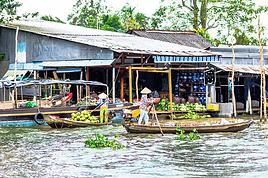
Hi everyone, has anyone been to the delta recently and has up-to-date info on the floating markets? We’ll be there at the end of February 2026 and would love to visit one—touristy is fine as long as there’s activity and it’s not deserted. Thanks for your feedback!
Imagine a peaceful fishing village, completely transformed by artists who worked their magic on the walls of 100 residential houses. That’s the remarkable story of the Tam Thanh mural village in Quang Nam province. Once similar to many other coastal villages in the area, it now firmly stands out on the tourist map for a day trip from Hoi An.
In the summer of 2016, Tam Thanh was selected by a Korean-Vietnamese joint project called Art For A Better Community. The village was chosen to be their blank canvas, inspired by the success of mural villages in Korea. The project aimed to make Tam Thanh the first painted village of its kind in Vietnam.
The joint project included five Korean artists and seven Vietnamese artists, along with local volunteers. They aimed to show Vietnamese people that art could be part of everyday life, no matter where you stand in society. The effort began with about three weeks of wall washing, followed by painting the walls of over 100 residents' houses.
The project was a success, and the village came alive with the paintings. The entire village is now a breathtaking gallery just waiting to be explored. The murals capture the life and soul of the village—from young children playing to fishermen in the ocean. A mix of fantastic pieces offers stunning backdrops for photos.
The painted art around the town didn’t just have a visual impact; it also had a social one. The village itself was chosen not only for the layout of the houses but also to contribute to economic development opportunities in Tam Thanh. Tourists now visit the once-overlooked village, creating more income for locals and making it a successful "art for a cause" project. For example, an entrepreneurial resident who owned a small local café invested 1,000,000 VND ($390 USD) in a sugarcane press a week before the paintings were completed. Sugarcane juice vendors then multiplied with the growth of tourism (5,000 VND - $0.20 USD).
Walking down the village’s single street, it’s common to find locals selling refreshments and handmade crafts. In one house in particular, a tailor and his family are painted on an outer wall with incredible detail. The family started selling tote bags decorated by their young daughter. The asking price for the bags is 100,000 VND ($4 USD). If you’re looking for a way to support the village’s economy, this is it. Since there’s no middleman here, you can be sure your money goes directly to the community.
Since the project’s completion, two other villages in the province have now been painted. The new mural villages were created with different local Vietnamese artists to raise awareness about each community’s issues. Tam Hai Island was redecorated to highlight the serious waste problem the population faces due to the lack of treatment plants. Another village on An Binh Island was painted to raise awareness among locals and tourists about the importance of environmental protection.
How to get there
Route No. 1: Cross the large Cua Dai bridge. Once you’ve crossed it, continue onto Duong 129/Duong Ven Bien. Stay on this road for 33 kilometers. Upside: this route has light traffic, no traffic lights, and no trucks or buses. It’s a great direct route to the village but offers little to see. You’ll eventually reach a crossroads. Turn right toward Tam Ky town, while the left will take you toward the mural village; stay on Road 608 as it turns twice before reaching a bridge. Cross the bridge, and you’ll arrive at Thanh Nien Road. Finally, turn right to reach the village. This route takes about an hour.
Route #2: Cross the large Cua Dai bridge. Once you’ve crossed it, continue onto Duong 129/Duong Ven Bien. Stay on this road for 12 kilometers, then turn left onto Road 613, where you’ll continue for 1.5 kilometers until you reach Thanh Nien Road. Finally, turn right and drive 23 kilometers to the painted village. For most of the trip, taking Thanh Nien Road will take you through a much more local part of the region. The journey takes about an hour and a half.
Hi there,
After arriving in Ho Chi Minh City at the beginning of March 26, where I think I’ll stay for maybe two days (or more?), we’d like to spend a few days in the Mekong Delta.
Is it better to stay in one place (Vinh Long, Cai Be, My Tho, An Binh, etc.) and take boat trips every day, or split our time between two or three spots, which means changing accommodation and moving our luggage around? Of course, agencies offer 3- or 5-day tours from Ho Chi Minh City, but are they really worth it, both financially and in terms of the visits themselves?
What’s your experience with this? How did you do it, and if you had to do it again? Any tips?
Thanks in advance for your help.
Dominique
Hi there,
It’s been a while since I last logged in. Living in Vietnam, my parents just returned from a trip organized by an agency. I rarely praise agencies, but this one deserves a shout-out. They put together a tailor-made trip off the beaten path at a very reasonable price. My parents discovered a place I didn’t even know about—it’s stunning in Bai Tu Long Bay.
If you have any questions about their trip or Vietnam in general, don’t hesitate to ask. I’ve been living here for several years.
Have a great evening!
I'm looking to rent a scooter in Saigon and be able to return it in Hoi An. If anyone knows an agency that does this
Hello,
I’ve been to Thailand three times a long time ago, and I’d love to visit neighboring countries too: Laos, Vietnam, Cambodia (while returning to Thailand 😛).
The catch is that I’d like to go at the beginning of the year, but I’ve heard that’s peak tourist season for these countries. Ideally, I’d prefer to avoid peak season to save money (I’m not exactly rolling in it) and to be able to travel without reservations—without being forced to take a room in the local "palace" that still has availability because of its exorbitant prices.
From my distant memories of Thailand, I usually paid around the equivalent of 20 € per night (with a hearty breakfast) for a hotel room with a mini-bar.
What are the average prices for this type of accommodation in Thailand and its neighbors during "peak" season these days? Do prices fluctuate a lot depending on the season, or is tourist demand not that different from one season to another, keeping prices relatively stable? Are the chances of finding a "budget" room without a reservation still high, no matter the season, in this part of the world? 😇
From my distant memories of Thailand, I usually paid around the equivalent of 20 € per night (with a hearty breakfast) for a hotel room with a mini-bar.
What are the average prices for this type of accommodation in Thailand and its neighbors during "peak" season these days? Do prices fluctuate a lot depending on the season, or is tourist demand not that different from one season to another, keeping prices relatively stable? Are the chances of finding a "budget" room without a reservation still high, no matter the season, in this part of the world? 😇
Hi everyone,
We’d like to travel to Con Dao Island by boat from Can Tho. The return trip will be from Con Dao to Vung Tau.
We can’t find any ferry info online. Has anyone here done this route before? Thanks in advance for any tips!
We’d like to travel to Con Dao Island by boat from Can Tho. The return trip will be from Con Dao to Vung Tau.
We can’t find any ferry info online. Has anyone here done this route before? Thanks in advance for any tips!
Hi there,
Planning a trip in January to the Mekong Delta.
Question: I’m stopping at Gieng Island—are there public buses from Ho Chi Minh City or Sa Dec that go near the ferry dock for this little island?
Question: How do you get to Tram Chim National Park (the bird sanctuary) by bus?
Finally, is there an app for public transport in southern Vietnam?
Maybe some of you have been there before 🙂
Thanks for your tips!
Hi,
The question is in the title.
I won’t say it’s systematic, but compared to Thailand, it’s pretty common.
Have Chinese manners made their way into VIETNAM with a blast of horns?
Hi there,
Here’s the itinerary I’ve planned for May with my partner—what do you think? I’m not entirely sure if my choices are the best. We’re traveling independently, no guide, no agency, and using public transport.
- Hanoi: Arrival at 10 AM – 1 day (05/09) - Mai Chau: 2 days (including visits to the Pa Co and Mai Chau markets) (05/10 and 05/11) - Pu Luong (Lang Bang): 2 days (05/12 and 05/13) - Tam Coc: 2 days (05/14 and 05/15) - Tu Long Bay: 2 days (05/16 and 05/17) - Hanoi: 1 day – Night train (05/18) - Hue: 2 days (05/19 and 05/20) - Hoi An: 2 days (05/21 and 05/22) - Da Nang: 1 day (05/23) - Flight from Da Nang to Can Tho (05/24 and 05/25) - Ben Tre: 2 days (05/26 and 05/27) - Ho Chi Minh City: 2 days (05/28 and 05/29)
Thanks for your feedback! Have a great day.
Here’s the itinerary I’ve planned for May with my partner—what do you think? I’m not entirely sure if my choices are the best. We’re traveling independently, no guide, no agency, and using public transport.
- Hanoi: Arrival at 10 AM – 1 day (05/09) - Mai Chau: 2 days (including visits to the Pa Co and Mai Chau markets) (05/10 and 05/11) - Pu Luong (Lang Bang): 2 days (05/12 and 05/13) - Tam Coc: 2 days (05/14 and 05/15) - Tu Long Bay: 2 days (05/16 and 05/17) - Hanoi: 1 day – Night train (05/18) - Hue: 2 days (05/19 and 05/20) - Hoi An: 2 days (05/21 and 05/22) - Da Nang: 1 day (05/23) - Flight from Da Nang to Can Tho (05/24 and 05/25) - Ben Tre: 2 days (05/26 and 05/27) - Ho Chi Minh City: 2 days (05/28 and 05/29)
Thanks for your feedback! Have a great day.
We’re heading to Vietnam for 3 weeks from January 17th to February 6th. In addition to the Mekong Delta and the central region, we’d like to spend some time by the sea. We’re torn between visiting the islands of Hon Son/Nam Du/(+Phu Quoc?) or choosing Con Dao Island. We’re hesitant because we’ve read that the sea around Con Dao can be rough and not great for swimming at this time of year (and that boats might be canceled). Could you share your thoughts? Thanks
Hello,
We’re a couple looking for a driver for 10 days to explore Northern Vietnam in April.
Best regards,
Hi,
In February, we’d like to visit the Xeo Quyt forest site. On the LP (Lonely Planet), it’s listed near Cao Lanh, but when I look at the map, it seems much closer to Sa Dec. Since we’re planning to stop in Sa Dec during our trip, I’d love to know if there are buses to get to Xeo Quyt.
What’s your take on the site itself?
Also, while we’re in HCMC, we’re thinking of doing a "day trip" to the Cu Chi tunnels. I’ve read reviews about Ben Dinh, but almost nothing about Ben Duoc (except that it’s less touristy!). Which one should we choose? Do agencies offer tours to Ben Duoc?
Thanks for your tips! fg
Also, while we’re in HCMC, we’re thinking of doing a "day trip" to the Cu Chi tunnels. I’ve read reviews about Ben Dinh, but almost nothing about Ben Duoc (except that it’s less touristy!). Which one should we choose? Do agencies offer tours to Ben Duoc?
Thanks for your tips! fg
DANANG
A big city in the midst of an economic boom. The setting is stunning, with its large bay, the Son Tra Peninsula, and the Annamite Mountains on the horizon.
Where to stay and eat? Da Nang is a bustling business hub, so hotels are pricier and often fully booked. I was lucky to find a motorbike taxi driver who, after six full hotels, took me to Mai Son Hotel, 113 Nguyen Van Linh, a spotless 2-star place. Plus, right next door, there’s a great restaurant that seems popular with locals, and a good Chinese restaurant just a 5-minute walk away, Phi Lu (178 Nguyen Van Linh), recommended by the *Guide du Routard*. So, I’d definitely recommend this hotel. For a pricier option, the very Christian Dai A Hotel, near the tiny pink cathedral, is nice, but why pay more?
Actually, why stay in Da Nang when the gorgeous Hoi An is just 34 km to the south?
What to see? - The lovely Cham Museum (small, takes at most an hour) - The climb up Son Tra Peninsula (great views of the whole area) - The “tour” of the peninsula—quotation marks because the road stops two-thirds of the way. There’s an interesting little museum on the left before reaching the base of the huge statue, the Đong Đinh (large entrance on the left side of the hill), with traditional houses in the jungle holding artifacts over 2,000 years old (Sa Huynh culture; if you’re interested, check out the small Sa Huynh Museum in Hoi An, just before the Japanese Bridge). However, the big Linh Ung Pagoda is just colorful concrete! A beautiful resort, the Son Tra Beach Resort and Spa, sits on a pristine beach and isn’t too expensive: $120 for a garden room and $200–$270 for duplexes with a pool, where you can sleep six. Before reaching the resort, you’ll find two excellent seafood restaurants with large beachfront terraces on your right. - On the way to Hoi An, Marble Mountain, where I loved the village of marble sculpture workshops, the pretty pagodas and caves, and the stunning view from the top of the last promontory (the stairs are steep!). However, you can skip the famous China Beach and its resorts—all pretentious and expensive, not to mention the ones under construction on both sides of the road (they’re multiplying like crazy!). So, when traveling from Da Nang to Hoi An, I recommend two stops: the Cham Museum and Marble Mountain. - The beautiful drive to the Hai Van Pass (there weren’t any clouds!), offering spectacular views of the Da Nang region to the south and the coast to the north. The descent leads to the fishing village and beach of Lang Co, which is lovely but destined for rampant resort development, judging by the huge projects advertised on billboards along the road after the village. - Some affordable guesthouses ($15) and big resorts, including the lovely Lang Co Beach Resort, with a large pool and great value given the beautiful gardens and elegant bungalows. Recommended in Lang Co: lunch at one of the two stilt restaurants over the lagoon—great views and fresh seafood.
The public bus to Hoi An, 34 km south of Da Nang, takes 45 minutes for 50,000 dong. There’s one every half hour.
HOI AN This is a “must-see” for so many reasons: stunning old houses, temples, and pagodas; a colorful daily open-air and covered market near the bridge; charming little streets in the old quarter—especially at night, with all the multicolored lanterns and riverside restaurant terraces, it’s very romantic. The local food is delicious, the people are friendly and kind, there are two beautiful beaches, and attractions like the Cham ruins of My Son. Some say Hoi An is overrun with tourists and should be avoided. That’s true for the historic center and An Bang Beach, but not at all once you step outside.
WHERE TO STAY For a 2-star option, I recommend Ngo House Villa (99 Nguyen Phuc Tan St), very quiet on the island just across from the Old Quarter: 3-star rooms + suites, a large “Family” room, and a nice pool, all for $20 ($40 for the “Family” room). The same charming owner has a second hotel 20 meters away (No. 74), Phan Ngô, which is older but has a large terrace and a small pool—I prefer this one. For 3 stars, Thuy Duong 3 (92 Ba Trieu) is perfect, with a pool and garden ($40–$60). A bit pricier but great is A Han on Phan Bai Chau, with a large garden and terrace restaurant.
For those with a bigger budget, I recommend two riverside spots with rooms, suites, and pools, priced at $200–$350: the secluded Coco River Resort (formerly Ancient House River, with a large wooden terrace for romantic dinners by the river) and Anantara, (formerly Heritage), with bungalows close to the old town—but pricey.
Outside the city, my favorite hotel is Villa Loan, the new place from the famous Loan of Tam Coc, very quiet in the countryside, 15 minutes by bike from Old Hoi An and An Bang Beach. Beautiful rooms ($35), a Family room with two double beds ($55), two 65 m² twins that can sleep six (two large beds + two single beds—$80), a terrace restaurant, and a lovely pool. Prices include a buffet breakfast and a bike.
Also great is Daisy Anbang on An Bang Beach, elegant with a pool and beach just 50 meters away (skip the Aira next door—too expensive).
WHERE TO EAT Hoi An is Vietnam’s culinary capital. For Vietnamese food, I recommend Dao Tien, 21 Phan Bai Chau. No surprise—the chef is a former chef at the luxury 4-star Victoria Hoi An, a solid reference. The restaurant now has a beautiful terrace by the river (take the alley on the right side of the main street Dao Tien). Plus, you’re doing a good deed: a large part of the profits goes toward educating underprivileged children—one year of free hospitality, cooking, and English training, followed by job placement in local establishments. Madame Hien Hoi An (formerly Co Mai), 2 Nguyen Thai Hoc (left of the market), is another great spot—the chef is Didier Corlou, formerly of the famous *Porte d’Annam* and *Madame Hien* in Hanoi (closed in March 2022 due to COVID, so foreign tourists are still scarce). Also worth checking out is Secret Garden, in the Phuong Minh An alley (entrance at 60 Le Loi), set in a beautiful space. One of my favorites is Madam Kieu, 43 Nguyen Phuc Chu, right on the river across from the little bridge—very elegant with excellent Vietnamese cuisine. Unfortunately, all the restaurants on this esplanade blast “music” (boom boom boom yeah yeah yeah) in the evenings, so it’s impossible to talk—go for lunch instead.
For a break from Vietnamese food, try Good Morning Vietnam, a ridiculous name for an excellent Italian restaurant (11 Le Loi). The cheerful chef is from Bologna, the “Lyon of Italy”: lasagna like an Italian *mama*’s, delicious tagliatelle ai porcini (porcini mushrooms imported from Italy), and a divine homemade tiramisu (pro tip: order a grappa and drizzle a few drops on the tiramisu). It’s also one of the few places where you can get an excellent bottle of red wine for 350,000 dong instead of the usual 600,000–800,000 dong (South African Robertson Chapel). Another gem: the Japanese restaurant Samurai Kitchen (no sushi, but divine gyoza), 21 Phan Chau Trinh—the street on the right side of the market when you turn your back to the river. Finally, Ganesh, which I consider the best Indian restaurant in Vietnam (99 Tran Hung Dao St).
At An Bang, there are plenty of beachfront restaurants. The two best are the large one at the far right of the parking lot (huge seafood selection) and the fantastic La Luna d’Autumno, owned by the same person as the Italian restaurant of the same name, once considered the best in Vietnam but closed in 2020 due to COVID. Divine pizzas, including the vegetariana.
WHAT TO VISIT The Japanese Bridge and all the old Chinese houses, temples, and pagodas in the three historic streets. Don’t miss the extraordinary gallery-museum of the great French photographer Réhahn, the Precious Heritage Museum at 26 Phan Boi Chau. His remarkable photo collection—including the famous shot of the little Cham girl with clear blue eyes—has graced the covers of many magazines. His Montagnard Museum is a wonder, with a larger collection of tribal women’s costumes than the Museum of Ethnology in Hanoi. Free entry.
THE BEACHES Cua Dai Beach has mostly disappeared, a victim of the waves, except in a few spots. The beautiful An Bang Beach remains, with great beachfront restaurants, or you can head to Cham Island.
MY SON A beautiful complex of Cham ruins surrounded by mountains, 50 km southwest of Hoi An via a scenic road. You can rent a motorbike, take a motorbike taxi, or join a half-day organized tour. It’s best to go in the afternoon—less crowded than in the morning.
CHAM ISLANDS (Cu Lao Cham) Wow, I loved it! It reminded me of St. Barts 35 years ago. The archipelago, 19 km from Hoi An, consists of eight small islands within the Cu Lao Cham Marine Reserve, declared a “Biosphere Reserve” by UNESCO. The largest and only inhabited island, Hon Lao (Pearl Island), covers 1,317 hectares, and its highest peak reaches 517 meters. Hon Lao has two villages: Bai Lang, where the boats from Hoi An dock, and the charming little fishing port of Bai Huong. Part of the island is a military zone, so only the east coast is accessible to tourists.
To get there, you have three options: - The public boat (100,000 dong) that leaves from in front of Café des Amis at 7:30 AM. The catch is it returns to Hoi An at noon, so to enjoy the charm of the place, you’ll need to spend a night on the island (which I highly recommend). - Organized tours by Cham Diving Club, with two options: diving or snorkeling only. - A private speedboat, but it’s not cheap: $200 for the day!
Note: Even if the weather seems fine, the large public boat won’t leave if the sea is too rough. The only solution is to go to the port around 7:30 AM and check (easy, since it brings all the supplies for the island’s locals—if it’s leaving, it’ll be loading up). Avoid weekends—it gets swarmed with locals.
Small coves with dreamy beaches, as they say. Two are very close to Bai Lang: one to the left (facing the village), Bai Ong, lined with restaurants, and a tiny one to the right of the village. The other two beaches, including Bai Chong and the little fishing port of Bai Huong, are accessible by motorbike or boat. I recommend renting a motorbike (biking is tough due to steep hills) and taking the road that overlooks the coast—it’s stunning.
Great diving. The Cham Diving Club is superbly organized by a very friendly Italian, Lodovico, and two French guys (www.chamislanddiving.com).
When you arrive at Bai Lang’s pier, they’ll offer you TWO family-run guesthouses in the village. There are also homestays, but they’re really basic (usually bamboo mats on wooden planks as beds), no English or French is spoken, and locals speak a dialect that’s hard to understand even if you’re decent at Vietnamese. Anyway, I don’t recommend staying in Bai Lang because of the public loudspeakers. Two options if you want a quiet night: - A small guesthouse facing the tiny rice field on the way to Bai Ong Beach. Very clean rooms and a large terrace overlooking the “rice field.” 300,000 dong, with meals available on the terrace. Nha Nghi Vu Truong Tel: 235 386 4783 Mobile: 01 67 76 63 110. - Homestays in the little fishing port of Bai Huong.
Where to stay and eat? Da Nang is a bustling business hub, so hotels are pricier and often fully booked. I was lucky to find a motorbike taxi driver who, after six full hotels, took me to Mai Son Hotel, 113 Nguyen Van Linh, a spotless 2-star place. Plus, right next door, there’s a great restaurant that seems popular with locals, and a good Chinese restaurant just a 5-minute walk away, Phi Lu (178 Nguyen Van Linh), recommended by the *Guide du Routard*. So, I’d definitely recommend this hotel. For a pricier option, the very Christian Dai A Hotel, near the tiny pink cathedral, is nice, but why pay more?
Actually, why stay in Da Nang when the gorgeous Hoi An is just 34 km to the south?
What to see? - The lovely Cham Museum (small, takes at most an hour) - The climb up Son Tra Peninsula (great views of the whole area) - The “tour” of the peninsula—quotation marks because the road stops two-thirds of the way. There’s an interesting little museum on the left before reaching the base of the huge statue, the Đong Đinh (large entrance on the left side of the hill), with traditional houses in the jungle holding artifacts over 2,000 years old (Sa Huynh culture; if you’re interested, check out the small Sa Huynh Museum in Hoi An, just before the Japanese Bridge). However, the big Linh Ung Pagoda is just colorful concrete! A beautiful resort, the Son Tra Beach Resort and Spa, sits on a pristine beach and isn’t too expensive: $120 for a garden room and $200–$270 for duplexes with a pool, where you can sleep six. Before reaching the resort, you’ll find two excellent seafood restaurants with large beachfront terraces on your right. - On the way to Hoi An, Marble Mountain, where I loved the village of marble sculpture workshops, the pretty pagodas and caves, and the stunning view from the top of the last promontory (the stairs are steep!). However, you can skip the famous China Beach and its resorts—all pretentious and expensive, not to mention the ones under construction on both sides of the road (they’re multiplying like crazy!). So, when traveling from Da Nang to Hoi An, I recommend two stops: the Cham Museum and Marble Mountain. - The beautiful drive to the Hai Van Pass (there weren’t any clouds!), offering spectacular views of the Da Nang region to the south and the coast to the north. The descent leads to the fishing village and beach of Lang Co, which is lovely but destined for rampant resort development, judging by the huge projects advertised on billboards along the road after the village. - Some affordable guesthouses ($15) and big resorts, including the lovely Lang Co Beach Resort, with a large pool and great value given the beautiful gardens and elegant bungalows. Recommended in Lang Co: lunch at one of the two stilt restaurants over the lagoon—great views and fresh seafood.
The public bus to Hoi An, 34 km south of Da Nang, takes 45 minutes for 50,000 dong. There’s one every half hour.
HOI AN This is a “must-see” for so many reasons: stunning old houses, temples, and pagodas; a colorful daily open-air and covered market near the bridge; charming little streets in the old quarter—especially at night, with all the multicolored lanterns and riverside restaurant terraces, it’s very romantic. The local food is delicious, the people are friendly and kind, there are two beautiful beaches, and attractions like the Cham ruins of My Son. Some say Hoi An is overrun with tourists and should be avoided. That’s true for the historic center and An Bang Beach, but not at all once you step outside.
WHERE TO STAY For a 2-star option, I recommend Ngo House Villa (99 Nguyen Phuc Tan St), very quiet on the island just across from the Old Quarter: 3-star rooms + suites, a large “Family” room, and a nice pool, all for $20 ($40 for the “Family” room). The same charming owner has a second hotel 20 meters away (No. 74), Phan Ngô, which is older but has a large terrace and a small pool—I prefer this one. For 3 stars, Thuy Duong 3 (92 Ba Trieu) is perfect, with a pool and garden ($40–$60). A bit pricier but great is A Han on Phan Bai Chau, with a large garden and terrace restaurant.
For those with a bigger budget, I recommend two riverside spots with rooms, suites, and pools, priced at $200–$350: the secluded Coco River Resort (formerly Ancient House River, with a large wooden terrace for romantic dinners by the river) and Anantara, (formerly Heritage), with bungalows close to the old town—but pricey.
Outside the city, my favorite hotel is Villa Loan, the new place from the famous Loan of Tam Coc, very quiet in the countryside, 15 minutes by bike from Old Hoi An and An Bang Beach. Beautiful rooms ($35), a Family room with two double beds ($55), two 65 m² twins that can sleep six (two large beds + two single beds—$80), a terrace restaurant, and a lovely pool. Prices include a buffet breakfast and a bike.
Also great is Daisy Anbang on An Bang Beach, elegant with a pool and beach just 50 meters away (skip the Aira next door—too expensive).
WHERE TO EAT Hoi An is Vietnam’s culinary capital. For Vietnamese food, I recommend Dao Tien, 21 Phan Bai Chau. No surprise—the chef is a former chef at the luxury 4-star Victoria Hoi An, a solid reference. The restaurant now has a beautiful terrace by the river (take the alley on the right side of the main street Dao Tien). Plus, you’re doing a good deed: a large part of the profits goes toward educating underprivileged children—one year of free hospitality, cooking, and English training, followed by job placement in local establishments. Madame Hien Hoi An (formerly Co Mai), 2 Nguyen Thai Hoc (left of the market), is another great spot—the chef is Didier Corlou, formerly of the famous *Porte d’Annam* and *Madame Hien* in Hanoi (closed in March 2022 due to COVID, so foreign tourists are still scarce). Also worth checking out is Secret Garden, in the Phuong Minh An alley (entrance at 60 Le Loi), set in a beautiful space. One of my favorites is Madam Kieu, 43 Nguyen Phuc Chu, right on the river across from the little bridge—very elegant with excellent Vietnamese cuisine. Unfortunately, all the restaurants on this esplanade blast “music” (boom boom boom yeah yeah yeah) in the evenings, so it’s impossible to talk—go for lunch instead.
For a break from Vietnamese food, try Good Morning Vietnam, a ridiculous name for an excellent Italian restaurant (11 Le Loi). The cheerful chef is from Bologna, the “Lyon of Italy”: lasagna like an Italian *mama*’s, delicious tagliatelle ai porcini (porcini mushrooms imported from Italy), and a divine homemade tiramisu (pro tip: order a grappa and drizzle a few drops on the tiramisu). It’s also one of the few places where you can get an excellent bottle of red wine for 350,000 dong instead of the usual 600,000–800,000 dong (South African Robertson Chapel). Another gem: the Japanese restaurant Samurai Kitchen (no sushi, but divine gyoza), 21 Phan Chau Trinh—the street on the right side of the market when you turn your back to the river. Finally, Ganesh, which I consider the best Indian restaurant in Vietnam (99 Tran Hung Dao St).
At An Bang, there are plenty of beachfront restaurants. The two best are the large one at the far right of the parking lot (huge seafood selection) and the fantastic La Luna d’Autumno, owned by the same person as the Italian restaurant of the same name, once considered the best in Vietnam but closed in 2020 due to COVID. Divine pizzas, including the vegetariana.
WHAT TO VISIT The Japanese Bridge and all the old Chinese houses, temples, and pagodas in the three historic streets. Don’t miss the extraordinary gallery-museum of the great French photographer Réhahn, the Precious Heritage Museum at 26 Phan Boi Chau. His remarkable photo collection—including the famous shot of the little Cham girl with clear blue eyes—has graced the covers of many magazines. His Montagnard Museum is a wonder, with a larger collection of tribal women’s costumes than the Museum of Ethnology in Hanoi. Free entry.
THE BEACHES Cua Dai Beach has mostly disappeared, a victim of the waves, except in a few spots. The beautiful An Bang Beach remains, with great beachfront restaurants, or you can head to Cham Island.
MY SON A beautiful complex of Cham ruins surrounded by mountains, 50 km southwest of Hoi An via a scenic road. You can rent a motorbike, take a motorbike taxi, or join a half-day organized tour. It’s best to go in the afternoon—less crowded than in the morning.
CHAM ISLANDS (Cu Lao Cham) Wow, I loved it! It reminded me of St. Barts 35 years ago. The archipelago, 19 km from Hoi An, consists of eight small islands within the Cu Lao Cham Marine Reserve, declared a “Biosphere Reserve” by UNESCO. The largest and only inhabited island, Hon Lao (Pearl Island), covers 1,317 hectares, and its highest peak reaches 517 meters. Hon Lao has two villages: Bai Lang, where the boats from Hoi An dock, and the charming little fishing port of Bai Huong. Part of the island is a military zone, so only the east coast is accessible to tourists.
To get there, you have three options: - The public boat (100,000 dong) that leaves from in front of Café des Amis at 7:30 AM. The catch is it returns to Hoi An at noon, so to enjoy the charm of the place, you’ll need to spend a night on the island (which I highly recommend). - Organized tours by Cham Diving Club, with two options: diving or snorkeling only. - A private speedboat, but it’s not cheap: $200 for the day!
Note: Even if the weather seems fine, the large public boat won’t leave if the sea is too rough. The only solution is to go to the port around 7:30 AM and check (easy, since it brings all the supplies for the island’s locals—if it’s leaving, it’ll be loading up). Avoid weekends—it gets swarmed with locals.
Small coves with dreamy beaches, as they say. Two are very close to Bai Lang: one to the left (facing the village), Bai Ong, lined with restaurants, and a tiny one to the right of the village. The other two beaches, including Bai Chong and the little fishing port of Bai Huong, are accessible by motorbike or boat. I recommend renting a motorbike (biking is tough due to steep hills) and taking the road that overlooks the coast—it’s stunning.
Great diving. The Cham Diving Club is superbly organized by a very friendly Italian, Lodovico, and two French guys (www.chamislanddiving.com).
When you arrive at Bai Lang’s pier, they’ll offer you TWO family-run guesthouses in the village. There are also homestays, but they’re really basic (usually bamboo mats on wooden planks as beds), no English or French is spoken, and locals speak a dialect that’s hard to understand even if you’re decent at Vietnamese. Anyway, I don’t recommend staying in Bai Lang because of the public loudspeakers. Two options if you want a quiet night: - A small guesthouse facing the tiny rice field on the way to Bai Ong Beach. Very clean rooms and a large terrace overlooking the “rice field.” 300,000 dong, with meals available on the terrace. Nha Nghi Vu Truong Tel: 235 386 4783 Mobile: 01 67 76 63 110. - Homestays in the little fishing port of Bai Huong.
Hi there,
we’ll be in Mai Chau in June and we’re thinking of heading to Sapa, but first spending a few days in Bac Ha to do some hiking and explore the area.
Is this a good idea for those who’ve been there?
How do you get there?
Thanks for your feedback.
Looking forward to hearing from you.
Cédric.
Hi everyone,
I couldn’t find any recent posts on this topic, so I thought I’d create a new one. We’ve just started planning our family trip to Vietnam this coming August. We’d like to travel from North to South, starting in Hanoi and ending in Ho Chi Minh.
Usually, we rent a car when we arrive and manage on our own. But I get the feeling that in Vietnam, it’s more complicated... It seems like the only option we have is to rent a car with a driver? Is that really the case?
I’m thinking of starting with a cruise in Halong Bay since we arrive on my partner’s birthday, and I wanted a beautiful setting to celebrate it. So, is the option of having a driver wait for 2 days while we’re on the cruise really feasible?
The rest of the itinerary isn’t planned at all yet. I’d love to hear your tips. We’re traveling from August 8th (morning) to the 26th (afternoon).
Thanks for your advice.
I couldn’t find any recent posts on this topic, so I thought I’d create a new one. We’ve just started planning our family trip to Vietnam this coming August. We’d like to travel from North to South, starting in Hanoi and ending in Ho Chi Minh.
Usually, we rent a car when we arrive and manage on our own. But I get the feeling that in Vietnam, it’s more complicated... It seems like the only option we have is to rent a car with a driver? Is that really the case?
I’m thinking of starting with a cruise in Halong Bay since we arrive on my partner’s birthday, and I wanted a beautiful setting to celebrate it. So, is the option of having a driver wait for 2 days while we’re on the cruise really feasible?
The rest of the itinerary isn’t planned at all yet. I’d love to hear your tips. We’re traveling from August 8th (morning) to the 26th (afternoon).
Thanks for your advice.
Hi there, we’re landing at Hanoi Airport and would like to head straight to Cao Bang without going into Hanoi. Does anyone know if there are buses that go directly from the airport to Cao Bang (especially in the early afternoon)? Thanks in advance!