When I set off for Bolivia, like many Europeans, I was full of illusions (fed by the propaganda of President Evo Morales, a would-be dictator with limited intelligence). I quickly became disillusioned—everything there seems to be built on lies: political disaster, ecological disaster, economic disaster despite drug trafficking and smuggling with China, dietary disaster, intellectual disaster... Its only saving grace is being a vast, sparsely populated country, so nature lovers can still find rich, relatively untouched landscapes far from human settlements (but for how long?)
Where humans dominate, the disaster worsens year by year: water, soil, and air are contaminated, meat is pumped full of hormones, GMOs are everywhere, fish are loaded with lead and mercury (thousands of tons of waste are dumped into Lake Titicaca on both the Bolivian and Peruvian sides), and the food is ultra-artificial (all the additives banned in Europe are abundant there). For example, out of 50 fruit yogurts, only two actually contain fruit... In short, don’t expect to go there for a health retreat.
As for its capital, even though you’ll see "wonderful" written everywhere, the city is ugly, extremely polluted, and not particularly interesting. But since few Bolivians leave Bolivia and the public education system is one of the dumbest in the world, they don’t care. A stupid law decreeing that taxes are only paid once construction is finished means thousands of buildings will never be completed... Anyway, you’ve probably gathered by now that it’s not worth wasting too much time there. If you decide to go to Bolivia, it’s best to know what you’re getting into...
So what should you do? A stop in Copacabana is pleasant, as is one in Tiwanaku. A stay in Samaipata is nice, and the cities of Sucre and Potosí still have charm. The Uyuni salt flats are also worth seeing. Venture off the beaten path, even if transportation is complicated and sometimes dangerous.
Don’t be surprised by the omnipresent police (many of whom are corrupt) and military, or by the almost daily protests... These are just some of Bolivia’s characteristics. But when you pass through quickly, you tend to see what you want to see.
On the gastronomy front, aside from the fact that in many places the food is a cocktail of pesticides, GMOs, heavy metals, and dangerous additives—all washed down with plenty of Coca-Cola—don’t expect refined cuisine... That said, like everywhere, you’ll find kind people (though relationships are often superficial) and stunning landscapes. There you go—just offering a different perspective from the dazzled accounts of tourists who only scratch the surface without understanding the harsh realities. And I haven’t even touched on the administrations, social disparities, the TIPNIS conflict, disappearances (girls for prostitution and boys for organ trafficking), etc...
Hmm, so if I got this right, we shouldn’t go to Bolivia because there are the evil capitalists destroying the environment versus the "good" indigenous people of the Altiplano growing organic plants with vicuña dung.
It’s like eating a bouillabaisse where politics and ideology get all mixed up.
With some alpaca wool, you’ll be all set for winter 😊.
Nice ecologists? First, they’d need to know what ecology actually is..... Not going? Everyone has to make their own choices, but at least do it with full awareness and know where to go instead. As for the ecological disaster, it’s a global issue....
Ruining Bolivia's image? It's just an observation of what's happening in the country, unfortunately.
I could say the exact same thing about Brazil. That doesn’t stop me from going there.
It’s just the other side of the coin that you don’t see in travel brochures.....
Hello,
I think your observation applies to many countries (probably even across Europe). For my part, I only discovered the Altiplano’s exceptional landscapes, amazing wildlife, and stunning mountains there. (https://mon-sejour.com/bolivie/le-film-de-notre-trek-en-bolivie/)
Hello,
I’ve been living in Bolivia for 10 years now, so I think I know the country’s reality "a bit more than just superficially."
Yes, some of the points you made are true, but unfortunately, your exaggerations and the lack of any positive aspects undermine your message and strip it of all objectivity.
Bolivia, like many others, is a politically, socially, and economically complex country. It’s a nation in the midst of transformation, facing various challenges—chief among them right now being Evo Morales’ potential return to politics.
But it’s also an authentic country with incredible cultural and natural diversity.
I find your message somewhat disrespectful to Bolivians.
You’ve shared your perspective, and I’m sharing mine.
Sincerely,
Jerome
Attribal’s post really surprised us, coming from someone who apparently only took a short trip to Bolivia.
It’s true that Morales is trying to manipulate the various referendums and elections to run for a 4th term (the 2016 referendum and the 2017 high magistrate elections).
But you still have to consider the country’s progress.
For example, electrification, modernization of the road network (a few years ago, there were practically no paved roads south of Oruro), and the installation of the cable car network in La Paz, which has improved traffic flow in the city and reduced pollution a bit.
During our various trips, we’ve seen Bolivia transform in many areas, though the people of the Altiplano remain proud and have preserved their traditions.
Best regards,
Hi, why do we always have to reduce a country's or a people's development to a political dimension?
It seems like an obsession and a very French reflex (to believe that everything is political and that politics can and should do everything).
In my opinion, people are more than capable on their own.
We're having a bit of trouble following your reasoning—politics is very much present everywhere in Bolivia.
And whether we like it or not, it's governments that initiate major modernization projects.
Best regards,
hi Ladrech, I totally agree 🙂
Sorry for being too abstract, you’ll forgive me 😛
What I was getting at is whether an individual can be master of their own existence independently of external causes or not...
Is the people sovereign or not?
And then the whole question is whether the State and the Nation (basically, I’m talking about the concept of the Nation-State, obviously) overlap...
By State, we can understand a political construct.
But once again, please forgive me for these overly abstract arguments.
Otherwise, yes, Bolivia is a really great country, and I can’t wait to go back!
Oh, and you can listen to Savia Andina—it’s a group you should enjoy without moderation.
This is a problem often raised on this forum (though still very interesting): believing that geographic migration allows you to travel to utopia.
In short, behind the idealized images and the naive stance we might take when faced with them, there are certain social and political realities 😛
Hello,
I’ve been living in Bolivia for 10 years now and think I know the reality of the country, "more than just superficially."
Yes, some elements of your post are true, but unfortunately, your exaggeration and the lack of any positive aspects undermine your message and strip it of all objectivity.
Bolivia, like many others, is a politically, socially, and economically complex country. It’s a nation in the midst of transformation, facing various challenges, the main one right now being Evo Morales’ attempt to return to power.
But it’s also an authentic country with incredible cultural and natural diversity.
I find your message disrespectful to Bolivians.
You’ve shared your point of view. I’m sharing mine.
Sincerely,
Jerome
Hi,
Like you, I was really shocked by this post—I found it out of place and insulting to the Bolivian people... There *is* an ecological problem in Bolivia, the overexploitation of lithium—the very thing that allows us to post on VF—is causing a real environmental disaster. But the same is true in many other countries, and probably more ecological catastrophes will emerge (in Brazil????). As for politics... sadly, Bolivia isn’t the only country suffering under dictatorship (or "pseudo-dictatorship")....
How is this insulting to the Bolivian people?
The author is just stating facts, which are probably justified.
Like in Brazil, when I point out that the country is dirty—especially because of the trash lying everywhere—people are fully aware of it... but they still keep throwing everything on the ground. Sad observation, but nothing insulting.
That’s just my opinion and how I felt... 🤪 Calling out the stupidity (through education) and superficiality of Bolivians, highlighting their inability to manage their country, reducing Bolivia to a simple observation about ecological disaster—I didn’t appreciate this post... You can’t sum up an entire country like that....
How is this insulting to the Bolivian people?
The author is just stating facts, which are probably justified.
I agree with Gildadesiles—the assessment made by the original poster of this thread is too negative.
There are still plenty of great things in Bolivia—nothing’s perfect on Earth, otherwise no one would travel to Bolivia.
Actually, the criticism comes off as a bit of that "bourgeois bohemian" self-righteousness 😛
Like in Brazil, when I point out that the country is dirty, especially because of the litter lying around
I’ve been to Brazil a few times—it’s not worse than France.
Cities in France are partly dirty too, especially the sidewalks.
I agree with you about how clean French sidewalks are 🤪
I just got back from Colombia and was surprised by how clean the streets in cities generally are (less true in small villages)
We spent 3 weeks in Bolivia and ... loved it!
Everywhere, the people were welcoming and friendly, with stunning landscapes.
Sure, corruption exists in Bolivia, but ... doesn’t it exist in France and everywhere else in the world?
Dirt: Yes, it’s not as clean as the Champs-Élysées, but don’t go to India either (very dirty, but we loved it too because it’s the people you meet, not "the dirt and corruption").
In La Paz, the network of cable cars provides access to the city center from the poor neighborhoods in the surrounding highlands: a system unique in the world.
We loved Sucre with its bustling local markets and lively streets.
In Potosí, we chose not to visit the mines because it felt like voyeurism.
We were worried about scams at the Salar de Uyuni because it’s so touristy, but we found a small, super-friendly local agency and spent the day at our own pace instead of rushing.
Sure, the buses aren’t as new as those in Chile, Peru, or Brazil, but they’re the same models—just older—with sleeper seats that make our French buses look like wagons.
BUT: let’s not forget that Bolivia is one of the poorest countries in the world, so nothing is easy to organize.
Why so poor? Because they lost access to the ocean after wars, and Chile charges them huge taxes to export through Chilean ports.
Even though Bolivian salt flats are rich in lithium, which could make the country wealthy;
I find it really unhealthy to visit a poor country and only see the dirt and corruption instead of the warmth and hospitality of its people.
I think it’d be better to visit New York or Los Angeles, which are obviously cleaner and "less corrupt."
Hi there, I’m looking for recent info on a boat trip with sleeping accommodations from Belém to Santarém. I don’t want a "luxury cruise for wealthy tourists"—just a bed with a minimum of comfort seems great to me🙂. I didn’t find any up-to-date details with Amazon Star. Do you have any companies, guides, or prices for this route to recommend?
I’d love to hear tips and feedback on this trip, especially since I’m traveling solo. I’d like to get a sense of what to expect and ensure some basic safety with transportation.
Thanks.
I live in Quindío and I’ve seen a lot of worried questions since the August earthquake. Here’s an update for those planning a trip to the coffee region.
Tourist sites are operating normally: Salento, the Cocora Valley, Filandia, and Pereira Airport are open and welcoming travelers. The region needs visitors—coming here directly helps the locals.
A few tips to plan your stay:
• Airports: Pereira and Armenia, each about 1 hour from Salento.
• Where to stay: Salento for the vibe and proximity to Cocora, Filandia, or a *finca* near Quimbaya for more tranquility.
• Cocora: Easy to explore independently from Salento, with the Willys (local jeeps) leaving from the square. Go early to avoid crowds.
• La Carbonera: Less known, wilder, and home to the largest wax palm forest. The road is long—best done in a 4x4 or with a Willy driver.
• Coffee: Many small family-run *fincas* offer tours around Salento and Filandia.
• Hot springs: Santa Rosa de Cabal, on the way to Pereira.
• Duration: Plan at least 3 days to enjoy without rushing.
If you have any questions about the region, ask away—I’m happy to help.
Hi everyone,
We’re planning 40 days in Uruguay and Argentina in February and March, trying to avoid as much rain as possible.
We’re thinking of starting in Buenos Aires, then heading to Bariloche, and from there flying to Córdoba, Mendoza, or Salta. Maybe by bus or renting a car to explore each region.
Do you have any suggestions or tips for us? We love picturesque, historic cities and landscapes. As seasoned travelers, we’re used to planning our trips ourselves.
Thanks in advance!
Hi everyone, I was wondering—I’m planning to go to Brazil on December 25th (until around mid-February) and land in São Paulo or Rio (since those are the only two southern destinations you can fly into from Europe). I’d maybe like to start in the south of the country—is it worth going there? If so, where should I begin: Florianópolis, Porto Alegre, or somewhere else before heading north?
Okay, I saw Iguaçu Falls in January 2024, so I’m skipping that stop during my trip. What route would you recommend to see the best destinations? I’m skipping the Amazon because of the rain—I only want to stay in dry, sunny regions.
It's decided—2027 will be Brazil, in the summer (unless you advise against it 😕). From what I’ve read, the weather’s okay, even if it’s a bit chilly for swimming. We’re going, as always, as a group of four, with our teens. 🙂
We’d be looking at a solid two weeks, at least 14 days on the ground. I’m planning way ahead to nail down an itinerary and book our flight tickets (the prices I’m seeing already are freaking me out…).
From my research, I’ve come across some classic routes: Rio/Iguazu/Paraty/Ilha Grande.
Roughly: 4 days in Rio, 2 in Iguazu, 2 in Paraty, and 3 on Ilha Verde. That’d leave us one more stop on the trip.
Since we like to end with a "chill" stop for the kids,
My questions:
- Is Ilha Verde worth it this time of year? I’ve read that swimming might not be an option—water’s too cold… So not ideal for a chill/relaxing destination?
- How should we round out the trip in the South? São Paulo? Another stop along the Costa Verde?
- Wouldn’t it make more sense to head up to the Northeast, where it’s warmer, like Salvador de Bahia?
But Salvador raises other questions:
- Are there flights from Iguazu to Salvador?
- And for the return to France, would we have to connect through Rio or São Paulo from Salvador?
- Any suggestions for places to stay around Salvador?
Thanks for your input—I’m sure I’ll have more questions as I go along. 😉
Hi everyone! So happy to be back on this forum—it’s packed with such useful info! 🙂 My husband and I are planning a 2.5-week self-drive trip to Colombia at the end of the year, including some domestic flights. My first question is: is it possible, easy, and safe to do a road trip in Colombia?
Below is our draft itinerary (with questions at each stop):
29/11: France → Colombia. Overnight in Bogotá.
30/11: Exploring Bogotá: La Candelaria and Montserrate.
01/12: Gold Museum (closed on Mondays). Drive to Zipaquirá (1.5 hrs) to visit the Salt Cathedral. Then drive to Villa de Leyva (3 hrs). Explore the town. Overnight in Villa de Leyva.
02/12: Return to Bogotá via Laguna de Guatavita (5 hrs). Is it worth the detour? Overnight in Bogotá.
03/12: Flight to Pereira. Drive to Salento. Overnight in Salento.
04/12: Cocora Valley (hike among the wax palms) followed by a drive around the area. Are there any waterfalls or other sights nearby?
05/12: Visit a coffee finca—any recommendations? Then explore the surroundings: Filandia, Manizales, waterfalls? Hot springs? Which ones?
06/12: Flight to Medellín.
07/12: Exploring Medellín: Centro, Plaza Botero, Comuna 13. How do you visit Comuna 13? Is it easy to get around Medellín? Metro? Buses?
08/12: Drive to Guatapé (2 hrs). Visit the town, stroll around the lake, then El Peñol. Overnight in Guatapé.
09/12: Return to Medellín.
10/12: Flight to Santa Marta. Drive to a hotel near Tayrona Park.
11/12: Tayrona—El Zaino entrance.
12/12: Tayrona—Palangana entrance, then Bahia Concha and Santa Marta. What do you think?
13/12: Drive to Minca (45 mins). Can we reach the village by car? Pozo Azul and Marinka waterfalls. Overnight in Minca (or back in Tayrona?).
14/12: Drive to Puerto Nao (5 hrs). Stop in Ciénaga on the way + boat tour in Nueva Venecia and/or Buena Vista? Not enough time? Overnight in Puerto Nao.
15/12: Exploring Cartagena: Centro, Getsemaní, the walls + La Boquilla if we have time.
16/12: La Boquilla (is it really worth it?) if we didn’t have time yesterday, then back to the beach.
17/12: Return to France.
So, what do you think? Is this doable, or should we tweak it? Thanks in advance for your invaluable feedback and tips! 🙂
Hi everyone! I’m heading to Colombia in January 2026 and have a few questions. In Salento, which is better to do—Cocora Valley or Carbonera Valley? After that, I want to fly from Medellín to Rincón del Mar. Is there an airport in Tolú? I can’t find any info. Thanks in advance, and *buen viajé* to all! Kristian
Hi there, we’ve decided to head to Brazil at the end of March for 2.5 weeks with our 13-year-old son. From what I’ve gathered from some research, Rio seems like a great destination at this time of year, and I’m thinking around 4-5 days to explore it—does that sound right to you? Copacabana, Ipanema, Sugarloaf Mountain, Christ the Redeemer, maybe a favela tour, or any other ideas?
How’s the best way to get around locally? I’ve heard about Bonito or Angra dos Reis and Ilha Grande—what do you think of those? Fernando de Noronha for snorkeling or even diving? Is Recife a good option at this time of year?
If you’ve got any suggestions, we’re all ears—it’s for our 50th birthdays! :-) Thanks so much for your help and tips. See you soon.
We’ve planned our road trip in Chile, and the only thing left is to book the TABSA ferry from Punta Arenas to Puerto Williams.
Problem: the ferry that leaves Punta Arenas at 1 AM isn’t available for booking, no matter the day or month. All the other departures can be booked, though.
On top of that, Tabsa isn’t responding to any messages.
We’re planning to explore Peru’s main highlights and were wondering if anyone could share insights on the quality and comfort of overnight buses. If so, which bus company should we trust?
Hi,
My wife and I are heading to Brazil from November 6th to December 2nd. We’ll be stopping in São Paulo, Paraty, Ilha Grande, Rio, and Salvador de Bahia.
Could you recommend some nice, non-luxury places to stay in each of these spots?
Also, any suggestions for places to visit would be great.
Thanks in advance for your help!
Marc
Hi there.
I already posted a message asking for advice about our upcoming trip to Chile.
Details: Getting around by bus or train.
Starting from Valparaiso, heading north, passing through cities and places to visit, then returning to Santiago via a different route.
Avoid the beaches...
Thanks
Hello,
my wife and I will be in Cusco for a week in March 2027.
I’d like to organize the visit to the site on our own, combining the Sacred Valley and Machu Picchu.
We’d leave Cusco on Day 1 to arrive at the site in the morning, then stay in Aguas Calientes or Ollantaytambo, and on Day 2 return to Cusco while visiting the Sacred Valley.
Is this doable?
Looking forward to hearing from you.
Cédric.
Hello,
We’re spending 3 weeks in Rio between February 20 and March 15, 2027, to visit our son and daughter-in-law. We’re thinking of one or two "escapes" from Rio—3-day trips to get away from the city (so not too far, max 3–4 hours by car or bus). We’re all ears for suggestions! We love beautiful nature and authentic experiences, not so much the touristy spots... even though those spots are often in beautiful places, we’d rather avoid them.
Thanks for your insights!
Catherine
Hi there,
I’m planning a trip with my partner (no kids this time—thanks, Grandma!) for two weeks to celebrate her 40th birthday. I’ve been thinking about Chile. We’re looking at leaving around September 18, 2027, starting in the south and returning in early April.
Here’s what I had in mind:
8 nights in a van in the Lake District and the start of the Carretera Austral (up to the Chaitén area). We’re set to arrive in Puerto Montt around 2:00 PM. We don’t want to go too far south since we’re planning to explore the heart of Patagonia (Chile and Argentina) with the kids when they’re older. The idea is to spend 3 nights discovering the lakes (up to Cochamó) and 3 nights in Pumalín Park. I’ve also added two transition nights.
7 nights in the Atacama to experience another side of Chile (San Pedro), taking a domestic flight from Puerto Montt to Calama in the early afternoon. We’ll depart for France in the early evening from Santiago.
IMPORTANT NOTICE for those planning to take a bus to another city, state, or destination from Salvador!
Starting January 20, 2026, the intercity bus station Rodoviária is changing its address!
The Rodoviária is leaving the Iguatemi area and will now be located in ÁGUAS CLARAS (about twenty kilometers from downtown Salvador).
A brand-new station (the most modern in Brazil) has just been set up there, accessible by car/taxi/Uber/metro.
Allow for much more transfer time (especially during rush hours), so leave early if you're heading to Chapada Diamantina or other Brazilian cities by bus.
Remember, there are also private transfers (even French-speaking ones) that can take you directly from your hotel in Salvador to your hotel in Chapada. Sure, it’ll be more expensive, but you’ll save on transfer time and comfort.
Tropical greetings from Salvador,
@ivanbahiaguide
Loyal member of the French-Speaking Brazil Forums for over 15 years already 😊 🇧🇷
Hello,
We’re thinking of spending 1 month in Chile, maybe doing a loop?
From 12/23 to 01/22.
What are the must-see sights, given we’re more interested in the country’s cultural side than the beaches?
Thanks
Hi everyone,
We're planning a trip to southern Chile in November. Here's our tentative itinerary:
Day 1: Arrival in Santiago, then a flight the next day to Balmaceda where we'll pick up a rental car to reach Coyhaique.
Day 3: Walk in the Coyhaique National Reserve, then continue to Puerto Chacabuco. Return to Coyhaique for the second night.
Day 4: Drive to Villa Cerro Castillo for a hike in the national park. Continue to Puerto Tranquilo and stay there for 3 nights.
Day 5: Boat tour on Laguna San Rafael.
Day 6: Day trip to Monte San Valentin Glacier.
Day 7: Excursion to the Marble Chapels, then drive to Puerto Guadal. We'll stay there for 3 nights.
Day 8: Walk along Lago Carrera and return to Puerto Guadal.
Day 9: Rio Baker Valley and, if possible, a glacier excursion.
Day 10: Drive to Cochrane and hike in Tamango National Reserve. We'll stay 2 nights in Cochrane.
Day 11: Walk in the Chacabuco Valley.
Day 12: Drive to Caleta Tortel. We'll stay there for 2 nights.
Day 13: Cruise in the Rio Baker delta.
Day 14: Return to Cochrane.
Day 15: Return to Balmaceda in two stages.
Day 16: Continue the return journey.
Day 17: Return the rental car and head back to Santiago.
After this, we're also planning to explore northern Santiago. I'll post about that part once I have a clearer idea of the route.
What do you think of this itinerary? Is it doable in 17 days?
Thanks in advance for your tips and recommendations.
martine
Hi there, I’ll be in Brazil from December 10th to the end of February.
I’ve sketched out a rough itinerary but I’m not sure how to arrange it—considering the climate, year-end holidays, and Carnival.
Basically, I’m thinking of the Amazon, the Northeast coast with Lençóis Maranhenses National Park (but skipping Chapada Diamantina),
Ouro Preto, Paraty, and Ilha Grande—but no Rio visit.
Is this doable in 3 months?
Which direction should I take for this itinerary?
Thanks in advance!
Hi everyone, does anyone know the agency Ventura Travel Agency (not ventura travel)? After lots of research and quotes, it’s the only one offering Uyuni at a reasonable price while meeting all the criteria: transfer to the border, private-room accommodation, and a very fair rate. Other agencies or guides either offer shared rooms, no border transfer, or prices that are way too high. But I’d love to hear some reviews about this agency. Thanks in advance!
Hi everyone,
We're planning a trip to Chile to visit the Atacama Desert and then head toward Putre, Lauca, Salar de Surire, etc.
Which would be the better time to go, April or November?
Is an SUV enough?
Looking forward to your tips!
Hi everyone, French travelers in Chile—what credit cards do you use for your various car rentals in the country? I’m traveling in September and was planning to switch my regular debit card (a VISA PREMIER in deferred debit mode) for the deposit guarantee.
My rentals are with Figal in Punta Arenas, Econautos in Arica, and Chilean Rent a Car in Temuco, and all of them want the deposit on a credit card. For me, deferred debit *should* work, but I’ve read comments saying the opposite.
How’s it actually working on the ground with these rental companies right now? Will a deferred debit card work, or not at all?
In France, banks don’t issue credit cards, right—or am I mistaken?
Hi everyone, is it still possible to travel in Ecuador outside the Amazon region? If so, do you have a reliable agency to recommend? All your recent experiences from the past few months would be greatly appreciated. Thanks so much
Hi,
We’re heading to Buenos Aires for 3 days in November and would like to do a guided tour of a few neighborhoods. There are "free" tours, but none in French. Does anyone have a guide to recommend so we can really get to know the city beyond just the architecture?
Thanks
Hi there,
I’m desperately looking for info on the schedules and routes of (shared) boats to visit the islands of Lake Titicaca.
From what I’ve found, there’s a *combi* (bus) that leaves from Puno to go to Llachon. Where do you catch it? What are the schedules and frequency? Does it take about 1 hour?
Then in Llachon, you can take a boat to Amantani (45 min). Same question—where do you check for frequency and schedule?
After that, from Amantani, boats go to Taquile and then Uros. Do you have enough time to visit the islands between two boats? Frequency and schedule?
The goal is to do this tour independently (no agency) over 2 days. Thanks for any tips you might have!
I just got back from a trip to Bolivia and wow—what a wake-up call. It’s not the easiest country, but it’s absolutely stunning.
I started with Isla del Sol, perfect for easing into the altitude at a relaxed pace. Try to stay in the northern part of the island—it’s quieter and the views are insane. And the trout there? Unreal. Quick tip: bring cash in small bills; they almost never have change, and cards are rarely accepted.
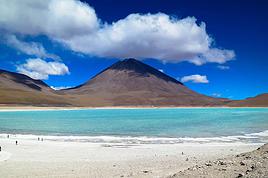
Next up, La Paz. The city’s pretty wild, built in every direction. I did a few hikes in the area, including the famous Charquini Lagoon (the blue lake) at over 5,000 m—let’s just say I struggled 😅 but it was so beautiful it was totally worth it.
After that, I headed to Sajama. It’s cool, especially for the hot springs, and I stayed in Tomarapi. But honestly, if you’re short on time, you can skip it without too many regrets.
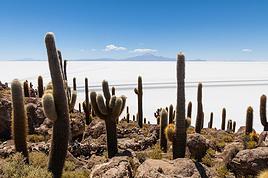
The highlight of the trip: the Salar. I did it starting from Tupiza, and I *highly* recommend going Tupiza → Uyuni. Way less crowded at the start and the landscapes are super varied. For the tour, I used SplitYourGuide to find a group, and it worked out great. Super handy for splitting costs and meeting people.
I wrapped up in Sucre—this city is gorgeous, all white, with such a chill vibe. And the salteñas + ice cream? Next level 😋
Bottom line: Bolivia’s a bit rough around the edges, sometimes exhausting (shoutout to the altitude), but it’s 1000% worth it.
If you’ve got questions or need tips, I’m happy to help!
Martin
I was planning to go to Réunion and stay in half-board accommodation with non-professionals, but it seems that’s not really the custom there—or maybe my budget isn’t big enough.
So, since I’ve already traveled around Ecuador and Peru, I’m now looking at Argentina, especially for its mountains (like the ones in Réunion that tempted me, even though—frustratingly—I could only admire them from below).
I plan to get around by bus and don’t know in advance where I’ll sleep, so I won’t book ahead. If I like a place, I might stay for several days.
I know that in Chile, it’s easy to find half-board accommodation, but what about in Argentina?
I’d like to stay with locals in half-board without it being a professional setup. I’m not sure if this is common practice there. It’s up to me to find someone willing to host me.
What do you think?
What would be a fair price (keeping in mind that 40 to 50 € is the max I can spend on accommodation, breakfast, and dinner)?