c'est clair je crois que beaucoup d'entre nous ont déviés, et j'en fait partie. Cependant j'aime à lire les échanges constructifs sur la réflexion qui ont pu en découler.
Au fait combien de RIADS y a t il a Marrakech ??
bizarre non ?
Sommes nous pas sortis du sujet ?
Il ne me semble pas... la question n'ayant pas été posée dans le but d'un recensement des capacités d'accueil pour un guide touristique mais dans un autre objectif qui n'a été qu'élargi.
Bienvenue sur le forum. Je suis touchée que le premier message d'un nouveau membre s'adresse à moi, même "pas particulièrement".
Il existe peut-être une désaffection des marocains de cet immobilier qui séduit les occidentaux et très coûteux à réhabiliter avec des salaires marocains.
C'est bien compliqué... vivre dans une véritable construction de terre à l'ancienne n'a pas que des avantages.
Dans le sud, les gens sont encore très attachés à leurs traditions, mais, comme vous le dites, construire de façon traditionnelle coûte cher. Les savoir-faire se perdent aussi.
Il faut apprendre à adapter, et ce n'est pas encore dans la culture ici (même si cela commence). Cela me chagrine un peu de voir que des choses se font depuis des années ailleurs, en Afrique, et commencent à peine ici.
Par contre, je suis contente d'avoir vu les premiers écodomes (bien mieux que les maisons en bois d'ailleurs)
Sachez que je lis vos interventions avec intérêt, car bien argumentées..comme celles d'hannah, Elhine ou autres.
bien à vous
A.
Merci beaucoup. Je vous souhaite une excellente soirée, bien à vous aussi
Merci de ce retour, mais "écodomes", c'est quoi ? juste afin de comprendre totalement votre écrit. Je vais paraître idiote.
Dans ce sud qui est votre univers de vie aujourd'hui, la bonne gestion de l'eau vue à l'époque est-elle comme je l'imagine maintenant ?
dernière visite pour moi(ado) en 1984 dans votre contrée.
Il y a aussi les lubies "pseudo écolo", comme l'utilisation du bois dans la construction
Pour connaître un menuisier au Maroc, je sais qu'il travaille avec du bois venu du côté de la Norvège la Suède . C'est en me le disant, que j'avais pris conscience qu'il n'y avait pas de bois au Maroc .
La pollution va à grand pas au Maroc !
C'est bien compliqué... vivre dans une véritable construction de terre à l'ancienne n'a pas que des avantages
Il me semble que pour les installations de salle d'eau, ce n'est pas l'idéal, les maisons de terre .
A ma dernière visite au Maroc j'ai rencontré des moustiques , alors que nous ne connaissions pas cette bestiole au Maroc auparavant ! Comme nous ne la connaissions pas en hiver en France, nous avons des moustiques à longueur d'année en France !
Il me semble que pour les installations de salle d'eau, ce n'est pas l'idéal, les maisons de terre .
Moyen :) mais traditionnellement, on va au hammam (en plus il y a toute la problématique du djinn attiré par l'eau...)
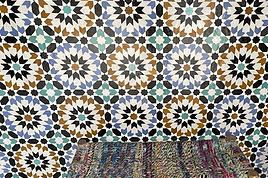
Cela dit, la chaux ou le tadelakt permettaient d'avoir des hammams intérieurs, ou bien un mur bien lissé avec des zelliges. Quand on voit les anciennes kasbahs qui tombent en ruine, on voit des hammams.
A ma dernière visite au Maroc j'ai rencontré des moustiques , alors que nous ne connaissions pas cette bestiole au Maroc auparavant ! Comme nous ne la connaissions pas en hiver en France, nous avons des moustiques à longueur d'année en France !
"Avant" il y avait des moustiques au Maroc, puisqu'il y avait même une zone de malaria endémique autour de Mohamedia, qui a été éradiquée. Depuis que je viens au Maroc (dix ans) j'en ai toujours rencontré dans les zones humides, mais la multiplication des piscine leur permet de se répandre.
merci de votre réponse sur les ecodomes, car vous savez !
mais quelle sorte d'habitation ?
Le principe de base est de faire avec des matériaux locaux des constructions qui nécessitent pas ou presque pas de charpente et qui sont auto climatisées
ça a d'ailleurs la même structure que les tazoutas, ces constructions en pierre qu'on ne trouve qu'autour d'El Jadida et qui sont auto climatisées, aussi bien qu'une cave à fromage auvergnate :D
C'est donc faisable avec du matériel purement local, adapté aux paysages, pas cher, et d'une technologie facile, ce qui permet de les mettre en place un peu partout...
Dans ce sud qui est votre univers de vie aujourd'hui, la bonne gestion de l'eau vue à l'époque est-elle comme je l'imagine maintenant ?
Beaucoup de choses ont changé. D'abord la gestion globale au niveau des barrages a dépossédé les gens d'une partie de leur autonomie, et donc les a dé-responsabilisés en partie. La gestion des droits de l'eau dans les oasis est un sujet de "thèse", c'est très structurant, et le fait que le makhzen (pouvoir central) a des avantages et des inconvénients...
A Tazzarine, l'eau des maisons vient des canalisations du village, on a installé des douches (relativement peu nombreuses, d'ailleurs, dans la maison de mon beau père il y a deux douches pour une trentaine de personnes), et peu à peu les frigos remplacent les anciennes jarres en terre entourées de peau de chèvre humides et conservées à l'ombre, pour rafraîchir l'eau.
Maintenant, les bonnes habitudes se conservent :) le lavage "à grande eau" est en réalité "à petite eau", vaisselle et lavage sont faites en économisant au maximum dans une bassine, et l'eau "coûte cher".
Pour la culture, c'est ou bien l'eau communale, ou les puits. Pour les puits, ça coûte le gas-oil de la pompe, et malheureusement le goutte-à-goutte n'est pas fréquent (l'état en fait la promotion et finance les installations, mais bon... ça marche mieux ailleurs, il faut dire qu'installer un goutte à goutte dans le désert, avec les tempêtes de sable, ce n'est pas simplissime d'entretien).
Ce qui manque, amha, ce sont des citernes pour récupérer l'eau de pluie, quand cela tombe. C'est dommage, car cela envahit les rues, on patauge dans la gadoue, et vu le système hydrographique, une bonne partie va "irriguer" le désert. Je suppose que cela se mettra en place peu à peu, si les pluies deviennent plus fréquentes. Les gens ont déjà des réservoirs, mais ils les remplissent avec les "lâcher de barrage".
J'ai rarement vu gâcher de l'eau dans les villages. L'époque où on allait la tirer du puit ou la chercher un peu loin n'est pas si éloignée...
Merci d'avoir bien voulu répondre à ma demande , la discussion a glissé légèrement mais du coup j'ai appris plein de choses et je trouve cela très intéressant puisque nous n'avons pas trop débordé il s'agissait du nombre de riad et de la pollution ou du gaspillage de l'eau .
Je n'ai pas le temps de répondre à tout le monde en particulier , mais je m'y lancerais peut être ce weekend qui promet d'être pourri et plein d'eau dans mon Sud Ouest 😕 .
Bonsoir
Tant pis pour moi !(j aurai aimé aussi savoir combien de Riads)
La seule réponse que j aurai ????
C'est le nombre de litres d'eau 😏
dépensé au Maroc ! Très intéressant !
Mme Hanna pour le décompte des RIADS à Marrakech ???
ici ils disent ? inchaala !
Pour ma par et en recherchant un peu
j' en ai recensé 253 potables ?? et le reste ???? A voir !!
bonne continuation et que l 'eau fuse !!😉
Extrait de cet article concernant les biens immobiliers en médina appartenant aux étrangers.
« Un autre recensement en avril 2009 compta 1 978 biens immobiliers étrangers dans la médina. 1 015 personnes entretenaient une maison d’hôtes ; 912 maisons étaient utilisées de façon privée et 51 de façon commerciale (communication personnelle Gregor Arnold 2010). Les chiffres diffèrent en raison du comptage différent de plusieurs terrains réunis par un acheteur. »
Tous ne sont pas forcement des riads, les propriétaires marocains n'y sont pas comptabilisés.
il faut également y rajouter les riads qui se trouvent hors des remparts.
Enfin de compte je n'étais pas très loin en affichant les 3000 en tout
720 de déclaré
Autant qui travaillent au noir
Et 1500 appartenant aux Marrakchis
Bon 1 er mais à tous et toutes
Lorsque j'ai lancé ce post je voulais vérifier le chiffre de 3000 , votre réponse laisse penser que je n'en étais pas loin .
Merci pour votre recherche et bon 1er Mai
hannah
Bonjour,
" .. Reste juste à savoir ce que l'on entend précisément par "riad"..."
Exactement.
N'y a-t-il pas une certaine confusion entre "dar" et "riad" ??
La maison traditionnelle au Maroc prend en général deux formes urbaines fondamentales
Le dar, est la maison d'habitation classique avec une simple cour intérieure entourée de piliers autour de laquelle les pièces sont agencées en se faisant face .
Le riad lui, qualifie une forme de maison spéciale avec un jardin et Bassin ou fontaine . La forme fondamentale dispose généralement de pièces sur les largeurs opposées du rectangle tandis que des murs élevés délimitent les longueurs
C'est pour cela que l'on peut confondre les deux
Bonjour,
" .. Reste juste à savoir ce que l'on entend précisément par "riad"..."
Exactement.
N'y a-t-il pas une certaine confusion entre "dar" et "riad" ??
Une totale confusion, depuis la fin des années 80, lorsque la riadomanie s'est installée.
Un ryhad est un jardin. Central à l'intérieur d'une maison semble-t-il concernant le nom attribué aux maisons en disposant et étendu aux dar pourvus d'une cour intérieure agrémentée de plantes et d'un point d'eau(fontaine centrale bien souvent).
Ces demeures réhabilités bien souvent par des étrangers ou des marocains plus aisés, sont effectivement devenues énergivores et pas toujours très écolo(questionnement du départ de la part d'Hannah) suite à l'engouement au début des années 1980.
L’hygiène domestique et corporelle consommait probablement bien moins de produits nocifs autrefois.
Question sur la nappe phréatique!
Je suis beaucoup intervenue sur ce sujet, j'y ai beaucoup appris à lire les commentaires et les recherches personnelles. Passionnant et instructif. Merci pour le sujet à Hannah
Malgré la confusion et le fait que le problème de l’eau devrait être posé d'une autre manière et peut être plus générale je pense que ce sujet à fait émerger des choses .
Merci Emeline de ta participation , je pense poser ceci d'une autre façon dans un autre post .
Hello, my husband and I will be in Egypt this coming November. Cairo seems more challenging to explore without a guide, and we’ll be there for 3 full days. Would anyone have the name of a guide?
Thanks!
Hi, we're looking for a guide to show us around Essaouira.
We're 11 adults and don't want to go through an agency. If you have a contact to help us discover this city, that would be great!
Thanks
I’m heading back to Egypt for the first time in 30 years this July. Last time, I was 20, and we spent two weeks traveling on a shoestring as backpackers.
I’m wondering about a "cruise" on a felucca from Aswan—mainly to avoid being stuck in an air-conditioned tourist bubble (we’re already spending our first week in that setting with our diving club). We’d like to explore the most interesting stretch of the Nile between Aswan and Luxor. Do you have any thoughts on this option, tips, or maybe some contacts?
I was wondering if it’s possible to join a group as a solo traveler with local agencies in Djanet for circuits like Tadrart, Essendilene, Sefar, or Tassili?
If you have any agencies to recommend, I’d love to hear about them.
I didn’t find any info on the forum.
Best,
Here’s a first draft for a 14-night itinerary during the Christmas break with two teens. We’re especially fond of hiking (nothing too extreme, though), which is why we’re drawn to the south.
- Marrakech (2 nights)
- Aït Ben Haddou (1 night)
- Dadès (3 nights, though we’re thinking of doing a day trip to the Todra Gorge on one of those days)
- M'hamid (1 night)
- Erg Chigaga (1 night)
- 4 nights to slot in
- Marrakech (2 nights)
Okay, I realize this involves a lot of driving, and we’re still debating the return route since we’d like to avoid the Tichka Pass in January, but going through Taroudant seems like it would add *a lot* of time. 😕
If you’ve got other suggestions for an itinerary with great hikes, I’m all ears!
Also, the 4 nights total in MRK isn’t really our preference, but since we’re arriving/departing super early from overseas, we’d like to be a bit rested before the long flight.
Another question:
For hikes (aside from the desert one), is it better to have a guide with us, or are the trails well-marked?
Hi everyone,
Our trip to Morocco will be from November 3 to 17, in the High Atlas.
Basically, our route would be:
Marrakech - Aït Benhaddou
Skoura - Tinghir - Merzouga
Merzouga via the N12 to Zagora
Zagora - Draa Valley - Marrakech
It seems to be the low season, so I’d love to travel without having to book accommodations in advance. In other countries, pre-booking has restricted us and kept us from visiting unplanned sites. Freedom is important to us, but I’d also like to avoid arriving somewhere and finding nothing available.
What do you recommend? Book ahead or not?
Your advice is always helpful, and thanks to anyone who can shed some light on this for me.
Roberto
First of all: a big thank you to everyone whose insightful, funny, lively, and exotic posts we’ve enjoyed. It’s a joy to find such lovely writers on this forum, who’ve given me tons of ideas and addresses to prepare our trip.
Our plan: to explore Morocco from November 2nd to December 4th. We’ll have our own vehicle (a 2011 Renault Grand Scenic, in great condition), shipped with us from Sète to Tanger Med. Returning from Nador.
Our profile: 75 and 62 years young, so old but happy to be, in very good health. Seasoned travelers—it’s practically our whole life. Lovers of beautiful landscapes, historic sites, fine craftsmanship, and road trips. This will be my 3rd trip to Morocco, but the first two were 20 and 17 years ago. I’ve never been north of the Essaouira-Marrakech line (though I’ve gone further south). As for my husband, a lifelong expat including in Muslim countries, it’s his first time in Morocco.
He’s the one driving. He’s very experienced, cautious, not necessarily fast, but used to driving in all conditions (and countries, including the most creative on the road). But I don’t want to tire him out, and he no longer drives at night (and we’ll be there in November).
I’ve decided to show him a bit of everything by taking a road trip along beautiful backroads, with daily distances averaging 180-200 km (except on highways, which will be rare), regularly broken up by rest days. I’m counting on a speed of 40-50 km/h, plus stops/visits along the way.
Since I’ve read so many posts, I’ve narrowed it down to some very specific questions.
1) Coming directly from Rabat via the highway, we’d prefer to skip Marrakech*. Still, we’ll need to sleep somewhere nearby. We’ll head toward Skoura the next day. Does anyone have a well-located address for this route, possibly east of Marrakech? Ideally, we’re looking for a small town, easy parking, clean accommodation (minimum) with average comfort (or better if available), a bit heated, and if possible, pretty and/or nice—but above all, a place to sleep well, wash with lukewarm (ideally hot) water, and have a decent dinner.
(*Explanation for the "no-go" in Marrakech: it’s a shame, because there are truly beautiful things in this city, but I think the vibe won’t suit us—it’s an understatement for "it’ll put us off" / "make us flee" / "traumatize us." Not because it’s too crowded and we want to stand out from tourists (we’re part of them), but because of forced henna on your hand, or spending 10 minutes every quarter-hour saying "no thank you" to a "guide" who’s as much a guide as I am a trapeze artist. Knowing us, it’ll wear us down. The country is vast and beautiful, and our time too short to waste our memories just days after arriving. And I don’t want to ruin things for my peaceful husband, or he’ll demand we turn back—and Sète in November isn’t exactly thrilling either.)
2) Which route to Skoura (in 2 days)? I see two options: either via the Tichka Pass, with a night in Telouet before reaching Skoura, or via the R307/N23 from Demnate, with a night near Megdaz before descending to Skoura. So: Tichka Pass or R307/N23? I have a slight (big) preference for the second option, even though I know the other route is very beautiful too. Of course, before deciding, we’ll check the weather and the current state of the R307/N23—does anyone know where to get info on the road conditions? But even assuming the road is "passable," is it a bit too tough in itself? In short, is it reasonable? If a kind soul could share their experience, a thousand thanks in advance.
That’s all I’ve written for now. I’ll save the other questions for later posts. Thanks again to those who had the patience to read this and to those who can respond. Happy Sunday to all!
I’m just a few days away from my trip to Marrakech—I’m leaving from November 13th to 20th and bringing my parents along! I’d love to plan my stay as best as I can, and I’m sure the forum crew can help. So, here are my questions:
- Where’s the best place to exchange money without getting ripped off? The owner of the riad where we’re staying told us to avoid doing it at the airport because it’s really expensive and to do it in the medina instead, near Jemaa el-Fna square.
- Which traditional hammams do you recommend that are reasonably priced? How much should we budget for one? That’ll help me plan my expenses.
- What are some nice restaurants in the medina?
- I’d also like to know roughly how much to expect for a tea, a meal, a taxi, a djellaba, and babouches. I don’t want to get overcharged and would like to know what to expect.
- What are the must-do activities and places to visit?
Hi, I’d like to head to Morocco next week with my car. I’ve looked online at all the different info about the ferry crossing to Tangier, but I’m finding it really expensive. Is there a way to buy tickets in Spain? Or another way to get the Algeciras–Tangier crossing cheaper? Thanks for any tips or info!
We found a guide who offers the trip from M'hamid to a camp (departure at 3 PM, tea, meal, camel ride, overnight stay, breakfast, and return to M'Hamid by 11 AM the next day via the sacred oasis). He quoted us a price of 380 € for April.
What do you think of this rate?
This might sound like a silly question, but is it common to negotiate the price for this kind of thing (we're booking from France)? It’s still a big part of our travel budget.
Hi there,
We're planning to visit Egypt between January 25 and February 15, 2027. I looked up the Ramadan dates and found some sites saying it starts on February 8, while others say February 18... Where's the mistake?
Thanks,
Christian
Hi there,
We’re a family of 4 with two boys aged 12 and 10 traveling to Egypt in February.
We’re spending 3 days in Cairo to take our time exploring the city and the sites before heading south.
-Is it necessary to have a guide to visit the GEM? Are audio guides available?
-Do you have any contacts for drivers to organize a few transfers (Giza, Saqqara, Airport)?
-Do you know a French-speaking guide who’s friendly, family-friendly, and good at making things exciting, with reasonable prices?
With our two teens, we’re heading to Morocco for two weeks at the end of December and beginning of January. It’ll be our first trip that’s more "off the beaten path," even though we’ve visited several countries before. Given the overwhelming amount of info, I’m feeling a bit swamped with the prep this trip requires, and I’ll admit I’m a little lost when it comes to figuring out what’s realistic to visit in two weeks 😕 So, all your tips, personal experiences, and suggestions are more than welcome!
- Which places should we prioritize during this time of year? (I’ve read that some spots are less accessible in winter?)
- What’s the best way to get around? (rental car, train, private transport, buses, etc.? — just a heads-up, we’ll have a few suitcases!)
- In terms of "safety," are there any areas to avoid?
- Any recommendations for reliable local tour companies (beyond the big names like "Get Your Guide") that offer excursions or private transport to help us explore the country?
- A doable 2-week itinerary that lets us enjoy the country’s diversity without having to change accommodations every two days?
I’m planning a trip to the High Atlas in Morocco and have a few questions for you:
- Why do so many people recommend avoiding international agencies for car rentals? Can anyone explain why?
- Is Booking.com reliable, and has anyone rented a vehicle through their service? There’s a pretty big price difference compared to local Moroccan agencies.
- Is there a detailed road map included in the rental car?
- Is Google Maps enough to get around the High Atlas? This will be my first trip there.
Thanks so much to anyone who can help with this destination I’ve been dreaming about for years.
Have a great evening,
Roberto
hi there, I’m heading to Tunisia 🙂 from April 27 to May 8 with my family. I’ve read through the various discussions about the country, but I’m still a bit unsure🤪: for currency exchange, I saw on the French Ministry of Foreign Affairs website that withdrawing currency with a bank card from ATMs is limited to 200 TND per week. There are four of us traveling by car, so that might be a bit tight! And it’s a hassle to carry a lot of cash, even if I’m not being paranoid! What do you all recommend?
Cheers,
Laurent.
We're planning a 2-week trip in late February/early March for a road trip in the High Atlas with a rental car, and we'd love to avoid booking our accommodations in advance. Is that doable, easily manageable, or risky (are accommodations available, expensive, or not great)? Thanks for your tips!
Annie
Hi,
This autumn, we’re planning to explore the Oriental region and we’re wondering where the best place to land would be. We’ll have three weeks ahead of us and we’ll be renting a car.
Any tips would be much appreciated. Thanks.
Is there an official website or list of certified Egyptologist guides in Egypt? And most importantly, what are the normal prices for a full day or half day? There’s so much scamming and crazy pricing—depending on who you contact, it can range from simple to quadruple!!!!
Thanks
Hello,
In September, my wife and I, along with another couple, will be traveling to Tunisia and staying at the Sheherasade Hotel near Sousse.
We’d love to hear your recommendations or tips on places to visit, as well as advice on taxis or other transportation options.
Thanks in advance!
This autumn’s trip should be in Morocco—barring any geopolitical issues between now and then.
After many trips to the south of Fès, I’m giving the north a try.
My plan is roughly to do a road trip loop from Rabat back to Rabat, passing through Asilah, Tangier, Tétouan, Chefchaouen, Akchour, Fès, Meknès, and Volubilis.
That’s a lot of cities.
Probably a bit too many for our taste—we usually prefer more isolated spots...
So I’m looking for tips on little backroads, secluded beaches, half-day hikes, and offbeat places.
If you’ve also got recommendations for accommodation... (We’re open to splurging over 100 € if it’s a real favorite.)
Feel free to think outside the box—this is an open-ended plan! !😉
Hello,
I’m looking for testimonials from Pieds-Noirs who have recently returned to Algeria.
There can’t be many left after 65 years of the country’s independence.
I’m planning to go back myself soon to reconnect with my roots... before I pass away...
I’ve started making a few pre-bookings for hotels and apartments to rent in Algiers. At first, I received friendly and welcoming responses. Then, when I mentioned I wanted to stay for two or three weeks—maybe even a month—explaining that my trip wouldn’t be strictly touristy but more of a pilgrimage to the places of my childhood, and that it would likely be a very emotional journey, I expected a positive and warm reaction to my approach. Instead, I suddenly stopped getting replies from the three or four people I’d contacted. So now I’m wondering about the reception former Pieds-Noirs can expect...
Anyone here who can share their experience of returning? I specified “recently” because it seems that right now, diplomatic relations between the two governments are extremely tense, not to say hostile... even if Macron claims otherwise...
Hello,
I’m traveling to Algeria from October 27 to November 16, 2026.
I’d love to hear from anyone who’s been through the process about the accommodation attestation required for the visa application:
- Does it need to cover the entire duration of the trip?
- Is this document mandatory for a hotel to rent a room?
- Is it checked during inspections?
- Is a hotel booking (e.g., via Booking.com) sufficient for the visa?
- If so, does it need to be paid in advance?
I plan to visit several cities and do one or more treks with a guide or agency.
If you have any contacts you’d recommend, I’d be grateful!
Also, I’d love to share this trip with a companion who’s already done some traveling.
We’d organize the journey together, of course.
Thanks for your feedback!
Safe travels to all,
Dom, Dijon, 64 years old
I’m leaving for Tunisia in five weeks for a full 15-day trip. I’ll be arriving in Monastir and departing from there as well.
I’d like to do a route that’s a bit different from my first stay, which was more focused on cities and culture (Tunis, Sousse, Kairouan, El Jem).
I’ll be getting around by public transport.
I’d like to head south toward Tozeur, and I saw that you can take a *louage* from Monastir to Sbeitla (2h30). I imagine it’s not too complicated to get to Tozeur from there afterward? The issue is the return trip to Monastir and safety in Sbeitla.
If this route seems too complicated, I might opt for Djerba instead, which looks simpler.
I’m heading to Morocco in September 2026, and part of my trip takes me through Merzouga. I’m looking for a 4x4 driver-guide to explore the area with my partner and me.

 27 avril 2015 à 15:52