Je prévois d'aller approximativement du 10 mai au 10 juin au Vietnam (30 jours, le temps de mon visa), en commençant par le Nord car les pluies n'auront pas encore trop commencé apparemment, ensuite au centre et pour finir au Sud.
De manière générale, je ne suis pas trop intéressé par les grandes villes et les plages, mais plus sur la découverte des paysages montagneux car je suis un fan inconditionnel de randonnée... :-)
J'ai prévu un itinéraire "classique" comme ceci :
- Arrivée à Hanoï
- Nghia Lo - Mu Cang Chai, Ha Giang, Sapa - Bac Ha (comment seront les rizières à cette période de l'année ? J'ai trouvé plusieurs infos qui se contredisent sur Internet...)
- Direction Hanoï à nouveau, pour la Baie d'Halong
- Baie d'Halong terrestre, Ninh Bin, Tam Coc, ascension du Mont Mua
- Hué
- Hoi An
- Dalat
- Mui Né
- Ho-Chi-Minh-Ville
- Région du Delta (est-ce que ça vaut la peine à cette période de l'année ?)
- Retour à HCMV pour le retour.
Aussi, comment seront les sentiers de trek ? Dois-je m'attendre à de la boue et des sentiers impraticables ou est-ce que ce sera acceptable ? Globalement je pense passer plus de temps dans le Nord que dans le Sud.
Y a-t-il une région que je n'ai pas prévue qui est à voir ?
Le riz a été repiqué à votre période, donc rizières vertes à l'horizon
Vous ratez la plus belle région du Vietnam, celle de Ha Giang et plus au nord (Dong Van). Je recommande donc de laisser tomber Dalat et Muine et de faire Hanoi-Nghia Lo-Mu Can Chai-Sapa- Bac Ha (il faut y etre le samedi matin pour le marché de Can Cau et le dimanche matin pour celui de BH)-Ha Giang-Dong Van-Meo Vac-Ha Giang retour Hanoi par bus de nuit direct.
Trekkings faciles à Sapa (voir les programmes de Nomad Trails) et à Bac Ha (organisés par le meilleur pt hotel de BH, le Nang Nga Bac Ha). Beau trekking d'une journée à Dong Van.
Pour la baie d'Along terrestre, rien à voir à Ninh Binh et n'oubliez pas les beaux temples de Hoa Lu
2-3 jours dans le delta du Mékong fait partie du tour classique du Vietnam (Saigon-Ben Tre-Cai Be-Can Tho- marché flottant de Cai Rang-Saigon, le tout facile à faire en bus publics si vs ne pouvez pas louer de moto (si vs pouvez, NE PAS dire au loueur que vs sortez de Saigon, il ne veut plus la louer sauf exception)
Tout d'abord merci pour votre réponse que je n'avais pas vue...😕
Mes plans ont quelque peu changé. Je n'aurai finalement que 15 jours à disposition et compte ainsi rester dans le nord.
Voici donc l'itinéraire que je compte réaliser.
J1 : Arrivée à Hanoï.
J2 : Bus pour Mu Cang Chai. Comment y aller ?
J3 : MCC
J4 : Bus pour Sapa
J5 : Trek Sapa
J6 : Trek Sapa
J7 : Trek Sapa. Bus pour Bac Ha.
J8 : Bac Ha. Bus pour Ha Giang.
J9 : Ha Giang.
J10 : Bus pour Cat Ba.
J11 : Cat Ba
J12 : Cat Ba. Bus pour Hanoï.
J13 : Bus pour Mai Chau.
J14 : Mai Chau.
J15 : Retour sur Hanoï et avion en soirée
Qu'en pensez-vous ? J'ai l'impression de beaucoup devoir me déplacer pour 2 semaines et les transports n'ont pas l'air si simples. J'aurais d'ailleurs besoin de vos lumières en ce qui concerne les transports d'un point à un autre, car il n'y a pas beaucoup d'infos sur Internet. 😕
Eventuellement, pourquoi ne pas laisser tomber Mai Chau pour Dong Van et passer moins de temps dans les transports... Mais je suis un peu perdu...
Bus direct Hanoi-Mu Can Chai (maison d'hotes SUOI KIM dans le village h'mong de Oum Koum de l'autre coté de la rizière, celles avant sont bourrées de groupes)
Demander au patron de vous louer un scooter avec ou sans chauffeur pour voir le lendemainles rizières classée de La Pan Tan
Arrangez-vosu pour eter à Bac Ha les jours de marché (Can Cau le samedi matin et/ou BH le dimanche)
ABSOLUMENT AUCUN intéret à faire le très long trajet Bac Ha-Ha Giang juste pour HG, un jolie ville, mais c'est tout. HG est la porte d'entrée de la fabuleuse région de Dong van, mais il vous faut 3 jours. Restez à Bac Ha, avec excellent trekking par exemple sur le village hmong de T avan Chu, arrangé par le drirecteur de l'hotel Ngan Nga Bac Ha (où on se régale en terrasse)
Bonjour,
Je voulais juste savoir si vous aviez une cie dédiée.
Il existe de bus directs ceux qui vont à Lai Chau... ( cie Hai Van par exemple) mais encore faut il qu'ils acceptent le touriste qui stop à Mu Cang Chai...çà dépendra donc du taux de remplissage, ou accepter de payer le trajet dans sa totalité...à voir sur place.
Si non, stop à Ngia lo ou Yen Bai et re bus...
J2 : Bus pour MCC (ou un jour à Nghia Lo s'il faut changer, je verrai sur place avec l'hôtel). Organisation d'un trek. Avez-vous une agence à conseiller ?
J3 : MCC
J4 : MCC.
J5 : Bus pour Sapa (encore une fois, si vous avez des infos c'est volontiers, peu de choses sur Internet... Ou alors je ne cherche pas au bon endroit ;-)). Trek.
Je laisse 2 jours de marge pour les transports et supprimerai Mai Chau si le temps me manque. Comme vous pouvez le voir, je suis un peu perdu et stressé pour les transports 🤪 J'espère que tout ira bien 🙂
Eventuellement je me demandais si on ne pouvait pas faire des ballades soi-même sans guide à Sapa qui a l'air très touristique ?
Oh et je voulais savoir... Qu'en est-il de la possibilité de louer des scooters pour se promener à Sapa, et, pourquoi pas, aller à Bac Ha avant de revenir sur Sapa et prendre un bus de nuit pour Cat Ba ? Je vois tout le temps que l'on parle de moto, mais 1) je n'ai pas le permis et 2) conduire une moto me fait peur contrairement à un scooter qui a un rythme plus tranquille...
Trek où à Nghia Lo ? C 'est dans une grande plaine. Apparement, pas de changement de bus, il s'arrete à Nghia Lo et ensuite à MCC. Avec tt ce qu'il y a à voir ailleurs, une nuit à NL est une perte de temps. Plutot passer un jour de plus à Bac Ha (voir + bas)
Un jour MCCpour aller à La Pan Tan en scooter
Un jour trek MCC sans guide, très simple. Dans MCC, il y a le grand hotel moche Suoi Moi ; vs prenez la petite route à gauche de l'hotel, direction le village h'mong de Mo Dé (prononcé "zé") (5 km de grimpette) et vs vs balader autour. C'est très chouette (au coin de pt pont suspendu, cesendre le ;long de la rivière, vs suivez la berge et vs allez tomber sur une grande vasque où il fait bon se baigner avec les gamins du village)
Plein de minibus MCC-Thanh Uyen-Sapa
Pour Ta Van Chu, cjois d'yaller après le marché de Can Cau ou de Bac Ha, ou, si aps de marché, un jour pour aller du coin de la grande route à celle de TVC, une dmei-journée peinarde si vs partez à pied de >TVC. C'est superbe. Un tas d'autres chouettes trekkings autour de BH ( Coc Ly, cascade, villages dao, etc. Voyez le sprogrammes du Ngan Nga BH)
Bah, ici, on appelle un scooter une moto. 110 ou 125 cc que l'on conduit sans problème sur des routes impec. Vous voulez un itinéraire super ? Voilà !
Sapa-Lao Cai ; à la sortie de Lao Cai sur la route de Hanoi, tournez à gauche au grand panneau marqué "Muong Khuong "(embranchement à gauche 2 km après la sortie de Lao Cai). Belle route qui arrive dans le petit bourg assoupi de Muong Khuong. Vous traversez Muong Khuong et continuez la route direction Pha Long, l’ancien QG du général Chau Quan Lo, puis le beau viaduc de la rivière Chai, les bourgs de Si Ma Cai, Can Cau et Bac Ha. Cela se fait très facilement dans la journée, en passant au milieu de paysages magnifiques. C’est pour moi une des plus belles routes du Vietnam, avec des panoramas époustouflants.
Il y a bien un bus direct Hanoi -Mu Cang Chai. J'ai acheté le billet à l'agence Lily's travel 18 n'go huyen, la première trouvée à côté de l'hôtel. Je le précise, car l'hôtel ne connaissait pas.
450 000 VND, prise en charge à l'hôtel à 9h, par une voiture qui a emmené un groupe à la gare routière. (le matin, je fais au plus simple .... ) départ du bus bien plus tard. Arrivé à Mu Cang Chai il faisait nuit, +/- 18h. Peu de temps avant, le chauffeur avait confirmé auprès de la GH , j'étais attendue à l'arrivée.
Très belles rizières autour de MCC : La pan Tan bien sûr, mais aussi Cuchema, Xe Cu Nha, De Xu Phin, (les plus belles à mon avis) et juste au dessus de MCC : Kim Ngoi. Je me suis baladée en passagère/moto.
J'ai bien apprécié cette petite ville, grand calme après Hanoi, et découvertes des rizières ... on en prend plein les yeux ! D'autres ont suivi ensuite, mais celles-là étaient les premières !
Pour le bus de MCC à Sapa, il y en a un prévu à 9h, qui est passé à 8h30 ! la GH était au courant (la propriétaire a joué du smartphone à plusieurs reprises ) et j'y étais à l'heure, j'ai même eu le temps d'un jus de canne avant de partir. Arrêt de bus juste en face du petit pont, côté ville .
Pas de réservation, c'est un "local bus". arrivée à 13h à Sapa.
La route par Muong Kuong est vraiment magnifique, je l'ai suivie sur les conseils de Larsay, et je n'ai pas regretté !
Vous étiez en sleeping?
Si non, je crois bien qu'ils vous ont fait payer le prix fort ou du moins le prix du trajet total jusqu'à Lai Chau ou Sapa (un peu moins cher) auquel se rajoute la commission d'agence et le coût du ramassage à l'hôtel...
Prix normal depuis la gare de Hanoï My Dinh à Lai Chau: 250000 Vnd
Le tarif pour Mu Cang Chai serait plutôt de 150000 Vnd depuis My Dinh
Mais, on ne va pas ergoter pour une dizaine d'euro😉, le principal est bien de savoir que c'est possible!
Vous étiez en sleeping?
Si non, je crois bien qu'ils vous ont fait payer le prix fort ou du moins le prix du trajet total jusqu'à Lai Chau ou Sapa (un peu moins cher) auquel se rajoute la commission d'agence et le coût du ramassage à l'hôtel...
Prix normal depuis la gare de Hanoï My Dinh à Lai Chau: 250000 Vnd
Le tarif pour Mu Cang Chai serait plutôt de 150000 Vnd depuis My Dinh
Le principal est de savoir que c'est possible!
Bonne soirée
Hello Fabienne,
Oui, c'était en sleeping .
J'ai essayé de discuter le prix, mais pas possible. Et comme c'était au début de mon voyage au Vietnam, j'ai pris le billet. Je ne trouvais pas sur internet, et je n'avais pas envie de perdre du temps pour aller à la gare voir le prix du billet acheté sur place pour comparer ( j'ai fait une seule autre agence, qui n'a pas su me renseigner); et le prix du ramassage à l'hôtel n'était pas très élevé. J'ai payé plus, je le savais .. mais pas à ce point.
La facilité a son prix, mais somme toute pas très élevé une fois transposé en euros... (oui, je sais, c'est un raisonnement de touriste, qui ne tient pas tout à fait la route 🤪 )
La facilité a son prix, mais somme toute pas très élevé une fois transposé en euros...
(oui, je sais, c'est un raisonnement de touriste, qui ne tient pas tout à fait la route 🤪)
Suis bien d'accord et j'aurai fait la même chose que vous, d'autant qu'en sleeping c'est un peu plus cher.
Et, çà tient la route, rien à redire sur le fait d’accepter le tarif dit touriste, çà fait partie du jeux😏.
@Larsay : lorsque vous parlez de moto, à quelle vitesse roulez-vous ? Est-ce une automatique ou une manuelle ? Pour quelqu'un qui n'a fait que du scooter jusqu'à présent, les routes sont-elles faciles à rouler ? Avec plaisir si j'ai du temps à Hanoï, je n'ai pas encore mon billet ce qui ne saurait tarder :-)
@Alzako68 : merci pour votre information fort utile. Savez-vous s'il y a un bus de nuit afin de "sauver" une journée ? Même question qu'à Larsay : par moto, entendez-vous scooter ou véritable moto ? Aussi, qu'entendez-vous par sleeping bus ? Au départ, j'ai pensé que c'était un bus de nuit mais avec un départ à 9h, cela m'étonnerait 😉
Je crois que pour un futur voyage dans le Nord-Vietnam, je ferai mon permis de moto... 😉 Hâte d'y être en tout cas !
Puisque c'est à moi que vous adressez votre message je vais répondre sur la partie moto.
Si la conduite de moto n'était pas autorisée, le permis international moto est désormais reconnu pour le Vietnam mais cela ne signifie pas que vous seriez automatiquement couvert par votre assurance !
Il est important de lire toutes les clauses de votre contrat et notamment les exclusions. Sur les contrats d'assistance la conduite des cylindrées de plus de 125cm3 n'est en général pas couverte... même si vous avez le permis.
Si vous n'avez pas le permis vous devrez le passer (en aurez vous le temps?) et le faire enregistrer en international.
Sans ces formalités vous ne serez pas dans la légalité au Vietnam.
Vous ne serez pas couvert en assurance, en assistance et serez responsable des dommages..et au Vietnam ce n'est pas anodin.
Dans les montagnes privilégiez les 110/125 à boite semi auto ou manuelle, évitez les scooters à boîte automatique.
Il n'y a pas ou pratiquement pas de 49.9 en montagne.
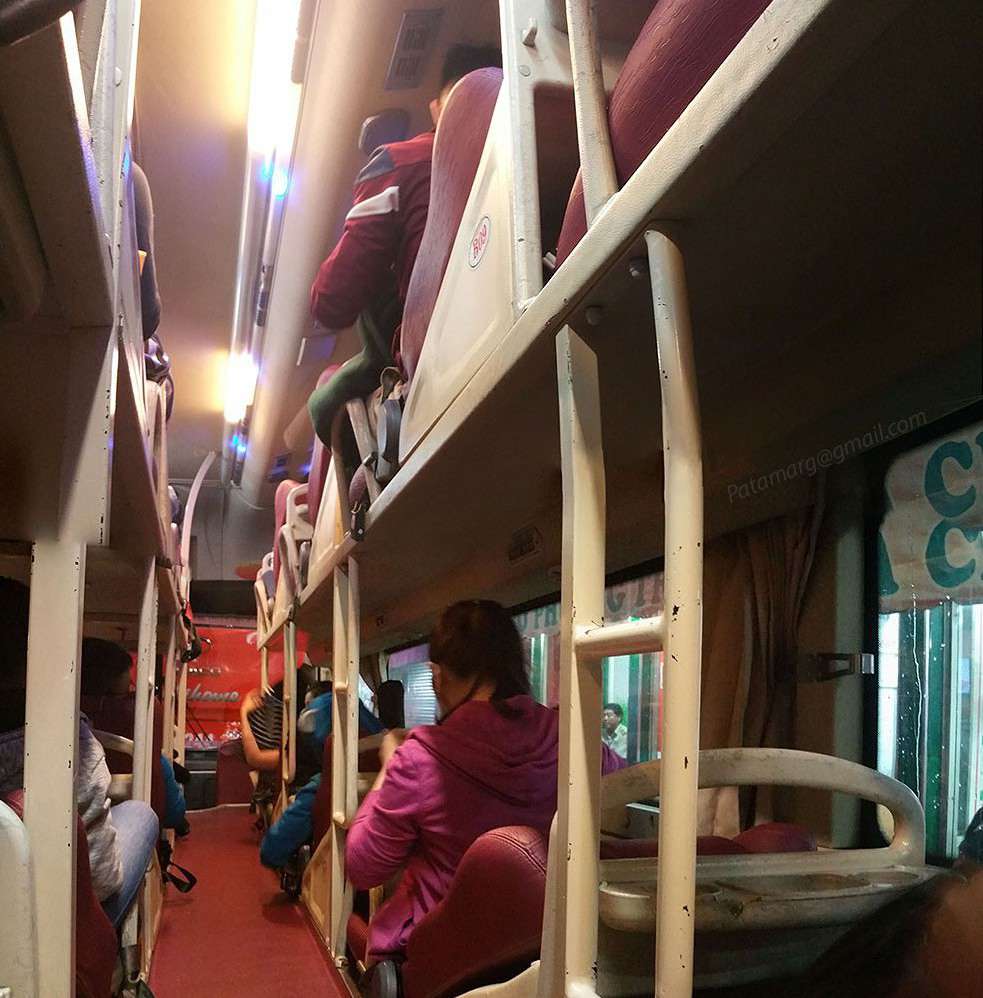
Un sleeping est bien un bus de nuit...qui parfois roule de jour..on est au Vietnam😏.
Agrandir l'image attachée 😉
On se déchausse pour entrer dans le bus et on "range" ses chaussures dans un sac plastique fourni.
Moyennement confortable pour les personnes de plus d'1,85m, en position allongée.
Après, comme le dit Fabienne, ils roulent aussi pendant la journée ; et là je trouve plutôt sympa d'être installé jambes allongées, dossier redressé bien sûr.
Pour les motos/scooters, il faut savoir qu'on a généralement le choix et que les petites motos sont des semi-automatiques (on change les vitesses au pied) à préférer quand il y a un peu de relief et si on est 2 sur l'engin.
2 roues totalement déconseillés dans les villes ; à réserver pour les balades dans la campagne.
Conduire un scooter ne me pose pas de problème. En revanche, une moto me tente moins... Mais la personne avec qui je voyagerai a le permis de moto, donc rien n'est exclu :-) On verra sur le moment.
Oui, pour le bus c'est ce que j'imaginais mais j'ignorais qu'ils roulaient aussi de nuit... Pour le Myanmar où je suis allé l'année dernière, c'était tout le temps des bus "normaux", nuit comprise... ;-)
EXcellent réseau routier, donc rouler en scooter n'est pas un problème. Sur une moto, le réservoir d'essence est devant vous ; sur les scooters, il est sous le siège, donc + facile d'enfourcher ou de descendre de l'engin
Un "sleeping" bus est un bus-couchettes.
NE PAS louer une automatique dans les montagnes, car les freins brulent dans les grandes descentes vu que les automatiques n'ont pas de frein-moteur.
125 cc préférable en montagne car , sur les 110, la 2e est trop courte et le moteur pas assez puissant pour monter en 3e, donc on est obligé de changer les vitesses sans arret dans la montée des longs cols
désolée pour le retard de la réponse .. pour la peine vous avez 3 images !
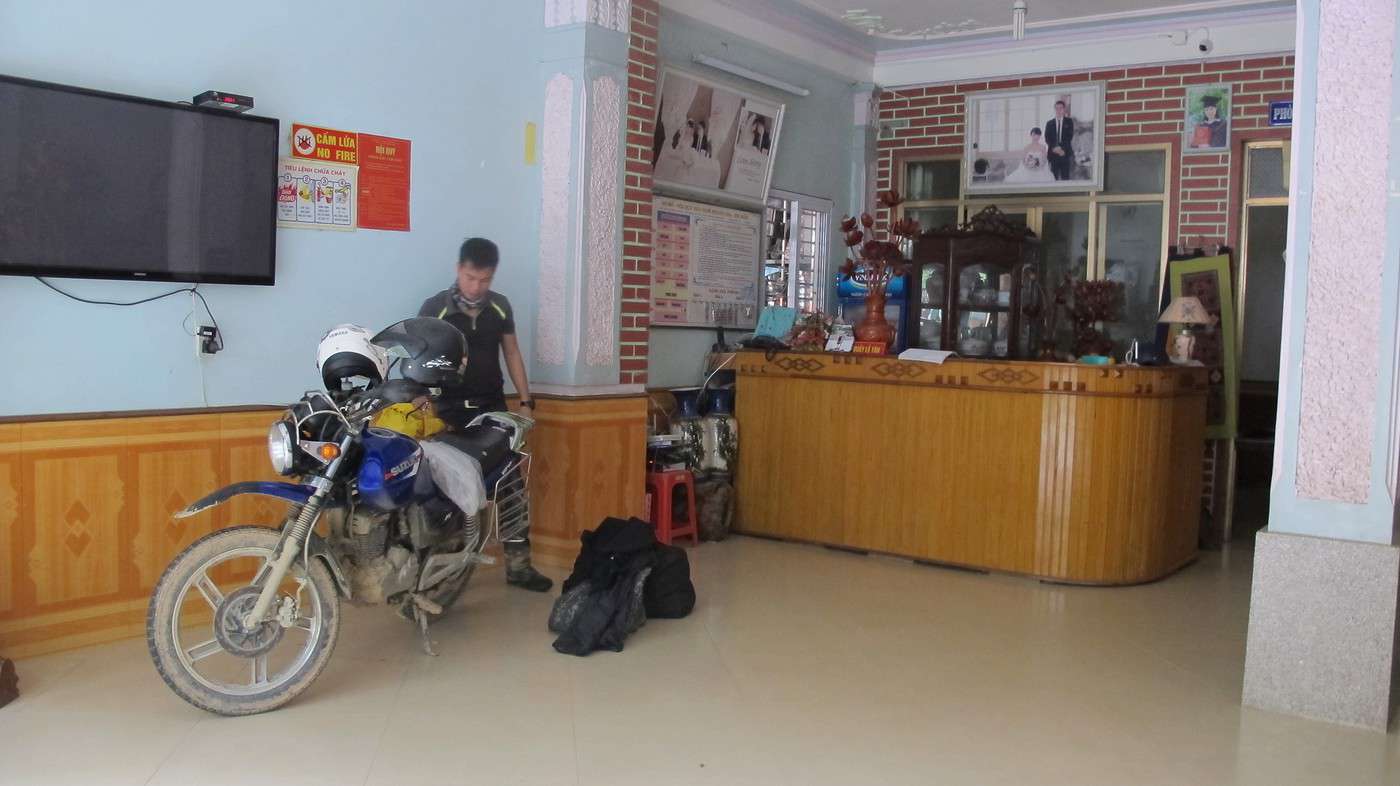
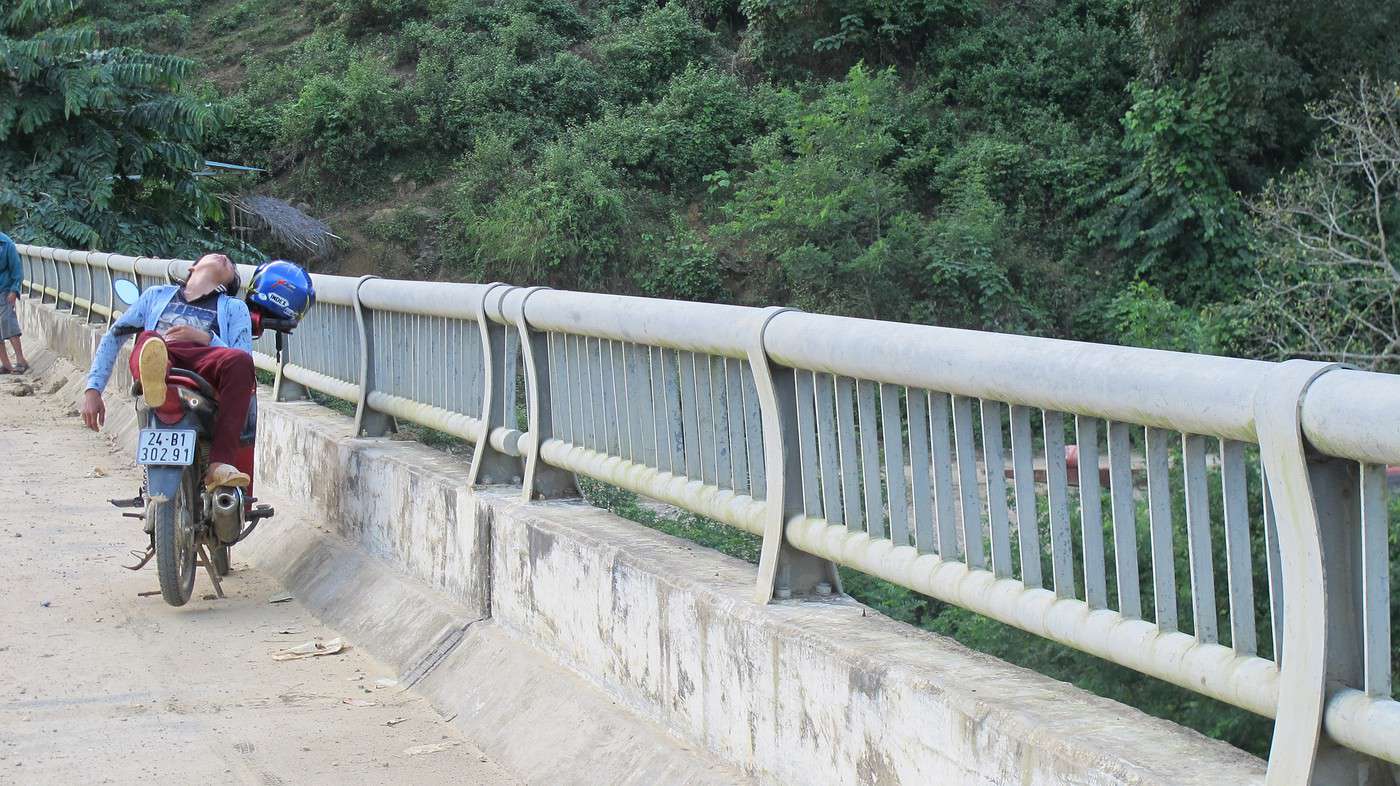
photo 1 : moto pour le trajet le long de la frontière Nord. Et oui, à plusieurs reprises, la moto a été rentrée dans le hall d'hôtel, lorsqu'il n'y avait pas de garage. C'est peut-être réservé aux guides ?
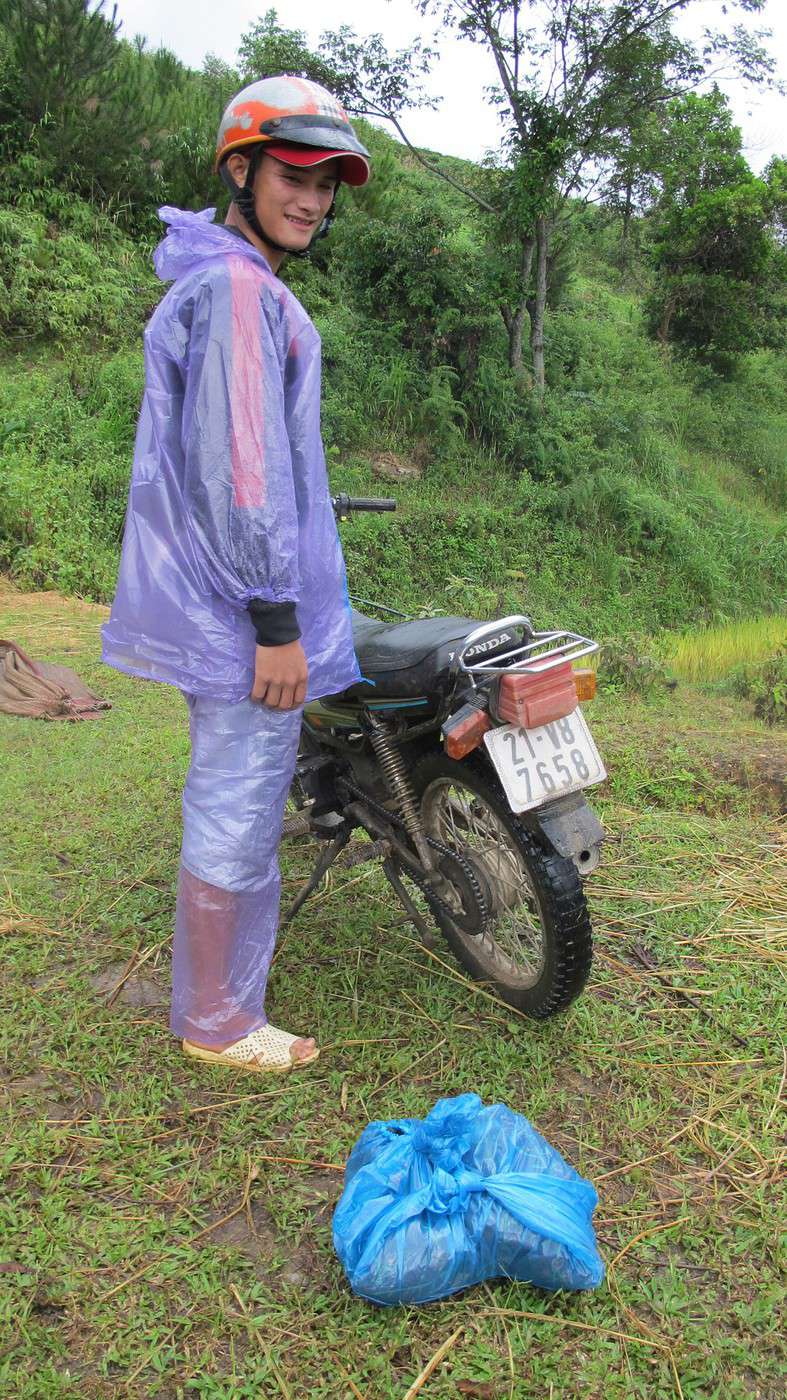
photo 2 : à Mu Cang Chai. C'était en octobre, j'ai eu plusieurs épisodes de pluie, la route était très glissante et boueuse. Pneus très crantés nécessaires. La tenue plastique, en vente partout pour 3 fois rien, sert bien ... en dépannage.
photo 3 : pour vous inspirer, en cas de grosse fatigue. Exercice demandé pour passer le permis moto au Vietnam ... 😏
Pas de souvenir qu'il y ait une possibilité de bus de nuit, pour MCC.
Selon la compagnie, les sleeping bus sont utilisés jour et nuit. Et comme dit précédemment ils sont assez agréables, mais adaptés au gabarit asiatique.
C'est normal pour toute moto, de touriste ou de guide, d'être rentrée dans la hall d'un hôtel la nuit.
Pas de bus de nuit pour MCC, c'est trop long et dangereux avce toutes les descentes de cols. En plus, ce sera dommage pour mes passagers, car la portion Nghia LO-MCC est magnifique. Ceci dit, j'insiste bien sur le fait que, si un touriste va à MCC en bus, il faut passer deux nuits à MCC, le 2e jour pour louer à la amsion d'hôtes un scooter avec ou sans conducteur pour retourner sur ses pas et voir les superbe riaières en terrasses classées de La Pan Tan etautres villages autour (déjeuner au resto de l'hôtel Hung Minh à Ngan Hakim, le bourg h'mong d'où part la petite route de LPT
La personne qui m'accompagne possède le permis de moto donc j'irai avec elle, pas de problème de ce point de vue là. Et sinon nous demanderons un guide.
Aussi, question de citadin... Qu'en est-il des sangsues à cette époque de l'année (j'y serai du 13 au 27 mai) ?
Dernière question : demandent-ils le permis international pour louer une moto (dans la loi oui mais dans les faits) ? Mon ami a le permis suisse et demander le permis international a un certain coût, d'où ma question.
En principe, il faut le permis international, maintenant reconnu par le gouvernement vietnamien, mais personne ne le demande, ni les loueurs, ni les flics, d'ailleurs bien incapables de faire la différence entre un permis normal et un international.
Il faut le permis international pour être assisté et pris en charge après un accident et c'est surtout çà qu'il faut retenir en vérifiant bien sur que votre cie d'Assurance vous couvre pour la conduite au Vietnam (pas toutes!!).
Sans çà en cas de pépin c'est la grosse mouise😕.
Après les petits arrangements à la vietnamienne pour louer existent.
Aussi, autre petite chose qui me vient à l'esprit (je ne pose d'habitude pas autant de questions, mais je voyagerai avec mon père qui n'est pas un grand voyageur et il aime bien connaître le planning 😉) : quel itinéraire de trek conseilleriez-vous à Sapa qui ne soit pas touristique et dure 3J2N ou 4J3N ? J'avais éventuellement pensé au Mont Fansipan mais les photos avec la masse de touristes ne me font plus envie...
Serait-il possible de relier Sa Pa à Bac Ha à pied dans les rizières en 3-4 jours (en passant éventuellement par Ta Van Chu comme Larsay me l'a conseillé) ?
Le Fan Si Pan, c'est un gros morceau....vous êtes habitués aux treks avec forts dénivelés?
Je ne connais pas bien les treks de Sapa à Bac Ha, en général ce sont des boucles que toutes les agences sur place en proposent. Ils faudrait en interroger une ou deux pour savoir exactement ce qui est possible.
Le Fan Si Pan, c'est plus de 1500 m de dévivelé très raide et le grimper demande une condition physique impeccable (la foule n'est qu'au sommet, arrivant en téléférique). Ce que je ferais est 2 jours de trekking à Sapa et 2 à Bac Ha (avec nuit dans lka très simple maisond 'hotes de Ta Van Chu), ce dernier trekking étant complètement différent de celui de Sapa : montagnes plus basses, H'mongs Fleurs au lieu de Noirs, très peu de trekkeurs
Bonjour et merci pour vos réponses. Je pense que j'aviserai sur place concernant le trek.
Aussi, je ne pense pas pouvoir être un samedi ou dimanche à Bac Ha. Cette étape vaut-elle tout de même la peine ?
Car si je fais le programme suivant, je n'arrive pas à voir comment y être le week-end même en commençant par Halong... (j'arrive le 13 mai et repars le 27).
1j Hanoï
1j trajet
2j Mu Cang Chai
1j trajet
4j Sapa
1j trajet
1j Bac Ha
1j trajet
2j Halong
1j Hanoï et retour.
Total 15 jours
Ca vs ferait 10 jours dans les montagnes, un peu beaucoup. Bac Ha est surtout valable pour les marchés, bien que le trekking soit iteressant. Je ferais uniquement Sapa et passerais au moins 2 jours à la fin du tour du Nord dans la très belle "baie d'Along terrestre" de Ninh Binh/Tam Coc (train de jour Hanoi-NB 6h ou 9h + ;oto-taxi ou taxi NB-Tam Coc (8 km)
A Mu Can Chai, traverser la grande rizière et dormez à la belle maison d'hotes thaie Kim Suoi, pas à celles avant la rizìere, bourrées de groupes
eRtour Sapa-Hnaoi par l'excellent bus de jour express DIRECT Sapa-Hanoi (5 h de trajet au lieu de 10 h infernales en train de nuit de Lao Cai)
Je vs ai poposé qu'on se rencontre à Hanoi pour que je vs explique un tas de de trucs (entre Jacques !). Ma proposition tient toujours !
La deception risque d'être grande à Sapa.
Revoyez votre itinéraire pour envisager la boucle sur Ha Giang
Faites des recherches sur les moteurs de recherche et vous trouverez des blogs de voyage avec toutes les bonnes informations sur cette partie encore épargnée par le tourisme de masse
iL est vrai que Sapa est bourré de touristes et que la régionde Dong Van est la plus spectaculaire du Vietnam, mais c'est plus difficile d'accès et le trekking est limlité. Si vous préférez, vous pouvez faire
Bus de nuit direct Hanoi-Ha Giang
Jour 1 : HG-Quang Ba-Yen Minh-Dong Van
Jour 2 : Visite du fort de Pu Lo à DV + superbe baldae sur Lung Cu (belvédère et villale Lolo à gauche qd on regarde vers le nord) + chateau du roi de H'mong de Sa Phin
Jour 3 : Trekking 1 jour DV arrangé par l'hotel Hoang Ngoc
Jour 4 : DV-col du Ma Pi Leng (fabuleux !)-Meo Vac (déj et marché)-HG par Lung Phin (route sud). Rteour Hnaoi par bus de nuit 20h30
Le mieux est de louer un scooter à HG, la route HG-DV est impec et tout est très bien indiqué. Si vs ne pouvez pas faire de scooter, minibus HG-DV, puis louer un taxi ou mieux une moto-taxi pour Lung Cu et Saphin, une autre pour le Ma Pi Leng et Meo Vac (pas de minibus entre DV et MV !) et retour minibus DV-HG + bus de nuit
J'ai oublíe que votre père vs suit, donc le tour de Dong Van est plus problématique, à moins que vs ne louiez une voiture avec un chauffeur au départ de Hanoi, ou vs pouvez en louer une à Ha Giang pour Dong Van-Méo Vac-HG)
Ça ne me dérange pas de passer autant de temps dans les montagnes... Je préfère ça aux villes.
Je suis d'accord que Sapa risque d'être touristique, mais apparemment il existe encore des endroits authentiques autour, et je souhaite à tout prix faire 3-4 jours de trek, ce qui ne semble pas possible ailleurs. Et j'ai l'impression que si j'inclus Ha Giang dans mon parcours, je risque de faire beaucoup de trajet pour seulement 2 semaines, même si le lieu semble magnifique.
Ma question était aussi : Bac Ha en vaut-il la peine si nous n'y sommes pas un jour de marché ?
@Larsay : je n'ai pas oublié votre proposition ! J'attends juste de voir avec mon père notre organisation le soir de notre arrivée. Je vous enverrai un mp. Merci :-)
Après réflexion, un itinéraire possible serait le suivant :
1j Hanoï
2j Halong. Bus nuit HG
4j Ha Giang (y a-t-il des motos pour 2 personnes ? Mon père conduira pour les 2). Bus nuit Hanoï
1j trajet pour MCC
2j MCC
1j trajet pour Sapa
2-3j trek. Bus nuit Hanoï
1j Hanoï et retour
Pas bon du tout ! Ha Giang, une grande ville, ne vaut le déplacement que si vous allez ensuite à Dong Van., ce qui vs prendrait 10-12 heures de moto AR HG-DV + grands cols à monter, difficile à deux sur un scooter. D'autre part, HG-MCC ne se fait pas en une journée, mais en 2. BH sans marché est OK si vs y faites du trekking, bien différent de celui de Sapa (montagnes plus basses et arides, différentes minorités, moins cher et pratiquement aucun touriste hors week-ends).
Effectivement, vous pouvez aller 2 jours chez Oliveir à Sapa ; il habite dans un hameau de 3 maisons isolées à 45 mn de marche de Ta Phin, sans aucun touriste autour. Vous pouvez aller ensuite à Ta Van, très touristique mais à voir car les rizières en terrasses y sont magnifiques.
Je pense donc que, pour vous, Hanoi-MCC (avec un jour trekking sur le village h'mong de Mo Dé)-Sapa-BH est le mieux, retour BH-Hanoi en bus de nuit direct.
On peut diner à l'heure que vs voulez le jour de votre arrivée.
J'ai contacté un guide qui me propose le parcours suivant pour 3 jours. Qu'en pensez-vous ? Le prix est-il raisonnable ? Il me semble un peu élevé... Bien évidemment nous viendrons à Sapa par nos propres moyens contrairement à ce qu'il a écrit.
Jour 1: Lao Cai- Sapa- villages de Matra- Lu khau- Taphin
Distance: ~ 15 km/ Duree: 4-5h.
Niveau: moyen
Arrivee a Lao Cai aux aurores. Accueil par notre chauffeur à la sortie de la gare de Lao Cai ( le chauffeur tient une pancarte: BIENVENUE AU GROUPE DE: Jacques- 02 perrsonnes- AMIS DE ****). Transfert à Sapa. La randonnée commence aux alentours de 9h., de quoi vous laisser le temps de prendre une douche et un bon petit- dejeuner. Apres une vingtaine de minutes de marche, vous arriverez sur le lieu du debut de la randonnee. Vous passerez la journee au milieu des rizieres en terasses sur de petit sentiers non frequentes. Au bout de cette balade sportive, vous serez accueillis par notre hotes, une famille Dao Rouge qui vous recevra chez elle afin de partager un repas et la nuit. Possibilite de prendre un bain d’herbes apaisantes Dao après le repas.
Inclus: Transport, petit- dejeuner, dejeuner, diner, bain aux herbes, autorisations, hebergement, guide francophone, 1,5l d’eau/pers
Non inclus: depenses personnelles, assurance accident
Jour 2 Villages de Saseng- Hau Thao- Giang Ta Chai
Distance: ~17km/ Duree 5-6h.
Niveau: moyen
Apres avoir pris conge de vos hotes, vous prendrez un transport avant de rejoindre sentier pedestre. La marche commence par une montee d’1h30- 2h avec un denivele environ 500m. Au bout, vous serez recompenses par une vue incroyable sur toute la vallee de Muong Hoa. Dejeuner pic- nic au milieu des rizieres puis vous attaquerez une descente au milieu de la commune de hau Thao avant de finir a la cascade de Giang Ta Chai. Si le climat le permet, possibilite de s’y baigner. Diner et nuit chez une famille de Giay au bord de la riviere
Inclus: Transfort, petit- dejeuner, dejeuner, diner, autorisations, hebergement, guide, 1,5l d’eau/pers
Non inclus: depenses personnelles, assurance accident
Jour 3: Village de Su Pan- Ban Ho
Distance: 14km/ duree: 4-5h
Niveau: moyen
Votre petit- dejeuner termine, vous partirez a nouveau au milieu des riziere en terrasses, direction le village de Su Pan. Dejeuner pic- nic dans le village puis vous continuerez la marche vers le village de Ban Ho. Vous aurez egalement l’occation de visiter un beau village avec des maisons sur piloti ou vous pourrez boire dernier verre avant de rependre notre voiture qui vous ramenera a Sapa. Possibilite de prendre une douche avant de prendre le transport qui vous emmenera a Lao Cai afin d’y prendre la train pour Ha Noi
Inclus: Transfort, petit- dejeuner, dejeuner, autorisations, guide, 1,5l d’eau/pers
Non inclus: depenses personnelles, assurance accident
Finir nos services!
Le tarif pour ce programme:
Nombre de participant
2 personnes
3- 5 personnes
6-10 personnes
Prix par jour/ personne
60 euros
50 euros
40 euros
Hello, I m planning and organizing a wonderful trip to Vietnam from mid-March to mid-April 2026, traveling independently for a month with my wife to enjoy her…
Hello everyone! I’m heading off solo in February and wanted to share my rough itinerary with you. Does this sound doable?
PS: I’m not really into beaches.
D1 Departure on February 17, 2027
D2 Arrival in Kuala Lumpur – stroll through Chinatown and visit the Petronas Towers
D3: Kuala Lumpur – Chow Kit Market, Batu Caves, Little India, Bukit Bintang downtown area
D4: Early morning bus to Malacca. Explore Malacca in the afternoon and evening
D5: Another 2–3 hours in Malacca in the morning, then bus back to Kuala Lumpur. Merdeka Square area. Stay in Chinatown
D6: Bus trip to Kuala Tahan. Night tour
D7: Morning – canopy walk and Bukit Terisek hike. Afternoon – off to Lata Berkoh
D8 & D9: 2-day jungle trek in Taman Negara National Park
D10: Head to Cameron Highlands
D11: Morning hike through the plantations. Afternoon still to be decided
D12: Morning – excursion to Mossy Forest and Sungei Plantation. Afternoon bus to Ipoh
D13: Morning – Mirror Lake / Sam Poh Temple area. Afternoon – explore downtown Ipoh
D14: Morning train to Penang. Afternoon – wander around Georgetown
D15: Morning – Penang Hill and Keh Loh Temple. Afternoon – Georgetown
D16: Bus to Butterfly Garden and Spice Garden. Late afternoon – Burmese and Thai temples
D17: Morning flight to Singapore. Afternoon – Chinatown and Marina Bay tour
D18: Morning – Gardens by the Bay area. Afternoon – Boat Quay, Clarke Quay, Kampong Glam
D19: Morning – The Ridges area and Botanical Garden. Afternoon – Little India, then back to Chinatown before 11:15 PM return flight
D20: Morning arrival
Hi everyone,
I’ll be in western Malaysia for 20 days in January and February.
I’m coming from southern Thailand to Ipoh for the Thaipusam festivities.
Then it’s off to Pangkor Island.
I’ll finish up in Malacca for the Chinese New Year celebrations before heading to Singapore.
I’ve got a 6-day gap.
I was thinking of going to K.Lipis for the jungle train and heading to Dabong, but the caves might not be open.
Any suggestions around K.L.?
Day treks?
A stopover between K.L. and Malacca?
Thanks
Hi, I’ve read that these two volcanoes are super popular and that there are *tons* of people for sunrise, especially in July. I’m looking for firsthand accounts from anyone who’s done it later, around 9–10 a.m.
Thanks for your help!
Laëtitia
I’m heading to Cambodia at the end of December 2026 – January 2027 for 3-4 weeks. Since I’ve already visited Cambodia twice, my itinerary is a bit different this time—I’d love to explore Botum Sakor Park, Chi Pat, the Tatai region, and the Cardamom Mountains. I’m traveling solo. If you have any tips on transportation, excursions, treks, sights, or accommodations in the area, I’d really appreciate it. Thanks for your feedback!
Has anyone traveled with the Laos travel agency ADV ?
I’m planning a trip to Laos and have received several quotes. Among them, this agency’s seem very reasonable, and so far, the interactions have been positive.
I’ve found a few positive reviews online, but I’d love to hear from travelers who’ve actually booked with them: how’s the organization, guide quality, accommodations, on-the-ground responsiveness, etc.
Thanks for sharing your experiences!
First stop on our discovery of the peninsula: Amphawa. It’s our first night in Thailand (we arrived at Suvarnabhumi at 8:50 AM).
Our initial plan was to explore the area before heading further south. The Mae Klong Railway Market is tempting... but what else is there to do????
We’ll be there on a Wednesday, and from what I’ve read on the forum, some say there’s absolutely nothing to do during the week—no floating market, barely any shops open, no restaurants, etc.
Others, though, say the place is actually more charming without the weekend crowds.
Could you share your thoughts? Missing the floating market is one thing, but if it’s really a ghost town on Wednesdays, I might just drop our bags somewhere else.
Amphawa seemed like a good first stop, just 1.5 hours from the airport, but I’d still like to settle somewhere a bit lively for our first evening.
We’ll be there at the end of October.
Thanks!
Hi,
I wanted to visit the plantations in the morning with GetYourGuide or by just showing up.
How much time should I really plan for?
I’d like to catch either the 3 PM or 5 PM bus back to KL.
Thanks
Hi,
I wanted to get some info about the cable car and the bridge—I see lots of different options...
How much time should we allow for these two activities? If we arrive around 4 PM, will we have enough time to visit without rushing?
Thanks
Hi there,
I didn’t plan to return to Thailand this year, but my health conditions mean it’ll be the best place for me to stay between two trips to India. The tourism setup there is so well-organized that it’s the most "comfortable" country for a short visit. Thailand feels too sanitized for my taste, and there’s too much religion, Buddha, and the King, but it’s still the best option given how my health has been evolving. I’d considered two weeks in ThaTon for hiking, but I got too sick from the burn-offs during my trips to the mountains around Chiang Rai. So I’m not sure where to go this year. Definitely not the sea, touristy spots, or the mountains with burn-offs...
Hi,
On September 1st, we're heading to Kalimantan for six weeks, probably from Pontianak to the Derawan Islands.
I've scoured this site, which is usually my go-to 😉, and others like VoyageForum, but recent info is pretty scarce.
I'd love any tips on places you've visited—our itinerary is still a work in progress.
We're two couples traveling with backpacks, using buses, boats, guesthouses, and homestays.
Thanks in advance!
Hi fellow travelers,
First trip to Vietnam.
We’ll be arriving in Ho Chi Minh City during Tet.
Is it complicated to find accommodation and get around during this period?
Any tips would be welcome.
Thanks for your replies.
Hi! I’d like to split my trip into two parts: 15 days in Phuket and 15 days in Krabi. Do you know if I can rent a car and drop it off in Krabi when I fly back to France?
Thanks for your feedback!
Have a great Sunday!
Martine
Hello,
After 1 night in Khao Sok, I’d like to find a 2 Days 1 Night package on the lake.
After reading a lot, I decided to "break the bank" and treat ourselves to a private tour—mainly to avoid the crowds.
But after contacting several operators, they offer "private tours" that are very expensive (around 700 €), yet in the details, the boats can only leave from the pier at 10 AM like everyone else. (I was hoping to leave much earlier.) The morning program is the same for everyone too (private or not). They drop us off at noon at our floating hotel (I’d chosen Phupha Waree). Free afternoon (swimming or kayaking in front of the hotel). We head back by boat for a 1-hour sunset ride. And the next morning, we leave the hotel at 8 AM to be at the pier by 9:30 AM at the latest—end of the trip.
So basically, we’re paying a lot for a private tour just to do the same thing as everyone else at the same time.
Or maybe I just had bad luck in my search.
I contacted Panida Ladi, who’s very popular on forums. We’d agreed on a private tour that matched my request (departure from the pier at 8 AM, very personalized itinerary). We settled on the itinerary and price, she asked for a Wise transfer for a 30% deposit, confirmed receipt of the deposit. Then 30 minutes later, she messaged me to say she was canceling everything because it was impossible to do the requested tour—and promised a quick refund of my deposit.
So here’s my question: Who’s done a *real* private tour on this lake? Who can recommend a reliable agency? Is it even really possible to do a private tour here?
I’m searching for a real gem for my 3rd stay in Koh Lanta: a lovely, high-quality hotel right by an easily accessible beach in a lively spot.
If you know of anything that fits what I’m looking for and want to share, don’t hesitate!
Hi, is anyone there in Flores right now? According to some websites, everything is closed and the situation is tough. But our guide says it's fine. Who should we believe? We're supposed to leave on September 2nd. Thanks to anyone in Flores at the moment!
Hi dear community,
I'm planning to visit Cambodia this winter, right after Christmas, for my first solo trip and my first trip to Asia. For two weeks (yes, I know it's short, but I really can't do more...). I have two main desires: Siem Reap and the countryside, the villages, the Mekong...
What do you think of this itinerary? Arrival in Siem Reap, departure from Phnom Penh.
SR: 5 days (1 day for arrival, 3 for the temples, 1 for the lake and its villages)
Kratie (stop on the way to Mondolkiri): 3 days (1 day of travel, 2 days there)
Mondolkiri/Sen Monorom: 4 days (1 day of travel, 1 day there, 2 days of treks)
PP: 3 days (1 day of travel, 2 days of sightseeing)
I think I need to cut one day somewhere if I travel from Saturday to Saturday or Sunday to Sunday. In Kratie, maybe? Or in PP? And I'll miss the boat trip that everyone recommends (SR-Battambang), but I don't see where to fit it in. Unless I do a PP-PP loop starting in the east, skip Kratie or just stay one night, then SR, then PP.
In my timing, Mondolkiri seems closer than Ratanakiri, which also tempted me a lot! Will it be too complicated alone? I'm thinking of using local guides or a small local agency for a nature and village getaway.
I've read that Siem Reap is very crowded between Christmas and New Year's. I could also do the circuit in the opposite direction. But I thought it would be easier to get familiar with the country by arriving in a touristy area—I might be wrong...
Thanks for your advice and opinions!
Hi everyone.
I’m planning my trip, and based on all the posts I’ve read, this country is amazing.
Of course, I’ve got a ton of questions for you.
Here’s a possible itinerary: Vientiane - Vang Vieng - Phonsavan - Sam Neua - Nong Khiaw + villages - Phongsali - Luang Namtha and the area - Udomxai - Huay Xai - Luang Prabang and back to Vientiane.
What do you think?
We’re planning to prioritize local transport—is it possible to do this loop?
We’d also love to go kayaking, but I’m not sure if the season’s right or where the best spot is.
For trekking—I read that Phongsali is the most authentic spot to visit villages and see wildlife. Do you know of a reliable agency and a guesthouse with reasonable prices?
Is it worth taking a slow boat for a stretch on the Mekong, and if so, which route?
For accommodations, is it better to book through Booking.com and Agoda or look when we arrive?
Are mosquitoes bad in Laos, and should we take malaria prophylaxis?
What’s the average daily budget (accommodation, food, visits)?
Is renting scooters a good option for exploring towns, and if so, which ones?
From what I’ve read, it’s best to carry cash—euros or dollars? Is it risky to walk around with that much cash?
I’ve still got tons of questions. Thanks to anyone who can help, and I’m open to all tips, info, etc.
Thanks again
Hi there,
I’m planning a family trip (my wife and I, both 47, and our two sons, aged 5 and 12) to Malaysia for the last week of June and the first two weeks of July 2027.
We used to love road trips as a couple, then as a trio, but since our second child arrived, we’ve taken a break with "camping village" style trips.
Now feels like the right time to get back to our old habits, while adjusting the pace for the kids.
We’re craving Asia. We’ve been lucky enough to visit Thailand, Indonesia (Bali and Lombok), and Sri Lanka before.
Friends have raved about Malaysia, so we’re definitely tempted.
For those who know and love Malaysia, what would be a good itinerary starting from Kuala Lumpur, with a maximum of 3-4 stops? We’d like a mix of culture, nature, and relaxation (just to clarify, we’re not big beach fans). All of this without rushing, of course.
Hello,
We’re a family of four with two teens aged 16 and 18. We’re heading to Thailand this summer. We’ll arrive in Bangkok and plan to take a flight to Luang Prabang.
I’ve seen there are some great visits and excursions to do (temples, markets, waterfalls) and maybe even venture a bit north to places like Nong Khiaw, Muang Xay, Muang Ngoy, or Oudom Xay.
But I’ve also heard about the Bokeo region with the Gibbon Experience.
Since we won’t be able to do everything, I’d love to hear about your experiences, impressions, and advice on the two options I’m considering, especially since we’ll be meeting family in Chiang Mai, Thailand, afterward.
Option 1: A loop from Luang Prabang heading slightly north, then a flight from Luang Prabang to Chiang Mai.
Option 2: A few days in Luang Prabang, exploring within a few dozen kilometers around, then heading to Bokeo province for the 2-day/1-night Gibbon Experience. For this option, I saw on Rome2Rio that it’s possible to book a ferry trip on the Mekong from Luang Prabang to Huay Xay—they mention about 8 hours. But is that realistic? What type of boat is it?
Then, to get to Chiang Mai, there aren’t many options—bus or minivan—but how does crossing the border work?
Finally, for those of you who’ve been to Laos in August, what was the weather like?
We’ve already visited Thailand, Vietnam, and Cambodia during the same period over the past four years and weren’t really bothered by bad weather.
I’m starting a discussion about guides in the Mekong Delta because we’ve just finished our trip in this region and had a hard time finding a French-speaking guide. We had Thanh—she speaks French really well and travels all over the delta region, including Ho Chi Minh City. She’s super friendly and flexible. I recommend her wholeheartedly. If it can help someone...
Feel free to contact us for her number.
Hi everyone,
I couldn’t find any recent info on Kuching.
Can anyone recommend a hotel or guesthouse for under 100 RM that’s nice and affordable? No dorms, please.
Also, does it rain a lot in November, and is it still worth visiting Semenggoh or Bako?
We’ll be arriving in Phnom Penh this coming January and we’re thinking of starting our trip with a stop in Kampong Cham, then Kratie.
After Kratie, we’re considering heading toward Siem Reap with a stop in Kampong Thom.
That said, I’m not really sure how long the Kratie–Kampong Thom journey might take or how complicated it is.
Does this stop on the way to Siem Reap seem like a good idea to you?
If we don’t visit the Sambor Prei Kuk site, are there still any walks or sights worth checking out in Kampong Thom?
Silly question—backpack or hard-shell suitcase for the Sepilok, Kinabatangan, Tioman, KL trip?
I’m struggling to fit all my son’s and my stuff into the 70L backpack... and I’m thinking a suitcase would be easier, but I’m not sure if it’ll work for getting around.
After a stay on Koh Phayam this coming November, I’d like to spend 2 or 3 days on Koh Phra Thong before heading further south.
Do you think it’s doable to leave Koh Phayam early enough to catch the 10 AM boat from Khura Buri to Koh Phra Thong? The next one isn’t until 4 PM, which would cost me a whole day.
I’m planning a trip to Indonesia, specifically Sulawesi and Java, in September for 10 days.
I don’t know this part of the world at all—any advice is welcome!
I’ll be traveling solo and would also love tips on meeting other travelers or locals.
Hello everyone,
Not long ago, I used to travel as a couple, but my husband has since passed away, and I’ve decided to set off again. The trip I took to Cambodia in January 2025 did me a world of good.
I’m now considering Thailand, a destination we never included in our plans because even 15 years ago, people said it was too touristy. Still, I’m thinking about the itinerary below, but I don’t feel up to arranging buses, trains, or guides on my own while I’m there. I’m looking for one or more drivers and have been in touch with an agency, but their offers are just copy-paste group tours that I don’t want.
So, if you have any contacts, experiences, or advice, I’d be so grateful if you’d share them with me. Here’s my rough plan:
Arrival in Bangkok
Ayutthaya (2 nights)
Kanchanaburi (2 or 3 nights)
Sangkhlaburi/Sai Yok (3 nights)
Sukhothai (2 nights)
Lampang (I’ve planned 3 nights, but that might be a bit much—it depends on what time I arrive in the city)
Chiang Mai
Chiang Dao
Pai
Chiang Rai
I was thinking about the Mae Hong Son loop—thoughts?
What do you think about staying overnight at the Golden Triangle?
When I look online, of course, I can find agencies that organize tours to national parks, etc.
I’m retired but in great physical shape. I’d rather go hiking than sit in hot springs with crowds of tourists who’ve all arranged meet-ups. I don’t want to spend a day at an elephant camp, and I don’t want to visit Karen villages.
I’d love to hear your advice.
Thank you all,
Hi everyone,
Could you share your thoughts on my 3-week itinerary?
We’re a small group (family + friends) of 12 people, planning to leave around January 21, 2027.
Here’s my itinerary:
3 nights in Bangkok
4 nights in Chiang Mai
3 nights on Koh Samui
3 nights on Koh Phangan
4 nights in Krabi
4 nights in Phuket
I’m also open to any great tips you might have...
Thanks, everyone! Alain.
Hi there,
We’re planning a 3-week family trip next summer with our three kids, who’ll be 8, 8, and 7 years old.
After some research, we’re leaning toward Malaysia to combine nature/forests and paradise beaches. The idea is to introduce our kids to the country’s culture, nature, and wildlife.
We want a great trip but without splurging on luxury options like high-end lodges and resorts. We’re looking for comfort with a touch of authenticity—basically, a good middle ground.
I’ve started putting together an itinerary and would love your expert advice and tips to help us build this amazing trip with our little ones.
Day 1: Departure from France
Day 2: Kuala Lumpur
Stay at a hotel near the airport or KL Sentral.
Just one night.
Day 3: Morning flight to Sandakan (Borneo).
Stay in Sepilok
Day 4: Sepilok:
* Orangutan Center
* Malayan Sun Bear Center
* Rainforest Discovery Centre
Day 5: Depart for Kinabatangan.
Boat safari in the late afternoon.
Day 6: Sunrise safari.
Jungle walk.
Evening safari.
Day 7: Final safari.
Return to Sandakan.
Flight to Kuala Lumpur, then to Kota Bharu (or overnight transit depending on schedules).
Day 8: Transfer to the port.
Boat to the Perhentian Islands.
Days 9 to 13: Perhentian Besar
5 full days.
* Snorkeling
* Hiking
* Turtle watching
* Wild beaches
* Relaxation
Day 14: Return to the mainland.
Bus or private car to Taman Negara.