Comme je n'ai trouvé que des infos sur ce thème qui commençaient à dater, je voulais savoir si quelqu'un pourrait me renseigner sur un itinéraire à suivre qui ne comporterait que peu de hautes altitudes au Pérou, ou qui soit tout du moins conciliable avec mon état. Je viens en effet d'apprendre que je suis enceinte depuis peu, je pars dans moins d'un mois pour 3 semaines, et je n'ai pas souscrit d'assurance annulation bien sûr, ce serait trop simple (même si je doute que ce motif soit pris en compte)! Le problème c'est qu'il faut qu'on revoie tout notre itinéraire, et que j'ai du mal à trouver des circuits qui évitent les sites de plus de 2000m et ne comprennent pas plus de 4h de marche par jour, comme me l'a conseillé mon médecin. Je suis preneuse bien sûr d'expériences d'autres femmes enceinte dans ce pays !
Etant donné les risques et le fait qu'éviter les hautes altitudes nous empêchera sûrement de faire les sites les plus beaux du pays, nous réfléchissons aussi à l'annulation, la revente des billets ou la modification de la destination, si vous avez des infos là-dessus également, je suis fortement intéressée !
Merci à toutes les contributions d'avance
"Etant donné les risques et le fait qu'éviter les hautes altitudes nous empêchera sûrement de faire les sites les plus beaux du pays"
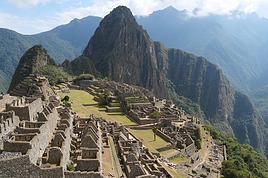
Le Pérou est un grand pays et n'est pas du tout le pays que l'on veut nous faire croire dans ce genre de forum, bien sur le fameux Machu Picchu est en Altitude ainsi que la plupart des sites du circuit que tout le monde fait Arequipa, lac Titicaca, Cuzco bla bla mais comme je l'ai écrit le Pérou n'est surtout pas que ça, moi je vis depuis 4 ans au Pérou et j'ai pas encore vu ni Arequipa ni même le MP et je m'emporte pas plus mal, il y a énormément d'endroits à visiter, tout dépend de ce que tu recherche, les sites archéologiques il y a beaucoup de sites de divers civilisations il ne faut se focaliser sur les incas, la mer, la forêt "basse, centrale, haute". A toi de te décider.
Bonjour Franck,
Et merci beaucoup pour ta réponse, c'est rassurant. C'est vrai que le MP est souvent présenté comme incontournable, et de nombreux itinéraires proposés reposent sur sa visite, comme celui qu'on avait initialement prévu, entre Sud et cordillère blanche. Du coup on se retrouve je l'avoue un peu dépourvu à tout reprogrammer aujourd'hui.
On recherche plutôt un équilibre entre sites archéologiques et forêt, initialement on n'était pas trop parti pour la mer, mais pourquoi pas. Nous conseilles-tu de faire quand même un tour dans le Sud ou tout est-il trop élevé, et vaut-il mieux rester dans le Nord à sillonner d'est en ouest ? Y a-t-il des sites que tu as particulièrement appréciés ? Y a-t-il des choses à absolument réserver avant de partir ou peut-on s'organiser sur place ?
En tout cas merci encore pour ta réponse, ça nous a permis d'envisager ça plus sereinement déjà !
J'avoue ne pas bien connaître le sud du pays, donc je te conseillerai que les sites que je connais bien, tu as bien sur Paracas avec son fameux chandelier sur la colline, c'est aussi une civilisation très intéressante qui à son musée, les îles ballestas avec ses colonies de loup de mer moi je les ai visité comme un touriste banal donc en bateaux avec plein de monde et pas le temps d'apprécier tous les animaux il y avait tellement de bateaux qu'on s'est même cogné contre un autre sans gravité car à lente vitesse, Pisco n'a aucun intérêt "pour moi" tu as bien sur Aréquipa "que je n'ai pas encore visité"pour le reste et sans aller dans les montagnes c'est pas très intéressant, désert et mer jusqu'à Tacna.
Pour le nord j'entend parler au Nord de Lima tu as l'embarras du choix, pour les plages cela rien à voir avec le Méxique ou le Vénézuela mais tu as de beaux endroits comme Mancora "pas trop le village mais ses environs", Zorritos et Punta Sal, je te déconseille d'aller jusqu'a Tumbes c'est moche et sans intérêt et en plus c'est dangereux., en revenant tu as Piura qui a aussi sa civilisation et son musée assez intéressant dailleurs, après tu as Chiclayo ville authentique et pas très connue des touristes, son musée est indispensable à visiter c'est le musée du seigneur de Sipan, tu as aussi sa réserve naturelle de Lambayeque, Trurillo avec sa plage de Huanchaco et sa fameuse plage mais surtout tu as Chan Chan qui est une ville tout en adobe et le temple du soleil et de la lune.
Pour la forêt tu as la région de San Martin pas très touristique facile d'accés en Avion ou en Car c'est une des plus belles régions du Pérou sa capitale est Moyobamba mais Tarapoto est beaucoup plus intéressante beaucoup de sites à visiter je pourrai te donner plus de renseignement sur cette région en mp si tu veux.
Tu as la selva "forêt" basse avec Iquitos et Puccalpa, Selva centrale avec Oxapampa. Ce sont les sites les plus connus.
Ce que je te conseillerai ce serai de te servir un maximum de youtube, tu y verras le Pérou tel qu'il est, surtout ne pas te fier aux vidéos touristiques ou guides, youtube est vrai car filmé par les péruviens eux mêmes en général, tu peux y rechercher tous les sites dont je t'ai parlé et tu pourras les voir en vidéo il y a vraiment pas mieux, tu peux aussi utiliser google earth cela donne aussi une idée.
Le Pérou est immense, tu peux faire ton propre circuit sans passer par une agence, pour les réservations en général tu n'en as pas besoin moi je ne l'ai jamais fait, pour des renseignements plus précis n'hésite pas.
Bonjour,
Tout est dit dans les precedents messages. Le nord du Perou est bien a visiter. Zorritos, vieux souvenirs d'il y a 30 ans. Chiclayo, Puira, Sullana, Trujillo... Quand j'y reviens, j'irais visiter CHAN-CHAN, ruines d'une ville toute en terre.
Saison seche = moins chaud, mais attention la nuit !
Ceci dit, des femmes enceintes, on en trouve a toutes les altitudes, même ici en France. Arequipa n'est qu'a 2300 m. Je me souviens surtout que les medecins leur interdisait les DS ou CX, et l'avion. Mais jamais les secousses. Je doute qu'un bref passage a CUSCO vous soit nefaste( par avion), puis train pour le Macchu (1800m) et retour a Lima par avion.
Compter 300 euros pour l'aller retour en avion.
Peut-être un vol Tarapoto-Cusco, et final, Cusco- Lima.
Je vous souhaite un bon sejour.
Je ne suis pas médecin et je me garderai de dire quoi faire ou ne pas faire seuls les médecins et la mère peuvent le savoir mais si je peux compléter un peu, je pense que le risque du à l'altitude est plus important si on prends un avion car le corps n'a pas le temps de s'habituer, quand je suis allé à Cuzco en avion ma copine à saigné du nez et à mis une journée pour s'habituer, c'est pour cela que la plupart des personnes qui font le circuit touristique habituel font Lima Nazca, Aréquipa, lac Titicaca et Cuzco.
Mais je reste sur ma position le nord est à voir absolument et sans risque question altitude. Je pense que même dans 20 ans j'aurai toujours des endroits à y découvrir.
Franck
PS:
Pour l'avion, Lima Cuzco, serait aux environ de 200 dollars max sur star peru pour tarapoto 140 dollars, avec lan c'est beaucoup moins cher mais seulement pour les péruviens parfois 59 dollars aller retour, oui je sais c'est dégoûtant mais on peut rien y faire pour nous c'est environ 250 dollars.
Merci merci pour les infos, c'est super ! Je pense effectivement qu'on va privilégier le Nord. Il faut que je repotasse tout ça au calme ce we, je reviendrais peut-être vers vous pour des compléments d'infos. En tout cas, après le contre coup, vos messages me donnent à nouveau super envie de partir, merci encore !
Coucou, je m apprête à partir au Pérou pour 3 semaines, enceinte de 7 semaines, les médecins me déconseillent le voyage, comment cela s est il passé pour toi? Merci de ta réponse
Bonjour
Après avoir réorganisé 15 fois notre itinéraire, nous ne sommes finalement pas partis... Outre le problème de l'altitude, les professionnels de la santé nous ont aussi recommandé d'éviter les voyages en bus prolongés, et là pour nous ça n'allait vraiment plus ressembler aux vacances qu'on aurait voulu passer. Après c'était juste le début de ma grossesse, donc la mauvaise période, je serais peut-être partie si ça avait été plus avancé. Et à voir aussi de ton côté ce que tu souhaites faire sur place également. Pour nous ce n'est que partie remise !
Bonjour,
Alors finalement es tu partie? Comment cela s'est passé?
Je suis également enceinte de quelques semaines et je pars au Pérou dans un mois. Personnellement, je suis sage-femme, et je pense que la grossesse n'est pas une maladie et qu'on peut vivre sa vie. Je n'appréhende pas les voyages en bus car nous faisons pas mal d'étapes et les longs trajets se feront en bus couchettes ;)
Par contre, je ne suis pas sûre de faire le buggy dans les dunes à Nazca, et je verrai selon ma forme pour le canyon de Colca...
Je n'avais jamais entendu que l'altitude était déconseillé aux femmes enceintes, au Pérou les femmes font des enfants aussi...ce qui est déconseillé ce sont les efforts intenses en altitude.
Le corps est une machine formidable qui sait s'adapter à pas mal de choses.
Si certaines ont été dans ma situation et sont parties, je veux bien leur témoignage afin de savoir ce qui a été le plus compliqué pour elles à gérer ;)
Hi there,
Do you know of any good travel insurance? Usually, I go with the one from the agency. But this time, I want to travel independently, and I'm a bit lost.
Some people told me that when you pay with a credit card, you get the bank's insurance. But after checking with the bank, that's not true. Or else, you have to add an extra option and pay for it monthly.
So, I'm looking for insurance that covers cancellation, repatriation, lost luggage, etc.
Thanks for your tips!
Hi there,
A friend has osteoarthritis in the knee and a meniscus problem, treated with regular injections.
Do you know of any insurance companies that cover pre-existing conditions in case their knee locks up in Africa?
Thanks a bunch!
A one-month trip to Australia and New Zealand.
We’re bringing our current medications (for blood pressure, cholesterol, diabetes, and antibiotics if needed) along with the corresponding prescription.
Do we need to have it translated into English, or do translations only apply to medications we’d need to refill locally during a long stay?
Hi,
I’m planning a trip to Namibia for 3 weeks in November: should I take malaria prophylaxis, which medication, when to take it, and are there any side effects?
At the end of my trip, I’ll spend 5 days up north near the Angolan border and in Etosha National Park.
Thanks for sharing your travel tips and advice!
Martine
I’m planning a trip to Japan next year and I have asthma...
I wanted to know about the regulations regarding Ventolin (Salbutamol) in Japan—is it considered a drug? Can I bring my inhaler with me, or do I need to buy a similar product in Japan?
I have two American cousins. The older one was born in Paris, and his sister was born in California. The latter is planning a trip to Paris this summer, but she recently fell ill, and American doctors don’t know what’s wrong. I had the idea of letting her take advantage of her trip to get treated here, avoiding the high healthcare costs of the American system in the process. The problem is, I can’t find anything online about this—just testimonials from French people who used to be American, but nothing for a simple tourist.
I’m traveling to Portugal with my family and I have a treatment that requires injections. How can I take a flight with these? They look like injectable pens.
Thanks
We’re planning a trip to the Philippines from April 22 to May 8, 2026. Flight from Geneva with a layover in Turkey and Manila. Our itinerary: Angeles – Busuanga – Palawan…
The Philippines are a dream destination, but is it possible to travel there safely? I’ve heard that checked luggage often gets lost, tap water isn’t safe to drink, and mosquitoes are everywhere.
For water, what’s the best solution to carry in a backpack? Is a filtering water bottle 100% reliable?
For mosquitoes, should we treat our clothes with repellent? Are you vaccinated against hepatitis A, malaria, or dengue? Or is there an oral treatment to take?
Hi there,
Does anyone know if there’s travel insurance for someone who’s had a heart attack?
I can’t find an insurer that covers a pre-existing condition, even if it’s stable.
Thanks so much!
Hi everyone, next month my wife, our 6-year-old daughter, and I are flying to Thailand. It’ll be a great chance to soak up some sun—something we’ve been missing lately here in France! But speaking of sun, I burn easily, and our daughter even more so. I was wondering what SPF to get for sunscreen and whether it’s better to buy it there or before we leave? Thanks for your tips!
Hello,
We’re planning to spend 3 months in Madagascar starting in mid-February.
Areas: Mahajanga, Tulear, Diego Suarez, and Sainte Marie—the order isn’t set yet. We’ll either drive for part of the trip or take flights.
We’ve heard all sorts of things about required vaccines and medications (is anti-malarial mandatory?). What’s the exact situation for travelers?
I’ll come back to you for other topics (like finding a reliable driver, among others).
Thank you.
Best wishes to you all,
Nicole
We're about to go on an organized trip to South Africa, including Kruger Park. We were told that Malarone should preferably be taken in the evening at the same time during a meal. But it's hard to know what time we'll have dinner, especially since I've read that in South Africa, dinner is usually around 6 PM.
I'd love to hear from people who've been on organized trips to this destination and could share their experience. We were thinking of taking Malarone around 7:30 PM, assuming dinner would be closer to 7 PM than 6 PM. Also, if the meal ends up being earlier or later than when we take the pill, would a cookie or a piece of bread be enough to take with Malarone?
I’m planning to set off on a "round-the-world" trip/long journey at the start of next year, lasting between 4.5 and 6 months. For now, the itinerary looks like this: South Korea (2 weeks) -> Japan (1 month) -> New Zealand (1 month) -> Argentina (1 month) -> United States (1 month).
I’m on medication (paroxetine 20 mg/day) and was hoping to bring enough for the entire trip so I wouldn’t have to find a doctor on the spot, deal with a molecule that might be slightly different from what’s available in France, or wonder if that’s even a possibility. Basically, it seemed simpler on paper...
But after looking into the regulations for each country, it’s suddenly way less simple . Many seem to only allow the amount corresponding to the length of your "stay" in the country... Which is a problem if I arrive in Korea with 4.5 months’ worth of medication, for example.
After all that, and even though I’ll obviously contact the relevant authorities in each country (fingers crossed for a response 😛), here’s my question:
Has anyone here had any experience with this? (Even if it’s a different medication or different countries, any input would be helpful!)
I’m trying to plan a trip to Dubai with my mom. I’ve seen that some of our medications require prior authorization (sleeping pills, codeine, anti-anxiety meds, etc.).
I’d love to hear from anyone who’s been in our situation. A friend of mine applied to bring her tramadol, but it was denied—though she needed high doses!
Has anyone here gone through this process? Do we *really* need a prescription in English?
We just found out my wife is pregnant, and we’ve planned a trip to the Barlavento Islands in Cape Verde this November.
We’d like to know if there’s a real risk of Zika contamination on those islands, because from what we’ve found online, the recorded cases are old and come from the Sotavento Islands.
We’re thinking about canceling our trip.
If you’ve recently traveled to Cape Verde or live there, do you have any thoughts on this?
hi, I’m looking for information about the possibility of returning to Thailand with a portable liquid oxygen system and whether it’s possible to recharge it in Thailand, especially in Chiang Mai. thanks
I’m starting a new discussion on this topic since there doesn’t seem to be a recent one.
I have several chronic conditions (including asthma and related ones), and I’m planning to travel for a year across different countries.
Generally, I understand it’s possible to travel with approved medications (which should be my case), but often with a limit of 3 months’ worth of treatment.
Since I’m going for 12 months, that means for three-quarters of my trip, I’d have more than 3 months’ worth of medication.
I plan to bring my prescriptions with the INN (International Nonproprietary Name), as well as the original packaging (even though it’s a nightmare, but from what I understand, it’s necessary). But I’m not sure if that’s enough...
Have any of you been in this situation before? How does it work at customs—do I need to declare everything that exceeds the 3-month limit? Do I need a letter from my doctors?
I'm currently in Bangkok: How can I find a good doctor for a consultation? It's for a friend who'd like a second medical opinion compared to what they got in their country of residence.
Any professionals you'd recommend? How much does it cost?
I’ve already visited quite a few countries across several continents, but I’m pretty new to Asia.
I’m planning a trip to Thailand in October or November, and I wanted to check about health precautions: malaria treatment, vaccinations (hepatitis A or others...).
I’ll mostly be in the northern region, around Chiang Mai, where I’ll spend a lot of time in nature and the mountains. Then I’ll head south to Phuket or Krabi and visit Khao Sok National Park. I’ll finish up in Bangkok, with a likely detour to Kanchanaburi.
From what I understand, for a stay of less than 60 days, I don’t need a visa (I’m a French national)? I just need to fill out the TDAC form 3 to 5 days before arrival?
Hi there,
I was wondering if anyone is heading to Cuba soon and could bring me some over-the-counter Sildenafil (viagra) tablets—available at Varadero Airport, among other places.
Hi there! So, I'm hesitating about taking a long trip. I'd like to go away for 2 to 3 months and travel across several continents. I’d love some advice. I often have unexplained allergies and need to follow a daily treatment for my diabetes (insulin). I think I can get authorization from my doctor to travel for 6 months with the treatment—is that correct? After those 6 months, is it possible (instead of bothering a relative to send the medication) to see a foreign doctor to get another 6-month travel authorization? How does it work at the airport? Do I need just one medication transport authorization, or do I have to request a new one in each country (once the treatment runs out) for both the flight and a DCI? Also, travel insurance doesn’t cover chronic illnesses, so will I have to pay for foreign consultations out of pocket? I’m not sure if I explained myself clearly. Oh, and just to repeat—travel insurance doesn’t cover chronic illnesses, so foreign consultations will be at my own expense? Thanks in advance for your help!
Hi everyone.
After years of traveling to the USA without any medical insurance subscriptions—and luckily never having any major health issues (though I did get a scorpion sting buried in the sand at CBSouth, 😇)—life has caught up with us, and we’re now being forced into "wisdom" and leaving our carefree days behind.
So, I’m looking for the best compromise for a 2-month health insurance plan.
I’ve read the discussions on this topic, but the most recent one is from last year, and I’d love your take on the current situation.
I’m familiar with the usual options like Europ Assistance and AXA, but I’ve just discovered Chapka and Heymondo (the latter seems interesting in terms of both price and coverage).
What do you think of these last two? How do they compare in terms of value for money against the bigger companies?
Hi,
We’ve planned a 3-week trip to Bali this summer with our 7-year-old daughter. The itinerary includes Sanur, Nusa Lembongan, Sidemen, Amed, and Ubud. The more time passes, the more we read about people getting sick—some with mild to severe traveler’s diarrhea, and many ending up in the hospital. We, as parents, have been through it in Egypt with pretty bad cases, but we’d really like to avoid that for our daughter. Even though there’s no zero risk, and we’ll be careful, can any of you reassure me? Not everyone got sick, right? I’d love to hear positive feedback from parents, but not just them 😊. Thanks in advance!
Hi there...
I’m traveling with a friend for a month in November.
We booked our round-trip tickets from Paris to Phnom Penh, and yes, I know—it was a mistake. We should’ve flown out of Laos, but here we are.
But is it doable to backpack through both countries in a relaxed way?
I’ve seen that the transport takes a while...
Thanks so much for your replies.
Hi there,
I’ve started looking into getting dental implants, possibly in Costa Rica or Mexico.
Do you have any clinics to recommend or ones I should avoid?
For the next steps, I need to choose between Cuba Medika or Medigo—these are agencies that help with medical procedures. Do you have any info on either of them?
Hi everyone, a question for those who’ve been lucky enough to visit Raja Ampat—should you consider preventive malaria treatment given its proximity to Papua? And how was the food hygiene situation?
Thanks for your feedback! !
For several years now, increased aggression has been observed in Cape fur seals.
At least 70 unprovoked attacks on humans.
It was recently confirmed that this is due to rabies.
The suspected origin is contamination in Namibia by jackals.
The contagion seems to be spreading.
Preventive vaccination (of the animals) is being considered.
Just a reminder:
Rabies affects all mammals.
Once symptoms appear—sometimes weeks or even months later—death is inevitable.
It’s the bite that transmits the disease.
There are so-called "furious" forms with aggression, but also forms without aggression.
In case of a bite, in addition to standard wound care, tetanus prevention… rabies prevention is essential.
Stay careful out there…
Seeing seals from a boat along the coast isn’t rare in these parts…