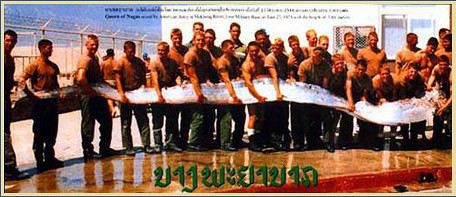
Beaucoup de gens ont entendu parler ou croient en créatures de l'eau connues sous le nom de Naga, et la parole là est évidence indiquant leur présence dans le fleuve de Mekong.
En particulier, la nuit du 15ème jour du 11ème mois dans le calendrier lunaire de Lao à l'extrémité du bouddhiste prêtée (en 2003 il est tombé oct. 10), un phénomène extraordinaire se produit dans la région du fleuve de Mekong s'étendant plus de 20 kilomètres entre la zone de Pak-Ngeum, environ 80 kilomètres de sud du Lao zone capitale de Vientiane, et de Phonephisai dans la province de Nong Khai, Thaïlande.
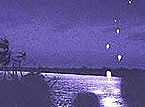
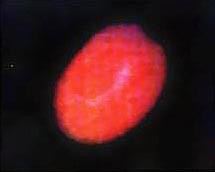
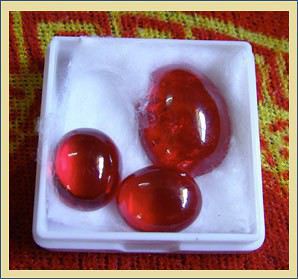
Selon des descriptions retourner sur 100 ans par des peuples des deux côtés du fleuve, à l'extrémité du bouddhiste a prêté quelque chose de étrange produit au milieu du fleuve de Mekong. Ce qu'elles ont vu étaient un aérolithe rouge-rose semblant se lever et flotter dans le ciel à la taille d'environ 10 à 20 mètres, et puis disparaissent.
Chacun a eu des doutes au sujet de cette occurrence extraordinaire, mais ccepted plus tard ce qu'elles ont su comme faits sur l'aérolithe: qu'il n'a pas été mis en scène par des humains, mais a été produit naturellement. Ainsi d'puis dessus, les villageois des deux côtés du fleuve ont appelé ce le phénomène l'aérolithe du Naga. Ils croient que Naga sous la pousse de fleuve de Mekong l'aérolithe dans l'air pour célébrer l'extrémité du bouddhiste a prêté, parce que de Naga meditate également pendant ce temps.
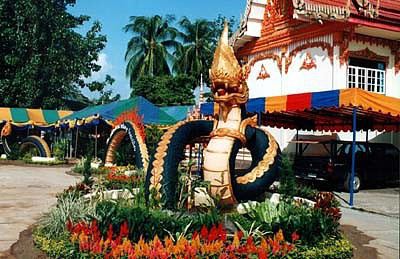
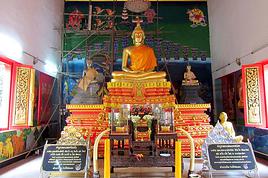
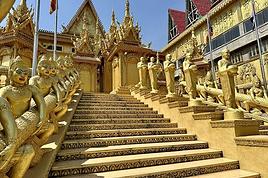
L'animal de Naga semble avoir été associé pendant longtemps à Buddhism, allant par les statues de Naga dans des temples. En outre, le Naga était un domestique de seigneur Buddha dans sa dernière vie et il y a beaucoup d'images et les statues de seigneur Buddha meditating sous la nuance de la tête de Naga, qui signifie le Naga étaient le garde du corps de seigneur Buddha's.
Phrakhou Silitham Phakhoun, un abbé de temple de Jomnang dans la zone de Phonephisai, explique la légende du Naga. "une fois sur le temps tandis que seigneur Buddha s'asseyait, meditating sous un grand arbre dans la jungle, un jeune Naga est venu pour lui demander que s'il pourrait être ordained comme monk, mais seigneur Buddha ne convenait pas parce que Naga était un animal et ne pourrait pas être ordained comme un humain. Mais malgré le fait que il n'était pas ordained, le Naga offert pour être un garde du corps de seigneur Buddha, espérant étudier Buddhism."
Comme l'histoire du Naga, cela de l'aérolithe de Naga est également associé à Buddhism.
Un abbé au temple de Pak-Ngeum décrit l'histoire du phénomène. "il y a un long temps il y avait des couples vivant dans le village de Pak-Ngeum. Ils ont gagné leur vie en pêchant dans le fleuve de Mekong toute la journée et nuit, pendant le bouddhiste prêté, et même des jours de Buddha. Ceci a dérangé le roi de Naga qui meditated sous le fleuve de Mekong. Il a dit ce couple de ne pas pêcher des poissons et de ne pas tuer d'autres animaux des jours de Buddha, définis comme huitième et 15èmes jours du calendrier lunaire de Lao parce que c'était un péché, mais le Naga les a demandés au meditate à la place."
"en réponse et hors derrière le respect pour le Naga, tous les villageois dans Pak-Ngeum et les villages voisins le long du fleuve de Mekong n'a tué aucun animal pour la nourriture des jours de Buddha. En outre, le roi de Naga a demandé ce couple pour tenir des cortèges de bateau sur le fleuve de Mekong pour marquer l'extrémité du bouddhiste prêtée; en même temps le Naga dans le fleuve de Mekong a tiré des aérolithes dans l'air ainsi ils pourraient célébrer ensemble. D'puis dessus, le phénomène de l'aérolithe du Naga a existé dans le fleuve de Mekong à l'extrémité du bouddhiste prêtée."
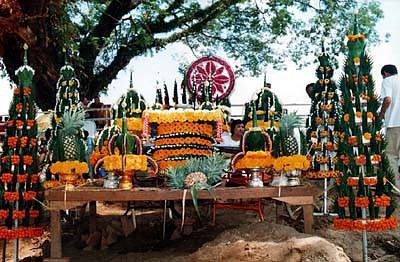
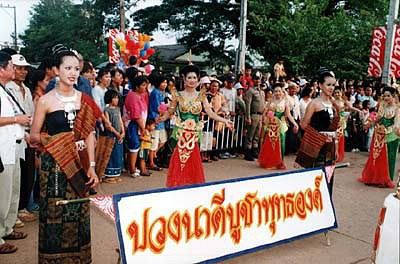
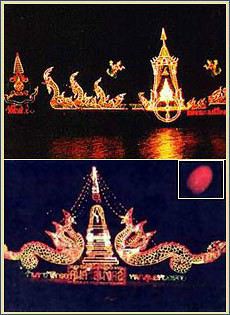
Maintenant tous les ans, Lao et peuples thaïs dans des zones de Pak-Ngeum et de Phonephisai marquent l'extrémité du bouddhiste prêtée. La Communauté et les chefs religieux invitent les jeunes à apporter les bananiers et le bambou faire un fireboat. Le bateau, décoré par des bougies, des fleurs et les torches flamboyantes, est placé dans le fleuve de Mekong et libéré la nuit de l'extrémité du bouddhiste prêtée. La vue est tout à fait belle. Cette nuit, les gens des deux côtés du fleuve s'assemblent pour observer le bateau descendre le fleuve aussi bien que pour apprécier le phénomène de l'aérolithe du Naga.
Cependant, l'aérolithe du Naga dans apparaît non seulement dans le fleuve de Mekong, mais également les étangs et des gisements de riz. Du côté de Lao, les gens disent qu'eux peuvent voir l'aérolithe flotter dans le secteur les d'étangs et des gisements de riz près de leurs villages. Du côté thaï, les augmenter d'aérolithe rapidement dans un étang localement connu sous le nom de la configuration de Nong Pra, résidants indiquent.
Le phénomène de l'aérolithe du Naga peut être étrange aux étrangers, mais il a longtemps été normal pour des locals, parce qu'ils le voient chaque année et passent des informations sur elles entre eux. Mais de nos jours, les fonctionnaires thaïs avaient annoncé cet événement par des mass media comprenant la radio, la télévision et les journaux. Quand les nouvelles de l'aérolithe du Naga écartent, les gens sont intéressés dedans et veulent le voir avec leurs propres yeux. Il est devenu intéressant également pour des Étrangers.
Ainsi, à l'extrémité du bouddhiste prêtée tous les ans, Lao, thaïs, et des Étrangers s'assemblent pour venir voir ce phénomène en soirée. Ceci cause les embouteillages gigantesques qui s'étendent plus de 50 kilomètres sur les routes le long des zones de Pak-Ngeum et de Phonephisai dans le Lao et les côtés thaïs du Mekong.
Maintenant que l'aérolithe du Naga est bien connu, beaucoup de gens ont exprimé leurs opinions sur ce qu'elles pensent que l''vérité 'est derrière elle. Un certain entretien en termes de science, d'autres croient des manières de la culture.
Un scientifique a dit: "l'aérolithe est provoqué par une explosion du gaz déposée sous le fleuve de Mekong, et il se produit à un certain temps d'année." Une autre source a indiqué: "ce n'est pas gaz sous le fleuve de Mekong, parce que le fond du fleuve est sable où le gaz ne peut pas être déposé. L'aérolithe est mis en scène par des humains."
Oncle Phoh, 93, le plus vieux des résidants dans le village de Nong Khiate où l'aérolithe du Naga apparaît beaucoup, dit: "j'avais vu ce phénomène depuis que j'étais un enfant et je l'appelle l'aérolithe du Naga selon ce que mes aînés m'ont indiqué. Il se produit naturellement et personne ne met en scène l'événement."
Oncle Kohmen, un indigène 73-year-old de zone de Phonephisai, dit: "la croyance au sujet de l'aérolithe du Naga tenu par les personnes de Phonephisai et de Pak-Ngeum de l'autre côté ont été héritées pendant longtemps (par les générations) et ce fait partie de leurs vies. La chose importante est qu'une telle croyance ne préoccupe pas n'importe qui."
Dix-sept-année vieux Saovanee Suwanarod, un étudiant d'école secondaire de Chumphol Phonephisai, remarqué: l'"croyance n'a pas besoin toujours d'être prouvée en termes scientifiques."
Mais Souksakhone, un indigène 23-year-old de zone de Pak-Ngeum étudiant à l'université nationale du Laos, observée: "il n'importe pas que j'appelle toujours ce le phénomène l'aérolithe du Naga, parce que je l'ai vu depuis que j'étais un enfant. L'explication scientifique n'a pas été absolument montrée. Selon l'explication des scientifiques sur des programmes thaïs de TV (en 2002), c'est seulement guesswork et il restent les doutes à son sujet."
Quelque causes il, là ne soit aucune remise en cause que l'aérolithe de Naga est une légende soutenue dans le fleuve de Mekong et a longtemps fait partie de la culture des peuples des deux côtés du fleuve..................
est ce quelqu un entre vous a deja entendu parler?
"BANG FAI PHAYA NAK"....
Beaucoup de gens ont entendu parler ou croient en créatures de l'eau connues sous le nom de Naga, et la parole là est évidence indiquant leur présence dans le fleuve de Mekong.
En particulier, la nuit du 15ème jour du 11ème mois dans le calendrier lunaire de Lao à l'extrémité du bouddhiste prêtée (en 2003 il est tombé oct. 10), un phénomène extraordinaire se produit dans la région du fleuve de Mekong s'étendant plus de 20 kilomètres entre la zone de Pak-Ngeum, environ 80 kilomètres de sud du Lao zone capitale de Vientiane, et de Phonephisai dans la province de Nong Khai, Thaïlande.
Selon des descriptions retourner sur 100 ans par des peuples des deux côtés du fleuve, à l'extrémité du bouddhiste a prêté quelque chose de étrange produit au milieu du fleuve de Mekong. Ce qu'elles ont vu étaient un aérolithe rouge-rose semblant se lever et flotter dans le ciel à la taille d'environ 10 à 20 mètres, et puis disparaissent.
Chacun a eu des doutes au sujet de cette occurrence extraordinaire, mais ccepted plus tard ce qu'elles ont su comme faits sur l'aérolithe: qu'il n'a pas été mis en scène par des humains, mais a été produit naturellement. Ainsi d'puis dessus, les villageois des deux côtés du fleuve ont appelé ce le phénomène l'aérolithe du Naga. Ils croient que Naga sous la pousse de fleuve de Mekong l'aérolithe dans l'air pour célébrer l'extrémité du bouddhiste a prêté, parce que de Naga meditate également pendant ce temps.
L'animal de Naga semble avoir été associé pendant longtemps à Buddhism, allant par les statues de Naga dans des temples. En outre, le Naga était un domestique de seigneur Buddha dans sa dernière vie et il y a beaucoup d'images et les statues de seigneur Buddha meditating sous la nuance de la tête de Naga, qui signifie le Naga étaient le garde du corps de seigneur Buddha's.
Phrakhou Silitham Phakhoun, un abbé de temple de Jomnang dans la zone de Phonephisai, explique la légende du Naga. "une fois sur le temps tandis que seigneur Buddha s'asseyait, meditating sous un grand arbre dans la jungle, un jeune Naga est venu pour lui demander que s'il pourrait être ordained comme monk, mais seigneur Buddha ne convenait pas parce que Naga était un animal et ne pourrait pas être ordained comme un humain. Mais malgré le fait que il n'était pas ordained, le Naga offert pour être un garde du corps de seigneur Buddha, espérant étudier Buddhism."
Comme l'histoire du Naga, cela de l'aérolithe de Naga est également associé à Buddhism.
Un abbé au temple de Pak-Ngeum décrit l'histoire du phénomène. "il y a un long temps il y avait des couples vivant dans le village de Pak-Ngeum. Ils ont gagné leur vie en pêchant dans le fleuve de Mekong toute la journée et nuit, pendant le bouddhiste prêté, et même des jours de Buddha. Ceci a dérangé le roi de Naga qui meditated sous le fleuve de Mekong. Il a dit ce couple de ne pas pêcher des poissons et de ne pas tuer d'autres animaux des jours de Buddha, définis comme huitième et 15èmes jours du calendrier lunaire de Lao parce que c'était un péché, mais le Naga les a demandés au meditate à la place."
"en réponse et hors derrière le respect pour le Naga, tous les villageois dans Pak-Ngeum et les villages voisins le long du fleuve de Mekong n'a tué aucun animal pour la nourriture des jours de Buddha. En outre, le roi de Naga a demandé ce couple pour tenir des cortèges de bateau sur le fleuve de Mekong pour marquer l'extrémité du bouddhiste prêtée; en même temps le Naga dans le fleuve de Mekong a tiré des aérolithes dans l'air ainsi ils pourraient célébrer ensemble. D'puis dessus, le phénomène de l'aérolithe du Naga a existé dans le fleuve de Mekong à l'extrémité du bouddhiste prêtée."
Maintenant tous les ans, Lao et peuples thaïs dans des zones de Pak-Ngeum et de Phonephisai marquent l'extrémité du bouddhiste prêtée. La Communauté et les chefs religieux invitent les jeunes à apporter les bananiers et le bambou faire un fireboat. Le bateau, décoré par des bougies, des fleurs et les torches flamboyantes, est placé dans le fleuve de Mekong et libéré la nuit de l'extrémité du bouddhiste prêtée. La vue est tout à fait belle. Cette nuit, les gens des deux côtés du fleuve s'assemblent pour observer le bateau descendre le fleuve aussi bien que pour apprécier le phénomène de l'aérolithe du Naga.
Cependant, l'aérolithe du Naga dans apparaît non seulement dans le fleuve de Mekong, mais également les étangs et des gisements de riz. Du côté de Lao, les gens disent qu'eux peuvent voir l'aérolithe flotter dans le secteur les d'étangs et des gisements de riz près de leurs villages. Du côté thaï, les augmenter d'aérolithe rapidement dans un étang localement connu sous le nom de la configuration de Nong Pra, résidants indiquent.
Le phénomène de l'aérolithe du Naga peut être étrange aux étrangers, mais il a longtemps été normal pour des locals, parce qu'ils le voient chaque année et passent des informations sur elles entre eux. Mais de nos jours, les fonctionnaires thaïs avaient annoncé cet événement par des mass media comprenant la radio, la télévision et les journaux. Quand les nouvelles de l'aérolithe du Naga écartent, les gens sont intéressés dedans et veulent le voir avec leurs propres yeux. Il est devenu intéressant également pour des Étrangers.
Ainsi, à l'extrémité du bouddhiste prêtée tous les ans, Lao, thaïs, et des Étrangers s'assemblent pour venir voir ce phénomène en soirée. Ceci cause les embouteillages gigantesques qui s'étendent plus de 50 kilomètres sur les routes le long des zones de Pak-Ngeum et de Phonephisai dans le Lao et les côtés thaïs du Mekong.
Maintenant que l'aérolithe du Naga est bien connu, beaucoup de gens ont exprimé leurs opinions sur ce qu'elles pensent que l''vérité 'est derrière elle. Un certain entretien en termes de science, d'autres croient des manières de la culture.
Un scientifique a dit: "l'aérolithe est provoqué par une explosion du gaz déposée sous le fleuve de Mekong, et il se produit à un certain temps d'année." Une autre source a indiqué: "ce n'est pas gaz sous le fleuve de Mekong, parce que le fond du fleuve est sable où le gaz ne peut pas être déposé. L'aérolithe est mis en scène par des humains."
Oncle Phoh, 93, le plus vieux des résidants dans le village de Nong Khiate où l'aérolithe du Naga apparaît beaucoup, dit: "j'avais vu ce phénomène depuis que j'étais un enfant et je l'appelle l'aérolithe du Naga selon ce que mes aînés m'ont indiqué. Il se produit naturellement et personne ne met en scène l'événement."
Oncle Kohmen, un indigène 73-year-old de zone de Phonephisai, dit: "la croyance au sujet de l'aérolithe du Naga tenu par les personnes de Phonephisai et de Pak-Ngeum de l'autre côté ont été héritées pendant longtemps (par les générations) et ce fait partie de leurs vies. La chose importante est qu'une telle croyance ne préoccupe pas n'importe qui."
Dix-sept-année vieux Saovanee Suwanarod, un étudiant d'école secondaire de Chumphol Phonephisai, remarqué: l'"croyance n'a pas besoin toujours d'être prouvée en termes scientifiques."
Mais Souksakhone, un indigène 23-year-old de zone de Pak-Ngeum étudiant à l'université nationale du Laos, observée: "il n'importe pas que j'appelle toujours ce le phénomène l'aérolithe du Naga, parce que je l'ai vu depuis que j'étais un enfant. L'explication scientifique n'a pas été absolument montrée. Selon l'explication des scientifiques sur des programmes thaïs de TV (en 2002), c'est seulement guesswork et il restent les doutes à son sujet."
Quelque causes il, là ne soit aucune remise en cause que l'aérolithe de Naga est une légende soutenue dans le fleuve de Mekong et a longtemps fait partie de la culture des peuples des deux côtés du fleuve..................
est ce quelqu un entre vous a deja entendu parler?
"BANG FAI PHAYA NAK"....Original post
🤪
Le mystère de l'aérolithe de Naga
par OUNKEO SOUKSAVANH
Beaucoup de gens ont entendu parler ou croient en créatures de l'eau connues sous le nom de Naga, et la parole là est évidence indiquant leur présence dans le fleuve de Mekong.
En particulier, la nuit du 15ème jour du 11ème mois dans le calendrier lunaire de Lao à l'extrémité du bouddhiste prêtée (en 2003 il est tombé oct. 10), un phénomène extraordinaire se produit dans la région du fleuve de Mekong s'étendant plus de 20 kilomètres entre la zone de Pak-Ngeum, environ 80 kilomètres de sud du Lao zone capitale de Vientiane, et de Phonephisai dans la province de Nong Khai, Thaïlande.
Selon des descriptions retourner sur 100 ans par des peuples des deux côtés du fleuve, à l'extrémité du bouddhiste a prêté quelque chose de étrange produit au milieu du fleuve de Mekong. Ce qu'elles ont vu étaient un aérolithe rouge-rose semblant se lever et flotter dans le ciel à la taille d'environ 10 à 20 mètres, et puis disparaissent.
Chacun a eu des doutes au sujet de cette occurrence extraordinaire, mais ccepted plus tard ce qu'elles ont su comme faits sur l'aérolithe: qu'il n'a pas été mis en scène par des humains, mais a été produit naturellement. Ainsi d'puis dessus, les villageois des deux côtés du fleuve ont appelé ce le phénomène l'aérolithe du Naga. Ils croient que Naga sous la pousse de fleuve de Mekong l'aérolithe dans l'air pour célébrer l'extrémité du bouddhiste a prêté, parce que de Naga meditate également pendant ce temps.
L'animal de Naga semble avoir été associé pendant longtemps à Buddhism, allant par les statues de Naga dans des temples. En outre, le Naga était un domestique de seigneur Buddha dans sa dernière vie et il y a beaucoup d'images et les statues de seigneur Buddha meditating sous la nuance de la tête de Naga, qui signifie le Naga étaient le garde du corps de seigneur Buddha's.
Phrakhou Silitham Phakhoun, un abbé de temple de Jomnang dans la zone de Phonephisai, explique la légende du Naga. "une fois sur le temps tandis que seigneur Buddha s'asseyait, meditating sous un grand arbre dans la jungle, un jeune Naga est venu pour lui demander que s'il pourrait être ordained comme monk, mais seigneur Buddha ne convenait pas parce que Naga était un animal et ne pourrait pas être ordained comme un humain. Mais malgré le fait que il n'était pas ordained, le Naga offert pour être un garde du corps de seigneur Buddha, espérant étudier Buddhism."
Comme l'histoire du Naga, cela de l'aérolithe de Naga est également associé à Buddhism.
Un abbé au temple de Pak-Ngeum décrit l'histoire du phénomène. "il y a un long temps il y avait des couples vivant dans le village de Pak-Ngeum. Ils ont gagné leur vie en pêchant dans le fleuve de Mekong toute la journée et nuit, pendant le bouddhiste prêté, et même des jours de Buddha. Ceci a dérangé le roi de Naga qui meditated sous le fleuve de Mekong. Il a dit ce couple de ne pas pêcher des poissons et de ne pas tuer d'autres animaux des jours de Buddha, définis comme huitième et 15èmes jours du calendrier lunaire de Lao parce que c'était un péché, mais le Naga les a demandés au meditate à la place."
"en réponse et hors derrière le respect pour le Naga, tous les villageois dans Pak-Ngeum et les villages voisins le long du fleuve de Mekong n'a tué aucun animal pour la nourriture des jours de Buddha. En outre, le roi de Naga a demandé ce couple pour tenir des cortèges de bateau sur le fleuve de Mekong pour marquer l'extrémité du bouddhiste prêtée; en même temps le Naga dans le fleuve de Mekong a tiré des aérolithes dans l'air ainsi ils pourraient célébrer ensemble. D'puis dessus, le phénomène de l'aérolithe du Naga a existé dans le fleuve de Mekong à l'extrémité du bouddhiste prêtée."
Maintenant tous les ans, Lao et peuples thaïs dans des zones de Pak-Ngeum et de Phonephisai marquent l'extrémité du bouddhiste prêtée. La Communauté et les chefs religieux invitent les jeunes à apporter les bananiers et le bambou faire un fireboat. Le bateau, décoré par des bougies, des fleurs et les torches flamboyantes, est placé dans le fleuve de Mekong et libéré la nuit de l'extrémité du bouddhiste prêtée. La vue est tout à fait belle. Cette nuit, les gens des deux côtés du fleuve s'assemblent pour observer le bateau descendre le fleuve aussi bien que pour apprécier le phénomène de l'aérolithe du Naga.
Cependant, l'aérolithe du Naga dans apparaît non seulement dans le fleuve de Mekong, mais également les étangs et des gisements de riz. Du côté de Lao, les gens disent qu'eux peuvent voir l'aérolithe flotter dans le secteur les d'étangs et des gisements de riz près de leurs villages. Du côté thaï, les augmenter d'aérolithe rapidement dans un étang localement connu sous le nom de la configuration de Nong Pra, résidants indiquent.
Le phénomène de l'aérolithe du Naga peut être étrange aux étrangers, mais il a longtemps été normal pour des locals, parce qu'ils le voient chaque année et passent des informations sur elles entre eux. Mais de nos jours, les fonctionnaires thaïs avaient annoncé cet événement par des mass media comprenant la radio, la télévision et les journaux. Quand les nouvelles de l'aérolithe du Naga écartent, les gens sont intéressés dedans et veulent le voir avec leurs propres yeux. Il est devenu intéressant également pour des Étrangers.
Ainsi, à l'extrémité du bouddhiste prêtée tous les ans, Lao, thaïs, et des Étrangers s'assemblent pour venir voir ce phénomène en soirée. Ceci cause les embouteillages gigantesques qui s'étendent plus de 50 kilomètres sur les routes le long des zones de Pak-Ngeum et de Phonephisai dans le Lao et les côtés thaïs du Mekong.
Maintenant que l'aérolithe du Naga est bien connu, beaucoup de gens ont exprimé leurs opinions sur ce qu'elles pensent que l''vérité 'est derrière elle. Un certain entretien en termes de science, d'autres croient des manières de la culture.
Un scientifique a dit: "l'aérolithe est provoqué par une explosion du gaz déposée sous le fleuve de Mekong, et il se produit à un certain temps d'année." Une autre source a indiqué: "ce n'est pas gaz sous le fleuve de Mekong, parce que le fond du fleuve est sable où le gaz ne peut pas être déposé. L'aérolithe est mis en scène par des humains."
Oncle Phoh, 93, le plus vieux des résidants dans le village de Nong Khiate où l'aérolithe du Naga apparaît beaucoup, dit: "j'avais vu ce phénomène depuis que j'étais un enfant et je l'appelle l'aérolithe du Naga selon ce que mes aînés m'ont indiqué. Il se produit naturellement et personne ne met en scène l'événement."
Oncle Kohmen, un indigène 73-year-old de zone de Phonephisai, dit: "la croyance au sujet de l'aérolithe du Naga tenu par les personnes de Phonephisai et de Pak-Ngeum de l'autre côté ont été héritées pendant longtemps (par les générations) et ce fait partie de leurs vies. La chose importante est qu'une telle croyance ne préoccupe pas n'importe qui."
Dix-sept-année vieux Saovanee Suwanarod, un étudiant d'école secondaire de Chumphol Phonephisai, remarqué: l'"croyance n'a pas besoin toujours d'être prouvée en termes scientifiques."
Mais Souksakhone, un indigène 23-year-old de zone de Pak-Ngeum étudiant à l'université nationale du Laos, observée: "il n'importe pas que j'appelle toujours ce le phénomène l'aérolithe du Naga, parce que je l'ai vu depuis que j'étais un enfant. L'explication scientifique n'a pas été absolument montrée. Selon l'explication des scientifiques sur des programmes thaïs de TV (en 2002), c'est seulement guesswork et il restent les doutes à son sujet."
Quelque causes il, là ne soit aucune remise en cause que l'aérolithe de Naga est une légende soutenue dans le fleuve de Mekong et a longtemps fait partie de la culture des peuples des deux côtés du fleuve..................
est ce quelqu un entre vous a deja entendu parler?
"BANG FAI PHAYA NAK"....
Beaucoup de gens ont entendu parler ou croient en créatures de l'eau connues sous le nom de Naga, et la parole là est évidence indiquant leur présence dans le fleuve de Mekong.
En particulier, la nuit du 15ème jour du 11ème mois dans le calendrier lunaire de Lao à l'extrémité du bouddhiste prêtée (en 2003 il est tombé oct. 10), un phénomène extraordinaire se produit dans la région du fleuve de Mekong s'étendant plus de 20 kilomètres entre la zone de Pak-Ngeum, environ 80 kilomètres de sud du Lao zone capitale de Vientiane, et de Phonephisai dans la province de Nong Khai, Thaïlande.
Selon des descriptions retourner sur 100 ans par des peuples des deux côtés du fleuve, à l'extrémité du bouddhiste a prêté quelque chose de étrange produit au milieu du fleuve de Mekong. Ce qu'elles ont vu étaient un aérolithe rouge-rose semblant se lever et flotter dans le ciel à la taille d'environ 10 à 20 mètres, et puis disparaissent.
Chacun a eu des doutes au sujet de cette occurrence extraordinaire, mais ccepted plus tard ce qu'elles ont su comme faits sur l'aérolithe: qu'il n'a pas été mis en scène par des humains, mais a été produit naturellement. Ainsi d'puis dessus, les villageois des deux côtés du fleuve ont appelé ce le phénomène l'aérolithe du Naga. Ils croient que Naga sous la pousse de fleuve de Mekong l'aérolithe dans l'air pour célébrer l'extrémité du bouddhiste a prêté, parce que de Naga meditate également pendant ce temps.
L'animal de Naga semble avoir été associé pendant longtemps à Buddhism, allant par les statues de Naga dans des temples. En outre, le Naga était un domestique de seigneur Buddha dans sa dernière vie et il y a beaucoup d'images et les statues de seigneur Buddha meditating sous la nuance de la tête de Naga, qui signifie le Naga étaient le garde du corps de seigneur Buddha's.
Phrakhou Silitham Phakhoun, un abbé de temple de Jomnang dans la zone de Phonephisai, explique la légende du Naga. "une fois sur le temps tandis que seigneur Buddha s'asseyait, meditating sous un grand arbre dans la jungle, un jeune Naga est venu pour lui demander que s'il pourrait être ordained comme monk, mais seigneur Buddha ne convenait pas parce que Naga était un animal et ne pourrait pas être ordained comme un humain. Mais malgré le fait que il n'était pas ordained, le Naga offert pour être un garde du corps de seigneur Buddha, espérant étudier Buddhism."
Comme l'histoire du Naga, cela de l'aérolithe de Naga est également associé à Buddhism.
Un abbé au temple de Pak-Ngeum décrit l'histoire du phénomène. "il y a un long temps il y avait des couples vivant dans le village de Pak-Ngeum. Ils ont gagné leur vie en pêchant dans le fleuve de Mekong toute la journée et nuit, pendant le bouddhiste prêté, et même des jours de Buddha. Ceci a dérangé le roi de Naga qui meditated sous le fleuve de Mekong. Il a dit ce couple de ne pas pêcher des poissons et de ne pas tuer d'autres animaux des jours de Buddha, définis comme huitième et 15èmes jours du calendrier lunaire de Lao parce que c'était un péché, mais le Naga les a demandés au meditate à la place."
"en réponse et hors derrière le respect pour le Naga, tous les villageois dans Pak-Ngeum et les villages voisins le long du fleuve de Mekong n'a tué aucun animal pour la nourriture des jours de Buddha. En outre, le roi de Naga a demandé ce couple pour tenir des cortèges de bateau sur le fleuve de Mekong pour marquer l'extrémité du bouddhiste prêtée; en même temps le Naga dans le fleuve de Mekong a tiré des aérolithes dans l'air ainsi ils pourraient célébrer ensemble. D'puis dessus, le phénomène de l'aérolithe du Naga a existé dans le fleuve de Mekong à l'extrémité du bouddhiste prêtée."
Maintenant tous les ans, Lao et peuples thaïs dans des zones de Pak-Ngeum et de Phonephisai marquent l'extrémité du bouddhiste prêtée. La Communauté et les chefs religieux invitent les jeunes à apporter les bananiers et le bambou faire un fireboat. Le bateau, décoré par des bougies, des fleurs et les torches flamboyantes, est placé dans le fleuve de Mekong et libéré la nuit de l'extrémité du bouddhiste prêtée. La vue est tout à fait belle. Cette nuit, les gens des deux côtés du fleuve s'assemblent pour observer le bateau descendre le fleuve aussi bien que pour apprécier le phénomène de l'aérolithe du Naga.
Cependant, l'aérolithe du Naga dans apparaît non seulement dans le fleuve de Mekong, mais également les étangs et des gisements de riz. Du côté de Lao, les gens disent qu'eux peuvent voir l'aérolithe flotter dans le secteur les d'étangs et des gisements de riz près de leurs villages. Du côté thaï, les augmenter d'aérolithe rapidement dans un étang localement connu sous le nom de la configuration de Nong Pra, résidants indiquent.
Le phénomène de l'aérolithe du Naga peut être étrange aux étrangers, mais il a longtemps été normal pour des locals, parce qu'ils le voient chaque année et passent des informations sur elles entre eux. Mais de nos jours, les fonctionnaires thaïs avaient annoncé cet événement par des mass media comprenant la radio, la télévision et les journaux. Quand les nouvelles de l'aérolithe du Naga écartent, les gens sont intéressés dedans et veulent le voir avec leurs propres yeux. Il est devenu intéressant également pour des Étrangers.
Ainsi, à l'extrémité du bouddhiste prêtée tous les ans, Lao, thaïs, et des Étrangers s'assemblent pour venir voir ce phénomène en soirée. Ceci cause les embouteillages gigantesques qui s'étendent plus de 50 kilomètres sur les routes le long des zones de Pak-Ngeum et de Phonephisai dans le Lao et les côtés thaïs du Mekong.
Maintenant que l'aérolithe du Naga est bien connu, beaucoup de gens ont exprimé leurs opinions sur ce qu'elles pensent que l''vérité 'est derrière elle. Un certain entretien en termes de science, d'autres croient des manières de la culture.
Un scientifique a dit: "l'aérolithe est provoqué par une explosion du gaz déposée sous le fleuve de Mekong, et il se produit à un certain temps d'année." Une autre source a indiqué: "ce n'est pas gaz sous le fleuve de Mekong, parce que le fond du fleuve est sable où le gaz ne peut pas être déposé. L'aérolithe est mis en scène par des humains."
Oncle Phoh, 93, le plus vieux des résidants dans le village de Nong Khiate où l'aérolithe du Naga apparaît beaucoup, dit: "j'avais vu ce phénomène depuis que j'étais un enfant et je l'appelle l'aérolithe du Naga selon ce que mes aînés m'ont indiqué. Il se produit naturellement et personne ne met en scène l'événement."
Oncle Kohmen, un indigène 73-year-old de zone de Phonephisai, dit: "la croyance au sujet de l'aérolithe du Naga tenu par les personnes de Phonephisai et de Pak-Ngeum de l'autre côté ont été héritées pendant longtemps (par les générations) et ce fait partie de leurs vies. La chose importante est qu'une telle croyance ne préoccupe pas n'importe qui."
Dix-sept-année vieux Saovanee Suwanarod, un étudiant d'école secondaire de Chumphol Phonephisai, remarqué: l'"croyance n'a pas besoin toujours d'être prouvée en termes scientifiques."
Mais Souksakhone, un indigène 23-year-old de zone de Pak-Ngeum étudiant à l'université nationale du Laos, observée: "il n'importe pas que j'appelle toujours ce le phénomène l'aérolithe du Naga, parce que je l'ai vu depuis que j'étais un enfant. L'explication scientifique n'a pas été absolument montrée. Selon l'explication des scientifiques sur des programmes thaïs de TV (en 2002), c'est seulement guesswork et il restent les doutes à son sujet."
Quelque causes il, là ne soit aucune remise en cause que l'aérolithe de Naga est une légende soutenue dans le fleuve de Mekong et a longtemps fait partie de la culture des peuples des deux côtés du fleuve..................
est ce quelqu un entre vous a deja entendu parler?
"BANG FAI PHAYA NAK"....