d'ors et déjà merci car vos échanges m'ont permis d'apprendre énormément.
je suis un futur voyageur, je souhaiterai passer 2 mois en asie du sud est mais voilà... ce sera mon premier grand voyage. j'ai faim de découvrir, mais j'ai une petite appréhension à l'idée de ne pas réussir à m'en sortir seul.
vous l'aurez compris, c'est le premier doigt de pied que je mets hors de france, ces pays me fascinent et je souhaiterai les parcourir en partageant avec les habitants.
en terme de préparation, je ne connais que ma date d'arrivée (le 4 janvier 2011 à phnom penh) et ma date de départ (le 4 mars 2011 de ho chi minh ville). c'est peu, mais je souhaitai vivre l'aventure sur place. des questions idiotes me viennent à l'esprit et me préoccupent : comment réussir à comprendre et me faire comprendre lorsqu'on ne parle pas la langue ? 2 mois pour trois pays n'est-ce pas trop court ?
Etant donné le timing et la situation de tes vols, je ferai la capitale, Siem Reap et les temples(attention cher) ensuite, passer au VN, et aller vers Hué et redécendre vers HCMV!!!!!
Il n'y a pas a avoir peur ! L'Asie du Sud Est, c'est pas le Congo ex-belge ! C'est meme beaucoup plus sophistique que nos pays a bien des egards (et avec une population tres souvent plus aimable !!!!). Tout est tres bien organise pour le tourisme, A CONDITION DE LAISSER SA MENTALITE OCCIDENTALE A LA MAISON : les bus publics ne sont pas flambants neufs, les routes ne sont pas la A1, ce n'est pas toujours d'une proprete remarquable, mais entre le depaysement total, la magnificence des paysages, la gentillesse des locaux, les cultures des minoritaires...et la vie a tres bon marche, il n'y a pas a hesiter.
la langue n'est pas un gros probleme; on trouve tj un local parlant anglais (parfois francais). Faut vraiment aller ds un coin perdu pour etre dans le noir !
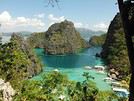
2 mois pour les 3 pays, c'est bon a condition de savoir s'y prendre. Voila une suggestion (nbre de j minimum entre parentheses, sauf Along ou 2j/1nt suffisent a moins de vouloir "monter" sur l'ile de Quanh Lanh dans la baie de Bai Thu Long):
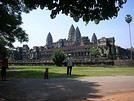
Cambodge : 2j Pnomh Penh + 3-4 jours Angkor (le billet d'entree n'est pas cadeau, mais c'est unique au monde)
Ensuite passer ds le Sud Vietnam (bus ou bateau sur le Mekong)
2j Saigon
3-4j Delta
Monter sur Hoi An (3-5j) et Hue (2j).
Train de nuit Hue-Ninh Binh et 2j a Tam Coc (baie d'Along terrestre)
Ninh Binh-Hanoi en bus de jour (1h30)
2j a Hanoi
Along (2j/1nt)
Sapa-Bac Ha (3-4j)
Sapa-Dien Bien Phu en bus. Passage au Laos
Descente sur Luang Prabang (2j) + LP (2j)
Descente sur Vientiane et Pakse
Re-passage au Vietnam (donc visa touriste entrees multiples) et descente Plei Ku-Buon Ma Thuot-Saigon
Ou alors vs changez de programme avion et faites un Bankgog-Cambodge-Vietnam-Laos jusqu'a Vientiane pour la traversee du pont sur Nong Khai et bus NG-Bangkok (peut-etre preferable car le trajet Pak Se-Saigon n'est peut-etre pas toujours facile; je ne le connais pas donc...)
Pour les htls ds chaque site, le Forum foisonne de bonnes adresses. Je peux vs en donner d'excellentes ds tout le Nord Vietnam
Avec les LP Cambodge, Laos, et Vietnam, pas besoin d'agence sauf cas exceptionnel (Along). Tout s'arrange facilement sur place, car dans ts ces pays, les htls ont ts un bureau d'excursions. Par ex, pour faire les chutes de Kouang Xi (remarquables) pres de Luang Prabang, vs avez le choix entre y aller seul en moto (facile a trouver), louer un tuk tuk, ou demander a l'hotel de vs arranger ca; le train de nuit Hanoi-Sapa est reserve par votre htl a Hanoi, ainsi que l'excursion Along, etc .
Deux mois de voyage, c'est déjà bien ! Pour la langue, vous pourrez facilement vous débrouiller avec l'anglais (surtout auprès des agences et guides locaux) . Certains guides parlent même très bien le français.
Si votre budget le permet, vous pouvez prendre l'avion entre les différents endroits que vous souhaitez visiter (laos airlines, air bangkok....), vous gagnerez bcp de temps.
La population du Laos est extrêmement gentille et accueillante et au Cambodge, pas de problème non plus.
je n'avais aucun doute sur l'amabilité et la gentillesse des locaux. ma mentalité d'occidentale restera en europe car je recherche effectivement le dépaysement. la langue et le temps étaient mes principales préoccupations.
or, si l'anglais/ français sont un peu pratiqués, je me sens un peu plus rassuré car même si il est toujours possible (mais difficile) de se faire comprendre par gestes, pouvoir se faire comprendre lors des premiers jours de voyage est un confort bien utile dont je serai totalement prêt après quelques jours d'adaptation à une vie nomade.
pour la question du temps, merci de m'avoir ouvert les yeux sur mon manque d'organisation. je n'aurai probablement pas le temps de tout voir finalement. Dans l'idée, je souhaitais arriver à hanoi et puis voyager via bus/bateau/pieds en suivant le mekong pour arriver finalement au sud du vietnam (prendre l'avion pour les philippines) et m'écarter du mekong pour voir les principaux "spots".
Le probleme est que le Vietnam et le Laos sont ts deux tt en hauteur, donc si vs partez de Hanoi, descendez le Laos, faites le Cambodge, et terminez a Saigon, vs ratez le Vietnam du Centre; de mm, si vs descendez le Vietnam, vs ratez le Laos. En plus, si vs allez aux Philippines apres, Hanoi est + pres.
Donc voila le truc a faire : vs arrivez a Hanoi, faites le Nord Vietnam, passez au Laos (avion Hanoi-Luang Prabang pour gagner du temps), descendez sur le Cambodge, passez au Vietnam du Sud, remontez le Vietnam et finissez a Hanoi pour aller a Manille.
Partir 2 mois en Asie du Sud Est pour votre premier grand voyage est déjà très bien.
En plus, Janvier et Février sont deux mois supportables en terme de chaleur contrairement en ce moment où il fait trop chaud.
Vous pouvez dès à présent acheter vos billets d'avions par rapport aux dates de départ et retours indiquées sur sites de voyages afin d'y comparer dès maintenant les prix déjà disponibles. Plus vous attendrez, plus vous risquerez de payer plus chère.
Prennez grand plaisir à préparer votre voyage comme moi lorsque je part pour le Cambodge (déjà 3 fois).
En ce qui me concerne, je ne peux vous donner conseils que sur le Cambodge. Je suis déjà allé au Vietnam mais en voyage organisé seulement d'une semaine.
C'est vrai que la langue est un problème important donc un minimum de préparations à l'avance avant de partir est beaucoup mieux.
Concernant "vos questions idiotes", sachez que le plus idiot c'est de ne pas les poser.
Donc, si vous avez des questions à me poser "même idiotes", n'hésitez pas de le faire. Moi aussi, pour mon premier voyage, j'en posais énormément à une connaissance déjà allé au Cambodge se marier làs-bas comme moi par la suite.
Ma femme étant Cambodgienne et donc parlant aujourd'hui le Khmer (Cambodgien) et le Français assez bien puisque en France depuis bientôt 4 ans, je vous propose (gratuitement bien sûr) pour vous aider si vous le désirez qu'elle vous écrit en Khmer la traduction de mots que vous désirez ou même plusieurs phrases afin de pouvoir communiquer plus facilement avec la population Cambodgienne que vous rencontrerez.
Sachez qu'il y a énormément de choses à voir au Cambodge si l'on sait où aller bien sûr.
Aussi, de très jolies photos à prendre avec son numérique.
Sans oublier bien sûr les rencontres avec la population et autres touristes comme vous làs-bas.
Bonne continuation dans votre préparation pour votre grand voyage.
L asie est vraiment un continent fascinant j ai moi meme fais un petit tour dans ces 3 pays et je ne possede pas un anglais parfait biensur que tu peux voyager tranquille tout est fais pour que le touriste lambda puisse circuler sans trop de difficultes (les visas sont les pertes de temps les plus grandes mais autrement avec un guide et quelquesv recherches btu n auras aucun probleme pour voyager seul et tu auras suffisament de temps pour voir les principales lieux de visites tu peux si tu le souhaite me poser une questio ou deux mais plus precises sur ton itineraire
bon voyage
Hello everyone! I’m heading off solo in February and wanted to share my rough itinerary with you. Does this sound doable?
PS: I’m not really into beaches.
D1 Departure on February 17, 2027
D2 Arrival in Kuala Lumpur – stroll through Chinatown and visit the Petronas Towers
D3: Kuala Lumpur – Chow Kit Market, Batu Caves, Little India, Bukit Bintang downtown area
D4: Early morning bus to Malacca. Explore Malacca in the afternoon and evening
D5: Another 2–3 hours in Malacca in the morning, then bus back to Kuala Lumpur. Merdeka Square area. Stay in Chinatown
D6: Bus trip to Kuala Tahan. Night tour
D7: Morning – canopy walk and Bukit Terisek hike. Afternoon – off to Lata Berkoh
D8 & D9: 2-day jungle trek in Taman Negara National Park
D10: Head to Cameron Highlands
D11: Morning hike through the plantations. Afternoon still to be decided
D12: Morning – excursion to Mossy Forest and Sungei Plantation. Afternoon bus to Ipoh
D13: Morning – Mirror Lake / Sam Poh Temple area. Afternoon – explore downtown Ipoh
D14: Morning train to Penang. Afternoon – wander around Georgetown
D15: Morning – Penang Hill and Keh Loh Temple. Afternoon – Georgetown
D16: Bus to Butterfly Garden and Spice Garden. Late afternoon – Burmese and Thai temples
D17: Morning flight to Singapore. Afternoon – Chinatown and Marina Bay tour
D18: Morning – Gardens by the Bay area. Afternoon – Boat Quay, Clarke Quay, Kampong Glam
D19: Morning – The Ridges area and Botanical Garden. Afternoon – Little India, then back to Chinatown before 11:15 PM return flight
D20: Morning arrival
Has anyone traveled with the Laos travel agency ADV ?
I’m planning a trip to Laos and have received several quotes. Among them, this agency’s seem very reasonable, and so far, the interactions have been positive.
I’ve found a few positive reviews online, but I’d love to hear from travelers who’ve actually booked with them: how’s the organization, guide quality, accommodations, on-the-ground responsiveness, etc.
Thanks for sharing your experiences!
First stop on our discovery of the peninsula: Amphawa. It’s our first night in Thailand (we arrived at Suvarnabhumi at 8:50 AM).
Our initial plan was to explore the area before heading further south. The Mae Klong Railway Market is tempting... but what else is there to do????
We’ll be there on a Wednesday, and from what I’ve read on the forum, some say there’s absolutely nothing to do during the week—no floating market, barely any shops open, no restaurants, etc.
Others, though, say the place is actually more charming without the weekend crowds.
Could you share your thoughts? Missing the floating market is one thing, but if it’s really a ghost town on Wednesdays, I might just drop our bags somewhere else.
Amphawa seemed like a good first stop, just 1.5 hours from the airport, but I’d still like to settle somewhere a bit lively for our first evening.
We’ll be there at the end of October.
Thanks!
Hi,
I wanted to visit the plantations in the morning with GetYourGuide or by just showing up.
How much time should I really plan for?
I’d like to catch either the 3 PM or 5 PM bus back to KL.
Thanks
Hi,
I wanted to get some info about the cable car and the bridge—I see lots of different options...
How much time should we allow for these two activities? If we arrive around 4 PM, will we have enough time to visit without rushing?
Thanks
Hi there,
I didn’t plan to return to Thailand this year, but my health conditions mean it’ll be the best place for me to stay between two trips to India. The tourism setup there is so well-organized that it’s the most "comfortable" country for a short visit. Thailand feels too sanitized for my taste, and there’s too much religion, Buddha, and the King, but it’s still the best option given how my health has been evolving. I’d considered two weeks in ThaTon for hiking, but I got too sick from the burn-offs during my trips to the mountains around Chiang Rai. So I’m not sure where to go this year. Definitely not the sea, touristy spots, or the mountains with burn-offs...
Hi,
On September 1st, we're heading to Kalimantan for six weeks, probably from Pontianak to the Derawan Islands.
I've scoured this site, which is usually my go-to 😉, and others like VoyageForum, but recent info is pretty scarce.
I'd love any tips on places you've visited—our itinerary is still a work in progress.
We're two couples traveling with backpacks, using buses, boats, guesthouses, and homestays.
Thanks in advance!
Hi fellow travelers,
First trip to Vietnam.
We’ll be arriving in Ho Chi Minh City during Tet.
Is it complicated to find accommodation and get around during this period?
Any tips would be welcome.
Thanks for your replies.
Hi! I’d like to split my trip into two parts: 15 days in Phuket and 15 days in Krabi. Do you know if I can rent a car and drop it off in Krabi when I fly back to France?
Thanks for your feedback!
Have a great Sunday!
Martine
Hello,
After 1 night in Khao Sok, I’d like to find a 2 Days 1 Night package on the lake.
After reading a lot, I decided to "break the bank" and treat ourselves to a private tour—mainly to avoid the crowds.
But after contacting several operators, they offer "private tours" that are very expensive (around 700 €), yet in the details, the boats can only leave from the pier at 10 AM like everyone else. (I was hoping to leave much earlier.) The morning program is the same for everyone too (private or not). They drop us off at noon at our floating hotel (I’d chosen Phupha Waree). Free afternoon (swimming or kayaking in front of the hotel). We head back by boat for a 1-hour sunset ride. And the next morning, we leave the hotel at 8 AM to be at the pier by 9:30 AM at the latest—end of the trip.
So basically, we’re paying a lot for a private tour just to do the same thing as everyone else at the same time.
Or maybe I just had bad luck in my search.
I contacted Panida Ladi, who’s very popular on forums. We’d agreed on a private tour that matched my request (departure from the pier at 8 AM, very personalized itinerary). We settled on the itinerary and price, she asked for a Wise transfer for a 30% deposit, confirmed receipt of the deposit. Then 30 minutes later, she messaged me to say she was canceling everything because it was impossible to do the requested tour—and promised a quick refund of my deposit.
So here’s my question: Who’s done a *real* private tour on this lake? Who can recommend a reliable agency? Is it even really possible to do a private tour here?
I’m searching for a real gem for my 3rd stay in Koh Lanta: a lovely, high-quality hotel right by an easily accessible beach in a lively spot.
If you know of anything that fits what I’m looking for and want to share, don’t hesitate!
Hi, is anyone there in Flores right now? According to some websites, everything is closed and the situation is tough. But our guide says it's fine. Who should we believe? We're supposed to leave on September 2nd. Thanks to anyone in Flores at the moment!
Hi dear community,
I'm planning to visit Cambodia this winter, right after Christmas, for my first solo trip and my first trip to Asia. For two weeks (yes, I know it's short, but I really can't do more...). I have two main desires: Siem Reap and the countryside, the villages, the Mekong...
What do you think of this itinerary? Arrival in Siem Reap, departure from Phnom Penh.
SR: 5 days (1 day for arrival, 3 for the temples, 1 for the lake and its villages)
Kratie (stop on the way to Mondolkiri): 3 days (1 day of travel, 2 days there)
Mondolkiri/Sen Monorom: 4 days (1 day of travel, 1 day there, 2 days of treks)
PP: 3 days (1 day of travel, 2 days of sightseeing)
I think I need to cut one day somewhere if I travel from Saturday to Saturday or Sunday to Sunday. In Kratie, maybe? Or in PP? And I'll miss the boat trip that everyone recommends (SR-Battambang), but I don't see where to fit it in. Unless I do a PP-PP loop starting in the east, skip Kratie or just stay one night, then SR, then PP.
In my timing, Mondolkiri seems closer than Ratanakiri, which also tempted me a lot! Will it be too complicated alone? I'm thinking of using local guides or a small local agency for a nature and village getaway.
I've read that Siem Reap is very crowded between Christmas and New Year's. I could also do the circuit in the opposite direction. But I thought it would be easier to get familiar with the country by arriving in a touristy area—I might be wrong...
Thanks for your advice and opinions!
Hi everyone.
I’m planning my trip, and based on all the posts I’ve read, this country is amazing.
Of course, I’ve got a ton of questions for you.
Here’s a possible itinerary: Vientiane - Vang Vieng - Phonsavan - Sam Neua - Nong Khiaw + villages - Phongsali - Luang Namtha and the area - Udomxai - Huay Xai - Luang Prabang and back to Vientiane.
What do you think?
We’re planning to prioritize local transport—is it possible to do this loop?
We’d also love to go kayaking, but I’m not sure if the season’s right or where the best spot is.
For trekking—I read that Phongsali is the most authentic spot to visit villages and see wildlife. Do you know of a reliable agency and a guesthouse with reasonable prices?
Is it worth taking a slow boat for a stretch on the Mekong, and if so, which route?
For accommodations, is it better to book through Booking.com and Agoda or look when we arrive?
Are mosquitoes bad in Laos, and should we take malaria prophylaxis?
What’s the average daily budget (accommodation, food, visits)?
Is renting scooters a good option for exploring towns, and if so, which ones?
From what I’ve read, it’s best to carry cash—euros or dollars? Is it risky to walk around with that much cash?
I’ve still got tons of questions. Thanks to anyone who can help, and I’m open to all tips, info, etc.
Thanks again
Hi there,
I’m planning a trip to Vietnam in February, specifically Da Nang and Hoi An.
Does anyone know a French-speaking guide in the area?
Thanks for your help
Hi there,
I’m planning a family trip (my wife and I, both 47, and our two sons, aged 5 and 12) to Malaysia for the last week of June and the first two weeks of July 2027.
We used to love road trips as a couple, then as a trio, but since our second child arrived, we’ve taken a break with "camping village" style trips.
Now feels like the right time to get back to our old habits, while adjusting the pace for the kids.
We’re craving Asia. We’ve been lucky enough to visit Thailand, Indonesia (Bali and Lombok), and Sri Lanka before.
Friends have raved about Malaysia, so we’re definitely tempted.
For those who know and love Malaysia, what would be a good itinerary starting from Kuala Lumpur, with a maximum of 3-4 stops? We’d like a mix of culture, nature, and relaxation (just to clarify, we’re not big beach fans). All of this without rushing, of course.
Hello,
We’re a family of four with two teens aged 16 and 18. We’re heading to Thailand this summer. We’ll arrive in Bangkok and plan to take a flight to Luang Prabang.
I’ve seen there are some great visits and excursions to do (temples, markets, waterfalls) and maybe even venture a bit north to places like Nong Khiaw, Muang Xay, Muang Ngoy, or Oudom Xay.
But I’ve also heard about the Bokeo region with the Gibbon Experience.
Since we won’t be able to do everything, I’d love to hear about your experiences, impressions, and advice on the two options I’m considering, especially since we’ll be meeting family in Chiang Mai, Thailand, afterward.
Option 1: A loop from Luang Prabang heading slightly north, then a flight from Luang Prabang to Chiang Mai.
Option 2: A few days in Luang Prabang, exploring within a few dozen kilometers around, then heading to Bokeo province for the 2-day/1-night Gibbon Experience. For this option, I saw on Rome2Rio that it’s possible to book a ferry trip on the Mekong from Luang Prabang to Huay Xay—they mention about 8 hours. But is that realistic? What type of boat is it?
Then, to get to Chiang Mai, there aren’t many options—bus or minivan—but how does crossing the border work?
Finally, for those of you who’ve been to Laos in August, what was the weather like?
We’ve already visited Thailand, Vietnam, and Cambodia during the same period over the past four years and weren’t really bothered by bad weather.
I’m starting a discussion about guides in the Mekong Delta because we’ve just finished our trip in this region and had a hard time finding a French-speaking guide. We had Thanh—she speaks French really well and travels all over the delta region, including Ho Chi Minh City. She’s super friendly and flexible. I recommend her wholeheartedly. If it can help someone...
Feel free to contact us for her number.
Hi everyone,
I couldn’t find any recent info on Kuching.
Can anyone recommend a hotel or guesthouse for under 100 RM that’s nice and affordable? No dorms, please.
Also, does it rain a lot in November, and is it still worth visiting Semenggoh or Bako?
We’ll be arriving in Phnom Penh this coming January and we’re thinking of starting our trip with a stop in Kampong Cham, then Kratie.
After Kratie, we’re considering heading toward Siem Reap with a stop in Kampong Thom.
That said, I’m not really sure how long the Kratie–Kampong Thom journey might take or how complicated it is.
Does this stop on the way to Siem Reap seem like a good idea to you?
If we don’t visit the Sambor Prei Kuk site, are there still any walks or sights worth checking out in Kampong Thom?
Silly question—backpack or hard-shell suitcase for the Sepilok, Kinabatangan, Tioman, KL trip?
I’m struggling to fit all my son’s and my stuff into the 70L backpack... and I’m thinking a suitcase would be easier, but I’m not sure if it’ll work for getting around.
After a stay on Koh Phayam this coming November, I’d like to spend 2 or 3 days on Koh Phra Thong before heading further south.
Do you think it’s doable to leave Koh Phayam early enough to catch the 10 AM boat from Khura Buri to Koh Phra Thong? The next one isn’t until 4 PM, which would cost me a whole day.
I’m planning a trip to Indonesia, specifically Sulawesi and Java, in September for 10 days.
I don’t know this part of the world at all—any advice is welcome!
I’ll be traveling solo and would also love tips on meeting other travelers or locals.
Hello everyone,
Not long ago, I used to travel as a couple, but my husband has since passed away, and I’ve decided to set off again. The trip I took to Cambodia in January 2025 did me a world of good.
I’m now considering Thailand, a destination we never included in our plans because even 15 years ago, people said it was too touristy. Still, I’m thinking about the itinerary below, but I don’t feel up to arranging buses, trains, or guides on my own while I’m there. I’m looking for one or more drivers and have been in touch with an agency, but their offers are just copy-paste group tours that I don’t want.
So, if you have any contacts, experiences, or advice, I’d be so grateful if you’d share them with me. Here’s my rough plan:
Arrival in Bangkok
Ayutthaya (2 nights)
Kanchanaburi (2 or 3 nights)
Sangkhlaburi/Sai Yok (3 nights)
Sukhothai (2 nights)
Lampang (I’ve planned 3 nights, but that might be a bit much—it depends on what time I arrive in the city)
Chiang Mai
Chiang Dao
Pai
Chiang Rai
I was thinking about the Mae Hong Son loop—thoughts?
What do you think about staying overnight at the Golden Triangle?
When I look online, of course, I can find agencies that organize tours to national parks, etc.
I’m retired but in great physical shape. I’d rather go hiking than sit in hot springs with crowds of tourists who’ve all arranged meet-ups. I don’t want to spend a day at an elephant camp, and I don’t want to visit Karen villages.
I’d love to hear your advice.
Thank you all,
Hi everyone,
Could you share your thoughts on my 3-week itinerary?
We’re a small group (family + friends) of 12 people, planning to leave around January 21, 2027.
Here’s my itinerary:
3 nights in Bangkok
4 nights in Chiang Mai
3 nights on Koh Samui
3 nights on Koh Phangan
4 nights in Krabi
4 nights in Phuket
I’m also open to any great tips you might have...
Thanks, everyone! Alain.
Hi there,
We’re planning a 3-week family trip next summer with our three kids, who’ll be 8, 8, and 7 years old.
After some research, we’re leaning toward Malaysia to combine nature/forests and paradise beaches. The idea is to introduce our kids to the country’s culture, nature, and wildlife.
We want a great trip but without splurging on luxury options like high-end lodges and resorts. We’re looking for comfort with a touch of authenticity—basically, a good middle ground.
I’ve started putting together an itinerary and would love your expert advice and tips to help us build this amazing trip with our little ones.
Day 1: Departure from France
Day 2: Kuala Lumpur
Stay at a hotel near the airport or KL Sentral.
Just one night.
Day 3: Morning flight to Sandakan (Borneo).
Stay in Sepilok
Day 4: Sepilok:
* Orangutan Center
* Malayan Sun Bear Center
* Rainforest Discovery Centre
Day 5: Depart for Kinabatangan.
Boat safari in the late afternoon.
Day 6: Sunrise safari.
Jungle walk.
Evening safari.
Day 7: Final safari.
Return to Sandakan.
Flight to Kuala Lumpur, then to Kota Bharu (or overnight transit depending on schedules).
Day 8: Transfer to the port.
Boat to the Perhentian Islands.
Days 9 to 13: Perhentian Besar
5 full days.
* Snorkeling
* Hiking
* Turtle watching
* Wild beaches
* Relaxation
Day 14: Return to the mainland.
Bus or private car to Taman Negara.
Summer seems to be the best time weather-wise for Bali.
And since summer’s when we can take a long trip, let’s go for Bali... even though we know it’ll be *packed* with people!
So we’ll steer clear of the island’s south...
Our current plan (19 days on the ground, 7 stops):
- 4 Nights (3 days) in Ubud
2 days for rice terraces / activities (Tegallalang, Campuhan Ridge, Monkey Forest, Bird Park, coffee plantation, market (?), dance "pestacle," cooking class and/or spa)
1 day with a driver for the Temples (Pura Gunung Kawi, Tirta Empul Spring, Pura Mengening, Goa Gajah...)
- 2 nights in Sidemen (1 day for Pura Kehen + Batur Caldera + Pura Besakih and 1 day to relax in the rice terraces)
- 3 nights on Gili Meno (Rest and beaches) from Padangbai
- 2 nights in Amed (1 day from Padangbai with the Abang rice terrace and Tirta Gangga baths, and the next day a boat tour in Amed)
- 4 nights in Pemuteran (1 day for transfer and rest, 1 day to visit Kawah Ijen, and 2 days of snorkeling at Menjangan Island)
- 2 nights in Munduk (1 day with the Dayang rice terrace and the 3-waterfall hike, 1 day at Pura Ulun Danu Bratan)
- 2 nights in Jatiluwih (1 day in the rice terraces, and on the last day, we’ll stop by Pura Taman Ayun in Mengwi and Pura Tanah Lot before catching our red-eye flight).
Accommodations in homestays or hotels.
Transportation to be arranged on-site with the lodgings (?)
Boat to Gili Meno to book in advance (?)
Kawah Ijen excursion to plan ahead (?)—check with the homestay (?)
Thanks for your thoughts/comments to help us explore this destination...
After reading and researching, we're planning the following stops in Cambodia in January 2027:
- Phnom Penh
- Kampong Cham
- Kratie
- Siem Reap
- Battambang
- Kampot (round trip)
I'm wondering about the direction of these stops, which could also influence our international flights.
Either a round trip from Phnom Penh in the order above.
Or landing in Siem Reap with the following order:
This second option would save us the Battambang - PP - Kampot trip but means doing a round trip to Battambang from Siem Reap and placing the "highlight of the trip" (Angkor) at the beginning of our stay.