Hello,
Here’s my review of a pleasant cruise on the Costa Smeralda with a very classic itinerary on a ship that’s anything but!
I’ll share my observations and thoughts with minimal commentary to avoid "judgment," so it’ll be factual—something everyone can "adapt" to their own tastes.
A special thought goes out to those currently on board who won’t be able to disembark at the Italian ports, as well as to all those disappointed by cruises canceled up to April 3, some of whom had already faced a cancellation at the end of last year due to the ship’s delivery delay of over 2 months.
I also had to deal with a postponement and had to fight with Costa, eventually getting a round-trip ticket to keep the exceptional conditions I’d managed to secure!!!
To make this easier to read, I’ll split it into two parts: text and photos. First up:
What we enjoyed:
The LNG-powered engines, which are more eco-friendly.
The availability of antibacterial gel in front of elevators on every deck, as well as in various spots around the ship, plus numerous handwashing stations at the entrance of all restaurants, with staff gently reminding forgetful guests.
The staff’s consistently great kindness and helpfulness.
No mall-like atmosphere, thanks to the smart layout and quality of the shops and bars.
The quality of the meals and the speed of service.
The well-organized reception area with ticketing and a comfortable waiting lounge.
The outdoor decks were very pleasant, even though it wasn’t very warm.
Smooth embarkation (including in Marseille) and disembarkation.
Numerous bars and spots with or without music, both indoors and outdoors.
The many automatic door systems that open just by waving your hand.
Our extended cabin (I’d chosen it), which made up for the narrower width.
There are indeed fewer shelves and drawers, but the closet is large. By bringing (as always) plenty of dry-cleaning-style hangers and storing life jackets under the beds, we had more than enough space for two.
Finally, a sliding door to access the balcony!
An electrical outlet under the bedside table and USB ports on the desk.
The bathroom layout with a nice shower and plenty of shelves.
The spa staff’s quick response in removing someone who thought they "owned" a lounge bed.
The pleasant presentation of the daily newsletter, which didn’t look like an obituary notice like those on the Mediterranea in January.
The ship’s decor—though that’s subjective, so take it with a grain of salt.
J'ai eu la chance (travail et plaisir) de parcourir toute la France. Je suis aussi allé vers 120 autres pays et fait 43 croisières maritimes et fluviales avec 7 compagnies.
J'ai eu la chance (travail et plaisir) de parcourir toute la France. Je suis aussi allé vers 120 autres pays et fait 43 croisières maritimes et fluviales avec 7 compagnies.
Hello,
Which restaurant were you at? What’s your impression of the dining spot?
Thanks in advance for your reply,
have a nice afternoon,
best regards.
Hi Pascal,
I assume the question was for me.
We were at Meneghino on Deck 6, where there are spots that are more or less pleasant.
We had our breakfasts and the only lunch on board at Colombina on Deck 6.
Best regards
J'ai eu la chance (travail et plaisir) de parcourir toute la France. Je suis aussi allé vers 120 autres pays et fait 43 croisières maritimes et fluviales avec 7 compagnies.
Looking at the ship's deck plan, cabin 10136 is an interior cabin, but you mention a "sliding door to access the balcony." Is there a trick I'm missing? 😉
Costa Fortuna (2006), Costa Magica (2016), Costa Pacifica (2017) - A venir : Costa Smeralda (2020)
Looking at the ship's deck plan, cabin 10136 is an interior cabin, but you mentioned a "sliding door to access the balcony." Am I missing a trick here? 😉
Sorry about that—I must’ve mixed it up. We had cabin 10138, which *is* a balcony cabin!
J'ai eu la chance (travail et plaisir) de parcourir toute la France. Je suis aussi allé vers 120 autres pays et fait 43 croisières maritimes et fluviales avec 7 compagnies.
Hello,
Once again, a thought for the passengers who are stuck on board the Smeralda in La Spezia today and who won’t be able to visit the Cinque Terre, Florence, Pisa, etc...
For once, I’m posting a few menus and some plates because I’m tired of sometimes reading that on ships, you eat like in a cafeteria!!
Now, as promised yesterday, here are the things we didn’t appreciate as much. Of course, not everyone will agree, but I’ve put on my usual armor—no worries.
We regretted:
• The lack of a proper theater and shows, even though there are great activities with talented artists and stage machinery that many theaters could envy!! But why on earth did they forget that you need an audience to enjoy them??? It remains a big mystery to me…
I took a panoramic photo FROM THE STAGE, and I think it shows the discomfort of a large part of this theater, where there are more fixed and moving spotlights than "good" seats—I counted, really!
• The absence of a table and refrigerator in the cabin.
• The sometimes loud sound system, as is often the case on ships.
• The small size of the SPA for such a large ship, with a snow room hidden at the end of a hallway far from the rest, which no one can find… except with a GPS!!!
• The appearance of some restaurant tables, which sometimes look a bit like McDonald’s, though it didn’t spoil our appetite.
• That with 4 main restaurants, there are no staggered services by half an hour, as is done elsewhere: 7 PM and 7:30 PM, 9 PM and 9:30 PM, for example.
• The still very limited hours of the cafeteria in the evening: from 8 PM to 9:30 PM.
• The near disappearance of the "Costa atmosphere," which was one of the company’s hallmarks.
• The lack of respect for recommended dress codes, which is becoming widespread, and I think this is due to a lack of information beforehand. Not everyone is on Facebook to know about it.
• The disappearance of useful information in the daily newsletter: weather (the one on Costa TV turned out to be very unreliable) and distances traveled.
• The presence of hundreds of poles—there are EVERYWHERE, including in the corridors and especially 18 at the bottom of the "showroom" and 12 at the top!
As has been said, it’s a new concept—you have to get used to it…
We don’t regret our cruise at all, which also allowed us to make some pleasant encounters. There were fewer than 5,000 of us on board (out of 5,224 when the ship is full and 6,554 when it’s at maximum capacity), including 1,150 French speakers.
We really liked the ship, and we’d happily sail on it again if it changes its itinerary one day.
I’d like to finish by having MORE THAN A THOUGHT FOR ALL THE STAFF MEMBERS, regardless of their rank or role—those we see and those we don’t, because they work hard in the decks without sunlight and dedicate themselves daily for us.
They’re going to find themselves unemployed overnight and will likely be disembarked without much consideration—let’s not forget them…
J'ai eu la chance (travail et plaisir) de parcourir toute la France. Je suis aussi allé vers 120 autres pays et fait 43 croisières maritimes et fluviales avec 7 compagnies.
After some thought, I’ve decided to keep posting photos from my last cruise to avoid sinking into the gloom around us, with a special thought for all the people working in so many professions—there are so many of them—to make this period as easy as possible for all of us.
On Friday night at 8 p.m., the sirens of the boats docked in Marseille sounded to salute all the healthcare workers. Bravo for that gesture!
Given the context and the weather forecasts, we had very flexible and adaptable plans for each day since we had no idea what to expect. And if things had been just a few days later, it wouldn’t have gone as smoothly—this ended up being the last incident-free cruise on this route!
This Monday morning, March 2, the sky was overcast in the Catalan capital when we woke up, so we quietly disembarked to catch a trusty blue bus to take the metro at Drassanes, with the Sagrada Família as our goal. But since we hadn’t booked ahead, it wasn’t a sure thing.
Well, it worked out. Bright sunshine when we came out of the metro, and hardly any wait for tickets—they’re always sold as far from the entrance as possible, which helps spread out the lines.
Quick access after security and picking up the audio guides.
It felt strange to see so few people inside—what a contrast to a visit just a few years ago.
This building is the work of the Catalan architect Gaudí, who died at 74 after being hit by a tram in 1926. It’s considered the most original church in the world.
To date, the completion of the main structure—regularly delayed—is estimated for 2026, the centenary of its architect’s death, with construction having started in 1882.
Its total height is 172 m, with an apse height of 75 m, a surface area of 4,500 m², and a capacity of 14,000 worshippers.
It consists of five naves, a transept crossing, an apse, an outer ambulatory, three façades, eighteen towers, and a crypt where he is buried.
Gaudí quickly realized that the church, as he had designed it, wouldn’t be finished in his lifetime. Since he didn’t want his project to be altered or distorted after his death, he first built the exterior elements: towers, apse, main façade. That way, he blocked any later attempts to modify his work!!
On July 10, 1936, most of Gaudí’s workshop was burned down by Catalan anticlericals. Due to the destruction of sketches, models, and information about Gaudí’s unique working methods, no master plan remained to indicate how to finish the project. So when construction resumed in 1944, the first step was to figure out how to proceed while staying as true as possible to Gaudí’s ideas.
Fun fact: all the work was done without a building permit—the permit was only signed in June 2019!!
We had no trouble accessing the apse and the interesting museum located beneath the building.
Gaudí designed many other buildings that are well worth a visit: Park Güell, Casa Batlló, La Pedrera, Palau Güell, Casa Vicens, and about ten others, several of which are UNESCO World Heritage sites.
Next post: Sant Pau Hospital.
Take care of yourselves and your families.
J'ai eu la chance (travail et plaisir) de parcourir toute la France. Je suis aussi allé vers 120 autres pays et fait 43 croisières maritimes et fluviales avec 7 compagnies.
Hi Fairplay92,
Thanks so much for sharing your cruise experience and discovering this amazing new ship, the Costa Smeralda, with such beautiful photos! Such an innovative concept!
Today I’m taking you on a visit to the Sant Pau Hospital in Barcelona. You might say that with everything going on, it’s quite timely—but that’s not the point here.
We walked there from the Sagrada Família; you can spot it in one of the photos.
The hospital was designed in 1901 by the Catalan architect Lluís Domènech i Montaner, who also created the Palau de la Música Catalana—another must-see.
Construction spanned from 1902 to 1930. It covers 231,000 m², including 67,400 m² divided into 12 pavilions, each dedicated to a medical specialty, plus 27,000 m² of green spaces. It’s the largest Modernist complex in Europe and a UNESCO World Heritage site. It replaced an older hospital of the same name, built between 1401 and 1450 and located in the city, behind La Boqueria market—more details below.
In 2003, it was replaced by a much more modern facility to the north of the city. Before the move, some pavilions were renovated to replace shared wards with private rooms.
The model photo gives you a good idea of the layout.
The visit starts in the hypostyle hall. Originally, this was a passageway leading to the underground galleries that connect all the pavilions—a major innovation at the time. In these galleries, you can see animated projections on the walls recounting the hospital’s history. In its final years, this space served as the emergency department.
Among the areas open to visitors is the Sant Rafael Pavilion, initially designed for traumatology with 44 beds. At the far end of the room, you can admire a giant vintage photo that gives you a sense of how different hospitalization conditions were back then.
Each pavilion had a south-facing rotunda where patients received family visits. There was also a chapel dedicated to a saint, where a priest held mass, and ceremonies were held on the saint’s feast day. The central building in the outdoor area housed the operating rooms, which were bathed in natural light but oriented north to avoid direct sunlight. You can see them in one of the photos.
During this fascinating visit, we barely crossed paths with 10 people—unbelievable!
Afterward, we took the metro to see the original hospital. When it was founded, it consolidated six scattered care centers in the region. It’s built in the style of a cloister, with four wings and an inner courtyard, as you can see in the photos. It’s easy to see how relocating it was a huge step forward at the time! Today, it houses the National Library of Catalonia, an exhibition center, and conference rooms.
We returned to the ship by walking through La Boqueria market, which was much quieter than usual, then down La Rambla (though it was only March 2, so it wasn’t too crowded), and finally took the handy blue bus.
Next stop: Mallorca.
Don’t forget to follow the guidelines to avoid contact, even with people who seem healthy, and take care of yourselves!
J'ai eu la chance (travail et plaisir) de parcourir toute la France. Je suis aussi allé vers 120 autres pays et fait 43 croisières maritimes et fluviales avec 7 compagnies.
Hello,
Mallorca is the largest of the four inhabited islands that make up the Balearic archipelago, with an area of 3,625 km² and a population of 908,000.
It’s by far the busiest port for cruise ships, especially after Tunisia and Turkey closed, even though some itineraries still pass through Ibiza and Menorca.
Tourism plays a major role year-round, with over 13 million visitors in 2018. Like in Barcelona and other cities, this has led to some backlash, but tourism accounts for nearly 80% of the island’s activity. Culture is also important here. Right now, though, it’s empty—Mallorca has been hit hard: no more ships, no planes at the huge airport for such a small island, and of course no road access.
When we passed through on March 3, there was no visible concern. Just to remind you, while Italy was already talking about the coronavirus, Spain—and France even more so—still seemed unaffected.
Having visited Mallorca several times before and even embarked from there, we decided—given a so-so weather forecast (which, as usual, turned out to be wrong for the afternoon)—to head to the Caves of Drach. The route covers about 1,200 meters, and there’s a concert during the boat ride on what’s considered one of the largest underground lakes in the world.
We were the only boat in port (same as in Barcelona), moored at the farthest dock, the one for large ships.
So, we opted to take the shuttle to Palma and then walk to the multimodal hub at Plaça d’Espanya, quite a distance from the cathedral, through small streets. Of course, there were a few photos to take, and we arrived just in time to see the bus leave without us. Back above ground, we passed the time with a coffee and a stroll around the neighborhood before catching the next bus 40 minutes later.
Once on the road, we realized there were quite a few stops, including a long one (same on the way back) in Manacor, the island’s second-largest city. It was starting to look risky to stick to our original plan since we didn’t have the return bus schedules.
No problem—we had a Plan B: check out Porto Cristo. Originally a fishing port nestled in a beautiful natural cove (see map), it’s now a family-friendly tourist spot. It’s well-known but pretty quiet at this time of year, as you can see in the photos.
We then returned to Palma under perfect weather, which encouraged us to wander around this lovely city. After that, we took the second-to-last shuttle back to the ship, heading toward Civitavecchia and Rome, which will be the subject of the next report.
The photos are organized in the order of our visits.
J'ai eu la chance (travail et plaisir) de parcourir toute la France. Je suis aussi allé vers 120 autres pays et fait 43 croisières maritimes et fluviales avec 7 compagnies.
Hello,
Here’s the stop in Rome from March 5th now. With the day’s weather forecast looking optimistic, we disembarked as soon as possible.
Record broken: we left the ship at 8:15 AM and were inside St. Peter’s by 10:40 AM!!
We took the train and got off at Sant Pietro. Initially, we had no intention of visiting the basilica because of the endless lines (thousands of people and usually 2 hours of waiting just to get in—see the first photo from another visit). Our goal was to take a few photos with that beautiful blue sky and walk to Castel Sant’Angelo and the nearby Tiber River.
When we arrived at St. Peter’s Square, the largest in Rome—62,500 m² and able to hold 300,000 worshippers during blessings—we were amazed to see so few people and even thought it might be closed. Not at all! Only 2 out of the dozen or so security checkpoints were open. The second photo shows the short line to the right of the big screen.
For context, at that time, Rome hadn’t been declared a risk zone (though that didn’t mean it wasn’t one) by the Italian government. Since Lombardy and Veneto had been, that might have scared off some tourists—though by the time we left around noon, there were noticeably more people.
So, we had the chance to enjoy a peaceful visit, including the museum and the crypt beneath the nave, which has several chapels and over 140 tombs of kings, queens, and popes, including John Paul II’s.
The square, which was started in 1658, is surrounded by 284 columns, 17 meters high, arranged in 4 rows, and 140 statues, each 3 meters tall. The whole thing is the work of architect Lorenzo Bernini, who also designed the immense baldachin at the heart of the basilica. It’s laid out in two semicircular wings, allowing processions to pass through in case of rain.
At the center stands a 25-meter-tall Egyptian obelisk, and there are also two fountains. This ensemble is world-famous.
St. Peter’s Basilica, which closes off the square on the Vatican side, is the most important religious building in Catholicism. It’s considered the greatest architectural achievement of its time and remains one of the most visited monuments in the world. It’s a UNESCO World Heritage site.
Construction began on April 18, 1506, on the site of the ancient Vatican basilica built under Emperor Constantine I, and was completed in 1626. Its most notable architects were Bramante, Michelangelo, Maderno, and Lorenzo Bernini.
It’s not Rome’s cathedral—that’s St. John Lateran. This is the Vatican and papal basilica. It’s 218 meters long (the equivalent of 2 football fields), 154 meters wide, with a surface area of over 15,000 m², 137 meters high, and can hold 60,000 worshippers. It has 27 richly decorated chapels.
For comparison, the Sagrada Família, which I mentioned in a previous report, can hold 14,000. If you put Notre-Dame de Paris inside, it would only take up two-thirds of the space!
Enjoy the photos. Wishing you all a happy Easter, even if it’s not the most joyful one…
J'ai eu la chance (travail et plaisir) de parcourir toute la France. Je suis aussi allé vers 120 autres pays et fait 43 croisières maritimes et fluviales avec 7 compagnies.
Hello,
here’s the continuation of our visit to Rome on 05/03/2020.
After leaving St. Peter’s, the subject of the previous report, we headed toward Castel Sant’Angelo.
Everyone who’s been to Rome has seen it, but few—including us—have stopped there.
It was commissioned by Emperor Hadrian to serve as his tomb. It later served as a prison for a long time. It now houses a museum and is surrounded by a pleasant park where we settled to eat our fruit. Next, we headed to the majestic Palace of Justice.
Built between 1888 and 1910, it measures 170 x 155 meters and is entirely covered in travertine.
We then made our way to Piazza Navona, where we spotted Carole’s van but couldn’t say hello—she had just left before we reached her. Thanks to her, we were able to redo this beautiful route on our own.
This Baroque square, 240 meters long, is considered the most beautiful in Rome, with its obelisk and three fountains, including the central one by Bernini (see St. Peter’s report).
Our next goal was the Pantheon, which we reached after visiting several churches, including the beautiful Chiesa del Gesù.
There were also few people at the Pantheon, where crowds usually gather in tight lines.
This gave us the chance to fully appreciate this truly remarkable building, the first version of which was built in the 1st century BC.
The current structure, built under Hadrian’s reign in 125 AD, is the third. The façade’s portico features 16 Corinthian columns originally from Egypt.
The rotunda, the heart of the building, is a perfectly circular wall 58 meters in external diameter, forming a double wall nearly 7 meters thick. It’s topped by a dome 43.30 meters in diameter, equal to the building’s height, with a central opening (oculus) 8.7 meters in diameter to let in light. To this day, it remains the largest unreinforced concrete dome in the world. Since it rains inside, the sloped floor and a series of 22 holes allow water to drain. The rich interior decoration dates back to 1747. It’s the oldest complete monument in the Eternal City; it has been modified over the centuries but without altering its original structure. Several kings of Italy are buried there—you can see them in the photos.
We then headed to the Spanish Steps via detours to enjoy views of beautiful buildings and churches. We found it unusually empty as well. We passed by the Pope’s Roman residence.
We ended our day in the gardens of Villa Borghese to breathe in a bit of French air before descending toward the original Piazza del Popolo, where we took the metro to the central station and Civitavecchia. We boarded the ship tired—nearly 30,000 steps—but delighted by these visits in such an unusually quiet atmosphere.
J'ai eu la chance (travail et plaisir) de parcourir toute la France. Je suis aussi allé vers 120 autres pays et fait 43 croisières maritimes et fluviales avec 7 compagnies.
Hello,
here’s the stop in La Spezia on March 6th.
There are plenty of sightseeing options. The most beautiful: Florence, but it’s quite far, and we’ve already been there. Plus, after Rome, we didn’t want to find ourselves in another big city, especially so close to one of the two regions in Italy officially affected at the time. Other options: Pisa, which we also know, and the Cinque Terre. That left Porto Venere, which isn’t talked about much—perfect, because there are fewer people, though it’s definitely worth a visit.
Buses run several times an hour, and there were very few people at this time of year. We were only five getting off at the terminus.
It’s a small fishing village at the mouth of the Gulf of La Spezia, with around 4,000 inhabitants. It’s a UNESCO World Heritage site, like the Cinque Terre (though it’s not officially part of them) and has no road or rail connection to the first of the five villages. The old town of Porto Venere is hidden behind the colorful buildings you see from the port.
Doria Castle is one of the city’s iconic sites. Built by the Genoese in the 12th century, this military fortress has a strategic location. Other historic sites to see include the Church of San Lorenzo and the Church of San Pietro, which you shouldn’t miss for its incredible cliffside position. From this church, the view of the bay is stunning, and you can clearly see one of the three islands opposite. Fried fish is apparently a local specialty. We spent a good two hours wandering, admiring the monuments, the alleys, and the port in absolute tranquility—the place was almost deserted. See the photos. There were lots of seagulls, which I enjoyed photographing.
On the way back, I satisfied a curiosity that must be shared by many who’ve stopped here: what does the inside of the circular church overlooking the port look like?
The answer is here.
J'ai eu la chance (travail et plaisir) de parcourir toute la France. Je suis aussi allé vers 120 autres pays et fait 43 croisières maritimes et fluviales avec 7 compagnies.
Hello,
here’s our latest stop: Savona.
Just to recap, it’s the home base of Costa, which built two beautiful maritime stations there, one of them specially adapted for the Smeralda.
It’s a city of 60,000 inhabitants, nestled between the Ligurian Sea and Piedmont.
We had planned to take the bus to visit the medieval village of Finalborgo.
Given the proximity to Lombardy and the increasingly worrying news, we didn’t want to take any risks and settled for a long walk around the city. We quickly saw two small posters (see photos) that confirmed we’d made the right decision to be cautious. We regretted not bringing our masks, but no one was wearing them. There were people at café and restaurant terraces, but we also saw lines outside shops with people respecting social distancing—something we hadn’t noticed in Rome two days earlier.
One of Savona’s most famous landmarks, the symbol of the city, is the Leon Pancaldo Tower (Magellan’s sailor), also called the Torreta (the little tower). Don’t confuse it with the Brandale Tower, which is further west, next to the old palace.
It’s a remnant of the city’s old fortified walls, dating back to the 15th century and standing 20 meters tall. Unfortunately, the Sistine Chapel (one of the main attractions) was closed, as was the bishop’s palace. However, the adjacent Cathedral of Santa Maria Assunta was open, along with other churches.
Via Paleocapa, or the street of arcades, is interesting to explore. We also enjoyed wandering through the old streets of the city center, passing near the covered market (though we didn’t go in) and in front of the town hall. We returned to the ship early to enjoy the spa one last time before disembarking in Marseille the next day.
As we left Savona, we thought we’d be back on April 28th to board the Fortuna for a Baltic cruise—unfortunately, that didn’t happen. Our successors who embarked on March 8th in Marseille and March 9th in Barcelona faced quite a few vicissitudes since, unless I’m mistaken, we were the last cruise to complete our itinerary without any issues on land or on board. There were relatively few of us—5,000 passengers, including 1,200 French—compared to the size of the ship, so it was comfortable!
Have a great day. https://photos.app.goo.gl/Tvu36PVsURWwH82u7
J'ai eu la chance (travail et plaisir) de parcourir toute la France. Je suis aussi allé vers 120 autres pays et fait 43 croisières maritimes et fluviales avec 7 compagnies.
Hello Fairplay92,
Could you tell me if you took the train on your own or if you took the electric train trip with Costa?
If you traveled on your own, is it easy to find your way around and buy tickets at the station without wasting too much time?
We’ll be going on a Costa Smeralda cruise in June.
Thanks for your reply!
Cruisily yours,
Lysie
Hi Lysie,
there’s a shuttle that takes you to Civitavecchia train station from the port.
Trains run every 30 minutes, and the trip takes a little over 1 hour depending on where you get off. There are ticket counters and vending machines.
For the return trip, allow plenty of time, and if you’re leaving from the central station, it’ll take almost 10 minutes to reach the far platforms for Civitavecchia.
Have a great cruise.
J'ai eu la chance (travail et plaisir) de parcourir toute la France. Je suis aussi allé vers 120 autres pays et fait 43 croisières maritimes et fluviales avec 7 compagnies.
Hi Fairplay92,
thanks for your reply.
I gather you managed on your own, without taking the Costa transfer.
I’m worried the train station will be packed... I’m wondering if I shouldn’t book the round-trip train with Costa just to be safe.
Thanks again for your reply.
Lysie
That’s right, we managed on our own, Lysie1812—it’s the case for 80% of the excursions we do, no matter the country.
It’s all about getting used to it and preparing; you just need to find the time.
J'ai eu la chance (travail et plaisir) de parcourir toute la France. Je suis aussi allé vers 120 autres pays et fait 43 croisières maritimes et fluviales avec 7 compagnies.
Petites impressions a chaud d' une croisière sur le Costa pacifica du 9 janvier 2011 Très beau parcours Trop de jours en mer 4 sur un total de 11 jours Costa…
Nous voila de retour de notre croisière sur le costa concordia, la semaine a été tellement mouvementée que nous n'avons pas eu le temps de mettre le retour sur…
et bonne année!! et oui c'est bien la madi en chair et en os qui vous parle ici meme en direct de... MAIS NON ; je plaisante hé oui j ai pas changé; et compte…
Nous sommes de retour de la croisière du 9 au 15 mai 2011 sur le costa serena. Nous ferons un compte rendu plus détaillé dans la semaine Mais pour commencer,…
Hi there,
Here’s the 2027 cruise schedule.
It’s a great way to get ideas and maybe even meet up with other members!
2 essential rules:
1) Never "quote" the schedule when replying—this avoids any confusion.
2) Follow this format:
DD/MM - username / SHIP IN CAPS / number of days / cruise title / departure port
DON’T FORGET THE SPACES between the / /
REMINDER Despite my requests, few people follow the requested format. Cruises that stray too far from it won’t be listed anymore—sorry about that. IMPORTANT Please respect the templates!
PLEASE COPY AND PASTE THE FORMAT BELOW AND REPLACE WITH YOUR DETAILS IF YOU’RE HAVING TROUBLE
DD/MM - username / SHIP IN CAPS / number of days / cruise title / departure port
DON’T FORGET THE SPACES between the / /
It takes time to fix mistakes, so THANKS TO EVERYONE for your help!
YOUR TURN 😉
NUMBER OF 2027 CRUISES: 1
JANUARY
14/01 - poupou10 / AZAMARA JOURNEY / 74 days / South America Tour / Miami
FEBRUARY
MARCH
APRIL
MAY
JUNE
JULY
AUGUST
SEPTEMBER
OCTOBER
NOVEMBER
DECEMBER
Bonjour à tous, on pars en croisière pour une semaine et j'ai une question, peut-on voyager en train et en croisière avec des petites seringues injectables conservables au frais?
Dois t-on faire des formalités?
Et comment conserver ?
Merci d'avance pour vos retours.
Hi everyone! I’m used to sailing on a sailboat with two or three people—it’s amazing. But I’d love to try the experience of a cruise. Just to clarify, I’ll be going alone. My first question: are there other solo travelers on these cruises, or is it mostly couples and families?
For a first cruise, I’d prefer a short one (maximum 8 days). Do those exist? And on the smallest boat possible. I live in Marseille, so a departure from Marseille would work, but I’m open to other ports too. If you have a cruise line to recommend and a destination you’ve enjoyed, or if you’ve had a great experience on a more intimate-sized ship, I’d love to hear about it!
Nous recherchons un groupe de personne disponible pour partager une excursion en direction de la route des trolls.
Nous avons contacté un prestataire local
Qui nous propose un tarif de :
- 6325 nok pour 4 personnes
- 6874 nok pour 5 à 8 personnes
N hésitez pas à nous contacter pour échanger sur le sujet
Bons préparatifs à tous !
We just returned from a cruise from 08/13/26 to 08/20/26 on the MSC ORCHESTRA with stops in Tarragona, Valencia, Livorno, Civitavecchia, Genoa, and back to Marseille.
The ship was fully booked. Deck chairs were already occupied by beach towels early in the morning, and there were only 1 or 2 people in the pools... However, on the day the Italians disembarked, there were very few towels on the deck chairs.
We found the Italians less talkative.
We had a balcony cabin on deck 9, starboard side. The cabin was spacious, but the sofa was facing the desk, making it a pain to watch TV (neck strain guaranteed). So, we changed the sofa’s orientation to face the TV (we put it back in place on disembarkation day).
There were 325 French speakers on board, and a lot of staff from Mauritius, which made communication easier.
No annoying announcements about bingo, etc.—a nice change from COSTA.
For dinner, we were at the first sitting at 7:45 PM, at a table for 6. On the first night, we were two "gray-haired" couples at the table. The second night, two young women joined us but asked to change tables after seeing us...
The show for our dinner time was at 10:15 PM and ended around 11:00 PM. We found that a bit late for us. The shows were varied and of good quality.
The restaurant menus offered plenty of choices, but at the buffet at lunchtime, there were a lot of dishes with quite a few carbs. Afternoon tea from 4:30 PM to 5:30 PM included some great pastries, among other things.
We had an issue with the air conditioning and bad odors in the cabin one afternoon. I reported the problem to the reception, and staff along with our cabin steward came to check the cabin. The issue was resolved that same afternoon.
Two days later, we were surprised to find a bag with items inside: 2 MSC mugs and 2 MSC thermos flasks that keep drinks hot or cold for 10 hours. It was a gift from customer service following the bad odors in our cabin. We weren’t expecting this at all and thanked MSC’s customer service.
For excursions, MSC always offers port-to-city-center transfers for 14 € per adult in Valencia and Tarragona, and 12 € per child. In Livorno, it was 10 € per adult and 7 € per child.
In Civitavecchia, there was a shuttle to the train station for 6 €.
On the MSC for Me app, there were "promotions" on certain excursions.
We really enjoyed this cruise, but we couldn’t revisit some stops (Tarragona and Valencia) on our own because it was too hot.
Great evening: Mum49
I'm considering a cruise on the Hurtigruten Coastal Express from Bergen to Kirkenes and back to Bergen over 11 days in mid-March 2027.
Has anyone already done this trip?
I think it’s a great way to discover the Norwegian coast with the chance to see magnificent northern lights, but isn’t the trip a bit *too* long?
There are about thirty stops, but most last only a few minutes, with just one daily stop of over 2 hours, which gives a quick glimpse of a few towns but doesn’t allow for a full excursion.
Is the supplement for an outside cabin with a porthole (800 € for 2!) really worth it?
It’s more pleasant than an inside cabin, but do you spend enough time in your cabin to make the most of it?
Thanks for sharing your thoughts on this journey.
Best regards.
We're leaving on August 25th for a Danube cruise from Vienna to Bucharest. The travel agency refuses to postpone this cruise despite navigation changes due to the exceptional drought, which include bus transfers that don’t interest us.
Have you had any experiences with this that you’d like to share?
Hi there!
I’m going on a cruise with MSC on the World Europa this coming October.
Stops: Genoa, Naples, Messina, Malta.
Has anyone visited Mount Etna and Pompeii?
Could you share some tips for each of these stops?
I’d like to explore on my own without booking the ship’s excursions.
Thanks for your advice!
hi there
Here’s the cruise schedule for 2026.
It’s a great way to get ideas and maybe even meet up with other members.
2 essential rules:
1) never "quote" the calendar when replying—this’ll avoid any confusion
2) follow the format below
DD/MM - username / SHIP IN CAPS / number of days / cruise title / departure port
DON’T FORGET THE SPACES between the / /
REMINDER Despite my requests, few people follow the requested format. Cruises that stray too far from it won’t be listed anymore—sorry!PLEASE respect the templates!
COPY AND PASTE THE FORMAT BELOW AND REPLACE WITH YOUR DETAILS IF YOU’RE STRUGGLING
DD/MM - username / SHIP IN CAPS / number of days / cruise title / departure port
DON’T FORGET THE SPACES between the / /
It takes time to fix mistakes, so THANKS TO EVERYONE for your help!
YOUR TURN 😉
NUMBER OF CRUISES 2026:
JANUARY
FEBRUARY
MARCH
APRIL
MAY
JUNE
JULY
AUGUST
SEPTEMBER
OCTOBER
NOVEMBER
DECEMBER
Just back from our first cruise on the Renaissance, and I’d like to share a few thoughts about life on board. Our feelings are mixed—we wanted a change after several MSC cruises, but the value for money on this repositioning cruise left us torn.
After taking advantage of successive promotions, we finally secured a well-located balcony cabin for 2600 € (almost 50% off the brochure rate). Given the amenities and the ship’s age, this now feels like the absolute maximum we’d pay for that period.
Overall, we were happy with our vacation on board, but a few details—when added up—left us with a somewhat mixed impression.
The pros:
- Ship size
- Reasonable noise levels, except in the restaurants (aside from the covered pool area)
- Spacious balcony cabin (20 + 5 m²) with plenty of storage and a bathtub with jets
- Understated, tasteful decor
- French language spoken on board
- Friendly staff for the most part
- 100% French-speaking clientele
- Decent food with French dishes (even with an Indian chef)
- Tables for two available (though the ship was full, so no changes possible)
- Some high-quality shows, thanks to an excellent English-speaking troupe
- Interesting lectures (especially on history and cetaceans)
The cons:
- Unreliable air conditioning in common areas (you’d go from a freezing lounge to a hot one, as if the system only worked in certain spaces at certain times)
- Aging ship with a few glitches (noises, AC, toilet flushes, lights) reported at reception (luckily, our only issue was the bathroom door not closing...)
- Industrial, thawed-out bread and pastries (a letdown for a ship with a French image)
- Limited fruit selection (often just apples and watermelon/melon) and not much variety in vegetables
- Worn, sometimes stained restaurant towels
We’re not ruling out another cruise on the Renaissance—their itineraries are unique—but only at a very competitive price.
Hi everyone ...
We’re planning to do the 83-day Cunard cruise ...
departing from Southampton on January 10, 2027 aboard the Queen Anne ...
has anyone done it ... or have any info ... or tips ...
for example ... deck and cabin choices ... drink packages ... excursions ... etc.
... anything good to know about this ship???
Thanks everyone ...
I discovered solo cruises last year, and it was a wonderful experience. Since then, I’ve decided to do one every year, usually between October and March, departing from Marseille or Le Havre.
I travel alone, but I enjoy sharing certain moments with other travelers: having meals together, attending shows, enjoying the evening entertainment, grabbing a drink, or going on a few excursions. Of course, everyone keeps their freedom—the goal is simply to have a good time in a friendly atmosphere.
For the end of this year, I don’t have a cruise planned yet. However, I’m already booked on the MSC Magnifica from October 29 to November 3, 2027, departing from Marseille with an itinerary to Spain and Italy.
If you often travel solo or if you’re on this cruise, I’d love to chat with you before departure. Looking forward to meeting you! 🚢😊
Hello!
After a lot of hesitation between different cruise lines (Explora, Oceania, YC, HAL, NCL) and several destinations like Norway, Ireland, and Iceland,
I finally chose NCL’s Star for Iceland.
I had already looked at this itinerary when I went to Scotland in April with CFC, but it was really expensive.
You should know that CFC often offers last-minute deals 45 days before departure (the point when you can no longer cancel or modify).
So, I got a great opportunity and grabbed it.
Departure is on August 23rd.
Hi everyone,
I’m staying in a suite on the Pacifica in October and I can’t find any details about the suite benefits beyond the elite restaurant, the butler, and the espresso machine.
What about breakfast and meals served free in the cabin, and the spa?
Costa’s been cutting back on perks for Gold members, and it seems like suites are next.
Thanks for your replies!
Hello,
We’re back from this cruise.
Boarding in Dunkirk: The doors opened around 12 PM. Since we were a bit early, I asked if my husband, who uses a walker, could wait inside instead of outside. I left him with the two suitcases and our two backpacks in the small hall while I parked the car in the reserved CFC parking lot for 10 € per day.
The shuttle that was supposed to take people from the parking lot to the model pavilion was supposed to arrive in 5 minutes, but after 15 minutes, nothing. After waiting 15 minutes, I saw a man walking and asked if I could follow him. In 15 minutes, we arrived, and still no sign of the shuttle—it must have passed us. Arrived at the model pavilion.
My husband had already checked in the suitcases with the help of a CFC staff member. The remaining formalities were completed quickly. We were on board by 12:15 PM. Headed to the buffet on deck 11 and waited in a lounge to access our cabin.
At 2 PM, we discovered our balcony cabin on deck 9 at the rear: spacious with a large balcony compared to MSC/COSTA.
Since we were at the rear, cabin 9202, there was always an issue with elevator number 4: "priority."
Elevator number 2 stops at deck 10... and elevator number 3 was often out of order, leaving only number 1 for those with mobility issues to reach the buffet, especially for people who struggle with stairs. Note: only one child on board and lots of "gray hair."
DAY 2: At sea. Lots of activities offered.
Day 3: GOTHENBURG (Sweden). Sunny, 19°C at 11 AM.
Excursion booked with CFC: Gothenburg and Haga for all.
Interesting visit with a great guide. The HAGA district, in our opinion, is full of cobblestones and nothing special, not suitable for people using a cane or wheelchair. Elevator number 3 was out of order again.
Day 4: Copenhagen. 15°C in the morning, showers in the afternoon.
We didn’t book an excursion since we’d already stopped here with CFC in 2025, and based on advice from this forum, we took the hop-on/hop-off bus right in front of the ship. I still went to see the Little Mermaid again.
No TV, but the elevator was fixed.
DAY 5: At sea. Still no TV.
DAY 6: GDANSK (Poland). 15°C, rain all day.
There’s a shuttle to get to the city center.
We took the excursion: Panorama of Gdansk.
The guide left us at the entrance of the city center for 45 minutes, telling us what to visit. Meet-up for the rest of the tour at 3 PM. The bus left at 3:15 PM to cover 10 km to see St. Mary’s Cathedral. We arrived at 4:16 PM... The guide said there are often traffic jams in that direction. We had 10 minutes on site before heading to see the lighthouse and the Westerplatte monument, where we also had 10 minutes.
Many of us wondered why we didn’t do the tour in the opposite direction since they knew there would be traffic...
I went to reception to complain about the organization. The staff member read me the program: we were supposed to start with the lighthouse, then go to the cathedral and stay for 30 minutes before heading to the center of Gdansk for a short guided walk with some free time to buy souvenirs, etc.
The guide did the complete opposite of what was planned and didn’t even give us a guided tour—just dropped us off in the city...
DAY 7: Bornholm Island (Denmark). 14°C, a few sunny spells.
We saw in the excursions that there was a walking tour of RØNNE. So, like many others, we explored on our own. There was a small orchestra welcoming us at the port and two people with city maps. We took the shuttle to leave the port—it ran every 15 minutes. The tourist office was next to the "shuttle bus." A pleasant visit at our own pace.
DAY 8: KIEL (Germany). 18–23°C, nice weather.
We took the "Kiel for all" excursion. Great guide and interesting visits.
The port is in the city, and in 10 minutes, we were in the city center by following a blue line on the ground from the port. Elevator 3 was stuck again... and the TV was back.
DAY 9: At sea. Elevator 3 works.
DAY 10: At sea. Elevator 3 is out of order again...
DAY 11: Disembarkation in Dunkirk.
Cabins had to be vacated by 7:30 AM. Buffet open until 9 AM.
Elevator number 1 was "reserved," leaving only number 2, which doesn’t go up to deck 11... a problem for people with mobility issues who had to cross the entire deck 11 and try to use one of the four working elevators at the front, which were crowded.
My opinion: Interesting stops.
The onboard staff were always welcoming, smiling, and mostly French-speaking.
Evening shows were better than in March/April 2025—better singers, dancers, and presenters, and the costumes were improved.
I liked the "magician" shows less.
There were three onboard lectures by a very cultured person, but they went off-topic and were too historical for my taste. I didn’t attend the other two; my husband went to the second but not the third.
For this cruise, there was a bridge theme, but we’re not players or interested.
We didn’t take a drink package on board—water, coffee, tea, and herbal teas were available.
We had a water leak in our cabin the night before disembarkation. We reported it, and after the technical staff came (with a translator who didn’t speak English), we were asked to leave the cabin for a while for repairs. We went to a lounge, and after 1.5 hours, I checked in at reception. The repair took longer than expected... we had to change cabins... not ideal the night before disembarkation. No balcony cabins were available, so we got an ocean-view cabin, 6075, with a bathtub (impossible for both of us to use). We packed our suitcases, took a shower in our cabin, and moved to the new one. Noise from chairs until 12:30 AM because the cabin was under a lounge, and constant ventilation noise in the hallway... sleep was hard to come by.
Disembarkation: Well organized. We were helped with transporting the two suitcases and bags to the waiting room while I took the shuttle to get the car.
Guylène
We’re taking an MSC cruise in May, and after the Cinque Terre, we’ll be stopping in Naples. We’d like to know if it’s possible to walk out of the port quickly and reach a nice area of Naples on foot (we’re two older people). While we’re at it, I’ll ask the same question for Palermo, since we’ll be there the next day. Thanks for your replies.
hi,
I’m leaving Hamburg for Iceland at the end of July. The boat arrives in Reykjavik on Tuesday, August 4th at 8 AM, and I’d like to book a day trip like the Golden Circle or Secret Lagoon… The sites like GetYourGuide and others list departures at 8 AM. If you’ve used these sites with the MSC Preziosa, could you let me know how to go about it?
Thanks! 😉
allyMB007
Hello everyone,
It’s with immense sadness that I learned this morning of the passing of our friend Nathalie (nadu). Many of us knew her through this forum, which she loved so much. She enjoyed reading your travel stories, joining discussions, sharing her cruise reviews, and offering valuable advice—always with kindness, gentleness, and discretion.
For me, Nathalie was so much more than just a cruise enthusiast. She was a friend, a deeply kind person who was always there to listen, despite the many health challenges she faced with tremendous courage. We corresponded regularly, and sometimes we had the chance to visit each other’s homes or attend the cruise show together with our respective husbands.
We shared a common dream: when we both retired, we had planned to finally go on a cruise together. Life had other plans, and that trip will forever remain a journey we never had the chance to take. That thought weighs heavily on my heart today.
I’ll remember her as a gentle, generous woman who was always ready to help others. Her presence on this forum will leave a huge void, just as her friendship has in my life.
I send my sincerest thoughts to her husband, her family, and all those who had the chance to know her.
Fair winds, Nathalie. I like to think you’re now sailing on an infinitely calm sea, under an eternally blue sky. You’ll remain in our thoughts and hearts every time we talk about cruises or set off on a new journey.
Rest in peace, Nathalie.
For those who’d like to send a message of comfort and sympathy to her husband, you can send me a PM, and I’ll pass it along.
THANK YOU
Hello everyone,
So happy to be back on this Forum!
We’re heading off on another cruise—our 7th—after a 5-year break...
We’ll be leaving from Venice on April 26th with stops in Kotor, Mykonos, Santorini, and Ancona.
Could you help me plan the stops by sharing tips, tricks, and advice?
For those who already know me, you know we prefer not to take the cruise line’s excursions but instead organize everything ourselves.
Thanks in advance to everyone, and looking forward to chatting with you all!
hi there, a group of friends and I are going on a cruise at the end of June with CFC in Norway. I’d love to get some info on the different stops we’ll be making. Most of them are one-day stops (from around 10 AM to 8 PM on average). Here are the stops: Andalsnes, Trondheim, Honningsvåg, Alta, Hellesylt, Sandane, Austefjorden.
Thanks in advance to anyone who can share what there is to see or do in these places.
When I get back, I’ll post what we did—it might help others who come after us.
Also, does anyone know if the boat sticks to the arrival time in Dunkirk for catching tickets to head back south? We’ll plan a buffer just in case.









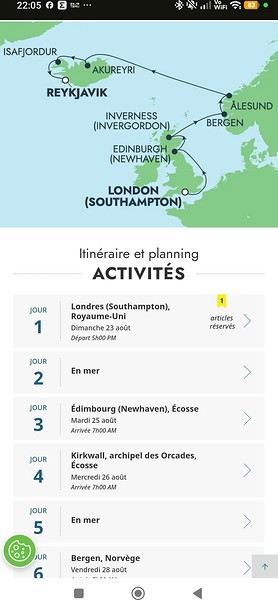
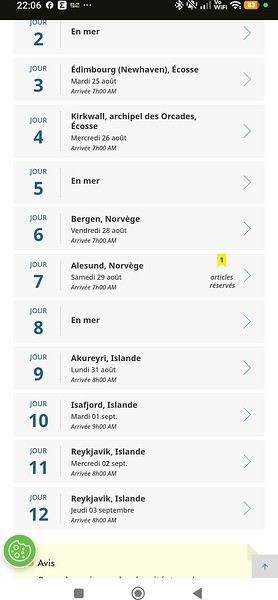
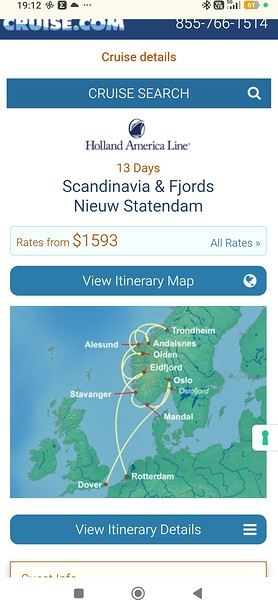
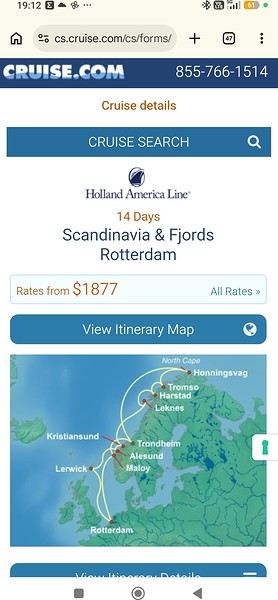 Hi there,
I'm looking at a cruise in the north.
Hi there,
I'm looking at a cruise in the north.