Nous partons en Guinée en famille (3 personnes) pour une dizaine de jours dans un mois. Nous prévoyons de passer 2à 3 jours dans le Fouta Djalon, avant d'aller passer le grand week end chez mon fils qui habite Dabola, puis de revenir passer une paire de jours en Guinée maritime avant le vol du retour. Nous n'avons pour l'instant retenu aucun moyen de déplacement, et nous voudrions nous déplacer en "classe éco". Pour le déplacement jusqu'à Dabola, en faisant un crochet de 2 à 3 jours par Labé, existe t'il des transports en commun facile d'accès (soit un trajet Conakry - Labé, puis un trajet Labé - Dabola)? Est il possible de louer toutes les places d'un véhicule de transport en commun pour être plus à l'aise?
Et pour les 2 à 3 jours que l'on envisage de passer en guinée maritime, est il possible de louer des taxis à la journée? au départ de Conakry? au départ de Kinkia?
Merci pour vos conseils
Pour les transports éco, oui, il est toujours possible de "déplacer" (c'est à dire payer toutes les places) un taxi de 5 places pour aller jusqu'au Fouta et idem pour faire vos autres trajets. Il faut parfois être un peu patient pour trouver la "perle rare" et négocier les tarifs en se rendant dans les gares-voiture. Mais c'est possible
Il est également possible de payer plusieurs places dans un taxi avec d'autres passagers. Selon niveau de confort souhaité, vous prenez plus de places ou pas tout en sachant que dans un taxis type Nevada ou 505 le nombre de passagers peut monter jusqu'à 9 , 10 ou plus....
Pas vraiment d'autres choix "low cost".
Pour Conakry Labé, pas de souci ! Pour Labé Dabola, si vous déplacez le taxi pas de soucis. Si c'est sur ligne régulière, peut-être prévoir de changer de taxi à Mamou.
Si vous déplacez un taxi, quasiment tout est possible. Tout est affaire de négociation !
Patrick Foutadecouverte
foutadecouverte.over-blog.com
Bonjour,
oui il est bien possible de louer ou deplacer un taxi type 505 ou renault nevada.
vous pouvez egalement payé une la moitié du taxi.
au fait c 'est simple vous payé le nombre de place que vous souhaitez et le taxi est a vous.mais attetion il va faire sont trajet habituel des que vous voulez faire un detour il va vous demandez de payé plus.
pareil aussi si vous le prenez a moitié.
bon voyage
Je suis en république de Guinee à Conakry, je voyage en Afrique de l'ouest depuis plus de 2 mois...
Je rejoins le précédent commentaire sur les transports commun c'est des 9 places en taxi, si vous voulez le taxi pour vous seul il faut payer les 9 places !
Pour un trajet Conakry - Dalaba (70 000 francs Guinee) et Dalaba - labé (39 000 francs) en taxi 9 places ! (ses prix sans les bagages il faut négocier le tout pour 4personnes a 15 000 c'est honnête et être très ferme pas hésité à dire non et partir ! (ils reviendront toujours))
A Dalaba vous avez un hôtel très sympa " Tangama " (et vraiment peu chère a 100 000 la chambre il y a 2 grands lits pour 4 personnes !
Le site de Dalaba est vraiment très cool vous avez une grande forêt pas très loin de l'hôtel (randonnée, hikking...)
Le prix du taxi gare routière jusqu'à l'hôtel a 1-2km environ pas plus de 20 000 !
Je vous conseil de vous arrêtez a Dalaba ou autre part, car Conakry -labé c'est très long, l'état de la route est catastrophique...
Nous avons fait 11h de route juste Dalaba -Conakry !
Bonne chance !
Si vous avez d'autres n'hésitez pas, bon voyage !
Mohamed !
Pour les VTT, sauf changement récent, il n'y en a plus à Dalaba.
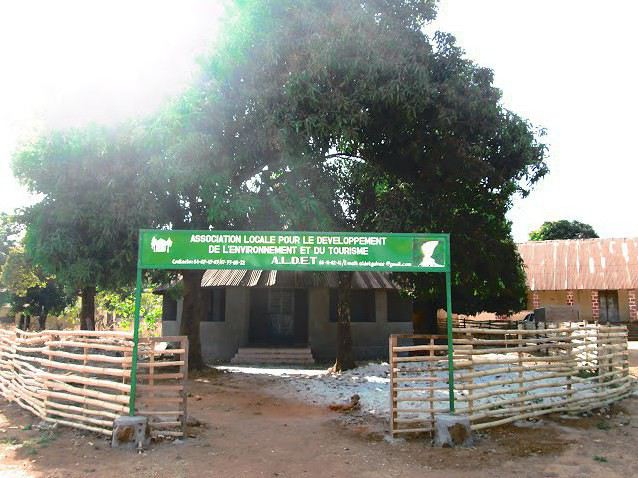
Il est par contre possible de louer des motos (moto chinoise...), mais bon comme qui dirait "y'a pas de pédales...." ! Voir au bureau ALDET quartier du Chargeur (si personne, appeler aux numéros indiqués sur pancarte).
Jai deux questions en prévision de mon voyage en Guinée.
Prenez vous la Malarone depuis le début de votre voyage?
Pouvez vous me renseigner sur l'eau en Guinée. Pouvons nous trouver facilement de l'eau potable, ou devrions-nous prévoir un système de purification'? Si oui, lequel conseillez vous?
Aucun souci pour l'eau potable: des bouteilles et des berlingots de 100 cc en vente partout. Ces berlingots sont une véritable catastrophe écologique: une fois vides ils finissent invariablement par terre, que ce soit dans la rue ou en rase campagne.
Quand au risque palu, il est plutôt faible: la nivaquine suffira.
Bon voyage, profitez bien, le pays est vraiment chouette, et les guinéens savent laisser les visiteurs en paix; c'est précieux.
Pour l'eau je vous conseille quand même plutôt les bouteilles de Coyah. Les sachets d'eau se sont démultipliés ces dernières années avec la multiplication des marques et aucun ou en tout cas peu de controle sur la qualité de l'eau... L'eau de Coyah est un acteur historique du secteur, qui me semble plus sûr.
Quand au palu, la nivaquine est un médoc assez ancien qui semble avoir perdu de son efficacité mais mieux vaut demander à des experts (Institut Pasteur en France).
Perso on m'a plutôt conseillé de prendre de la malarone lors de mes derniers séjours : j'ai acheté le générique qui est bcp plus abordable... Au Fouta peu de moustiques même si ça a tendance à changé.. Par contre sur Conakry ou vers Basse Côte, il y a plus de moustiques et le palu est encore bien présent...
Apres personnellement moi les cachets de malarone j'ai arêté de les prendre 2 semaines apres !
J'avais quelques fois des maux de têtes, je trouve ce traitement hyper chère aussi !
Enfin pour moi Ca fais partie du voyage !
Et également rencontrer énormément de voyageurs qui ne les prennent pas non plus, imaginez vous vivre au Sénégal ou en Guinée et prendre tout les jours de traitement, impossible à Le tenir ! ( l'impression d'être malade alors que nous sommes en bonne santé )
Pour moi bien se protéger des moustiques mieux que ces cachets qui cache plus Le fait de soigner !
[ poser la question à un bon médecin vous verrez sa réponse ] en voyage La plupart ne les prenne pas ce traitement mais en revanche, ils ont une dose en sécurité un peu puissante au cas où ... mais bon !
Il faut distinguer le voyageur qui fait un court séjour de celui qui vit sur place plusieurs semaines ou mois. Perso je suis resté plusieurs années en Guinée au Fouta et je ne prenais aucun traitement contre le palu car effectivement il y a qques effets secondaires à force.
Par contre quand je pars 2 semaines je prend un traitement préventif en le commençant 2 jours avant départ. J'achète le générique de la malarone qui est bcp, bcp moins cher et je prend un cachet par jour.
Reste qu'il n'y a pas de traitement infaillible conte le palu et ses différentes formes, donc à chacun de voir quel risque il estime pouvoir prendre ?
La protection est aussi effectivement un bon moyen de se prémunir : répulsif, et moustiquaire dans certaines zones..
Impossible de consulter un médecin à ce propos. Au Québec, il n'y a plus de médecins dans les cliniques santé voyage et mon médecin de famille croit que l'Afrique est un pays. Je dois donc trouver les infos seules.
Je pars 3 à 4 mois donc je trouve que c'est un peu long pour la Malarone, qui me donne moi aussi des effets secondaires. Je n'ai jamais vu le générique de la Malarone, j'ai l'impression qu'il n'existe pas au Québec.
Avez-Vous déjà entendu parler de l'utilisation de la Malarone en "doses d'urgence"? C'est à dire que l'on prend de fortes doses pendant quelques jours si on se croit atteint du parasite. Les médecins et les pharmaciens d'ici ne connaissent pas ou refusent de me parler de cette option.
J'ai vu un documentaire l'autre jour sur la Guinée. Un homme achetait un remède pour son fils qui avait le paludisme. C'était une fiole assez grosse contenant un liquide jaune. Vous savez ce que c'est?
Pour votre réponse sur l'eau, vous parlez de bouteilles de C..? Le nom m'échappe. C'est une marque d'eau en bouteille? Ou c'est une bouteille de purification comme la Katadyn?
Donc d'après votre message vous êtes dans la situation de séjour relativement longue durée (3 mois). Donc effectivement le traitement à la malarone n'est pas indiqué pour votre situation. Comme je le disais, quand je vivais au Fouta en guinée, je ne prenais aucun traitement.
En cas de crise de palu en tout cas "supposé" (car aucun moyen de savoir si je subissais une crise de palu ou autre fièvre), je prenais un traitement de nivaquine (mais c'était il y a 15 ans...). Pour traitement de choc à la Malarone, je vais me renseigner avec expats sur place. (générique Malarone diffusé en France : Atovaquone)
"J'ai vu un documentaire l'autre jour sur la Guinée. Un homme achetait un remède pour son fils qui avait le paludisme. C'était une fiole assez grosse contenant un liquide jaune. Vous savez ce que c'est?" : c'est un traitement local à base d'écorces contenant de la quinine ! Si ça vous tente ???!!!!....
L'eau de Coyah est une marque commercialisée en Guinée. L'eau est mise en bouteille justement dans la ville de Coyah à qques kms de Conakry. Je n'ai jamais eu aucun souci avec et on la trouve partout.
Pour purifier l'eau je ne connais pas les différentes marques de purificateur. J'utilisais mais très rarement des comprimés de purification.
Contre le palu, la meilleure stratégie est effectivement la prévention; et les traitements à base de quinine sur le long cours sont non seulement désagréables, mais peuvent générer des résistances. Le mieux est peut être d'avoir sous la main un médicament à base d'artemisinin (artemisia annua), extrêmement efficace en curatif mais malheureusement difficile à trouver dans les ex zones d'influence occidentale. Ceci dit, étant donné la très forte présence chinoise en Guinée, ce médicament y est peut être disponible.
Effectivement la prévention est une solution.
Perso, pour mes séjours en zone palu, je prends la même molécule que prennent nos militaires sur zone, la doxycycline. on la trouve sous le nom commercial de doxypalu .l'avantage est que cette molécule à un spectre très large qui peut traiter d'autres piqures que les moustiques.
Votre médecin vous prescrira ce médicament préventif 1 comprimé par jour en boites de 30 pour moins de 10 € la boite en pharmacie ce traitement est pris en charge par la sécu.Très peu d'effet secondaire si ce n'est d'éviter de s'exposer trop au soleil. Je prends le médicaments au repas du soir (c'est à ce moment que les moustiques sont le plus actifs) l'effet du médicament diminuant dans le temps, au réveil le matin moins de risque avec le soleil.
Avoir toujours sur soit en cas pour un traitement curatif d'urgence une boite de Coartem.
merci à tous pour les conseils.
J'ai fait mes recherches. L'ACT (thérapie combinée à l'artémésine) semble vraiment une bonne alternative, mais je n'en ai jamais entendu parler, ni l'infirmière ni la pharmacienne n'ont jamais mentionné cette option et j'ai donc peur que ce ne soit pas disponible ici. Je vais me renseigner.
Je pense donc que je vais partir avec un "stock" de Malarone, essayer de les prendre dans les moments plus "à risques", donc lorsque je serai dans un coin où les moustiques sont plus présents. Et apporter un traitement d'ACT avec moi.
Si j'ai à utiliser l'ACT, est-ce que je devrais rentrer immédiatement en Occident, ou c'Est relativement efficace et je serai de nouveau sur pied en peu de temps?
J'ai une dernière question, je me rendrai en Guinée via la Mauritanie et le Sénégal. Est-ce que vous croyez que je devrais acheter des moustiquaires à la perméthrine avant de partir, ou que j'en trouverai facilement sur la route? Je poserai ma question dans le forum du Sénégal si vous ne connaissez pas la réponse.
Bonjour.
Coartem vous en trouverez sans problème à Dakar. N'importe quel docteur vous fera une ordonnance.
Pourquoi Malarone au lieu de doxycycline bien moins cher. Attention sur internet circule des ventes avec des grosses remises. C'est du faux qui n'a aucun effet conte palu voir c'est dangereux.
Des moustiquaires il s'en vent partout en Guinée. J'en ai acheté en février dernier.
Bon voyage
L'artémisine pour lutter contre le palu a été mise au point, testée, et développée par des laboratoires asiatiques qui n'ont rien fait d'autre que d'amplifier une méthode utilisée par la médecine traditionnelle chinoise. Cette substance est au coeur des stratégies nationales de lutte contre le palu dans les pays asiatiques.
Que personne dans le monde médical occidental n'ait entendu parler d'artémisine est révélateur des liens étroits qui unissent l'industrie pharmaceutique occidentale avec les responsables de nos politiques de santé. Malheureusement, ce n'est qu'un cas parmi d'autres.
J'ai personnellement testé l'efficacité de l'artémisine qui m'a remis sur pied en 24h alors que je trainais une forte crise de palu depuis presqu'une semaine, traitée avec des dérivés de quinine sans aucune amélioration.
En ce qui concerne les moustiquaires imprégnées, vous en trouverez partout, mais attention à la nocivité des molécules utilisées dans l'imprégnation. Rien de tel qu'une moustiquaire bien dimensionnée et bien fermée pour dormir en paix.
Ça y est je viens de trouver l'information officielle que l'ACT n'est pas disponible au Canada. Sur la même notice, Santé Canada prévient les canadiens qu'il ne faut pas non plus l'acheter à l'étranger en raison des risques de contrefaçon.
Du même souffle, ils avouent quand même que c'est le meilleur traitement en ce moment.
Quel pays de cabochons. Sans parler de son climat de mèrde. Si vous m'acceptez, je déménage chez vous :)
À Dakar donc, j'achèterai Coartem et moustiquaire? Aucun risque d'acheter des faux comprimés?
C'est à Madagascar que j'en ai eu besoin; c'est là bas que je l'ai trouvée. C'est à mon avis introuvable dans les pharmacies occidentales pour les raisons citées précédemment.
Mais je pense que dans les zone impaludées où l'influence asiatique est importante (la Guinée notamment), on doit pouvoir s'en procurer.
Je ne peux pas vous en dire plus
Bonjour.
Suis je inconscient ? Je n'ai jamais pris de traitement, par contre, je me protège efficacement par un insecticide en aérosol quand il y a des bêtes qui volent.
J'avais entendu parlé de l'artémisinine comme d'une substance à prendre curativement.
Lors de notre premier voyage vers l'Afrique, Olivia qui était encore à Ménéta (NKC) nous avait indiqué une pharmacie qui vendait cela. Pour un prix presque dérisoire, nous avons pensé être à l'abri de tout. En fait, quelques années plus tard, nous n'avons pas encore utilisé donc pas possible de témoigner de l'efficacité.
Ce n'est pas un conseil que je donne, juste un endroit où on trouve le produit : à NKC, près de l'auberge Ménéta.
Cordialement.
Salut Jacques, j'aurai besoin de quelques renseignements pour le visa Guinée à Dakar, je te contacte.
Bonjour.
NKC est l'abréviation de Nouakchott. Évidemment, si on va en Guinée par avion, ce n'est pas très facile de trouver une pharmacie là bas.
Je répète que l'histoire des traitements, ce n'est que mon point de vue, ce n'est pas un conseil.
Et puis, mon intervention est surtout pour alimenter le sujet Guinée qui est trop en sommeil.
Cependant, peut être que le sujet artémisia mériterai qu'on s'y intéresse..........
Cordialement.
Hello, I hope you and your loved ones are doing well.
I’m reaching out because I’m planning a trip to Senegal with three or four friends in our fifties, and we’d ideally like to stay in Toubab Dialao.
Our goal is to have a meaningful and human experience, as close to the locals as possible. We’re looking for a homestay (full board) to share daily life in the village, enjoy traditional meals, and discover the local culture.
Our travel dates are from Sunday, May 2 to Sunday, May 9, 2027 (7 nights, in three or four separate rooms).
Would it be possible to know if you have any trusted host families available for those dates?
Hello Community!
Back and happy to see this site resurfacing after the precious help I’ve gathered here before!
Today, the family has grown, and we’re looking for accommodation for 5 (2 adults, 3 kids) in Tarrafal to spend New Year’s… any ideas for a memorable stay? Guesthouse or hotel…
I'm heading to Cape Verde in July and I'd like some practical info: Are boat connections between the islands easy? Should we book tickets in advance? There are three of us women—are there any safety concerns?
Hi there,
We're planning a 2-week trip to Cape Verde, departing from Nantes in February 2027.
The only direct flight from Nantes goes to SAO VICENTE.
We'd like to visit a maximum of 3 or 4 islands—could you guide us in our choices?
THANKS SO MUCH TO FELLOW TRAVELERS!!!!!!!
C & JP
Hello,
We’re a family of 5 (2 adults and 3 kids who’ll be 2, 7, and 10 years old) planning to visit the islands of Santiago, Fogo, and Maio this summer. We’ll have 22 full days on the ground. It’s a shame (financially, logistically, and environmentally speaking!), but we’ll be taking 4 flights: a round-trip from Santiago to Fogo and another from Santiago to Maio. We’d like to position Maio toward the end of our stay since we enjoy ending our trips with a quieter beach phase.
For now, based on flight schedules and dates, we’re thinking of doing:
23/07: Arrival in Santiago
24/07 – 30/07: Fogo (5 full days)
30/07 – 05/08: Santiago (5 full days)
05/08 – 11/08: Maio (5 full days)
11/08 – 15/08: Santiago (3 full days)
15/08: Return to France
FOGO: Of course, we want to visit Cha das Caldeiras, where we’d like to spend 3 nights. We’d love to explore the valley and are also considering hiking the smaller Pico (the taller one seems too ambitious for us with the kids). Do you have any info on that hike?
What else do you recommend doing on the other days? Where can we go for other walks? I’ve seen that it’s possible to descend from Cha das Caldeiras to Monteiros, but I’m worried it might still be too challenging. It looks amazing!! But how do we manage with our luggage? Otherwise, the north of the island intrigues me, though we’re not thrilled about São Filipe, even though we know we’ll have to spend at least one night there before returning to Santiago.
On this island, we initially thought about not renting a car, but I’m wondering if that’s a good idea for us with all the luggage. If we do rent one, is it easy to reach Cha das Caldeiras by car?
Any advice is welcome!
MAIO: Here, I think renting a car will be essential for us to get around easily. We’d like to do an excursion to observe turtle nesting. I haven’t found much info on this—where and with whom should we go? Otherwise, the plan is to do some snorkeling directly from the beach, independently, since we’ll need to take turns so one adult can stay with our 2-year-old. Any spots you’d recommend?
Which towns would you suggest staying in? All options work for us—we’re fine with settling in one place or splitting our time (e.g., 3 nights in one spot and 3 nights elsewhere).
Basically, I’m open to all tips and recommendations for this little week on Maio (short walks, places to relax, beaches, etc.)!
SANTIAGO: Nothing too original, but for Santiago, we’re considering visiting Cidade Velha, Tarrafal, and Ribeira da Prata (for the black sand beach and natural pools), as well as Serra Malagueta for a hike.
There must be so much more to do, especially with the time we have. What else would you recommend?
I’m struggling to figure out how to organize our time there since we’ll have 5 full days first, then 3 more. How would you do it?
Hi,
We’re heading to Cape Verde in January. We’re scheduled to arrive in Praia on a Saturday around 11 AM.
I read somewhere that the exchange rate for Euros to Escudos is the same everywhere—110 escudos for 1 euro. Can anyone confirm this? If that’s the case, I assume there’s a currency exchange desk at the airport, and the rate isn’t too bad? So, it’s better to exchange at the airport, right? What do you think? I don’t want to use ATMs.
Otherwise, are banks in town open on Saturdays? I read they close by 3 PM?
I’m heading to Abidjan, Côte d'Ivoire for a long stay from July to September 2026. Could you please recommend any apartments for rent or a real estate agency? Thanks
I’ve been looking for a destination for a 2-week trip early next spring, and Cape Verde has been growing on me. (The flight isn’t too long, the temperatures are more than pleasant, and it’s an unknown country for me.)
The thing is, Cape Verde is pretty complicated when it comes to inter-island transfers, and I don’t want to spend my time in airports or on ferries—especially since those transfers aren’t exactly known for their reliability...
So, I’d like to limit internal flights to just 2, meaning the island I arrive on plus one other.
I’ve ruled out the all-inclusive islands: Sal and Boa Vista.
I’m torn between combining Santo Antão + São Vicente or Fogo + Santiago.
The goal of the trip is to see beautiful landscapes, go on day hikes (nothing multi-day), swim a little—though I prefer quiet spots—and enjoy 1 or 2 days in a city, but not much more than that!
In your opinion, which option would be the best, and why?
Hi,
Have you got any recent feedback from a trip back from São Tomé?
We're heading there in a few months.
One question among others: is swimming—well, snorkeling—risky there?
Thanks for your feedback, tips, etc.
I’m planning a trip to Benin in July, and I saw there were a few recent discussions about this destination. Would you have any suggestions for nice places to stay in Cotonou that won’t break the bank, as well as in other cities (Porto-Novo, Ouidah, etc.)? Thanks sooo much for all your valuable tips!
Hello,
We’re two senior travelers and would like to visit Cape Verde in Feb 2027.
We don’t hike but love meeting people, culture, and nature.
Which islands would you recommend, and do you know of any local agencies?
Thanks a million!
Hello from Quebec,
I’m a French-Canadian from Montreal. I’d love to go to Senegal during the Quebec winter to shorten this long season. Two people told me it’s not worth spending a lot of money to get there from Canada because there’s not much to discover. But I’m still skeptical. I’d love to read real testimonials from travelers who’ve been there, with as much info as possible. Thanks
Hello, my wife and I are planning a trip to Cape Verde at the end of May for 20 days. We’re still unsure which islands to prioritize (they all look amazing!). Santo Antão and São Vicente seem like must-sees. Which other islands should we visit, given that we love hiking (nothing too challenging) and swimming?
Thanks
Hi everyone!
The forum has been a huge help during my moments of doubt, and since Cape Verde isn’t a destination with many discussions, I felt I had to share my trip report 🙂
First, the EASE: I could never validate it from my phone—I tried 50 times without success, and on the computer, it worked the first time.
Then, Cabo Verde Airlines: forget online check-in. I went to the airport early to get my window seat (and in the end, the plane wasn’t full—I had three seats to myself, so I could finish my night peacefully). No in-flight entertainment for those who don’t sleep on planes.
Monday 9: Flight + arrival at Antonio’s (Oia Mindelo Guesthouse). Antonio’s apartment is up on the hill, but really, it’s only a 10-minute walk to the beach and 10 minutes to the city center (depending on where in the center). He picked me up at the airport (1000$). I continued relaxing by doing... nothing on the beach. Dinner in town at Café Mindelo: a pretty place, but otherwise meh—expensive and not necessarily good (2100$ for a beer and a fish that didn’t seem freshly caught as advertised).
Tuesday 10: Antonio offered to do a tour of the island (for cheap), and we left with his other guests (a lovely English couple, 76 and 77 years old). Stops at Salamansa (I felt something special on that beach—I could’ve stayed there for an hour doing nothing), then another scenic spot, a restaurant, and Baias das Gatas (I took a quick dip, but to me, it had less charm than Salamansa). Then we crossed the island to return to São Pedro (beautiful but windy; the village looks cute). Exhausted, I went to bed early because of the ferry to Santo Antão the next day.
Wednesday 11: Antonio took me to the ferry, and we’ll see each other again since he’s hosting me at his aunt’s place during Carnival. On the ferry, I had a Booking.com reservation for what I thought was in Ribeira Grande (the town), but it was actually *in* the ribeira—specifically in Manta Velha (aluguer to Cruzinha ~600$). I thought I’d fallen into a hole, but I ended up loving it—Casa Familiar Gilda. Gilda is a divine cook (dinner for 1000$—don’t eat lunch, or there won’t be room), the village has a typical rural Santo Antão vibe, the place has great energy, and you can get around easily by aluguer.
Thursday 12: I left early by aluguer to Ribeira Grande (250$), then another aluguer to Ponta do Sol (100$)—a sleepy beauty at that hour—to do the Ponta do Sol-Cruzinha hike, finishing in Cha de Igreja. Departure at 8:22 AM from the cemetery in Ponta do Sol, passing through Fontainhas (those doing it the other way will have a fabulous climb at the end 😏), and let’s go! I loved this glimpse of rural life—past or present—the sea is stunning, and we were shaded most of the way (though it goes up and down, it’s manageable). The arrival at Cha de Mar is breathtaking, and Cruzinha is a charming little town (arrived at 12:30 PM). I’d brought my swimsuit after reading there was a beach, but I packed it back up—too many waves and big pebbles. I continued to Cha de Igreja (25 more minutes) after a short break (ask for the path that doesn’t go by the road). It’s adorable with its church square (you don’t see this layout much elsewhere). I might’ve stayed longer to enjoy the place, but a taxi driver asked if I wanted to return to Manta Velha (1000$), and like a fool, I said yes (it was 2:30 PM—I could’ve waited for the 4:30 PM aluguer for 100$, but oh well).
But since I still had energy, I decided to see if I could find a grog distillery. I ran into a French guy arriving at Gilda’s, and we ended up talking to Rodrigo, who explained everything from A to Z about how they make grog (the simple cane juice is amazingly good—but the work is clearly tough).
Friday 13: Transfer to Xoxo on Djalma’s advice 😉, where I’d booked a room at Casa Xoxo. I did the hike to Rabo Crusto... it’s tough, but I kept quiet when I saw a pregnant woman doing it with her two little ones 😄. There’s also a distillery I didn’t linger in, and I took a tea break with that wonderful landscape before heading back. I couldn’t find the path Jean-Michel had told me about (take a right at the village entrance), so I went back down to the water reservoir to turn off and take the waterfall path (anyone can point it out if needed). The bedding at Casa Xoxo was perfect, but the dinner atmosphere was less family-like.
Saturday 14: No one at Casa Xoxo could tell me when the aluguer passed, so I scarfed down my breakfast and headed down a bit. I found one (not sure if he’d planned to work, but there were three of us, so he left). Arrived in Ribeira Grande, an aluguer driver told me the coastal road to Porto Novo was closed and we had to take the Corde road—but no one was leaving, so we’d have to charter... Sometimes, you just have to say it: aluguer drivers say there’s no ride just to make you pay the private price (3500$). But this time, it was true! With another French couple, we wanted to go to Tarrafal. Our driver called the Porto Novo-Tarrafal aluguer to wait for us. The Corde road is stunning—more different landscapes (thorny forest, misty peaks...). Changed aluguers in Porto Novo and headed to Tarrafal. Another world—lunar landscape on the way. Arrived in Tarrafal and relaxed.
Sunday 15: Hike from Tarrafal to Monte Trigo, left at 8 AM, and I’m glad I did—I was in the shade until about 9:30 AM, then the sun got strong. Beautiful walk, arrived in Monte Trigo around 11:30 AM. The people weren’t particularly friendly, but oh well. Swam at the little beach in Monte Trigo (the water is *so* good). I waited for other French people who had “booked” a boat for the return. Came back with Javi (50 min—1000$ each), who lent us masks and snorkels for some snorkeling. Had grog with Ludo, Estelle’s husband, who was waiting at the bar, then filled my grog bottle at the *mercearia*. I admit, it’s delicious, but I don’t remember much of that evening 😇🤪. Except Javi put on a show saying he’d been robbed, had no money, and needed to pay the boat owner, etc. People paid again (apparently not me, since Ludo, Estelle, and I arrived at the restaurant after Javi’s drama). FYI, Javi does this often—my host had warned the couple renting the other room to watch out for him because he scams people for money. So Javi is 35 with hazel/special-colored eyes. But if you don’t repay the “service,” the day was still great.
Monday 16: Several of us were taking the late-afternoon boat, so we chartered an aluguer (7000$) to avoid the 6 AM one—trip—boat to Mindelo. Antonio picked me up at the ferry, and boom—Carnival!
I found a spot on Rua de Lisboa. My neighbor was from Santo Antão just for Carnival, spoke French, and explained that last year’s Carnival started 3 hours late because a float couldn’t fit under the power lines 😏 (like they don’t know the height by now hahaha). On Monday, it’s the teachers (nice—kind of a warm-up) and the Madingas. Once they passed my spot, I followed them along the route—I LOVED it! By midnight, they still hadn’t reached Praça Nova, and the police told them to speed up, but I loved that energy!
Tuesday 17—Mardi Gras: Beach day, then Carnival! Antonio had bought me a seated ticket just in case (300$). Ended up in front of a punch stand, where I ran into two French women I’d met in Manta Velha. Two guys from Mindelo talked to us, and we did Carnival with them. And what was bound to happen, happened: a float couldn’t pass because... it was taller than the power lines 😏😏😏. The dancers kept dancing while the crowd tried to lift the cable. Finally, a guy in a tree climbed higher and used a pole to lift it... and the parade could continue 😉. Around 12:30–1:30 AM, when the concert was supposed to start, the power went out. I went home and later learned the concert started around 3 AM.
Wednesday 18: I went home because I was taking the boat back to Santo Antão, heading to Casa Familiar Gilda. Walked the loop from Manta Velha.
Thursday 19: Left early for Ribeira da Paul to do the loop to Sandra’s House. It’s truly breathtaking! Back at Gilda’s, I chilled. I wanted to go to Sinagoga’s natural pools, but the hike had worn me out.
Friday 20: Return to Mindelo on the red company’s ferry—no comparison: way more comfortable than the blue company’s, especially for someone prone to seasickness. Beach. Exhausted, I struggled to sleep because the shop on the ground floor of my rental had a party until 3 AM (and the windows aren’t double-glazed—*hi*—but that’s common in Mindelo).
Saturday 21: Ran into Estelle and Ludo by chance (the city’s small), and we arranged to share a taxi the next day since we had the same return flight. Beach (I tried Lazaretto Beach, but nope—not great—dead fish + weird smell = bad signs). So Laginhia was fine, and in the evening, a restaurant with singers, then Caravelle (the ground-floor shop didn’t bother me since I got home when they were saying goodbye 😏). Too bad—I dance salsa, bachata, kompa, zouk, but not kizomba hahaha, but it was still fun.
Sunday 22: Took a taxi with Ludo and Estelle (1200$). Arrived *ages* before takeoff (no exchange office—get escudos in town if you have any left). Boom—CDG, boom—RER... home.
There you go—a super long trip report. Not sure if it’ll help, but the digital detox was amazing. These two islands are very different but so beautiful. I only got a glimpse, but they’re worth the trip. I was lucky to see Carnival (what joy in that city!) and happy the Cambodia ticket (my first idea) was way too expensive 😉
Hi,
Without booking in advance through an agency, is it possible/easy to organize luggage transfer from one night to the next between accommodations in Santo Antão?
Thanks.
Easily accessible from Sal or São Vicente, São Nicolau is the forgotten island of the Barlavento group. With two large villages, volcanoes, jagged peaks, lush valleys, and vast rocky expanses, it has nothing to envy its big sister Santo Antão. It’s slipped under travelers’ radar a bit (in January, there were probably fewer than a hundred European tourists on the whole island), and that’s just fine! Accommodations aren’t overrun by groups like in Santo Antão, and connecting with locals is even easier. But don’t come to São Nicolau for wild nightlife—it’s incredibly peaceful here, and on Sundays, it’s total silence!
A little favorite of mine: Pensão Jardim in Ribeira Brava, the capital; Residencial Palice in Queimadas; and especially Pousada d’Anna in Estância de Brás, where the raging sea crashes against the black lava spurs.
Weather-wise, it was chilly this year but perfect for hiking. If you’re up high (like Monte Gordo), dress warmly or wait for spring! Fog gusts can ground you completely. Trails are generally less marked than in Santo Antão; if you’re wary of apps, you can find a 1:50,000 map at the small travel agency in Tarrafal.
Those who enjoy sharing experiences with other travelers over a Strela or two in the evening might feel a bit frustrated on São Nicolau, but the island’s beauty, the resilience of its farmers in extreme conditions, and the kindness of its people make it a fantastic stop for any visitor to Cape Verde!
Hi everyone,
I’m planning a trip to Senegal in early July 2026 for a week with my teenage daughter.
We’ll be staying in a bungalow at Club Les Filaos.
I’d love to hear your advice, especially about visits and excursions. The hotel offers them directly, but I’m wondering if it’s better to go with their organized tours or hire local guides you’d recommend.
What do you think are the pros and cons of each option?
I’d also appreciate tips on currency exchange—where’s the best place to do it to avoid any nasty surprises?
Finally, if anyone’s stayed at this hotel recently, I’d love to hear your thoughts! I’ve read both glowing and terrible reviews, so I’d really value your firsthand experiences.
Which taxi app do you recommend for Senegal? Are there shared taxis from Dakar Airport to La Somone? If not, do you have an idea of the price for a taxi?
Hi everyone,
After a year where I’ve worked way too much and with a house under renovation, it’s become essential to take a breather. My contract ends on 01/30, and I’ll try to find a new client for early March, so overall, let’s go somewhere in February!
I thought Réunion with the full trek around the Mafate cirque for reconnecting with Nature would be perfect, but since it’s cyclone season, it wasn’t such a great idea. Then came the idea that Southeast Asia could fulfill the peace-and-beach vibe, especially Cambodia with its cultural past, but the flight ticket price and a chat with a friend made me change my mind—and boom, Cape Verde popped up, with Santo Antão for hiking and São Vicente for culture and the beach.
So I bought a ticket a week ago, and oh, what a coincidence—it’s during Carnival!
Except now, I don’t know if it’s reality or just exhaustion talking, but I feel like I’m making a mess of things.
I’ve traveled a lot without even booking the first night, but this time, I pre-booked 2 nights in Mindelo (though one of them ended up canceling itself).
But the main issue is that I arrive on Monday, 02/09 at 6 PM and leave on Sunday, 02/22 at 11 AM, and there’s a little hiccup in the logical organization—actually, several hiccups—since I don’t really have any organization right now, and that’s where I need help
Because Carnival is in full swing from 02/15 to 02/17, right in the middle of my trip, so the logic of my visit to Santo Antão isn’t clicking for me. Plus, I just checked, and there’s zero accommodation available in Mindelo from 02/15 to 02/18 😕
So I don’t know: should I skip Carnival, should I forget about planning and just wing it once I’m there, should I stay on São Vicente after Carnival (because I read Montaganrd’s trip report, and he made São Vicente sound like a rock !), or should I keep in mind the option of heading to Santiago afterward and buying a return flight to Paris from Praia?
I need help 🏴☠️
Hi everyone, thanks for your advice! I’m starting a new thread because it seems my first one about Senegal was deleted—or maybe it’s just my computer acting up again 😉. Anyway, I’ve decided to go to Benin instead. I’ll be there from January 5th to February 2nd—why count the days when you love traveling😄? I’d love all your tips on accommodations, restaurants, and itineraries. I’m basically starting from scratch to plan my trip.
Hi there,
We’re heading to Senegal for 4 weeks in February 2025.
We’ve booked a 7-day cruise on the Bou el Mogdad departing from Saint-Louis.
That’s all we’ve planned so far—we’re also thinking of exploring Casamance after the cruise.
Any ideas for things to do while traveling between Dakar and Saint-Louis? We’ll arrive in Dakar 5 days before the cruise sets off.
Thanks so much for your tips!
Edith
I’d planned to go to Benin in 2026, but given the recent events and upcoming elections, I’m thinking I’ll wait to see what happens after the elections.
Has anyone traveled to Benin recently or is planning to go soon?
I’m trying to find out the dates for the best parades at the Mindelo Carnival in 2026, but I’m having trouble figuring it out. When I search for "Mindelo Carnival 2026," I get different dates and no clear schedule.
I’ve found the parade on Tuesday, February 17, 2026, and the one on Sunday, February 22, with the grotesque makeup, which seem the most interesting. On the other hand, some say the São Nicolau Carnival is more authentic than Mindelo’s.
If you’ve experienced this firsthand—not just theoretically but actually been there—I’d love to hear your practical tips.
Hi there, I’m planning a trip to Santo Antão with some hiking (for me) but not for my partner. I’d love some help figuring out if my plan is doable in terms of time and transportation:
- Day 1 – Arrival by boat from Mindelo, then aluguer to Cova (and overnight nearby)
- Day 2 – Hike to Paul / aluguer for my partner
- Day 3 – Aluguer to Ponta do Sol
- Days 4 & 5 – Ponta do Sol
- Day 6 – Hike to Cruzinha / aluguer for my partner (overnight in Cruzinha)
- Day 7 – Aluguer (or taxi) to Xoxo (overnight in Xoxo)
- Day 8 – Aluguer to Porto Novo + boat to Mindelo
Does this plan make sense with the local transport options?
For accommodations, I’d love any suggestions you might have.
Thanks so much for your help!
We’ve booked our tickets for July—there’ll be 4 of us, maybe 6 (all in our sixties). We’d like to visit 4 islands:
Arrival in Praia on July 8th
Return from São Vicente on July 29th
Between those dates, I’m not sure how to split our time across each island. We’ll definitely spend at least a week on Santo Antão. We’re planning to visit Santiago, Fogo, São Vicente, and Santo Antão.
We’re looking for easy hikes, diving, sightseeing, and a little beach time (but not too much).
How do you think we should divide the 3 weeks among the islands? Is 3 days in Fogo enough?
Are guides essential, and can we easily find them on the spot?
Should we rent a car, given we won’t just be hiking?
Thanks in advance for your advice, tips, warnings, and anything else you can share… and I’ve still got plenty more questions!
Valéry
I arrive in Fogo at 11 a.m. (if the ferry is on time) from the ferry departing Praia. From what I understand, the collectivos to Cha das Caldeiras leave late morning? Do you think I can leave the same day?
My question is: should I spend a night in São Filipe?
I don’t want to take a taxi—it’s too expensive.
Hello,
We’re a couple in our sixties and have finally decided to spend 15 days in Cape Verde from March 1 to 15, 2025, focusing exclusively on the four Leeward Islands.
We’ve planned to take the boat between these four islands and adjust our stays based on the ferry schedules. If there are any difficulties or need to adjust the route, we might take a flight instead.
Here’s our planned itinerary with the boats:
Day 1: Flight from France to Santiago Island
Day 2: Boat from Santiago Island to Brava Island
Day 3: Brava Island
Day 4: Brava Island
Day 5: Boat from Brava Island to Fogo Island
Day 6: Fogo Island
Day 7: Fogo Island
Day 8: Fogo Island
Day 9: Boat from Fogo Island to Santiago Island
Day 10: Santiago Island
Day 11: Boat from Santiago Island to Maio Island
Day 12: Maio Island
Day 13: Boat from Maio Island to Santiago Island
Day 14: Santiago Island
Day 15: Flight from Santiago Island to France.
Based on your experiences and knowledge, could you share:
- Your favorite places to visit and hikes
- Accommodations that charmed you
- Restaurants you enjoyed
Thanks in advance to all travelers and locals from these islands who’d like to share their favorite spots! !
Hello,
We’ve just returned (2 senior couples) from 18 days in Cape Verde (21/01 to 7/02) that we really enjoyed. The temperature was great—20° to 27°—admittedly a bit windy at times, but the friendliness of the Cape Verdeans made up for it.
Paris Orly, direct flight with Transavia (cheap if you book in advance). We landed in São Vicente, with a 12 € city transfer. We had a fantastic 2-bedroom apartment in downtown Mindelo—Av. Fernando Ferreira Fortes, "Casa So Morabeza"—for 58 € per night. The owner lives in France and communicates instantly via WhatsApp.
We spent 2 days exploring the (beautiful) city of Mindelo and its port activity, plus a private taxi tour of the island (6000 CVE for the day).
Then we took the Armas ferry (recommended company—1500 CVE) to Santo Antão.
From there, a collectivo (450 CVE per person) took us to Ribeira Grande, a central base for hikes.
We stayed in a brand-new, modern, and well-equipped 2-bedroom apartment—*Apartamentos Modernos*—for 6770 CVE per night, staying 6 nights. I highly recommend it for its location in town and proximity to *aluguers* and *collectivos* for hiking.
The hikes were stunning:
- The coastal trail from Fontainhas to Cruzinha (taxi for 1500 CVE)
- The route from Corda to Coculi (taxi for 2000 CVE + 100 CVE per person for the return)
- The trail from Cova to Cidade de Pombas (taxi for 2000 CVE + 100 CVE per person for the return)
- The hike from Miradouro to Ribeira Grande (taxi for 2000 CVE)
- The coastal road from Ribeira Grande to Ponta do Sol (visit and lunch at *Mini Familiar* in the city center—excellent and affordable) for the round trip.
Ribeira Grande has plenty of restaurants, but avoid *5 de Julho*—it’s loud and slow.
We loved: *Bellcanto*, *Cantinho da Amizade*, and *Boca-Fina Churrasqueria*.
Meals with drinks cost around 800–1000 CVE.
Back to São Vicente by ferry (1500 CVE), then an airport transfer (12 €) and a flight (99 €) to Santiago’s Praia. The airport-to-city transfer was 15 €.
We stayed at *Kelly’s* in Plato, Praia, which was disappointing—not ideal for two couples—but well-located.
One day was spent visiting the massive *Suspicia* market, then a collectivo to Cidade Velha (2 x 200 CVE round trip per person). We hiked up to the fort, explored *Rua Banana*, and had lunch at *Praça do Mar* by the beach.
We rented a car for 6 days (29000 CVE) from *Slimpycar* in Praia.
On Saturday, we visited the huge *Assomada* market—don’t miss it!—then hiked to *Boa Entrada* and *Poilon*, the largest and most impressive tree we’ve ever seen.
We stayed for 2 nights (138 €) in a beautiful valley in *Picos*—a spacious, lovely house with 2 bedrooms, 2 bathrooms, and a large living area, surrounded by nature and animals.
Lina, the charming neighbor, prepared dinner (8.50 €) and breakfast (4.50 €) for us.
Next, we headed to *Tarrafal*, stopping to visit the concentration camp (500 CVE)—a must-see—before arriving.
We spent 3 nights (184 €) in a fantastic house called *"Maison Familiale"*—huge, with 3 bedrooms, 2 bathrooms, 2 kitchens, 5 toilets, and a large terrace with sea views. It was absolutely stunning and very close to the beach and numerous restaurants.
We did a beautiful 3.8 km hike to the *Farol da Ponta Preta* lighthouse.
Tarrafal’s beach is lively and pleasant, with bars, restaurants, and even acrobats!
We also explored *Ribeira da Prata* to see the *Piscina Natural de Cuba* (not easy to find).
We loved discovering isolated villages like *Ponta Furna*, *Ponta Labrão*, and *Fazenda*.
For food, I recommend *Mira Mar* at *Mama’s*.
On the way back to Praia, we took the east coast route via *Calheta de São Miguel*, *Pedra Badejo*, and *Praia Baixo*—nothing extraordinary, just a rugged, wild coastline with beaches that seemed a bit tricky to access.
Our last evening in Praia was nice. The seaside esplanade was lively, and many Cape Verdeans were swimming at *Prainha* beach, which seemed very accessible and safe.
If you’d like more info—addresses, etc.—feel free to message me privately. I’ll respond.
Jacquesler.
I’d like to share our travel plans for March 2026 to get your valuable feedback...
- Arrival in Sao Vicente on Tuesday, March 3rd at 9:20 AM from Lisbon (EasyJet)
- Direct departure the same day or the next day for Santo Antao – 3 or 4 nights on Santo Antao (depending on whether we spend the first night in Mindelo or on Santo Antao)
- Return to Sao Vicente for 3 nights
- Flight to Boa Vista via Sal (Cabo Verde Airlines) on Tuesday, March 10th – 5 nights on Boa Vista
- Return flight on Sunday, March 15th (Boa Vista to Porto: EasyJet)
Given the various bits of info I’ve seen about the unreliability of inter-island transport, is this itinerary realistically doable without stress? Would it be better to just take a simple flight from Sao Vicente to Sal and end the trip there (from where it’s also possible to return to Europe or France)? I’m still more drawn to Boa Vista... but I’m worried that two flights in a row might be complicated, unless it’s the same plane that just makes a stopover and continues...
Also, I’m calling on the expertise of hikers for Santo Antao:
I’m not a big sports enthusiast—I enjoy walking when I travel, but not distances much longer than 10 km, and nothing too difficult (especially steep climbs where I quickly run out of breath)...
For the hike from Ponta do Sol to Cruzinha: can you confirm that the hike is easier in the direction from Ponta do Sol to Cruzinha (less climbing)? I’ve found info that this hike is 14 km and takes about 5 hours. Do you think it’s possible to shorten it by taking a taxi or *aluguer* to Fontainhas? If so, how long would the hike be then, and how much time would it take?
For the hike from Xoxo (starting at the Bela Vista kiosk on the Cova road), I’ve found info that it’s 12 km and takes 5 hours of walking. I think it goes to Ribeira Grande. Apparently, you can shorten the hike and find *aluguers* on the road near Café Melicia... In that case, do you know how long the hike would be? Is this the hike that lets you walk along *levadas* (like in Madeira), cross banana plantations, and pass by the Cachoeira de Vinha waterfall?
Sorry for all these questions, but I can’t find a guide with hikes and difficulty levels... I think two hikes (one along the coast and one inland with terraces, *levadas*, and banana plantations) would suit our level.
On the third free day, do you think we could rent a 4x4 to explore: take the two scenic routes on the east side and maybe venture a little off the beaten path (without taking risks, of course)... Otherwise, hire a guide for the day: do you have any recommendations and an idea of the price?
One last thing: in March, is it worth (or pointless) to choose accommodation with a pool (especially on Santo Antao)? Is the pool water warm enough? What about the ocean temperature?