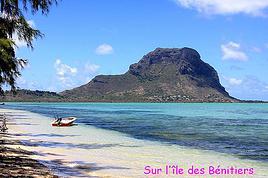
From one lagoon to another or from one island to another… From Blue Bay to Le Morne Brabant or from Île aux Aigrettes to Île aux Bénitiers.
In this travel journal, I invite you on a journey through the south of Mauritius—a region undoubtedly less known than the busy shores of the beach resorts, yet it’s an enchanting, authentic, and charming Mauritius that unfolds along this route.

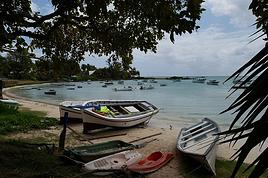
Blue Bay, now there’s a place name that immediately sets the tone… obviously, blue is the dominant shade of this lagoon. Here, you’d almost want to add an “s” to the word *blue*, so many are the shades of blue in this bay.
From the matte turquoise of the early morning, where the mangroves on the shore are reflected in the lagoon’s depths, to the translucent light blue of midday—most stunning when the sun is at its zenith. Then there’s the deep navy blue of late afternoon, as the last rays of sunlight add golden touches to the ripples.


What a joy to admire this landscape with all its tones—they shift with the angle of the sun, the presence of clouds, or even the underwater terrain (light sand or coral). How could anyone ever tire of such paradise-like sights!
Let’s set the scene a little more. This lagoon is one of the largest on Mauritius, and luckily, its shores remain preserved. There are no unsightly buildings along its edges—just a few pavilions from a luxury hotel, partially hidden by *filaos* (a type of tropical pine) and coconut palms. Across the way lies the quiet village and beach of Blue Bay.

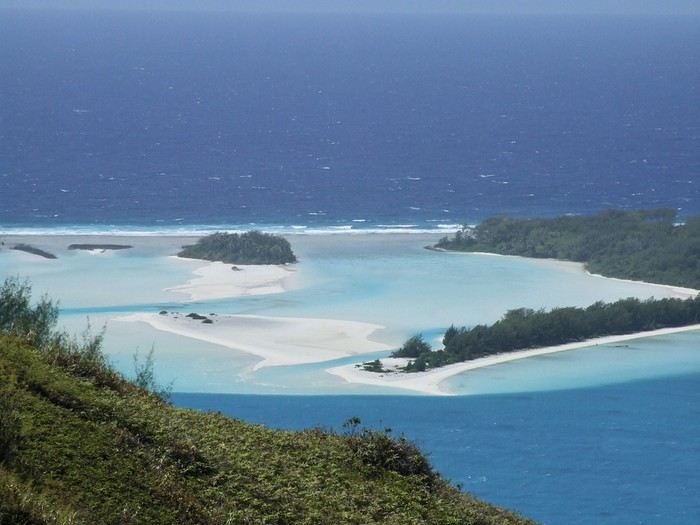
For the rest, nature reigns supreme here, with lush greenery (palm trees, *filaos*, and mangroves) alternating with light sandy beaches dotted with black rocks. The lagoon’s entrance is protected by a coral barrier, where waves from the Indian Ocean crash, forming a frothy edge that outlines the horizon.
And as if this setting weren’t already idyllic enough, there’s also an island floating on these impossibly beautiful blue waters: Île des Deux Cocos. This private tropical haven has just one structure—a house with striking Moorish-style architecture. Renting it would cost a fortune, I can only imagine… so let’s just admire this dreamy landscape from afar.

Even though the lagoon’s waters are astonishingly clear, to see the tropical fish and coral, you’ll need to explore either by glass-bottom boat (the view is a bit blurry and distorted) or—much better—by snorkeling. There, you swim in the middle of a real aquarium… without any walls. The wonder is guaranteed!
I’ll admit that during my (too short) snorkeling session, I didn’t see all the species in this lagoon—far from it! Apparently, there are over 72 different kinds.


But I did spot and admire some elegant angelfish, colorful parrotfish with their shimmering scales, and especially schools of striped fish—the famous sergeant majors.
These two Mauritians, seen from behind with their legs in the water, have another way of interacting with the bay’s fish—they’re teasing them with fishing lines and hooks.


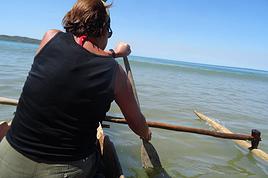
Exploring the lagoon can be nicely rounded out with a kayak trip.
With just a few paddle strokes, I’m almost in the middle of the bay. There, during a pause, my gaze wavers between admiring the stunning surroundings and peering at the underwater world through the crystal-clear waters. Look! A few fish dart near my kayak… before quickly hiding in the coral crevices.
A little farther on, near the lagoon’s shores, I now glide along the mangroves and their tangled roots—another fascinating aspect of the area to discover.

A lagoon so rich in sights and aesthetic emotions quickly makes you feel like you’ve arrived at the gates of paradise.
As my thoughts drift with each stroke of the paddle, the peaceful silence of the lagoon is suddenly shattered by a growing noise… a passenger plane flies overhead before landing on a runway near the island’s airport, which is close to the lagoon.
Okay, you’ve got to admit—that’s really the only detail in this environment that brings you back to reality. Can paradise truly exist on Earth? Still, luckily, takeoffs and landings aren’t *too* frequent!

Twilight comes quickly in subtropical regions—it’s now the blue hour over the blue lagoon. From Île des Deux Cocos, a few notes of rhythmic music drift over, accompanied by colorful lights. The evening will be festive well into the night…

………………………………………………………………
After the lagoon and its sea baths, it’s time for a *bain de foule*—we’re now in town.
The main city in the south, with its 16,000 inhabitants, Mahébourg is even Mauritius’ second-largest urban area. Its vibe is nothing like the hustle (and traffic jams) of the capital, Port Louis. Here, no tall buildings—just residences, houses, shacks, and shops that give off the charming, laid-back atmosphere of a provincial tropical town.

You’ll encounter the crowd a little later at the central market. It’s Monday morning, a busy day, but the morning is just beginning, and some aisles of the covered market are still sparse.

Under these colorful tarps, stalls overflow with mounds of vegetables and fruits. Here, tomatoes in bulk; there, pyramids of eggplants… Farther on, fruit displays: watermelons, pineapples, bananas, and lychees—the first of the season, a vendor tells me. It all looks so appetizing!
We continue our visit, weaving between crate carriers, vendors, and busy housewives feeling, weighing, and comparing the produce… before finally buying their groceries.
Baskets fill up as conversations flow in a relaxed but somewhat noisy atmosphere.

Near the exit, stalls line up with Indo-Mauritian specialties.
Here, the air smells of deep-fried goodness. The displays are piled high with samoussas and dholl puris—those famous flatbreads made with lentil flour and stuffed with spiced vegetables. There are also some eggplant fritters… The sight of all these local treats makes me want to try them, even if it all looks a bit (okay, *very*) greasy. Let’s grab some for our midday picnic!
On the other hand, I’ll pass on the chili cakes, even though the vendor kindly offers them. I’m not used to that local *piquant* heat!

Leaving the market, we take a random street—this one’s particularly crowded and busy. It leads to another covered market, this one for clothes. Here, stalls overflow with colorful fabrics and saris, as well as T-shirts, jeans, and caps…

Near the Chaux River, just before the bridge leading to a working-class neighborhood on the outskirts, stands the old lavoir.
It seems like a relic from the past—its basins are completely dry, and the place is deserted. No one is scrubbing, beating, or wringing out laundry. Either Monday isn’t laundry day here, or washing machines have replaced the *lavandières* (laundry women)?
A large community of Indian origin lives in Mahébourg, and of course, they have their places of worship, like this Hindu temple at the city’s entrance, decorated with colors and deities.

--
To be continued in the next post: the Hindu festival of Diwali, Île aux Aigrettes, the rocky cliffs of the South…

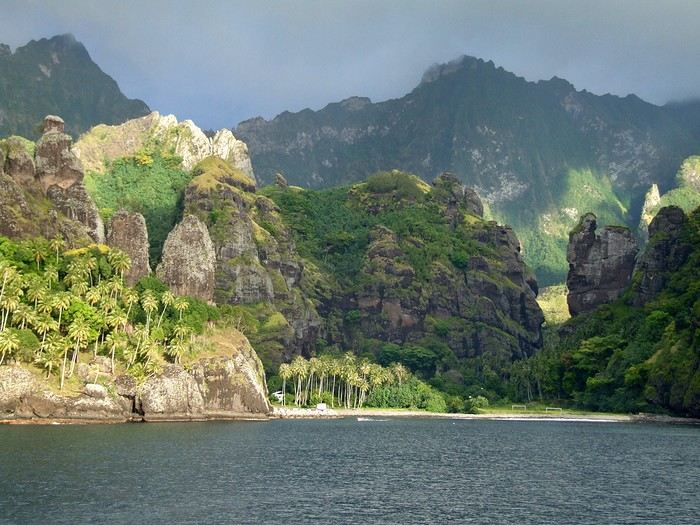 Idyllic landscape of a dream island, but difficult to access: the Bay of Virgins in Fatu Hiva, Marquesas Islands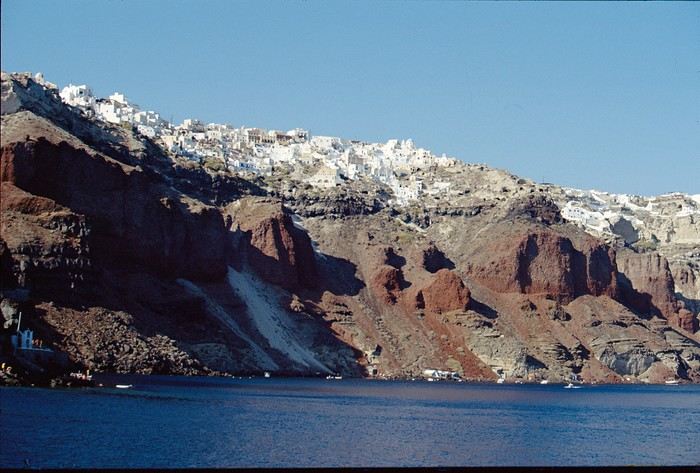
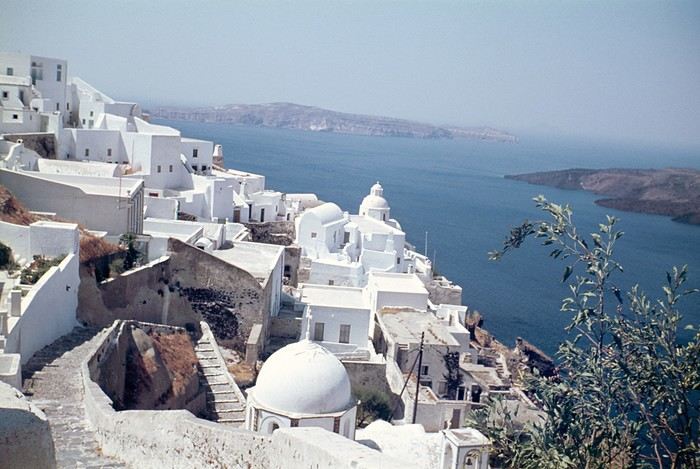 Oia in 1967—a peaceful village overlooking the caldera. But where are the pools and trendy bars?

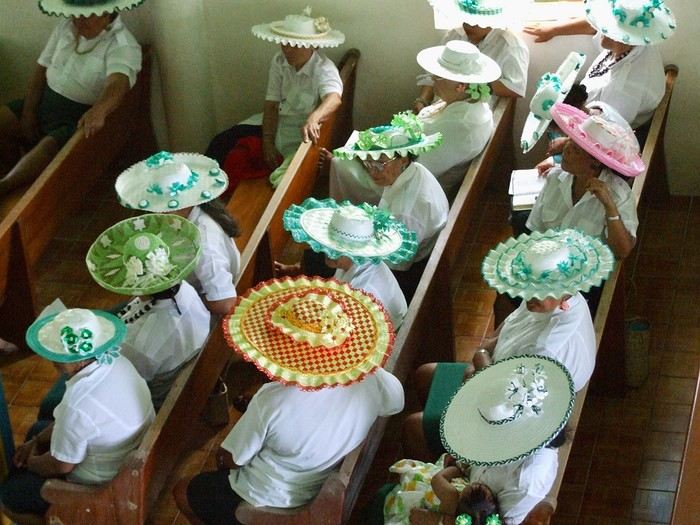 Hat contest for the worship celebration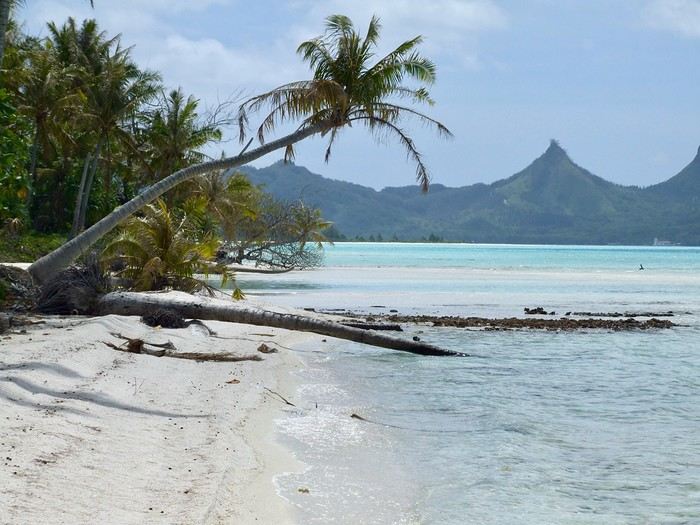
 The "motu-pool"